
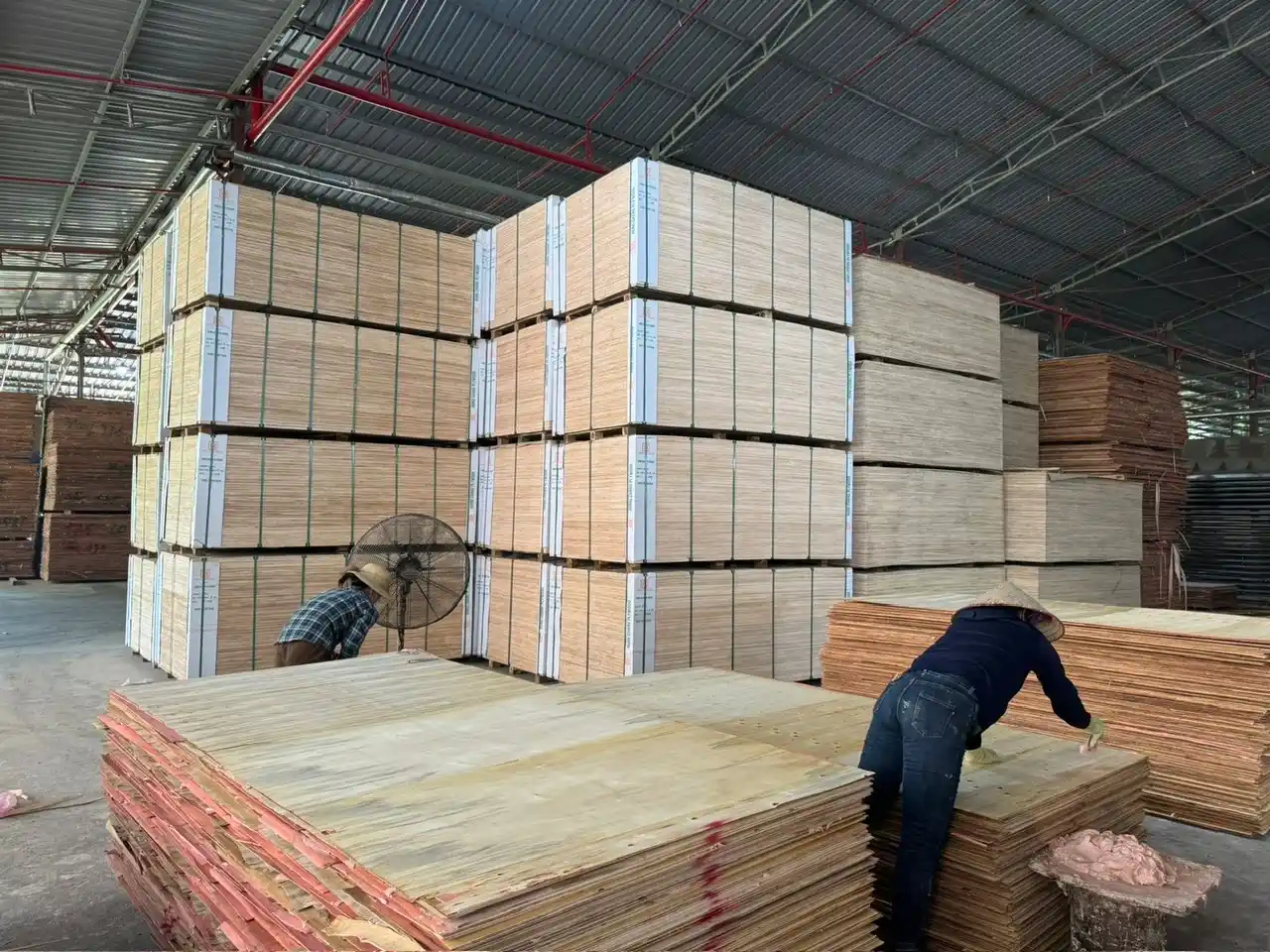
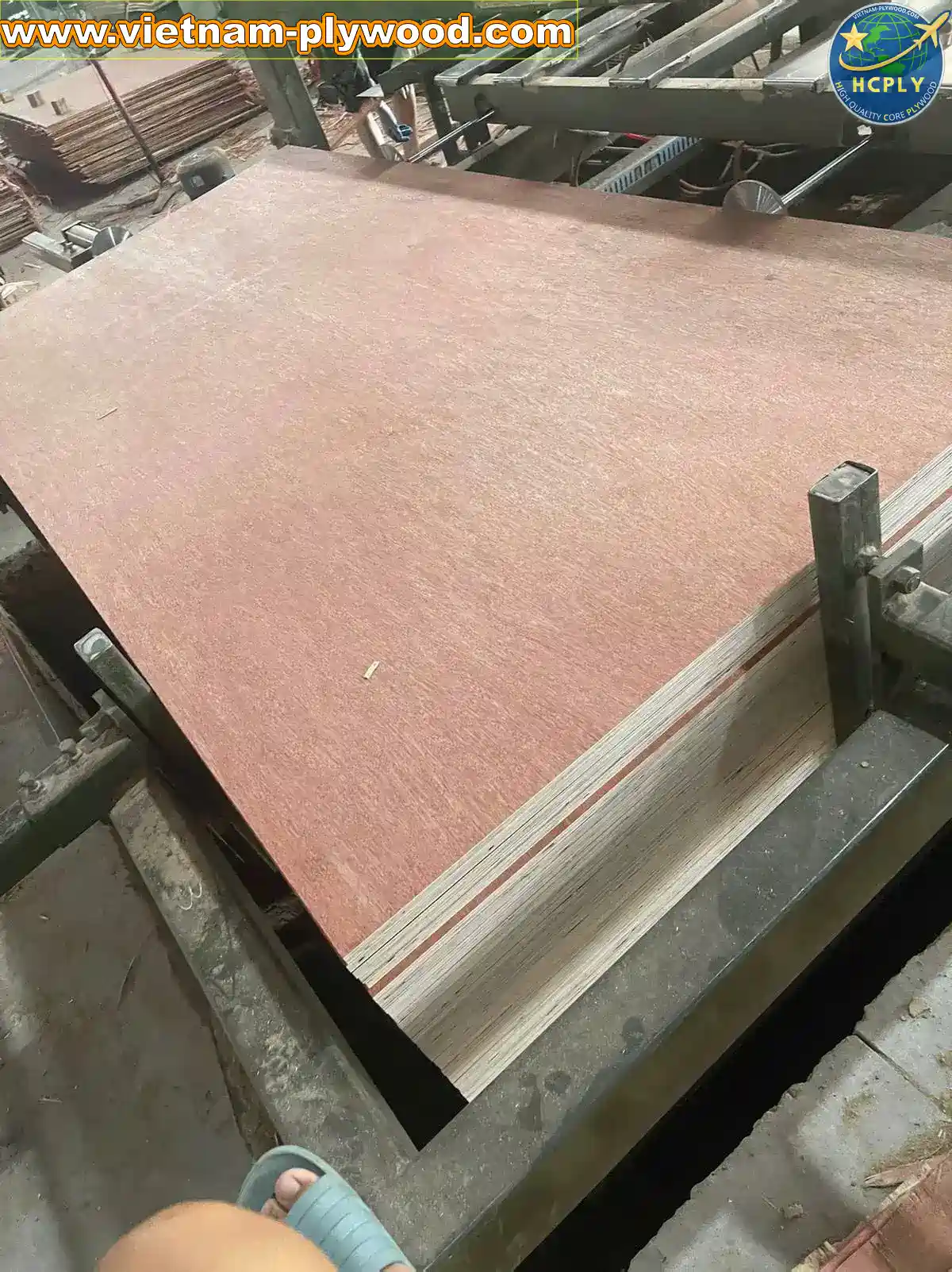

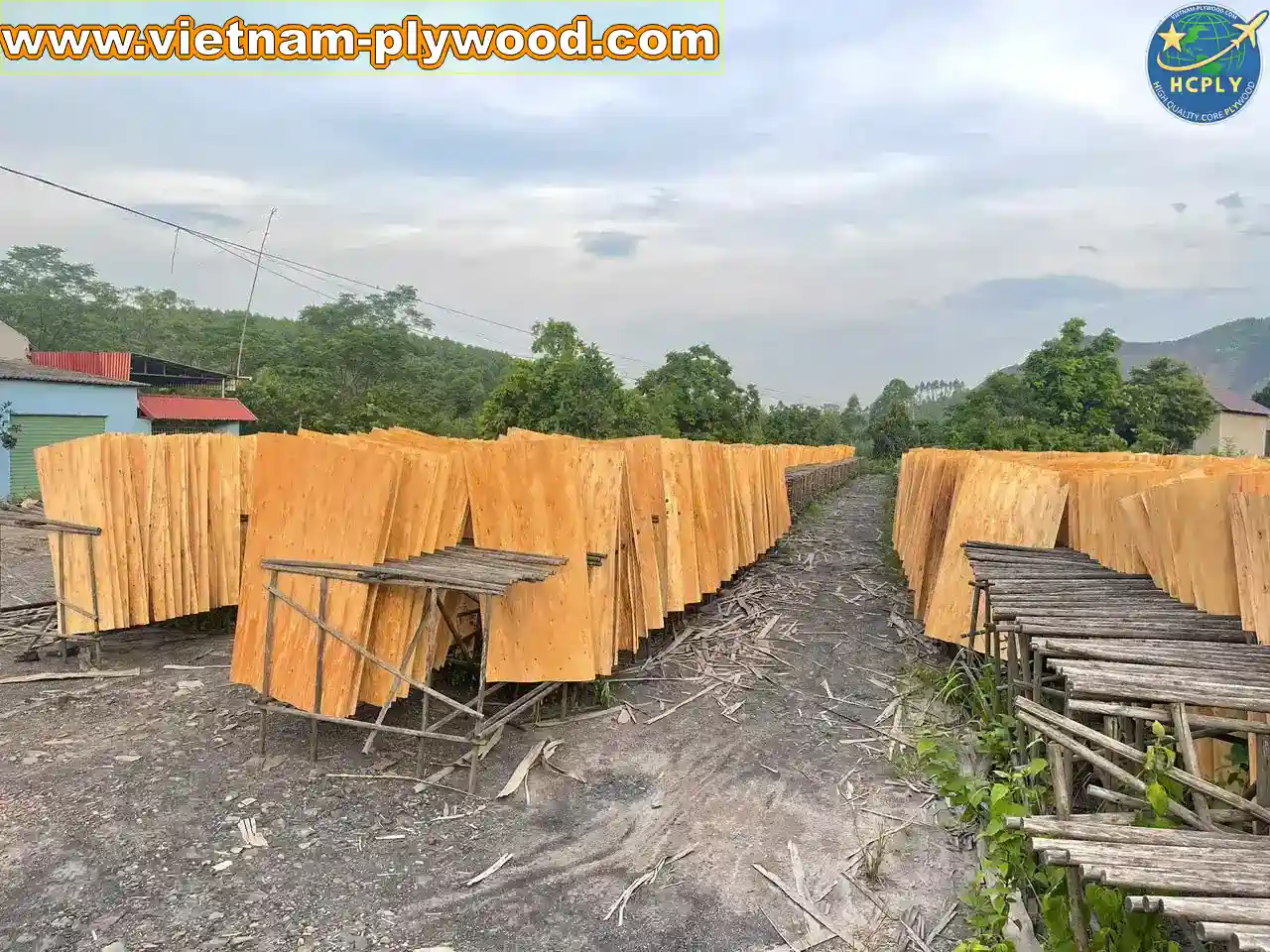

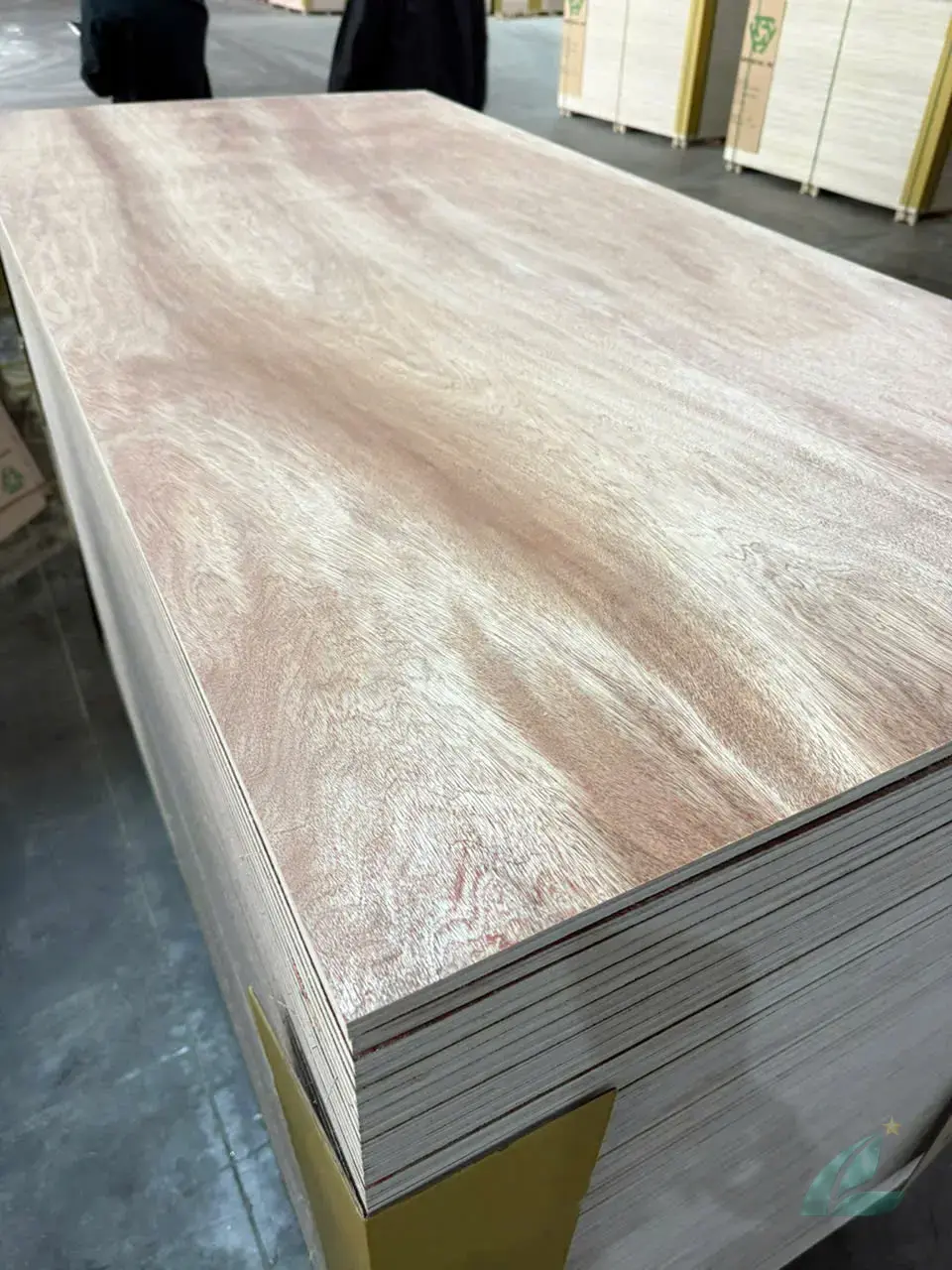
Factory-issued plywood container packing calculation guide — HCPLY Vietnam
All data, formulas, and container configurations presented here are based on real factory loading experience, actual 40HC container constraints, and long-term plywood export programs to Europe and global markets. This is not a generic guideline, estimated spreadsheet, or trader-level assumption.
Every packing table in this document reflects what is physically loaded and shipped, not what is theoretically possible on paper.
— David Duc Do, Export Project Leader, HCPLY Vietnam
📋 Section 1 — Why This Page Exists
⚙️ Why Plywood Container Packing Calculation Matters at Factory Level
For professional plywood importers, plywood container packing calculation is not a formatting detail, a spreadsheet exercise, or a sales attachment appended to a quotation.
It is a factory-level control system that directly determines — and you can run the numbers yourself using our interactive packing calculator:
- Real container payload utilization
- Landed cost per CBM and per sheet
- Panel integrity after long-distance sea transport
- Repeatability and stability of long-term supply programs
In real export operations, plywood container packing calculation influences total shipment cost and risk exposure more than nominal plywood price itself.
A small deviation in packing logic — often invisible at quotation stage — can silently shift total CBM, exceed payload limits, or trigger downstream costs that only appear after container loading or arrival.
1.1 The Structural Failure of Market-Level Packing Data
Most packing specifications exchanged online or during negotiation are based on:
- Generic spreadsheet estimates
- Trader-level assumptions without factory validation
- Simplified figures that ignore real 40HC container geometry and payload ceilings
The result is a persistent gap between theoretical plywood container packing calculation and factory-executed container loading.
This gap is one of the most common root causes of:
- Payload overruns requiring last-minute sheet removal
- CBM inefficiency that inflates landed cost per unit
- Panel deformation, edge damage, or compression after arrival — see forklift loading tips for 40HC containers for damage prevention
- Incorrect pallet weight leading to overloaded containers — use the pallet weight estimation formula to verify before loading
- Disputes between buyers, suppliers, and logistics providers
These issues do not originate from ports, shipping lines, or freight forwarders. They originate inside the factory — at the plywood container packing calculation and loading stage.
1.2 Factory-Issued Calculation vs Market Assumptions
Factory-issued plywood container packing calculation is not equivalent to market-level estimates.
All packing tables and calculations presented here are:
- Based on actual pallet configurations used in export shipments
- Calculated under real 40HC internal dimensions and payload limits
- Aligned with measured plywood core density by species
- Validated through repeated factory loading programs, not one-off trials
This is why identical plywood thickness and sheet size can result in different CBM, weight, and pallet counts depending on core type and factory execution logic.
In practical terms, plywood container packing calculation is factory-specific, not universal.
1.3 Why Plywood Container
In the current export environment, plywood container packing calculation has become a primary risk-control variable, not a secondary logistics detail.
Buyers now face:
- Volatile ocean freight rates
- Stricter payload enforcement at ports and inland depots
- Increased penalties for overweight containers
- Reduced tolerance for shipment discrepancies
⚠️ Important: Under these conditions, inaccurate plywood container packing calculation is no longer a minor inefficiency. It is a commercial, operational, and contractual risk.
For serious importers, predictability — not optimistic estimates — is the only acceptable standard.
1.4 Original Factory Data
This export packing specification is not compiled from public sources.
This dataset covers Vietnamese plywood export packing specifications across all common core types, thicknesses, and standard sheet sizes — validated through actual container loading operations at factory level.
This compilation of plywood export packing specifications includes data that are:
- Derived from real container loading at factory level
- Validated across multiple plywood core structures
- Optimized through repeated export programs, not simulations
- Documented with explicit formulas and physical constraints
All tables on this page were authored and verified by David Duc Do, based on hands-on experience overseeing plywood production, palletization, and plywood container packing calculation for international export markets.
If a supplier cannot clearly explain their plywood container packing calculation at factory level, they are not controlling their factory.
1.5 Who This Reference Is For
This technical reference is designed for:
- European and global plywood importers
- Purchasing managers and sourcing teams
- Logistics planners and QA professionals
- Buyers evaluating suppliers at factory level, not trader level
Every table on this page enables buyers to:
- Audit supplier packing claims
- Compare core structures objectively
- Forecast landed cost using real plywood container packing calculation
- Reduce disputes before production begins
🔧 Section 2 — How Factories Calculate Container Packing
Factory-Level Plywood Container Packing Calculation Methodology
Plywood container packing calculation is a factory-controlled methodology derived from real container loading, pallet handling, and export execution — applied consistently across long-term plywood shipment programs.
Every plywood container packing calculation presented in this document is constrained by physical reality: what can be lifted, stacked, loaded, transported, and repeatedly executed at factory level — not what appears optimal on paper.
A reliable factory does not retro-adjust packing figures after pricing, booking, or quotation issuance.
2.1 Fixed Variables (Non-Negotiable Factory Constraints)
These variables are structural constraints. They are constant across all calculations and cannot be altered by sales assumptions or buyer expectations.
Container constraint:
- Container type: 40HC
- Maximum safe payload: 28.5 metric tons
- Payload ceiling applied before CBM optimization
- Container wall clearance, door clearance, and safety margins fully considered
⚠️ Note: Any plywood container packing calculation that exceeds the payload limit is invalid — regardless of CBM efficiency.
Pallet constraints:
- Fixed pallet footprint based on factory forklift handling standards
- Maximum pallet height governed by forklift stability, warehouse stacking safety, and container roof clearance
- Pallet weight distribution optimized to avoid point loading and deformation
Forklift and stacking limits:
- Forklift-rated lifting capacity applied with safety margins
- Dynamic load during turning and stacking is considered
- Center-of-gravity limits strictly enforced
2.2 Variable Factors (Material-Dependent Inputs)
These variables change by product type and directly affect final packing outcomes. They are measured, not assumed, provided by Vietnam Plywood.
Core density: Each plywood core species has a measured average density, not a catalog value. In plywood container packing calculation, core density directly determines total allowable sheets per container, CBM vs weight trade-off, and safe pallet stacking height.
Thickness: Thickness affects plywood container packing calculation non-linearly due to accumulated tolerance across stacked sheets, pressing variance, and edge compression under load. This is why thickness cannot be evaluated independently from core type.
Sheet size: Sheet dimensions directly impact plywood container packing calculation through pallet footprint utilization, container wall and door clearance, and dead-space accumulation per layer. Different sheet sizes cannot share the same packing logic, even at identical thickness and core type.
2.3 Core Calculation Formulas
All packing tables in this document are derived from these exact formulas:
Sheet Volume (CBM) = Thickness_mm × Length_m × Width_m ÷ 1000

Sheets/Pallet = ROUNDDOWN(Stack_Height ÷ Thickness_mm)
  Stack height: 1000mm for 1220x2440mm sheets
  Stack height: 970mm for 1250x2500mm Acacia/Styrax core
  Stack height: 900mm for 1250x2500mm Eucalyptus core

Total Sheets/40HC = Sheets/Pallet × Pallets/40HC

Sheets/CBM = 1 ÷ (Length_m × Width_m × Thickness_m)

CBM/40HC = Total Sheets ÷ Sheets/CBM

Net Weight (MT) = CBM × Core_Density ÷ 1000
⚠️ Key point: Variables must not be mixed across tables. Using values from different tables together invalidates the plywood container packing calculation.
2.4 Core Type Summary
| Core Type | Density (kg/CBM) | Pallets/40HC | CBM Range | Weight Range | Best For |
|---|---|---|---|---|---|
| Styrax | ~500 | 18 | 52.8–53.6 | 26.4–26.8 MT | Max CBM, furniture, interior |
| Acacia | ~580 | 16 | 46.9–47.6 | 27.2–27.6 MT | Balance strength/volume |
| Eucalyptus | ~650 | 15 | 42.4–43.3 | 27.6–28.2 MT | Max strength, construction |
📊 Section 3 — Packing Table Index
All tables below represent factory-issued, validated plywood container packing calculation data. Jump directly to the table matching your product specification, provided by Vietnam Plywood.
Do not mix variables across different tables. Do not extrapolate pallet logic, CBM, or weight figures across separate packing programs.
How to Use This Index
1220 x 2440 mm (Standard sheet size):
1250 x 2500 mm (Oversized sheet):
📦 Section 4 — Styrax Core Plywood, 1220 x 2440 mm
This packing specification represents a fully validated factory loading program for styrax core plywood (1220 x 2440 mm) in 40HC containers.
Styrax core plywood is widely used for interior applications, furniture panels, and veneer overlay and lamination programs. Its low core density (~500 kg/CBM) allows factories to maximize CBM utilization while keeping container weight safely below structural limits.
Pallet configuration: 16 pallets flat (4 x 4 grid) + 2 pallets vertical at container ends = 18 pallets total. Stack height: 1000mm.
Original factory-derived data authored and verified by David Duc Do, HCPLY Vietnam. All calculations based on actual plywood loading execution, not industry estimates. Reproduction without proper attribution misrepresents the source and execution context of the data.
Styrax Core — 18 Pallets (1220 × 2440mm)
| Thickness (mm) | Sheets/Pallet | Pallets/40HC | Total Sheets | Sheets/CBM | CBM/40HC | Net Weight (MT) |
|---|---|---|---|---|---|---|
| 3 | 333 | 18 | 5,994 | 111.98 | 53.53 | 26.76 |
| 4 | 250 | 18 | 4,500 | 83.98 | 53.58 | 26.79 |
| 5 | 200 | 18 | 3,600 | 67.19 | 53.58 | 26.79 |
| 6 | 166 | 18 | 2,988 | 55.99 | 53.37 | 26.68 |
| 8 | 125 | 18 | 2,250 | 41.99 | 53.58 | 26.79 |
| 9 | 111 | 18 | 1,998 | 37.33 | 53.53 | 26.76 |
| 10 | 100 | 18 | 1,800 | 33.59 | 53.58 | 26.79 |
| 11 | 90 | 18 | 1,620 | 30.54 | 53.05 | 26.52 |
| 12 | 83 | 18 | 1,494 | 27.99 | 53.37 | 26.68 |
| 14 | 71 | 18 | 1,278 | 24.00 | 53.26 | 26.63 |
| 15 | 66 | 18 | 1,188 | 22.40 | 53.05 | 26.52 |
| 16 | 62 | 18 | 1,116 | 21.00 | 53.15 | 26.58 |
| 17 | 58 | 18 | 1,044 | 19.76 | 52.83 | 26.42 |
| 18 | 55 | 18 | 990 | 18.66 | 53.05 | 26.52 |
| 21 | 47 | 18 | 846 | 16.00 | 52.89 | 26.44 |
| 25 | 40 | 18 | 720 | 13.44 | 53.58 | 26.79 |
Factory calculation note: Based on styrax core plywood, 18 pallets/40HC, sheet size 1220x2440mm, average density 500 kg/CBM, maximum payload 28.5 MT. CBM stabilizes within 52.8–53.6 CBM range — a tight band determined by fixed pallet geometry, not optimization choices.
How to Read (Styrax, 1220mm):
Sheets/Pallet is calculated as ROUNDDOWN(1000 ÷ Thickness_mm). Example for 6mm: 1000 ÷ 6 = 166.6 → 166 sheets. Understanding plywood container packing helps this is why sheet count does not scale linearly with thickness.
Total Sheets = Sheets/Pallet × 18 pallets.
Sheets/CBM = 1 ÷ (1.22 × 2.44 × Thickness_m). This value is always non-integer and decimal precision must be preserved.
CBM/40HC = Total Sheets ÷ Sheets/CBM.
Net Weight (MT) = CBM × 500 ÷ 1000.
Factory Excel packing chart with HCPLY watermark — for reference and audit support.
Commercial note: This packing structure delivers lower CIF cost per sheet due to high sheet density per container, stable freight calculation across thickness ranges, and higher container efficiency compared to heavier eucalyptus or birch-core panels.
📦 Section 5 — Acacia Core Plywood, 1220 x 2440 mm
This packing specification represents a fully validated factory loading program for acacia core plywood (1220 x 2440 mm) in 40HC containers.
Acacia core plywood is widely used for furniture components and structural panels, interior applications requiring higher screw-holding strength, and lamination and overlay programs where panel rigidity is critical.
Compared to styrax core, acacia core plywood has higher average density (~580 kg/CBM), which directly impacts pallet count, CBM efficiency, and payload behavior.
Pallet configuration: 16 pallets/40HC. Stack height: 1000mm.
Factory data verified by David Duc Do, Export Project Leader, HCPLY Vietnam. Packing tables reflect real acacia core loading programs executed at factory level.
Acacia Core — 16 Pallets (1220 × 2440mm)
| Thickness (mm) | Sheets/Pallet | Pallets/40HC | Total Sheets | Sheets/CBM | CBM/40HC | Net Weight (MT) |
|---|---|---|---|---|---|---|
| 3 | 333 | 16 | 5,328 | 111.98 | 47.58 | 27.60 |
| 4 | 250 | 16 | 4,000 | 83.98 | 47.63 | 27.62 |
| 5 | 200 | 16 | 3,200 | 67.19 | 47.63 | 27.62 |
| 6 | 166 | 16 | 2,656 | 55.99 | 47.44 | 27.51 |
| 8 | 125 | 16 | 2,000 | 41.99 | 47.63 | 27.62 |
| 9 | 111 | 16 | 1,776 | 37.33 | 47.58 | 27.60 |
| 10 | 100 | 16 | 1,600 | 33.59 | 47.63 | 27.62 |
| 11 | 90 | 16 | 1,440 | 30.54 | 47.15 | 27.35 |
| 12 | 83 | 16 | 1,328 | 27.99 | 47.44 | 27.51 |
| 14 | 71 | 16 | 1,136 | 24.00 | 47.34 | 27.46 |
| 15 | 66 | 16 | 1,056 | 22.40 | 47.15 | 27.35 |
| 16 | 62 | 16 | 992 | 21.00 | 47.25 | 27.40 |
| 17 | 58 | 16 | 928 | 19.76 | 46.96 | 27.24 |
| 18 | 55 | 16 | 880 | 18.66 | 47.15 | 27.35 |
| 21 | 47 | 16 | 752 | 16.00 | 47.01 | 27.27 |
| 25 | 40 | 16 | 640 | 13.44 | 47.63 | 27.62 |
Factory calculation note: Based on acacia core plywood, 16 pallets/40HC, sheet size 1220x2440mm, average density 580 kg/CBM, maximum payload 28.5 MT. CBM stabilizes within 46.9–47.6 CBM range.
How to Read (Acacia, 1220mm):
Sheets/Pallet = ROUNDDOWN(1000 ÷ Thickness_mm).
Net Weight (MT) = CBM × 580 ÷ 1000.
The 16-pallet configuration (vs 18 for styrax) reflects the higher density constraint. The additional weight per pallet would push total payload above 28.5 MT ceiling at 18 pallets.
Acacia core plywood packing specification (1220x2440mm, 16 pallets/40HC) — factory-executed loading program by HCPLY.
Commercial note: Acacia core delivers maximum structural strength per sheet, payload-optimized container loading, and a highly predictable landed cost. Buyers who prioritize structural strength and consistency over maximum CBM choose acacia.
📦 Section 6 — Eucalyptus Core Plywood, 1220 x 2440 mm
This packing specification represents a fully validated factory loading program for eucalyptus core plywood (1220 x 2440 mm) in 40HC containers.
Eucalyptus core plywood is used for construction applications, load-bearing furniture components, and projects requiring stiffness and durability over volume efficiency. At ~650 kg/CBM, eucalyptus core is the heaviest core type in this series, making payload — not CBM — the dominant limiting factor.
Pallet configuration: 15 pallets/40HC. Stack height: 1000mm.
Eucalyptus core data issued by HCPLY Vietnam. All figures based on factory-executed container loading under real payload constraints — David Duc Do, Export Project Leader.
Eucalyptus Core — 15 Pallets (1220 × 2440mm)
| Thickness (mm) | Sheets/Pallet | Pallets/40HC | Total Sheets | Sheets/CBM | CBM/40HC | Net Weight (MT) |
|---|---|---|---|---|---|---|
| 3 | 323 | 15 | 4,845 | 111.98 | 43.27 | 28.12 |
| 4 | 242 | 15 | 3,630 | 83.98 | 43.22 | 28.10 |
| 5 | 194 | 15 | 2,910 | 67.19 | 43.31 | 28.15 |
| 6 | 161 | 15 | 2,415 | 55.99 | 43.13 | 28.04 |
| 8 | 121 | 15 | 1,815 | 41.99 | 43.22 | 28.10 |
| 9 | 107 | 15 | 1,605 | 37.33 | 42.99 | 27.94 |
| 10 | 97 | 15 | 1,455 | 33.59 | 43.31 | 28.15 |
| 11 | 88 | 15 | 1,320 | 30.54 | 43.22 | 28.10 |
| 12 | 80 | 15 | 1,200 | 27.99 | 42.87 | 27.87 |
| 14 | 69 | 15 | 1,035 | 24.00 | 43.13 | 28.04 |
| 15 | 64 | 15 | 960 | 22.40 | 42.87 | 27.87 |
| 16 | 60 | 15 | 900 | 21.00 | 42.87 | 27.87 |
| 17 | 57 | 15 | 855 | 19.76 | 43.27 | 28.12 |
| 18 | 53 | 15 | 795 | 18.66 | 42.59 | 27.69 |
| 21 | 46 | 15 | 690 | 16.00 | 43.13 | 28.04 |
| 25 | 38 | 15 | 570 | 13.44 | 42.40 | 27.56 |
Factory calculation note: Based on eucalyptus core plywood, 15 pallets/40HC, sheet size 1220x2440mm, average density 650 kg/CBM, maximum payload 28.5 MT. CBM stabilizes within 42.4–43.3 CBM range.
How to Read (Eucalyptus, 1220mm):
Sheets/Pallet = ROUNDDOWN(1000 ÷ Thickness_mm).
Net Weight (MT) = CBM × 650 ÷ 1000.
Total payload per container is near but safely below 28.5 MT — this proximity to the payload ceiling is intentional. The 15-pallet configuration is the maximum achievable with eucalyptus core without breaching the weight limit.
Eucalyptus core plywood packing specification (1220x2440mm, 15 pallets/40HC) — factory-executed loading program by HCPLY.
📦 Section 7 — Styrax Core Plywood, 1250 x 2500 mm
This packing specification covers styrax core plywood in 1250 x 2500 mm sheet size, optimized for 40HC containers.
The larger sheet format changes sheet volume, pallet footprint, and CBM efficiency, introducing container geometry as an additional constraint. For this format, the factory uses the same pallet stack height of 1000mm for styrax core.
Pallet configuration: 18 pallets/40HC. Stack height: 1000mm.
Validated loading program for 1250 x 2500 mm styrax core. Data reflects repeated factory execution, not theoretical estimates — HCPLY Vietnam, 2026.
Styrax Core — 18 Pallets (1250 × 2500mm)
| Thickness (mm) | Sheets/Pallet | Pallets/40HC | Total Sheets | Sheets/CBM | CBM/40HC | Net Weight (MT) |
|---|---|---|---|---|---|---|
| 3 | 333 | 18 | 5,994 | 106.67 | 56.19 | 28.10 |
| 4 | 250 | 18 | 4,500 | 80.00 | 56.25 | 28.13 |
| 5 | 200 | 18 | 3,600 | 64.00 | 56.25 | 28.13 |
| 6 | 166 | 18 | 2,988 | 53.33 | 56.03 | 28.01 |
| 8 | 125 | 18 | 2,250 | 40.00 | 56.25 | 28.13 |
| 9 | 111 | 18 | 1,998 | 35.56 | 56.19 | 28.10 |
| 10 | 100 | 18 | 1,800 | 32.00 | 56.25 | 28.13 |
| 11 | 90 | 18 | 1,620 | 29.09 | 55.69 | 27.84 |
| 12 | 83 | 18 | 1,494 | 26.67 | 56.03 | 28.01 |
| 14 | 71 | 18 | 1,278 | 22.86 | 55.91 | 27.96 |
| 15 | 66 | 18 | 1,188 | 21.33 | 55.69 | 27.84 |
| 16 | 62 | 18 | 1,116 | 20.00 | 55.80 | 27.90 |
| 17 | 58 | 18 | 1,044 | 18.82 | 55.46 | 27.73 |
| 18 | 55 | 18 | 990 | 17.78 | 55.69 | 27.84 |
| 21 | 47 | 18 | 846 | 15.24 | 55.52 | 27.76 |
| 25 | 40 | 18 | 720 | 12.80 | 56.25 | 28.13 |
Factory calculation note: Based on styrax core plywood, 18 pallets/40HC, sheet size 1250x2500mm, average density 500 kg/CBM, maximum payload 28.5 MT. CBM stabilizes within 55.5–56.3 CBM range.
How to Read (Styrax, 1250mm):
Sheet Volume (CBM) = Thickness_mm × 1.25 × 2.50 ÷ 1000
Sheets/Pallet = ROUNDDOWN(1000 ÷ Thickness_mm)
Sheets/CBM = 1 ÷ (1.25 × 2.50 × Thickness_m)
Net Weight (MT) = CBM × 500 ÷ 1000.
Note that larger sheet format increases CBM per container (~55.5–56.3 vs ~52.8–53.6 for 1220x2440mm) while maintaining the same pallet count. The increased sheet area compensates in volume terms.
Styrax core plywood packing specification (1250x2500mm, 18 pallets/40HC) — factory-executed loading program by HCPLY.
📦 Section 8 — Acacia Core Plywood, 1250 x 2500 mm
This packing specification covers acacia core plywood in 1250 x 2500 mm sheet size for 40HC containers.
Due to higher core density (~580 kg/CBM), the factory intentionally reduces pallet stack height to 970mm to control pallet weight and maintain handling safety. This is a structural control measure, not a volume compromise.
Pallet configuration: 16 pallets/40HC. Stack height: 970mm (reduced from 1000mm).
Acacia core, 1250 x 2500 mm: stack height deliberately reduced to 970mm for density control. Figures represent executed shipments, not estimates — David Duc Do, HCPLY Vietnam.
Acacia Core — 16 Pallets (1250 × 2500mm)
| Thickness (mm) | Sheets/Pallet | Pallets/40HC | Total Sheets | Sheets/CBM | CBM/40HC | Net Weight (MT) |
|---|---|---|---|---|---|---|
| 3 | 323 | 16 | 5,168 | 106.67 | 48.45 | 27.62 |
| 4 | 242 | 16 | 3,872 | 80.00 | 48.40 | 28.07 |
| 5 | 194 | 16 | 3,104 | 64.00 | 48.50 | 28.13 |
| 6 | 161 | 16 | 2,576 | 53.33 | 48.30 | 28.01 |
| 8 | 121 | 16 | 1,936 | 40.00 | 48.40 | 28.07 |
| 9 | 107 | 16 | 1,712 | 35.56 | 48.15 | 27.93 |
| 10 | 97 | 16 | 1,552 | 32.00 | 48.50 | 28.13 |
| 11 | 88 | 16 | 1,408 | 29.09 | 48.40 | 28.07 |
| 12 | 80 | 16 | 1,280 | 26.67 | 48.00 | 27.84 |
| 14 | 69 | 16 | 1,104 | 22.86 | 48.30 | 28.01 |
| 15 | 64 | 16 | 1,024 | 21.33 | 48.00 | 27.84 |
| 16 | 60 | 16 | 960 | 20.00 | 48.00 | 27.84 |
| 17 | 57 | 16 | 912 | 18.82 | 48.45 | 28.10 |
| 18 | 53 | 16 | 848 | 17.78 | 47.70 | 27.67 |
| 21 | 46 | 16 | 736 | 15.24 | 48.30 | 28.01 |
| 25 | 38 | 16 | 608 | 12.80 | 47.50 | 27.55 |
Factory calculation note: Based on acacia core plywood, 16 pallets/40HC, sheet size 1250x2500mm, average density 580 kg/CBM, maximum payload 28.5 MT.
How to Read (Acacia, 1250mm):
Sheets/Pallet = ROUNDDOWN(970 ÷ Thickness_mm) — note the reduced 970mm stack height vs 1000mm for styrax.
Example for 6mm: 970 ÷ 6 = 161.6 → 161 sheets.
Sheets/CBM = 1 ÷ (1.25 × 2.50 × Thickness_m)
Net Weight (MT) = CBM × 580 ÷ 1000.
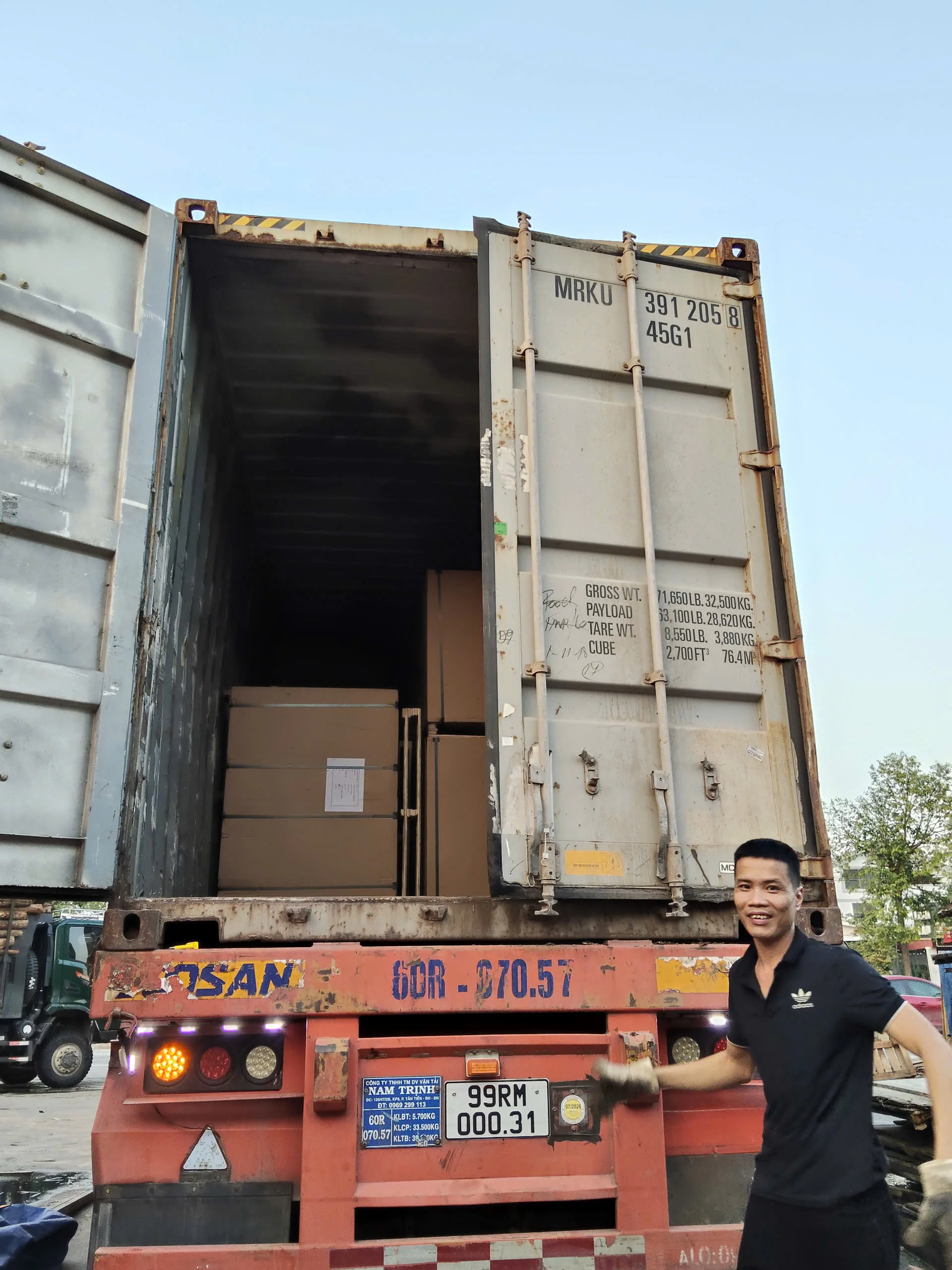
Acacia core plywood packing specification (1250x2500mm, 16 pallets/40HC) — factory-executed loading program by HCPLY.
📦 Section 9 — Eucalyptus Core Plywood, 1250 x 2500 mm
This packing specification represents the strictest factory-controlled plywood container packing calculation in the entire series — eucalyptus core plywood (1250 x 2500 mm) in 40HC containers.
Eucalyptus core has the highest density among all core types. When combined with oversized 1250 x 2500 mm sheets, payload — not CBM — governs every decision. Pallet stack height is reduced to 900mm to keep pallet weight within forklift safety limits and total container payload stays safely below 28.5 MT, making plywood container packing an essential consideration.
Pallet configuration: 15 pallets/40HC. Stack height: 900mm (payload-dominated constraint).
Strictest packing configuration in this series. Eucalyptus core at 1250 x 2500 mm — 900mm stack height enforced by payload ceiling. All data from HCPLY Vietnam factory loading programs, 2026.
Eucalyptus Core — 15 Pallets (1250 × 2500mm)
| Thickness (mm) | Sheets/Pallet | Pallets/40HC | Total Sheets | Sheets/CBM | CBM/40HC | Net Weight (MT) |
|---|---|---|---|---|---|---|
| 3 | 300 | 15 | 4,500 | 106.67 | 42.19 | 27.42 |
| 4 | 225 | 15 | 3,375 | 80.00 | 42.19 | 27.42 |
| 5 | 180 | 15 | 2,700 | 64.00 | 42.19 | 27.42 |
| 6 | 150 | 15 | 2,250 | 53.33 | 42.19 | 27.42 |
| 8 | 112 | 15 | 1,680 | 40.00 | 42.00 | 27.30 |
| 9 | 100 | 15 | 1,500 | 35.56 | 42.19 | 27.42 |
| 10 | 90 | 15 | 1,350 | 32.00 | 42.19 | 27.42 |
| 11 | 81 | 15 | 1,215 | 29.09 | 41.77 | 27.15 |
| 12 | 75 | 15 | 1,125 | 26.67 | 42.19 | 27.42 |
| 14 | 64 | 15 | 960 | 22.86 | 42.00 | 27.30 |
| 15 | 60 | 15 | 900 | 21.33 | 42.19 | 27.42 |
| 16 | 56 | 15 | 840 | 20.00 | 42.00 | 27.30 |
| 17 | 52 | 15 | 780 | 18.82 | 41.44 | 26.93 |
| 18 | 50 | 15 | 750 | 17.78 | 42.19 | 27.42 |
| 21 | 42 | 15 | 630 | 15.24 | 41.34 | 26.87 |
| 25 | 36 | 15 | 540 | 12.80 | 42.19 | 27.42 |
Factory calculation note: Based on eucalyptus core plywood, 15 pallets/40HC, sheet size 1250x2500mm, average density 650 kg/CBM, maximum payload 28.5 MT. CBM stabilizes within 41.3–42.2 CBM range.
How to Read (Eucalyptus, 1250mm):
Sheets/Pallet = ROUNDDOWN(900 ÷ Thickness_mm) — reduced stack height of 900mm, governed by payload constraint.
Example for 6mm: 900 ÷ 6 = 150 sheets.
Sheets/CBM = 1 ÷ (1.25 × 2.50 × Thickness_m)
Net Weight (MT) = CBM × 650 ÷ 1000.
For eucalyptus core, pallet height is intentionally reduced to 900mm. This is a payload-dominated execution rule — not a volumetric optimization choice.
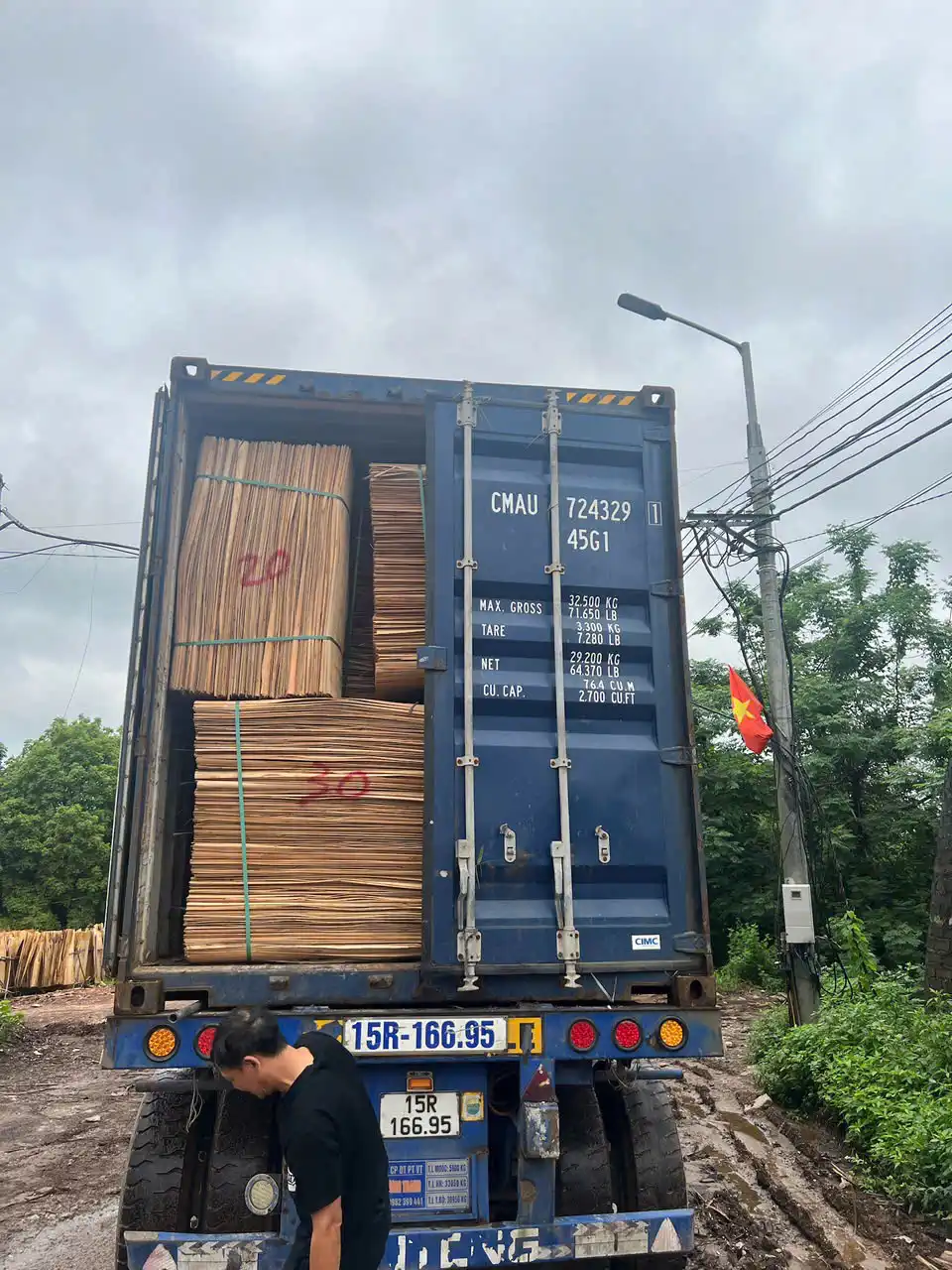
Eucalyptus core plywood packing specification (1250x2500mm, 15 pallets/40HC) — factory-executed loading program by HCPLY.
Pallet stack height comparison across 1250x2500mm configurations:
| Core Type | Stack Height | Reason |
|---|---|---|
| Styrax | 1000mm | Low density — CBM-optimized |
| Acacia | 970mm | Medium density — balance control |
| Eucalyptus | 900mm | High density — payload-dominated |
📐 Section 10 — Sheet Size Impact: 1220 x 2440 mm vs 1250 x 2500 mm
Sheet Size Is a Container Geometry Decision
A common buyer assumption is that plywood sheet size only affects cutting yield or final application. From a factory and logistics perspective, this is incomplete.
Sheet size directly determines:
- Pallet footprint
- Pallet layout inside the container
- Void space distribution
- How CBM is actually utilized
- How weight is distributed across pallets
Sheet size is a container geometry constraint that propagates through the entire packing system. This constraint exists before CBM, before weight calculation, and before customs declaration.
10.1 Why the Difference Matters
On paper, the dimensional difference looks small. Inside a container, the impact is structural.
1220 x 2440 mm:
- Aligns more efficiently with standard pallet dimensions
- Produces more predictable pallet layouts
- Typically results in tighter CBM utilization (~52.8–53.6 CBM for styrax)
1250 x 2500 mm:
- Increases sheet volume per unit
- Expands pallet footprint
- Alters pallet-to-container alignment
- Introduces unavoidable void spaces in certain configurations
- Typically results in higher CBM per container (~55.5–56.3 CBM for styrax)
These effects are not errors and not inefficiencies. They are physical consequences of container geometry.
10.2 Why Buyers Choose
From a purely CBM-based comparison, 1250 x 2500 mm sheets can appear less efficient at certain metrics. This perception is misleading.
Buyers choose this sheet size because:
- Larger sheets reduce downstream cutting waste
- Fewer joints are required in furniture or panel applications
- Production yield improves at factory or workshop level
What appears as CBM inefficiency at container level is often offset by material efficiency at application level. Experienced buyers evaluate total program efficiency, not CBM in isolation.
10.3 Sheet Size and Customs Declaration
Sheet size also influences how packing data is presented, reviewed, and audited.
Customs officers and auditors evaluate:
- Declared CBM
- Declared net weight
- Pallet count
- Consistency between packing list, invoice, and bill of lading
Oversized sheets change how CBM aggregates across pallets, how weight concentrates per pallet, and how explainable the packing logic is during inspection.
⚠️ Heads up: Sheet size selection must be traceable and explainable, not just commercially attractive.
10.4 CBM Alone Cannot Explain Container Efficiency
A container can have similar CBM, similar total weight, yet completely different sheet counts, pallet stability, and audit risk.
CBM is a volume metric, not a logistics control metric. In real plywood container packing calculation, CBM must coexist with pallet height constraints, pallet count limits, forklift handling safety, maximum payload (28.5 MT), and load balance requirements.
Only geometry-aware, factory-executed packing logic can explain container efficiency.
❓ Section 11 — Common Buyer Questions (FAQ)
Why Does CBM Look Similar but the Container Feels Less Full?
CBM similarity is mathematical — sheet volume stays consistent. But what the container feels like is driven by pallet footprint, pallet height decisions, void space created by sheet geometry, and weight concentration per pallet.
In factory-executed plywood container packing calculation, visual fullness is never a decision metric. Load stability, payload compliance, and audit clarity are.
This is why experienced factories never optimize packing based on how “full” a container looks.
Why does reducing pallet height increase loading reliability?
Reducing pallet height is not a downgrade. It is a structural control mechanism.
Higher-density plywood introduces risks: overweight pallets, forklift instability, and uneven load transfer inside the container.
Lowering pallet height:
- Reduces per-pallet weight variance
- Improves forklift handling safety
- Keeps total payload below the 28.5 MT ceiling
A container that loads slightly fewer sheets but arrives without claims, delays, or audit flags is more reliable than one optimized purely for quantity.
Why do some thicknesses seem to waste space inside the container?
What appears as wasted space is actually controlled void space.
Certain thicknesses do not divide evenly into pallet height limits, creating unavoidable residual height gaps. Instead of forcing extra sheets and risking overload, factories deliberately preserve these gaps to maintain payload compliance, pallet stability, and consistent audit explanation.
This is not inefficiency. This is intentional tolerance built into factory packing rules. Spreadsheet-based estimations often ignore this. Factory execution does not.
Can packing be customized without breaking customs consistency?
Yes — but only within controlled factory rules.
Customization is possible only if it maintains internal logical consistency, traceability across documents, and explainability during inspection.
Valid customization: adjusting pallet height within safety margins, modifying pallet count under payload ceilings, designing mixed-thickness containers with fixed logic.
Invalid customization: arbitrary sheet additions, visual filling of void spaces, CBM manipulation without structural justification.
Every customization must remain consistent across packing list, invoice, bill of lading, and audit dossier (EUDR / customs). If a change cannot be explained consistently in all four, it is rejected at factory level.
Does the factory adjust packing for mixed-thickness containers?
Yes — but never by mixing logic.
Mixed-thickness containers are handled by applying the strictest constraint first (usually payload), locking pallet height based on the heaviest configuration, and calculating sheet counts downward, never upward.
The most restrictive thickness governs the entire container logic. This approach prevents overloaded pallets, inconsistent CBM declarations, and audit discrepancies.
Why Can Styrax Fit 18 Pallets but Eucalyptus Only 15?
Styrax core density is approximately 500 kg/CBM, while eucalyptus ranges 650 kg/CBM. Lower density means lower total weight per container, allowing more pallets before hitting the 28.5 MT payload ceiling.
This is a physics constraint, not a packing preference. Adding a 16th pallet to an eucalyptus container (1220x2440mm) would push total payload above 28.5 MT, which is a hard stop.
How does sheet size affect container efficiency?
1220x2440mm sheets align more efficiently with standard pallet dimensions, producing tighter CBM utilization. 1250x2500mm sheets increase volume per unit but alter pallet-to-container alignment, introducing void spaces.
Sheet size is a container geometry decision, not just a dimension. The choice between 1220x2440mm and 1250x2500mm affects container layout, packing stability, payload behavior, customs audit clarity, and overall program risk. For a detailed comparison of styrax vs acacia core at the container level, see the styrax vs acacia packing comparison.
Pallet Preparation and Container Loading — Factory Images
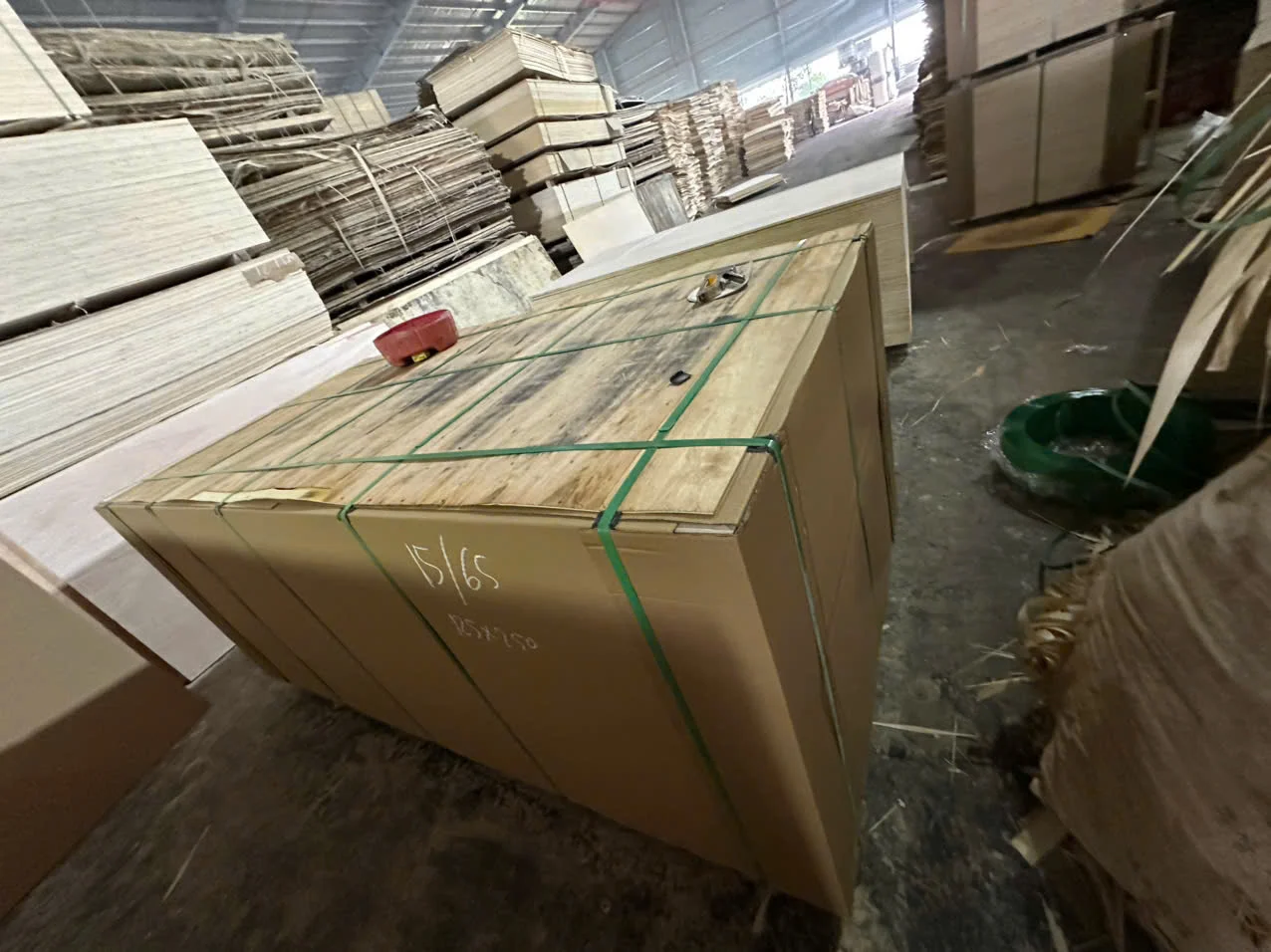
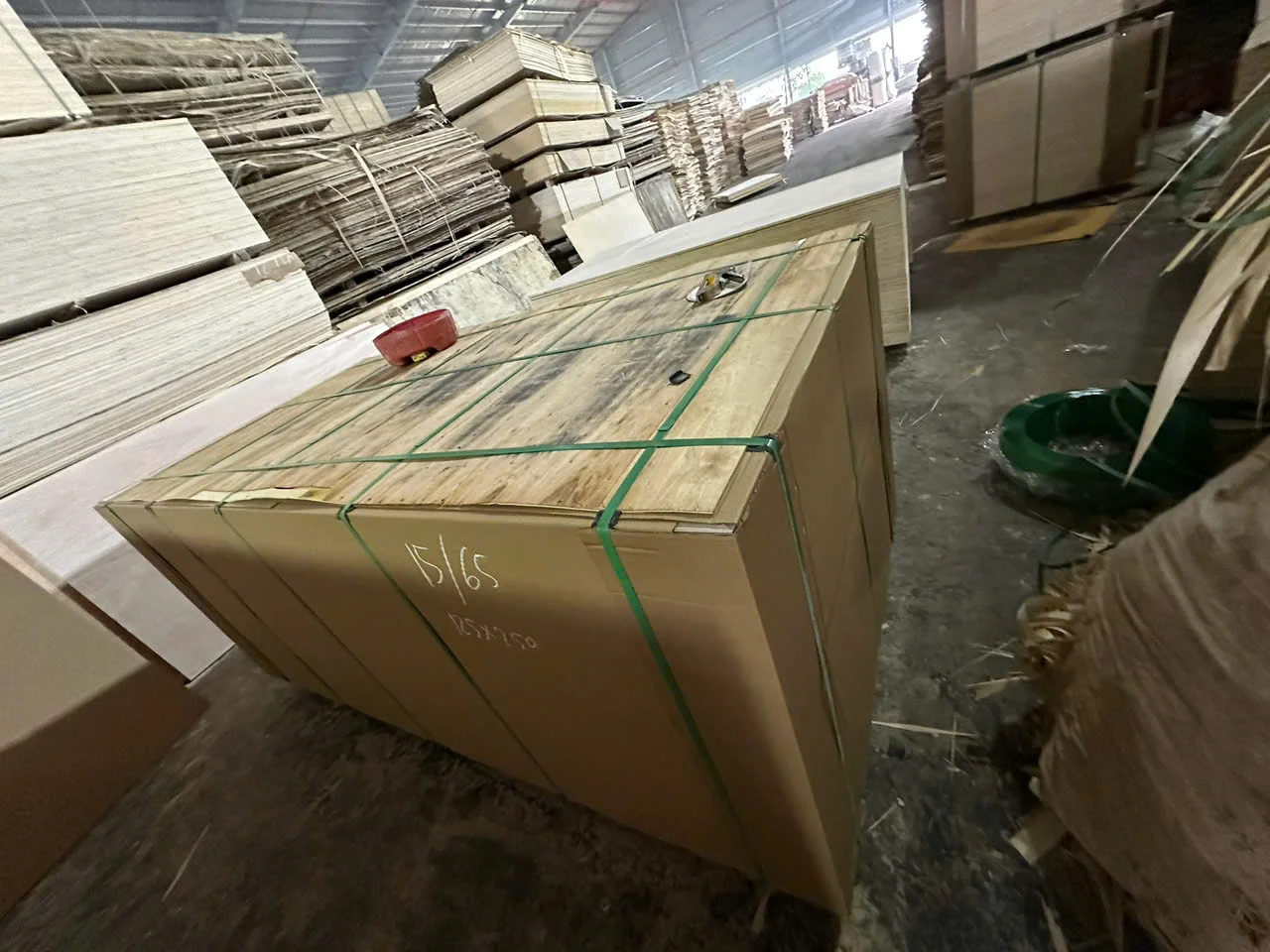
Pallet strapping and height locking before container loading. Once secured, pallet height and sheet count are fixed and no longer adjustable.
Height-locked plywood pallet with banding — factory-executed pallet preparation for plywood container packing calculation.
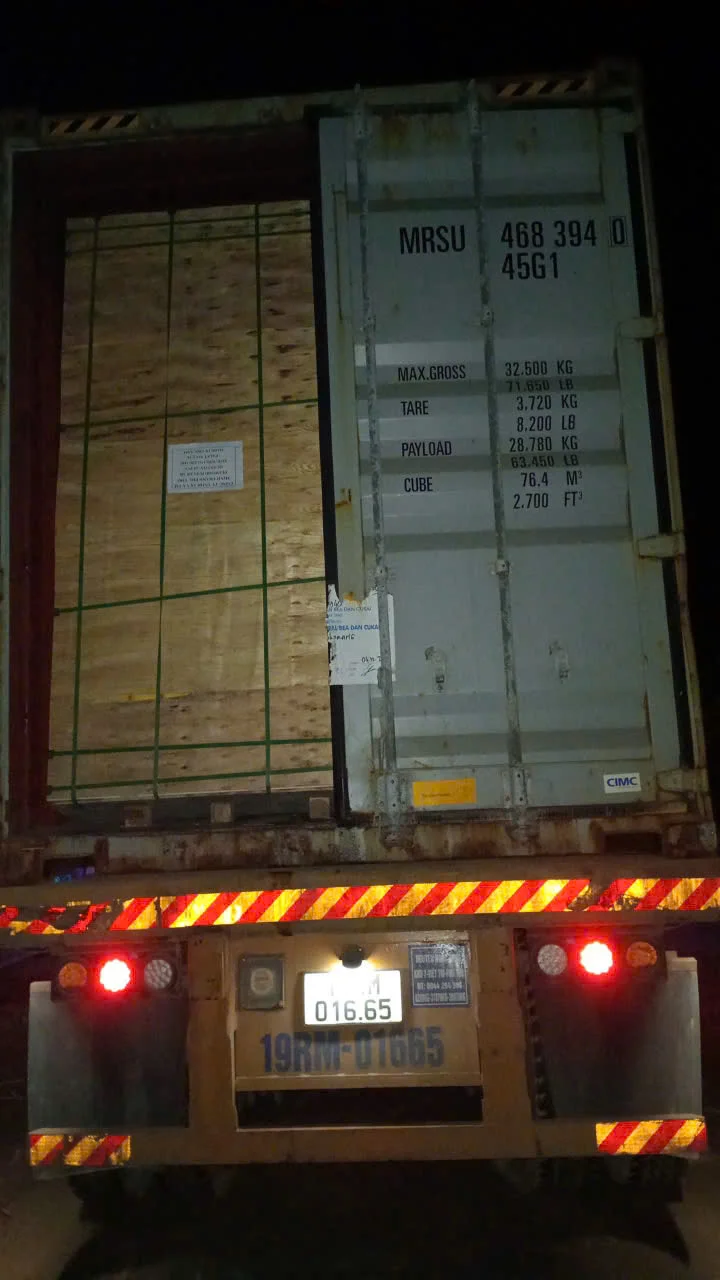
Secured plywood export pallet prepared for 40HC container loading — factory packing execution by HCPLY.
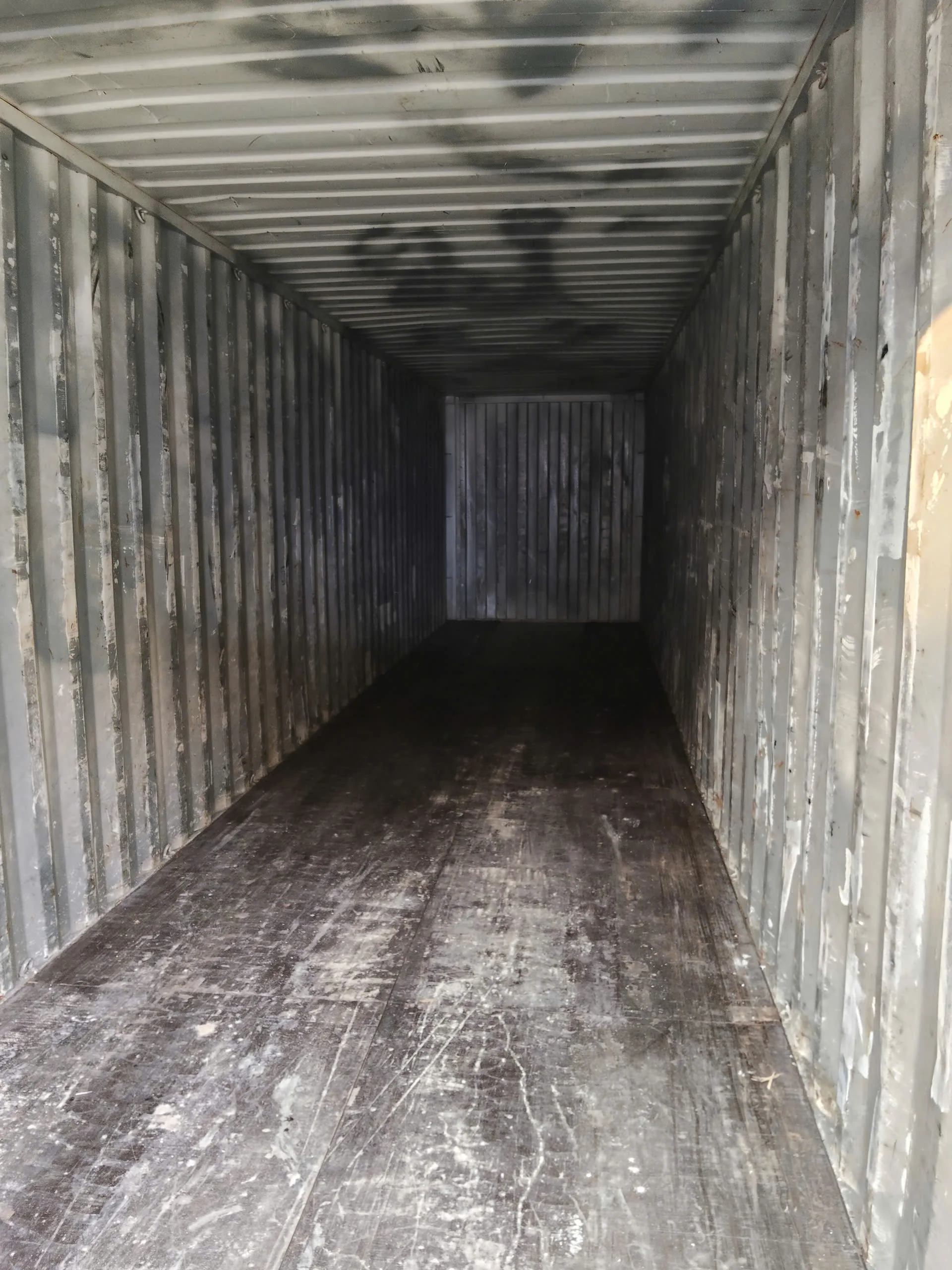
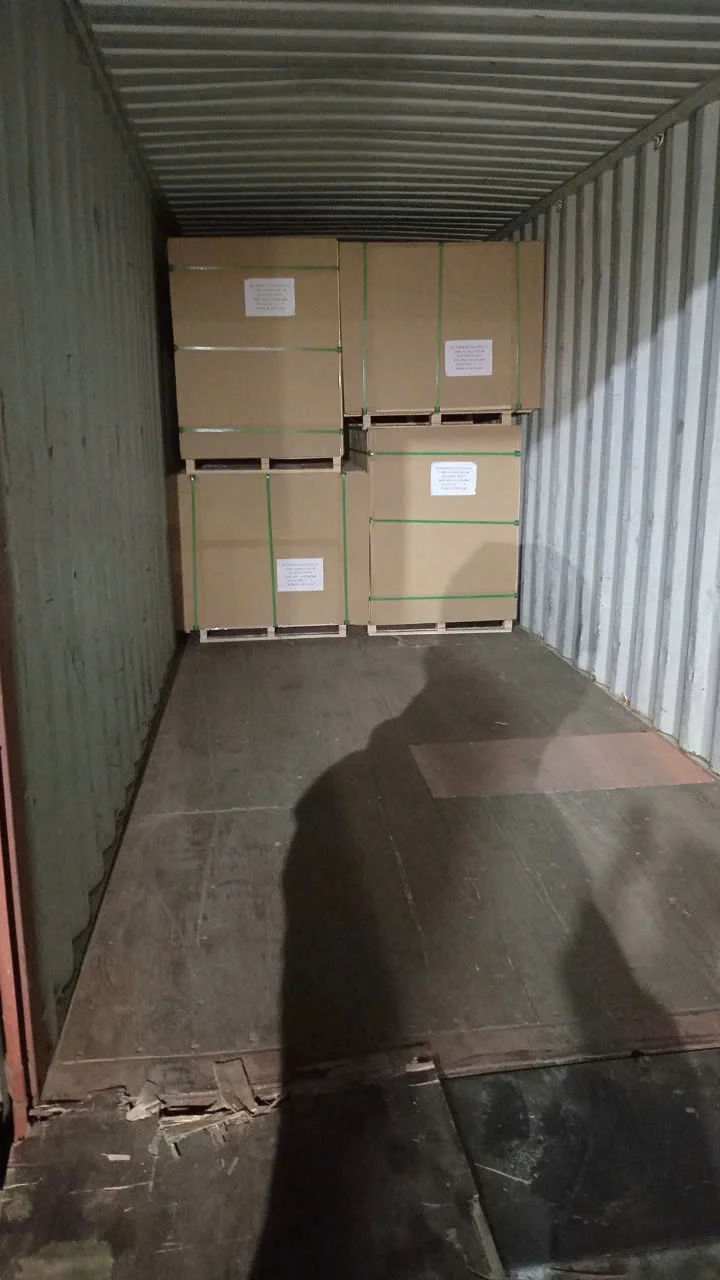
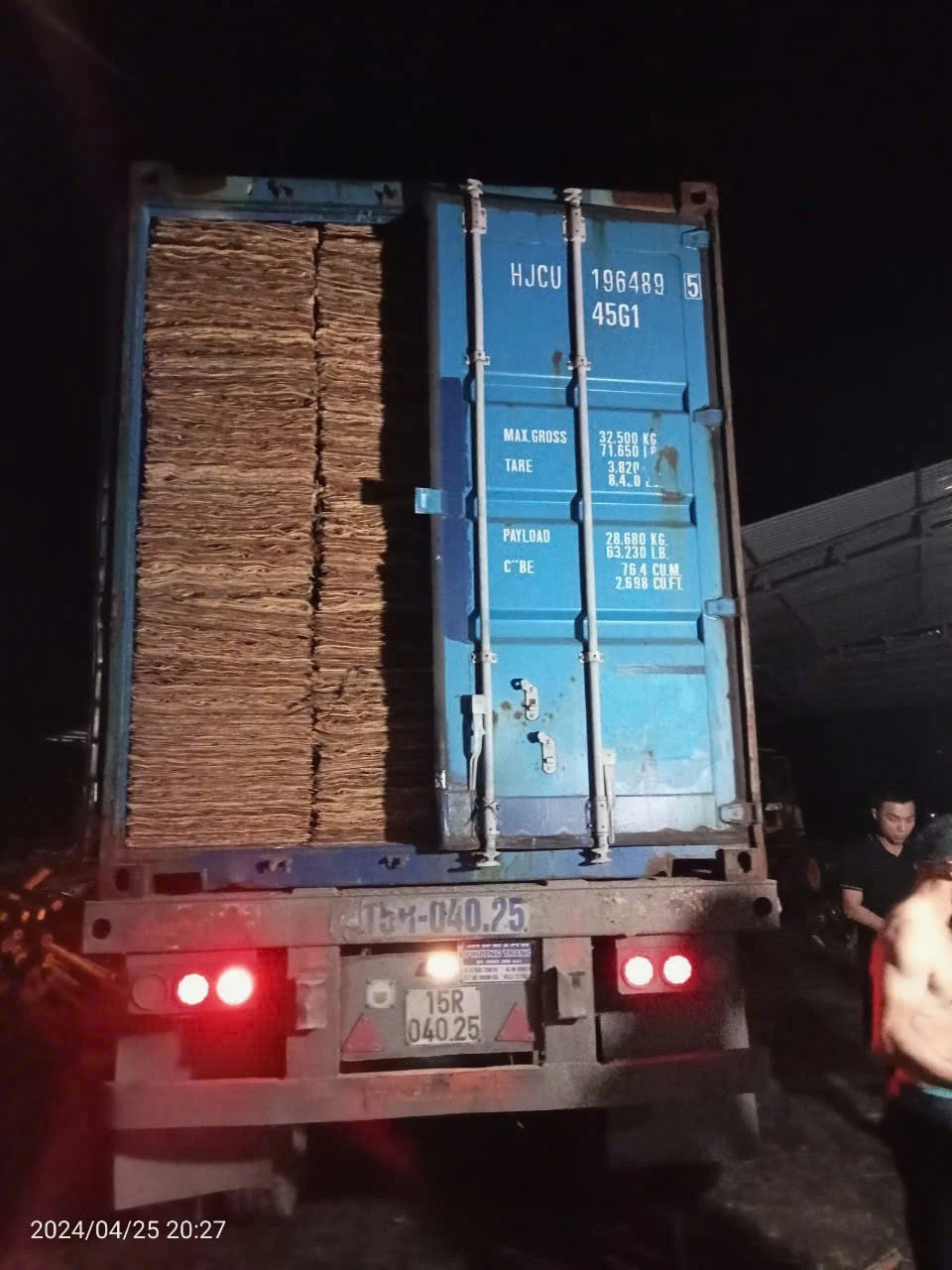
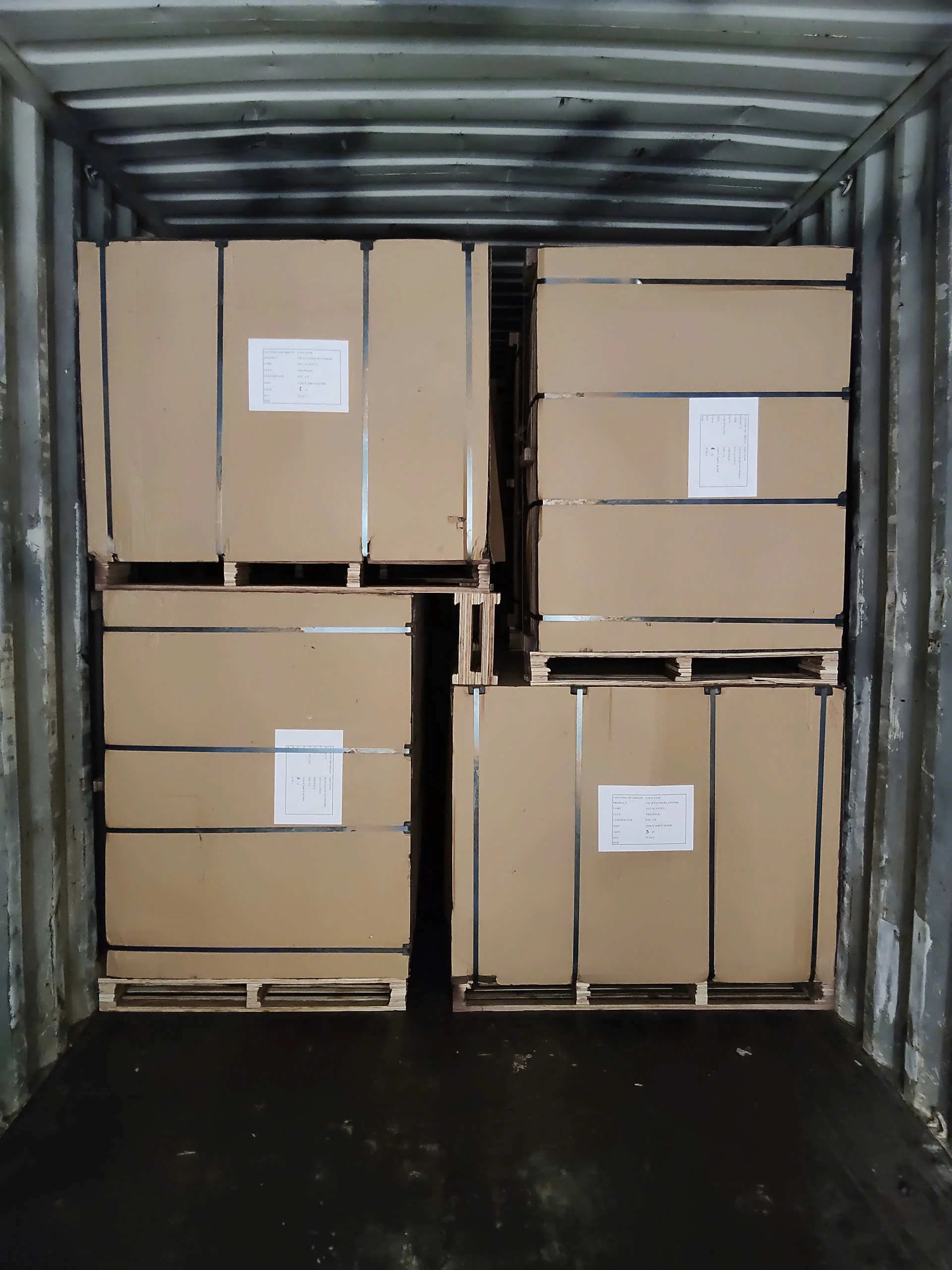
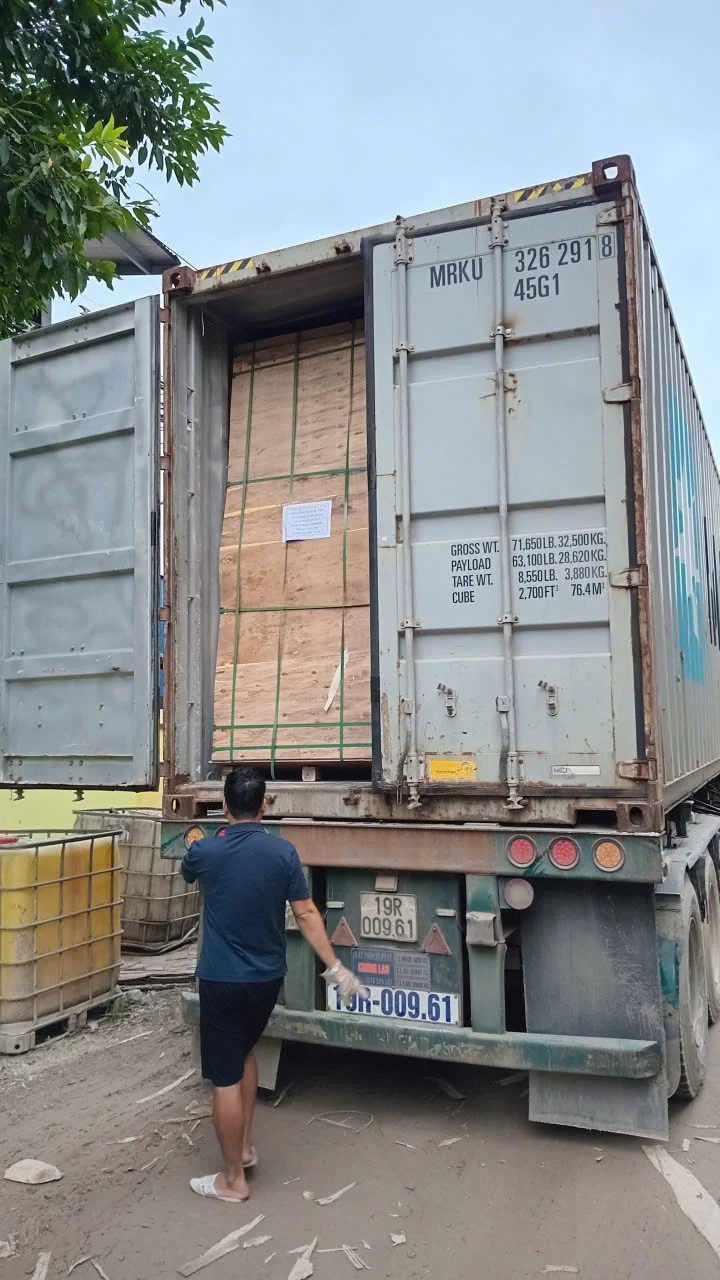
Forklift loading sequence of plywood pallets into a 40HC container. Container geometry and pallet footprint are physically verified at this stage.
Plywood container loading layout verification — factory-executed pallet placement inside 40HC container.
These images demonstrate why plywood container packing calculation cannot be finalized in spreadsheets. Packing logic is proven at execution stage — not assumed in theory.
✅ Section 12 — Compliance and Audit Context
Why Factory Packing Data Must Stand Up to Customs and EUDR Audits
This section is not about laws, regulations, or legal theory. It explains why the packing data in this document can withstand audits — not because it looks correct, but because it is structurally consistent across the entire export documentation chain.
If an audit occurs, this data does not need to be defended. It explains itself.
12.1 Packing Is Part of a Documentation System
A common misconception is treating packing data as an isolated reference.
In real export operations, packing logic must align with:
- Packing List
- Commercial Invoice
- Bill of Lading
- Customs declaration
- EUDR / due diligence dossier
⚠️ Be aware: If packing data does not align across all documents, it is not considered “incorrect” — it is considered unexplainable, which is worse.
12.2 The Three Audit Pillars
Every number in this document is designed to satisfy three non-negotiable audit pillars:
Consistent: The same logic governs packing tables, invoices, and shipping documents. CBM, weight, pallet count, and sheet count never contradict each other.
Traceable: Each figure can be traced back to pallet height, sheet size, density assumption, and payload constraint. No “black box” numbers exist.
Explainable: Every number can be explained verbally and logically — not just calculated, but justified under questioning.
If a number cannot be explained backwards, it does not survive inspection.
12.3 Why Spreadsheet-Only Suppliers Fail Audits
Many suppliers rely on spreadsheet-based packing estimates. These usually fail audits because CBM is optimized without payload context, pallet height is assumed not controlled, weight concentration per pallet is ignored, and adjustments are made visually not structurally.
When questioned, spreadsheet-only suppliers can recalculate. They cannot explain. Recalculation does not satisfy auditors. Explanation does.
12.4 Why Factory-Executed Data Can Explain Every Number Backwards
Factory-derived packing data is built from execution, not estimation. Each number can be explained in reverse order:
- Net weight → derived from CBM × verified density
- CBM → derived from sheet count × sheet volume
- Sheet count → derived from pallet height and thickness
- Pallet height → fixed by payload and forklift safety
- Pallet count → fixed by container geometry and payload ceiling
Nothing in this document exists because “it fits in Excel.” It exists because it has been physically executed, verified, and repeated.
12.5 Port-Specific Payload Constraints
While all packing tables are optimized against the 28.5 MT 40HC payload ceiling, certain shallow-water ports, restricted terminals, or customer-designated discharge ports may limit container payload to 24–26 MT.
When such constraints apply, the factory adjusts by reducing pallet height within the same stacking logic, lowering sheet count per pallet proportionally, and preserving pallet count and container layout geometry. Full consistency across packing list, commercial invoice, and bill of lading is maintained.
Port constraints adjust allowable payload — they do not justify breaking packing logic, document alignment, or audit clarity.
12.6 Compliance Scope
This section protects against CBM-related disputes, payload discrepancy flags, “why is this number different?” questioning, and document inconsistency audits.
When packing logic is consistent, traceable, and explainable, audits become verification exercises — not investigations.
🔗 Section 13 — Product Reference Hub
The following product pages provide detailed specifications for plywood exported from Vietnam using the container packing calculation frameworks described in this document.
Plywood Products by Application
Interior and Furniture Grade:
- Bintangor Plywood — styrax/acacia/eucalyptus core, furniture and cabinets
- Birch Plywood — premium furniture and interiors
- Okoume Plywood — lightweight marine and furniture
- Poplar Plywood — premium interiors and luxury packaging
- Pine Plywood — decorative and packaging
- EV Plywood — modern interiors with engineered veneer
Structural and Heavy-Duty Grade:
- Eucalyptus Plywood — furniture and construction, high-density core
- Gurjan Plywood — Indian market furniture and marine
- Film Faced Plywood — concrete formwork and shuttering
- Anti-Slip Plywood — truck floors, scaffolding, walkways
Specialty and Substrate:
- Matt Plywood — lamination substrate and veneering
- Packing Plywood — pallets, crates, shipping boxes
- Core Veneer — plywood production input
Request Factory Packing Data:
All product pages link back to this factory packing reference. This document establishes the container loading baseline for CBM, weight, and pallet calculations.
🏭 Section 14 — Authority Close
This document is not a trader’s estimate, a quoting table, or a theoretical packing model.
It is a factory-issued technical reference, built from physical pallet stacking, repeated container execution, verified payload behavior, and document-level consistency across real exports.
Every packing table, adjustment rule, and constraint described in this document exists because it has been executed — not because it looks optimal on paper.
These figures are designed to be:
- Used directly by professional buyers
- Explained confidently during inspection or audit
- Repeated consistently across shipments without reinterpretation
They are not optimized to look full. They are optimized to load, ship, clear, and repeat without risk.
If a packing configuration cannot be executed on the factory floor, explained to customs, and traced across documents, it does not belong in this reference.
About the Author
David Duc Do — Export Project Leader, HCPLY Vietnam Plywood. 10+ years experience overseeing plywood production, palletization, and container loading for international export markets (India, EU, Middle East, Southeast Asia).
All packing tables in this document were authored and verified by David Duc Do based on hands-on factory loading programs. This data exists because it was required for factory execution — not because it was created for marketing, SEO, or content volume.
For buyers operating structured programs or port-specific constraints, packing customization is possible — within controlled factory rules.
Request packing customization for your program | WhatsApp Lucy: +84-975-807-426 | Email: [email protected]
Disclosure: This article is published by HCPLY, a Vietnam-based plywood manufacturer and export operator. While we aim to provide objective industry guidance, readers should consider our perspective as a market participant when evaluating recommendations.
This packing specification is provided as a factory technical reference and must not be reproduced or redistributed without execution context. Last updated based on 2026 factory loading programs. © HCPLY – Vietnam Plywood.