

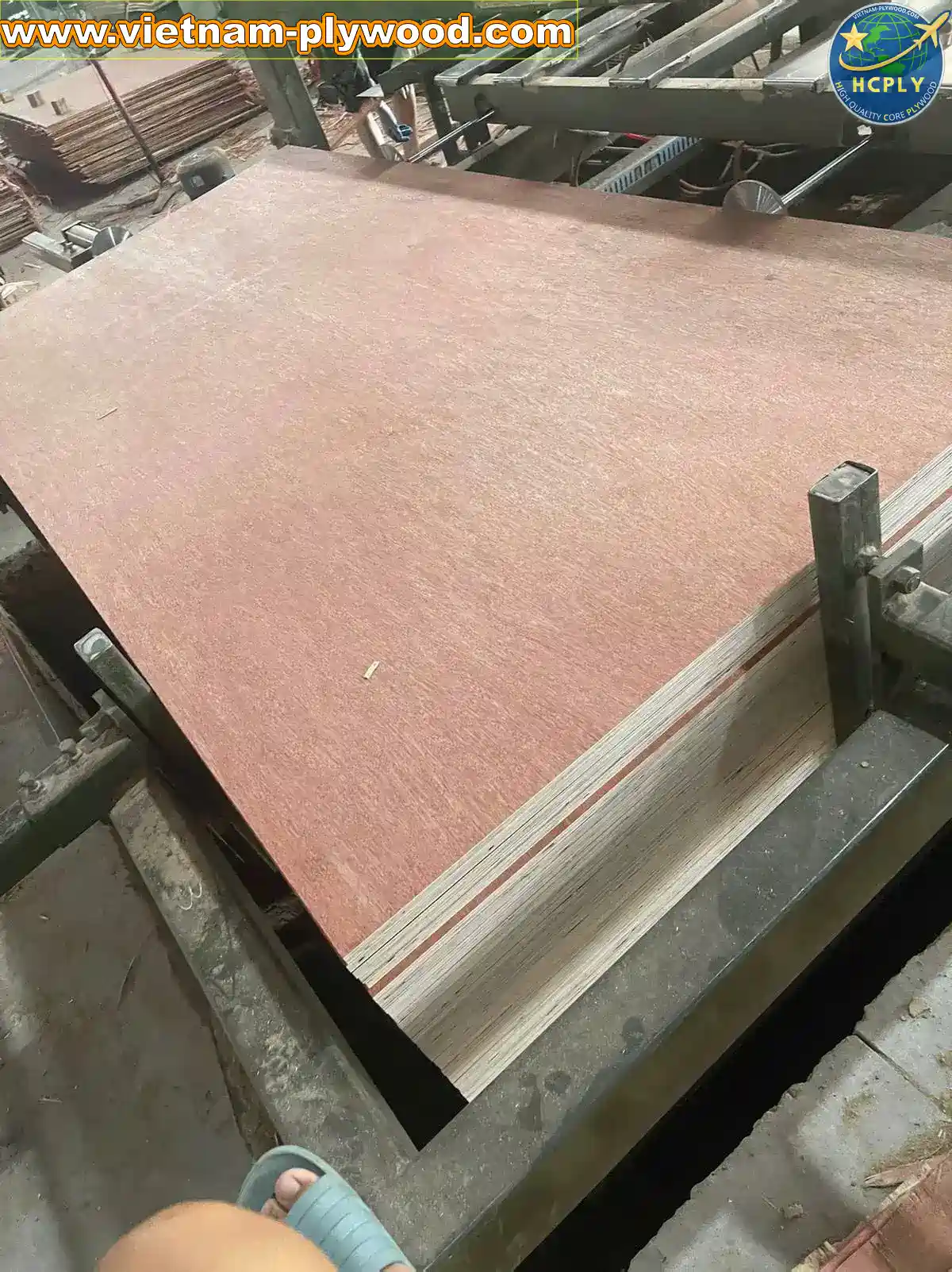


Loading 200+ containers of plywood per month, we see the same forklift mistakes cause the same damage — every shipment season. Dented panel edges, cracked face veneer, destabilized pallet stacks, even container floor damage from forklift point loads. All preventable.
This guide covers the 7 most critical forklift loading practices HCPLY applies when loading 40HC containers at our Phu Tho production facilities. These forklift tips for 40HC apply whether you are loading from a factory warehouse or a consolidation yard.
📦 Why 40HC Container Loading Is Different from Warehouse Work
A 40-foot high-cube container imposes constraints that warehouse forklift work does not. The floor load limit for a 40ft container is 3.0 tonnes per running meter (ISO 1496 standard), compared to a typical warehouse concrete slab rated at 5+ tonnes per m². Container floors — typically 28mm tropical hardwood planks over steel cross-members — can break under forklift point loads if the operator drives incorrectly.
The door opening height of a 40HC is approximately 2,574mm. Most counterbalance forklifts used in plywood factories have masts that must be fully tilted back before entry. Failure to check mast clearance before driving in is how door frames and mast tips get damaged.
There are also width constraints. The internal width of a standard 40HC is 2,352mm. A pallet of 1220×2440mm plywood occupies 1,220mm in width. Two pallets side-by-side = 2,440mm — wider than the container interior. This is why the standard loading layout for plywood uses a 4×4 flat layout (4 rows × 4 pallets = 16 pallets lying flat) plus 2 pallets stood upright at the head, not a 2-wide layout. Understanding the geometry before the first fork entry prevents repositioning problems mid-load.
⚠️ Important: Always verify your forklift’s mast collapsed height against container door opening before entering. Forcing a mast against the door header collapses the door frame — a costly and time-consuming incident.
🔧 Tip 1: Inspect the Container Floor Before Any Load Enters
Before the first pallet goes in, walk the container floor. Look for:
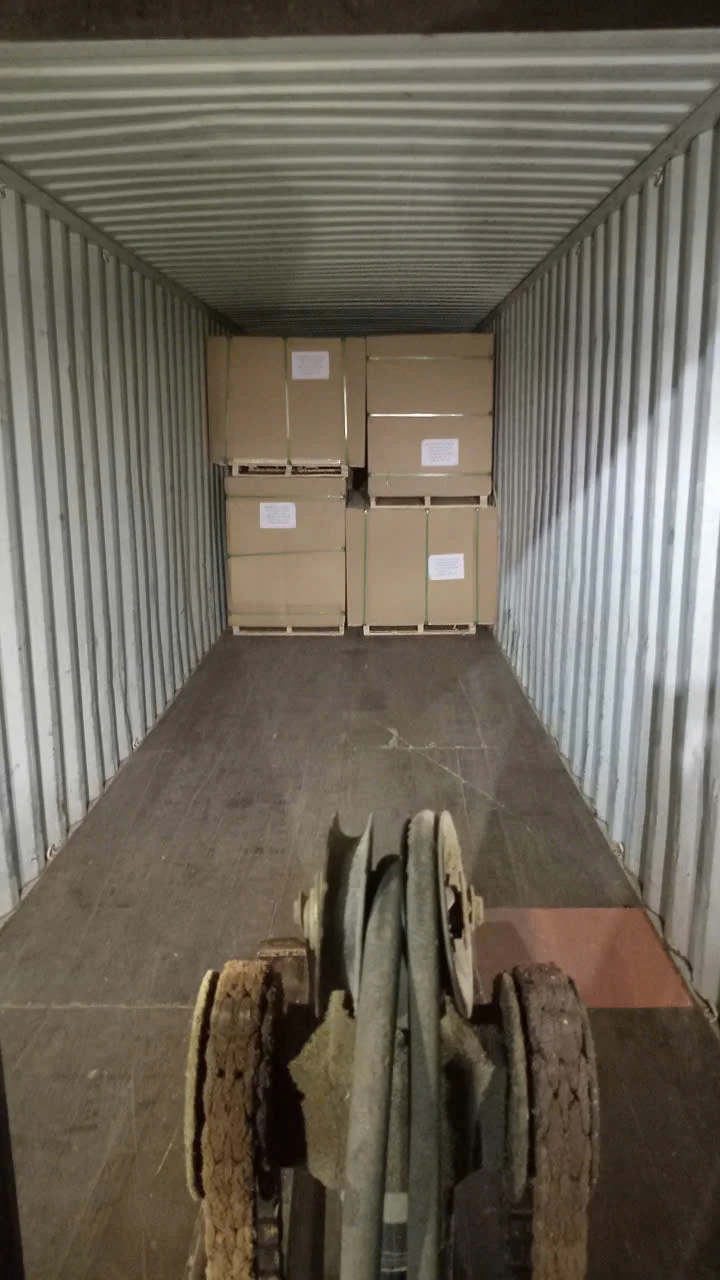
- Soft spots — press with your heel near the cross-member gaps. Any flex beyond 5mm signals a damaged plank.
- Rust stains through the planks — heavy corrosion on the steel cross-members transfers to the floor boards and weakens them.
- Previous punctures or repairs — repaired patches can hold static load but fail under the rolling point load of a forklift wheel.
- Moisture — a damp container floor causes pallet base rot and risks forklift wheel slippage, especially on steep forklift ramps.
If the floor has any of the above, request a container swap from the shipping line. A damaged floor that fails under load delays the shipment and potentially voids cargo insurance coverage (most marine cargo policies exclude damage caused by known defective equipment, TIS-GDV Container Floor Standards, 2024).
🔧 Tip 2: Use Correct Fork Entry Angle — Always Perpendicular
The most common cause of plywood edge damage during loading is forks entering the pallet at an angle. When the fork tine approaches at 5–10° off-perpendicular, the tip digs into the pallet stringer or into the bottom sheet’s edge, scoring the veneer.
Standard practice at HCPLY production facilities:
- Align the forklift squarely in front of the target pallet — mast perpendicular to the pallet face.
- Confirm fork width matches the pallet stringer spacing (standard: 600mm between fork pockets for 1220mm-wide plywood pallets).
- Insert forks fully until the heel contacts the pallet face — partial fork entry shifts the load forward of the axle, reducing forklift stability.
- Tilt mast back 2–3° before lifting — this prevents the top sheets from sliding forward off the pallet.
💡 Tip: Mark fork entry points on pallet faces with painted lines during packing. Operators who load 50+ pallets per day develop angle drift — visual guides correct this without supervisor intervention.
🔧 Tip 3: Follow the 4×4 Loading Sequence — Rear First
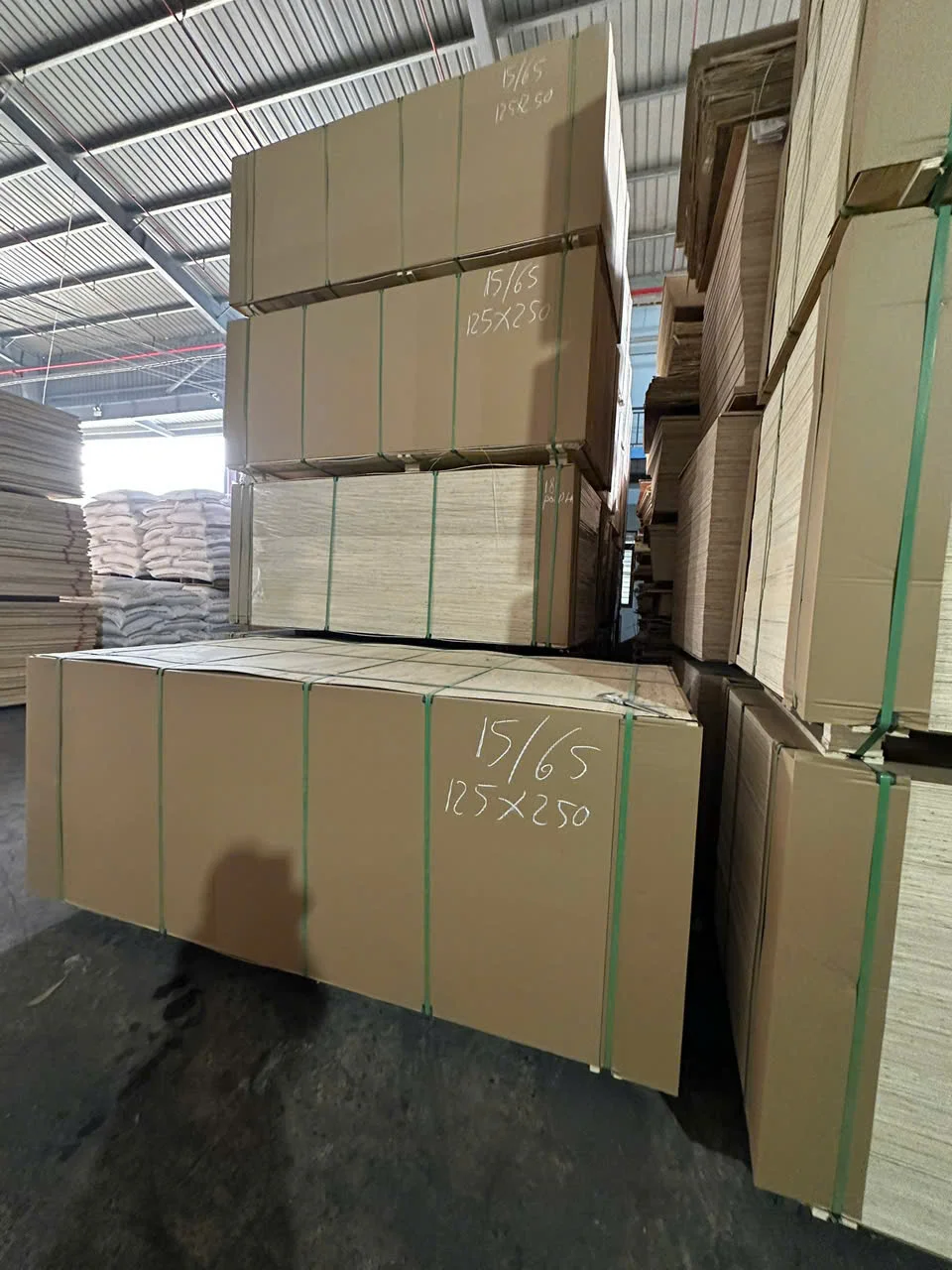
The standard 40HC plywood loading sequence is rear-to-front, center first. Load the container in this order:
Phase 1 — Rear 2 rows (Positions 1–8): Load rows 1 and 2 first, from the far end of the container. Center pallets first (positions 3 and 6 of each row), then side pallets (positions 1–2 and 7–8). This builds a stable rear anchor before the forklift must reverse deep into the container.
Phase 2 — Middle 2 rows (Positions 9–16): Continue front-to-back pattern. At this point the forklift is partially inside the container — operator must maintain straight reversing line to avoid hitting placed pallets.
Phase 3 — 2 standing pallets at container head (Positions 17–18): For styrax-core shipments (18 pallets), the final 2 pallets stand upright at the door end, resting against the last flat row. Use a single-pallet attachment or tip-up method. Secure with strapping before door closure.
“We developed this sequence after testing six different loading orders across real shipments,” said Lucy, International Sales Manager at HCPLY. “Rear-first loading gives operators a clear visual reference and reduces the reversing corrections that cause pallet tip incidents.”
This sequence also distributes the cargo weight more evenly across the container’s cross-members, reducing the peak floor stress concentration that occurs when heavy pallets are placed side-by-side at the door end.
🔧 Tip 4: Never Drive Along the Container Side Walls
A common mistake in high-volume loading yards: operators drive the forklift close to the container side wall to position the final row. This concentrates the forklift’s axle load on the edge cross-members, which are the container floor’s weakest structural zone.
According to industry data from MHLNews (2023), the most frequent cause of container floor failure during loading is forklift operators driving along the side wall rather than the center path. Once the edge plank fractures, the entire loading operation stops.
The rule: Forklift travel path inside the container stays within the center 1,200mm of the container floor. Pallets at side positions (column 1 and column 4 in a 4-wide layout) must be placed by extending forks laterally while the forklift body remains on the center path.
For 1220×2440mm pallets in a 4-row layout, the outer pallets sit approximately 550mm from the container wall — reachable with standard fork reach from the center position without repositioning the forklift body.
🔧 Tip 5: Match Pallet Stack Height to Core Species Weight
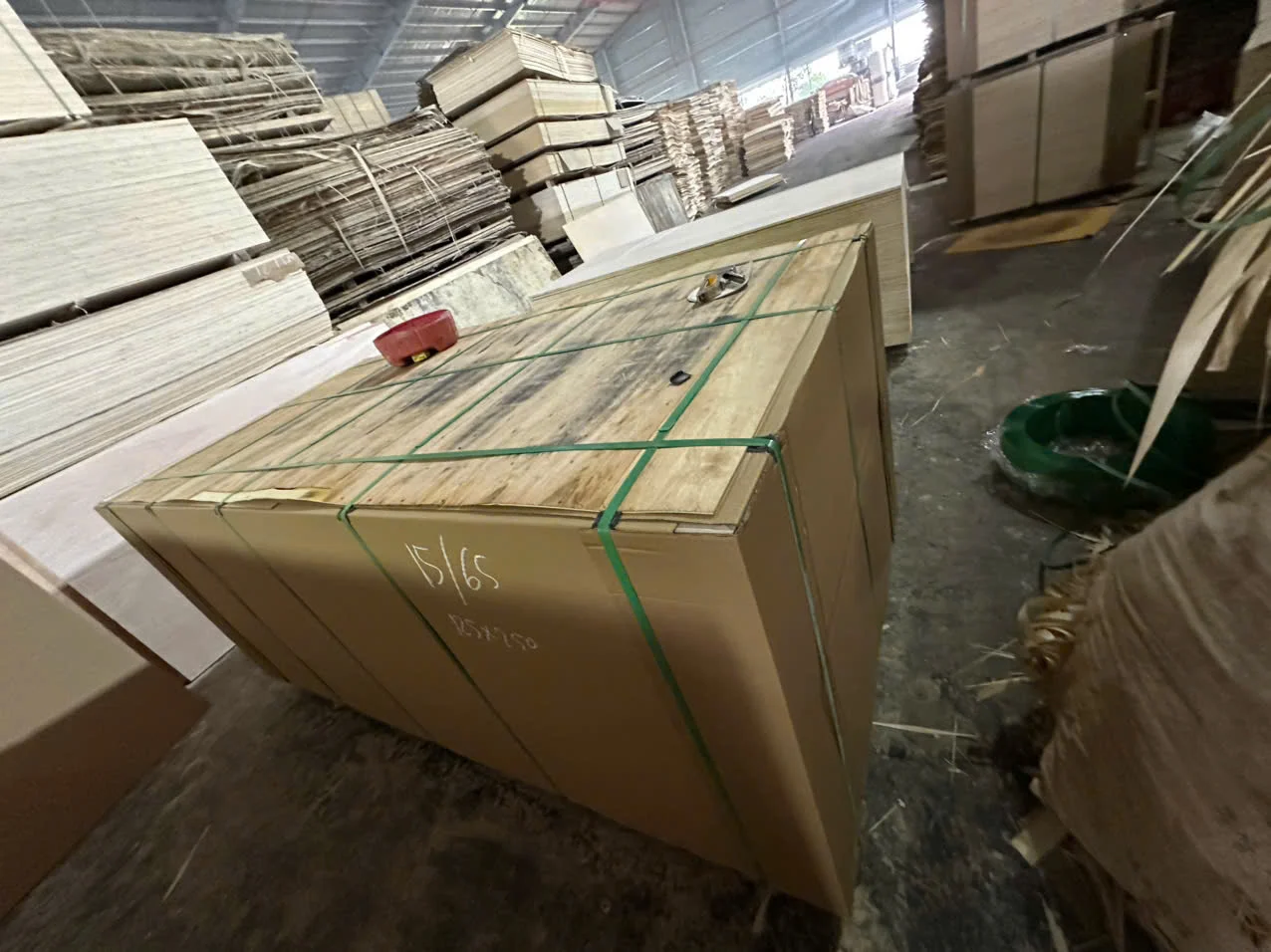
Pallet stack height directly affects forklift stability during transport inside the container. For plywood, the factory-standard maximum pallet height is 1,000mm. This limit is not arbitrary — it reflects the stability geometry of a 1220×2440mm footprint at typical plywood density ranges.
The core species determines how many sheets per pallet reach this height limit:
| Core Species | Density (kg/m³) | Sheets at stack limit (18mm) | Approx. Weight/Pallet |
|---|---|---|---|
| Styrax | 480–500 | 55 sheets (1000mm stack) | ~1,474 kg |
| Acacia | ~580 | 55 sheets (1000mm stack) | ~1,711 kg |
| Eucalyptus | 650–750 | 53 sheets (970mm stack) | ~1,844 kg |
Eucalyptus-core pallets (53 sheets at 970mm stack, 18mm) weigh approximately 1,844 kg. At this weight, a counterbalance forklift must have a rated capacity of at least 2.5 tonnes at the fork load center to maintain safe stability margin. Styrax-core pallets (55 sheets, ~1,474 kg) are the lightest of the three species. Verify your forklift’s capacity plate before loading each core species.
For a detailed breakdown of sheets per pallet by thickness and core species, refer to Plywood Container Packing Calculation — Factory-Level 40HC Packing Tables.
🔧 Tip 6: Secure Every Pallet Before the Forklift Exits
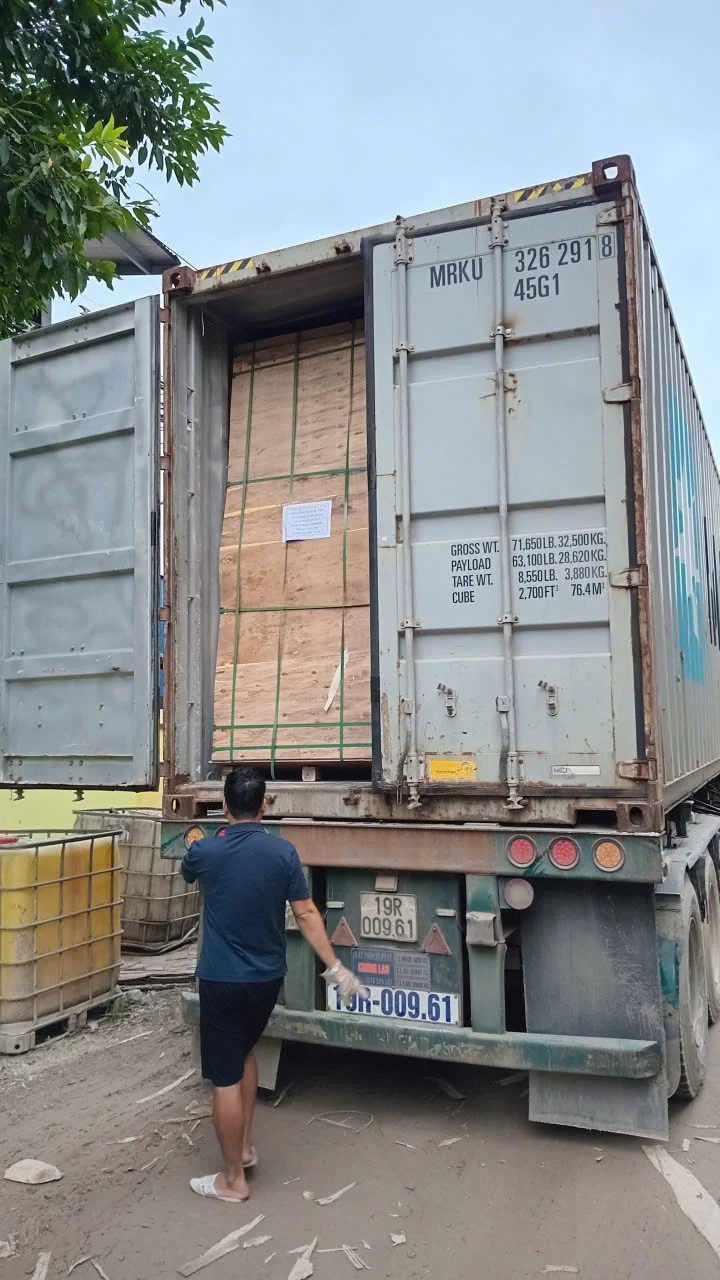
Each pallet should be strapped before the forklift deposits it in final position. The standard strapping specification for a 1220×2440mm plywood pallet loaded into a 40HC:
- 2 polypropylene straps across the width (short axis of the panel), spaced 600mm apart
- 1 strap across the length (long axis), if panels are shorter than 2000mm
- Strap tension: 350–450 kgf for polypropylene (hand-operated tensioner)
- Corner protection boards: hardboard or cardboard angle protectors, minimum 70×70mm, at all 4 vertical corners
Strapping before placement — not after — prevents the scenario where a pallet placed in the container row loosens under lateral forklift pressure from adjacent pallet placement. A loose pallet in a container rear row can slide and destabilize the entire column when the container hits rough road on the way to port.
HCPLY’s export-grade packing standard (updated Q1 2026) requires photo documentation of strapping at each pallet before container doors close — this photo goes into the shipment QC report and protects against damage claims at destination.
Get a Free Quote with Accurate Container Loading Plan
🔧 Tip 7: Log Weight and CBM Before Door Seal
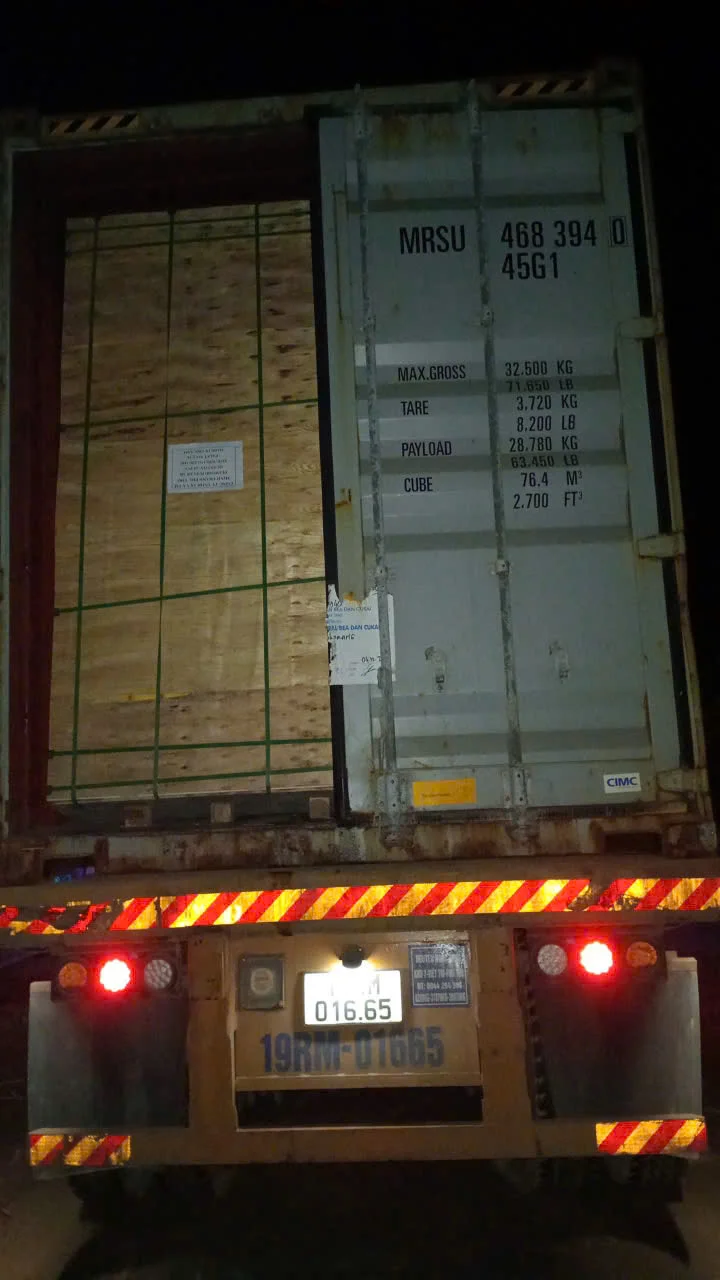
Before the container doors close, confirm three numbers against the original packing list:
- Total CBM loaded — count pallets × pallet volume
- Estimated gross weight — CBM × core density (kg/CBM). Cross-check against Plywood Core Types Guide — Acacia vs Eucalyptus vs Styrax for accurate density values.
- Container max payload — 40HC standard payload is 28,500 kg (hard limit, not a target)
If the estimated gross weight exceeds 28,500 kg, remove the highest-weight pallet from the load before sealing. Overloaded containers are rejected at port, returned to the warehouse, and re-stuffed — typically a 2–3 day delay and additional cost per incident.
For mixed-spec shipments (two or more core species in one container), calculate weight per product line and sum totals. A common scenario: 10 pallets of 18mm eucalyptus-core (heavier) + 8 pallets of 12mm styrax-core (lighter). Each pallet type has a different CBM and weight per sheet, requiring separate calculations before combining.
For the complete mixed-spec packing guide, see Plywood Pallet Configuration — Standard Height, Stacking, and Forklift Limits.
📊 Plywood Container Loading Checklist — Before First Fork Entry
| Step | Action | Verify |
|---|---|---|
| Container inspection | Walk floor, check for soft spots and moisture | Pass/Fail |
| Mast clearance | Confirm mast collapsed height < door opening | Pass/Fail |
| Fork angle setup | Forks perpendicular, width matches pallet stringer | Visual |
| Loading sequence | Rear-first, center pallet first per row | Sequence card |
| Travel path | Forklift body stays on center 1200mm | Spotter present |
| Stack height | ≤1000mm per pallet, verify by core species | Tape check |
| Strapping | 2 cross-straps + corner protection per pallet | Photo log |
| Weight check | Gross weight < 28,500 kg before door seal | Packing list |
📋 Conclusion
Container loading errors are operational and preventable — they do not originate from product defects. These forklift tips for 40HC address the most frequent incidents HCPLY’s on-site QC team has documented across 200+ monthly container loads: floor damage from incorrect forklift paths, edge scoring from angled fork entry, and overload incidents from missed weight calculations.
Applying these practices reduces container loading incidents to near zero. The result: fewer damage claims at destination, cleaner export documentation, and a predictable cost-per-container that supports accurate CIF pricing for your buyers.
HCPLY provides factory-direct loading oversight with photographic QC records for every container shipped. Buyers receive pallet-by-pallet photos, strapping confirmation, and signed packing lists before vessel departure.
Contact HCPLY for Factory-Direct Container Loading with Full QC Documentation