


International plywood buyers face a regulatory environment that has grown significantly more complex since 2020. The EU Deforestation Regulation, expanded US emission enforcement, India’s BIS mandatory marking, and Japan’s updated JAS requirements have created a situation where a single plywood shipment may need to satisfy four or five independent compliance frameworks simultaneously. Most buyers understand they need “some kind of certification” but cannot articulate precisely which plywood certifications apply to their specific market, what each certification actually tests, or how to verify that a supplier’s claims are legitimate.
This guide covers every major plywood certifications and export documentation requirement that international buyers encounter. Each section explains what the certification tests, which markets require it, how compliance is verified, and what documentation buyers should request from their supplier. The technical distinctions — particularly the critical separation between glue type and emission standard — are explained with factory-level precision.
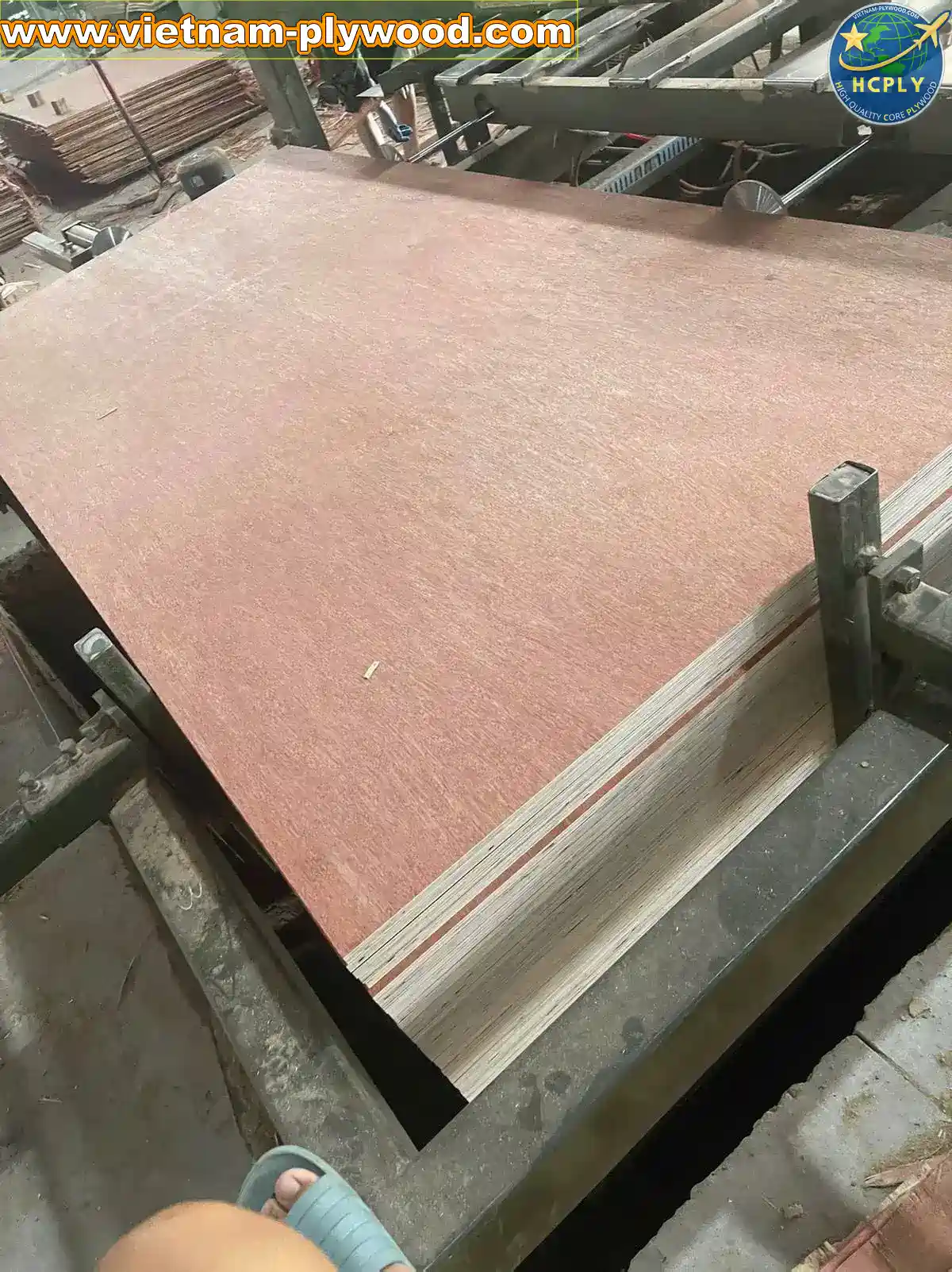
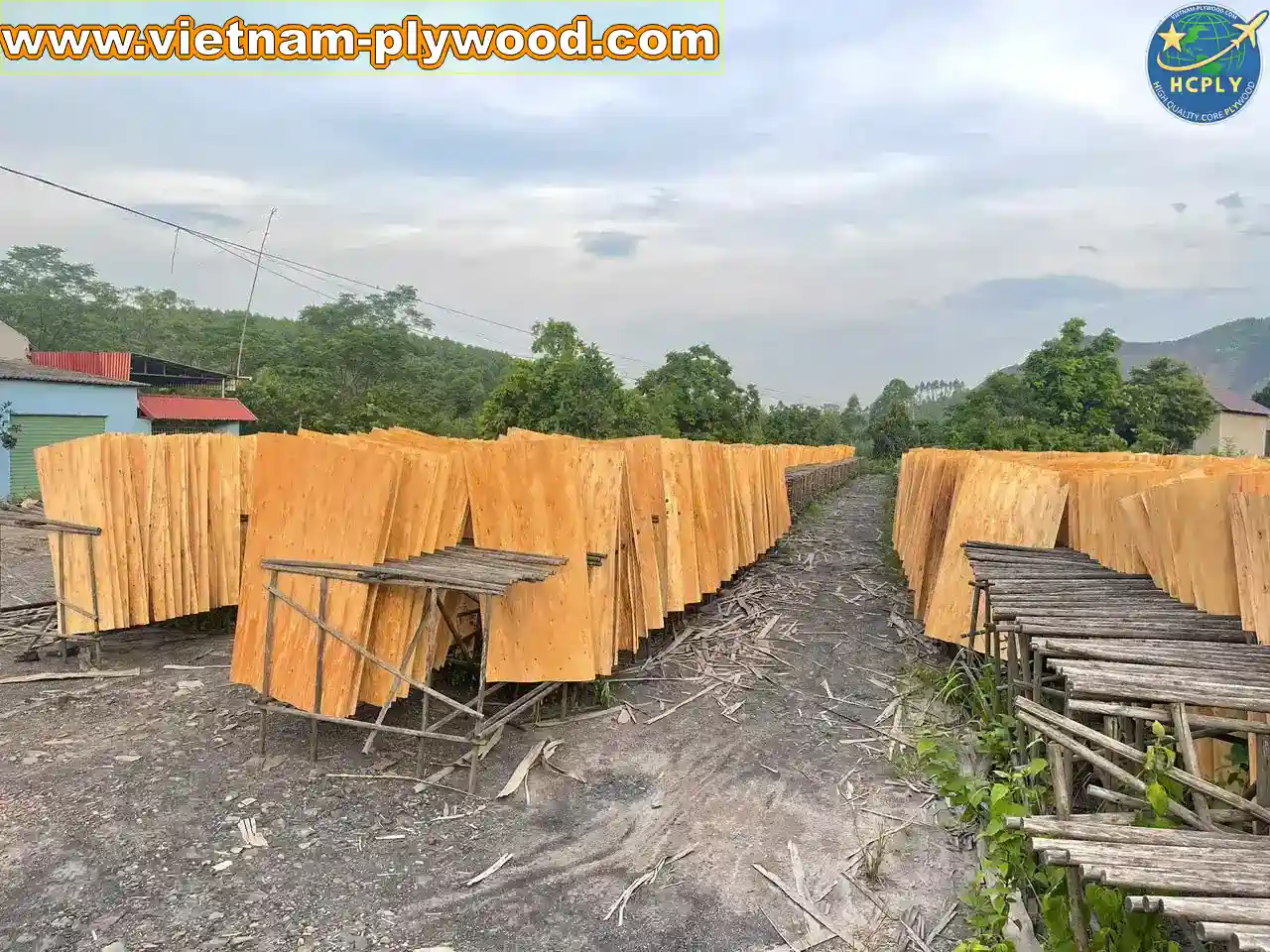
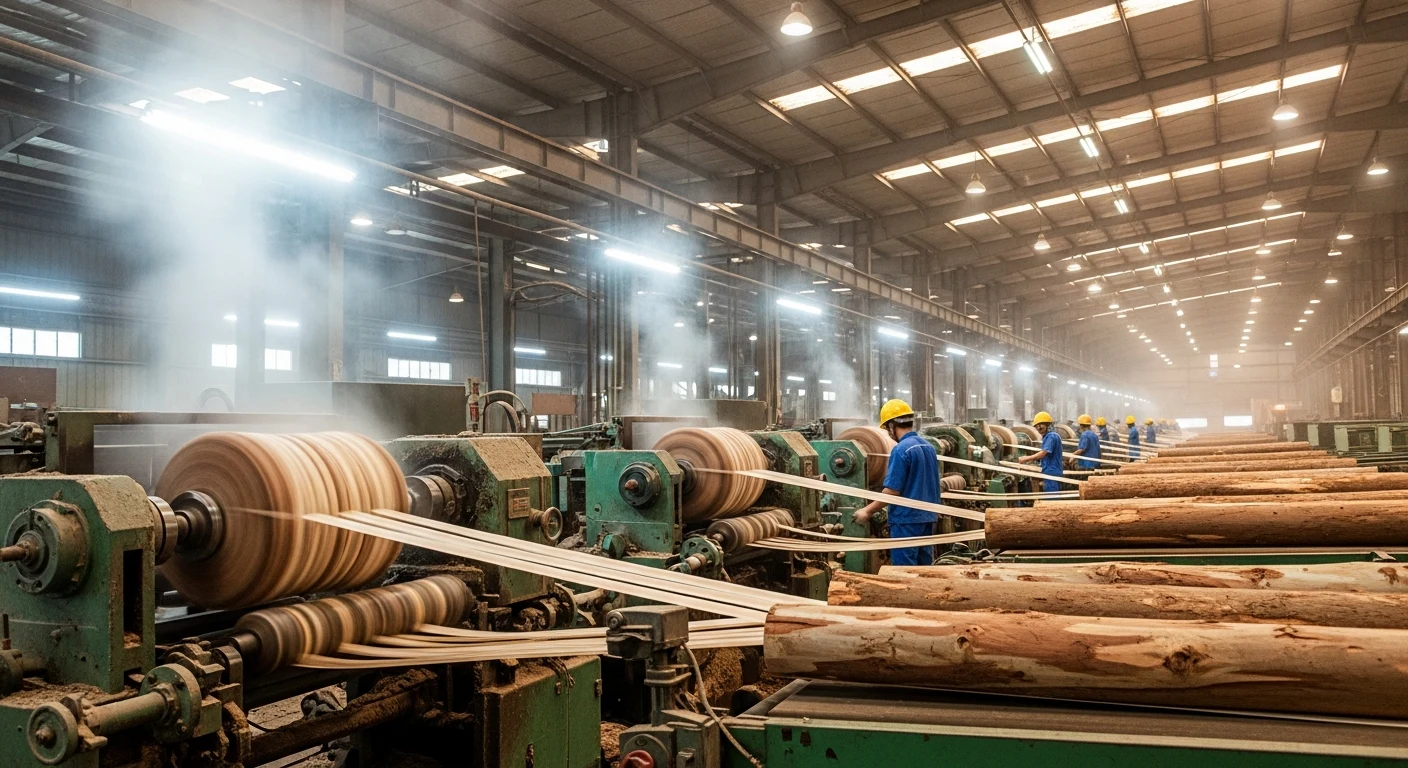
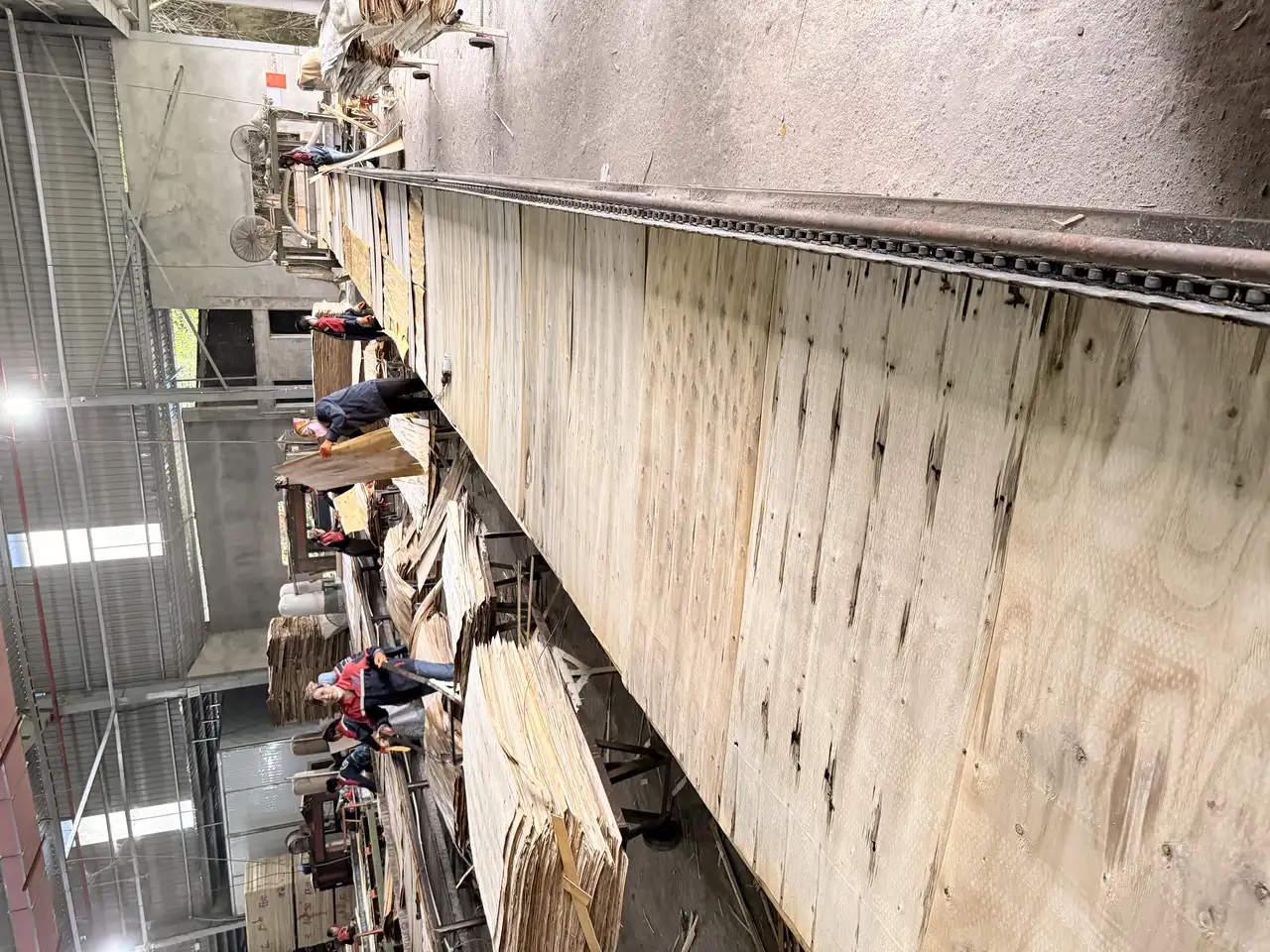 HCPLY production facilities — certified under FSC, CARB P2, CE Marking, and ISO 9001 for full plywood certifications stack across all major export markets
⚠️ Important: Certification requirements change. This article reflects regulations current as of February 2026. EUDR enforcement timelines, US AD/CVD duty assessments, and Indian BIS protocols are subject to regulatory updates. Verify current requirements with your customs broker or trade compliance advisor before shipping.
📋 Section 1 — Quality & Environmental Certifications
Quality and environmental certifications verify two things: that the plywood is manufactured under controlled, documented processes (quality management), and that the raw materials originate from responsible sources (environmental stewardship). For most B2B export transactions, these certifications are the baseline requirement before market-specific compliance even begins.
📌 FSC — Forest Stewardship Council
FSC certification is the most recognized sustainable forestry certification globally. For plywood buyers, the relevant certification is FSC Chain of Custody (CoC), certified under FSC-STD-40-004 V3-1. This standard traces wood fiber from certified forest plantations through every stage of manufacturing — veneer peeling, drying, pressing, finishing — to the final packaged product.
There are three FSC product labels buyers encounter:
- FSC 100% — All wood fiber in the product comes from FSC-certified forests. The most stringent label. Requires that the manufacturer maintain complete material separation between FSC and non-FSC inputs throughout production.
- FSC Mix — Wood fiber comes from a mixture of FSC-certified forests, controlled wood sources, and/or recycled material. The most common label for plywood, because plantation timber supply chains frequently include both certified and controlled wood sources.
- FSC Recycled — Wood fiber comes entirely from recycled sources. Rarely applicable to plywood manufacturing.
For practical purposes, FSC Mix is the standard plywood certification that most international buyers receive. FSC 100% is available from HCPLY on advance booking — it requires pre-allocation of FSC-certified raw material inputs, which adds lead time to the order.
Where FSC is required:
- European Union — EU public procurement projects frequently mandate FSC or PEFC for timber products. Major European retailers (IKEA, Kingfisher, Saint-Gobain) require FSC as a supplier qualification.
- North America — LEED green building projects accept FSC as evidence of responsible sourcing. Federal government procurement increasingly references FSC.
- Japan and Australia — FSC is the preferred sustainability credential for institutional buyers.
Verification: Every FSC certificate has a unique license code (format: FSC-C######). Buyers can verify any FSC certificate at info.fsc.org by entering the license code. HCPLY’s FSC CoC is issued by SGS and is independently verifiable.
HCPLY holds active FSC Chain of Custody certification covering FSC 100% and FSC Mix plywood and LVL production. See Quality Certifications for certificate details.
📌 PEFC — Programme for the Endorsement of Forest Certification
PEFC is the world’s largest forest certification system by certified area. It operates through mutual recognition of national forest certification schemes — meaning PEFC endorses country-specific standards rather than imposing a single global standard.
For plywood buyers, PEFC serves as an alternative to FSC in markets where FSC is not specifically mandated. Some European procurement frameworks accept “FSC or PEFC” equivalently. The practical difference for importers is that PEFC’s national scheme approach means certification availability varies by country of origin.
In Vietnam, PEFC recognition operates through the Vietnamese PEFC national body. HCPLY’s primary forest certification is FSC, which has broader buyer recognition in the markets Vietnam plywood serves (EU, US, India, Korea, Japan, Australia).
📌 ISO 9001 / ISO 14001 — Quality & Environmental Management
ISO 9001:2015 certifies that a manufacturer operates a documented Quality Management System (QMS). It does not certify product quality directly — it certifies that the manufacturing process is controlled, measured, and continuously improved. For plywood buyers, ISO 9001 certification signals that the factory has documented procedures for raw material inspection, production control, testing, non-conformance handling, and customer complaint resolution.
ISO 14001:2015 certifies an Environmental Management System (EMS) covering waste management, emission control, energy use, and environmental compliance at the manufacturing facility.
Both certifications are issued by accredited certification bodies following international accreditation standards. They are not market-specific — ISO 9001 and ISO 14001 are universally recognized across all export markets. Many B2B buyers include ISO 9001 as a minimum vendor qualification requirement in their procurement specifications.
HCPLY operates under ISO 9001:2015 quality management covering manufacturing, inspection, and export operations.
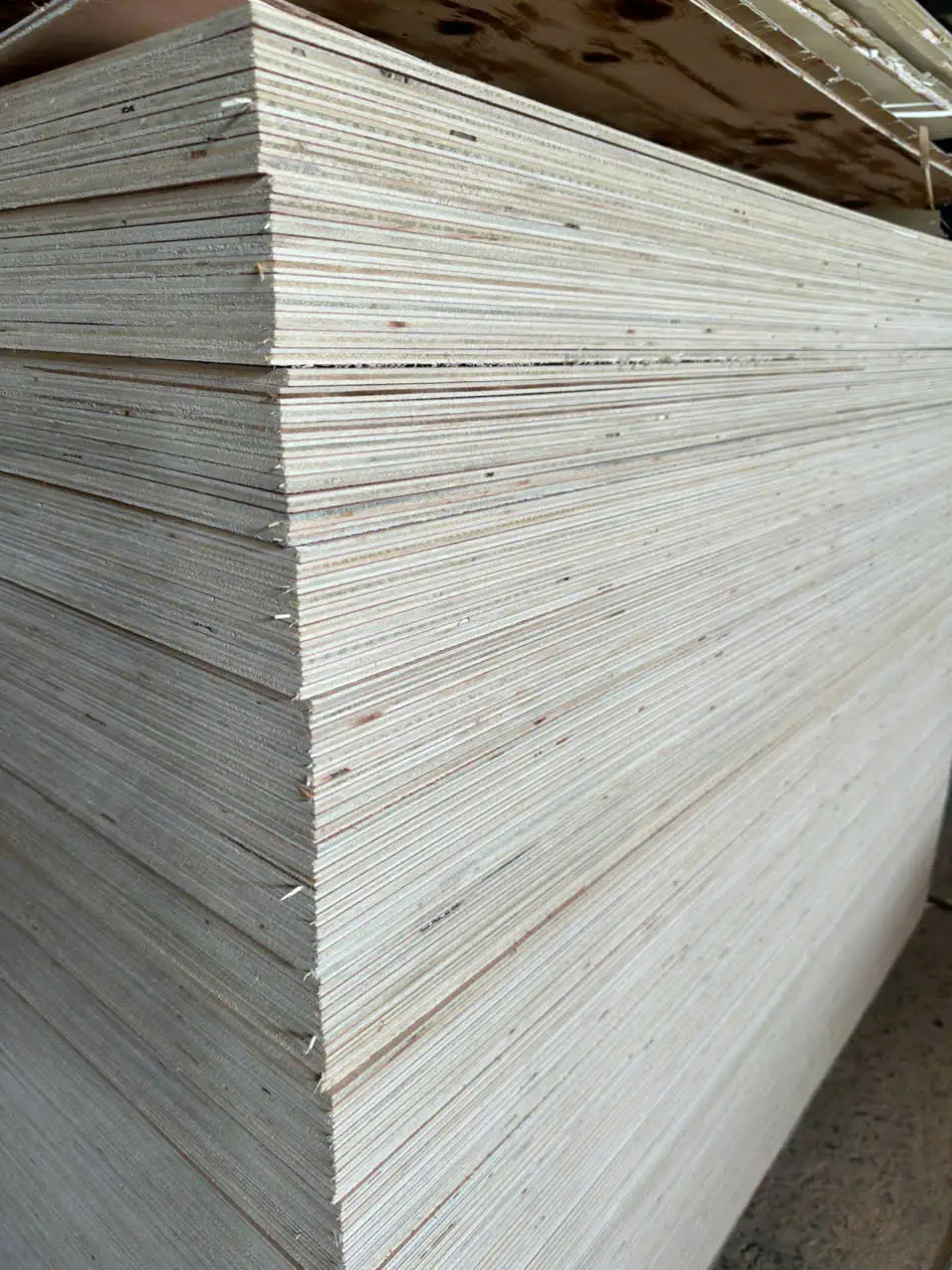 Edge inspection at HCPLY — bonding strength verification is a core component of all major plywood certifications including FSC CoC and CE Marking
“Buyers often send me a list of certifications they need — FSC, CARB, CE, EUDR — and ask if we have them all. The answer is yes, but more importantly, we can explain exactly what each one covers and send verified documents within 24 hours. That transparency is itself a certification signal.” — Ms. Lucy Pham, International Sales Manager, HCPLY
Request your full plywood certifications package — digital copies of FSC CoC, CARB P2, CE DoP, and EUDR documentation available within 24 hours.
🧪 Section 2 — Emission & Health Standards
Formaldehyde emission standards are the single most misunderstood area of plywood certifications. The fundamental confusion: emission standard is NOT the same as glue type. This distinction is critical for buyers writing purchase specifications, and getting it wrong causes customs delays, rejected shipments, and compliance failures.
⚠️ Critical Distinction: Emission Standard vs Glue Type
Plywood uses two primary adhesive categories:
| Property | Melamine (MR) | Phenolic (WBP) |
|---|---|---|
| Water resistance | 12-hour boil test | 72-hour boil test |
| Primary application | Furniture, cabinets, interiors | Construction, formwork, marine |
| Common name | MR (Moisture Resistant) | WBP (Water Boiled Proof) |
Separately, formaldehyde emission is classified by testing:
| Emission Class | Limit | Test Method | Primary Market |
|---|---|---|---|
| E0 | ≤0.5 mg/L | EN 717-1 (chamber) | EU, Asia premium |
| E1 | ≤1.5 mg/L | EN 717-1 (chamber) | EU general |
| E2 | >1.5 mg/L | EN 717-1 (chamber) | Budget markets |
| CARB P2 | ≤0.05 ppm | ASTM E1333 (large chamber) | United States |
| F★★★★ | ≤0.3 mg/L | JIS A 1460 (desiccator) | Japan |
The correct way to specify: “Glue: Melamine (MR). Emission: E0.” or “Glue: Phenolic (WBP). Emission: E1.”
The wrong way to specify: “Glue: MR, E0” (mixes two concepts) or “E0 glue” (E0 is not a glue type).
Both MR and WBP glue systems can achieve E0, E1, or E2 emission levels. The emission result depends on the adhesive formulation chemistry — specifically the formaldehyde-to-resin ratio — not the adhesive category. A Melamine (MR) adhesive with optimized low-formaldehyde formulation achieves E0. A Phenolic (WBP) adhesive with standard formulation may test at E1 or E2.
For a deeper technical analysis of glue types and emission classifications, see the plywood glue types and emission standards guide.
📌 CARB P2 — California Air Resources Board Phase 2
CARB Phase 2 is the formaldehyde emission standard that governs all composite wood products sold, offered for sale, supplied, or manufactured for sale in California — and by extension, the entire United States. Since June 2018, the EPA’s TSCA Title VI federal rule adopted identical emission limits, making CARB P2 a de facto national standard.
Key facts:
- Limit for hardwood plywood: ≤0.05 ppm formaldehyde (ASTM E1333 large chamber test)
- CARB P2 = TSCA Title VI for hardwood plywood. They are the same standard. A CARB P2 certified product automatically meets TSCA Title VI. Buyers do NOT need separate certifications.
- Third Party Certifier (TPC): Every manufacturer must be certified by an EPA-recognized TPC. The TPC conducts initial facility inspection, quarterly emission testing, and annual audits. HCPLY’s TPC is ICTT Corporation, IAS accredited (PCA-129).
- Label requirement: All CARB P2 panels must be labeled with the manufacturer name, lot number, TPC name, and standard reference.
For importers: you do not obtain CARB P2 certification — your manufacturer does. Your role is to verify that the supplier holds active TPC certification and that the product labeling is correct. Importers must maintain records of the manufacturer’s TPC certification for a minimum of 3 years.
HCPLY holds active CARB Phase 2 / EPA TSCA Title VI certification covering hardwood plywood veneer core (HWPW-VC) across the full thickness and ply-count range. See the US compliance guide for Vietnam plywood for detailed CARB P2, TSCA, and Lacey Act integration.
📌 E0 / E1 / E2 — European Emission Classification
The European emission classification system uses EN 717-1 (chamber method) or EN 120 (perforator method) to measure formaldehyde release from wood panels:
- E0: ≤0.5 mg/L (perforator) or ≤0.05 mg/m3 (chamber) — premium low-emission. Required for furniture exported to EU, Japan, Korea, and increasingly Australia.
- E1: ≤8 mg/100g (perforator) or ≤0.124 mg/m3 (chamber) — general EU compliance. The maximum allowed for unrestricted indoor use in most EU member states.
- E2: >8 mg/100g (perforator) — restricted use. Acceptable only in limited applications, primarily industrial and outdoor. Not acceptable for furniture or interior applications in regulated markets.
For buyers importing into the EU, E1 is the minimum legal threshold for plywood sold for interior use. E0 is not legally required but has become the market standard for furniture-grade plywood supplied to major EU retailers and OEMs.
HCPLY manufactures plywood in E0, E1, and E2 emission classes. E0 / CARB P2 is standard production for birch plywood, okoume plywood, EV plywood, and other furniture-grade products. E2 is available for packing plywood and budget commercial specifications.
Japanese F★★★★ (F-Four-Star)
The Japanese Industrial Standard (JIS) uses a star rating system for formaldehyde emission:
| Rating | Emission Limit | Equivalent |
|---|---|---|
| F★★★★ | ≤0.3 mg/L (JIS A 1460 desiccator) | Closest to E0 / CARB P2 |
| F★★★ | ≤0.5 mg/L | Between E0 and E1 |
| F★★ | ≤1.5 mg/L | Approximately E1 |
| F★ | ≤5.0 mg/L | Above E2 |
F★★★★ (F-four-star) is the strictest emission standard in the Japanese market and one of the strictest globally. It is required for plywood used in Japanese residential construction and interior applications without usage restrictions.
The testing method (JIS A 1460 desiccator method) differs from both the European EN 717-1 chamber and the American ASTM E1333 large chamber. Direct numerical comparison between standards requires conversion factors. However, a plywood product that achieves CARB P2 (≤0.05 ppm ASTM E1333) will typically meet F★★★★ (≤0.3 mg/L JIS A 1460).
For buyers targeting the Japanese market, specifying F★★★★ explicitly is recommended — rather than assuming E0 or CARB P2 equivalence — because Japanese customs and building inspectors reference JIS standards specifically.
🌍 Section 3 — Market-Specific Certifications
Beyond universal quality and emission standards, individual markets impose region-specific certification requirements. These are frequently the certifications that catch first-time importers off guard — particularly CE Marking, EUDR, and BIS, which are legally mandatory in their respective jurisdictions.
CE Marking — European Union
CE Marking for plywood is not a general quality mark — it is specifically a declaration of conformity with the EU Construction Products Regulation (CPR) under EN 13986:2004+A1:2015 (wood-based panels for use in construction).
What CE Marking covers for plywood:
- Bonding quality — tested per EN 314-1/2. Determines the bonding class (Class 1 for dry conditions, Class 2 for humid, Class 3 for exterior).
- Formaldehyde emission class — E1 or E0, tested per EN 717-1.
- Reaction to fire — classified per EN 13501-1. Most plywood achieves Class D-s2,d0.
- Bending strength and stiffness — for structural applications, tested per EN 310.
- Dimensional tolerance — thickness and panel dimensions per EN 315.
Assessment system 2+ requires a Notified Body to certify the manufacturer’s factory production control (FPC). The manufacturer (not the importer) is responsible for maintaining FPC and issuing the Declaration of Performance (DoP) for each product covered by CE Marking.
HCPLY’s CE Marking is certified by Istituto Giordano S.p.A. (EC Notified Body No. 0407, ACCREDIA accredited), covering structural plywood for internal use (dry and humid conditions) and external structural use, 3.6–30mm thickness, MUF and Phenolic glue.
CE Marking is mandatory for plywood sold as a construction product within the European Economic Area (EEA). Plywood sold for non-construction applications (furniture, packaging) is exempt from CE Marking but still subject to other EU regulations (EUDR, REACH, E1 emission).
EUDR — EU Deforestation Regulation (2025)
The EU Deforestation Regulation (EU 2023/1115) is the most significant new regulatory requirement for plywood exporters since CARB P2. It replaces and extends the older EU Timber Regulation (EUTR, EU 995/2010).
What EUDR requires:
- Deforestation-free verification — Timber must not originate from land deforested after December 31, 2020. This is determined using satellite imagery and geolocation data.
- Geolocation of harvest plots — GPS coordinates of the specific plantation plots where timber was harvested. For individual plots smaller than 4 hectares, a single point coordinate is acceptable. For larger areas, polygon boundaries.
- Species identification — Scientific name of all wood species in the product. For Vietnam plywood: core species (Acacia mangium, Eucalyptus spp., Liquidambar formosana) and face species must be documented.
- Due diligence statement — Operators (importers placing the product on the EU market) must submit a due diligence statement through the EU’s information system before import.
- Risk assessment — Formal assessment that the supply chain presents negligible deforestation risk, based on country-level risk benchmarking and supply-chain-specific verification.
Impact on Vietnam plywood: Vietnam’s plywood industry uses plantation-grown acacia, eucalyptus, and styrax (all farm-planted species, not natural forest timber). This positions Vietnam plywood favorably for EUDR compliance — plantation timber with documented planting records carries inherently lower deforestation risk than natural forest timber.
However, EUDR compliance is a documentation requirement, not a product quality standard. Having FSC certification helps significantly because FSC’s CoC audit trail provides much of the traceability documentation EUDR demands. Suppliers without FSC certification must build parallel documentation systems.
HCPLY maintains complete EUDR due diligence documentation including plantation GPS coordinates, species verification, and deforestation risk assessment for every EU-bound shipment. For detailed EUDR compliance procedures, see EUDR due diligence for plywood importers.
BIS — Bureau of Indian Standards
India is one of the world’s largest plywood import markets, and BIS certification is BIS mandatory for India. The relevant standards:
| Standard | Coverage | Application |
|---|---|---|
| IS 303:1989 | General purpose plywood | Furniture, interior, commercial |
| IS 710:2010 | Marine plywood | Exterior, marine, high-moisture |
| IS 848 | Structural plywood | Construction, load-bearing |
BIS certification requires the manufacturer to submit product samples for testing at BIS-recognized laboratories, pass factory inspection by BIS assessors, and maintain ongoing compliance through periodic audits.
For importers: BIS certification is manufacturer-level — the factory must hold the BIS license before products can be shipped to India. Without valid BIS marking, plywood shipments will be rejected at Indian customs.
HCPLY’s BIS certification (IS 710 / IS 303) is currently in the application process. For Indian market buyers requiring BIS-marked plywood, contact HCPLY’s export team for current status and timeline. For comprehensive BIS certification details, see the BIS certification plywood India guide.
JAS — Japanese Agricultural Standard
JAS (Japanese Agricultural Standard) governs plywood grading, emission classification, and quality marking for the Japanese market. JAS plywood grading includes:
- Structural plywood grades (1st class, 2nd class) based on bonding strength and mechanical properties
- Veneer quality grades (A, B, C, D) based on face surface defects
- Emission grades (F★★★★, F★★★, F★★, F★) based on formaldehyde testing per JIS A 1460
JAS certification is issued by JAS-registered certification bodies following on-site factory inspection and product testing. For Vietnamese plywood manufacturers, obtaining JAS certification requires working with a Japanese-accredited inspection body.
JAS certification is particularly important for buyers supplying Japanese construction projects, public buildings, and residential housing — where JAS marking is a specification requirement.
Korean KS Standards
Korea uses the Korean Industrial Standards (KS) system for plywood. The primary standard is KS F 3113 (plywood), which covers bonding class, emission class, mechanical properties, and dimensional tolerances.
Korean emission requirements reference KS standards but are practically equivalent to E0/E1 classification. The Korean market accepts plywood with E0 certification from accredited international testing bodies.
For Vietnam plywood exported to Korea, HCPLY provides Certificate of Origin Form AK (under the ASEAN-Korea Free Trade Agreement) for preferential tariff treatment, along with emission test reports meeting Korean market requirements.
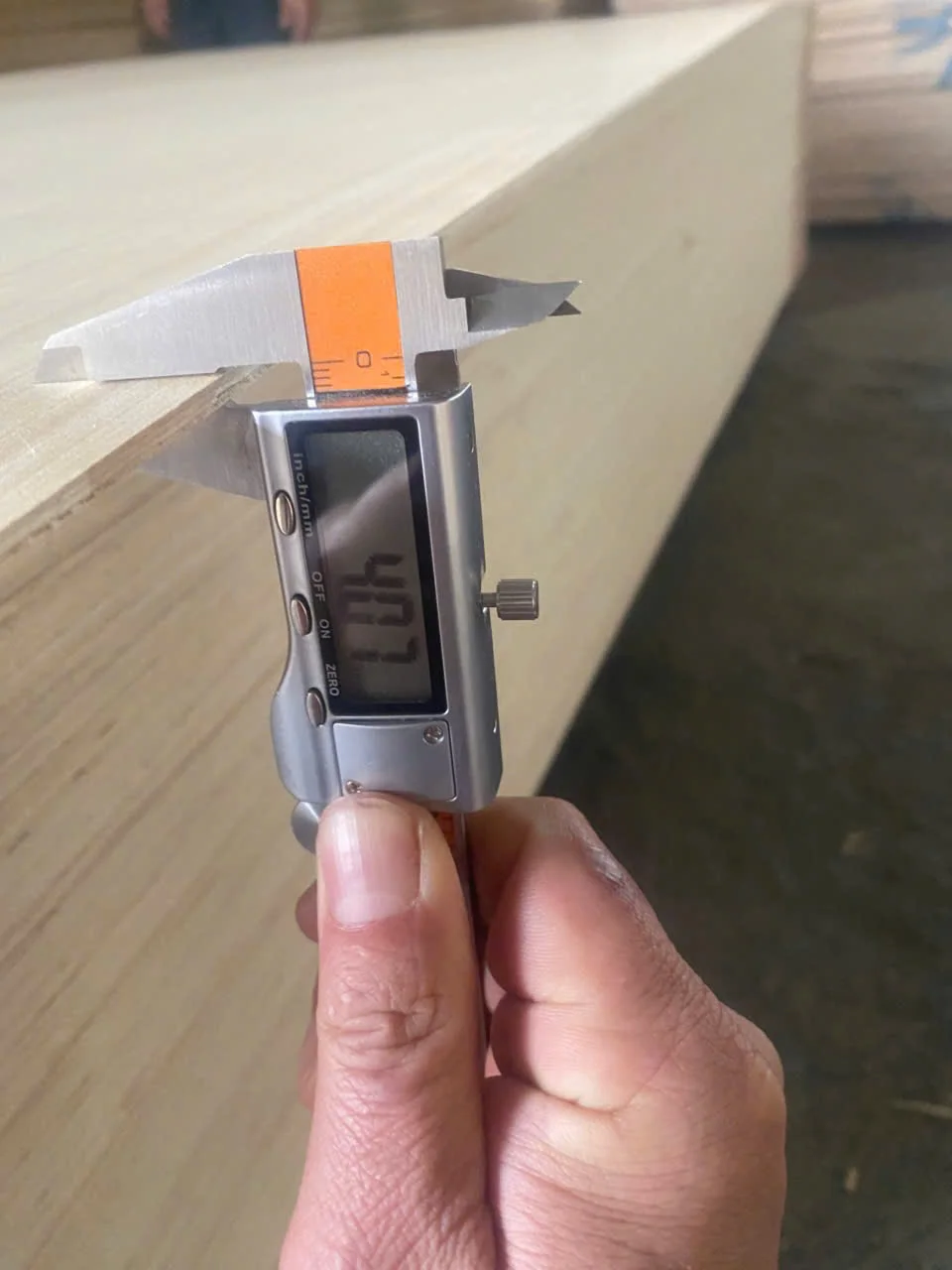 Thickness tolerance testing — one of several standardized tests underpinning major plywood certifications
📐 Section 4 — Plywood Testing Methods
Plywood certifications are only meaningful if backed by standardized testing. Understanding the primary testing methods helps buyers evaluate test reports and compare results across different standards.
Formaldehyde Emission Testing
Three primary test methods are used globally:
| Method | Standard | Equipment | Primary Market |
|---|---|---|---|
| Chamber method | EN 717-1, ASTM E1333 | Controlled climate chamber | EU, US |
| Perforator method | EN 120, ISO 12460-5 | Chemical extraction | EU (factory QC) |
| Desiccator method | JIS A 1460 | Glass desiccator | Japan, Korea |
The chamber method is considered the reference method for emission classification. It measures formaldehyde released from the panel surface into a controlled air volume at specified temperature and humidity over 28 days. ASTM E1333 (US) and EN 717-1 (EU) use the same principle with slightly different chamber specifications.
The perforator method measures total extractable formaldehyde from a drilled panel sample. It is faster and less expensive than chamber testing, making it the standard factory quality control method. However, perforator values must be converted to chamber-equivalent values for emission classification.
The desiccator method (JIS A 1460) measures formaldehyde absorbed by water from panel samples placed in a sealed glass desiccator. It is the standard method for Japanese F-star classification.
⚠️ Note: Test results from different methods are NOT directly comparable without conversion factors. An E0 result from EN 120 (perforator) cannot be directly compared to a CARB P2 result from ASTM E1333 (chamber). Always confirm the test method when reviewing emission test reports.
Bonding Strength Testing (EN 314)
EN 314-1 (test method) and EN 314-2 (classification) govern plywood bonding quality testing in the European system:
- Class 1: Dry conditions — test pieces pre-conditioned at ambient temperature. Minimum shear strength requirements.
- Class 2: Humid conditions — test pieces subjected to soaking and drying cycles before shear testing.
- Class 3: Exterior conditions — test pieces subjected to boiling water immersion (72 hours for WBP bonding) before shear testing.
For furniture plywood (Melamine MR glue), Class 1 or Class 2 bonding is standard. For construction and formwork plywood (Phenolic WBP glue), Class 3 bonding is required — and film faced plywood must meet Class 3 by definition.
Mechanical Property Testing
Structural plywood certifications (CE Marking, AS 6669, JAS structural grades) require testing of:
- Bending strength (MOR) — per EN 310
- Modulus of elasticity (MOE) — per EN 310
- Internal bond strength — per EN 319
- Tensile strength — per EN 789
HCPLY’s testing partner for physical and mechanical properties is SGS Vietnam. Test reports covering all these properties are available on request for structural plywood orders. Buyers can also nominate their own testing laboratory — HCPLY regularly ships samples to client-specified labs for independent verification.
 EU and US buyers reviewing plywood certifications during factory visit — on-site verification is the strongest form of due diligence
📦 Section 5 — Export Documentation Checklist
Plywood certifications address product compliance. Export documentation addresses trade compliance — the paperwork that enables a plywood shipment to clear customs at origin and destination ports without delay, penalty, or seizure.
Every plywood export shipment from HCPLY includes a standard documentation package. Additional certification documents are provided based on buyer requirements and destination market.
Standard Export Documents (Every Shipment)
- Commercial Invoice
The formal trade document listing seller (HCPLY), buyer, product description, quantity, unit price, total value, payment terms, and shipping terms (FOB Hai Phong, CIF destination, etc.). The commercial invoice must match the Bill of Lading and Packing List exactly — discrepancies cause customs clearance delays.
- Packing List
Detailed breakdown of container contents: number of pallets, sheets per pallet, panel dimensions, thickness, total volume (CBM), total weight (gross and net). HCPLY provides bundle-level packing lists showing exact sheet counts per thickness and specification within mixed containers.
For container packing specifications and calculation methods, see the plywood container packing calculation guide.
- Bill of Lading (B/L)
The shipping carrier’s receipt and contract of carriage. Available as original B/L (physical documents — required for Letter of Credit transactions) or telex release (electronic release — faster, used for T/T payment terms). The B/L is the document of title — whoever holds the original B/L has claim to the cargo.
- Certificate of Origin (C/O)
Certifies that the plywood was manufactured in Vietnam. Different preferential forms provide tariff reduction under trade agreements:
| C/O Form | Trade Agreement | Key Markets |
|---|---|---|
| Form D | ASEAN Trade in Goods Agreement (ATIGA) | ASEAN member states |
| Form E | ASEAN-China FTA (ACFTA) | China |
| Form AK | ASEAN-Korea FTA (AKFTA) | South Korea |
| Form AJ | ASEAN-Japan Comprehensive Economic Partnership (AJCEP) | Japan |
| Form AI | ASEAN-India FTA (AIFTA) | India |
| Standard CO | Non-preferential | All other markets |
Preferential C/O forms require that the product meets Rules of Origin criteria — specifically, that the manufacturing process (veneer peeling, drying, gluing, pressing, cutting) takes place in Vietnam using at least the required percentage of local content. Vietnam plywood manufactured entirely from Vietnamese plantation timber with Vietnamese processing satisfies these rules.
- Phytosanitary Certificate
Issued by the Vietnamese Plant Protection Department (under the Ministry of Agriculture and Rural Development). Certifies that the plywood shipment is free from plant pests and diseases. Required by plant quarantine authorities in virtually all destination countries.
The phytosanitary certificate covers the plywood panels themselves. It is distinct from the fumigation certificate, which covers the wood packing materials (pallets, dunnage).
- Fumigation Certificate (ISPM-15)
Certifies that wood packaging materials (pallets, crates, dunnage) have been treated in accordance with ISPM-15 (International Standards for Phytosanitary Measures No. 15). Treatment methods include heat treatment (HT) to 56 degrees C core temperature for 30 minutes, or methyl bromide fumigation (MB).
⚠️ Key point: ISPM-15 applies to the wood packaging, not the plywood product itself. However, many buyers confuse the two. The plywood panels do not require fumigation — the wooden pallets and supports do. HCPLY uses ISPM-15 compliant pallets for all export shipments.
Certification Documents (On Request)
Beyond standard shipping documents, the following certification documents are available from HCPLY based on buyer requirements:
| Document | When Required | Issued By |
|---|---|---|
| FSC Chain of Custody Certificate | EU procurement, green building, sustainability-focused buyers | SGS |
| CARB P2 / TSCA Title VI Certificate | All US-bound shipments | ICTT Corporation |
| CE Declaration of Performance (DoP) | EU structural plywood | HCPLY (Notified Body verified) |
| EUDR Due Diligence Documentation | EU-bound shipments (from 2025) | HCPLY (internal documentation system) |
| Third-Party Test Reports | Buyer requirement, customs verification, project specification | SGS, Bureau Veritas, Intertek, or buyer-nominated lab |
| Insurance Certificate | CIF shipments, LC transactions | Insurance provider |
| Inspection Report | Pre-shipment inspection requested by buyer | SGS, Bureau Veritas, or buyer-nominated agency |
Test Reports — What to Request
For first-time orders, requesting the following test reports provides verification of the supplier’s quality claims:
- Formaldehyde emission report — with test method (EN 717-1, ASTM E1333, or JIS A 1460), test result, and emission classification. This is the single most important test report for furniture-grade plywood.
- Bonding strength report (EN 314) — confirms glue bond class. Critical for structural plywood and any plywood specified for humid or exterior conditions.
- Moisture content report — verifying ≤12% moisture. Important for preventing warping and delamination after delivery.
- Thickness tolerance measurement — confirming ±0.3mm tolerance across the production batch.
- Density verification — confirms core species. An acacia core panel (density ~580 kg/m3) weighing the same as a eucalyptus core panel (650-750 kg/m3) at the same thickness indicates a core species mismatch.
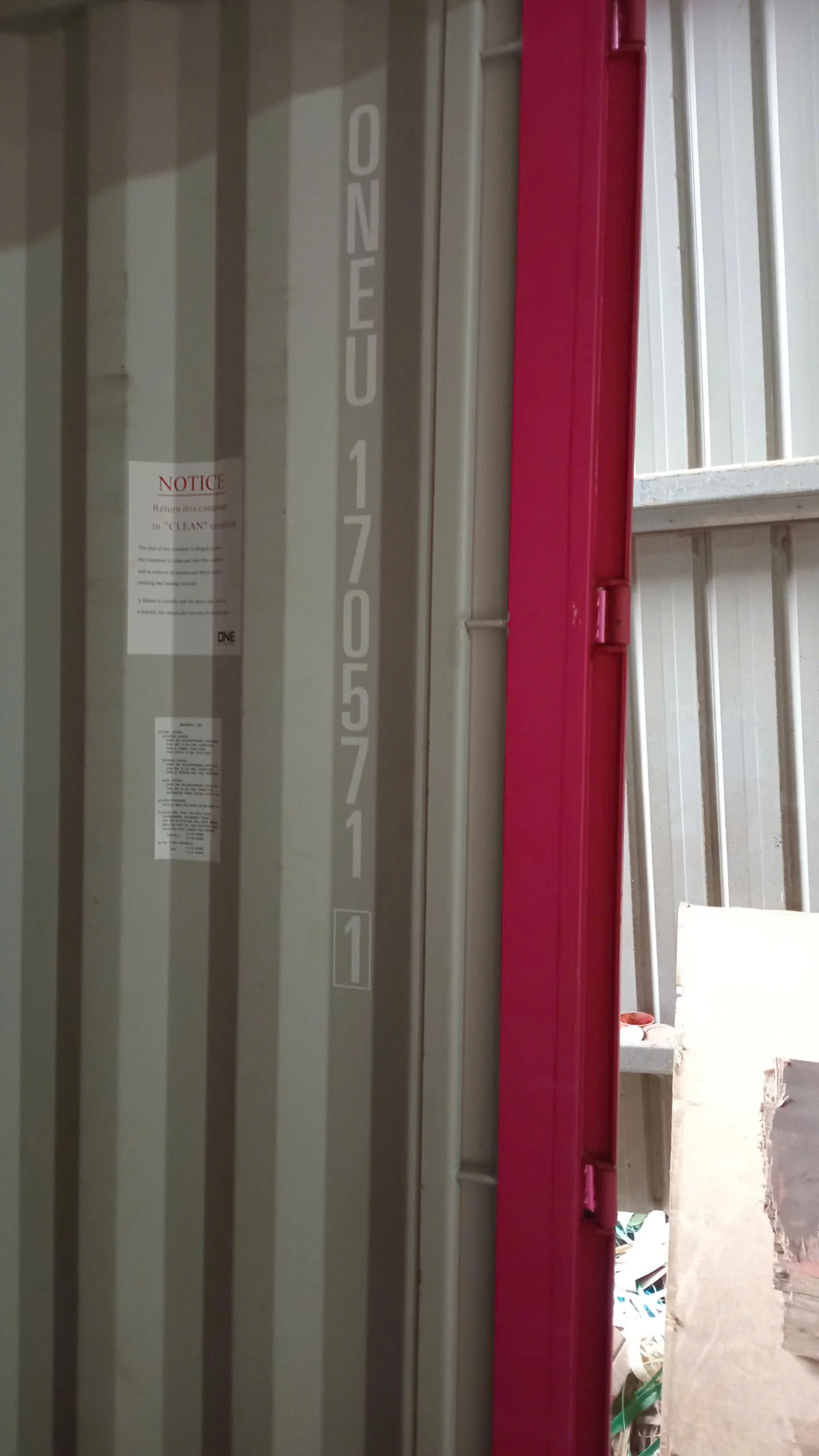 Pallet loading at HCPLY — each shipment tracked with lot-specific test reports to match plywood certifications to physical cargo
Verify HCPLY plywood certifications — request documents now
🏭 Section 6 — How HCPLY Manages Plywood Certifications
The final consideration for international buyers is how to evaluate a supplier’s certification claims. The plywood industry has a well-documented problem with certificate borrowing — suppliers displaying certificates that belong to a different factory, or claiming certifications that have expired or were never actually obtained.
Real Certificates, Not Borrowed Documents
HCPLY maintains certification documentation from accredited, internationally recognized certification bodies:
- FSC CoC — issued by SGS, verifiable at info.fsc.org
- CARB P2 / TSCA Title VI — issued by ICTT Corporation (IAS accredited, PCA-129)
- CE Marking — certified by Istituto Giordano S.p.A. (EC Notified Body No. 0407)
- ISO 9001:2015 — issued by accredited certification body
- AS 6669:2016 — certified by CMI Certification Pty Ltd (JAS-ANZ accredited)
Every certificate includes a unique identifier (certificate number, license code, or registration number) that buyers can verify directly with the issuing body. HCPLY provides digital copies of all relevant certificates within 24 hours of request. Physical certificates are available for inspection during factory visits.
Per-Shipment Documentation
For buyers who require certification evidence with every order (common for EU importers, Australian construction buyers, and US distributors), HCPLY provides:
- Lot-specific test reports — formaldehyde emission, bonding, and moisture content results linked to the specific production batch being shipped.
- Loading photographs and video — documenting the production batch, packing process, and container loading. This is HCPLY’s standard practice for every container shipped, not an optional add-on.
- EUDR due diligence package — plantation coordinates, species documentation, and risk assessment for EU-bound shipments.
Buyer-Nominated Testing
HCPLY accommodates buyer-nominated testing laboratories for independent quality verification. The process:
- Buyer nominates the testing lab and specifies which tests are required.
- HCPLY ships sample panels directly to the buyer’s lab, or arranges on-site sampling under third-party supervision.
- Testing is conducted independently — HCPLY does not have access to results until the buyer shares them.
- This is available for all product types and order sizes above half-container quantities.
For buyers who prefer not to nominate a lab, HCPLY’s standard testing partners include SGS Vietnam, SGS-CSTC Guangzhou, Bureau Veritas, and Intertek. These are globally recognized testing, inspection, and certification bodies with no commercial relationship with HCPLY beyond standard testing services.
🔗 Section 7 — Certification Requirements by Market (Quick Reference)
Different destination markets require different certification combinations. This quick reference helps buyers identify the minimum and recommended plywood certifications for their specific market.
| Market | Mandatory | Recommended | HCPLY Status |
|---|---|---|---|
| European Union | CE Marking (construction), EUDR, E1 minimum | FSC, E0 | Fully compliant |
| United States | CARB P2 / TSCA Title VI, Lacey Act declaration | FSC | Fully compliant |
| India | BIS (IS 303 / IS 710) | ISO 9001 | BIS application in progress |
| Japan | JAS (for construction), F★★★★ (for interiors) | FSC | FSC active, JAS planned |
| South Korea | KS F 3113 compliance, E0/E1 | FSC | Covered |
| Australia | AS 6669 (formwork), E0/E1 | FSC | Fully compliant |
| Middle East | ISO 9001, test reports | SGS inspection | Covered |
| Southeast Asia | Phytosanitary, C/O | ISO 9001 | Fully compliant |
| Africa | C/O, test reports | ISO 9001 | Covered |
This table reflects the primary plywood product categories (furniture, construction, commercial). Specific product applications within each market may have additional requirements. Always confirm current requirements with your customs broker.
📊 Section 8 — Common Certification Mistakes Buyers Make
Understanding what goes wrong helps buyers avoid the most expensive compliance failures:
-
Confusing emission standard with glue type. Writing “E0 glue” on a purchase order. E0 is an emission classification, not a glue type. The correct specification separates them: “Glue: Melamine (MR). Emission: E0.” This error causes miscommunication with factories and can result in receiving the wrong product. For a thorough explanation, refer to the plywood glue types and emission standards guide.
-
Assuming FSC = EUDR compliance. FSC provides strong evidence for EUDR due diligence, but FSC certification alone does not automatically satisfy EUDR. The regulation requires geolocation data and a deforestation-free declaration that goes beyond FSC’s current scope.
-
Not verifying certificate authenticity. Taking a PDF certificate at face value without checking the issuing body’s registry. FSC certificates are verifiable at info.fsc.org. CARB P2 certificates carry TPC reference numbers traceable through EPA. CE certificates reference a Notified Body number checkable through the EU NANDO database.
-
Overlooking ISPM-15 fumigation. The plywood is certified, but the wooden pallet it sits on is not fumigated. This causes detention at destination ports, fumigation charges, and potential shipment rejection. Always confirm that export pallets carry the ISPM-15 treatment stamp.
-
Using the wrong C/O form. Shipping to Korea with a standard CO instead of Form AK means the buyer pays full duty instead of the preferential rate under ASEAN-Korea FTA. The cost difference can be substantial on large shipments.
-
Conflating different testing methods. Comparing an E0 perforator result (EN 120) directly with a CARB P2 chamber result (ASTM E1333) without conversion. Different test methods produce results in different units that are not directly comparable.
-
Not specifying emission class at order stage. Discovering at the port that the shipment is E2 instead of E0 because the purchase order said “low emission” without specifying the exact class. Always write the emission class explicitly: E0, E1, CARB P2, or F★★★★.
✅ Section 9 — Action Checklist for Buyers
Before placing your next plywood order, verify the following:
Before ordering:
- Identify which plywood certifications are mandatory in your destination market (refer to Section 7 quick reference table)
- Specify emission class (E0/E1/CARB P2/F★★★★) explicitly in your purchase order — separately from glue type (MR or WBP)
- Request digital copies of the supplier’s current certificates and verify them with the issuing bodies
- Confirm which C/O form provides preferential tariff treatment for your market
- If ordering for the EU, confirm the supplier’s EUDR documentation capability
During production:
- Request production batch photos and video (HCPLY provides this as standard)
- For structural plywood, confirm that CE Declaration of Performance will accompany the shipment
- For US-bound shipments, verify CARB P2 labeling on panels
Before shipping:
- Review the draft commercial invoice and packing list for accuracy — these must match the B/L exactly
- Confirm phytosanitary certificate and fumigation certificate (ISPM-15) are arranged
- For FSC orders, confirm FSC transaction certificate will be issued
- Request test reports for any properties your market or project requires
On arrival:
- Cross-check commercial invoice, packing list, and B/L for consistency
- Verify CARB P2 labeling (US), CE marking (EU), or BIS marking (India) on panels
- Retain all certification documentation for minimum 3 years (5 years recommended for EUDR)
For buyers who need assistance navigating market-specific certification requirements, HCPLY’s export team provides guidance on documentation packages for every destination market served. Understanding which plywood certifications apply to your specific situation — and getting the documentation right the first time — prevents the customs delays, duty assessments, and compliance penalties that cost importers far more than the plywood itself.
Contact HCPLY at [email protected] or via WhatsApp to request certification documents, verify current certification status, or discuss your market-specific requirements.
For related guides, see:
- Vietnam plywood supplier types — buyer’s due diligence guide for evaluating supplier credibility
- Vietnam plywood factory types — industry segmentation for understanding which factories hold which certifications
- How to import plywood from Vietnam for the complete import process
- Plywood quotation guide for what to know before requesting a price