


Most plywood importers receive a quote in CBM and work backward from there. Few actually know how to verify that number — or use it to cross-check the packing list before the container ships.
The plywood CBM calculation formula is three multiplications. This guide covers the exact plywood CBM calculation method used at factory level — with lookup tables, worked examples, and 40HC container totals broken down by core species. But applying it correctly across different sheet sizes, thicknesses, and core species requires knowing where the numbers come from. This guide walks through each step of the plywood CBM calculation with real examples, a thickness lookup table, and the 40HC container totals that factories use in 2026.
📐 What Is CBM in Plywood Shipping?
CBM stands for Cubic Metre — the unit of volume used across all international cargo quoting. Every plywood order is expressed in CBM because it determines freight cost, container count, and packing configuration.
One CBM = 1 metre × 1 metre × 1 metre of physical space. For flat panels like plywood, CBM is the product of sheet length, width, and thickness — all in metres.
Importers use CBM for three decisions:
- Quote verification — confirm the supplier’s CBM matches your own calculation
- Container planning — determine how many full 40HC containers your order fills
- Freight budgeting — freight is priced per CBM or per tonne, whichever is greater
⚠️ Important: CBM alone does not determine container capacity for plywood. Weight (MT) is frequently the binding constraint. A 40HC container hits its 28.5 MT payload ceiling before it fills its physical volume — especially with dense eucalyptus core. Always check both CBM and weight. (HCPLY production data, 2026)
🔧 The Plywood CBM Calculation Formula
The formula for a single plywood sheet is:
CBM per sheet = Length(m) × Width(m) × Thickness(m)All three dimensions must be in metres. Thickness is almost always given in millimetres by suppliers — divide by 1,000 to convert.
For 1220×2440mm sheets (4×8ft standard):
Length = 1.22 m
Width  = 2.44 m
Area   = 1.22 × 2.44 = 2.9768 m²
At 18mm thickness (0.018 m):
CBM/sheet = 2.9768 × 0.018 = 0.05358 CBM
Sheets/CBM = 1 ÷ 0.05358 = 18.66 sheets
For 1250×2500mm sheets (metric EU size):
Length = 1.25 m
Width  = 2.50 m
Area   = 1.25 × 2.50 = 3.125 m²
At 18mm thickness (0.018 m):
CBM/sheet = 3.125 × 0.018 = 0.05625 CBM
Sheets/CBM = 1 ÷ 0.05625 = 17.78 sheets
The 1250×2500mm sheet is about 4.9% larger by area than the 1220×2440mm standard. Each sheet consumes more CBM — meaning fewer sheets fit per CBM at the same thickness.
📊 CBM Lookup Table — 1220×2440mm Sheets by Thickness
All values calculated from the formula above. Thickness in millimetres, CBM per sheet, sheets per CBM, and sheets per pallet (at 1,000mm stack height) — the standard pallet height used in factory packing.
| Thickness (mm) | CBM/Sheet | Sheets/CBM | Sheets/Pallet (1000mm) |
|---|---|---|---|
| 3 | 0.00893 | 112.0 | 333 |
| 5 | 0.01488 | 67.2 | 200 |
| 9 | 0.02679 | 37.3 | 111 |
| 12 | 0.03572 | 28.0 | 83 |
| 15 | 0.04465 | 22.4 | 66 |
| 18 | 0.05358 | 18.7 | 55 |
| 21 | 0.06251 | 16.0 | 47 |
| 25 | 0.07442 | 13.4 | 40 |
| 30 | 0.08930 | 11.2 | 33 |
Formula for sheets per pallet:
ROUNDDOWN(1000 ÷ Thickness_mm). At 18mm: ROUNDDOWN(1000 ÷ 18) = 55 sheets. (HCPLY factory packing standard, 2026)
📦 CBM Lookup Table — 1250×2500mm Sheets by Thickness
| Thickness (mm) | CBM/Sheet | Sheets/CBM | Sheets/Pallet (1000mm) |
|---|---|---|---|
| 3 | 0.00938 | 106.7 | 333 |
| 5 | 0.01563 | 64.0 | 200 |
| 9 | 0.02813 | 35.6 | 111 |
| 12 | 0.03750 | 26.7 | 83 |
| 15 | 0.04688 | 21.3 | 66 |
| 18 | 0.05625 | 17.8 | 55 |
| 21 | 0.06563 | 15.2 | 47 |
| 25 | 0.07813 | 12.8 | 40 |
| 30 | 0.09375 | 10.7 | 33 |
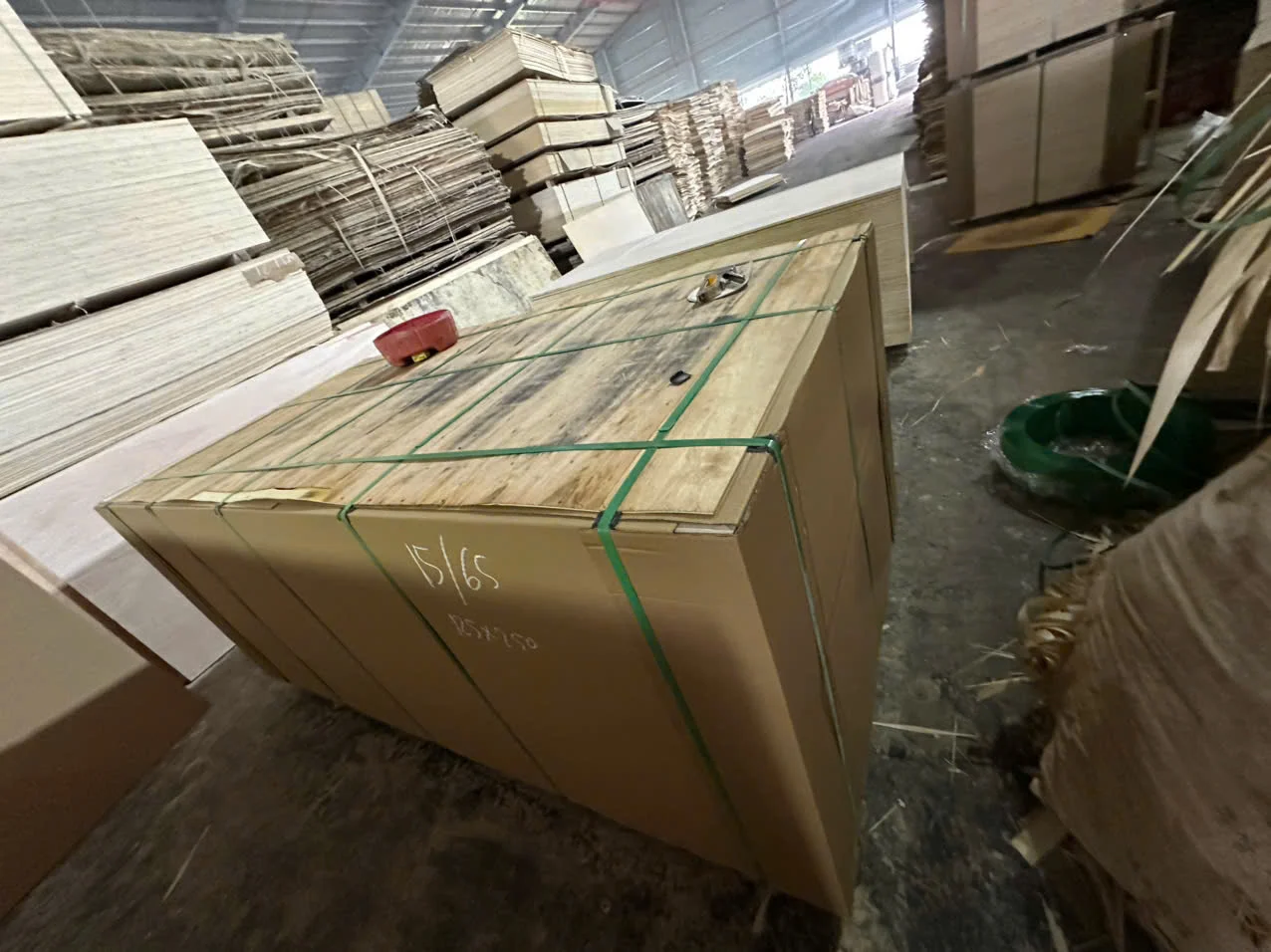
Sheets per pallet remain identical across sheet sizes at the same thickness because pallet height governs stack count, not sheet footprint. CBM per pallet increases for 1250×2500mm because each sheet is larger.
🚢 From CBM Per Sheet to 40HC Container Totals
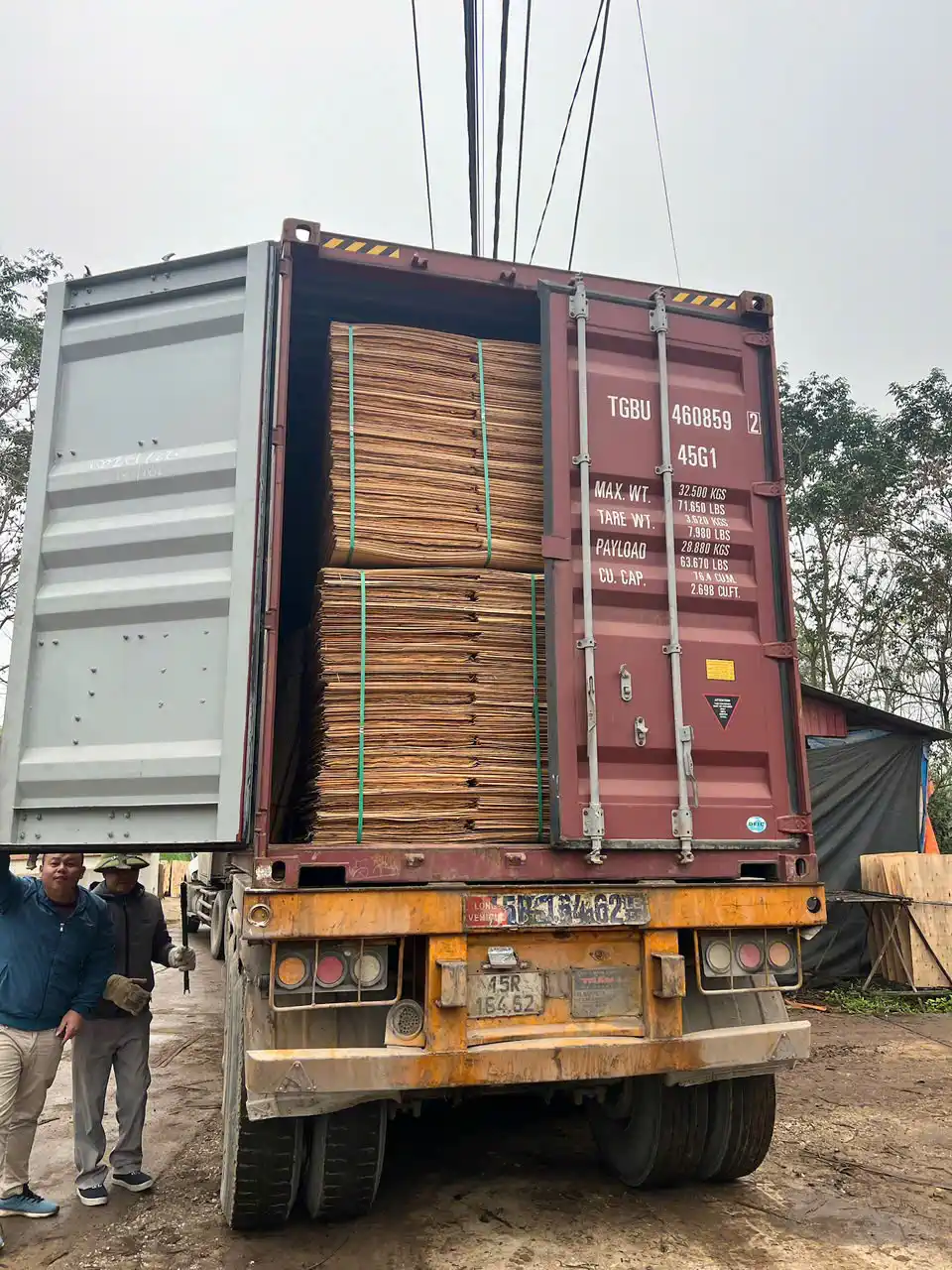
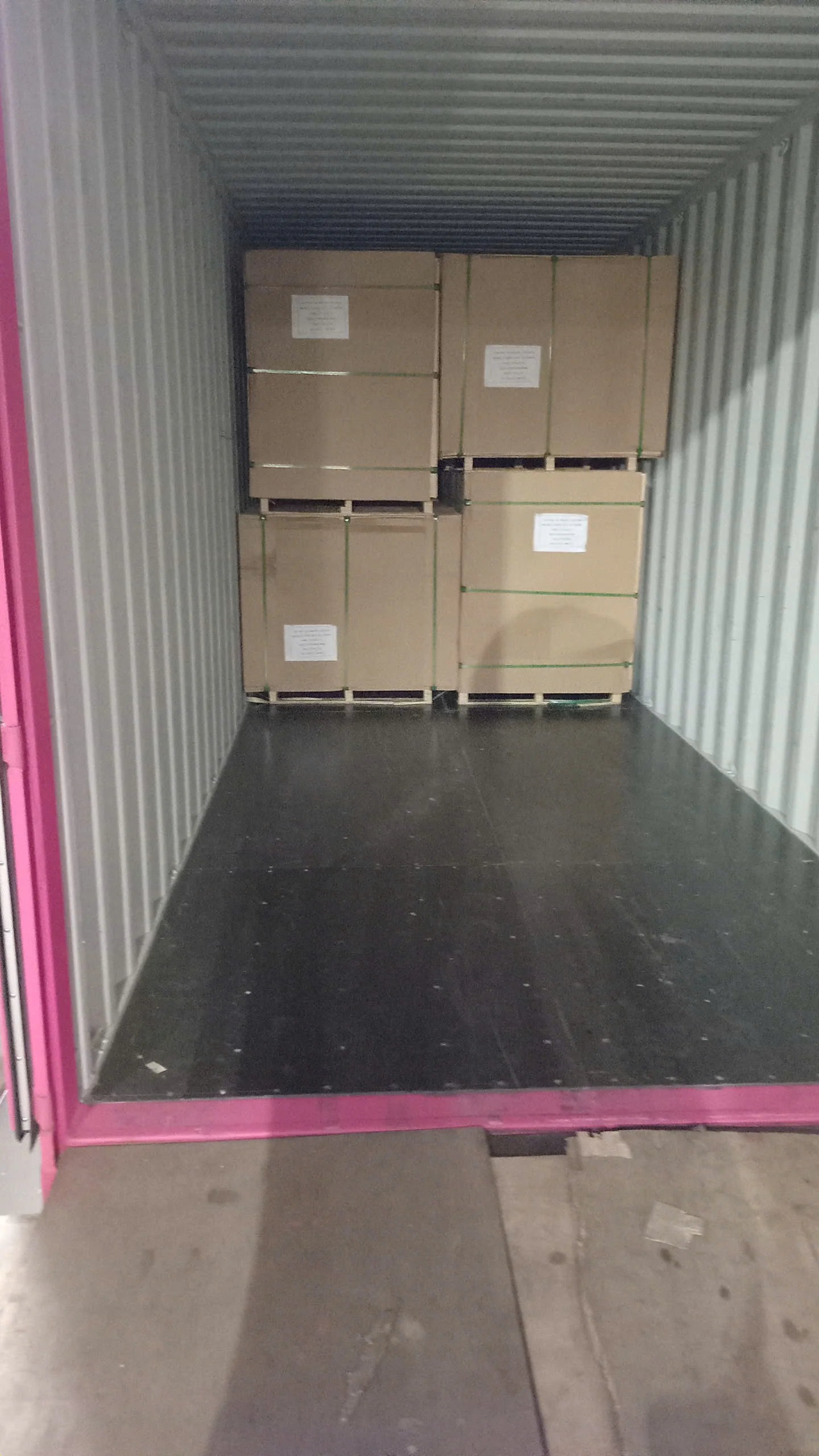
Knowing CBM per sheet is the first step. Translating that to a full container requires knowing how many pallets the container holds — which is set by the weight ceiling, not available floor space.
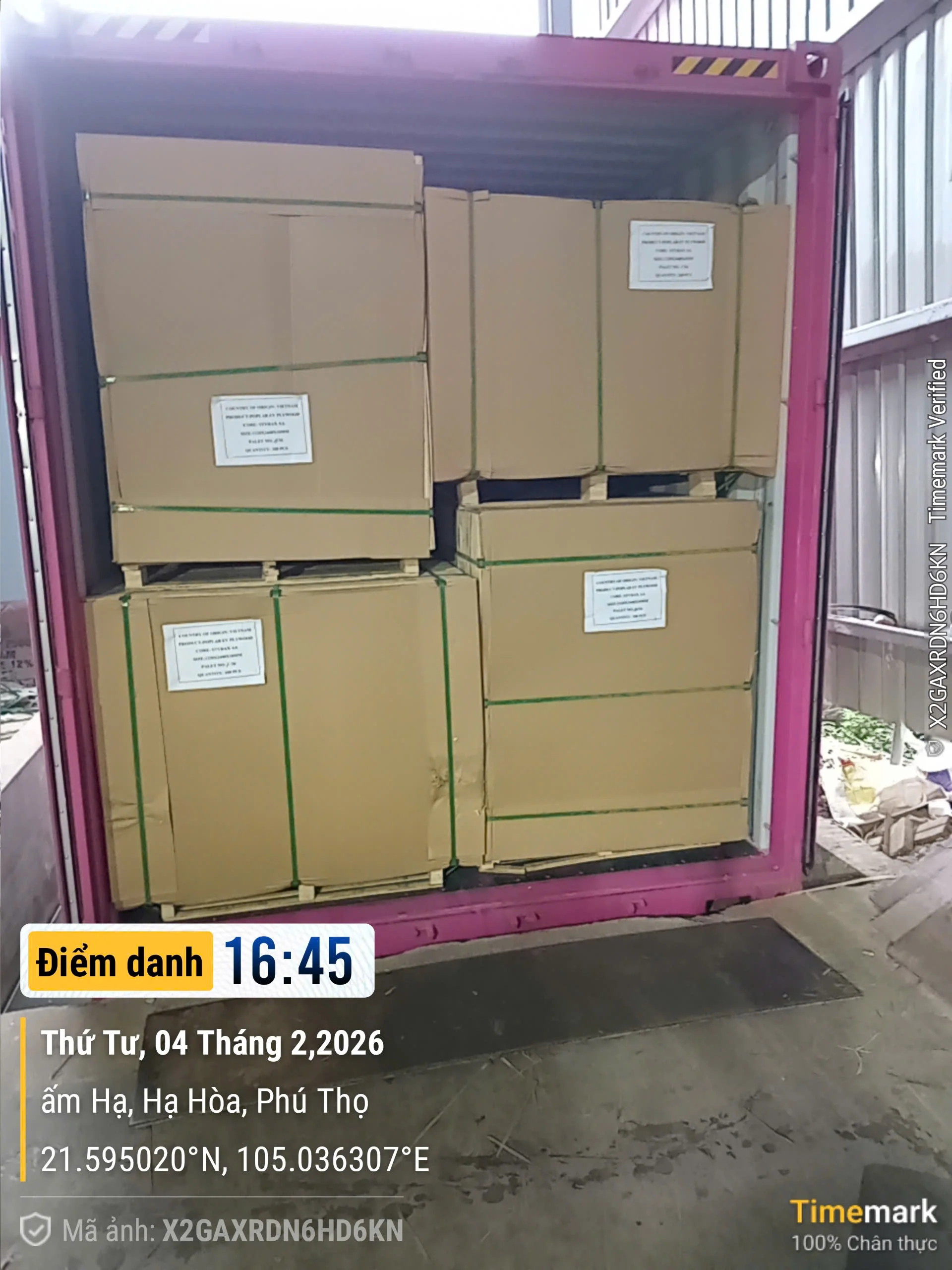
HCPLY factory packing data (2026) for 1220×2440mm sheets:
| Core Species | Density (kg/CBM) | Pallets/40HC | CBM/40HC | Weight/40HC |
|---|---|---|---|---|
| Styrax | ~500 | 18 | ~53 CBM | ~26.5 MT |
| Acacia | ~580 | 16 | ~47.5 CBM | ~27.5 MT |
| Eucalyptus | ~700 | 15 | ~44.5 CBM | ~28 MT |
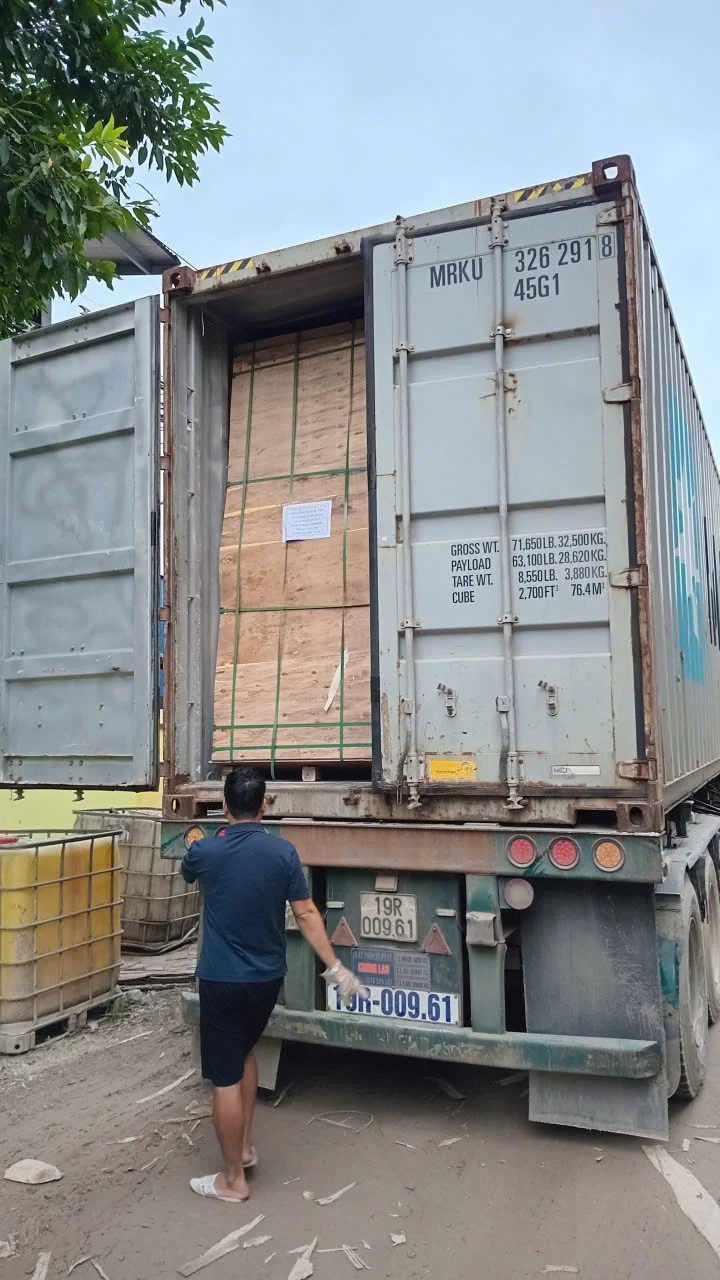
The 28.5 MT payload ceiling is a hard stop — not a target. Eucalyptus core reaches this ceiling with 15 pallets. Styrax core runs 18 pallets before approaching the limit. The difference in CBM between core types (53 vs. 44.5) is the real impact on freight cost: eucalyptus orders cost more per CBM to ship because the container holds fewer CBM total.
“The number one mistake importers make is comparing CBM totals across core types without adjusting for weight. A styrax core order and an eucalyptus core order of the same CBM require different freight planning — the eucalyptus order will hit weight limits faster and may need a second container at lower fill.” — Lucy, International Sales Manager, HCPLY
For the full packing tables broken down by thickness and pallet count, see the plywood container packing calculation guide.
🔍 Worked Example: Full Container Order at 18mm Acacia Core
An importer orders 18mm bintangor face / acacia core plywood in 1220×2440mm sheets. Acacia core = 16 pallets per 40HC.
Step 1: Sheets per pallet
Sheets/pallet = ROUNDDOWN(1000 ÷ 18) = 55 sheetsStep 2: Total sheets in container
Total sheets = 55 × 16 = 880 sheetsStep 3: CBM per sheet
CBM/sheet = 1.22 × 2.44 × 0.018 = 0.05358 CBMStep 4: Total CBM
Total CBM = 880 × 0.05358 = 47.15 CBMStep 5: Weight check
Weight = 47.15 CBM × 580 kg/CBM ÷ 1,000 = 27.35 MT27.35 MT is below the 28.5 MT ceiling — the container loads safely. This matches the factory reference data (47.5 CBM, 27.5 MT for acacia core).
📋 Worked Example: Mixed Thickness Container
An importer wants to mix 12mm and 18mm styrax core plywood in a single 40HC. Styrax density = 500 kg/CBM, 18 pallets total available.
Step 1: Allocate pallets
Importer wants 10 pallets of 12mm + 8 pallets of 18mm.
Step 2: Calculate each batch
12mm batch (1220×2440mm):
Sheets/pallet = ROUNDDOWN(1000 ÷ 12) = 83
Total 12mm sheets = 83 × 10 = 830
CBM 12mm = 830 × (1.22 × 2.44 × 0.012) = 830 × 0.03572 = 29.65 CBM
18mm batch (1220×2440mm):
Sheets/pallet = ROUNDDOWN(1000 ÷ 18) = 55
Total 18mm sheets = 55 × 8 = 440
CBM 18mm = 440 × 0.05358 = 23.58 CBM
Step 3: Total CBM and weight
Total CBM   = 29.65 + 23.58 = 53.23 CBM
Total weight = 53.23 × 500 ÷ 1,000 = 26.6 MT
26.6 MT is below 28.5 MT — the mixed container works. Note: for mixed eucalyptus core, this same calculation would yield ~37.3 MT, which exceeds the payload ceiling. Weight always governs mixed-load planning.
💡 Key Insight: When mixing thicknesses, always calculate weight first. Use the heaviest core species density and verify total MT before finalizing the pallet split. Exceeding 28.5 MT causes shipment holds at the port and is the factory’s responsibility to flag before loading.
📐 How to Use Plywood CBM Calculation to Verify a Supplier Quote
When a supplier sends you a quotation showing a total CBM, you can verify it in three steps:
-
Confirm the CBM per sheet matches the formula. Use the tables above or calculate directly. If the supplier quotes 50 CBM for 880 sheets at 18mm (1220×2440mm), check: 880 × 0.05358 = 47.15 CBM. A discrepancy of more than 2–3% warrants clarification.
-
Confirm the sheet count is consistent with pallet data. If they say 16 pallets of 18mm, that should be 880 sheets (55 per pallet). Ask for the packing list showing pallet count, sheets per pallet, and dimensions before issuing a purchase order.
-
Check weight. Divide the quoted CBM by core density to get expected MT. If the quote says 50 CBM of eucalyptus core plywood, that should weigh ~35 MT — already over the 28.5 MT payload ceiling. A supplier quoting 50 CBM of dense eucalyptus in a 40HC should trigger an immediate question.
For a complete overview of how HCPLY structures export documentation and factory packing lists, see how to import plywood from Vietnam.
Request a Factory Packing Calculation
No commitment. We’ll calculate exact CBM, weight, pallet count, and sheet count for your specification before you confirm an order.
🔗 Related Calculations
- Sheets per CBM by thickness: Use the lookup tables above for any standard thickness. For custom sizes, apply
L(m) × W(m) × T(m)directly. - Container CBM by core: Styrax = ~53 CBM, Acacia = ~47.5 CBM, Eucalyptus = ~44.5 CBM (1220×2440mm sheets, HCPLY factory data 2026).
- Weight per CBM by core: Styrax ~500 kg/CBM, Acacia ~580 kg/CBM, Eucalyptus ~700 kg/CBM.
For buyers sourcing from multiple Vietnamese factories, CBM calculations are also relevant when comparing freight efficiency between plywood supplier types in Vietnam — a higher-density core type may justify a lower FOB price but increase total landed cost through freight.
✅ Summary: The Plywood CBM Calculation in Four Steps
- Convert all dimensions to metres. Thickness in mm ÷ 1,000.
- Multiply L × W × T to get CBM per sheet.
- Multiply by quantity to get total CBM.
- Check weight: Total CBM × core density (kg/CBM) ÷ 1,000 = MT. Keep below 28.5 MT for 40HC.
For standard 1220×2440mm sheets, use the lookup table in this article — it covers every common thickness from 3mm to 30mm. For 1250×2500mm metric sheets, apply the same formula with area = 3.125 m².
The plywood CBM calculation works for any order size. What changes between importers is whether they verify it — or accept the number in the quote at face value. Factories that execute packing to real physics constraints, not optimistic rounding, will send you a packing list that matches the calculation exactly.
Contact HCPLY for Verified Packing Data — Free quote with full CBM breakdown, weight check, and packing list before order confirmation.