

Phenolic glue plywood passes a test that destroys ordinary plywood: 72 continuous hours submerged in boiling water. When the panel comes out intact — no delamination, no separation — it earns the WBP designation that structural engineers and marine builders specify for critical applications.
Most buyers treat WBP as a marketing adjective for “very waterproof.” In practice, WBP is a measurable performance standard tied to a specific adhesive chemistry, a defined test protocol, and real consequences when a supplier substitutes a cheaper glue.
This guide covers what phenolic WBP actually means, why it performs better than melamine (MR) in construction and marine environments, and — perhaps counterintuitively — why WBP phenolic plywood often has lower formaldehyde emissions than standard melamine-glued furniture grades.
🔬 What Is Phenolic Glue (WBP)?
Phenolic adhesive (also called phenol-formaldehyde or PF resin) is a synthetic thermoset resin developed in the early 20th century and still the benchmark for structural wood bonding. It cures at high temperature and pressure to form a cross-linked polymer matrix that is chemically resistant, dimensionally stable, and water-impermeable.
WBP stands for Weather and Boil Proof — not simply “waterproof.” The distinction matters:
- Waterproof: the panel resists water penetration under normal conditions
- WBP: the bond survives sustained exposure to boiling water (100°C) for 72 hours without delamination (EN 314-2, BS 1088 reference)
This is the standard applied to marine plywood, concrete formwork, and structural applications where the bond must outlast the wood fibers themselves. Under the 72-hour boiling test, a quality phenolic bond will not fail — the veneer may degrade before the glue line (ChristineDemerchant.com, marine plywood adhesive analysis).
⚗️ WBP vs MR: The Boiling Test Tells the Story
The two glue types used in Vietnamese-manufactured plywood split cleanly by application and test performance:
| Property | Phenolic (WBP) | Melamine (MR) |
|---|---|---|
| Boiling test duration | 72 hours | 12 hours |
| Water resistance rating | Exterior / structural | Interior / moisture-resistant |
| Press temperature | 130–145°C | 110–120°C |
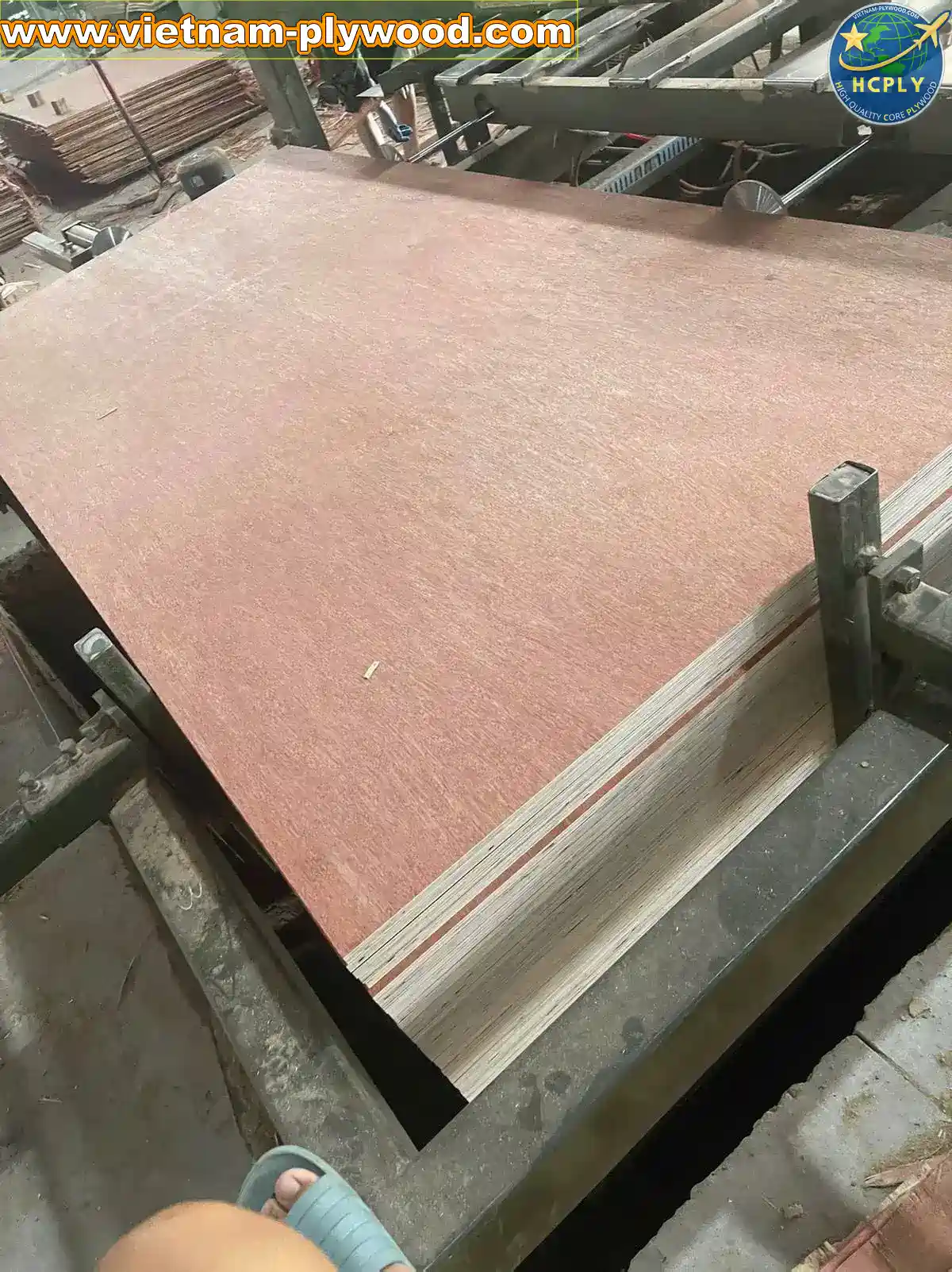
| Glue line color | Dark reddish-brown | Pale / nearly invisible |
| Formaldehyde emission | E1 or better (inherently low) | E0–E2 (depends on resin grade) |
| Relative adhesive cost | 40–80% higher than MR | Baseline |
| Primary applications | Formwork, marine, anti-slip | Furniture, cabinets, commercial interior |
The test duration gap — 72 hours vs 12 hours — is not a small margin. It reflects fundamentally different polymer chemistry. Phenolic resin undergoes condensation polymerization that produces a fully cross-linked network. Melamine resin forms a less dense polymer structure better suited to interior conditions (HCPLY production data, 2026).
Key Insight: WBP means weather AND boil proof. A panel that resists rain is not automatically WBP. Only phenolic-bonded plywood that survives the full 72-hour test qualifies for structural, marine, and formwork specifications.
For construction buyers: specify WBP in writing. “Waterproof” without the WBP designation may mean only MR-grade, which will fail under sustained moisture load.
🏗️ Where WBP Phenolic Plywood Is Used
Phenolic WBP glue is the adhesive standard for any application where plywood faces prolonged moisture, chemical contact, or structural load.
Concrete Formwork (Film-Faced Plywood)
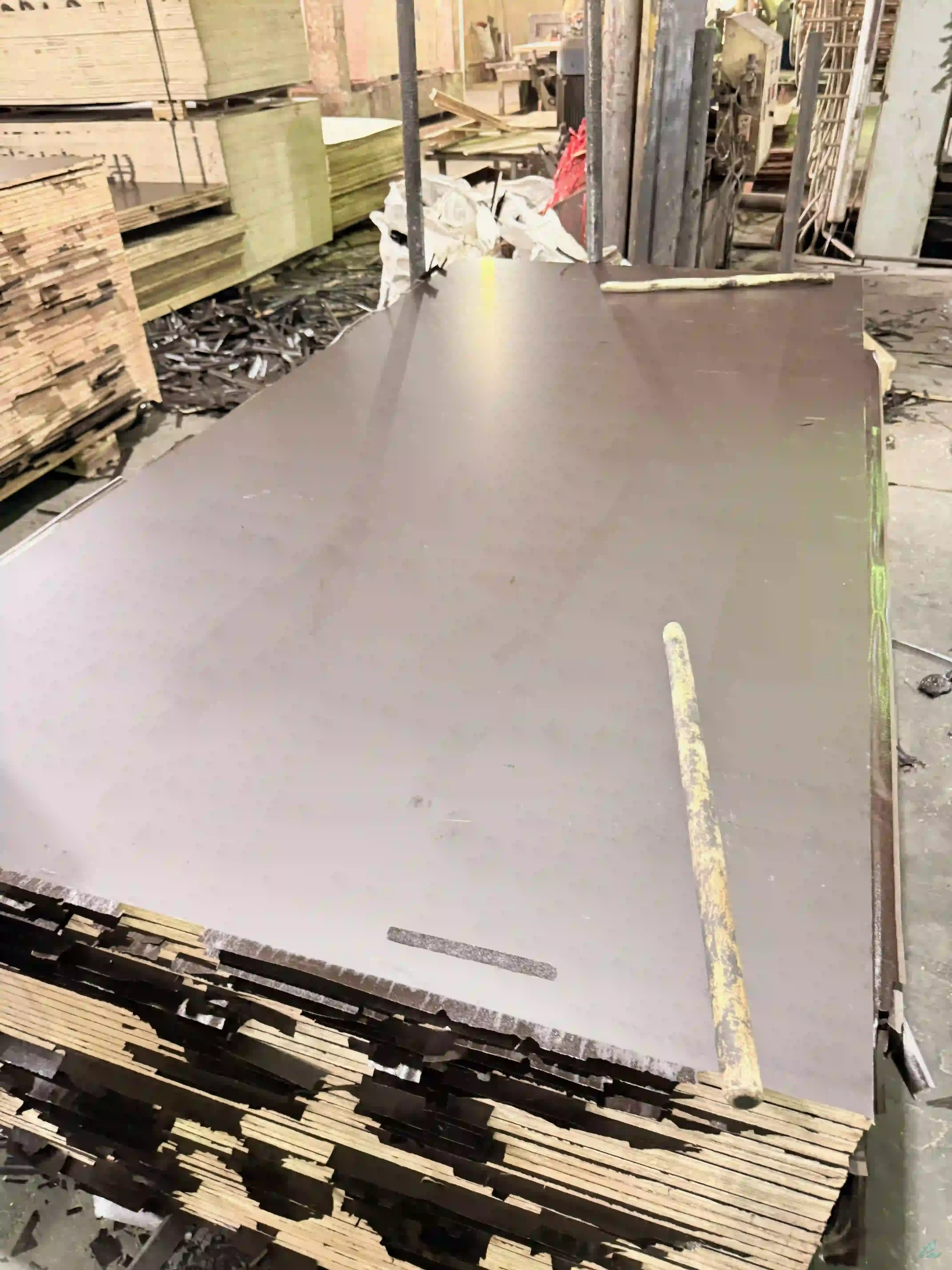
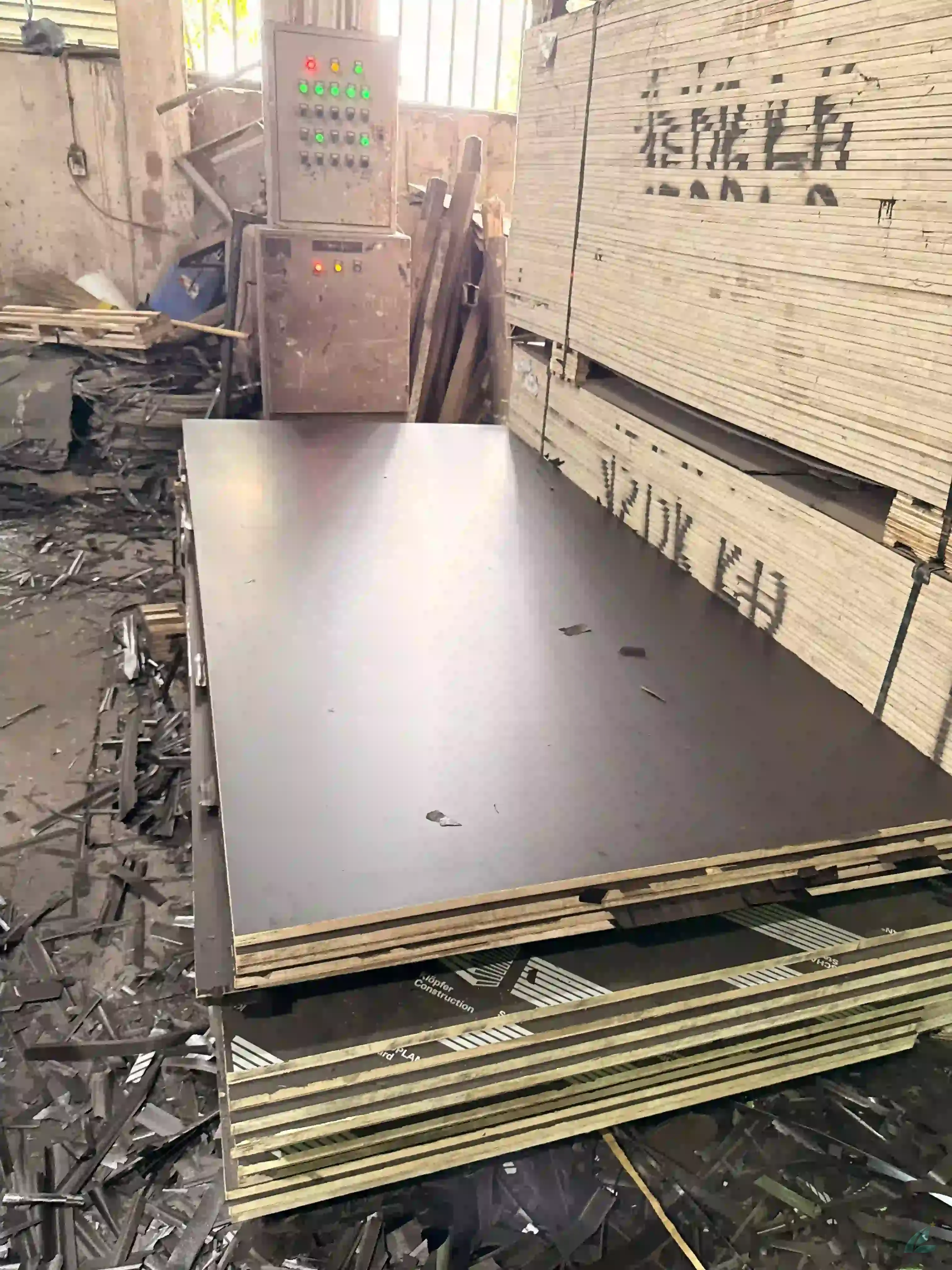
The largest use category. Film-faced plywood from Vietnam uses phenolic WBP adhesive bonded to phenolic film overlays (brown or black) weighing 120–220 gsm. The film protects the surface from concrete alkalinity and moisture. The WBP core bond ensures the panel withstands repeated pour-strip-clean cycles.
Reuse count depends on both the film quality and the core bond. With phenolic WBP on an acacia or eucalyptus core, quality formwork panels from HCPLY achieve 15+ reuses under normal site conditions — compared to 4–8 reuses on inferior melamine-blend panels with non-genuine WBP adhesive.
Marine Applications
Marine plywood specifications (BS 1088, Lloyd’s Register) mandate WBP adhesive. This includes boat hull construction, dock decking, pontoon cores, and any timber component in direct water contact. The 72-hour boiling test is the direct proxy for the kind of prolonged immersion and humidity cycling a marine structure faces over its service life.
For importers supplying marine plywood: look for the glue line color confirmation (dark line between layers) and request the adhesive specification sheet from the factory. A pale glue line on “marine grade” plywood is a red flag.
Anti-Slip Plywood
Anti-slip plywood for truck floors, scaffolding decks, and loading ramps uses phenolic WBP adhesive beneath the wire-mesh or embossed film surface. These panels face outdoor exposure, water ingress, and mechanical stress — conditions that require the WBP bond, not MR.
📉 The Formaldehyde Advantage Nobody Talks About
Here is what most buyers get wrong about phenolic WBP plywood: they assume it has higher formaldehyde emissions because the adhesive contains formaldehyde in its name (phenol-formaldehyde resin). The chemistry tells the opposite story.
Why phenolic emits less than melamine:
During phenolic resin production, formaldehyde reacts almost completely with phenol in a controlled condensation process. The result is a fully cross-linked polymer. Little free formaldehyde remains. Once the panel is pressed and cured at 130–145°C, the residual formaldehyde drops further as off-gassing occurs during the high-temperature cure.
Melamine-urea resins (especially lower-grade MR formulations with urea blending) trap more free formaldehyde within the polymer network, which off-gasses slowly from the finished panel at room temperature.
The practical result: phenolic WBP plywood bonded with genuine PF resin typically measures E1 (≤1.5 mg/L) or lower under EN 717-1 testing. Formaldehyde emissions from phenolic-bonded plywood are deemed low enough to be exempt from formaldehyde regulation under US TSCA Title VI and EU construction product directives when used in construction contexts (ResearchGate, formaldehyde VOC emissions from phenolic resins, 2020).
⚠️ Important: This advantage applies to genuine phenolic resin (PF). Some suppliers blend phenolic with cheaper urea-formaldehyde (UF) to reduce cost. Blended resins lose the formaldehyde advantage and may not pass the full 72-hour WBP test. Always request the adhesive specification — pure PF resin vs blended phenolic-UF.
🏭 How HCPLY Produces WBP Phenolic Plywood
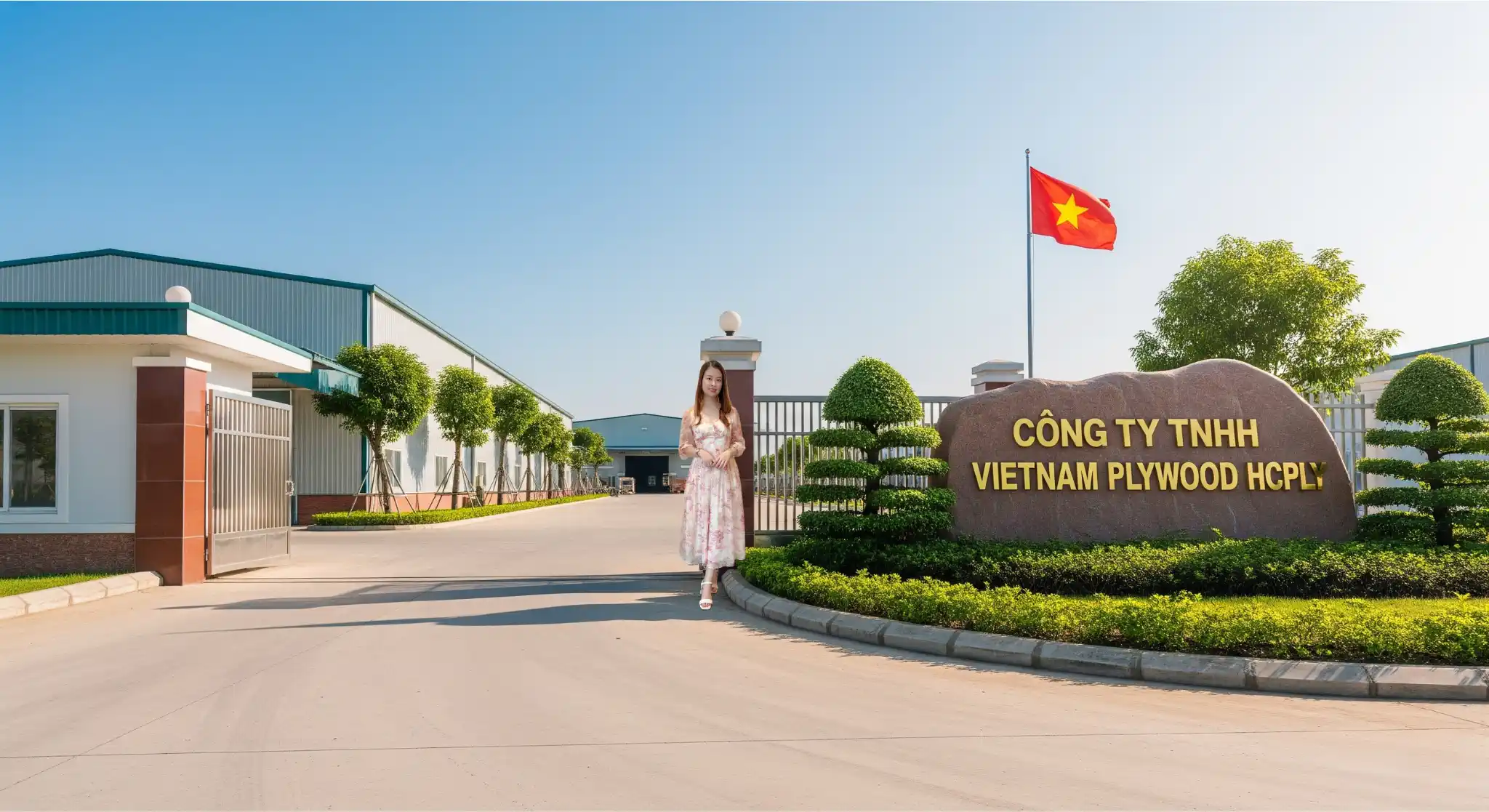
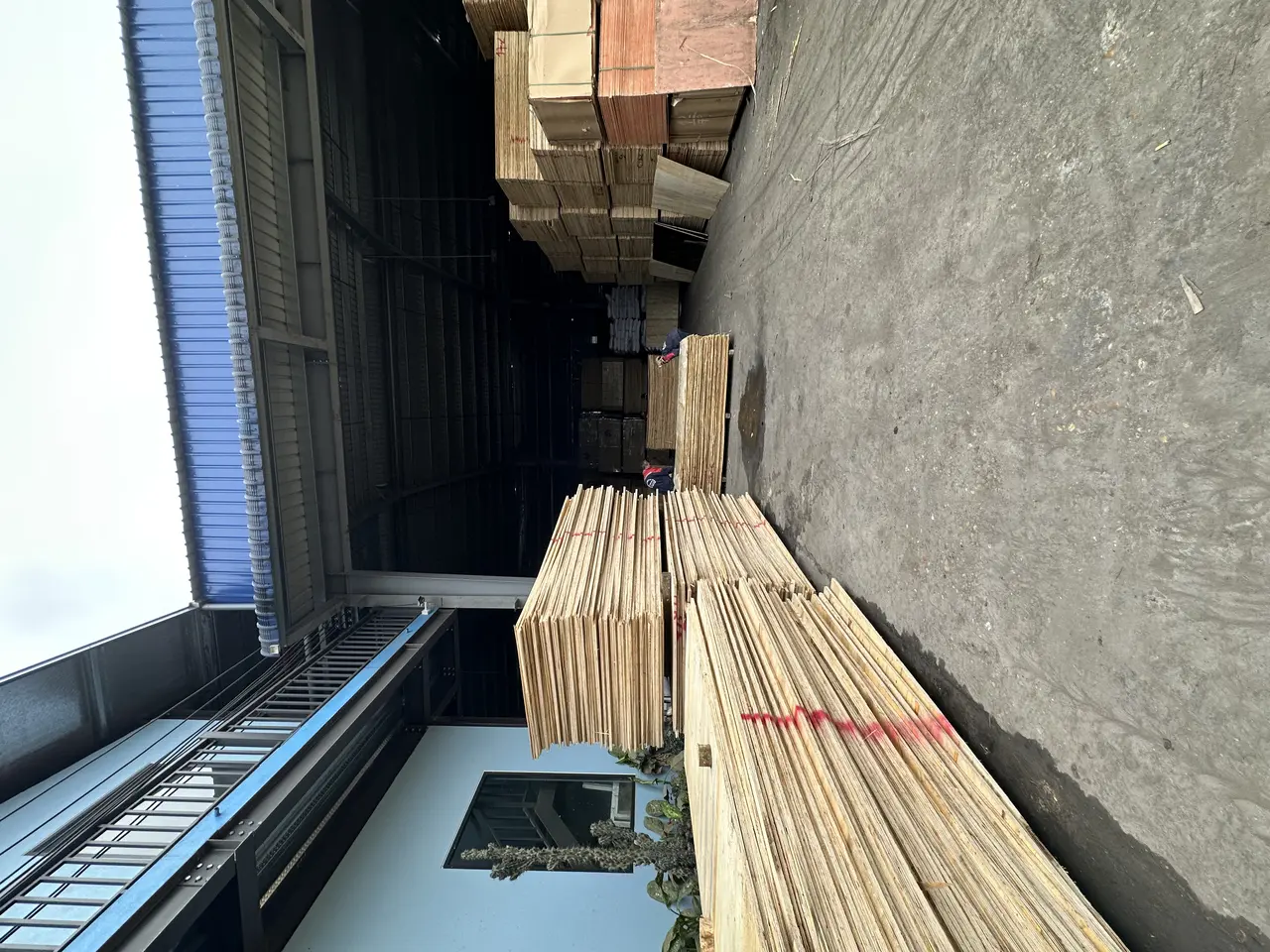
HCPLY manages a dedicated production facility for construction-grade plywood — separate from the furniture and commercial segments. This specialization matters because phenolic WBP production requires different equipment parameters and stricter process control.
The key parameters that distinguish genuine WBP production:
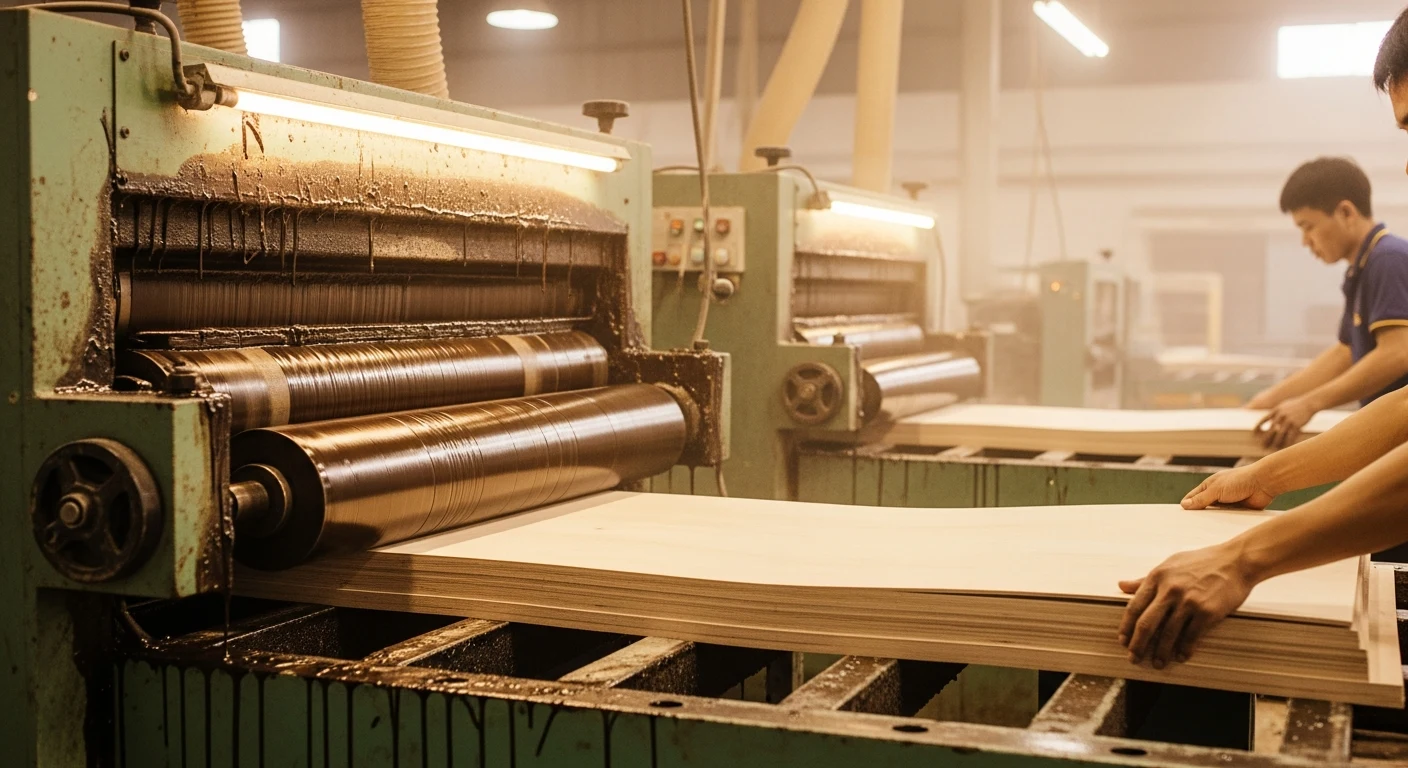
Press temperature and cycle time: Phenolic resin requires 130–145°C for full cure, compared to 110–120°C for melamine. Underpressing at melamine temperatures produces a panel that appears bonded but fails the boiling test within hours. HCPLY’s construction facility uses calibrated press thermocouples with production logs.
Core quality: WBP phenolic plywood for construction uses acacia or eucalyptus core — the denser species (acacia ~580 kg/m³, eucalyptus 650–750 kg/m³) that provide the structural rigidity needed for formwork loads. Styrax core, while excellent for furniture, is not used in construction-grade panels due to lower density.
Film bonding: For film-faced plywood, the phenolic film is pressed simultaneously with the core assembly in a single hot-press cycle — not applied as a secondary lamination step. Secondary bonding with different adhesive creates a weak interface that fails at the film-core boundary, not the veneer glue line.
📋 Specifying WBP Phenolic Plywood Correctly
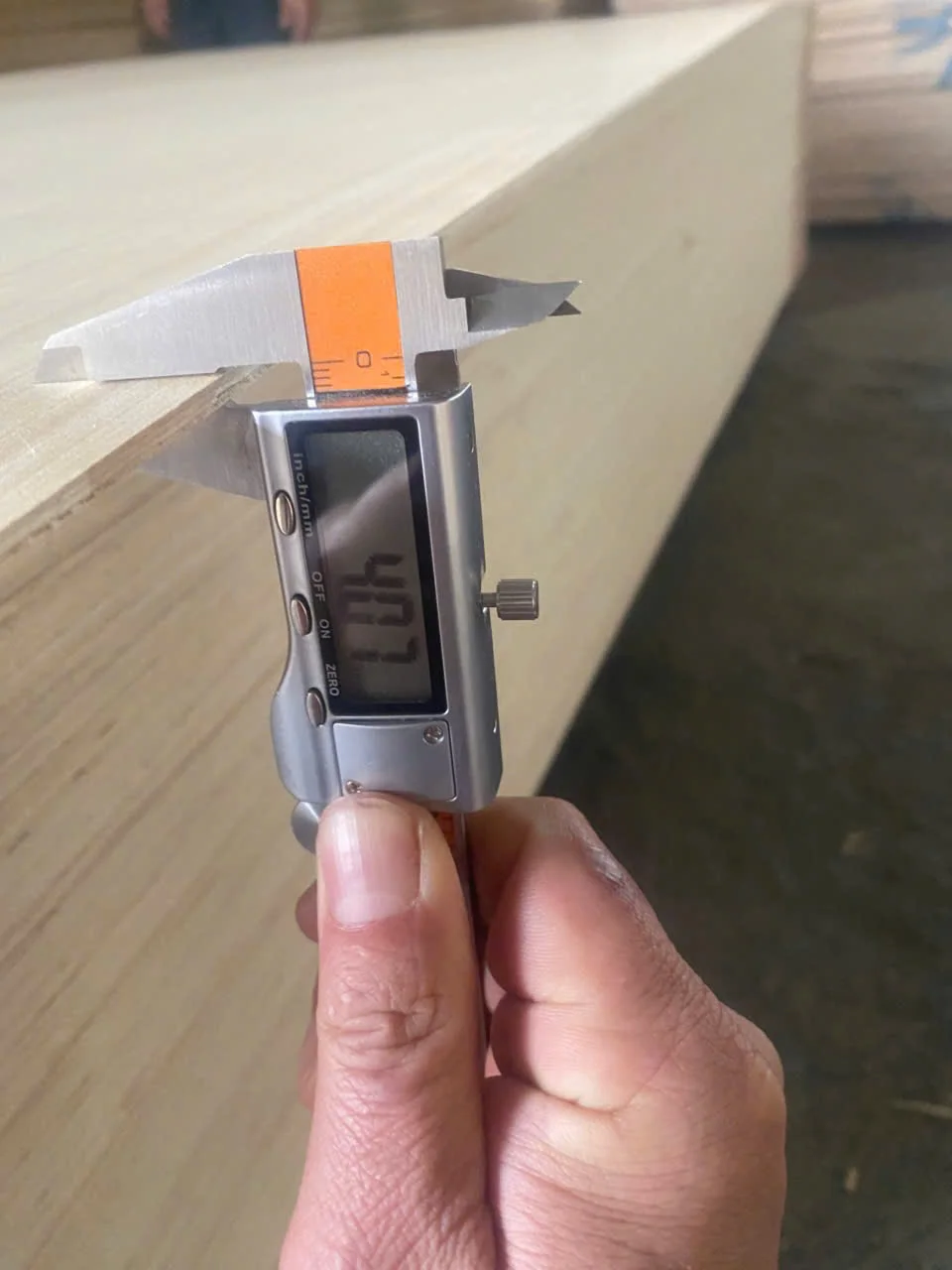
When writing purchase specifications for construction or marine plywood, four parameters define a genuine WBP product:
1. Adhesive type: Phenolic resin (PF). Specify “phenolic WBP” or “PF adhesive” — not just “WBP” alone, since some suppliers apply the WBP label to melamine-blend panels that have not passed the 72-hour test.
-
Test standard reference: EN 314-2 Class 3 (exterior) or BS 1088 for marine. These standards define the test protocol and minimum bond shear strength after boiling.
-
Core species: Acacia or eucalyptus for construction. Avoid styrax for formwork or marine — the density is insufficient for the loads and impacts these applications generate.
-
Film specification (for film-faced panels): 120–220 gsm phenolic film. Premium films (AICA brand or equivalent) deliver higher reuse counts. The film weight and resin content directly affect how many pour cycles the surface survives.
“We always ask for the adhesive spec sheet, not just the WBP label,” says Lucy, International Sales Manager at HCPLY. “A factory confident in genuine phenolic production will hand you the technical data sheet. One that can’t provide it is using a blended or lower-grade resin.”
For a complete comparison of WBP with MR and interior adhesives — including which glue type to specify for furniture, cabinets, and commercial interiors — see plywood glue types and emission standards explained.
🔗 Related Products and Applications
Phenolic WBP adhesive appears across several HCPLY product categories. The common thread: any application where the panel faces water, weather, or structural stress beyond what MR-grade plywood can sustain.
- Film-faced plywood (formwork) — brown or black phenolic film, 12–21mm, reuse 15+
- Anti-slip plywood — WBP core with AICA anti-slip film 220 gsm, 12–21mm
- Gurjan plywood (marine grade) — WBP adhesive specified for Indian market and marine applications
For construction projects requiring large quantities, our plywood container packing guide covers how to plan a 40HC container load by core type, thickness, and pallet configuration.
If your project requires both formwork panels and interior furniture plywood in the same container, it is possible to mix WBP and MR specs within a single 40HC — each product maintains its own adhesive and emission certification regardless of co-loading.
Get a Factory-Direct Quote for WBP Phenolic Plywood
No commitment required. Specify your thickness, size, film weight, and destination, and receive pricing within 24 hours.
📊 Summary
Phenolic WBP plywood is the correct specification for concrete formwork, marine construction, anti-slip decking, and any application where the bond must survive prolonged water exposure. The 72-hour boiling test is not marketing language — it is a measurable benchmark that separates genuine phenolic adhesive from MR-grade alternatives.
The formaldehyde story surprises most buyers: phenolic resin, despite containing formaldehyde in its chemistry, produces panels with lower residual emissions than standard melamine grades. The fully cross-linked polymer network retains almost no free formaldehyde after high-temperature pressing.
For construction and marine procurement, the key steps are: specify phenolic (PF) adhesive explicitly, request the adhesive data sheet from the factory, confirm EN 314-2 Class 3 or BS 1088 compliance, and match the core species to the application load requirements.
HCPLY manages a dedicated construction-grade facility in Phu Tho, Northern Vietnam, producing film-faced and anti-slip panels with genuine phenolic WBP adhesive, AICA film, and full export documentation (CE, FSC, CARB P2, CO, Phytosanitary).