


Choosing the wrong plywood grade costs real money. Order packing grade plywood for a display cabinet and buyers complain about rough surfaces. Order commercial plywood for a pallet and you pay 15–25% more than necessary for strength you do not need.
The packing plywood vs commercial plywood decision is not just marketing language. The difference runs through every layer of the panel — face veneer grade, core construction, glue type, sanding, and emission standard. This guide breaks down each variable from a factory perspective so you can specify the right grade on your purchase order and avoid post-shipment disputes.
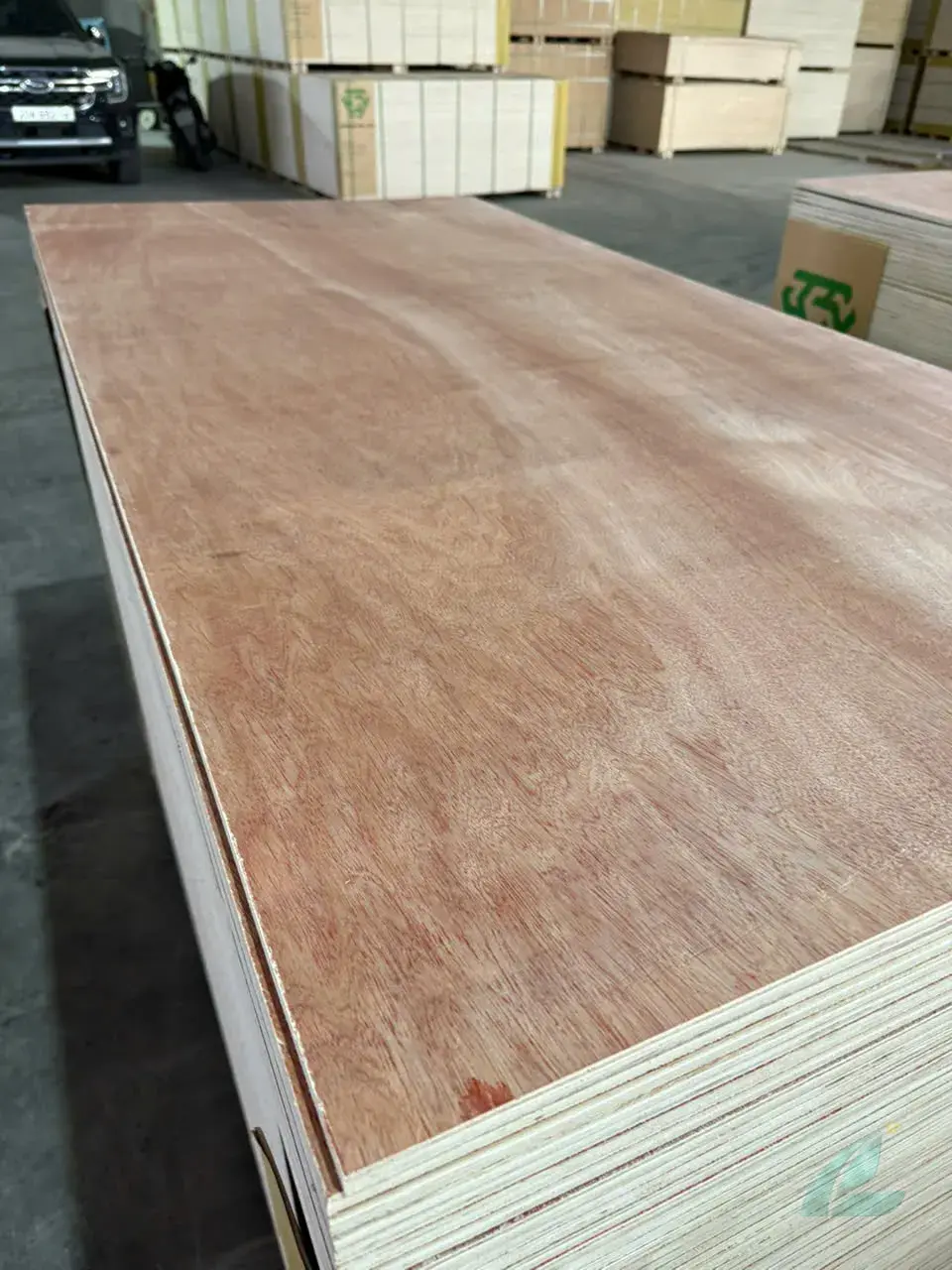
📋 TL;DR — Packing vs Commercial Plywood at a Glance
| Specification | Packing Plywood | Commercial Plywood |
|---|---|---|
| Face veneer | Bintangor C/D or Poplar | Bintangor B or Okoume B |
| Core species | Acacia (main) | Acacia or Styrax |
| Core construction | Loose-lay or edge-jointed | Edge-jointed (standard) |
| Sanding | None | Light sanding (one or both faces) |
| Glue | Melamine (MR) | Melamine (MR) |
| Emission | E2 | E1 |
| Common thickness | 4–18mm | 3–25mm |
| Key application | Crates, pallets, shipping boxes | Interior fitout, shopfitting, general use |
| Relative price | Lowest | Low-to-mid |
⚠️ Important: Glue type (melamine/phenolic) and emission class (E0/E1/E2) are two separate specifications. MR glue with E2 emission is standard for packing grade. MR glue with E0 emission is standard for furniture grade. Do not conflate the two.
📦 What Is Packing Plywood?
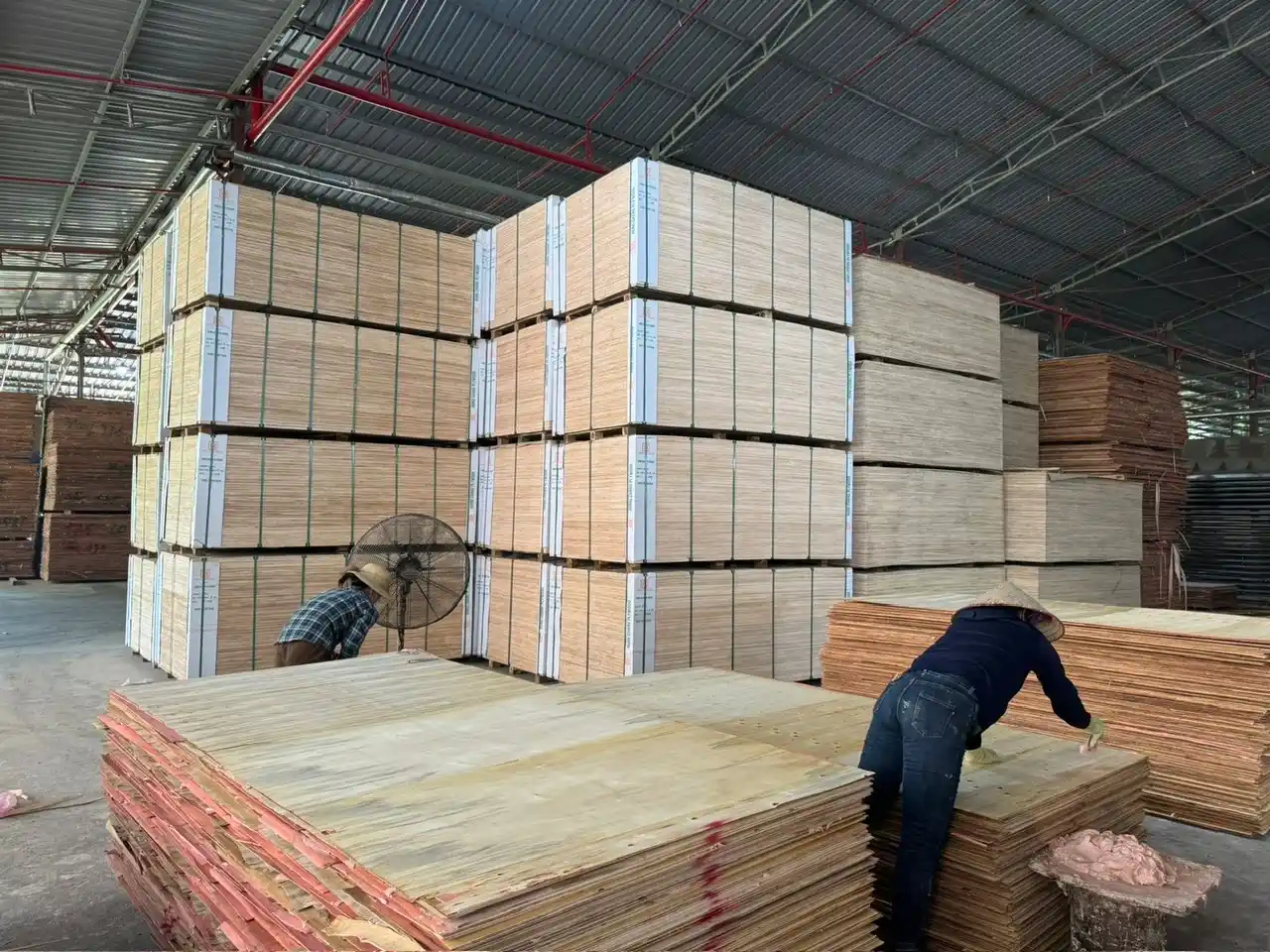
Packing plywood is the lowest-cost structural grade in the plywood range. Its purpose is functional: provide adequate load-bearing capacity, protect goods during transit, and keep costs per panel as low as possible.
From a factory standpoint, every specification decision for packing plywood points toward cost reduction:
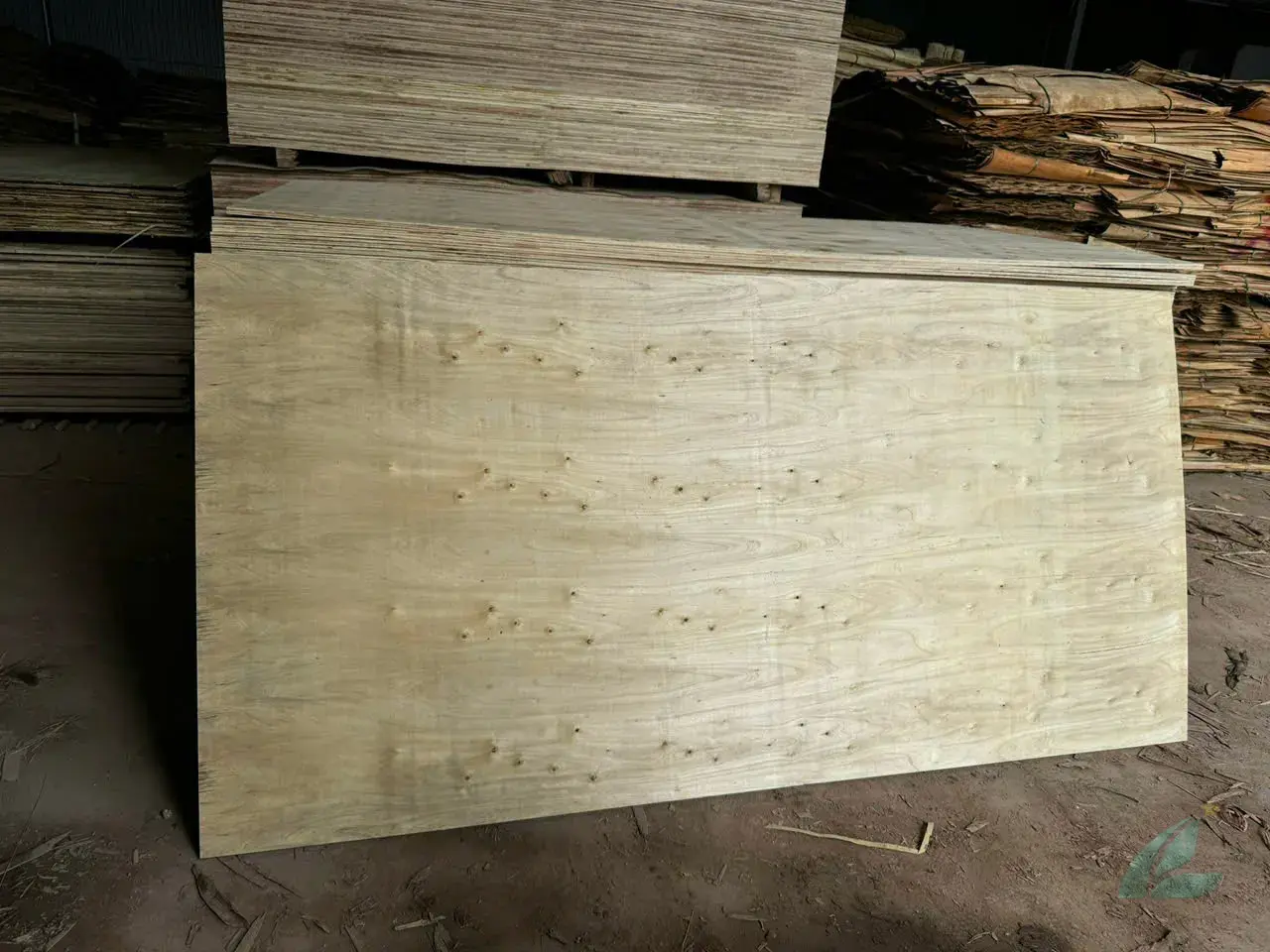
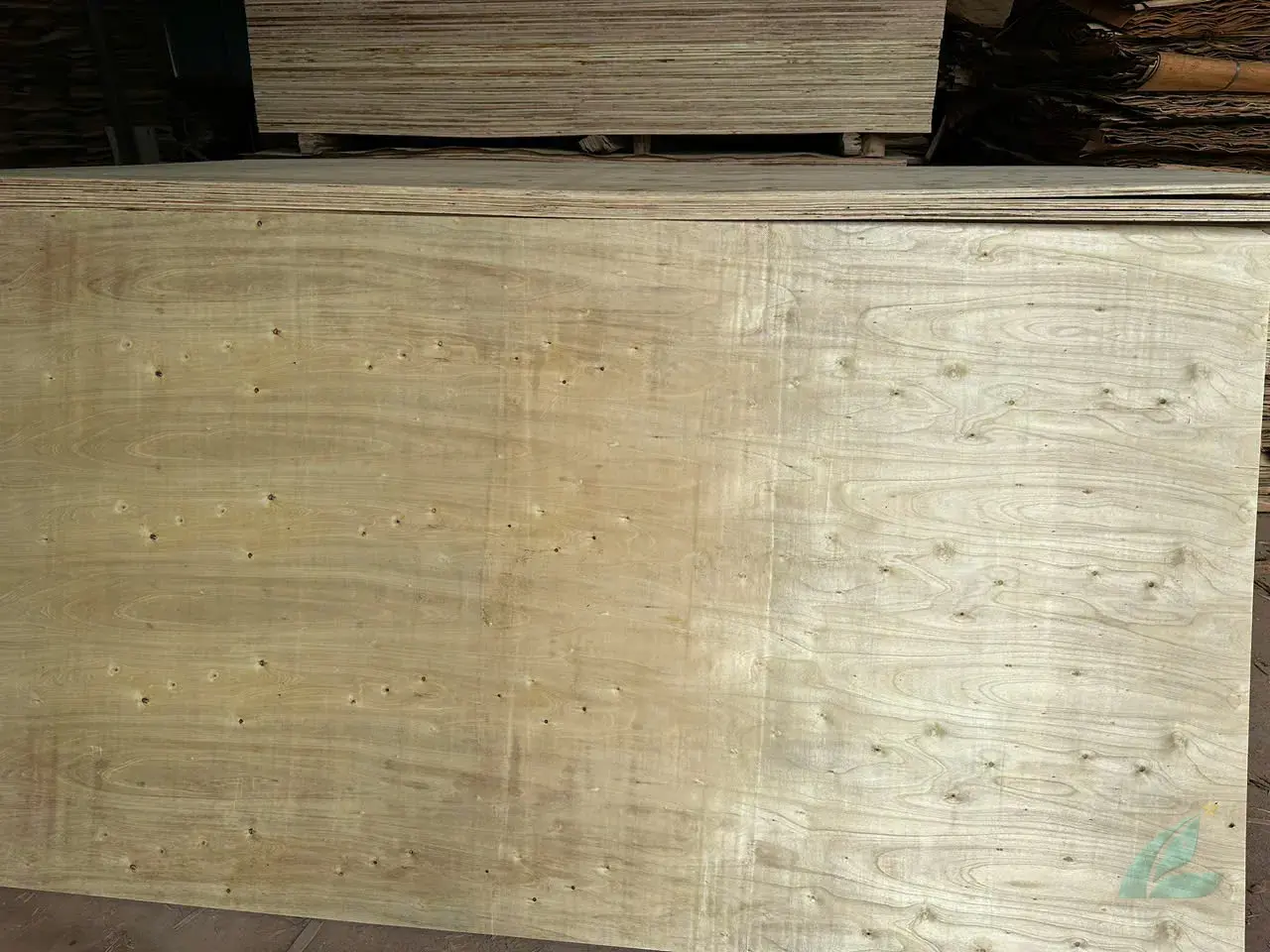
- Face veneer: Bintangor C/D or poplar — both are the cheapest available face options. Surface defects (knots, patches, color variation) are acceptable because appearance has no value in a shipping crate. Packing grade uses 0.2mm veneer face — thinner than furniture grades.
- Core: Acacia, the most affordable Vietnamese core species at approximately 580 kg/m³. Core construction is typically loose-lay (pieces placed side by side without stitching) or simple edge-jointing.
- No sanding: Packing plywood leaves the factory with a rough face. Calibration-sanding adds cost and serves no purpose when the panel goes inside a crate. For the difference between sanded and unsanded finishes, see double sanded vs single sanded plywood.
- Emission: E2 class — formaldehyde up to 5.0 mg/L. Adequate for outdoor or industrial packaging, not acceptable for enclosed living spaces.
HCPLY manufactures packing grade plywood from its commercial and packaging production facility, where acacia core and loose-lay construction are the standard workflow. Lead time is 15–20 days from order confirmation. (HCPLY production data, 2026)
“Most buyers sourcing packing plywood prioritize price per sheet over surface consistency. The specification they often overlook is core construction — loose-lay panels have measurably lower screw-holding strength than edge-jointed panels, which matters for heavy crate lids.” — Lucy, International Sales Manager, HCPLY
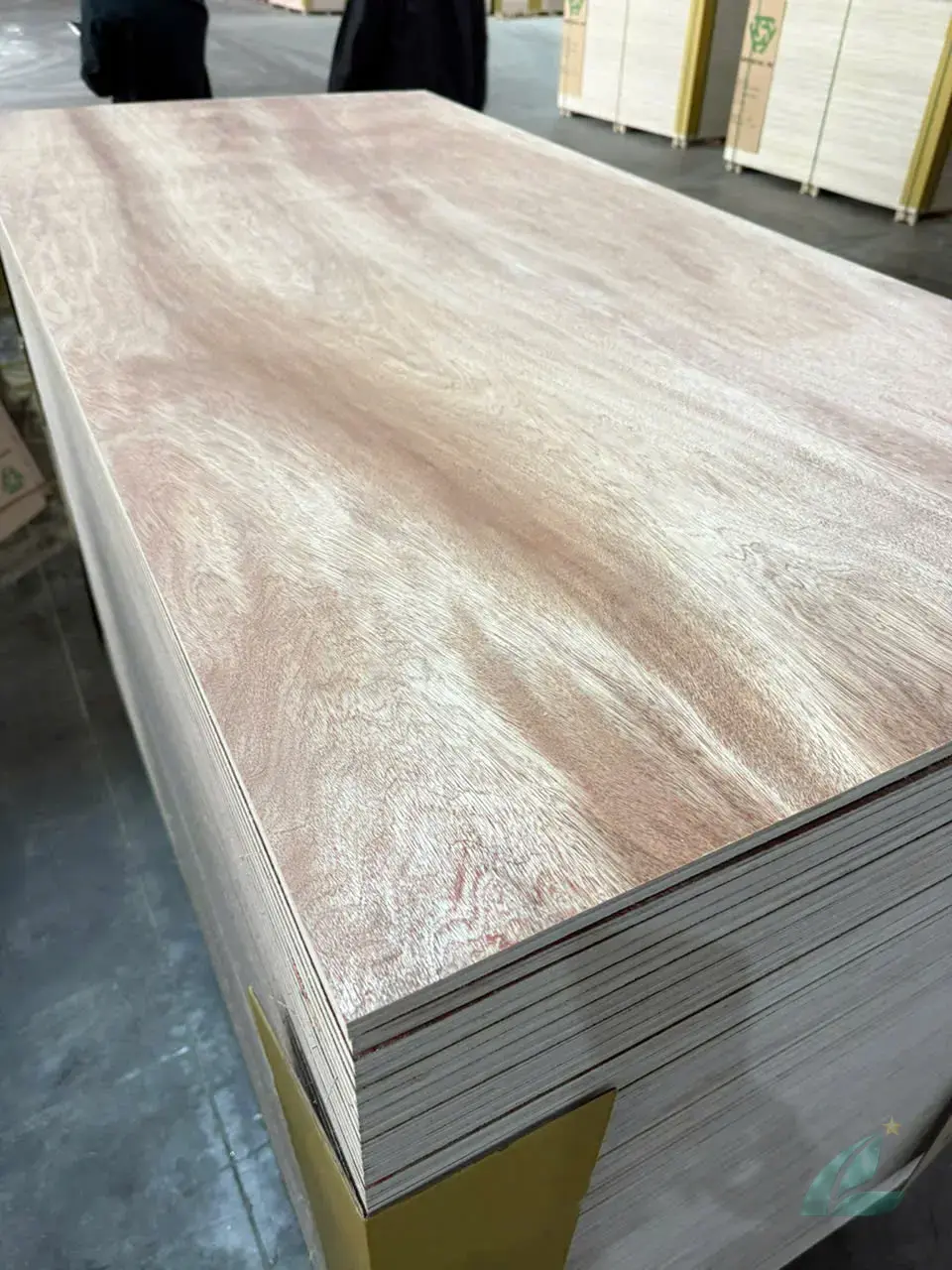
View HCPLY Packing Plywood Specifications
🏗️ What Is Commercial Plywood?
Commercial plywood covers the broad mid-tier category between packing grade and premium furniture grade. It is designed for applications where appearance matters moderately — interior shopfitting, temporary wall panels, counter bases, low-end cabinetry — but where a premium furniture finish is not required or commercially justified.
Key specifications that separate commercial from packing grade:
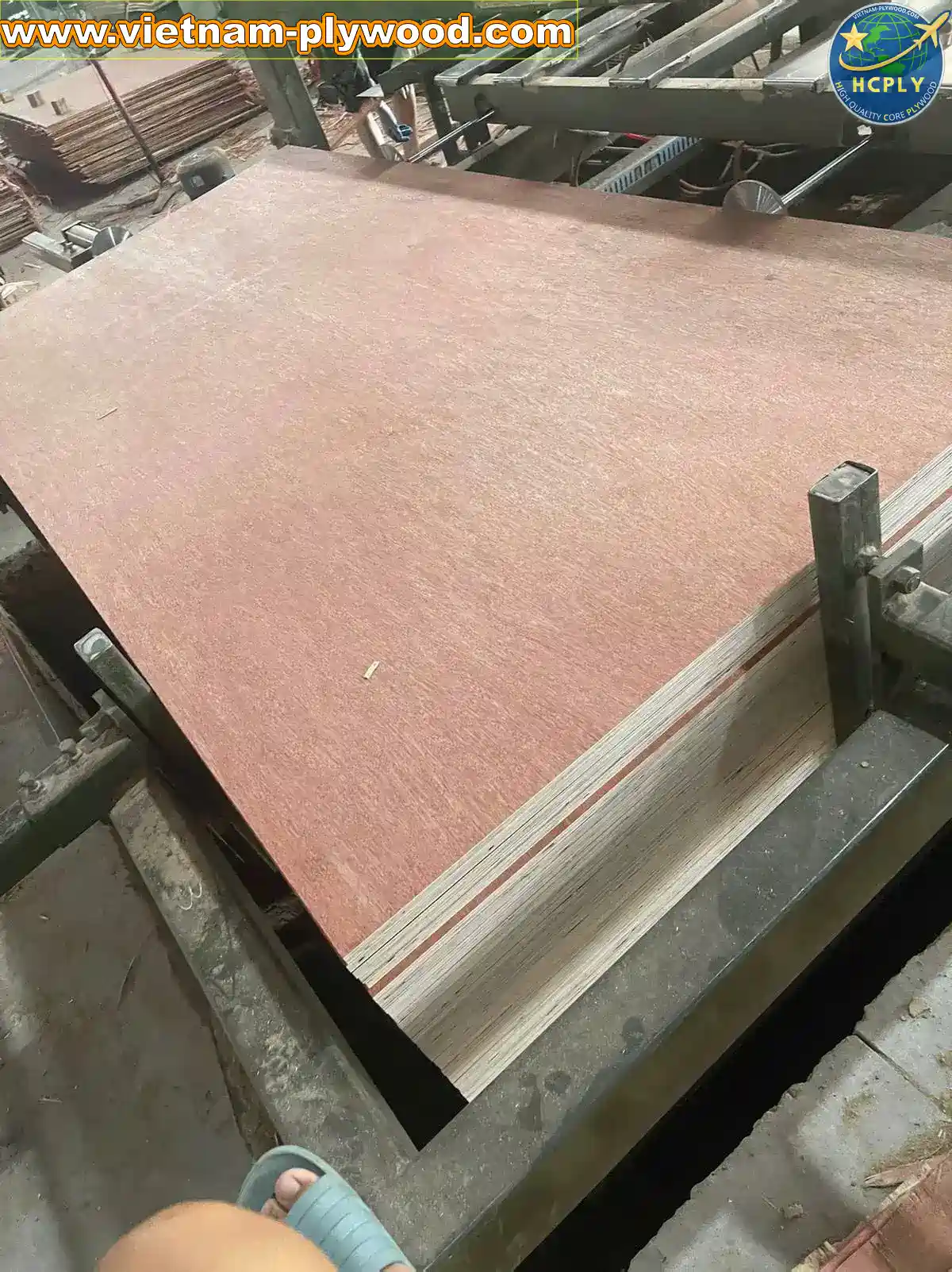
- Face veneer: Bintangor B or Okoume B — both offer consistent color and acceptable surface quality after light sanding. Bintangor dominates in Asian markets (India, Southeast Asia, Middle East) due to cost. Okoume B is more common for European buyers.
- Core: Acacia or styrax. Styrax at 480–500 kg/m³ is lighter and produces a cleaner, more stable panel — often specified when weight-per-container matters for the buyer’s logistics.
- Light sanding: One or both faces sanded to a consistent smoothness. This removes surface roughness, levels the veneer joints, and allows paint or thin laminate to adhere cleanly.
- Emission: E1 class — formaldehyde at or below 1.5 mg/L. Acceptable for most Asian and European markets for general interior use.
The face veneer selection is the single biggest cost lever in commercial plywood. Bintangor B face is cheaper than okoume B. Okoume provides a lighter color and tighter grain that some markets prefer. For a deep comparison of these two face species, see bintangor vs okoume plywood face veneer.
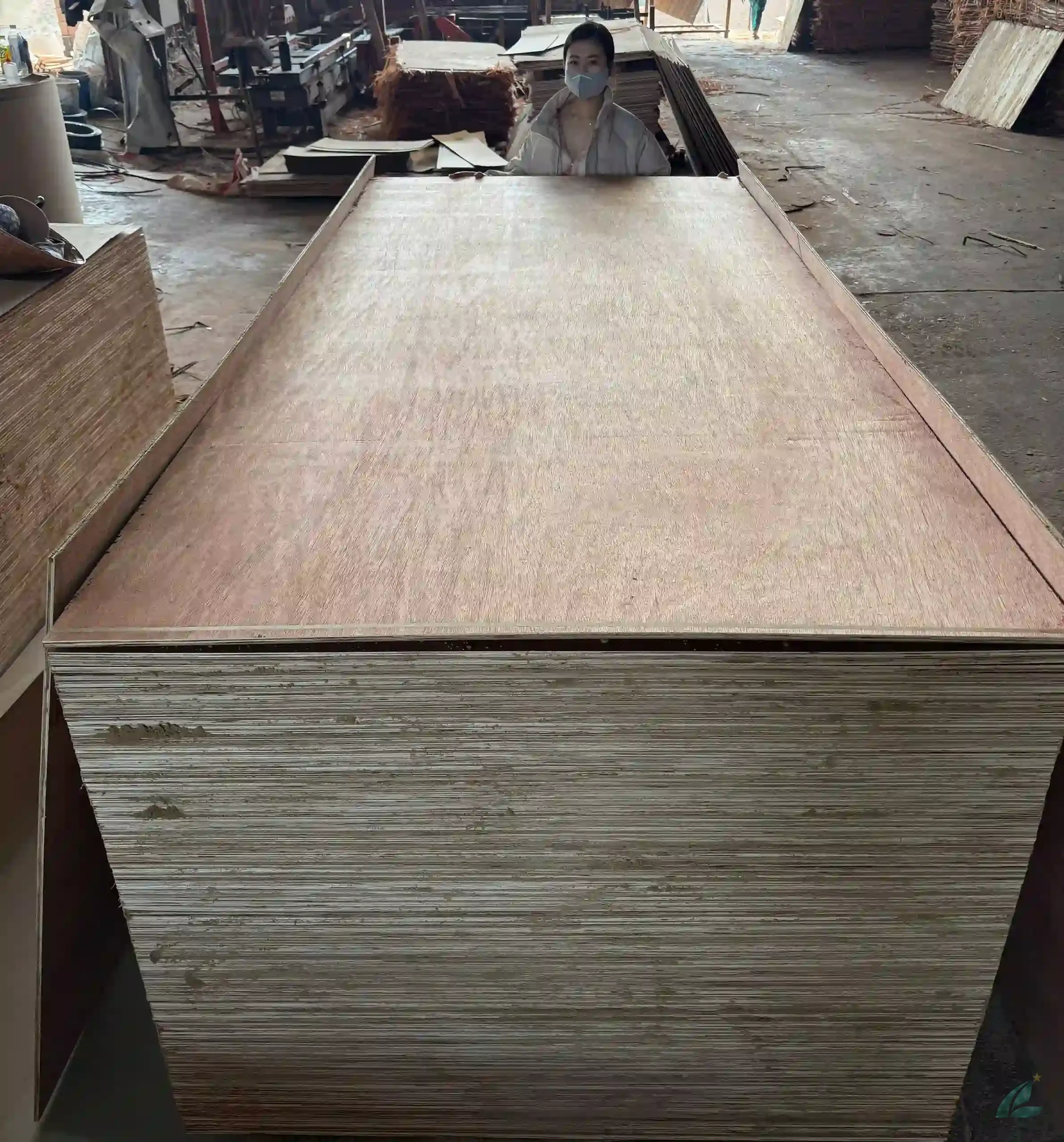
🔍 Packing Plywood vs Commercial Plywood: Where the Specs Diverge
📌 Face Veneer Grade
This is the most visible difference. Packing plywood uses C or D grade veneer — visible knots, veneer patches, and color inconsistency are permitted. Commercial plywood uses B grade — tight knots only (if any), no open splits, consistent color within a sheet.
When a buyer says “I need commercial grade,” the factory reads this as: B-face required, surface must accept paint or laminate without filler. In the packing plywood vs commercial plywood decision, face grade alone accounts for roughly 40–60% of the price gap (HCPLY pricing data, 2026). When a buyer says “packing grade,” the factory treats surface appearance as irrelevant.
📌 Core Construction Quality
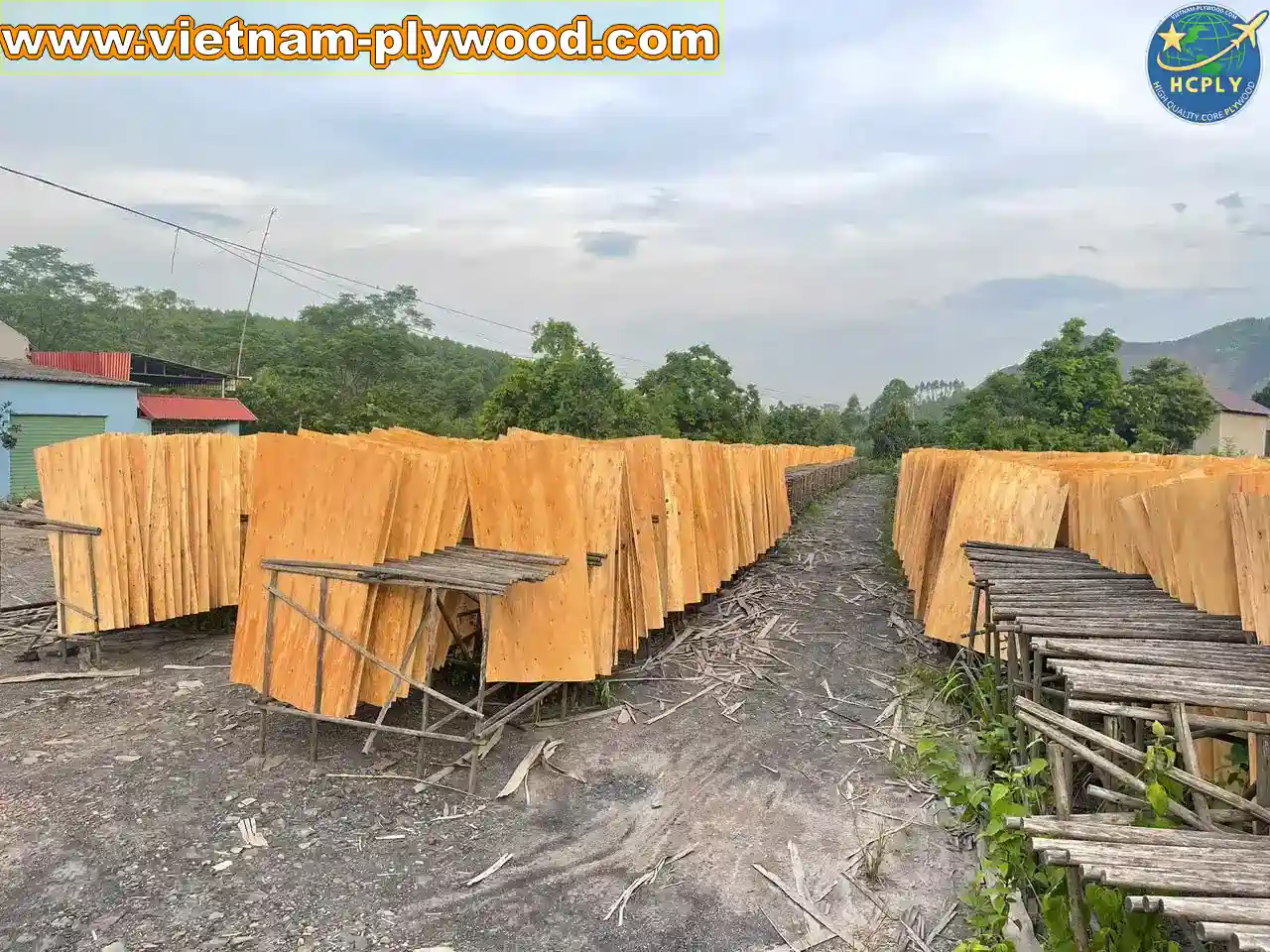
Both packing and commercial plywood typically use acacia core, but the assembly differs. Packing plywood uses loose-lay core veneers — strips of veneer placed side by side without mechanical connection. Commercial plywood uses edge-jointed or lightly stitched core — strips are bound together, reducing internal voids and improving panel flatness.
This construction difference directly affects:
- Screw-holding strength: Edge-jointed core holds fasteners more reliably at panel edges
- Panel flatness: Loose-lay panels are more prone to bowing under humidity change
- Surface telegraphing: Gaps in loose-lay core can print through to the face veneer under pressure
For a full breakdown of core construction methods and how they affect panel quality, read plywood core types — acacia vs eucalyptus vs styrax.
📌 Sanding
Packing plywood: zero sanding. Commercial plywood: one or two passes on a wide-belt sander. This calibration step removes approximately 0.2–0.4mm of material from the face, brings panels to a consistent thickness, and prepares the surface for downstream processing.
The sanding decision is closely tied to end use. See sanded plywood vs unsanded — when to choose for a full decision guide covering furniture, packing, construction, and lamination applications.
📌 Emission Standard
| Grade | Emission Class | Formaldehyde Limit | Suitable For |
|---|---|---|---|
| Packing | E2 | ≤5.0 mg/L | Outdoor packaging, industrial crates |
| Commercial | E1 | ≤1.5 mg/L | Interior fitout, general indoor use |
| Furniture | E0/CARB P2 | ≤0.5 mg/L | Closed furniture, cabinets, children’s spaces |
E2 emission limits packing plywood to applications where panels do not remain in enclosed human-occupied spaces. A shipping crate, a pallet, or a temporary transit box — all acceptable. An interior cabinet in a residential space — not acceptable in the EU, US, Japan, or South Korea. (European Commission EN 13986 standard)
📊 Price Difference: What to Expect
As of 2026, the FOB price gap between packing grade plywood and commercial plywood from Vietnam typically runs 15–25% per CBM, depending on thickness and specification. The primary cost drivers are:
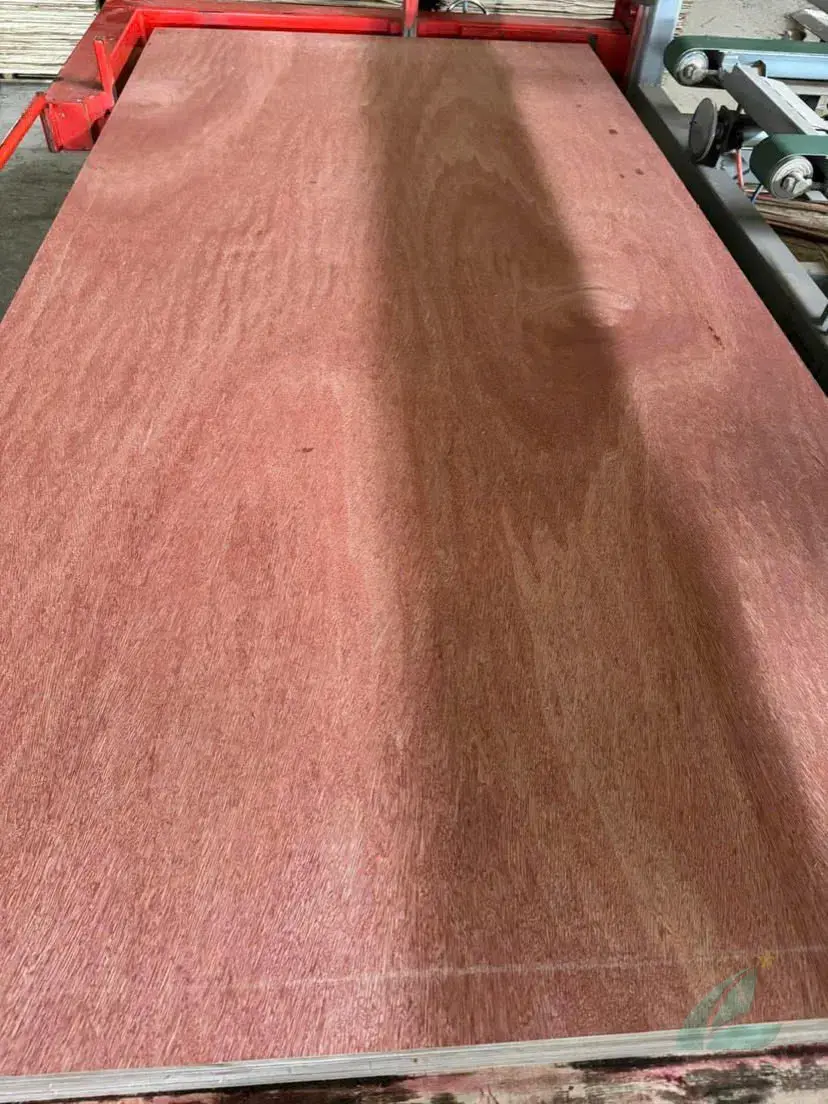
- Face veneer grade: B-grade bintangor costs more than C/D grade
- Sanding: Each sanding pass adds labor and time
- Emission compliance: E1 emission-rated formulations and testing add a small premium over E2
- Core construction: Edge-jointed assembly takes longer than loose-lay
Buyers purchasing 1–2 containers per month will see meaningful savings by specifying packing grade where appearance is genuinely irrelevant. Over-specifying (ordering commercial where packing suffices) is a common procurement error that compounds at volume.
💡 Tip: When comparing quotes between suppliers, verify which emission class and core construction method is included in the price. A “commercial plywood” quote at a packing plywood price often signals a loose-lay core or E2 emission — two packing-grade specifications rebranded with a commercial label.
🔧 Application Decision Guide
Choose Packing Plywood When:
- End product is a shipping crate, export pallet, wooden box, or corrugated pallet base
- Panel will not be visible in the finished product
- No regulatory emission requirements apply (outdoor, industrial, transit)
- Price-per-sheet is the dominant purchase criterion
- Surface does not need to accept paint, laminate, or adhesive bonding
Choose Commercial Plywood When:
- Application involves interior fitout — shopfitting, office partitions, display boards
- Surface will be painted, lightly veneered, or finished with a thin film
- Emission standard E1 is required by the destination market
- Panel edges will be visible and need a presentable appearance
- Buyer or end-user has a quality expectation above basic structural function
Neither Is Adequate When:
- The application requires WBP phenolic glue (construction, marine, exterior exposure)
- E0 or CARB P2 emission is required (furniture for EU, US, Japan export)
- A sanded, calibrated face is needed for premium lamination or HPL bonding
For a full classification of all plywood types by application, see types of plywood — complete classification guide.
🏭 How Vietnam Factories Source Each Grade
Separation matters because:
- Equipment: Loose-lay packing lines cannot produce calibrated commercial panels without downtime and setup changes
- Quality standards: Packing production workers are calibrated to different tolerance expectations than sanded-panel workers
- Contamination risk: Mixing high-dust packing lines with sanded furniture panels causes defects
Factory-direct documentation and pricing are available for both grades from a single point of contact. Mixed-spec containers (packing + commercial in one 40HC) are accepted — total CBM must stay within 40–53 CBM depending on core species and panel weight. (HCPLY export data, 2026)
Contact HCPLY for a Free Packing or Commercial Plywood Quote
✅ Summary: The Specification Checklist
Before placing your order, confirm these five specifications in writing:
- Face grade: C/D (packing) or B (commercial) — verify with a face veneer sample
- Core construction: Loose-lay (packing) or edge-jointed (commercial minimum)
- Sanding: None (packing) or calibrated one/two faces (commercial)
- Emission class: E2 (packing) or E1 (commercial) — get the test certificate
- Glue: Melamine MR for both grades — phenolic WBP only if weather resistance is required
Getting these five points confirmed in the supplier’s proforma invoice prevents 90% of post-shipment disputes related to quality mismatch. The packing plywood vs commercial plywood question has a clear answer once you fix the application, emission requirement, and surface finish need — both grades serve legitimate, distinct purposes. The mistake is ordering one when you need the other.
Disclosure: This article is published by HCPLY, a Vietnam-based plywood manufacturer and export operator. While we aim to provide objective industry guidance, readers should consider our perspective as a market participant when evaluating recommendations.
Get a Free Quote — Packing or Commercial Plywood FOB Hai Phong