
What Is Packing Plywood and Why It Differs from Furniture Plywood
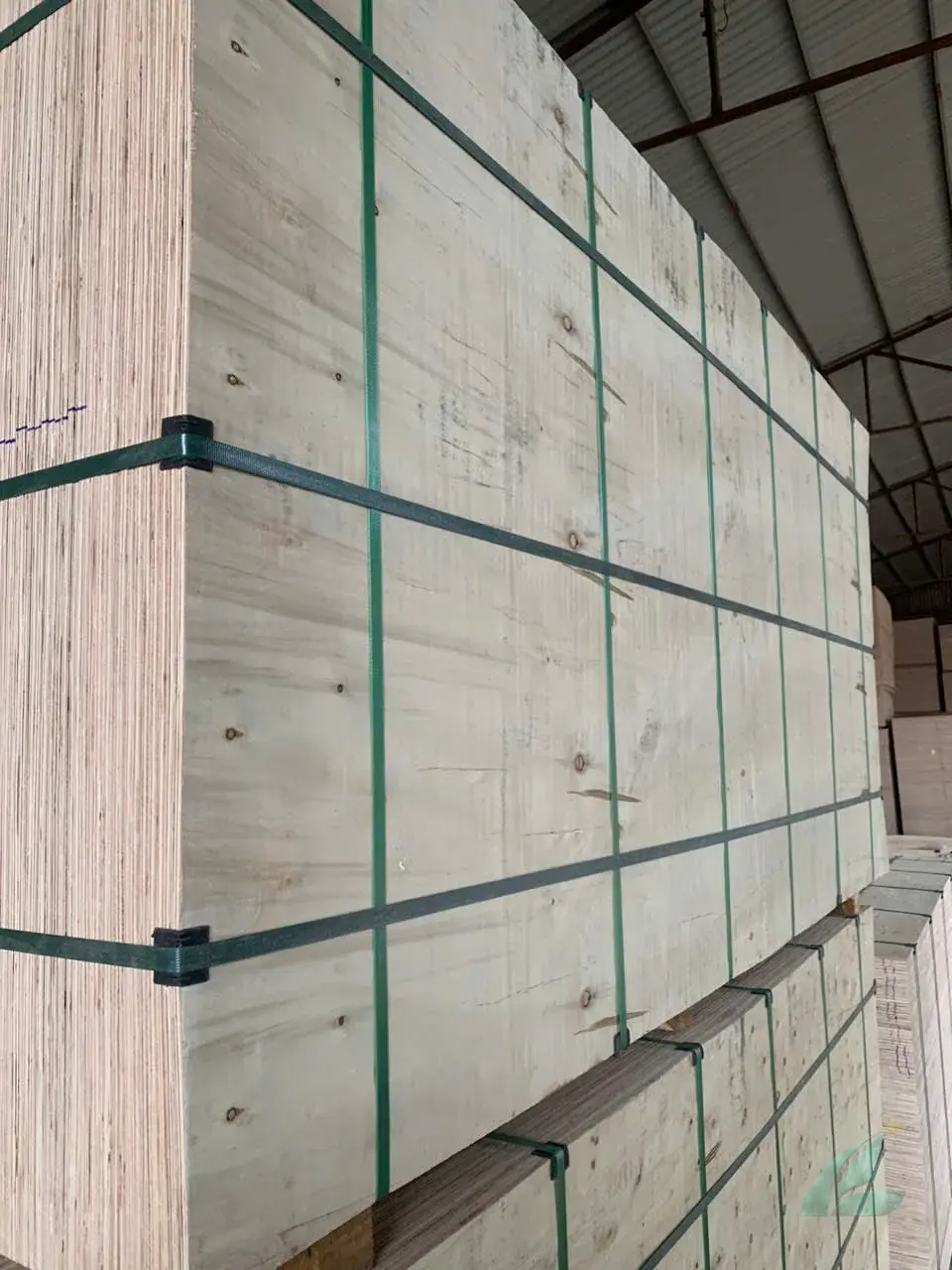
Packing plywood is a distinct product category — not a lower-quality version of furniture plywood, but a product engineered specifically for a different purpose. The defining characteristic of packing plywood is that its performance criteria are entirely load-bearing and structural: the panel must withstand stacking weight, forklift handling, container vibration during sea freight, and the compressive load of heavy industrial goods — all at the absolute lowest cost per panel.
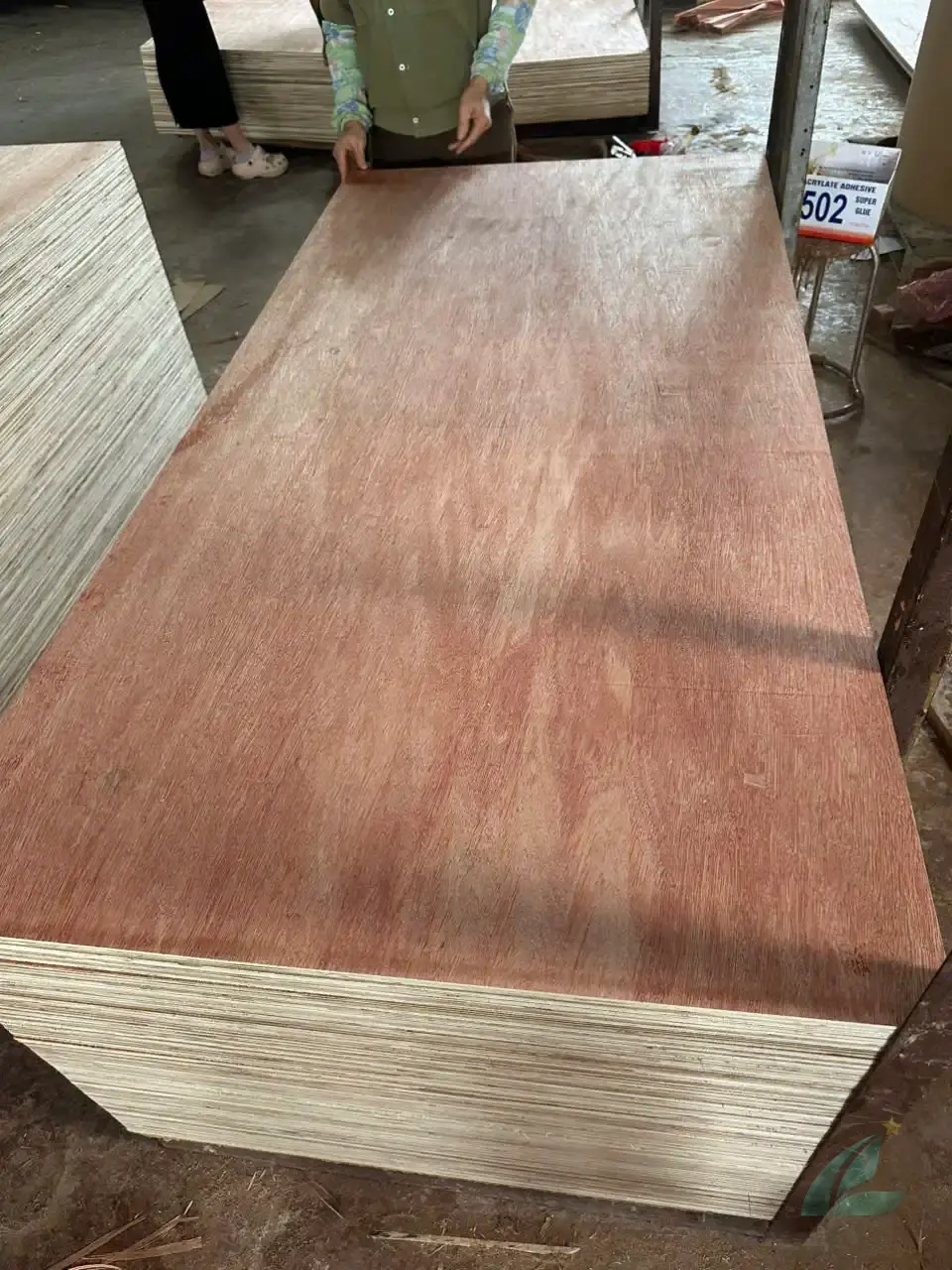
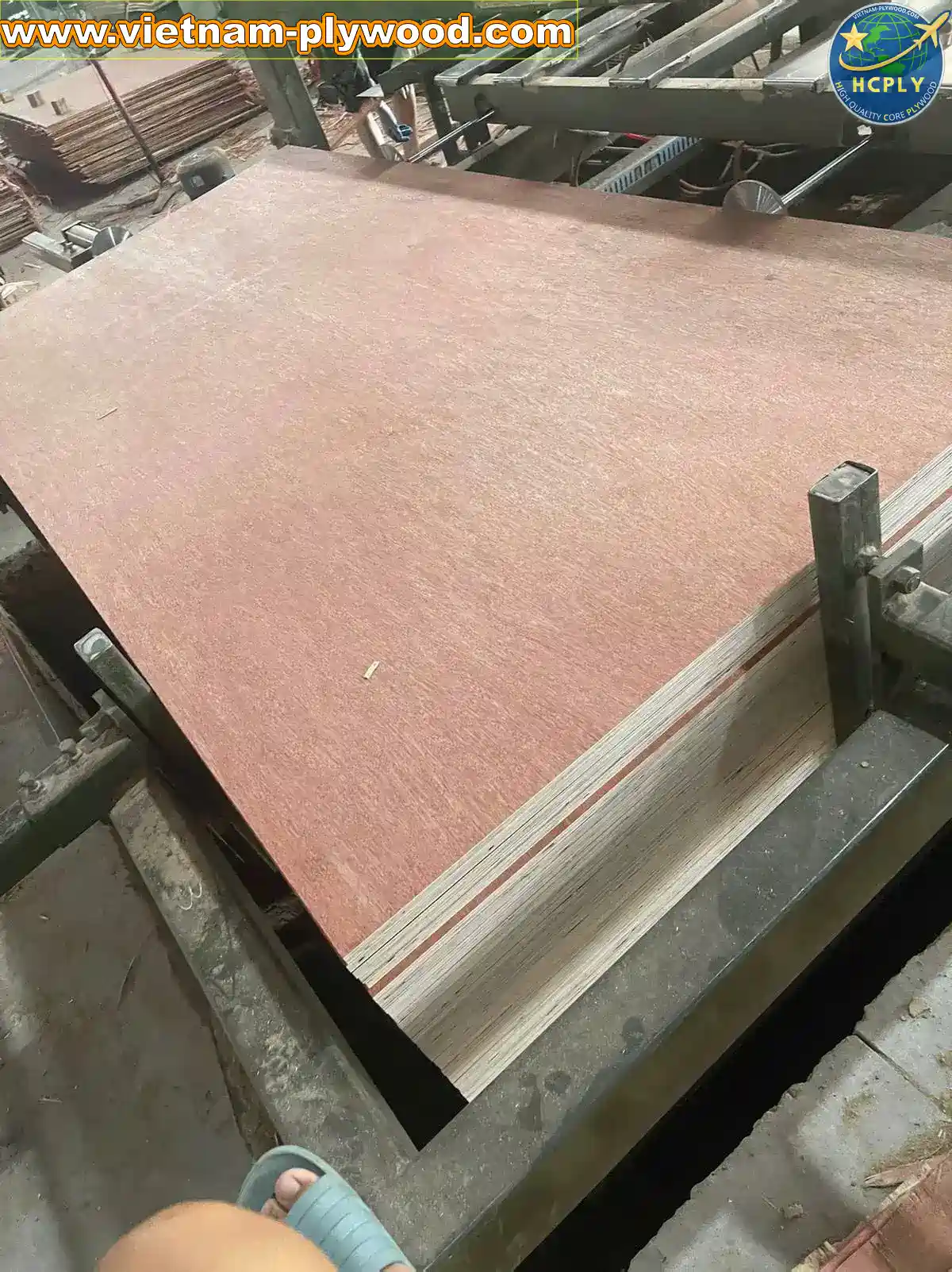
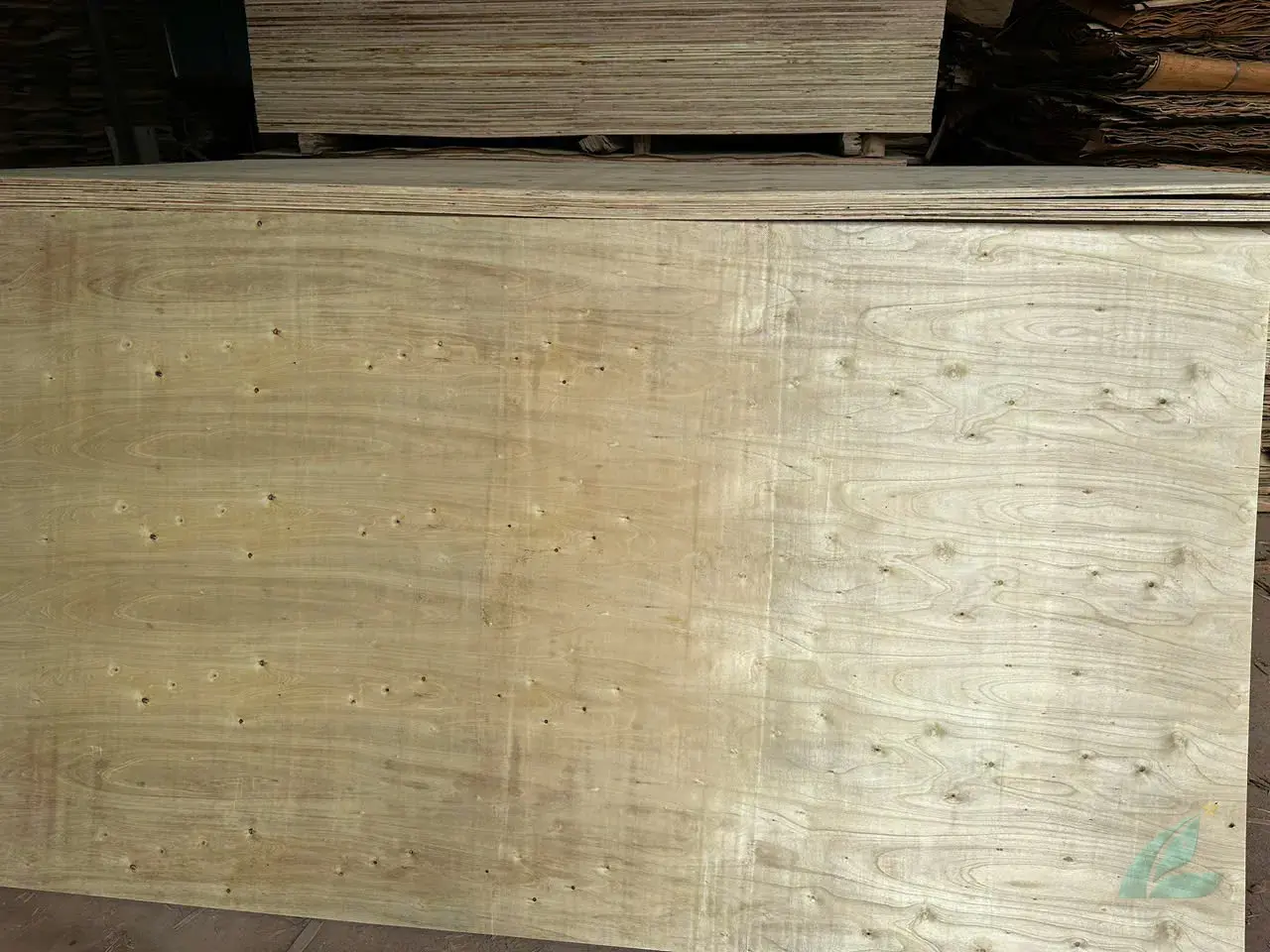
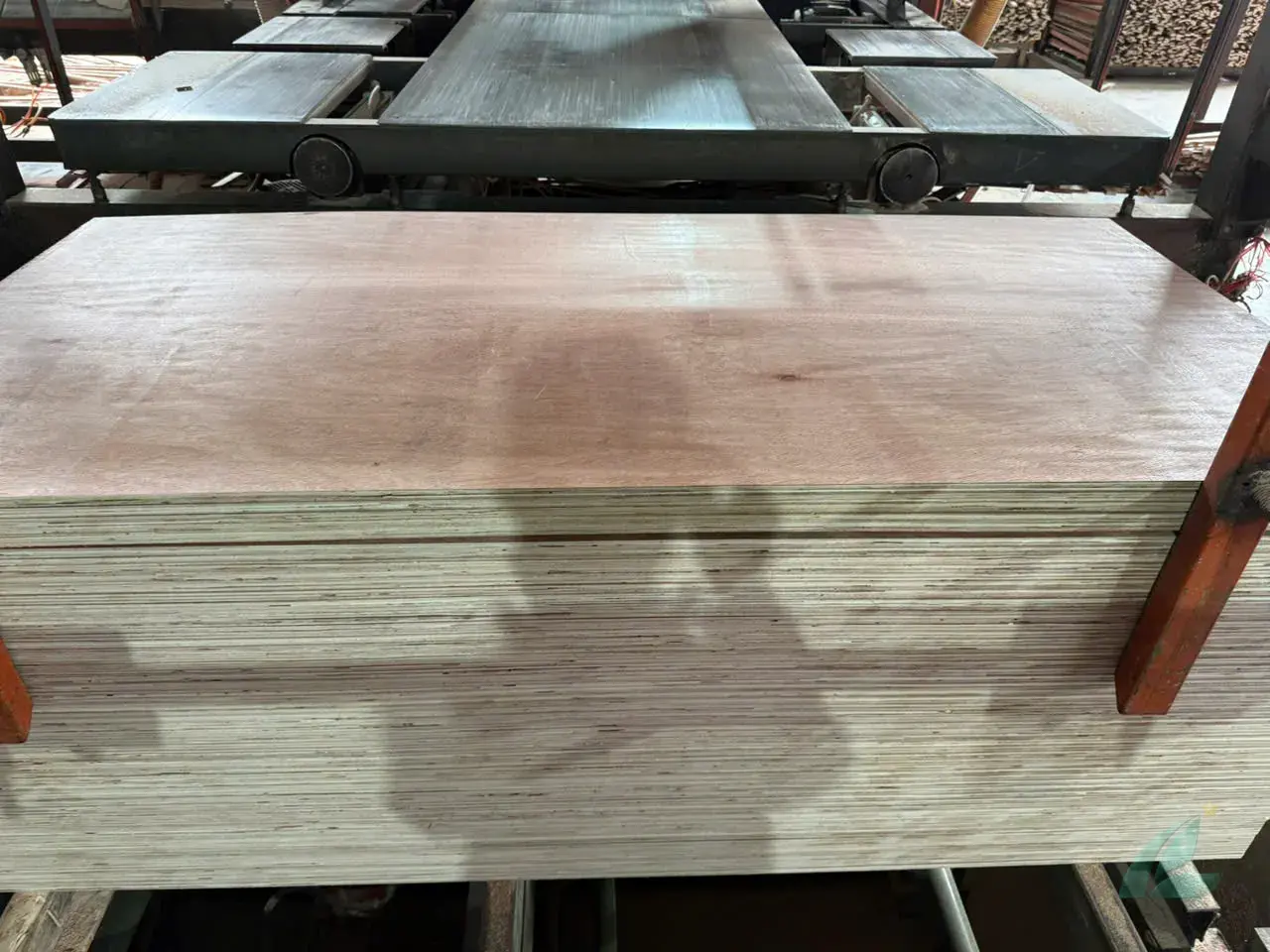
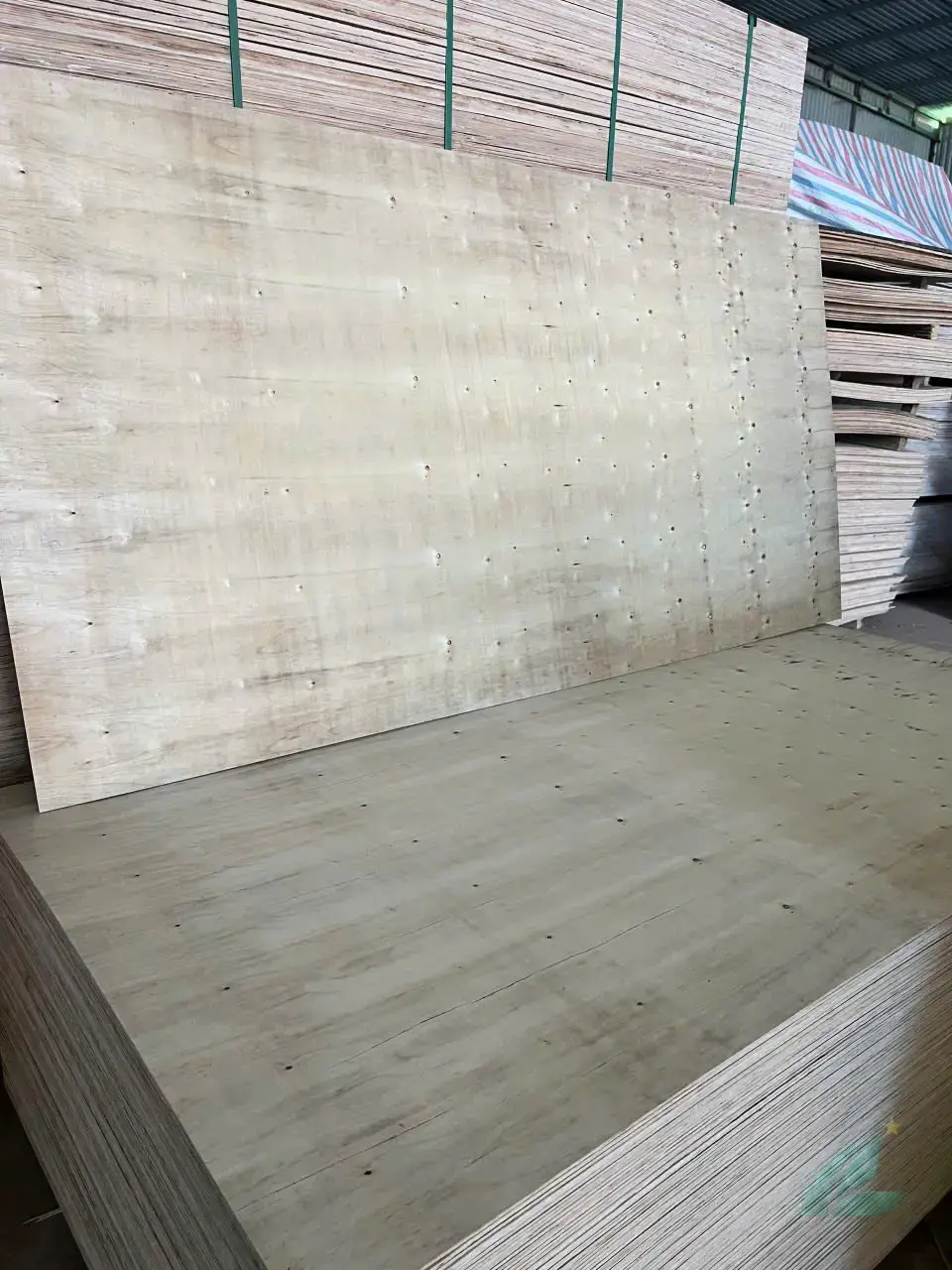
To achieve this, packing plywood Vietnam uses face veneers that furniture buyers would reject — typically Bintangor C/D grade or Poplar face, where surface character marks, natural repairs, and minor splits are permitted. For packaging applications, these characteristics are irrelevant: the packing plywood face is never seen by the end consumer, never lacquered or laminated, and never used as a visible surface. What matters is bond line integrity — the glue joint between face veneer and core must remain stable under load, which the Melamine (MR) glue system used in HCPLY packing plywood delivers reliably.
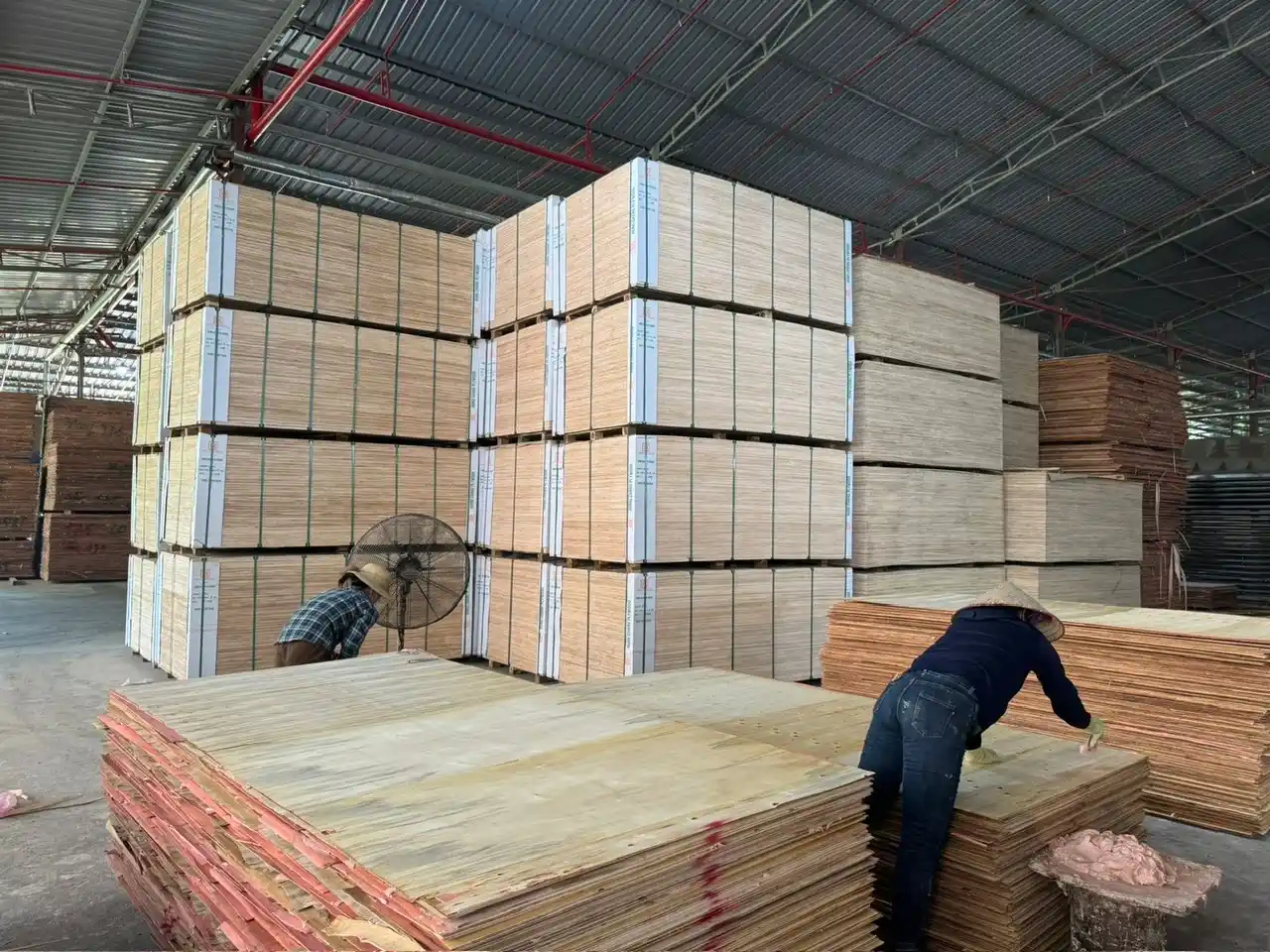
The core construction is equally pragmatic. HCPLY uses acacia core (~580 kg/m3) for the most common packing plywood specification — strong enough to handle industrial loading stress, and priced at the most competitive point in the product range. For buyers prioritizing maximum panel count per container and lowest cost per piece, styrax core (480-500 kg/m3) reduces panel weight, allowing 18 pallets per 40HC versus 16 pallets for acacia core. This 12.5% increase in pallet count translates directly to lower freight cost per panel — a meaningful advantage for high-volume packaging buyers.
Two important technical distinctions: packing plywood uses Melamine (MR) glue, not WBP phenolic glue — the moisture resistance requirement for packaging is lower than for construction or marine use. Emission standard is E2, appropriate for industrial packaging where indoor air quality standards do not apply. Buyers importing for use in enclosed residential spaces should consider commercial-grade panels instead.