
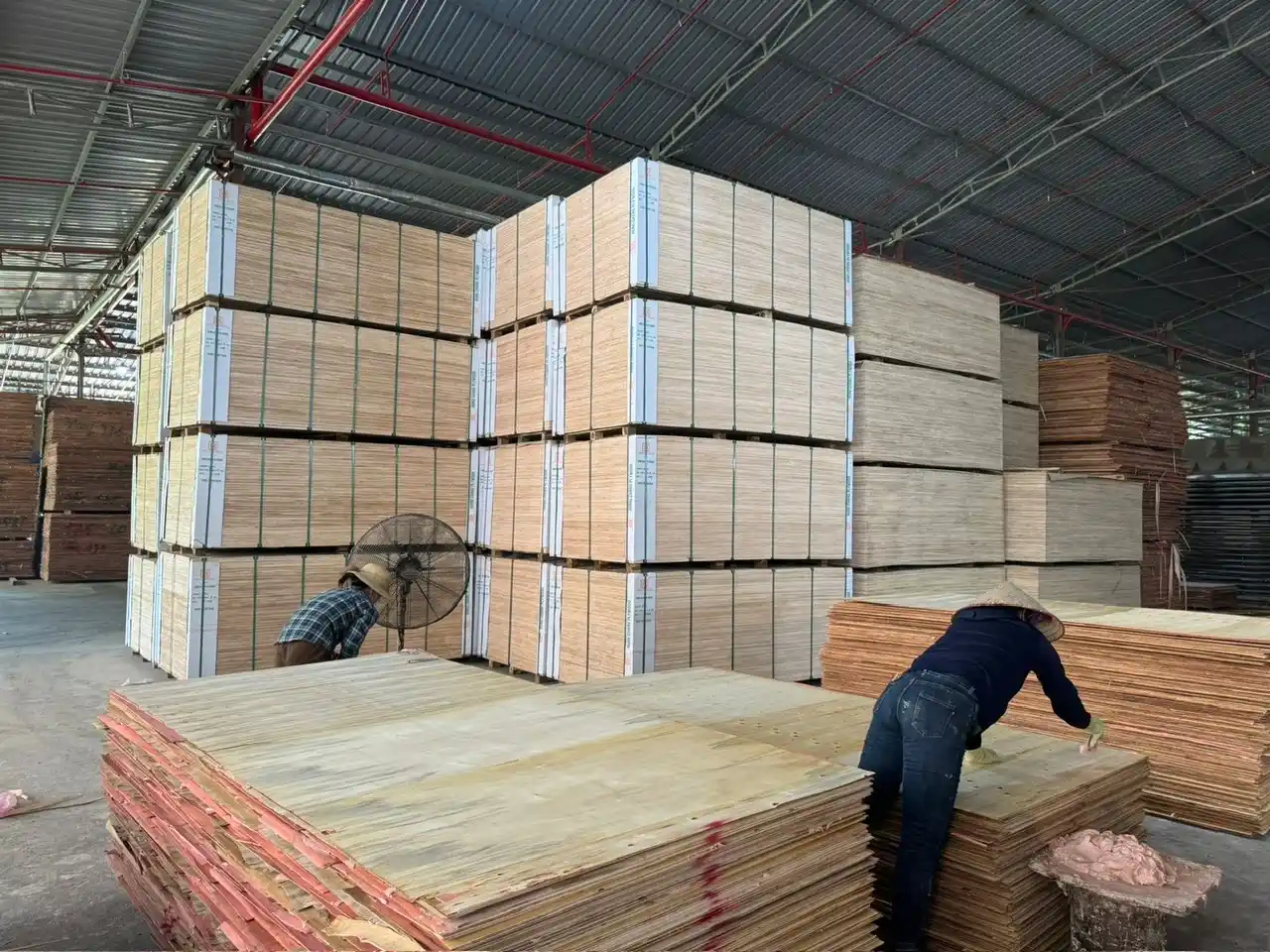
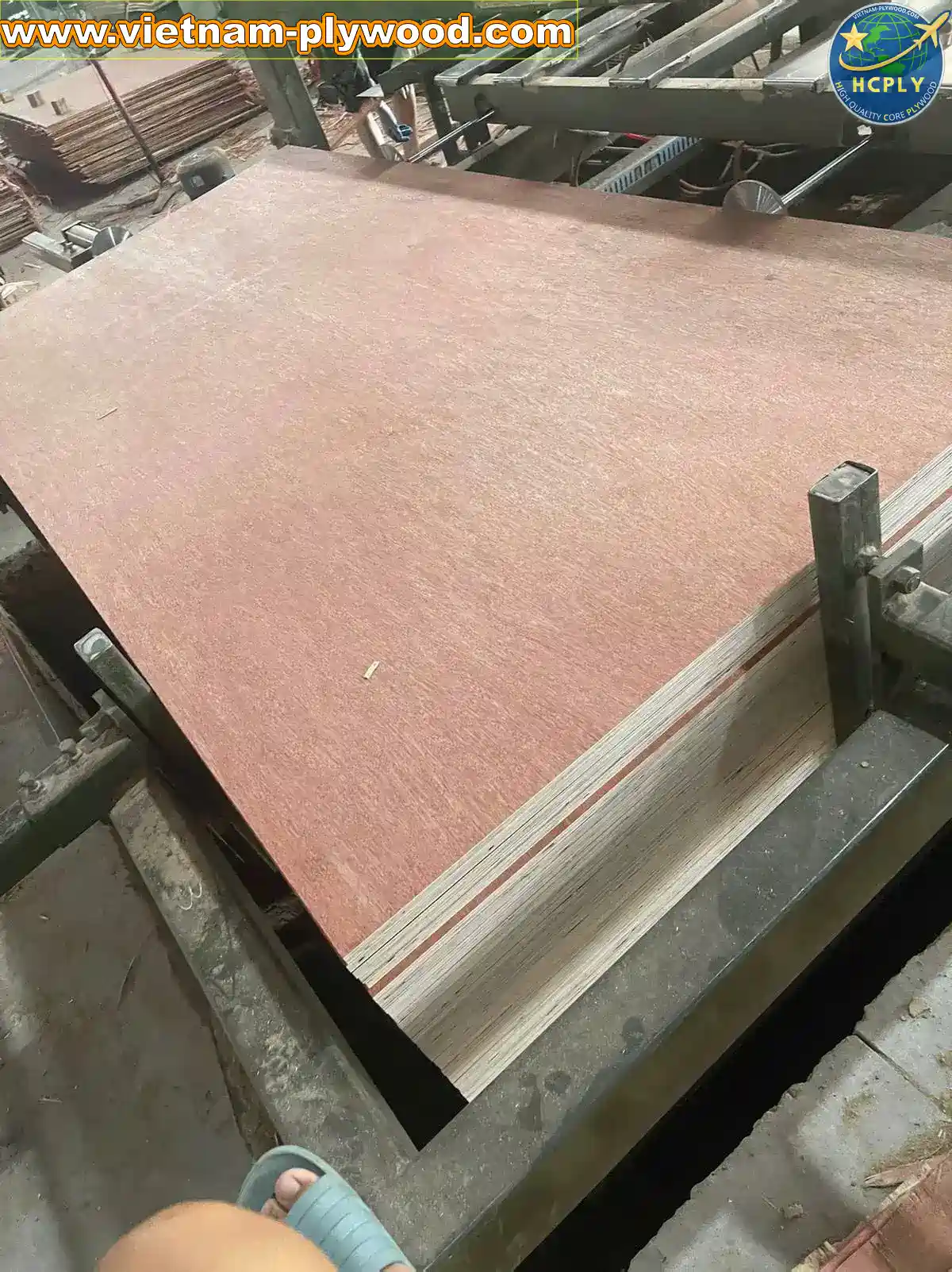
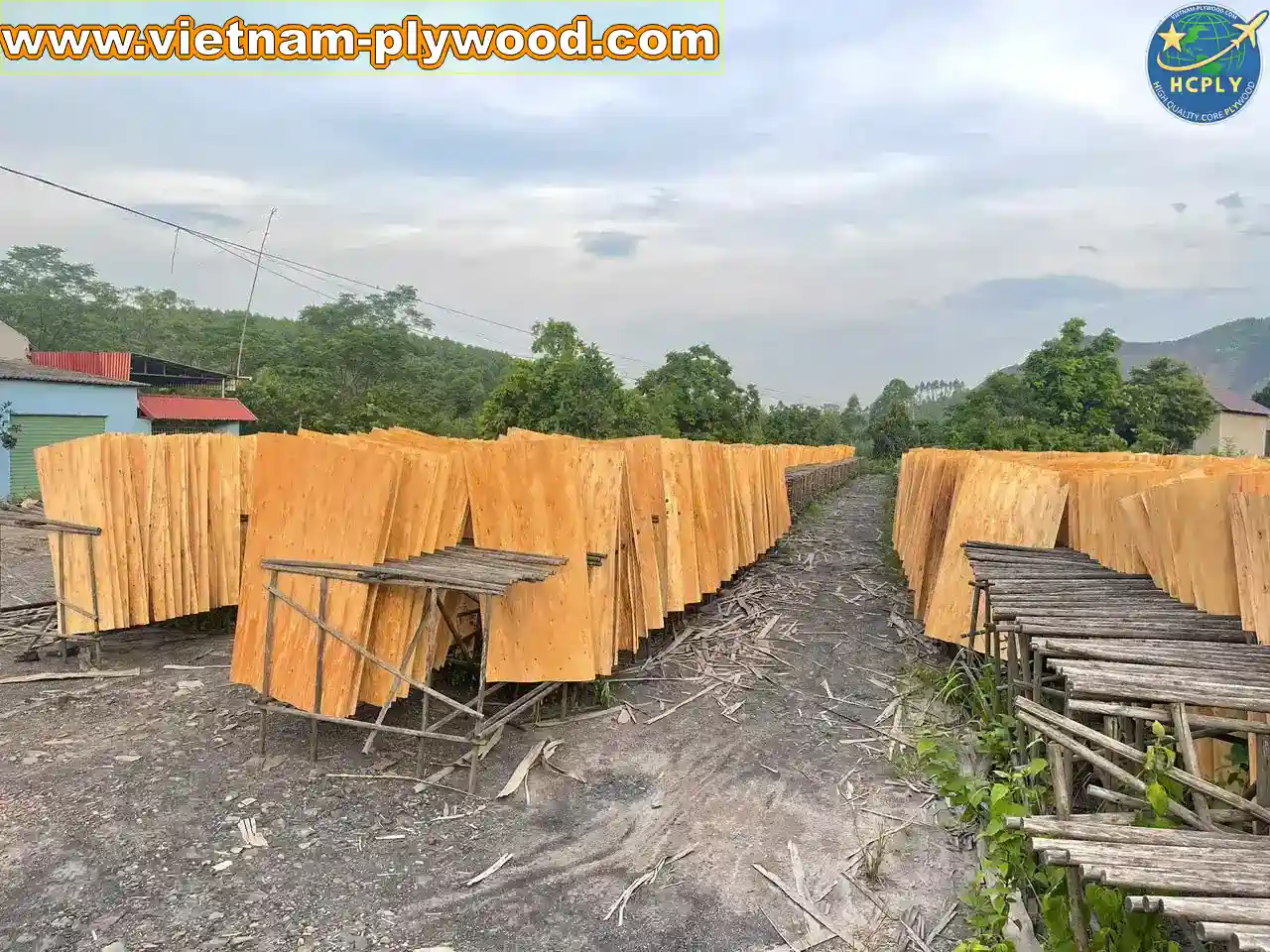

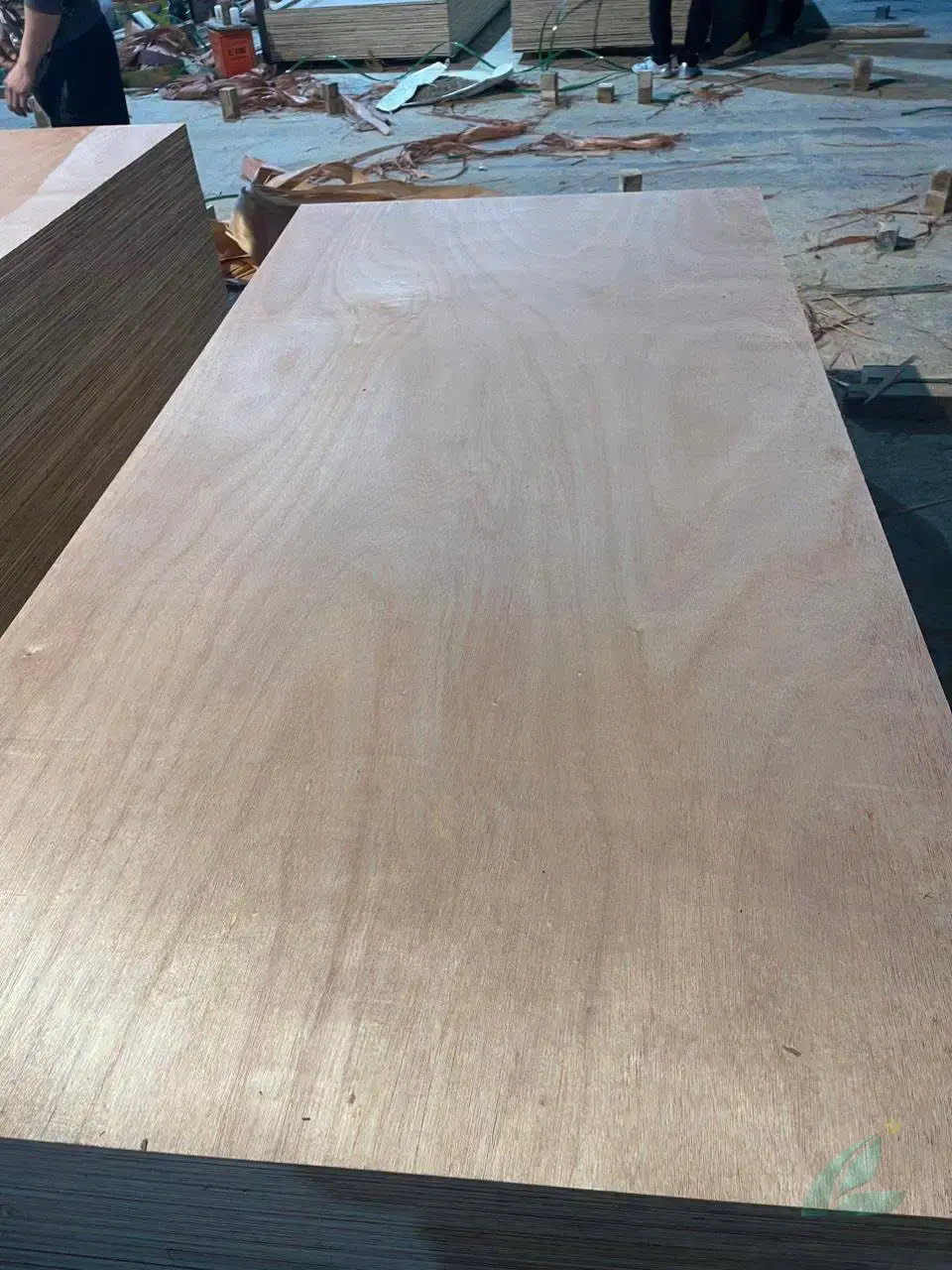
Okoume vs birch plywood: both are genuine furniture-grade face veneers sourced from Vietnam, yet they serve different market segments at meaningfully different price points. Choosing the right one comes down to three practical questions. How much structural strength does your application require? How demanding is the surface environment — moisture, abrasion, repeated handling? And what FOB price difference can your margin absorb?
This comparison covers the properties that matter to B2B importers — not marketing language.
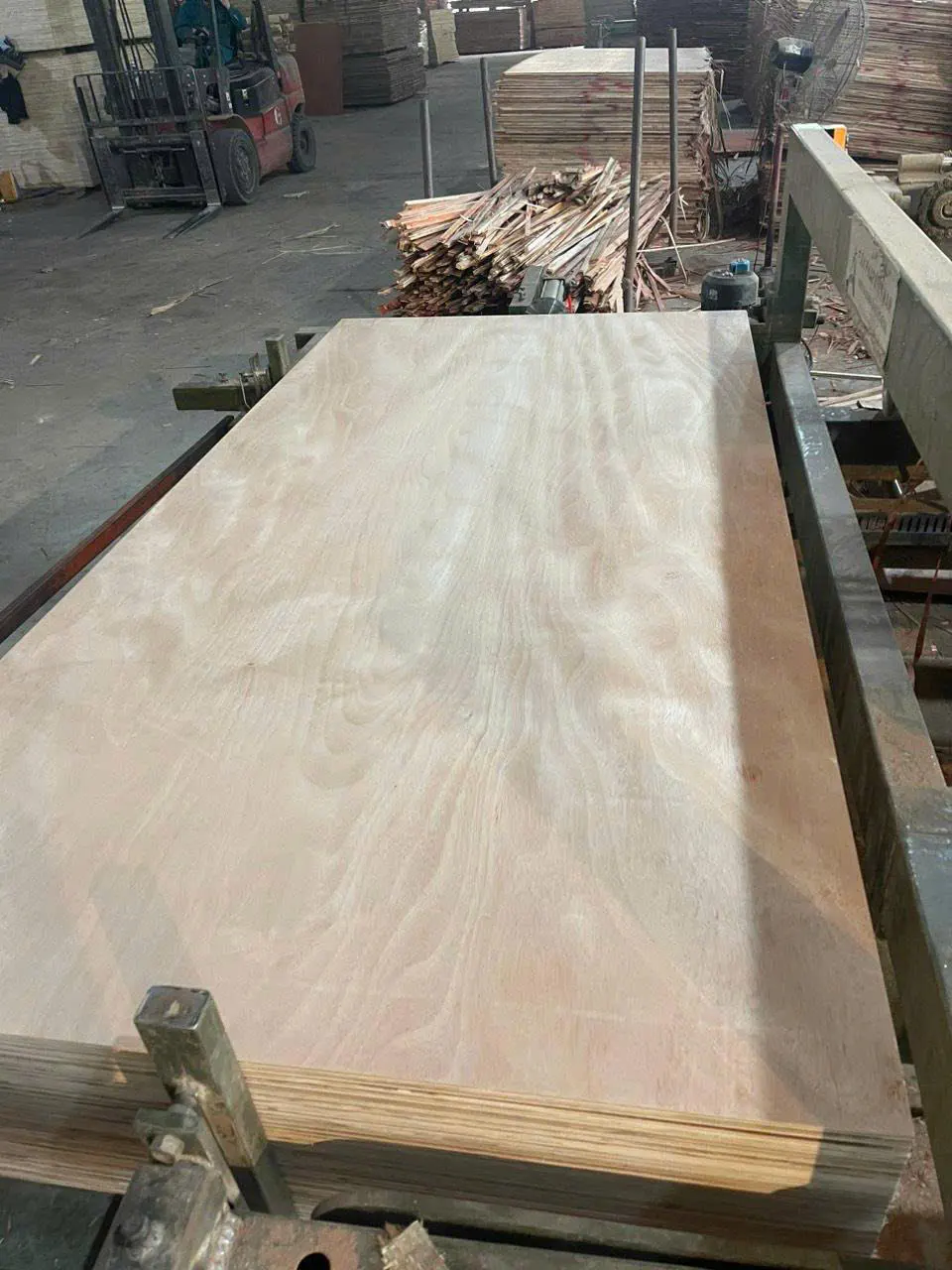
📊 Okoume vs Birch Plywood — TL;DR Comparison Table
| Property | Okoume | Birch |
|---|---|---|
| Face species origin | West Africa | Europe / Russia (imported) |
| Face veneer grade | A/B | D/E/F (D = best in VN) |
| Veneer thickness (VN) | 0.2–0.4mm | 0.2–0.4mm |
| Core options (VN) | Styrax, Eucalyptus | Styrax (most common) |
| Density (styrax core) | 480–500 kg/m³ | 480–500 kg/m³ |
| Surface hardness | Moderate | Higher |
| Moisture resistance (face) | Good | Good |
| Glue options | MR/WBP | MR/WBP |
| Emission | E0/E1 | E0/E1/CARB P2 |
| Sanded | Yes (furniture grade) | Yes |
| FOB price premium | Base | +USD 15–30/CBM |
| Primary markets | Europe, Middle East | Europe, US, Korea |
Key Insight: In any okoume vs birch plywood comparison, core species — not face veneer — drives the structural performance of any plywood panel. Both okoume and birch panels share the same Vietnamese core options. The face veneer determines surface appearance, surface hardness, and price tier.
🔧 Strength Properties — What the Face Veneer Actually Contributes
The okoume vs birch plywood strength question is frequently framed as a simple debate. The framing is partly misleading — and understanding why saves importers from over-specifying and overpaying.
Panel strength in bending (MOR — Modulus of Rupture) and stiffness (MOE — Modulus of Elasticity) are primarily functions of the core species and total panel thickness. Face veneers at 0.2–0.4mm contribute negligibly to these bulk mechanical properties.
Where face veneer species does matter is at the surface:
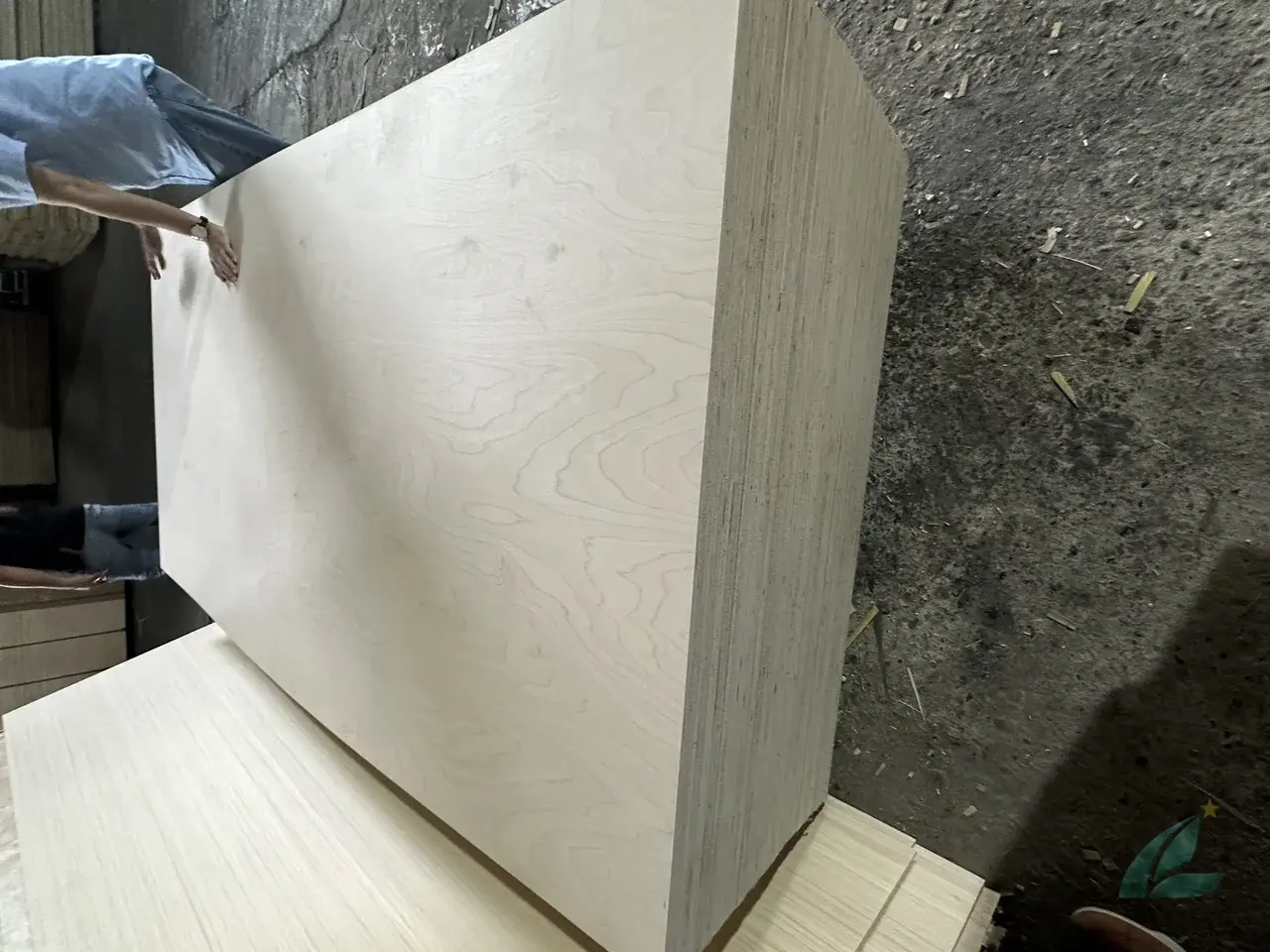
Birch face: Birch (Betula spp.) is a dense, fine-grained hardwood. Its face veneer is harder than okoume under point loads. This translates to better screw-holding at the panel face and greater resistance to denting in furniture applications where edges and surfaces face direct handling.
Okoume face: Okoume (Aucoumea klaineana) is a lighter, more uniform species. Its grain is straight and the surface takes paint and lacquer with minimal preparation. Okoume is softer than birch at the face, but this rarely matters when panels are laminated, painted, or used as cabinet substrate. For a broader comparison of lightweight alternatives, see birch alternatives from Vietnam — poplar and EV plywood.
⚠️ Important: Both okoume and birch plywood from Vietnam use domestic core species — acacia (~580 kg/m³), styrax (480–500 kg/m³), or eucalyptus (650–750 kg/m³). Panel weight and structural stiffness are determined by the core, not the face. Specify your required core when requesting a quote.
For furniture-grade panels headed to EU, Korean, or US markets, the standard spec is styrax core + full stitched construction + sanded + E0 emission. This spec delivers the same panel stiffness whether you choose okoume or birch face.
Compare plywood core species — acacia, styrax, eucalyptus
💧 Durability — Surface and Moisture Performance
📌 Surface Durability
Birch face handles wear and abrasion better than okoume. This matters in applications where the raw veneer is the finished surface — exposed cabinet interiors, painted panels in humid environments, or furniture where face edges are handled repeatedly during assembly.
Okoume’s lower surface hardness is rarely a problem for:
- Panels that receive a lacquer, HPL, or paint coating (for pre-finished birch, see birch UV coated plywood)
- Substrate panels where okoume face carries no structural or wear function
- Marine applications where the panel is sealed with epoxy
“For European furniture markets where panels receive full painting or lamination, okoume face performs identically to birch in service life. The price differential of USD 15–30 per CBM has real impact on container economics for high-volume buyers.” — Lucy, International Sales Manager, HCPLY (HCPLY production data, 2026)
📌 Moisture Resistance
Neither okoume nor birch face provides inherent waterproofing. Moisture resistance in plywood comes from the glue system — not the face species.
| Glue | Standard name | Boiling test | Suitable for |
|---|---|---|---|
| Melamine | MR | 12 hours | Interior furniture, cabinets |
| Phenolic | WBP | 72 hours | Construction, marine, exterior |
Both okoume and birch plywood are available with either MR (melamine) or WBP (phenolic) glue from HCPLY’s production facilities. For marine or exterior applications, always specify WBP — regardless of which face species you select.
💡 Tip: Emission standard and glue type are separate specifications. An E0 panel uses melamine glue with ultra-low formaldehyde content. WBP uses phenolic glue for water resistance. You can have E0 + WBP, or E1 + MR — specify both independently when placing your order.
Full guide: Plywood glue types and emission standards explained
💰 Price — What Drives the FOB Difference
Okoume vs birch plywood price differences are consistent and traceable to supply chain realities. When evaluating birch plywood vs okoume on cost, the gap is real and predictable.
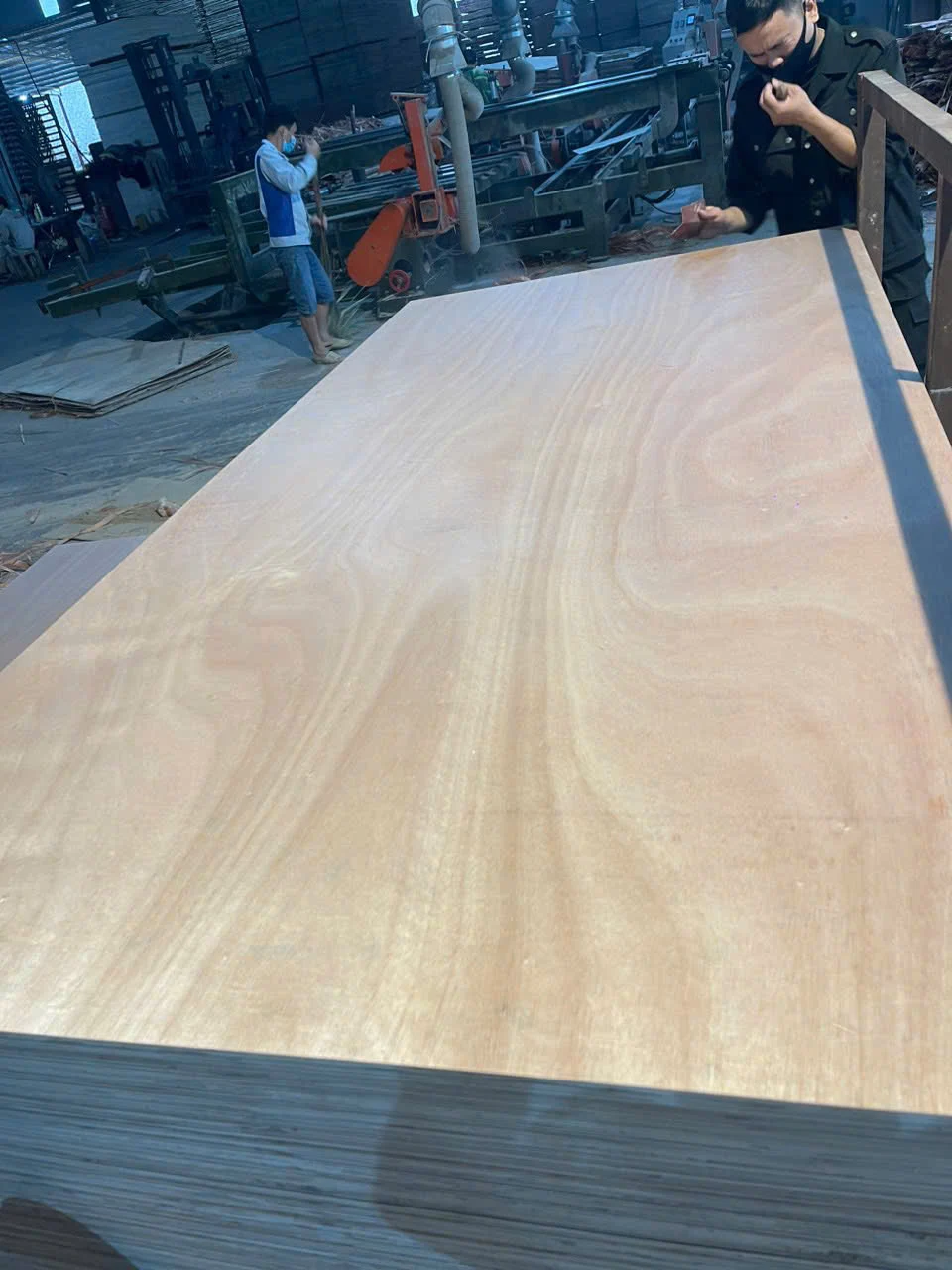
Birch face veneer is imported. Vietnam has no commercial birch forests. Birch face veneer is sourced from Europe and Russia, then imported to Vietnamese mills for slicing and application. Import costs, shipping, and limited supply create a structural price premium.
Okoume face veneer is West African origin, also imported to Vietnam, but typically available at lower cost than birch due to different supply conditions and wider production volumes in the West African timber trade.
As of 2026, the FOB Hai Phong price premium for birch vs okoume at equivalent core, thickness, and emission spec runs approximately USD 15–30 per CBM (HCPLY production data, 2026). This varies by:
- Thickness (thinner panels = lower absolute premium per CBM, but same percentage gap)
- Emission standard (CARB P2 adds cost on top for both species)
- Order volume (full container pricing vs spot)
- Birch grade (D vs E vs F — D-grade commands higher premium)
For a buyer importing 10 containers/year at 50 CBM per container, the annual cost of choosing birch over okoume at USD 20/CBM premium equals USD 10,000. This is a real number worth evaluating against the application requirements.
Request current FOB pricing for okoume or birch plywood
🏭 Market Applications — Which Species Fits Which Buyer
📌 Where Okoume Wins
European furniture manufacturers building painted or lacquered cabinet boxes consistently choose okoume over birch when panel surfaces will not be visible in the finished product. The cost saving per container funds additional production volume.
Marine and boat interior panels specify okoume for its strength-to-weight ratio. A lighter panel means less ballast, better fuel economy in recreational marine applications. Marine service requires WBP glue on either species.
HPL and lamination substrates — okoume’s flat, consistent surface accepts HPL bonding without telegraphing grain. For laminated cabinet doors and furniture panels, okoume face under HPL is functionally identical to birch.
Middle East commercial fitout buyers purchasing at price-sensitive volume typically favor okoume over birch. The finished application (painted walls, cabinet interiors) creates no visible difference at handover.
📌 Where Birch Wins
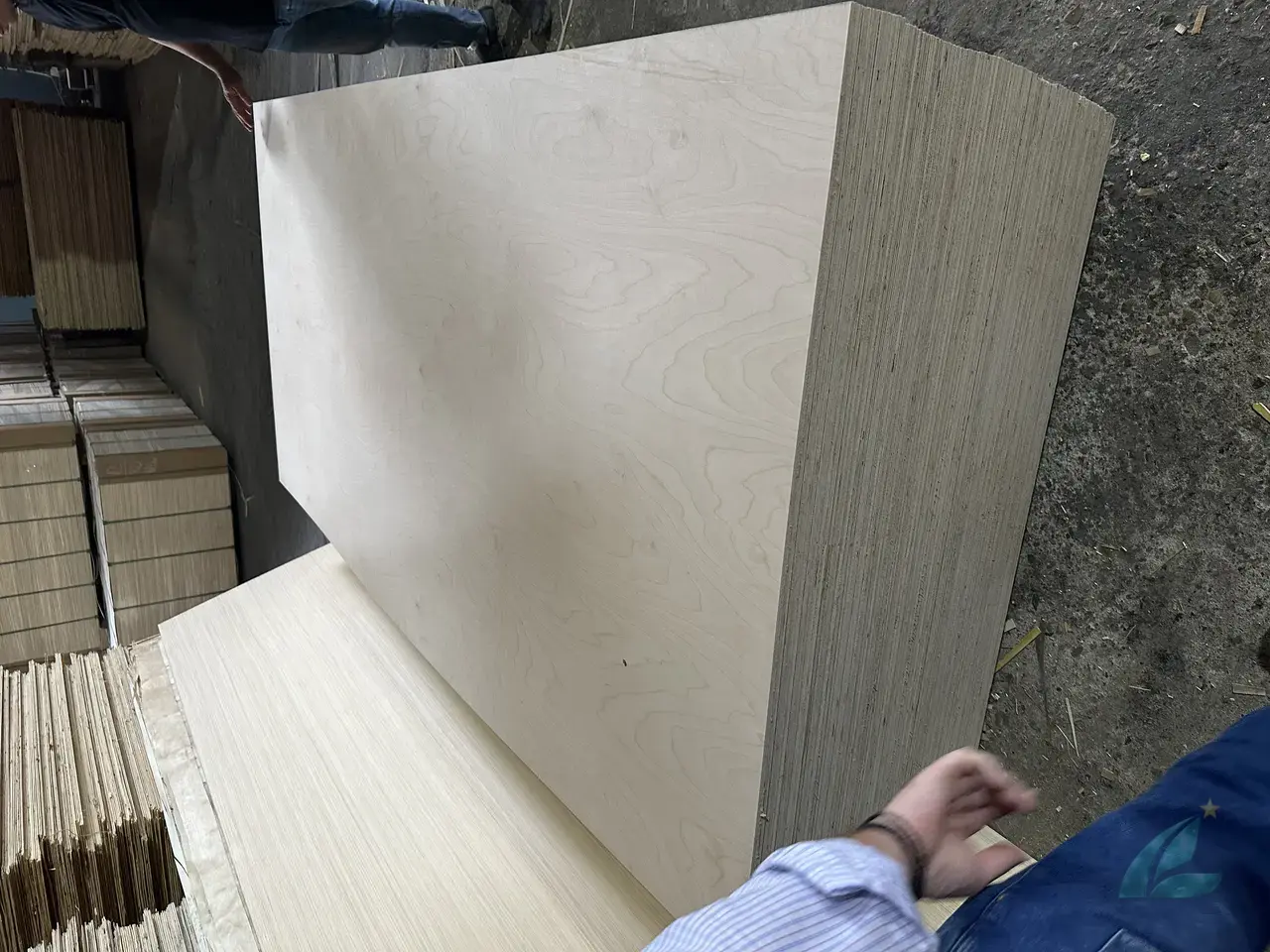
Kitchen cabinet face frames and exposed interior edges where the raw veneer is visible in the finished product — birch’s tighter grain and lighter color make it aesthetically superior and more paintable without grain telegraphing.
US market imports where buyers are accustomed to Baltic birch specifications. CARB P2 compliance is mandatory; birch panels with CARB P2 certification from HCPLY supply this market directly.
Korean furniture OEM production where E0 emission with birch face is the specified standard for domestic-market furniture. HCPLY supplies Korean furniture manufacturers from styrax-core birch lines with ISO 9001 and FSC certification (FSC, 2025).
Premium furniture that will carry exposed, natural veneer finish — birch’s harder face holds edge routing and CNC machining cleaner than okoume at equivalent thickness.
Birch plywood specifications, grades, and FOB pricing
Okoume plywood specifications, grades, and FOB pricing
📋 Sourcing from Vietnam — What to Specify
Both okoume and birch plywood production in Vietnam follows the same manufacturing pathway: imported face veneer applied to domestically grown core species with domestic glue systems. The factory segment you source from matters more than the face species choice.
A furniture-grade okoume panel from a premium facility (full stitched styrax core, E0, calibrated sanding) is structurally superior to a commercial-grade birch panel from a budget facility (loose-laid acacia core, E2, unsanded). Birch face does not automatically mean premium quality (Vietnam Plywood Manufacturer Association, 2024). In the okoume vs birch plywood decision, factory segment and core spec matter more than face species name. The birch plywood vs okoume question is ultimately answered by the full specification, not the face species alone.
Specify these five parameters when requesting a quote:
- Face species — okoume or birch, grade (A/B for okoume; D/E/F for birch)
- Core species — styrax (lightest, best for furniture), eucalyptus (heaviest, highest density), or acacia (budget)
- Core construction — full stitched (premium, no gaps) or edge-jointed (mid-grade)
- Glue system — MR (melamine, interior furniture) or WBP (phenolic, marine/exterior)
- Emission standard — E0/CARB P2 (US, EU premium, Japan, Korea), E1 (standard EU/Asia)
Without these five parameters, a quote is not comparable across suppliers. The same “okoume plywood 18mm” from two Vietnamese factories can differ by USD 60–80/CBM based on core and construction spec.
Complete guide to reading a plywood specification sheet
✅ Okoume vs Birch Plywood — Final Recommendation
Choose okoume if:
- Panels will be painted, lacquered, HPL-laminated, or otherwise covered
- Application is marine with WBP glue (okoume’s strength-to-weight ratio is proven)
- Budget optimization matters — the USD 15–30/CBM saving is meaningful at your volume
- Target market is Europe or Middle East where okoume is widely accepted
Choose birch if:
- Panels carry exposed natural veneer finish in the finished product
- Application requires maximum surface hardness and screw retention at face
- Market specification calls for birch by name (US hardwood, Korean E0, Baltic birch substitutes)
- CARB P2 compliance is required alongside premium face appearance
For buyers where neither application criterion strongly differentiates, okoume is the economically rational choice for most painted or laminated furniture applications. Birch carries a real premium that is justified by specific performance requirements, not general quality perception. The okoume vs birch plywood choice, made correctly against your actual spec, can save or cost USD 10,000+ per year at modest import volumes.
Disclosure: This article is published by HCPLY, a Vietnam-based plywood manufacturer and export operator. While we aim to provide objective industry guidance, readers should consider our perspective as a market participant when evaluating recommendations.
Get a Free Quote for Okoume or Birch Plywood
No minimum order complexity — mixed specs, samples, and full container pricing available from one contact point.