

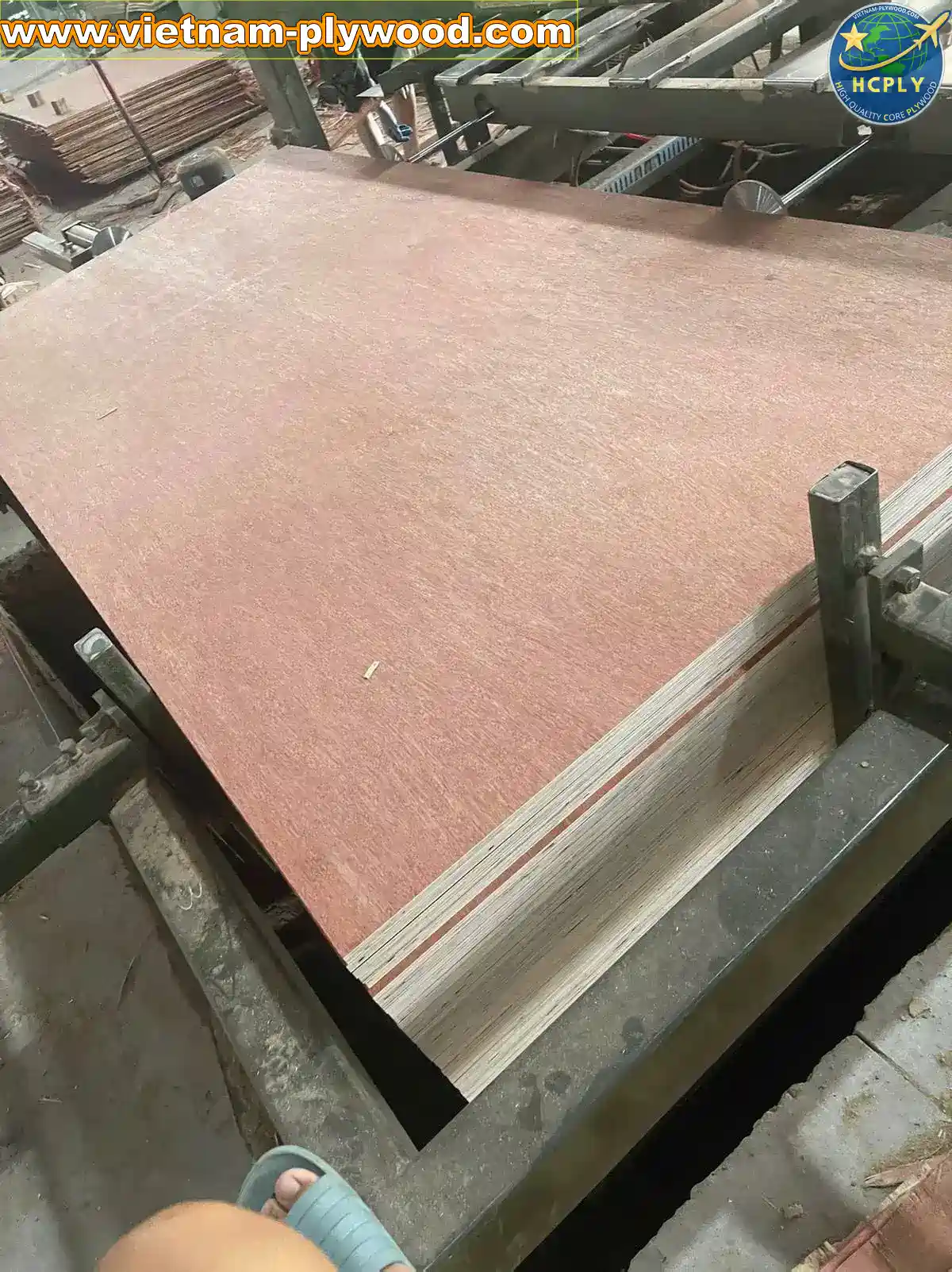

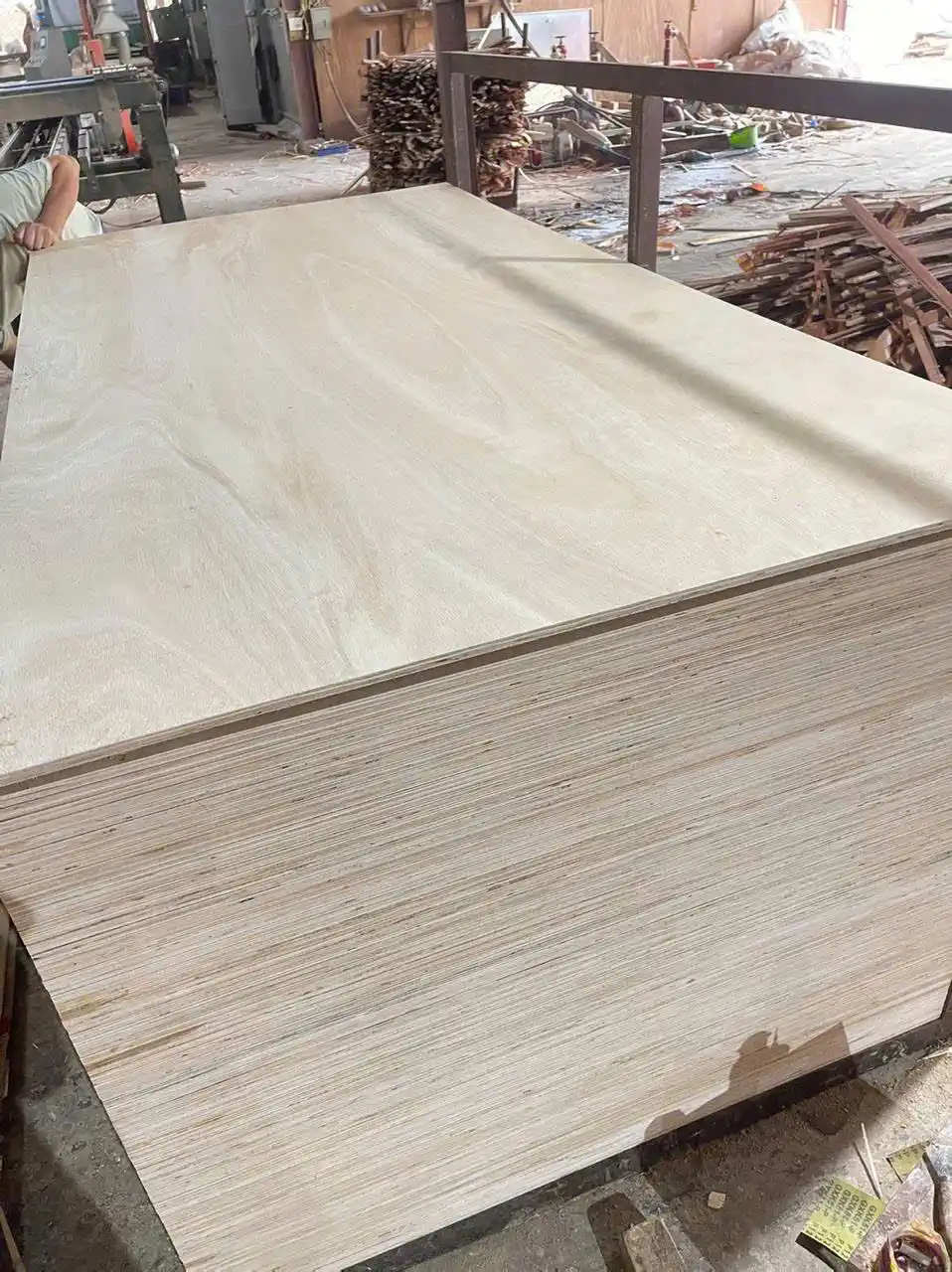
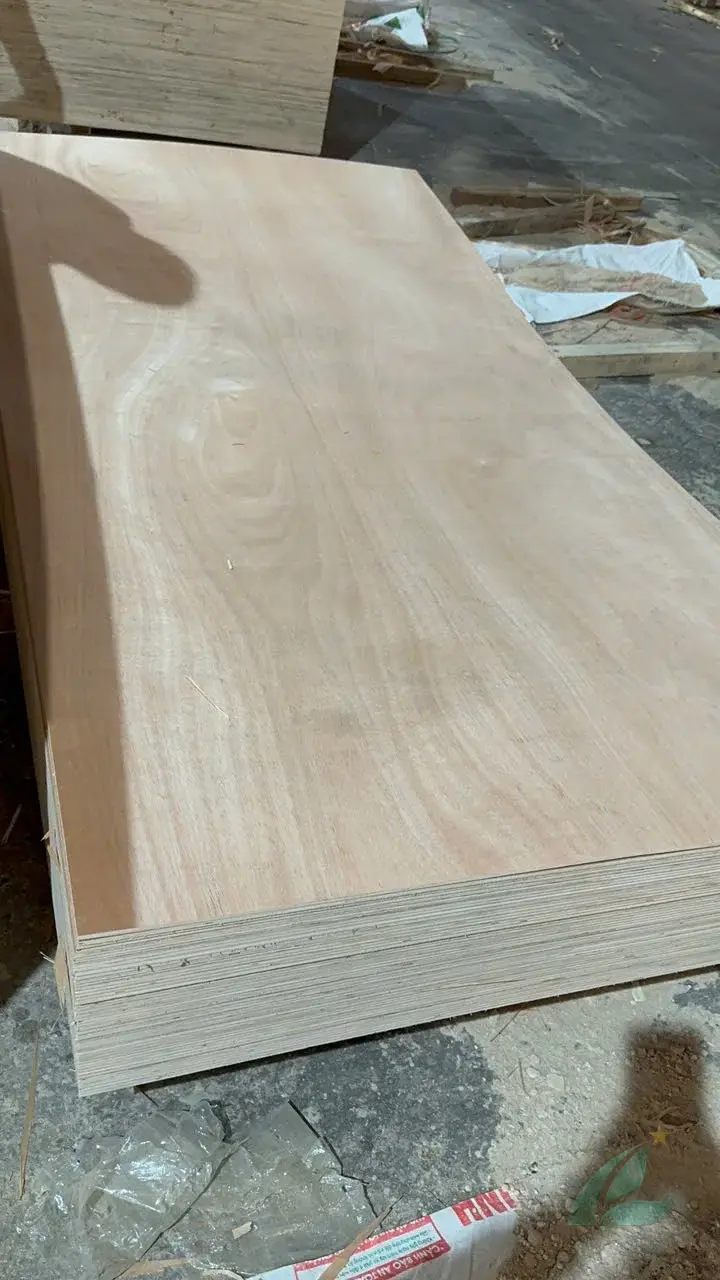
European furniture factories specify okoume face plywood for one precise reason: the combination of warm pinkish-brown grain, consistent surface quality, and lightweight panel mass matches what automated CNC lines and assembly workflows need. Okoume remains the dominant face veneer in German, Polish, and Spanish cabinet production, holding a larger EU market share than birch in mid-segment furniture manufacturing (European Panel Federation, 2024).
Vietnam has become the primary sourcing origin for okoume plywood for European furniture factories. Vietnamese manufacturers import pre-sliced okoume veneer from Gabon and bond it to plantation-grown hardwood cores — producing panels that meet European certification standards at 30-45% lower cost than equivalent Gabonese-made panels (HCPLY production data, 2026). This guide covers every specification parameter that European furniture factory procurement teams check before placing a container order.
🌍 Why European Furniture Factories Choose Okoume Plywood
Okoume plywood delivers four properties that European furniture manufacturing lines require simultaneously: predictable surface aesthetics, machinability without tear-out, low formaldehyde emissions at E0/E1 level, and certified traceability.
Solid hardwood alternatives cost 3-5x more per sheet. MDF and particleboard lack the screw-holding capacity for flat-pack furniture. Birch plywood meets the performance spec but costs 15-25% more than equivalent okoume panels (HCPLY production data, 2026). Okoume occupies the cost-performance gap that volume furniture producers cannot fill with any other substrate.
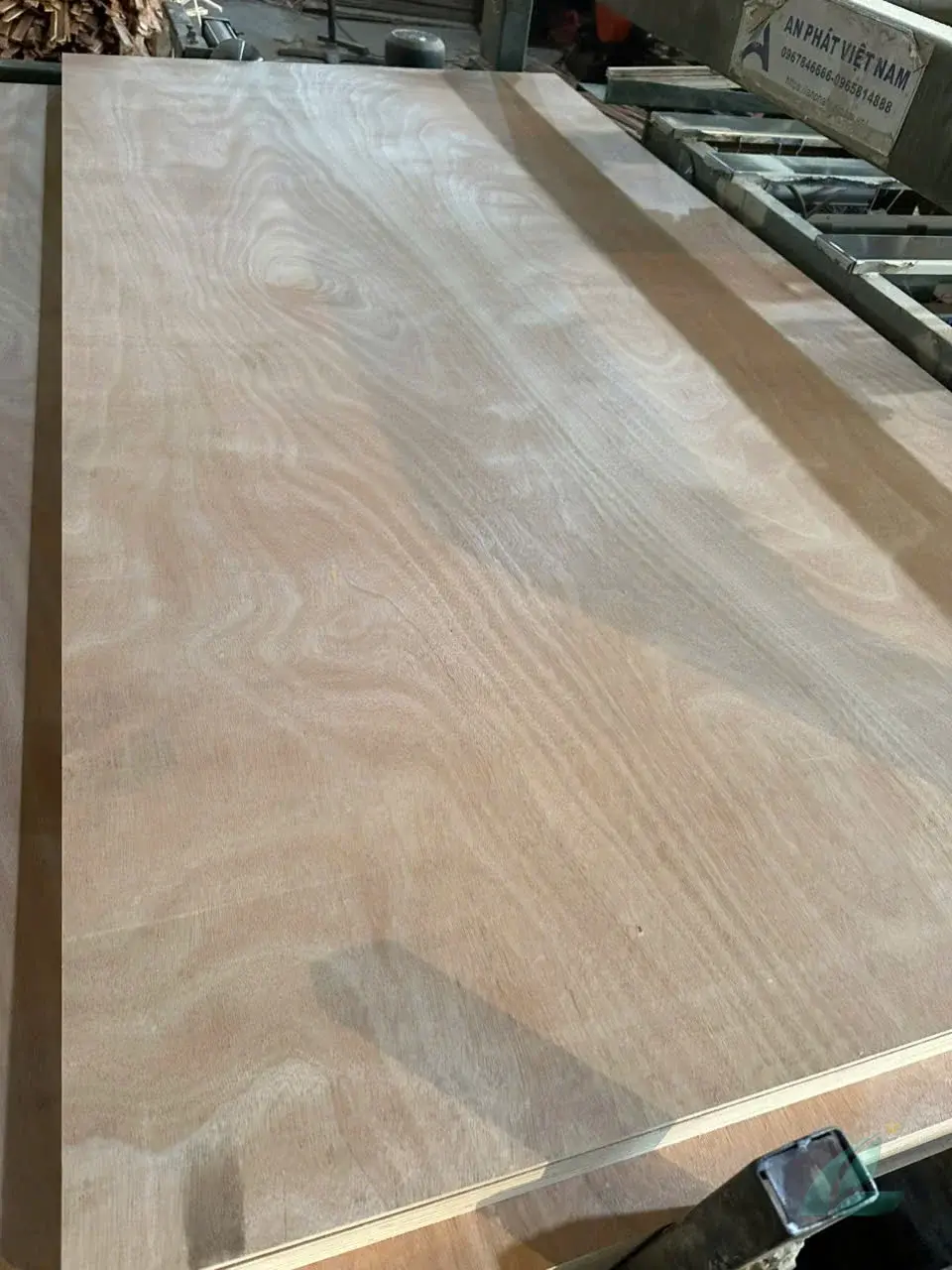
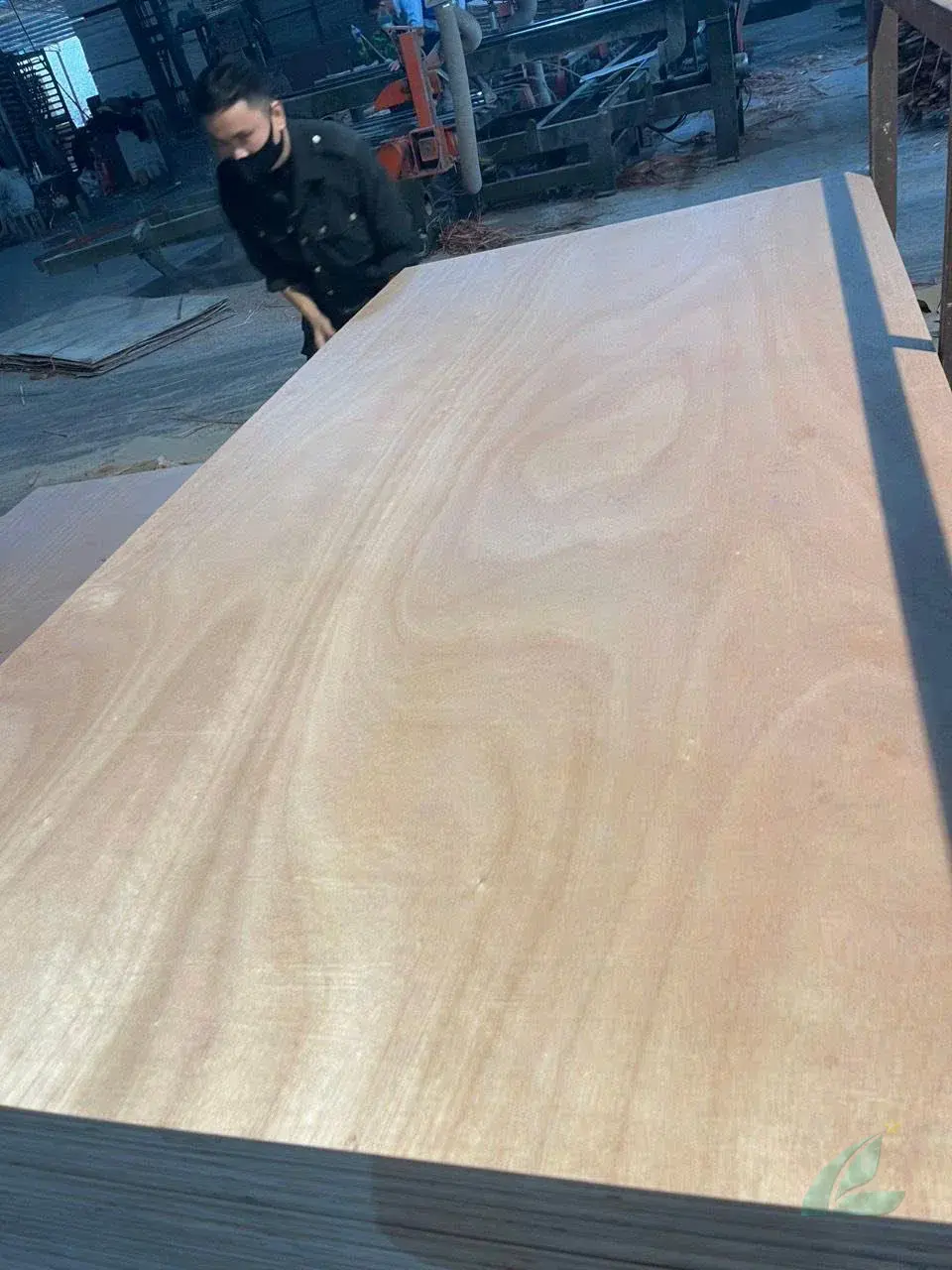
The grain structure of okoume veneer (Aucoumea klaineana) is straight and interlocked, producing a ribbon-like figure that lacquers cleanly. European furniture designers specify it for cabinet door faces, shelf boards, wardrobe panels, and drawer fronts — anywhere the surface will be painted, lacquered, or laminated. The face takes coatings without grain raise or bleed-through, reducing finishing line rejects by a measurable margin compared to tropical hardwood alternatives.
Key Insight: Okoume accounts for approximately 8-10% of Vietnam’s total plywood export volume, with Europe and the Middle East taking the majority of furniture-grade production (Vietnam Timber and Forest Product Association, 2024). Demand from Germany, Poland, and France increased in 2025 as anti-dumping duties shifted EU buyers away from Chinese plywood sources.
Browse okoume plywood specifications and request factory pricing
📋 Core Specification: Okoume + Styrax — The European Standard
The most-specified combination for European furniture factories is okoume face veneer bonded to styrax core. This pairing is not arbitrary.
| Parameter | Specification |
|---|---|
| Face veneer | Okoume (Aucoumea klaineana), Grade A/B |
| Face thickness | 0.2–0.4 mm |
| Core species | Styrax (480–500 kg/m³) |
| Core construction | Full stitched — no gaps, no overlap |
| Glue | Melamine (MR) |
| Emission | E0 (≤0.5 mg/L formaldehyde) |
| Sanding | Yes — calibrated to ±0.3 mm thickness tolerance |
| Standard sizes | 1220×2440 mm (4×8 ft), 1250×2500 mm (metric EU) |
| Thickness range | 3–30 mm, common: 5, 9, 12, 15, 18 mm |
| Certifications | FSC, CARB P2, CE EN13986, ISO 9001, EUDR |
📌 Why Styrax Core for European Furniture?
Styrax (Styrax tonkinensis), grown in Northern Vietnam’s highland provinces, is the Vietnamese equivalent of birch core — pale-colored, lightweight, and dimensionally consistent. At 480-500 kg/m³, a full 18-mm sheet of okoume/styrax plywood weighs approximately 7.8-8.1 kg, which aligns with the ergonomic handling weights that European furniture assembly lines are designed around.
Eucalyptus core (650-750 kg/m³) delivers higher structural strength but adds 25-35% to panel weight. For flat-pack furniture and cabinet interiors, that weight premium serves no functional purpose — it only increases shipping cost per CBM. Styrax core optimizes the weight-to-performance ratio for furniture applications.
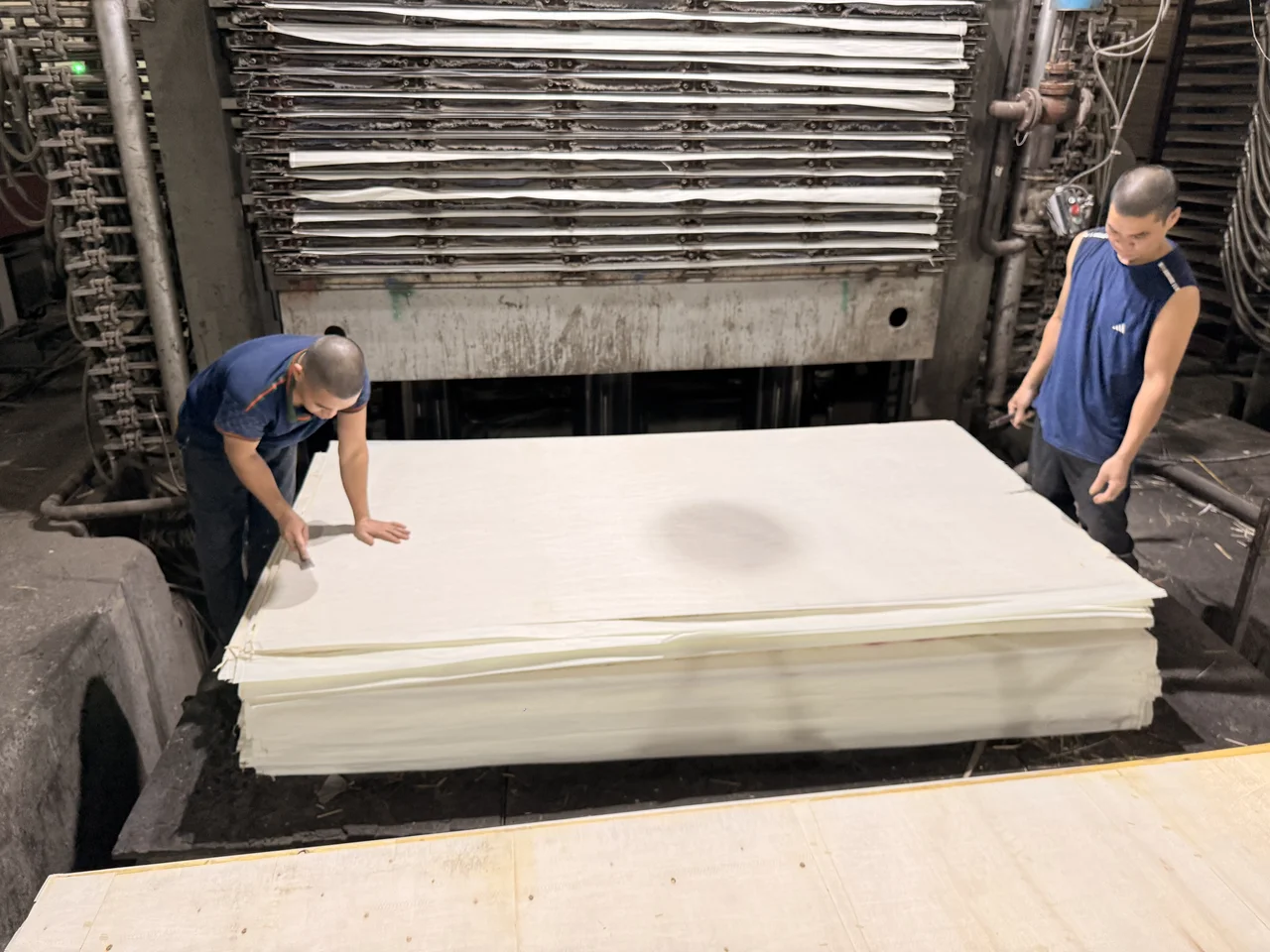
Full stitched core construction means every veneer piece in the core layer is sewn together with no gaps and no overlapping. This eliminates the internal voids that cause surface telegraphing, CNC bit breakout, and glue joint failure. Furniture factories operating CNC routers at high feed rates cannot afford to discover a void mid-cut.
⚠️ Important: Not all “furniture-grade” okoume plywood from Vietnam uses full stitched core. Commercial-grade and lower-segment factories use edge-jointed or loose-laid core to cut cost. Ask specifically for full stitched core and request a cross-section photo before confirming order specifications.
🔧 Emission Standards: E0 Is the Practical Minimum for Europe
Formaldehyde emission is the specification parameter that has tightened most rapidly in the European furniture sector. Understanding the two separate dimensions — glue type and emission class — prevents ordering errors.
Glue type (moisture resistance):
- Melamine (MR): 12-hour boiling test, for interior furniture and dry-use applications
- Phenolic (WBP): 72-hour boiling test, for construction, marine, and humid environments
Emission class (formaldehyde release):
- E2 (≤5.0 mg/L): Budget grade. Not acceptable for EU interior use.
- E1 (≤1.5 mg/L): Minimum for general EU market furniture
- E0 (≤0.5 mg/L): Required for branded retail furniture, children’s products, and kitchen cabinetry
European furniture factories supplying branded retail chains — IKEA, Nobia, Häfele distributor networks — specify E0 as standard on all components. E1 remains acceptable for construction-segment products and industrial packaging, but the furniture channel trend is clearly toward E0 as the baseline.
HCPLY’s premium furniture facility in Phu Tho produces E0-certified okoume plywood with melamine (MR) glue. Third-party formaldehyde test reports from accredited laboratories accompany each shipment — a requirement for EU customs clearance under the REACH regulation framework.
For more detail on glue and emission specifications, read the complete guide: Plywood Glue Types & Emission Standards — Melamine vs Phenolic, E0/E1/E2 Explained
📜 Certifications for EU Market Entry: FSC, EUDR, CE
European furniture factories and their import partners require documentation that goes beyond the product specification sheet. Three certification systems are mandatory or functionally required.
📌 FSC Chain of Custody
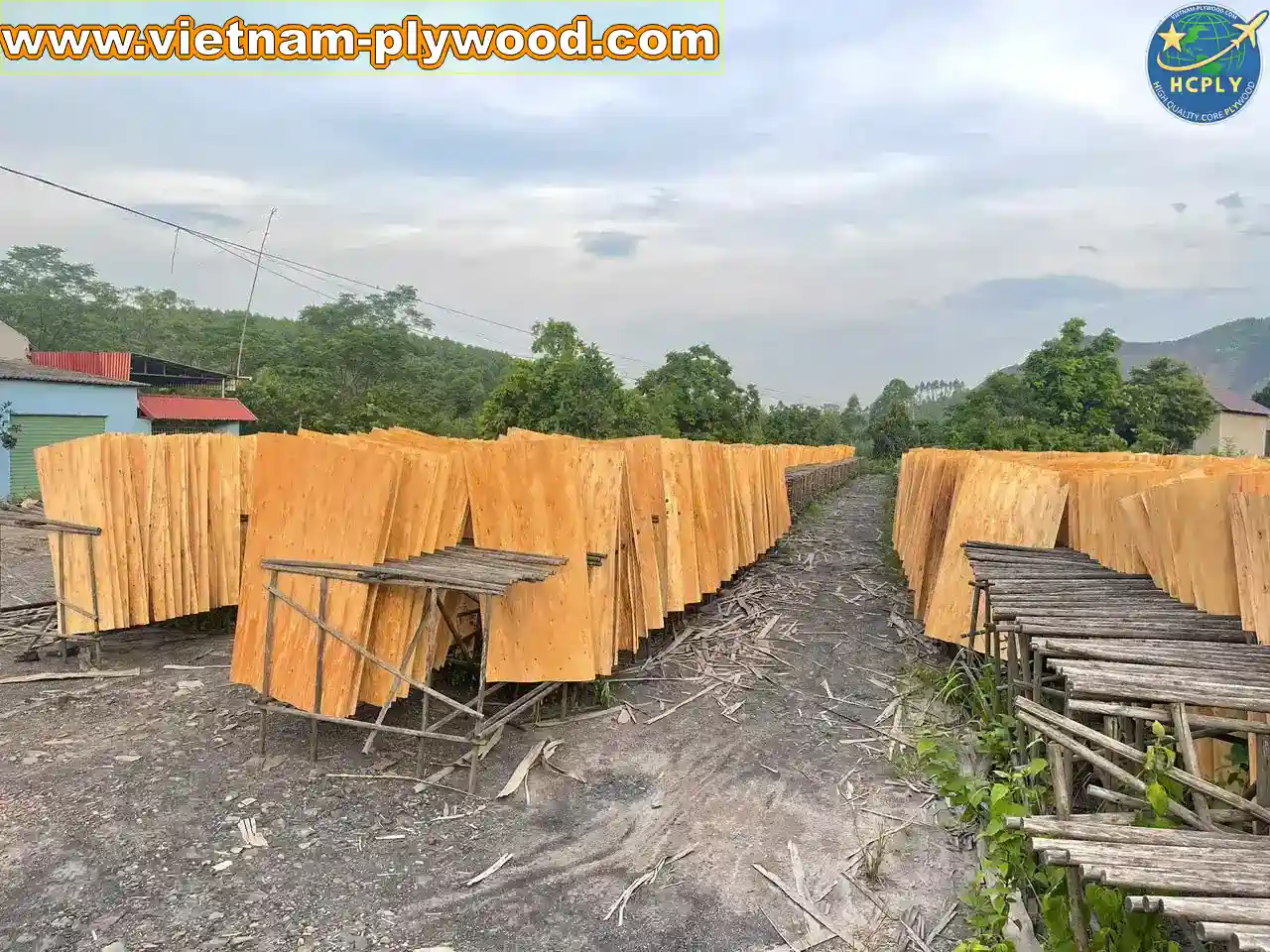
FSC (Forest Stewardship Council) Chain of Custody certification traces every piece of okoume veneer from a certified forest in Gabon through the Vietnamese manufacturing facility to the finished panel. Gabon restricts raw log exports, so Vietnamese factories import pre-sliced FSC-certified veneer from licensed Gabonese operations.
For European buyers, FSC certification on okoume plywood demonstrates two things: the veneer comes from a forest management operation subject to independent audit, and the manufacturer maintains documented custody records throughout production.
📌 EUDR Compliance (Mandatory from 2025-2026)
The EU Deforestation Regulation (EUDR) requires operators placing timber products on the EU market to prove the material was harvested from land free of deforestation after December 31, 2020. For okoume plywood, this requirement applies to the African veneer content — not the Vietnamese-grown core.
HCPLY compiles a full EUDR due diligence dossier for each okoume shipment, including GPS harvest coordinates for the source forest plots, supplier declarations from veneer suppliers in Gabon, and FSC CoC documentation linking the certified forest to the finished panel. This dossier is submitted through the EU information system prior to shipment.
Large operators (annual EU revenue above €150M) became subject to EUDR from December 2025. Medium-sized enterprises (above 10 employees or €2M revenue) face enforcement from December 2026. For a full breakdown of EUDR requirements for EU importers, see: European Market EUDR-Compliant Plywood Guide
📌 CE EN13986 and Other Documents
CE marking under EN13986 is required for structural plywood used in construction applications. While European furniture factories do not always require CE for interior furniture components, some procurement frameworks specify it universally for all plywood inputs. HCPLY holds CE EN13986 certification for its okoume plywood production.
Additional standard export documents: ISO 9001 quality management certificate, CARB P2 third-party test report, phytosanitary certificate, fumigation certificate, CO (Certificate of Origin), and commercial invoice. These documents are prepared before loading and transmitted to the buyer’s customs broker.
For the complete list of certifications and export documents, see: Plywood Certifications & Export Documentation — FSC, CARB, CE, EUDR Guide
📦 Container Logistics for European Buyers
Understanding container loading economics is essential for calculating the true landed cost per sheet.
Okoume face plywood with styrax core loads at 18 pallets per 40HC container, generating approximately 53 CBM at a weight of approximately 26.5 MT — comfortably within the 28.5 MT payload limit for a 40HC container.
| Core | Density | Pallets/40HC | CBM/40HC | Weight/40HC |
|---|---|---|---|---|
| Styrax | 480-500 kg/m³ | 18 | ~53 CBM | ~26.5 MT |
| Eucalyptus | 650-750 kg/m³ | 15 | ~44.5 CBM | ~28 MT |
Styrax core maximizes the volume shipped per container while staying below the payload ceiling. For a European importer calculating landed cost, this translates to a lower freight cost per CBM compared to eucalyptus-core panels — an advantage that compounds over annual container volumes.
Standard pallet height: 1000 mm (forklift-safe, structurally stable). Layout: 16 pallets flat (4×4 grid) + 2 pallets standing at the container door end. Both 1220×2440 mm and 1250×2500 mm sheet sizes fit 18 pallets per 40HC, though the metric EU size (1250×2500) generates approximately 5% more CBM per pallet due to the larger sheet footprint.
🏭 Why Source Okoume Plywood from Vietnam’s Premium Segment
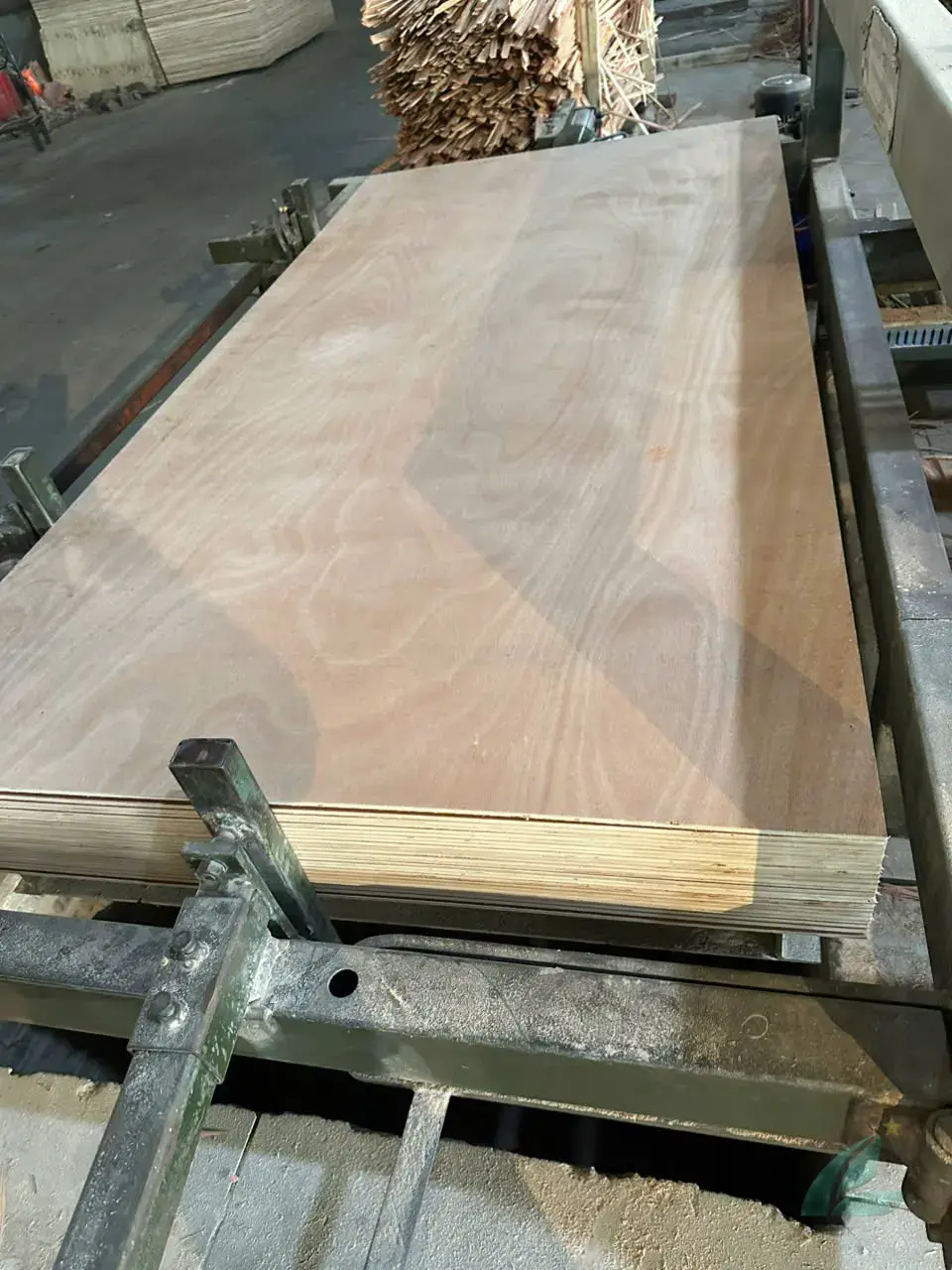
The critical distinction European buyers must understand is that Vietnam’s plywood industry is not homogeneous. Four factory segments exist, each optimized for different specifications, and they are not interchangeable.
Segment A factories (furniture-grade) use styrax or eucalyptus core, full stitched construction, E0/E1 emission, calibrated sanding, full certification suite (FSC, CARB P2, CE, ISO 9001). This is where okoume plywood for European furniture is manufactured.
Segment B factories (commercial/packaging-grade) use acacia core, edge-jointed or loose-laid construction, E1/E2 emission, unsanded or lightly sanded surfaces, minimal certification. These factories produce plywood for packaging, construction sheathing, and price-sensitive markets.
A Segment B price cannot be compared to a Segment A product. The production line, quality systems, and raw material quality differ entirely. European buyers who receive three quotations and select the lowest are often comparing Segment B production costs against Segment A specifications — a mismatch that produces delamination, thickness variation, and certification failures at the port.
HCPLY manages 3 specialized production facilities in Northern Vietnam. The premium furniture facility handles okoume, birch, EV, and pine face veneers with full stitched styrax core, E0 emission, and the complete FSC/CARB P2/CE certification suite. Factory-direct documentation and pricing removes the VAT overhead and markup layer that trading companies add.
“European furniture factories have become significantly more precise in their purchasing documentation since 2024. E0 test reports, EUDR due diligence dossiers, and core construction cross-section photos are now standard items on RFQ checklists — not optional extras.” — Lucy, International Sales Manager, HCPLY
For a full explanation of Vietnam’s factory segments and how to evaluate supplier type before placing orders, read: Vietnam Plywood Supplier Types — Buyer’s Due Diligence Guide
📊 Okoume vs. Birch for European Furniture: Key Differences
European furniture factories frequently evaluate okoume against birch plywood. The choice depends on end-product positioning and target price point.
| Parameter | Okoume Plywood | Birch Plywood |
|---|---|---|
| Face veneer origin | Central Africa (Gabon) | Finland, Russia, Baltic states |
| Face color | Pinkish-brown, warm | Pale cream, cool |
| Face grade | A/B | D/E/F (no A/B/C in Vietnam) |
| Core | Styrax or eucalyptus | Styrax (birch core not from Vietnam) |
| Density (styrax core) | ~510 kg/m³ | ~510-530 kg/m³ |
| Price relative | Lower (10-20%) | Higher |
| Primary market | Mid-segment furniture, cabinets | Premium furniture, high-end cabinets |
| EUDR risk | Okoume veneer subject to EUDR | Birch veneer subject to EUDR |
Okoume suits mid-segment cabinet production where the face will be painted or laminated — visual differentiation from the wood grain is not the selling point. Birch suits premium furniture where the wood grain itself is visible in the finished product.
Both species require E0 certification for European retail-channel furniture. Both require FSC and EUDR documentation for EU market entry. Okoume plywood for European furniture factories typically costs 10-20% less than equivalent birch panels, making it the preferred substrate for price-competitive mid-segment cabinet ranges (HCPLY production data, 2026).
For a complete side-by-side comparison of popular face veneer species from Vietnam, see: Plywood Face Veneer Types — Complete Buyer Guide from Vietnam Factory
✅ Ordering Checklist for European Furniture Factories
Before issuing a purchase order for okoume plywood from Vietnam, confirm each item below with your supplier:
Specification verification:
- Face veneer: Okoume Grade A/B, 0.2-0.4 mm thickness
- Core: Styrax (specify — do not accept substitution to eucalyptus without notification)
- Core construction: Full stitched (request cross-section photo)
- Glue: Melamine (MR)
- Emission: E0 with third-party test report
- Sanding: Calibrated, tolerance ±0.3 mm
- Size: 1220×2440 mm or 1250×2500 mm (confirm with your production line spec)
Certification documents (request before payment):
- FSC Chain of Custody certificate (valid, current)
- EUDR due diligence dossier with GPS coordinates
- E0 formaldehyde emission test report from accredited lab
- CE EN13986 certificate (if required by your procurement policy)
- CARB P2 test report (if shipping to US market in future)
Logistics confirmation:
- MOQ: 1 × 40HC container
- Lead time: 15-20 days from order confirmation
- Port: FOB Hai Phong
- Incoterms: FOB or CIF available
- Mixed specifications in one container: available on request
Get a Free Quote with E0 Test Reports and EUDR Documentation
🔗 Conclusion: Matching the Specification to the Market
Okoume plywood for European furniture factories is a precision purchase — not a commodity buy. The specification parameters that differentiate acceptable from rejected panels at the EU port are not visible to the naked eye: formaldehyde emission level, core construction method, FSC chain of custody, and EUDR deforestation-free documentation.
Vietnamese premium-segment factories produce okoume plywood that meets every European requirement at a landed cost that outperforms Gabonese-made equivalents. The key is sourcing from the correct factory segment and obtaining the full certification package before the container is loaded.
HCPLY manages 3 specialized production facilities in Northern Vietnam, with the premium furniture facility purpose-built for European market specifications: E0, full stitched styrax core, FSC, EUDR documentation, and CE EN13986. Factory-direct documentation and pricing is standard — no intermediary layers that dilute quality control accountability.
Request okoume plywood samples with full certification documentation — our team prepares a complete specification sheet, E0 test report, and EUDR compliance dossier within 24 hours of inquiry.