

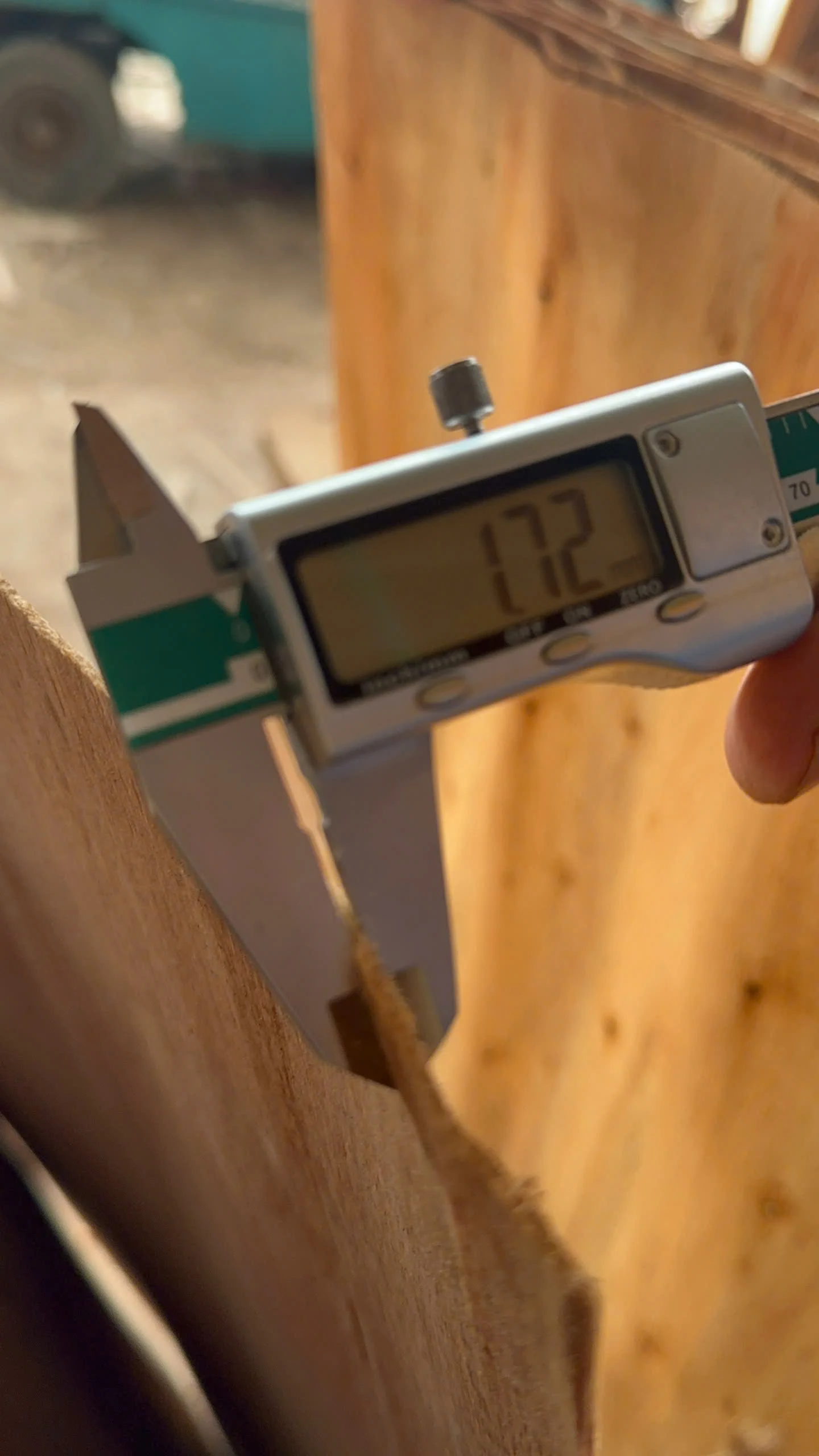
Choosing between melamine and phenolic glue is one of the first specification decisions on any furniture plywood purchase order — and one of the most frequently misunderstood. Over 60% of furniture-grade plywood shipped from Vietnam uses melamine (MR) adhesive, yet buyers routinely over-specify phenolic (WBP) for indoor applications, adding 40-80% to the glue cost component without measurable benefit (HCPLY production data, 2026).
This comparison breaks down the 7 factors that actually determine which adhesive belongs in your furniture specification. These are the decisive factors — no theory, just factory-tested data from three production facilities in Northern Vietnam, cross-referenced with the regional import requirements our export team handles daily.
⚠️ Important: Glue type (MR/WBP) controls water resistance. Emission class (E0/E1/E2) controls formaldehyde release. These are two separate specifications — never combine them into a single line item on your purchase order.
📊 TL;DR: Melamine vs Phenolic Glue Comparison
| Factor | Melamine (MR) | Phenolic (WBP) |
|---|---|---|
| Chemistry | Melamine urea formaldehyde (MUF) | Phenol formaldehyde (PF) |
| Boiling water test | 12 hours, no delamination | 72+ hours, no delamination |
| EN 314-2 classification | Class 2 (humid interior) | Class 3 (exterior) |
| Press temperature | 110-130 C | 140-160 C |
| Glue line color | Light / invisible | Dark reddish-brown |
| Cost premium | Baseline | +40-80% above MR |
| Primary use | Furniture, cabinets, commercial | Formwork, marine, anti-slip |
| Emission compatibility | E0, E1, E2 available | E0, E1 available |
| Lifespan (indoor) | 15-25 years | 25-50+ years |
| Lifespan (outdoor) | Not rated | 20-30 years |
Bottom line: Melamine MR is the correct specification for 90%+ of furniture plywood applications. Phenolic WBP is engineered for water immersion, chemical exposure, and structural loading conditions that furniture rarely encounters.
🔬 What Is Melamine (MR) Glue in Plywood?
Melamine glue — commercially designated MR (Moisture Resistant) — is a melamine urea formaldehyde (MUF) adhesive system. The melamine component enhances the moisture resistance and bonding durability compared to straight urea formaldehyde (UF) adhesives, which fail rapidly under humidity.
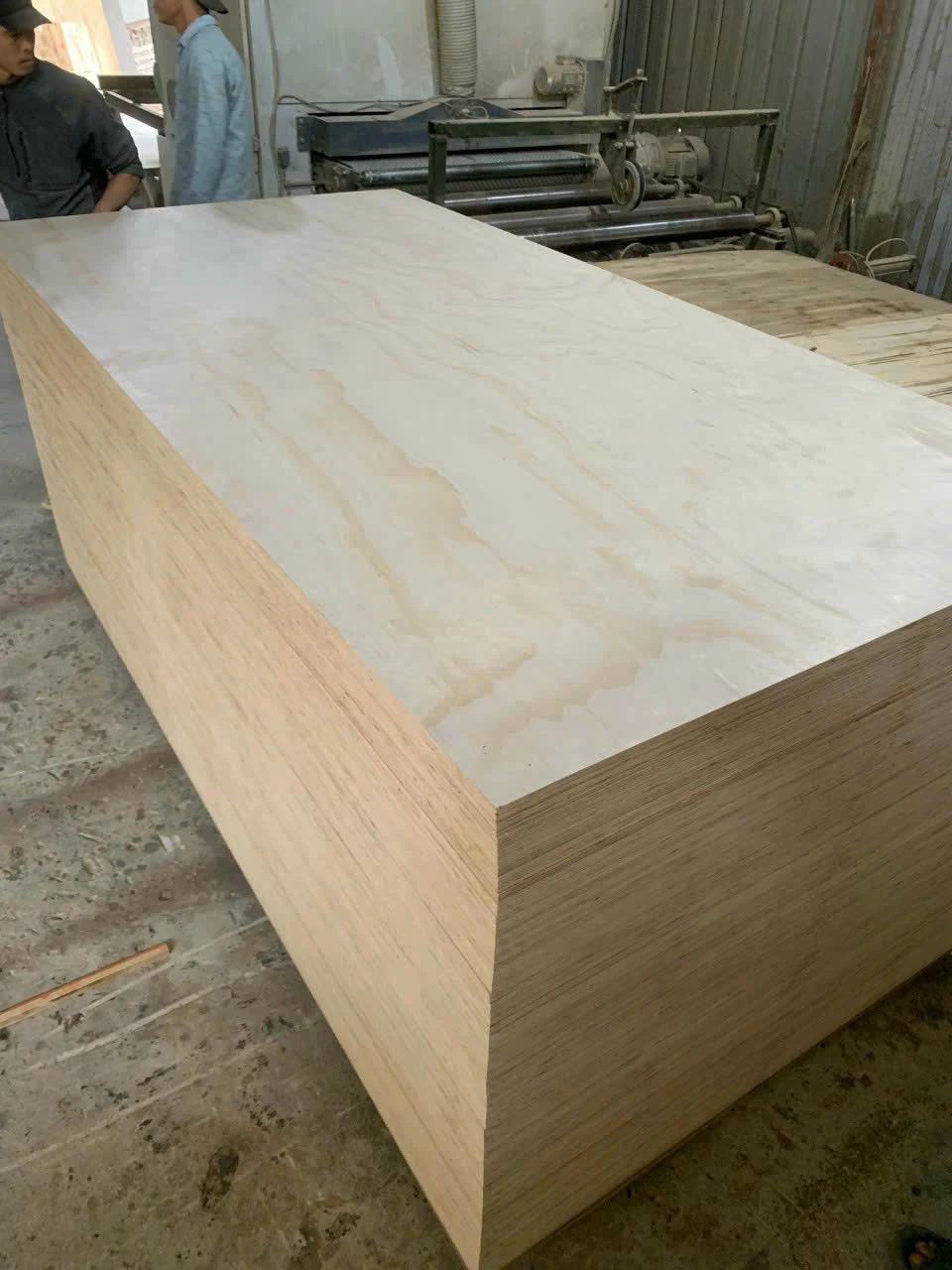
MR adhesive passes the 12-hour boiling water test — the industry benchmark for interior-grade moisture resistance. For best Vietnam plywood for furniture and interior use, see our application guide. This means the glue bond maintains structural integrity through sustained humidity, occasional water splash, and normal indoor temperature cycling. It does not mean the panel survives prolonged water immersion.
Where MR melamine performs best:
- Indoor furniture (bedroom sets, dining tables, office desks)
- Kitchen and bathroom cabinets in climate-controlled spaces
- Commercial interiors (hotel fit-outs, retail fixtures, office partitions)
- Decorative wall paneling and built-in shelving
At HCPLY’s furniture-segment facility, MR melamine is the default adhesive for all birch plywood, okoume, EV, and bintangor furniture-grade panels. The light-colored glue line is virtually invisible on sanded surfaces — a critical requirement for furniture where panel edges remain exposed.
“For furniture applications, melamine MR with E0 emission rating is what 85% of our EU and US buyers specify. The remaining 15% order WBP phenolic, almost exclusively for bathroom vanity panels or outdoor furniture exposed to rain.” — Lucy, International Sales Manager, HCPLY
🏗️ What Is Phenolic (WBP) Glue in Plywood?
Phenolic glue — commercially designated WBP (Water Boil Proof) — uses phenol formaldehyde (PF) resin to create bonds that survive extreme moisture, chemical exposure, and structural stress. Phenolic adhesive is the standard for exterior-grade and structural plywood worldwide.
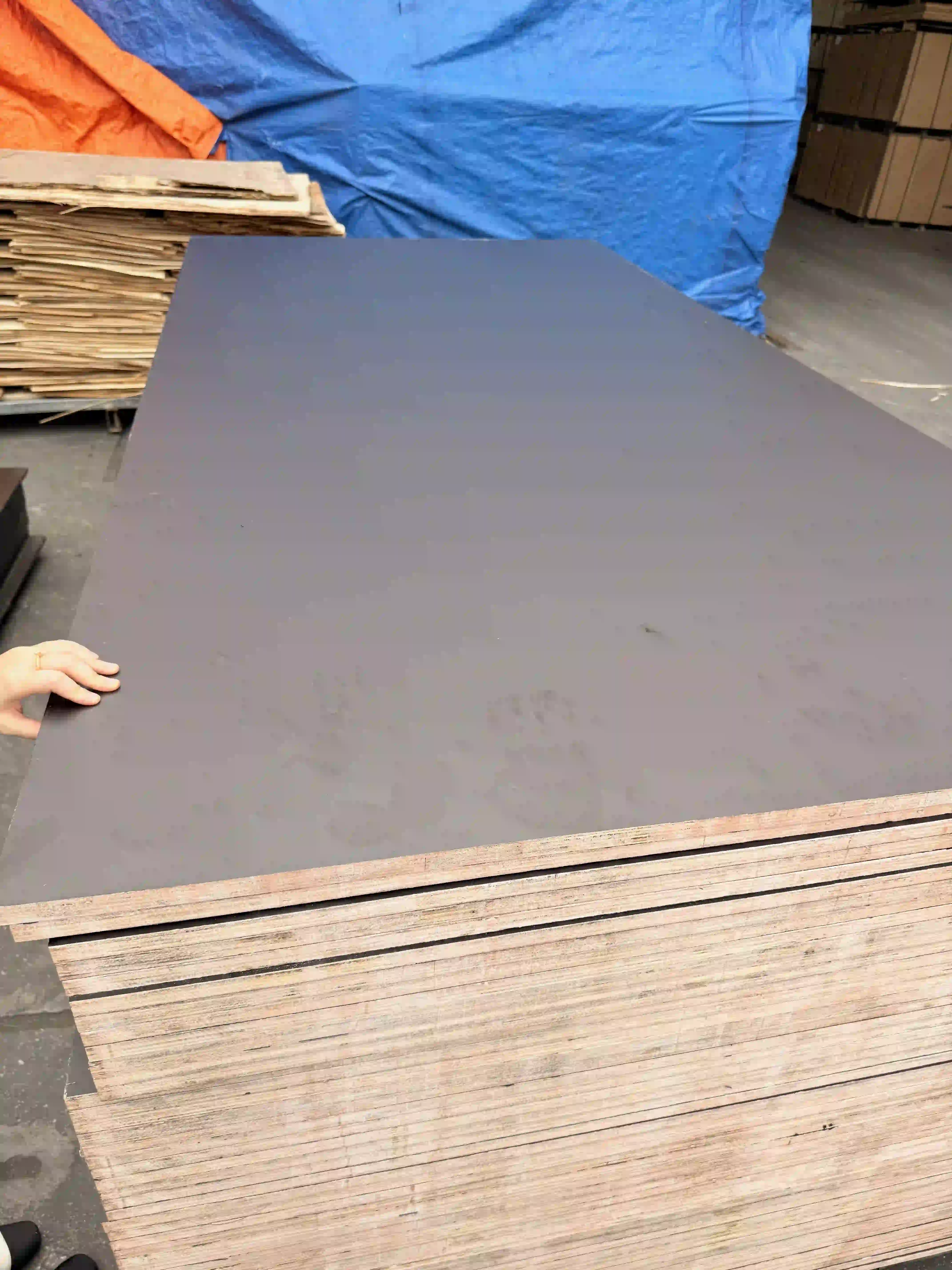
The 72-hour boiling water test defines WBP performance. Panels bonded with phenolic resin show zero delamination after three full days submerged in boiling water — a standard that no melamine formulation can match. Phenolic bonds also resist alkaline environments (wet concrete), petroleum-based chemicals, and temperatures up to 200 C.
Where WBP phenolic performs best:
- Concrete formwork and shuttering (repeated pour cycles)
- Marine applications (boat building, dock decking)
- Anti-slip truck flooring and scaffolding platforms
- Outdoor furniture exposed to direct rain and UV
- Industrial environments with chemical splash risk
The trade-off is visible. Phenolic resin produces a dark reddish-brown glue line between every veneer layer. In film-faced plywood and construction panels, this is irrelevant. In furniture with visible edges, it can be a cosmetic liability.
Phenolic WBP plywood also requires higher pressing temperatures (130-145°C vs 110-120°C for melamine) and longer press cycles (HCPLY production data, 2026). This directly increases energy costs per panel — one reason phenolic panels carry a consistent price premium.
⚖️ Melamine vs Phenolic Glue: 7 Key Differences
1. Water Resistance
MR melamine resists humidity and brief moisture contact. WBP phenolic resists full water immersion, boiling, and sustained wet conditions. The 12-hour vs 72-hour boiling water test gap is the most significant performance difference between these two adhesive systems.
Case study — matching specs to application: An Indian door manufacturer initially requested phenolic glue with acacia core, assuming it was needed for durability. Phenolic production requires a completely different process — kiln-dried core veneer, full two-way stitching, and polished face — at significantly higher cost. After understanding the actual application (interior doors), HCPLY recommended eucalyptus core with okoume 0.25mm face and 10% melamine glue (12-hour boil test compliant). The first container met all requirements. The buyer became a repeat customer — paying less for a panel that performed better in their application.
Practical test: MR panels delaminate after 24-48 hours of continuous water soaking. WBP panels survive indefinitely under the same conditions. For furniture that stays indoors, the MR threshold is more than sufficient.
2. Bond Strength Under Load
Phenolic adhesive forms a denser, more rigid polymer network. Under JAS 0233 testing, phenolic-bonded plywood achieves bending strength of approximately 50 MPa along the grain, compared to 35-42 MPa for melamine-bonded panels of equivalent construction (Kosmex Group, 2025). Both exceed the mechanical requirements for standard furniture loading.
3. Glue Line Appearance
Melamine produces a light, nearly invisible glue line. Phenolic produces a dark reddish-brown line. For furniture with exposed plywood edges — floating shelves, open bookcases, Scandinavian-style desks — this distinction matters more than any mechanical property. Buyers targeting the EU and Japanese markets, where exposed-edge furniture design is common, consistently specify MR for this reason alone.
4. Cost Impact
Phenolic resin adds 40-80% to the adhesive cost component of a plywood panel (HCPLY production data, 2026). On a standard 18mm furniture panel, this translates to approximately $15-25/CBM in additional FOB cost. For a 40HC container of styrax-core furniture plywood (~53 CBM), that is $795-$1,325 per shipment — a meaningful budget impact with zero performance benefit for indoor use.
5. Press Temperature and Energy
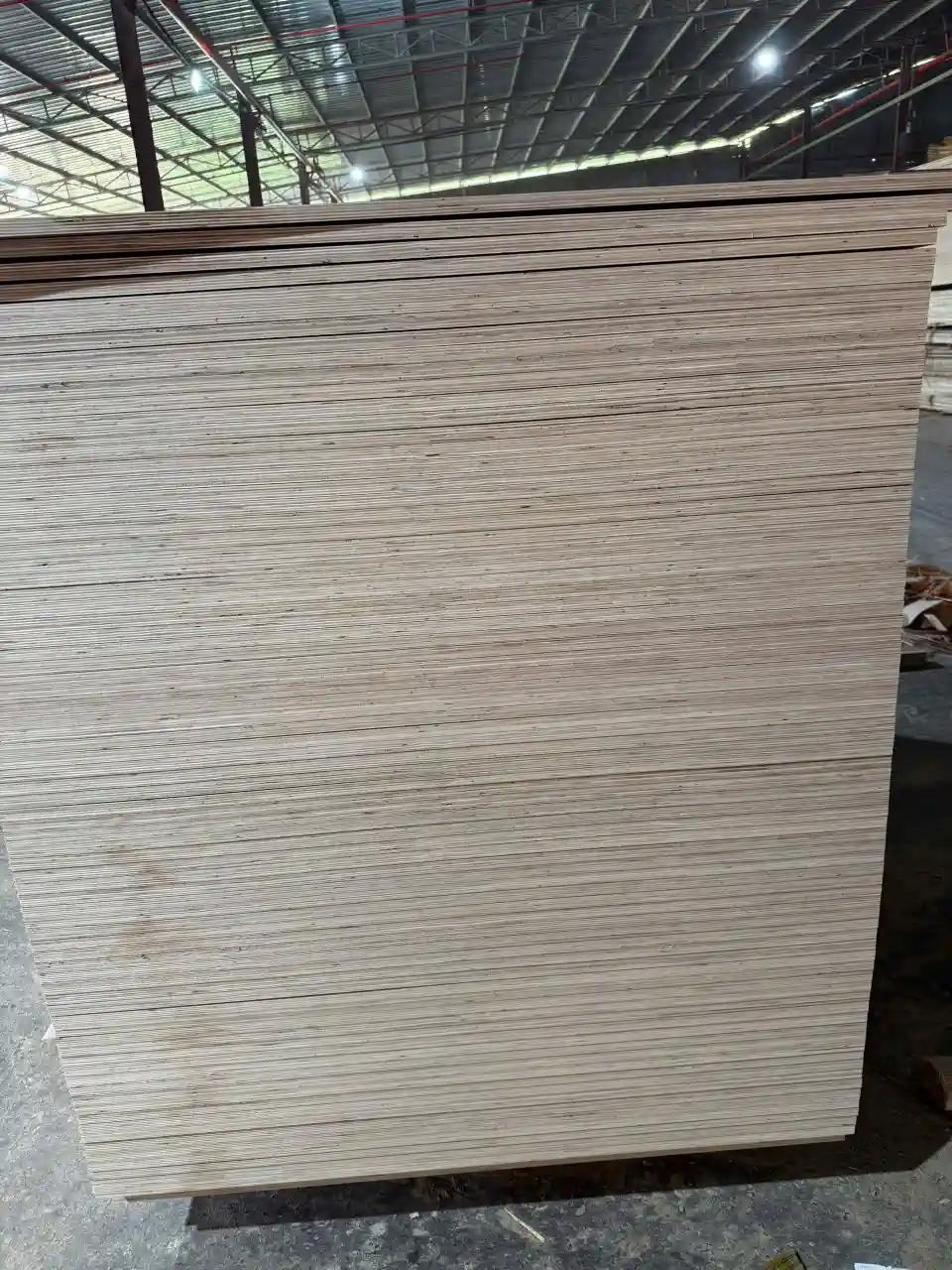
MR melamine cures at 110–120°C. WBP phenolic requires 130–145°C. Higher press temperatures consume more energy per press cycle and increase production time. Factories optimized for furniture production run melamine press schedules; switching to phenolic requires recalibrating press parameters and extends cycle time by 15-25% (HCPLY production data, 2026).
6. Formaldehyde Emission Profile
Both adhesive systems can be manufactured to E0, E1, or E2 emission levels. However, phenol formaldehyde (PF) resin inherently emits lower formaldehyde than standard MUF formulations. Premium MR melamine achieves E0 through modified resin chemistry and scavenger additives. The International Agency for Research on Cancer classifies formaldehyde as carcinogenic to humans (IARC, 2012), making emission control a health requirement, not just a regulatory checkbox.
For detailed emission standard requirements by market, including the upcoming EU REACH update effective August 2026, see our complete glue types and emission standards guide. For a focused look at formaldehyde emission ratings for Vietnam plywood, see the E0/E1/E2 comparison.
7. Service Lifespan
Indoor furniture bonded with MR melamine lasts 15-25 years under normal residential conditions. Phenolic-bonded furniture lasts 25-50+ years in the same environment. The difference is academic for most furniture applications — cabinetry and furniture cycles in commercial hospitality projects average 7-12 years before replacement regardless of adhesive type (ITTO Tropical Timber Market Report, 2024).
🎯 Which Glue for Which Furniture Application?
| Application | Recommended Glue | Emission Class | Why |
|---|---|---|---|
| Bedroom furniture | MR melamine | E0 | Dry conditions, visible edges, cost-sensitive |
| Kitchen cabinets (indoor) | MR melamine | E0 | Humidity-tolerant, sanded surface, light glue line |
| Bathroom vanities | WBP phenolic | E0 or E1 | Direct water splash, steam exposure daily |
| Outdoor garden furniture | WBP phenolic | N/A | Rain, UV, temperature cycling |
| Office desks and partitions | MR melamine | E0 or E1 | Dry indoor, commercial durability sufficient |
| Hotel fit-out furniture | MR melamine | E0 | Rapid replacement cycles, budget optimization |
| Marine vessel interiors | WBP phenolic | E0 | Salt water, high humidity, structural compliance |
| Retail fixtures and displays | MR melamine | E1 | Short lifecycle, cost priority |
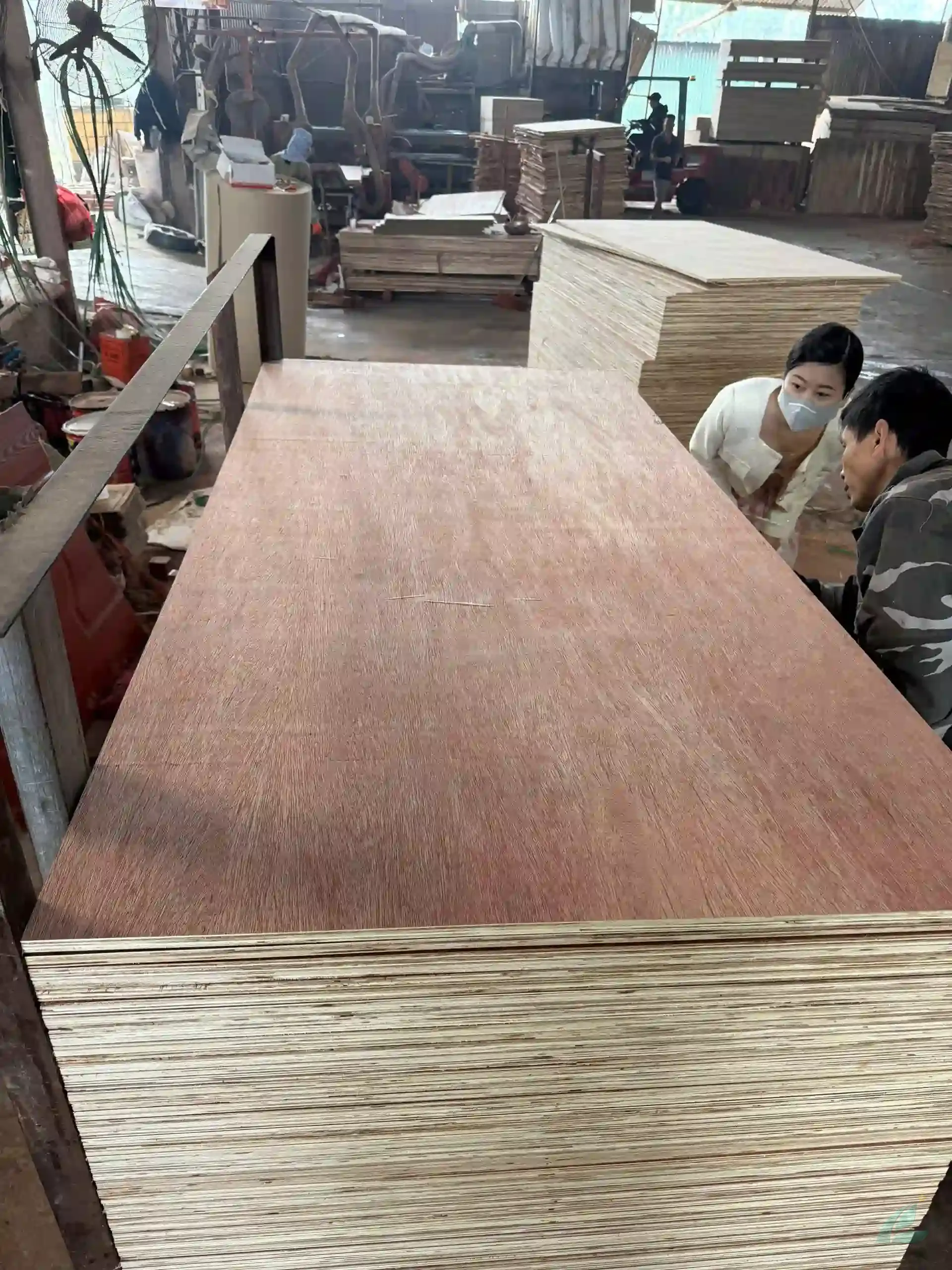
The pattern is consistent: specify WBP phenolic only when water immersion, outdoor exposure, or chemical contact is part of the service environment. Everything else is MR melamine territory.
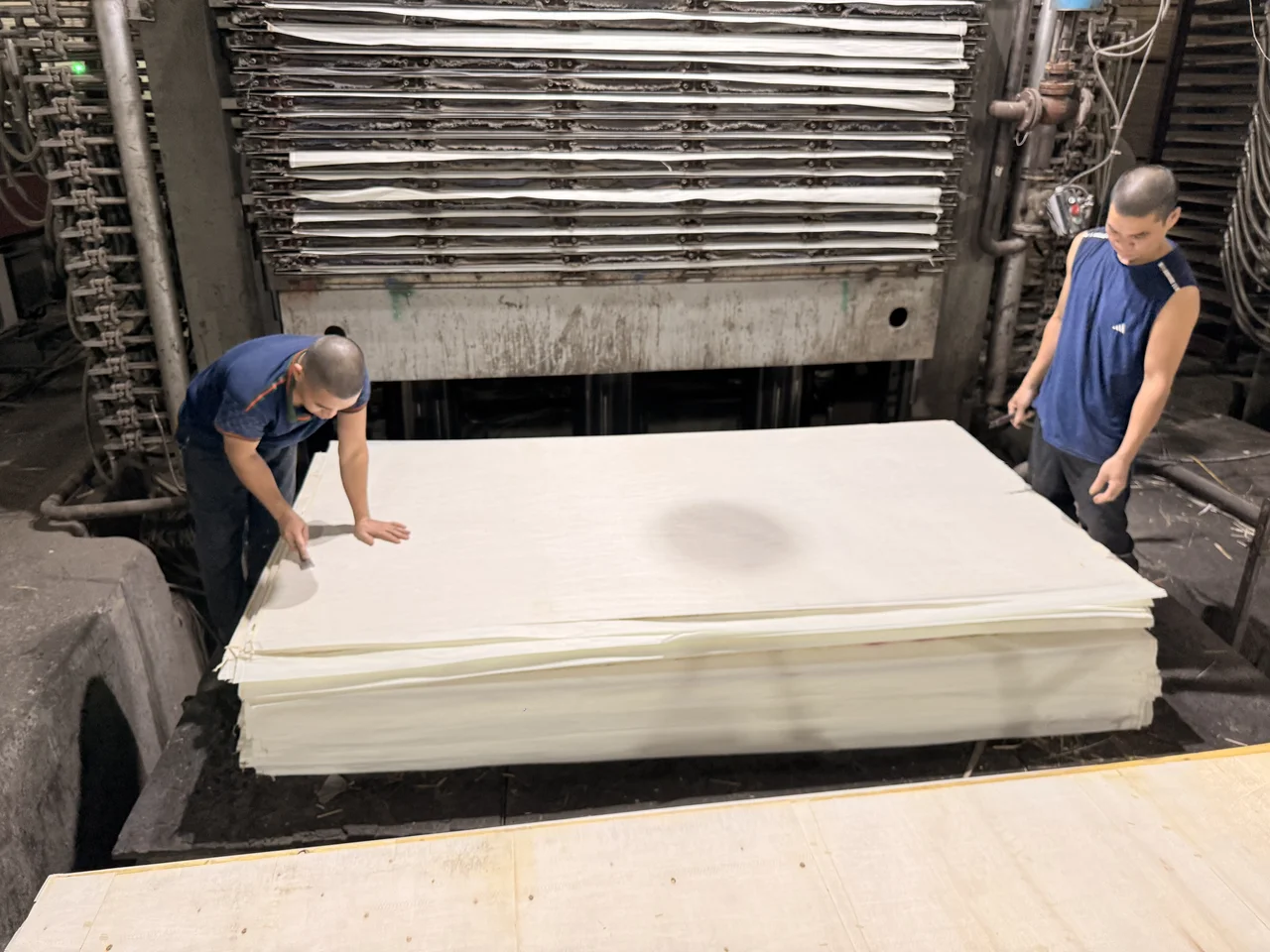
For buyers sourcing multiple product categories from Vietnam — furniture panels plus construction formwork, for example — HCPLY produces both adhesive types across dedicated production facilities. Furniture-grade MR panels come from the styrax/eucalyptus core facility. Construction-grade WBP panels come from the film-faced plywood facility. Mixed containers with both glue types ship from the same port.
Get Factory-Direct Pricing for Both MR and WBP Plywood
🧪 Melamine Phenolic Glue and Emission Standards
The most common specification error in furniture plywood procurement: conflating glue type with emission class. These are independent axes.
| MR Melamine | WBP Phenolic | |
|---|---|---|
| E0 (≤0.5 mg/L) | Available — premium furniture | Available — premium construction |
| E1 (≤1.5 mg/L) | Available — standard commercial | Available — standard exterior |
| E2 (≤5.0 mg/L) | Available — packing only | Rare |
| CARB P2 (≤0.05 ppm) | Available — US market required | Available — US structural |
Correct specification example: “Birch face, styrax core, 18mm, MR glue, E0 emission, sanded both sides.” Six parameters. Each independent. Each must appear on your purchase order separately.
The upcoming EU REACH regulation effective August 2026 will cap formaldehyde at 0.062 mg/m3 room air concentration — effectively requiring E0 or better for all interior plywood sold in the EU single market (European Chemicals Agency, 2024). Buyers targeting EU markets should specify E0 now regardless of adhesive type.
For the complete breakdown of WBP vs MR glue specifications including EN 314 test methodology and market-by-market regulatory requirements, see our dedicated comparison guide.
📝 How to Specify Glue on Your Purchase Order
Specification errors on purchase orders cause the majority of adhesive-related disputes between buyers and Vietnamese factories. Here is the format that eliminates ambiguity:
Purchase order adhesive specification template:
Face veneer: [species, grade]
Core: [species, construction method]
Thickness: [mm]
Glue type: MR (Melamine) OR WBP (Phenolic)
Emission class: E0 / E1 / E2 / CARB P2
Sheet size: [mm x mm]
Sanding: [sanded / unsanded / calibrated]
Three rules that prevent 90% of specification disputes:
-
Never write: MR is glue type. E0 is emission class. They must be separate line items. Factories interpret “MR E0” differently — some read it as “MR glue, E0 emission.” Others read it as “either MR or E0, whichever is standard.”
-
State the application on the PO. Writing “for indoor kitchen cabinets” alongside the technical spec gives the factory context to flag potential mismatches before production begins.
-
Request test certificates separately. Glue bond test report (EN 314 or equivalent) confirms MR or WBP performance. Emission test report (EN 717 or ASTM E1333) confirms E0/E1/E2. Two tests. Two certificates. One panel.
For a complete guide to plywood specification and pricing for export orders, including MOQ, lead time, and container packing optimization, see our buyer’s quotation guide.
Request Sample Panels with Both MR and WBP Specifications
✅ Conclusion: Melamine Phenolic Glue Decision Framework
For 90% of furniture plywood applications, melamine MR glue is the technically correct and cost-optimal specification. It delivers the moisture resistance indoor furniture requires, produces invisible glue lines for edge-visible designs, meets E0 emission standards for every major import market, and costs 40-80% less than phenolic at the adhesive level.
Reserve phenolic WBP for the 10% of furniture projects involving water immersion, outdoor exposure, or chemical environments. Bathroom vanities, marine interiors, and outdoor garden sets — these are the applications where phenolic’s superior water resistance justifies the price premium.
The decision is straightforward when you treat glue type and emission class as the independent specifications they are. Specify both clearly on your purchase order. Request separate test certificates. And source from a manufacturer who produces both adhesive types across dedicated production facilities — so you get factory-direct pricing on MR furniture panels and WBP construction panels from one contact point.
Disclosure: This article is published by HCPLY, a Vietnam-based plywood manufacturer and export operator. While we aim to provide objective industry guidance, readers should consider our perspective as a market participant when evaluating recommendations.
Get a Free Quote for Furniture-Grade Plywood — MR or WBP Specification