

Japan is the most demanding export destination for Vietnamese plywood. The combination of JAS F4 star formaldehyde requirements, sub-millimetre thickness tolerance, and strict surface finish expectations eliminates most suppliers before the first shipment.
The good news: melamine E0 plywood for Japan market is technically achievable — when produced in the right type of factory. The problem is that most international buyers cannot tell the difference between a premium furniture factory and a commercial one until a rejection shipment arrives.
This guide explains what Japan actually requires, why melamine plywood can meet it, and what factory specifications determine pass or fail.
📊 Japan’s Plywood Import Standards — What Buyers Must Know
Japan enforces formaldehyde emission controls under the Building Standards Law and the JAS (Japanese Agricultural Standard) system. The four-tier F-star rating is the primary benchmark:
| Grade | Formaldehyde Limit (Desiccator Test) | Interior Use |
|---|---|---|
| F☆☆☆☆ (F4 star) | ≤0.3 mg/L avg, ≤0.4 mg/L max | Unrestricted |
| F☆☆☆ | ≤0.5 mg/L avg | Limited |
| F☆☆ | ≤1.5 mg/L avg | Restricted |
| F☆ | ≤5.0 mg/L avg | Regulated spaces only |
Source: JIS A 1460 (2005), Ministry of Agriculture, Forestry and Fisheries Japan (MAFF).
F4 star is Japan’s highest grade — equivalent in intent to E0 internationally — and is mandatory for furniture, cabinets, and most interior applications sold in Japan. Plywood without F4 star documentation faces rejection or mandatory ventilation requirements under the Sick House Law (2003).
💡 Key Insight: Japan’s Building Standards Law (2003) restricts formaldehyde-emitting materials in interior spaces. Products below F3 star face usage area limits. F4 star eliminates all restrictions — making it the only practical grade for furniture manufacturers selling into Japan.
Vietnam delivered 150,567 m³ to Japan in the first five months of 2025, up 12.5% year-on-year — making Japan a growing strategic market for Vietnamese exporters (Japan Plywood Market Report, Apkindo, 2025). Meeting F4 star requirements is now a basic prerequisite to enter this market, not a differentiator.
🔧 Why Melamine Glue Achieves F4 Star — The Chemistry Explained
The connection between glue type and formaldehyde emission is widely misunderstood. Clarifying this prevents costly specification errors.
Glue type and emission standard are two separate parameters. Melamine (MR) and Phenolic (WBP) describe water resistance. E0, E1, E2 — and Japan’s F4 star — describe formaldehyde emission. A single glue type can produce panels across multiple emission grades depending on resin formulation and manufacturing conditions.
Melamine resin is a melamine-formaldehyde polymer. During curing under heat and pressure, the formaldehyde crosslinks and becomes chemically bound — no longer free to off-gas. When hot pressing is executed correctly (temperature ~130–140°C, pressure 10–12 kg/cm², adequate cure time), residual free formaldehyde drops to ≤0.3 mg/L — within F4 star limits.
This is why premium furniture factories producing melamine plywood for EU and US markets routinely achieve CARB P2 (≤0.05 ppm continuous emission) and E0 (≤0.5 mg/L) — specifications broadly equivalent to or stricter than JAS F4 star.
⚠️ Important: Low formaldehyde is a function of the factory’s process control, not just glue type. The same melamine resin, processed at lower pressure or shorter cure time, can produce a panel at E1 or even E2 level. Japan’s importers must specify E0/F4 star as a production requirement — not just a labeling request.
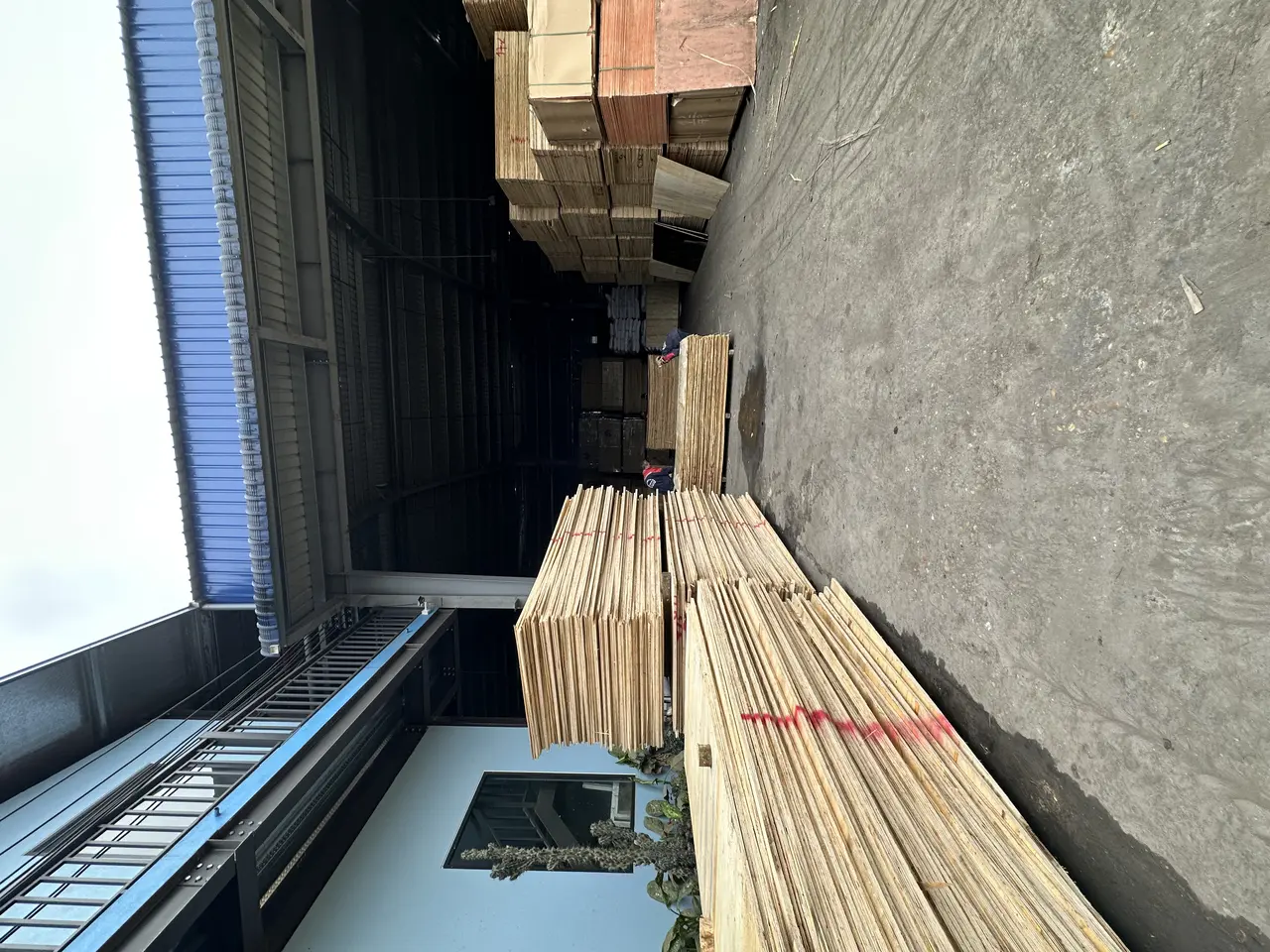
For more on how melamine and phenolic glue differ in moisture resistance and boiling tests, see Plywood Glue Types & Emission Standards — Melamine vs Phenolic.
🏭 The Factory Segment Problem — Why Most Vietnam Plywood Fails Japan
Vietnam has four distinct factory segments. Japan’s requirements can only be met by Segment A.
📌 Segment A: Premium Furniture Factories
These facilities are purpose-built for export markets with strict emission and dimensional requirements:
- Core construction: Full stitched (all layers, horizontal + vertical) — no gaps, no overlaps
- Core species: Styrax (480–500 kg/m³) or eucalyptus (650–750 kg/m³) — Grade A veneers
- Glue: Melamine MR with E0 emission control. Some use low-formaldehyde resin systems
- Hot press: Calibrated temperature and pressure profile per glue batch
- Sanding: Wide-belt calibration sanding to ±0.3mm thickness tolerance
- Certifications: FSC, CARB P2, CE, ISO 9001 — full documentation stack
These factories export to EU, USA, Japan, Korea, and Australia. Their per-unit cost is 20–35% higher than commercial factories — and that gap is not negotiable.
📌 Segment B: Commercial/Packing Factories
These factories serve Southeast Asia, Africa, and price-sensitive markets. They cannot meet Japan standards:
- Core construction: Loose-lay or edge-jointed — gaps visible on inspection
- Core species: Acacia (Grade AB or lower) — darker, denser, inconsistent
- Glue: Melamine MR with E1 or E2 emission (no formaldehyde control protocol)
- Sanding: Minimal or none — thickness variance ±0.5–1.0mm
- Certifications: None or basic export cert only
⚠️ Note: Comparing price quotes between Segment A and Segment B is a common sourcing error. The product names look identical — “melamine MR plywood 18mm 1220×2440” — but the underlying quality standard is incompatible with Japan buyers. Japanese furniture manufacturers who switch factories to save $15/sheet regularly return after the first quality rejection.
“We see this pattern every year. A Japan buyer switches to a cheaper supplier, ships one container, fails the formaldehyde test or the thickness check, then comes back to us with urgent reorder. The cost of one failed container — re-inspection, re-shipping, client relationships — is far more than the per-sheet price difference.” — Lucy, International Sales Manager, HCPLY
📐 Thickness Tolerance — Japan’s Non-Negotiable Dimension
Japan furniture manufacturers work with precision CNC machines and assembly systems. Dimensional variance in raw materials directly causes production defects.
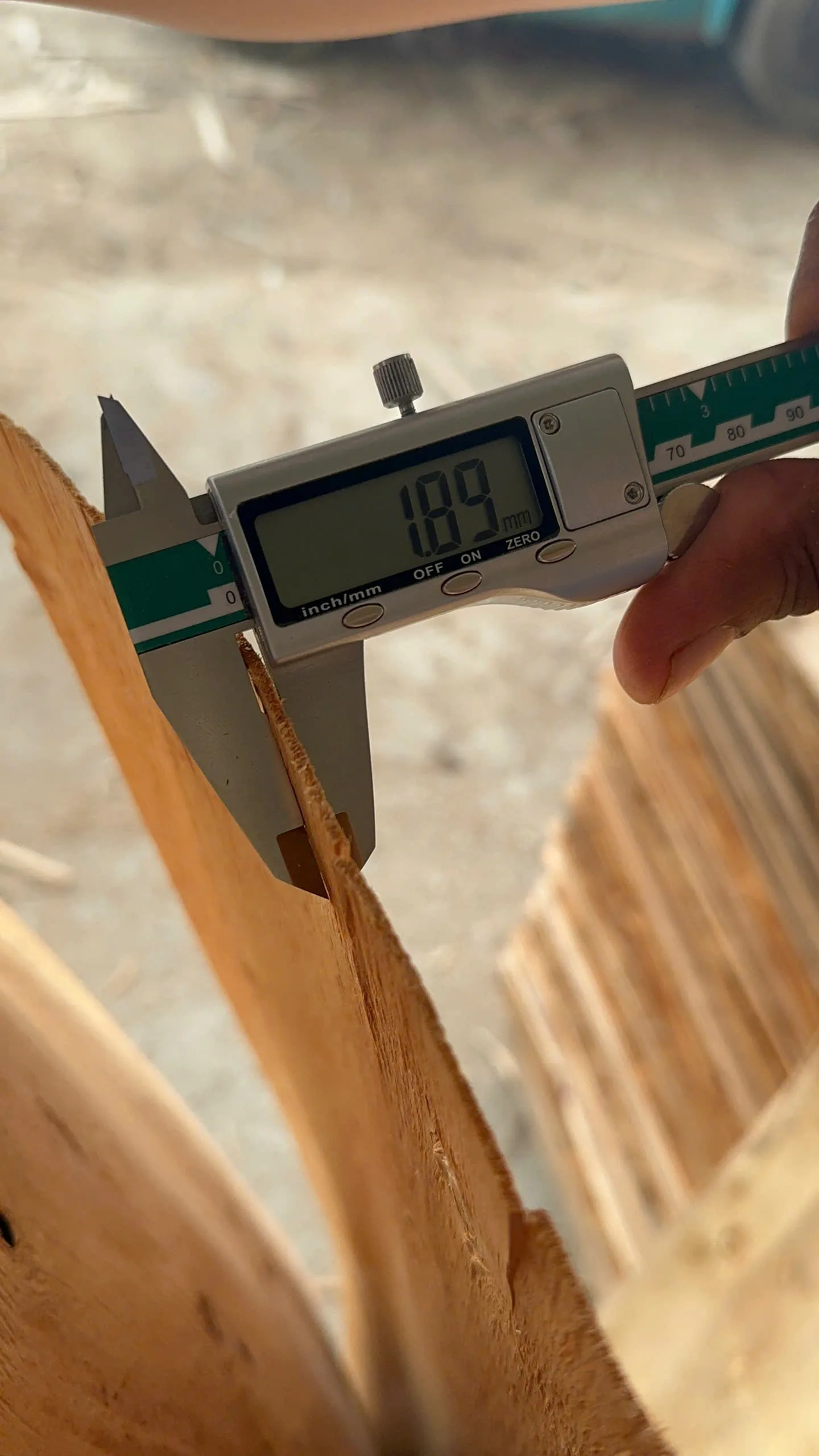
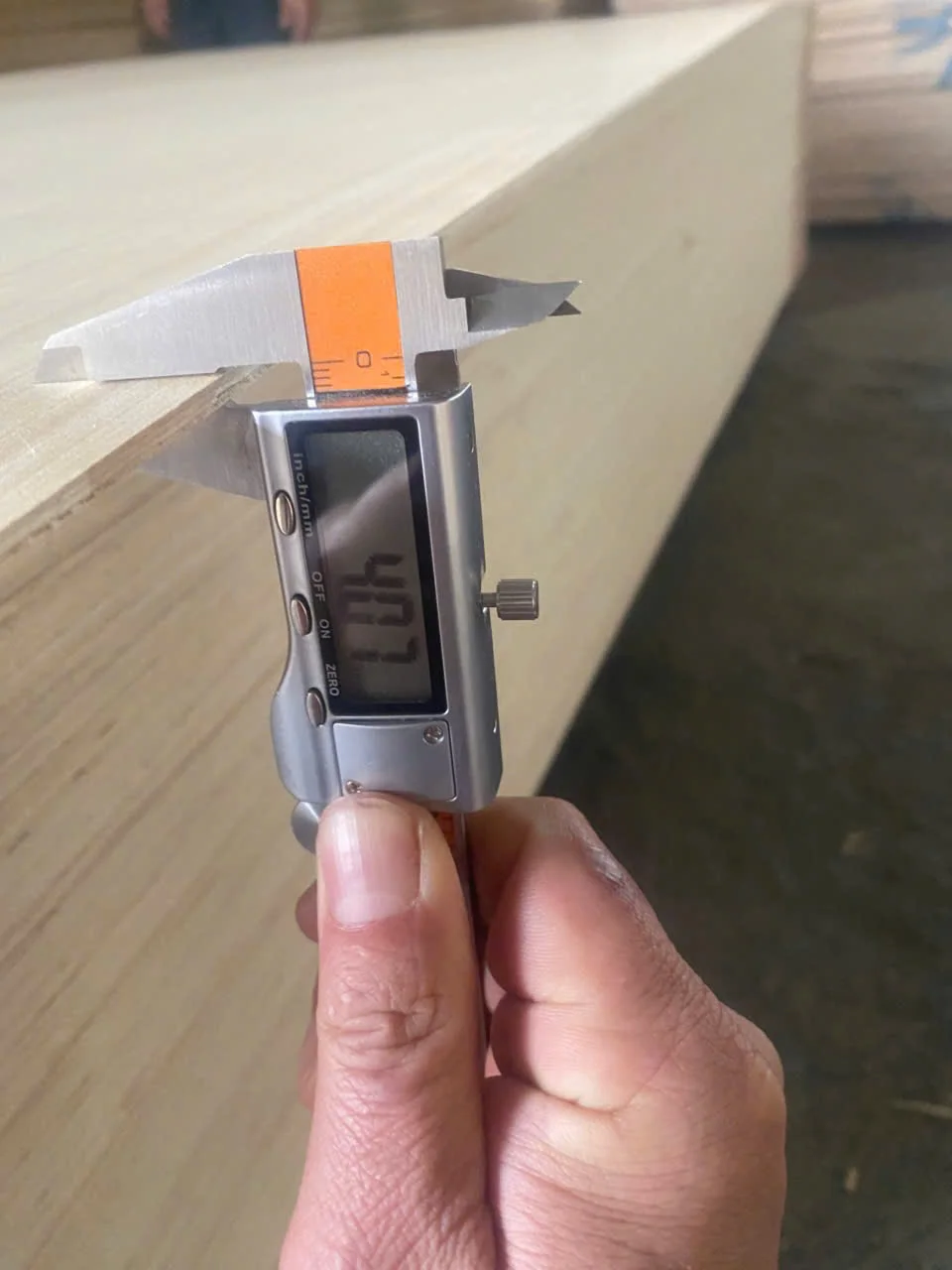
HCPLY’s standard sanded tolerance is ±0.3mm — achieved through wide-belt calibration sanding after hot pressing. This matches Japan’s standard specification exactly.
The sanding process matters beyond just tolerance:
- Calibration sanding: Removes thickness variance created during hot pressing and panel stacking
- Finish sanding: Produces smooth surface for paint, veneer lamination, or lacquer finishing
- Double-side sanding: Required for cabinet and furniture applications (Japan typically specifies this)
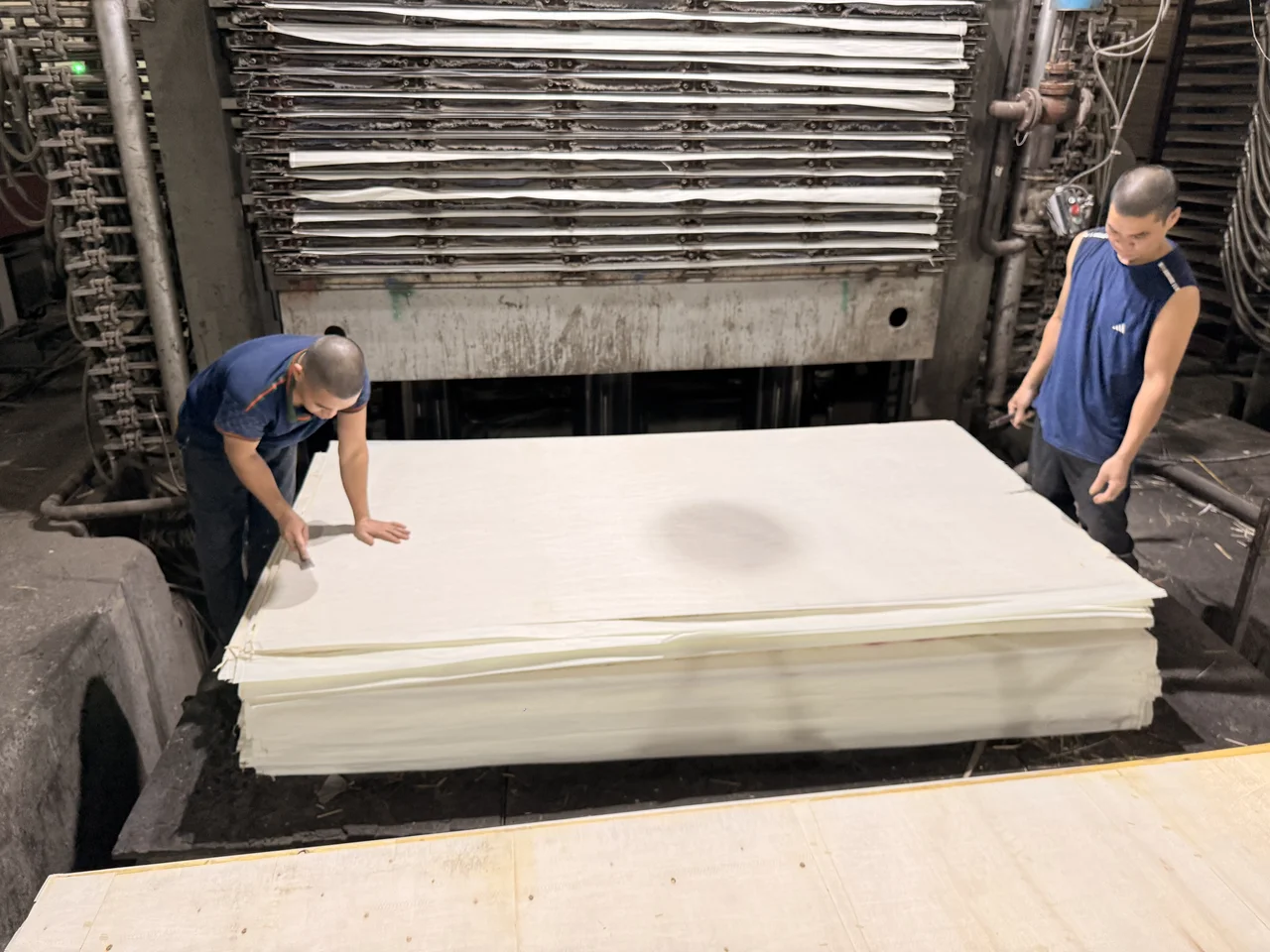
For Japan market orders, HCPLY applies calibrated sanding (±0.3mm) as standard on all furniture-grade panels. Premium orders can be calibrated to ±0.2mm on request — required by some high-end cabinet manufacturers in Osaka and Nagoya.
See: Plywood Sizes & Thickness — Standard Specifications from Vietnam Factory.
📋 Specification Matrix — What to Order for Japan
The correct specification for Japanese furniture manufacturers sourcing from Vietnam:
| Parameter | Japan Requirement | HCPLY Spec |
|---|---|---|
| Glue type | Melamine (MR) | Melamine MR ✓ |
| Emission class | E0 / F4 star equivalent | E0 certified ✓ |
| Formaldehyde limit | ≤0.3 mg/L (F4 desiccator) | ≤0.3 mg/L ✓ |
| Thickness tolerance | ±0.3mm (±0.2mm premium) | ±0.3mm standard ✓ |
| Core construction | Full stitched preferred | Full stitched ✓ |
| Core species | Styrax or eucalyptus | Styrax / eucalyptus ✓ |
| Sanding | Both faces, calibrated | S2S calibrated ✓ |
| Face grade | A/B (most species) | A/B ✓ |
| Certifications | FSC, test report | FSC + CARB P2 + E0 cert ✓ |
Most requested face veneers for Japan: Birch (D grade — Japan accepts D as premium), okoume, EV (engineered veneer). Birch plywood with styrax core is the dominant product for Japanese furniture export, combining the light-colored premium face with a lightweight, dimensionally stable substrate.
For detailed birch specifications and Japan market fit, see Birch Plywood Vietnam — How Vietnam Makes Birch Plywood with Imported Face + Styrax Core.
📦 Ordering Process — What Japan Buyers Need to Confirm
Japanese importers consistently list documentation gaps as the primary cause of sourcing friction with Vietnamese suppliers. HCPLY’s process:
Step 1: Specification sheet — Confirm thickness (mm), face veneer, emission class (E0), core species, sanding spec, sheet size (1220×2440mm standard for Japan)
Step 2: Sample shipment — HCPLY dispatches samples with mill test reports showing formaldehyde emission values. Japan buyers typically conduct their own desiccator test before approving bulk orders.
Step 3: Production confirmation — HCPLY provides pre-production confirmation of glue batch (E0 certified), core grade, and sanding specification for each order.
Step 4: QC photos + thickness report — Before container loading, HCPLY documents thickness measurements per panel batch, surface inspection, edge quality, and stacking.
Step 5: Documentation pack — Mill emission test report, FSC chain-of-custody certificate, CARB P2 certificate, phytosanitary, fumigation certificate, commercial invoice, packing list, B/L.
Request E0 melamine plywood samples for Japan — Contact HCPLY
🔗 How JAS F4 Star Certification Works for Imports
For most furniture manufacturers in Japan, a mill test report (formaldehyde emission value) is sufficient to meet buyer and regulatory requirements. Formal JAS certification for imports involves a Registered Overseas Certified Body (ROCB) — a more extensive process typically used by large-volume importers or those supplying structural applications.
Practical path for furniture-grade plywood:
- Mill emission test report — Third-party lab test showing desiccator value ≤0.3 mg/L (F4 star compliant)
- CARB P2 certificate — Accepted by many Japan buyers as equivalent evidence of low emission
- E0 certification — Factory-level emission control certification
HCPLY holds active CARB P2 certification (valid through 2026) and provides emission test reports with every shipment. Japan buyers sourcing furniture-grade panels have accepted this documentation stack without formal JAS certification, relying on CARB P2 as the quality proxy.
💡 Key takeaway: CARB P2 (California Air Resources Board Phase 2) requires continuous emission testing, factory audits, and third-party verification — a more rigorous system than a single JAS test. Many Japan buyers accept CARB P2 as stronger evidence than a one-time test report.
For a full breakdown of CARB P2, E0, and CE certification requirements by market, see Plywood Certifications & Export Documentation — FSC, CARB, CE, EUDR Guide.
📊 Japan Market Context — Growing Opportunity for Vietnam
Japan remains one of the most price-stable and quality-consistent markets for plywood importers. Key dynamics as of 2026:
- Vietnam is now Japan’s fourth-largest plywood supplier, with 12.5% year-on-year volume growth in 2025 (Apkindo, 2025)
- Japan, the US, Korea, and Malaysia collectively account for 77.4% of Vietnam’s plywood export value (VIFOREST, 2023)
- Japanese buyers shifted away from Indonesian suppliers during the 2025 supply fluctuation period, opening space for Vietnam
- The shift toward E0 and F4 star in Japanese domestic regulations is accelerating as building codes tighten post-2020 amendments
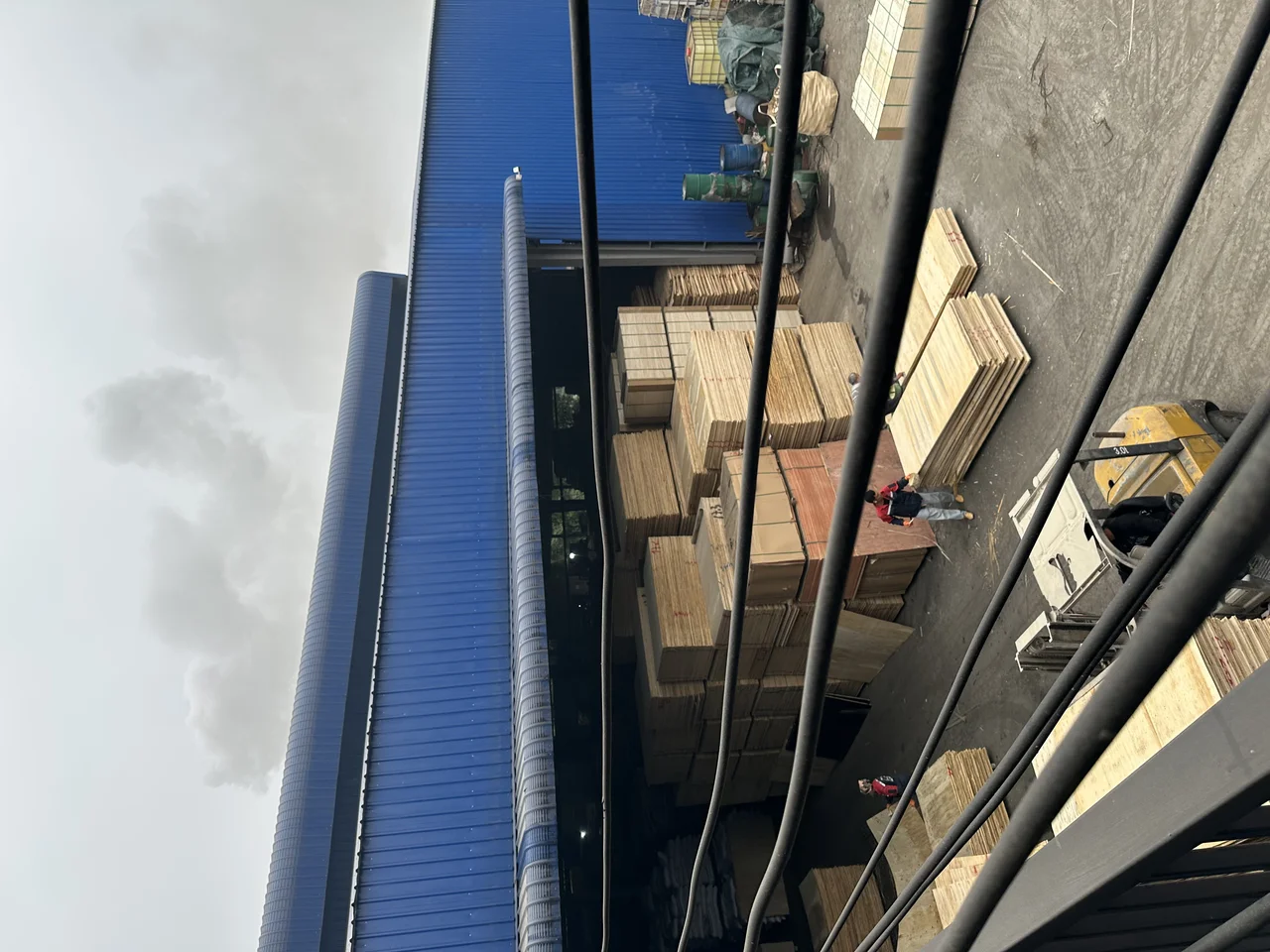
The competitive advantage for JAS F4 star plywood from Vietnam: comparable quality to Malaysia at lower FOB pricing, faster lead times (15–20 days vs. 25–35 days for Malaysian shipments), and full documentation compliance under HCPLY’s factory-direct model.
✅ Key Takeaways — Melamine E0 Plywood for Japan
- JAS F4 star (≤0.3 mg/L) ≈ E0 — both represent ultra-low formaldehyde. Melamine MR glue achieves this when processed correctly at a premium factory.
- Factory segment is everything. Premium furniture factories with full stitched core, calibrated sanding, and CARB P2 certification meet Japan standards. Commercial factories do not — regardless of what the product description says.
- Thickness tolerance ±0.3mm is Japan’s standard requirement. HCPLY delivers this as default on all furniture-grade sanded panels.
- Documentation matters as much as product quality. Japan buyers need mill emission test reports, CARB P2 or equivalent certification, and pre-shipment QC reports.
- Vietnam is a growing Japan supplier. 12.5% volume growth in 2025 signals that the market is proving Vietnam’s capability — but only from the right factories.
Get a Free Quote for E0 Melamine Plywood to Japan — HCPLY can provide samples with full emission documentation within 5 business days.