
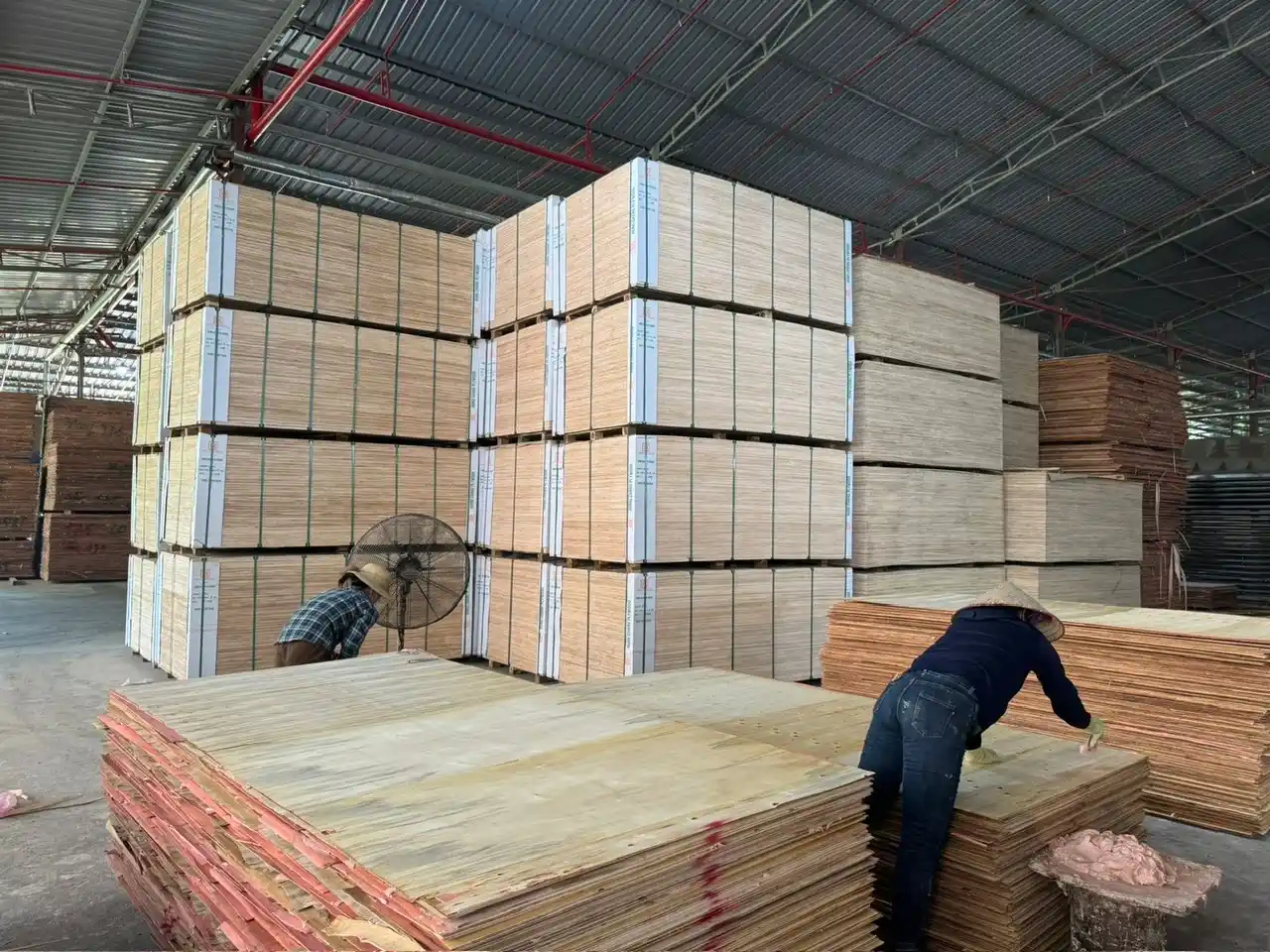
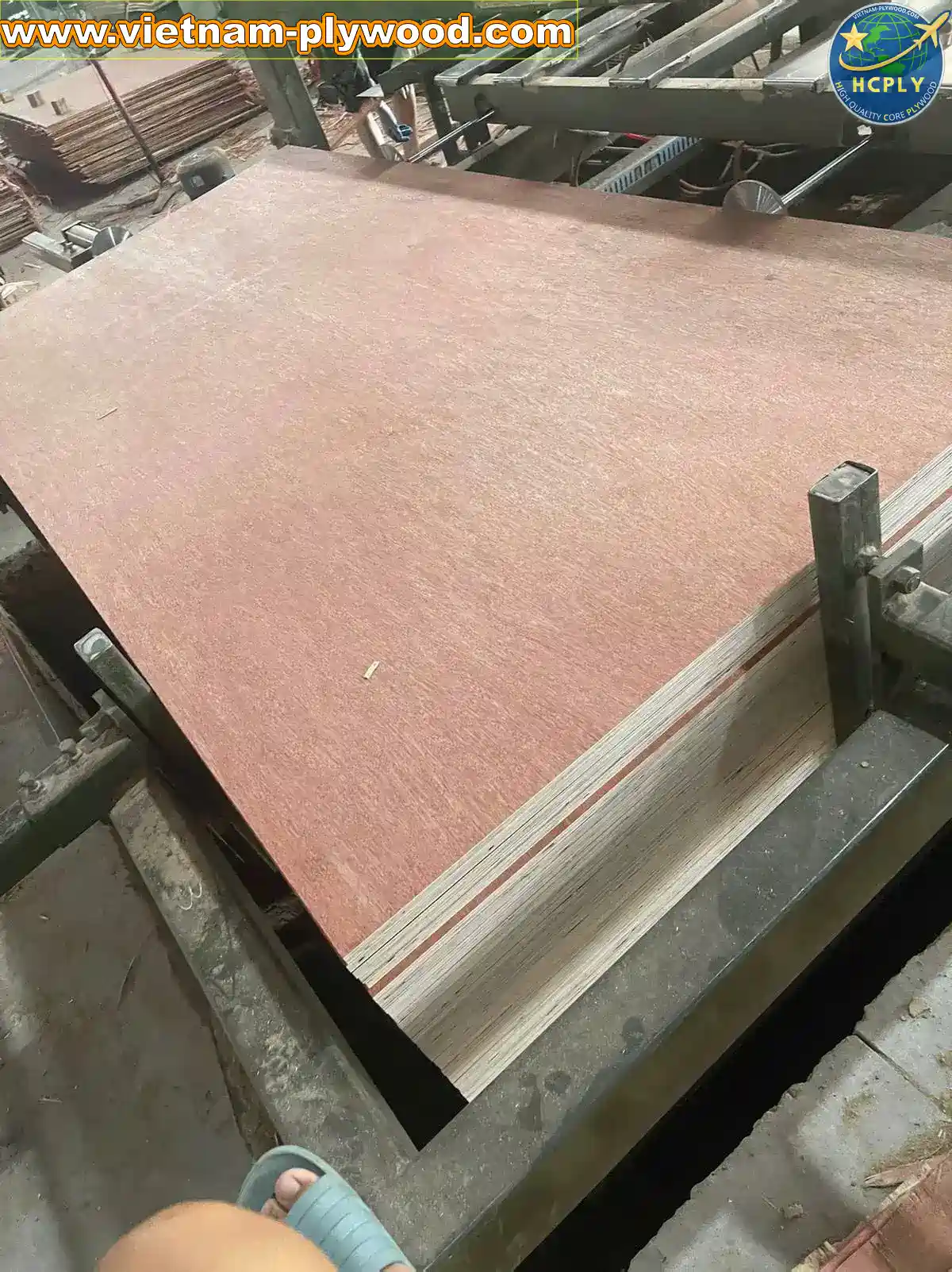
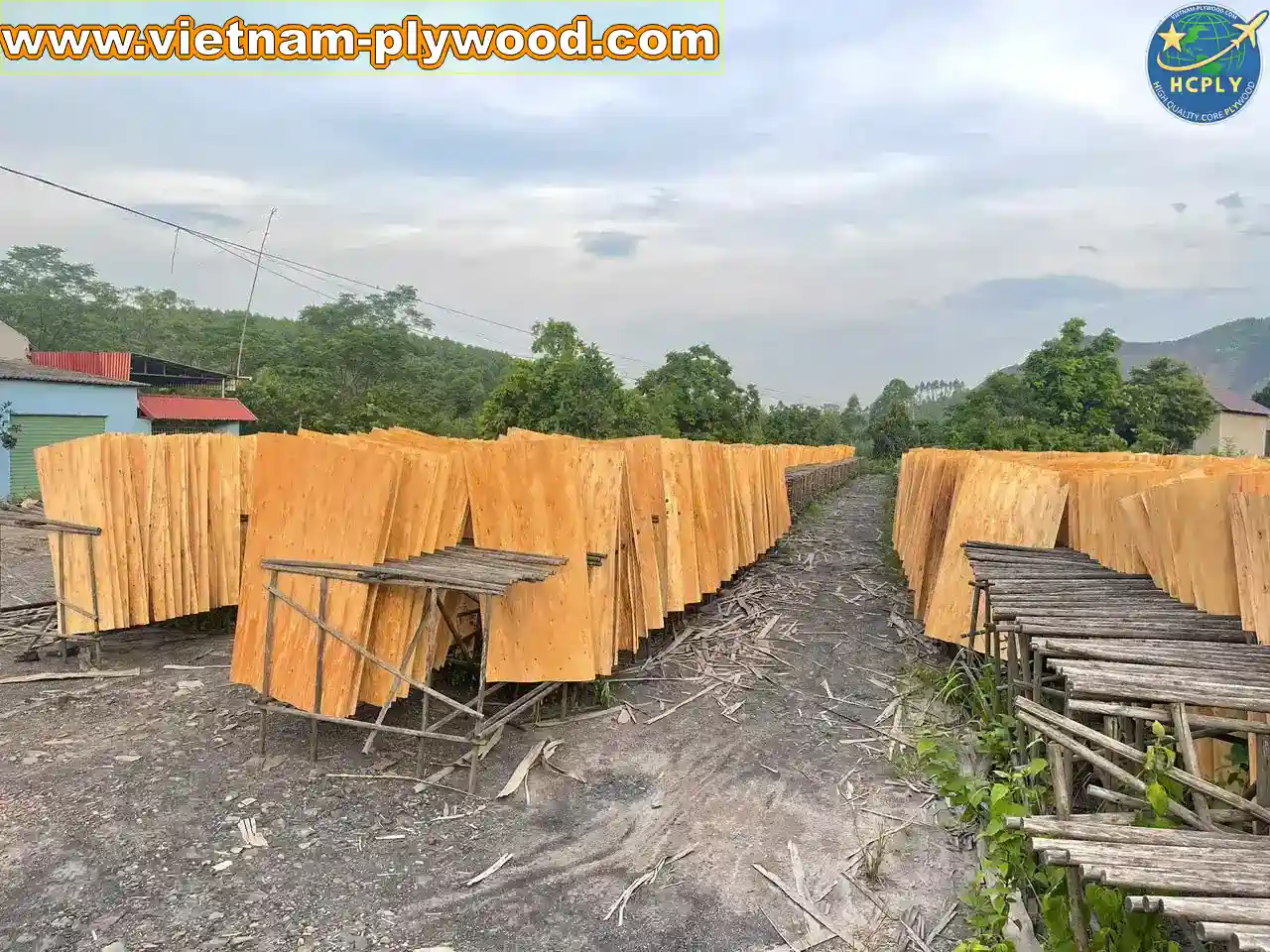

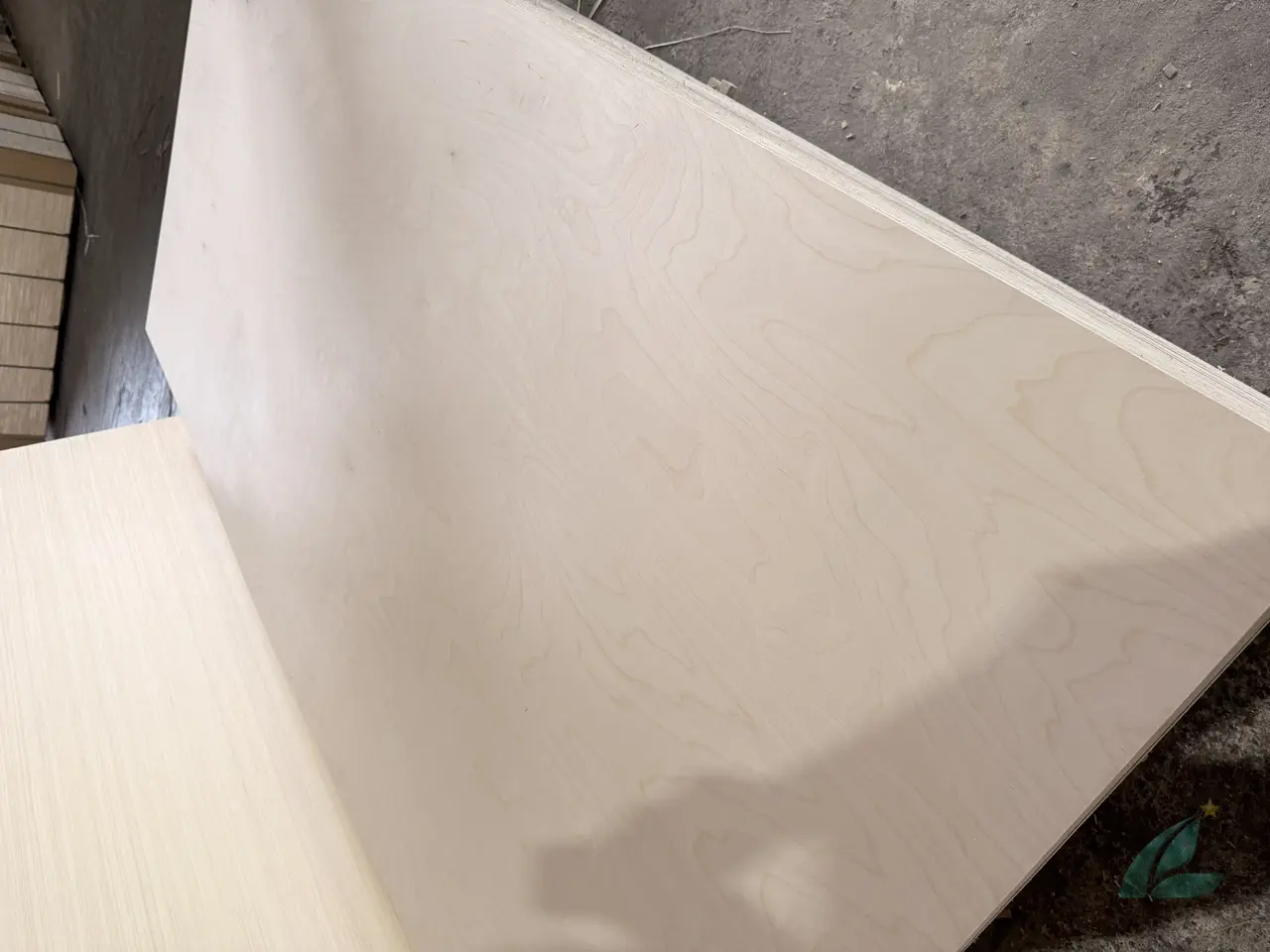
Russia produced 80% of the world’s birch plywood before sanctions hit in July 2022 (Finnish Forest Industries Federation, 2022). That supply vanished from legal EU channels overnight — over 1.3 million cubic meters per year removed from the market. European furniture manufacturers, cabinet shops, and construction firms watched Baltic birch prices spike 40-60% within eighteen months. The question flooding inbox at HCPLY from buyers in Germany, Poland, Korea, and the UK since then: can Vietnam produce full birch plywood?
The short answer is no — and understanding why makes you a smarter buyer. Vietnam produces birch-faced plywood as a Russian birch alternative on engineered cores that outperforms Baltic birch in specific applications while costing 30-45% less. This guide explains exactly what “full birch” means structurally, what Vietnam actually manufactures, and which specification fits your project.
🪵 What Full Birch Plywood Actually Means
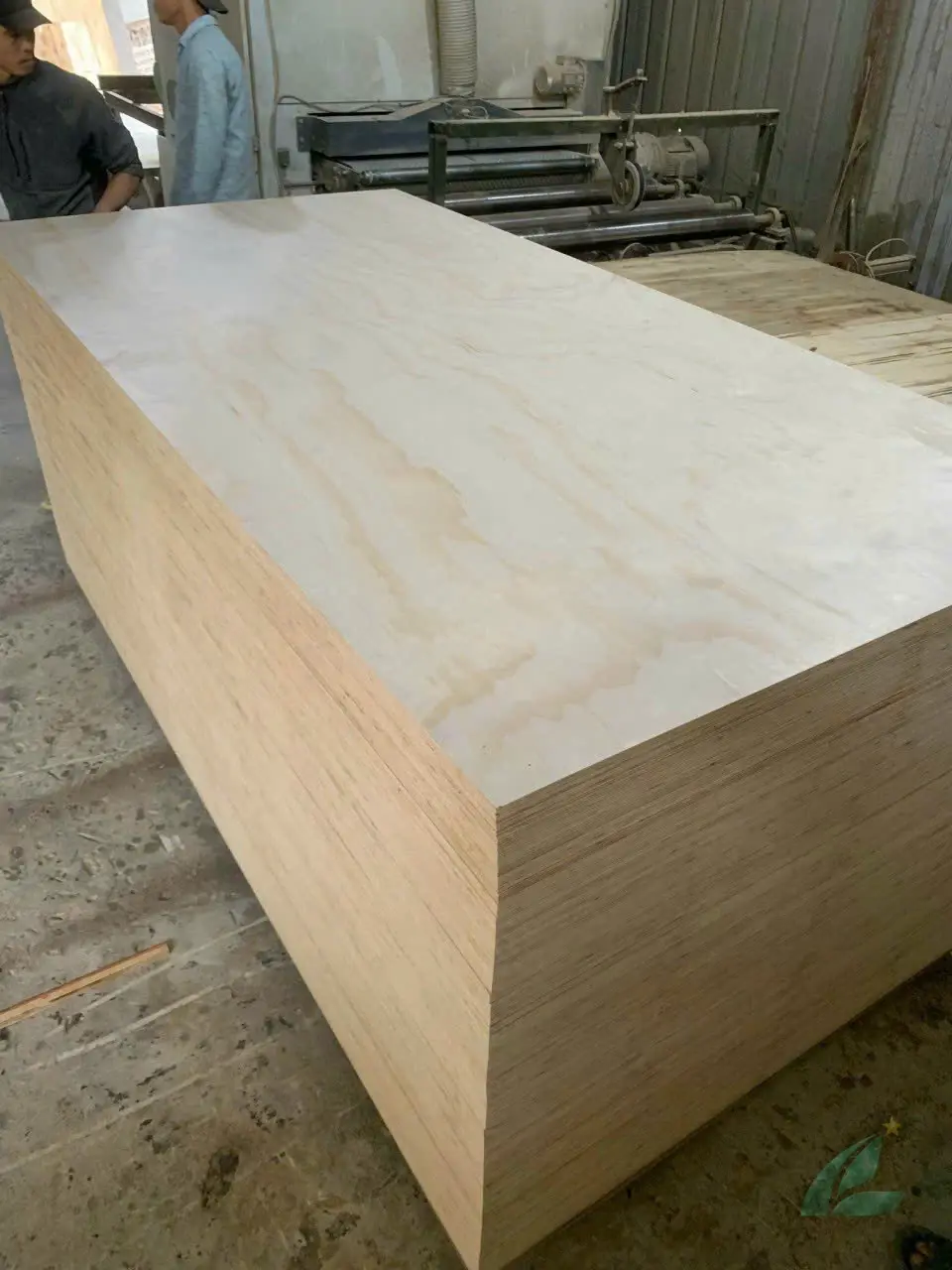
Full birch plywood (also called Baltic birch) uses birch veneer for every single layer — face, back, and all core plies. A standard 18mm panel contains 13 individual birch plies, each approximately 1.0-1.5mm thick, cross-banded and bonded under high pressure.
The term “full” in full birch plywood matters. In plywood nomenclature, any panel with a birch face gets labeled “birch plywood” regardless of what sits underneath. A panel with 0.3mm birch face on poplar core is still sold as “birch plywood” in many markets. Full birch plywood specifies that birch runs through the entire panel cross-section — not just the surface.
Baltic states (Finland, Latvia, Estonia) and Russia dominated full birch plywood manufacturing for decades because they controlled the raw material. Birch forests across Scandinavia and Russia provided both face veneer and core logs from the same species, enabling true all-birch construction at industrial scale.
This all-birch construction creates three measurable advantages:
| Property | Full Birch (Baltic) | Birch-Faced (Vietnam) |
|---|---|---|
| Core material | Birch throughout | Styrax / Eucalyptus / Acacia |
| Density | ~680 kg/m³ uniform | 480-750 kg/m³ (varies by core) |
| Edge finish | Void-free, exposed edges decorative | Standard — requires edge banding |
| Ply count (18mm) | 13 plies | 11-13 plies |
| Screw retention | Excellent all directions | Excellent face, good edge |
| Price FOB | $500-620/CBM | $300-340/CBM |
Key Insight: Full birch plywood’s defining feature is void-free edges suitable for exposed joinery. If your application uses edge banding, laminate, or concealed joints, the full-birch premium buys you nothing measurable (HCPLY production data, 2026).
🌍 Why Vietnam Cannot Produce Full Birch Plywood
Vietnam does not grow birch trees. The species Betula pendula (silver birch) requires cold continental climates — Finland, Russia, Latvia, and northern China are the primary growing regions.
Vietnamese factories import birch face veneer from certified European suppliers and laminate it onto locally grown core species. Importing enough birch veneer to build a full-birch panel (13 layers of birch) would cost more than purchasing the finished product from Finland — eliminating any price advantage.
The economics break down simply: birch face veneer for a single 1220x2440mm panel uses approximately 0.3-0.4mm of material. Building the same panel with birch core requires 12 additional layers at 1.0-1.5mm each — roughly 40 times more imported birch wood. At current European birch veneer prices, the core material alone would exceed $450/CBM before any manufacturing costs. Vietnamese factories cannot compete with Baltic producers who grow birch domestically and process it at origin.
This constraint is permanent. Vietnam’s tropical climate (average temperature 24-27°C) cannot support birch cultivation. No amount of investment changes geography. The strategic response from Vietnamese manufacturers — including HCPLY — has been to develop engineered core alternatives that match or exceed full birch performance in specific properties while maintaining a cost advantage.
Three core species dominate Vietnamese plywood production:
| Core | Density | Price Tier | Best Application |
|---|---|---|---|
| Styrax | 480-500 kg/m³ | Mid | Furniture, cabinetry (birch alternative) |
| Acacia | ~580 kg/m³ | Low | Commercial, packaging |
| Eucalyptus | 650-750 kg/m³ | High | Construction, structural |
Styrax (Liquidambar formosana) is the preferred birch core replacement — light-colored, dimensionally stable, and grown exclusively in Northern Vietnam. Its grain pattern and machinability closely replicate birch core behavior in CNC routing, doweling, and hinge mounting (HCPLY production data, 2026). For a detailed density comparison, see styrax core density versus birch core.
📊 Birch Plywood Vietnam: Actual Specifications
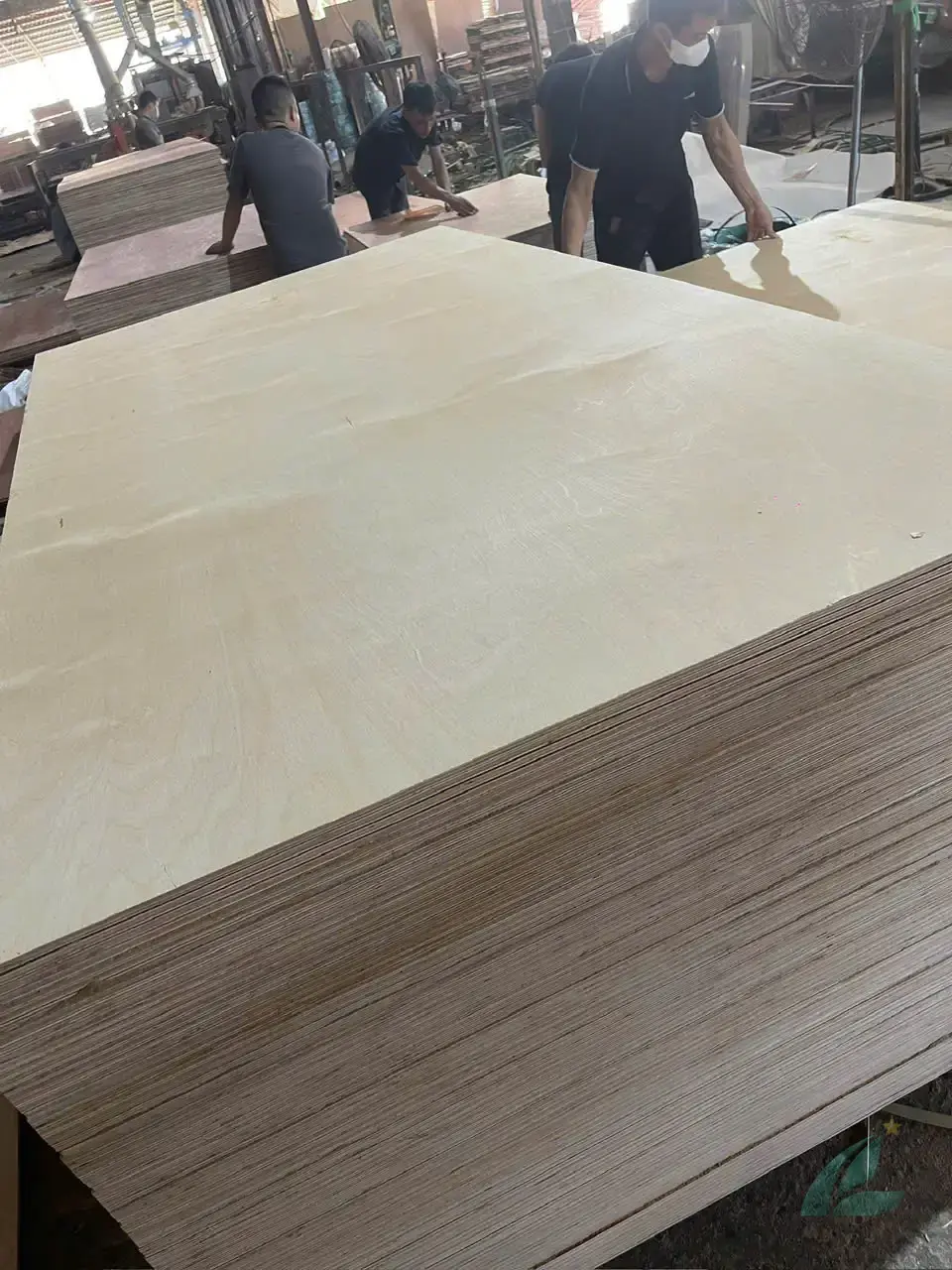
HCPLY manufactures birch plywood with the following verified specifications:
| Parameter | Specification |
|---|---|
| Face veneer | Imported birch, D/E/F grade (D = best available) |
| Face thickness | 0.2-0.4mm |
| Core species | Styrax (standard), Eucalyptus (structural), Acacia (economy) |
| Core construction | Full stitched (premium), edge-jointed (standard) |
| Panel thickness | 4-30mm |
| Standard sizes | 1220x2440mm, 1250x2500mm, custom |
| Glue | Melamine (MR) or Phenolic (WBP) |
| Emission | E0 / CARB P2 / E1 available |
| Certifications | FSC, CARB P2, CE, ISO 9001, EUDR |
| Tolerance | ±0.3mm thickness, ±2mm length/width |
⚠️ Important: Birch grade from Vietnam is D/E/F — not A/B/C. Grade D is the highest available. These grades refer to visible face defects (knots, patches), not structural quality. European buyers expecting BB/CP grade nomenclature should request D-grade equivalency from HCPLY.
“We test every batch of imported birch veneer for thickness consistency and moisture content before lamination. A 0.1mm variation in face veneer thickness creates visible sanding marks that destroy the panel’s furniture-grade finish.” — Lucy, International Sales Manager, HCPLY
🔖 Birch Grade Classification: D/E/F vs BB/CP
European buyers accustomed to Baltic birch expect BB/CP or B/BB grade nomenclature. Vietnamese birch plywood uses a different grading system — D, E, and F — that reflects the available face veneer quality from import suppliers.
| Grade | Description | Typical Use |
|---|---|---|
| D | Best available — minimal knots, tight grain, clean surface | Premium furniture, visible cabinetry |
| E | Small knots allowed, minor patches permitted | Standard furniture, interior panels |
| F | Open knots, patches, color variation | Back panels, concealed surfaces, economy |
Grade D Vietnamese birch plywood delivers comparable visual quality to BB-grade Baltic birch for most furniture applications. The key difference: Baltic birch grades describe the entire panel (face and core uniformity), while Vietnamese grades describe only the face veneer quality, since the core is a different species entirely.
When requesting samples from HCPLY, specify “D-grade birch face” for furniture-visible applications. Pair the face grade with core construction quality — full-stitched styrax core for premium orders, edge-jointed for standard commercial orders.
💰 Price Comparison: Full Birch vs Vietnam Birch-Faced
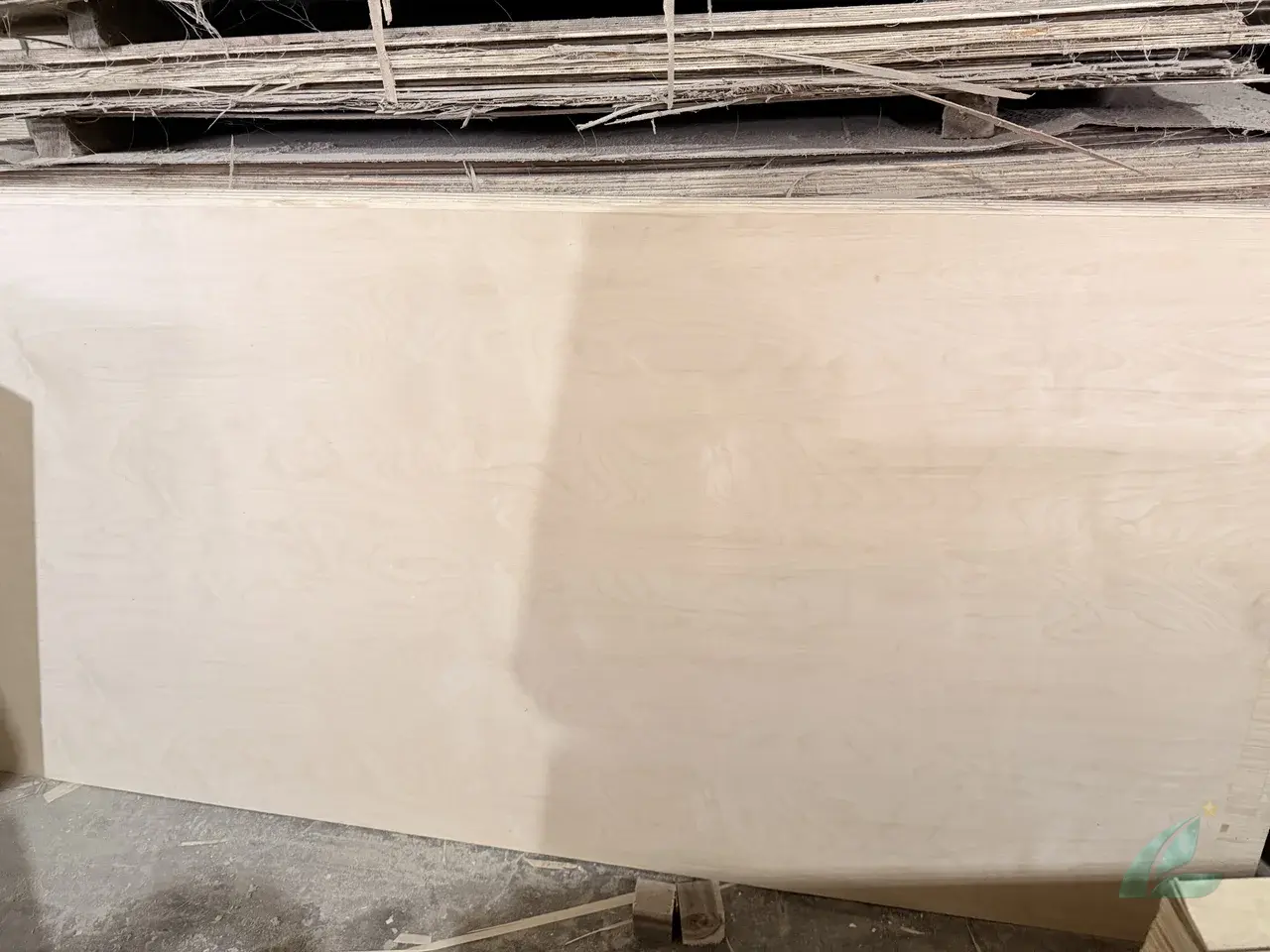
The pricing gap between full birch plywood and Vietnamese birch-faced plywood reflects material sourcing, not manufacturing quality.
| Factor | Full Birch (Finland/Latvia) | Birch-Faced (Vietnam) |
|---|---|---|
| FOB price (18mm) | $500-620/CBM | $300-340/CBM |
| Savings | Baseline | 30-45% lower |
| Lead time | 6-10 weeks | 15-20 days |
| MOQ | Often 5+ containers | 1 container (40HC) |
| Emission standard | E1 (standard) | E0 / CARB P2 available |
For a single 40HC container of 18mm birch plywood on styrax core:
- Volume: ~53 CBM (18 pallets, styrax core density)
- FOB cost Vietnam: $15,900-18,020
- FOB cost Baltic: $26,500-32,860
- Savings per container: $8,500-16,840
That difference pays for edge banding material, additional QC inspection, and freight — with margin remaining. European furniture manufacturers importing 10+ containers annually save $85,000-168,000 by switching from Baltic birch to Vietnamese birch-faced panels on styrax core (HCPLY export data, 2026).
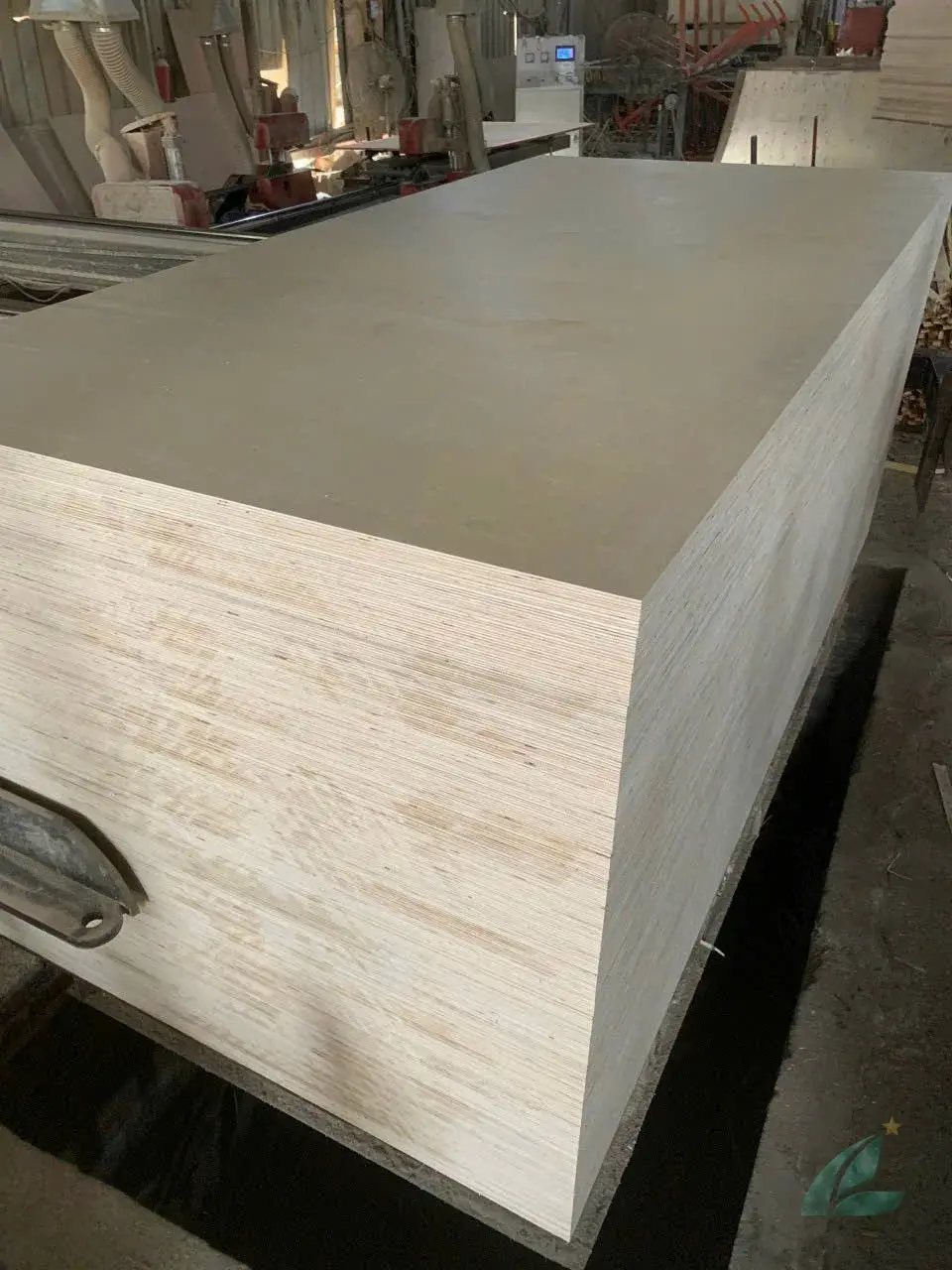
Get Birch Plywood Pricing — Free Quote in 24 Hours
🔍 When Full Birch Plywood Is Worth the Premium
Full birch plywood remains the correct specification for three use cases where its all-birch construction provides measurable benefits:
-
Exposed-edge joinery Drawer sides, cabinet carcasses with visible ply edges, and CNC-cut display fixtures where edge aesthetics matter. Full birch’s void-free core eliminates the need for edge banding — saving labor on high-volume production runs.
-
Through-bolt connections Marine fittings, playground equipment, and structural connections where bolts pass through the full panel thickness. All-birch core delivers uniform pull-out strength regardless of bolt orientation.
-
Laser cutting and intricate CNC work Decorative panels, signage, and architectural screens where the laser exposes cross-section layers. Full birch creates clean, attractive edge patterns. Mixed-core panels show alternating color layers.
For every other application — flat-panel furniture, wall paneling, cabinet doors, flooring substrate, packaging — birch-faced plywood on styrax or eucalyptus core delivers equivalent surface performance at significantly lower cost.
Here is a practical test for whether your project requires full birch plywood: look at your current product line. Count how many finished pieces expose raw plywood edges to the end user. For most furniture manufacturers, that number is less than 15% of SKUs. The remaining 85% use edge banding, veneer tape, solid wood lipping, or paint — all of which conceal the core structure completely. Paying the full birch premium for concealed edges is the equivalent of specifying marine-grade stainless steel for indoor cabinet hinges.
🏭 How Vietnamese Factories Manufacture Birch Plywood
- Veneer selection — Imported birch face veneer inspected for grade (D/E/F), thickness (0.2-0.4mm), and moisture content (<8%)
- Core preparation — Styrax logs peeled, dried to 6-8% MC, graded for defects
- Core assembly — Full-stitched construction: every core ply sewn edge-to-edge, eliminating gaps and overlaps
- Glue application — Melamine (MR) for interior or Phenolic (WBP) for exterior, calibrated spread rate
- Hot pressing — Temperature 110-135°C, pressure 10-12 kg/cm², cycle time matched to panel thickness
- Sanding — Calibrated double-belt sander, ±0.3mm tolerance across full sheet
- QC inspection — Thickness gauge, moisture meter, visual grading, emission testing per batch
The full-stitched core construction eliminates voids within the panel body — a critical distinction from commercial-grade plywood where loose-laid cores create internal gaps that reduce screw retention and structural integrity. HCPLY’s furniture-grade birch plywood uses full-stitched construction exclusively, matching the void-free internal quality of Baltic birch’s core (though with styrax instead of birch species). Commercial-grade Vietnamese birch plywood from other manufacturers may use loose-laid or edge-jointed cores — always confirm core construction method before ordering.
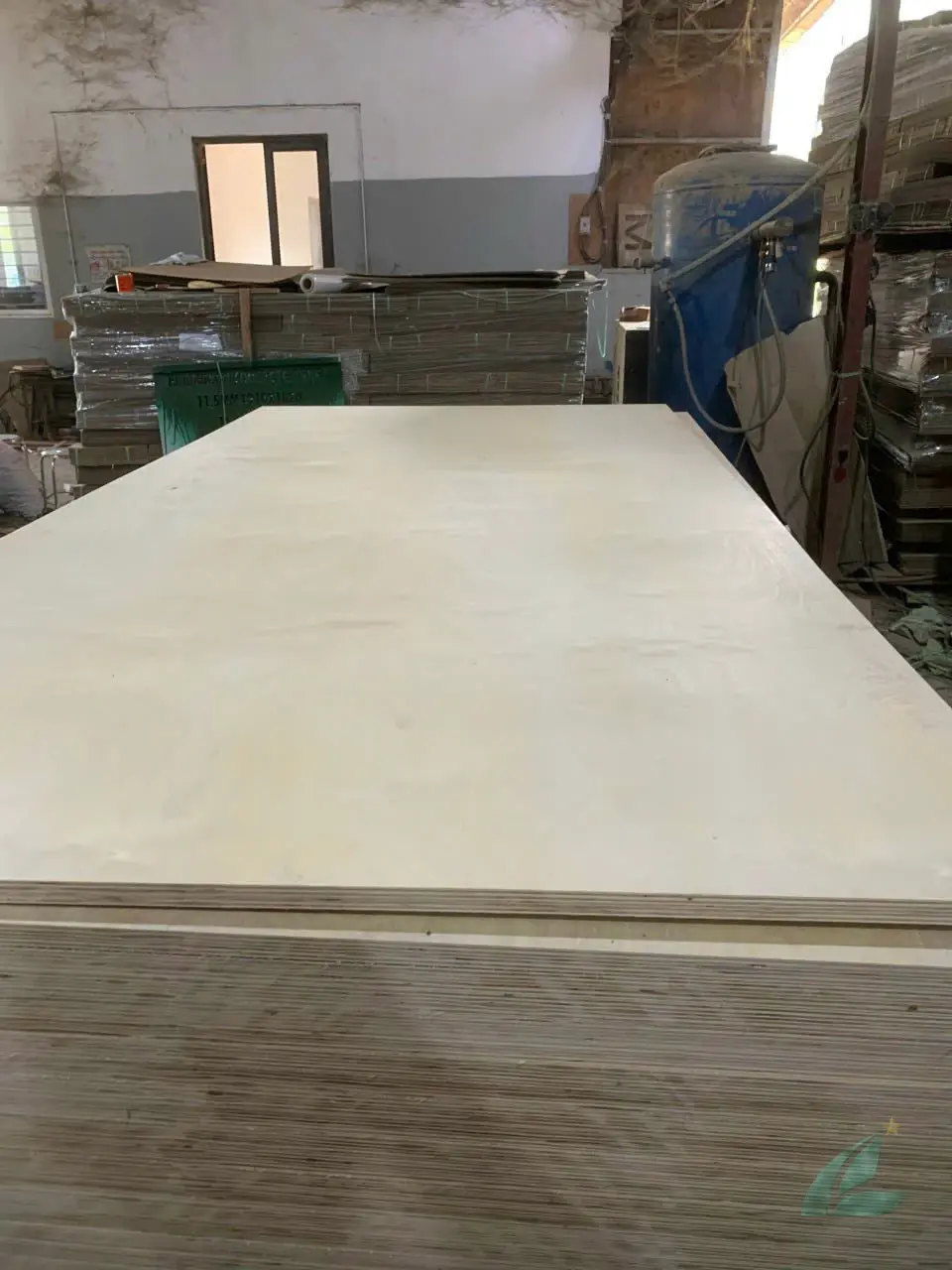
📦 Container Loading: Birch Plywood from Vietnam
Birch plywood on styrax core maximizes container efficiency due to its lower density:
| Core | Density | Pallets/40HC | CBM/40HC | Weight/40HC |
|---|---|---|---|---|
| Styrax | 500 kg/CBM | 18 | ~53 CBM | ~26.5 MT |
| Acacia | 580 kg/CBM | 16 | ~47.5 CBM | ~27.5 MT |
| Eucalyptus | 700 kg/CBM | 15 | ~44.5 CBM | ~28 MT |
Styrax core loads 18 pallets per 40HC — 3 more pallets than eucalyptus core. That translates to 8.5 additional CBM per shipment, or roughly 16% more product per container. Over 12 shipments annually, the CBM advantage compounds to 102 additional CBM — equivalent to 2+ extra containers of product at zero additional freight cost.
For detailed packing calculations by thickness, see the plywood container packing calculation guide.
⚖️ EUDR and Sanctions: Supply Chain Compliance in 2026
The EU Deforestation Regulation (EUDR), entering enforcement in 2026, requires importers to verify the origin of all wood products — including plywood (European Commission, 2023). Simultaneously, EU sanctions on Russian wood products remain in force, with the European Commission issuing a Special Alert in March 2025 warning about Russian birch plywood entering the EU disguised through third-country routing (EU Commission Sanctions Alert, 2025).
Vietnamese birch plywood sidesteps both compliance risks:
- Birch face veneer sourced from FSC-certified European suppliers with full traceability
- Core wood (styrax, eucalyptus, acacia) grown in Vietnamese plantations with documented land-use history
- EUDR documentation — HCPLY provides geo-coordinates, species verification, and chain-of-custody certificates for every shipment
For buyers currently sourcing from Turkey, Kazakhstan, or China — countries flagged for Russian plywood transit — switching to Vietnam eliminates sanctions exposure entirely. The EU imposed anti-dumping duties of up to 86.8% on Chinese hardwood plywood in November 2025, making Vietnamese supply even more cost-competitive for European importers (European Commission, 2025).
The regulatory environment shifted again in early 2025. Over 1.5 billion euros worth of Russian and Belarusian birch plywood entered the EU through third countries between 2022 and early 2025 (VSquare.org investigative report, 2025). EU customs authorities now scrutinize birch plywood certificates of origin more aggressively than any other wood product category. Vietnamese birch plywood — with birch face sourced from EU-origin suppliers and core from Vietnamese plantations — provides a clean supply chain that passes due diligence audits without requiring buyers to verify third-country routing claims.
Request EUDR-Compliant Birch Plywood Documentation
✅ Choosing the Right Specification
| Your Application | Recommended Spec | Why |
|---|---|---|
| Flat-panel furniture (EU/US) | Birch D-grade face, styrax core, E0, full stitched | Best surface finish + cost efficiency |
| Cabinetry with edge banding | Birch D-grade face, styrax core, MR glue | Edge hidden — no need for full birch |
| Exposed-edge furniture | Full birch (Baltic) — source from Finland/Latvia | Only full birch delivers void-free edges |
| Construction/structural | Birch face, eucalyptus core, WBP glue | Maximum density and moisture resistance |
| Economy/commercial | Birch E-grade face, acacia core, E1 | Lowest price point with birch surface |
The decision framework is straightforward: if your end product hides the panel edge, Vietnamese birch-faced plywood delivers identical surface quality at 30-45% lower cost. If your design exposes panel edges as a visual feature, full birch remains the correct specification.
Most HCPLY birch plywood buyers in Europe and Korea started by requesting full birch samples and switched to birch-faced on styrax core after comparing panels side-by-side. The surface is indistinguishable. The price difference funds better hardware, packaging, or marketing.
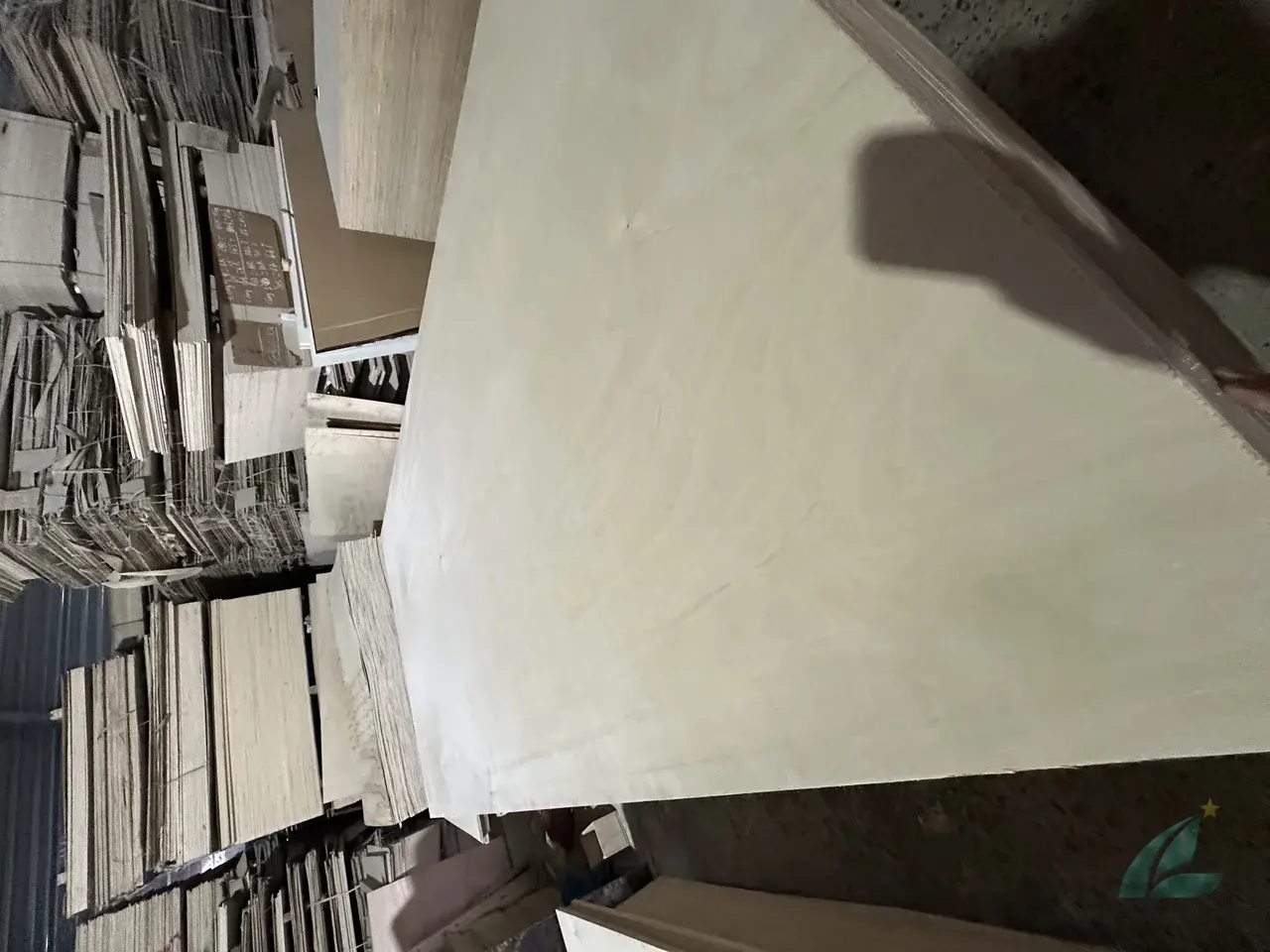
⚠️ 3 Common Mistakes When Sourcing Birch Plywood from Vietnam
Mistake 1: Comparing full birch plywood pricing with birch-faced pricing A buyer receives a $320/CBM quote from Vietnam and a $560/CBM quote from Latvia, then concludes Vietnam is “cheaper quality.” These are fundamentally different products. The Vietnamese panel uses birch face on styrax core. The Latvian panel uses birch throughout. Compare like-for-like: Vietnamese birch-faced vs other Southeast Asian birch-faced, or Baltic full birch vs Baltic full birch.
Mistake 2: Requesting A/B grade birch face from Vietnam Vietnam uses D/E/F grading for birch veneer. Requesting “A grade” causes confusion — the factory may ship their best product but label it D-grade per their system. Specify clearly: “D-grade birch face, furniture-visible quality, sanded both sides.”
Mistake 3: Ignoring core species in the specification Two Vietnamese “birch plywood” quotes at different prices often reflect different cores. Birch face on styrax core (480-500 kg/m³) costs more than birch face on acacia core (~580 kg/m³) because styrax requires premium furniture-grade factory production with full-stitched construction. Always specify core species, not just face veneer.
Disclosure: This article is published by HCPLY, a Vietnam-based plywood manufacturer and export operator. While we aim to provide objective industry guidance, readers should consider our perspective as a market participant when evaluating recommendations.
🔗 Related Guides
- Birch Plywood Vietnam — Product Page — full specs, grades, applications
- Styrax Core Plywood: The Birch Alternative — deep dive on Vietnam’s preferred birch core replacement
- Plywood Core Types from Vietnam — acacia vs eucalyptus vs styrax compared
- Birch vs Okoume Plywood Comparison — face veneer head-to-head for export buyers
- Plywood Quotation Guide — what to specify before requesting pricing
📋 Conclusion
Full birch plywood — the all-birch Baltic construction with void-free edges — cannot be manufactured in Vietnam. No Vietnamese factory produces genuine full birch plywood, and any supplier claiming otherwise is mislabeling the product. What HCPLY produces is birch-faced plywood on engineered Vietnamese cores, delivering identical surface quality with different internal engineering.
For 85%+ of furniture, cabinetry, and interior applications, this distinction creates an advantage rather than a limitation. Styrax core at 480-500 kg/m³ is lighter than full birch, loads more CBM per container, meets E0/CARB P2 emission standards, and costs 30-45% less FOB.
The 2022-2026 supply disruption reshaped global birch plywood sourcing permanently. Buyers who adapted early — specifying Vietnamese birch-faced panels where full birch is not structurally required — locked in cost advantages that compound with every shipment. HCPLY ships birch plywood to 20+ countries with full export documentation including FSC, CARB P2, CE, and EUDR compliance certificates.