

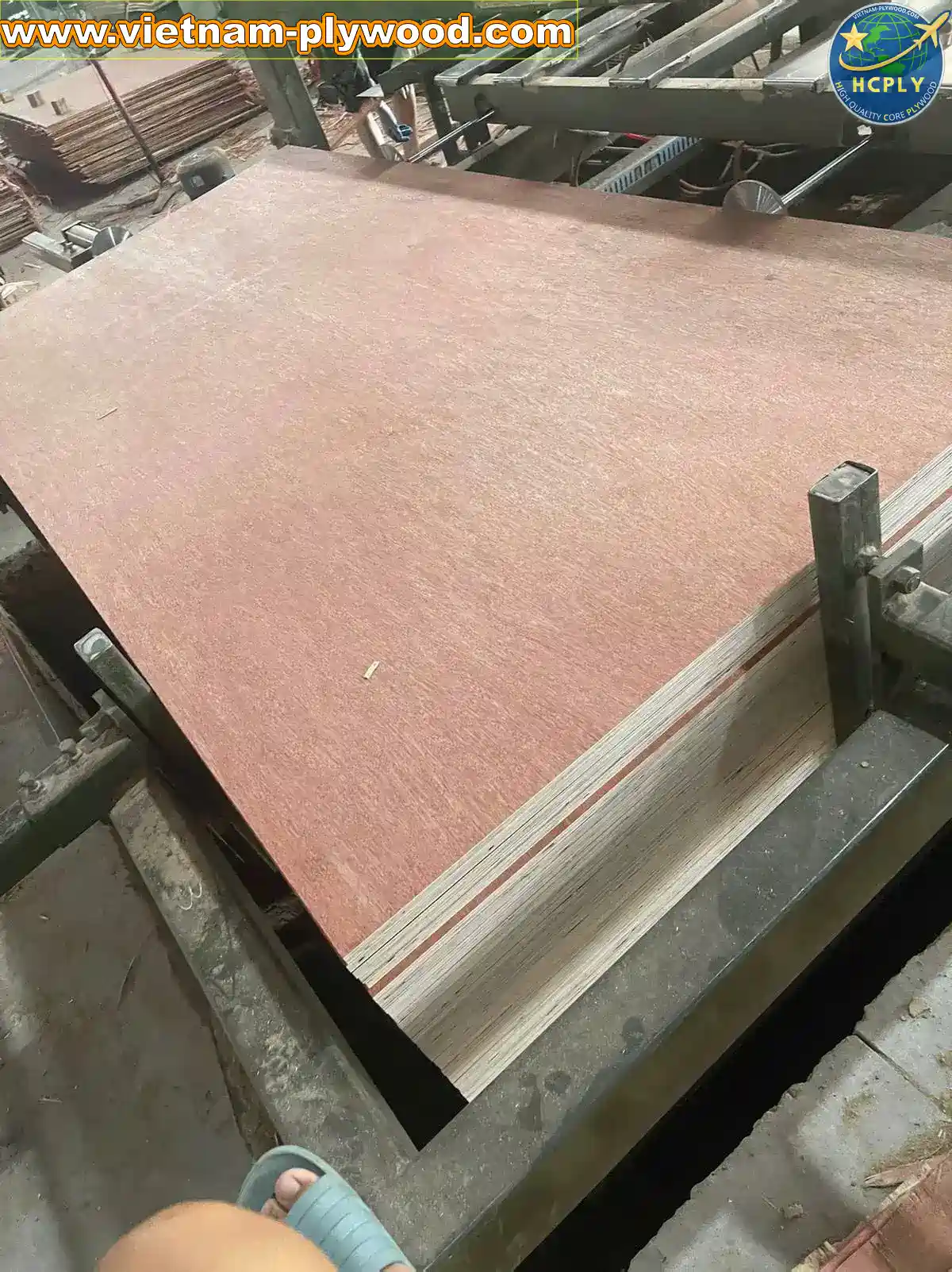
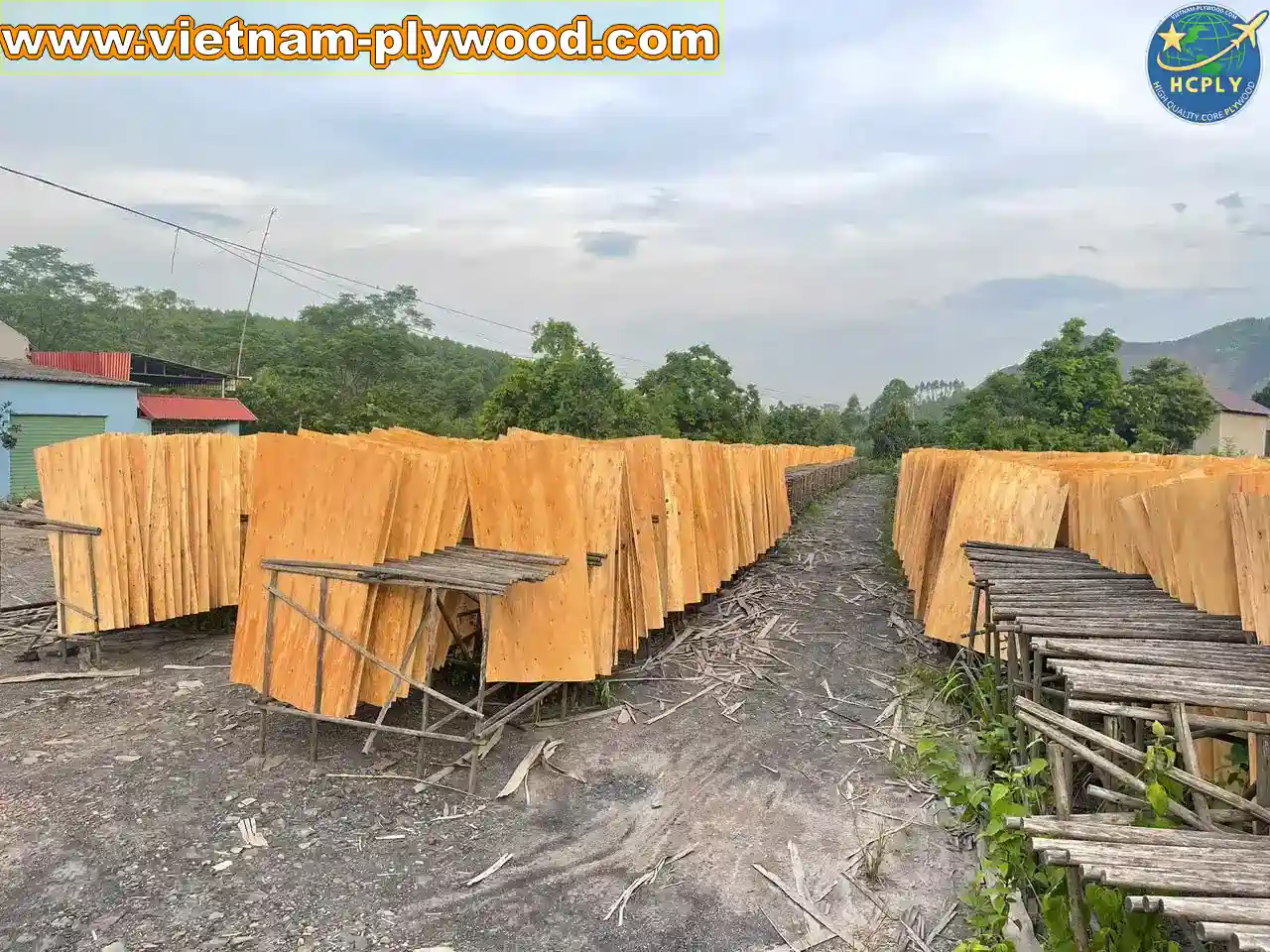

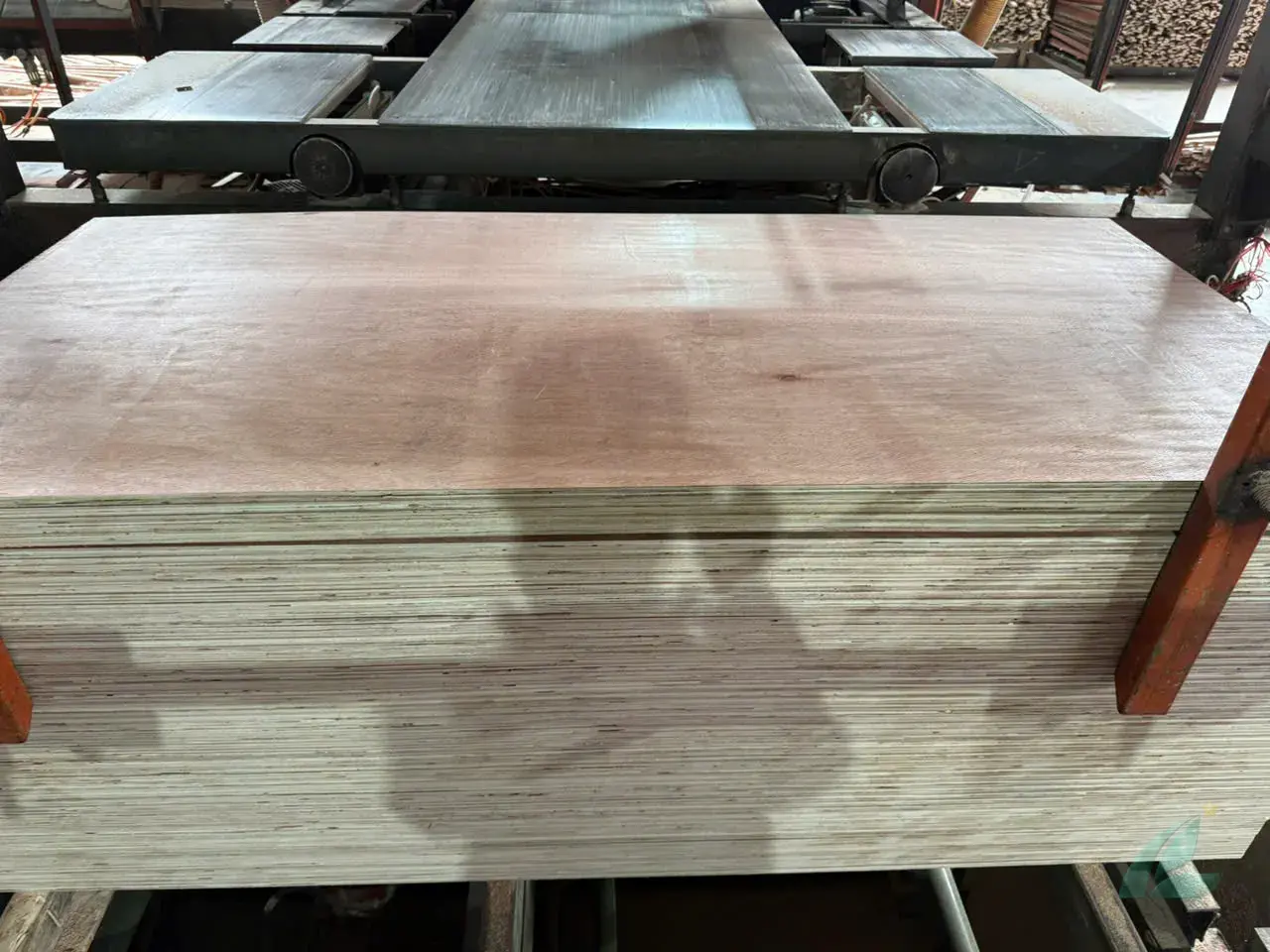
Packaging engineers who specify solid wood or OSB for export crates are paying more and getting less. Plywood industrial packaging crates deliver measurable advantages: superior screw-holding, cross-grain impact resistance, predictable panel dimensions, and a critical regulatory benefit that most procurement teams overlook — plywood is exempt from ISPM 15 heat treatment requirements. That exemption alone can cut days from customs clearance at destination ports.
This guide covers the full picture: how plywood performs in industrial packaging applications including crates, pallets, and cases, which species and thickness to specify for each load type, and how to source export-grade panels from Vietnam at factory-direct pricing.
🏗️ Why Plywood Dominates Industrial Packaging
Plywood’s structural advantage over solid wood and board products is built into its manufacturing method. Rotary-peeled veneers are laminated in alternating grain directions, then pressed at high temperature under hydraulic pressure. The result is a panel that resists splitting, distributes point loads across the full face area, and holds fasteners in any direction.
For industrial packaging, three properties matter most:
Cross-grain strength. A solid wood board splits along the grain when fasteners are driven near the edge. Plywood’s perpendicular ply layers prevent this. Screw withdrawal resistance is consistent regardless of fastening position on the panel.
Dimensional stability. Solid wood expands and contracts with humidity changes, loosening joints and warping crate walls. Plywood’s cross-laminated construction limits expansion to approximately 0.2% per 10% change in relative humidity (HCPLY production data, 2026), compared to 1–3% for solid wood boards of the same species.
Predictable panel geometry. Industrial crate designs depend on panel dimensions holding tolerance through cutting, assembly, and transit. Export-grade packing plywood from Vietnam ships at ±2mm dimensional tolerance and ±0.3mm thickness tolerance — consistent enough for CNC-cut crate components.
Key Insight: Plywood is exempt from ISPM 15 phytosanitary requirements because the manufacturing process (hot pressing at temperatures well above 56°C) already eliminates any viable pest organisms. Solid wood crates require heat treatment certification and official wheat-stamp marking. Plywood crates do not. (IPPC/FAO, International Standards for Phytosanitary Measures No. 15)
📦 Industrial Packaging Applications by Sector
Different industries have distinct requirements for plywood in packaging. Understanding these patterns helps procurement teams specify correctly the first time.
⚙️ Machinery and Heavy Equipment
Machinery crates must support concentrated point loads from equipment feet and lifting lugs, withstand forklift tine impact on base panels, and resist racking forces during multimodal transit (truck, rail, sea). Typical specification: 15–18mm panels with acacia or eucalyptus core, Melamine (MR) glue, E2 emission class acceptable for exterior packaging use.
Base panels (carrying full static weight) typically use 18mm for loads above 500kg. Side and top panels can step down to 12mm when internal bracing is present. Diagonal bracing panels may use 9mm where only shear resistance is needed.
🔌 Electronics and Precision Instruments
Electronics packaging prioritizes low weight (air freight cost sensitivity), electrostatic discharge characteristics, and controlled internal atmosphere. Styrax core plywood at 9–12mm provides the best strength-to-weight ratio for this category. Styrax core density runs 480–500 kg/m³ — approximately 30% lighter than eucalyptus core panels of the same thickness.
Anti-static treatments are applied after manufacture. The plywood itself is neutral — select the core species for weight optimization, then specify surface treatment for ESD requirements separately.
🚗 Automotive Components
Auto parts packaging involves repetitive loading cycles, precise interior dimensions for component nesting, and ISPM 15 compliance at every destination country. Plywood’s exemption from heat treatment requirements makes it the default choice for automotive parts export crating — it clears customs without special certification paperwork at 185+ member countries of the IPPC framework.
Panel size matters here: European automotive plants typically specify 1250×2500mm metric sheets. Asian and North American assembly facilities use 1220×2440mm (4×8ft). Confirm destination plant dimensions before ordering to minimize cut waste.
📐 Thickness Selection Guide for Crate Construction
Choosing the wrong thickness for plywood industrial packaging crates is one of the most common sourcing mistakes. Over-specifying adds weight and cost; under-specifying risks panel failure at point of maximum stress.
| Load Category | Typical Weight | Recommended Thickness | Core Species |
|---|---|---|---|
| Light electronics, instruments | Under 50 kg | 9mm | Styrax (lightweight) |
| Medium machinery parts | 50–200 kg | 12mm | Acacia (cost-effective) |
| Heavy equipment, engines | 200–500 kg | 15mm | Acacia or Eucalyptus |
| Very heavy plant equipment | Over 500 kg | 18–21mm | Eucalyptus (maximum stiffness) |
⚠️ Important: Thickness alone does not determine panel performance. Panel orientation (face grain parallel vs perpendicular to the span direction) affects bending strength significantly. For base panels under concentrated loads, orient the face grain across the short span of the pallet opening — this maximizes effective section modulus and can deliver equivalent performance to a panel one thickness grade heavier.
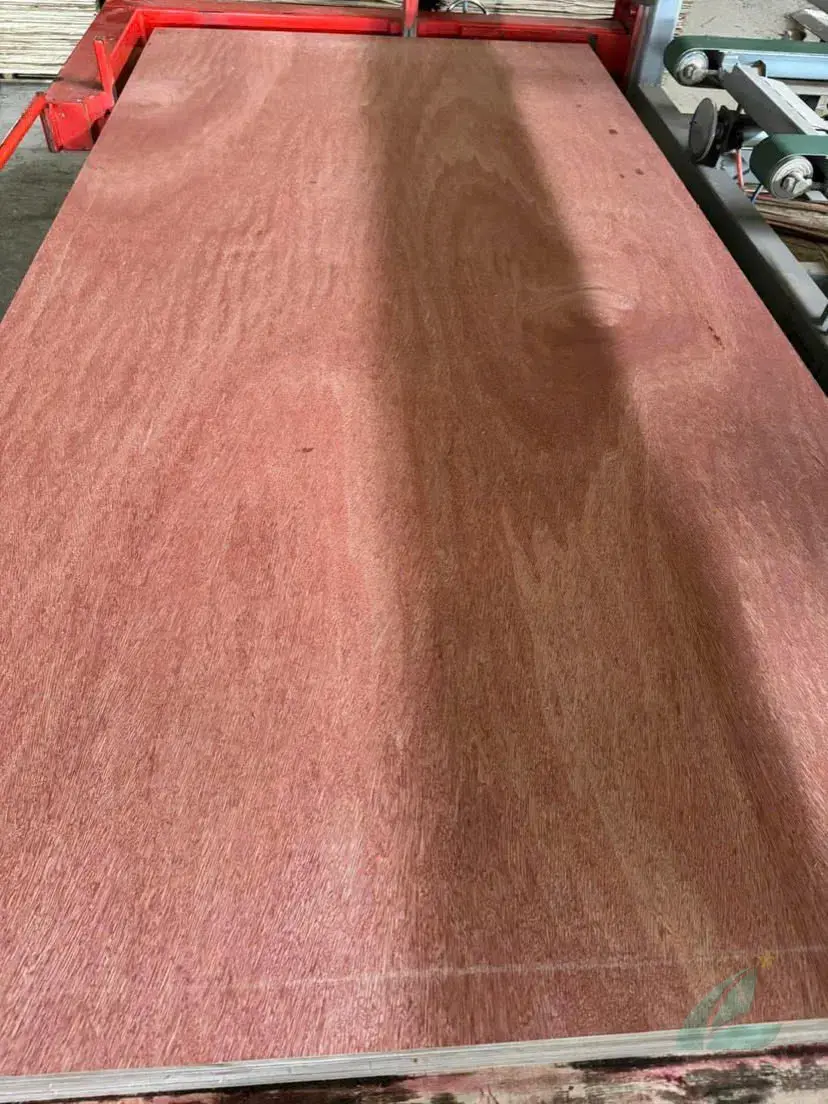
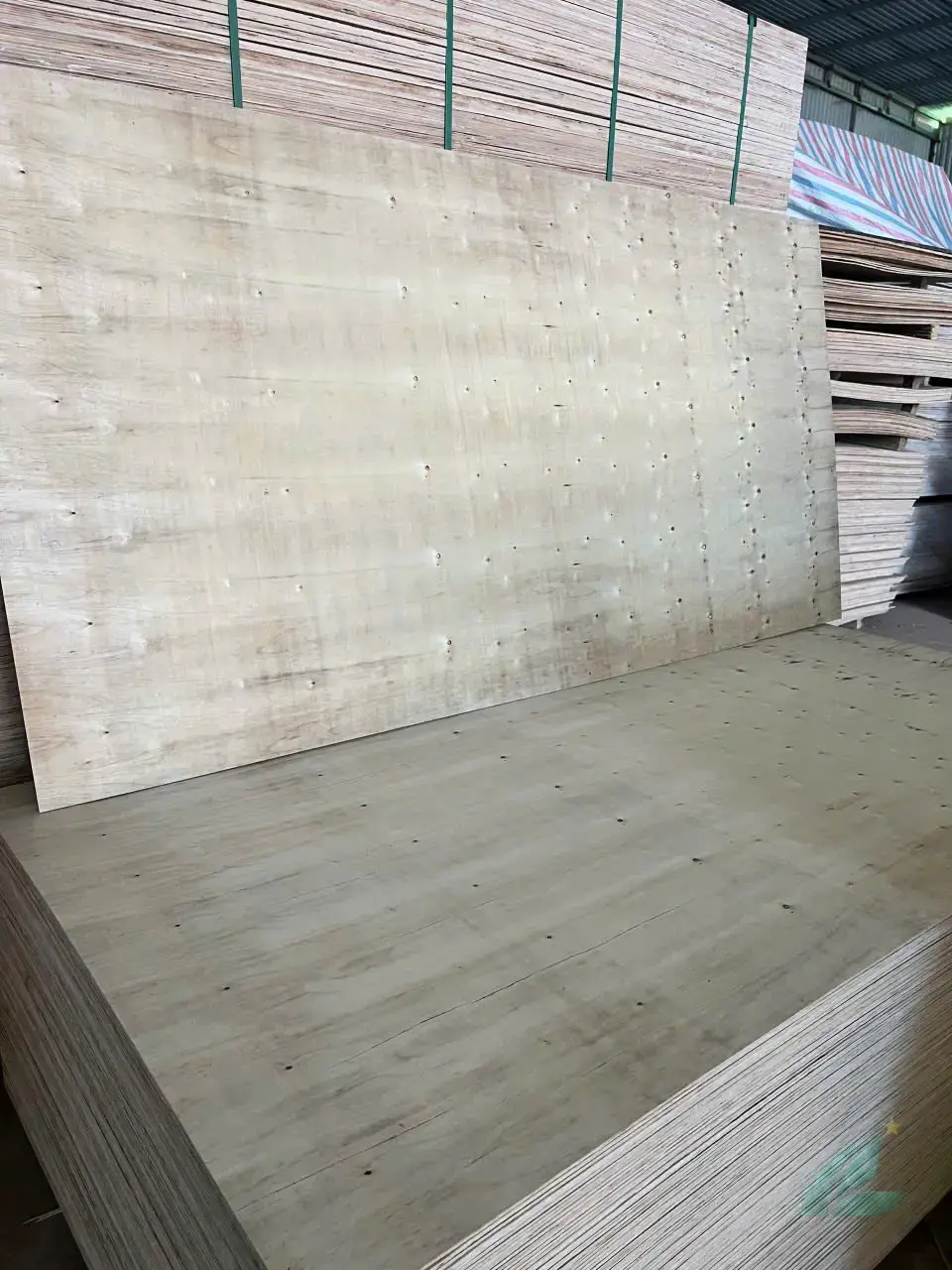
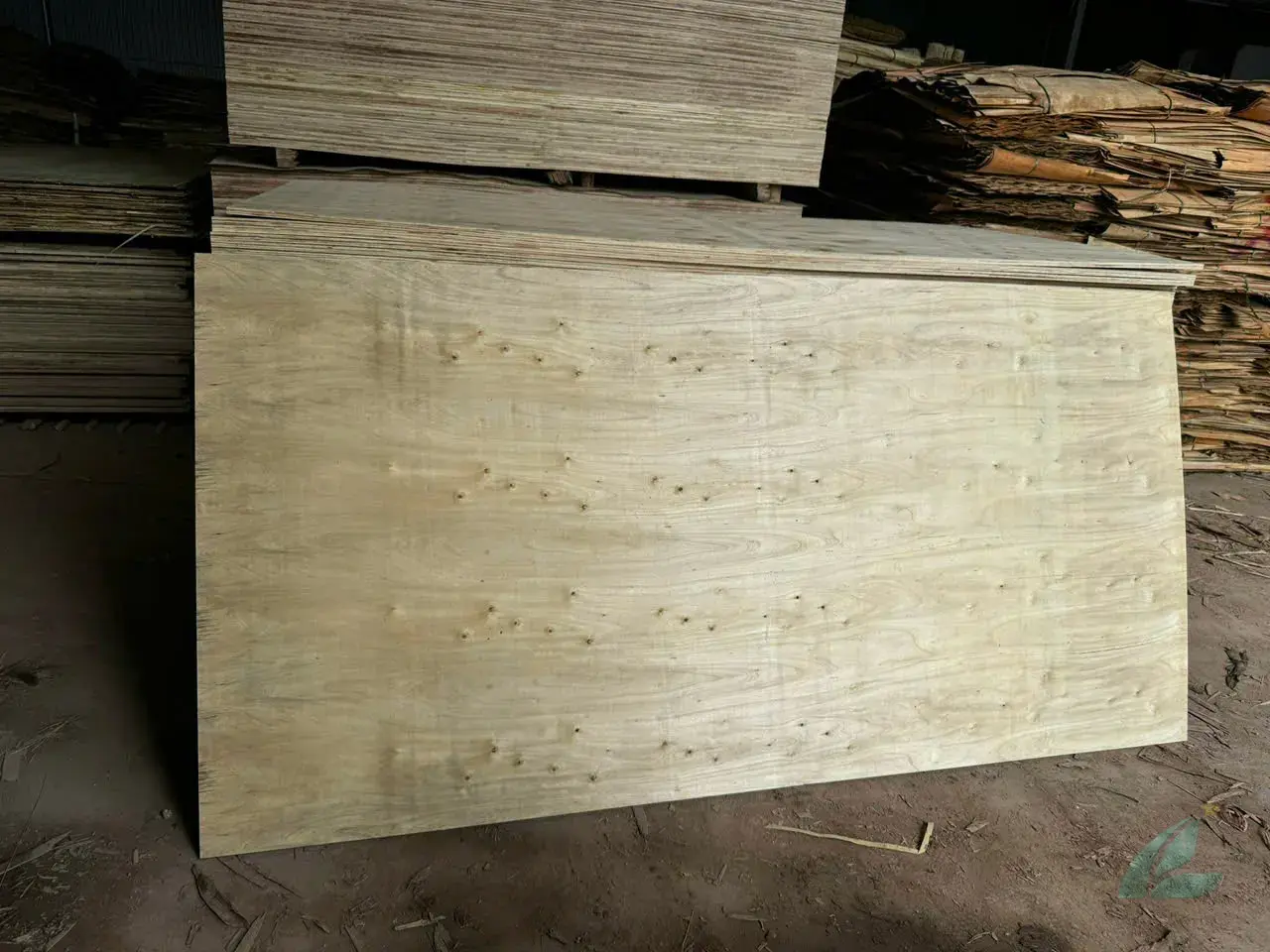
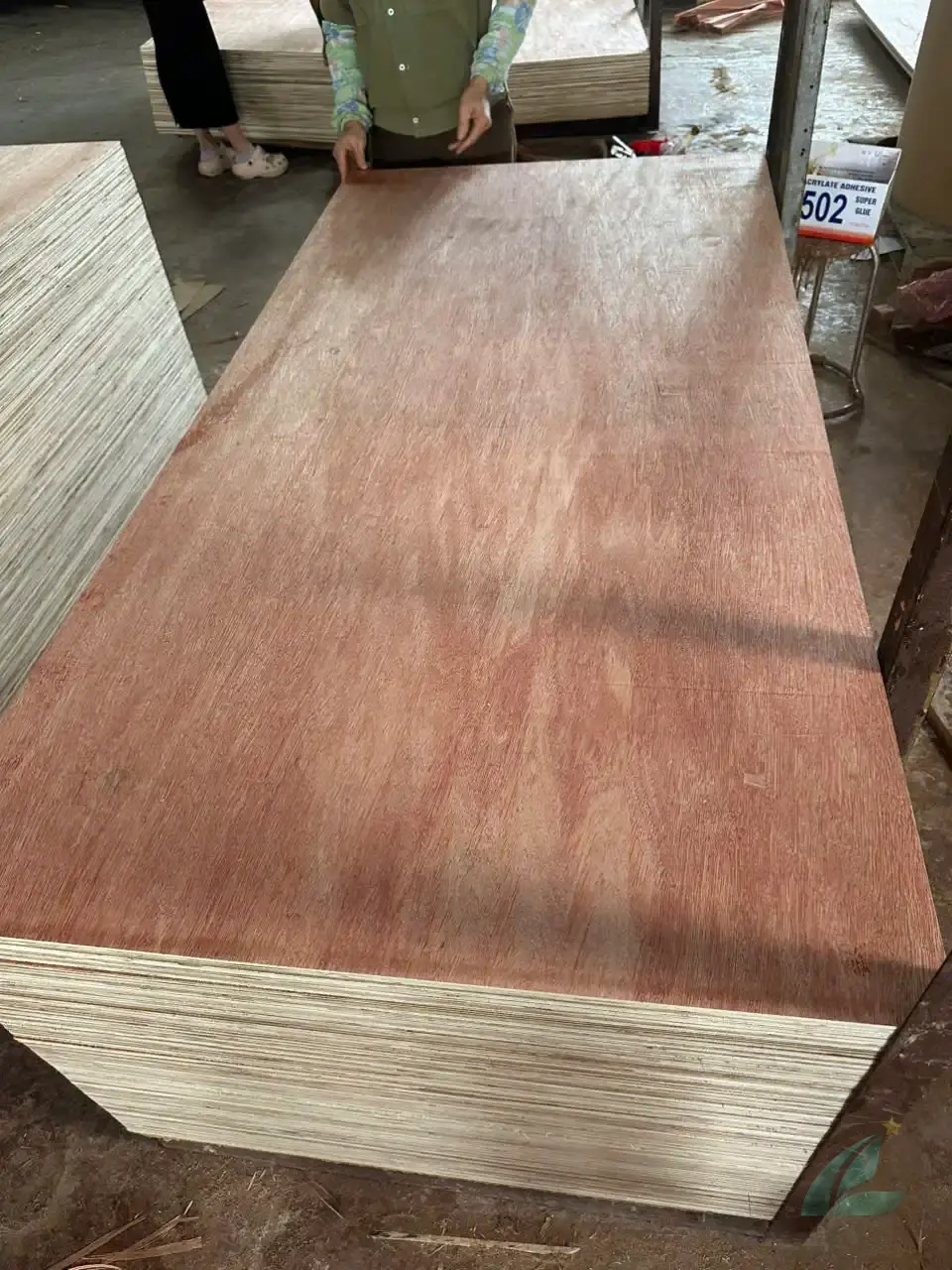
Face veneer grade for packaging. Industrial packaging does not require a clean face veneer. Bintangor C/D grade — packing-grade face with natural character marks, mineral streaks, and permitted repairs — is structurally identical to B/C grade. Specifying packing grade face over commercial grade typically reduces cost by 15–25% with zero performance penalty for interior-facing crate walls.
🌳 Core Species Comparison for Industrial Packaging
Vietnam manufactures packing plywood from three core species: acacia, eucalyptus, and styrax. Each has a different density, cost profile, and optimal application range.
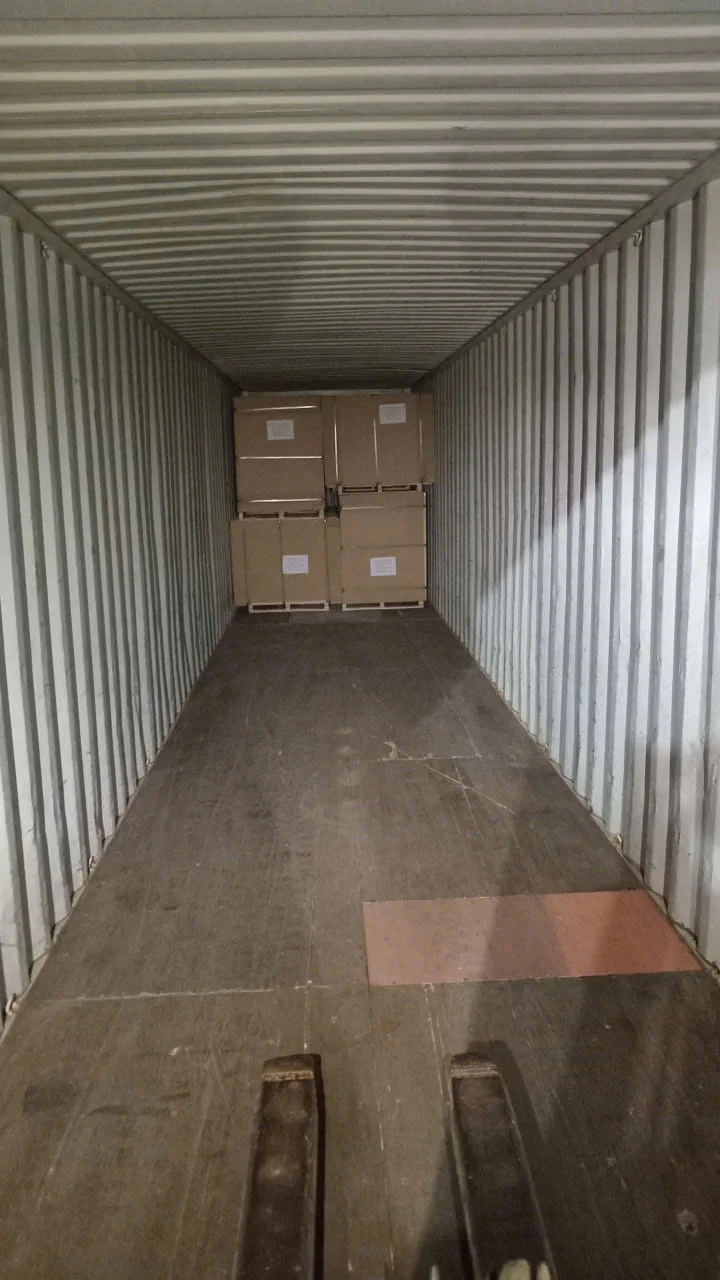
Acacia core (~580 kg/m³) is the standard choice for industrial packaging. It balances cost, availability, and structural performance. A full 40HC container of acacia-core packing plywood loads approximately 16 pallets, yielding around 47.5 CBM per container (HCPLY production data, 2026). This is the default specification for crate panels in the 12–18mm range.
Eucalyptus core (650–750 kg/m³) offers the highest panel stiffness of the three options. It is the correct choice when maximum rigidity is required — base panels for very heavy machinery, spanning large unsupported distances. The weight premium is real: a 40HC loads only 15 pallets (~44.5 CBM) due to the higher density approaching the 28.5MT payload limit.
Styrax core (480–500 kg/m³) is the lightest option. For air freight applications where every kilogram adds shipping cost, styrax-core panels in 9–12mm offer the best structural-to-weight efficiency. A 40HC loads 18 pallets (~53 CBM) with styrax core — the highest CBM per container of the three species. See the plywood container packing calculation guide for full pallet-by-pallet tables.
🔧 Glue and Emission Standards for Packaging Plywood
Industrial packaging applications almost universally use Melamine (MR) glue with E2 emission class. Understanding why helps buyers avoid unnecessary cost from over-specification.
Glue type. Melamine (MR) glue passes a 12-hour boil test (EN 314-2 Class 2 equivalent), providing moisture resistance adequate for sea freight in standard containers and typical warehouse storage. Phenolic (WBP) glue — used for film-faced and anti-slip construction panels — passes a 72-hour boil test and costs more. For interior crate panels, WBP glue is unnecessary and overpaid.
Emission standard. E2 emission class (formaldehyde ≤5.0 mg/L) is acceptable for packaging applications. The higher emission standards E1 and E0 are designed for furniture and interior products where occupants breathe the indoor air. A packing crate sitting in a freight container for 30 days at sea does not require E0 certification. Specifying E0 for packaging plywood adds cost without benefit.
The exception: some food-grade packaging regulations and pharmaceutical device standards require lower emission panels even for exterior packaging. Verify your destination market’s specific requirements before specifying — the plywood certifications and export documentation guide covers market-by-market emission requirements.
📊 Plywood vs OSB vs Solid Wood for Crates
Procurement teams sometimes evaluate alternatives to plywood for crate panels. The comparison consistently favors plywood for export industrial packaging.
| Property | Packing Plywood | OSB | Solid Wood |
|---|---|---|---|
| Screw-holding strength | Excellent (all directions) | Good (face only) | Good (across grain) |
| Edge fastening | Reliable | Prone to delamination | Good |
| Moisture resistance | Good (MR glue) | Variable | Poor without treatment |
| ISPM 15 requirement | Exempt | Exempt | Required (HT) |
| Dimensional consistency | ±2mm panel, ±0.3mm thickness | ±3mm typical | Variable |
| Weight per panel | Medium | Heavier (dense flakes) | Varies by species |
| Cost (relative) | Baseline | 10–15% lower | 20–40% higher |
OSB costs less per panel but creates problems at panel edges and corners — the compressed flake structure delaminates under repeated fastener loading cycles. For crates that are assembled, disassembled, and reused, plywood is substantially more durable.
Solid wood — once the standard for export crating — requires ISPM 15 heat treatment certification at export origin and wheat-stamp marking. The certification adds lead time and cost. A delay at destination customs due to missing or illegible ISPM 15 marking can cost more than the material savings on an entire container of crating lumber.
“When buyers ask us to compare packing plywood to solid wood for their crate panels, the ISPM 15 exemption usually ends the conversation. No fumigation, no heat treatment certificate, no customs delays — it ships cleaner and faster.” — Lucy, International Sales Manager, HCPLY
📋 Sourcing Packing Plywood from Vietnam: What to Specify
When requesting a quotation for plywood industrial packaging crates from a Vietnam supplier, provide these parameters to get an accurate price on the first inquiry:
- Panel dimensions — 1220×2440mm (standard), 1250×2500mm (metric/EU), or custom cut
- Thickness(es) — specify each thickness needed and approximate quantity split
- Core species — acacia (standard cost), eucalyptus (heavy loads), styrax (weight-sensitive)
- Glue — Melamine (MR) is standard for packaging; specify WBP only if required
- Emission class — E2 for packaging, E1 if regulatory requirement exists
- Face grade — packing grade (Bintangor C/D or Poplar) for cost; commercial B/C if specified
- Incoterm — FOB Hai Phong Port is standard; CIF available to major ports
Vietnam packing plywood ships FOB Hai Phong from Northern Vietnam production facilities. Lead time runs 15–20 days after purchase order confirmation. Mixed thickness combinations are accepted within one container — buyers can split a single 40HC between 9mm, 12mm, and 18mm panels to match their crate component list.
View the full packing plywood product specifications from HCPLY
For buyers consolidating packing plywood with other product types in one container, the plywood quotation guide covers multi-spec ordering and how container weight limits interact with mixed loads.
📦 Ordering Quantities and Container Economics
Industrial packaging buyers typically order packing plywood by the container. Understanding container economics helps procurement teams plan order quantities efficiently.
For acacia-core packing plywood at the most common thicknesses:
- 12mm panels, 1220×2440mm, acacia core: approximately 1,328 sheets per 40HC
- 18mm panels, 1220×2440mm, acacia core: approximately 880 sheets per 40HC
- Mixed 12mm + 18mm in one 40HC: calculate by CBM — acacia loads ~47.5 CBM total, allocate proportionally
These figures assume standard pallet stacking to 1000mm height. For full calculation methodology by thickness and core species, the container packing calculation guide provides factory-verified tables.
Container payload: 40HC maximum gross weight is 28.5 MT (including pallet and strapping tare weight). Acacia-core loads approach this limit at ~27.5 MT. Eucalyptus-core loads reach approximately 28 MT — leaving minimal margin. Styrax core provides the most comfortable weight buffer at approximately 26.5 MT, allowing heavier pallet configurations or additional packing materials.
Request a free quotation with container loading estimate
✅ Conclusion: Specify Plywood — Don’t Over-Specify It
Plywood industrial packaging crates work because plywood is engineered to be structural, dimensionally stable, and fastener-friendly. The material earns its position in every major industrial packaging standard.
The discipline is in avoiding over-specification. Packing-grade face (Bintangor C/D) performs identically to commercial grade for interior crate walls. E2 emission is correct for packaging applications. Acacia core handles most load categories without the cost premium of eucalyptus. Melamine (MR) glue is adequate for sea freight conditions.
Vietnam’s Northern plywood manufacturing cluster — centered in Phu Tho Province — produces the majority of Southeast Asia’s export-grade packing plywood (HCPLY production data, 2026). Factory-direct pricing from manufacturers like HCPLY removes the VAT and trading company markup layers that inflate cost when buying through intermediaries.
Get a free packaging plywood quotation from HCPLY — FOB Hai Phong, factory-direct
For buyers new to sourcing plywood from Vietnam, the types of plywood complete classification guide provides an overview of the full product range beyond packaging grade.