

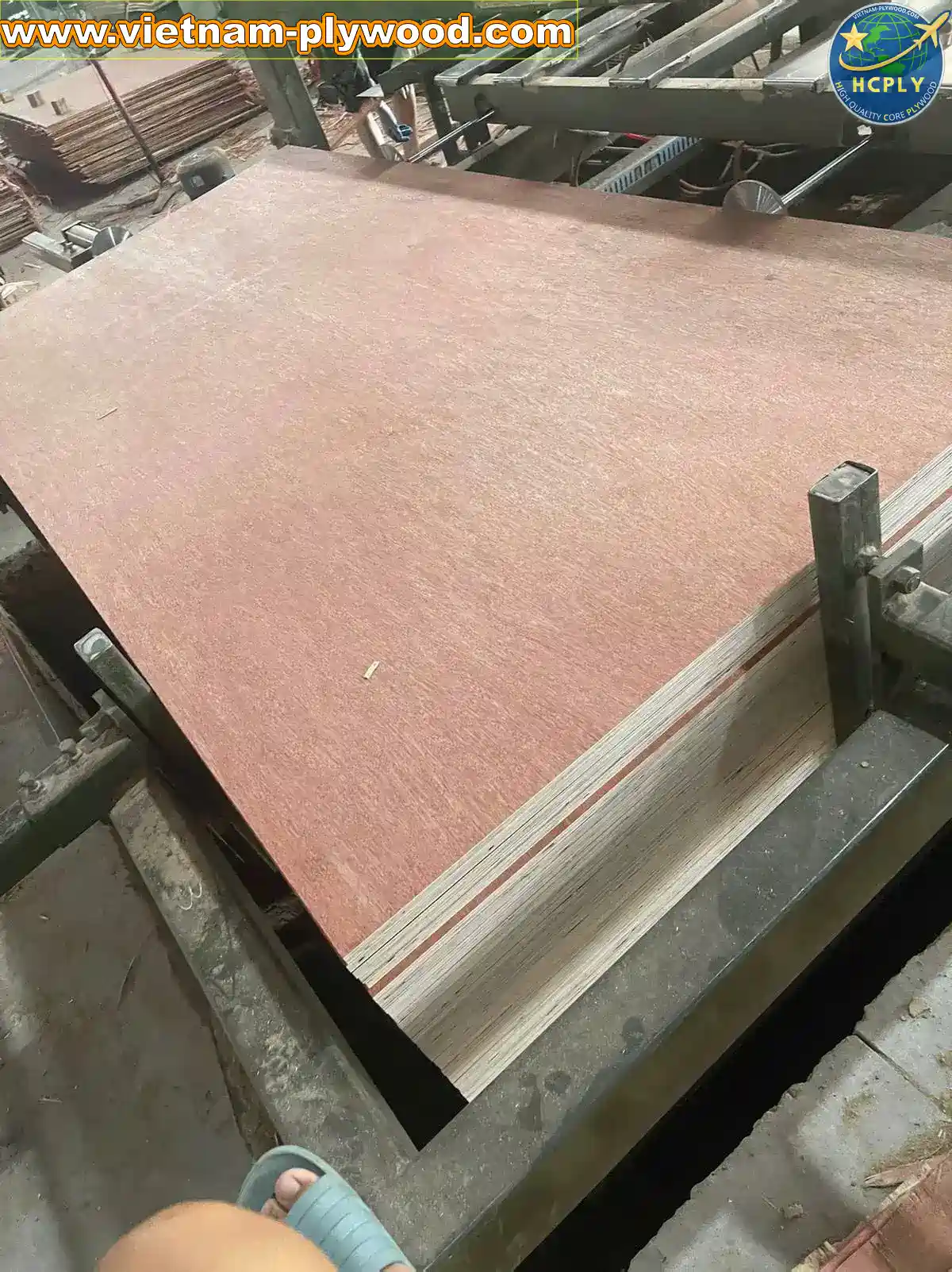
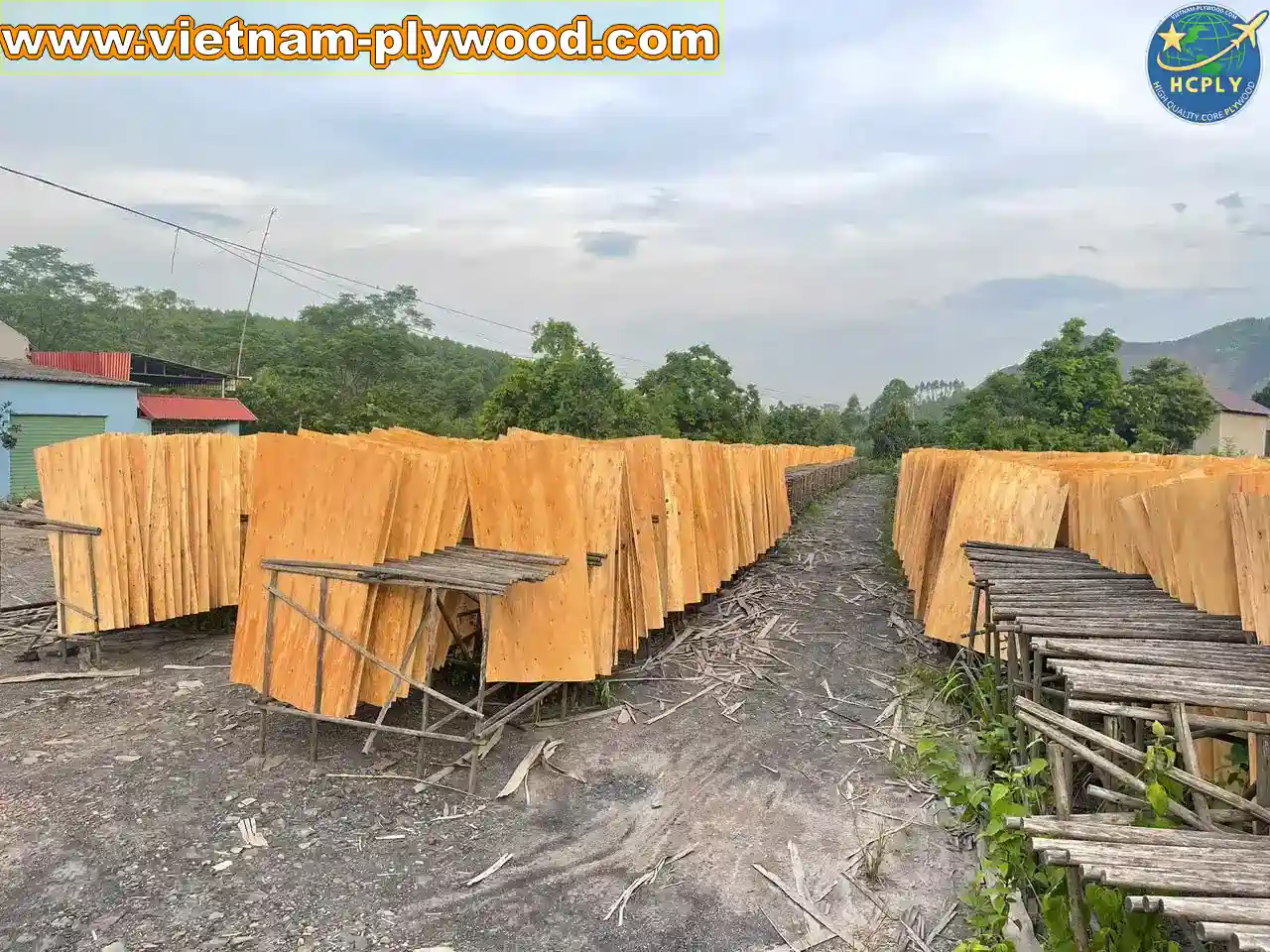

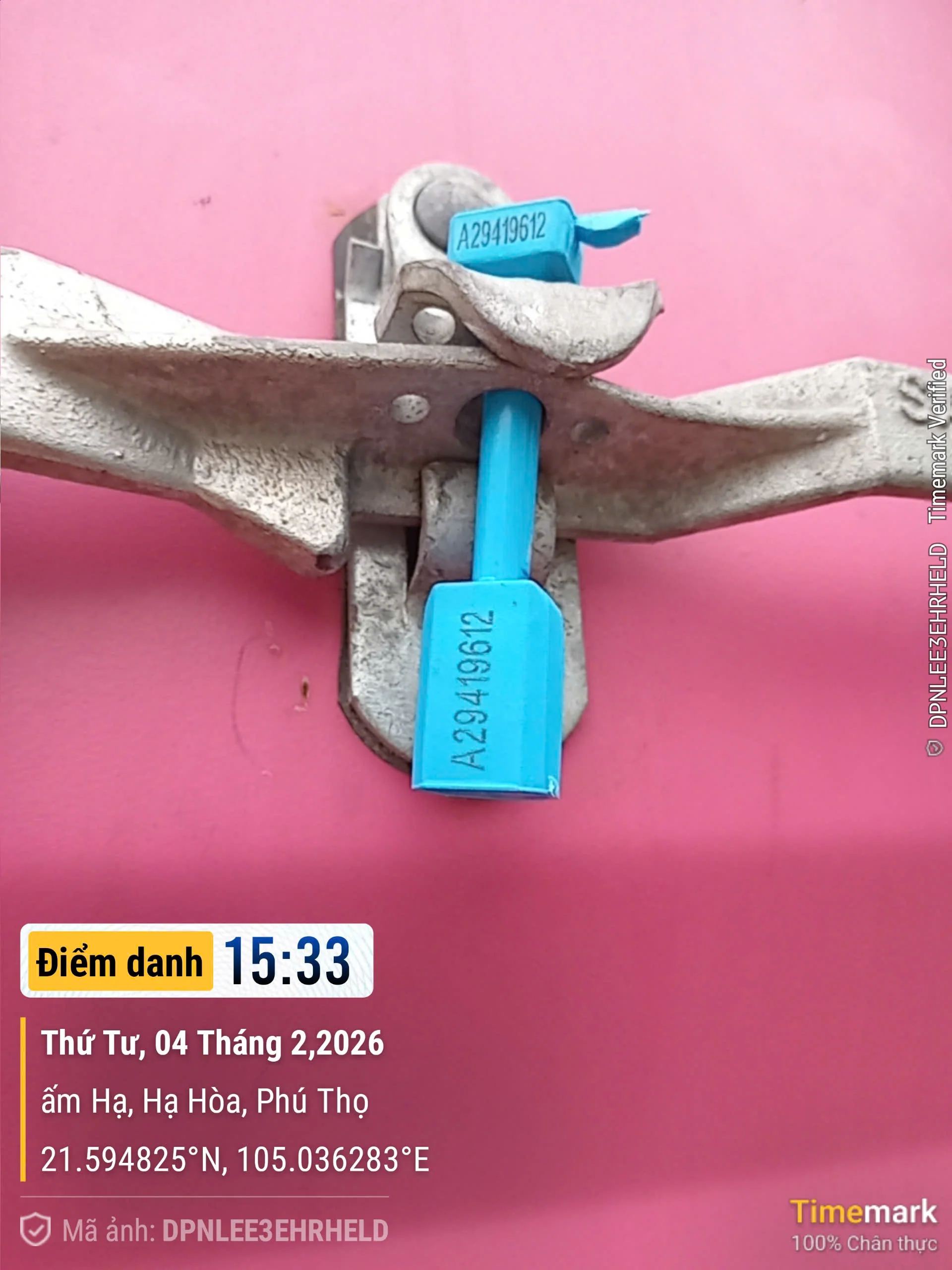
Vietnam is the world’s largest exporter of tropical plywood, shipping to 50+ countries across four continents. Yet most import guides currently online cover only fragments of the process — a supplier checklist here, a document list there — leaving first-time and repeat importers with critical gaps in their knowledge. A missed document means a container held at customs for two weeks. A wrong HS code means unexpected duties. A supplier who cannot explain their core species means a shipment that fails your customer’s quality standards.
This guide covers the complete import journey from first supplier contact to final delivery. Every phase. Every document. Country-specific requirements for the USA, India, EU, and Australia. A real landed cost calculation. An honest timeline. No promotional padding.
⚠️ Who this guide is for: B2B buyers importing plywood from Vietnam for the first time, or experienced importers who want to verify they have covered every step. This covers standard commercial plywood imports — not structural plywood for regulated construction applications, which has additional requirements.
📋 Why Import Plywood from Vietnam?
Vietnam’s plywood export industry is concentrated in Northern Vietnam — Phu Tho, Hanoi, Bac Ninh, Bac Giang, Yen Bai, and Tuyen Quang provinces — and produces the majority of Vietnam’s export volume. The North dominates for one critical reason: raw material access. Three core species drive production:
| Core Species | Density | Cost Tier | Key Properties |
|---|---|---|---|
| Acacia | ~580 kg/m³ | Lowest | Dark, high volume, packing/commercial grade |
| Styrax | 480–500 kg/m³ | Mid | Light, white, premium furniture substitute for birch core |
| Eucalyptus | 650–750 kg/m³ | Highest | Dense, pale yellow, premium construction and furniture |
Styrax is exclusively a Northern Vietnamese species — buyers cannot source it from Southern factories. This matters when you evaluate suppliers, since Northern Vietnam factories offer the widest specification range and the most competitive pricing.
Why Vietnam beats competing origins on price for most products:
- Factory-direct pricing from production zones (no domestic logistics markup)
- Scale: Northern Vietnam produces at industrial volume for export
- Labor cost advantage vs comparable-spec production in EU, USA, or Japan
- Competitive raw material access (plantation-grown, renewable species)
For most face veneer types — birch, okoume, bintangor, eucalyptus, EV, gurjan, film-faced, anti-slip — Vietnam offers the widest combination of quality range, specification flexibility, and price. Custom sizing, mixed container loads, and custom emission standards (E0 through E2) are all standard offerings.
For deeper background on how the Vietnam plywood industry is structured regionally, see the Vietnam plywood regional map — North vs South production guide.
🔍 Phase 1: Supplier Evaluation & Selection
Supplier selection is the single decision that determines everything downstream. Getting this right prevents quality problems, document headaches, and cost surprises that arrive too late to fix.
Understanding the Four Supplier Types
Before evaluating any specific supplier, understand what type you are dealing with. The four types have different cost structures, risk profiles, and capabilities.
| Type | Structure | Price | Quality Control | Best For |
|---|---|---|---|---|
| Trading Company | Buys from factories, resells | Highest (VAT overhead + margin) | Indirect | Buyers needing extreme product variety |
| Manufacturer-Exporter | Owns factory, has export team | Mid-high | Direct, 1 factory | Buyers with single-spec, high-volume needs |
| Broker | 1-3 person team, factory ships direct | Lowest | Minimal — factory-dependent | Buyers with factory contacts, low support needs |
| Multi-Facility Export Operator | Independent sales office, multiple factory partners | Competitive (no VAT) | On-site team across facilities | Buyers needing multi-segment coverage from one contact |
⚠️ Important: Trading companies represent 80%+ of Vietnam plywood suppliers found through search engines and B2B platforms. They pay 8% domestic VAT on purchases from factories before reselling for export — this cost flows through to your price. Direct-export models (manufacturer-exporters, multi-facility operators) avoid this VAT overhead, which is why direct-export pricing is structurally lower for equivalent quality.
For a detailed breakdown of each supplier type and a verification checklist, see the Vietnam plywood supplier types and buyer due diligence guide.
Supplier Verification Checklist
Before placing any order, verify these items for every supplier under consideration:
Legal & Certification Verification
- Business registration certificate (Vietnamese company license)
- Export license or trading qualification
- FSC chain-of-custody certificate (valid, not expired)
- ISO 9001 quality management certificate
- CARB P2 / relevant emission test report (for US, EU, Japan)
- BIS IS 303 certificate (India-bound shipments)
Factory Verification
- Factory photos: hot press line, raw material storage, finished goods
- Video call with factory floor visible (not a showroom)
- Production capacity statement (containers per month)
- Core species declaration (must match: acacia, eucalyptus, or styrax — no other Vietnamese core species)
- Face veneer sourcing declaration (for US buyers: confirm no Chinese inputs)
Commercial Verification
- 3+ customer references with contact details (verify independently)
- Sample before bulk order (non-negotiable)
- Bank account confirmation (match company name on license)
- Proforma Invoice before payment
Red Flags to Reject Immediately
- Requests 100% payment upfront before sample
- Cannot provide FSC or ISO certificates on request
- Offers unrealistically low prices (30%+ below market — signals quality or sourcing shortcuts)
- Factory tour shows a showroom, not a production line
- Cannot identify core species precisely (“mixed wood” is not acceptable for documented export)
📦 Phase 2: Sample Ordering
Never place a bulk order without evaluating a physical sample. This is the rule with zero exceptions. One sample shipment prevents costly quality disputes, customs non-compliance, and customer rejections.
Sample Order Process
Cost: Samples typically cost $200–500 for the product itself, plus international courier shipping ($50–120 depending on destination). Most reputable suppliers will credit sample costs against the first bulk order.
Timeline: 7–14 days from sample dispatch to delivery (courier shipping from Hanoi/Hai Phong to major destinations).
What to Order: Request 2–3 sheets minimum in your target thickness. Order in the actual specification you intend to buy: same face grade, same core species, same glue type, same emission standard.
Sample Inspection Checklist
When your sample arrives, inspect these 12 points systematically:
| Inspection Point | Acceptable Standard | How to Check |
|---|---|---|
| Thickness | ±0.3mm of declared thickness | Digital calipers at 4 corners + center |
| Dimensions | ±2mm length/width | Tape measure |
| Face grade | Matches declared grade (A/B for furniture; D/E/F for birch) | Visual — no knots, gaps, or repairs beyond grade spec |
| Core construction | Full stitched or finger-jointed (no visible gaps) | Cross-section cut at edge |
| Delamination | Zero delamination at edges or face | Flex test at corners |
| Moisture content | 8–14% for standard export | Moisture meter |
| Sanding | Even surface, no press marks | 45° light angle inspection |
| Edge quality | Clean cut, no tear-out, no void exposure | Edge inspection, all four sides |
| Formaldehyde emission | Matches declared E0/E1/CARB P2 | Third-party test report (not just supplier cert) |
| Warping | Flat when measured across diagonal | Straight edge on long diagonal |
| Core voids | No visible voids on cross-section | Edge and corner inspection |
| Color consistency | Even face veneer color across sheet | Natural daylight inspection |
⚠️ Note: A test report from the supplier’s own lab is not sufficient for emission compliance. For CARB P2 (USA) and E0 (EU, Japan), request a test report from a third-party accredited laboratory — TPC (Timber Products Inspection), CARB-ATCM accredited lab, or equivalent. This is the document customs authorities check.
💰 Phase 3: Quotation & Order Placement
Incoterms: FOB vs CIF
Understanding Incoterms before requesting a quotation prevents pricing confusion. The two most common for Vietnam plywood exports:
FOB Hai Phong — Seller delivers to ship at Hai Phong port; buyer arranges ocean freight, insurance, and all destination costs. Most common for experienced importers managing their own freight forwarder. Gives you full visibility and control over freight costs.
CIF [Destination Port] — Seller includes ocean freight and insurance to your destination port. You pay from port arrival onwards. Simpler for first-time buyers. Less transparent on freight markup — verify the included freight cost matches market rates.
Recommendation: Use FOB for repeat orders once you have a freight forwarder relationship. Use CIF for first orders if you do not yet have a freight agent.
Standard Payment Terms
| Payment Structure | Risk Level | When Used |
|---|---|---|
| 30% T/T advance + 70% against B/L copy | Standard | Most commercial orders. T/T = telegraphic transfer. 70% released when supplier provides copy of Bill of Lading (proof of shipment). |
| Letter of Credit (L/C) | Lowest buyer risk | Large orders ($50,000+), new suppliers, high-value products. Bank guarantees payment only after document compliance. Adds $200–500 L/C fee. |
| 100% T/T advance | Highest buyer risk | Red flag. Only acceptable for sample orders or suppliers with 2+ year track record. |
| D/P (Documents against Payment) | Low buyer risk | Supplier releases B/L documents only after buyer’s bank confirms payment. |
⚠️ Key point: Never pay 100% advance to a new supplier for a bulk order. The 30% T/T + 70% against B/L is the Vietnamese export industry standard. Suppliers asking for 100% upfront before production have a structural incentive to ship lower-quality material once full payment is received.
Typical MOQ and Volume Discounts
- MOQ: 1 × 40HC container (standard)
- Mixed specs: Allowed within one container — different thicknesses, face types, or products
- Volume pricing: Significant price reductions typically begin at 3–5 containers per order or 10+ containers per month
- Custom specs: Available at MOQ of 1 container; lead time may extend 5–7 days for non-standard dimensions
🏭 Phase 4: Production & Quality Control
Production Lead Time
Standard lead time: 15–20 business days from order confirmation and T/T receipt. This assumes standard specifications. Custom sizes, non-standard dimensions, or specialty products may add 5–7 days.
Production stages (each with QC check points):
- Raw material inspection (core veneer, face veneer)
- Gluing and pressing (hot press)
- Sanding (furniture grade) or trimming (construction grade)
- Dimensional inspection and moisture check
- Face grade sorting
- Pallet assembly and marking
- Pre-loading inspection and photo documentation
Third-Party Pre-Shipment Inspection
For any order above $10,000, third-party pre-shipment inspection is strongly recommended. Services:
| Provider | Service | Cost per Inspection |
|---|---|---|
| SGS (Société Générale de Surveillance) | Pre-shipment inspection, emission testing | $300–500 |
| Bureau Veritas | Pre-shipment, certification audit | $280–450 |
| Intertek | Quality inspection, mark certification | $300–480 |
| QIMA | Online booking, rapid turnaround | $250–400 |
A standard pre-shipment inspection covers: dimensional verification, face grade check, core inspection (edge cut), moisture content, delamination test, packing and marking. Request the report in English with photographic documentation.
For details on what HCPLY’s on-site QC team checks at each production stage, see the quality control page.
📄 Phase 5: Export Documents — What You Need
This is the section where most import guides either oversimplify or omit critical details. The table below shows every standard and country-specific document, who issues it, and which markets require it.
Universal Documents (Required for All Markets)
| Document | Purpose | Issued By | Typical Cost |
|---|---|---|---|
| Commercial Invoice | Customs value declaration | Exporter | No charge |
| Bill of Lading (B/L) | Title document; proof of shipment | Shipping line | Included in freight |
| Packing List | Cargo detail: quantity, dimensions, weight per pallet | Exporter | No charge |
| Certificate of Origin (CO) | Declares Vietnamese origin for tariff purposes | Vietnam Chamber of Commerce | $30–60 |
| Phytosanitary Certificate | Certifies wood is free from pests/disease | Vietnam Ministry of Agriculture (MARD) | $30–80 |
| Fumigation Certificate (ISPM 15) | Certifies wood packaging meets international plant protection standard | Authorized fumigation provider | $50–100 |
FTA Preferential Origin Certificates
If your destination country has a Free Trade Agreement with Vietnam, you can use a preferential Certificate of Origin to reduce or eliminate import duties:
| Certificate | FTA | Markets Covered |
|---|---|---|
| Form E | ASEAN-China FTA (ACFTA) | China, Hong Kong |
| Form D | ASEAN Free Trade Area (AFTA) | Singapore, Malaysia, Thailand, Indonesia, Philippines, Brunei, Myanmar, Cambodia, Laos |
| Form AJ | ASEAN-Japan CEP | Japan |
| Form AK | ASEAN-Korea FTA | South Korea |
| EVFTA Certificate of Origin | EU-Vietnam FTA | European Union (27 member states) |
| CPTPP Origin Declaration | CPTPP | Canada, Mexico, Peru, Chile, Australia, New Zealand, Japan, Singapore, Brunei, Malaysia |
| UKVFTA Certificate | UK-Vietnam FTA | United Kingdom |
⚠️ Heads up: FTA certificates must be requested from your supplier at the time of shipment — they cannot be issued retroactively. Confirm which certificate applies to your destination before placing the order, not after.
Country-Specific Documents
| Document | Required For | Purpose | Notes |
|---|---|---|---|
| TSCA Title VI / CARB P2 Certificate | USA (all interior wood products) | Formaldehyde emission compliance (EPA mandate) | Must be from CARB-accredited third-party certifier (TPC, etc.) |
| Lacey Act Declaration (PPQ 505) | USA | Species identification and legal harvest declaration | Filed by importer at entry; supplier provides species data |
| BIS IS 303 Certificate | India | Quality standard compliance for structural/commercial plywood | Issued by BIS-licensed test lab; mandatory since QCO Feb 2025 |
| EUDR Due Diligence Statement | European Union | Deforestation-free supply chain documentation | Required from December 2026 for large operators; earlier for some product categories |
| EUR.1 Certificate | EU (under EVFTA preferential tariff) | Preferential origin for EU duty reduction | Alternative to EVFTA origin declaration |
| CE Marking Documentation | EU (structural applications) | Construction product conformity | Required for plywood used in structural applications under EU CPR |
| Emission Test Report (E0/E1) | EU, Japan, Korea | Third-party emission verification | Must be from accredited lab |
🚢 Phase 6: Shipping & Container Loading
FCL vs LCL
| Method | Structure | Cost | Best For |
|---|---|---|---|
| FCL (Full Container Load) | You fill a 40HC container entirely | $3,500–6,000 ocean freight (destination-dependent) | MOQ 1 container — standard for Vietnam plywood |
| LCL (Less than Container Load) | Your cargo consolidated with other shippers | Higher per-CBM rate + consolidation fees | Trial orders of 5–10 CBM (expensive, use only for first very small sample) |
Virtually all Vietnam plywood exports ship FCL. LCL exists but the cost premium makes it uneconomical for anything beyond very small trial shipments.
40HC Container Capacity by Core Species
The amount of plywood that fits in a 40HC depends on the core species — denser cores mean fewer pallets before hitting the 28.5 MT weight limit:
| Core Species | Density | Pallets per 40HC | Approx. CBM per 40HC | Approx. Weight |
|---|---|---|---|---|
| Styrax | 500 kg/m³ | 18 pallets | ~53 CBM | ~26.5 MT |
| Acacia | 580 kg/m³ | 16 pallets | ~47.5 CBM | ~27.5 MT |
| Eucalyptus | 700 kg/m³ | 15 pallets | ~44.5 CBM | ~28 MT |
Standard sheet size: 1220 × 2440mm (4×8 ft). Metric size 1250 × 2500mm for EU: same pallet count, slightly higher CBM (~5%).
For the full pallet calculation methodology and worked examples by thickness, see the plywood container packing calculation guide for 40HC containers.
Freight Cost Estimates and Transit Times
These are current market estimates (Q1 2026). Freight markets fluctuate — confirm with your freight forwarder:
| Destination | Freight Estimate (40HC FOB Hai Phong) | Transit Time | Key Ports |
|---|---|---|---|
| USA West Coast | $4,000–6,000 | 18–22 days | Los Angeles/Long Beach |
| USA East Coast | $5,000–7,500 | 25–30 days | Savannah, Houston, New York |
| Germany / Rotterdam (EU) | $3,500–5,500 | 25–30 days | Rotterdam, Hamburg |
| India (JNPT / Mumbai) | $2,500–4,000 | 10–14 days | JNPT Mumbai, Chennai |
| Australia | $2,500–4,000 | 14–18 days | Sydney, Melbourne |
| UAE / Middle East | $1,800–3,000 | 10–14 days | Jebel Ali, Abu Dhabi |
| South Korea | $800–1,500 | 3–5 days | Busan |
Cargo Insurance: Typically 0.3–0.5% of CIF value for standard marine cargo coverage. Recommended for all FCL shipments. Request Institute Cargo Clauses A (all risks) for plywood.
🌍 Phase 7: Country-Specific Import Requirements
This is the section no other import guide provides in any depth. Country-specific requirements determine your real landed cost, compliance obligations, and risk exposure.
🇺🇸 USA — The Most Complex Market
The US is Vietnam’s largest plywood export destination — and the most complex from a compliance perspective. Three separate regulatory frameworks apply simultaneously:
Customs Duties (Base MFN Rates):
The standard Most Favored Nation (MFN) tariff for most plywood (HTS 4412.xx) ranges from 0% to 8% depending on specific HTS subheading. Most hardwood plywood falls in the 5.1–8% range.
AD/CVD Investigation (Active as of 2026): The US Department of Commerce is conducting active anti-dumping and countervailing duty investigations on Vietnamese hardwood plywood. A preliminary CVD affirmative determination was issued on January 22, 2026. Cash deposit requirements are in effect for covered products. Final determinations are expected May–September 2026.
For detailed coverage of current rates, investigation scope, and what buyers must do now, see the dedicated anti-dumping plywood Vietnam US status article.
TSCA Title VI (EPA Formaldehyde): Mandatory for all composite wood products sold in the US, including plywood for interior use. Requires:
- Products must meet CARB Phase 2 (P2) emission limits (0.05 ppm for hardwood plywood)
- Importers must source from CARB-certified panel producers (verified by CARB-accredited third-party certifier)
- Importers bear legal compliance responsibility — not just suppliers
Lacey Act (Phase 7): Importers must file a Plant and Plant Product Import Declaration (PPQ 505) at US Customs entry. The declaration requires: product description, scientific name of face and core species, country of harvest, and quantity. Your Vietnamese supplier must provide species data for the declaration.
Circumvention Risk: In 2023, US Commerce ruled that 37 Vietnamese companies circumvented China’s AD/CVD orders by using Chinese-origin inputs. Their exports were reclassified at China-wide duty rates (200%+). This remains actively enforced. Verify your supplier uses 100% domestically sourced Vietnamese wood species (acacia, eucalyptus, styrax cores; Vietnamese-source face veneer).
Port Recommendations: Los Angeles/Long Beach for West Coast distribution. Savannah for Southeast/East Coast.
🇮🇳 India — BIS Certification Mandatory
India is the largest market for Vietnamese gurjan plywood and a major destination for furniture-grade birch plywood. Since February 2025, BIS IS 303 certification is mandatory under India’s Quality Control Order (QCO) for plywood.
BIS IS 303 Requirements:
- Applies to: all plywood products imported into India (commercial and structural grades)
- Certificate must be from a BIS-recognized testing laboratory
- Testing covers: bond quality, moisture resistance, formaldehyde emission
- HCPLY holds BIS IS 303 certification — see the BIS certification plywood India guide for full details on scope, testing, and timeline
Import Duties: India’s import duty structure for plywood is subject to periodic revision. Consult India’s Customs Tariff for current applicable rates under Chapter 44 (HTS 4412). ASEAN-India FTA (Form AI) may provide preferential rates — confirm eligibility with your customs broker.
Port of Entry: JNPT (Jawaharlal Nehru Port Trust), Mumbai — handles the majority of Vietnam plywood to India. Chennai port for South India distribution.
Practical Note: Communication with Indian customs frequently requires detailed species-level documentation. Ensure your Commercial Invoice and Packing List specify both face veneer species and core species precisely. “Mixed hardwood core” is not acceptable — state acacia, eucalyptus, or styrax explicitly.
🇪🇺 European Union — EUDR Incoming
The EU is a major destination for furniture-grade and film-faced plywood from Vietnam. EVFTA (EU-Vietnam Free Trade Agreement, effective August 2020) provides preferential tariff rates for Vietnamese-origin plywood.
EVFTA Duty Rates: Under EVFTA, most plywood categories have significantly reduced duties compared to standard MFN rates. Apply for EUR.1 movement certificate or EVFTA origin declaration from your Vietnamese supplier.
EUDR (EU Deforestation Regulation): The EU Deforestation Regulation enters full enforcement in December 2026 for large operators and June 2025 for SMEs (verify current timeline with EU authorities). Requirements:
- Plywood imported into the EU must come from deforestation-free forests
- Geolocation data tracing to the forest of origin is required
- Operators must conduct due diligence and file a due diligence statement in the EU Information System (EUDR IS)
- Both the EU importer and the Vietnamese exporter share documentation responsibility
For full EUDR compliance details for plywood importers, see the EUDR due diligence guide for EU plywood importers.
Emission Standards: EU minimum standard for import is E1 formaldehyde emission. For furniture applications sold in Germany, Austria, and Nordic countries, E0 is effectively required by the market even if not legally mandated for all uses.
Port of Entry: Rotterdam (Netherlands) handles the largest volume of Vietnamese wood product imports to Europe. Hamburg (Germany) for direct German market delivery.
🇦🇺 Australia — ISPM 15 and GST
ISPM 15 Wood Packaging: Australia has strict biosecurity requirements. All wood packaging material (pallets, crating) used to ship plywood must comply with ISPM 15 (International Standards for Phytosanitary Measures No. 15). This is not optional — non-compliant packaging triggers border interception.
Vietnam’s fumigation and heat treatment facilities are ISPM 15-certified. Ensure your supplier provides a fumigation certificate specifically referencing ISPM 15 compliance on the certificate.
Tariff Rates: Vietnam is a CPTPP partner. The CPTPP-A certificate (origin declaration for Australia) reduces import duties on eligible plywood. Standard MFN rates apply for non-CPTPP qualifying shipments. Confirm current rates under Chapter 44 of the Australian Customs Tariff.
GST: Australian importers pay 10% GST on the CIF value plus duty. GST is a cash flow consideration, not a permanent cost — GST-registered businesses claim it back through the BAS. New importers should confirm GST treatment with their Australian customs broker.
Structural Applications: Plywood used for structural applications in Australian construction must meet AS/NZS 2269. Vietnamese plywood for structural use requires CE marking or equivalent structural certification — verify this at the product-level, not just the factory-level.
Port of Entry: Sydney (Port Botany) and Melbourne (Port of Melbourne) handle the majority of Vietnamese plywood to Australia.
📊 Phase 8: Cost Breakdown — FOB to Landed Cost
Most buyers know the FOB price. Few calculate the full landed cost before committing to a purchase. The gap between FOB and landed can be 40–80% of the FOB price depending on destination and product.
Worked example:
Assumptions: Styrax core (18 pallets per container), FOB Hai Phong $420/CBM, destination Los Angeles.
| Cost Component | Calculation | Amount (USD) |
|---|---|---|
| Product — FOB value | $420/CBM × 53 CBM | $22,260 |
| Ocean freight (FCL, LA) | Market rate | $5,200 |
| Cargo insurance (0.4% of CIF) | 0.4% × $27,460 | $110 |
| CIF value | FOB + freight + insurance | $27,570 |
| US customs duty (5.1% — HTS 4412.32) | 5.1% × $27,570 | $1,406 |
| MPF (Merchandise Processing Fee, 0.3464%) | 0.3464% × $27,570 | $95 |
| HMF (Harbor Maintenance Fee, 0.125%) | 0.125% × $27,570 | $34 |
| Customs broker fee | Flat rate | $150 |
| Drayage to warehouse | Local trucking | $350 |
| Total landed cost | $29,605 |
| Metric | Value |
|---|---|
| Sheets in container (53 CBM ÷ CBM per sheet at 18mm) | ~1,008 sheets |
| Landed cost per sheet | $29,605 ÷ 1,008 = $29.37/sheet |
| FOB cost per sheet | $22,260 ÷ 1,008 = $22.08/sheet |
| Landed premium over FOB | +33% |
⚠️ Be aware: This example does not include any AD/CVD duties that may apply under the 2026 US investigation (see Phase 7 — USA section). As of February 2026, preliminary CVD rates are in effect for covered products. Your customs broker must confirm applicable rates for your specific HTS classification and Vietnamese exporter.
Cost Breakdown for Other Destinations
| Destination | Typical Landed Premium over FOB | Key Variable |
|---|---|---|
| India (JNPT) | +25–40% | Short transit (10–14 days), BIS certification cost, India customs duty rate |
| EU (Rotterdam) | +30–45% | EVFTA reduces duty; EUDR compliance cost growing |
| Australia (Sydney) | +25–40% | CPTPP preferential rate; GST is temporary (refundable) |
| UAE (Jebel Ali) | +20–30% | Short transit, low duty rates in many free zones |
⚠️ Common Mistakes & How to Avoid Them
Eight mistakes that cost importers real money:
-
Skipping the physical sample. Every bulk order should be preceded by a physical sample. Photos and spec sheets are not substitutes for testing actual material in your hands. This single step prevents 80% of quality disputes.
-
Wrong HS code at customs declaration. Plywood HTS codes span multiple subheadings with different duty rates. Misclassification triggers customs audits and potential back duties. Confirm classification with a licensed customs broker before your first shipment — not after.
-
Missing the phytosanitary certificate. Some new importers assume the fumigation certificate covers phytosanitary requirements. They are separate documents, issued by different authorities, required by most destination countries. Missing either document means the shipment cannot be cleared.
-
Inadequate cargo insurance. Standard freight rate quotes do not include insurance. A container of plywood worth $25,000 uninsured is real financial exposure. Purchase Institute Cargo Clauses A for every FCL shipment.
-
Ignoring TSCA/CARB P2 for US imports. US EPA’s TSCA Title VI applies to all composite wood products sold in the US. Importers — not just suppliers — bear legal responsibility. Buying from a supplier who claims compliance is not the same as having a CARB-accredited third-party test report. Get the test report.
-
Not accounting for Lacey Act PPQ 505. Many first-time US importers discover the Lacey Act requirement at the port, not before. The PPQ 505 declaration requires species-level data from your supplier. Request this information before the shipment departs — it cannot be reconstructed at the port.
-
Accepting “mixed hardwood core” on documentation. If your Commercial Invoice or Packing List states “mixed hardwood core” without specifying the species, you have a Lacey Act compliance problem (US) and potentially a customs classification issue in other markets. Insist on specific core species names: acacia, eucalyptus, or styrax.
-
Comparing prices across factory segments. A quote from a packing-grade factory (acacia core, loose-lay construction, E2, unsanded) and a quote from a furniture-grade factory (styrax core, full stitched, E0, sanded) for nominally “18mm plywood” are not comparable. The specifications, construction quality, and application suitability are completely different. See the Vietnam plywood factory types guide for how to identify which factory segment you are dealing with.
📅 Realistic Import Timeline
Week-by-week from first contact to warehouse delivery. Most guides understate how long a proper first import takes. The honest timeline:
| Week | Stage | Activities |
|---|---|---|
| Week 1–2 | Supplier research | Identify 5–10 candidates, send RFQ, evaluate responses, shortlist 3 |
| Week 3 | Supplier verification | Request certs, factory evidence, references; check for red flags |
| Week 4 | Sample order | Order physical samples from top 2–3 suppliers |
| Week 5–6 | Sample evaluation | Receive and inspect samples, run third-party emission test if needed |
| Week 7 | Quotation & negotiation | Request FOB quotation, negotiate terms, confirm incoterm and payment |
| Week 8 | Order placement | Sign Proforma Invoice, wire 30% T/T advance |
| Week 9–11 | Production | 15–20 business days lead time |
| Week 12 | Pre-shipment inspection | Third-party inspector visits factory (book 1 week ahead) |
| Week 12–13 | Document preparation | CO, Phytosanitary, Fumigation certificates; supplier confirms ship schedule |
| Week 13 | Loading & departure | Supplier confirms B/L; you wire 70% balance against B/L copy |
| Week 15–17 | Ocean transit | 10–30 days depending on destination |
| Week 17–18 | Customs clearance | 1–5 days FCL, longer if inspection triggered |
| Week 18 | Delivery | Trucking from port to warehouse |
Total: 16–18 weeks (4–4.5 months) for first import.
Repeat orders from a verified supplier with established documentation: 8–12 weeks (production + shipping + customs only).
⚠️ Reminder: Do not plan your first import as emergency inventory replenishment. The 4-month timeline is realistic and does not include delays from document issues, customs holds, or rework. Build sufficient inventory buffer for the initial sourcing cycle.
🔗 Your Next Steps with HCPLY
HCPLY manages 3 specialized production facilities in Northern Vietnam, covering all major plywood market segments: premium furniture-grade (styrax/eucalyptus core, full stitched, E0, sanded), commercial/packing grade (acacia core, competitive pricing), and premium film-faced (AICA film, phenolic WBP, 15+ reuse).
Every shipment includes full export documentation package: Certificate of Origin, Phytosanitary Certificate, Fumigation Certificate (ISPM 15), Commercial Invoice, Packing List, and Bill of Lading. Country-specific documents (CARB P2, BIS IS 303, EVFTA origin declaration) are available on request.
To start your import evaluation:
- View our product range: Vietnam plywood product catalog
- Browse face veneer options: Birch plywood | Film-faced plywood | Bintangor plywood
- Request a quotation or documentation package: Contact HCPLY
- View factory photos and quality documentation: Gallery
For first-time importers: request a sample before any bulk order. David (Export Project Leader, India/South Asia specialist) and Lucy (International Sales Manager) handle all buyer inquiries and can provide a sample order within 2 business days of request.
WhatsApp: +84 338 616 333 (David) | +84 975 807 426 (Lucy) Email: [email protected]
Sources and methodology: All technical data in this guide — core species densities, container payload limits, pallet counts, thickness tolerances — are from HCPLY’s factory-level production records and internal technical reference documentation. Tariff rates and regulatory information are from publicly available official sources (CBP, BIS, EU Official Journal) as of February 2026. Freight rate estimates are current Q1 2026 market rates — confirm with your freight forwarder before contracting.