
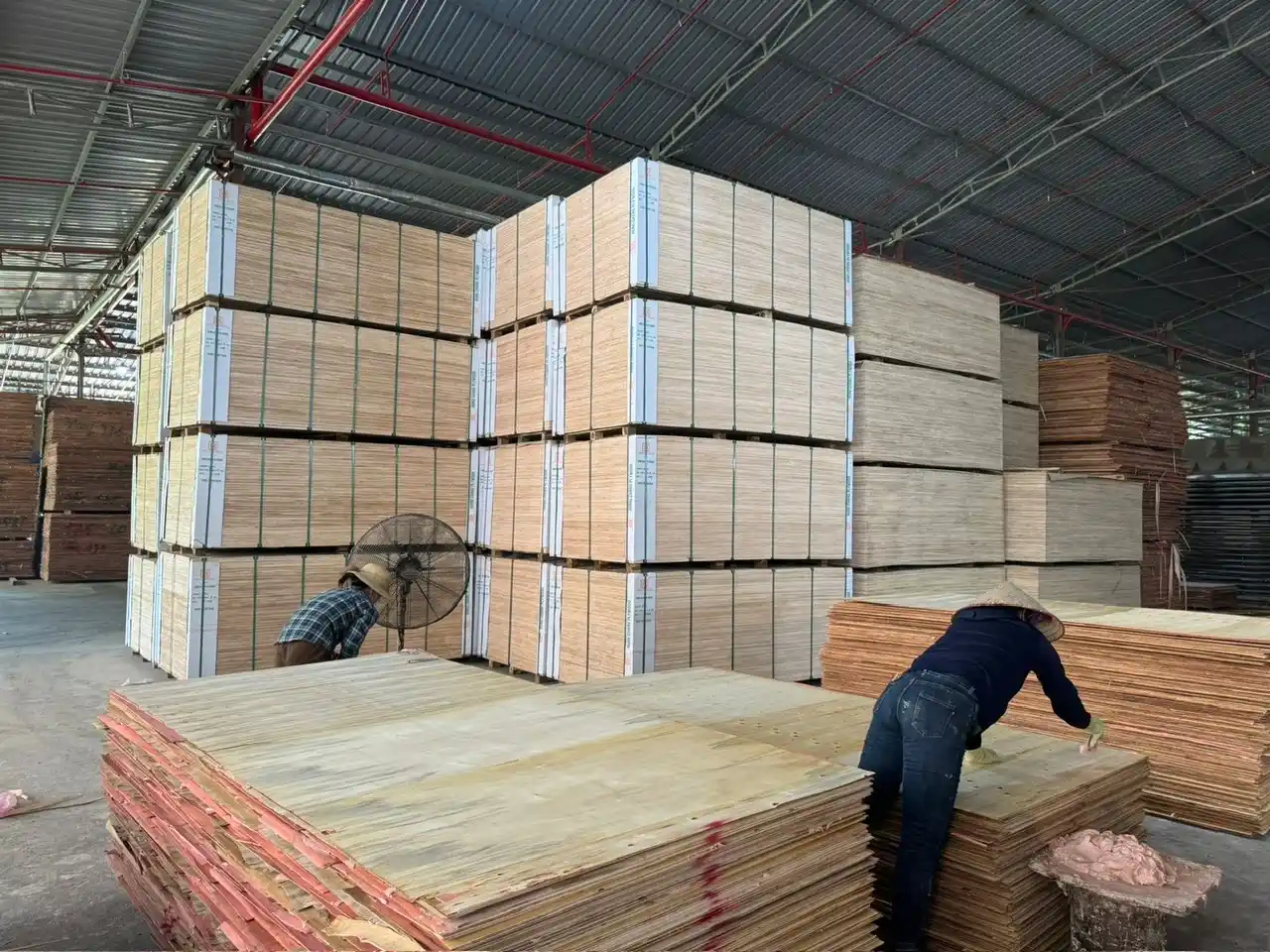
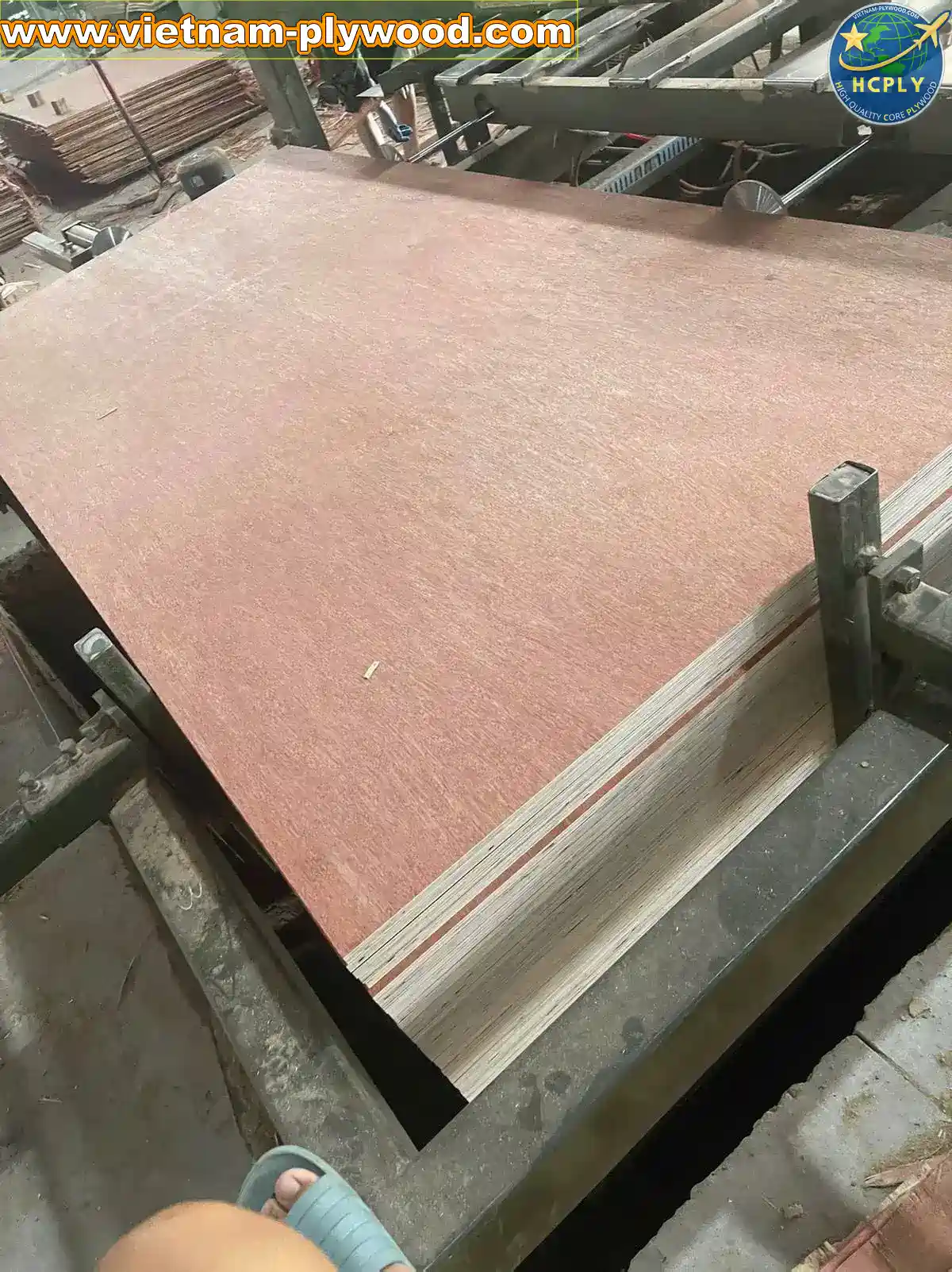

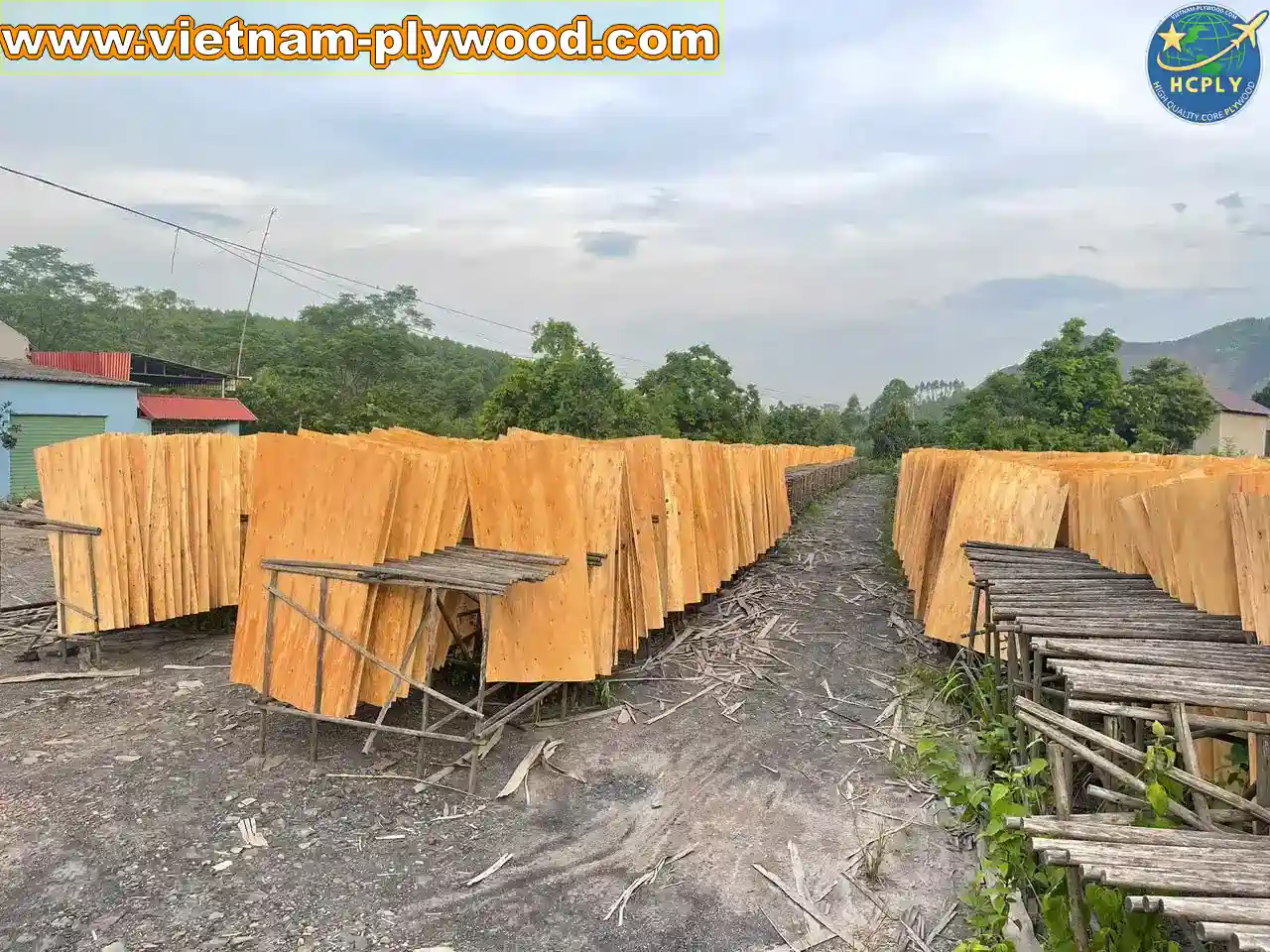

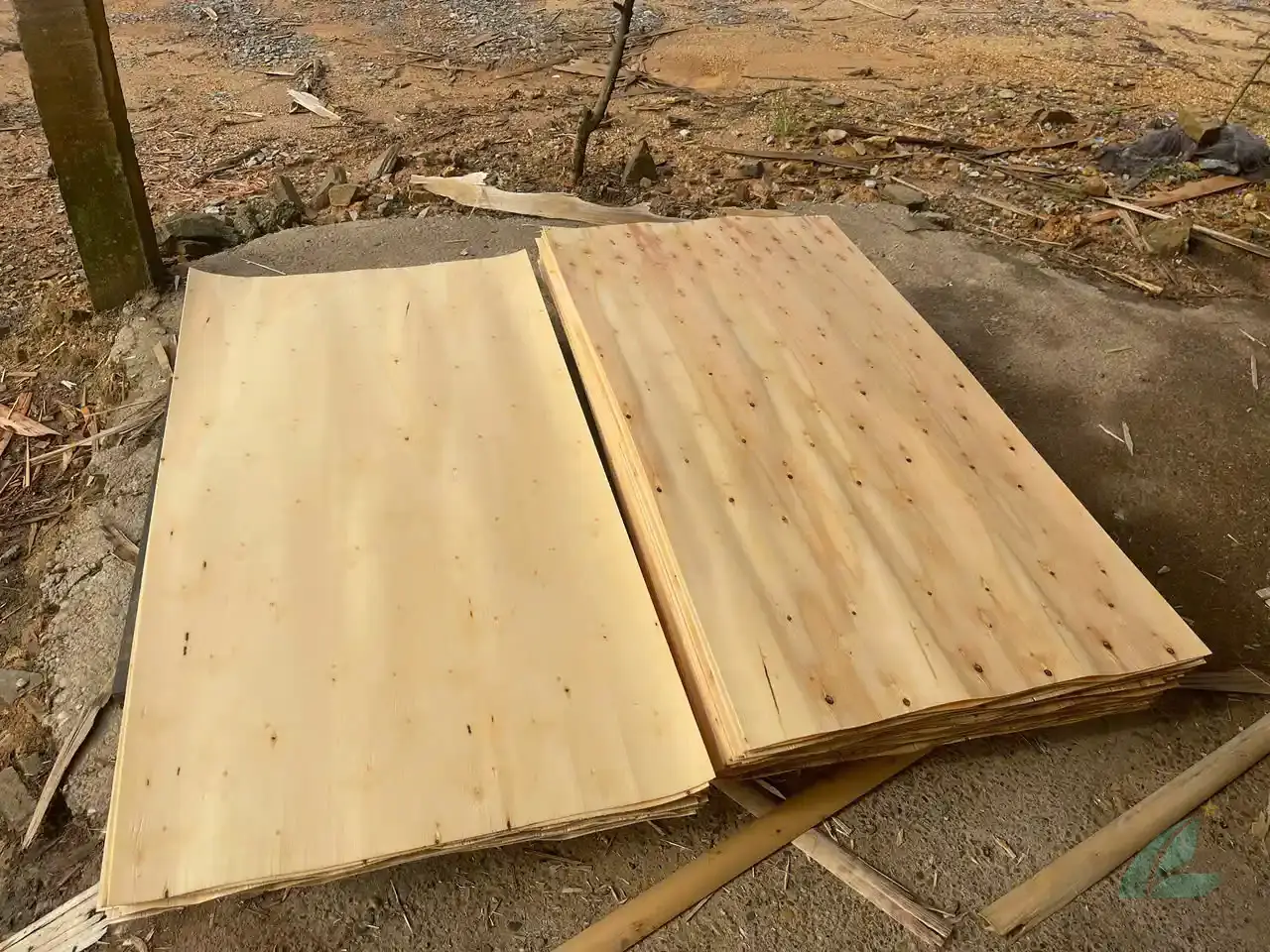
Core veneer is invisible in the finished plywood sheet, which is exactly why it is the most common source of quality failures in B2B imports. Buyers inspect the face, check the grade stamp, and miss the core entirely — until delamination shows up six months after installation.
Knowing how to identify good core veneer in Vietnamese plywood before placing an order separates experienced importers from buyers who learn through costly claims. This guide covers every practical check an international buyer can perform — from species identification to stitching construction and moisture testing. All specifications are based on HCPLY’s factory production data and our QC team’s on-site inspection routines as of 2026.
📋 Why Core Veneer Quality Determines Panel Performance
The core layers make up 60–80% of a plywood panel’s total thickness. They determine structural rigidity, screw-holding capacity, panel flatness, and long-term dimensional stability. The face veneer gets the visual attention, but poor core veneer causes every failure that matters to end users.
Three core species are used in Vietnamese plywood production: acacia (~580 kg/m³), eucalyptus (650–750 kg/m³), and styrax (480–500 kg/m³). Each behaves differently under pressing, absorbs moisture differently, and affects the weight of every container you load. Density is determined by Vietnamese plywood core species, not by the face veneer — a common point of confusion when buyers receive panels heavier than expected (HCPLY production data, 2026).
⚠️ Important: Vietnamese plywood core species are limited to acacia, eucalyptus, and styrax. “Gurjan core,” “birch core,” and “hopea core” from Vietnam do not exist. If a supplier quotes these, treat it as a specification error.
🔍 Step 1 — Identify the Core Species Correctly
Before any defect check, confirm what species you are actually receiving. Species verification matters because density, weight per container, and moisture behavior differ significantly between the three Vietnamese core species.
“Our claim rate stays below 2% because we reject at the factory, not at the port. Every pallet goes through thickness gauging, moisture testing, and visual grading before it reaches the loading bay.” — David, Export Project Leader, HCPLY
Acacia core is the most affordable option. The veneer is darker — typically amber-brown to reddish-brown with visible grain lines. Density runs around 580 kg/m³. At 18mm thickness in a 40HC container with acacia core, you can load approximately 16 pallets, or roughly 47.5 CBM (HCPLY production data, 2026).
Eucalyptus core is the heaviest and strongest. Color is pale yellow to cream. Density is 650–750 kg/m³. At the same 18mm thickness, the maximum load drops to 15 pallets to stay within the 28.5 MT payload limit of a 40HC container. Eucalyptus core is the right choice for construction, flooring underlayment, and any application requiring high strength-to-thickness ratio. For a direct comparison, see eucalyptus vs acacia core veneer.
Styrax core is the lightest option and the least common outside of Northern Vietnam — it only grows in the northern provinces. Color is white to very pale cream, often mistaken for birch core by buyers unfamiliar with Vietnamese species. At 480–500 kg/m³, styrax allows 18 pallets per 40HC at 18mm — the highest CBM yield of the three species. This makes styrax core the economical choice for furniture-grade panels destined for markets where weight adds freight cost.
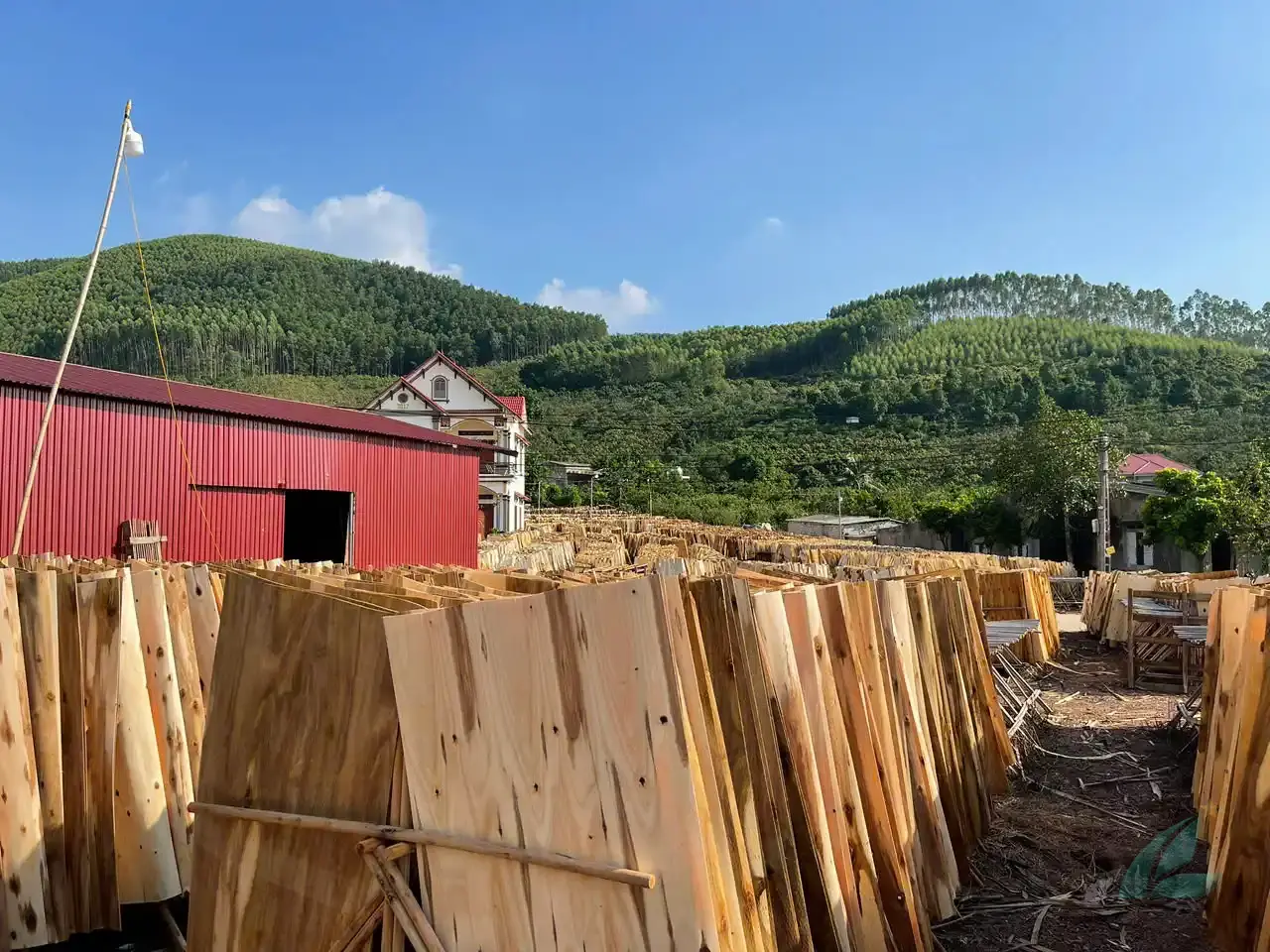
To confirm species on arrival, check the edge of the finished plywood panel — the core layers are visible. Cross-reference color with your purchase order specification. If you ordered styrax core and received a dark amber-brown panel, you received acacia.
Ready to verify your core veneer specs before ordering? Contact HCPLY for a pre-production spec sheet — no commitment required.
📏 Step 2 — Check Thickness Consistency Across the Stack
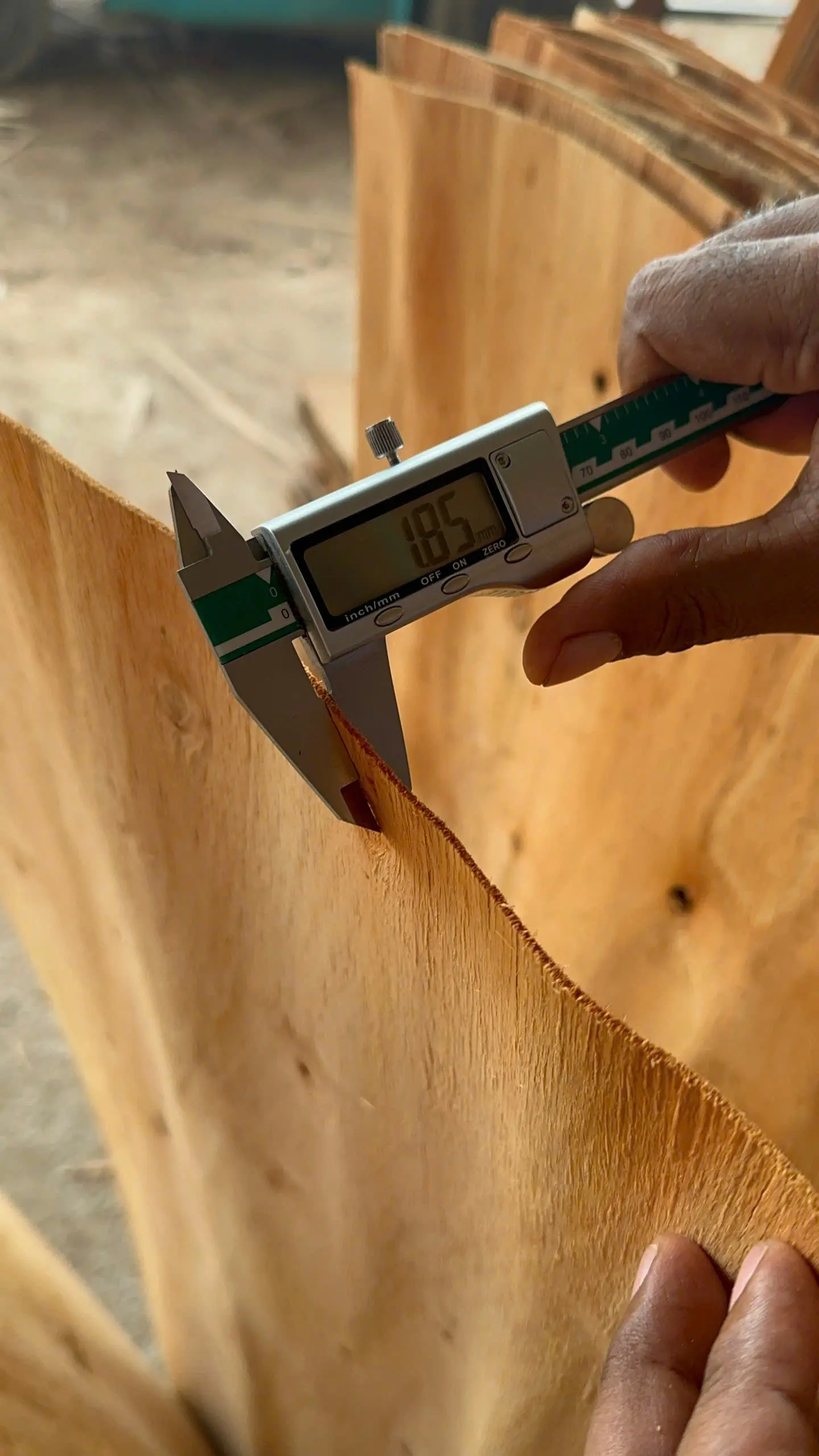
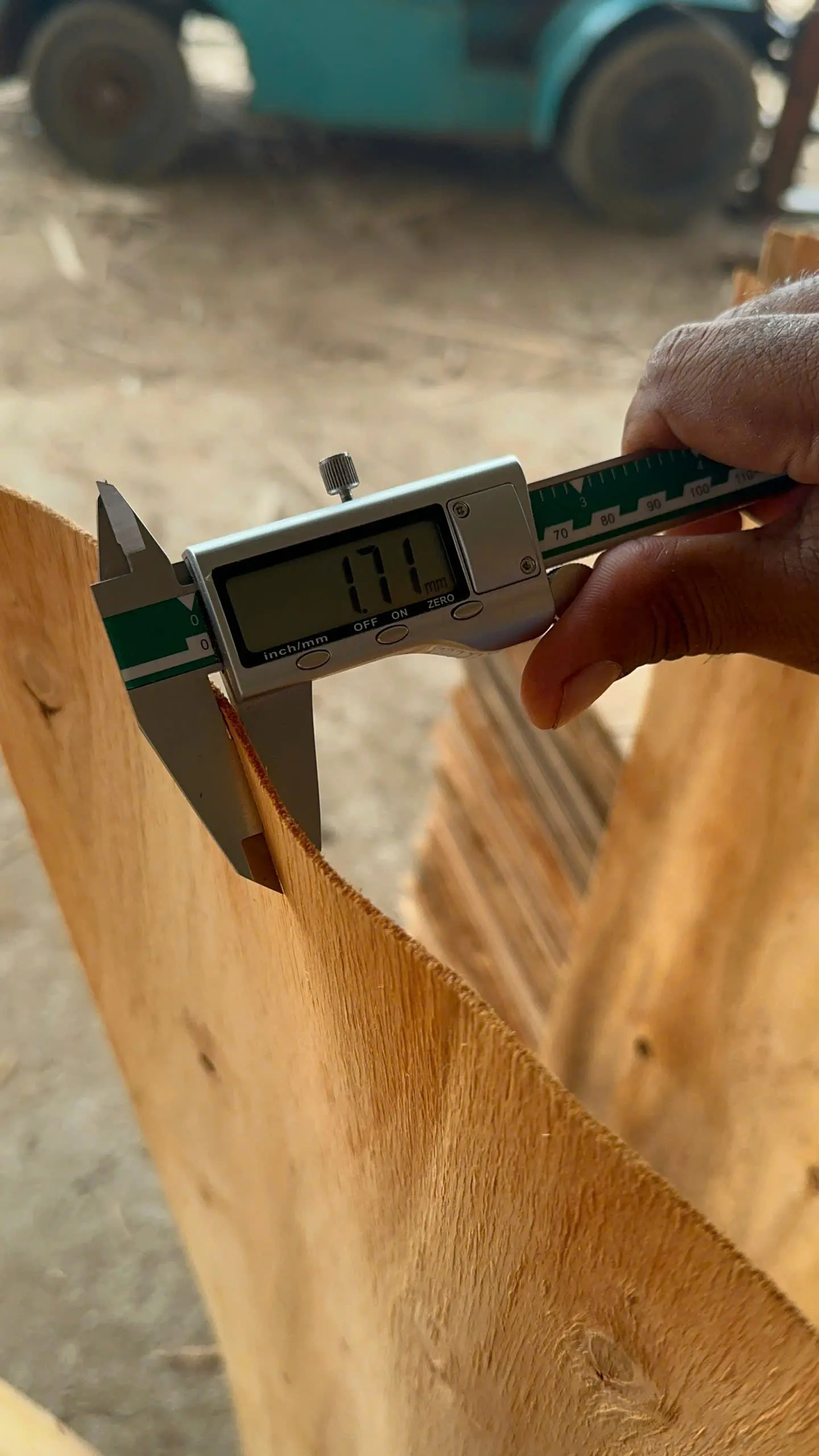
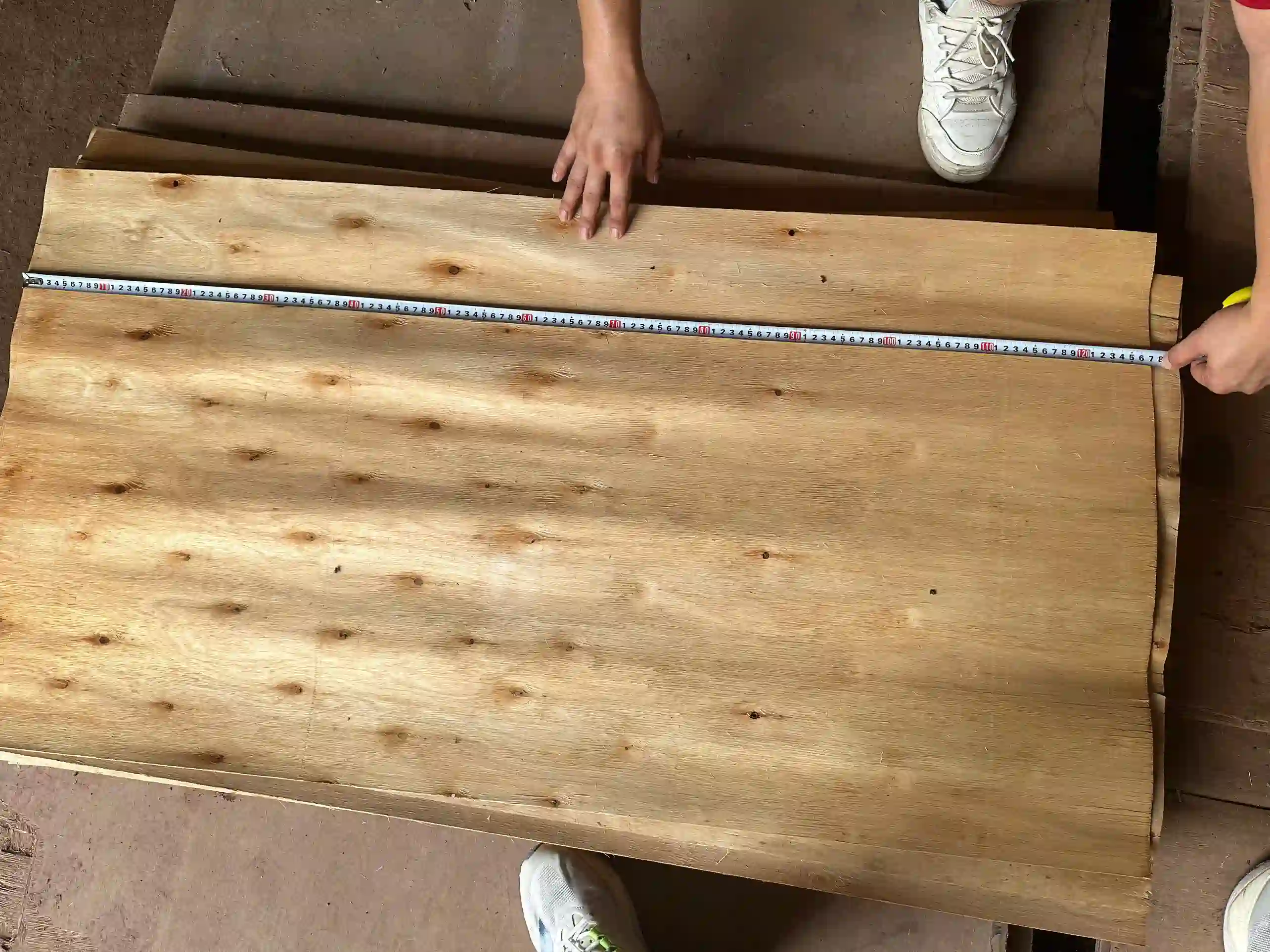
Veneer thickness consistency is the first quantitative check any buyer should perform. Standard Vietnamese core veneer runs at 1.7mm, 1.8mm, 2.0mm, or 2.3mm depending on panel construction. The specified thickness in your purchase order should match actual production within ±0.2mm per piece.
Use a digital caliper to measure 5–10 sheets randomly selected from different positions in the stack — not just the top sheets, which factories sometimes calibrate more carefully. Measure at two points per sheet: 50mm from each edge. Record the values.
A batch with thickness variation exceeding ±0.3mm across the stack is out of tolerance for furniture-grade production. Such variation leads to uneven glue distribution during hot pressing, localized voids, and surface waviness in the finished sanded panel.
“Thickness tolerance in core veneer is the single most impactful spec for furniture-grade press output,” notes Lucy, International Sales Manager at HCPLY. “Factories that skip veneer calibration before pressing will always show surface variation after sanding — it cannot be corrected downstream.”
For buyers sourcing core veneer as raw material (not finished plywood), standard export sizes are 1270×640mm with ±2mm tolerance on length and width. Confirm these dimensions in your quality inspection plan.
💧 Step 3 — Measure Moisture Content Before Accepting
High moisture content in core veneer is the most frequent cause of delamination in finished plywood, and it is preventable with a simple moisture meter reading before pressing — or before accepting a shipment.
Target moisture content for core veneer destined for hot pressing is 6–8%. Veneer above 12% creates steam pockets during the pressing cycle, weakening the glue line and producing internal voids that don’t show on the panel surface but cause failures under mechanical stress (CP Adhesives industry data, 2024).
To measure correctly: use a pin-type meter, insert pins into the center of a mid-stack sheet (not the exposed surface layers, which dry faster). Take readings from three different positions in the bundle and average them.
Kiln-dried core veneer from a Vietnamese factory should arrive at ≤18% moisture content if measured immediately after production. For veneer that has been stored or shipped in humid conditions, moisture can rise significantly — especially with acacia core, which is more hygroscopic than styrax.
💡 Tip: If you are purchasing finished plywood (not raw veneer), moisture of the finished panel should be 8–14% at point of delivery. Ask your supplier for a moisture certificate from the production batch.
🔧 Step 4 — Inspect Core Construction: Stitched vs Loose-Laid
The way individual core veneer pieces are assembled into a continuous layer is as important as the species and thickness. Vietnamese factories use four construction methods with very different quality outcomes.
Full stitched core is the highest quality construction. Individual veneer pieces are sewn together with thread or hot-melt filament in both horizontal and vertical directions, creating a gap-free, overlap-free continuous mat. Full stitched core is standard for furniture-grade production targeting E0 emission markets. For more detail on how stitching affects overall panel construction, see the plywood core types guide.
Outer-stitched, inner-trimmed is the practical mid-grade solution. The outer core layers are stitched; inner layers are edge-trimmed but not stitched. This is the most common construction for commercial furniture plywood — a balance of quality and cost.
Edge-jointed (finger-jointed) core uses interlocking cuts at piece edges without threading. Quality is acceptable for commercial applications but inferior to stitched construction under sustained moisture exposure.
Loose-laid core is the lowest grade. Pieces are placed without any joining, creating gaps, overlaps, and inconsistency throughout the mat. This construction is found in budget packing and commercial plywood from low-grade factories. Avoid loose-laid core for any furniture or interior application. For a deep dive on stitch-core plywood construction methods, see our dedicated guide.
To verify construction, request a cross-section cut of a finished panel — the core layers will show stitching threads at the joints if full or outer-stitched construction was used. Alternatively, inspect raw veneer sheets for thread lines before pressing.
🏭 Step 5 — Identify the 6 Defects That Signal Reject-Grade Core
Visual and tactile inspection catches most serious core veneer defects without laboratory testing. These six defects are the ones HCPLY’s QC team rejects during production:
-
Through-voids: Holes or missing fiber running entirely through the veneer sheet. Hold individual sheets up to strong light — any transmitted light pinpoints a through-void. Panels with through-void core will fail structural loading and show visible surface depression after pressing.
-
Overlaps: Two veneer pieces layered on top of each other rather than placed edge-to-edge. Overlaps create thickness spikes that cause press platens to apply uneven pressure, resulting in delamination zones adjacent to the overlap. Visible as a ridge line on the panel surface after sanding.
-
Splits and checks: Cracks running along the grain, often caused by veneer dried too fast or stored in low-humidity conditions. Minor surface checks are acceptable; through-splits that extend more than 20% of the veneer width are a reject criterion (Asia Pine Wood technical reference, 2024).
-
Moisture streaks: Dark discoloration running along the grain indicates moisture content variation within a single sheet — often caused by uneven kiln drying. Panels with moisture-streaked core will develop uneven glue strength across the surface.
-
Decay or fungal contamination: Blue-black staining, soft spots, or musty odor in the core bundle indicates fungal attack. This is rare in kiln-dried veneer but common in poorly stored material. Fungal veneer cannot be used regardless of other specifications.
-
Wax or oil contamination: Core veneer occasionally contacts machine lubricants during production. Contaminated surfaces appear shiny or feel slick. Glue adhesion on contaminated veneer is severely compromised — this is not recoverable and the affected sheets must be discarded.
📦 Step 6 — Verify Core Grade Specification Against End-Use
The final step in core veneer evaluation is matching the quality level to your application. Buyers who know how to identify good core veneer for their specific end-use avoid both over-specification and underperformance. Not every application requires full-stitched Grade A eucalyptus core — overpaying for core quality above your end-use need is as commercially problematic as buying below specification.
| Application | Recommended Core | Construction | Emission |
|---|---|---|---|
| Premium furniture, E0 market | Styrax or Eucalyptus | Full stitched | E0/CARB P2 |
| Commercial furniture, E1 market | Acacia or Styrax | Outer stitched | E1 |
| Cabinet substrates | Styrax | Full stitched | E0 |
| Flooring underlayment | Eucalyptus | Full or outer stitched | E1 |
| Commercial/packing | Acacia | Edge-jointed or loose-laid | E2 |
| Film-faced formwork | Eucalyptus or Acacia | Stitched | N/A (WBP phenolic) |
For markets with strict emission standards — US (CARB P2), Japan (F4★), and Korea — core veneer selection also affects formaldehyde emission testing results. Low-density core with poor fiber integrity absorbs more adhesive, potentially increasing total formaldehyde load in the finished panel. See the plywood glue types and emission standards guide for how glue type and emission class interact.
Specifying the right core veneer for your market before ordering is faster than managing quality claims after delivery. Get a Free Quote from HCPLY — our export team will match core species and construction to your target application and destination market.
📊 Core Veneer Specification Checklist
Use this checklist when inspecting a core veneer sample or reviewing a supplier’s production data:
| Parameter | Check | Pass Criterion |
|---|---|---|
| Species identification | Visual — edge color | Matches PO specification |
| Thickness consistency | Digital caliper, 5 sheets random | ±0.2mm within batch |
| Moisture content | Pin meter, mid-stack | 6–8% for pressing; ≤18% for transport |
| Stitching method | Visual — thread lines at joints | Matches specified construction grade |
| Through-voids | Backlight test | Zero through-voids |
| Surface overlaps | Edge + surface visual | Zero overlaps |
| Splits | Grain-direction visual | No through-splits >20% width |
| Contamination | Smell + touch test | No odor, no oily surface |
| Bundle moisture uniformity | 3-point meter test | <2% variance between readings |
This checklist reflects HCPLY’s internal pre-production QC routine applied to every incoming veneer batch, as of Q1 2026.
Disclosure: This article is published by HCPLY, a Vietnam-based plywood manufacturer and export operator. While we aim to provide objective industry guidance, readers should consider our perspective as a market participant when evaluating recommendations.
🔗 Related Articles
- Plywood Core Types — Acacia vs Eucalyptus vs Styrax from Vietnam Factory
- Plywood Manufacturing Process — From Log to Container
- Plywood Container Packing Calculation 2026 — Factory-Level 40HC Packing Tables
- Core Veneer Vietnam — Acacia & Eucalyptus Export
✅ Conclusion
Core veneer quality in Vietnamese plywood comes down to six verifiable parameters: species identification, thickness consistency, moisture content, construction method, defect presence, and application matching. None of these require a laboratory — they require a caliper, a moisture meter, and knowing what to look for.
The three Vietnamese plywood core species — acacia, eucalyptus, and styrax — behave differently in every dimension that matters to an importer: weight per container, structural performance, surface stability, and end-use suitability. Matching the right species and construction method to your application before placing an order eliminates the most common source of quality claims in B2B plywood imports.
HCPLY’s QC team applies every check in this guide to each production batch before container loading. Contact HCPLY now to request a sample pack with a core cross-section, moisture certificate, and species documentation — factory-direct with no intermediary markup.