
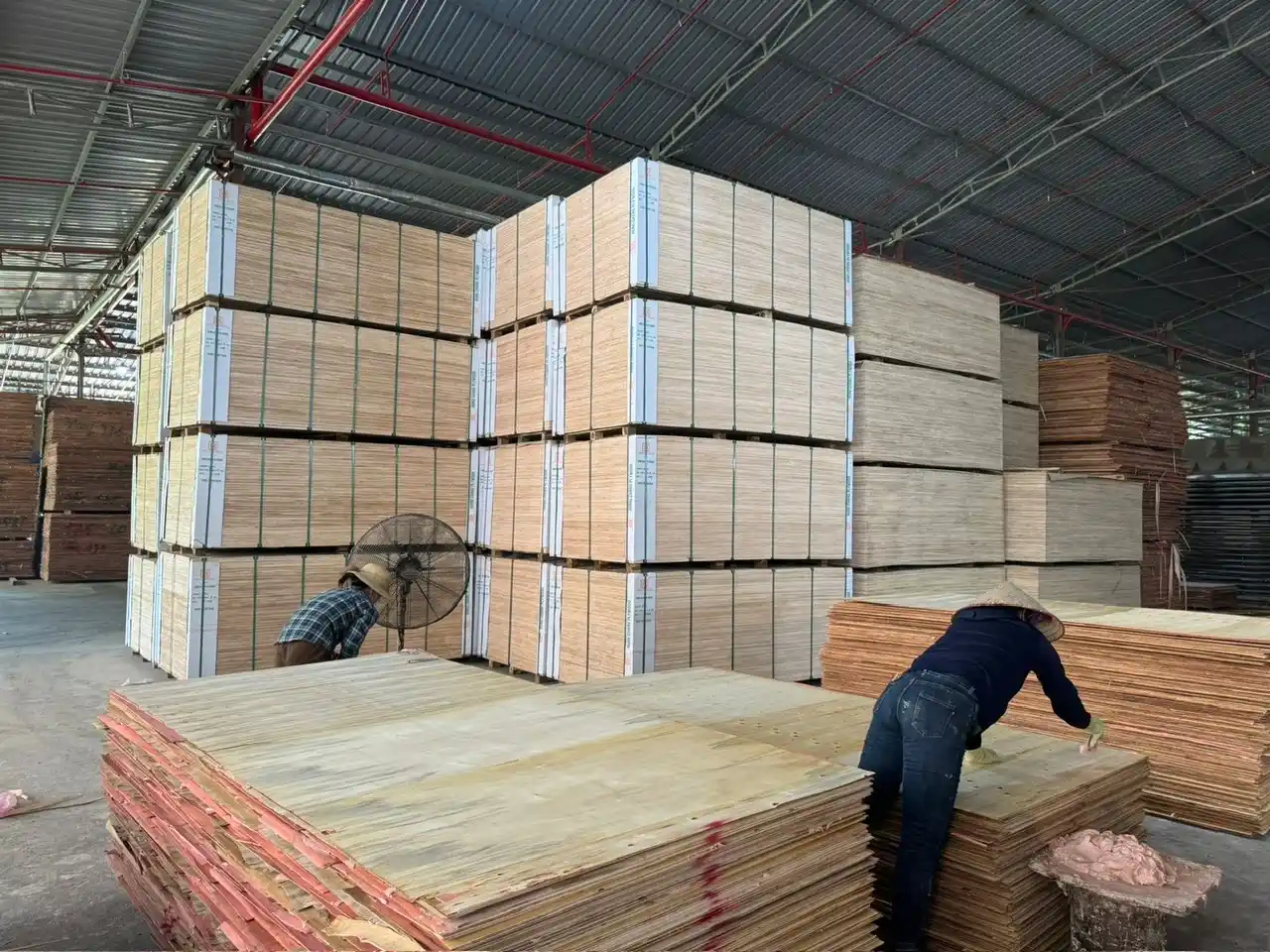
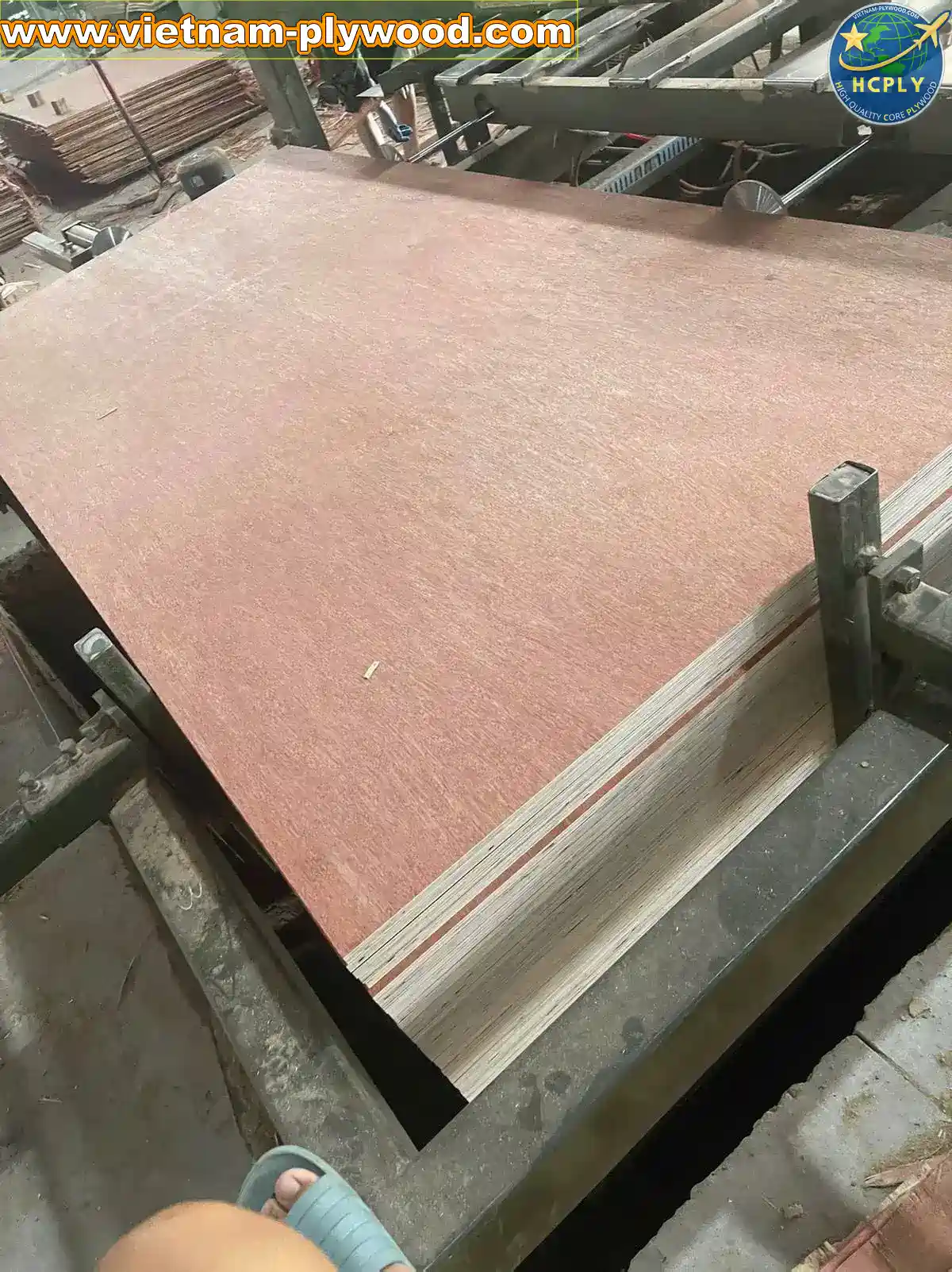

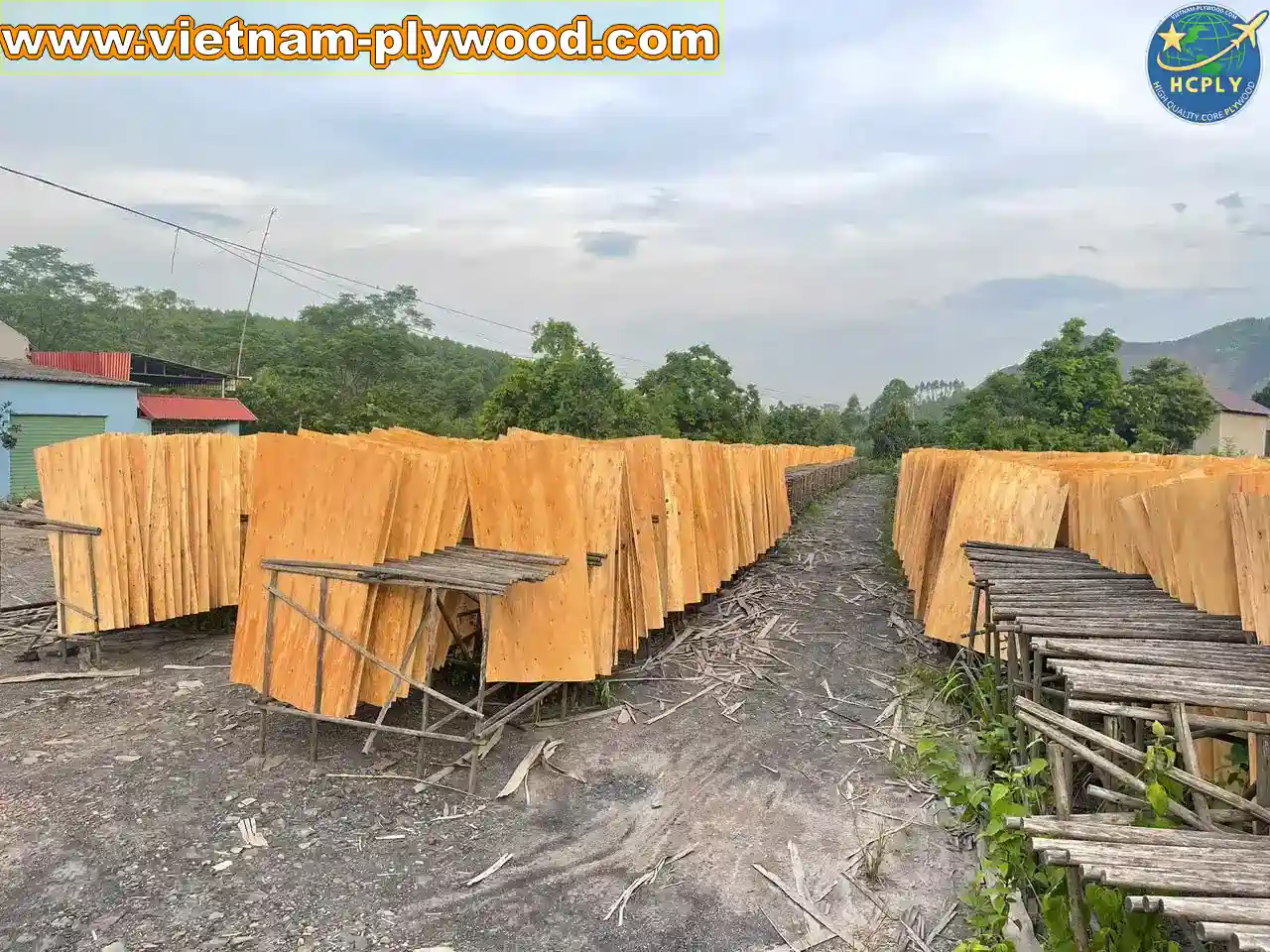

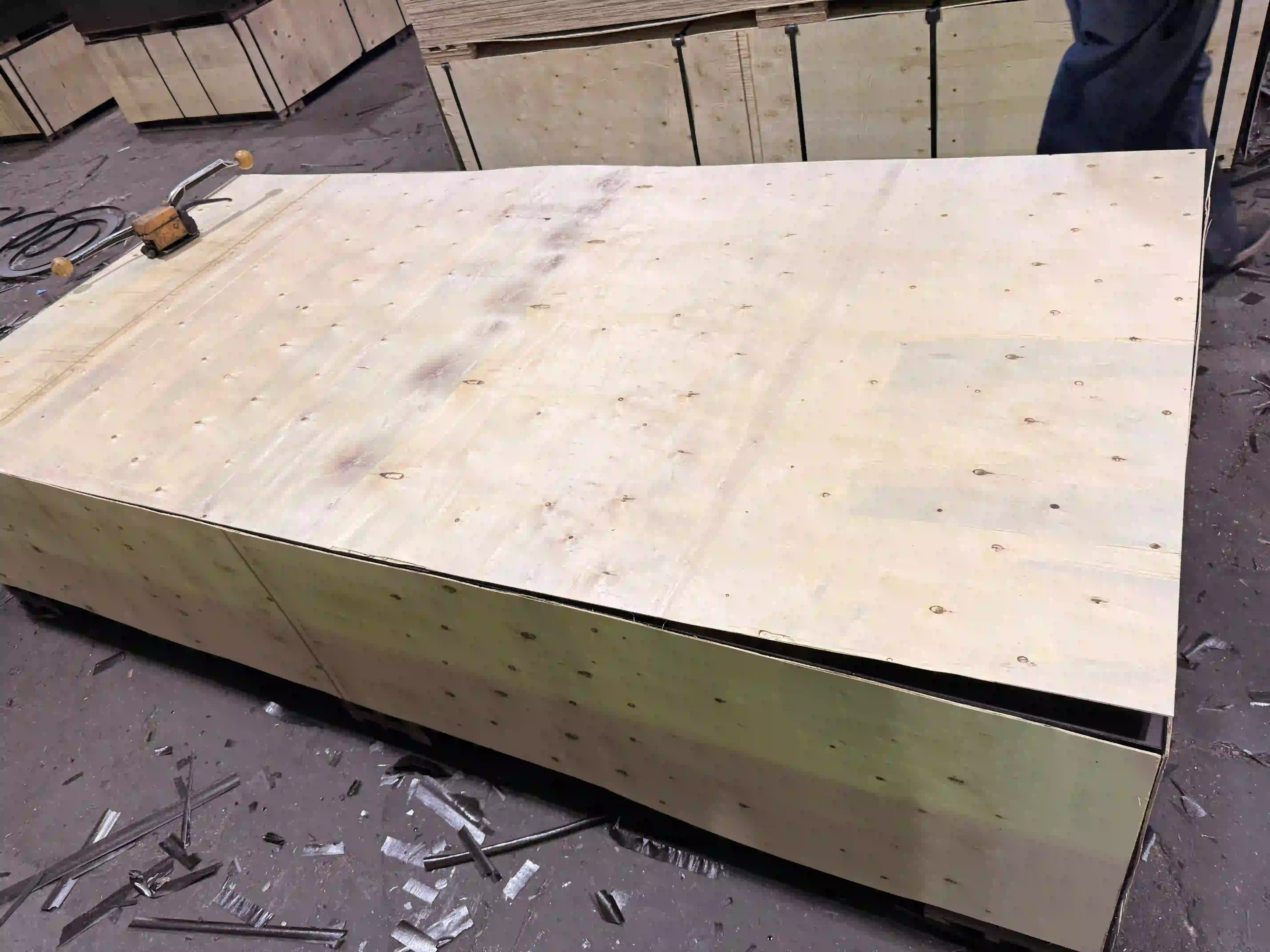
Plywood export packing follows a precise system. Get it wrong and sheets arrive delaminated, corners crushed, or the container overweight at port. Get it right and every sheet lands in the buyer’s warehouse in the condition it left the factory.
This guide covers the full plywood export packing process — from how sheets are stacked on pallets, to how pallets are secured, to how they load into a 40HC container for shipping. All figures come from HCPLY’s factory-level packing data for Vietnam plywood export (HCPLY production data, 2026).
📦 Why Export Packing Standards Matter for Plywood
A standard plywood sheet weighs 15–35 kg depending on thickness and core species. A 40HC container holds 15–18 pallets, each carrying 50–100+ sheets. That is 30–50 tonnes moving through multiple handling points — factory floor, port terminal, ocean transit, destination port, delivery truck.
Poor packing fails at any one of those points. Common failure modes include:
- Pallet collapse from insufficient dunnage leg height, causing the forklift tines to crush the bottom sheet row
- Surface damage where strapping cuts into face veneer at strap contact points
- Corner splintering when no edge protection is used on pallet corners
- Container overweight when core species density is not accounted for in CBM calculations
- Moisture damage when plastic wrap is omitted or torn before ocean transit
Export-grade packing is not just cosmetic. It is a technical specification that protects both the goods and the buyer’s claim rights if damage occurs. HCPLY’s on-site QC team conducts a packing audit before every container is sealed.
📋 Step 1 — Sheet Stacking on Pallets
Before a single strap goes on, sheets must be stacked correctly. The rules are straightforward but non-negotiable.
📌 Pallet Base Construction
Export pallets for plywood use timber dunnage legs, not flat pallet boards. The legs sit at three points — two outer rails and a centre rail — running the full 2440mm length of the sheet. Leg height is 75–100mm, high enough for a standard forklift tine to slide underneath without contacting the bottom sheet.
Leg width is typically 75–100mm, and the timber is dry and free of bark. Wet or green dunnage absorbs moisture and transfers it to the bottom sheet row — a common cause of delamination complaints on arrival.
📌 Stacking Rules
| Rule | Specification |
|---|---|
| Sheet alignment | All sheets flush — no overhang beyond pallet footprint |
| Face orientation | Face veneers interleaved: face-down, face-up, alternating where specified |
| Pallet height | Maximum 1000mm from floor to top of sheet stack |
| Sheets per pallet | ROUNDDOWN(1000 ÷ thickness_mm) |
The 1000mm height limit is the key constraint. It is set by forklift stability requirements — not arbitrary. Pallets taller than 1000mm become unstable under dynamic load during container loading. For more on pallet height limits in 40HC containers, see our detailed analysis.
Common thickness examples:
| Thickness | Sheets per Pallet |
|---|---|
| 9mm | 111 sheets |
| 12mm | 83 sheets |
| 15mm | 66 sheets |
| 18mm | 55 sheets |
| 21mm | 47 sheets |
| 25mm | 40 sheets |
🔧 Step 2 — Strapping and Edge Protection
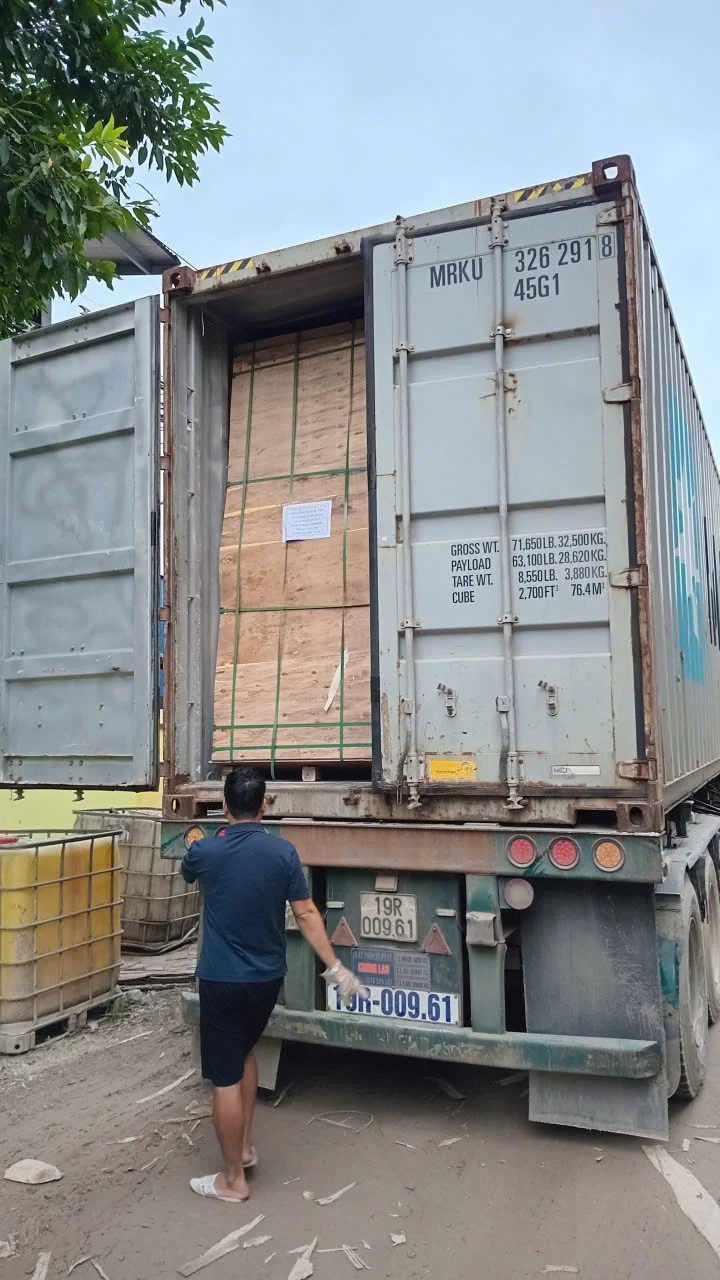
A stacked pallet goes nowhere safely without strapping. This step protects the pallet during handling — forklift lifts, truck transport to port, and crane loading at the terminal. For a detailed comparison of pallet wrapping versus strapping methods, see our dedicated guide.
Strapping Specification
HCPLY uses both steel and polypropylene (PP) strapping depending on destination market requirements. Steel strapping offers higher tensile strength for long ocean routes. PP strapping is lighter and reduces risk of face veneer cuts on premium furniture grades.
Minimum strap lines per pallet: 4 lines
- 2 lines running lengthwise (along the 2440mm axis)
- 2 lines running crosswise (along the 1220mm axis)
For heavier pallets (18mm and above) or long ocean routes (Europe, US East Coast), 6 strap lines are used: 3 lengthwise + 3 crosswise.
Edge Protection
At every point where a strap contacts the sheet stack corner, a cardboard or plastic edge protector is placed. Without edge protectors, the strap cuts into the face veneer on the top sheet. This is the most common cause of face damage complaints when buyers open containers — and it is entirely preventable.
Edge protector dimensions: typically 50mm × 50mm angle profile, running the full width of the strap contact zone.
Plastic Wrap
After strapping, the full pallet is wrapped in stretch plastic film — minimum 4 layers. This serves two purposes:
- Moisture barrier during ocean transit (high humidity in container)
- Dust and handling protection at destination port
Premium grades (furniture-grade birch, E0 certified panels) receive an additional inner wrap of interleaved craft paper before the plastic wrap, protecting the face veneer from condensation marks.
⚠️ Important: Condensation inside a container is normal on long ocean routes. A pallet with no plastic wrap or torn wrap will absorb moisture. This does not constitute a manufacturing defect — it is a packing failure. Buyers should photograph packing condition immediately on container opening.
📊 Step 3 — Container Loading Layout
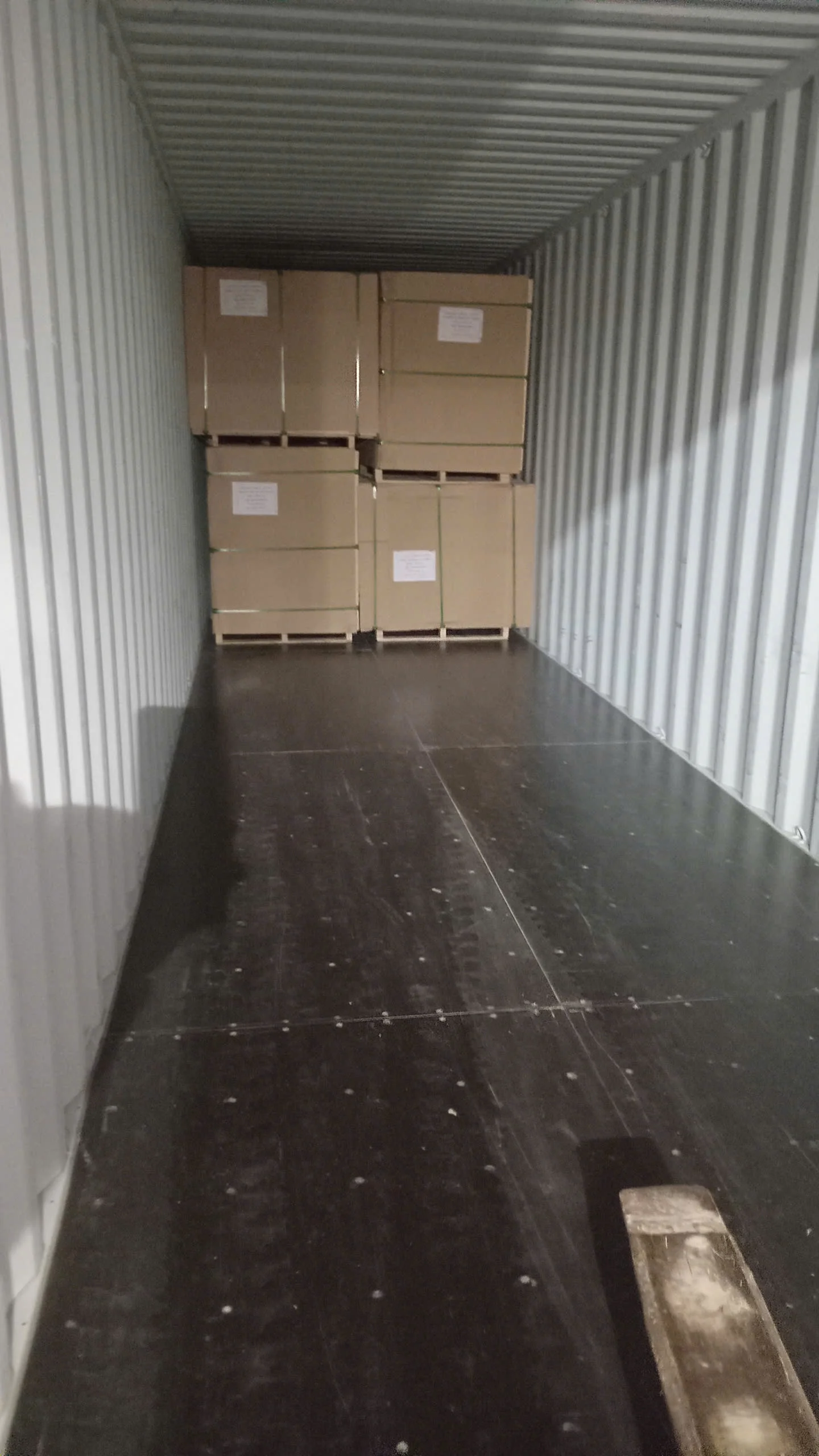
A 40HC (40-foot high-cube) container has internal dimensions of approximately 12.0m × 2.35m × 2.69m. The standard plywood loading layout uses this space efficiently.
Standard 40HC Layout
Floor arrangement: 16 pallets flat (4 rows × 4 columns)
Pallets are arranged in 4 columns running the length of the container, 4 rows across the width. Standard 1220mm sheet width allows 2 pallets side by side with clearance.
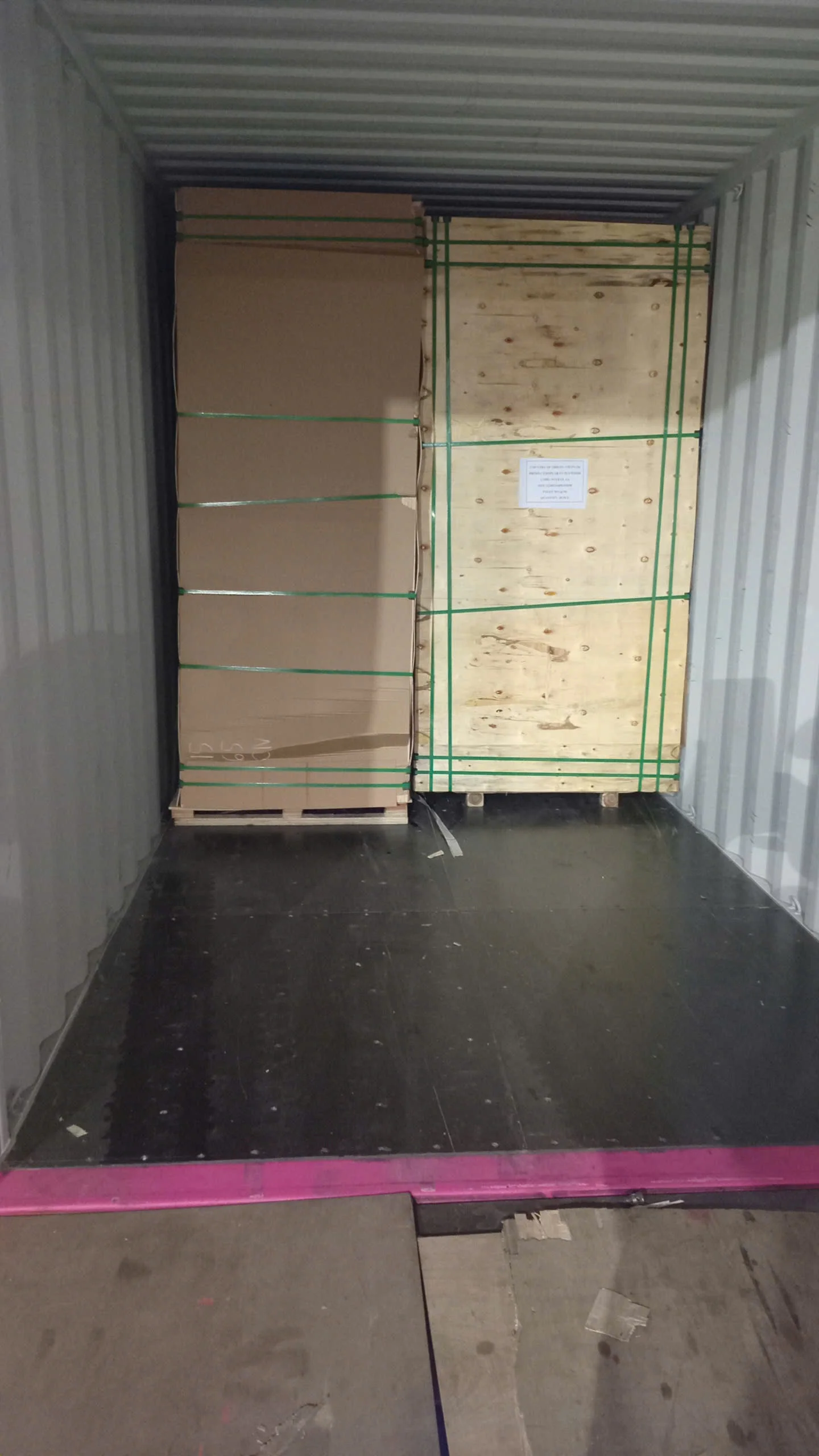
Door end: 2 pallets stood vertically
The remaining 2 pallets are stood on their end at the door of the container. This configuration uses the full container length without wasted floor space.
Total: 18 pallets maximum for 1220×2440mm sheets (styrax core, where payload allows).
Pallet Count by Core Species
This is where most buyers make miscalculations. Pallet count is not limited by container floor space alone — it is limited by the 40HC payload ceiling of 28.5 MT.
| Core Species | Density (kg/CBM) | Pallets/40HC | CBM/40HC | Approx Weight |
|---|---|---|---|---|
| Styrax | 500 | 18 | ~53 CBM | ~26.5 MT |
| Acacia | 580 | 16 | ~47.5 CBM | ~27.5 MT |
| Eucalyptus | 700 | 15 | ~44.5 CBM | ~28 MT |
(HCPLY factory-level packing tables, 2026)
Eucalyptus core is the densest. At 15 pallets, the container is already near the 28.5 MT payload ceiling. Adding one more pallet would breach port weight limits — a serious compliance issue at destination. For tips on safe container loading and forklift handling, see our logistics guide.
For detailed CBM calculation formulas, see our guide on plywood container packing calculation for 40HC, or calculate your exact loading plan with our container packing calculator.
📐 Step 4 — Packing for 1250×2500mm (Metric) Sheets
European buyers and some Korean and Australian orders specify 1250×2500mm (metric size) instead of the standard 1220×2440mm (imperial size). The packing changes slightly.
Pallet count per 40HC stays at 18 pallets for styrax — the floor layout accommodates the wider metric sheet. However, total CBM increases by approximately 5% compared to the same core species in 1220×2440mm format.
This means slightly higher freight cost per container for metric sheets, but the per-sheet price difference is marginal for most buyers. The more significant factor is that metric sheets reduce cutting waste on European CNC machines set to 1250mm panel systems.
“When buyers request metric sheets, we recalculate CBM and confirm total weight before confirming the order. The 5% CBM difference rarely changes the pallet count, but it always needs to be documented on the packing list for Customs.” — Lucy, International Sales Manager, HCPLY
🏭 What Factory QC Checks Before Loading
Every container HCPLY ships passes a pre-loading packing audit. The checklist covers:
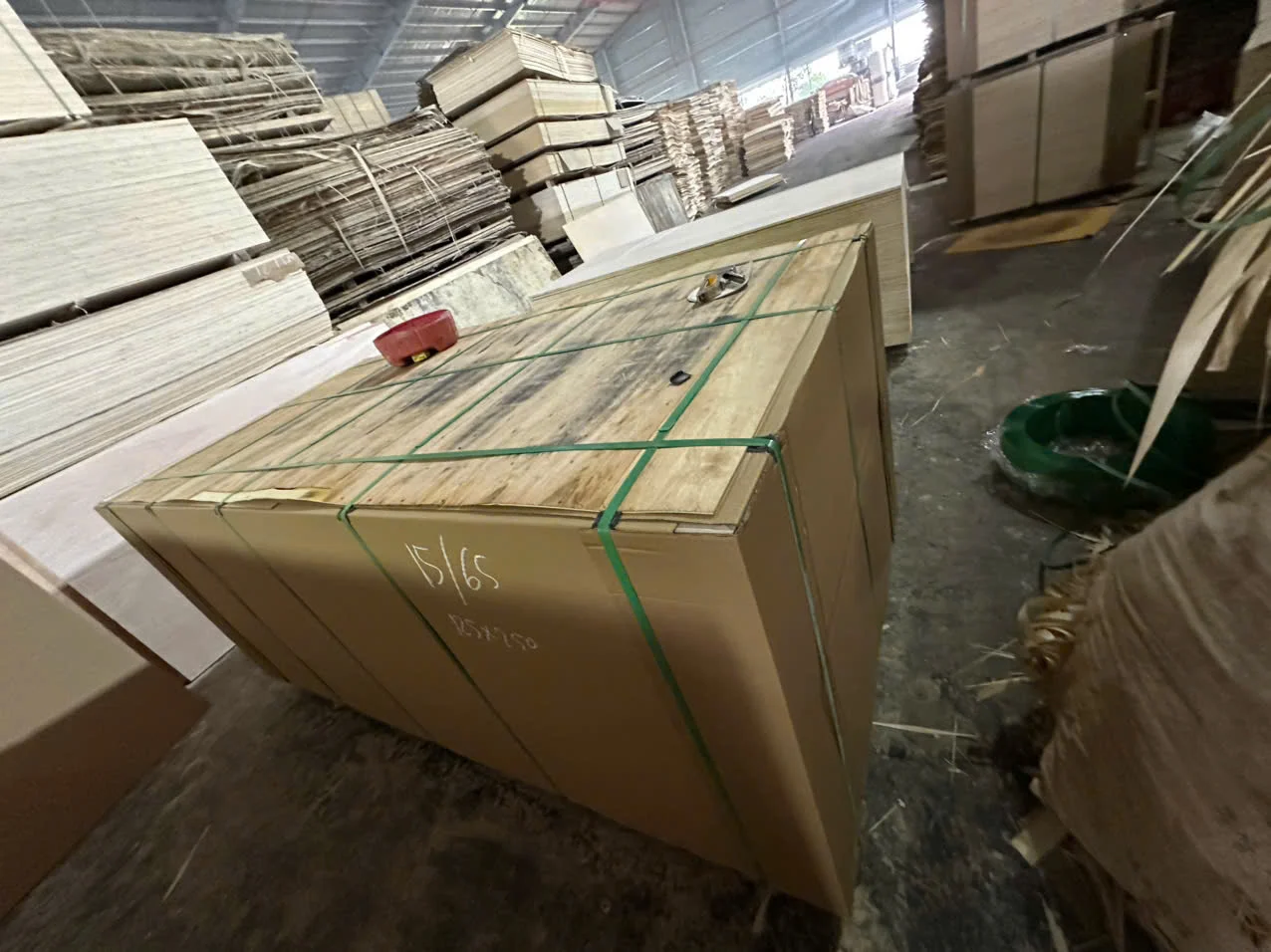
Physical inspection:
- Dunnage leg height and condition
- Sheet count per pallet matches packing list
- Face orientation is correct (no face-down on top of stack for furniture grades)
- Strapping tension — minimum 4 lines, edge protectors at all contact points
- Plastic wrap coverage — no tears, full 4-layer wrap
Documentation check:
- Packing list matches physical count
- CBM and weight figures match B/L draft
- Fumigation certificate scheduled (mandatory for timber packaging into most markets)
Loading verification:
- Container floor is dry and clean before loading
- Pallet arrangement matches approved layout diagram
- Door pallets secured to prevent movement during transit
💡 Tip: Ask your supplier for a pre-loading photo report before container seal. This is standard practice at HCPLY — buyers receive a photo set of loaded pallets, strapping, and container interior before the seal number is applied. Watch our container loading videos to see the full packing process. It is your best protection against claims disputes.
📦 Packing Variations by Product Type
Not all plywood ships identically. Some product categories require modifications to the standard packing.
Film-Faced Plywood
Film-faced sheets are packed with interleaved release paper between sheets to prevent the phenolic film surfaces from sticking together under pressure. This adds minimal thickness to the stack height calculation but is mandatory for high-reuse grades.
Furniture-Grade (E0, Sanded Face)
Premium furniture grades (birch, okoume, EV with sanded face veneer) receive individual face protection — either craft paper interleaving or foam sheets between every panel. This prevents face-to-face abrasion during transit.
For birch plywood and EV plywood destined for Europe or the US, packaging is typically upgraded to include full cardboard corner protectors on all four pallet corners, not just strap contact points.
Packing Plywood and Commercial Grade
Lower-grade packing plywood ships with standard strapping and plastic wrap — no face interleaving required. The commercial-grade face veneer is not sanded, so surface-to-surface contact during transit is acceptable.
🔗 Mixed Container Packing
Buyers frequently order multiple specs in one container — different thicknesses, different face veneers, or different core types. HCPLY supports mixed containers with these rules:
- Each spec is packed on separate, clearly labelled pallets
- Total CBM and weight are calculated across all specs combined
- Heavier species (eucalyptus core) are loaded first (at the back of the container) to balance the load
- The packing list itemises each pallet separately with its own CBM and weight line
Mixed containers work well when a buyer wants, for example, 8 pallets of 18mm styrax core bintangor and 8 pallets of 12mm acacia core packing grade in one shipment. Total weight in this case would be well within the 28.5 MT payload limit.
Before finalising any mixed container, request a plywood quotation that includes the packing list draft — this lets you verify the weight calculation before the order is placed.
📊 Quick Reference — 40HC Packing by Core and Size
| Core | Sheet Size | Density | Pallets | CBM | Weight |
|---|---|---|---|---|---|
| Styrax | 1220×2440mm | 500 kg/CBM | 18 | ~53 CBM | ~26.5 MT |
| Styrax | 1250×2500mm | 500 kg/CBM | 18 | ~55 CBM | ~27.5 MT |
| Acacia | 1220×2440mm | 580 kg/CBM | 16 | ~47.5 CBM | ~27.5 MT |
| Acacia | 1250×2500mm | 580 kg/CBM | 16 | ~50 CBM | ~29 MT* |
| Eucalyptus | 1220×2440mm | 700 kg/CBM | 15 | ~44.5 CBM | ~28 MT |
| Eucalyptus | 1250×2500mm | 700 kg/CBM | 15 | ~46.5 CBM | ~32.5 MT* |
*Metric acacia and eucalyptus at full pallet count may exceed 28.5 MT payload — verify with factory before confirming.
(HCPLY production data, 2026. Vietnam Timber & Forest Products Association industry packing standards apply.)
✅ Conclusion — Getting Packing Right Before You Order
Plywood export packing is one of those topics buyers discover the hard way — after a shipment arrives with damaged corners, crushed face veneer, or a rejected container at port due to overweight.
The fundamentals are not complicated: 1000mm pallet height, proper dunnage legs, minimum 4 strap lines with edge protectors, full plastic wrap, and a CBM/weight calculation that accounts for your specific core species density. Miss one of these and you have a warranty claim waiting to happen.
HCPLY provides full packing specifications with every quotation — including pallet count, CBM, weight, and a pre-loading photo report before container seal. For full export documentation requirements including fumigation and phytosanitary certificates, see our plywood export certifications guide.
Disclosure: This article is published by HCPLY, a Vietnam-based plywood manufacturer and export operator. While we aim to provide objective industry guidance, readers should consider our perspective as a market participant when evaluating recommendations.
Request packing specs and a free factory quote — no commitment required. Our team confirms CBM, weight, and pallet count before you place any order.