


Gurjan plywood okoume — two face veneers that appear on the same factory production line in Northern Vietnam, yet serve fundamentally different markets. An Indian furniture importer ordering gurjan at USD 20+ per CBM premium over okoume is not paying for a better product. They are paying for a face veneer that the Indian domestic market recognises, trusts, and demands by name. An okoume buyer shipping lightweight panels to European kitchen cabinet factories has zero use for gurjan’s surface hardness — they need a smooth, pale, easy-to-finish face that keeps the panel light.
This gurjan vs okoume plywood comparison is written from HCPLY’s production floor in Phu Tho, Vietnam, covering the 7 key differences buyers must know before they order. We ship both face veneers daily and handle specifications for buyers across 20+ countries (HCPLY production data, 2026). Every technical claim below traces to factory production records, not marketing catalogues.
📊 TL;DR: Gurjan vs Okoume Comparison Table
Key Insight: 78% of gurjan plywood from Vietnam ships to India and South Asia, while okoume primarily serves European and Japanese furniture markets (HCPLY export records, 2025-2026). The right choice depends on your destination market, not just the wood species.
| Feature | Gurjan | Okoume |
|---|---|---|
| Species | Dipterocarpus spp. (SE Asia) | Aucoumea klaineana (Central Africa) |
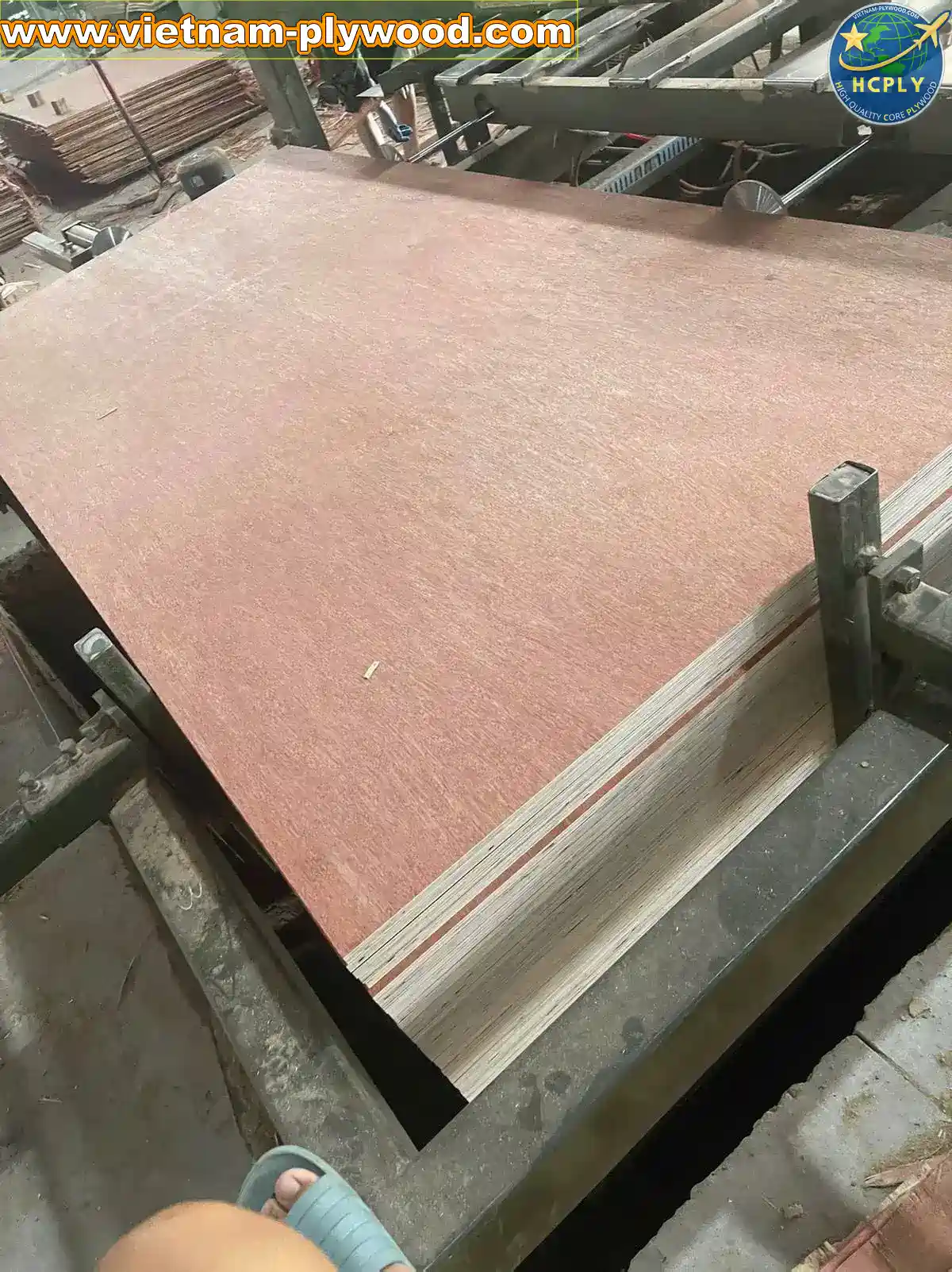
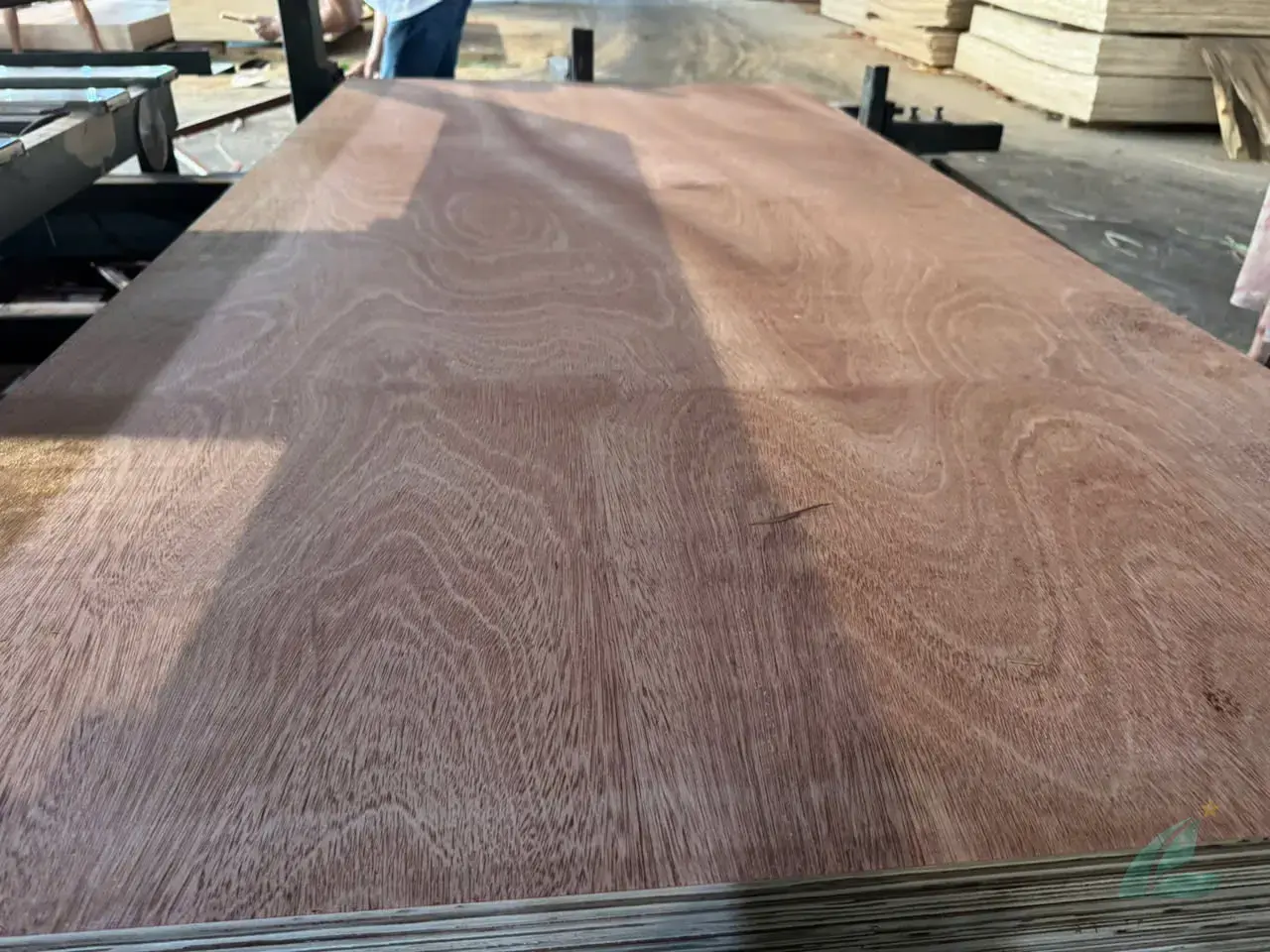
| Color | Rich reddish-brown, dark grain | Light pink to pale reddish-brown |
| Grain | Interlocked, medium-coarse | Straight, fine, very smooth |
| Surface hardness | High — scratch resistant | Moderate — softer surface |
| Face grade | A/B | A/B |
| Face thickness | 0.2–0.4 mm | 0.2–0.4 mm |
| Price tier | Premium (highest common veneer) | Mid-range (above bintangor) |
| Typical core (VN) | Acacia, eucalyptus | Styrax, eucalyptus |
| Glue options | WBP (phenolic), MR (melamine) | MR (melamine), WBP (phenolic) |
| Emission | E0, E1, E2 | E0, E1, E2 |
| Thickness | 4–25 mm | 3–30 mm |
| Primary markets | India, South Asia, Middle East | Europe, Japan, North America |
| Applications | Furniture, doors, marine interiors | Cabinets, lightweight panels, marine joinery |
| Sanding | Yes (furniture grade) | Yes (furniture grade) |
| Moisture | High with WBP (72-hour boil) | High with WBP (72-hour boil) |
| Weight | Heavier (denser face) | Lighter (lower density) |
🌳 What Is Gurjan Plywood?
Gurjan plywood uses face veneer from Dipterocarpus species — large tropical hardwood trees native to Southeast Asia (Myanmar, Laos, Cambodia, Indonesia). The timber is dense, naturally moisture-resistant, and produces a reddish-brown veneer with visible grain character that Indian and South Asian buyers associate with premium quality.
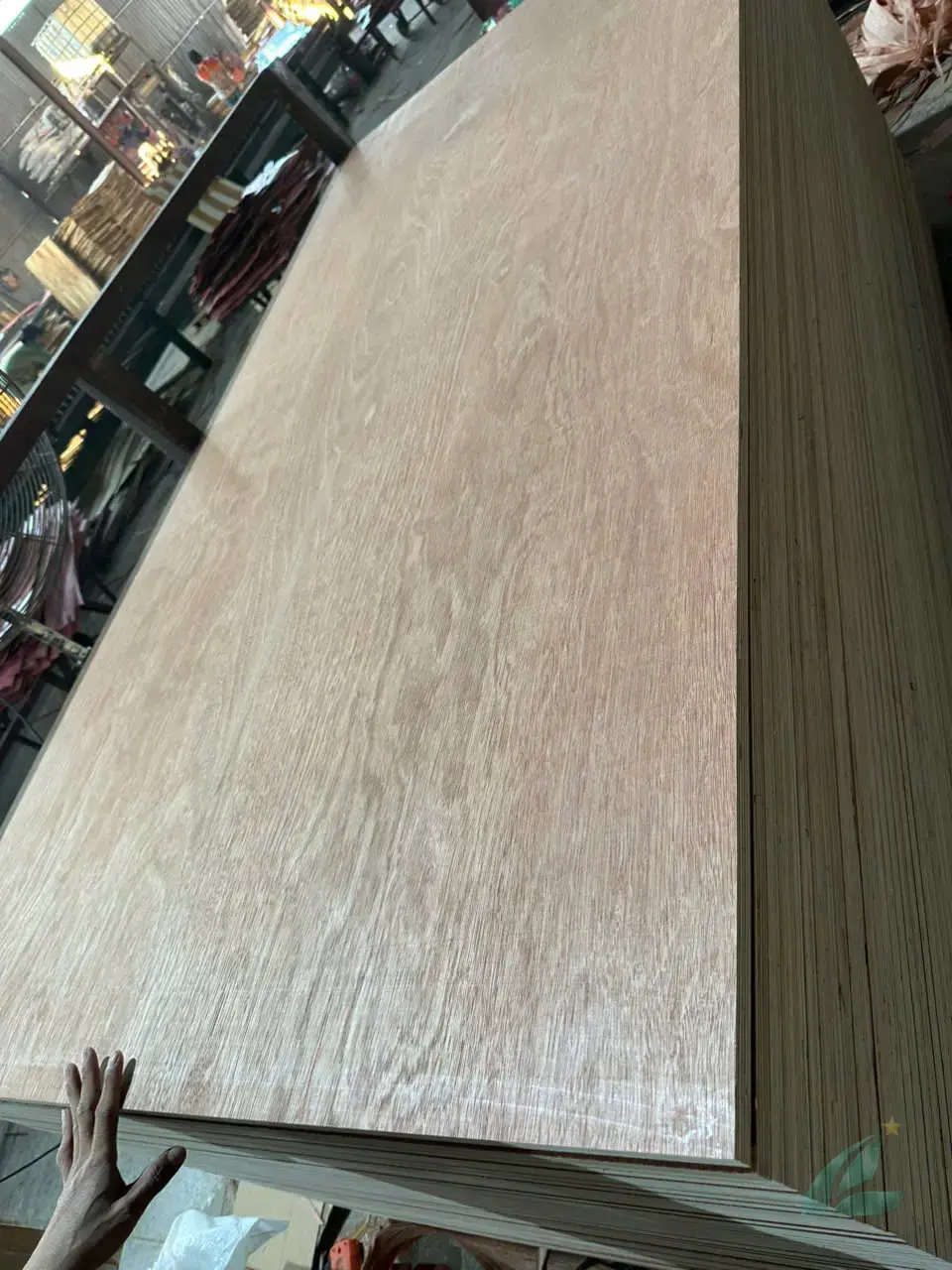
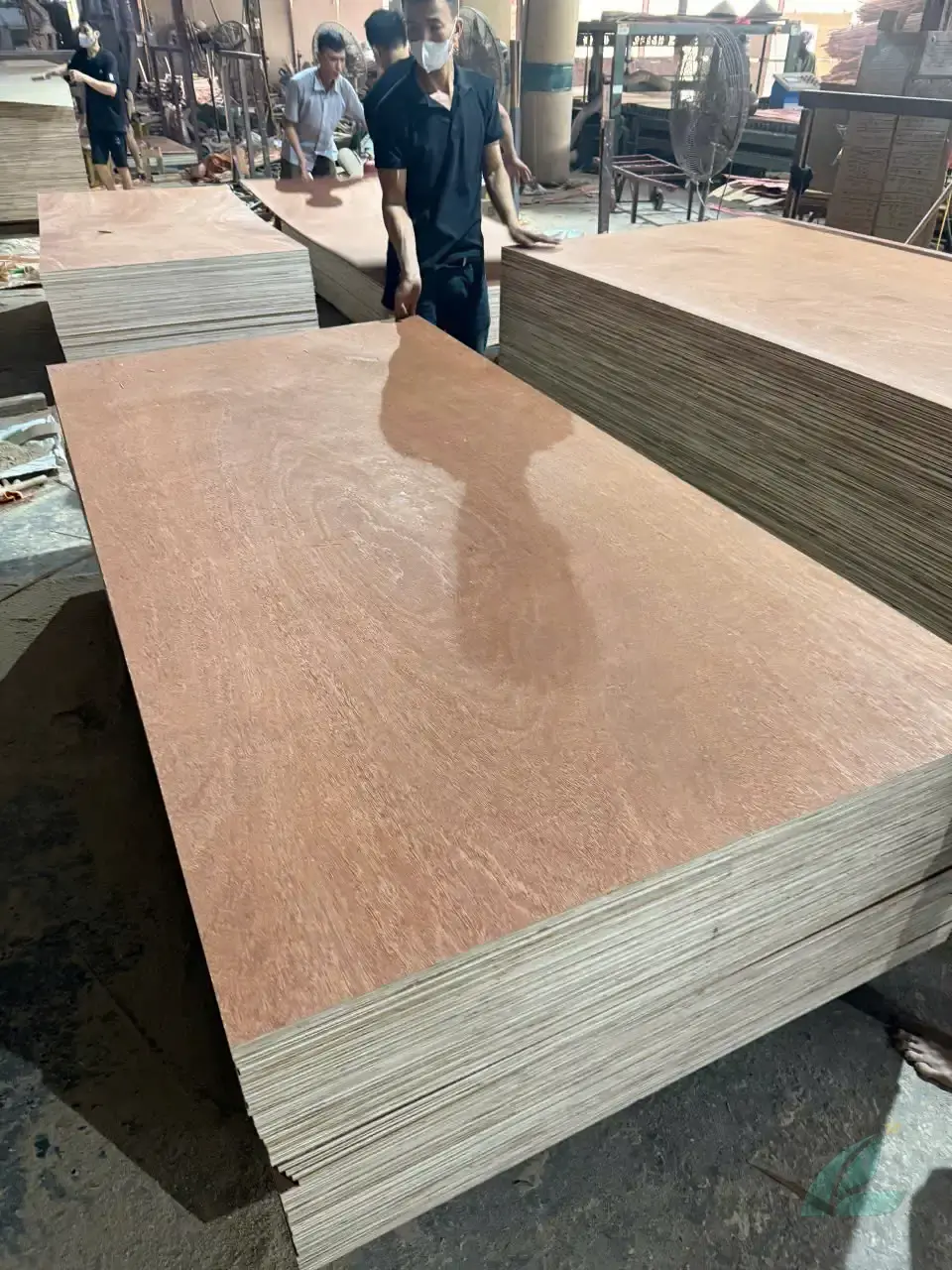
In Vietnam’s plywood manufacturing context, gurjan is exclusively a face veneer — never a core material. The face veneer is rotary-peeled at 0.2–0.4 mm thickness and bonded to Vietnamese-sourced cores: acacia (~580 kg/m³) or eucalyptus (650–750 kg/m³). This construction delivers gurjan’s signature surface appearance with the structural performance and cost efficiency of Vietnamese hardwood cores.
Gurjan plywood dominates India’s domestic plywood market. The Bureau of Indian Standards (BIS) references Dipterocarpus species in plywood grading standards, and Indian consumers recognise the species name as a marker of durability. This market-specific demand concentrates gurjan veneer pricing above other tropical face veneers.
Typical specification from HCPLY:
- Face: Gurjan, grade A/B, 0.2–0.4 mm
- Core: Acacia or eucalyptus
- Glue: WBP (phenolic) | Emission: E0 or E1
- Thickness: 4–25 mm | Size: 1220×2440 mm or 1250×2500 mm
🌿 What Is Okoume Plywood?
Okoume plywood features face veneer from Aucoumea klaineana — a tropical hardwood native to Central Africa, primarily Gabon and the Republic of Congo. Gabon supplies over 70% of global commercial okoume veneer (ITTO Tropical Timber Market Report, 2024). The species is prized for its exceptionally low density, straight grain, and a pale pink surface that takes lacquer, paint, and lamination with minimal preparation.
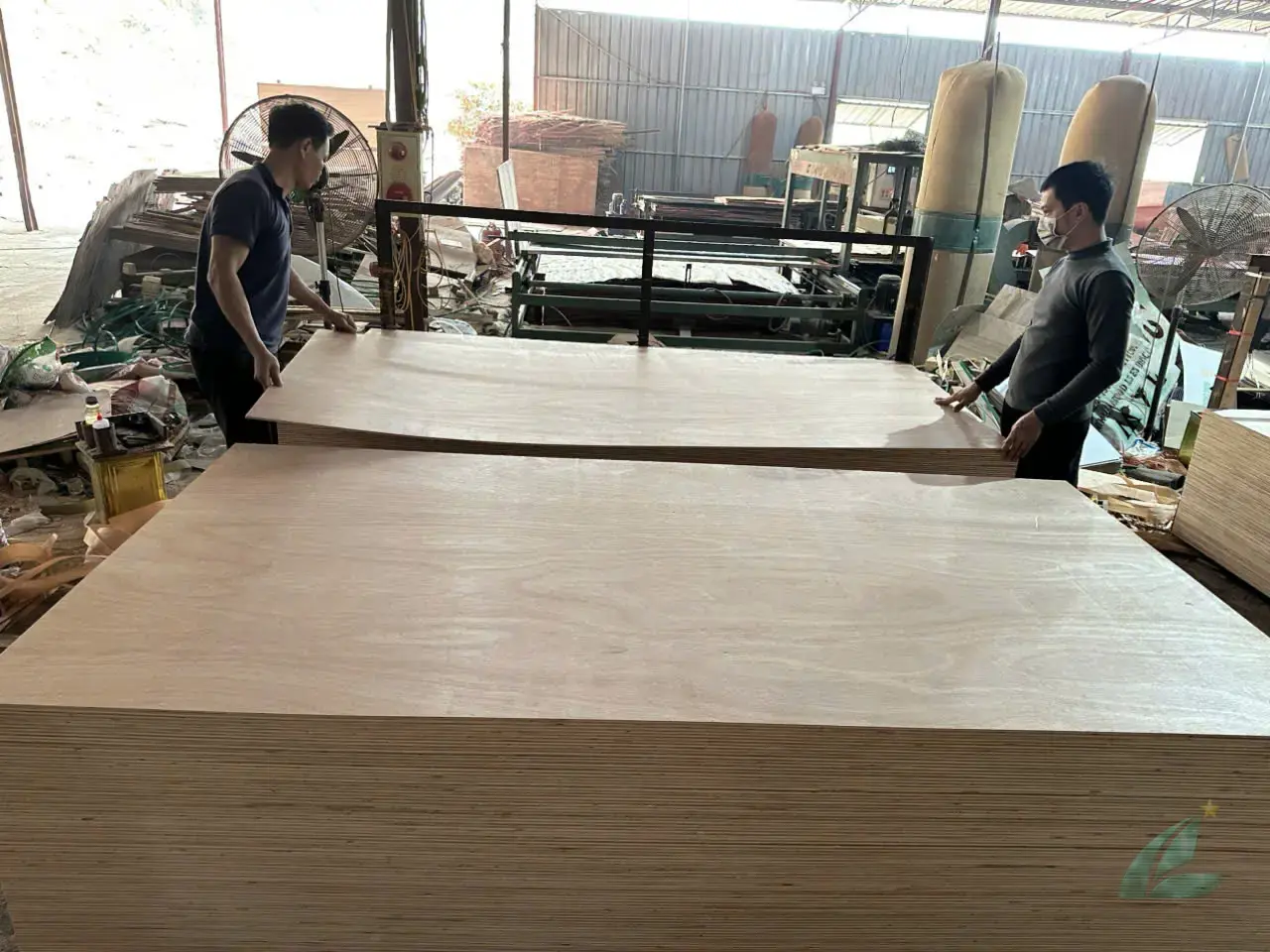
Okoume face veneer is imported to Vietnam from Africa and bonded to local cores — typically styrax (480–500 kg/m³) or eucalyptus. The combination of a lightweight African face with a lightweight Vietnamese styrax core produces panels that weigh significantly less than equivalent gurjan panels. This weight advantage translates directly into shipping economics: more sheets per pallet, more CBM per 40HC container, and lower freight cost per panel.
European furniture factories, Japanese cabinet manufacturers, and marine joinery workshops specify okoume for its consistent surface, ease of finishing, and low panel weight. In the marine sector, okoume with WBP (phenolic) glue is used for interior hull lining and cabin joinery — though formal BS 1088 marine-grade certification is a separate, Gabon-originated product line.
Typical specification from HCPLY:
- Face: Okoume, grade A/B, 0.2–0.4 mm
- Core: Styrax or eucalyptus
- Glue: MR (melamine) or WBP (phenolic) | Emission: E0, E1, or E2
- Thickness: 3–30 mm | Size: 1220×2440 mm or 1250×2500 mm
💰 Price Difference: Gurjan Commands the Premium
Price is typically the first question importers ask when comparing gurjan plywood okoume options. The answer is straightforward: gurjan face veneer costs more than okoume in every comparable specification.
Three factors drive this premium:
-
Supply concentration. Gurjan veneer comes from a narrowing range of Southeast Asian sources. Myanmar, historically the largest supplier, restricted log exports in 2014. Remaining supply from Laos, Cambodia, and Indonesia faces increasing export controls (FAO, 2023).
-
Demand concentration. India alone absorbs an estimated 60-70% of global gurjan veneer production. Indian domestic plywood manufacturers compete with Vietnamese exporters for the same raw material, sustaining high veneer prices.
-
Veneer yield. Gurjan logs tend to produce lower veneer yield per cubic metre compared to okoume — the interlocked grain creates more waste during rotary peeling.
Key Insight: As a rough benchmark, gurjan face commands a USD 15–25 per CBM premium over okoume face for equivalent core, glue, and thickness specifications. Exact pricing shifts with veneer supply cycles. Request a current quotation from HCPLY for precise figures.
Okoume veneer pricing is more stable. Gabon’s managed forest concessions produce consistent supply volumes, and the species grows faster than most tropical hardwoods — reaching harvestable diameter in 25–30 years compared to 40+ years for most Dipterocarpus species (ITTO, 2023). For buyers where face veneer species is not a market-mandated requirement, okoume delivers a professional-grade surface at lower cost per panel.
The pricing gap between the two species has widened since 2023 as Southeast Asian veneer export restrictions tightened. Buyers who previously defaulted to the premium option should re-evaluate whether their end-market truly requires it, or whether the price difference could be redirected to upgrading core construction quality — a factor that affects panel performance far more than face veneer species.
Request Gurjan & Okoume Price Comparison
🔬 Strength, Hardness & Durability
Gurjan and okoume differ meaningfully in surface performance — but panel structural strength depends primarily on core species, not face veneer.
📌 Surface Performance
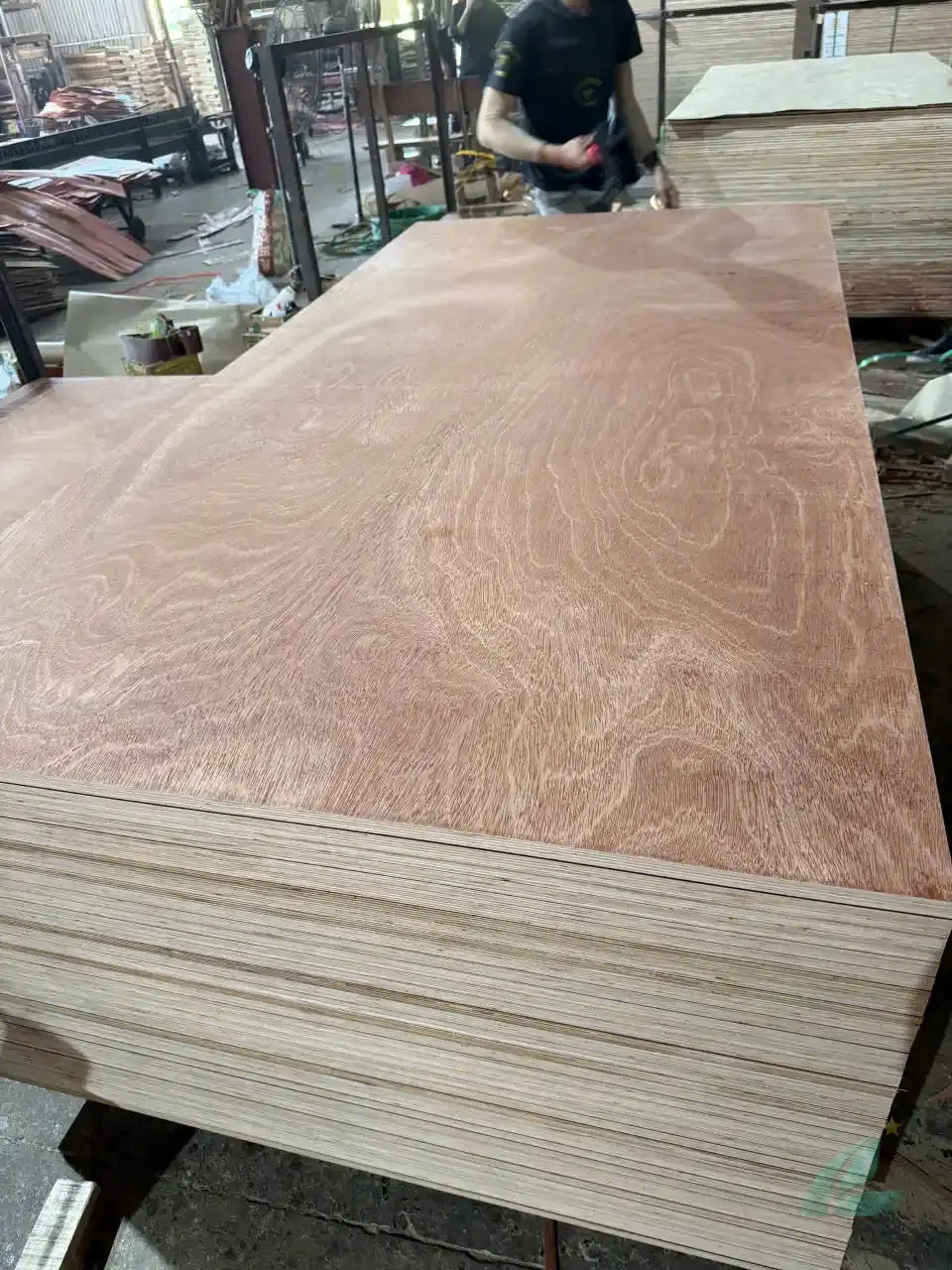
Gurjan face veneer is denser and harder than okoume. In practical terms:
- Scratch resistance: Gurjan surfaces resist scratches from daily furniture use better than okoume. This matters for table tops, door panels, and flooring underlayment where the face is exposed.
- Dent resistance: Gurjan’s higher density makes it more resistant to impact dents — relevant for doors and shutters in high-traffic environments.
- Finishing: Both species take lacquer, paint, and stain well. Okoume’s straighter grain produces a smoother finish with fewer coats. Gurjan’s coarser grain shows more natural character through transparent finishes.
⚙️ Panel Structural Strength
A 12 mm gurjan-face plywood panel and a 12 mm okoume-face plywood panel built on the same core species (e.g., both with eucalyptus core at 650–750 kg/m³) will have near-identical bending strength, screw-holding capacity, and dimensional stability. The face veneer at 0.2–0.4 mm thickness contributes minimal structural value — core species and construction quality (stitched vs. loose-laid) determine the panel’s mechanical performance.
⚠️ Important: Do not confuse face veneer hardness with panel strength. Buyers who need structural performance should specify core species and core construction — not just the face veneer.
🌊 Marine & Moisture Resistance
Both gurjan and okoume plywood perform well in moisture-prone environments when bonded with the correct adhesive. The deciding factor is glue type, not face veneer species.
| Property | Gurjan + WBP | Okoume + WBP | Gurjan + MR | Okoume + MR |
|---|---|---|---|---|
| Boiling test | 72 hours | 72 hours | 12 hours | 12 hours |
| Marine interiors | Suitable | Suitable | Not recommended | Not recommended |
| Bathroom/kitchen | Suitable | Suitable | Limited exposure only | Limited exposure only |
| Outdoor (covered) | Suitable | Suitable | Not suitable | Not suitable |
| BS 1088 certified | No (VN production) | No (VN production) | No | No |
Both species with WBP (phenolic) glue pass the 72-hour boiling water test — the industry standard for exterior/marine-grade bonding. Gurjan’s denser face provides slightly better moisture barrier at the surface level, but the adhesive layer is what prevents delamination.
“Buyers requesting marine-grade plywood from Vietnam should specify WBP glue as the baseline. Whether they choose gurjan or okoume face depends on surface finish preference and market requirements, not waterproofing capability.” — Lucy, International Sales Manager, HCPLY
For formal BS 1088 marine certification, both species require certification from the original veneer source country — this is a supply chain certification, not something achievable at the assembly factory level alone. Buyers evaluating gurjan vs okoume plywood for marine projects should focus on glue specification first, face veneer second.
🏭 Core Pairing & Container Loading from Vietnam
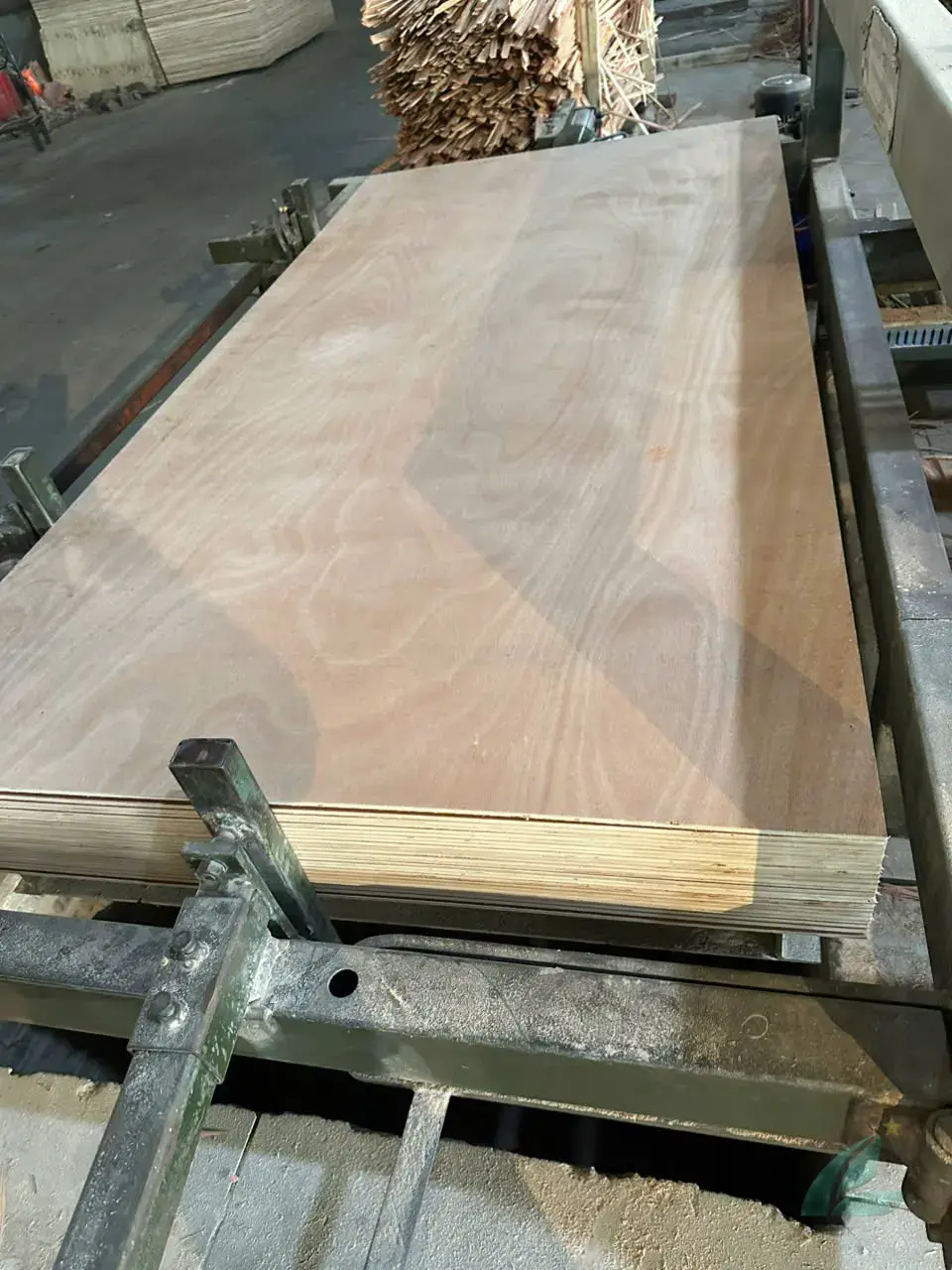
The face veneer you choose affects which core species and container configurations make economic sense. Vietnam produces three core species, each creating a different weight and CBM calculation.
Gurjan: Typical Core Pairing
Gurjan face plywood ships primarily to India and South Asia, where buyers prefer:
- Acacia core (~580 kg/m³) — cost-optimized, meets commercial furniture specifications
- Eucalyptus core (650–750 kg/m³) — premium segment, higher density for doors and structural furniture
Gurjan with acacia core loads at 16 pallets per 40HC (~47.5 CBM). Gurjan with eucalyptus core loads at 15 pallets per 40HC (~44.5 CBM) due to the 28.5 MT payload ceiling (HCPLY packing data, 2026).
Okoume: Typical Core Pairing
Okoume face plywood serves European and Japanese markets where lightweight panels are preferred:
- Styrax core (480–500 kg/m³) — the lightest core, maximizes sheets per container
- Eucalyptus core (650–750 kg/m³) — for buyers needing higher panel density
Okoume with styrax core loads at 18 pallets per 40HC (~53 CBM) — the highest loading efficiency among standard face veneers. This translates to approximately 11% more CBM per container compared to gurjan with acacia core. For volume importers, that difference compounds across every shipment.
Key Insight: A buyer importing 10 containers annually saves the equivalent of 1+ full container of freight cost by choosing okoume + styrax core over gurjan + eucalyptus core. Full packing calculations are available in the plywood container packing guide.
🎯 Market Fit: Which Face Veneer for Which Buyer?
Selecting between gurjan plywood okoume options is ultimately a market-fit decision. The species you choose must match what your end-market recognises and pays for.
India & South Asia → Gurjan
Indian buyers specify gurjan plywood by name. The Bureau of Indian Standards includes Dipterocarpus species in its IS 303 and IS 710 plywood classifications. Indian retail customers ask for “gurjan ply” at hardware stores. Substituting okoume — even at identical structural specs — creates a marketability gap because the end-consumer does not recognise the species.
BIS certification for plywood destined for Indian retail requires compliance with specific species identification. For buyers new to the process, see how to import plywood from Vietnam and how to buy plywood from Vietnam. HCPLY produces panels to IS 303/710 specifications with WBP glue for the Indian market. Indian importers should note that BIS certification timelines have extended since 2024, and having production-ready specifications aligned to IS standards before applying for certification saves months of delay.
Europe & Japan → Okoume
European furniture factories prefer okoume plywood for three practical reasons: lightweight handling on production lines, smooth surface requiring fewer finishing coats, and compliance with E0/E1 emission standards for indoor furniture. Japanese cabinet manufacturers similarly specify okoume for its dimensional stability and pale base color.
The 2025 implementation of the EU Deforestation Regulation (EUDR) adds another consideration for European buyers. Both face veneers require compliant sourcing documentation, but okoume from Gabon’s managed concessions has an established traceability chain. HCPLY provides full certification and export documentation for both species.
Middle East & Africa → Either (Application-Dependent)
Middle Eastern and African markets accept both species. The deciding factor is typically application and price:
- Furniture and interiors: Gurjan for premium positioning, okoume for cost-conscious production
- Marine and moisture-prone: Either species with WBP glue
- Commercial/general: Often bintangor wins on price for these segments
For a related comparison of the two most affordable face veneers, see bintangor vs okoume plywood — a useful reference for buyers choosing between all three commercial-grade options.
Related reading:
- For finishing, see our okoume veneer finishing guide.
- European buyers should see okoume plywood for European furniture factories.
- Indian buyers may prefer gurjan plywood suppliers for Indian buyers.
- For the full species overview, see our plywood face veneer types guide.
✅ Recommendation: Choose by Application
Gurjan and okoume are not interchangeable — they serve different markets, different weight requirements, and different price expectations. Here is a decision framework based on what HCPLY ships daily:
| Application | Recommended | Why |
|---|---|---|
| Indian domestic furniture | Gurjan | Market recognition, BIS compatibility |
| European kitchen cabinets | Okoume | Lightweight, E0/E1, smooth finish |
| Marine interior joinery | Either + WBP | Both pass 72-hour boil with phenolic |
| Doors and shutters | Gurjan | Higher surface hardness, scratch resistance |
| Lightweight panels / RV | Okoume + styrax core | Minimum weight per panel |
| Budget commercial | Neither — choose bintangor | Lower cost face veneer |
| Maximum container CBM | Okoume + styrax core | 18 pallets vs 15-16 for gurjan |
The right choice in a gurjan vs okoume plywood decision is not which species is “better” — it is which species your market requires and your freight budget supports. Buyers importing to markets where neither species is mandated should compare landed cost per panel, including the freight differential from container loading efficiency.
For buyers sourcing both species, HCPLY ships mixed gurjan and okoume specifications in a single 40HC container. One supplier, one invoice, one quality standard across both face veneers.
Disclosure: This article is published by HCPLY, a Vietnam-based plywood manufacturer and export operator. While we aim to provide objective industry guidance, readers should consider our perspective as a market participant when evaluating recommendations.