

Indian plywood importers face one recurring decision when sourcing from Vietnam: gurjan or bintangor face? Both dominate the market. Both ship in 40HC containers by the thousand. But they serve different buyers, different budgets, and different end applications.
This article gives you a direct comparison — gurjan plywood vs bintangor plywood for the India market — based on real production data from our facilities in Northern Vietnam.
📋 TL;DR — Gurjan vs Bintangor Plywood at a Glance
| Property | Gurjan Plywood | Bintangor Plywood |
|---|---|---|
| Face species | Gurjan (Dipterocarpus spp.) | Bintangor (Calophyllum spp.) |
| Colour | Dark reddish-brown, interlocked grain | Light to medium brown, straight grain |
| Hardness | Higher (dense hardwood face) | Moderate (softer tropical hardwood) |
| Face grades available | A/B | A/B |
| Core species (Vietnam) | Acacia or Eucalyptus | Acacia or Styrax |
| Glue options | MR (Melamine) or WBP (Phenolic) | MR (Melamine) or WBP (Phenolic) |
| Emission standards | E0, E1, E2 | E0, E1, E2 |
| Price vs bintangor | 15–25% premium | Baseline (most affordable) |
| Primary India use | Premium furniture, interior joinery | Commercial furniture, packaging, cabinets |
| Volume in India trade | Lower (premium segment) | Higher (mass commercial) |
| BIS compliance | Yes (IS 303, IS 710) | Yes (IS 303) |
💡 Key Insight: Neither face veneer is inherently “better” — gurjan wins on hardness and premium appeal, bintangor wins on price and availability. The right choice depends on your end customer and price point.
📦 What Is Gurjan Plywood?
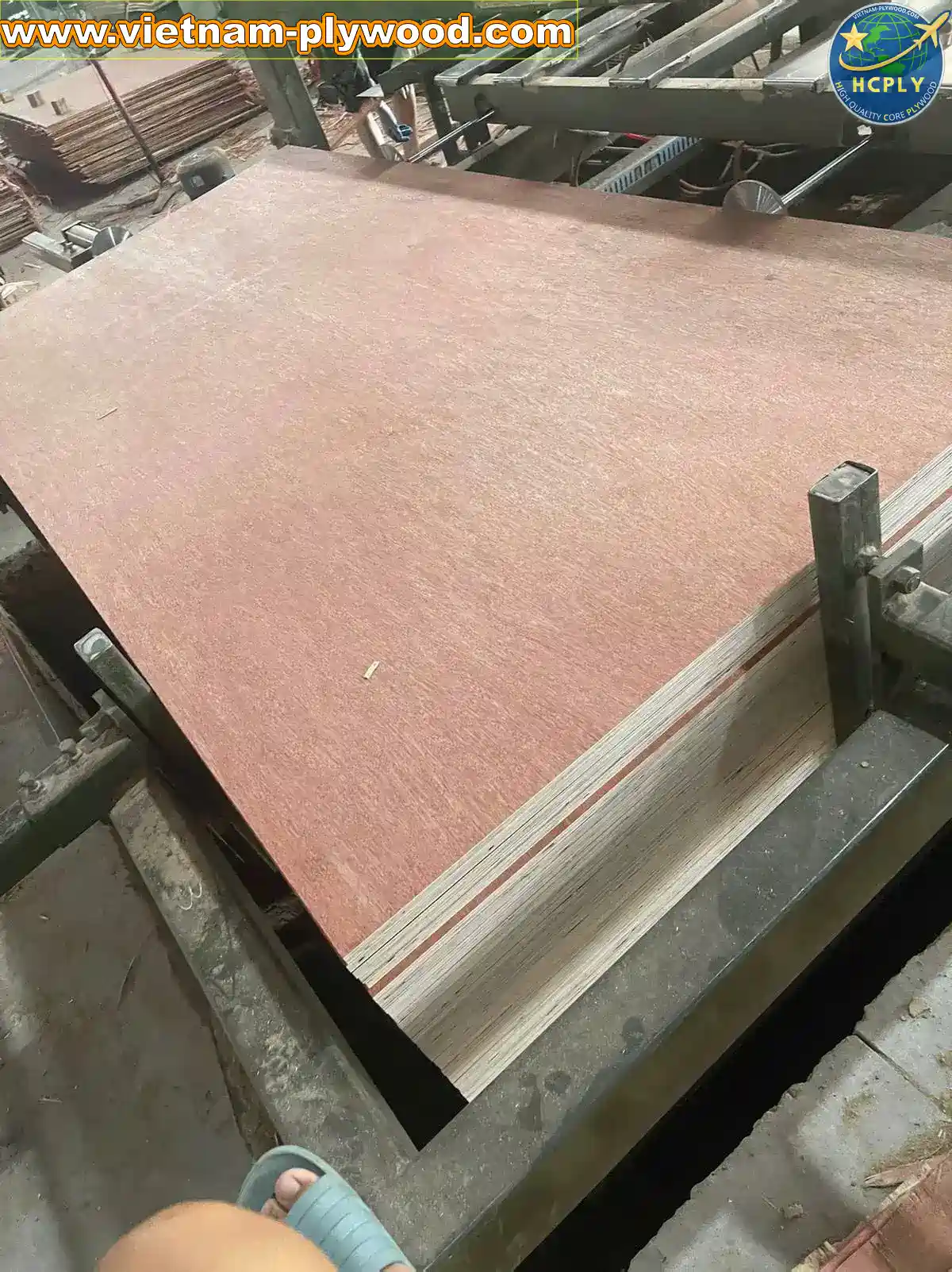
Gurjan plywood uses face veneer from the Dipterocarpus genus — a dense tropical hardwood native to South and Southeast Asia. The face veneer is 0.2–0.4mm thick, rotary-cut, and applied to a Vietnamese core (acacia or eucalyptus).
“Indian buyers need to understand that BIS certification is non-negotiable for customs clearance. We maintain active BIS IS:710 and IS:303 registrations — buyers who source from non-BIS factories face rejection at the port.” — Lucy, International Sales Manager, HCPLY
⚙️ Gurjan Plywood Specs from Vietnam
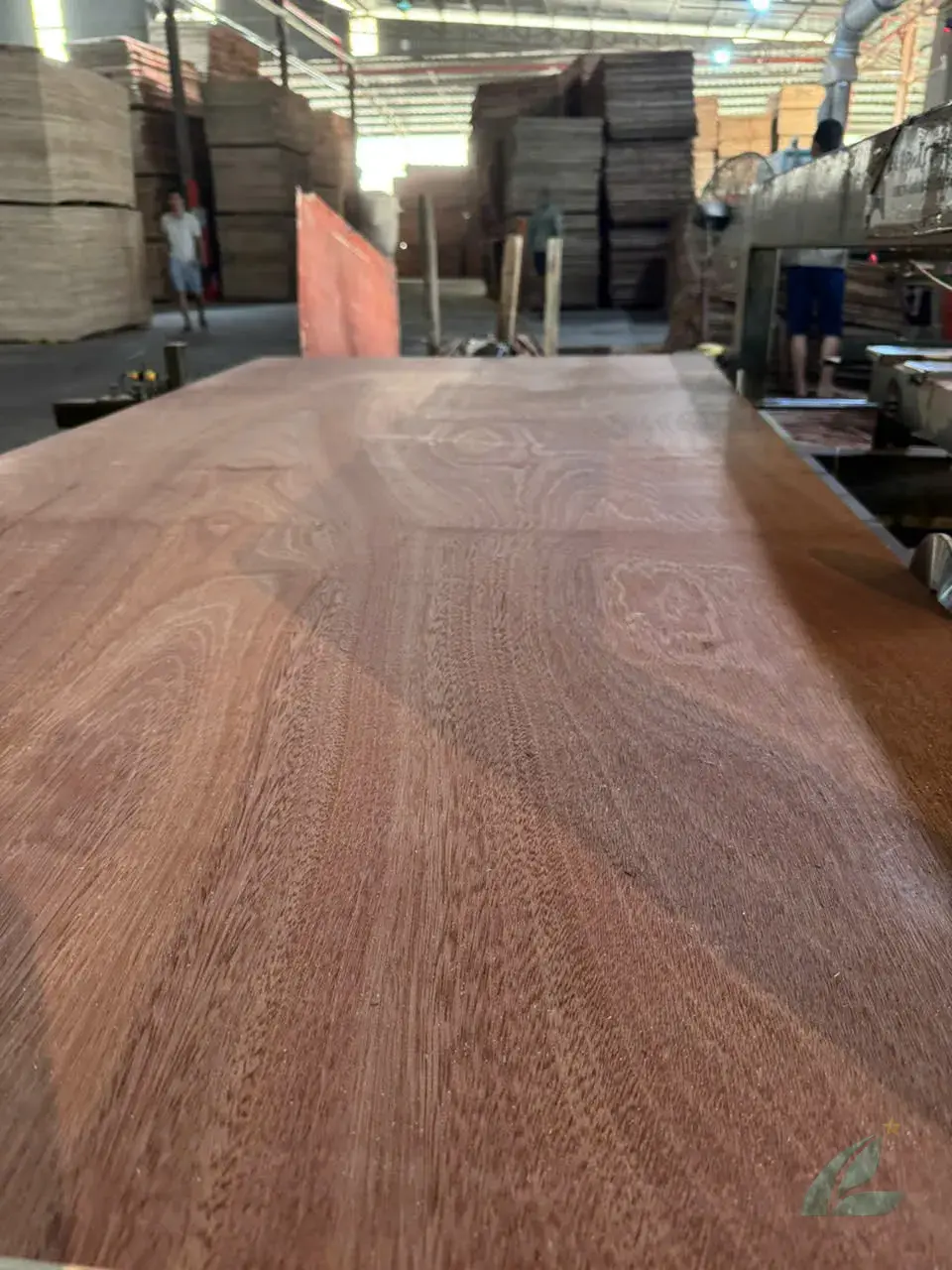
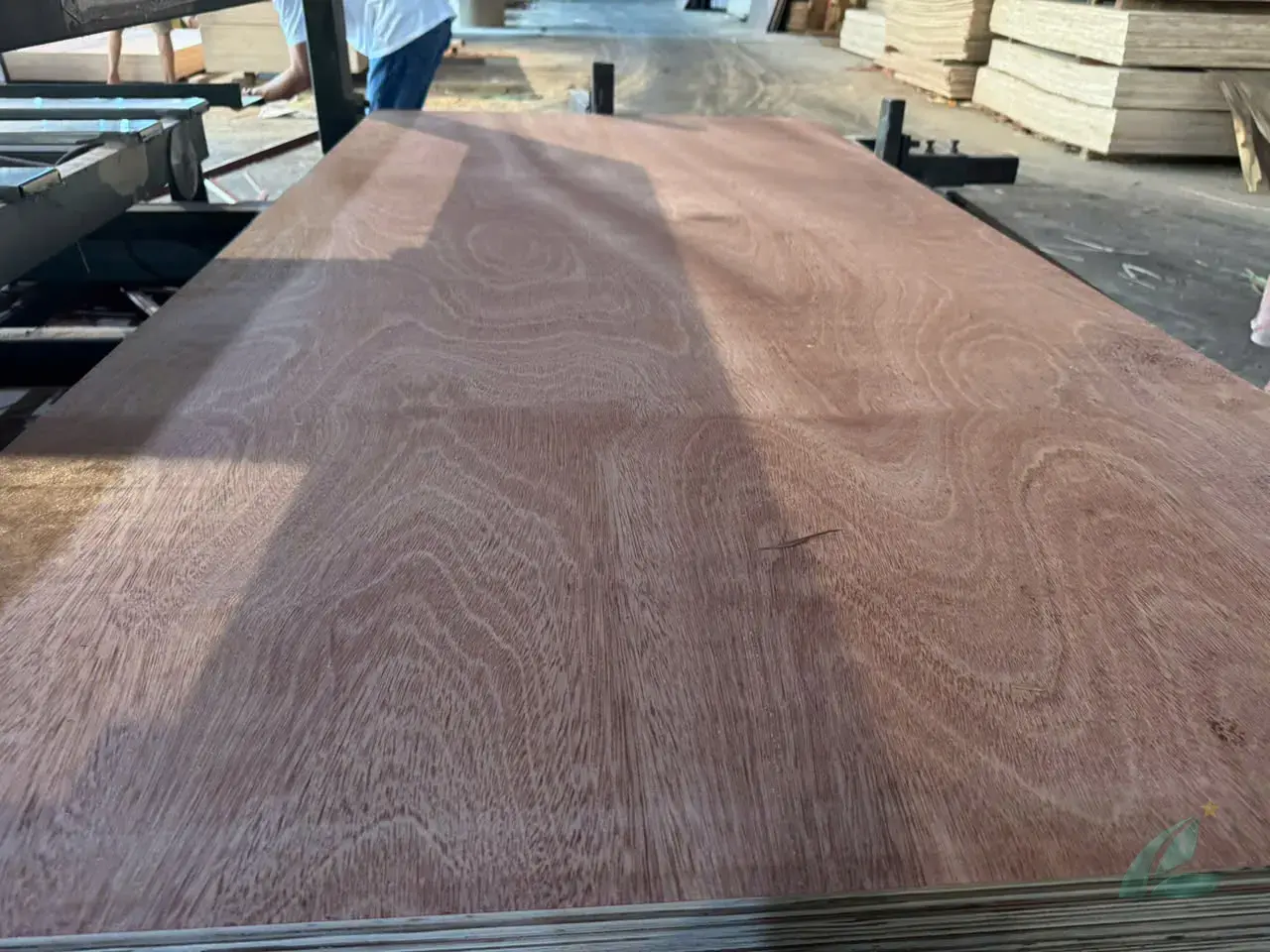
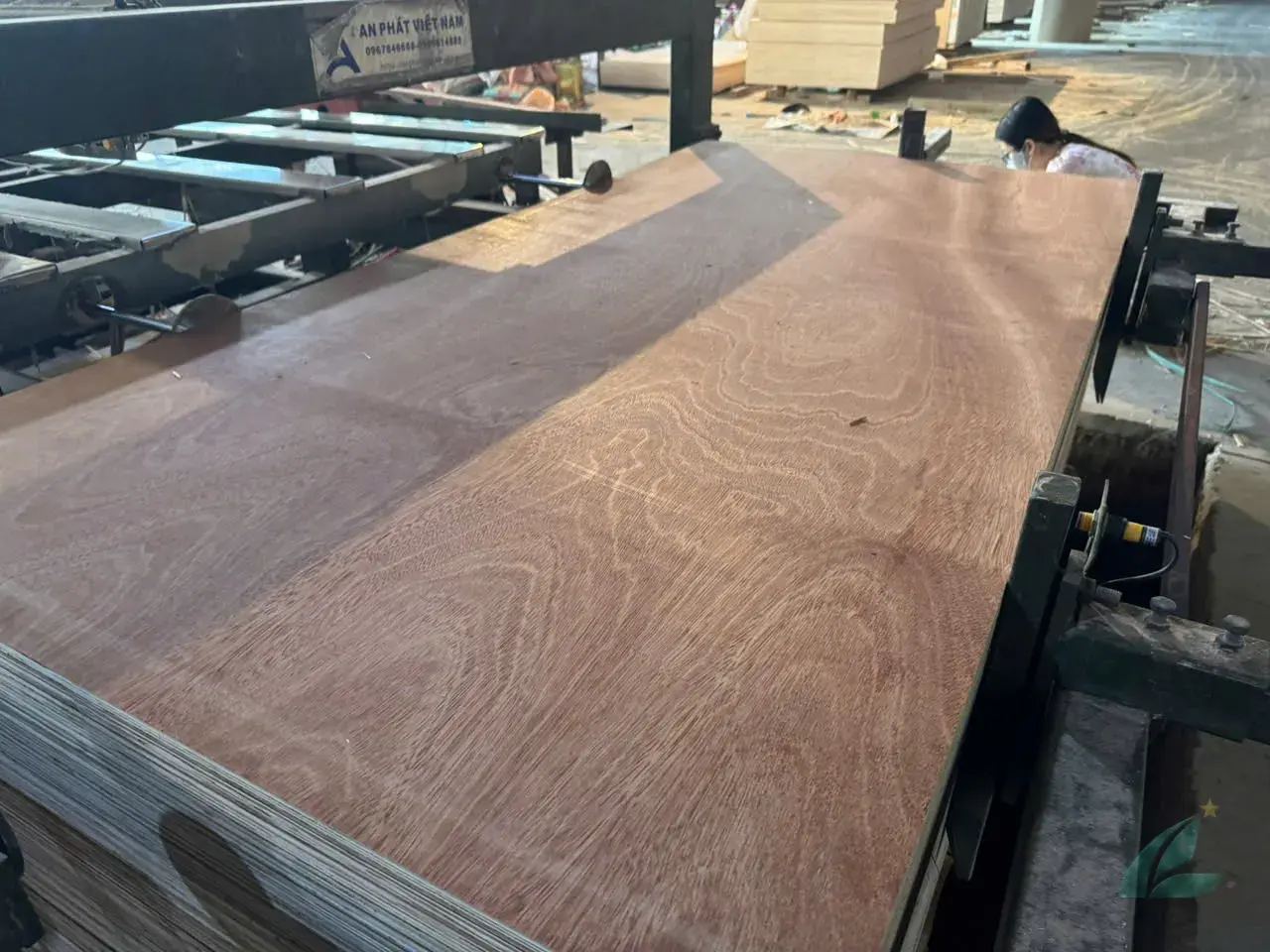
The gurjan face gives the panel a distinctive dark reddish-brown colour with interlocked grain. This grain structure makes surface machining slightly more demanding but produces a visually striking result when finished.
From our Northern Vietnam facilities, gurjan plywood ships with:
- Thickness range: 4–25mm
- Sheet sizes: 1220×2440mm or 1250×2500mm
- Core: Acacia (~580 kg/m³) or Eucalyptus (650–750 kg/m³)
- Glue: Melamine MR (furniture grade) or Phenolic WBP (moisture-resistant)
- Emission: E0, E1, or E2 to order
- Sanding: Yes (calibrated both faces for furniture applications)
- Certifications: FSC, CARB P2, ISO 9001 available
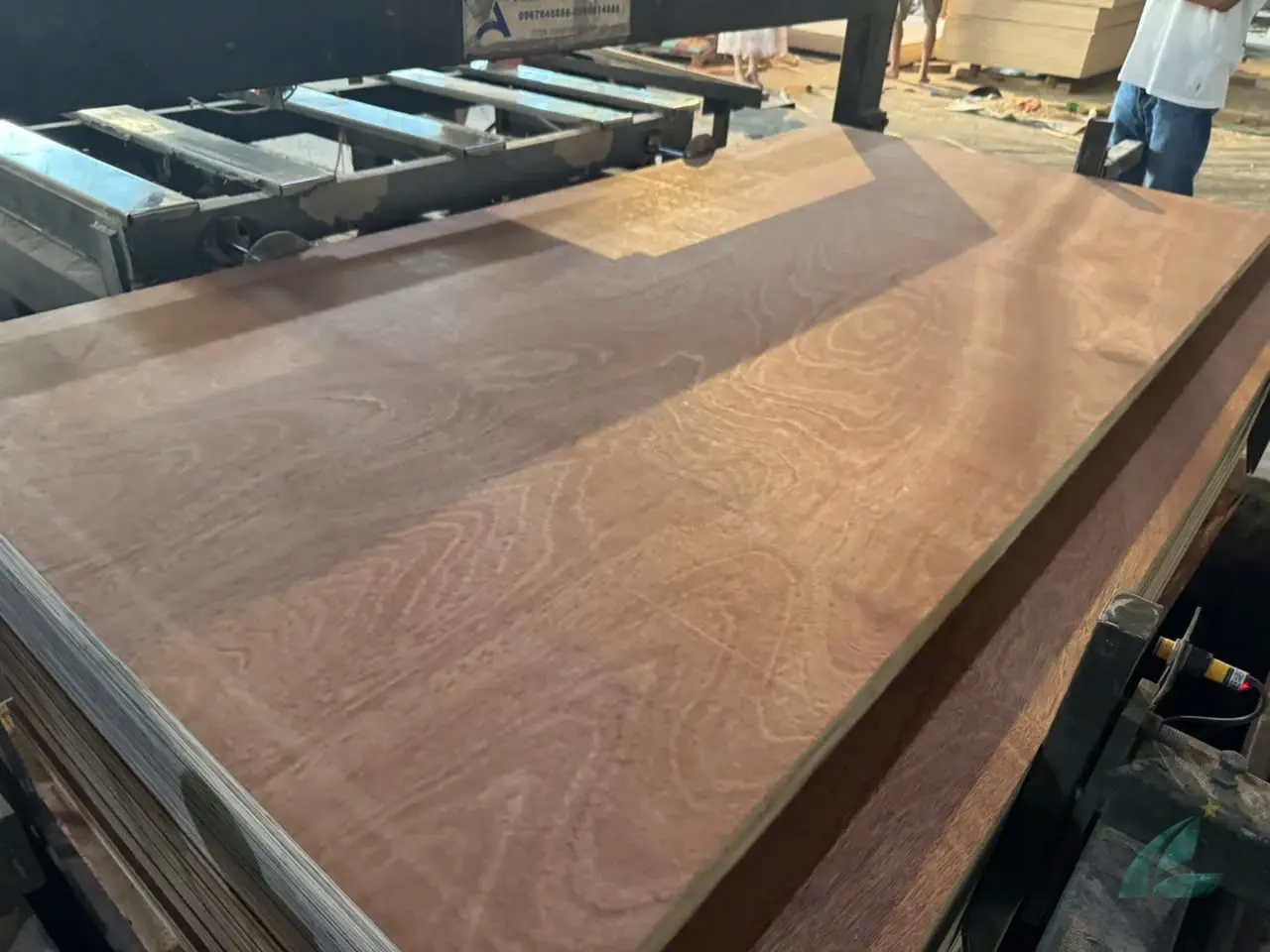
“Gurjan face plywood from Vietnam delivers the hardwood appearance that Indian premium furniture buyers expect, at a price point that full solid-wood or Indian-manufactured gurjan panels cannot match,” explains David, Export Project Leader at HCPLY with 10+ years in South Asia trade.
View Gurjan Plywood from HCPLY
📦 What Is Bintangor Plywood?
Bintangor plywood uses face veneer from the Calophyllum species group — a lighter tropical hardwood with a consistent, straight grain. It is the most widely exported face veneer from Vietnam to India, prized for its cost efficiency and broad commercial acceptability.
⚙️ Bintangor Plywood Specs from Vietnam
The bintangor face presents in light to medium brown, sometimes with a reddish tint. The grain is more uniform than gurjan, making it easier to paint, laminate, or apply HPL over.
From our production facilities, bintangor plywood ships with:
- Thickness range: 2–40mm (widest range of any face veneer)
- Sheet sizes: 1220×2440mm or 1250×2500mm
- Core: Acacia (~580 kg/m³) or Styrax (480–500 kg/m³)
- Glue: Melamine MR standard; Phenolic WBP available
- Emission: E0, E1, or E2 to order
- Sanding: Optional — sanded for furniture, unsanded for packaging/commercial
- Certifications: FSC, CARB P2, ISO 9001 available
Bintangor is particularly popular for bintangor plywood India orders where buyers need multiple container loads at consistent pricing. Its acacia core variant is the most cost-competitive plywood exported from Vietnam.
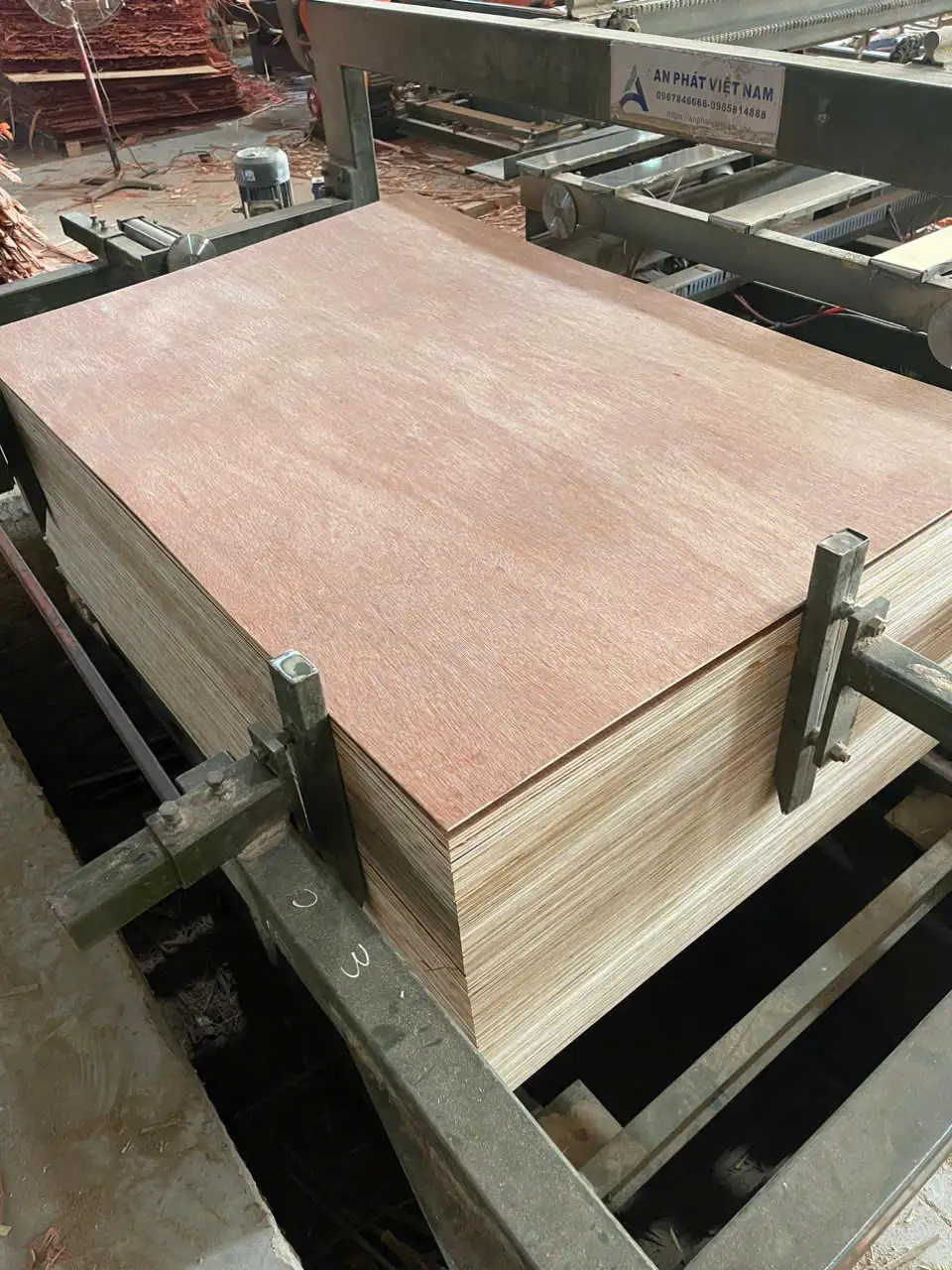
View Bintangor Plywood from HCPLY
📊 Gurjan vs Bintangor — In-Depth Comparison
🔍 1. Appearance and Surface Quality
Gurjan presents darker, with a richer visual texture. Indian premium furniture manufacturers and interior designers specify gurjan when the face will be clear-lacquered or stained to show the wood character. The interlocked grain creates a ribbon-like figure that is difficult to replicate with lighter species.
Case study — matching specs to application: An Indian door manufacturer initially requested phenolic glue with acacia core, assuming it was needed for durability. Phenolic production requires a completely different process — kiln-dried core veneer, full two-way stitching, and polished face — at significantly higher cost. After understanding the actual application (interior doors), HCPLY recommended eucalyptus core with okoume 0.25mm face and 10% melamine glue (12-hour boil test compliant). The first container met all requirements. The buyer became a repeat customer — paying less for a panel that performed better in their application.
Bintangor offers a cleaner, more neutral surface. For applications where the face will be painted, laminated with HPL or melamine paper, or used as a substrate for veneers — bintangor’s uniformity is actually an advantage. Paint adhesion is more consistent over a straight-grain face.
⚠️ Important: Both gurjan and bintangor are available in A/B face grades. Grade A allows minimal defects; Grade B allows small knots and colour variation. For Indian IS 303 compliance, Grade B is acceptable for most commercial uses.
🔍 2. Hardness and Durability
Gurjan hardwood face is denser than bintangor, contributing to better scratch resistance and surface hardness at the panel level. For applications like tabletops, cabinet doors, and high-traffic interior joinery, the gurjan face holds up better under daily use.
Bintangor provides adequate durability for furniture carcasses, shelving interiors, and commercial fitout applications where the face is not exposed to abrasion.
From a structural standpoint, the core species determines panel strength, not the face. An 18mm gurjan-face / acacia-core panel will have the same structural properties as an 18mm bintangor-face / acacia-core panel of equivalent construction (HCPLY production data, 2026).
🔍 3. Price and Cost Efficiency
Bintangor is the most affordable face veneer in Vietnam’s export portfolio. Gurjan veneer costs more — the raw material is less abundant, and the veneer yield per log is lower given the dense interlocked grain.
Typical FOB Hai Phong pricing differential (indicative, subject to market conditions):
- Gurjan face: 15–25% above equivalent bintangor specification
- Bintangor face with acacia core: baseline pricing
For Indian importers managing tight container budgets, bintangor maximises the number of panels per container. For premium product lines where the price premium passes through to the end customer, gurjan’s margin justification is clear.
💡 Tip: Mixed containers combining gurjan and bintangor face panels are possible from HCPLY. Importers regularly mix specifications within a single 40HC container — calculate weights carefully, as eucalyptus-core panels approach the 28.5 MT payload limit faster. See our container packing guide for exact loading tables.
🔍 4. Application Fit for Indian Market
India’s plywood market spans a wide range — from low-cost commercial furniture assembled in small workshops to high-specification interior joinery for premium apartments and commercial spaces (India Plywood Industry Report, Forest Research Institute India, 2024).
Gurjan plywood is the preferred choice for:
- Premium residential furniture (bedroom sets, wardrobes)
- Interior joinery (doors, window frames, panelling)
- Commercial interior fitout (offices, hospitality)
- Marine and moisture-exposed applications (IS 710 grade)
- Any application where IS 303 BWP (boiling waterproof) is specified
Bintangor plywood is the preferred choice for:
- Commercial furniture (budget wardrobes, modular office systems)
- Industrial packaging and crating
- Substrate for melamine or HPL lamination
- Ready-to-assemble (RTA) furniture at volume
- Packing-grade requirements where appearance is secondary
The Indian plywood market consumed approximately 2.5 million cubic metres of imports in FY2024 (Plywood Association of India, 2024), with Vietnam supplying a dominant share. Both gurjan and bintangor face panels appear in this import volume — at different price tiers.
5. BIS and Export Certification for India
Both gurjan and bintangor plywood from Vietnam can be supplied to meet Indian Bureau of Standards requirements:
- IS 303 (General purpose plywood): Both species qualify under MR (moisture-resistant) or BWP (boiling waterproof) grades
- IS 710 (Marine grade): Gurjan with WBP phenolic glue qualifies; bintangor can also meet IS 710 with WBP glue but is less commonly specified for marine use
- IS 1328 (Decorative plywood): Gurjan A-grade face frequently used; bintangor A-grade also acceptable
⚠️ Note: BIS compliance requires third-party lab testing on the specific shipment. HCPLY provides FSC, ISO 9001, CARB P2, and phytosanitary documentation as standard. BIS certification requires a licensed Indian testing laboratory to evaluate samples from the consignment.
Request BIS-Ready Documentation from HCPLY
For a deeper look at what BIS certification means for plywood imports, see our guide on plywood certifications and export documentation.
🏭 How Vietnam Manufactures Both Products
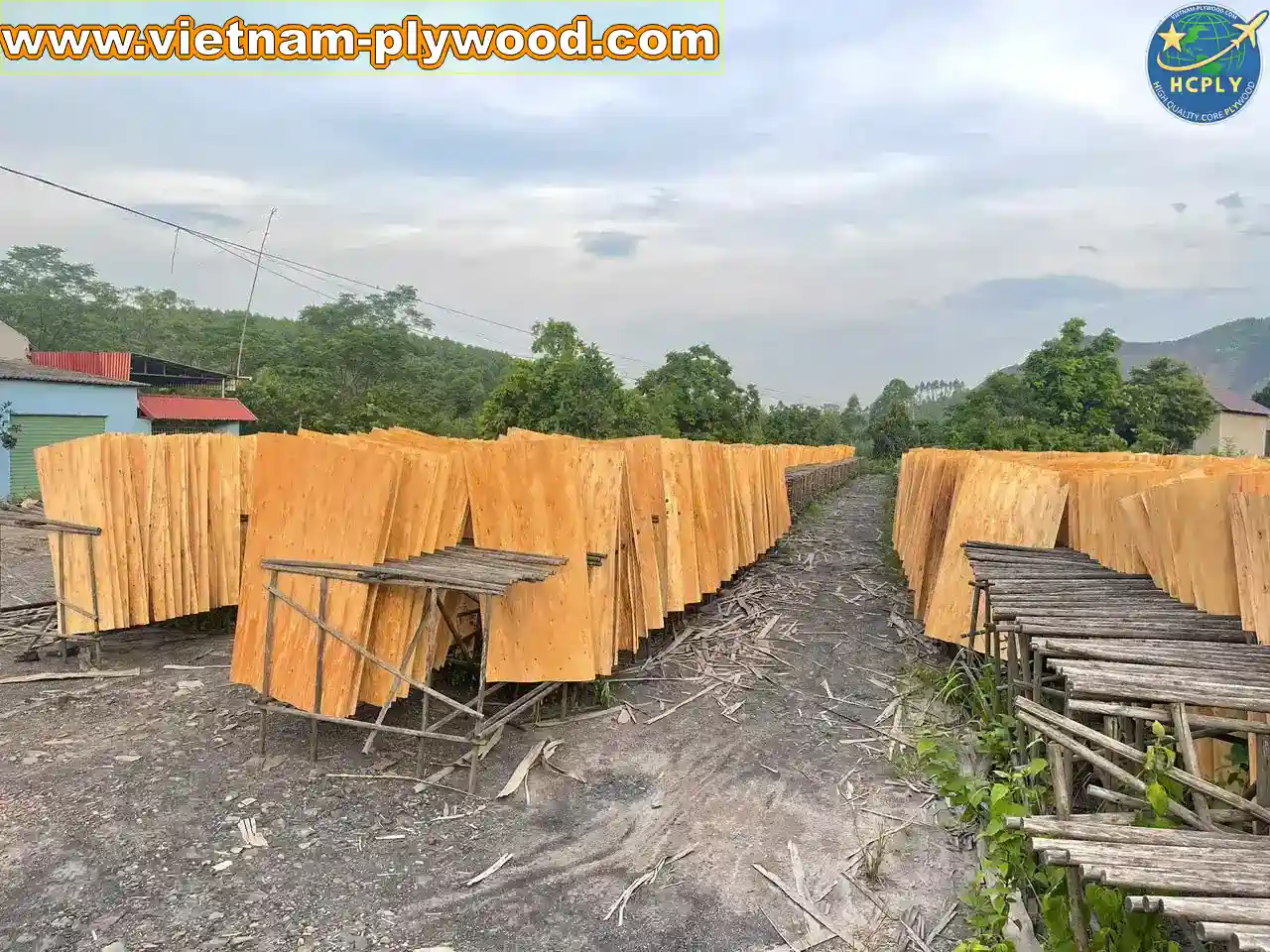
Vietnam’s Northern production cluster — concentrated in Phu Tho, Yen Bai, and surrounding provinces — manufactures both gurjan and bintangor face plywood with the same core infrastructure. The face veneer determines the product name; the core and construction determine quality tier.
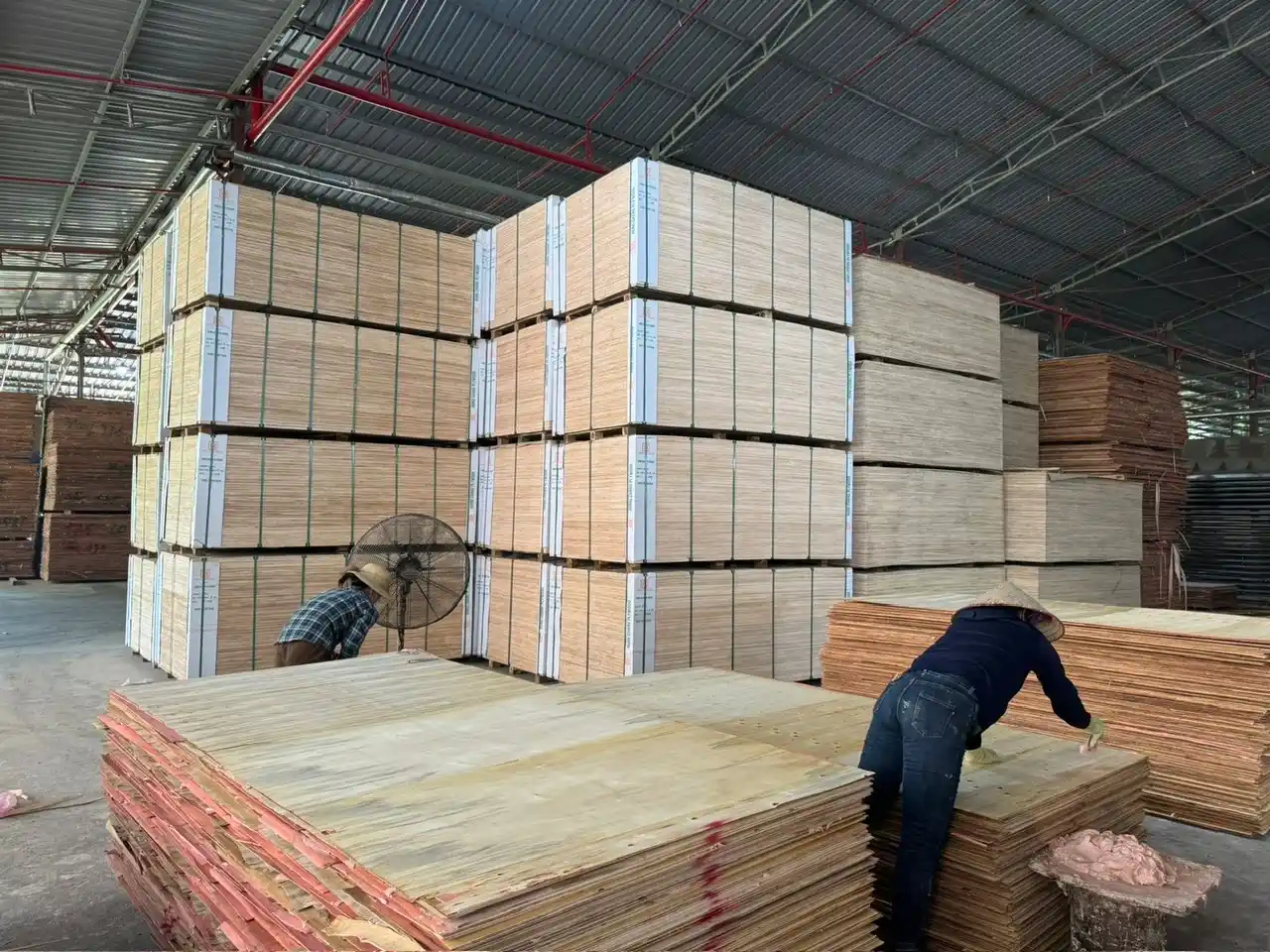
At HCPLY’s production facilities in Northern Vietnam:
- Premium furniture facility — produces gurjan face panels on styrax or eucalyptus core with full-stitched construction, E0 emission, sanded finish
- Commercial/packing facility — produces bintangor face panels on acacia core with edge-jointed or loose-laid construction, E1/E2 emission, unsanded for packing or lightly sanded for commercial
- Film-faced facility — separate product line (phenolic film, not relevant to this comparison)
The key distinction is core construction quality. Two panels with the same face veneer can have dramatically different structural performance depending on whether the core is full-stitched or loose-laid. Indian importers specifying premium applications must verify core construction in addition to face species.
For a full breakdown of how core construction affects quality and price, see our guide on plywood core types from Vietnam.
📐 Sizes and Thicknesses Available for India
Both gurjan and bintangor plywood ship to India in standard and custom sizes:
| Thickness | Application |
|---|---|
| 4–6mm | Drawer bottoms, light backing panels |
| 9–12mm | Cabinet sides, shelving |
| 15–18mm | Cabinet carcasses, furniture panels |
| 18–25mm | Structural furniture, flooring substrate |
Standard sheet: 1220×2440mm (4×8 ft) — the dominant size for Indian furniture production.
Custom cutting and metric sizes (1250×2500mm) available on request for specific production requirements.
✅ Which Should You Buy? — The Recommendation
The choice between gurjan plywood vs bintangor plywood for India comes down to three factors:
Choose gurjan if:
- Your end products are in the INR 15,000+ furniture price band
- Your customers compare your product to solid wood or premium MDF alternatives
- The face will be visible and finished with clear lacquer or stain
- You need IS 710 (marine/BWP) grade compliance
- Your buyers specify “gurjan plywood” by name (common in South and West India trade)
Choose bintangor if:
- Your production is volume-driven (50+ containers per year)
- The face will be painted, laminated, or concealed
- Your price point is competitive mid-range or commercial
- You are purchasing for packaging, industrial crating, or substrate use
- Container cost efficiency is the primary metric
Consider mixing both: Many Indian importers run two product lines — gurjan for their premium range, bintangor for their commercial range. HCPLY supplies mixed containers with exact weight calculations to stay within the 28.5 MT 40HC payload limit.
Related reading:
- For sourcing, see gurjan plywood suppliers for Indian buyers.
- For grading, read bintangor face grading A/B explained.
- See also best gurjan plywood manufacturers in Vietnam.
Disclosure: This article is published by HCPLY, a Vietnam-based plywood manufacturer and export operator. While we aim to provide objective industry guidance, readers should consider our perspective as a market participant when evaluating recommendations.
🔗 Related Articles
- Bintangor vs Okoume Plywood — Face Veneer Comparison — how bintangor compares to another popular low-cost face
- Gurjan vs Okoume Plywood — Which Face for Which Market — gurjan vs okoume for European and Asian markets
- Vietnam Plywood Export to India — Complete Buyer Guide — BIS certification, logistics, and buying process for Indian importers
- Plywood Face Veneer Types — Complete Guide — all face species compared in one reference article
📋 Conclusion
Gurjan plywood and bintangor plywood both serve the Indian import market at scale — but they address different buyer needs. Gurjan delivers hardness, visual richness, and premium market positioning. Bintangor delivers cost efficiency, volume availability, and versatility as a substrate.
The decision is not which is “better” in absolute terms. It is which specification serves your production economics and your end customer’s expectations.
Get a Free Quote for Gurjan or Bintangor Plywood from HCPLY
For mixed-container orders or to discuss your specific specifications, WhatsApp David directly at +84-338616333 — India and South Asia specialist with 10+ years in this trade.