

Flooring contractors and importers lose projects over a single wrong specification. Selecting the wrong plywood flooring underlayment — too thin, wrong core, wrong glue — causes tile cracking, vinyl bubbling, and warped parquet within 12 months of installation. This guide covers every technical variable that determines underlayment performance, so procurement teams and flooring manufacturers can order confidently.
Correct underlayment plywood thickness and subfloor plywood grade selection are the two decisions that define whether a finished floor system lasts 20 years or fails within two. This article focuses on plywood as a structural or intermediate substrate layer for finished flooring systems — covering vinyl (LVT/LVP), engineered parquet, ceramic tile, and hardwood. Data is drawn from HCPLY production specifications (2026) and APA–The Engineered Wood Association standards.
📋 What Is Plywood Flooring Underlayment?
Plywood flooring underlayment is a structural panel installed between the primary support structure (concrete slab or joists) and the finished flooring surface. Unlike foam or cork rolls, structural plywood flooring underlayment panels carry and distribute load — a function no flexible sheet material can replicate. It serves four engineering functions:
- Flatness — smooths irregularities that telegraph through thin vinyl or tile
- Load distribution — spreads concentrated foot traffic stress across a wider area
- Moisture barrier — separates finished flooring from concrete or organic substrate below
- Dimensional stability — prevents edge swelling that lifts or separates floor panels
Underlayment plywood is distinct from structural subfloor sheathing (which carries structural loads across joist spans) and from foam or rubber underlayment rolls (which are acoustic/thermal insulation, not structural).
⚠️ Important: A 3mm rubber acoustic underlayment roll is not a substitute for structural plywood underlayment. Many installers confuse these two layers. Specify which type you need when ordering.
The table below summarizes the three-layer floor system most common in commercial and high-end residential construction:
| Layer | Material | Thickness | Primary Function |
|---|---|---|---|
| Structural base | Concrete slab or joists | — | Load bearing |
| Underlayment | Plywood (this article) | 6–18mm | Flatness, stability, moisture control |
| Finished floor | Vinyl, parquet, tile, hardwood | 2–20mm | Aesthetics, wear surface |
📐 Thickness Selection — The Decision Framework
Underlayment plywood thickness is the first variable buyers must specify. Choosing under-thickness leads to flex and cracking. Over-thickness adds unnecessary cost and raises finished floor height beyond door clearances. Getting this right starts with the flooring type — the table below maps each finish floor to the correct subfloor plywood grade and thickness range.
📌 Thickness by Flooring Type
| Finished Flooring | Recommended Underlayment Thickness | Notes |
|---|---|---|
| Vinyl sheet / LVT (glue-down) | 6–9mm | Surface must be sanded flat; max deflection 3mm over 1800mm |
| Luxury vinyl plank (LVP, floating) | 9–12mm | Needs stiffer base than glue-down LVT |
| Ceramic / porcelain tile | 12–15mm | Requires rigid, void-free panel; WBP glue mandatory |
| Engineered parquet / hardwood | 12–15mm | E0 emission required for indoor air quality compliance |
| Structural subfloor (primary layer) | 15–18mm | Replaces or spans joists at 400–600mm centers |
These ranges align with APA–The Engineered Wood Association published guidelines (APA, 2024) and Armstrong Flooring installation requirements for resilient flooring substrates (Armstrong Flooring Technical, 2023).
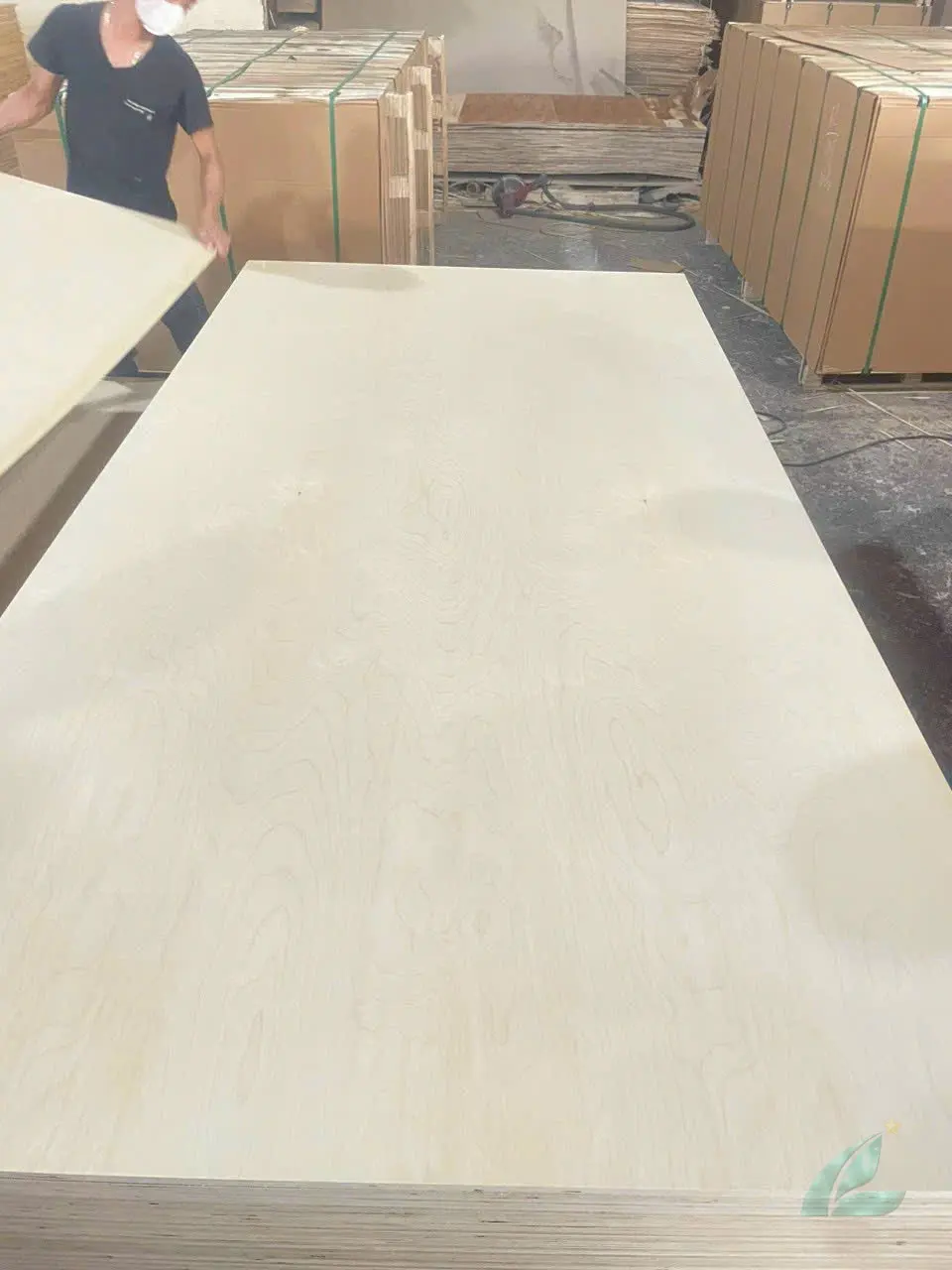
📌 Joist Spacing Modifies Minimum Thickness
For structural subfloor panels spanning joists, thickness scales with joist center spacing:
| Joist Spacing | Minimum Plywood Thickness |
|---|---|
| ≤ 400mm centers | 12mm |
| 400–500mm centers | 15mm |
| 500–600mm centers | 18mm |
| > 600mm centers | 18mm + intermediate blocking recommended |
These are minimum values for standard residential loading (1.5 kPa live load). Commercial flooring with heavy foot traffic or racking systems requires structural engineering review beyond these underlayment plywood thickness figures. For high-end applications, specifying the correct subfloor plywood grade from the outset prevents costly floor replacement later.
Get a free specification review — Contact HCPLY now and our team will confirm correct thickness for your flooring system within 24 hours. No commitment required.
⚙️ Core Species — Why It Determines Everything
The most common specification error importers make is treating all plywood as equivalent when the core species differs. For plywood flooring underlayment, the core species determines density, compression resistance, and dimensional stability under humidity cycling. Two panels both sold as “18mm underlayment plywood” can perform completely differently if one uses eucalyptus core and the other uses loose-laid acacia.
Vietnam’s three core species each perform differently:
Eucalyptus Core — The Engineering Choice for Flooring
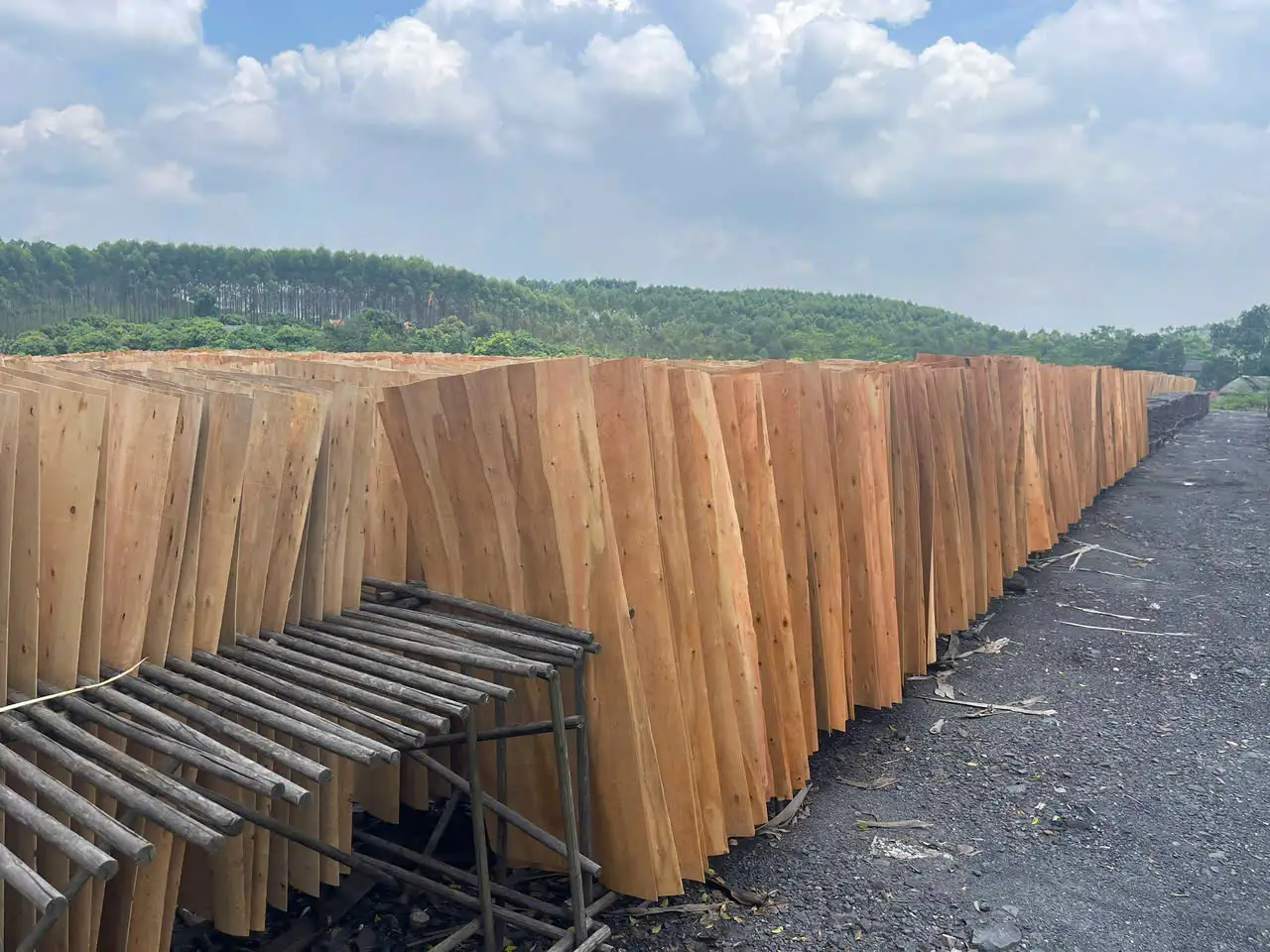
Eucalyptus core density: 650–750 kg/m³ (HCPLY production data, 2026). This is the heaviest and most dimensionally stable Vietnamese core species. Under repeated foot traffic loading, eucalyptus core resists compression set — meaning the panel does not thin permanently over time.
Key properties relevant to flooring underlayment:
- High density → superior resistance to indentation and flex
- Consistent grain structure → predictable dimensional behavior under humidity change
- Light yellow color → easy to visually inspect for voids during installation
Eucalyptus core is the standard specification for export-grade underlayment panels destined for tile and parquet applications in Germany, South Korea, and Japan.
Styrax Core — Light-Duty Residential Underlayment
Styrax core density: 480–500 kg/m³. The lightest Vietnamese core species, styrax is widely used for furniture-grade panels and is acceptable for light residential underlayment (LVT or laminate in bedrooms and living rooms). Its lower density reduces shipping cost — a relevant consideration for importers calculating landed cost per CBM.
Styrax is not recommended for:
- Commercial flooring in high-traffic areas
- Tile substrates (insufficient rigidity under dynamic load)
- Wet area applications
For context on how core species density affects container loading economics, the plywood core types guide covers CBM calculations by species.
Acacia Core — Not for Flooring Applications
Acacia core density: ~580 kg/m³. Acacia is Vietnam’s most affordable core species and accounts for the majority of commercial and packing-grade panels. However, acacia core has a darker color that can bleed through thin veneers, and its moisture behavior makes it less suitable for flooring substrate.
⚠️ Note: Acacia-core plywood sold as “underlayment” by some suppliers is typically a commercial-grade panel at a low price point. Verify core species explicitly in your purchase order — do not assume underlayment grade based on price alone.
🔧 Glue Type and Emission Standards
These are two separate specifications. Both must appear in your purchase order.
Glue Type (Water Resistance)
| Application | Required Glue | Test Standard |
|---|---|---|
| Dry interior residential | MR (Melamine) | 12-hour boil test |
| Kitchen, bathroom, wet area | WBP (Phenolic) | 72-hour boil test |
| Exterior or high-humidity commercial | WBP (Phenolic) | 72-hour boil test |
Melamine (MR) glue passes a 12-hour boiling water test. Phenolic (WBP) glue passes a 72-hour boil test. For plywood flooring underlayment in bathrooms, laundries, or any space with moisture risk, WBP is the only acceptable specification.
“We always specify which glue type is needed based on the room’s moisture exposure, not just the country of destination,” — Lucy, International Sales Manager, HCPLY. “Buyers sometimes order ‘MR grade’ for an entire project, then use the same panels in a bathroom. That’s where delamination claims come from six months later.”
Emission Standards (Formaldehyde)
| Standard | Formaldehyde Limit | Required Market |
|---|---|---|
| E0 / CARB P2 | ≤ 0.5 mg/L | US, EU, Japan, Korea — indoor furniture/flooring |
| E1 | ≤ 1.5 mg/L | Europe standard, most Asian markets |
| E2 | ≤ 5.0 mg/L | Exterior/industrial only — NOT for indoor flooring |
For full documentation of emission standards and how they interact with glue type, the plywood glue types and emission standards guide covers every combination in detail.
⚠️ Key point: E2 emission plywood must never be used for indoor flooring underlayment. E2 panels used in enclosed floor systems can exceed WHO indoor air quality thresholds for formaldehyde. Always specify E0 or E1 for any occupied interior application.
📦 Surface and Construction Requirements
Beyond thickness and core, three panel construction factors determine whether underlayment plywood performs correctly under finished flooring.
Sanding and Flatness
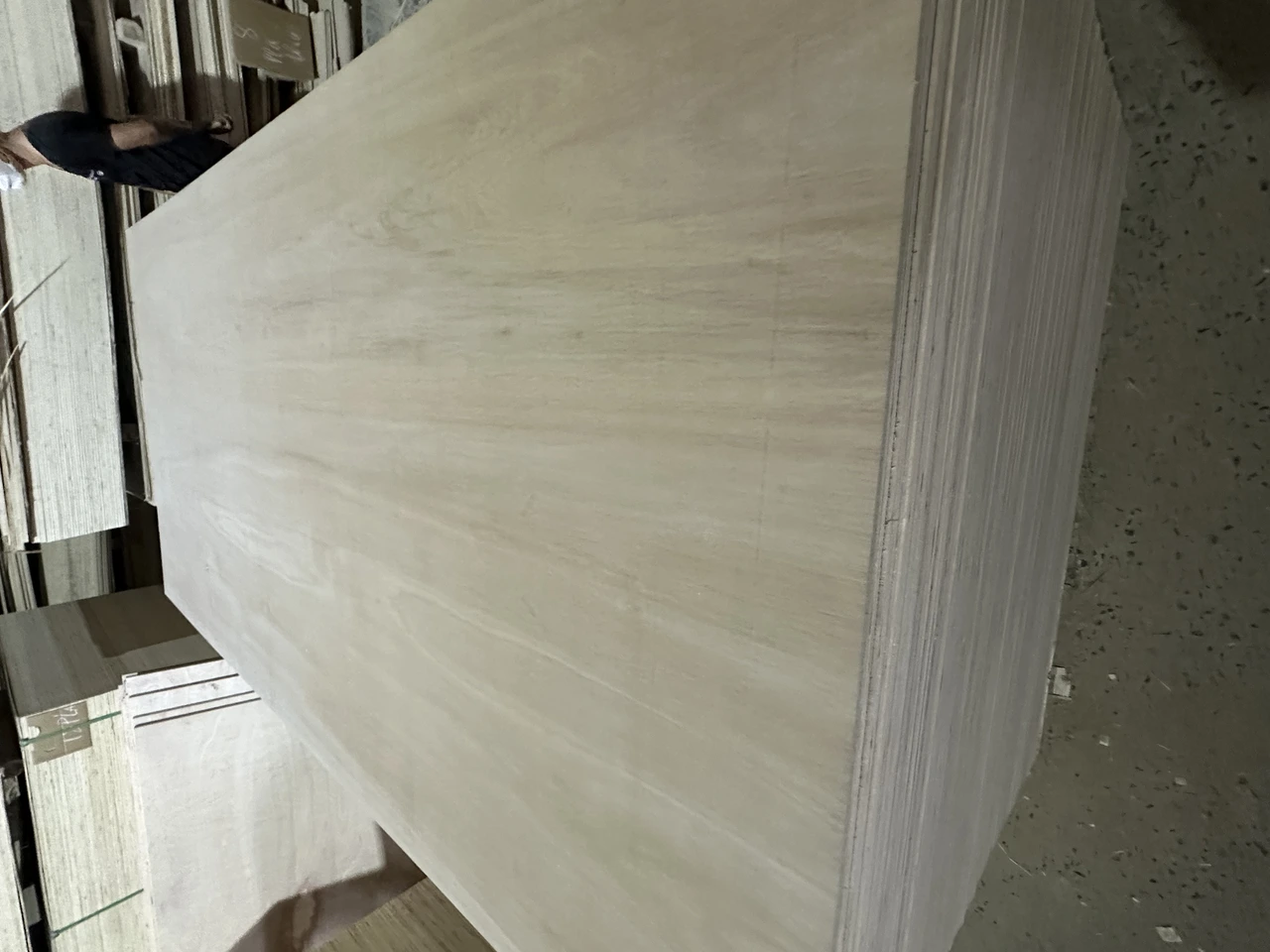
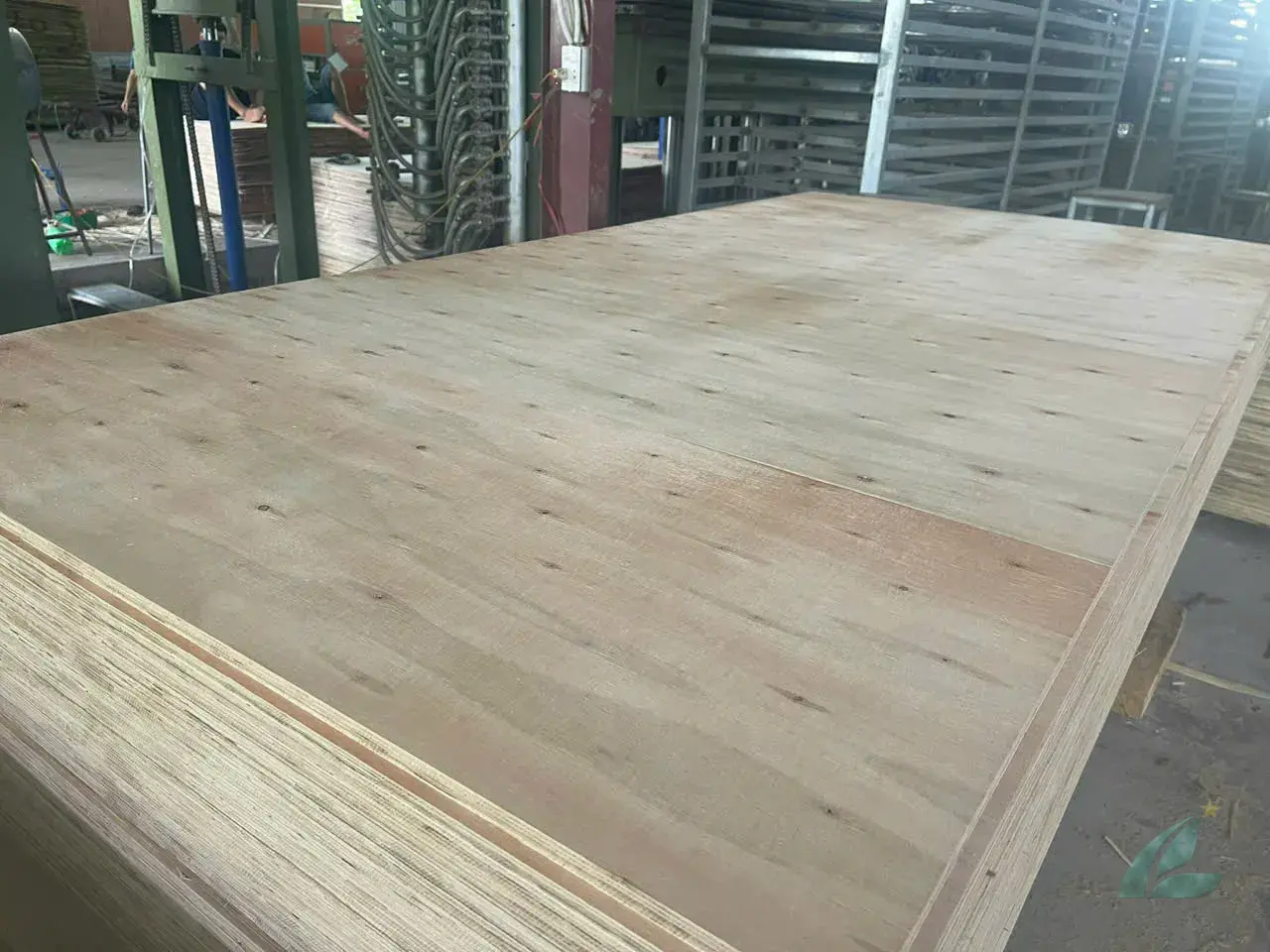
Flooring underlayment must be sanded on the top face. Sanding calibrates thickness tolerance to ±0.3mm and removes surface irregularities. For vinyl flooring specifically, any surface variation >0.5mm will telegraph through the finished floor and become visible within months.
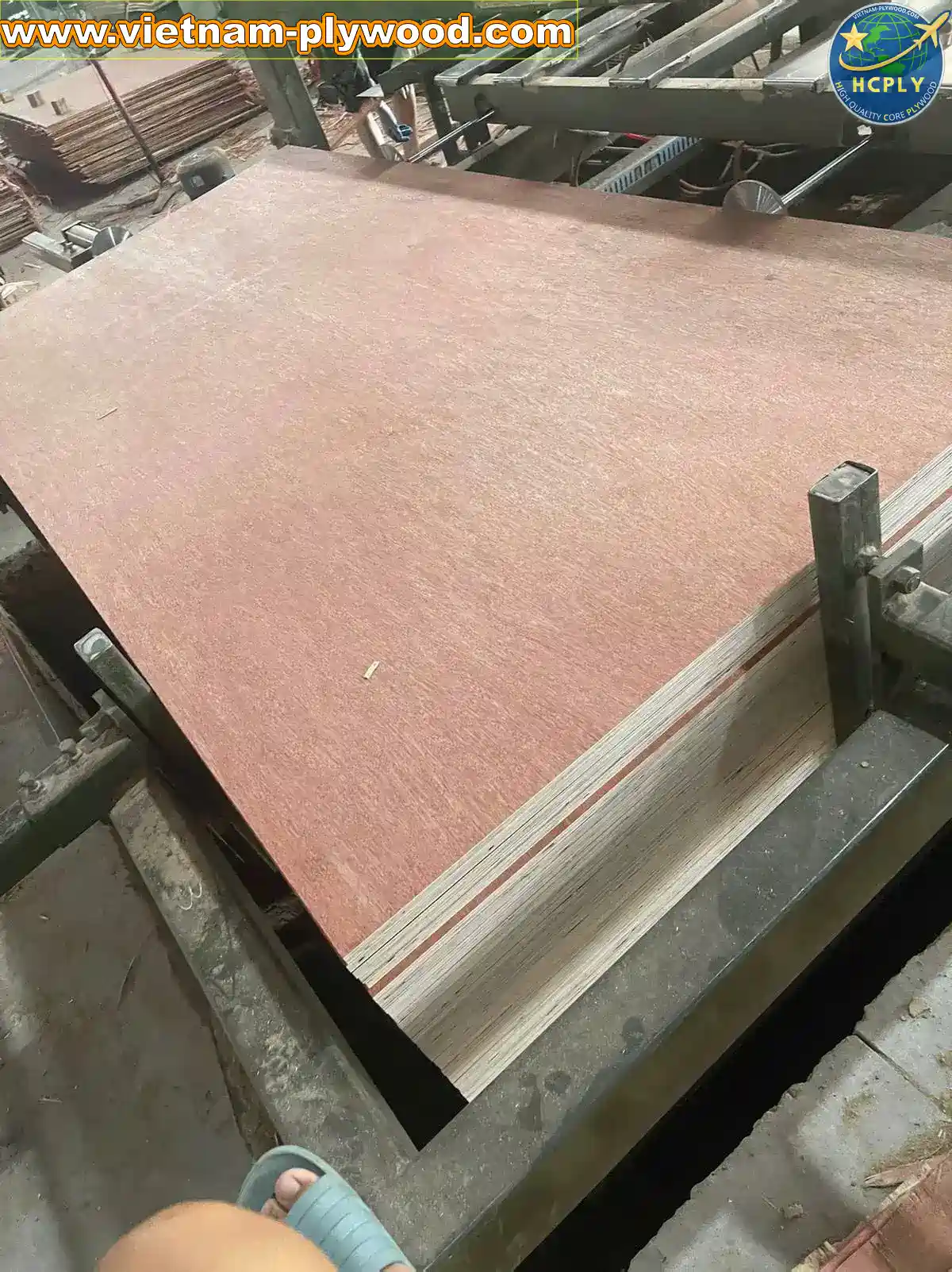
Construction-grade and packing-grade plywood is not sanded — it is specified “unsanded” and tolerances are wider (±0.5–1mm). Using unsanded panels as plywood flooring underlayment is a common field error that causes visible surface defects through thin vinyl within months.
| Grade | Sanded | Thickness Tolerance | Suitable for Underlayment |
|---|---|---|---|
| Furniture / interior | Yes | ±0.3mm | Yes |
| Commercial | Light or No | ±0.5mm | Only if re-sanded on site |
| Packing | No | ±1mm+ | No |
Core Void Policy
Panel voids (gaps in internal core veneer) reduce stiffness and create localized soft spots under tile or vinyl. Quality underlayment panels are specified void-free (or “no core gap”). This specification is harder to enforce without third-party inspection — specify it explicitly and include a pre-shipment inspection clause.
HCPLY uses full-stitched core construction on premium underlayment orders — veneer pieces sewn together eliminate gaps entirely. The quality control process at HCPLY factory covers how panels are inspected for voids before loading.
Plywood Sizes for Underlayment
The two standard sheet sizes work with different market requirements:
| Size | Metric/Imperial | Market Preference |
|---|---|---|
| 1220 × 2440mm | 4 × 8 ft | US, India, Asia |
| 1250 × 2500mm | Metric | Europe, Korea, Australia |
Custom cutting to specific dimensions is available for project quantities. Minimum order: 1 × 40HC container.
🔍 Quick Specification Guide by Flooring System
| Flooring Type | Core | Thickness | Glue | Emission | Sanded |
|---|---|---|---|---|---|
| Vinyl / LVT dry interior | Styrax or Eucalyptus | 9mm | MR | E1 | Yes |
| Vinyl / LVT wet area | Eucalyptus | 9–12mm | WBP | E0 | Yes |
| Ceramic tile | Eucalyptus | 12–15mm | WBP | E1 | Yes |
| Engineered parquet | Eucalyptus | 12–15mm | MR | E0 | Yes |
| Structural subfloor | Eucalyptus | 15–18mm | WBP | E1 | Yes (top face) |
| Budget residential LVT | Styrax | 6–9mm | MR | E1 | Yes |
This table reflects HCPLY production specifications for plywood flooring underlayment orders as of 2026. Country-specific building codes may impose tighter requirements — confirm with a local structural engineer for commercial projects.
📊 Ordering Checklist — What to Confirm Before Placing an Order
Importers and flooring manufacturers should confirm all items below before issuing a purchase order for plywood flooring underlayment. Missing any single item is the primary cause of delivery disputes and field installation failures:
- Thickness — specify in mm (not inches) for export orders
- Core species — eucalyptus, styrax, or mixed (clarify)
- Glue type — MR or WBP (not “moisture resistant” alone — too vague)
- Emission standard — E0, E1, or CARB P2
- Surface — sanded both faces, sanded one face (top), or unsanded
- Core construction — stitched or loose-laid (affects void count)
- Sheet size — 1220×2440mm or 1250×2500mm
- Certifications — FSC, CARB P2, CE as required by destination market
- Inspection — pre-shipment inspection scope (PSI) for void-free verification
- MOQ — confirm container fill for specified thickness and core combination
For guidance on calculating how many sheets fit per container and estimating freight cost, the plywood container packing calculation guide provides exact figures for each core species and thickness combination.
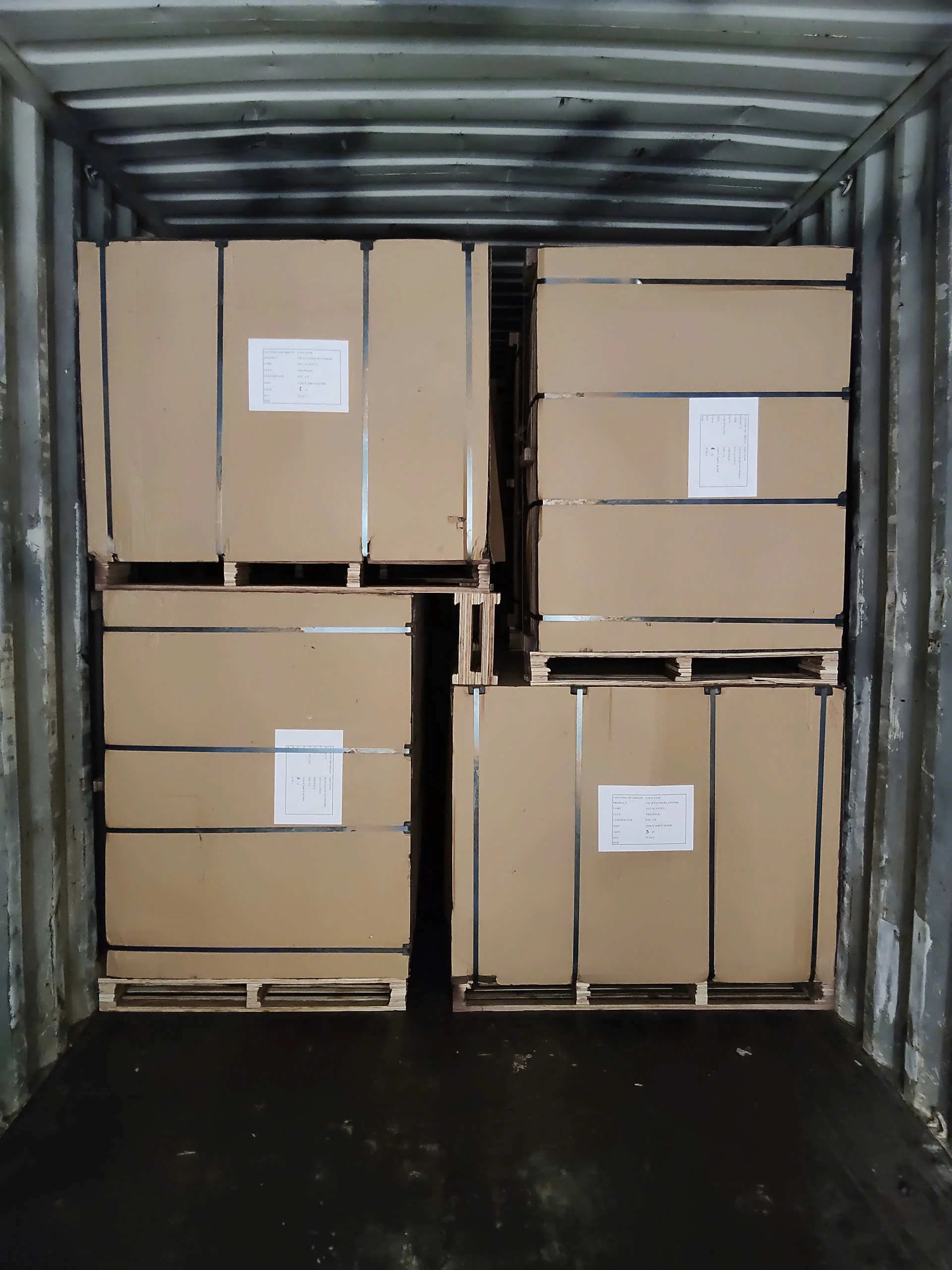
Ready to source underlayment plywood for your next project? Request specifications and pricing from HCPLY — factory-direct from Northern Vietnam with 15–20 day lead time on standard underlayment grades.
🏭 Why Vietnam is the Leading Source for Flooring Underlayment Plywood
Vietnam’s plywood industry, concentrated in Northern provinces (Phu Tho, Bac Giang, Yen Bai), produces plywood flooring underlayment panels that supply flooring manufacturers in Korea, Germany, India, and Australia. The combination of locally grown eucalyptus plantation timber, low production costs, and proximity to major container ports gives Vietnam-sourced underlayment a landed-cost advantage over competing origins.
For European buyers, EUDR-compliant supply chains with FSC chain-of-custody documentation are now mandatory for plywood imports (EU Deforestation Regulation, effective 2025). HCPLY holds active FSC and EUDR compliance documentation for all production facilities. For full details, the EUDR guide for Vietnam plywood exporters covers what importers need to verify before placing orders.
HCPLY manages 3 specialized production facilities in Northern Vietnam. The premium furniture and substrate facility produces sanded underlayment panels with eucalyptus or styrax core, E0/E1 emission, MR or WBP glue, and full stitched core construction. Export documentation includes CO, FSC, Phytosanitary, Fumigation Certificate, and Bill of Lading.
✅ Conclusion
Sourcing the right plywood flooring underlayment for export projects takes five decisions: thickness, core species, glue type, emission standard, and surface quality. Get all five right and the panel performs invisibly for decades. Get one wrong — particularly glue type in a wet area or under-specifying thickness for tile — and the floor failure becomes a warranty claim within a year.
Eucalyptus core in 12–15mm with WBP glue and E0 emission covers the majority of commercial and premium residential flooring applications. Styrax core in 6–9mm with MR and E1 handles budget residential dry-area projects. Every other combination serves a specific project requirement documented in the quick specification table above.
HCPLY produces export-grade underlayment panels from Northern Vietnam with factory-direct pricing, full certification documentation, and on-site QC. MOQ is one 40HC container.
Get a Free Quote from HCPLY — include your thickness, core, and emission requirements and we will respond within 24 hours.