


Face veneer grades are the single most mis-specified element on plywood purchase orders. Buyers write “Grade A” without knowing what the factory permits at that grade. Suppliers interpret grade loosely when the specification is incomplete. The result: panels arrive that technically meet the written spec but look nothing like the samples.
This guide explains face veneer grades from the production floor — what each letter allows, how grading actually happens in a Vietnamese factory, and how to write specifications that remove ambiguity from your orders. It also covers the D/E/F system used exclusively for birch plywood, which operates on a completely separate scale.
📋 What Face Veneer Grading Actually Measures
Face veneer grading classifies the visual quality of the surface veneer by controlling allowable defects. It does not measure structural strength, glue bond, or dimensional accuracy — those are governed by separate specifications.
Four categories of defects define grade:
| Defect Type | What It Looks Like | Grade Sensitivity |
|---|---|---|
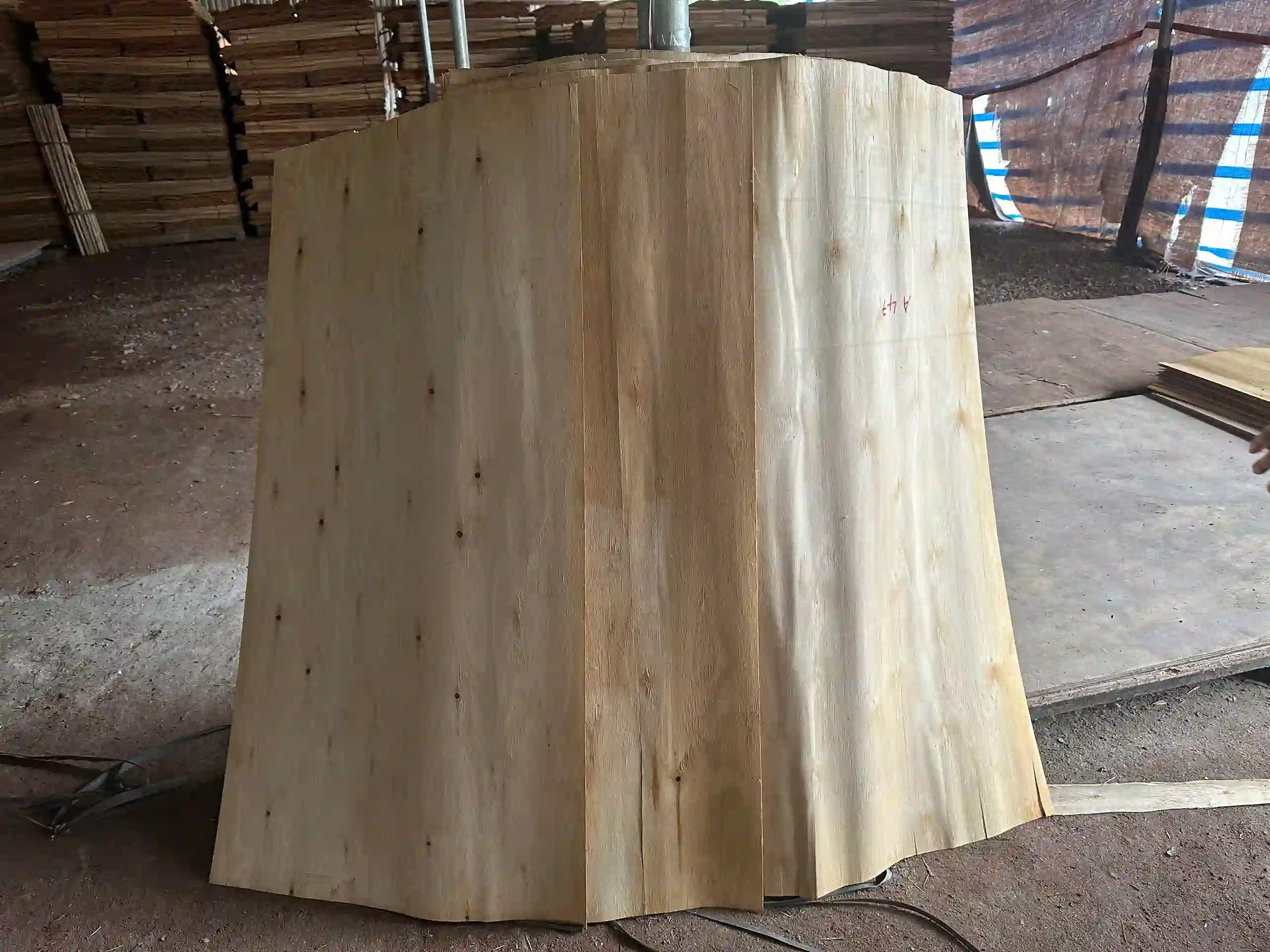
| Knots | Circular grain disruptions — tight (sound) or open (void) | A rejects open knots; B allows sound repaired knots |
| Splits | Cracks running along the grain | Any visible split typically drops below Grade A |
| Patches | Filled repairs where a defect was removed | A limits size and visibility; B allows more |
| Discoloration | Sapwood streaks, mineral staining | A requires uniform color; B permits limited variation |
The practical consequence of tighter grade standards: fewer sheets per log meet Grade A criteria. Veneer sorters must reject or redirect more sheets, reducing usable yield. That yield loss is the primary cost driver between grades — not labor or materials, but raw wood utilization.
Key Insight: Face veneer grading tolerance varies slightly between factories in Vietnam. “Grade A” at a budget commercial factory and “Grade A” at a premium furniture mill are not identical. The quality floor is defined by factory type, not just the letter. (HCPLY production data, 2026)
🅰️ Grade A Face Veneer — What It Means at the Factory Level
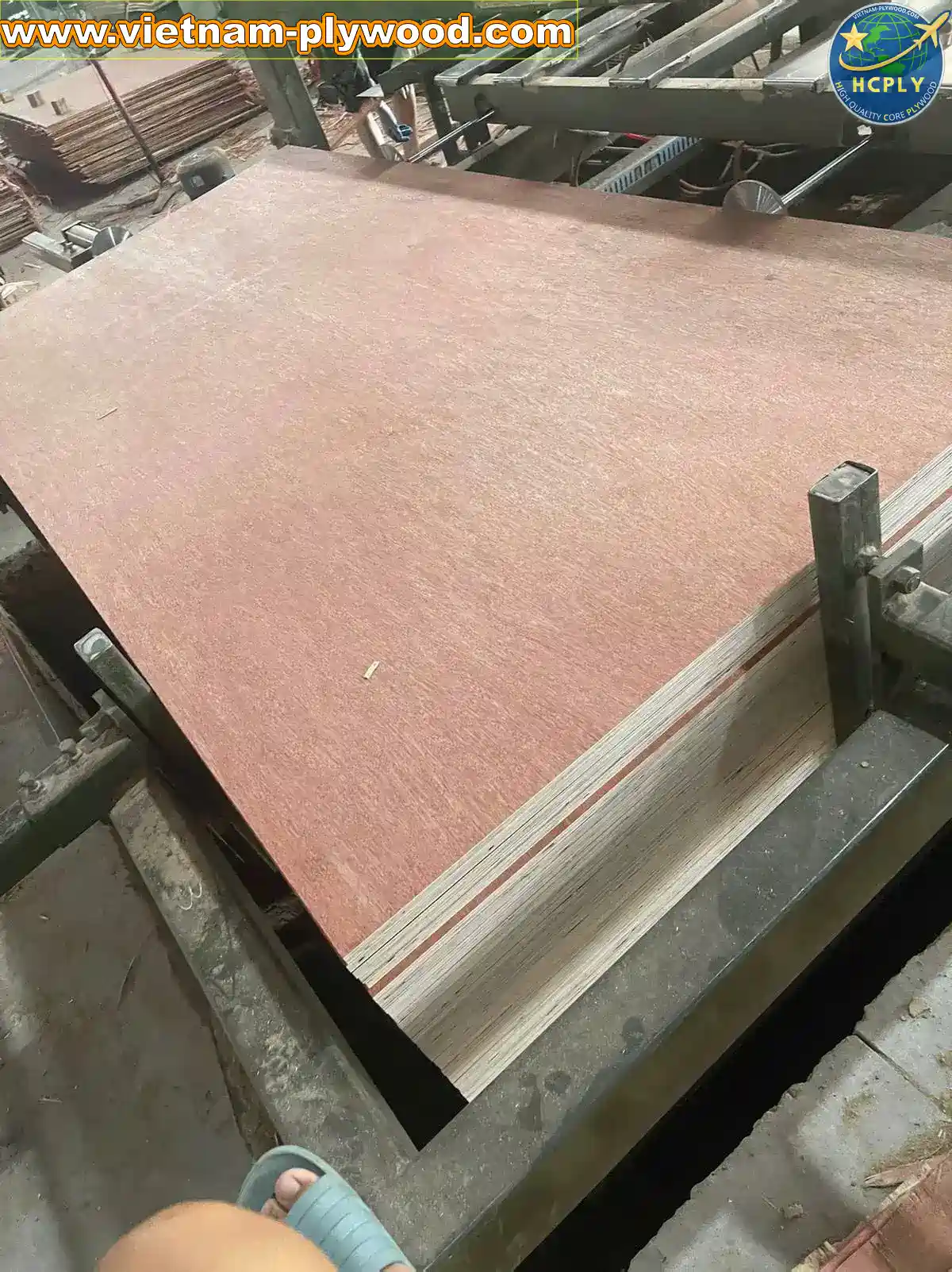
Grade A is the highest quality face veneer available for tropical species produced in Vietnam — bintangor, okoume, gurjan, pine, poplar, eucalyptus, and EV (engineered veneer).
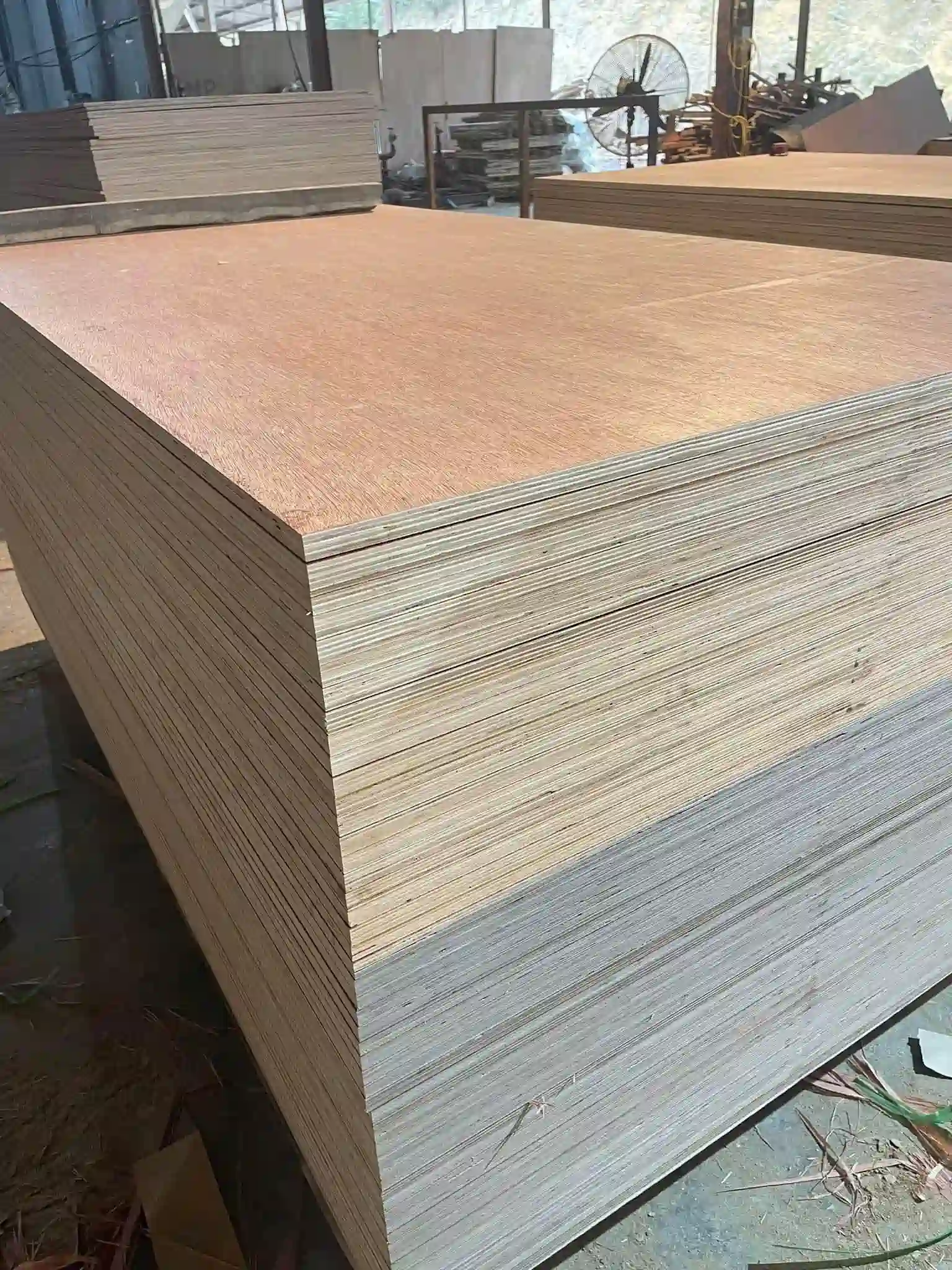
At a premium furniture production facility, Grade A face means:
- No open knotholes — any knot with an open void is rejected or patched and reclassified
- No cracks or splits — the veneer runs unbroken from edge to edge
- No visible patches — or only minimal flush patches within tight size limits that are invisible after sanding and painting
- Tight knots within diameter limits — typically under 5mm diameter, sound and stable
- Uniform color — major sapwood streaks excluded; minor natural variation within limits
- Sanded both faces — calibrated wide-belt sanding to specified thickness tolerance
Grade A is required for visible furniture panel faces, painted cabinet fronts, and any application where the plywood surface is part of the final product’s appearance. Export to European, Japanese, and Korean furniture markets standardly requires Grade A on the visible face.
“At HCPLY, we run 100% visual inspection on Grade A panels — not sampling. Every sheet is checked before bundling. If a panel passes pressing and sanding but shows a late-appearing defect, it gets reclassified before it leaves the production floor.” — Lucy, International Sales Manager, HCPLY
🅱️ Grade B Face Veneer — The Practical Workhorse
Grade B face veneer is the most commercially significant grade in Vietnamese plywood export. The A/B combination — Grade A on the show face, Grade B on the back — accounts for the largest volume of furniture plywood shipped to India, Europe, and Southeast Asia.
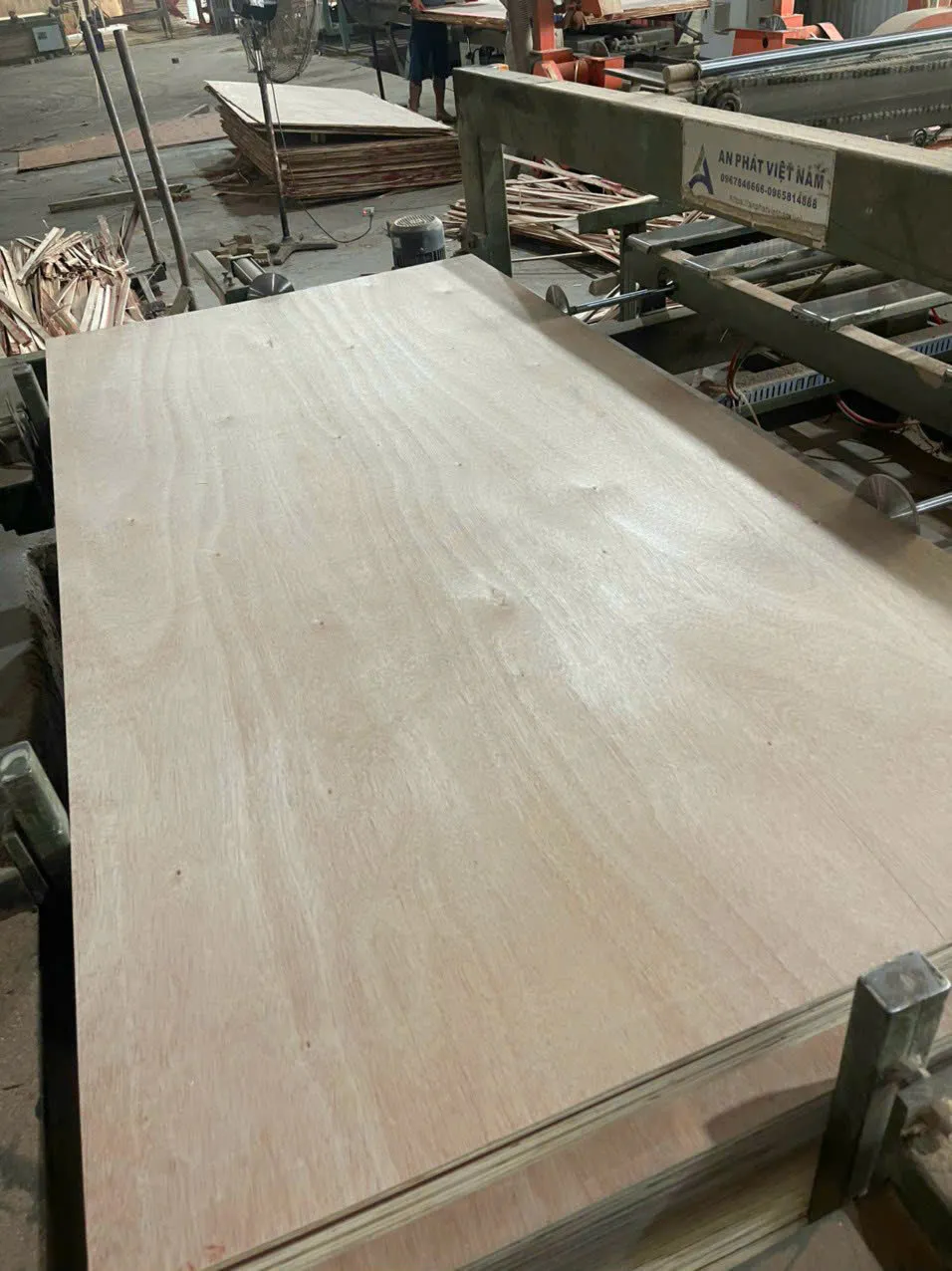
Grade B permits:
- Sound, repaired knots within defined size limits — typically up to 20mm diameter when flush-patched
- Small patches — neat, flush repairs where a defect was removed and filled
- Minor color variation — limited sapwood areas, slight tonal differences acceptable
- Sanded surface — though slight texture may be visible at patch edges
- Structural integrity identical to Grade A — bond strength, load capacity, and dimensional tolerances are the same
Grade B suits the back face of furniture panels (hidden inside the cabinet), interior shelving where the surface will be painted or laminated, structural flooring where appearance is secondary, and secondary cabinet components.
The plywood face veneer types complete guide covers how different species compare at the B grade level — bintangor B, okoume B, and EV B behave differently under paint and lamination.
🔡 Grade C and Below — Structural and Packing Applications
Grade C face veneer permits larger defects — more knots, larger patches, color variation, and minor surface roughness. It is rarely specified for visible furniture applications. Its primary use is:
- Packing plywood — crates, pallets, shipping boxes where appearance is irrelevant
- Structural concealed panels — floor decking, wall sheathing, hidden structural members
- Construction plywood — film-faced formwork panels do not carry a traditional face grade since the phenolic film covers the veneer entirely
Grade C in Vietnamese production is typically unsanded — no wide-belt finishing is applied, since the surface will be covered or hidden. This eliminates the calibration and labor cost added by sanding.
⚠️ Important: Requesting “Grade C” for furniture or cabinet applications is a specification error. Grade C panels shipped to furniture buyers generate immediate rejection claims. Always match grade to the actual surface requirements of the end use.
For packing applications, the packing plywood product page explains how grade interacts with core species and glue type for industrial packaging specifications.
🌲 The D/E/F System — Birch Plywood Only
Birch plywood Vietnam uses a completely separate grading system that confuses buyers sourcing from Vietnam for the first time. Understanding this is not optional — specification errors in birch grade cause the most common quality disputes in Vietnamese plywood export.
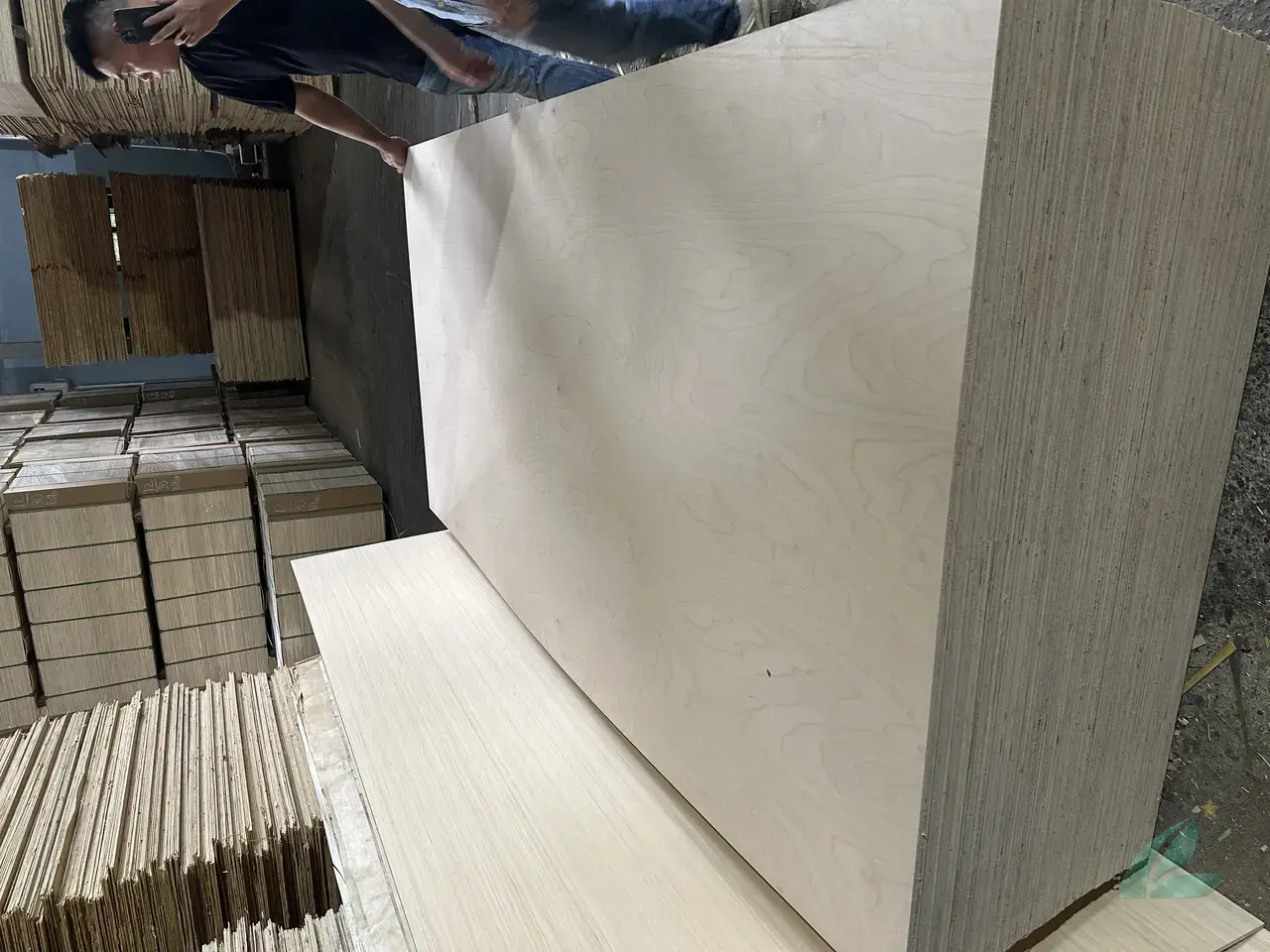
In Vietnamese birch plywood, D is the best grade. Not C. Not A. D.
This reflects the historical convention in European and Russian birch timber trade, where different letter ranges were assigned to different product categories. Vietnamese production follows this convention for imported birch face veneer, since birch is not native to Vietnam — the face veneer is sourced and graded according to the birch trade standard.
| Birch Grade | Description | Typical Application |
|---|---|---|
| D | Best grade available. Tight grain, minimal sound knots within limits, sanded smooth, uniform appearance | Premium furniture, cabinet fronts, European and Korean export |
| E | Good commercial grade. Small sound knots permitted, minor natural variation, sanded | Standard furniture, interior panels, back faces |
| F | Commercial grade. More knots and variation, sanded | Lamination substrates, hidden applications, cost-sensitive markets |
The standard export specification for birch plywood from Vietnam to Europe and Korea is D/E — D grade on the visible face, E grade on the back. This mirrors the functional logic of A/B for tropical species: best face visible, acceptable grade on the hidden reverse.
⚠️ Critical Warning: Never compare D grade birch to D grade in other systems. There is no “D grade” in the A/B system for tropical species used in Vietnam — the A/B system typically runs A, B, C, D where D is low quality. D grade birch from Vietnam is high quality. The letters carry meaning only within their respective species conventions.
For a detailed comparison of how birch plywood is produced in Vietnam with imported face veneer over styrax core, see birch face veneer plywood from Vietnam.
📊 Grading Systems Side by Side
The table below maps plywood veneer grading across both systems used in Vietnamese production, with practical application guidance (as of 2026):
| Application | A/B System (Tropical Species) | D/E/F System (Birch Only) | Key Requirement |
|---|---|---|---|
| Premium furniture, painted cabinet fronts | A/A or A/B | D/D or D/E | Sanded, E0 emission |
| Standard furniture | A/B or B/B | D/E or E/E | Sanded, E1 acceptable |
| Interior shelving (painted/laminated) | B/B or B/C | E/E or E/F | Surface will be covered |
| Lamination substrate (HPL/PVC) | B/C | E/F | Matt surface acceptable |
| Industrial packaging | C/D or packing grade | Not applicable | Unsanded, acacia core |
| Concrete formwork | Film-faced (no standard grade) | Not applicable | Phenolic film over veneer |
The plywood face grade guide provides deeper analysis of the A/B system, including price differentials between grade steps and market-specific grade requirements for Europe, India, and Korea.
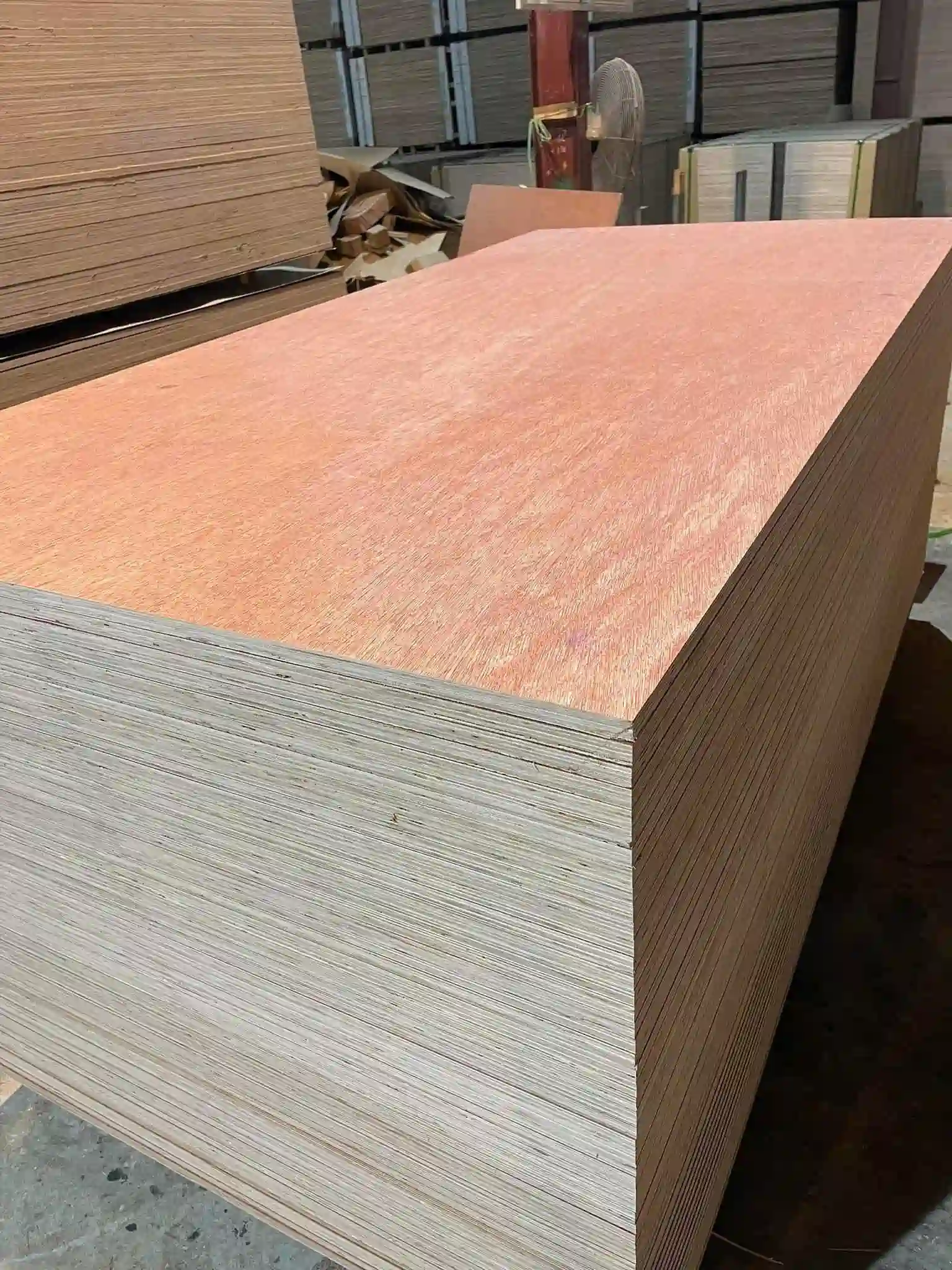
🔧 How to Write a Grade Specification That Prevents Disputes
Incomplete grade specifications are the root cause of most face veneer quality claims. Buyers write “A grade” when they mean “A/B specification.” Suppliers interpret “Grade A” as applying to the face only, with the back grade unspecified. Disputes follow when the back face shows defects that the buyer did not expect.
The correct specification format eliminates ambiguity:
Species: Bintangor (face) / Acacia (core)
Face Grade: A
Back Grade: B
Glue: Melamine (MR)
Emission: E1
Thickness: 12mm (±0.3mm)
Sanding: Both faces, calibrated
Size: 1220 × 2440mm
For birch:
Species: Birch (imported face) / Styrax (core)
Face Grade: D
Back Grade: E
Glue: Melamine (MR)
Emission: E0
Thickness: 18mm (±0.3mm)
Sanding: Both faces, calibrated
Size: 1220 × 2440mm
Always specify:
- Face species AND core species separately
- Face grade AND back grade as two separate values
- Whether sanding is required on one face or both
- Emission standard (E0, E1, E2) — this is separate from glue type
The plywood quotation guide covers how to structure a complete RFQ that prevents ambiguity across all specification fields — grade, emission, core, and certification.
🏭 How Grading Actually Happens on the Production Floor
Understanding the grading process helps buyers set realistic expectations and write specifications that factories can consistently execute.
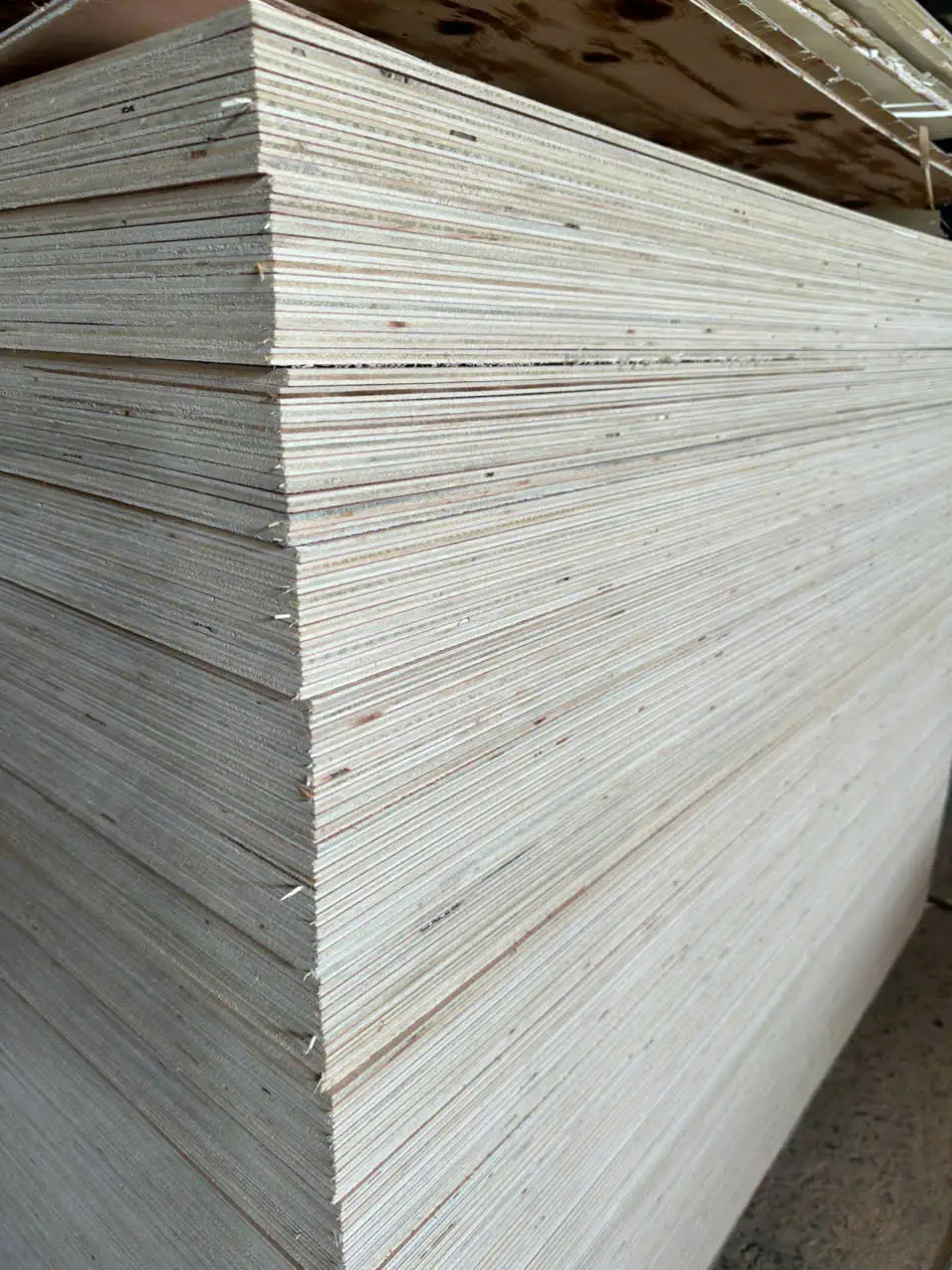
Grading in a Vietnamese plywood factory happens at two stages:
Stage 1 — Veneer Sorting (Before Pressing)
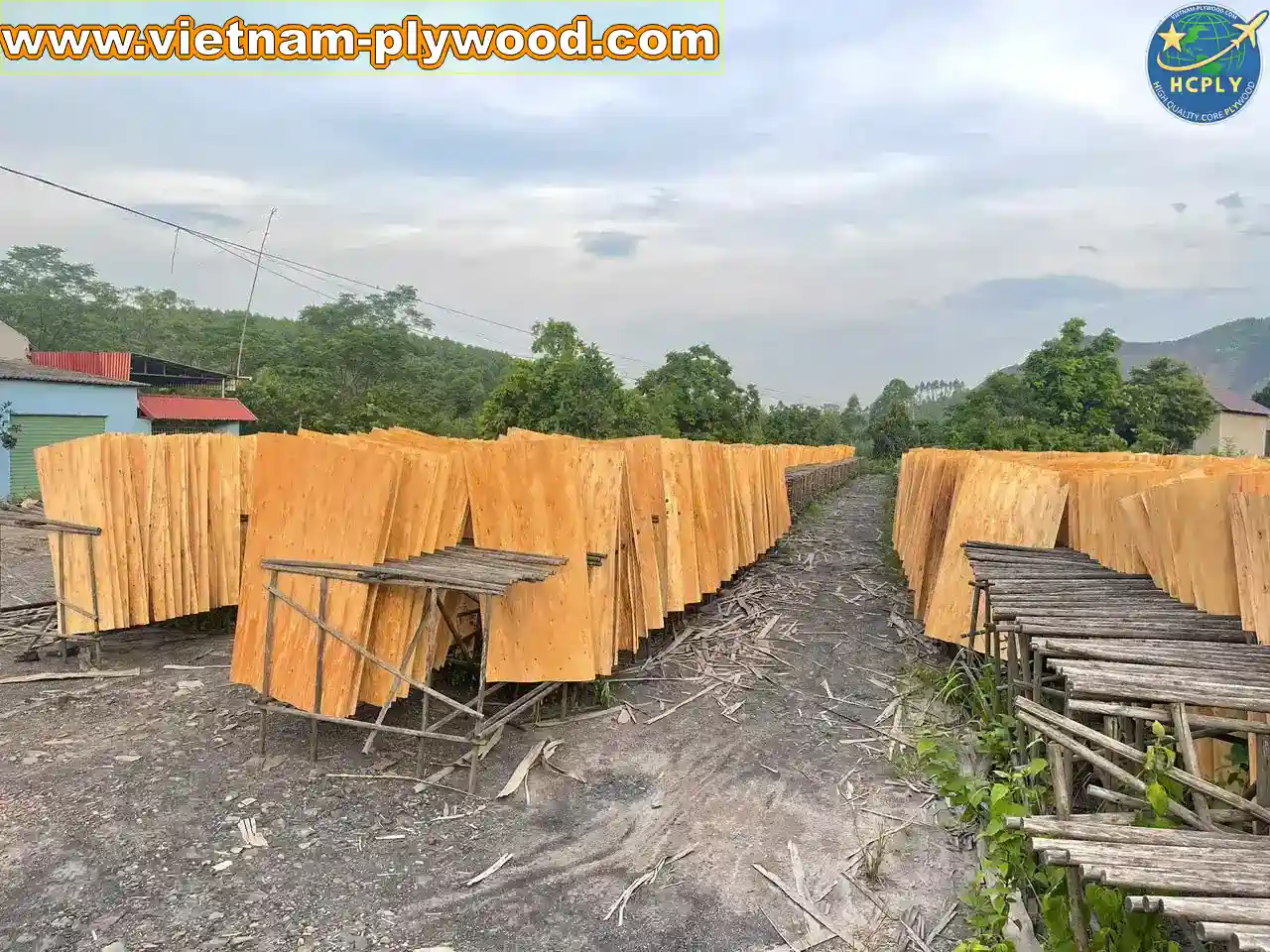
Sheets coming off the rotary peeling line are sorted by trained graders. Each sheet is examined for knot location, size, and condition; visible splits and cracks; and color uniformity. Sheets within the repairability range for higher grades are patched and assigned their grade. Sheets with excessive or unrepairable defects are redirected to core layers — they become inner plies rather than face veneer.
Stage 2 — Panel Inspection (After Pressing and Sanding)
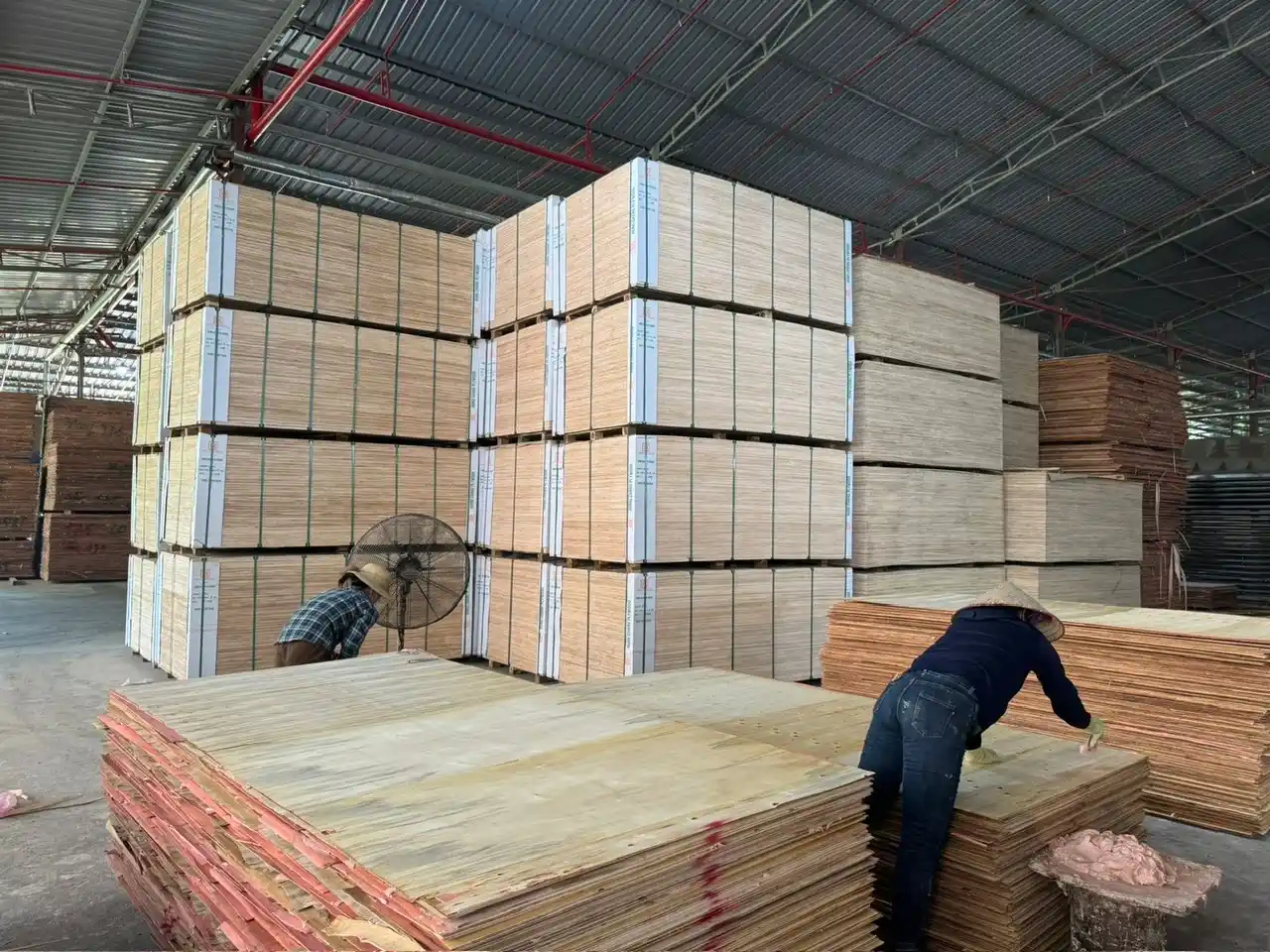
After the panel is hot-pressed and sanded, inspectors verify the face veneer grade against the purchase order specification. Any panel where the face grade does not match specification is either reclassified or rejected before bundling. At HCPLY, Grade A and D panels undergo 100% inspection at this stage.
According to Vietnam Timber and Forest Products Association (VIFORES) quality guidelines (2024), consistent grade execution at Vietnamese export-grade factories requires dedicated grading lines matched to product category — commercial facilities and premium furniture facilities operate different grade tolerances even when using the same letter designation.
Request a Free Quote with Grade Samples — HCPLY’s export team can provide face veneer sample panels for Grade A/B, D/E, and commercial grades before order confirmation. No commitment required.
Related reading:
- For bintangor specifics, see bintangor face grading A/B explained.
- For birch grading, see birch plywood grade D/E/F explained.
- Compare species in poplar vs birch vs okoume face veneers.
✅ Summary: Choose Grade Based on End Use, Not Budget Instinct
Face veneer grading is not a budget dial. It is a functional specification matched to end use:
- Grade A / D birch — visible faces, painted cabinets, premium furniture export
- Grade B / E birch — back faces, interior panels, surfaces covered by laminate
- Grade C — structural concealed use, packing, and industrial applications
- A/B or D/E — the most practical furniture export specification, balancing appearance on the show face with cost savings on the hidden reverse
The two grading systems — A/B for tropical species and D/E/F for birch — are not interchangeable. D in birch means high quality. The same letter in an A/B context would indicate low quality. Specify by system, not just letter.
For buyers sourcing from Vietnam for the first time, request graded sample panels before committing to full order quantities. Seeing Grade A and Grade B panels side by side eliminates any ambiguity that written specification alone cannot resolve.
Disclosure: This article is published by HCPLY, a Vietnam-based plywood manufacturer and export operator. While we aim to provide objective industry guidance, readers should consider our perspective as a market participant when evaluating recommendations.
Contact HCPLY for Graded Plywood Samples — Factory-direct from Northern Vietnam. FOB Hai Phong. Lead time 15–20 days. Full export documentation included.