

What is EV Plywood? Understanding Engineered Veneer
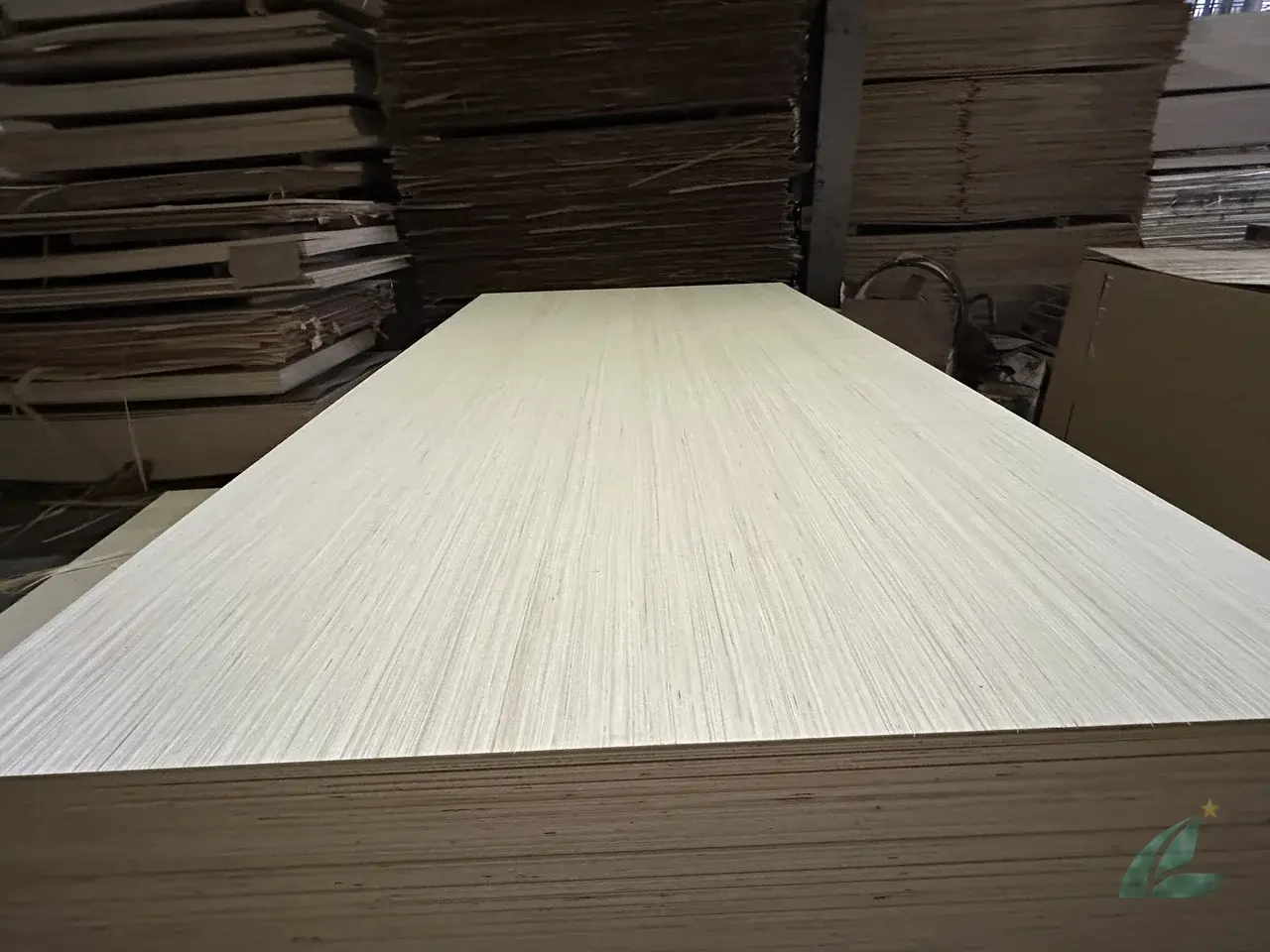
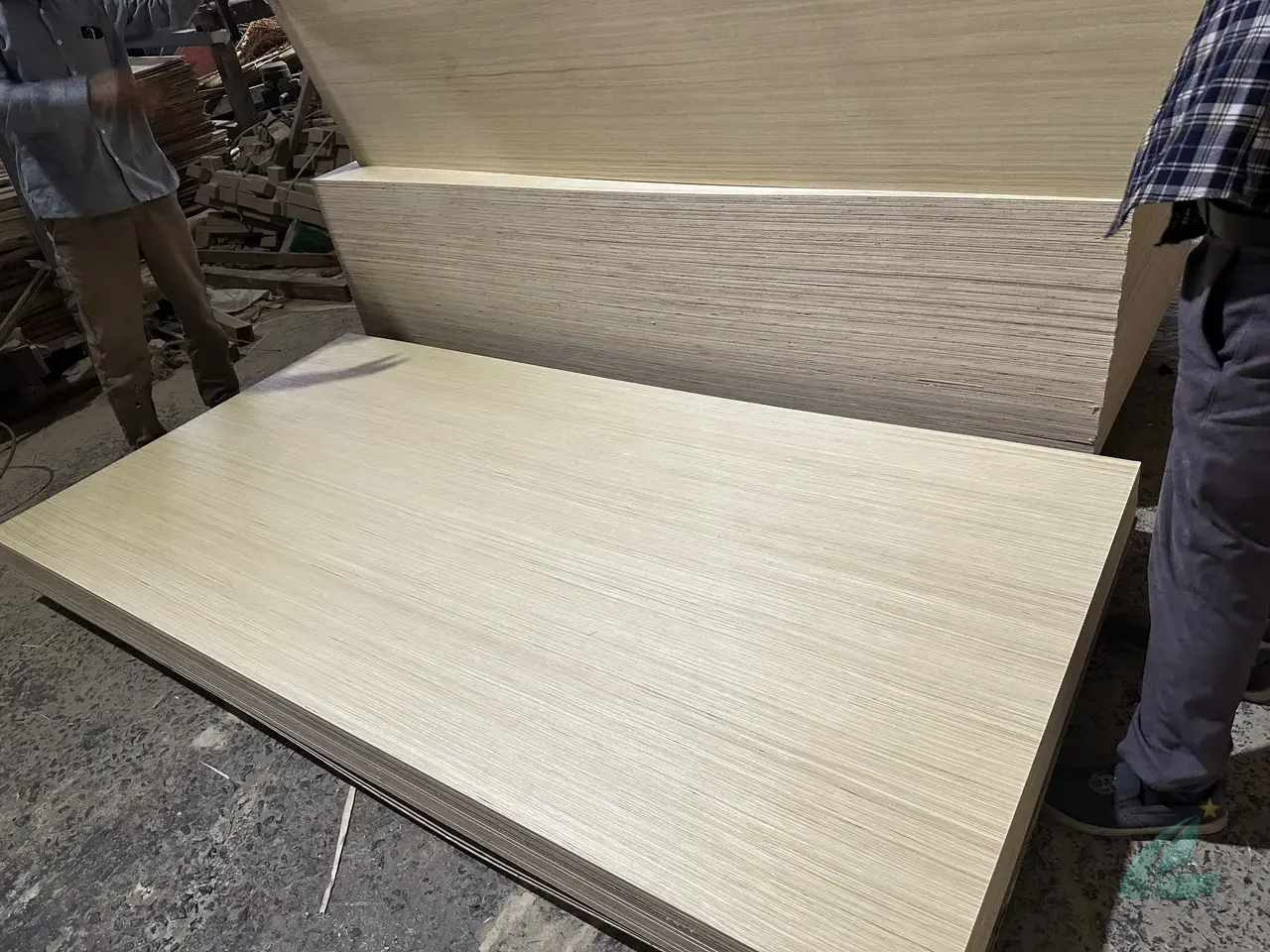
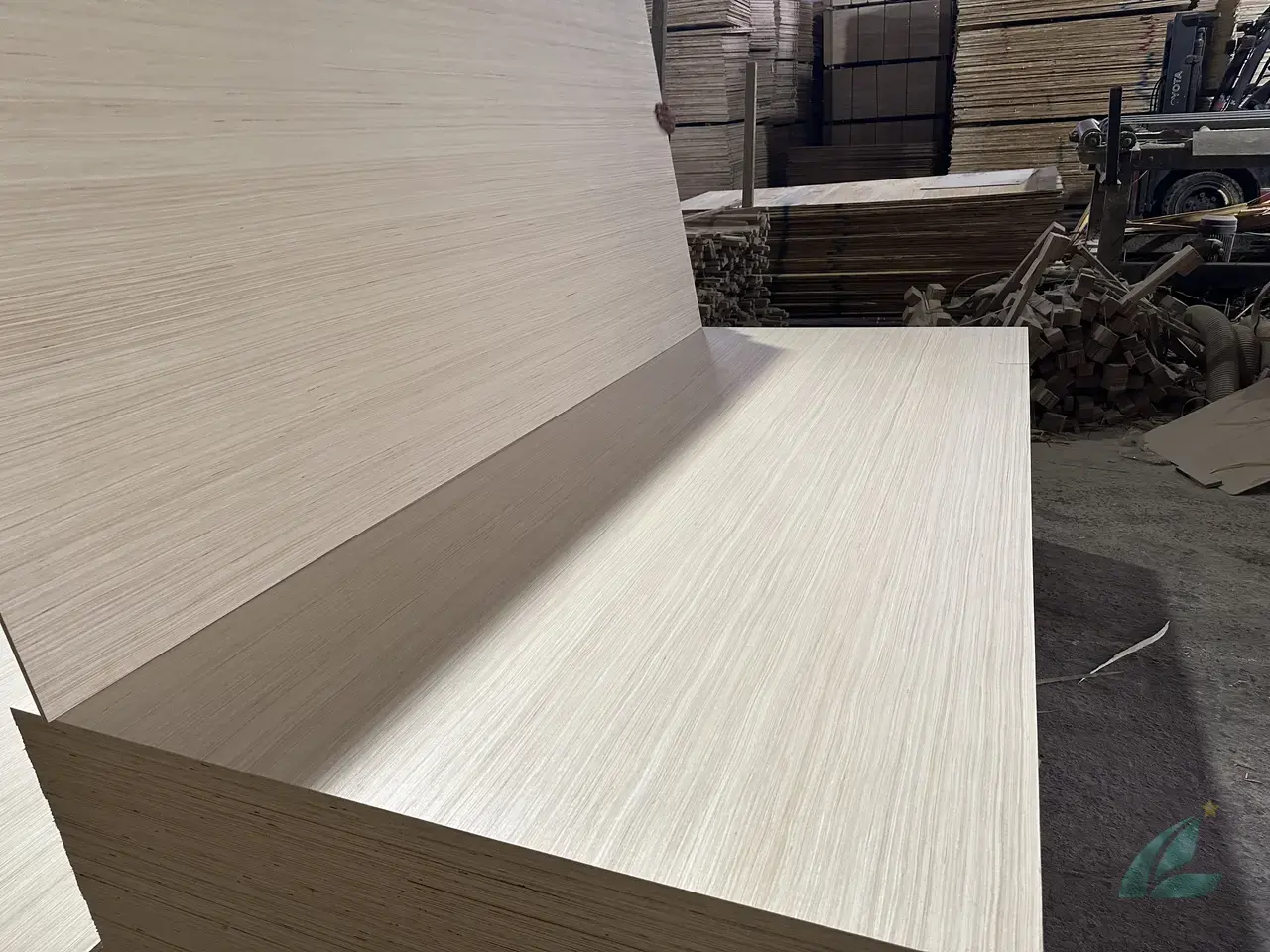
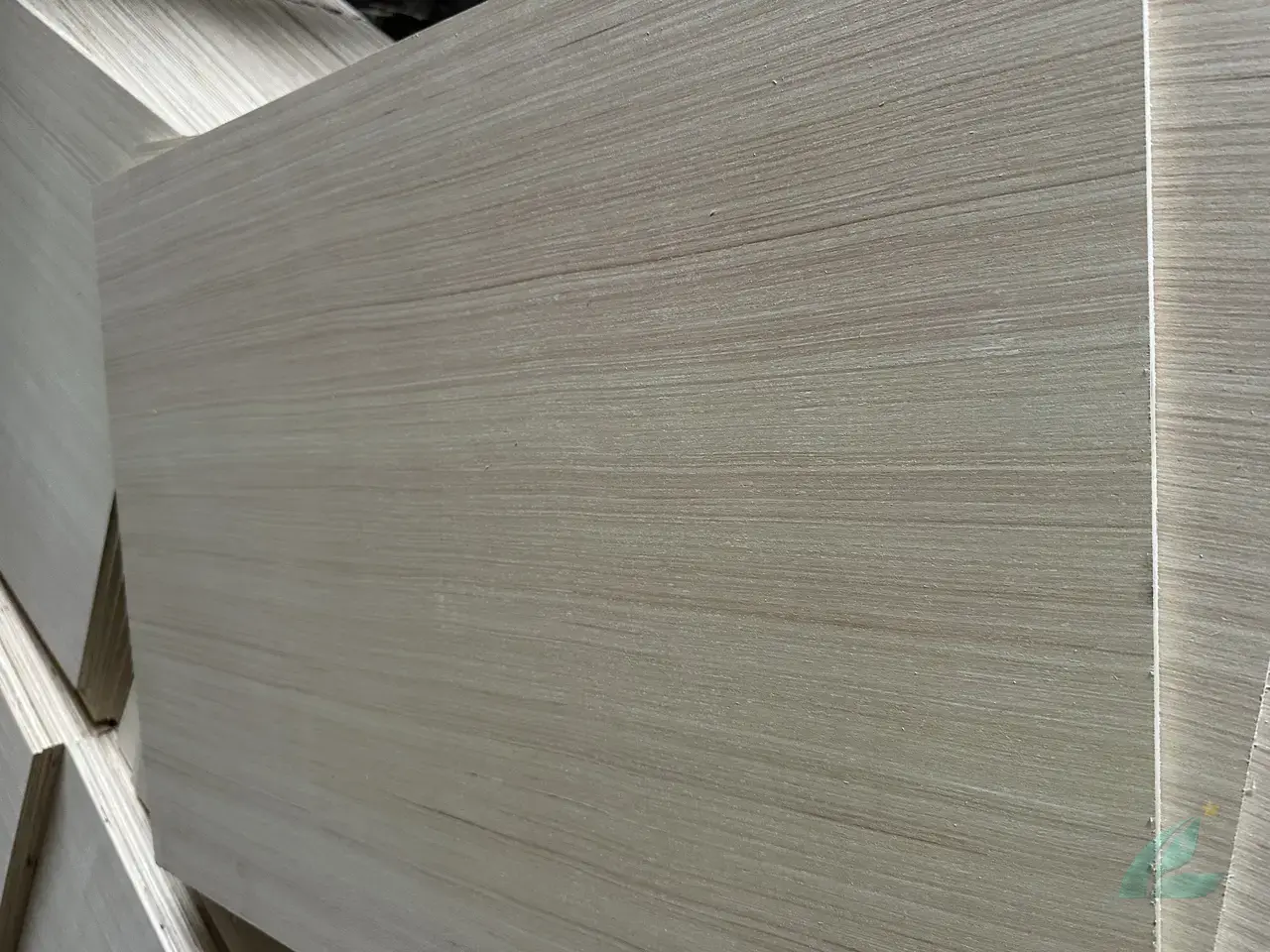
EV stands for Engineered Veneer — a reconstituted decorative wood veneer manufactured through a controlled industrial process. Unlike natural veneer, which is sliced directly from a log and inherits all the natural variations of that specific tree (grain direction changes, mineral streaks, knot clusters, color shifts between heartwood and sapwood), engineered veneer is built from scratch.
The manufacturing process starts with fast-growing plantation timber — typically light-colored hardwood species. The raw wood is broken down into veneer strips, dyed uniformly to the target color, and then laminated together under heat and pressure in a controlled orientation block. This reconstituted block is then sliced into face veneer sheets using the same equipment as natural veneer slicing. The result is a face veneer with absolutely consistent grain direction, consistent color, and no natural defects — the same visual pattern repeating precisely from one sheet to the next.
For furniture manufacturers producing large matched sets — a bedroom suite with 12 matching cabinet doors, or a run of 500 identical kitchen cabinet fronts — this consistency is not cosmetic preference. It is a production requirement. Natural veneer requires skilled matching labor to arrange sheets for consistent appearance; EV veneer eliminates that process entirely.
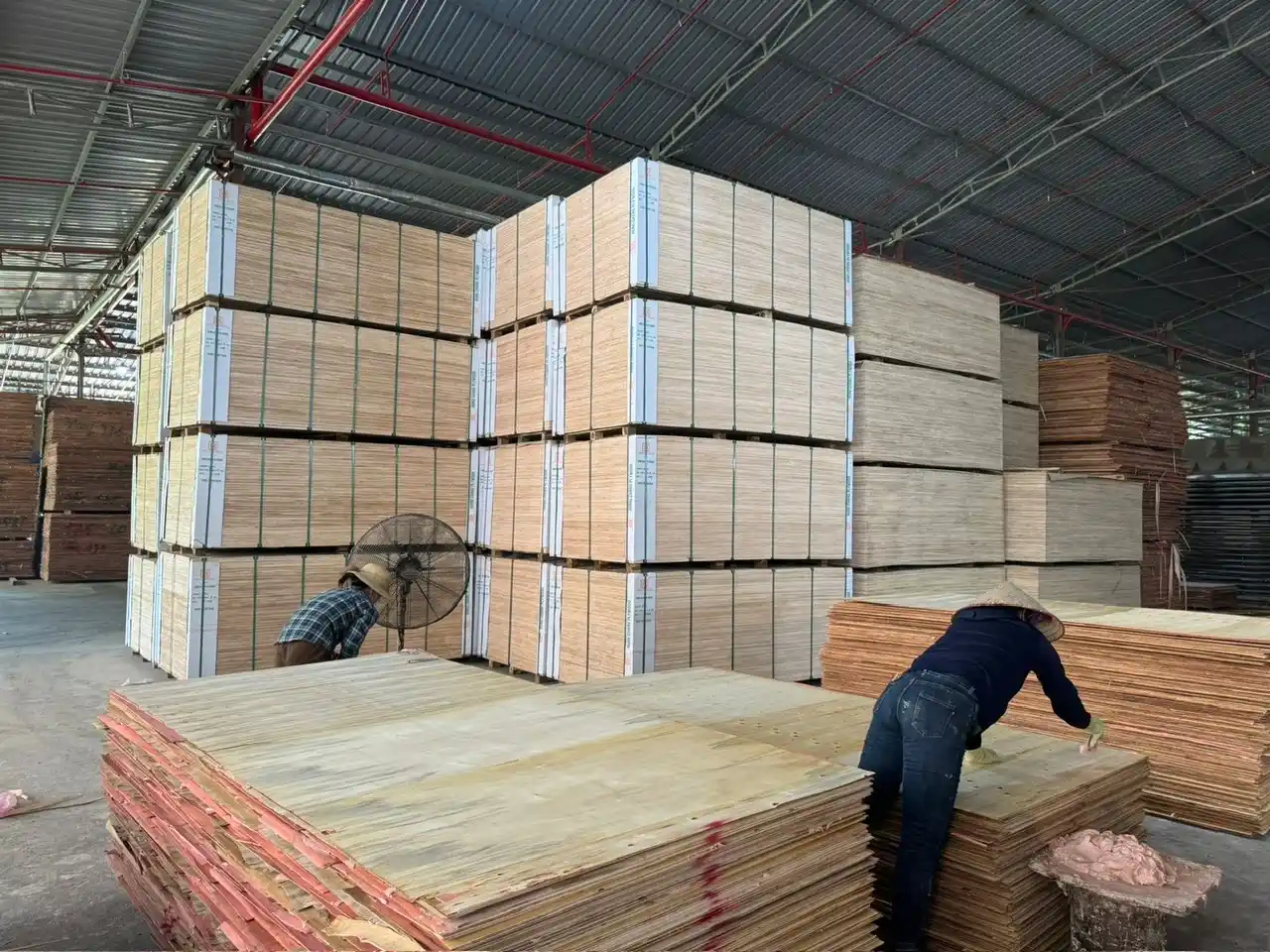
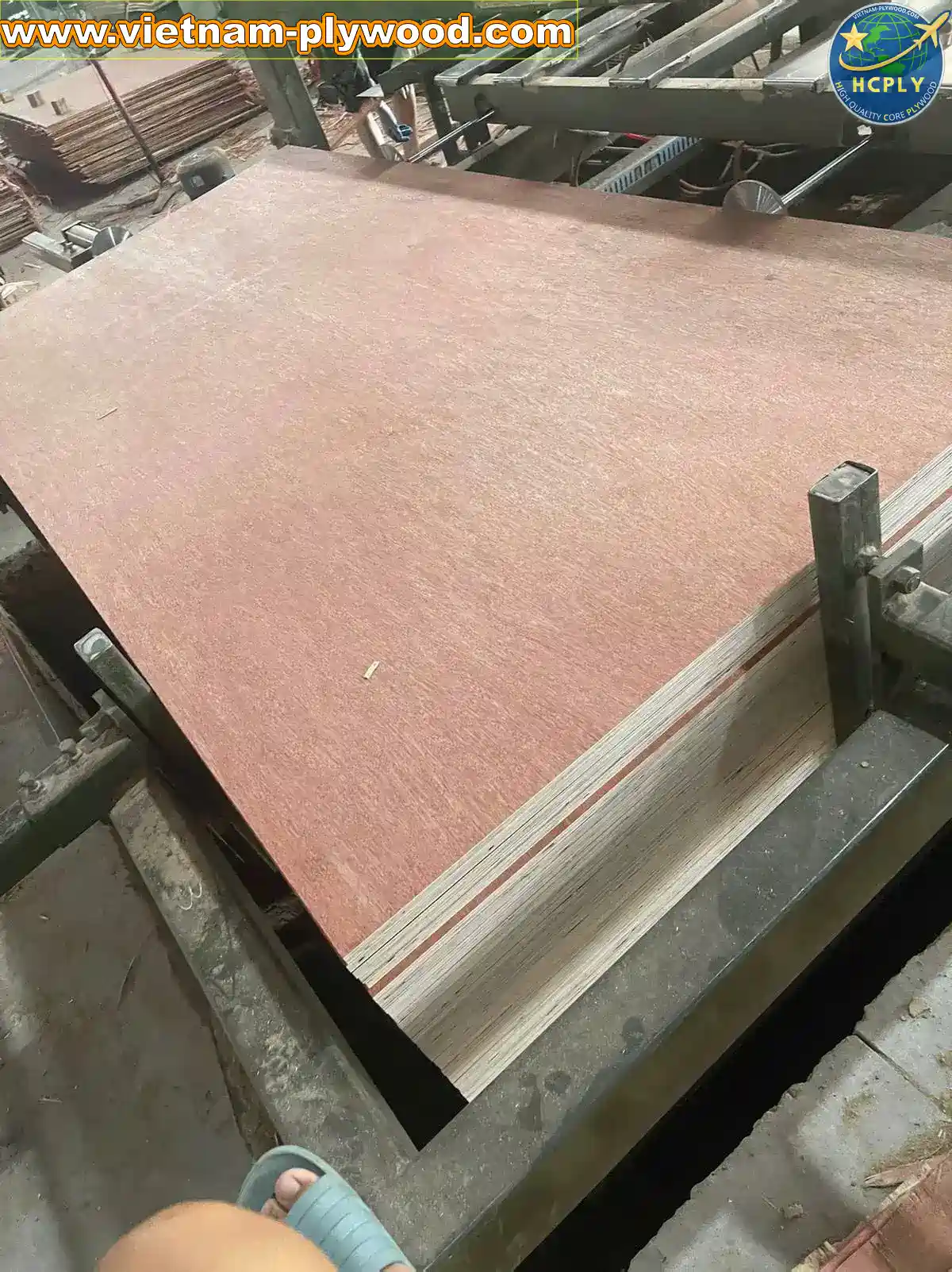
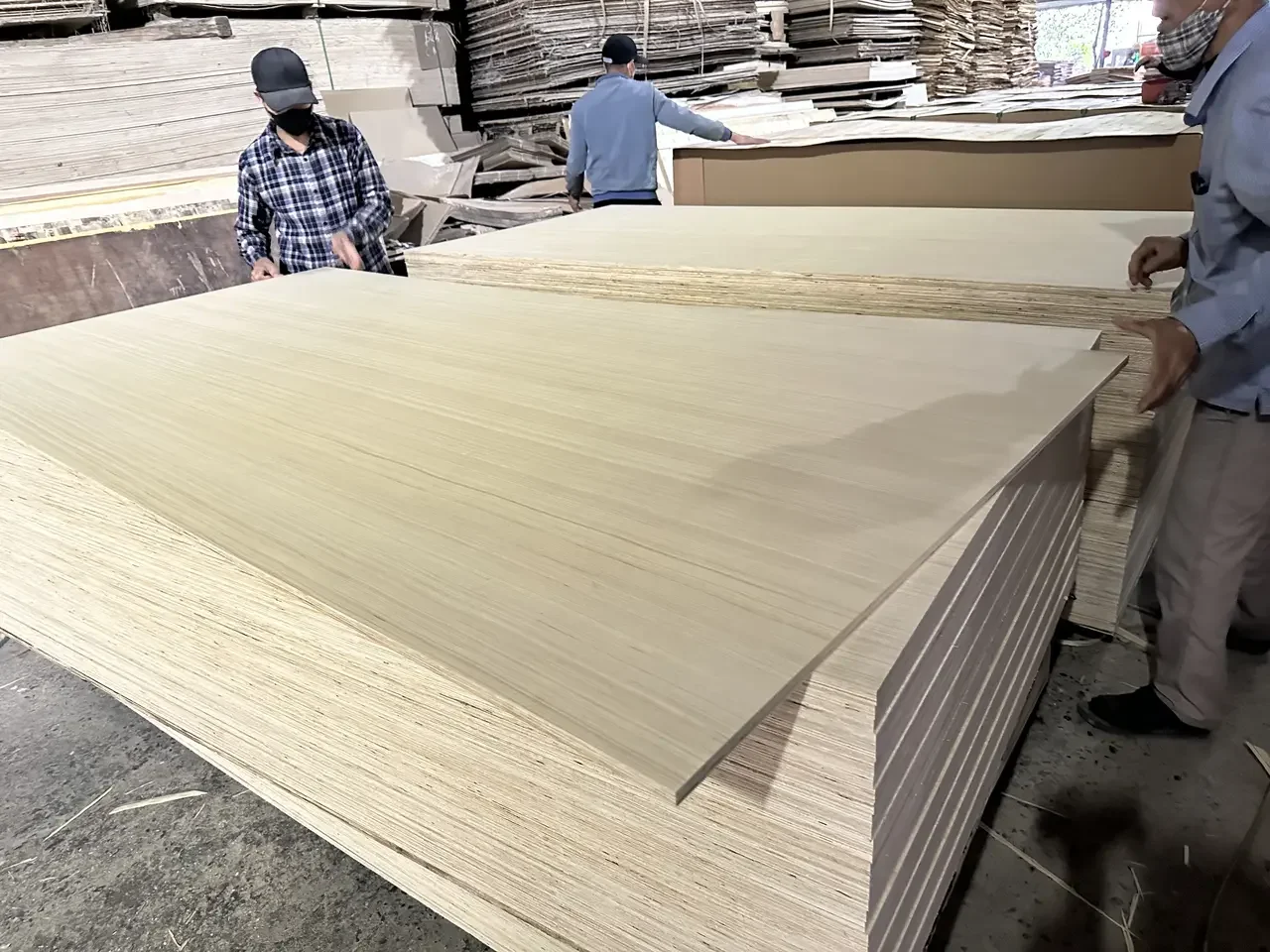
At HCPLY Vietnam, EV plywood is manufactured by applying engineered veneer face to carefully selected plywood cores — styrax, acacia, or eucalyptus — depending on the weight, density, and performance requirement of the end application. The price of EV plywood Vietnam is comparable to okoume plywood, positioning it as a mid-range premium option that delivers a superior visual result at accessible pricing for OEM furniture production lines.