
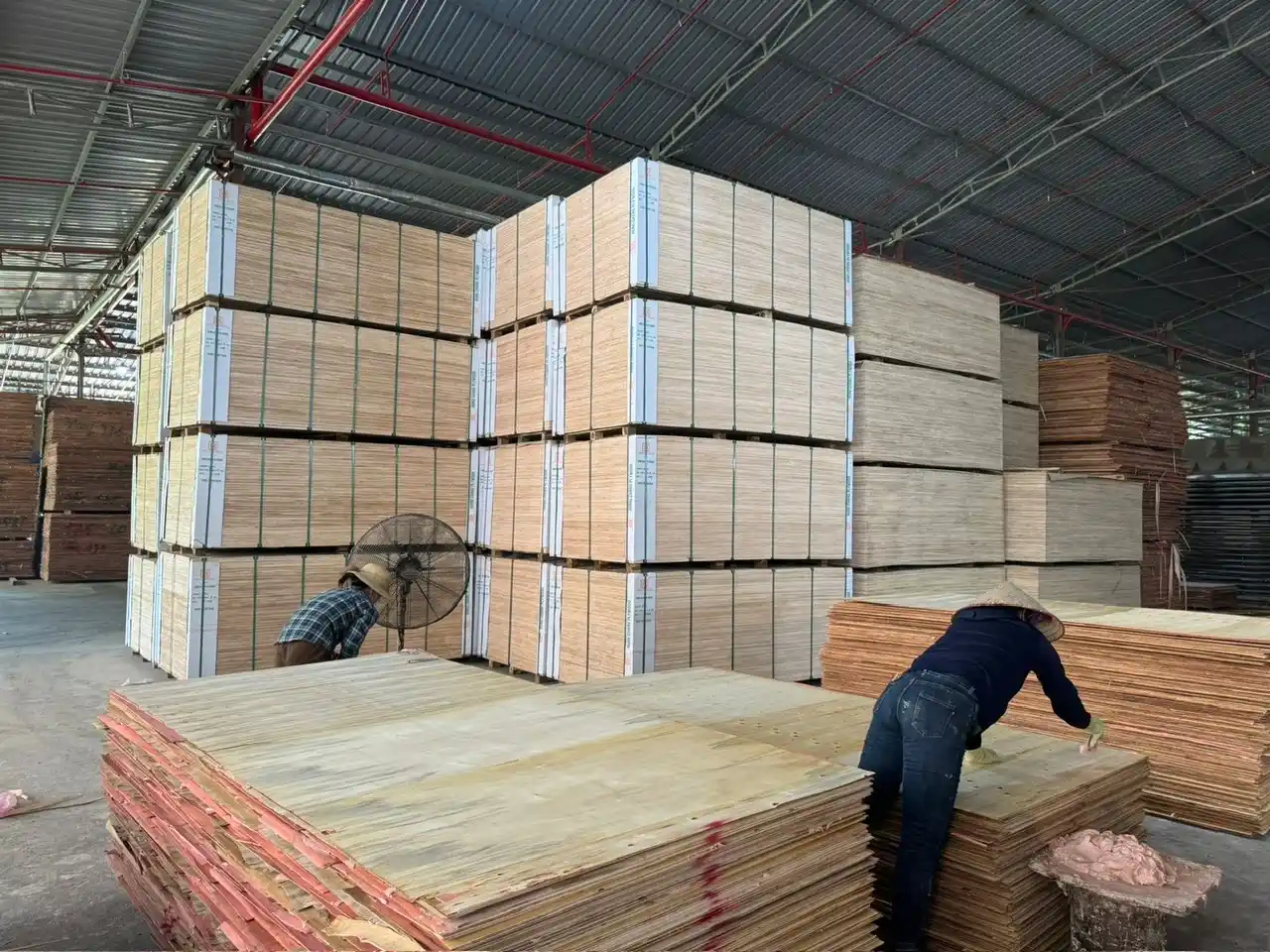
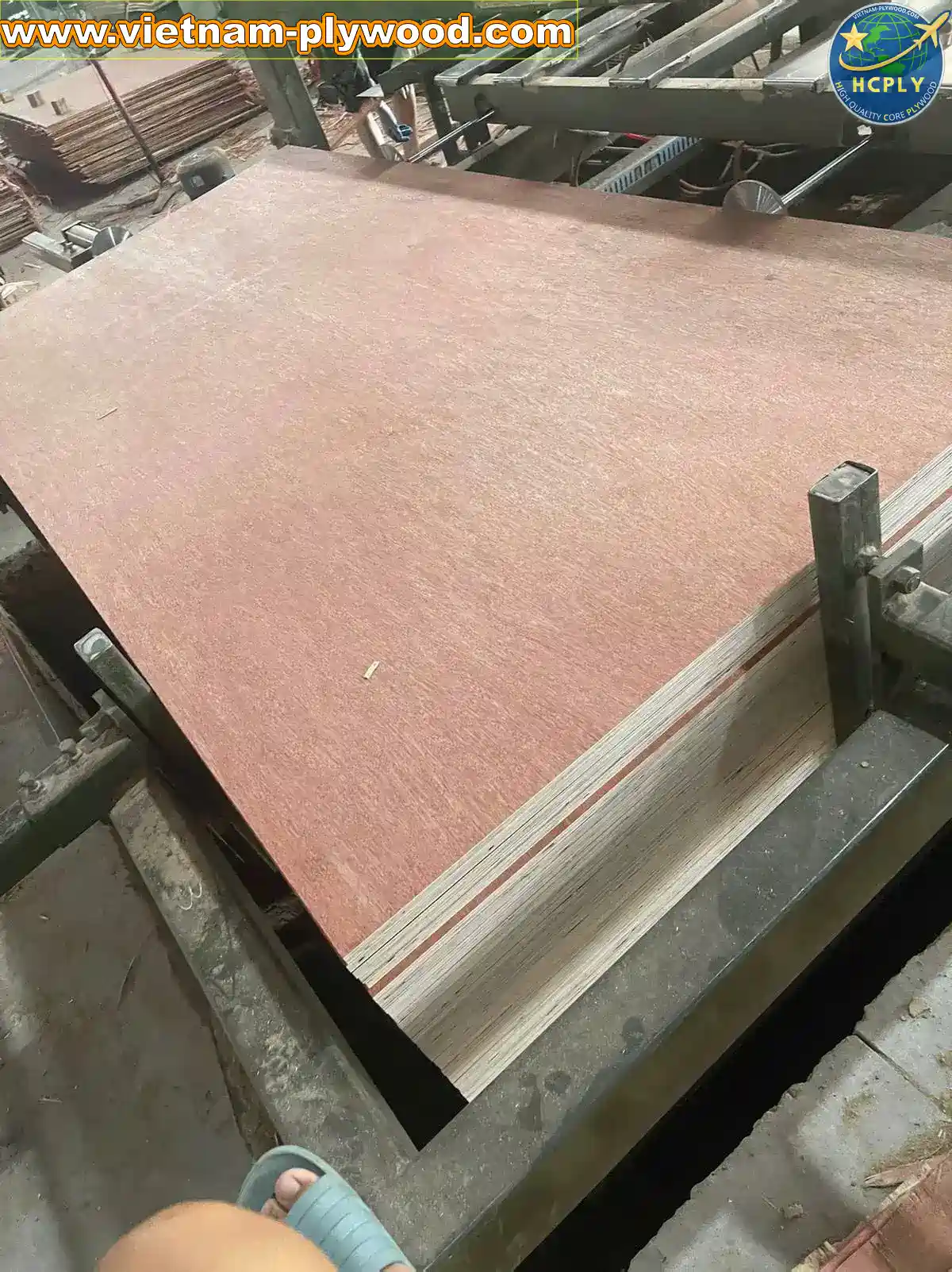

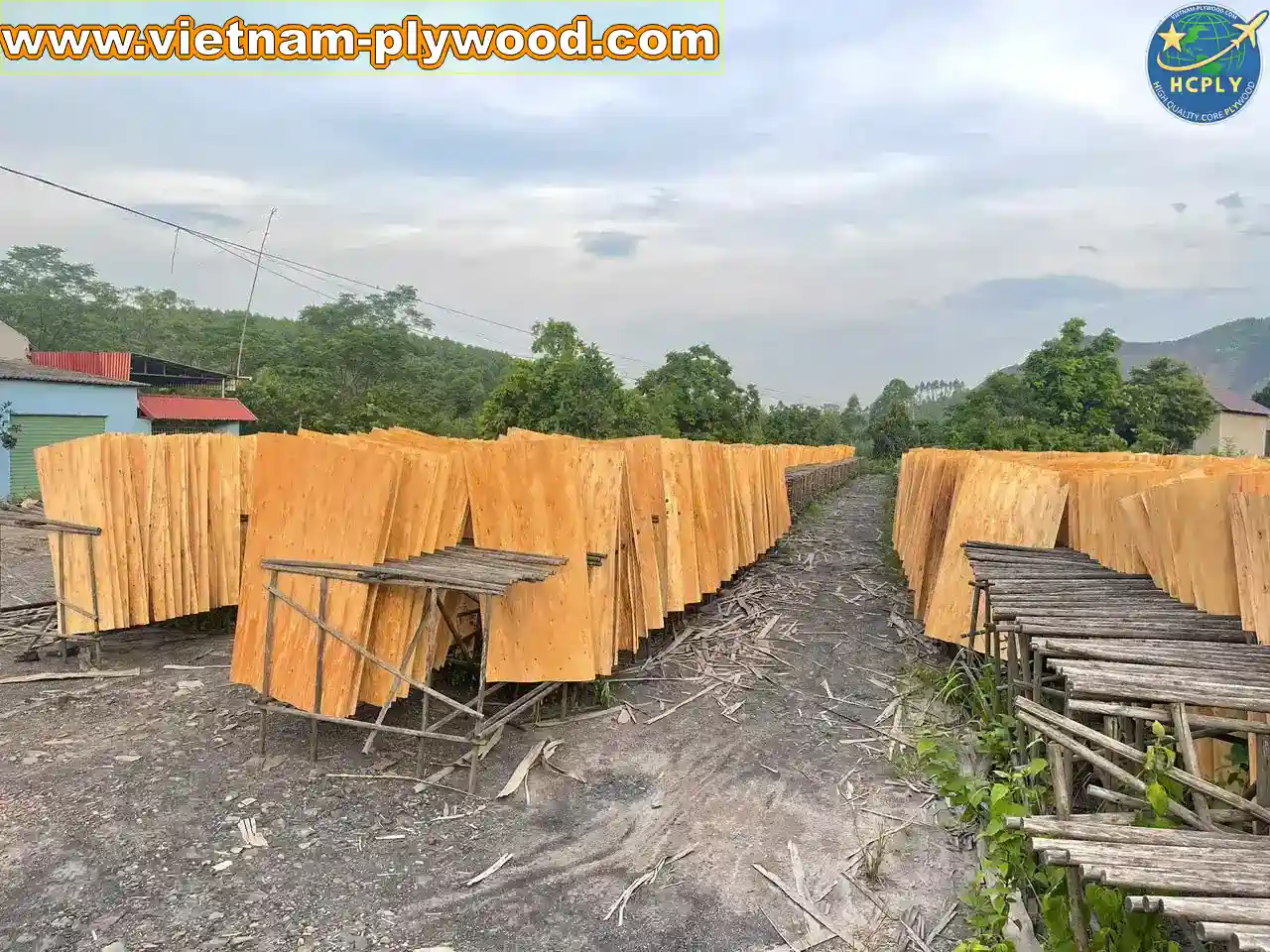


European plywood buyers spent much of 2024 and 2025 scrambling to replace Chinese supply after anti-dumping duties reached 62.4%. Vietnam absorbed a significant share of that redirect — and buyers who navigated sourcing plywood from Vietnam well found comparable quality, lower landed cost, and supply chains that align with the EU’s tightening regulatory framework. This guide covers the full procurement journey for vietnam plywood europe buyers, from species selection to first container delivery.
Key Insight: The EU imposed anti-dumping measures on Chinese hardwood plywood in 2020 and extended them through 2025. Vietnamese plywood enters the EU at 0% MFN tariff, creating a structural landed cost gap that favors Vietnam-origin supply. (European Commission Trade Defence, 2024)
📋 Step 1 — Define Your Specification Before Contacting Suppliers
The single most common mistake European plywood buyers make when first approaching Vietnam suppliers is sending an inquiry with no specification. “What is your price for 18mm plywood?” produces a useless response. Factories quote by exact specification. Every parameter affects cost.
Before sending any RFQ, lock down these seven specification points:
| Parameter | Decision | Impact on Price |
|---|---|---|
| Face veneer species | Okoume / birch / pine / bintangor | ±15–25% |
| Core species | Styrax / acacia / eucalyptus | ±10–20% |
| Glue type | Melamine MR or Phenolic WBP | ±5–10% |
| Emission class | E0, E1, or E2 | ±5–8% |
| Sanding | Sanded both faces / one face | ±3–5% |
| Thickness | 3–40mm (standard: 9, 12, 15, 18mm) | Direct CBM impact |
| Sheet size | 1220×2440mm (4×8) or 1250×2500mm (metric EU) | Affects palletizing |
Important: E0 and E1 are formaldehyde emission classes — they measure formaldehyde release from the cured panel, not the glue type. Melamine (MR) glue can achieve E0 emission when correctly formulated and pressed. Do not confuse “WBP glue” with “low emission” — a phenolic WBP panel can still have high formaldehyde if the resin system is poorly engineered. Always specify both glue type and emission class separately.
For European furniture buyers: specify Melamine MR glue + E0 or E1 emission. For construction (formwork): specify Phenolic WBP glue + CE marking. These are different factory segments in Vietnam — do not expect one supplier to optimize both simultaneously. (See the Vietnam plywood supplier types guide for a full breakdown of how Vietnamese suppliers are structured.)
🌳 Step 2 — Match Species to Your End Market
Not every Vietnamese species is right for European end-uses. Here is what European plywood buyers actually purchase in each major application segment as of 2026:
📌 Furniture & Interior Fit-Out (Germany, Poland, Spain, France)
Okoume face — light pink color, consistent grain, no mineral streaks. Graded A/B. Pairs with styrax core (480–500 kg/m³, lightweight) for cabinet carcasses. This is the most popular combination for Polish furniture exporters sourcing Vietnam supply. The styrax core provides the light weight that EU flat-pack logistics demand while keeping within 40HC payload limits.
Birch face (D/E/F grade) — premium cabinet doors and drawer fronts. Note: Vietnamese birch is graded D/E/F, not the A/B grading used in Baltic/Finnish birch. D grade is the cleanest grade available from Vietnam and corresponds broadly to BB/CP grade in European convention. Pairs with styrax core for weight optimization.
EV (Engineered Veneer) — consistent grain direction, no natural defects, preferred for high-gloss lacquered surfaces. Growing use among German and French kitchen manufacturers who need zero grain variation across batch runs.
📌 Construction & Formwork (Northern/Eastern Europe)
Film-faced phenolic WBP — the workhorse of European construction sites. HCPLY’s AICA film-faced panels achieve 15+ reuse cycles with proper release agent use. CE marking under EN 13986 is mandatory for structural use in the European Economic Area. Specify 120gsm+ AICA film for premium reuse cycles; lower-grade Chinese film (80–100gsm) will delaminate under the thermal cycling of concrete hydration.
Anti-slip plywood — scaffold decking and access platforms. Phenolic WBP glue, AICA anti-slip film 220gsm. Carries CE and EN 12811 references for temporary works applications.
🔧 Step 3 — Vet Your Supplier Before Sampling
Vietnam’s plywood industry has four distinct supplier types. European plywood buyers frequently encounter problems because they evaluate suppliers by their website quality rather than their factory structure. A well-designed website does not mean a well-run factory.
The critical question is which factory segment your supplier accesses. A trading company may show you a premium stitched-core E0 factory during a visit, then source your actual shipment from a loose-lay E2 commercial factory with the same face veneer. This is documented practice among several Vietnamese suppliers. (HCPLY production data, 2026)
Four-question supplier qualification screen:
- Which factory(ies) produce your goods? — Request factory name and address. Cross-reference with Vietnam’s customs export data (IHS Markit / Panjiva / ImportGenius cover VN trade).
- Show me a recent E0 or E1 test report. — The test report must name the specific species combination (e.g., “birch face / styrax core / MR glue”) and be dated within 12 months. Generic brand-level test reports are insufficient.
- Do you have on-site QC at the factory? — Ask for a photo of their production-stage inspection. Factory-direct operations have embedded QC; pure trading companies do not.
- Can you supply FSC chain-of-custody documentation to species level? — EUDR requires genus and species name, volume, and GPS coordinates. Suppliers who cannot provide this before your inquiry deadline are not EUDR-ready.
“The biggest risk European buyers face is not the specification itself — it’s the gap between what gets sampled and what gets shipped. Embed QC at the factory level, not just at destination inspection.” — Lucy, International Sales Manager, HCPLY
Get a Free Quote — HCPLY provides factory-level test reports, FSC chain-of-custody, and EUDR documentation with every inquiry.
📦 Step 4 — Sample and Approve Before Committing
Order a sample set before committing to a full container. A proper sample set for European plywood buyers should include:
- 2–3 full sheets (not offcuts) of the specified panel — check bow/flatness across the diagonal
- Face veneer grade sample — verify color consistency across sheets from the same batch
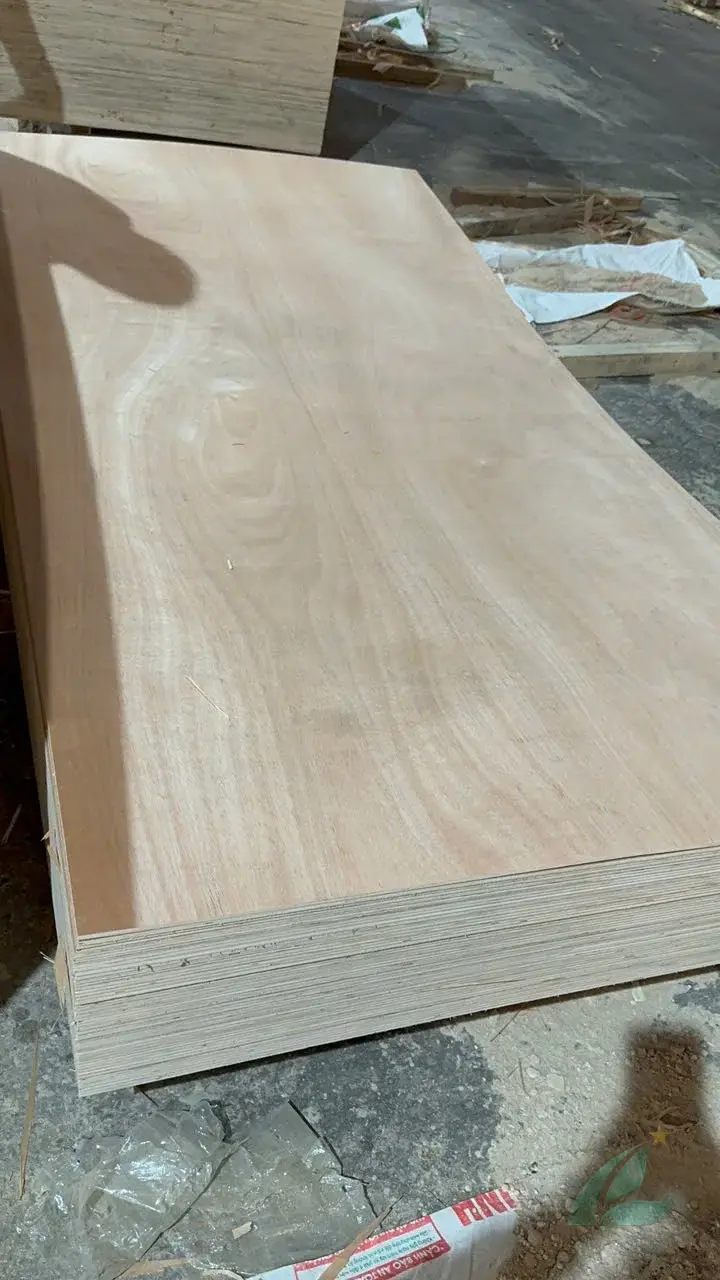
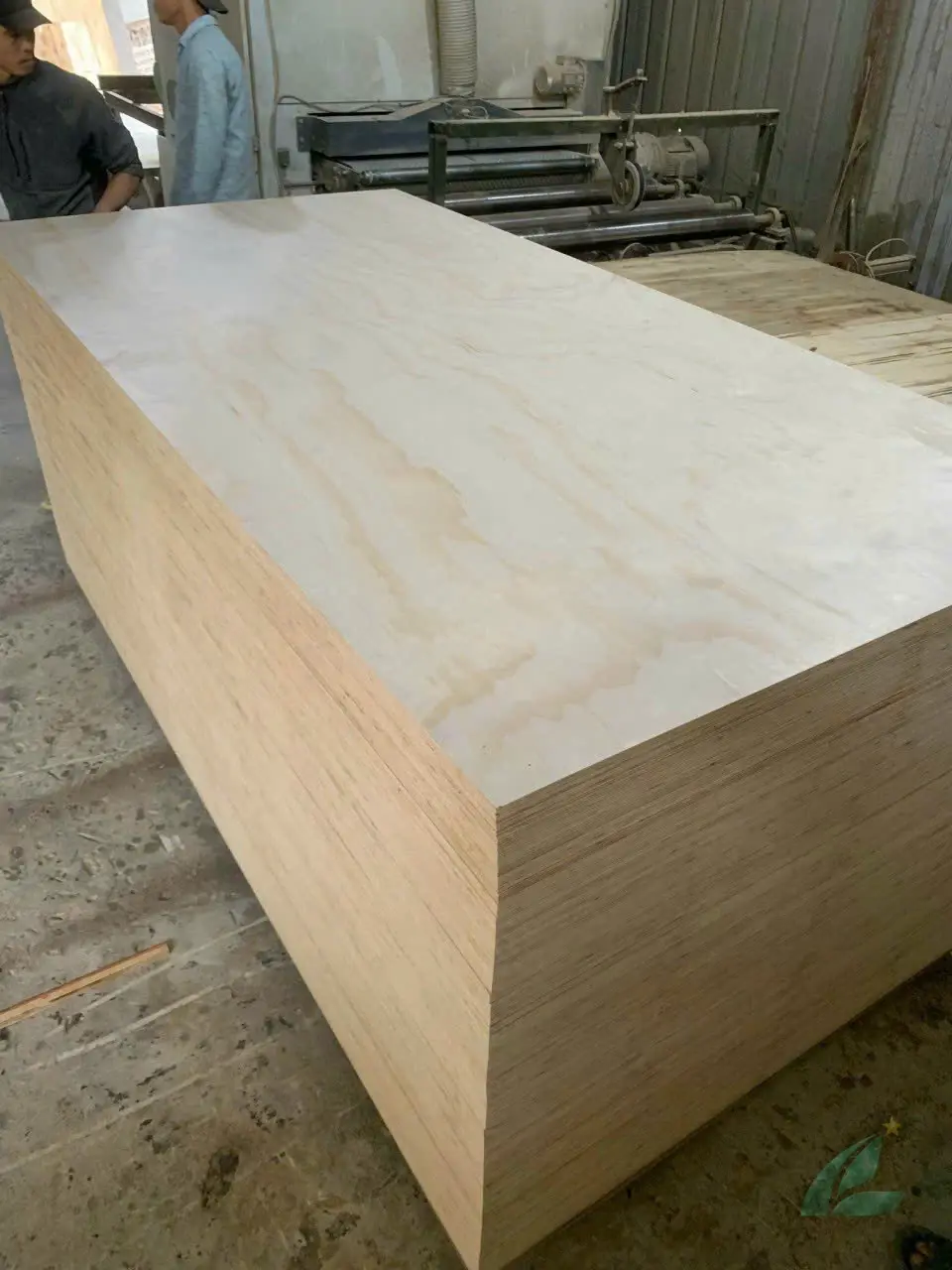
- Edge cross-section — count plies, verify core species color (acacia = dark tan, styrax = pale cream, eucalyptus = light yellow-tan)
- E0/E1 test report — request the lab certificate, not a spec sheet
- FSC certificate copy — verify certificate number against FSC’s public database (info.fsc.org)
Shipping time for samples from Vietnam to European destinations: 30–45 days by sea. Air freight sample delivery within 7–10 days is available for time-critical sourcing decisions.
Do not skip the edge cross-section inspection. Core construction — whether full stitched, edge-jointed, or loose-laid — is invisible from the face but directly determines mechanical performance and longevity. A furniture manufacturer in Germany discovered after three containers that their “E0 stitched core” panels had loose-laid cores with visible gaps — which caused delamination during hot-press lamination in their own factory. (HCPLY production data, 2026)
For construction buyers: send one panel to a CE testing lab (e.g., Holzforschung Austria, CATAS Italy) for EN 314 glue bond and EN 13986 classification before committing to volume. Testing cost is €200–400 per panel and eliminates specification dispute risk on arrival.
📊 Step 5 — EUDR Compliance Checklist for Your First Shipment
The EU Deforestation Regulation enforcement deadline for large enterprises is 30 December 2026. European plywood buyers who have not built EUDR-ready supply chains by Q3 2026 risk shipment detention or return at EU border inspection posts. Here is what you must collect from your Vietnam supplier per shipment:
| Document | Content Required | Who Provides |
|---|---|---|
| EUDR Due Diligence Statement | Deforestation-free declaration, GPS coordinates, cut-off date confirmation | Operator (you) + supplier data |
| Species declaration | Latin names (e.g., Acacia mangium, Eucalyptus urophylla) + volumes | Supplier / factory |
| GPS plantation coordinates | Polygon or point coordinates per plantation plot | Supplier / factory |
| Harvest permits | Local forestry authority documents | Factory of origin |
| FSC Chain-of-Custody certificate | CoC certificate number, scope | Supplier |
| Certificate of Origin (CO) | Vietnam-origin declaration | Exporter |
| Phytosanitary certificate | Heat treatment / ISPM 15 compliance | Exporter |
Vietnam holds standard risk status under the EUDR benchmarking system — meaning full due diligence is required (as opposed to simplified due diligence for low-risk countries). However, Vietnam’s plantation-grown supply chain is EUDR-structurally compatible: acacia, eucalyptus, and styrax are all plantation species with documented harvest cycles, not old-growth forest origin.
The plywood certifications and export documentation guide covers each document in full detail, including how to verify FSC certificates and what CO form requirements apply for EVFTA duty claims.
💡 Step 6 — Logistics and First Container Execution
Once specification is approved and EUDR documentation collected, the logistics sequence is:
- Place purchase order with signed proforma invoice — specify species, dimensions, emission class, glue, quantity in CBM
- Production lead time — 15–20 working days from deposit receipt
- Pre-shipment inspection — arrange third-party inspection (SGS, Bureau Veritas, Intertek) or rely on supplier QC photos/video before container stuffing
- Loading and B/L — HCPLY loads FOB Hai Phong; transit time to Rotterdam 25–28 days, Hamburg 26–30 days, Barcelona 28–32 days
- Documentation package — Commercial invoice, Packing list, B/L, FSC CoC, CO, Phytosanitary, EUDR data package, E0/E1 test report
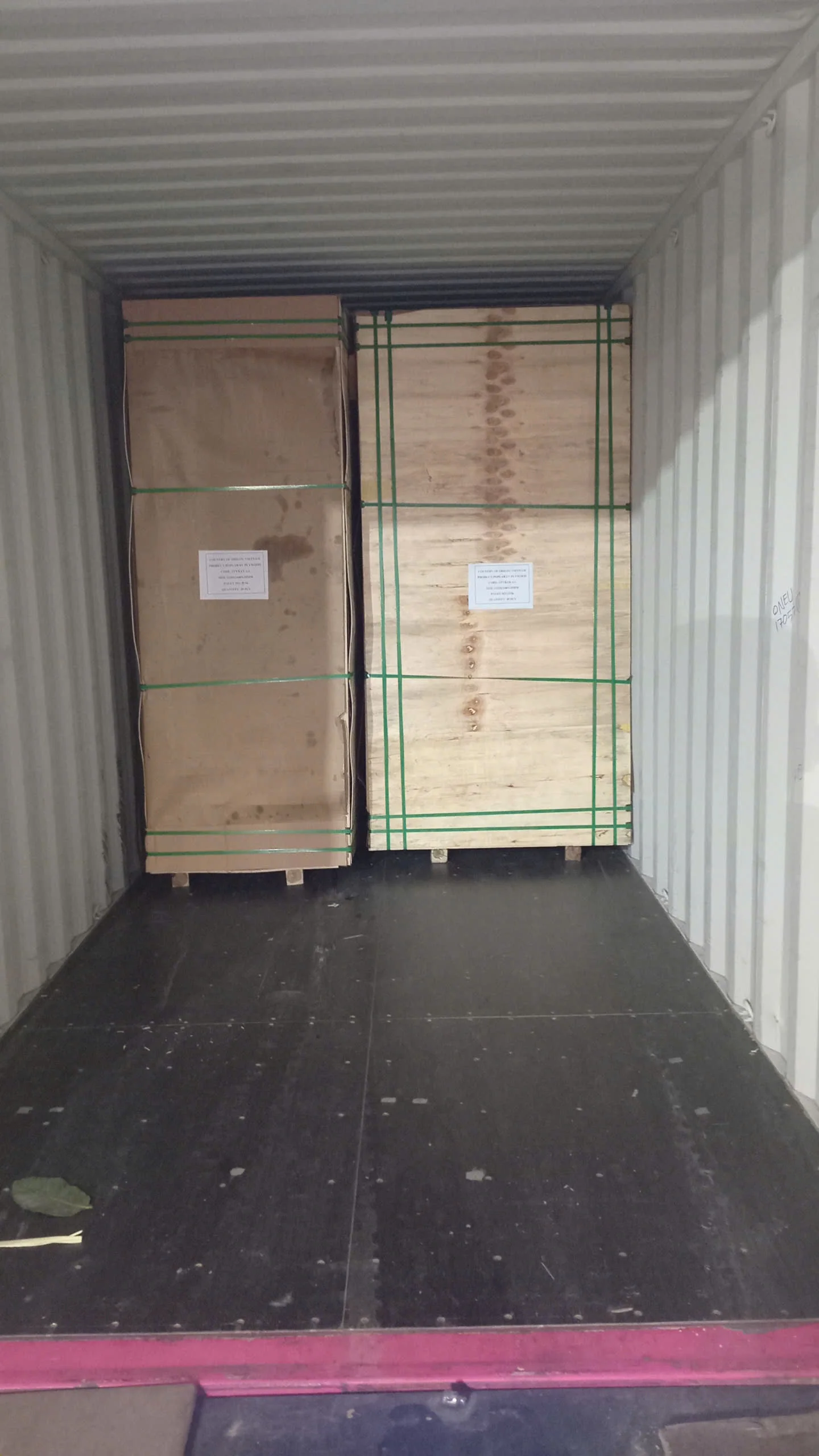
Container capacity reference for European plywood buyers:
| Core species | 18mm panel | Pallets/40HC | Approx CBM | Approx weight |
|---|---|---|---|---|
| Styrax | 18mm | 18 | ~53 CBM | ~26.5 MT |
| Acacia | 18mm | 16 | ~47.5 CBM | ~27.5 MT |
| Eucalyptus | 18mm | 15 | ~44.5 CBM | ~28 MT |
Mixed specifications in one container are accepted — useful for buyers who need multiple thicknesses or species in one shipment to avoid partial-container freight surcharges.
For detailed CBM calculations and pallet count tables across all thicknesses, see the plywood container packing calculation guide.
Related reading:
- For okoume supply, see okoume plywood for European furniture factories.
- Find suppliers in our best Vietnam plywood supplier for Europe guide.
- For supplier vetting, see how to find reliable Vietnam plywood suppliers.
- For the full import process, see how to import plywood from Vietnam and the complete buying guide.
✅ Summary: European Plywood Buyers Procurement Checklist
Before sending your first RFQ to a Vietnam plywood supplier, confirm all of these:
- Specification complete: face veneer, core, glue type, emission class, thickness, size
- Emission class declared separately from glue type (E0/E1 ≠ MR/WBP)
- Supplier factory type confirmed (manufacturing direct vs trading company)
- E0/E1 test report requested for your specific species combination
- FSC CoC certificate number verified against info.fsc.org
- EUDR data package requested: GPS coordinates, species declaration, harvest permits
- Sample set ordered (full sheets, not offcuts)
- Edge cross-section inspected for core construction type
- CE marking confirmed for construction-grade products
European plywood buyers who follow this sequence consistently reduce first-order rejection rates and build supplier relationships that hold through price fluctuations and supply disruptions. Sourcing plywood from Vietnam becomes predictable once specification discipline, supplier vetting, and EUDR documentation are built into the procurement workflow. Vietnam’s plantation-based, certification-aligned supply chain is structurally well-positioned for the European regulatory environment through 2030 and beyond.
Disclosure: This article is published by HCPLY, a Vietnam-based plywood manufacturer and export operator. While we aim to provide objective industry guidance, readers should consider our perspective as a market participant when evaluating recommendations.
Request EU-spec samples and a factory-direct quote — HCPLY supplies European buyers with full EUDR documentation, E0/E1 test reports, and FSC chain-of-custody. No minimum volume requirement for sample orders.
Related reading: Vietnam plywood supplier types — how to identify your supplier’s structure | Plywood glue types and emission standards explained | Vietnam plywood for the European market — EUDR-ready supply