


European importers sourcing plywood in 2026 face a compliance environment that has fundamentally changed. The EU Deforestation Regulation (EUDR) is now law, Chinese plywood carries anti-dumping duties as high as 62.4%, and E1/E0 emission requirements are enforced at the border. Vietnam plywood for the European market sits at the intersection of all three shifts — the right price point, the right certifications, and the right supply chain transparency for buyers who cannot afford a documentation failure.
This guide covers exactly what European buyers need from a Vietnamese supplier: EUDR traceability, emission standards, preferred species, CE marking for construction use, and the documentation checklist that determines whether your shipment clears customs or gets held.
🌍 Why European Buyers Are Shifting to Vietnam Plywood
Chinese hardwood plywood faces EU anti-dumping duties of up to 62.4% (EU Commission, 2025). Vietnam, by contrast, enters the EU market at 0% tariff under standard MFN rates. That tariff differential alone restructures the landed cost calculation for any European importer comparing the two origins.
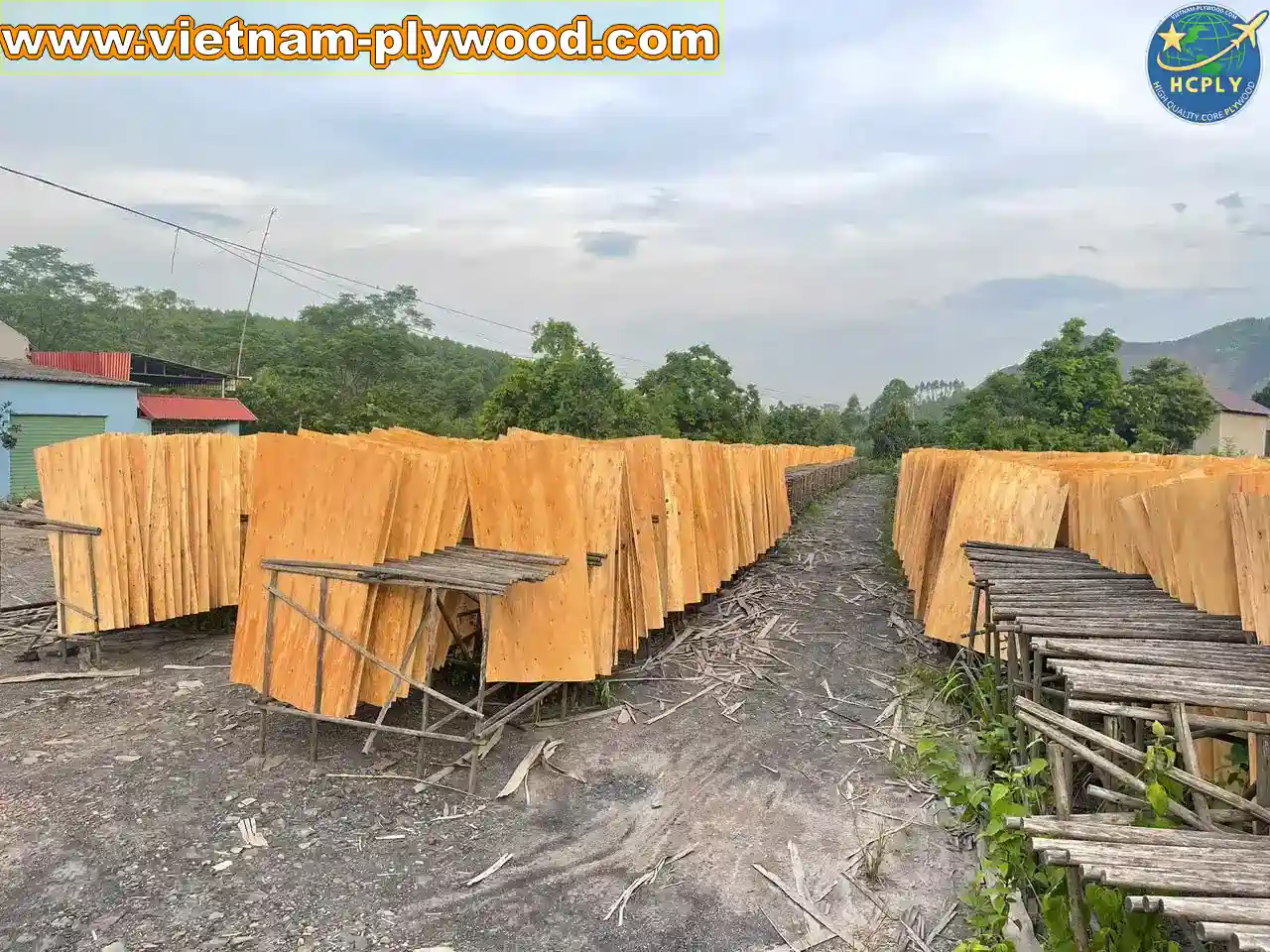
Beyond price, Vietnam’s plywood sector has developed the infrastructure European buyers now demand. FSC-certified plantation forests, ISO 9001 quality management, E0/E1 emission testing, and EUDR traceability documentation are all available from factories in Northern Vietnam’s Phu Tho and Yen Bai provinces — the source region for 80%+ of Vietnam’s plywood exports (HCPLY production data, 2026).
Key Insight: Vietnamese plywood factories using FSC-certified acacia, eucalyptus, and styrax plantation wood are structurally positioned to satisfy EUDR’s deforestation-free requirement. All three core species are grown on registered plantation land — not primary forest.
The combination of 0% EU tariff, EUDR-compatible supply chain, and competitive FOB pricing has made Vietnam the fastest-growing plywood origin for European importers in 2025–2026 (Vietnam Timber & Forest Product Association, 2025).
📋 EUDR: What European Plywood Buyers Must Know
EUDR (EU Regulation 2023/1115): EU legislation requiring that plywood and all wood products entering the EU come from deforestation-free land as of 31 December 2020. Large companies must comply by 30 December 2026. Small and micro-enterprises by 30 June 2027 (European Commission, 2024).
Plywood is explicitly listed as a covered product under CN code 4412. Every shipment entering the EU after the enforcement date requires a Due Diligence Statement (DDS) submitted to the EU TRACES system before customs clearance.
📌 What the DDS Must Contain
The due diligence statement requires four categories of data:
| Data Category | What Buyers Need from Supplier |
|---|---|
| Geolocation | GPS coordinates of harvest plots (forest or plantation) |
| Volume & origin | CBM per batch, country and sub-national region of harvest |
| Operator details | Company name, registration, supply chain role |
| Risk assessment | Evidence that land was not deforested after Dec 31, 2020 |
HCPLY provides batch-specific geolocation data and harvest declarations for each production run. All three core species — acacia, eucalyptus, and styrax — are sourced from registered plantation land in Phu Tho Province with documented origin traceability.
⚠️ Important: One common buyer mistake is assuming that FSC certification alone satisfies EUDR. FSC provides chain-of-custody from certified forest, but EUDR requires a formal DDS submission into EU TRADES. Both are needed — FSC supports the risk assessment step, but does not replace the DDS.
Request the DDS template from your Vietnamese supplier before placing your first EU-bound order. Suppliers who cannot provide this in 2026 present real customs risk.
🌲 Species Guide: Which Vietnam Plywood Works in Europe
European buyers have distinct preferences by application segment. Understanding which face veneer and core species match your end use will prevent specification errors.
Furniture and Interior Segment
Okoume plywood from Vietnam is the benchmark face veneer for European furniture. Light pink color, consistent grain, and stable glue bond make it the default choice for cabinet manufacturers in Germany, Poland, and France. Pair with styrax core (480–500 kg/m³) for lightweight furniture panels, or eucalyptus core (650–750 kg/m³) for applications where density and screw-holding are priorities.
Birch plywood from Vietnam serves the premium furniture and shopfitting segment. Available in D/E/F grades — note that European birch is graded differently, but Vietnamese birch (imported face, domestic core) follows the same D/E/F system where D is the highest quality available in this production tier. Core is typically styrax for weight optimization.
Pine face veneer is growing in European demand for Scandinavian and rustic furniture styles.
Construction Segment
Film-faced WBP phenolic plywood is the specification for concrete formwork across European construction sites. CE marking under EN 13986 is the mandatory compliance mark for construction products placed on the EU market. HCPLY’s premium film-faced line uses AICA film (minimum 135 gsm) with phenolic WBP glue, rated for 15+ reuses.
Anti-slip plywood (AICA anti-slip film, 220 gsm) covers scaffold decking and vehicle floor applications.
🔬 Emission Standards: E1, E0, and What the EU Actually Enforces
European buyers frequently confuse glue type with emission class. These are separate specifications.
Glue type determines moisture resistance:
- Melamine (MR): passes 12-hour boil test. Suitable for interior furniture.
- Phenolic (WBP): passes 72-hour boil test. Required for construction/marine.
Emission class determines formaldehyde off-gassing:
- E0: ≤0.5 mg/L (equivalent to CARB P2). Required for premium furniture and children’s products.
- E1: ≤1.5 mg/L. Standard for European interior applications under EN 717-1.
- E2: ≤5.0 mg/L. Not permitted for interior use under EN 13986.
The EN 13986 standard, which governs wood-based panels in construction, specifies E1 as the maximum emission class for interior structural applications. For furniture exported to German or French retailers under their supply chain audits, E0 is increasingly the practical floor.
“European buyers are asking for E0 test certificates more often in 2026 than they were two years ago,” says Lucy, International Sales Manager, HCPLY. “It’s not always a legal requirement — it’s a supply chain audit requirement from their own retail clients.”
HCPLY supplies both E0 and E1 grades with third-party emission test reports. Specify your emission class at the quotation stage — it affects core construction and pressing parameters, so it cannot be changed post-production.
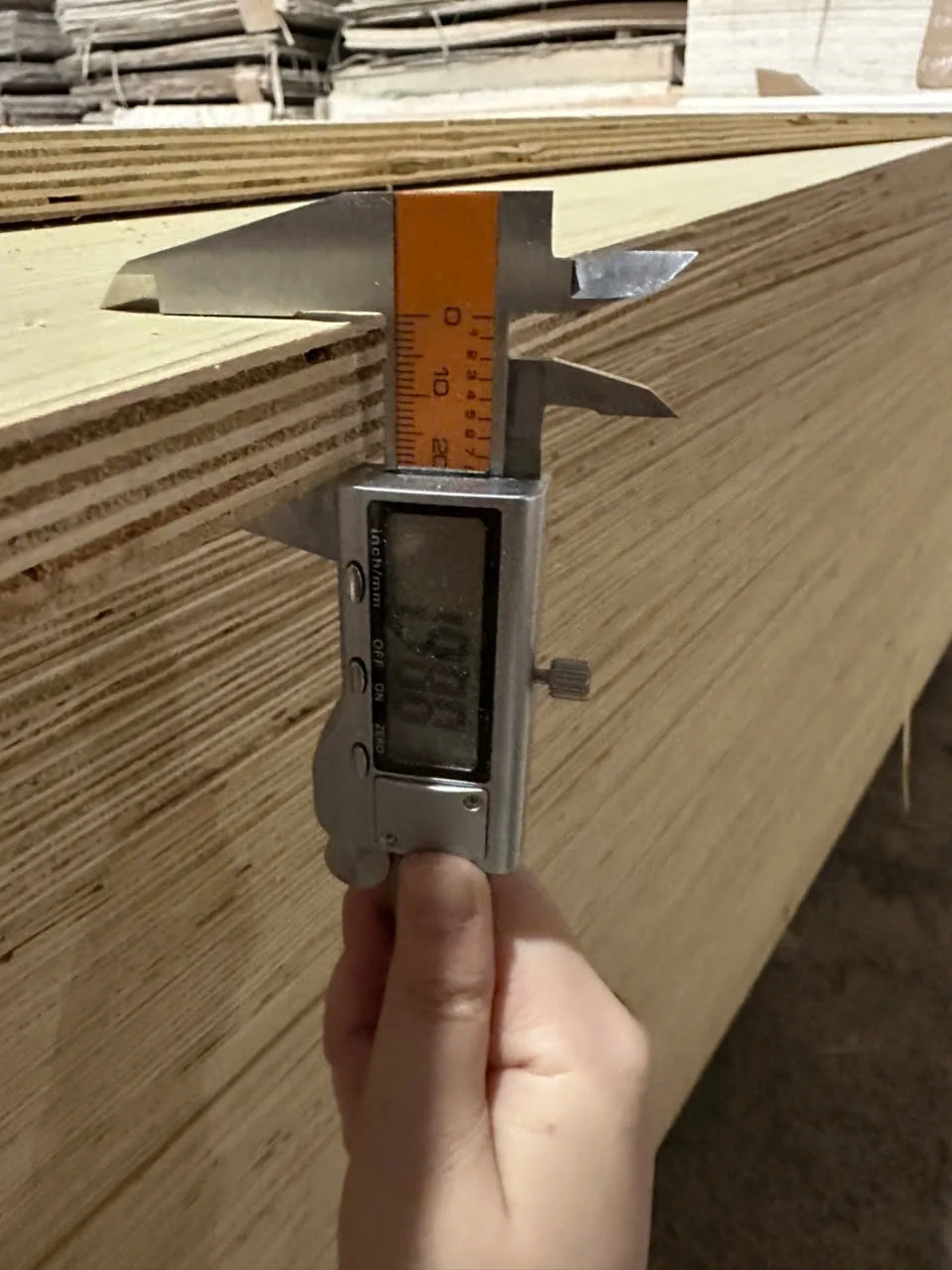
✅ FSC and CE: The Two Certifications European Buyers Most Often Require
FSC Chain of Custody
FSC certification tracks timber from certified forest to finished product. For Vietnamese plywood, FSC CoC certification means every pallet shipped carries an FSC claim code traceable back to the plantation source. European buyers in the retail sector frequently mandate FSC as a procurement condition.
FSC also plays a practical role in EUDR compliance. An FSC-certified supply chain generates the GPS coordinates and plantation records that satisfy EUDR’s due diligence requirements at the forest-of-origin level. Factories with FSC CoC already have the documentation infrastructure EUDR demands.
HCPLY holds FSC, CARB P2, CE, and ISO 9001 certifications. Certificate scans and CoC numbers are available on request before order placement — not after.
CE Marking for Construction Products
CE marking under EN 13986 is legally required for plywood used in construction applications across the European Economic Area. The CE mark must be accompanied by a Declaration of Performance (DoP) listing the structural class, emission class, and reaction to fire classification.
HCPLY’s film-faced and anti-slip construction grades carry CE marking. For furniture-grade panels (okoume, birch, EV), CE is not required — but E0/E1 test certificates and FSC CoC documentation take its place in buyer audits.
You can verify HCPLY’s certifications at our quality certifications page.
📦 Documentation Checklist: What Every EU Shipment Needs
European customs authorities and downstream importers are increasingly systematic about documentation. Missing one document can delay clearance by weeks and trigger additional inspections.
Standard export documents (every shipment):
- Commercial Invoice
- Packing List
- Bill of Lading (FOB Hai Phong)
- Certificate of Origin (Form EUR.1 for EU preference, if applicable)
- Phytosanitary Certificate (heat treatment/fumigation)
- Fumigation Certificate
EU-specific compliance documents:
- EUDR Due Diligence Statement reference number (from 30 December 2026)
- FSC Chain of Custody certificate (if FSC-labelled shipment)
- CE Declaration of Performance (construction grades only)
- Emission test report (E0 or E1 class, third-party lab)
- CARB P2 test certificate (if re-exporting to US from EU)
HCPLY prepares the full compliance document package as standard. Before your first order, request our EU documentation template to confirm every field matches your importer-of-record requirements.
Request EU compliance documentation samples

🏭 How HCPLY’s Production Structure Serves EU Requirements
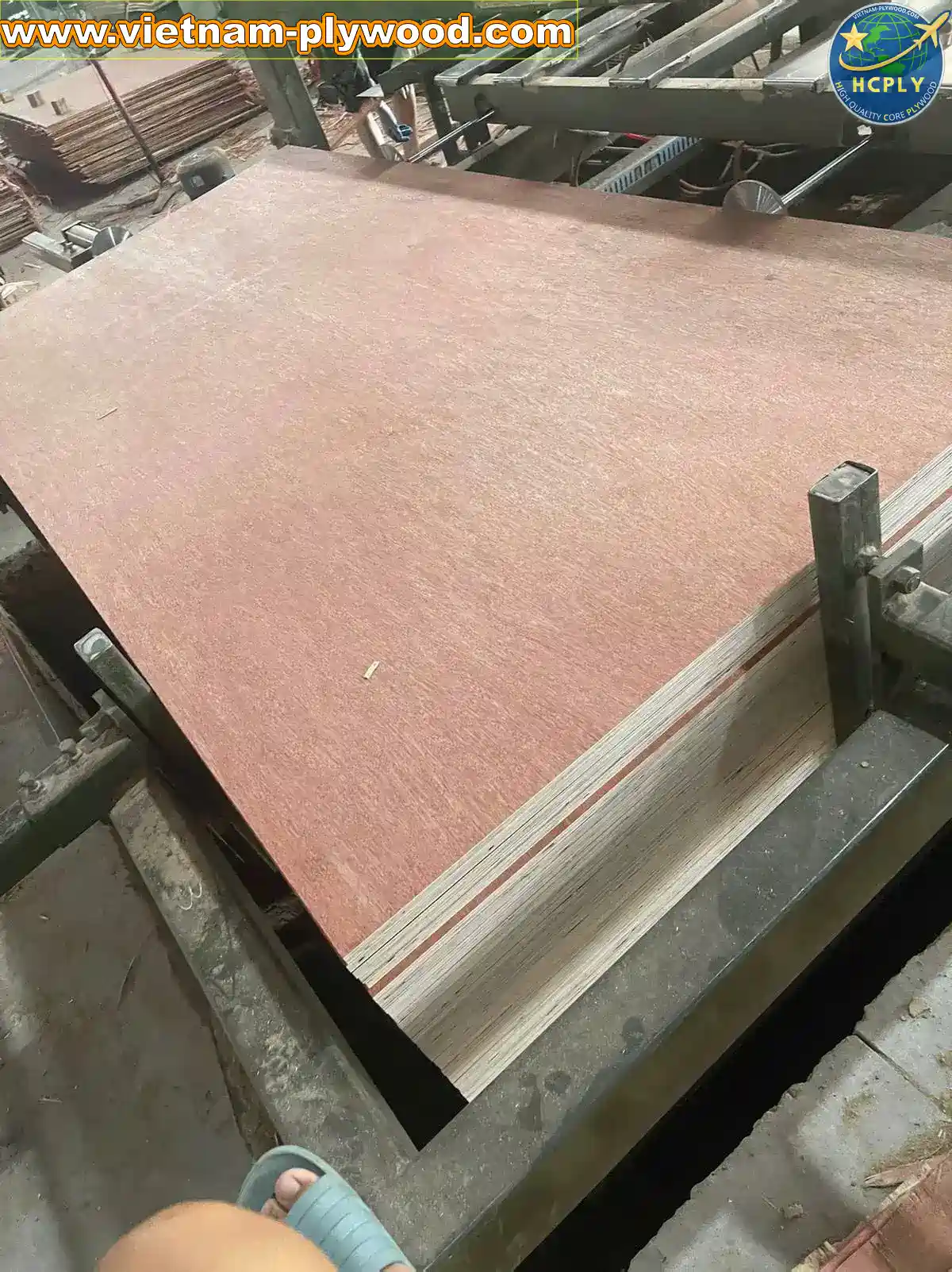
HCPLY manages 3 specialized production facilities in Northern Vietnam, each purpose-built for a distinct product segment:
- Premium furniture facility — styrax and eucalyptus core, E0/E1, full stitched core construction, sanded face. Serves EU furniture buyers.
- Commercial/packing facility — acacia core, competitive pricing for non-premium applications.
- Premium film-faced facility — AICA phenolic film, WBP glue, CE-marked, 15+ reuse rated. Serves EU construction buyers.
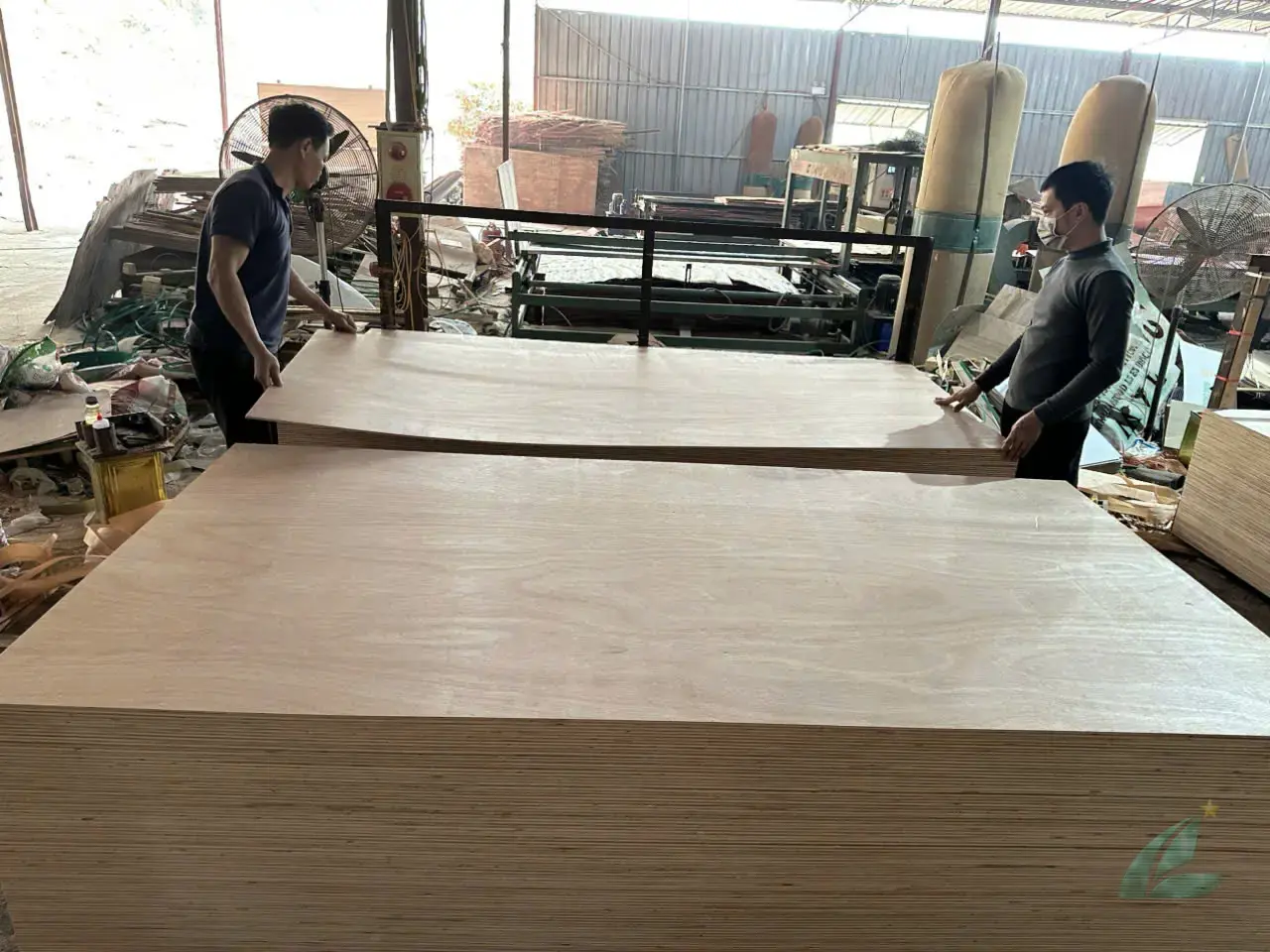
This segmented structure means EU buyers source the correct grade — not a factory pushing one product line into every inquiry. On-site QC teams photograph each batch before loading. All documentation — FSC CoC, emission reports, CE DoPs — originates from the production facility, not a trading company layer.
“Factory-direct documentation is what EU importers need in 2026,” notes David, Export Project Leader, HCPLY. “When your customs broker asks for the geolocation data behind a EUDR statement, you need it from the actual factory — not from an intermediary who sourced from three different suppliers.”
HCPLY has shipped to buyers in Germany, Poland, Spain, and France. Container loading photos and pre-shipment QC reports are provided as standard.
📊 Key Metrics: Vietnam Plywood to Europe at a Glance
| Parameter | Value |
|---|---|
| EU tariff rate (Vietnam origin) | 0% MFN |
| EUDR enforcement date (large operators) | 30 December 2026 |
| EUDR cut-off date for deforestation | 31 December 2020 |
| Emission class for EU interiors | E1 minimum, E0 for premium |
| FSC status | Available on all furniture grades |
| CE marking | Film-faced and anti-slip construction grades |
| Lead time FOB Hai Phong | 15–20 days production |
| Transit time to Europe | 25–32 days (FCL, via Singapore or Port Klang) |
| MOQ | 1 × 40HC container |
📐 Choosing the Right Specification for Your Application
Getting the specification right at the inquiry stage saves weeks of back-and-forth. Use this quick-reference:
| Application | Face Veneer | Core | Glue | Emission | Certification |
|---|---|---|---|---|---|
| Furniture (cabinet) | Okoume, Birch, EV | Styrax | Melamine MR | E0 | FSC + E0 cert |
| Furniture (general) | Okoume, Pine | Styrax/Eucalyptus | Melamine MR | E1 | FSC + E1 cert |
| Concrete formwork | Film-faced (phenolic) | Eucalyptus | Phenolic WBP | N/A | CE + DoP |
| Scaffolding/floor | Anti-slip film | Acacia/Eucalyptus | Phenolic WBP | N/A | CE + DoP |
| Packaging/pallets | Bintangor C/D | Acacia | Melamine MR | E1/E2 | As required |
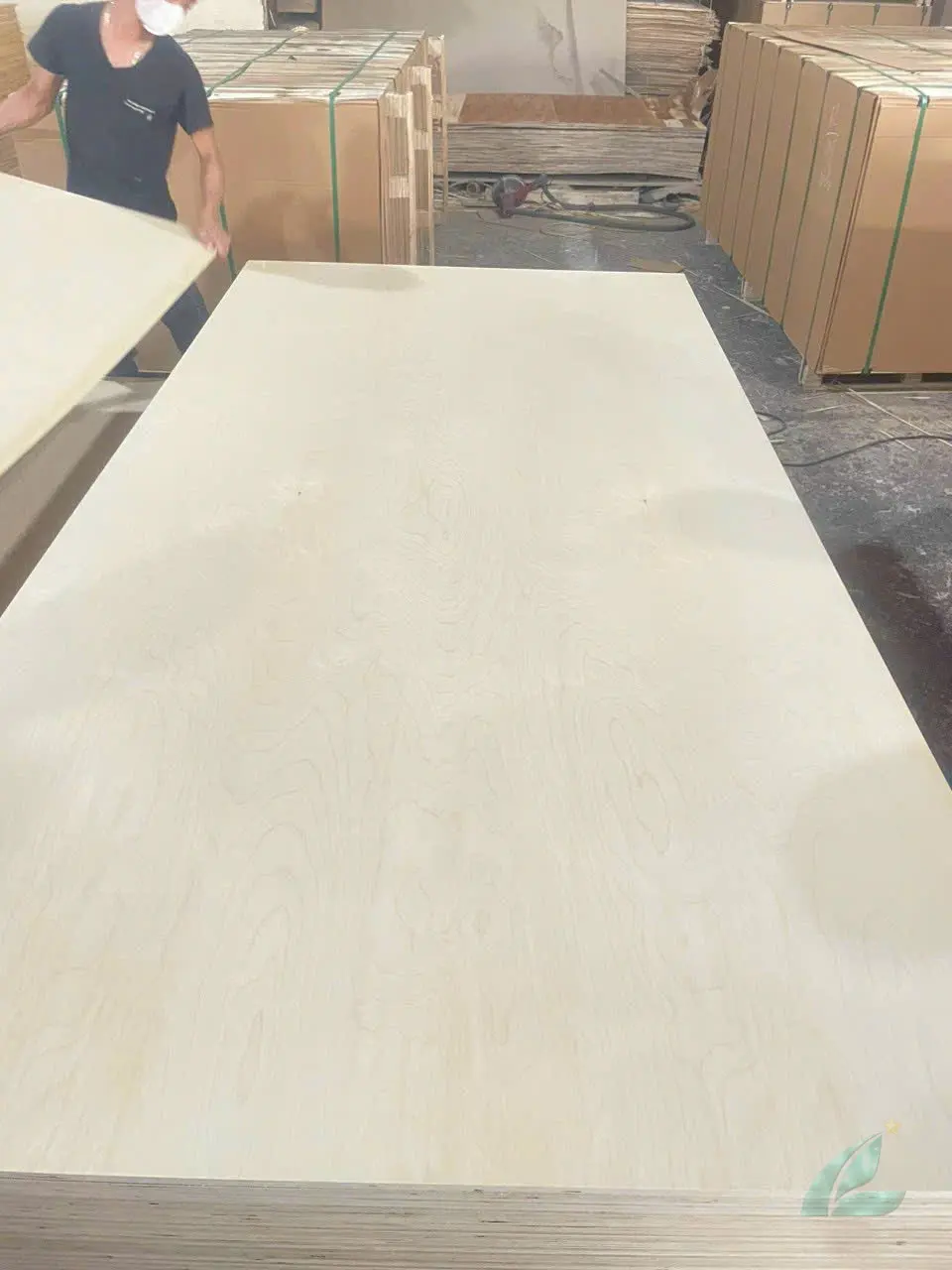
For any specification not on this table — custom thickness (3–40mm), non-standard sheet size (1250×2500mm metric format for EU preference), or mixed container loads — contact HCPLY directly. Mixed specifications in one 40HC container are fully supported; weight calculations are verified at the factory level before loading (see container packing calculation guide).
Get a free quote for your EU-spec order
🏆 Conclusion: Vietnam Is Ready for the Post-EUDR European Market
The European plywood market in 2026 is filtering suppliers by documentation quality as much as product quality. Chinese plywood faces tariff barriers. Eastern European birch faces supply constraints. Vietnamese plywood from properly certified, plantation-based factories passes every EU compliance gate: EUDR traceability, E0/E1 emission class, FSC chain of custody, CE marking for construction grades.
HCPLY exports to European buyers across the continent. Our three production facilities — each purpose-built for its segment — deliver the specification consistency and documentation infrastructure that EU importers need. Every shipment comes with a complete compliance document package, pre-shipment QC photos, and on-request EUDR batch declarations.
The compliance window closes on 30 December 2026. Start your documentation due diligence now.
Contact HCPLY for EU-spec plywood samples and EUDR documentation — no commitment, response within 24 hours.
Or explore our full product range at Vietnam Plywood Manufacturer — All Products.