



Effective December 30, 2026, every plywood shipment entering the European Union must be backed by verifiable proof that the wood did not come from deforested land — with GPS coordinates, legal harvest documentation, and a formal Due Diligence Statement on file before the container clears customs.
This is not a voluntary sustainability initiative. It is EU Regulation 2023/1115, the EU Deforestation Regulation (EUDR), and non-compliance means product rejection at the border, financial penalties, and potential market access bans.
For procurement teams sourcing plywood from Vietnam, the question is not whether EUDR applies — it does, to all plywood regardless of HS code or application — but whether your current supplier can actually deliver the documentation package you need to import legally. EUDR due diligence for plywood is now the minimum entry requirement for EU market access — and many Vietnam suppliers are not yet ready.
This guide covers the five core EUDR requirements, the full enforcement timeline, why Vietnam’s plantation wood model is structurally advantaged for compliance, what VNTLAS does and does not prove, the concurrent REACH formaldehyde deadline, and a practical checklist for evaluating supplier readiness before you commit to 2026 purchase orders.
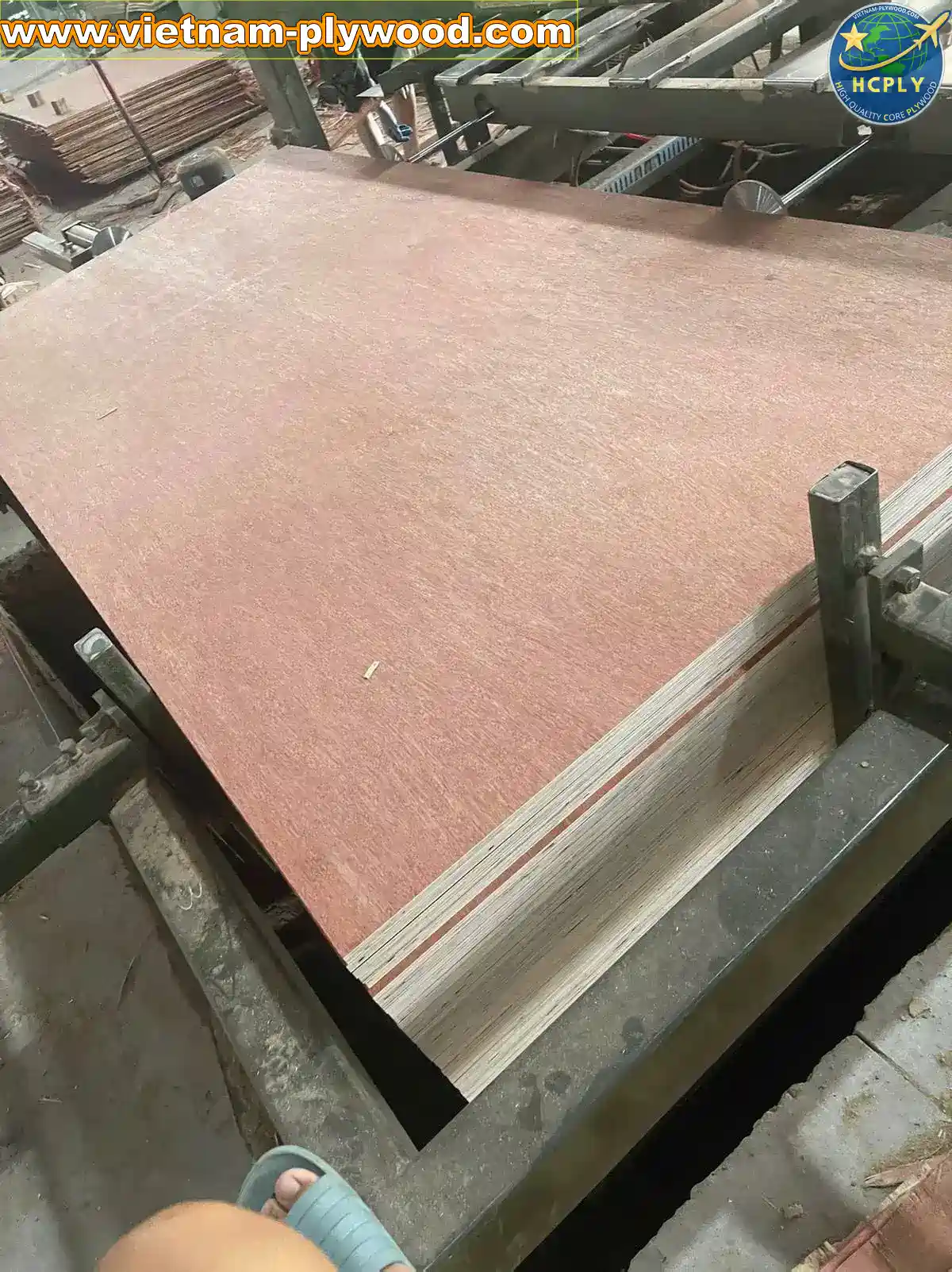
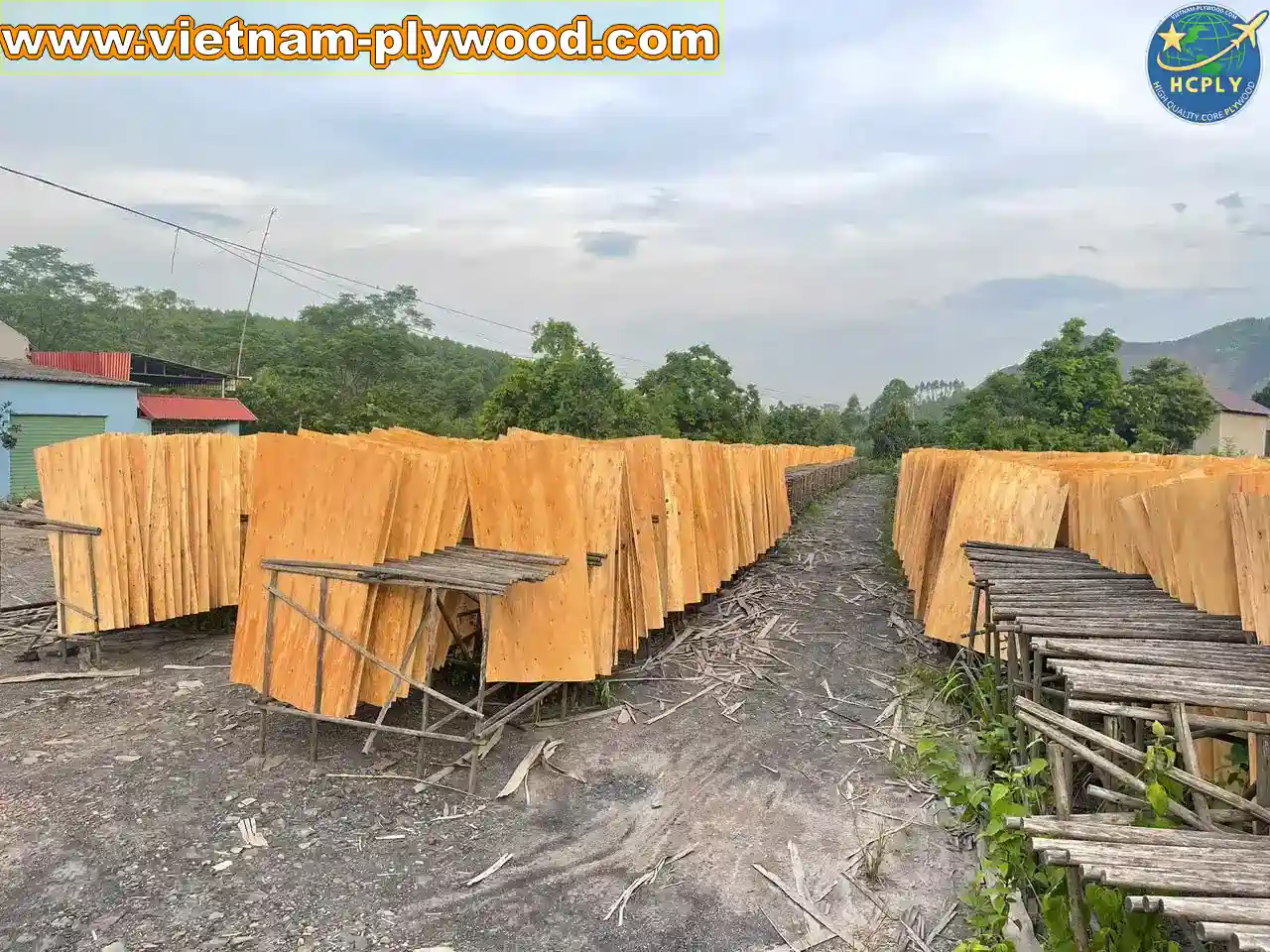
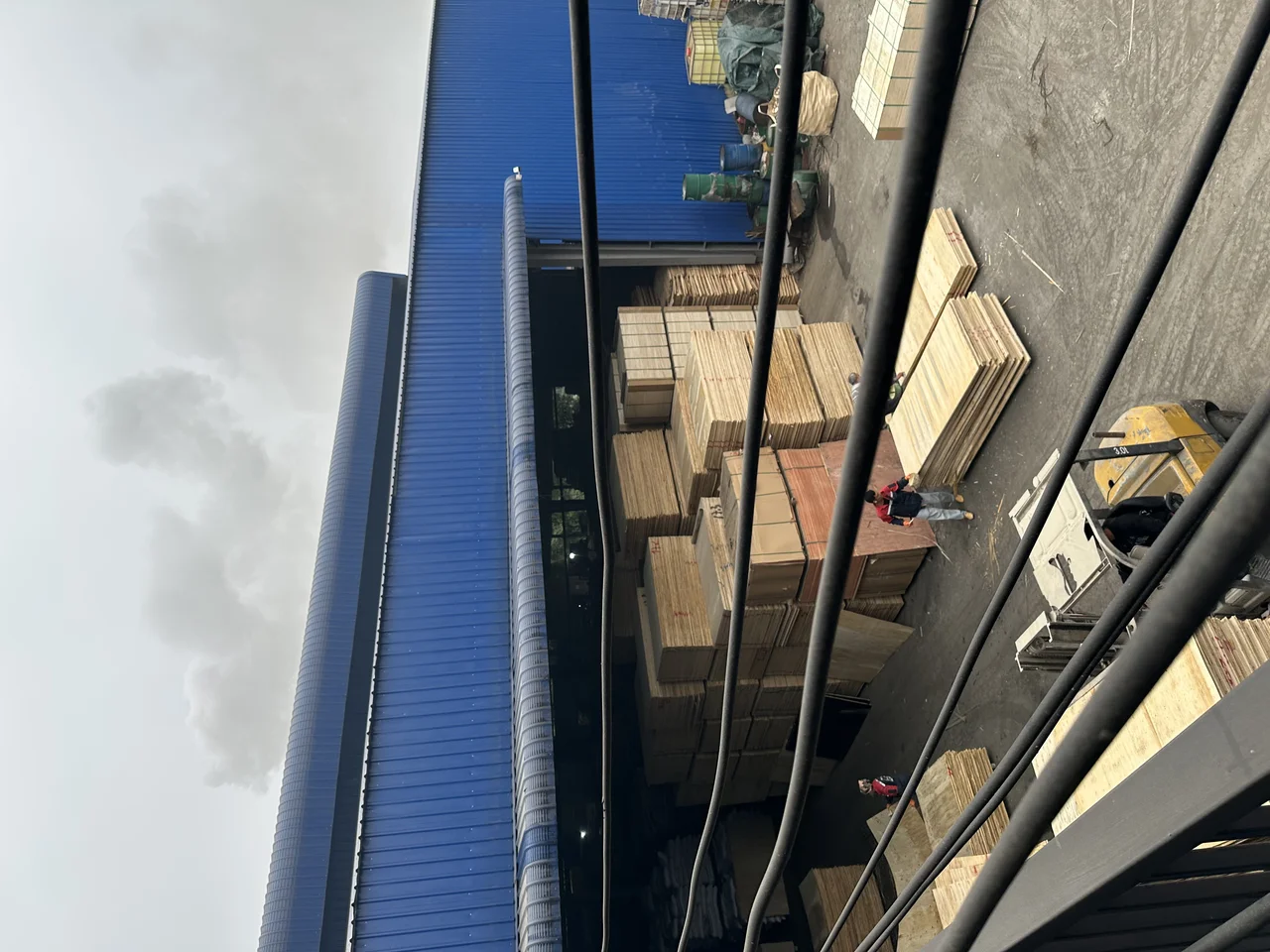 HCPLY production facility — acacia and styrax plantation timber with traceable GPS harvest records for EUDR compliance
⚠️ Legal Disclaimer: This guide is educational and reflects publicly available regulatory information. It does not constitute legal advice. Consult qualified legal counsel or a licensed customs compliance specialist before submitting Due Diligence Statements or making binding compliance decisions.
🌍 The EUDR: Why 2026 Changes Everything for Plywood Importers
The EU Deforestation Regulation was formally adopted on June 29, 2023 as EU Regulation 2023/1115. It replaces the earlier EU Timber Regulation (EUTR), which focused narrowly on illegal logging, with a far more demanding framework: suppliers must now prove that wood products are deforestation-free — meaning the land they came from was not converted from forest after December 31, 2020 — regardless of legality in the country of harvest.
The motivation is straightforward and uncomfortable for supply chains. The EU acknowledged in the regulation’s preamble that EU consumption patterns are responsible for approximately 10% of global deforestation. Agricultural expansion, including plantation development that displaces natural forest, drives that figure. The regulation is designed to close the loop: if the EU is fueling deforestation through its imports, the solution is to require proof of non-deforestation as a market access condition.
📌 What Products Are Covered
Plywood falls squarely within the EUDR’s scope under the following product categories:
- HS Chapter 44 — wood and articles of wood, including panel products
- Specifically: sawn timber, veneer sheets, plywood, fibreboard, particleboard, and articles of wood used in construction, furniture, packaging, and other applications
There are no exemptions based on end use, HS subheading, or certification status alone. A shipment of film-faced construction plywood, furniture-grade birch plywood, and packing-grade bintangor plywood all face the same documentary requirements.
📌 Who Is Responsible
The regulation places compliance obligations on EU operators (companies placing products on the EU market for the first time) and EU traders (companies selling products already on the EU market). As a practical matter, the EU importer — the company named on the commercial invoice receiving the shipment — bears primary responsibility for submitting the Due Diligence Statement.
Vietnamese exporters are not EU operators, but they are the source of the documentary evidence that makes compliance possible. An EU importer can only submit a credible DDS if their Vietnam supplier provides GPS coordinates, legal harvest documentation, and chain of custody records. This makes your supplier’s EUDR readiness your compliance risk.
📋 Five Core EUDR Requirements Explained
EUDR due diligence is not a single document. It is a structured process with five interdependent requirements. Every requirement must be satisfied for every shipment.
📌 Requirement 1 — GPS Geolocation of Harvest Plots
Operators must collect the geographic coordinates of the land where the wood was harvested. For plantation timber, this means the plantation parcel itself. The regulation requires coordinates precise enough to determine whether the land was forested on December 31, 2020 — EU guidance specifies six decimal places of latitude and longitude (accuracy to approximately 10 cm).
For Vietnam’s plantation model, this is operationally achievable: plantation parcels are registered under Vietnam’s land use rights system with defined boundaries. A GPS boundary file (polygon or point) of the plantation parcel is the standard deliverable. Suppliers working with FSC-certified plantation owners already collect this data as part of FSC forest management audits.
What to ask your supplier: “Can you provide GPS coordinates or polygon data for the plantation plots supplying the timber for our order, with land registration documents confirming those plots were not natural forest after December 31, 2020?”
Requirement 2 — Legal Harvest Documentation
Operators must obtain and retain evidence that the timber was harvested in accordance with the laws of the country of harvest. For Vietnam, this means:
- Forest land registration certificates (Giấy chứng nhận quyền sử dụng đất) for plantation parcels
- Timber harvest permits (Phương án khai thác) issued by provincial authorities
- Timber origin declaration (Bảng kê lâm sản) accompanying timber transport
- Wood processing registration for the factory level
This documentation exists within the VNTLAS framework (discussed in detail in a later section). Suppliers integrated into VNTLAS — which includes all FSC-certified producers — maintain these records systematically. Suppliers outside that system may struggle to produce complete documentation retroactively.
Requirement 3 — Deforestation-Free Verification
The deforestation-free status requirement is the most substantive departure from the old EUTR framework. Operators must verify that the sourcing land:
- Was not forest on December 31, 2020, or
- Has not been converted from forest to another land use (including plantation) after December 31, 2020
For Vietnam plantation timber, this is where the structural advantage emerges. Vietnam’s acacia, eucalyptus, and styrax plantations are predominantly established on classified agricultural land or degraded forestry land — not natural forest. Many current plantations were established in the 2010s, well before the 2020 cutoff, on land that was already under cultivation or was officially reclassified.
Verification evidence includes:
- Historical satellite imagery from services such as Global Forest Watch, Copernicus Land Service, or PRODES (for EU authority reference)
- Land use classification certificates from provincial land administration authorities
- FSC forest management certificates with plantation boundary maps (FSC maintains records from certification start date)
EU authorities will cross-reference submitted GPS coordinates against the EU Observatory on Deforestation and Forest Degradation — a publicly accessible monitoring tool built specifically to support EUDR enforcement.
Requirement 4 — Due Diligence Statement (DDS) via EU TRACES
The Due Diligence Statement is the formal declaration submitted to the EU TRACES NT (Trade Control and Expert System) before each import. It summarizes the due diligence process and confirms the operator has:
- Collected information (geolocation, legal documents, deforestation-free evidence)
- Assessed the risk of non-compliance
- Implemented risk mitigation measures if needed
The DDS is assigned a unique reference number that must accompany the shipment through EU customs. Customs authorities check the DDS reference against the TRACES database. No valid DDS reference = shipment held or rejected.
Key operational point: The DDS system went live for pilot testing in 2025. EU importers should be registered in TRACES NT and have tested DDS submission workflows before Q4 2026. Do not attempt first-time DDS filing on a live production shipment.
Requirement 5 — Chain of Custody Traceability
The complete traceability chain — from plantation harvest through veneer production through plywood manufacturing to export loading — must be documentable on request. This includes:
- Plantation harvest records (species, volume, date, plot)
- Transport documents (timber origin declaration at each transfer point)
- Factory intake records (raw veneer receipt, species verification)
- Production batch records (core and face veneer species per production run)
- Finished goods inventory records linking production batch to export container
For a plywood manufacturer producing 1220 × 2440mm birch-faced panels (birch face veneer + styrax core), this means tracking both the birch face veneer supply chain (imported, requires separate supplier documentation) and the styrax plantation core supply chain (Vietnam domestic plantation).
📊 EUDR Timeline: What’s Happening and When
| Date | Event |
|---|---|
| June 29, 2023 | EUDR (Regulation 2023/1115) formally adopted |
| June 29, 2023 | 18-month transition period begins |
| December 30, 2024 | Original enforcement date (subsequently delayed) |
| December 30, 2026 | Full enforcement — large operators and traders |
| June 30, 2027 | SME extension deadline |
| Ongoing 2025–2026 | EU country risk classification system development |
| 2026 Q3–Q4 | EU member state customs enforcement ramp-up |
⚠️ Important: The original enforcement date of December 30, 2024 was delayed by one year to December 30, 2025, and subsequently extended again to December 30, 2026 following lobbying from industry associations and concerns about supplier readiness. Do not assume further delays will be granted. The European Commission and member state customs authorities have confirmed the 2026 date as firm.
Country Risk Classification — A Critical Variable
The EUDR also introduces a country risk classification system:
- Low-risk countries — simplified due diligence (reduced documentary burden)
- Standard-risk countries — full due diligence as described above
- High-risk countries — enhanced due diligence with additional verification steps
As of the publication date of this guide, Vietnam’s risk classification under EUDR has not been finalized. Most EU trade analysts expect Vietnam to fall in the standard-risk category, meaning the full five-requirement due diligence process applies. However, classification could shift if Vietnam demonstrates strong VNTLAS compliance at the national level. EU importers should monitor the official EU classification list at eur-lex.europa.eu and the EU EUDR Information Hub.
Urgent Action Calendar for EU Importers (2026)
| Month | Action Required |
|---|---|
| Feb–Mar 2026 | Audit current suppliers — request EUDR documentation capability assessment |
| Apr–May 2026 | Obtain sample documentation packages; review against EUDR requirements |
| June 2026 | Register in TRACES NT; complete test DDS submission |
| July 2026 | Finalize supplier compliance matrix; flag gaps |
| Aug 2026 | REACH new formaldehyde limit takes effect — dual compliance check |
| Sep–Oct 2026 | Dry-run full DDS workflow on first compliant shipment |
| Nov 2026 | Lock Q1 2027 purchase orders only with compliant suppliers |
| Dec 30, 2026 | EUDR full enforcement begins — all shipments require valid DDS |
⚖️ Penalties for Non-Compliance
The EUDR establishes a penalty framework administered by EU member states. Article 25 of Regulation 2023/1115 requires member states to implement effective, proportionate, and dissuasive penalties, which must include:
Product rejection and seizure: Shipments without a valid DDS reference can be refused entry at EU ports of entry. Member state customs authorities have authority to physically detain and seize non-compliant goods.
Financial penalties: Penalties must be proportionate to the turnover of the responsible operator — not a fixed amount. This means larger importers face substantially larger penalties than SMEs for the same violation. EU guidance suggests member states should target penalties sufficient to eliminate any financial benefit gained from non-compliance.
Temporary and permanent market access bans: Repeated or severe violations allow member states to suspend or permanently revoke market access for specific operators or product categories.
Revenue confiscation: Authorities can confiscate both the non-compliant products and any revenue generated from their subsequent sale.
Public procurement exclusion: Companies found in violation may be excluded from EU public procurement processes — a significant consequence for plywood used in public construction projects.
⚠️ Note: Penalties are implemented at the member state level, meaning enforcement intensity will vary across the EU. Germany, France, and the Netherlands — major plywood import markets — have signaled strong enforcement intent. Do not calibrate compliance posture based on the weakest enforcer.
🏭 Why Vietnam Is EUDR-Ready: The Plantation Advantage
The EUDR’s deforestation-free requirement is most burdensome for suppliers sourcing from natural tropical forest — Brazil’s Amazon basin, Congo Basin, Indonesian Sumatra and Kalimantan. Proving that a log from a natural mixed-species tropical forest did not require clearing primary forest is inherently difficult because the forest was already there.
Vietnam’s plywood export industry operates from a fundamentally different wood supply base.
“When EU buyers ask me about EUDR compliance plywood documentation, I tell them Vietnam’s plantation model is actually an advantage — our acacia and styrax supply chains have GPS records going back multiple rotation cycles. The paperwork burden is real, but the compliance risk is low for buyers who choose the right supplier.” — Ms. Lucy Pham, International Sales Manager, HCPLY
Request an EUDR documentation sample package — complete plantation GPS coordinates, harvest permits, and species verification available within 5 business days.
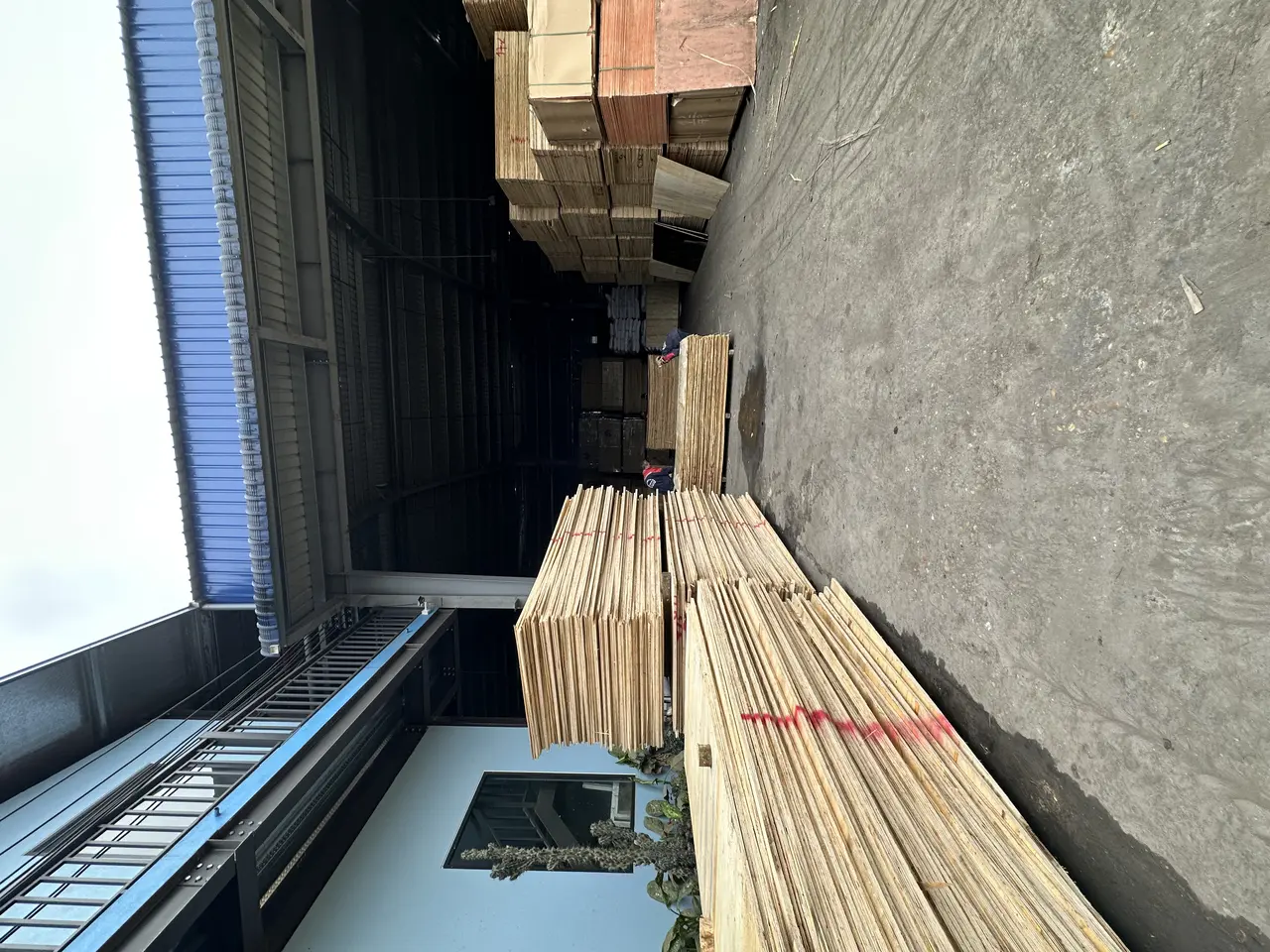 Hot press production at HCPLY — plantation-source timber processed with full batch traceability for EUDR due diligence
Vietnam’s Three Core Species Are All Plantation-Grown
The plywood manufacturing industry in Vietnam uses three domestically sourced core species:
| Species | Density | Region | Plantation Status |
|---|---|---|---|
| Acacia (Acacia mangium, A. auriculiformis) | ~580 kg/m³ | North + South | Registered plantation, fast-rotation (6-8 yr) |
| Eucalyptus (Eucalyptus urophylla, E. camaldulensis) | 650–750 kg/m³ | North + Central | Registered plantation, fast-rotation (5-7 yr) |
| Styrax (Styrax tonkinensis) | 480–500 kg/m³ | North only | Registered plantation, longer rotation (8-12 yr) |
All three species are cultivated on registered agricultural or degraded forestry land under Vietnam’s national land use rights system. Acacia and eucalyptus are among the fastest-growing commercial plantation species globally — they were being planted in Vietnam in the early 2000s and 2010s, and the current supply base represents rotations harvested from long-established plantations.
This is the opposite of the deforestation narrative. These plantations did not replace natural forest — they were established on land that was already degraded, agricultural, or otherwise classified as non-forest under Vietnamese law.
⚠️ Key point: Vietnam does not use gurjan, birch, hopea, or natural tropical hardwood for core production. Any Vietnam supplier claiming gurjan core or mixed tropical hardwood core is either confused about product terminology or sourcing non-standard material. Insist on written species identification.
The North Vietnam Concentration
Vietnam’s plywood export industry is concentrated in northern provinces — Phú Thọ, Hà Nội, Bắc Ninh, Bắc Giang, Yên Bái, Tuyên Quang. This region accounts for over 80% of Vietnam’s plywood exports. The styrax species used in premium furniture-grade panels is found only in northern Vietnam — it does not exist in the south.
HCPLY operates from Phú Thọ, northern Vietnam — factory-direct from the primary plantation supply zone. The sourcing geography for our production facilities means traceable, registered plantation land with documented harvest histories going back multiple rotation cycles.
EUDR Deforestation-Free Verification for Vietnam Plantation Wood
For a production run of eucalyptus plywood or birch-faced plywood with styrax core, the deforestation-free verification evidence chain looks like:
- Plantation land registration certificate — issued by provincial land authority, showing land classification as agricultural/forestry (not natural forest)
- Land use history records — satellite imagery from 2015–2020 confirming land was under plantation cultivation before the December 31, 2020 cutoff
- FSC Forest Management Certificate (where applicable) — issued before 2020, with plantation boundary maps
- Harvest permit — issued for the specific parcel and rotation cycle
- GPS polygon data — downloaded from plantation management records, six-decimal precision
This documentation stack is achievable for suppliers integrated into VNTLAS and holding FSC CoC certification. Suppliers without this infrastructure will struggle to provide anything beyond vague legality claims.
 EU buyers conducting on-site supply chain verification — a recommended step before submitting your first EUDR Due Diligence Statement
📐 VNTLAS: Vietnam’s National Timber Legality System
VNTLAS — the Vietnam National Timber Legality Assurance System — is Vietnam’s national framework for verifying and communicating the legality of timber from harvest through processing to export. It was developed in response to the EU’s Forest Law Enforcement, Governance and Trade (FLEGT) program, which offers countries the option to negotiate Voluntary Partnership Agreements (VPAs) that result in EU recognition of their national legality system.
What VNTLAS Covers
VNTLAS establishes legality standards and verification mechanisms at four levels:
-
Forest level: Land use rights, harvest permits, allowable annual cut compliance, post-harvest reports.
-
Transport level: Timber transport declarations (Bảng kê lâm sản), truck documents, checkpoints. Every log movement requires accompanying paperwork.
-
Processing level: Factory registration, intake records linking raw materials to forest source documents, processing output records.
-
Export level: Export permits, phytosanitary certificates, commercial documents aligned with upstream traceability.
VNTLAS is administered by Vietnam’s Ministry of Agriculture and Rural Development (MARD) under Decree 102/2020/ND-CP (Timber Legality) and Circular 26/2022/TT-BNNPTNT (VNTLAS implementation details).
VNTLAS vs. VPA/FLEGT — The Recognition Gap
Vietnam and the EU have been engaged in VPA negotiations since 2010. As of 2026, Vietnam does not hold a finalized EU-recognized VPA, meaning Vietnamese timber does not carry FLEGT licenses — the EU-recognized green channel that would allow simplified due diligence.
This is a meaningful distinction:
| Framework | Status for Vietnam | EUDR Implication |
|---|---|---|
| FLEGT VPA license | Not available (VPA not finalized) | Would allow simplified due diligence |
| VNTLAS documentation | Available from compliant suppliers | Supports standard due diligence |
| FSC Chain of Custody | Available from certified exporters | Strong supporting evidence |
| No framework | Non-compliant suppliers | Cannot support DDS filing |
The practical consequence: EU operators importing from Vietnam must complete standard due diligence — all five requirements described above — for every shipment. VNTLAS documentation is the evidentiary foundation for that due diligence, but it does not substitute for it. EU operators must review the documentation and make their own compliance assessment.
What to Request from Your Supplier
A VNTLAS-compliant Vietnam plywood supplier should be able to provide:
- Plantation source identification (commune, district, province)
- Land registration certificate copies for source parcels
- Timber harvest permit for the specific rotation
- Timber transport declarations from plantation to factory gate
- Factory timber intake records for the production batch
- Species identification at intake
Request a sample documentation package for a recent export shipment before committing to 2026 orders. A supplier who cannot produce this within two weeks does not have the systems in place for EUDR compliance.
🔧 The REACH Double Deadline: Formaldehyde 0.062 mg/m³
EU plywood importers in 2026 are not facing one compliance challenge — they are facing two, with overlapping deadlines.
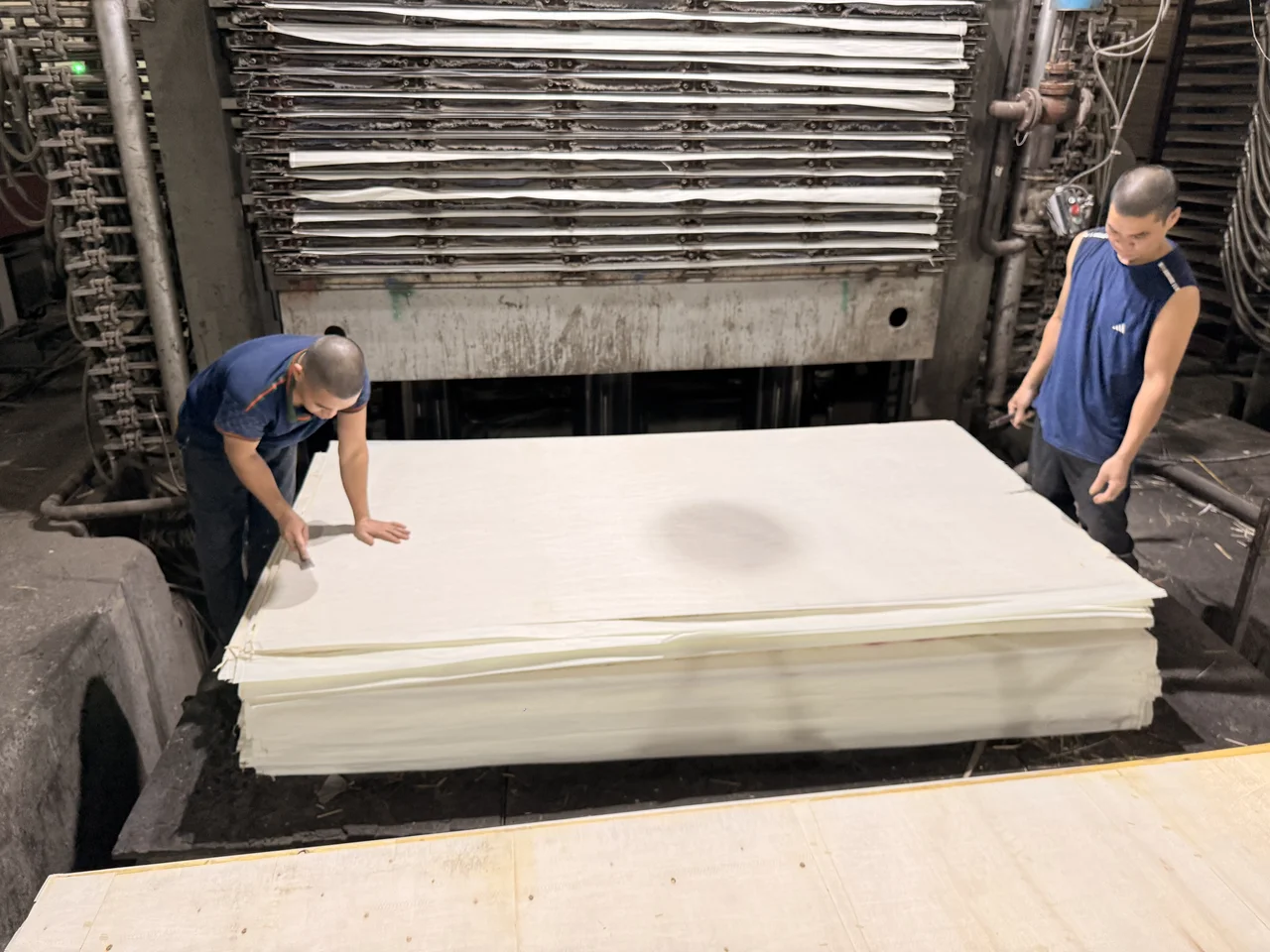 Sanding line at HCPLY — low-emission adhesive formulations meet new REACH 0.062 mg/m³ threshold alongside EUDR due diligence plywood documentation
On August 6, 2026, the European Chemicals Agency (ECHA) implements new REACH Annex XVII restrictions on formaldehyde emissions from wood-based panels. The new limit:
| Standard | Chamber Method (mg/m³) | Desiccator Method (mg/L) | Notes |
|---|---|---|---|
| Current E1 | ≤0.124 | ≤1.5 | Current EU standard |
| New REACH limit | ≤0.062 | ~≤0.75 | Effective Aug 6, 2026 — halves E1 |
| E0 / CARB P2 | ≤0.05 (approx.) | ≤0.5 | Already required for US/Japan |
This halving of the acceptable formaldehyde emission threshold requires manufacturers who currently operate at E1 to either:
- Switch to lower-emission adhesive formulations
- Add post-production formaldehyde scavenger treatments
- Upgrade pressing and curing processes to reduce residual formaldehyde
Adhesive Type vs. Emission Standard — A Critical Distinction
⚠️ Heads up: Adhesive type and emission standard are separate and distinct specifications. Confusing them is the single most common technical error in plywood procurement.
Adhesive type (bond performance) and emission standard (formaldehyde off-gassing) are independently specified:
| Adhesive Type | Common Name | Bond Test | Primary Application |
|---|---|---|---|
| Melamine-urea formaldehyde | MR (Moisture Resistant) | 12-hour boil test | Interior, furniture, commercial |
| Phenol formaldehyde | WBP (Weather Boil Proof) | 72-hour boil test | Construction, exterior, film-faced |
| Emission Standard | Threshold (chamber) | Market |
|---|---|---|
| E2 | ≤0.3 mg/m³ | Budget, non-EU |
| E1 | ≤0.124 mg/m³ | EU (current) |
| E0 / CARB P2 | ≤0.05 mg/m³ (approx.) | US, Japan, premium EU |
| New REACH 2026 | ≤0.062 mg/m³ | EU mandatory from Aug 2026 |
A supplier can produce panels with Phenolic (WBP) adhesive at E1 emission — for film-faced construction plywood. That same supplier can produce panels with Melamine (MR) adhesive at E0 emission — for furniture-grade interior panels. The adhesive choice and the emission level are determined by the product specification and manufacturing process independently.
Correct specification language:
- “Adhesive: Melamine (MR) | Emission: E0 (≤0.5 mg/L desiccator)” — correct
- “Adhesive: Phenolic (WBP) | Emission: E1 (≤1.5 mg/L desiccator)” — correct
- “E0 glue” — incorrect (E0 is an emission standard, not an adhesive)
- “WBP, MR, E0” listed together — incorrect (mixes two separate systems)
Vietnam Manufacturer Readiness for New REACH Limit
Premium segment Vietnamese manufacturers producing for the EU and US markets — including furniture-grade plywood with birch or eucalyptus face veneer — typically already produce at E0 / CARB P2 levels. This segment was already producing below the new REACH 0.062 mg/m³ threshold before it was announced.
Commercial segment manufacturers producing at E1 for standard European construction applications will need to upgrade adhesive formulations or processes to meet the new threshold. Testing under EN ISO 12460-3 (the chamber test method referenced by REACH) requires a climate chamber and 28-day equilibration period.
When evaluating suppliers for 2026 orders, request:
- Current emission test certificates (chamber method EN ISO 12460-3 or equivalent)
- Stated compliance with new REACH 0.062 mg/m³ threshold
- Supplier’s transition plan if currently at E1 but not yet at new threshold
For furniture plywood and film-faced plywood for construction, the combined requirement is: EUDR documentation AND REACH 0.062 mg/m³ compliance. Both are now mandatory for EU market access from late 2026. Source from a supplier who addresses both.
📦 EVFTA: Vietnam’s 0% Tariff Advantage
For EU buyers evaluating the full landed cost picture, Vietnam’s trade position relative to alternative sourcing origins adds a significant financial dimension to the compliance discussion.
The EU-Vietnam Free Trade Agreement (EVFTA), which entered into force August 1, 2020, progressively eliminates EU customs duties on Vietnamese plywood exports. By 2026, most plywood categories exported from Vietnam under EUR.1 Certificate of Origin or Statement on Origin documentation benefit from 0% EU import duty.
| Sourcing Origin | EU Tariff Situation (2026) |
|---|---|
| Vietnam (EVFTA) | 0% — EUR.1 required |
| China | 86.8% anti-dumping duty (EU AD measures) |
| Russia / Belarus | Import restrictions, sanctions risk |
| Indonesia (FLEGT) | 0% standard MFN + simplified EUDR via FLEGT license |
| Brazil | Standard MFN (variable by product) + full EUDR burden |
| Baltic / Eastern Europe | EU domestic supply, no tariff — but capacity constraints and price premium |
The China anti-dumping duty — 86.8% on Chinese hardwood plywood under EU anti-dumping measures — effectively eliminates China as a competitive source for price-sensitive EU buyers. Russian and Belarusian plywood faces import restrictions and reputational risk. Vietnam, with 0% tariff and a structurally advantaged EUDR compliance profile, has become the primary strategic alternative for EU plywood procurement teams managing both cost and compliance risk.
From a total-cost-of-ownership perspective: Vietnam plywood at 0% duty + EVFTA + EUDR-compliant plantation sourcing often outperforms other origins even at higher FOB prices.
Request EUR.1 certificates or Statement on Origin documentation from your Vietnam supplier for all shipments. Without proper origin certification, the 0% EVFTA rate does not apply and standard MFN duties will be levied.
💡 How to Evaluate Your Supplier’s EUDR Readiness
The following evaluation framework helps EU procurement teams separate documentation-ready suppliers from those who are not yet compliant. Use this before committing to 2026 Q3/Q4 purchase orders.
10-Question EUDR Readiness Checklist
Ask your Vietnam supplier directly:
| # | Question | Green Flag | Red Flag |
|---|---|---|---|
| 1 | Can you provide GPS coordinates (6 decimal places) for plantation source parcels? | Yes, from plantation records | ”We source from registered forests” (vague) |
| 2 | Do your plantations have land registration certificates? | Yes, provincial land authority certificates | Cannot produce documents |
| 3 | Can you confirm no natural forest conversion after Dec 31, 2020? | Yes, with satellite image comparison | ”Of course” with no documentation |
| 4 | Do you hold FSC Chain of Custody certification? | Yes, current FSC CoC | ”We are applying” or no |
| 5 | Are you registered in Vietnam’s VNTLAS system? | Yes, with harvest permit process | Unknown or no |
| 6 | Can you produce timber transport declarations from plantation to factory? | Yes, Bảng kê lâm sản for each batch | Gap in traceability chain |
| 7 | Have you provided documentation to an EU importer for a EUDR DDS submission yet? | Yes, can provide reference | No experience |
| 8 | What species are your plywood cores? | Acacia, eucalyptus, or styrax — specific | ”Hardwood” or vague |
| 9 | What is your current emission test certificate (chamber method)? | E0 or new REACH ≤0.062 mg/m³ | E1 only, no plan to upgrade |
| 10 | Can you provide a sample EUDR documentation package within 2 weeks? | Yes | Cannot or takes >4 weeks |
Red Flags That Indicate Non-Compliance Risk
- Sourcing claims referencing “natural forest” or “mixed tropical hardwood”
- No FSC CoC and no alternative chain of custody documentation
- Inability to provide plantation GPS coordinates even in general terms
- No awareness of VNTLAS or EUDR requirements
- Test certificates for formaldehyde emission older than 18 months
- Claims that “Vietnam is automatically compliant” without documentation support
Audit Protocol for High-Volume Buyers
For buyers placing orders exceeding 10 containers per year, a more rigorous evaluation is warranted:
- Documentary pre-audit: Review sample documentation package desk-based before factory visit
- Factory visit: Visit the production facility and verify QC systems, species intake records, and production batch tracking
- Third-party verification: Commission an independent audit of plantation source documentation
- Test batch: Place a trial order with full EUDR documentation, submit test DDS to TRACES, verify process end-to-end
- Annual review: EUDR is an ongoing obligation — documentation must be refreshed with each harvest rotation
📋 Documentation Checklist for EUDR-Compliant Plywood Import
The following is the complete documentation set required per shipment for a compliant EUDR DDS submission. Retain all documents for a minimum of 5 years (EUDR requirement).
Forest / Plantation Level (per source parcel)
- Land use rights certificate (Giấy chứng nhận quyền sử dụng đất)
- Land classification document confirming non-forest status as of Dec 31, 2020
- GPS coordinates / polygon boundary file (6 decimal places)
- Historical satellite imagery or official land use map (pre-2020 reference date)
- Timber harvest permit (Phương án khai thác) for current rotation
- FSC Forest Management Certificate (if applicable)
Transport Level (per harvest batch)
- Timber origin declaration / Bảng kê lâm sản (plantation to truck)
- Timber transport permit
- Weighbridge records (volume verification)
Factory / Processing Level (per production batch)
- Timber intake records (species, volume, source parcel reference)
- Species identification document (signed statement or third-party verification)
- Production batch records linking core and face veneer to intake records
- Formaldehyde emission test certificate (chamber method, ≤0.062 mg/m³)
Export Level (per shipment)
- Commercial invoice with species and HS code
- Packing list with specification details
- Bill of lading
- EUR.1 Certificate of Origin (for EVFTA 0% duty)
- Phytosanitary certificate
- Fumigation certificate
- FSC Chain of Custody certificate (if FSC-labeled)
- FSC Transaction Verification (TV) document (for FSC shipments)
- Quality certification documents (FSC CoC number, certification details)
EU Operator Level (submitted before customs clearance)
- Due Diligence Statement (DDS) in EU TRACES NT system
- TRACES DDS reference number (provided to forwarder for customs declaration)
⚠️ Be aware: The DDS must be submitted and assigned a reference number before the shipment arrives at the EU port of entry. Last-minute submissions risk customs delays. Build DDS submission into the pre-shipment workflow, not the arrival workflow.
🛡️ CE Marking, FSC, and EUDR — How They Fit Together
EU buyers frequently ask how EUDR relates to CE marking and FSC certification. These are three distinct frameworks with different purposes and legal status:
| Framework | Type | Scope | Mandatory? |
|---|---|---|---|
| CE Marking | Product safety | Construction product performance (EN 13986) | Mandatory for structural use in EU construction |
| FSC Certification | Voluntary sustainability | Forest management + chain of custody | Voluntary — but supports EUDR due diligence |
| EUDR DDS | Legal compliance | Deforestation-free + legal origin | Mandatory for all wood products entering EU |
CE Marking for Construction Plywood
Film-faced plywood used in EU construction applications (formwork, concrete shuttering, structural panels) requires CE marking under EN 13986 (Wood-based panels for use in construction). CE marking certifies performance characteristics — bending strength, stiffness, formaldehyde class — not origin compliance. CE marking does not satisfy EUDR requirements.
FSC Certification and EUDR
FSC Chain of Custody certification significantly strengthens an EU operator’s EUDR due diligence for FSC-labeled shipments because:
- FSC forest management audits include GPS-mapped certified forest/plantation boundaries
- FSC requires documented legal compliance as a certification prerequisite
- FSC CoC provides a chain of custody record from certified forest to export
However, FSC certification alone does not satisfy EUDR. An EU operator importing FSC-labeled plywood must still complete due diligence — FSC documentation forms part of the evidentiary base, but the operator must independently assess deforestation risk and submit a DDS.
Practical Matrix for Buyers
| Application | CE Marking | FSC | EUDR DDS |
|---|---|---|---|
| Furniture plywood (interior) | Not required | Recommended | Required |
| Construction formwork | Required | Optional | Required |
| Packaging plywood | Not required | Optional | Required |
| Public sector projects | May be required | Often specified | Required |
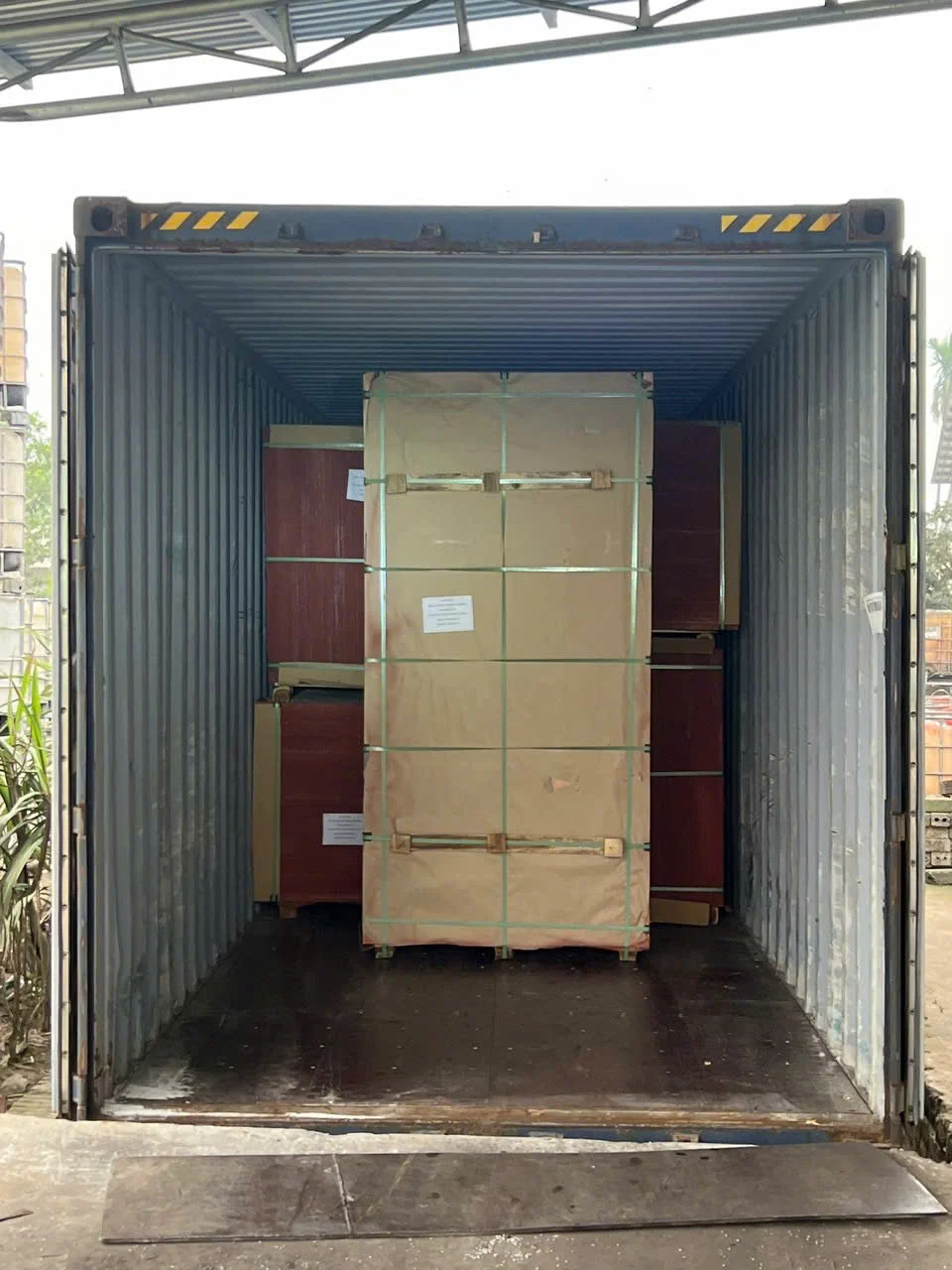 Container loading for EU-bound shipment — EUDR due diligence for plywood must be completed before port departure, not at the EU border
Contact HCPLY for your EUDR compliance package — GPS plantation coordinates, VNTLAS documents, and FSC CoC available for all EU-bound orders.
🔗 Related Regulations and Strategic Context
EUDR compliance for plywood importers does not exist in isolation. The broader regulatory environment in 2026 includes:
REACH Formaldehyde (Aug 6, 2026) — Already covered above. The 0.062 mg/m³ threshold is the most immediate parallel deadline for EU plywood buyers.
EU Taxonomy and CSRD — Large EU companies subject to the Corporate Sustainability Reporting Directive (CSRD) must disclose deforestation exposure in their supply chains as part of sustainability reporting. EUDR-compliant sourcing directly supports CSRD disclosure obligations.
Anti-Dumping / Anti-Subsidy Measures — EU anti-dumping measures on Chinese plywood (86.8% AD duty) are administered separately from EUDR. EUDR compliance does not affect AD duty obligations and vice versa. Understanding both — and documenting origin correctly for both — is part of complete trade compliance for EU plywood imports.
BIS Certification (India) — For buyers also sourcing for the Indian market, the Bureau of Indian Standards requires BIS certification for imported plywood. This is a parallel market access requirement — EUDR documentation for the EU and BIS documentation for India are maintained as separate compliance tracks.
The Suppliers Who Win Long-Term
The regulatory direction is clear: documentation-first suppliers — those who have invested in traceability infrastructure, plantation GPS records, legal harvest documentation, and low-emission production — are positioned to retain EU market access as enforcement tightens. Suppliers who have relied on vague legality claims and informal supply chains will face increasing difficulty accessing EU markets regardless of price competitiveness.
The Vietnam plywood supplier due diligence guide outlines how to evaluate supplier types against these evolving requirements. The factory segmentation article explains why the same product specification from different factory segments carries fundamentally different risk and compliance profiles.
For buyers evaluating container logistics and lead times, EUDR documentation preparation adds 5–10 business days to pre-shipment timelines in the early implementation period. Factor this into your quotation and procurement planning for 2026 orders.
HCPLY has pre-invested in plantation traceability documentation, VNTLAS-aligned records, and FSC Chain of Custody as part of our standard export process. We have documented plantation GPS coordinates, harvest permit histories, and species verification for our production facility supply chains. Contact us to request a sample EUDR documentation package and evaluate our compliance readiness for your 2026 purchase program.