
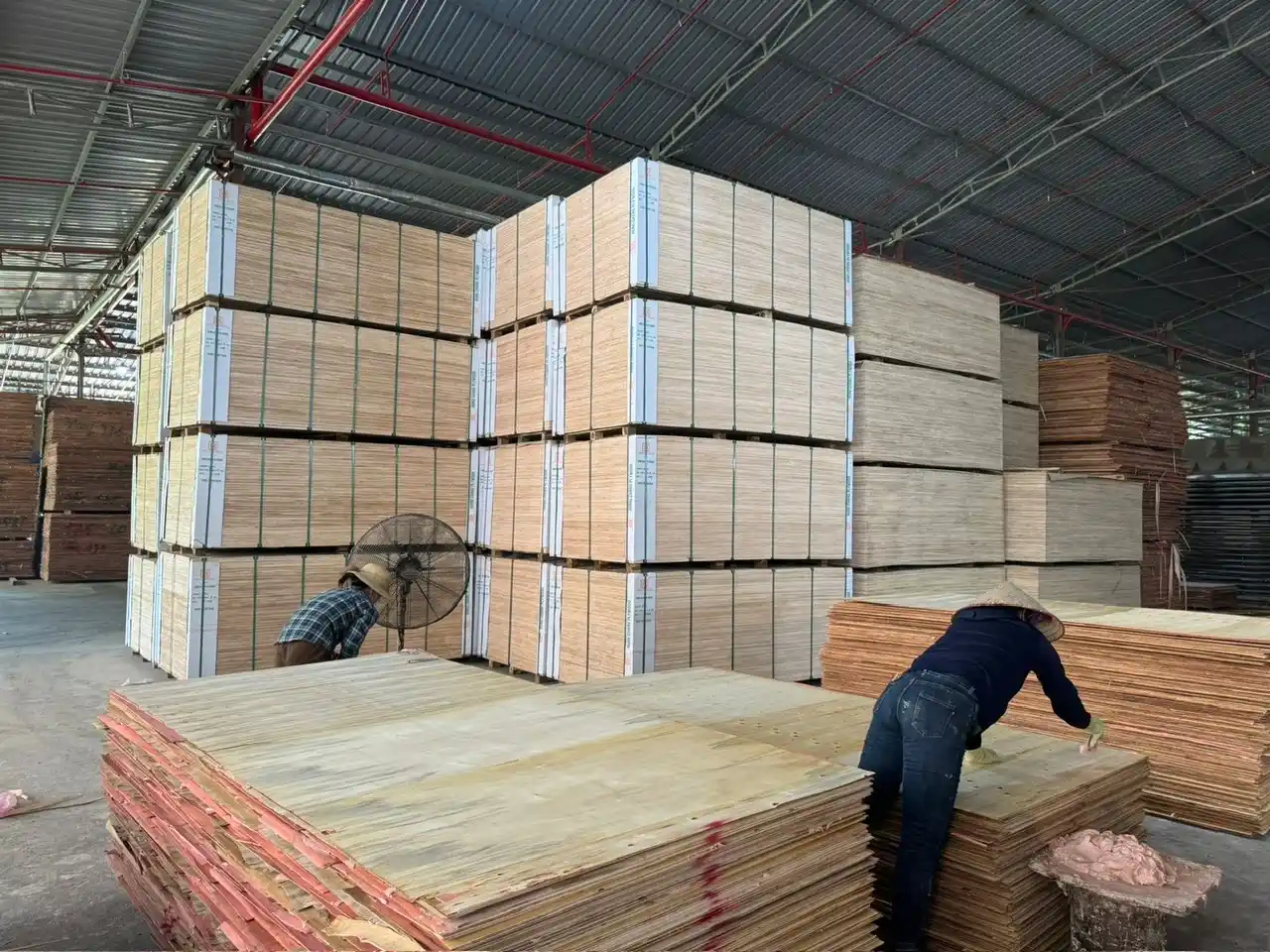
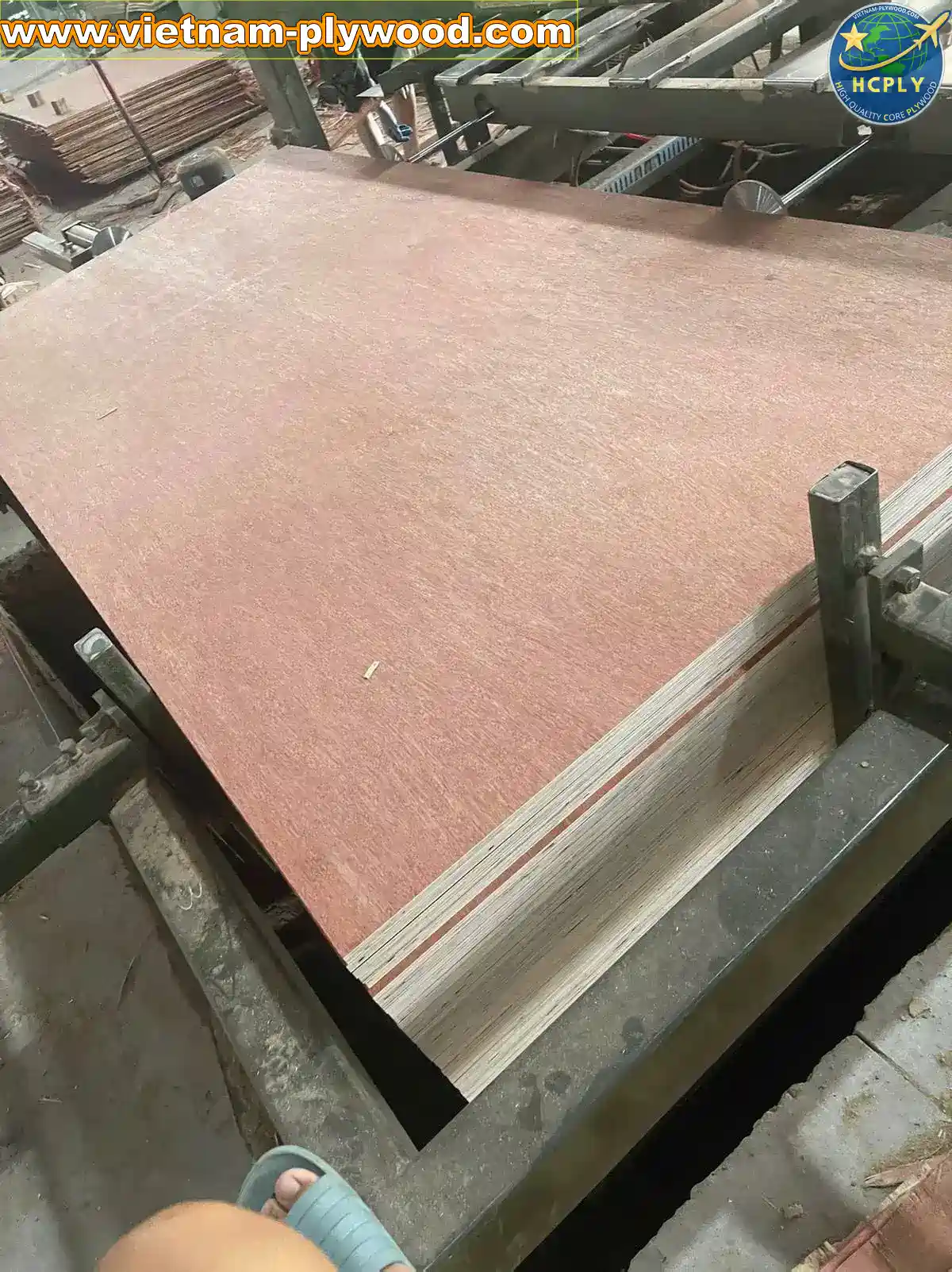
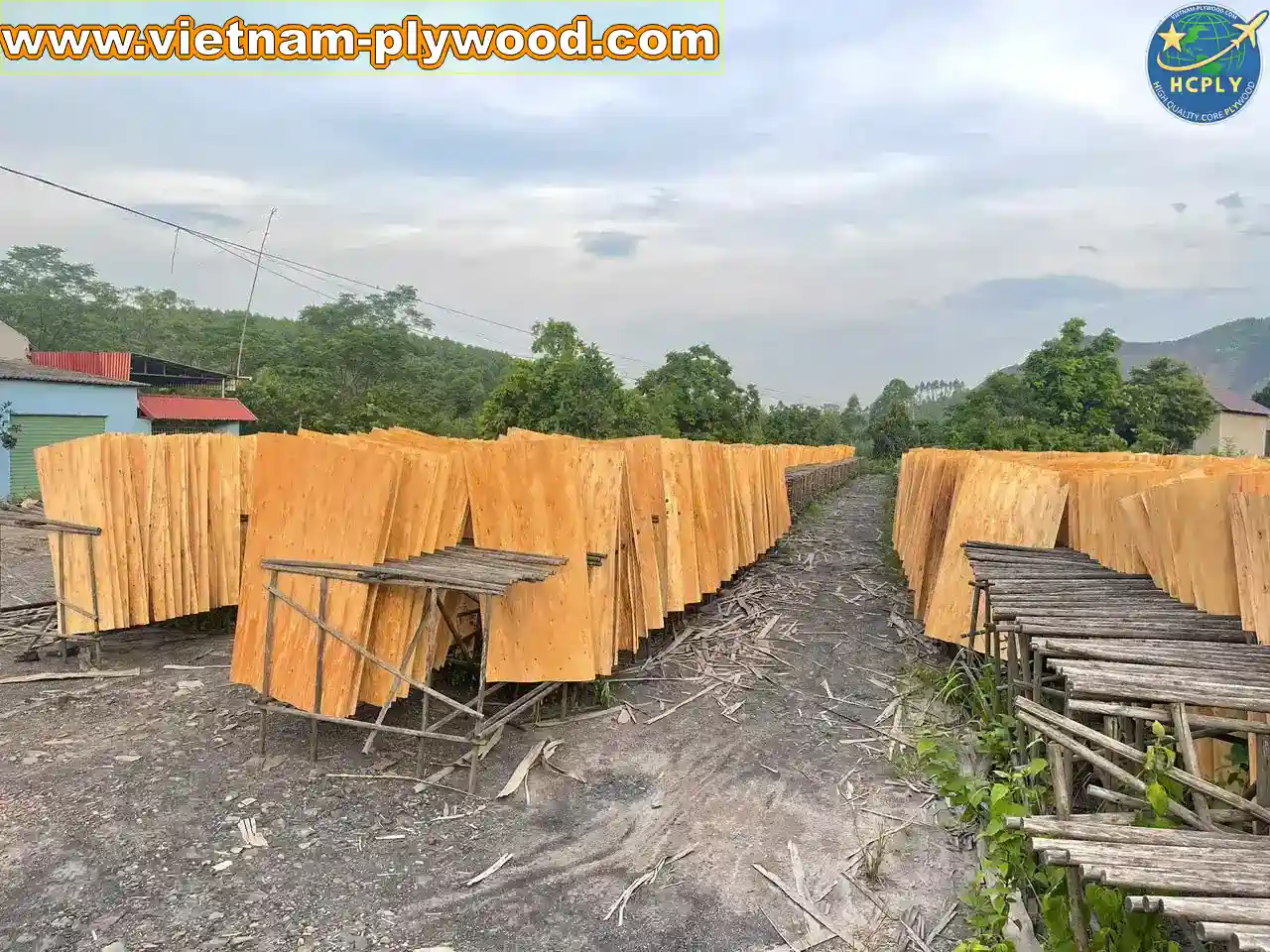

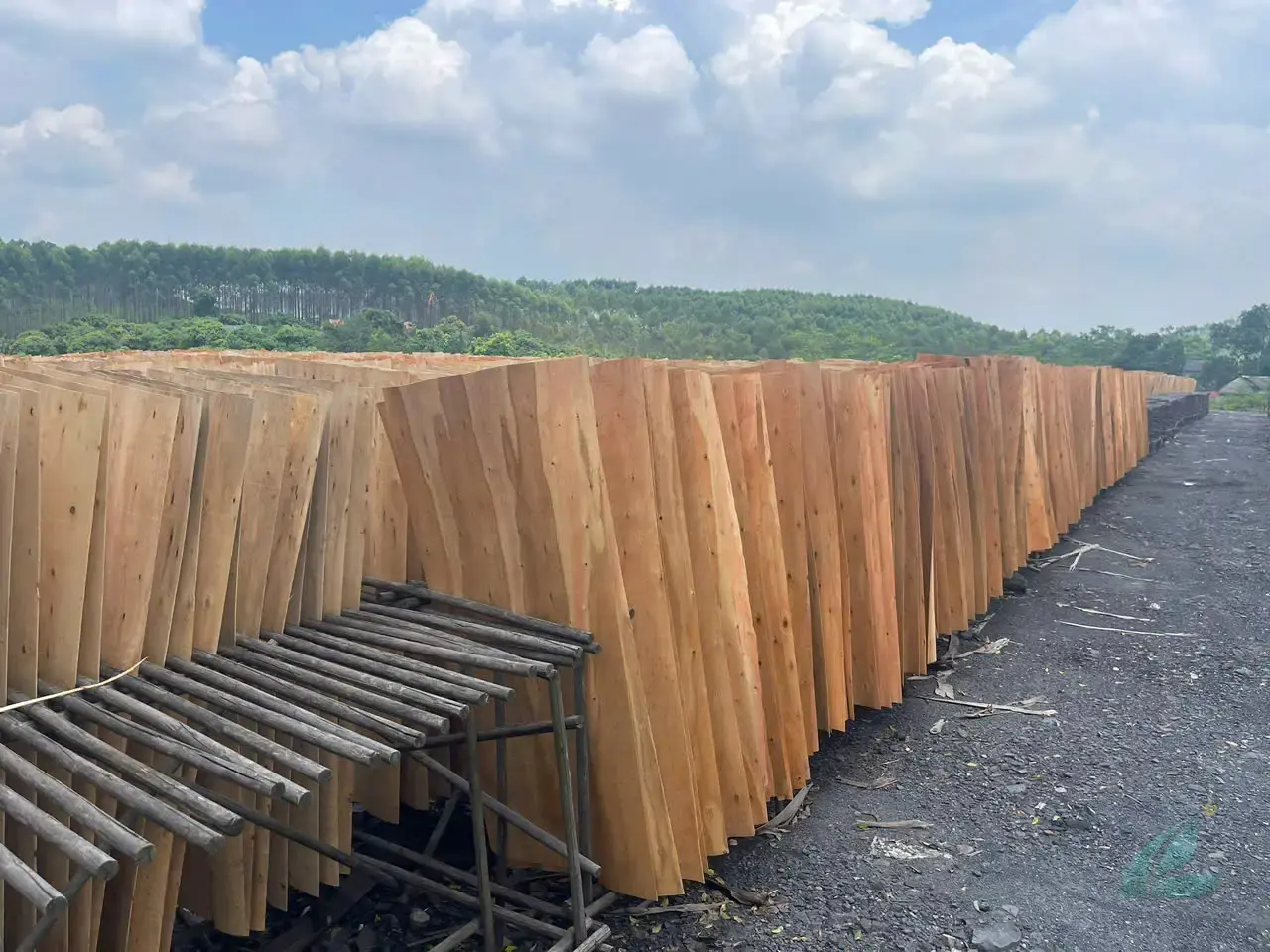
Acacia and eucalyptus are the two most-exported core veneer species from Vietnam. Both come from plantation forests in Northern Vietnam, both ship FOB Hai Phong, and both appear in plywood destined for furniture, construction, and commercial applications worldwide. Yet they perform differently in ways that directly affect your landed cost, panel weight, and end-use suitability.
This article compares eucalyptus vs acacia core veneer across every variable that matters to an importer: density, structural performance, container loading efficiency, glue compatibility, and cost position. The data comes from HCPLY’s production records across 3 specialized facilities in Phu Tho Province, Northern Vietnam (HCPLY production data, 2026).
For a complete overview of all three Vietnamese core species — including styrax — see the plywood core types guide.
📊 TL;DR — Eucalyptus vs Acacia Core Veneer at a Glance
| Property | Eucalyptus Core | Acacia Core |
|---|---|---|
| Density | 650–750 kg/m³ | ~580 kg/m³ |
| Color | Light yellow / cream | Dark brown / reddish |
| Strength | High | Medium |
| Weight per 40HC | ~28 MT | ~27.5 MT |
| Pallets per 40HC | 15 | 16 |
| CBM per 40HC | ~44.5 CBM | ~47.5 CBM |
| Price position | Higher | Lower (budget grade) |
| Sanding quality | Excellent | Good |
| Best for | Premium furniture, flooring, film-faced | Commercial, packing, budget film-faced |
| Certification compatibility | FSC, CARB P2, E0 | FSC, MR, E1/E2 |
⚠️ Important: Density determines weight — not the face veneer. A birch-faced panel with eucalyptus core weighs more than a birch-faced panel with acacia core. This distinction is critical for calculating container payload limits.
🌿 What Is Eucalyptus Core Veneer?
Eucalyptus (Eucalyptus urophylla and hybrid varieties) grows extensively in Phu Tho, Yen Bai, and Tuyen Quang provinces in Northern Vietnam. Plantation cycle is 5–7 years, making it a fast-growing renewable species suitable for FSC certification.
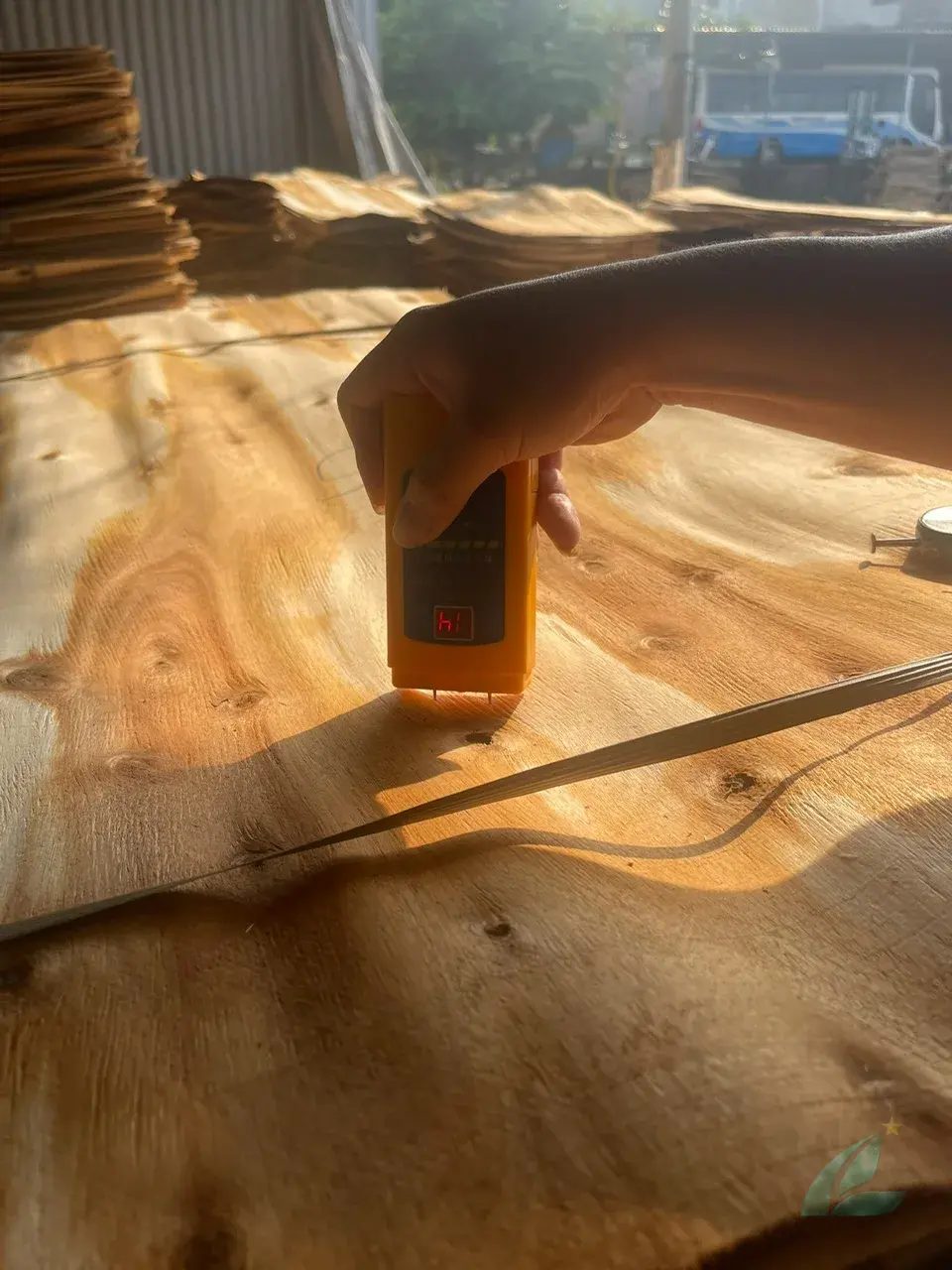
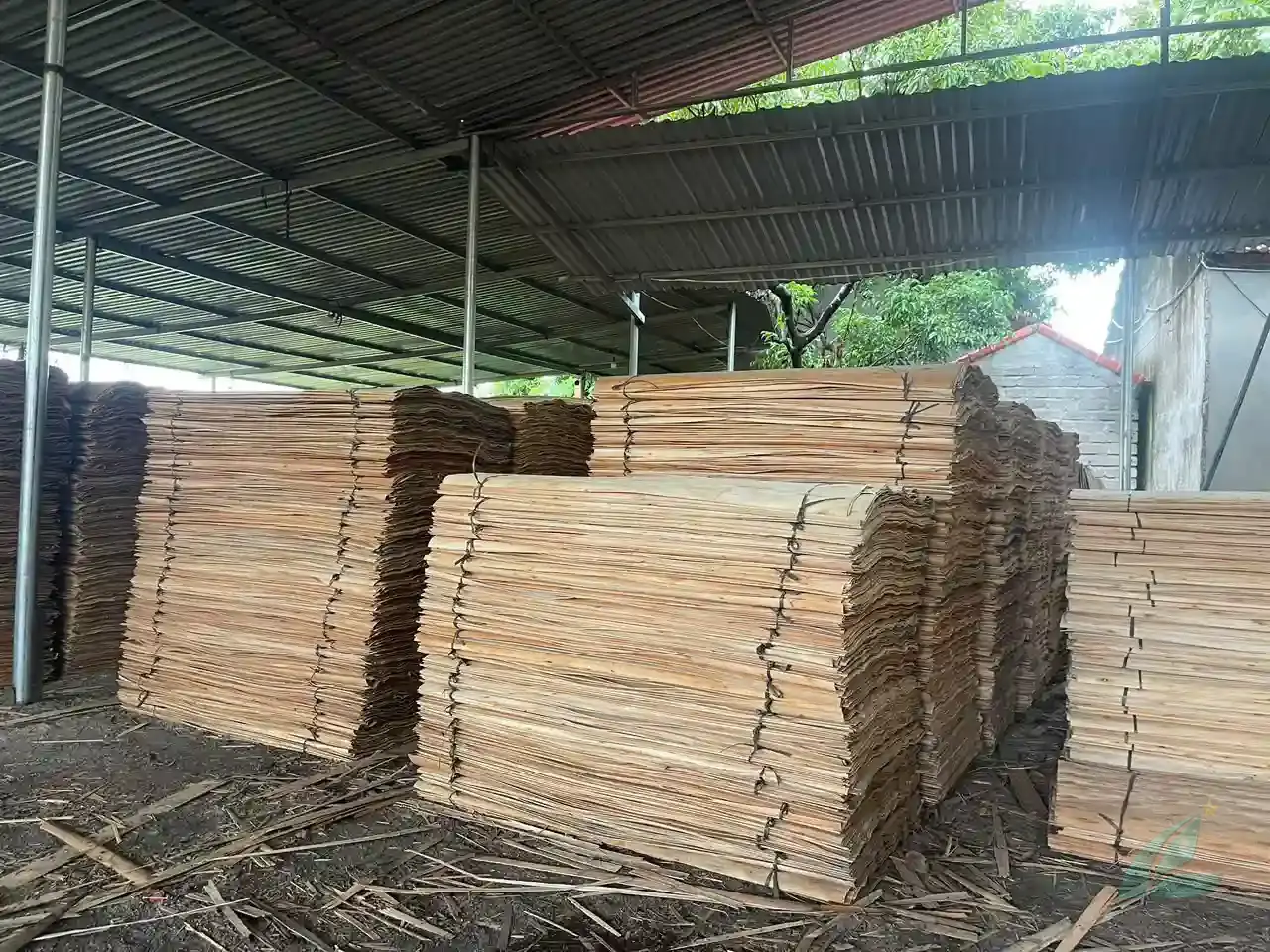
When rotary-peeled into veneer sheets and dried to 6–8% moisture content, eucalyptus core produces panels with the highest density of any Vietnamese core species: 650–750 kg/m³. The grain is tight, the color is light yellow to cream, and the surface sands cleanly — a key reason premium furniture factories prefer it as core for high-specification panels.
“For buyers exporting to Japan, South Korea, or Germany, eucalyptus core gives you the weight and dimensional stability that strict market QC demands. The surface flatness after sanding is noticeably tighter than what you get with acacia.” — Lucy, International Sales Manager, HCPLY
Eucalyptus core is used in HCPLY’s premium furniture production facility, alongside full stitched core construction and E0/CARB P2 glue systems. It is not typically found in budget commercial or packing segments.
🌱 What Is Acacia Core Veneer?
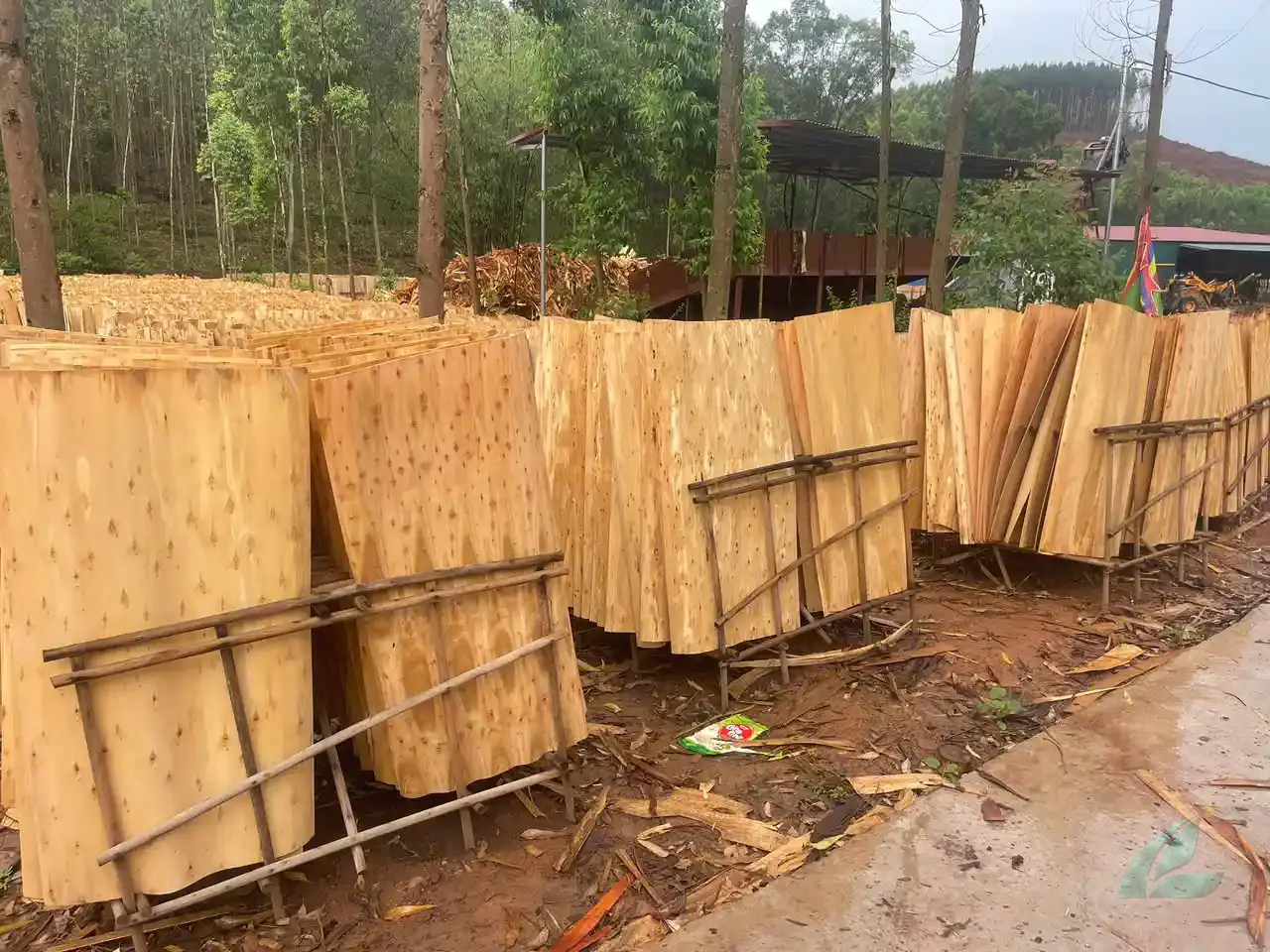
Acacia (Acacia mangium and Acacia hybrid) is Vietnam’s most widely planted plantation species, covering millions of hectares primarily in Northern Vietnam. Harvest cycle is 4–6 years. Acacia core veneer is the backbone of Vietnam’s commercial plywood export volume.
Density runs approximately 580 kg/m³ — meaningfully lighter than eucalyptus. The color is darker (reddish-brown to dark brown), and the wood texture is coarser. Sanding produces an acceptable surface for commercial grades, though not as tight as eucalyptus under identical press conditions.
Acacia core dominates Vietnam’s commercial and packing plywood segments. It is cost-effective, widely available, and compatible with MR melamine glue systems targeting E1 and E2 emission markets. For film-faced formwork plywood, both acacia and eucalyptus cores are used — acacia for budget film-faced, eucalyptus for premium film-faced requiring 15+ reuse cycles.
According to the Vietnam Timber and Forest Products Association (VIFORES), acacia accounts for the majority of Vietnam’s plantation timber output as of 2025, making it the most price-stable core species for large volume orders.
⚖️ Eucalyptus vs Acacia Core Veneer: 6 Critical Comparison Points
📌 Density and Weight
Density is the defining physical difference between these two cores, and it cascades into every downstream consideration.
Eucalyptus core at 650–750 kg/m³ is 18–36% denser than acacia at approximately 580 kg/m³. In practical terms, a 40HC container loaded with 18mm eucalyptus core plywood (1220×2440mm) reaches its 28.5 MT payload limit at 15 pallets — equivalent to approximately 44.5 CBM. The same container loaded with acacia core at the same thickness accommodates 16 pallets — approximately 47.5 CBM — before hitting payload limits (HCPLY production data, 2026).
For high-volume importers, this 3 CBM per container difference compounds significantly across annual purchase quantities.
📌 Structural Strength
Higher density translates directly to higher structural performance. Eucalyptus core produces panels with greater bending strength (MOR), screw-holding capacity, and resistance to panel deflection under load. This is why eucalyptus core is specified for flooring substrates, load-bearing shelving, and premium concrete formwork applications where reuse counts of 15–20 are expected.
Acacia core provides adequate structural performance for furniture panels, interior shelving, cabinet carcasses, and commercial partitions — applications where the panel is not subjected to continuous high load. For these uses, the strength advantage of eucalyptus core does not justify the price premium.
📌 Surface Quality and Sanding
Both species sand, but eucalyptus core produces a more consistent, denser surface after calibration sanding. This matters when the finished panel requires tight thickness tolerance (±0.3mm or tighter) for Japanese, Korean, or European furniture markets.
Acacia core can exhibit grain reversal and minor porosity that — while acceptable for E1/E2 commercial grades — may show through thin face veneers under certain lighting conditions. Premium furniture producers targeting EU or US markets with thin birch or okoume faces typically specify eucalyptus core to minimize this risk.
📌 Color and Lamination Compatibility
Eucalyptus’s light cream color makes it a natural match for light-colored face veneers (birch, okoume, EV engineered veneer, poplar). Glue line visibility is minimal. Acacia’s darker color can show through very thin faces or low-opacity overlays if glue application is not precisely controlled.
For film-faced plywood, panel color beneath the film is irrelevant — either core works. For HPL lamination or thin veneer applications, eucalyptus core’s light color reduces visible glue-line risk.
📌 Container Loading Efficiency (Cost Impact)
This is where acacia core offers a measurable economic advantage for volume buyers. Per 40HC container loaded with 1220×2440mm panels at 18mm thickness:
- Eucalyptus core: 15 pallets × 53 sheets/pallet = 795 sheets, ~44.5 CBM
- Acacia core: 16 pallets × 53 sheets/pallet = 848 sheets, ~47.5 CBM
The higher CBM per container with acacia means you’re loading more cubic volume per freight cost unit. For buyers paying freight by the container rather than by CBM, acacia core delivers better freight efficiency on commercial grades. See the plywood container packing calculation guide for full 40HC calculations by core type.
Price
Eucalyptus core plywood carries a price premium over acacia core, driven by denser raw material, higher press pressure requirements, and the segment it serves (premium furniture and construction). For the same face veneer and thickness, expect eucalyptus core panels to price 8–15% above acacia core panels in current Vietnam FOB pricing (HCPLY quotation data, 2026).
For applications where the end-use does not require the structural or aesthetic premium that eucalyptus delivers, specifying acacia core is the straightforward cost optimization.
🏭 Which Applications Demand Which Core?
The selection is determined by the end use — not by buyer preference.
Eucalyptus core is the correct choice for:
- Premium furniture for EU, US, Japan, South Korea markets
- Flooring substrates (vinyl, parquet, tile underlayment)
- Premium concrete formwork film-faced plywood (15+ reuse)
- High-density shelf panels and load-bearing furniture components
- Any panel requiring FSC + E0/CARB P2 for strict market compliance
- Birch-faced panels where light core color is required
Acacia core is the correct choice for:
- Commercial furniture — interior, shopfitting, general cabinetry
- Packing plywood and industrial crating
- Budget film-faced formwork (4–8 reuse cycles)
- Commercial anti-slip plywood for scaffolding
- Price-sensitive markets (Southeast Asia, parts of Middle East, Africa)
- Mixed-container orders where cost optimization per CBM is the priority
For the majority of middle-market applications — bintangor-faced commercial plywood, budget packing grades, and E1/E2 interior panels — acacia core is the standard Vietnamese factory specification. Eucalyptus core is reserved for the premium tier. Understanding this segmentation is essential when comparing quotes from different Vietnam suppliers — a price difference of 10–15% between two “18mm bintangor plywood” quotes often traces directly to core species selection.
Read the full Vietnam plywood factory segment guide to understand how core selection maps to factory type.
📋 Glue and Emission Compatibility
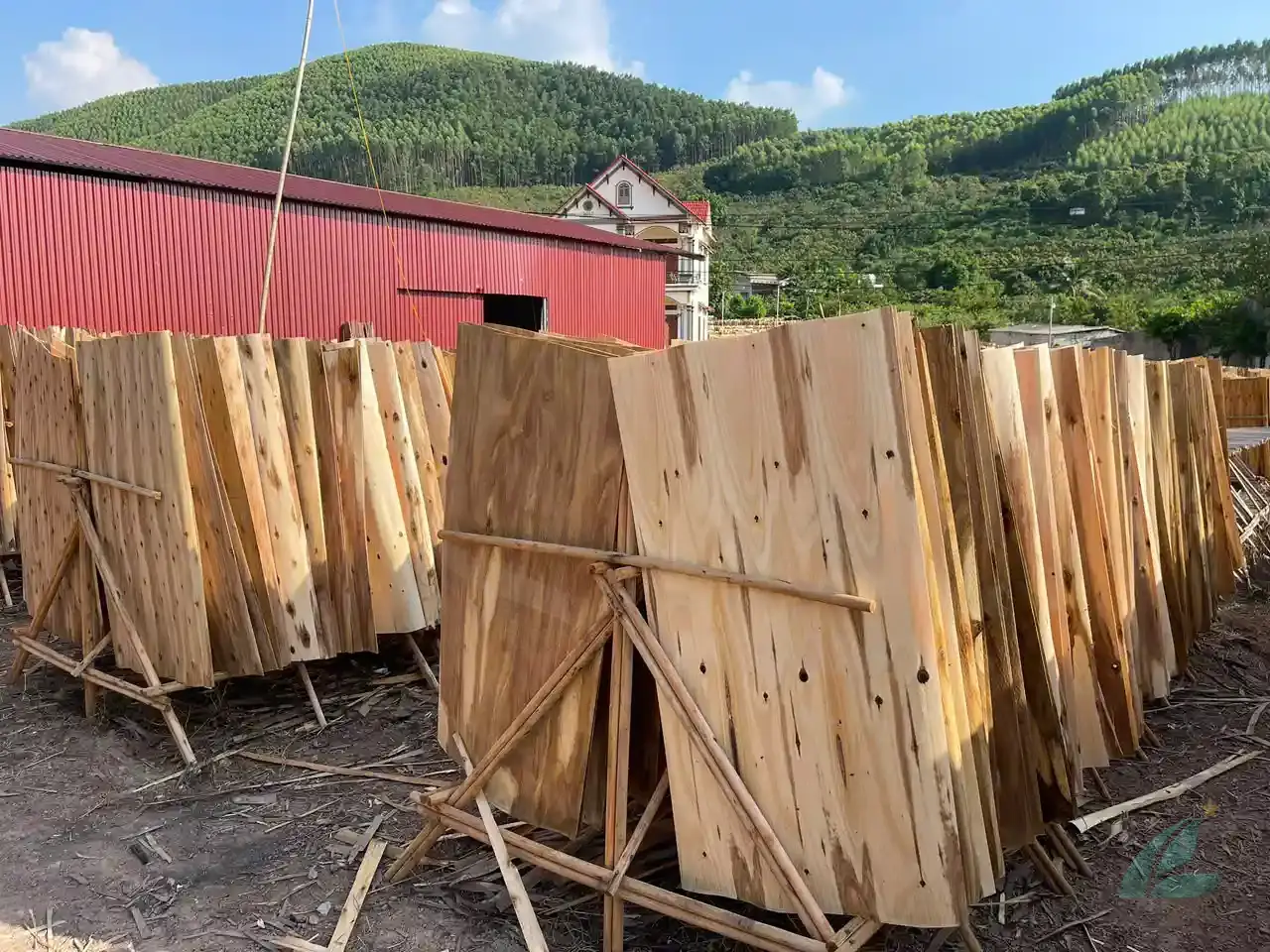
Both eucalyptus core plywood and acacia core plywood work with melamine (MR) and phenolic (WBP) glue systems. The glue type and emission standard are independent of core species — they are determined by the end application and target market, not the core.
| Glue System | Emission Standard | Compatible Cores | Typical Application |
|---|---|---|---|
| Melamine (MR) | E0 / CARB P2 | Eucalyptus, Acacia | Premium furniture, US/EU market |
| Melamine (MR) | E1 | Eucalyptus, Acacia | Standard EU/Asian furniture |
| Melamine (MR) | E2 | Acacia (primarily) | Commercial, packing |
| Phenolic (WBP) | N/A | Eucalyptus, Acacia | Film-faced, marine, anti-slip |
⚠️ Note: E0, E1, and E2 are formaldehyde emission standards — not glue types. Melamine (MR) and Phenolic (WBP) are glue types. These are two separate specifications. Never combine them into a single field. See the plywood glue types and emission standards guide for the full explanation.
🔧 Core Construction Matters as Much as Species
Core species alone does not define plywood quality. The way veneer sheets are assembled — core construction — determines whether gaps, overlaps, or voids compromise the finished panel.
For eucalyptus core in premium furniture applications, HCPLY uses full stitched construction: veneer strips are machine-stitched together with no gaps and no overlap, across all layers. This eliminates internal voids that cause localized panel weakness and face delamination under load.
For acacia core in commercial applications, edge-jointed (mài mí) or finger-jointed construction is standard — cost-effective, structurally adequate for the application.
Loose-laid (unstitched, overlapping strips) is the lowest construction grade, used only in the cheapest packing segments. If a supplier cannot confirm the core construction method for your order, treat it as a quality risk signal.
The plywood core construction guide covers all four construction methods with quality-cost tradeoffs for each.
📦 Container Loading: The Freight Math
Core species selection has a direct impact on freight cost per unit. This is a factor many buyers overlook until they receive their first container shipment.
At 18mm thickness with 1220×2440mm sheet size:
Acacia core (580 kg/m³):
- Sheets per pallet: 55 sheets (1000mm stack height)
- Pallets per 40HC: 16
- Total sheets: 880
- CBM loaded: ~47.5 CBM
- Container weight: ~27.5 MT (within 28.5 MT payload limit)
Eucalyptus core (700 kg/m³):
- Sheets per pallet: 55 sheets (1000mm stack height)
- Pallets per 40HC: 15
- Total sheets: 825
- CBM loaded: ~44.5 CBM
- Container weight: ~28 MT (close to 28.5 MT payload limit)
The weight limit — not volume — is the binding constraint for eucalyptus core. At 700 kg/m³, eucalyptus core panels approach the 28.5 MT hard payload limit at 15 pallets. Adding a 16th pallet would exceed safe payload. With acacia core at 580 kg/m³, the 16th pallet lands comfortably within both volume and weight limits.
This 3 CBM difference per container, across an annual program of 24 containers, is equivalent to one additional container’s volume per year — a non-trivial freight optimization for high-volume buyers. For complete pallet and CBM calculation tools, see core veneer export from Vietnam.
✅ Recommendation: How to Choose
The eucalyptus vs acacia core veneer decision is not a quality judgment — it is an application match. Eucalyptus core plywood and acacia core plywood serve different market segments by design, and the correct choice follows directly from your end use:
Choose eucalyptus core if:
- Your end market is Europe, US, Japan, or South Korea with strict emission/quality standards
- You need FSC-certified panels with E0 or CARB P2 compliance
- The panel is load-bearing, used for flooring, or requires 15+ reuse as formwork
- You need the tightest possible thickness tolerance for CNC-processed furniture components
- Your face veneer is thin birch, okoume, or EV and you need light core color
Choose acacia core if:
- Your application is commercial furniture, general cabinetry, or packing
- Your market accepts E1 or E2 emission standards
- Price optimization per CBM is a priority
- You’re ordering budget film-faced plywood for 4–8 reuse cycle formwork
- You need maximum CBM per container freight unit
For detailed technical specs and pricing on both core types, visit the core veneer product page or contact HCPLY directly for a factory-direct quote.
Get a Free Quote from HCPLY — Factory-Direct Pricing
No commitment required. Specify your core preference, thickness, face veneer, and target market — and receive a complete FOB quotation within 24 hours.
Related reading:
- For eucalyptus cost analysis, see eucalyptus core plywood cost vs strength.
- For acacia color management, read acacia core dark color workaround solutions.
- Learn about stitch core plywood construction for premium grades.
Disclosure: This article is published by HCPLY, a Vietnam-based plywood manufacturer and export operator. While we aim to provide objective industry guidance, readers should consider our perspective as a market participant when evaluating recommendations.
🔗 Related Articles
- Plywood Core Types — Acacia vs Eucalyptus vs Styrax — Full comparison of all three Vietnamese core species including styrax
- Acacia Core Plywood — Best Value Core for Commercial Grades — Deep-dive on acacia core specifications and applications
- Eucalyptus Core Plywood — Heaviest, Strongest for Premium Applications — Full eucalyptus core spec guide
- Plywood Core Construction — Stitched vs Loose vs Finger-Jointed — How assembly method determines panel quality
- 40HC Container Packing Calculation for Plywood — Complete CBM and weight calculation by core type