

Eucalyptus core plywood is the heaviest and strongest panel you can source from Vietnam. At 650–750 kg/m³ — making it the heaviest core species — it outperforms both acacia (~580 kg/m³) and styrax (480–500 kg/m³) cores on every structural metric: bending strength, screw retention, and resistance to delamination under moisture cycling. That density advantage makes it the default choice for engineered flooring substrates, heavy-duty furniture frames, and premium construction panels.
This guide covers what eucalyptus core plywood actually delivers — and where its weight works against you.
🌿 What Is Eucalyptus Core Plywood?
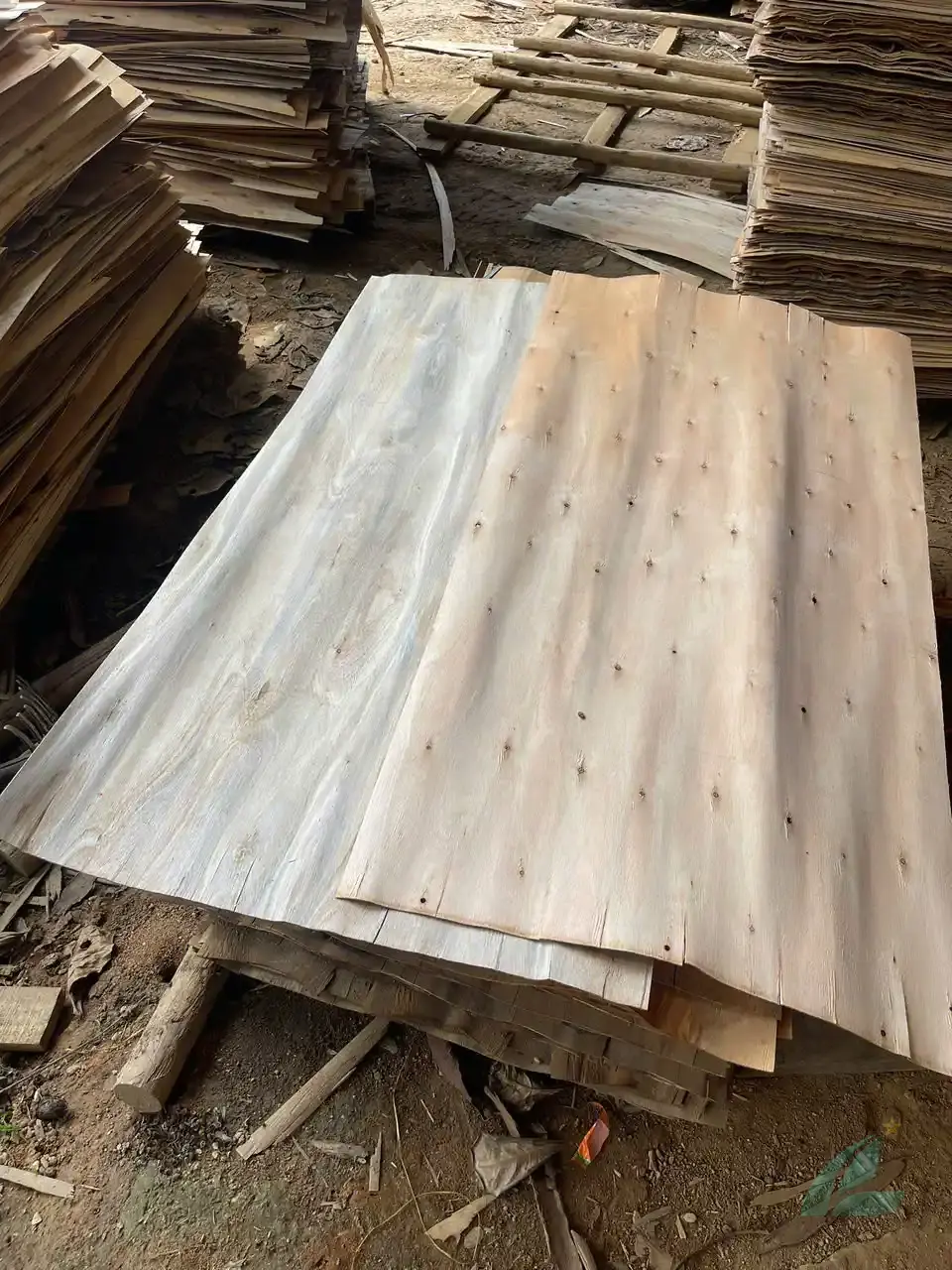
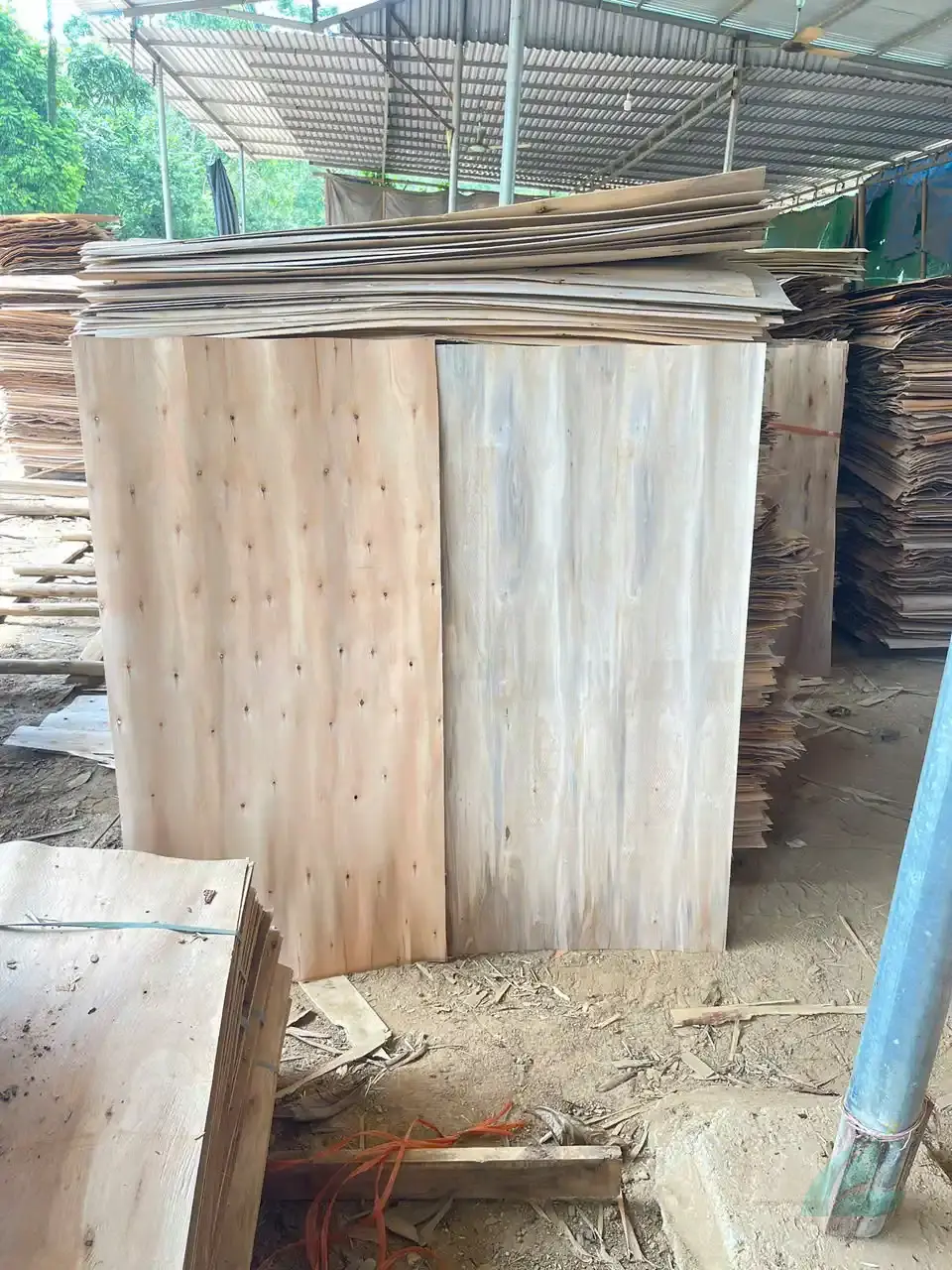
Eucalyptus core plywood: a panel built with eucalyptus (Eucalyptus spp.) veneer as the inner cross-band layers. The face veneer can be any species — bintangor, okoume, birch, gurjan, or eucalyptus itself. The core species determines the panel’s density, stiffness, and weight.
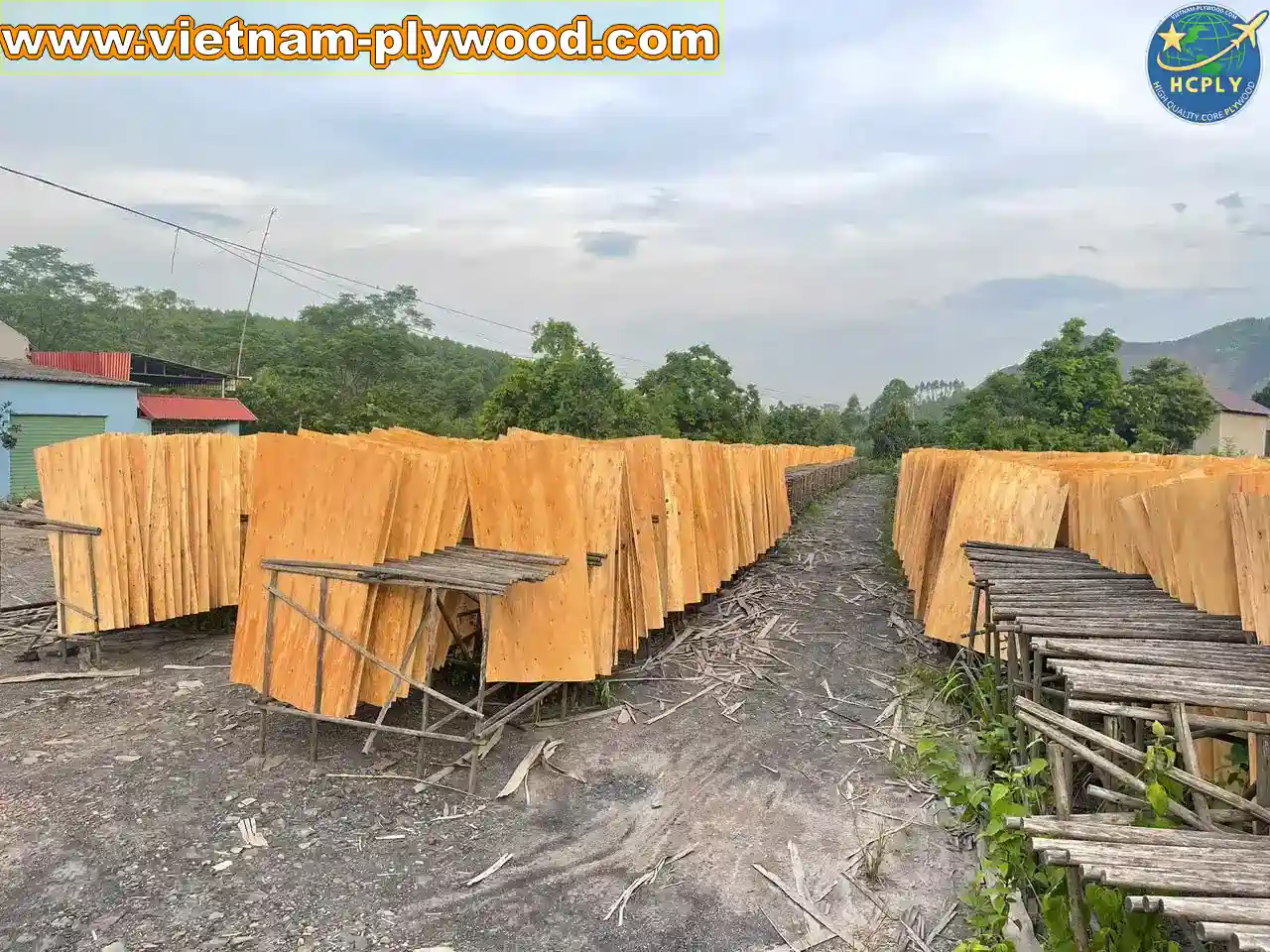
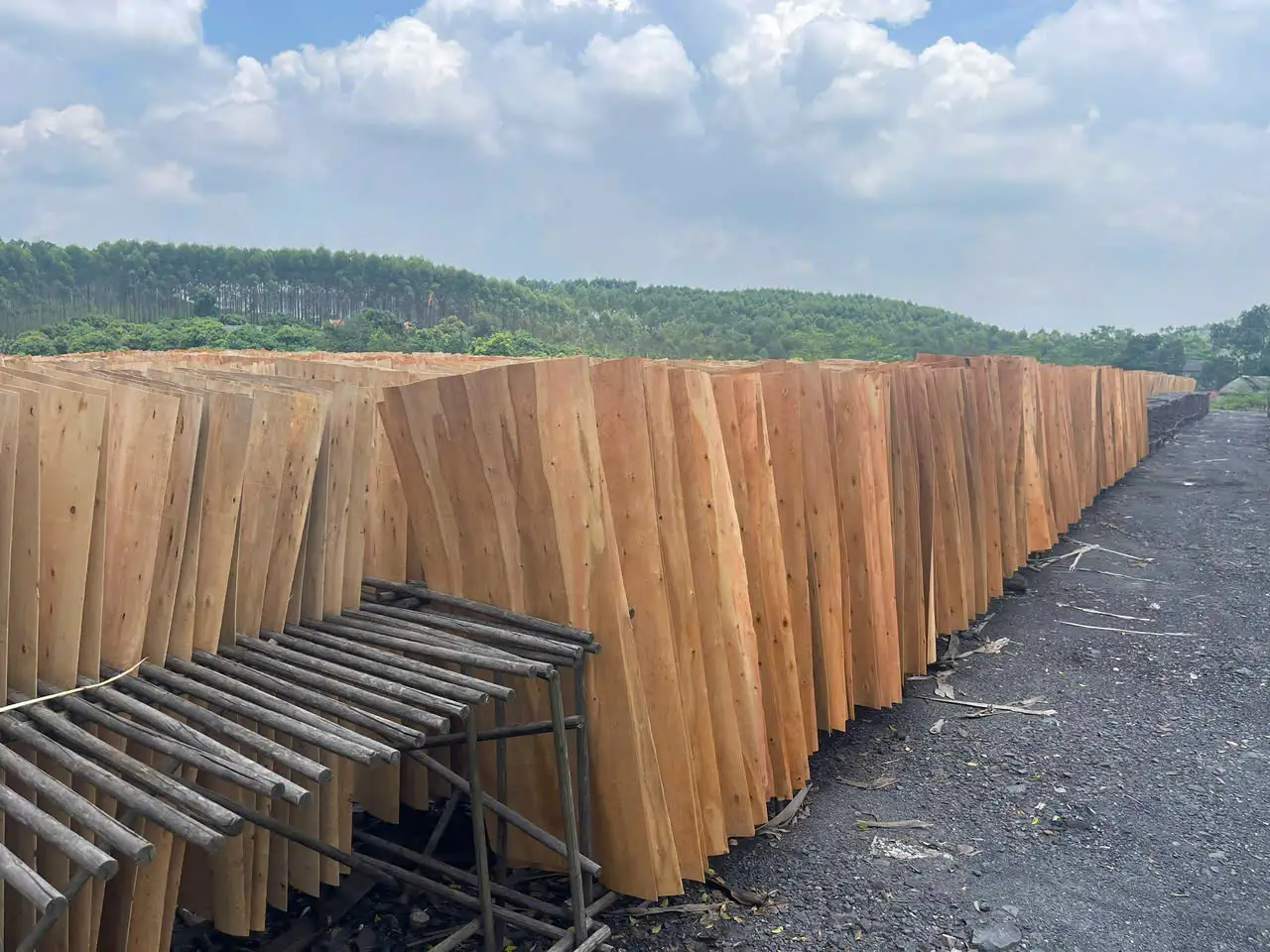
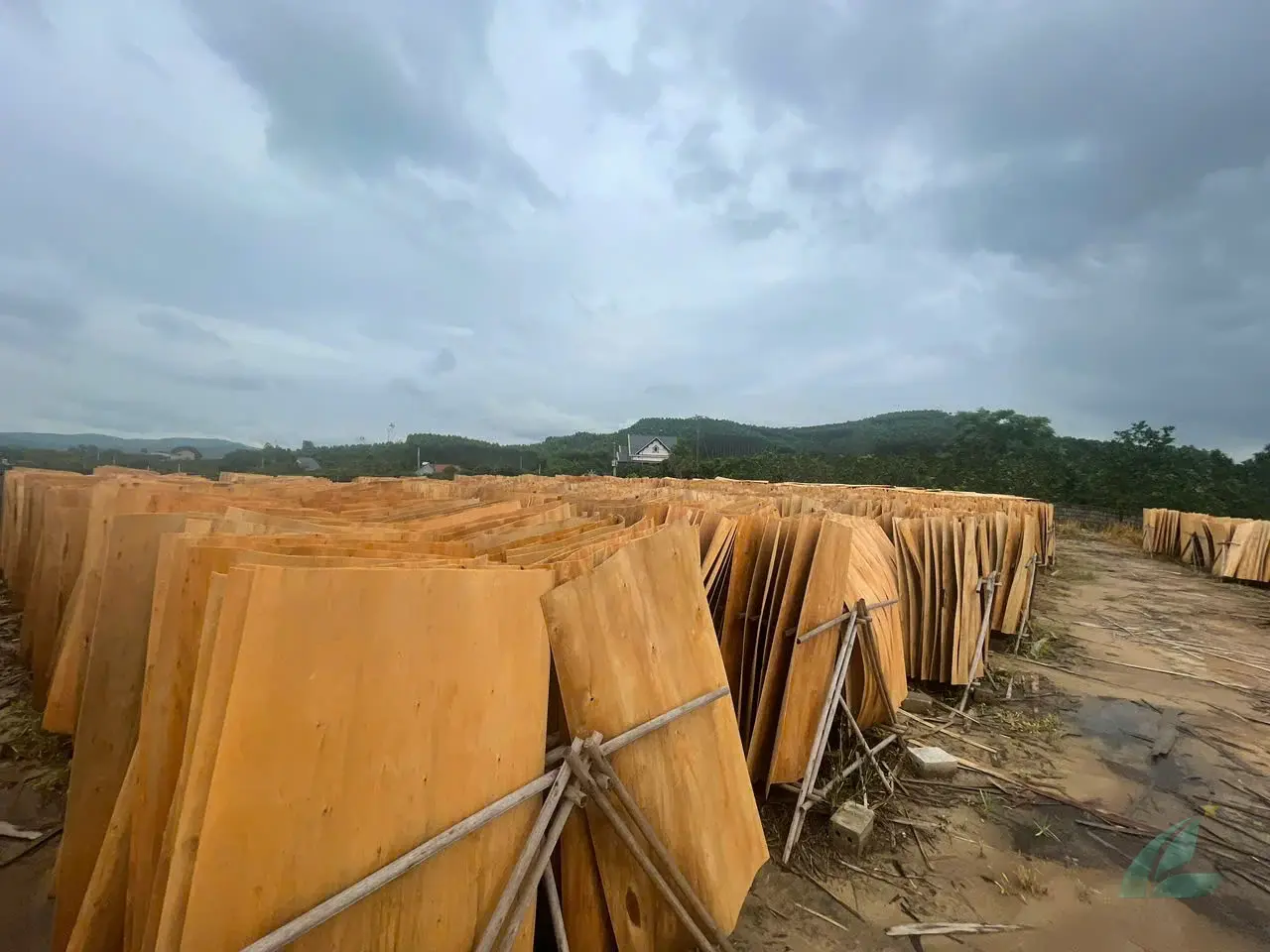
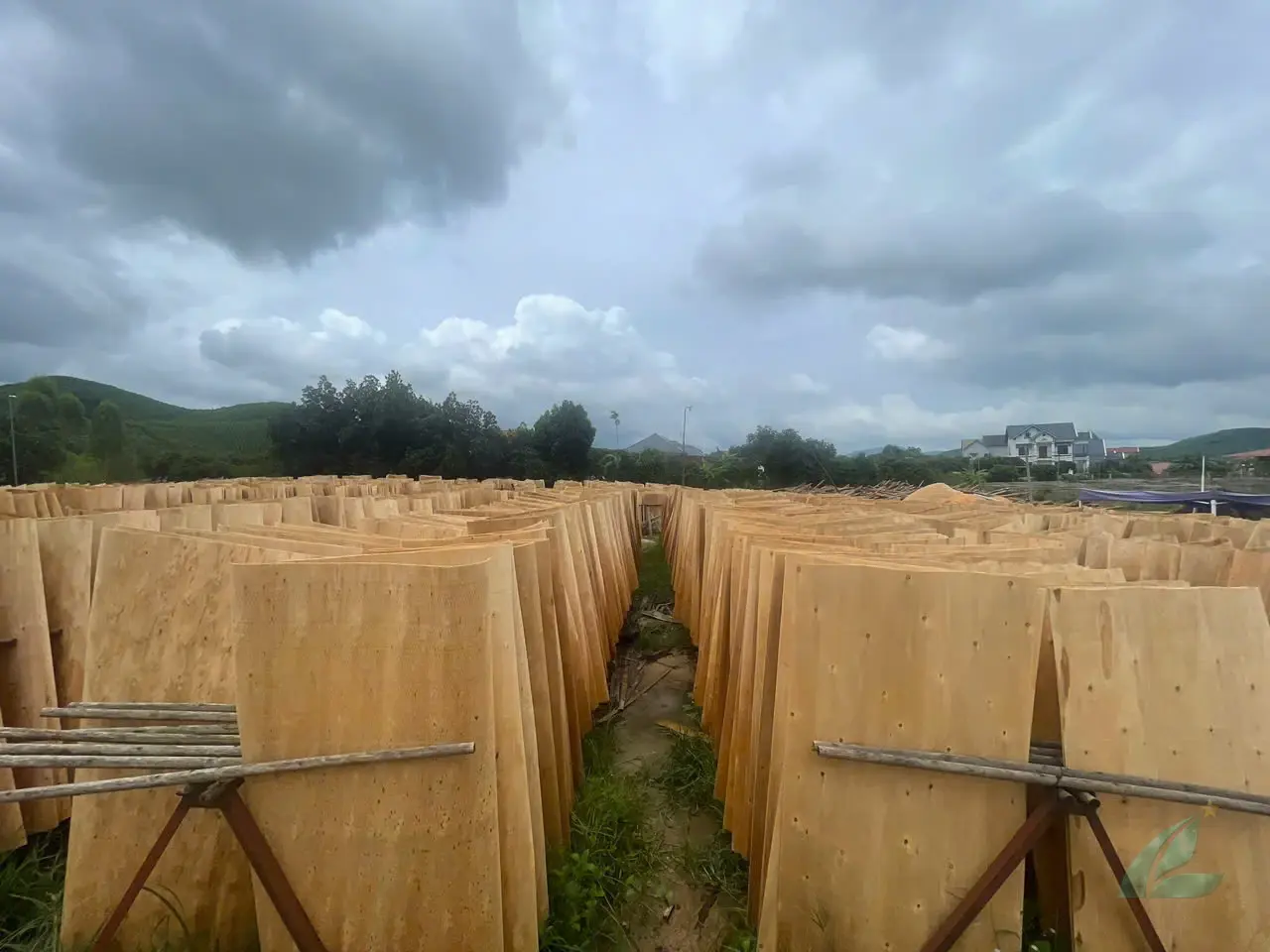
Vietnam grows eucalyptus primarily in the Northern provinces — Phú Thọ, Yên Bái, Tuyên Quang — on fast-rotation plantation cycles. The plantation eucalyptus used for plywood core peels well, dries evenly, and compresses into a tight, low-void veneer stack. Those properties translate directly into mechanical performance you can measure.
Key Insight: Density in Vietnamese plywood is set by the core species, not the face. A panel labeled “eucalyptus plywood” may carry eucalyptus face veneer over acacia core — or the reverse. Always confirm the core species separately when requesting a quotation.
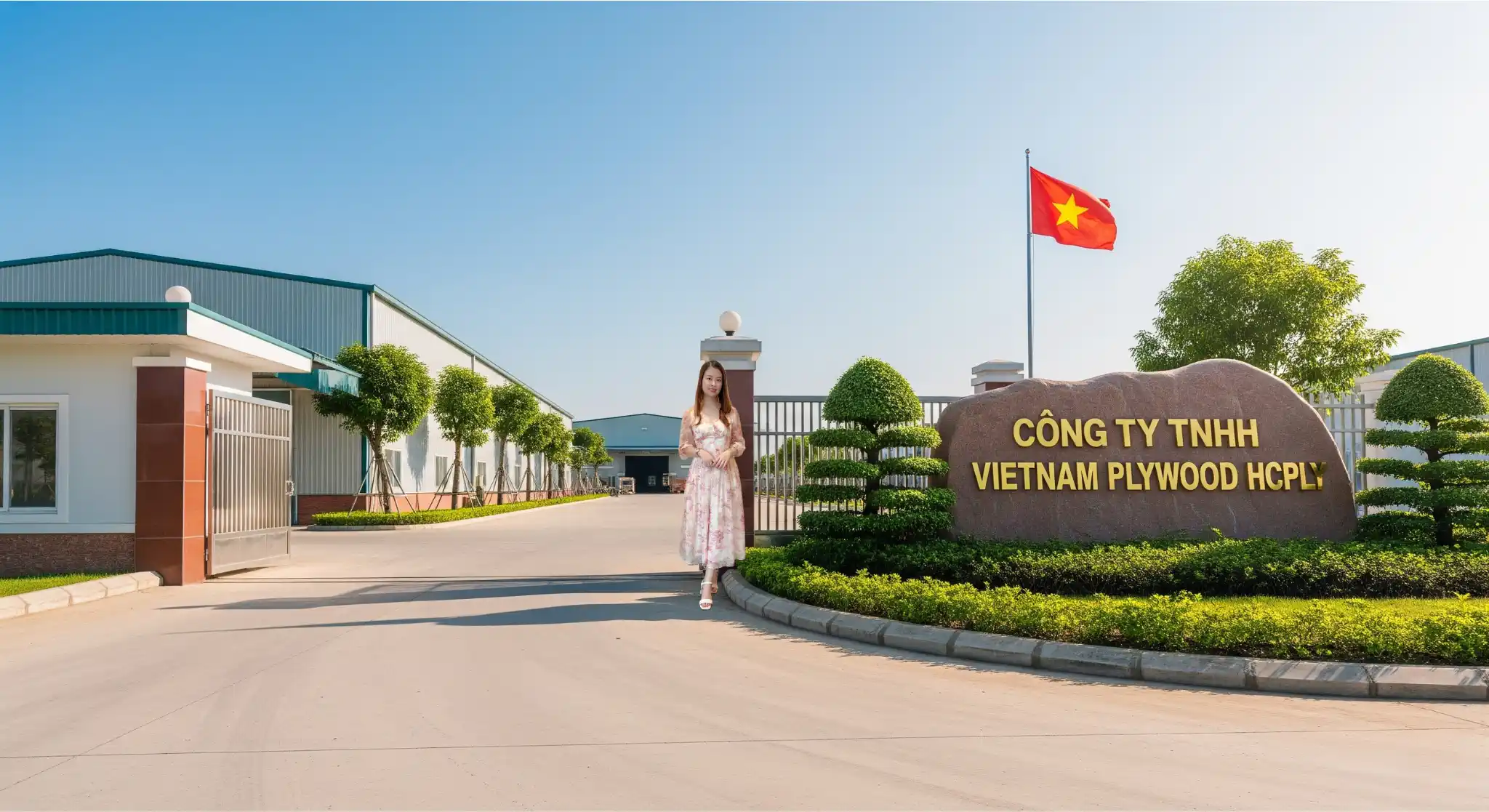
HCPLY manages dedicated production facilities in Northern Vietnam where eucalyptus core panels are manufactured under controlled hot-press parameters and full E0 emission compliance, calibrated to ±0.3mm thickness tolerance (HCPLY production data, 2026).
📊 Eucalyptus Core vs Acacia vs Styrax — Performance Comparison
Three plantation species dominate Vietnamese plywood cores. Each occupies a distinct performance tier.
| Property | Eucalyptus Core | Acacia Core | Styrax Core |
|---|---|---|---|
| Density | 650–750 kg/m³ | ~580 kg/m³ | 480–500 kg/m³ |
| Bending strength | Highest | Medium | Lower |
| Screw retention | Highest | Medium | Medium-low |
| Moisture resistance | Highest | Medium | Medium |
| Weight per 40HC | ~28 MT | ~27.5 MT | ~26.5 MT |
| Pallets per 40HC | 15 | 16 | 18 |
| Core color | Yellow-white | Dark brown | White |
| Price tier | Highest | Lowest | Mid |
| Best for | Flooring, construction, heavy-duty furniture | Packing, commercial, budget furniture | Premium furniture, birch substitute |
The density advantage of eucalyptus core plywood is not incremental — at 650–750 kg/m³ versus 480–500 kg/m³ for styrax, the structural difference is significant enough to change specification categories. Eucalyptus panels carry structural design loads that styrax core cannot reliably sustain (industry structural testing data, 2025).
Where eucalyptus core wins: Any application where the panel carries a static or dynamic load — flooring underlay, stair treads, formwork, scaffolding deck.
Where acacia or styrax wins: Weight-sensitive furniture where panels are not load-bearing structural members, or shipping-efficiency-critical orders where 18-pallet styrax loads reduce freight cost per CBM.
🏗️ Primary Applications for Eucalyptus Core Plywood
📌 Engineered Flooring Substrates
Engineered wood flooring manufacturers specify eucalyptus core as the substrate because dimensional stability under repeated humidity cycles is non-negotiable. A flooring substrate that swells, cups, or loses thickness calibration after seasonal moisture changes produces callbacks.
Eucalyptus core’s dense fiber structure minimizes moisture absorption rate compared to acacia or styrax, keeping the wear layer stable through installation and service life. Engineered flooring producers use eucalyptus plywood substrates precisely because the tight cross-band construction resists panel cupping under the stress of adhesive curing and seasonal humidity swings (Yalong Wood, Plywood Core Types, 2024). Several European producers — sourcing from Northern Vietnam — specify 12mm or 15mm eucalyptus core panels as their standard substrate (HCPLY export records, 2026).
Face veneer on flooring-substrate eucalyptus core panels is typically an engineered veneer (EV) or okoume A/B, sanded to ±0.2mm.
📌 Heavy-Duty Furniture Frames
Frame members in premium furniture — seat frames, cabinet carcasses, bed bases — carry point loads that cause cheaper cores to compress over time. Eucalyptus core’s screw-holding capacity and bending stiffness prevent joint loosening after years of use.
“For furniture going into hotel contracts or commercial fit-outs, specifying eucalyptus core is the single most effective upgrade from standard acacia panels. The density difference shows in the finished product’s feel and the joint’s longevity.” — Lucy, International Sales Manager, HCPLY
📌 Film-Faced Formwork Panels
Construction-grade film-faced plywood from Vietnam uses eucalyptus or acacia core with phenolic WBP glue. For high-reuse formwork (15+ pours), eucalyptus core is preferred over acacia because the denser substrate holds the film bond longer under the mechanical stress of stripping and cleaning.
HCPLY’s premium film-faced facility uses eucalyptus core with AICA film at minimum 135 gsm, targeting 15–20 reuse cycles (HCPLY production specifications, 2026).
📌 Anti-Slip Scaffold Decking
Anti-slip plywood for scaffolding requires a core that does not crush under point loads from foot traffic and equipment placement. Eucalyptus core at 650–750 kg/m³ meets the structural requirements for temporary works applications where scaffold deck panels carry both static and dynamic loads.
📦 Container Loading: The Eucalyptus Weight Constraint
Eucalyptus core’s density creates a direct shipping logistics consideration. A 40HC container loaded with eucalyptus core plywood (1220×2440mm) carries 15 pallets, reaching approximately 28 MT cargo weight — within 0.5 MT of the 28.5 MT payload limit.
Compare that to styrax core (18 pallets, ~26.5 MT) and acacia core (16 pallets, ~27.5 MT). The eucalyptus load is constrained by weight before it is constrained by volume.
Practical implications for importers:
- Mixing specs: If your container contains both eucalyptus and acacia core panels, recalculate total weight before finalizing the load plan. The HCPLY logistics team provides this calculation as part of every order confirmation.
- Thicker panels load fewer sheets: A 21mm eucalyptus core panel stacks roughly 47 sheets per pallet. At 15 pallets, total cargo weight approaches the payload limit quickly.
- CBM efficiency: Eucalyptus core delivers ~44.5 CBM per 40HC — less than styrax (~53 CBM) or acacia (~47.5 CBM). If your freight cost is calculated per CBM, eucalyptus orders cost more to ship per unit of volume.
For the full container packing methodology, see the plywood container packing calculation guide.
⚙️ Glue and Emission Options for Eucalyptus Core
Glue type and emission class are specified independently of the core species. Eucalyptus core panels are available with:
Glue options:
- Melamine (MR): Moisture-resistant, 12-hour boiling test. For furniture and interior construction.
- Phenolic (WBP): Weather and boil-proof, 72-hour boiling test. For formwork, marine, and exterior construction.
Emission classes:
- E0 / CARB P2: Ultra-low formaldehyde (≤0.5 mg/L). Mandatory for furniture exported to the US, EU, Japan, and South Korea.
- E1: Standard indoor grade (≤1.5 mg/L). Acceptable for most EU and Asian markets.
- E2: Budget grade (≤5.0 mg/L). For industrial packaging and exterior applications only — not suitable for interior furniture.
⚠️ Important: Glue type (Melamine/Phenolic) and emission class (E0/E1/E2) are two separate specifications. A panel can carry phenolic WBP glue and E0 emission class simultaneously. Confusing the two — or writing “E0 glue” — is a sourcing specification error that delays orders.
For premium furniture and flooring applications, specify: Glue: Melamine (MR) | Emission: E0. For construction and formwork: Glue: Phenolic (WBP).
For a full treatment of this distinction, read the plywood glue types and emission standards guide.
🔍 How to Identify Eucalyptus Core in a Panel
When receiving a shipment, you can confirm eucalyptus core by inspecting the panel edge:
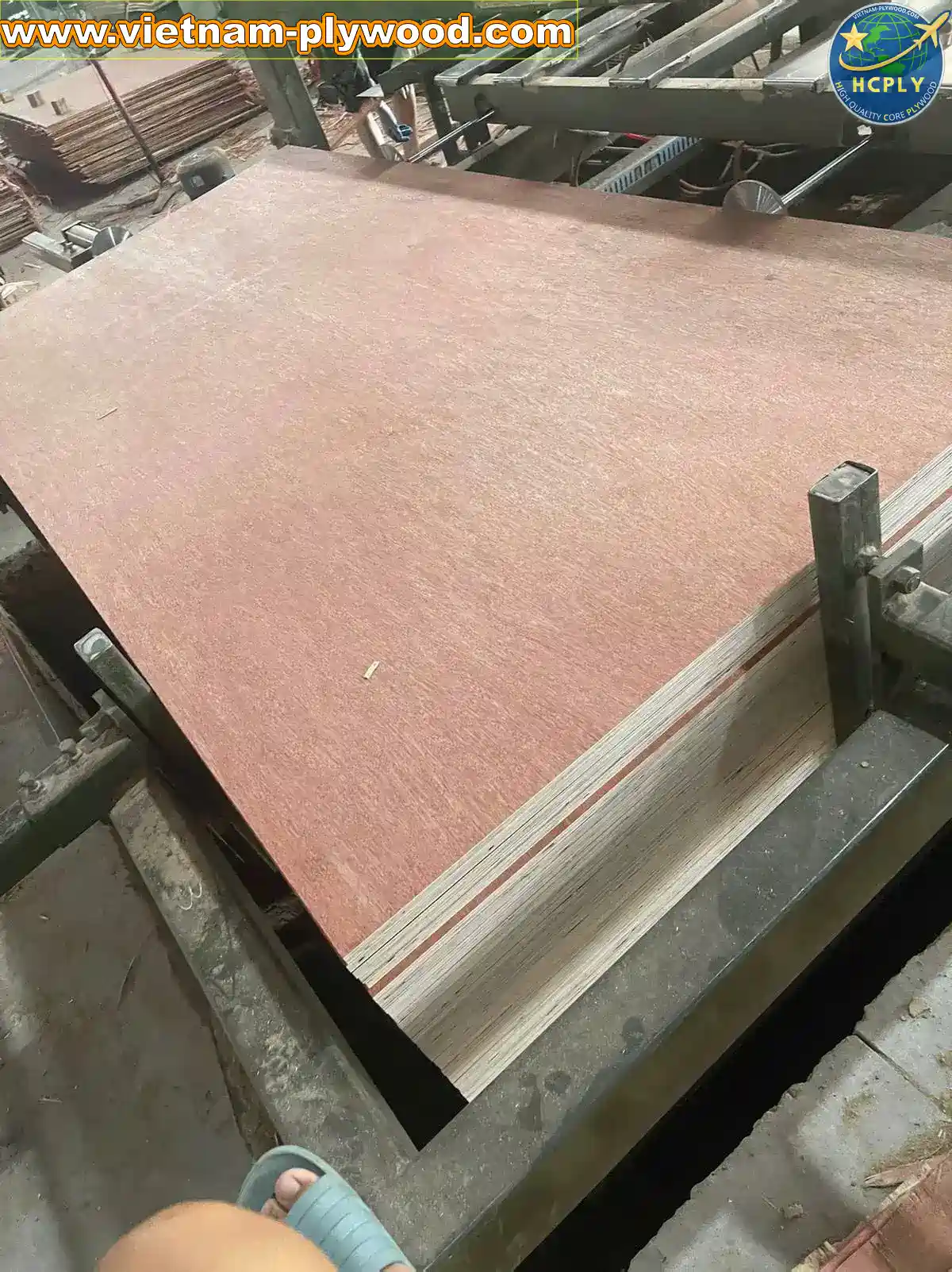
- Core color: Eucalyptus core veneer is yellow-white with a slightly golden tinge. Acacia core is visibly darker — brown to reddish-brown. Styrax core is uniformly bright white.
- Weight check: A 12mm eucalyptus core panel in 1220×2440mm format weighs approximately 23–25 kg per sheet. An identical styrax core panel weighs 17–19 kg. The difference is unmistakable by hand.
- Cross-section density: Eucalyptus core veneer layers appear tighter and more compressed in cross-section. Gaps, overlaps, or loose-laid construction are more visible in lower-grade acacia cores.
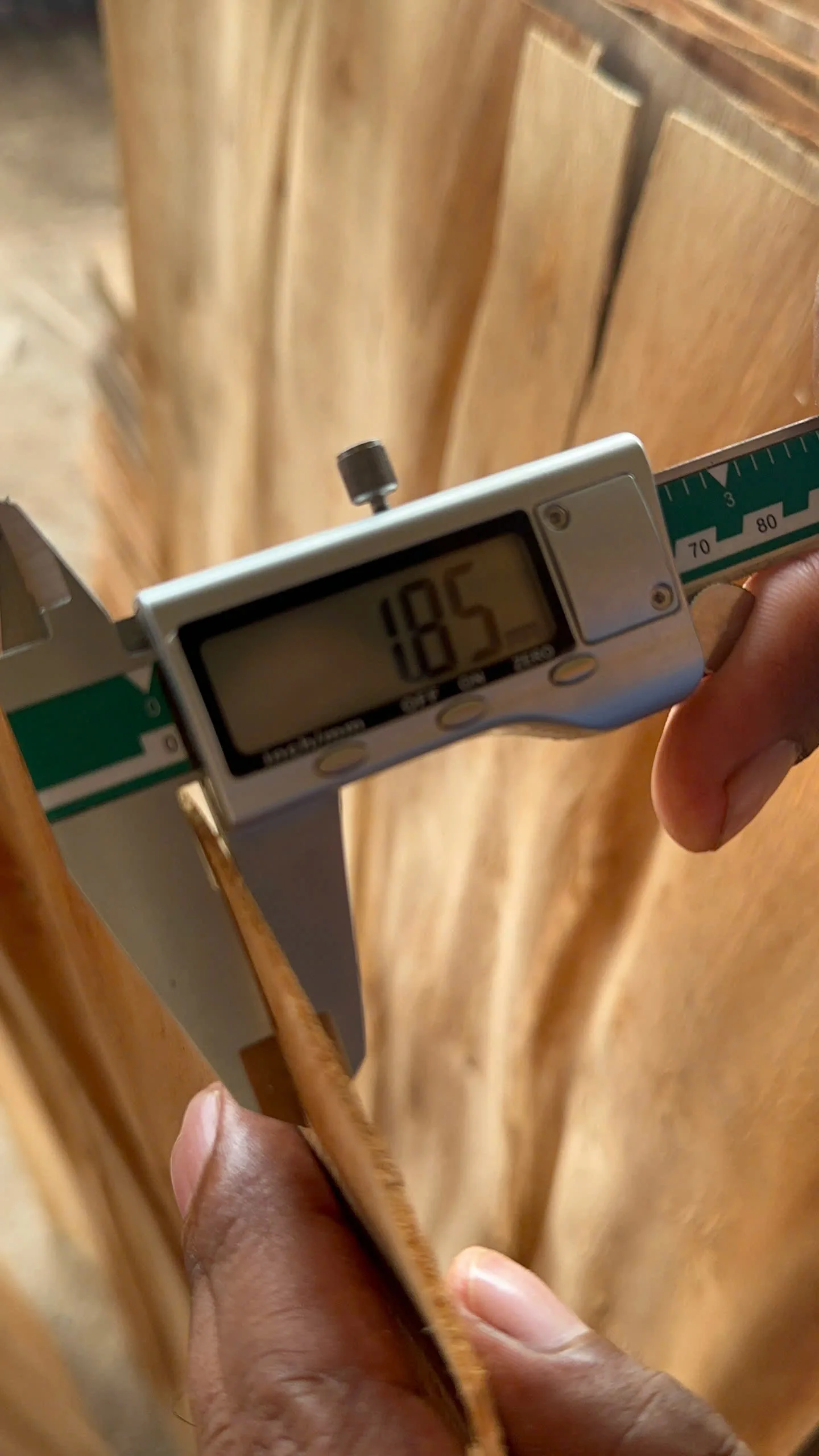
HCPLY QC teams perform physical inspection at three stages — after pressing, after sanding, and before container loading — with moisture meter and caliber readings documented per batch (HCPLY QC protocol, 2026).
💡 When Not to Specify Eucalyptus Core
Eucalyptus core’s weight premium is not justified for every application. Specify acacia or styrax core instead when:
- Freight cost drives the decision: Styrax core’s 18-pallet load maximizes CBM efficiency per container. For price-sensitive commercial markets where freight represents a high share of landed cost, styrax core reduces the cost basis.
- Lightweight furniture: Cabinet doors, drawer fronts, and panel backs that carry no structural load benefit more from styrax core’s workability and light weight than from eucalyptus core’s stiffness.
- Packing and industrial crates: Packaging-grade plywood does not require structural density. Packing plywood with acacia core delivers adequate performance at the lowest cost.
- Budget commercial interiors: For general commercial fit-out where premium mechanical properties are not specified, acacia core at E1 emission provides a cost-effective solution.
Understanding which core is appropriate for which specification separates professional procurement from over-engineering. HCPLY supplies all three core species — eucalyptus core plywood, acacia core panels, and styrax core panels — from dedicated facilities with the same contact, same lead time, and specifications matched to each end use.
📋 Specifications Quick Reference
| Parameter | Eucalyptus Core Plywood — HCPLY Standard |
|---|---|
| Core species | Eucalyptus plantation (Northern Vietnam) |
| Density | 650–750 kg/m³ |
| Available thickness | 6–30mm (standard); custom up to 40mm |
| Standard sizes | 1220×2440mm; 1250×2500mm; custom cutting |
| Thickness tolerance | ±0.3mm (calibrated) |
| Glue options | Melamine (MR) or Phenolic (WBP) |
| Emission options | E0 / E1 / E2 |
| Certifications | FSC, CARB P2, CE, ISO 9001, EUDR |
| MOQ | 1 × 40HC container |
| Lead time | 15–20 days |
| Port | FOB Hai Phong, Vietnam |
📐 Eucalyptus Core in the Context of Vietnamese Core Selection
The plywood core types guide for Vietnam buyers covers acacia, eucalyptus, and styrax in full — including construction method (stitched vs. loose-laid), grade selection, and cost-performance curves. Eucalyptus core is the top tier of that spectrum.
Vietnam’s Northern provinces produce all three core species in commercial export volumes. HCPLY sources eucalyptus core exclusively from Northern plantation suppliers — Phú Thọ and neighboring provinces — where growth conditions produce consistent density within the 650–750 kg/m³ range. Southern Vietnamese eucalyptus grows in different soil conditions and may produce lower-density material; HCPLY does not use Southern-sourced eucalyptus core for premium panel production (HCPLY sourcing specification, 2026).
One practical note: Eucalyptus core is listed as a core option across multiple HCPLY face veneer products — birch-faced panels with eucalyptus core are a common specification for the Indian market and European premium furniture producers. Check eucalyptus plywood Vietnam for eucalyptus-faced panels, and core veneer Vietnam for raw eucalyptus veneer sheets for plywood manufacturers producing in-house.
✅ Conclusion
Eucalyptus core plywood earns its premium price tier through measurable performance: the densest core (650–750 kg/m³), the highest bending strength, and the best moisture stability of the three Vietnamese plantation species. For flooring substrates, structural furniture frames, film-faced formwork, and scaffold decking, it is the correct specification — not an upgrade for its own sake.
The tradeoff is weight: 15 pallets per 40HC versus 18 for styrax. For freight-sensitive applications, that matters. For applications where the panel carries a load, eucalyptus core is the baseline.
HCPLY manufactures eucalyptus core panels from dedicated Northern Vietnam production facilities with FSC, CARB P2, CE, and ISO 9001 certification. Lead time is 15–20 days FOB Hai Phong.
Request a free eucalyptus core plywood sample and FOB quotation — no commitment required.
Not sure which core is right for your specification? Contact HCPLY now — our team will match your end-use requirements to the correct core species, glue type, and emission class.