
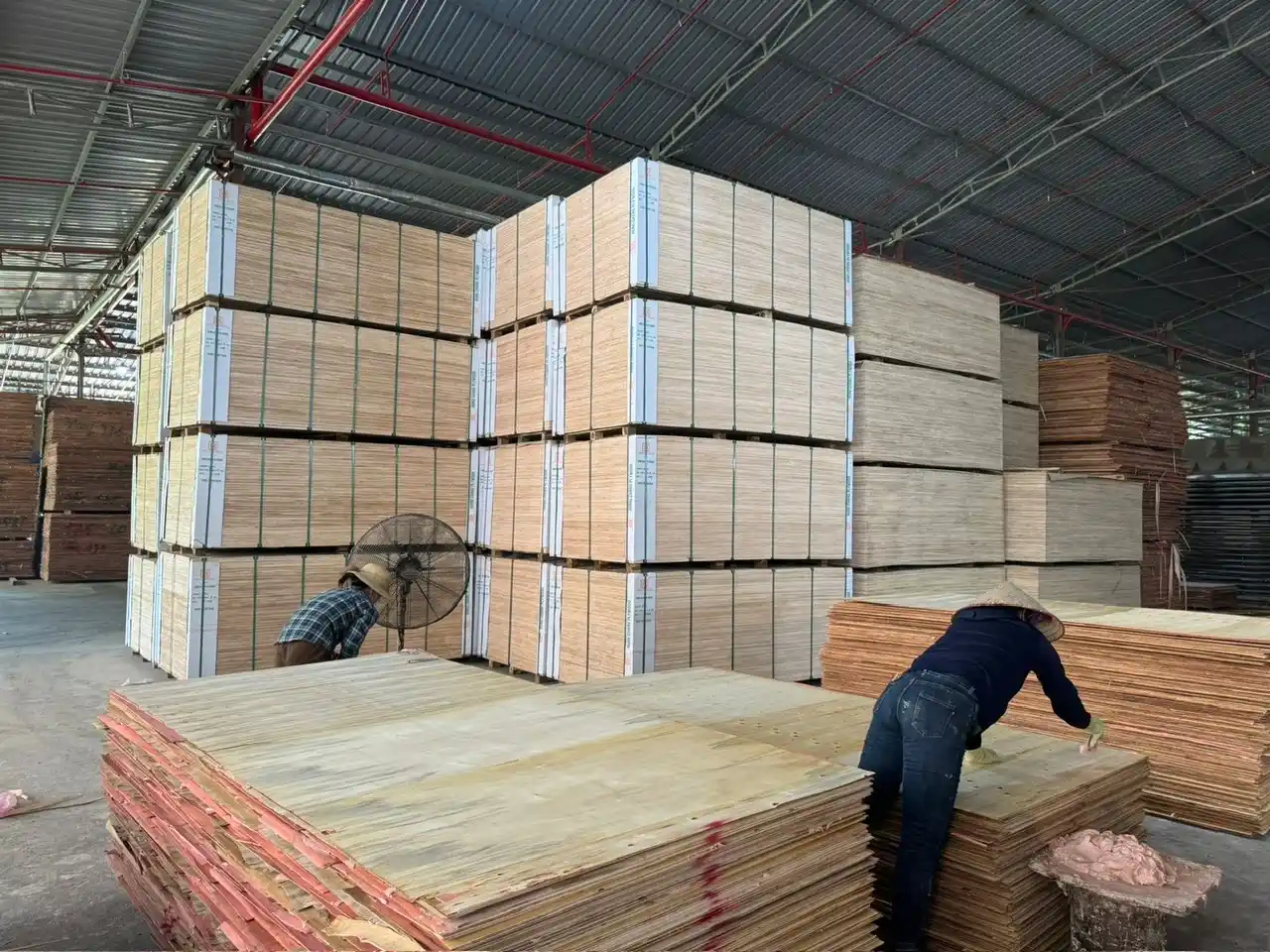
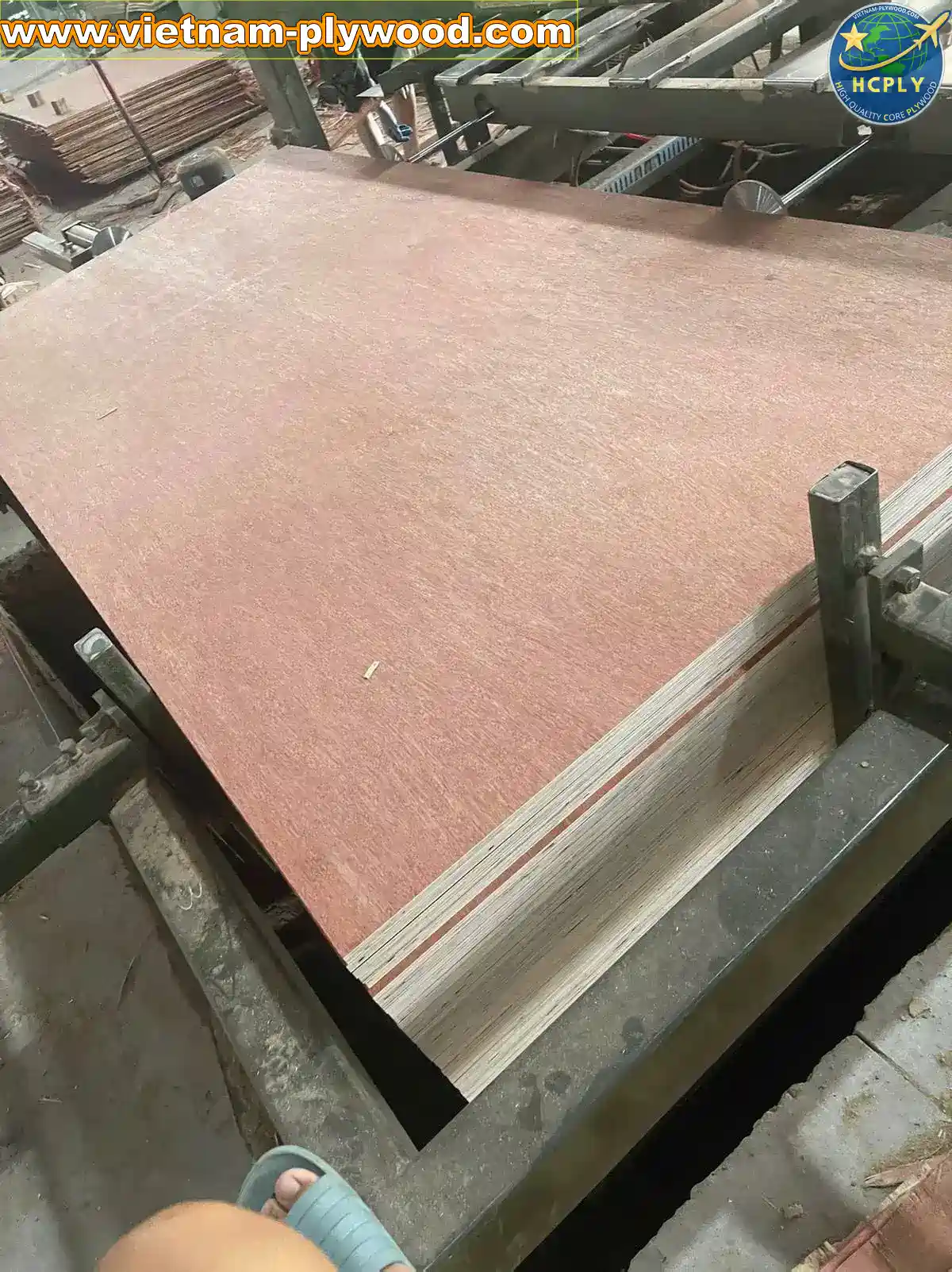



European buyers meet “E1” on almost every plywood quote, but few specifications say what it should mean for their product. E1 is the European baseline for formaldehyde emission — a useful floor, not a finish line. Knowing where E1 is enough, and where E0 is the safer call, keeps a shipment clear of both customs problems and brand complaints.
This guide explains the grade and how to specify it. Read it with our E0/E1/E2 and CARB P2 emission standard explainer and the glue types and emission standards guide.
The reason this matters to a buyer is money and risk. Quote E1 when E0 is expected and a brand may reject the furniture; accept E2 by mistake and the goods may not clear at all. Quote E0 when E1 would do and you pay for a grade the application never needed. Knowing where the line sits lets you specify the grade that fits, prove it, and avoid paying for the wrong one.
What E1 measures
E1 is a formaldehyde emission grade describing how little formaldehyde a finished panel releases. The common scale runs E0, E1 and E2, from lowest emission to highest. E1 is the everyday European baseline for wood-based panels. It is a property of the finished panel — the glue and the emission grade are two separate things.
Where E1 is accepted, and where E0 is better
E1 is the general baseline across Europe and is accepted for many uses. For furniture and indoor products, buyers and end-brands increasingly ask for E0 (equivalent to CARB P2), which sits below E1 on emission. The cheaper E2 grade is aimed at lower-requirement Asian markets and should not be quoted for the EU. A simple rule: E1 as the floor, E0 for furniture and anything with strict indoor-air expectations.
Emission is not the glue type
Mixing emission and glue is the most common specification error. Glue is the bonding chemistry — melamine (MR class) for furniture and commercial panels, phenolic (WBP class) for construction. Emission is E0, E1 or E2. Write two fields: “Glue: melamine (MR) | Emission: E1”. A line that says “E1 glue” tells a supplier nothing.
The core counts toward the panel
Emission applies to the whole panel, so the core is part of the picture. Vietnamese cores are acacia, eucalyptus and styrax. A factory-direct Vietnam plywood manufacturer can state the core species and the emission grade together because it controls both the veneer and the bonding line. Our core veneer page sets out the species.
E1, E0 and E2 side by side
It helps to see the three grades as a single ladder. E2 is the highest-emission grade, made for price-driven Asian markets, and is not suitable for the EU. E1 is the European baseline — acceptable for many general and commercial uses. E0 is the lowest commonly specified grade, broadly equal to CARB P2, and the right call for furniture and indoor products. The grade does not change the look of the panel, so it cannot be judged by eye — only by the test report. That is why the grade has to be written into the specification and proven on paper, not assumed from a sample board.
Why the factory decides whether E1 holds
Emission consistency is a production question. The grade depends on the glue formulation and the press, and melamine (MR) bonding runs at roughly 110 to 120°C. A factory that varies the press or rushes the line can let emission drift between batches even under the same E1 label. A factory-direct manufacturer that controls its own line can hold the result steady across a run; a reseller relaying your order to several sources cannot give the same assurance. For a buyer, this is the practical case for sourcing the grade directly from the factory rather than a step removed.
Documents that prove the grade
A label is not evidence. Ask for the emission test report behind the E1 or E0 claim, issued for the relevant product category and current rather than expired. HCPLY supplies emission documentation alongside FSC, CARB P2, CE and EUDR data — see our certifications page. For the EU, EUDR due-diligence data became a practical requirement from 30 December 2025.
Specifying E1 cleanly
On the proforma, separate the fields and decide the grade by application: glue class, emission grade (E1 as baseline, E0 for furniture), core species, and the test report reference. A factory-direct exporter confirms each field from its own records, because it controls both the veneer and the press. State the application too, so the supplier can recommend E1 or E0 with a reason rather than a guess. To receive E1 or E0 documentation for a specific order, send your specification through our contact page.