

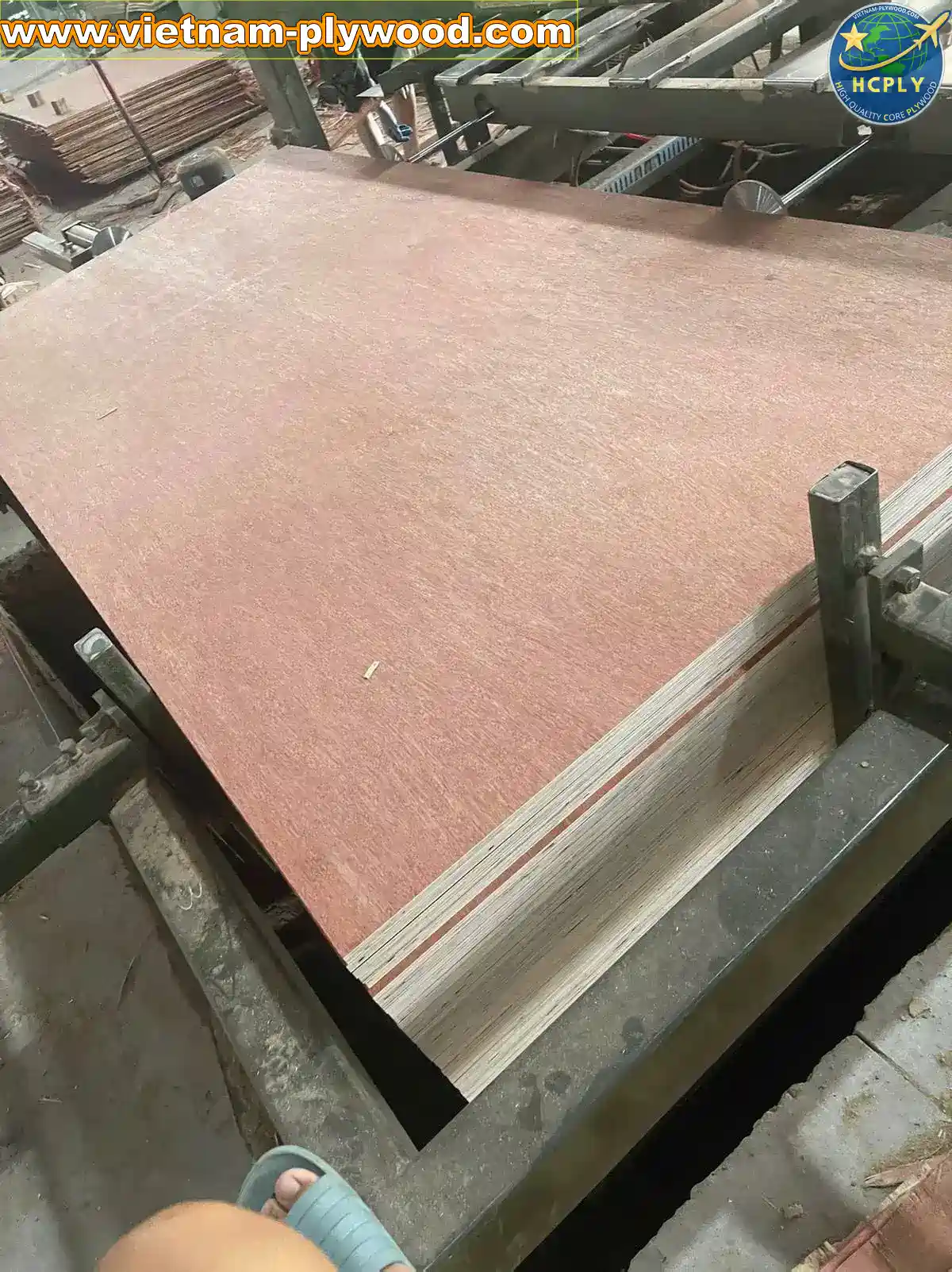

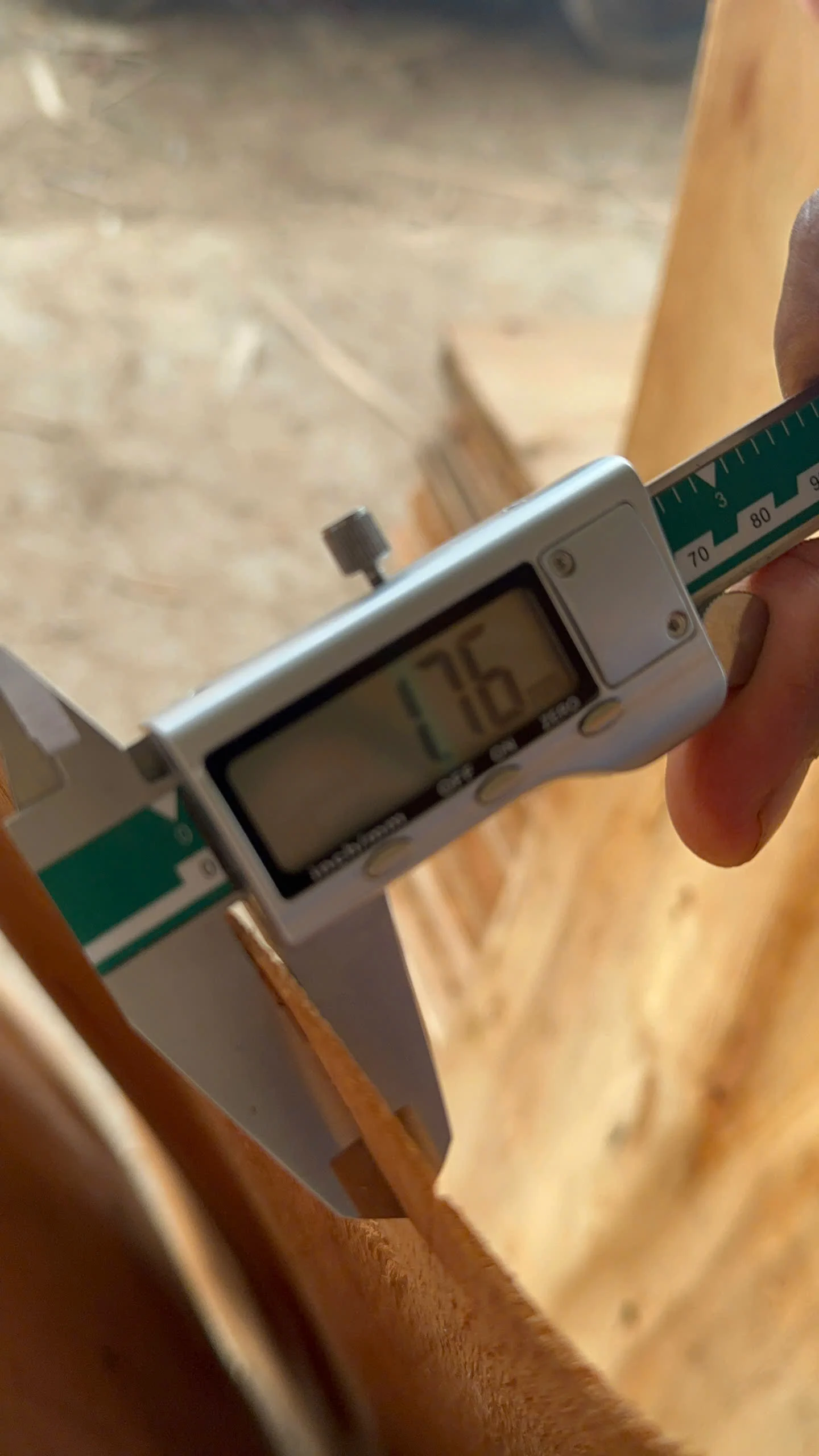
Most importers discover the E0 vs CARB P2 problem at the worst possible moment — when their container arrives at a US port or a retail compliance team sends back a supplier audit. The goods test at ≤0.05 ppm formaldehyde. The factory holds an E0 certificate. But the documentation fails the TSCA Title VI review. The reason is procedural, not chemical. Understanding the emission standard difference between these two plywood certification frameworks before you place the purchase order saves shipment rejections, re-certification costs, and strained supplier relationships.
This guide explains the five structural differences between E0 and CARB P2 compliance — key things importers must know — and why knowing the emission standard difference for plywood sourced from Vietnam matters for both US and EU-bound orders.
📋 TL;DR — E0 vs CARB P2 at a Glance
| Factor | E0 (European/Chinese standard) | CARB P2 (US standard) |
|---|---|---|
| Emission limit (hardwood plywood) | ≤0.5 mg/L (desiccator) / ≈ 0.05 ppm | ≤0.05 ppm (large chamber, ASTM E1333) |
| Test method | EN 717-1 or EN 717-3 / JIS A1460 desiccator | ASTM E1333 or D6007 gas analysis |
| Certifier type | Any ISO 17025 accredited lab | CARB-approved third-party certifier (TPC) only |
| Ongoing audits | Annual or on-order basis | Quarterly TPC audits mandatory |
| Panel labeling | Optional or per buyer request | Mandatory — TPC number on every panel |
| Document retention | No mandated timeframe | 3 years (importer obligation) |
| Jurisdiction | EU, Japan (F4☆), China, South Korea | All 50 US states (TSCA Title VI since March 2019) |
| Price premium vs E1 | +10–15% | +15–20% |
| Accepted in US retail audits | Typically NO (without CARB TPC certificate) | YES |
⚠️ Important: CARB explicitly states it does not accept European E0 or E1 certificates as proof of Phase 2 compliance, even if formaldehyde levels are identical. (California Air Resources Board, FAQ for Importers, 2024)
📦 What Is E0 Emission Standard?
E0: A formaldehyde emission class for wood-based panels, requiring ≤0.5 mg/L by the desiccator test method (EN 717-3) or the equivalent under JIS A1460 for Japanese-market products. In practical terms, this translates to approximately ≤0.05 ppm when measured by gas chamber analysis.
E0 sits above E1 (≤1.5 mg/L) and E2 (≤5.0 mg/L) in the European emission hierarchy. It is the standard required for:
- EU furniture exports — especially children’s furniture, bedroom, and healthcare interiors where REACH regulations apply
- Japan interior applications — where F4-star (≈ E0 equivalence) is specified under JAS
- South Korean furniture imports — where E0 or tighter is increasingly demanded by Korean retailers
- Chinese domestic high-end market — GB/T 39600 introduced a new E0 class in 2022
E0 certification requires a test report from an ISO 17025-accredited third-party laboratory. The test is product-specific — a factory producing five different panel types needs five separate test reports. Re-testing frequency is typically annual or triggered by a specification change.
At HCPLY’s premium furniture facility, all styrax-core furniture plywood is produced to E0 using low-emission melamine-urea-formaldehyde (MUF) adhesive. The manufacturing parameters — glue spread rate, pressing temperature (typically 130–145°C for melamine), and moisture content before assembly — are tighter than E1 production. (HCPLY production data, 2026)
🏛️ What Is CARB P2 Emission Standard?
CARB P2: The Phase 2 emission limits set by the California Air Resources Board (CARB) under its Composite Wood Products Airborne Toxic Control Measure (ATCM). Since March 22, 2019, these limits have been federalized under TSCA Title VI by the U.S. EPA — making CARB P2 the national standard for all composite wood products manufactured in or imported into the United States. (U.S. EPA, Formaldehyde Emission Standards for Composite Wood Products, 2019)
Emission limits under CARB P2:
| Product | Formaldehyde limit (CARB P2) |
|---|---|
| Hardwood plywood (veneer core) | ≤0.05 ppm |
| Particleboard | ≤0.09 ppm |
| MDF | ≤0.11 ppm |
| Thin MDF (≤8mm) | ≤0.13 ppm |
CARB P2 does not simply test a panel and issue a pass/fail certificate. The framework requires:
- Registration with a CARB-approved third-party certifier (TPC) — Intertek, SGS, UL, Bureau Veritas, and a handful of other CARB-listed bodies
- Quarterly production audits — the TPC must inspect the factory every three months and test panels
- Lot-level panel labeling — every composite wood panel must carry the TPC name and certificate number (or be traceable to labeled bundles)
- TSCA Title VI compliance declaration on the commercial invoice and bill of lading for all US-bound shipments
- 3-year record retention for importers
💡 Tip: Ask your supplier for the TPC certificate number and look it up on the CARB website to verify registration status. If the TPC is not on CARB’s approved list, the certificate is non-compliant regardless of the formaldehyde test result.
🔍 The 5 Key Differences Between E0 and CARB P2
📌 Difference 1: Test Method
This is where most confusion originates. E0 uses the desiccator method (EN 717-3 or JIS A1460). A specimen is placed in a closed desiccator chamber with distilled water for 24 hours. Formaldehyde released is absorbed by water and measured by spectrophotometry.
CARB P2 uses the large chamber method (ASTM E1333) or a small-scale equivalent (ASTM D6007). Panels are placed in a climate-controlled chamber (temperature 25°C, humidity 50%) and air samples are collected over 16 days. This method measures real-world emission rates under simulated indoor conditions.
The two methods produce different numeric results even from the same panel. A panel that reads 0.4 mg/L on a desiccator test and a panel that reads 0.04 ppm on a chamber test are not automatically equivalent — the conversion factor depends on the panel type and moisture content. CARB does not accept desiccator test data as a substitute for chamber test data. (CARB, Composite Wood Products Program FAQ, 2024)
📌 Difference 2: Certifier Authorization
For E0, any ISO 17025-accredited laboratory can issue the test report. SGS Vietnam, Intertek Vietnam, Bureau Veritas Vietnam — all are valid E0 issuers.
For CARB P2, only certifiers on CARB’s approved TPC list are valid. As of 2026, approximately 40 TPCs are CARB-approved globally. Several major certifiers — including SGS, Intertek, and UL — appear on both lists, but the factory must hold a specific CARB registration with that certifier, separate from any E0 or ISO testing agreement.
📌 Difference 3: Audit Frequency
E0 testing is typically point-in-time. A factory tests a batch, gets the report, and uses it for 12 months or until specifications change. There is no requirement for unannounced audits.
CARB P2 requires quarterly audits by the registered TPC. At each audit, the TPC collects random samples, tests them, and certifies that production parameters remain within the registered range. If the quarterly test fails, the factory must withdraw the CARB label from production until corrective action is verified and re-tested.
“The quarterly audit is not a formality — our TPC takes actual production samples, not samples we prepare for them. That keeps our formaldehyde data honest and gives our US customers verifiable confidence.” — Lucy, International Sales Manager, HCPLY
📌 Difference 4: Panel Labeling and Documentation
E0 panels: no mandatory label. Many factories ship E0 panels with a test report attached to the shipping documents but no physical marking on the panel or bundle.
CARB P2 panels: every panel or traceable bundle must carry the TPC name and identification number. For Vietnam-origin hardwood plywood shipped to the US, the label is typically applied to the panel edge or on the bundle strapping label. The commercial invoice and bill of lading must include a TSCA Title VI compliance statement.
US importers are responsible for verifying these documents exist. The EPA can request compliance records at any point for up to 3 years after import. (U.S. EPA, TSCA Title VI Importer Obligations, 2019)
📌 Difference 5: Price Premium
E0-certified Vietnam plywood carries a 10–15% price premium over standard E1 grade. CARB P2-certified panels carry a 15–20% premium over E1. The additional 5% reflects TPC registration fees, quarterly audit costs, and the more controlled production parameters required to consistently pass chamber-method testing.
For buyers sourcing 1–3 containers per month of furniture plywood, this difference is $3–8 USD per CBM at current FOB Hai Phong rates. Ignoring CARB P2 certification to save this margin and then facing a retailer rejection or EPA investigation is a poor trade-off.
⚙️ When E0 Alone Is Not Enough
Many importers operate in both US and EU markets with a single SKU. The rational question is: can one certification cover both?
Practically, a CARB P2-certified panel will generally meet E0 requirements — the emission levels are equivalent, and if the factory holds a CARB TPC certificate, they can usually provide a parallel E0 test report at minimal cost (the same production parameters produce panels that pass both).
However, E0 certification does NOT cover CARB P2 requirements. If you ship E0-only certified plywood to the US, you have no valid TSCA Title VI documentation. The panel may actually emit ≤0.05 ppm, but the certification pathway is non-compliant.
For buyers servicing multiple markets, the correct approach is to request both:
- CARB P2 TPC certificate (for US)
- E0 test report (EN 717-1 or laboratory desiccator test) (for EU and other markets)
Both documents can come from the same CARB-approved TPC. Many major certifiers issue combined reports at a bundled cost.
See the full emission standards market guide for a comparison of requirements across all major export destinations: Plywood E0 E1 E2 and CARB P2: Market Guide for Importers.
🏭 How HCPLY Supplies Both Certified Grades
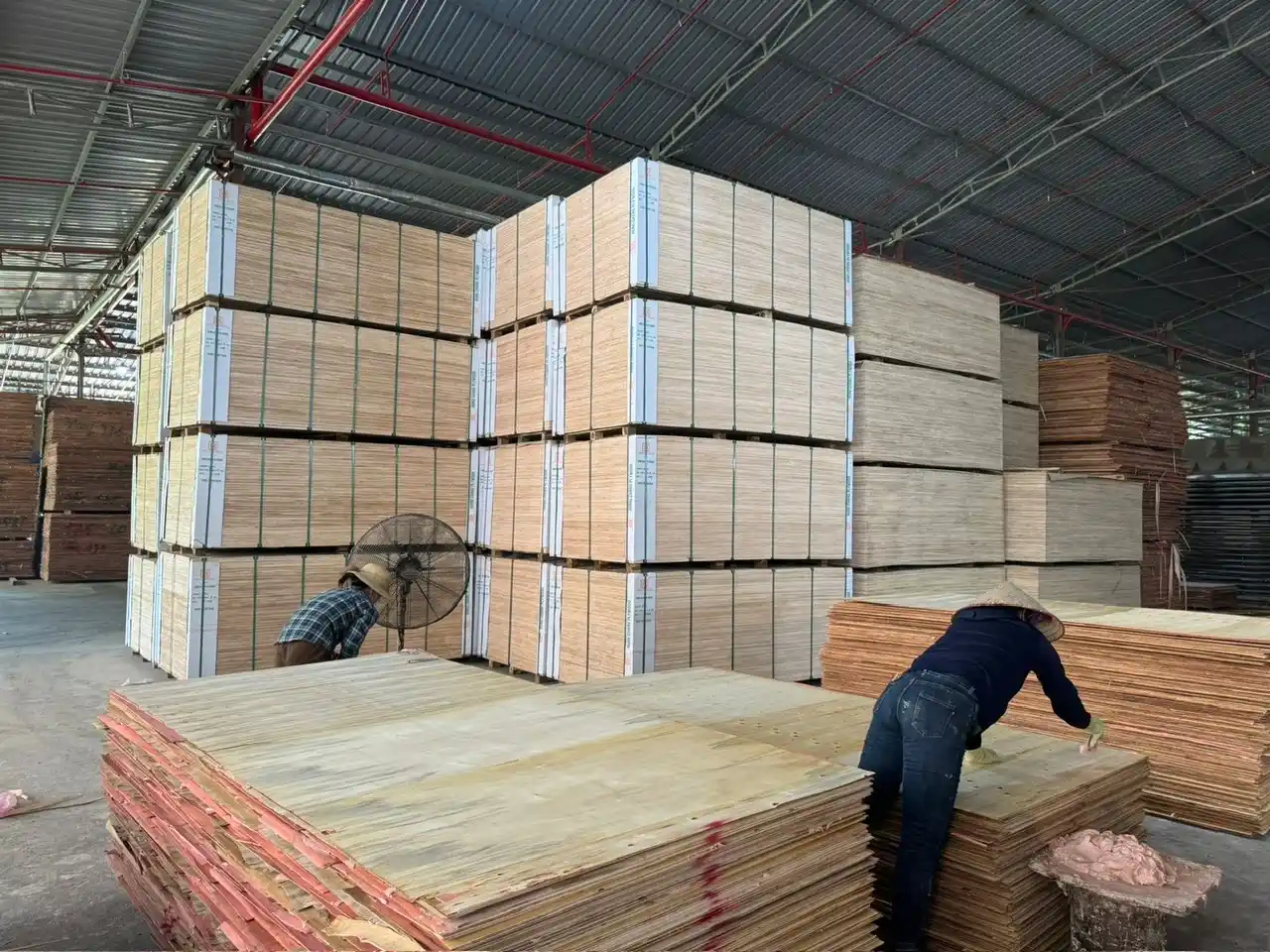
HCPLY manages a dedicated premium furniture production facility in Phu Tho Province, Northern Vietnam, purpose-built for E0 and CARB P2 grades. This facility serves EU furniture manufacturers, US kitchen cabinet importers, and Korean retailers — all of whom specify ultra-low emission plywood.
What HCPLY provides for E0 and CARB P2 orders:
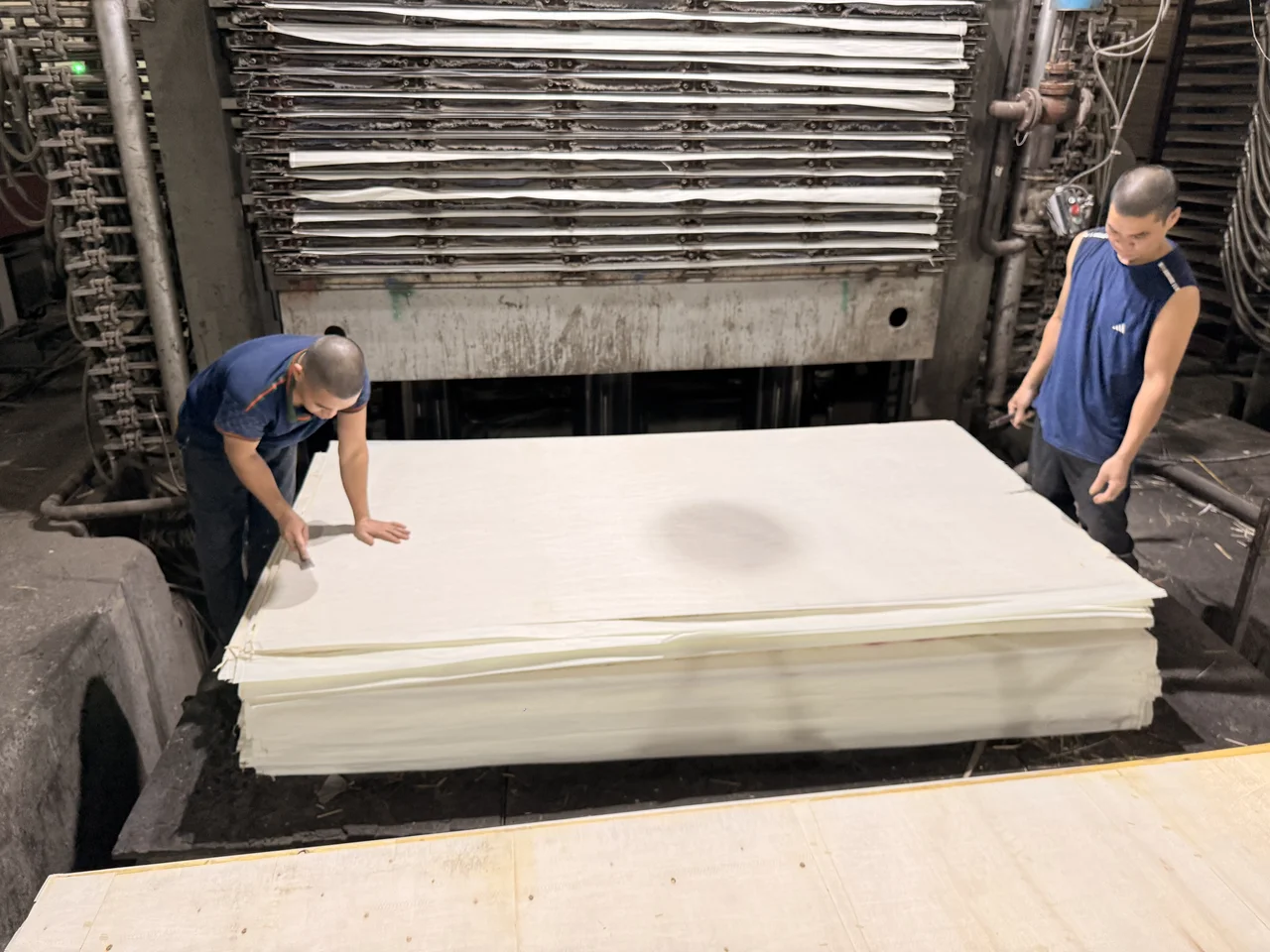
- Production using low-emission MUF adhesive (melamine-urea-formaldehyde, ≤0.05 ppm formulation)
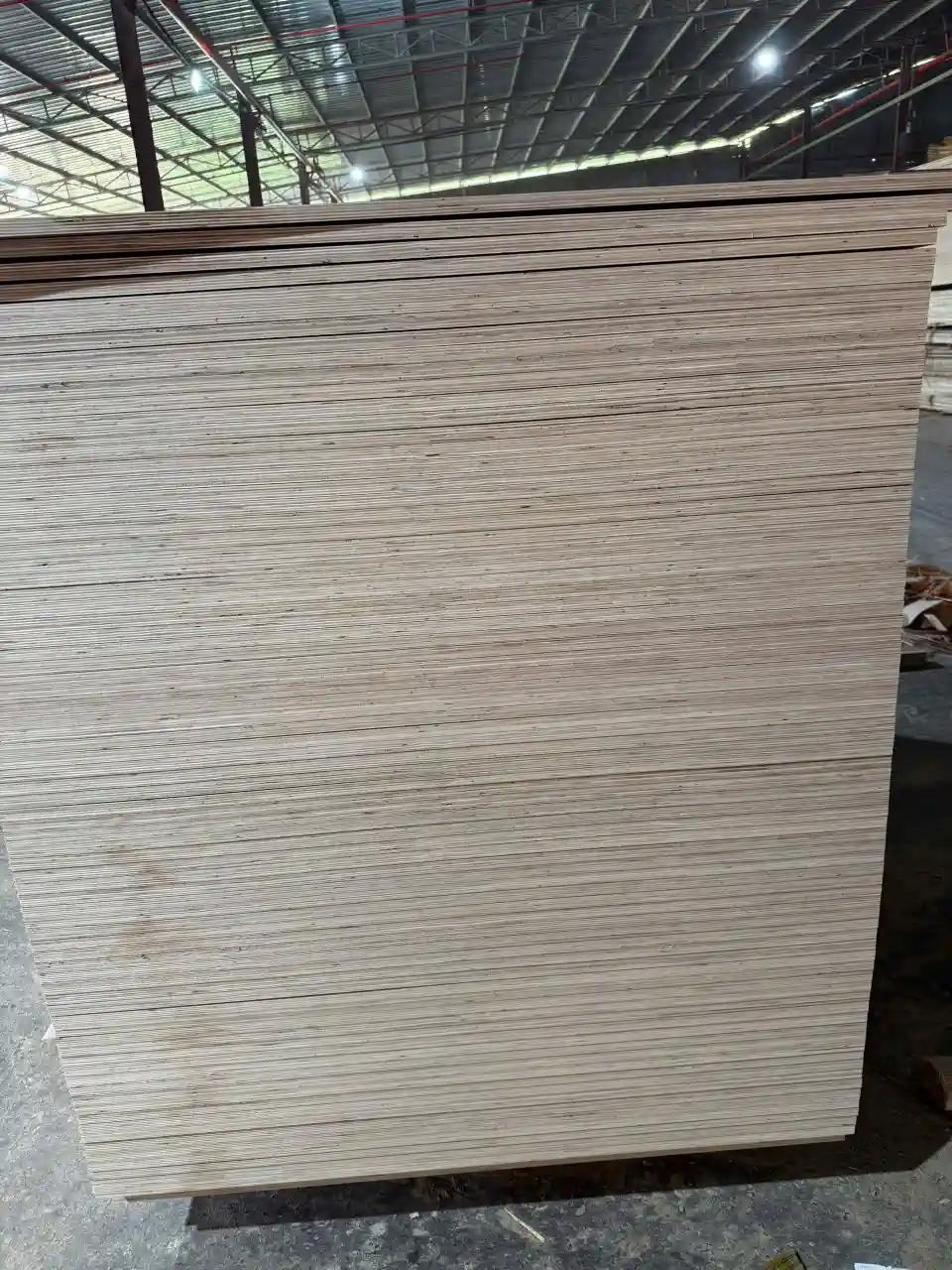
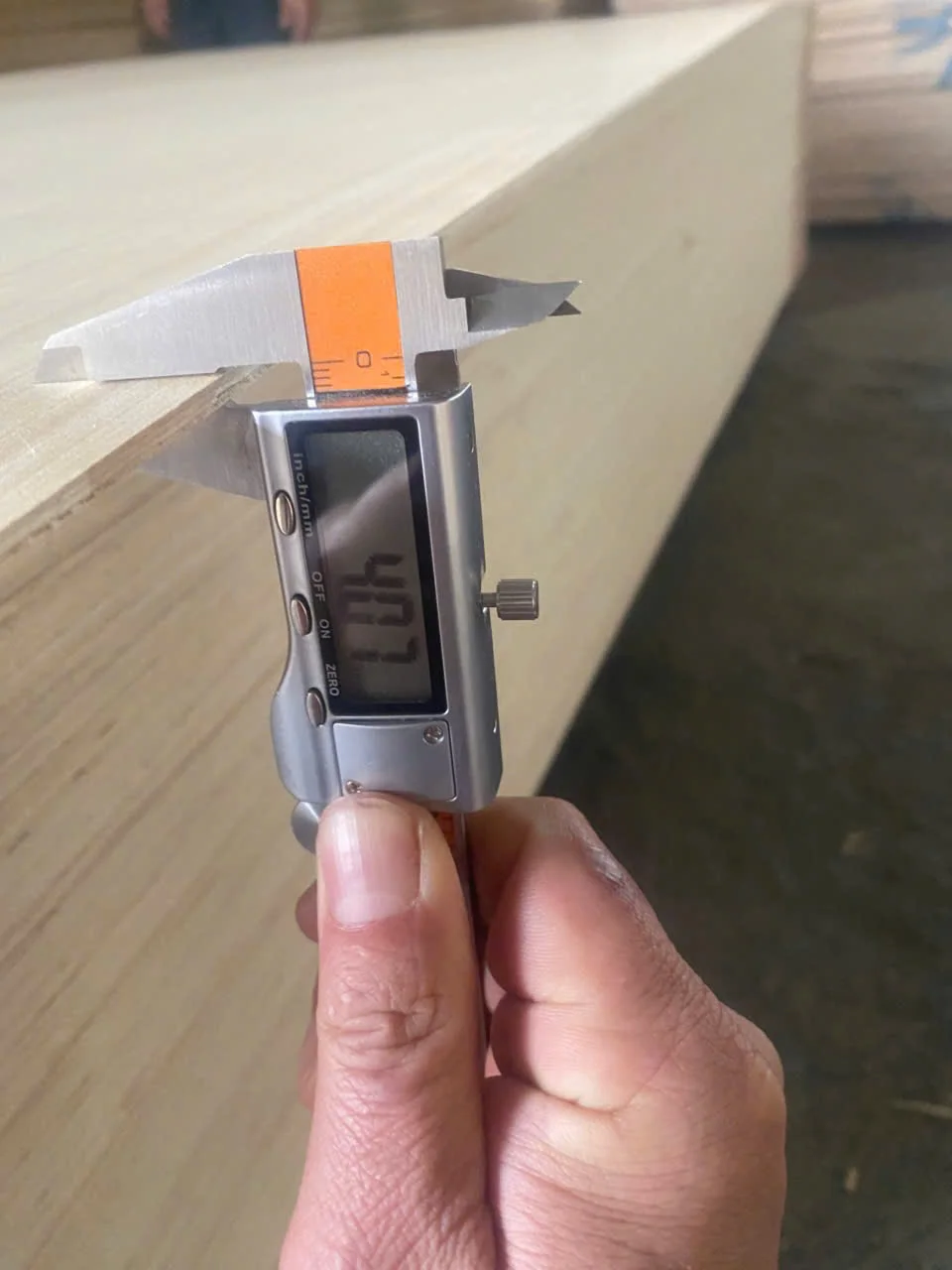
- Styrax or eucalyptus core construction, full stitched, calibrated thickness ±0.3mm
- CARB P2 quarterly audit with approved TPC (certificate available on request)
- E0 test reports (EN 717-1) for EU-bound orders
- TSCA Title VI compliance statement on invoice for all US-bound shipments
- Panel-edge labeling with TPC name and certificate number
“For US buyers, we issue the CARB label and TPC certificate as standard documentation. For EU buyers, we include the E0 test report automatically. If you need both for a dual-market sourcing program, we handle it as a single production order — no extra lead time.” — Lucy, International Sales Manager, HCPLY
Products available with E0 and CARB P2 certification include birch plywood, okoume plywood, EV plywood, pine, poplar, and eucalyptus face plywood with styrax or eucalyptus core. Commercial-grade and packing-grade panels are E1/E2 — CARB P2 and E0 are not standard for these segments.
For buyers also importing construction plywood, film-faced phenolic plywood is inherently low-emission due to phenolic resin chemistry — formaldehyde levels typically test well below both E0 and CARB P2 thresholds without special formulation.
📊 Choosing the Right Certification for Your Market
| Destination | Minimum required | Specify to supplier |
|---|---|---|
| United States (all states) | CARB P2 / TSCA Title VI | CARB P2 + TPC certificate + panel label |
| European Union | E1 (minimum), E0 preferred | E0 test report (EN 717-1) |
| Japan | F4-star (≈ E0) | F4-star mark (JAS) — separate certification from E0 |
| South Korea | E0 or tighter | E0 test report |
| India | No standard class (buyer-driven) | E1 acceptable for most Indian buyers |
| Australia | E1 (AS/NZS 1859) | E0 for indoor furniture |
| Dual US + EU | Both | CARB P2 TPC certificate + E0 test report |
Understanding these requirements before you finalize your purchase order avoids costly re-certification after shipment. The plywood certifications and export documentation guide covers FSC, CE, EUDR, and CARB in a single reference for buyers who need to manage multiple compliance tracks simultaneously.
For buyers evaluating Vietnam as a sourcing origin against other markets, the plywood glue types and emission standards guide explains how glue chemistry — melamine vs phenolic — affects which emission standard a panel can realistically achieve.
✅ Conclusion
E0 and CARB P2 are not interchangeable. They share a similar numeric emission limit for hardwood plywood (≤0.05 ppm), but differ on test method, certifier authorization, audit frequency, panel labeling, and documentation chain. US Customs and retail compliance teams check for TSCA Title VI documentation — an E0 certificate from a European lab will not satisfy that requirement.
The practical solution for buyers sourcing to multiple markets is to specify CARB P2 for US-bound orders (which can be backed by a parallel E0 test report for EU orders at minimal additional cost) and work with a supplier whose CARB TPC registration is current and verifiable.
HCPLY maintains active CARB P2 certification on its premium furniture segment and can provide complete documentation — TPC certificate, panel labeling, TSCA compliance statement, and E0 test report — for every order.
Request CARB P2 certified plywood samples from HCPLY — include your destination market, product specification, and target monthly volume. We will send a compliant quotation with certification documentation within 24 hours.