

Furniture factories in Germany, Korea, and Japan specify double sanded plywood (S2S) or single sanded plywood (S1S) on every purchase order. Most importers from India and the Middle East do not — and pay for it when cabinet boxes arrive with rough backs that reject lacquer adhesion or cause stacking misalignment on CNC lines.
Double sanded plywood vs single sanded plywood is a 3–5 USD per CBM decision. Getting it wrong costs more than that in production downtime. This guide explains exactly when each specification applies, what it costs, and how to write it into your purchase order correctly.
📊 TL;DR: S2S vs S1S at a Glance
Key Insight: S2S (both faces sanded) is the standard for furniture, cabinets, and lamination substrate. S1S (one face sanded) is a cost-saving option when the back face is permanently hidden. Film-faced and packing plywood are unsanded on both sides.
| Specification | Both Faces Sanded | One Face Sanded | Neither Sanded |
|---|---|---|---|
| Code | S2S | S1S | Unsanded |
| Typical applications | Furniture, cabinet boxes, open shelving, drawer sides | Shelving (back to wall), furniture backs, substrate panels | Film-faced, anti-slip, packing, construction |
| Thickness calibration | Both faces ±0.3mm | Show face ±0.3mm, back face rougher | No calibration |
| Cost vs unsanded | +USD 6–10/CBM | +USD 3–5/CBM | Baseline |
| Face species | Birch, okoume, EV, gurjan, pine, poplar | Same species, specify explicitly | Bintangor C/D, film, anti-slip film |
| HCPLY standard | Yes — furniture segment default | By buyer request | Yes — packing segment default |
🔧 What “Sanded” Actually Means at Factory Level
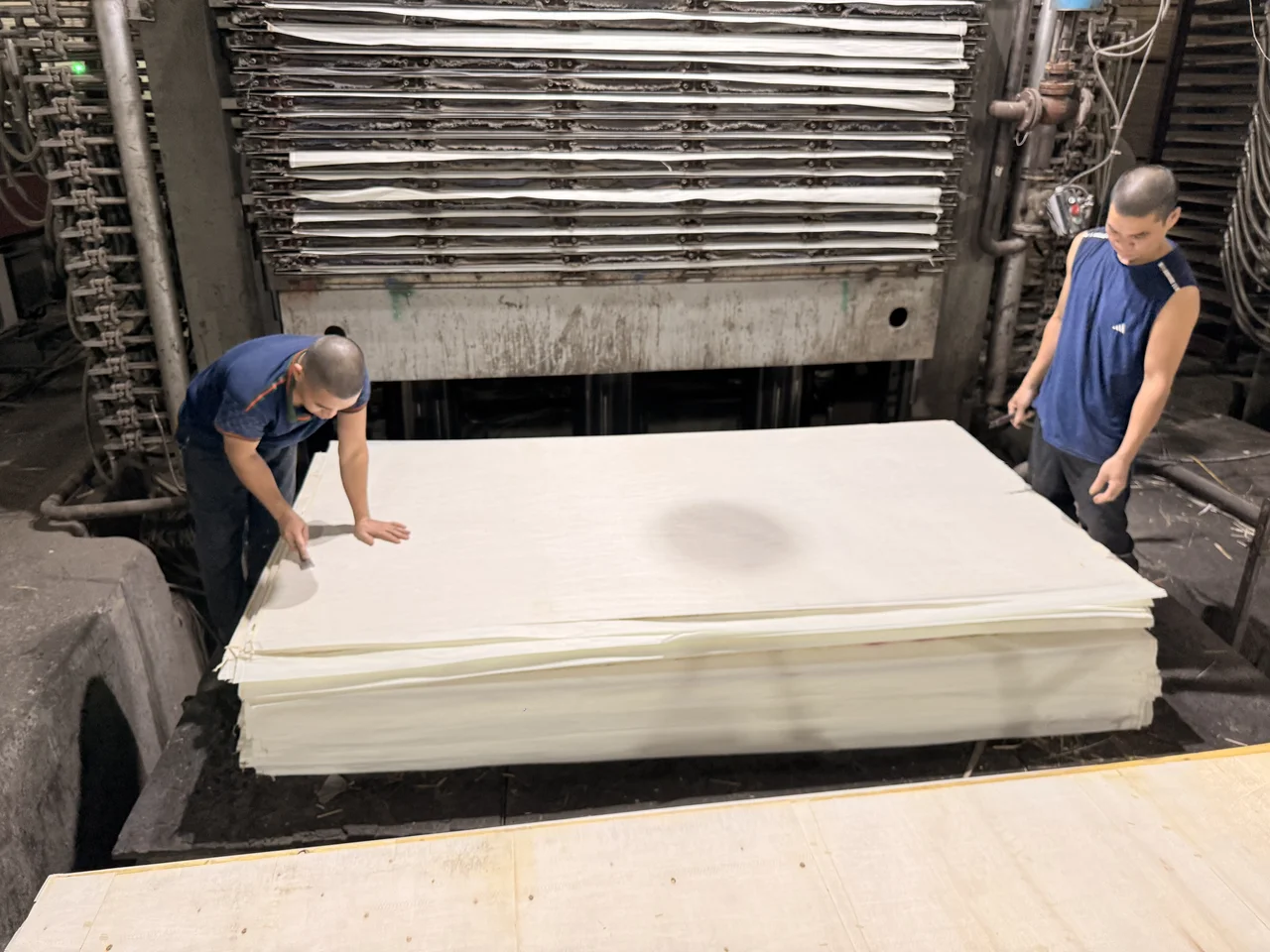
Sanding plywood is not the same as hand-sanding a board on a job site. At production scale, factories run pressed panels through wide-belt sanders — industrial machines with multiple calibration belts operating at high feed speeds.
The process does two things. First, it calibrates the panel to thickness. A freshly hot-pressed panel can vary ±0.5–0.8mm across its face due to press plate deflection and uneven glue spread. Wide-belt sanding brings that down to ±0.3mm. Second, it creates surface smoothness sufficient for paint, lacquer, or lamination bonding.
At HCPLY’s furniture-segment facility, the sanding line runs panels through two stages. The first stage uses coarser abrasive (80–100 grit) for thickness calibration. The second uses finer abrasive (120–150 grit) for surface finish. For S2S panels, both stages run on both faces. For S1S, only the designated show face goes through the full sequence.
“Buyers who specify sanded without stating S1S or S2S create ambiguity that factories resolve by defaulting to their standard practice — which may not match what the buyer assumed,” notes Lucy, International Sales Manager at HCPLY. “Always write S2S explicitly if you need both faces calibrated. This avoids disputes at destination.”
📐 Single Sanded (S1S): When One Face Is Enough
Single sanded plywood (S1S) has the show face fully sanded and calibrated. The back face is either unsanded or lightly surfaced — enough to remove loose fibers but not calibrated to the same tolerance as the front.
The practical case for S1S is straightforward. If the back of a panel will never be seen and never needs to bond to another surface, sanding it is wasted production cost.
Common S1S applications from our export orders:
- Wall cladding panels — face is visible, back is mounted against framing
- Furniture backs — pressed into rabbets, never exposed
- Floor underlayment substrate — face takes the floor covering, subfloor side is rough
- Shelving against walls — top face is the working surface, back faces the wall
The cost saving on single sanded plywood versus double sanded plywood runs approximately USD 3–5 per CBM depending on panel thickness. For a 40HC container of 18mm birch plywood with around 47 CBM, that is USD 140–235 per container. For buyers purchasing 5–10 containers monthly, S1S on appropriate applications is a meaningful operational decision.
The risk: if your factory later needs both faces — for example, if a furniture design changes to use the panel in an open-shelf configuration — you cannot sand one face in the field and achieve factory-calibrated tolerance. The specification decision should be made before production.
📦 Double Sanded (S2S): Standard for Most Furniture Applications
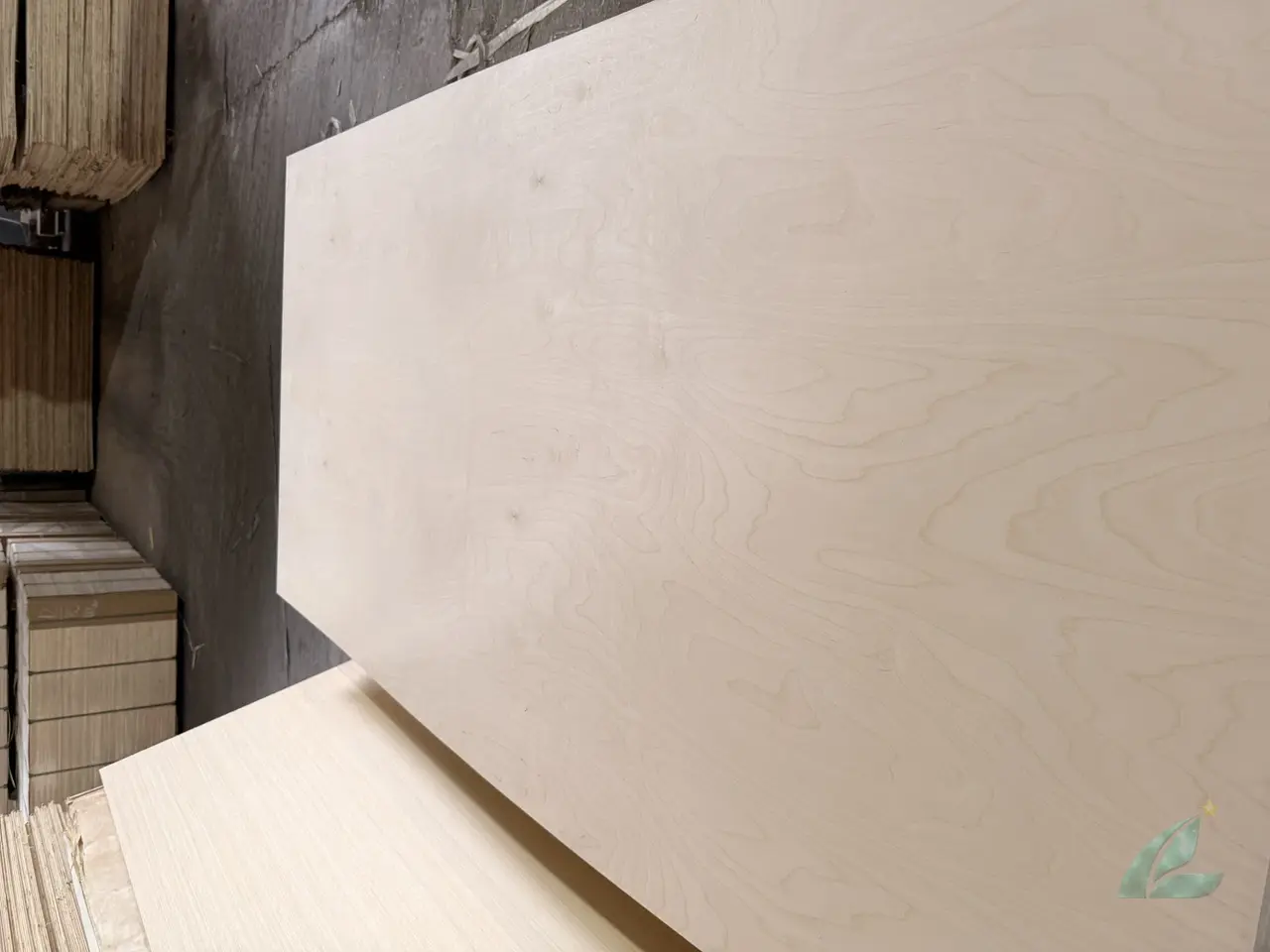
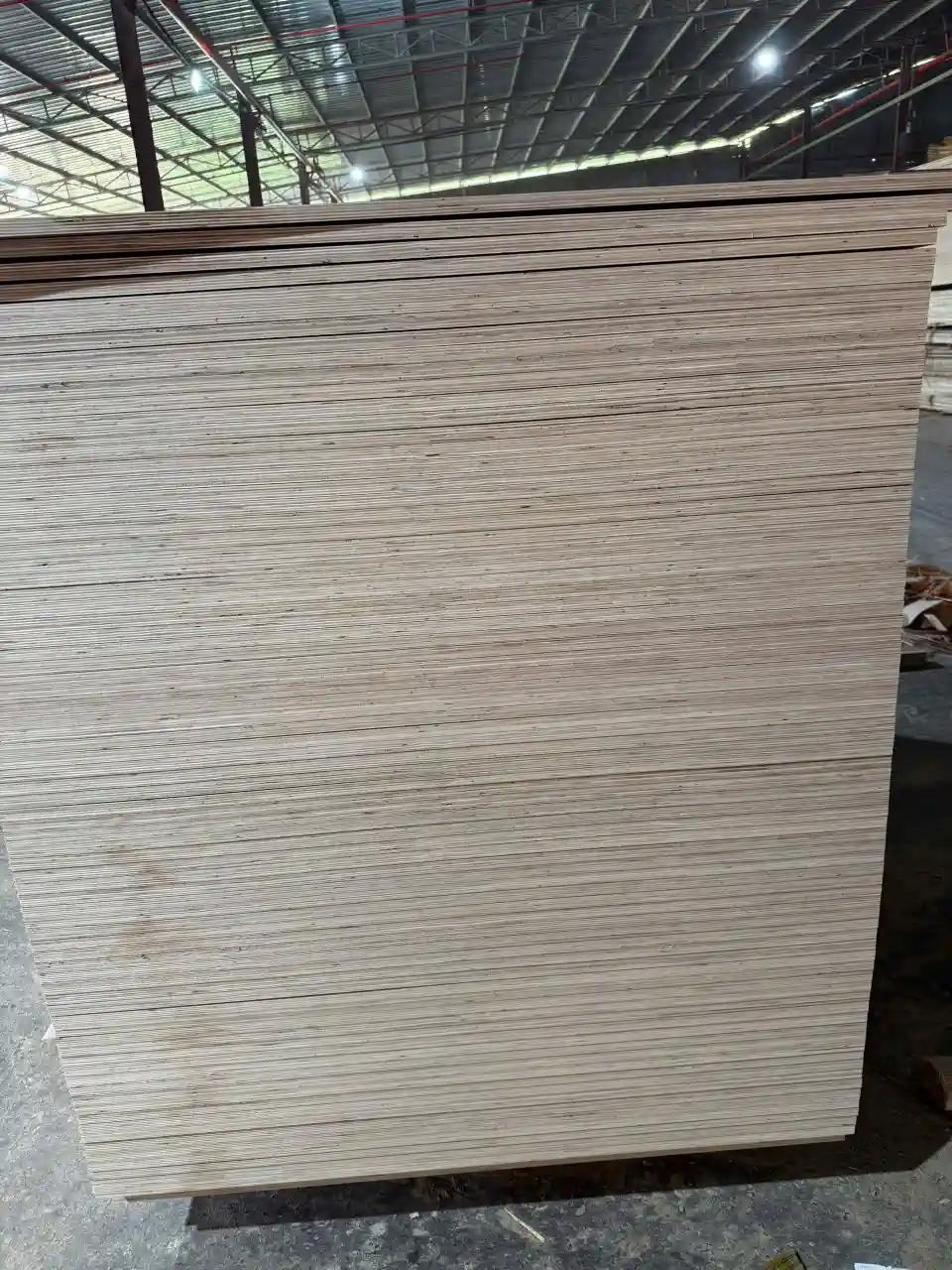
Double sanded plywood (S2S) is the default specification for furniture-grade panels leaving HCPLY’s furniture-segment production lines. Both the face and back are sanded to identical tolerance.
Why does furniture need S2S? Three reasons drive this specification:
Reason 1: CNC stacking accuracy. Cabinet factories process plywood in batches on CNC cutting machines. Panels are stacked on the feed table. If back faces vary by 0.3–0.5mm in roughness, the stack height varies, and the CNC Z-axis reference shifts. Cut depth becomes inconsistent. For precision cabinet components — door frames, drawer boxes — this variation causes visible gaps at assembly. S2S calibration eliminates this variable.
Reason 2: Double-sided lamination. Modern furniture often uses HPL, melamine paper, or PVC film bonded to both panel faces. The lamination adhesive requires a smooth, calibrated surface for even bond strength. An unsanded back face creates adhesion failures — bubbles, peeling edges — that show up at destination, not at loading.
Reason 3: Drawer box construction. Drawer sides and bottoms are seen from inside the drawer. Cabinet inspectors in Germany and Korea check drawer interiors. Rough unsanded backs in a “furniture grade” order are a non-conformance finding. S2S prevents this.
The cost difference between S2S and unsanded plywood is USD 6–10 per CBM (APA The Engineered Wood Association production cost benchmarks, 2024). This is not optional for furniture-segment buyers — it is the cost of producing a product that performs in furniture manufacturing environments.
Key Insight: Wide-belt sanding removes 0.05–0.1mm per face pass. For a 12mm panel with 0.3mm birch face veneer, two calibration passes (S2S) still leave 0.1–0.2mm of veneer intact — well above the minimum for paint adhesion. (HCPLY production data, 2026)
🏭 How Vietnamese Factories Handle S1S vs S2S Production
At HCPLY, sanding specification is locked at the production planning stage, not retrofitted after pressing. The production planner sets the sanding sequence for each batch based on the purchase order specification.
For S2S orders, panels pass through the sanding machine twice — once face-up, once face-down. For S1S, a single pass handles the show face. This sounds simple, but in practice it requires consistent belt pressure settings and belt change schedules to maintain quality across a production run.
The Vietnam plywood manufacturing process involves hot pressing at 130–160°C before sanding. Moisture content in the panel immediately after pressing is elevated. Factories that rush panels to the sander before proper cooling and conditioning produce panels that sand unevenly — the surface compresses under belt pressure rather than being cut cleanly. HCPLY conditions panels for 24 hours before sanding, which is why calibration tolerance stays consistently at ±0.3mm.
One detail that surprises buyers: sanding sequence affects final panel weight. S2S removes slightly more wood than S1S. For weight-sensitive packing calculations on a 40HC container, this difference is negligible — typically less than 0.5% total weight — but it is worth noting for buyers calculating weight per sheet precisely.
For context on how thickness and weight interact with container loading, see plywood weight calculation per sheet and the plywood thickness tolerance guide.
📋 Which Face Species Are Available in S1S vs S2S?
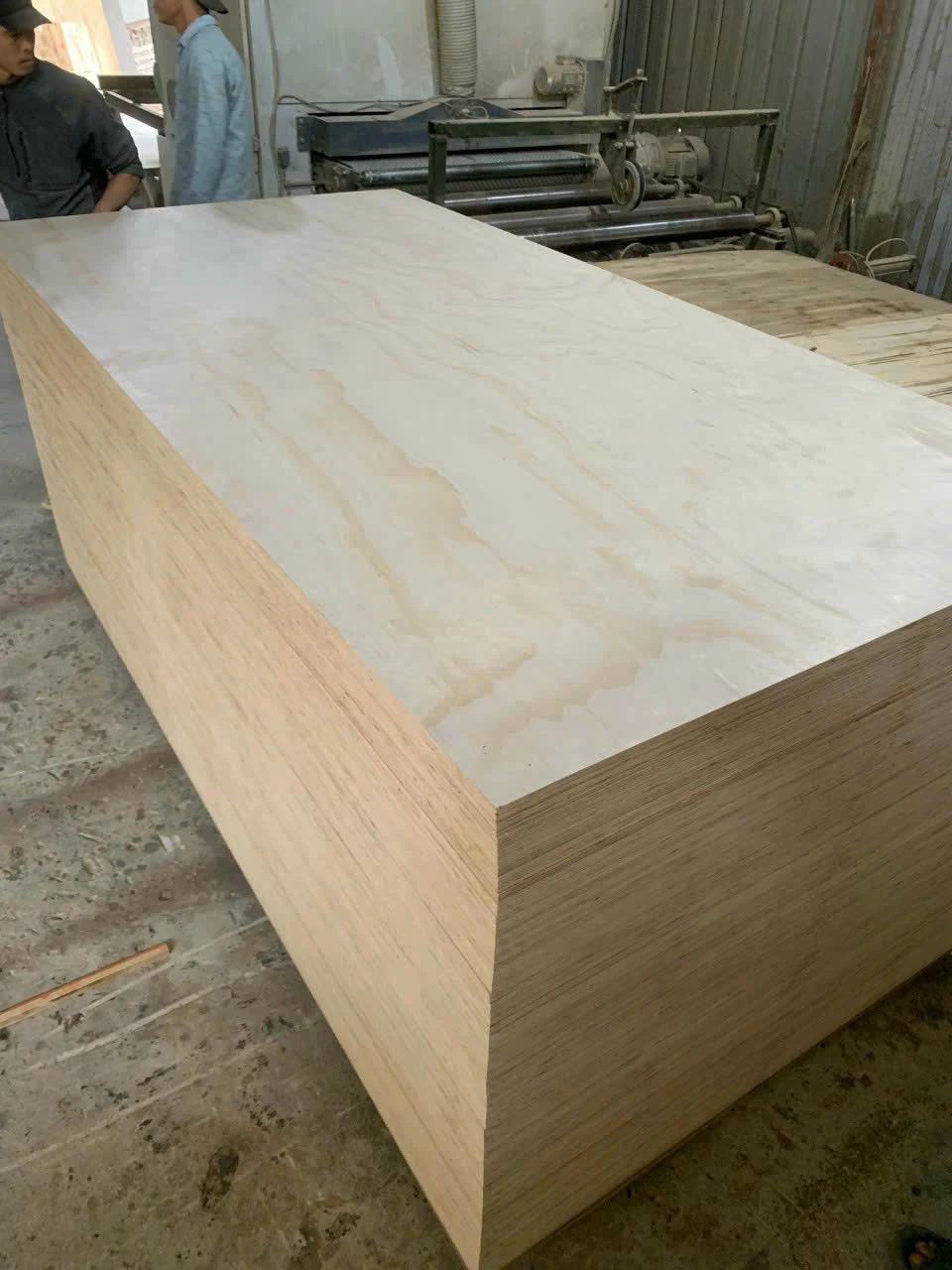
Not all face veneer types are compatible with both sanding specifications. The table below reflects HCPLY’s production standards as of 2026:
| Face Species | S2S Available | S1S Available | Notes |
|---|---|---|---|
| Birch (D/E/F grade) | ✅ Standard | ✅ By request | Birch veneer 0.2–0.4mm — sanding requires controlled pressure |
| Okoume | ✅ Standard | ✅ By request | Soft veneer — over-sanding risk if belts worn |
| EV (Engineered Veneer) | ✅ Standard | ✅ By request | Consistent grain — sands evenly |
| Gurjan | ✅ Standard | ✅ By request | Hard veneer — less veneer breakthrough risk |
| Pine | ✅ Standard | ✅ By request | Knotty areas require careful pressure control |
| Poplar | ✅ Standard | ✅ By request | Soft white veneer — standard furniture grade |
| Bintangor A | ✅ Standard | ✅ By request | For furniture-grade bintangor only |
| Film-faced | ❌ Not applicable | ❌ Not applicable | Film is bonded to unsanded surface |
| Anti-slip | ❌ Not applicable | ❌ Not applicable | Film bonded to raw surface |
| Packing grade | ❌ Not applicable | ❌ Not applicable | Unsanded is the standard |
For a full comparison of face veneer types and their surface treatment requirements, see the plywood face veneer types complete guide.
The sanded vs unsanded plywood decision guide covers the macro decision — whether your application needs any sanding at all. This article focuses specifically on the S1S vs S2S specification within the sanded category.
💡 How to Write the Sanding Specification in Your Purchase Order
Vague purchase orders produce inconsistent results. Factories default to their standard practice when specifications are unclear. Here is the correct format for sanding specification:
For double sanded (S2S):
Surface finish: S2S (sanded both sides)
Thickness tolerance: ±0.3mm
Face: [species] grade [grade]
Back: [species] grade [grade], sanded
For single sanded (S1S):
Surface finish: S1S (sanded face only)
Thickness tolerance: face ±0.3mm
Face: [species] grade [grade], sanded
Back: [species] grade [back grade], unsanded/lightly surfaced
Include the face and back grade separately. For birch plywood, a common S2S order reads: “Birch face D/D, S2S, thickness 18mm ±0.3mm, core: styrax, emission E0.” A common S1S order reads: “Birch face D/E, S1S, face sanded, back lightly surfaced, thickness 18mm.”
⚠️ Important: Specifying only “sanded” without S1S or S2S is ambiguous. If you need calibration on both faces — for CNC machining or double-sided lamination — always write S2S explicitly.
For buyers new to specification writing, the plywood quotation guide walks through the full specification checklist before requesting a price.
📊 Cost Breakdown: S2S vs S1S vs Unsanded
Production cost benchmarks for sanding, based on HCPLY production data (2026) and industry reference from APA — The Engineered Wood Association (2024):
| Sanding specification | Additional cost vs unsanded | Typical application | Who pays |
|---|---|---|---|
| Unsanded | Baseline | Packing, film-faced, construction | Packing segment buyers |
| S1S | +USD 3–5 per CBM | Wall cladding, furniture backs, shelving | Furniture buyers (cost-optimized) |
| S2S | +USD 6–10 per CBM | Cabinet boxes, drawer sides, open furniture | Standard furniture buyers |
| S2S + calibrated tight (±0.2mm) | +USD 10–14 per CBM | Japanese market, CNC-intensive factories | Premium furniture exporters |
For a 40HC container of 18mm furniture plywood (~47 CBM on styrax core):
- Moving from unsanded to S1S: approximately USD 140–235 per container
- Moving from unsanded to S2S: approximately USD 280–470 per container
- Moving from S1S to S2S: approximately USD 140–235 per container (the marginal cost of the second face)
Whether that delta is justified depends entirely on your downstream application. For a German kitchen manufacturer running 5mm CNC depth cuts on cabinet components, double sanded plywood is not optional — it is the baseline specification. For an Indian packaging operation, it is an unnecessary cost.
🔗 Related Specifications That Interact With Sanding
Sanding specification does not exist in isolation. Three other specs interact directly with the S1S vs S2S decision:
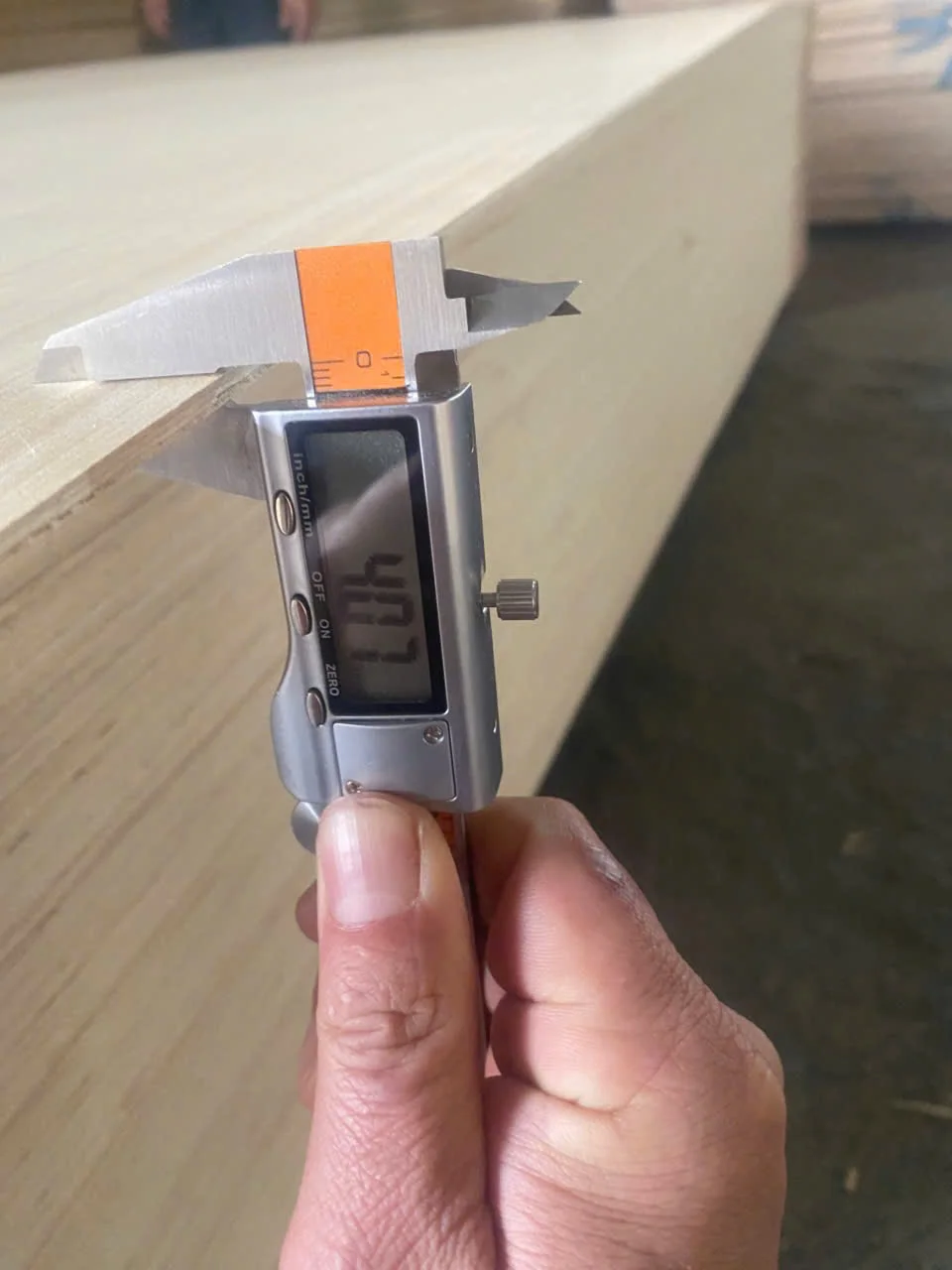
Thickness tolerance. S2S calibration is the primary mechanism for achieving ±0.3mm thickness tolerance. If a buyer specifies ±0.3mm tolerance without specifying S2S, they may receive a panel with one calibrated face and variable thickness on the other side. Thickness tolerance and sanding specification should always be stated together. See plywood thickness tolerance guide.
Core construction. Full-stitched core (khâu full) produces a denser, more dimensionally stable panel before sanding. Loose-laid core can have internal voids that create surface depression during pressing — depressions that are visible after sanding and cannot be removed without sanding through the veneer. For S2S furniture-grade panels, full-stitched or edge-trimmed core is the correct specification. See plywood core construction — stitched vs loose.
Face veneer thickness. Vietnam produces face veneer at 0.2–0.4mm standard thickness. Thinner veneers (0.2mm) are more susceptible to veneer breakthrough during sanding — the risk that the sanding belt removes veneer all the way to the core, creating bare spots. For S2S orders with 0.2mm face veneer, buyers should ask about the factory’s stock removal setting per pass. HCPLY limits single-pass removal to 0.05mm to prevent breakthrough on thin veneers. See plywood face veneer thickness guide.
✅ Conclusion: Specify Clearly, Pay Only for What You Need
Double sanded plywood (S2S) is the correct specification for furniture and cabinet applications where both faces are visible, laminated, or machined on CNC equipment. Single sanded plywood (S1S) suits applications where only one face requires calibration — and specifying S1S explicitly saves USD 140–235 per container without sacrificing quality on the visible face.
The error most importers make is writing “sanded” without specifying S1S or S2S. This leaves the decision to the factory’s default, which may not match your production requirements. Write the sanding specification explicitly in every purchase order.
For furniture-grade plywood from Vietnam at factory-direct pricing, HCPLY’s three production facilities handle both S1S and S2S specifications across birch, okoume, EV, gurjan, pine, and poplar face veneers with styrax, acacia, and eucalyptus cores.
Request S2S or S1S Plywood Samples — our team specifies the exact sanding standard with each quote. No commitment required.