

Concrete formwork plywood fails at the specification stage, not the job site. A contractor who orders 18mm phenolic-film panels without checking film weight, glue type, or core density will often receive a product that survives four pours instead of fifteen — and the cost difference per m² between 4 reuses and 15 reuses is significant.
This complete guide covers every specification variable in concrete formwork plywood: film weight, phenolic vs melamine glue, core species selection, thickness by application, and realistic reuse expectations. All formwork plywood specifications and data are drawn from HCPLY production records and verified against industry standards as of 2026.
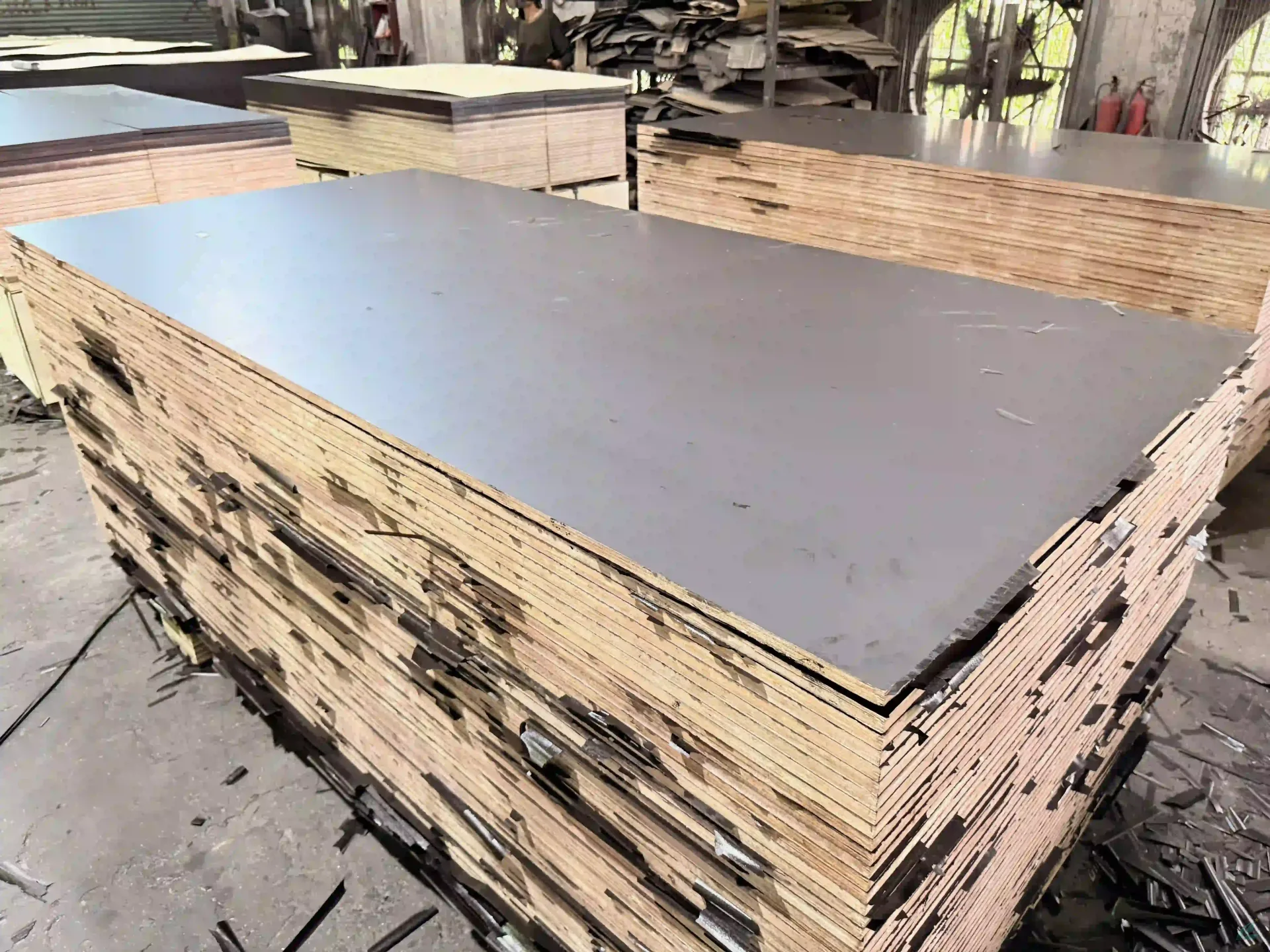
📋 What Is Concrete Formwork Plywood?
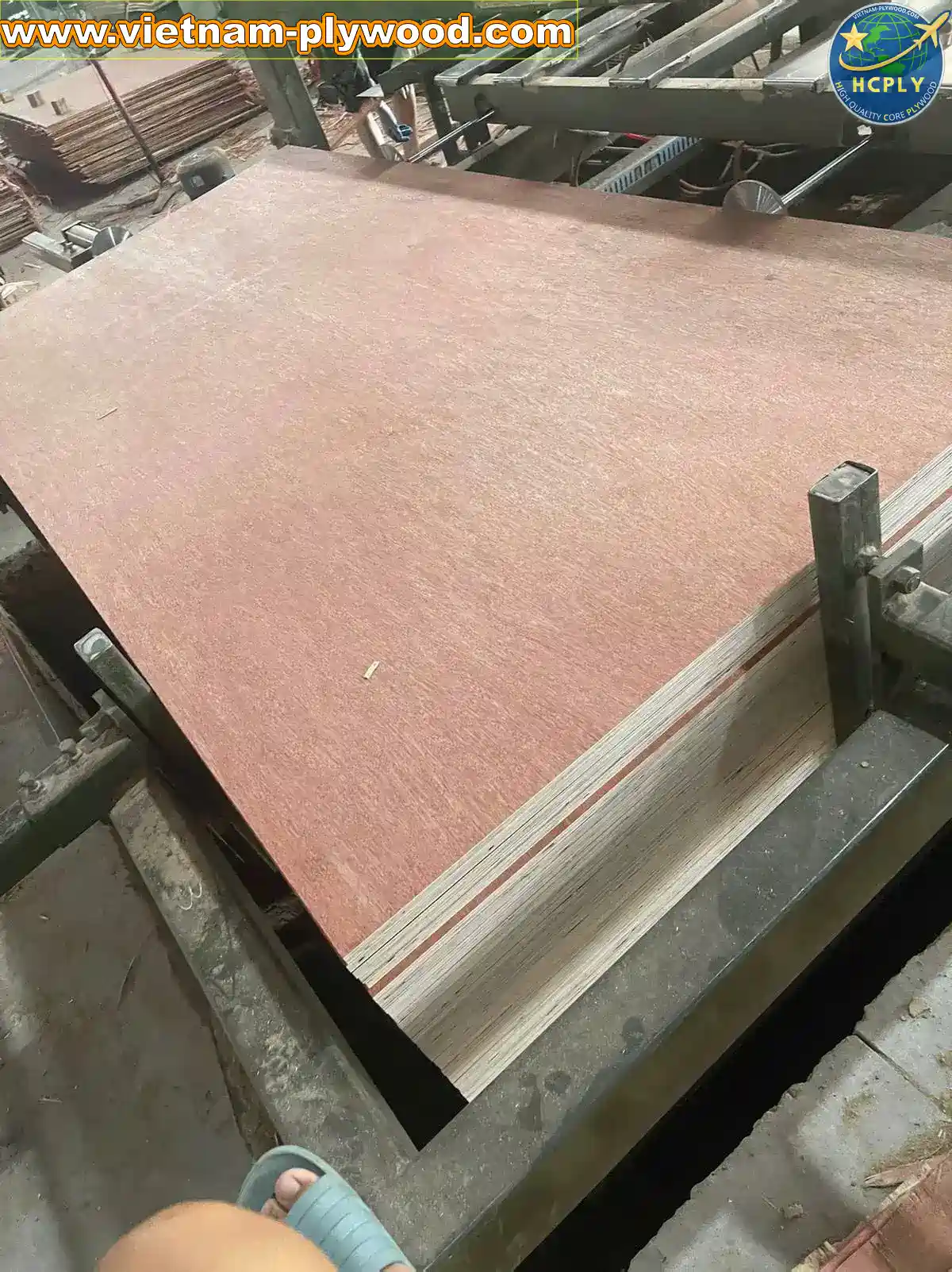
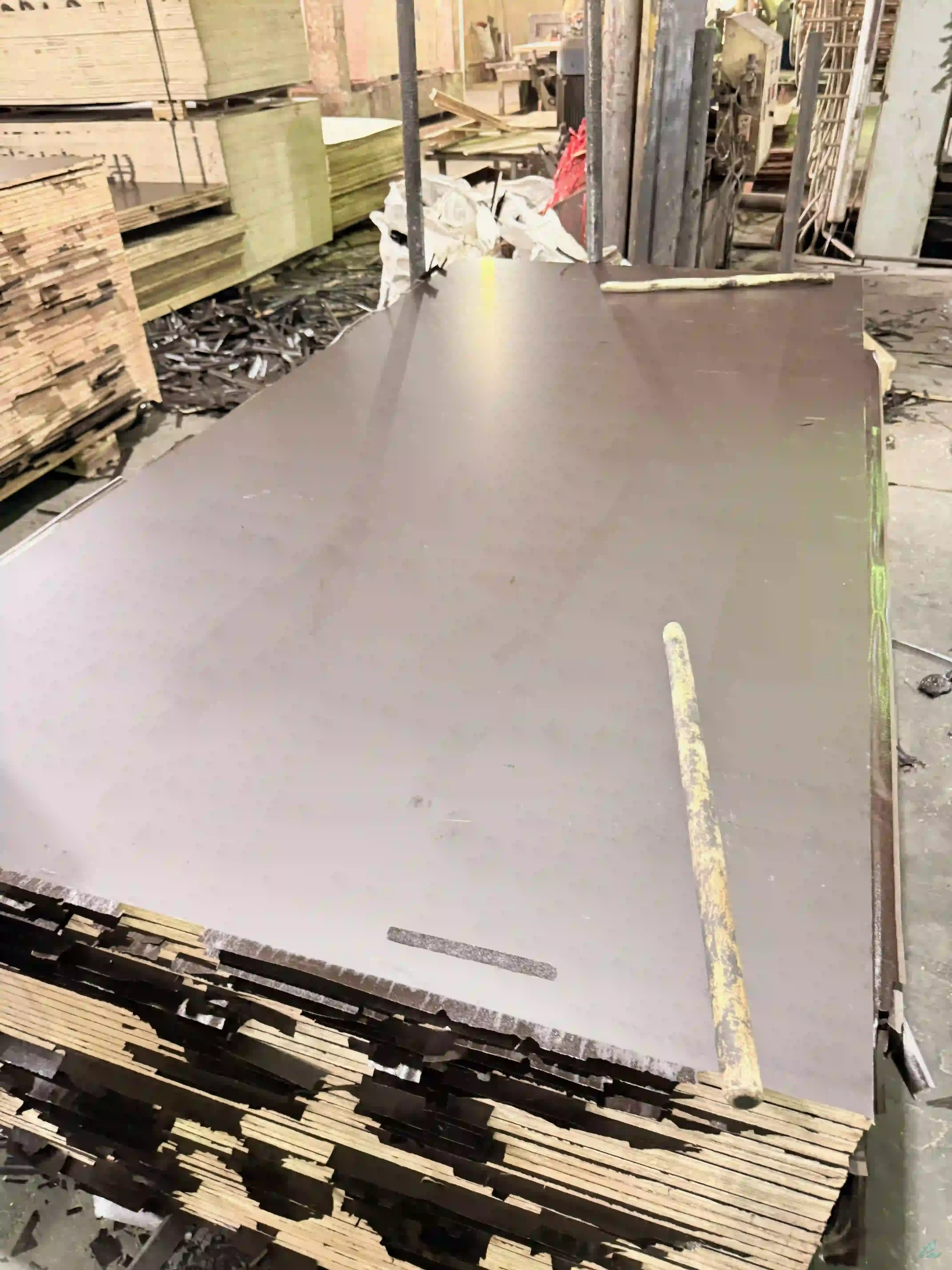
Concrete formwork plywood is a structural panel coated on both faces with phenolic resin film, designed to withstand repeated contact with fresh concrete, release agents, moisture, and mechanical stress during stripping. Unlike standard construction plywood, concrete formwork plywood must resist alkali attack from cement chemistry, water absorption at edges and faces, and the dimensional changes caused by wetting and drying cycles.
The two key distinctions from general-purpose construction plywood:
- Film-faced surface — phenolic overlay (not melamine) that seals the veneer face against water and concrete paste penetration
- WBP glue throughout — phenolic adhesive that passes 72-hour boiling without delamination, versus 12-hour for melamine (MR) glue
A panel that meets both criteria is a genuine formwork-grade product. A panel with phenolic film but melamine core glue, or vice versa, is a compromise that reduces both reuse count and structural reliability.
🔧 Film Specification: The Most Critical Variable
Film weight is the single specification buyers most often overlook. It directly determines how many concrete pours the surface will survive before absorption, staining, and bond failure make the panel unusable.
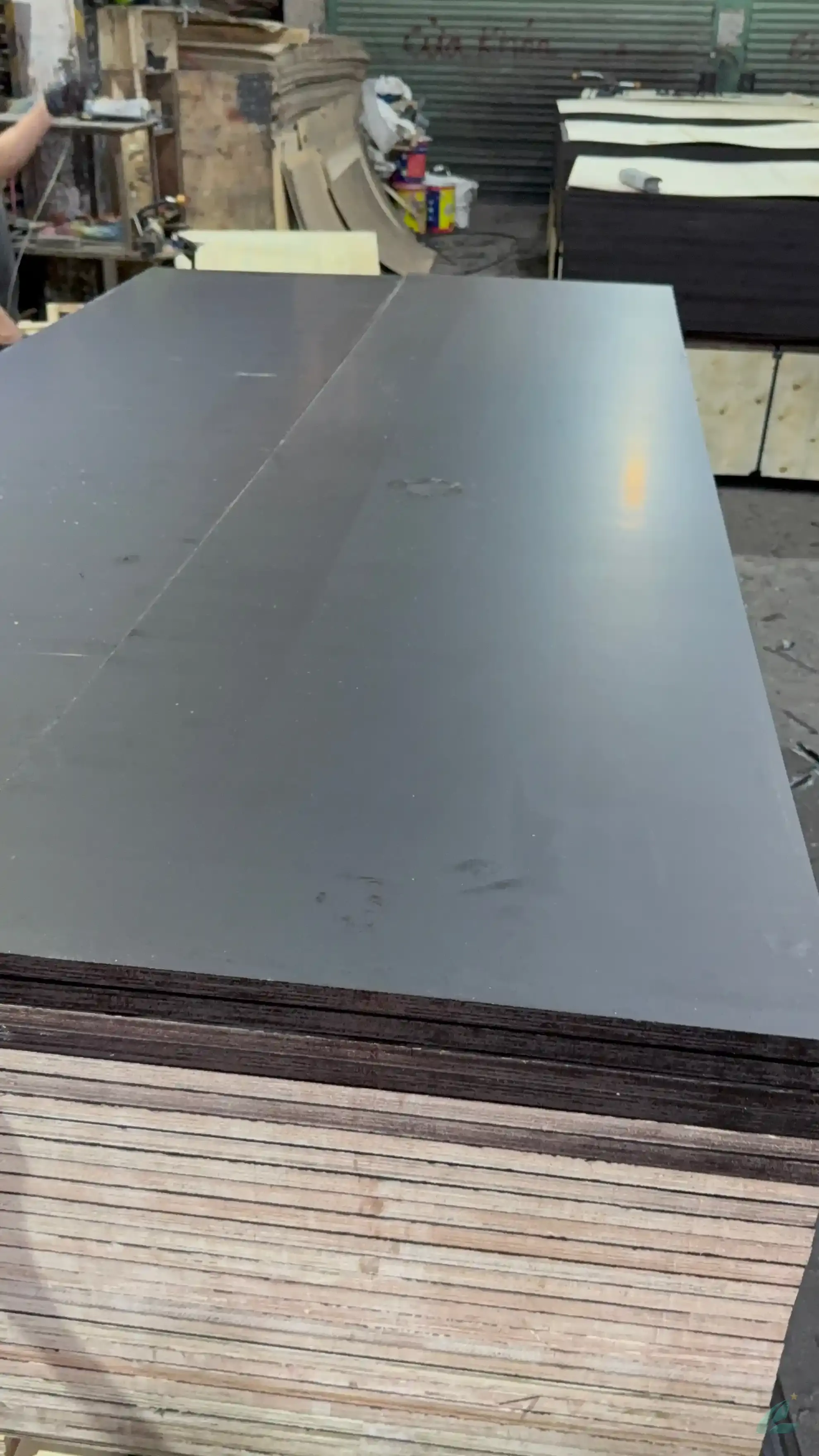
Film Weight Tiers
| Film Weight | Grade | Expected Reuse | Market |
|---|---|---|---|
| 120–130 gsm | Budget | 4–8 pours | Southeast Asia, Africa |
| 135–150 gsm | Standard | 8–12 pours | Middle East, South Asia |
| 180–220 gsm | Premium | 15–20 pours | Korea, Europe, Australia |
HCPLY’s premium-grade formwork panels use AICA film at minimum 220gsm per face. AICA is a Japanese-standard phenolic overlay with consistent resin penetration depth, producing a surface that resists alkali micro-attack from Portland cement. This is the specification target for buyers who need 15+ reuse cycles on organized construction sites.
⚠️ Important: Film color (black or brown) has no bearing on quality. Black phenolic film and brown phenolic film perform identically — the color difference comes from resin additives, not film weight or density. Never accept color as a proxy for grade.
Film Type: Phenolic vs Melamine
Phenolic film is produced by impregnating kraft paper with phenol-formaldehyde resin. Once cured under heat and pressure, it forms a thermoset surface that does not re-soften in water or concrete chemistry. This is the correct specification for formwork.
Melamine film uses urea-melamine resin, which is thermoplastic above ~80°C and water-soluble at the molecular level. Under repeated wetting from fresh concrete and release agents, melamine film absorbs moisture progressively, eventually lifting from the veneer face. Use melamine film-faced panels only for dry indoor applications, not concrete contact.
“The film specification we recommend for any project running more than eight pours is 220gsm phenolic with AICA overlay. Below that, buyers are optimizing for purchase price rather than total cost-per-pour — and the math rarely works out.” — Lucy, International Sales Manager, HCPLY
⚙️ Glue Type: WBP vs MR — Non-Negotiable for Formwork
Concrete formwork plywood must use phenolic WBP (Weather and Boil Proof) adhesive throughout all core layers. This is not a preference — it is a structural requirement.
WBP glue properties:
- Passes 72-hour boiling test without delamination (EN 314-2 Class 3 / BS 1203 BF, WBP standard)
- Phenol-formaldehyde resin cured under 160°C+ press temperature
- Moisture-resistant across temperature cycling from -20°C to +60°C
- No softening at construction-site temperatures during summer
MR (Melamine) glue limitations for formwork:
- Passes only 12-hour boiling test
- Adequate for indoor furniture and cabinets where moisture exposure is limited
- Will delaminate under prolonged water contact on construction sites where concrete is poured and cured over 24–48 hours while forms remain in place
Some budget formwork panels use melamine glue with a phenolic film face — a common substitution that is difficult to detect visually. The core layers remain MR-bonded, which creates delamination risk at the veneer-to-core interface after repeated moisture cycling. Always request a cross-section cut and factory test report confirming WBP throughout.
View HCPLY Film-Faced Plywood with WBP Certification — factory test reports available on request.
📐 Core Species Selection for Formwork
Core species determines density, strength, and weight — three variables that affect formwork performance in different ways.
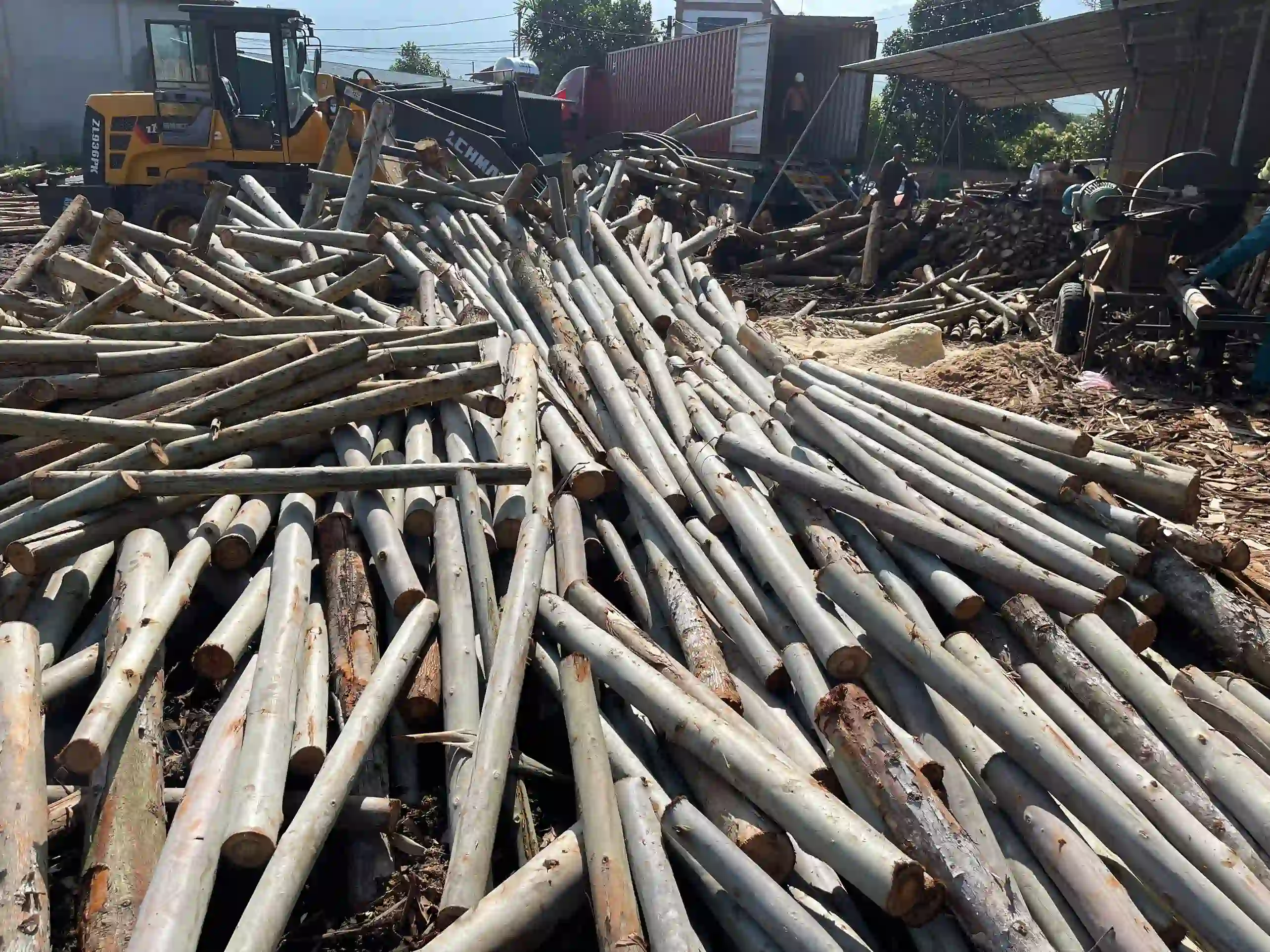
Core Options at HCPLY (Northern Vietnam)
| Core | Density (kg/m³) | Strength | Weight per Sheet (18mm, 1220×2440mm) | Best For |
|---|---|---|---|---|
| Acacia | ~580 | Good | ~29 kg | Budget formwork, short-term projects |
| Eucalyptus | 650–750 | Highest | ~35–38 kg | Premium formwork, high reuse, high-load applications |
Note: Styrax core (480–500 kg/m³) is used for lightweight furniture panels, not formwork. Its density is too low for repeated concrete loading.
Eucalyptus core is the preferred specification for premium concrete formwork. At 650–750 kg/m³, eucalyptus provides the highest MOR (modulus of rupture) among Vietnamese plantation species, which translates directly to more deflection resistance under wet concrete pressure and longer panel life per stripping cycle (HCPLY production data, 2026).
Acacia core at ~580 kg/m³ is suitable for shorter projects or lower-load applications such as simple slab forms with tight joist spacing. The lower density reduces freight cost and on-site handling weight — relevant for high-rise projects where panels are lifted manually.
Critical rule: Core construction quality matters as much as species. Grade A formwork uses full-stitched or edge-jointed core — no gaps, no overlaps between veneer strips. Loose-laid core with visible voids degrades rapidly under the pressure of fresh concrete. Always specify Grade A core construction when ordering formwork panels.
📦 Thickness by Application
Thickness selection for concrete formwork depends on the structural span between joists or walers, the pour height (and resulting hydrostatic pressure), and the number of nailing cycles expected.
Standard Thickness Guide
| Application | Recommended Thickness | Joist Spacing | Max Pour Height |
|---|---|---|---|
| Slab formwork (light span) | 15mm | 400mm max | Standard residential |
| Wall/Column formwork | 18mm | 600mm max | Up to 3m |
| Heavy slab / infrastructure | 21mm | 600–800mm | High-rise, bridge decks |
| Beam bottom formwork | 18–21mm | Full support | Any height |
18mm is the industry standard for wall and column formwork globally. It balances deflection resistance, weight, and cost for spans up to 600mm between framing members (APA – The Engineered Wood Association formwork design guidelines).
15mm panels are appropriate only where the joist spacing is reduced to 300–400mm — common in residential slab pours where labor cost allows closer framing and material saving is prioritized.
21mm panels are specified for high-rise shear wall formwork, bridge deck forming, and any application where hydrostatic pressure from tall single-pour heights exceeds standard residential parameters.
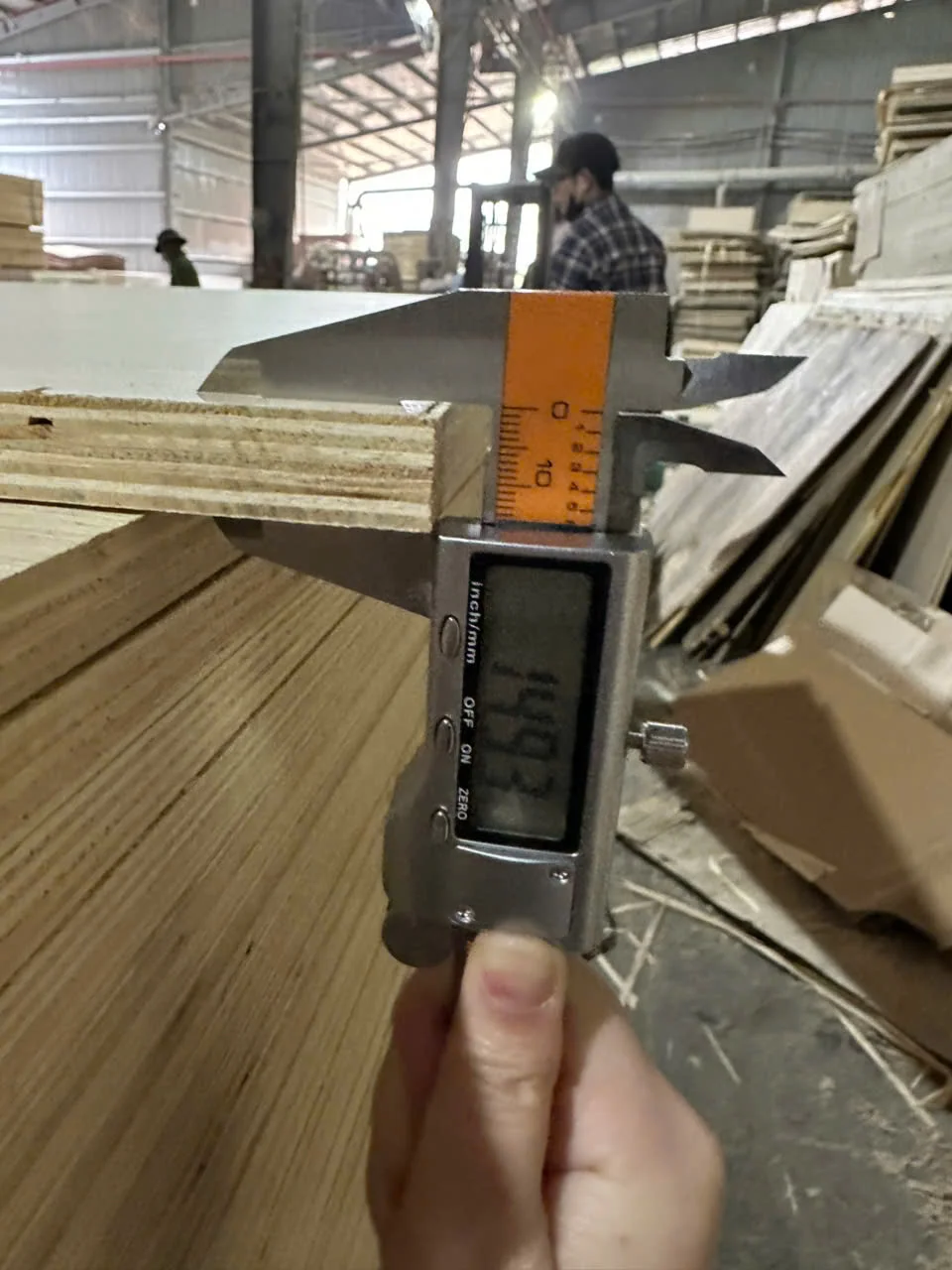
Thickness Tolerance
HCPLY formwork panels are calibrated to ±0.3mm tolerance — the standard for export-grade plywood. Consistent thickness is critical for formwork because uneven panels create steps at joints that telegraph into finished concrete surfaces, requiring additional grinding and patching costs.
🔄 Reuse Count: Realistic Expectations
Reuse count is where most buyer disappointment originates — because advertised “15–20 reuse” specifications require specific site conditions that are rarely met on uncontrolled sites.
Factors That Determine Actual Reuse Count
-
Release agent application Fresh concrete adheres chemically to any surface that allows absorption. Phenolic film resists absorption, but micro-scratches from previous stripping create entry points. Consistent release agent application before every pour is the single largest factor in extending reuse count.
-
Stripping method Lever stripping concentrates force at panel edges, splitting veneer layers at the edge if the phenolic film is not sealed at edges. HCPLY applies phenolic edge sealing on premium grades. Without edge sealing, moisture penetrates the edge during curing and weakens the layup — even with excellent face film.
-
Storage between pours Panels left flat in standing water or direct sun degrade faster. Stack on dunnage, face-to-face, in covered storage.
-
Film weight purchased This is the main factory-side variable. 220gsm AICA film at HCPLY achieves 15–20 reuses with proper site handling. 120–130gsm film at low-cost suppliers achieves 4–8 reuses even under ideal conditions (industry observation, HCPLY quality data, 2026).
Reuse Count Summary Table
| Panel Grade | Film Weight | Glue | Core | Realistic Reuse (controlled site) |
|---|---|---|---|---|
| Budget | 120–130 gsm | MR or WBP | Acacia | 4–8 |
| Standard | 135–150 gsm | WBP | Acacia/Eucalyptus | 8–12 |
| Premium (HCPLY) | 220 gsm AICA | WBP | Eucalyptus Grade A | 15–20 |
Request a free sample and specification sheet for HCPLY formwork plywood — comparison by film grade available with your quote.
📊 Standard Sizes and Export Specifications
HCPLY formwork plywood is produced in the two global standard sheet sizes:
| Size | Dimensions | Application |
|---|---|---|
| 4×8 ft | 1220 × 2440mm | Global standard, most common |
| Metric | 1250 × 2500mm | European specification |
Standard thicknesses available: 12mm, 15mm, 18mm, 21mm. Custom thickness by order.
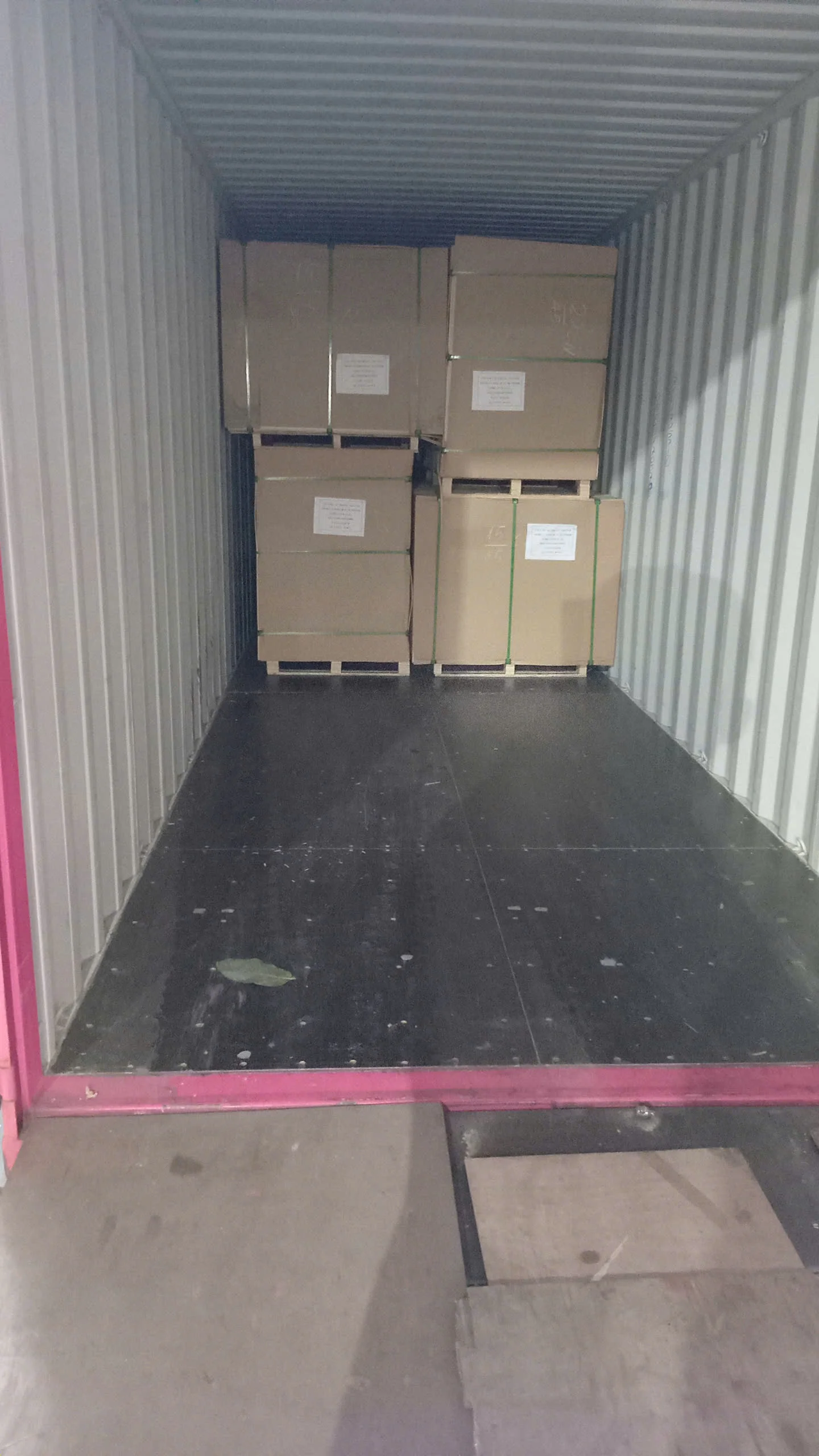
Container loading (40HC):
- Eucalyptus core formwork panels: approximately 15 pallets per 40HC (44.5 CBM, ~28 MT)
- Acacia core formwork panels: approximately 16 pallets per 40HC (47.5 CBM, ~27.5 MT)
For detailed pallet count and CBM calculations by thickness, see Plywood Container Packing Calculation for 40HC — Factory-Level Tables.
MOQ: 1 × 40HC container. Mixed thickness specifications accepted within one container.
Export documents available: Commercial Invoice, Packing List, Bill of Lading, Certificate of Origin, Phytosanitary Certificate, Fumigation Certificate, FSC Certificate, CARB P2 test report on request.
✅ How to Specify Formwork Plywood Correctly
Correct formwork plywood specifications prevent costly substitutions. When submitting an inquiry or purchase order, include these five specification points to ensure you receive the correct concrete formwork plywood:
- Film weight and type — e.g., “220gsm phenolic AICA film, both faces”
- Glue type — “WBP phenolic adhesive throughout all layers”
- Core species — “Eucalyptus core, Grade A, full-stitched or edge-jointed”
- Thickness and tolerance — e.g., “18mm ±0.5mm”
- Sheet size and quantity — e.g., “1220×2440mm, 20 containers”
Buyers who specify only “film-faced 18mm” without the above five formwork plywood specifications will receive whatever the factory’s default is — which varies significantly between suppliers and directly affects reuse count and total project cost.
Contact HCPLY for a specification-matched quotation — our team will confirm each of the five points above and provide test reports before you commit to an order. No commitment required for the first inquiry.
For a broader view of all construction-grade panels available from HCPLY, see Construction Plywood from Vietnam — Types and Specifications.
📌 Conclusion
Concrete formwork plywood performance is determined before the first panel reaches a construction site. Film weight — not film color — controls reuse count. Phenolic WBP glue throughout all layers — not just the face film — prevents delamination under wet concrete chemistry. Eucalyptus core at 650–750 kg/m³ provides the highest strength for heavy pour applications. And 18mm calibrated to ±0.3mm is the correct standard thickness for most wall and column forming.
HCPLY manages a dedicated production facility in Northern Vietnam (Phu Tho Province) purpose-built for premium film-faced and construction-grade panels, with on-site QC at every production stage. We export to Korea, Europe, the Middle East, and Australia — markets where formwork specification standards are stringent and enforced.
Request FOB pricing and formwork plywood specification sheet — factory-direct, no intermediary markup. Response within 24 hours on standard inquiry.