


Plywood sizes and thickness are the first two specifications that determine whether an order is commercially viable. Get them wrong in the purchase order and you face rework costs, container under-utilization, or rejection at customs.
This reference guide covers every standard plywood size and thickness range supplied by Vietnam manufacturers — with tolerance data, application guidelines, and a direct connection to container loading calculations.
📋 Standard Plywood Sheet Sizes from Vietnam
Standard plywood dimensions in the Vietnamese export market follow two dominant formats: imperial (4 x 8 feet) and metric (1250 x 2500 mm). Both are produced as continuous runs, meaning lead times are shorter and pricing is tighter than for custom cuts.
📌 The Two Primary Sheet Formats
| Size (mm) | Size (ft) | Market |
|---|---|---|
| 1220 × 2440 | 4 × 8 | Global standard — most volumes |
| 1250 × 2500 | ~4.1 × 8.2 | Europe, metric-preference markets |
The 1220 × 2440 mm size is produced by every Vietnam factory, in every thickness and face combination. It is the default format for global B2B orders.
The 1250 × 2500 mm format commands slightly higher FOB pricing per CBM (+5–8%) because the larger sheet increases material consumption and reduces yield from standard log peeling runs. European buyers typically prefer this format for compliance with EN 636 dimensional requirements (European Panel Federation technical guidelines, 2023).
📌 Non-Standard and Regional Sizes
Vietnam factories also produce the following sizes on a made-to-order basis:
| Size (mm) | Size (ft) | Typical Use |
|---|---|---|
| 1220 × 2135 | 4 × 7 | Cabinetry, fits standard cabinet height runs |
| 1220 × 1830 | 4 × 6 | Short-panel partitioning, regional markets |
| 915 × 2440 | 3 × 8 | Long narrow panels, door skins |
| 915 × 2135 | 3 × 7 | Interior fitout, Asia Pacific markets |
| 915 × 1830 | 3 × 6 | Light furniture, packaging |
Minimum order for non-standard sizes is typically 1 × 40HC container. Standard 4 × 8 sizes remain the most cost-efficient choice for buyers without specific dimension requirements.
Key Insight: Ordering 1220 × 2440 mm on a first shipment, then converting to a custom size after inspection, is standard practice among experienced importers. This approach reduces risk on the first container while confirming factory quality.
📦 Plywood Thickness Chart — Complete Range
Plywood thickness from Vietnam factories spans 3 mm to 40 mm. The standard production range covers the thicknesses most commonly ordered by international buyers.
“We process quotation requests from 20+ countries monthly. Each market has different priorities — European buyers focus on EUDR compliance and E0 emission, Indian buyers prioritize BIS certification and competitive pricing, and Japanese buyers demand the tightest thickness tolerances.” — Lucy, International Sales Manager, HCPLY
📌 Standard Thickness List (mm)
| Thickness | Common Plies | Application |
|---|---|---|
| 3 mm | 3 plies | Door skins, thin panels, sample boards |
| 5 mm | 3 plies | Cabinet backs, drawer bottoms |
| 9 mm | 5 plies | Furniture carcass inner panels, wall lining |
| 12 mm | 7 plies | Cabinet sides, light shelving, standard furniture |
| 15 mm | 9 plies | Cabinet carcass, shelving, flooring substrate |
| 18 mm | 11 plies | Standard cabinetry (most common), furniture tops |
| 21 mm | 13 plies | Heavy furniture, stair treads, truck flooring base |
| 25 mm | 15 plies | Industrial flooring, scaffold decking, heavy structures |
| 30 mm | 19+ plies | Heavy-duty industrial, engineering applications |
| 40 mm | Custom | Specialist engineering, load-bearing panels |
⚠️ Important: Ply count listed above reflects typical construction. Actual ply count can vary based on factory specifications. A 18 mm panel may be built from fewer, thicker veneers or more, thinner veneers. For precise ply count, request the factory’s production specification sheet.
The most-ordered thicknesses in HCPLY’s export production (2026 internal data) are 12 mm, 15 mm, and 18 mm — driven by cabinetry and furniture manufacturing demand from India, Europe, and South Korea.
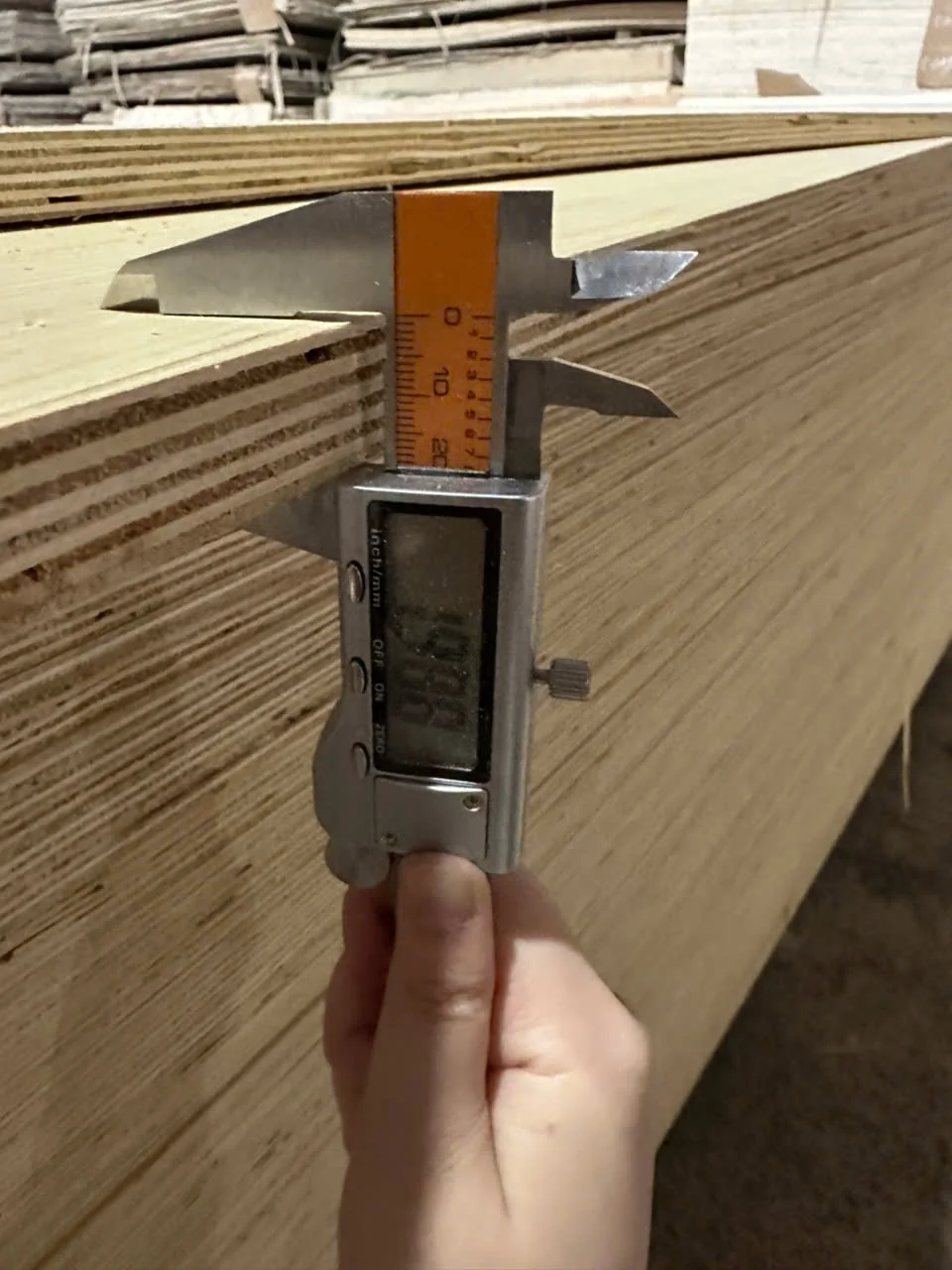
⚙️ Thickness Tolerance — What to Specify in Your Contract
Thickness tolerance is the specification most often missing from first-time buyer purchase orders. Without it, any thickness within a broad acceptable range is valid — and disputes become difficult to resolve.
📌 Standard Factory Tolerance
| Parameter | Tolerance |
|---|---|
| Thickness | ±0.3 mm |
| Length / Width | ±2 mm |
| Squareness | ≤1 mm/m |
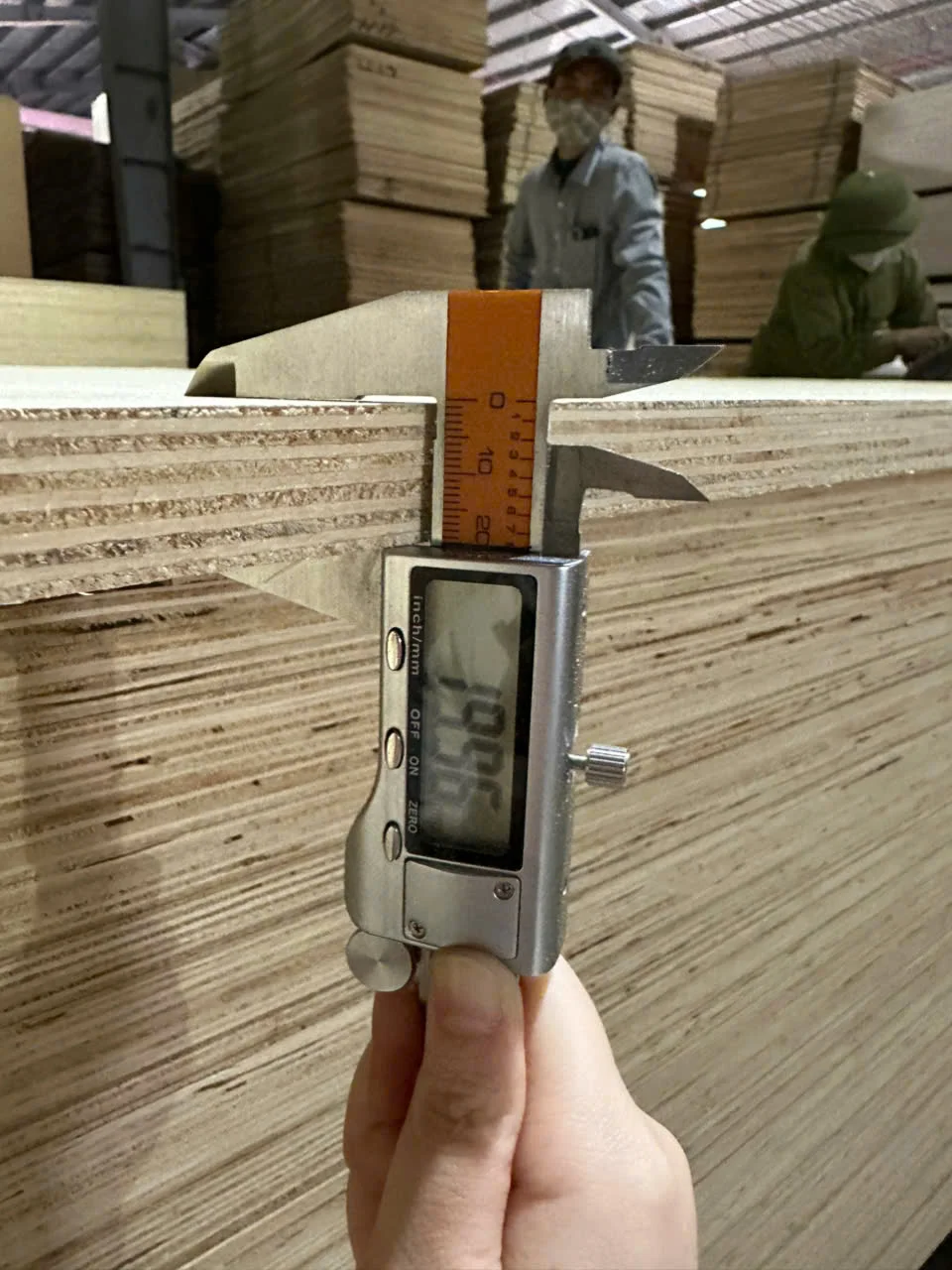
A 18 mm sheet from HCPLY is guaranteed between 17.7 mm and 18.3 mm. For precision cabinetry with CNC machining, this tolerance is tight enough for direct use without recalibration.
Japan’s JAS standard requires F4-star emission (equivalent to E0) and tighter dimensional tolerance — buyers shipping to Japanese markets should confirm factory compliance before ordering (Japan Plywood Manufacturers’ Association technical specifications, 2024).
📌 Why Thickness Tolerance Matters for Buyers
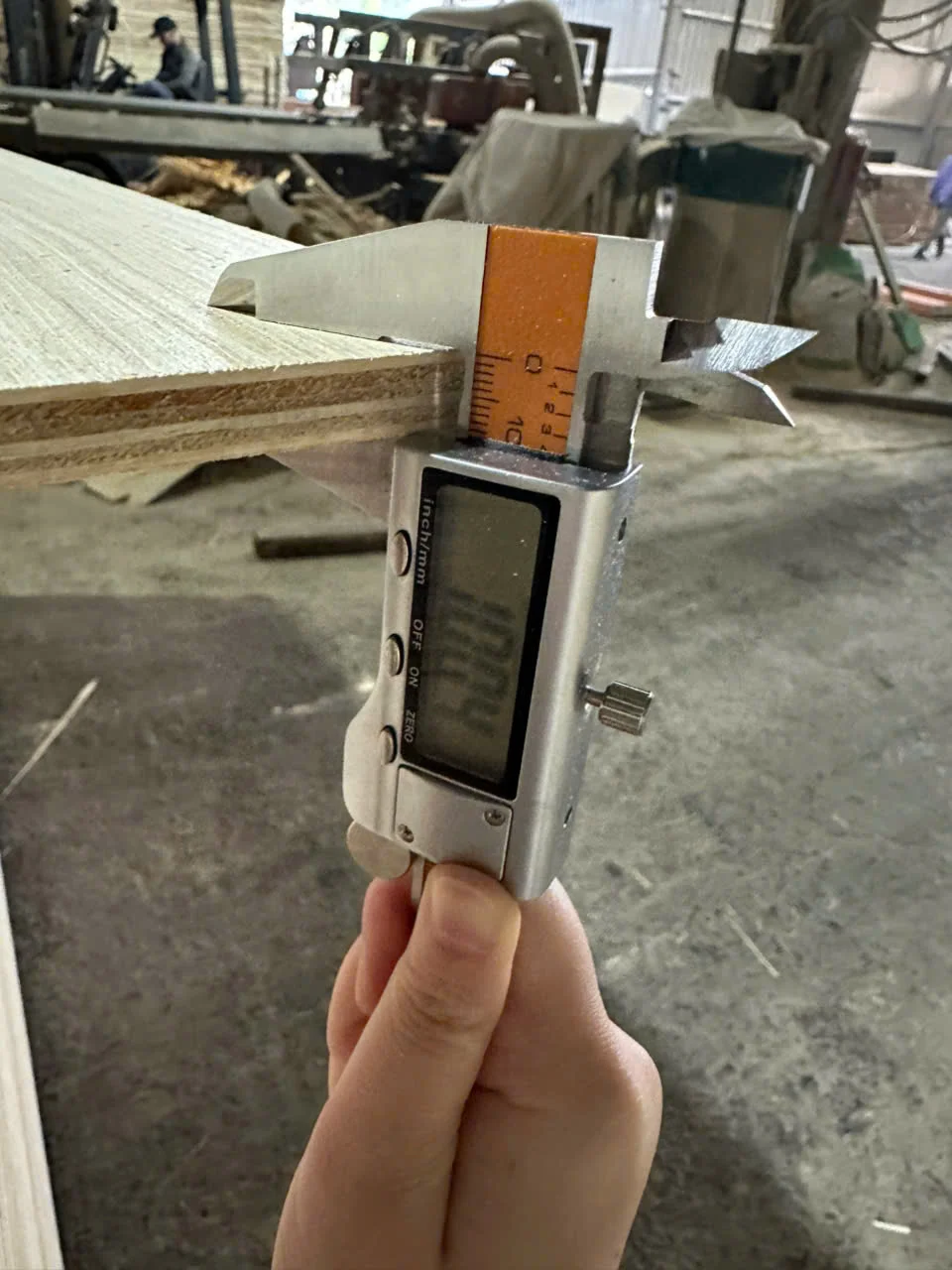
Furniture manufacturers running CNC routing lines set machines to a fixed panel thickness. If 100 sheets arrive with 0.8 mm variance (not uncommon from low-QC suppliers), the entire production run requires machine recalibration — an invisible cost that never appears on the invoice.
“In six years of plywood export, the most common complaint I receive from furniture buyers is not about face quality — it’s about inconsistent thickness within a single order,” says Lucy, International Sales Manager at HCPLY. “We specify ±0.3 mm in every contract and verify during sanding QC before loading.”
This is why HCPLY’s sanding line applies a final calibration pass before every container. Sheets are measured at three points: center, left edge, right edge.
🔧 Thickness Selection by Application
Selecting the right plywood thickness is an engineering decision, not a preference. Structural requirements, weight constraints, and end-use determine the specification.
Case study — custom sizing for self-laminating buyers: A manufacturer with in-house laminating equipment needed core panels cut to 1240x2460mm instead of the standard 1220x2440mm. The extra +20mm on each dimension provides trimming allowance after the buyer applies their own face veneer. HCPLY produced the custom size, saving the buyer the cost of outsourced lamination in Vietnam while maintaining their preferred face veneer brand and process.
📌 Furniture & Cabinetry
| Application | Recommended Thickness | Face/Core |
|---|---|---|
| Kitchen cabinet carcass | 18 mm | Birch/EV face, styrax core, E0 |
| Cabinet doors (flat) | 18–21 mm | Birch, sanded both sides |
| Shelf (≤900 mm span) | 18 mm | Birch or EV face |
| Shelf (>900 mm span) | 21–25 mm | Higher density core preferred |
| Drawer box sides | 12–15 mm | Birch or bintangor face |
| Drawer bottom | 5–9 mm | EV or bintangor back |
| Panel back | 3–5 mm | Any face, no sanding required |
For furniture-grade orders, birch plywood from Vietnam with styrax core is the standard specification. Styrax core at 480–500 kg/m³ keeps cabinet weights manageable while delivering the strength-to-weight ratio needed for flat-pack furniture shipping (HCPLY production data, 2026).
📌 Construction & Formwork
| Application | Recommended Thickness | Face/Core |
|---|---|---|
| Concrete formwork (standard) | 15–18 mm | Film-faced phenolic, eucalyptus core |
| Concrete formwork (reuse 15+) | 18–21 mm | AICA film, phenolic WBP |
| Scaffold deck | 18–21 mm | Anti-slip film, acacia/eucalyptus core |
| Structural sheathing | 12–15 mm | Film-faced or eucalyptus face |
| Hoarding panels | 12 mm | Film-faced (single-use applications) |
Construction-grade specifications prioritize WBP phenolic glue over melamine. For concrete formwork specifically, film-faced plywood from Vietnam at 18–21 mm with AICA film delivers 15+ reuse cycles — the benchmark for professional formwork rental systems.
Packaging & Industrial
| Application | Recommended Thickness | Face/Core |
|---|---|---|
| Export crates | 9–12 mm | Bintangor or packing grade, acacia core |
| Pallets (heavy load) | 12–18 mm | Packing grade, acacia |
| Case packaging | 5–9 mm | Packing grade or bintangor |
| Machine base platforms | 18–25 mm | Film-faced or eucalyptus |
Packaging applications tolerate E2 emission standards and unsanded surfaces — the cost gap between packaging grade and furniture grade plywood can be 30–50% (HCPLY internal pricing comparison, 2026).
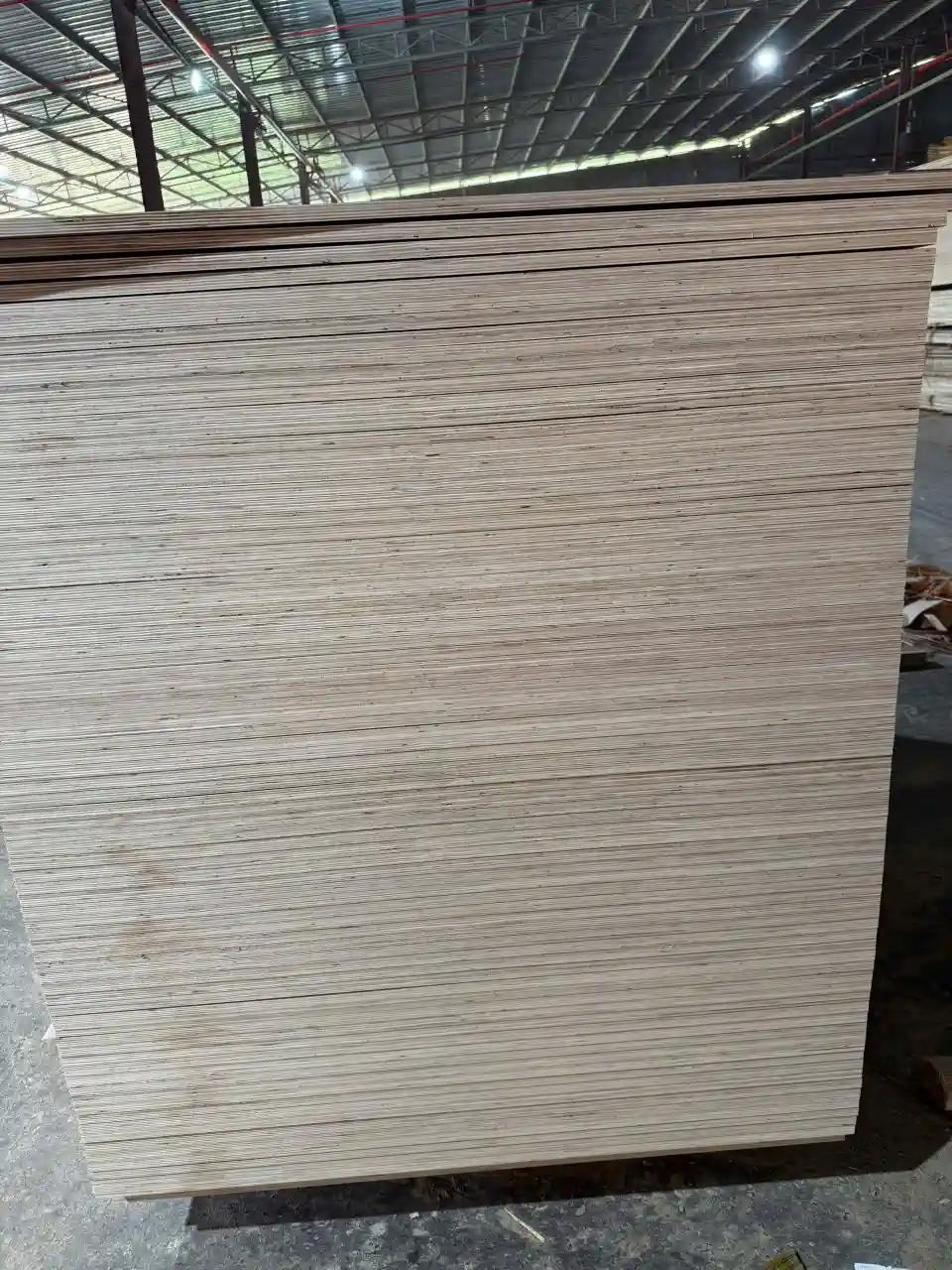
📐 How Sheet Size Affects Container Loading
Sheet dimensions directly determine container utilization efficiency. This is a calculation most buyers overlook until they receive their first freight invoice.
For a 40HC container, standard 1220 × 2440 mm sheets align efficiently with pallet dimensions. The 1250 × 2500 mm size increases individual sheet volume by approximately 5%, which affects CBM per pallet.
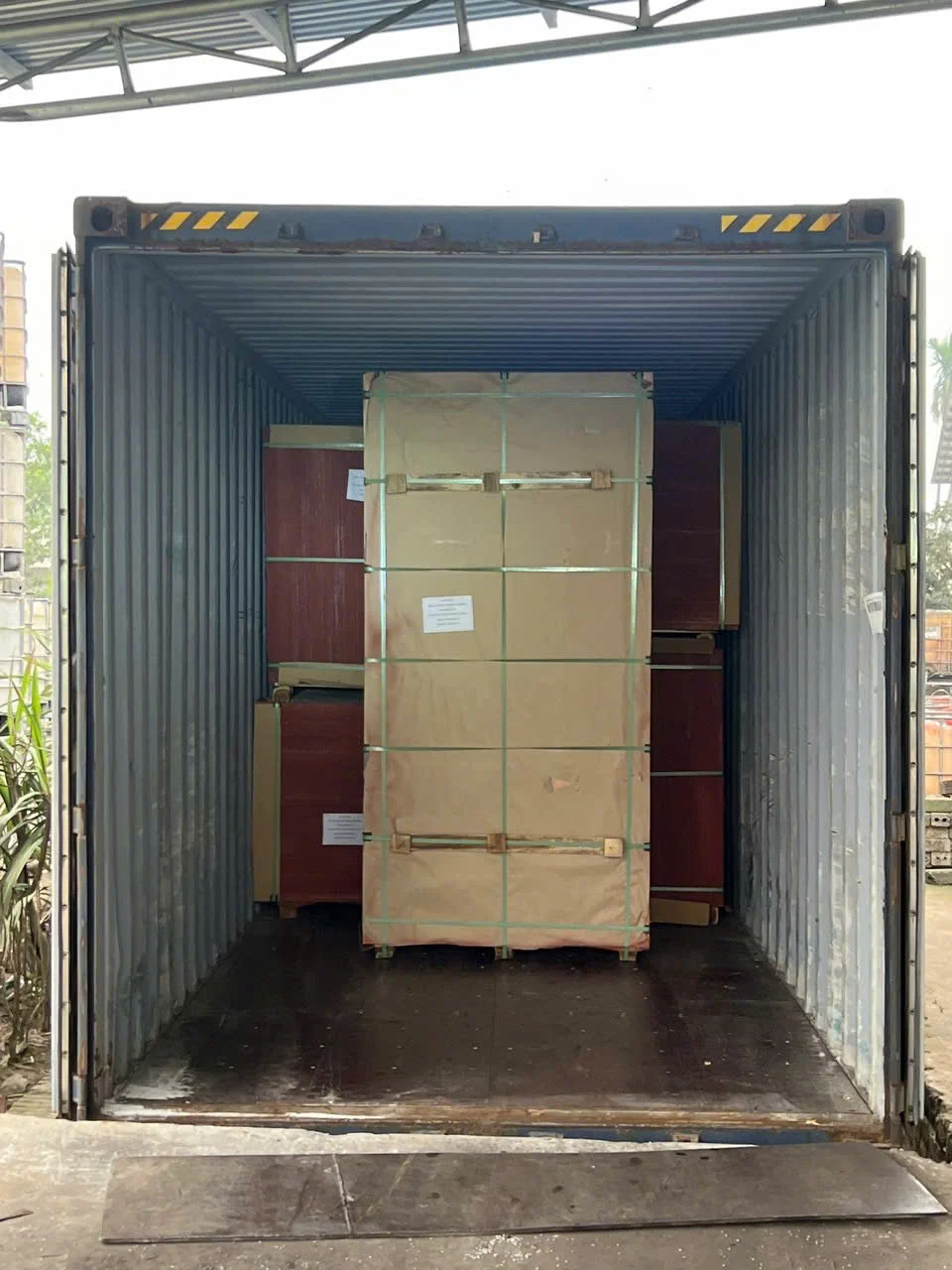
Key Insight: A 40HC loaded with 18 mm styrax core panels in 1220 × 2440 mm format holds approximately 18 pallets and ~53 CBM. The same container with 1250 × 2500 mm sheets holds 18 pallets but at higher total CBM — which impacts freight cost per sheet. (HCPLY container loading data, 2026)
For buyers who need to calculate sheets per container, CBM per order, and weight at the 28.5 MT payload ceiling, the full breakdown is in our plywood container packing calculation guide.
📊 Size & Thickness Quick Reference Table
| Sheet Size | Thickness Range | Most Common Use | Core Options |
|---|---|---|---|
| 1220 × 2440 mm | 3–40 mm | Furniture, construction, packaging | Acacia, styrax, eucalyptus |
| 1250 × 2500 mm | 3–40 mm | European markets, metric projects | Acacia, styrax, eucalyptus |
| 1220 × 2135 mm | 9–21 mm | Cabinetry, specific fitout | Styrax, eucalyptus |
| 915 × 2440 mm | 3–12 mm | Door skins, light partitions | Acacia, styrax |
All sizes above are available with any face veneer from HCPLY’s range: bintangor, okoume, birch, gurjan, pine, poplar, eucalyptus, EV, film-faced, anti-slip, matt, or packing grade.
For a full product comparison by face veneer type, see plywood types from Vietnam factories.
📌 Ordering Sizes — Common Mistakes to Avoid
Experienced importers structure their purchase orders with explicit size and tolerance declarations. Missing any of these leads to disputes:
- Sheet dimensions: State both mm and ft (e.g., “1220 × 2440 mm / 4 × 8 ft”)
- Thickness tolerance: Always specify ±0.3 mm in the contract (not just on the email)
- Length/width tolerance: ±2 mm is standard — state it explicitly for CNC buyers
- Custom size MOQ: Confirm 1 × 40HC minimum with factory before designing around custom dimensions
- Thickness vs nominal: Vietnam factories ship calibrated thickness, not nominal. There is no sanding reduction discrepancy as seen in North American lumber trade standards.
⚠️ Note: The North American plywood market uses “nominal” vs “actual” thickness (e.g., ¾” nominal = 23/32” actual after sanding). Vietnam export plywood uses calibrated metric measurement — 18 mm is 18 mm ±0.3 mm, not a nominal figure. Buyers familiar with North American standards should clarify this distinction before placing orders.
Request a Free Sizing Quote from HCPLY — specify your required dimensions and we’ll confirm lead time, FOB price, and container loading data within 24 hours.
Related reading:
- For metric panels, see our oversized 1250x2500mm plywood sheets guide.
- Calculate volumes with our CBM per thickness complete table.
- For calibration details, see Vietnam calibrated plywood guide.
Disclosure: This article is published by HCPLY, a Vietnam-based plywood manufacturer and export operator. While we aim to provide objective industry guidance, readers should consider our perspective as a market participant when evaluating recommendations.
🔗 Related Specifications
Understanding plywood sizes and thickness is one part of a complete specification order. Related technical decisions include:
- Core species: Determines density, weight, and container loading capacity. Plywood core types — acacia vs eucalyptus vs styrax
- Glue and emission: MR vs WBP, E0/E1/E2 selection by market. Plywood glue and emission standards explained
- Container loading: How thickness and size affect 40HC packing efficiency. Container packing calculation guide
These four decisions — size, thickness, core, and glue — define the complete specification for any plywood purchase order from Vietnam.
Contact HCPLY Now to receive a complete technical specification sheet for your application. No commitment required — dimensions, tolerance, and pricing in one document.