



Importing plywood from Vietnam into the United States now requires satisfying three entirely separate compliance regimes simultaneously. Most importers know about formaldehyde certification in some form. Far fewer understand that what they call “CARB P2” and what the label says “TSCA Title VI” are legally identical requirements — not two separate certifications. Almost none have updated their documentation checklist to reflect Lacey Act Phase 7, which became mandatory on December 1, 2024. And the AD/CVD investigation adds a fourth dimension to a compliance picture that was already more complex than most buyers realize.
US plywood compliance for Vietnam imports in 2026 is not optional and not theoretical — it is actively enforced at every major US port, and the penalties for getting it wrong have never been higher.
This guide exists because no supplier-authored comprehensive reference covers all four regulatory layers together. Government sites cover the regulations. Legal firms cover the liability. No one has written the practical importer’s guide — until now.
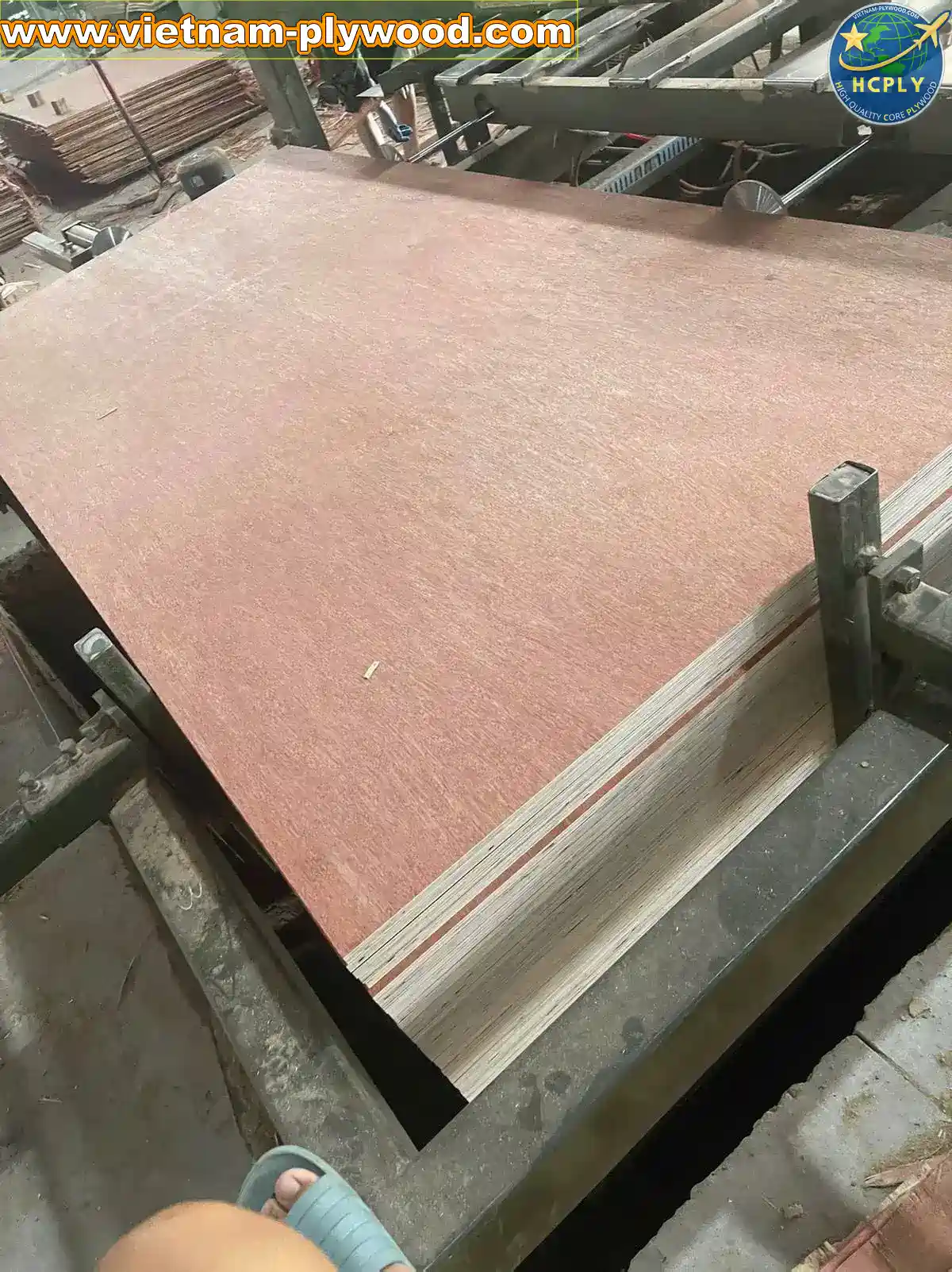
 HCPLY Facility 1 — dedicated furniture-grade production with CARB P2 / TSCA Title VI certification covering the full E0 product range
⚠️ Important: This article provides general educational content based on publicly available regulatory information current as of February 2026. It does not constitute legal advice. Consult a licensed trade compliance attorney or customs broker for binding guidance on your specific shipments.
🎯 Why US Compliance Matters More in 2026 Than Any Previous Year
The US market for imported hardwood plywood has never been more regulated. Three enforcement developments — each independent, each consequential — have converged in 2025–2026 to create a compliance burden that has caught multiple importers unprepared.
The cost of getting this wrong is no longer theoretical. A container held at US customs for 5–30 days accumulates port storage fees of $150–400 per day. Products found non-compliant with TSCA Title VI face destruction or re-export at importer expense. Lacey Act violations carry civil penalties up to $10,000 per shipment and criminal prosecution for willful violations. AD/CVD duties of 4.37–26.75% (preliminary CVD) or potentially 100%+ (AD, if finalized at alleged margins) can make a previously profitable trade relationship immediately unviable.
The regulatory developments creating this environment:
| Layer | Regulation | Status (Feb 2026) | Impact |
|---|---|---|---|
| Emission certification | CARB P2 / TSCA Title VI | Active — mandatory since June 2018 | Market entry requirement |
| Species declaration | Lacey Act Phase 7 | New — effective Dec 1, 2024 | PPQ Form 505 at every entry |
| Trade duties | AD/CVD investigation | Active — preliminary CVD in effect | Cash deposits required |
| Supply chain transparency | EUDR (EU) / Lacey (US) | Active / New | Documentation burden |
The good news: all three compliance requirements are manageable if you know exactly what each one demands. This guide gives you that knowledge.
📊 CARB P2 = TSCA Title VI: The Same Standard, Different Names
This is the single most important fact in this entire guide. Most importers, and most of their suppliers, do not clearly understand this equivalence — and the confusion costs them money and time.
Here is the definitive comparison:
| Aspect | CARB Phase 2 | TSCA Title VI |
|---|---|---|
| Issuing Authority | California Air Resources Board (CARB) | US EPA (federal) |
| Emission Limit — Hardwood Plywood | 0.05 ppm | 0.05 ppm |
| Geographic Scope | California → de facto national standard | All 50 US states |
| Primary Test Method | ASTM E1333 | ASTM E1333 |
| TPC Required? | Yes (CARB-recognized TPC) | Yes (EPA-recognized TPC) |
| Effective Date | 2009 (Phase 2) | June 2018 (federal rule) |
| Labeling Required? | Yes (CARB label on product or panel) | Yes (TSCA compliant labeling) |
Bottom line: CARB P2 certified = TSCA Title VI compliant. When the EPA wrote the federal TSCA Title VI rule in 2016 (effective June 2018), it adopted California’s Phase 2 emission limits verbatim for hardwood plywood. One certification satisfies both.
Why Importers Pay Twice for the Same Certification
The confusion arises because the two regulatory bodies — CARB (state) and EPA (federal) — maintain separate lists of recognized Third-Party Certifiers, use slightly different labeling language, and issue separate guidance documents. Suppliers who list “CARB P2 certified, TSCA Title VI compliant” on their spec sheets are not providing two certifications. They are correctly noting that one TPC certification satisfies both regulatory frameworks.
What you should NOT do: Pay a premium for “separate TSCA certification” on top of existing CARB P2 certification. If your supplier is CARB P2 certified by an EPA-recognized TPC, they are simultaneously TSCA Title VI compliant.
What you SHOULD do: Verify the TPC that issued the certification is on the EPA’s recognized TPC list (not just CARB’s list, though for most major TPCs they overlap). Request the actual TPC certificate — not just the supplier’s claim.
CARB P2 vs EU Emission Standards: Separate Frameworks
Do not confuse US and EU emission scales. They use different testing methods and different limit values.
| Standard | Market | Limit (hardwood plywood) | Testing Basis |
|---|---|---|---|
| CARB P2 / TSCA Title VI | USA | 0.05 ppm | ASTM E1333 (large chamber) |
| E0 | EU/Asia (premium) | ≤0.07 mg/m³ (approximately ≤0.05 ppm) | EN ISO 12460-2 (small chamber) |
| E1 | EU standard | ≤0.124 mg/m³ | EN ISO 12460-2 |
| E2 | Asia low-cost | >0.124 mg/m³ | EN ISO 12460-2 |
⚠️ Note: E1 is not equivalent to CARB P2. E1 allows up to
0.124 mg/m³— substantially higher than the US0.05 ppmlimit. Vietnamese suppliers who say “E1 certified” for US-market furniture plywood are providing a product that does NOT meet CARB P2 / TSCA Title VI requirements. Insist on explicit CARB P2 or E0 certification for any US-bound furniture or interior plywood.
Note on glue vs. emission: Melamine (MR) and Phenolic (WBP) describe the glue type — MR glue passes the 12-hour boiling test, WBP glue passes the 72-hour boiling test. These glue classifications are completely separate from the E0/CARB P2/E1 emission standards. A Melamine-bonded product can be E0 or E1; a Phenolic-bonded product has no emission classification in the same sense. Do not accept a spec sheet that conflates these two dimensions.
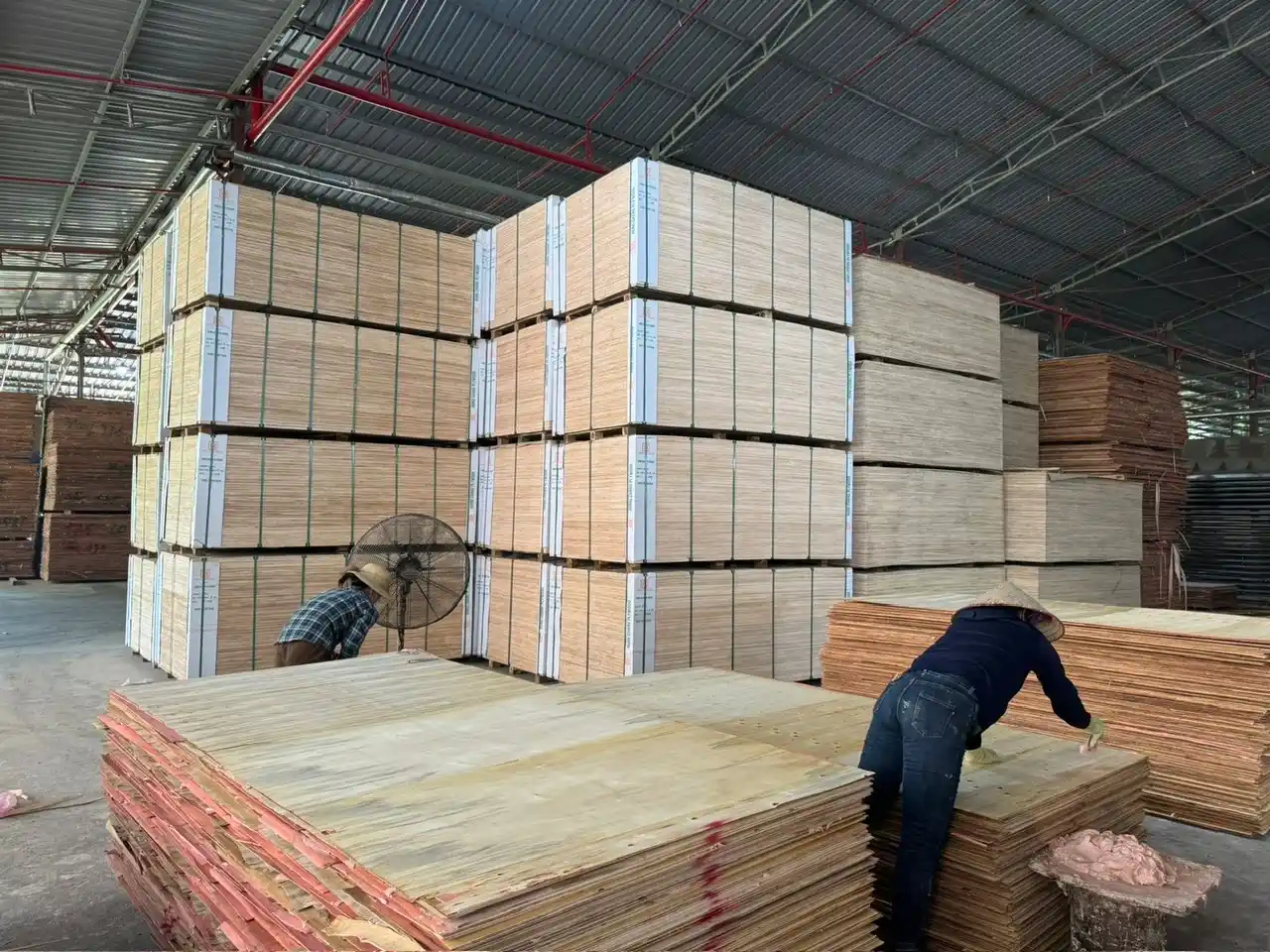
 Production QC at HCPLY — controlled adhesive application and pressing ensures consistent CARB P2 / TSCA Title VI emission results across production batches
🔬 Formaldehyde Testing: ASTM E1333 vs D6007 vs ISO 12460-2
Your supplier’s TPC certification is only as credible as the testing method behind it. Three methods are in use for CARB P2 / TSCA Title VI compliance testing:
| Aspect | ASTM E1333 | ASTM D6007 | ISO 12460-2 |
|---|---|---|---|
| Method Name | Large Chamber Test | Small Chamber Test | Small-Scale Chamber (EU) |
| Chamber Size | 22 m³ minimum | 1 m³ or smaller | 1 m³ |
| Test Duration | 28 days standard | 3 days | 3–28 days |
| Typical Lab Cost | Higher ($5,000–$15,000+) | Lower ($1,500–$5,000) | Lower |
| Regulatory Status | PRIMARY — all CARB + TSCA | Conditional (requires E1333 correlation) | Accepted in 2024 TSCA update |
| TPC Acceptance | Mandatory — all TPCs | Conditional — lab must demonstrate equivalence | Emerging — not yet universal |
| Result Comparability | Direct 0.05 ppm threshold | Expressed in ppm; must correlate to E1333 | Different scale; mapping required |
| Importer Risk | Lowest — primary standard | Medium — conditional acceptance | Higher — newer adoption |
When ASTM E1333 is required: For initial TPC certification and any time a product formulation or adhesive changes. This is the primary test — no dispute, fully accepted by all regulatory bodies.
When ASTM D6007 is acceptable: When the testing laboratory has documented statistical equivalence between its D6007 results and E1333 results across a representative sample of product types. Some TPCs have established this correlation and accept D6007 for ongoing monitoring testing after initial E1333 certification. Faster turnaround makes it useful for production-lot sampling.
When ISO 12460-2 is emerging: The 2024 TSCA regulatory update added ISO 12460-2 as an acceptable alternative method, aligning with the EU testing framework. This is significant for manufacturers who sell to both US and EU markets — a single test dataset can now serve both markets if conducted under ISO 12460-2 with proper result mapping. However, not all EPArecognized TPCs have updated their protocols to accept ISO 12460-2 — confirm with your specific TPC before relying on this method.
Cost Implications for Importers
Testing costs are borne by the manufacturer, not the importer — but they flow through to FOB pricing. A supplier running full ASTM E1333 testing incurs higher laboratory costs per product line than a supplier relying on D6007 spot-checks. The CARB P2 / E0 certification premium of 15–20% over standard E1 pricing reflects:
- Low-emission adhesive formulations (higher material cost)
- TPC certification fees (initial inspection, ongoing monitoring, annual renewal)
- Laboratory testing costs (E1333 primary, D6007 monitoring)
- Administrative compliance overhead
For birch plywood and other premium furniture-grade products sold to US buyers, this premium is standard and fully factored into FOB pricing. For film-faced plywood used in construction formwork, formaldehyde emission certification applies differently because the product uses Phenolic WBP adhesive rather than Melamine — consult your supplier and customs broker on classification.
🏛️ Third-Party Certifiers (TPC): Who They Are and How to Verify
A Third-Party Certifier is an independent organization recognized by EPA (and/or CARB) to certify that composite wood products meet formaldehyde emission standards. The TPC sits between the manufacturer and the regulator — conducting factory inspections, product testing, and ongoing surveillance to verify continued compliance.
Why you cannot skip TPC verification: US law places import compliance responsibility on the importer of record. If you import plywood with a false or expired TPC certification, you are liable — not just your supplier. The TPC certificate is your primary protection against regulatory liability.
Major EPA-Recognized TPCs
| TPC | Country | Scope |
|---|---|---|
| UL (Underwriters Laboratories) | USA (global labs) | Hardwood plywood, MDF, PB |
| Intertek | USA/UK (global labs) | All composite wood products |
| SGS | Switzerland (global labs) | All composite wood products |
| Bureau Veritas | France (global labs) | All composite wood products |
| CARB-recognized labs | Various | Varies — check CARB’s recognized list |
⚠️ Key point: The EPA maintains an official list of recognized TPCs at epa.gov. A supplier claiming TPC certification from an organization not on this list is non-compliant regardless of the quality of the underlying testing. Always verify against the EPA list — not just the supplier’s documentation.
TPC Certification Process
- Factory inspection: TPC auditor visits the production facility, reviews adhesive formulas, quality control procedures, and record-keeping systems.
- Initial product testing: Product samples are tested under ASTM E1333 at an accredited laboratory. Results must show ≤0.05 ppm.
- Certification issuance: If testing passes, TPC issues a certification covering specific product types, adhesive systems, and production facilities.
- Ongoing surveillance: Regular follow-up testing (quarterly or semi-annual depending on TPC) to confirm continued compliance. Production changes trigger recertification.
- Annual renewal: Certification must be renewed annually. Expired certifications = non-compliant product, even if the physical product is unchanged.
How Importers Verify TPC Certification
Request these documents from your supplier:
- TPC certificate (shows TPC name, scope, expiry date, covered products)
- Test report from the accredited laboratory (shows actual ppm results)
- Product label or panel stamp showing TPC certification mark
Cross-check against the EPA recognized TPC list at epa.gov/formaldehyde/recognized-third-party-certifiers. If your supplier’s TPC is not on this list, the certification is not US-market compliant regardless of what it says.
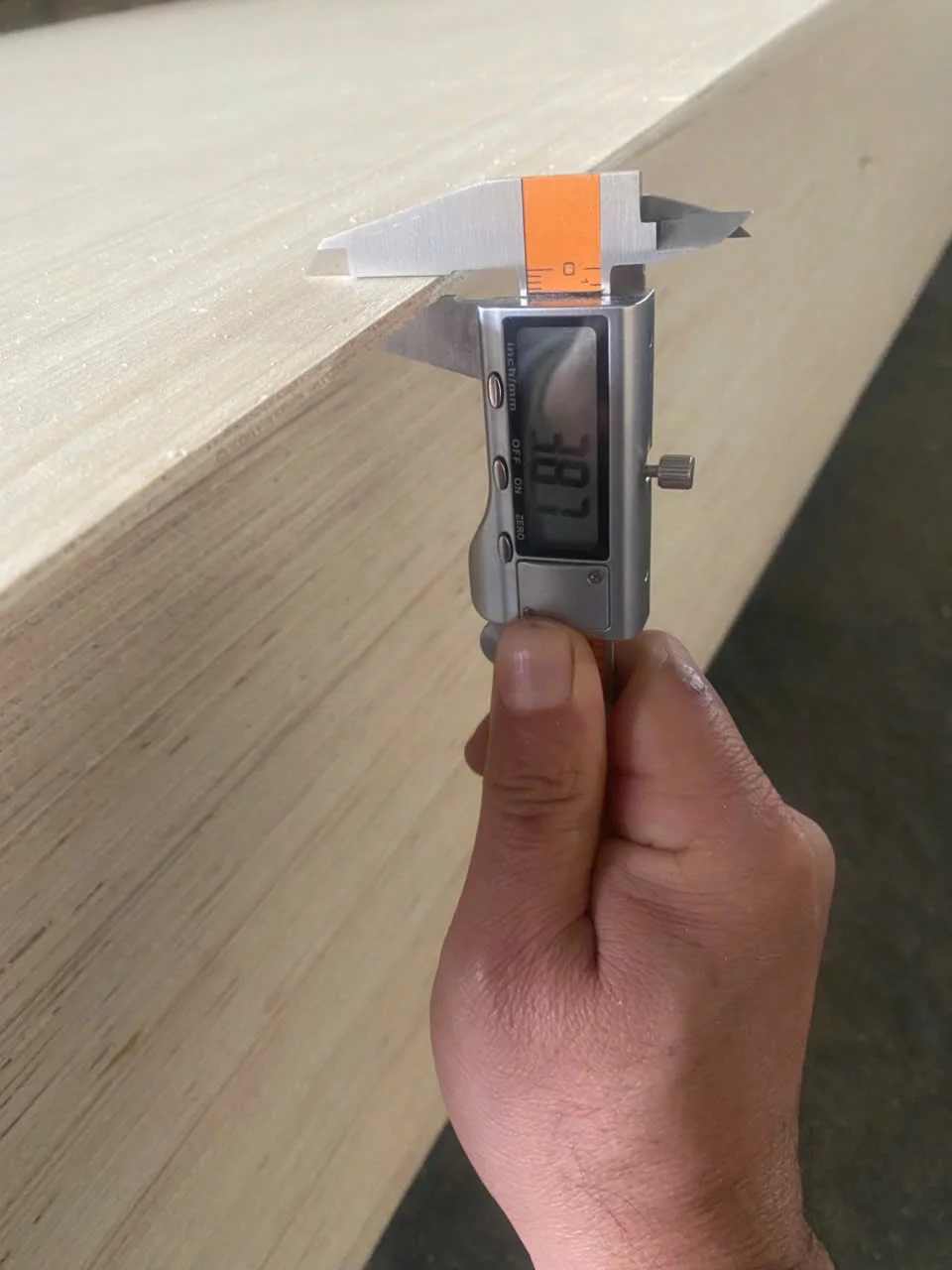
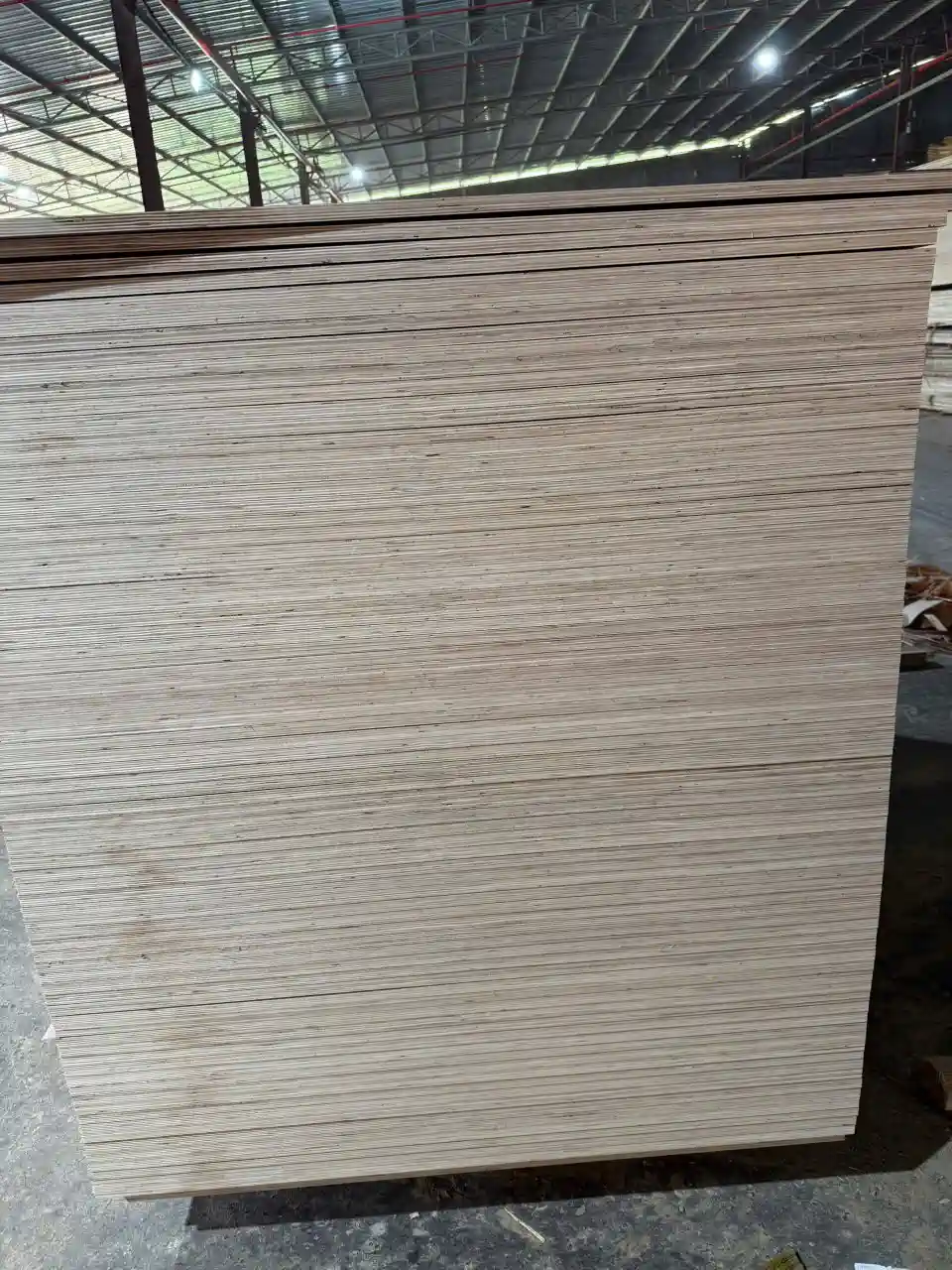 Edge inspection at HCPLY — species verification and bonding class confirmation, both needed for accurate Lacey Act PPQ Form 505 filing
“US buyers ask if we can provide pre-filled species data for PPQ Form 505. Yes — we provide the exact scientific names for both face veneer and core species for every order, formatted directly for customs filing. This is part of our US plywood compliance documentation package.” — Ms. Lucy Pham, International Sales Manager, HCPLY
Request CARB P2 compliance documentation for your next order — TPC certificate, emission test reports, and Lacey Act species data ready within 48 hours.
📜 Lacey Act Phase 7: Species Declaration for Every Plywood Shipment
The Lacey Act is the US law prohibiting trade in illegally harvested plants and plant products — including all wood and wood products. Phase 7 of the Lacey Act declaration requirements, which became effective December 1, 2024, extended mandatory species declaration requirements to hardwood plywood.
This is the compliance layer that most importers have not updated their processes to accommodate. If your import documentation checklist has not been revised since November 2024, you are operating with an outdated US plywood compliance framework.
What PPQ Form 505 Requires
For each plywood shipment entering the US, the importer of record must file USDA APHIS PPQ Form 505 (Plant and Plant Product Declaration) declaring:
- Scientific species name — common names are insufficient; scientific binomial required
- Country of harvest — where the wood was grown and harvested (Vietnam in this case)
- Quantity — volume in consistent units (board feet, cubic meters)
- Value — declared shipment value
- HTS Code — harmonized tariff code for the product
Vietnam-Specific Species Declarations for Hardwood Plywood
Vietnam plywood uses three domestic core species. Your importer documentation must accurately reflect which species is in the product you are receiving:
| Common Name | Scientific Name | Typical Density | Core Use |
|---|---|---|---|
| Acacia | Acacia mangium / A. crassicarpa | ~580 kg/m³ | Most common — commercial, furniture |
| Eucalyptus | Eucalyptus camaldulensis | 650–750 kg/m³ | Heaviest — construction, formwork |
| Styrax | Styrax tonkinensis | 480–500 kg/m³ | Lightest — premium furniture, birch alternative |
Face veneer species must also be declared separately from core species. A birch-faced plywood with styrax core requires declaring both the birch (Betula pendula or B. pubescens) face veneer species and the styrax core species. Do not accept “mixed hardwood” as the species declaration — it is not legally sufficient for Lacey Act purposes.
⚠️ Heads up: Species misdeclaration — even unintentional — constitutes a Lacey Act violation. Civil penalties reach $10,000 per violation. Criminal prosecution is possible for willful violations. The importer, not the exporter, is legally responsible for accurate declarations. Your supplier must provide species documentation adequate for you to complete the declaration accurately.
Why Vietnam Plywood Importers Face Heightened Lacey Scrutiny
Southeast Asian timber supply chains have historically included risk of species mislabeling and illegal logging. US Customs and Border Protection (CBP) applies heightened scrutiny to wood product shipments from Vietnam and neighboring countries. Shipments with vague or incomplete species declarations are more likely to trigger examination, which translates directly to container holds and delays.
Red flags that trigger CBP scrutiny:
- “Mixed core” or “mixed hardwood” species declaration (insufficient specificity)
- Core species inconsistent with the declared product type (e.g., declaring birch core for Vietnamese plywood, which does not use birch core domestically)
- Species declaration that does not match FSC chain-of-custody documentation
- First-time importer from a new Vietnamese supplier without established species documentation
What to request from your supplier:
- Written species declaration listing both face and core species by scientific name
- FSC chain-of-custody certificate (or plantation sourcing records if non-FSC)
- Pre-populated PPQ Form 505 data sheet covering their standard product range
HCPLY provides pre-filled Lacey Act species data for all standard product configurations — available to US buyers at the time of order confirmation.
⚖️ AD/CVD Investigation 2026: The Trade Duty Layer
Formaldehyde emission certification and species declaration address health and conservation compliance. The AD/CVD investigation addresses a completely separate dimension: trade law. These three compliance layers are independent — satisfying one does not affect the others.
A detailed breakdown of the AD/CVD investigation — timeline, preliminary CVD rates, circumvention ruling, and importer action steps — is covered in our dedicated guide: Vietnam Plywood US Import Tariff 2026 — Anti-Dumping & Countervailing Duty Investigation.
Key facts relevant to compliance stacking:
| AD/CVD Status Item | Detail |
|---|---|
| CVD Preliminary (Jan 22, 2026) | In effect now — cash deposits required on covered entries |
| Preliminary CVD rate range | 4.37%–26.75% (varies by exporter) |
| AD Preliminary | Expected late February 2026 — pending at time of writing |
| Final determination | Expected May 2026 |
| Scope | Hardwood and decorative plywood — HTS 4412.10, 4412.31, 4412.32, 4412.39 |
How AD/CVD interacts with CARB P2 and Lacey Act on a single shipment:
A container of Vietnamese film-faced plywood or birch plywood entering the US in Q1 2026 must simultaneously satisfy:
- CARB P2 / TSCA Title VI: Valid TPC certificate + emission test reports on file
- Lacey Act Phase 7: PPQ Form 505 with accurate scientific species names
- AD/CVD: Cash deposit based on preliminary CVD rate at entry, pending final determination
All three must clear before the container releases from customs. A failure on any single layer delays the entire shipment — regardless of compliance status on the other two.
For importers calculating landed cost in 2026, all three must be factored simultaneously:
- CARB P2 premium: 15–20% above E1-grade pricing (already built into FOB)
- AD/CVD cash deposit: 4.37%–26.75% CVD on declared customs value (collected at entry)
- Lacey compliance cost: Administrative (documentation), not a direct price premium
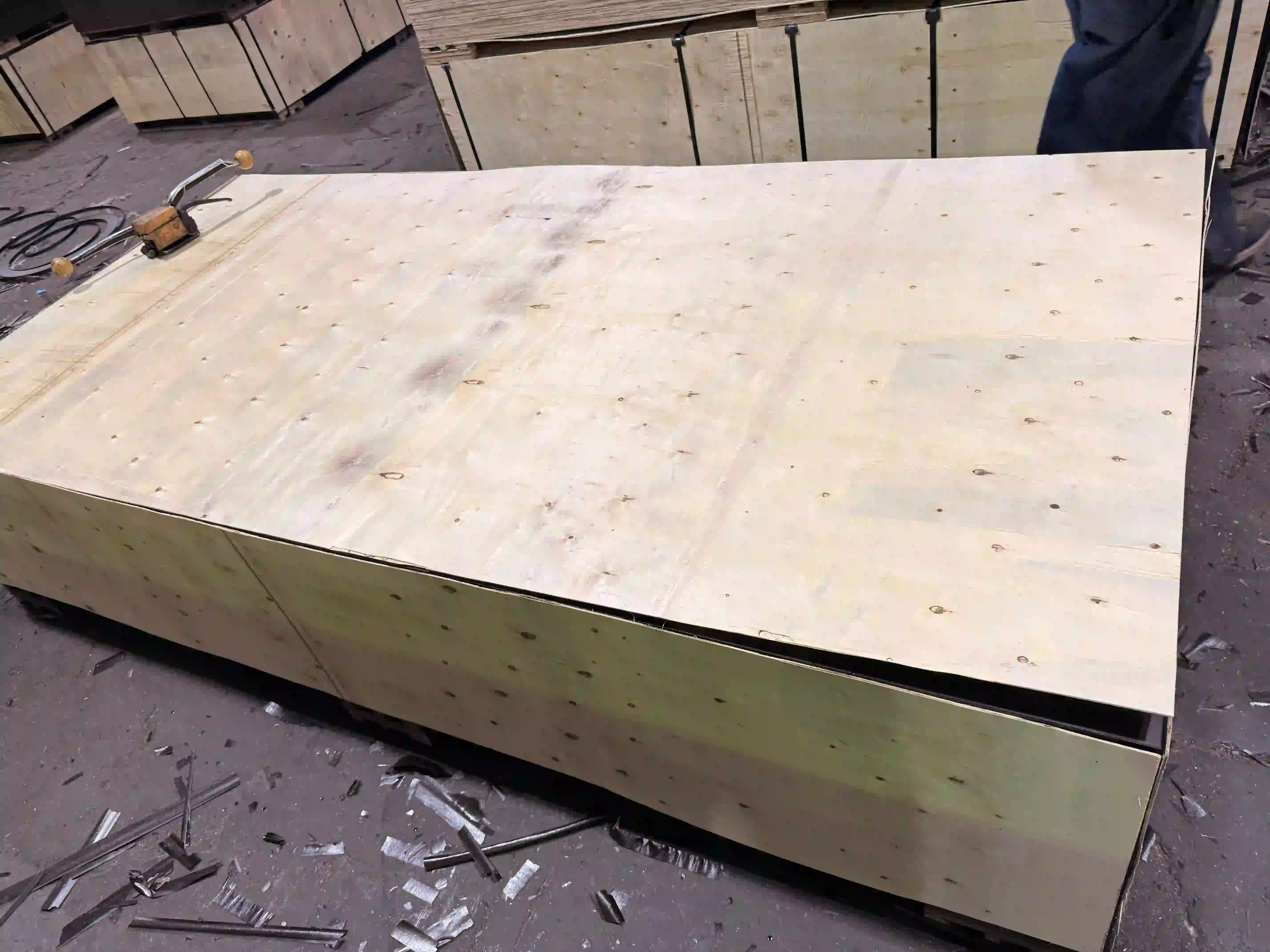 Pallet strapping at HCPLY — CARB P2 labels applied to panel bundles before container loading for US-bound shipments
✅ US Import Compliance Checklist for Vietnam Plywood
This is the actionable takeaway from everything above. Use this checklist for every shipment of hardwood plywood from Vietnam.
Before placing the order:
- ☐ Verify supplier holds TPC certification (CARB P2 / TSCA Title VI) — request certificate copy and cross-check against EPA recognized TPC list
- ☐ Confirm certification scope covers the specific product type, thickness range, and adhesive system you are ordering
- ☐ Request emission test report showing ASTM E1333 results (primary) or D6007 with correlation documentation
- ☐ Request Lacey Act species data sheet listing face and core species by scientific name for your order configuration
- ☐ Confirm HTS code classification with your customs broker — verify product falls in or out of AD/CVD scope
- ☐ Check preliminary AD/CVD deposit requirements with your customs broker for the specific exporter
Before shipment:
- ☐ Confirm Certificate of Origin (CO Form E or CPTPP certificate if applicable for duty reduction)
- ☐ Verify phytosanitary certificate from Vietnam Ministry of Agriculture and Rural Development (MARD)
- ☐ Confirm fumigation certificate (ISPM 15 — international standard for wooden packaging materials)
- ☐ Review commercial invoice and packing list for accuracy against actual cargo
At entry:
- ☐ File PPQ Form 505 (Lacey Act declaration) with accurate scientific species names, harvest country, quantity, and HTS code
- ☐ Confirm AD/CVD cash deposit posted if covered merchandise
- ☐ Arrange cargo insurance (typically 0.3–0.5% of declared cargo value)
- ☐ Retain all compliance documents for minimum 3 years (TSCA Title VI recordkeeping requirement)
Ongoing compliance:
- ☐ Verify supplier TPC certification has not expired before each shipment season
- ☐ Monitor AD/CVD investigation final determination (expected May 2026) for rate updates
- ☐ Update Lacey Act declarations if supplier changes core species or face veneer sourcing
⚠️ Be aware: This checklist covers standard compliance requirements. Individual shipments may require additional documentation based on product type, port of entry, and your specific customs broker’s protocols. Use this as a starting framework, not an exhaustive legal requirement list.
For US importers managing supply chain due diligence, maintaining organized compliance documentation from each supplier reduces audit exposure and speeds customs clearance on future shipments.
 US buyers conducting pre-shipment factory audit — verifying CARB P2 production controls and Lacey Act species documentation
🏭 HCPLY Compliance Commitment
HCPLY manages 3 specialized production facilities in Northern Vietnam (Ha Hoa District, Phu Tho Province). Our US compliance documentation framework is built around making your compliance obligations as straightforward as possible.
CARB P2 / TSCA Title VI:
All HCPLY production facilities maintain CARB P2 certification through EPA-recognized Third-Party Certifiers. Emission certification covers our full product range — from birch plywood (styrax core, E0/CARB P2 adhesive formulation) to EV plywood and furniture-grade products. We provide TPC certificate copies and test report summaries on request.
Lacey Act Species Documentation:
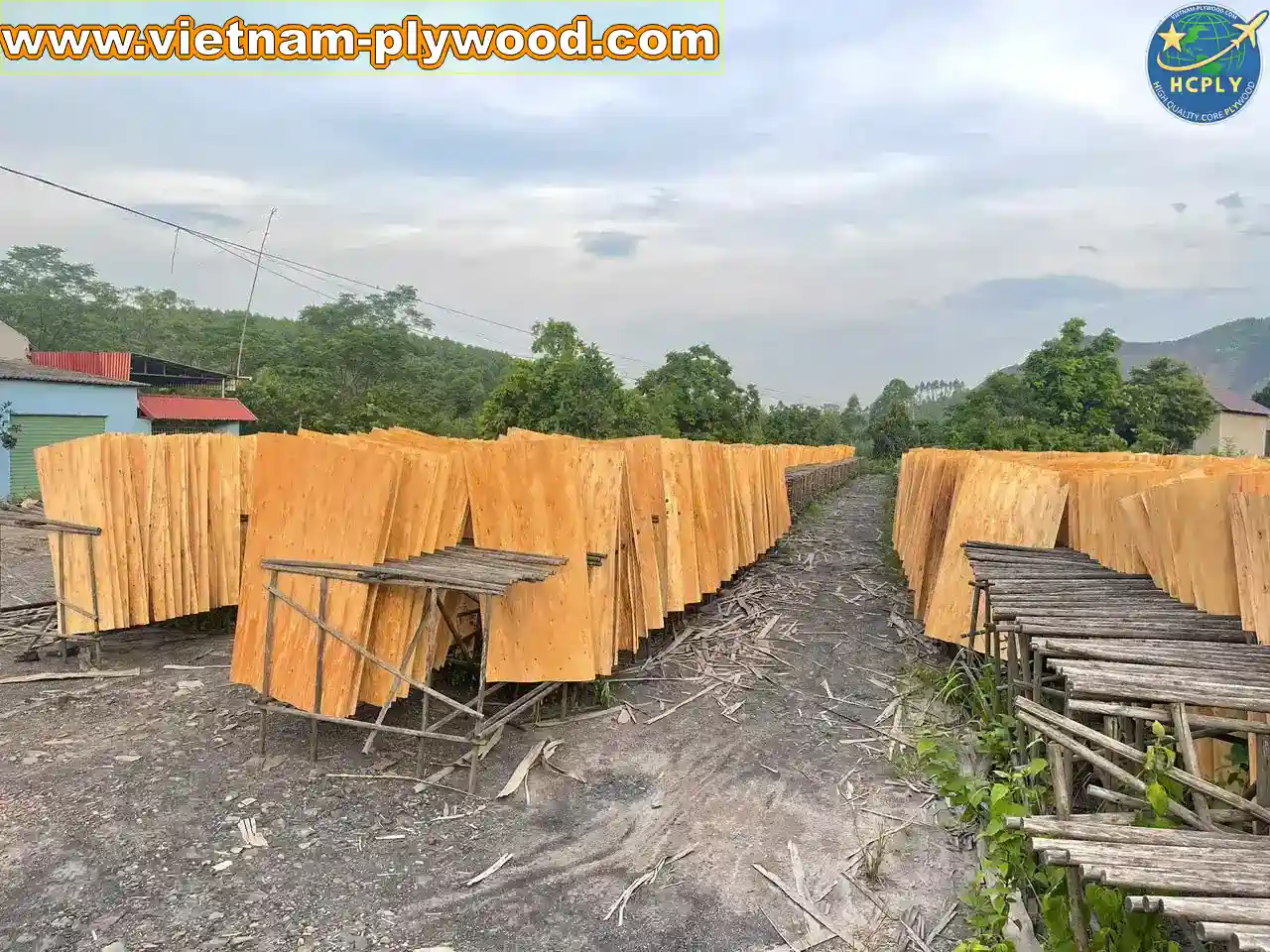
HCPLY production uses 100% Vietnamese domestic wood species with no Chinese inputs at any stage:
- Core: Acacia (Acacia mangium / A. crassicarpa), Eucalyptus (Eucalyptus camaldulensis), Styrax (Styrax tonkinensis)
- Face veneer: Verified domestic Vietnamese suppliers for all face species
We provide pre-populated Lacey Act species data sheets for standard product configurations — covering both face and core species by scientific name. This data is formatted for direct use in completing PPQ Form 505 at entry.
AD/CVD Supply Chain Transparency:
HCPLY operates with 100% domestic Vietnamese raw material sourcing. No Chinese-origin inputs are used in any production stage — eliminating the circumvention risk that has affected 37 Vietnamese companies under the 2023 ruling. Full supply chain documentation is available to serious US buyers, including plantation sourcing records, FSC chain-of-custody certification, and factory audit summaries.
What we can provide on request:
- CARB P2 TPC certificate (current, with expiry date)
- Emission test report summary (ASTM E1333 results by product type)
- Lacey Act species data sheet (face + core by scientific name)
- Supply chain verification package (sourcing declarations, FSC cert, factory audit summary)
- Pre-filled PPQ Form 505 data for standard product orders
For full quality control documentation and compliance package requests, contact us via the contact page.
The container logistics side of your shipment is complex enough — the compliance side should not add avoidable risk. HCPLY’s documentation framework is designed for exactly the kind of scrutiny that US customs applies to Vietnam plywood shipments in 2026.
❓ FAQ
Answers to frequently asked compliance questions are listed below.
Regulatory Disclaimer: This guide reflects publicly available regulatory information as of February 2026. US EPA TSCA Title VI, CARB Phase 2, USDA Lacey Act, and US Department of Commerce AD/CVD regulations are subject to amendment. For authoritative regulatory text, consult epa.gov (TSCA/CARB), aphis.usda.gov (Lacey Act), and federalregister.gov (AD/CVD). This article does not constitute legal advice. Consult a licensed trade compliance attorney for guidance specific to your import situation.
Related reading: