


CARB P2 is not optional for plywood entering the United States market. Since March 22, 2019, every hardwood plywood product sold, imported, or distributed in the US must comply with CARB Phase 2 formaldehyde emission limits — a federal requirement, not just a California rule. Understanding what CARB P2 means, how testing works, and what documentation to demand from your supplier is the difference between a smooth customs clearance and a detained shipment.
This guide explains the CARB P2 standard in practical terms for B2B plywood importers, and details how HCPLY meets these requirements across its production facilities in Northern Vietnam.
📋 What Is CARB P2 and Why Does It Apply to All US Plywood Imports?
CARB P2 stands for California Air Resources Board Phase 2 — the second and final phase of CARB’s Airborne Toxic Control Measure (ATCM) to reduce formaldehyde emissions from composite wood products. Phase 1 took effect in 2009; Phase 2 reached full enforcement by 2012.
The critical development for international importers happened in December 2016, when the US Congress passed the Formaldehyde Standards for Composite Wood Products Act as part of TSCA (Toxic Substances Control Act) Title VI. This legislation nationalized the CARB P2 emission limits, extending them from California to every state in the US.
Since March 22, 2019, any hardwood plywood manufactured in or imported into the United States must meet TSCA Title VI standards — which are numerically identical to CARB Phase 2.
What this means for importers: There is no longer a “non-CARB” option for US-bound plywood. Whether your buyer is in California, Texas, or Florida, the same CARB P2 limits apply (EPA, 2019).
Key Insight: On February 6, 2026, the EPA proposed updates to the TSCA formaldehyde rule, including updated consensus standards and new quality-control test methods. The core emission limits remain unchanged — 0.05 ppm for hardwood plywood (EPA Rulemaking Notice, 2026).
📊 CARB P2 Emission Limits: What the Numbers Mean
The CARB P2 standard sets product-specific formaldehyde emission ceilings. For plywood specifically:
| Product Type | CARB P2 Limit | Test Method |
|---|---|---|
| Hardwood Plywood – Veneer Core (HWPW-VC) | 0.05 ppm | ASTM E1333 / D6007 |
| Hardwood Plywood – Composite Core (HWPW-CC) | 0.05 ppm | ASTM E1333 / D6007 |
| Particleboard (PB) | 0.09 ppm | ASTM E1333 / D6007 |
| Medium-Density Fiberboard (MDF) | 0.11 ppm | ASTM E1333 / D6007 |
Source: CARB ATCM Final Regulation, California Air Resources Board
The 0.05 ppm limit for hardwood plywood is the strictest among all composite wood panel categories. Both veneer core and composite core constructions share the same limit — there is no relaxed standard for composite-core panels.
How does this compare to E0? The CARB P2 limit under the ASTM E1333 large chamber test corresponds roughly to the E0 emission class (≤0.5 mg/L under EN 717-1 perforator method, or ≤0.3 mg/L under JIS A 1460 desiccator method). In practice, buyers specifying “CARB P2 or E0” for US-bound furniture plywood will receive equivalent product. For formal compliance purposes, CARB P2 certification with ASTM test results is the correct documentation for US customs.
The full comparison between E0, E1, E2, and CARB P2 for different markets is covered in detail in our guide to plywood emission standards by market.
🔧 How CARB P2 Certification Works: The TPC System
CARB P2 and TSCA Title VI compliance is not self-declared. Every manufacturer exporting hardwood plywood to the US must work with a Third-Party Certifier (TPC) — an independent organization recognized by both CARB and the US EPA to audit and certify production facilities.
The TPC Certification Process
- Initial application: The factory submits to a CARB/EPA-recognized TPC. The TPC conducts a facility audit, reviews quality management systems, and collects samples.
- Laboratory testing: Samples are tested for formaldehyde emissions using ASTM E1333 (large chamber test, the primary method) or ASTM D6007 (small chamber test, accepted if correlation to E1333 is demonstrated). ISO 12460-2 was added as acceptable under the 2024 TSCA technical update.
- Certificate issuance: If results confirm ≤0.05 ppm, the TPC issues a certificate and assigns a TPC number to the facility.
- Quarterly audits: TPCs conduct quarterly inspections and oversee routine QC testing by the manufacturing mill. Certification is continuous — not a one-time approval.
- Panel labeling: Each CARB P2-certified panel must be labeled with the TPC number and a lot reference. This label is the physical proof of compliance at point of sale or customs inspection.
Recognized TPCs with Vietnam Operations
Three major TPCs operate certification programs in Vietnam:
- SGS Vietnam — the first EPA and CARB approved TPC established in Vietnam (SGS Vietnam, 2019). They perform on-site quarterly audits at Vietnamese plywood factories.
- Intertek — CARB-approved TPC offering testing and certification for Vietnamese manufacturers.
- UL Solutions — EPA-recognized TPC for composite wood products, operating internationally.
HCPLY’s premium furniture segment works with an approved TPC for CARB P2 certification. TPC certificate numbers are available upon request with any formal quotation.
🏭 Which HCPLY Products Are CARB P2 Certified?
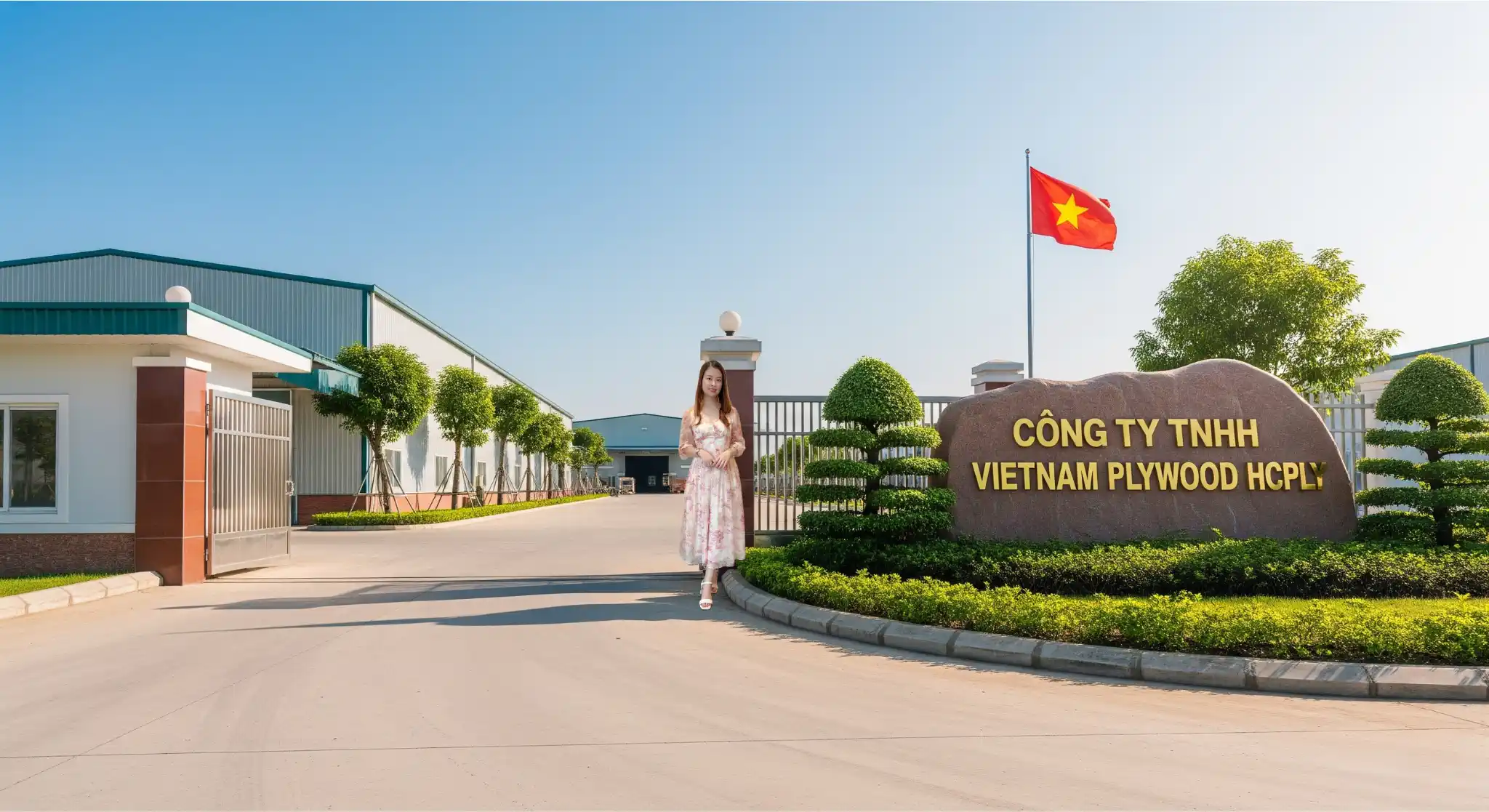
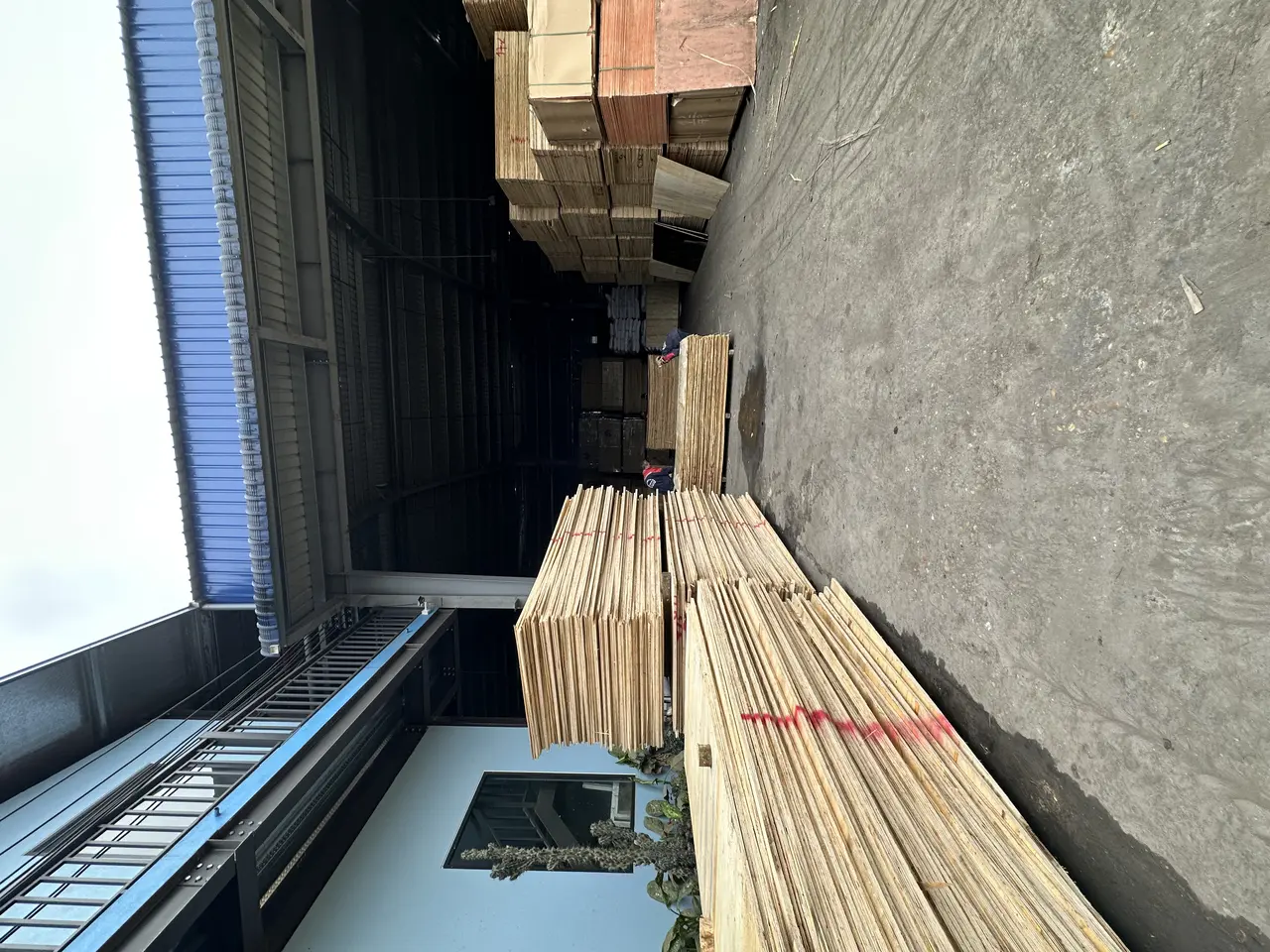
HCPLY manages 3 specialized production facilities in Northern Vietnam. Each facility serves a distinct product segment with different certification profiles.
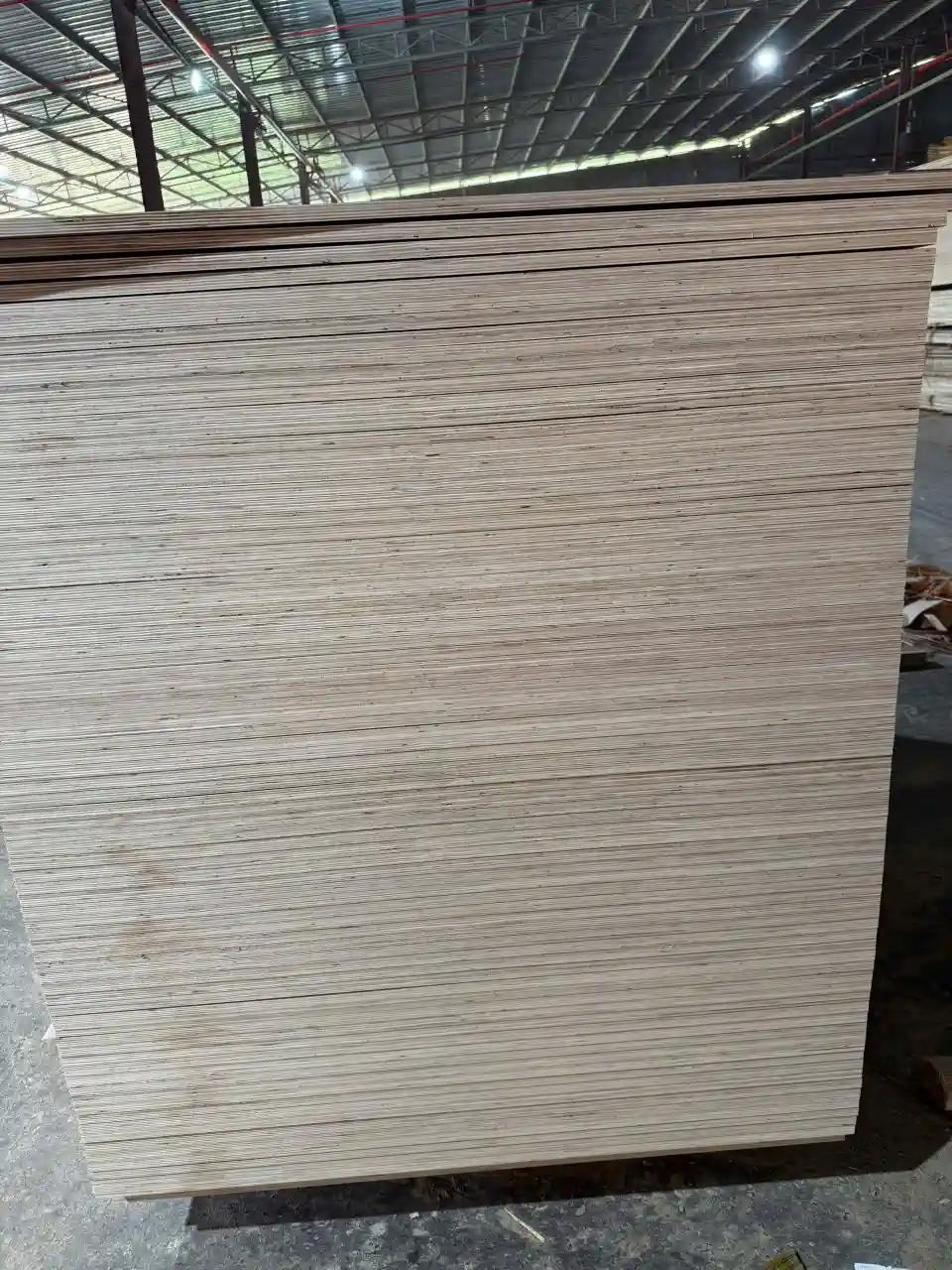
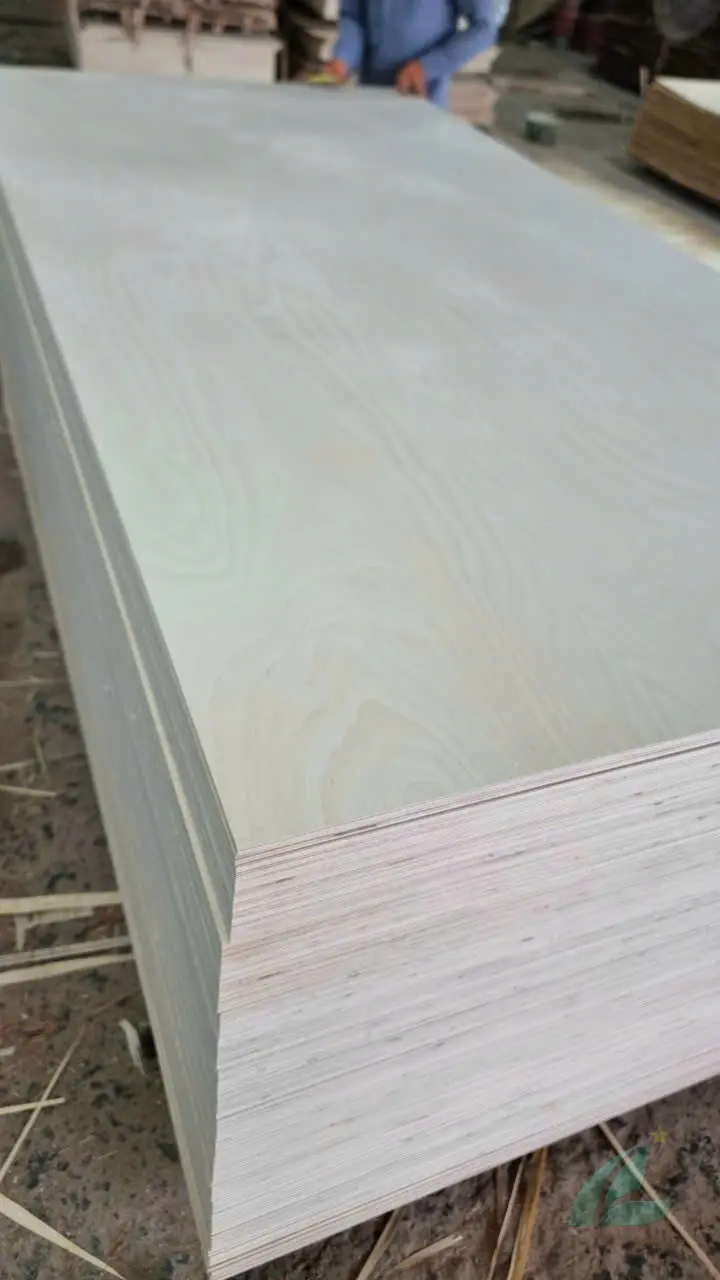
Facility 1 — Premium Furniture (CARB P2 certified):
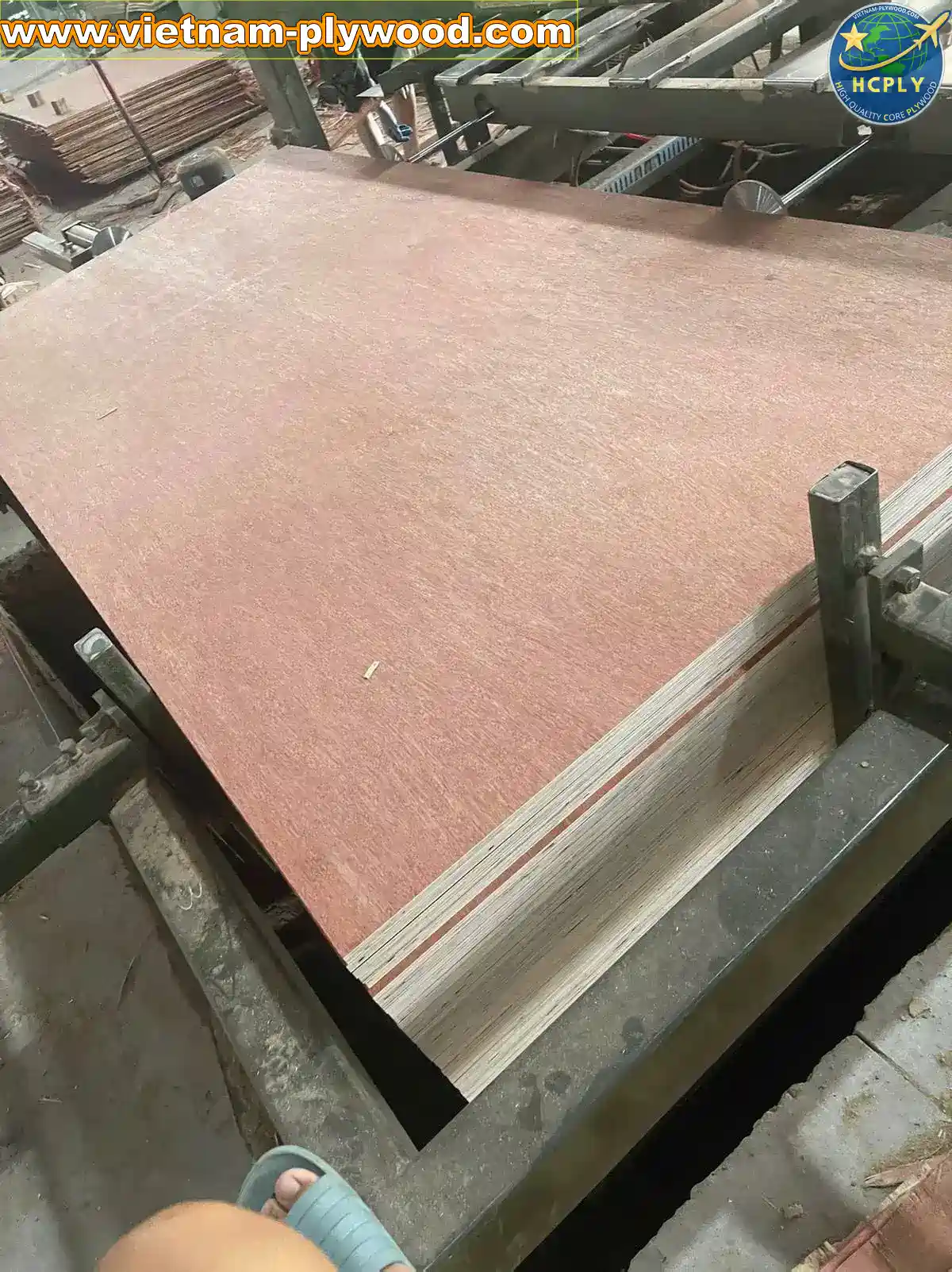
- Products: birch, EV (engineered veneer), okoume, pine, poplar, eucalyptus face plywood
- Core: styrax (480–500 kg/m³) or eucalyptus (650–750 kg/m³)
- Glue: Melamine (MR). Emission: E0 / CARB P2
- Core construction: full stitched — no gaps, no overlaps
- Surface: sanded (±0.3mm thickness tolerance)
- Certifications: FSC, CARB P2, CE, ISO 9001, EUDR
Facility 2 — Commercial & Packing (E1/E2, not CARB P2):
- Products: bintangor, packing-grade plywood for packaging and commercial interior
- Core: acacia (~580 kg/m³)
- Glue: Melamine (MR). Emission: E1/E2
- Not suitable for US furniture market
- Correct for Southeast Asia, Africa, general commercial markets
Facility 3 — Premium Film-Faced Construction (phenolic WBP):
- Products: film-faced plywood, anti-slip plywood
- Glue: Phenolic (WBP). Construction use — emission classification not primary requirement
- Available with CARB P2 emission documentation where required by spec
⚠️ Important: When requesting a quotation for US-bound plywood, explicitly specify “CARB P2 / TSCA Title VI compliant” in your inquiry. HCPLY will route your order to the certified facility. Mixing specifications between facilities is not possible — each facility is purpose-built for its segment.
“When a US buyer specifies CARB P2, we route that order to our furniture segment facility. The TPC number is printed on every panel. There is no ambiguity in the documentation chain.” — Lucy, International Sales Manager, HCPLY
📐 CARB P2 in Production: What Achieves 0.05 ppm?
Reaching ≤0.05 ppm formaldehyde is a function of three production variables — adhesive chemistry, pressing parameters, and quality control discipline.
Adhesive formulation: Standard urea-formaldehyde (UF) resins emit formaldehyde at levels that can exceed E1/E2. CARB P2 production requires low-mole-ratio UF, melamine-urea-formaldehyde (MUF), or no-added-formaldehyde (NAF) adhesives. MUF adhesives — which HCPLY’s furniture facility uses — provide better moisture resistance than pure UF while meeting the 0.05 ppm threshold.
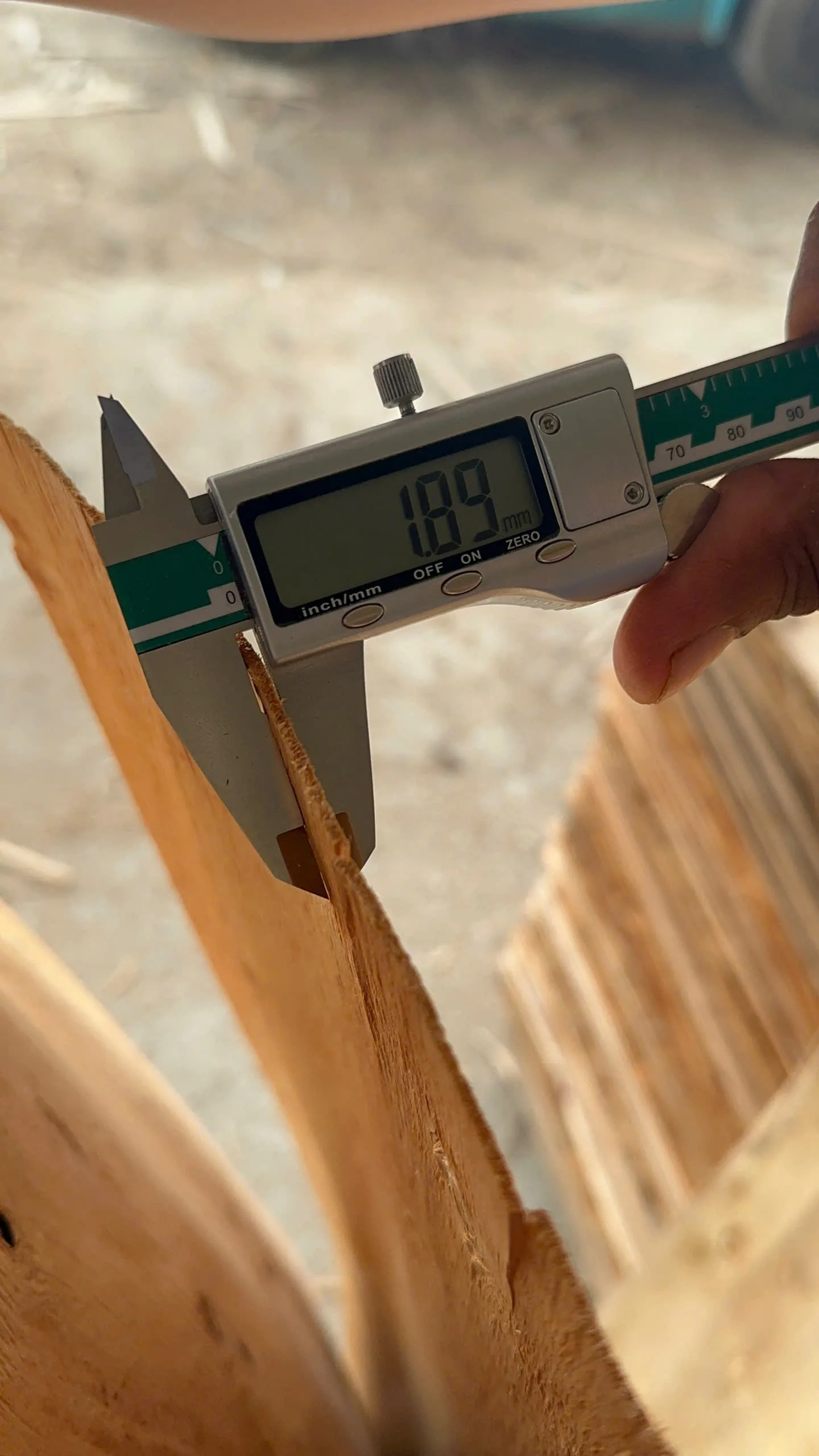
Hot-press parameters: Temperature, pressure, and press time must be calibrated to fully cure the adhesive. Incomplete curing leads to higher post-press formaldehyde release. HCPLY’s furniture facility uses automated temperature control with continuous monitoring logs — records available for TPC audit review.
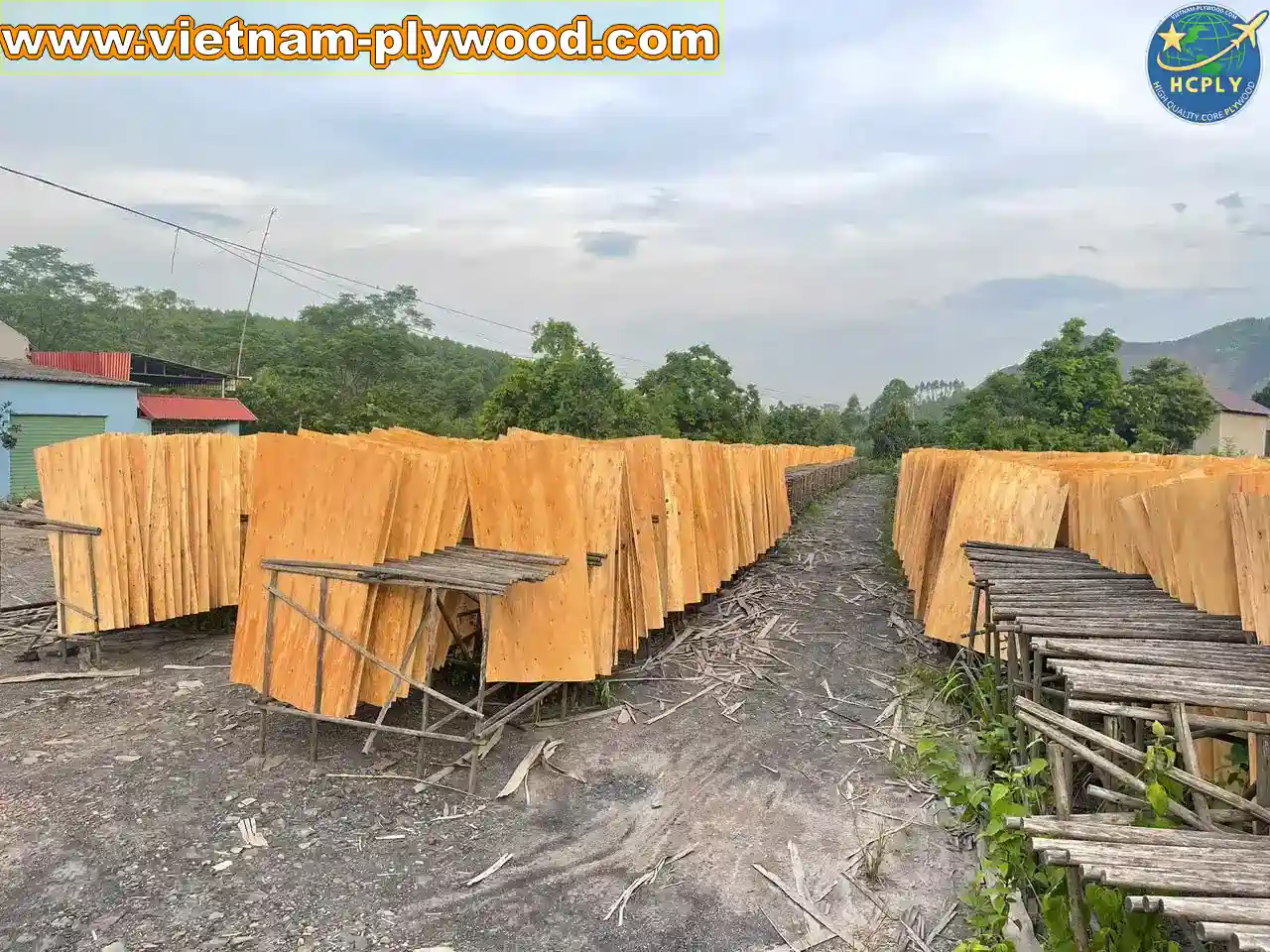
Core moisture content: Veneer moisture must be controlled to 6–8% before pressing. High moisture in core layers extends curing time and can cause internal stress that increases long-term formaldehyde migration. Veneer drying is monitored with moisture meters at each press cycle (HCPLY production data, 2026).
Post-press conditioning: Panels are conditioned in a ventilated warehouse for 48–72 hours before sanding and shipment. This off-gassing period reduces residual surface formaldehyde before the TPC quarterly sample collection.
📦 What Documentation to Request for CARB P2 Compliance
US importers carry legal responsibility for ensuring that composite wood products they import meet TSCA Title VI requirements. The EPA’s importer obligations require maintaining compliance records for 3 years.
When ordering CARB P2 plywood from any Vietnam supplier, demand the following documentation package:
| Document | What to Verify |
|---|---|
| TPC Certificate | TPC name (SGS/UL/Intertek), facility name, certificate number, valid dates |
| Test Report | Lab name (ISO 17025 accredited), ASTM E1333 or D6007 method, result ≤0.05 ppm |
| Panel Labels | TPC number printed/stamped on each panel or pallet |
| TSCA Title VI Statement | On commercial invoice: “These products are TSCA Title VI compliant” |
| Mill Certificate | Product spec, lot number, quantity, emission class |
HCPLY provides this complete documentation package with every US-bound shipment. The documentation is prepared by the facility and reviewed before container loading, not assembled after arrival.
For the full scope of US import compliance — including Lacey Act species declarations and AD/CVD duty considerations — see the complete US plywood compliance guide.
Request CARB P2 documentation samples from HCPLY
✅ CARB P2 vs. Other Emission Standards: Quick Reference
Buyers supplying multiple markets often need to understand how CARB P2 compares to European and Asian standards.
| Standard | Region | Limit | Test Method |
|---|---|---|---|
| CARB P2 / TSCA Title VI | USA (all states) | 0.05 ppm | ASTM E1333 / D6007 |
| E0 (EN 120) | EU, Japan, Korea | ≤0.5 mg/L | EN 717-1 (perforator) |
| E1 (EN 636) | EU standard | ≤1.5 mg/L | EN 717-1 |
| F4-star (JAS) | Japan | ≤0.3 mg/L | JIS A 1460 |
| E2 | Asia/general | ≤5.0 mg/L | Various |
Source: CARB ATCM, EN ISO standards, JAS F4-star specification
CARB P2 (0.05 ppm by ASTM E1333) and E0 (≤0.5 mg/L by EN 717-1) reflect similar health protection targets but use different test methods — large chamber vs. perforator. A product passing CARB P2 testing will typically meet E0 requirements, but the reverse is not automatically true due to method differences.
For buyers shipping split quantities to both the US and EU, specifying CARB P2 from a certified facility is the safest approach — it satisfies US requirements formally and EU requirements practically. Review the plywood certifications and export documentation guide for the full multi-market certification matrix.
🔗 Conclusion: Specifying CARB P2 Correctly Protects Your Supply Chain
CARB P2 compliance is a non-negotiable entry condition for the US plywood market. The standard applies to all composite wood products since March 2019, and the February 2026 EPA rulemaking proposals confirm the core 0.05 ppm limit will remain the federal benchmark.
For US-bound plywood from Vietnam, the compliance chain is clear: the manufacturing facility must hold a current TPC certificate, every panel must be labeled, and the importer must retain test reports and TSCA Title VI statements for 3 years.
HCPLY’s premium furniture segment meets CARB P2 through SGS-audited production, MUF adhesive formulations, and documented QC processes. Full certification documentation ships with every order.
To verify HCPLY’s CARB P2 certification status or request a test report for your compliance file, contact our export team directly.