


Birch vs okoume plywood is one of the most common specification questions our export team receives — and for good reason. The two panels share a similar sheet format but diverge sharply on density, price, surface character, and the markets that buy them in volume. Choosing the wrong face veneer for your target segment means either overpaying for quality your customers cannot see, or underselling with panels that fall short of premium expectations.
This guide draws on HCPLY’s production data from 3 specialized facilities and shipment records across 20+ countries to give importers a clear, decision-ready comparison.
📊 Birch vs Okoume Plywood — Quick Comparison Table
| Attribute | Birch Plywood | Okoume Plywood |
|---|---|---|
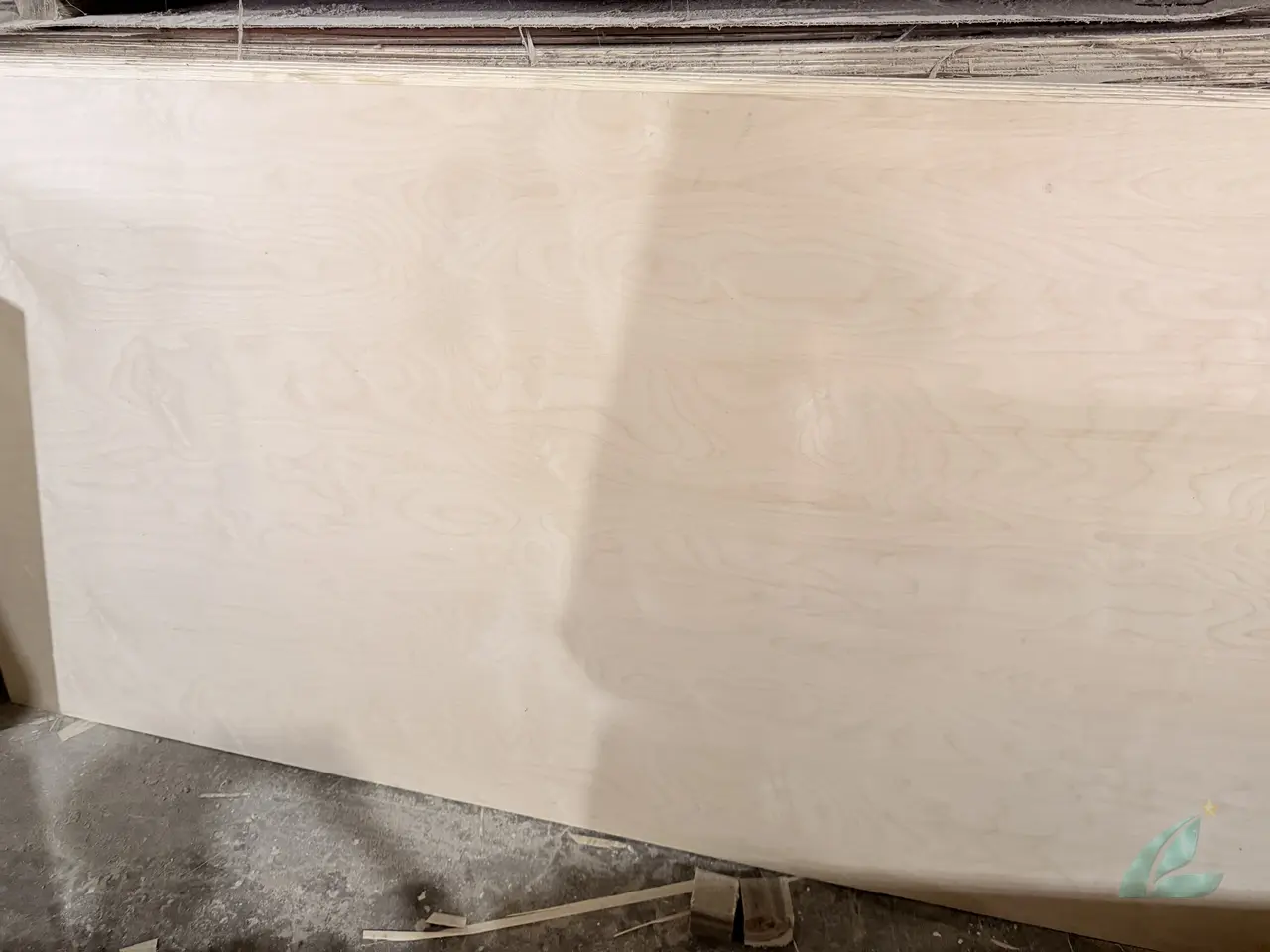
| Face color | Pale cream to light yellow | Warm pinkish-brown |
| Face grade (VN) | D / E / F | A / B |
| Core (VN standard) | Styrax | Styrax or eucalyptus |
| Core density | 480–500 kg/m³ (styrax) | 480–500 kg/m³ (styrax) or 650–750 kg/m³ (eucalyptus) |
| Glue options | Melamine (MR) or Phenolic (WBP) | Melamine (MR) or Phenolic (WBP) |
| Emission | E0 / E1 available | E0 / E1 available |
| Sanding | Yes (furniture-grade factories) | Yes (furniture-grade factories) |
| Thickness range | 4–30mm | 3–30mm |
| Standard sizes | 1220×2440, 1250×2500mm | 1220×2440, 1250×2500mm |
| Price tier | Premium — highest face veneer cost | Mid-range — above bintangor |
| Primary markets | Europe, Korea, luxury segments globally | India, Middle East, Southeast Asia, marine |
| Certifications available | FSC, CARB P2, CE, EUDR | FSC, CARB P2, CE, EUDR |
⚠️ Important: Core species determines panel density, not the face veneer. A birch-faced panel on styrax core weighs substantially less than a birch-faced panel on eucalyptus core. Always specify both face and core when requesting FOB pricing.
🪵 Face Veneer: What the Surface Tells You
The face veneer defines the panel’s name, its visual character, and its market positioning.
“The most common mistake new buyers make is comparing price without checking the core species. Styrax and eucalyptus cores produce very different panels at very different price points.” — Lucy, International Sales Manager, HCPLY
📌 Birch Face
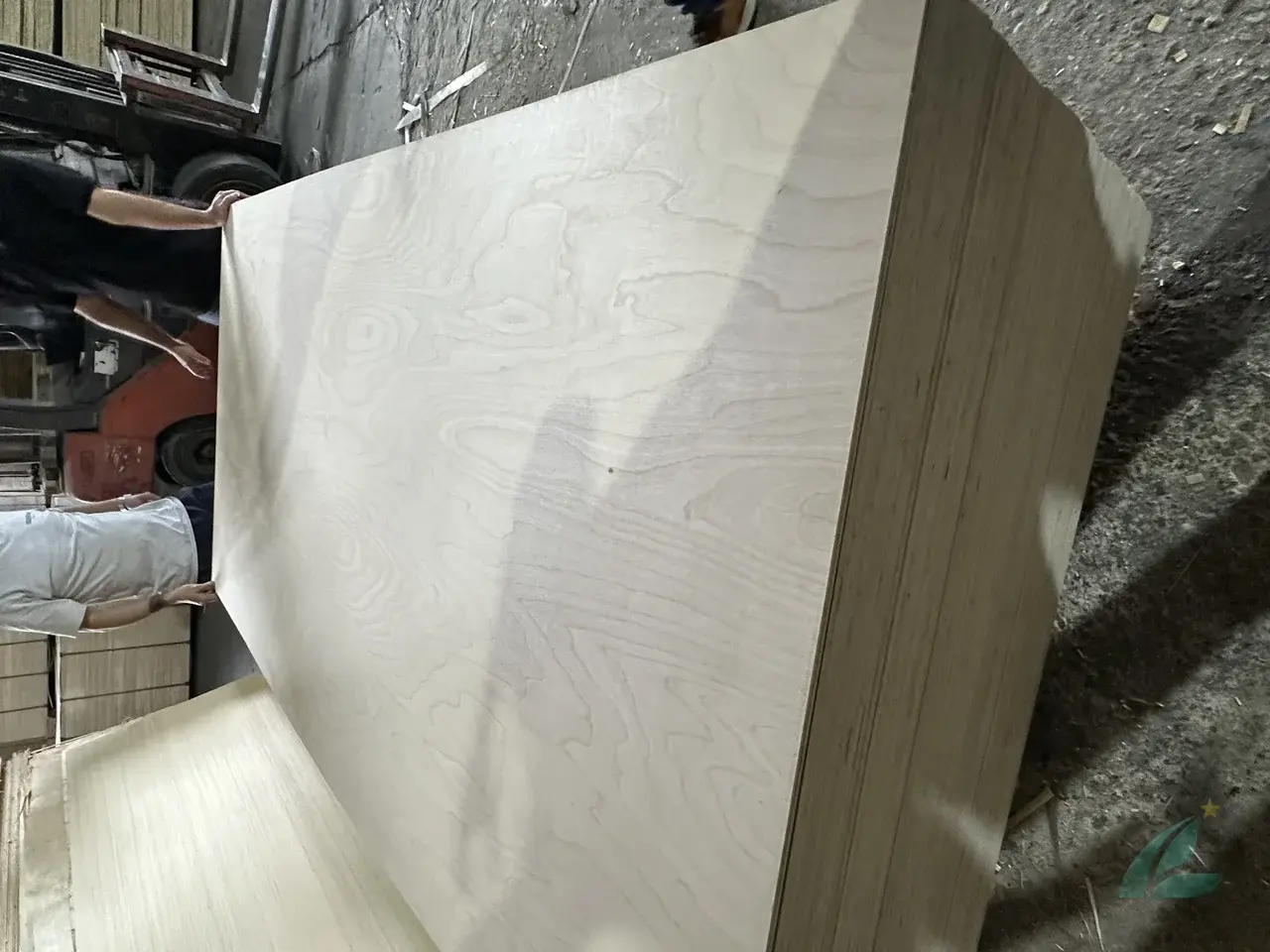
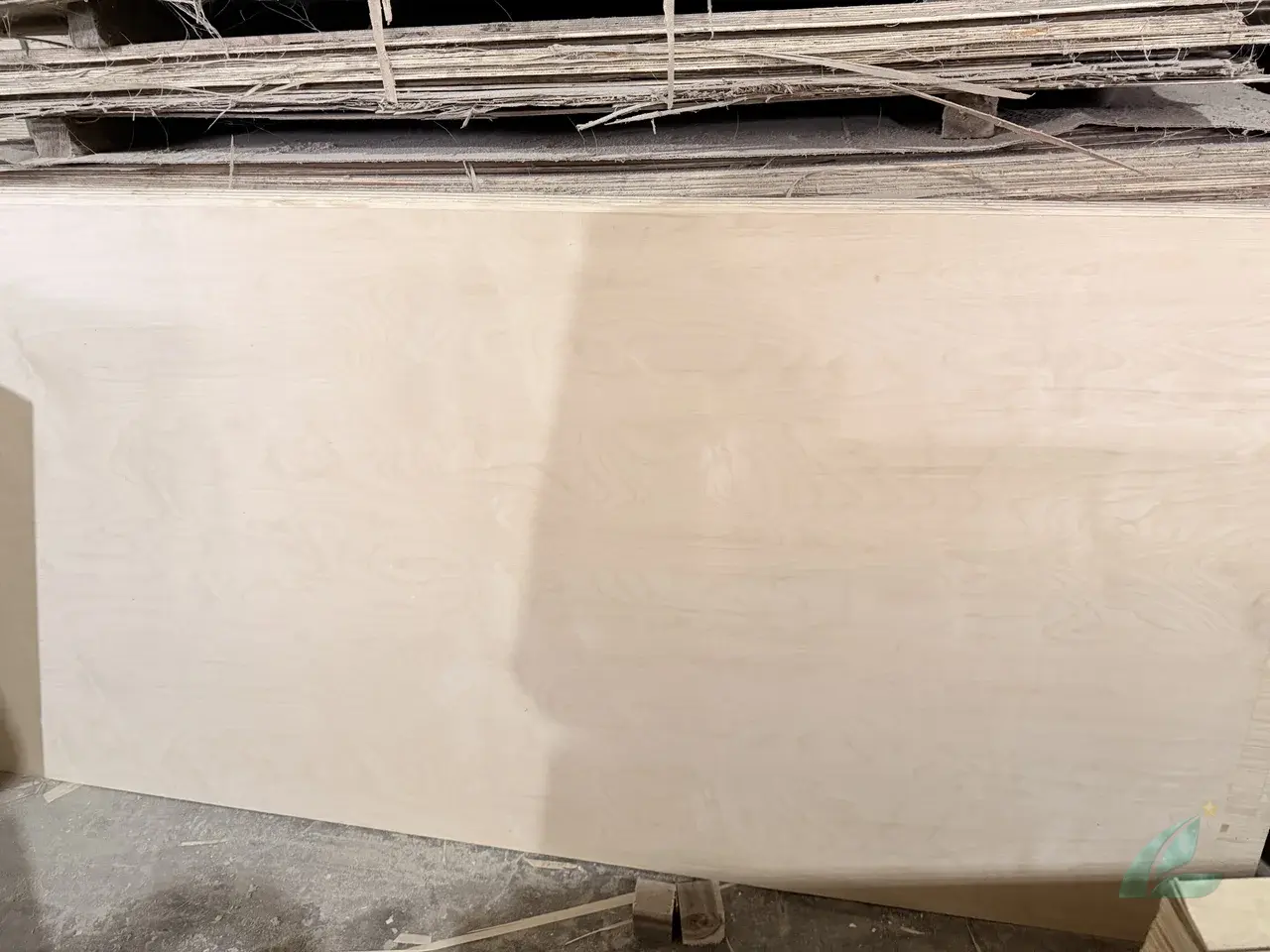
Birch veneer from Vietnamese production carries a pale cream to light yellow tone with a fine, tight grain structure. Surface defects are classified under a D/E/F grading system — the grading convention used in Vietnam differs from European Baltic birch (which uses BB/CC/CP). Grade D is the best-quality birch face available from Vietnamese factories. The tight grain accepts stain, lacquer, and paint uniformly, which is why European cabinet makers and Korean furniture brands specify it for projects where the face is visible and finishing precision matters.
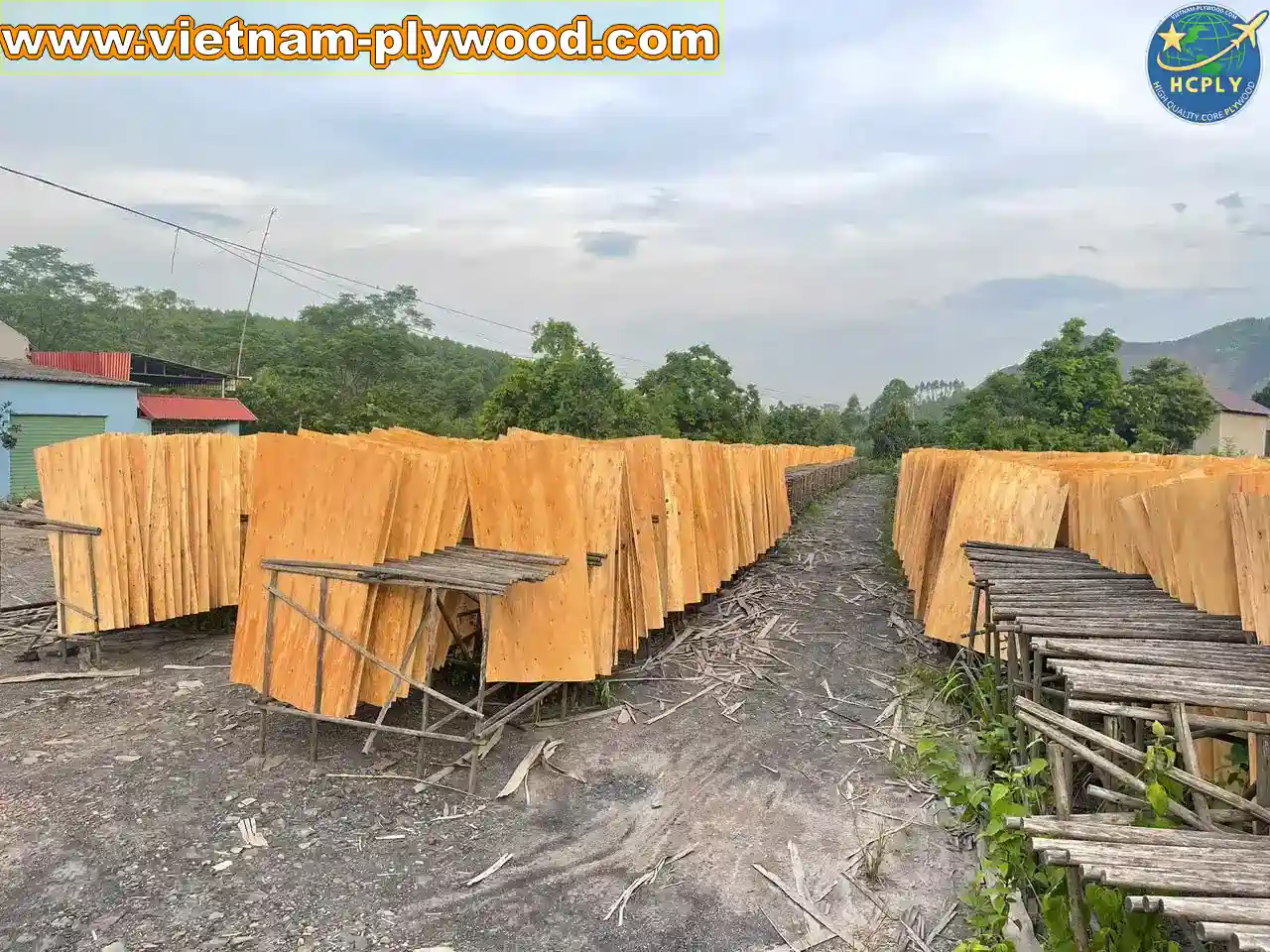
Face veneer thickness in Vietnamese production is 0.2–0.4mm — thinner than Baltic birch, which is why panel-level specifications like emission standard and core construction carry more weight than veneer thickness alone when evaluating quality tier.
📌 Okoume Face
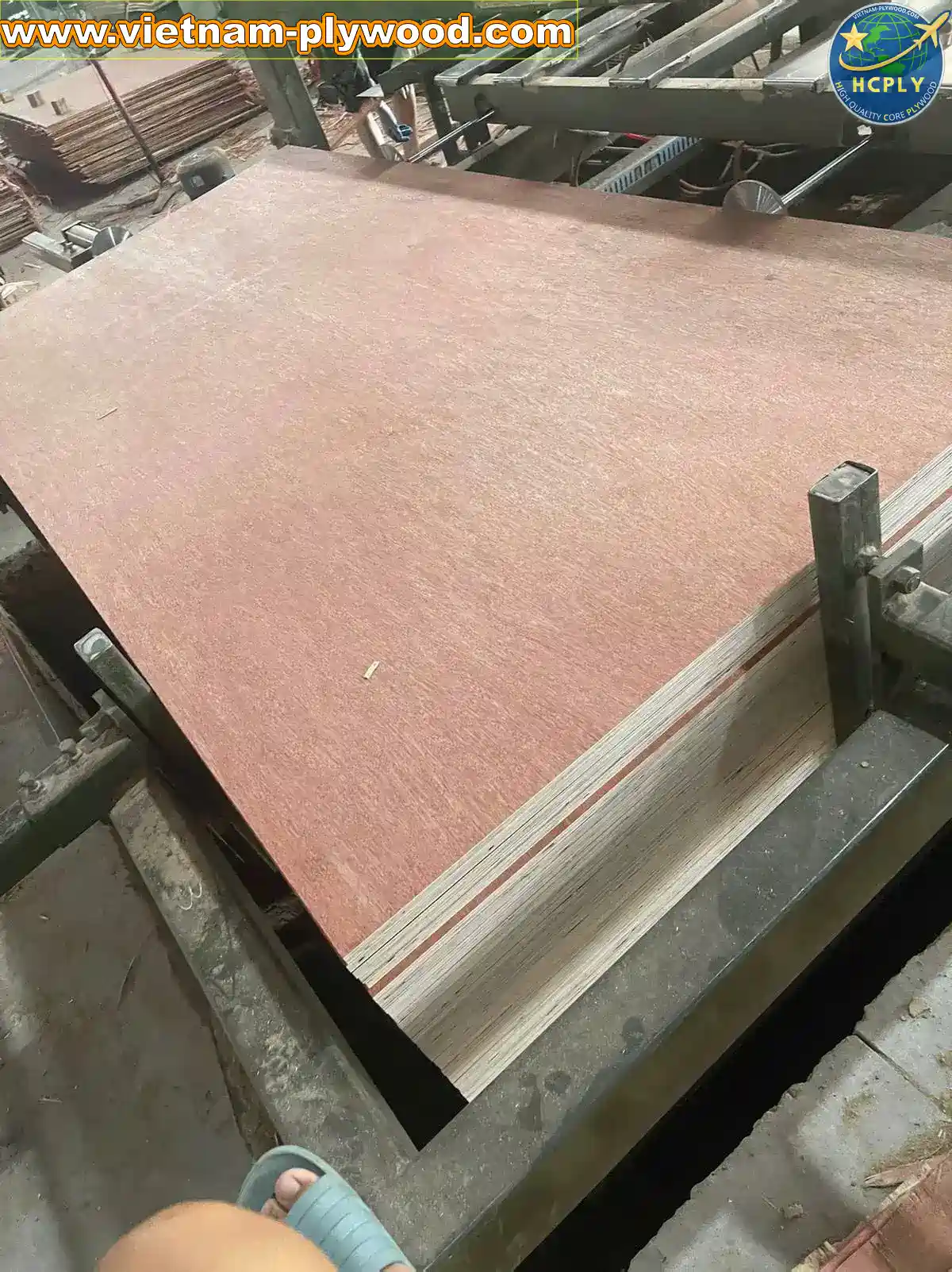
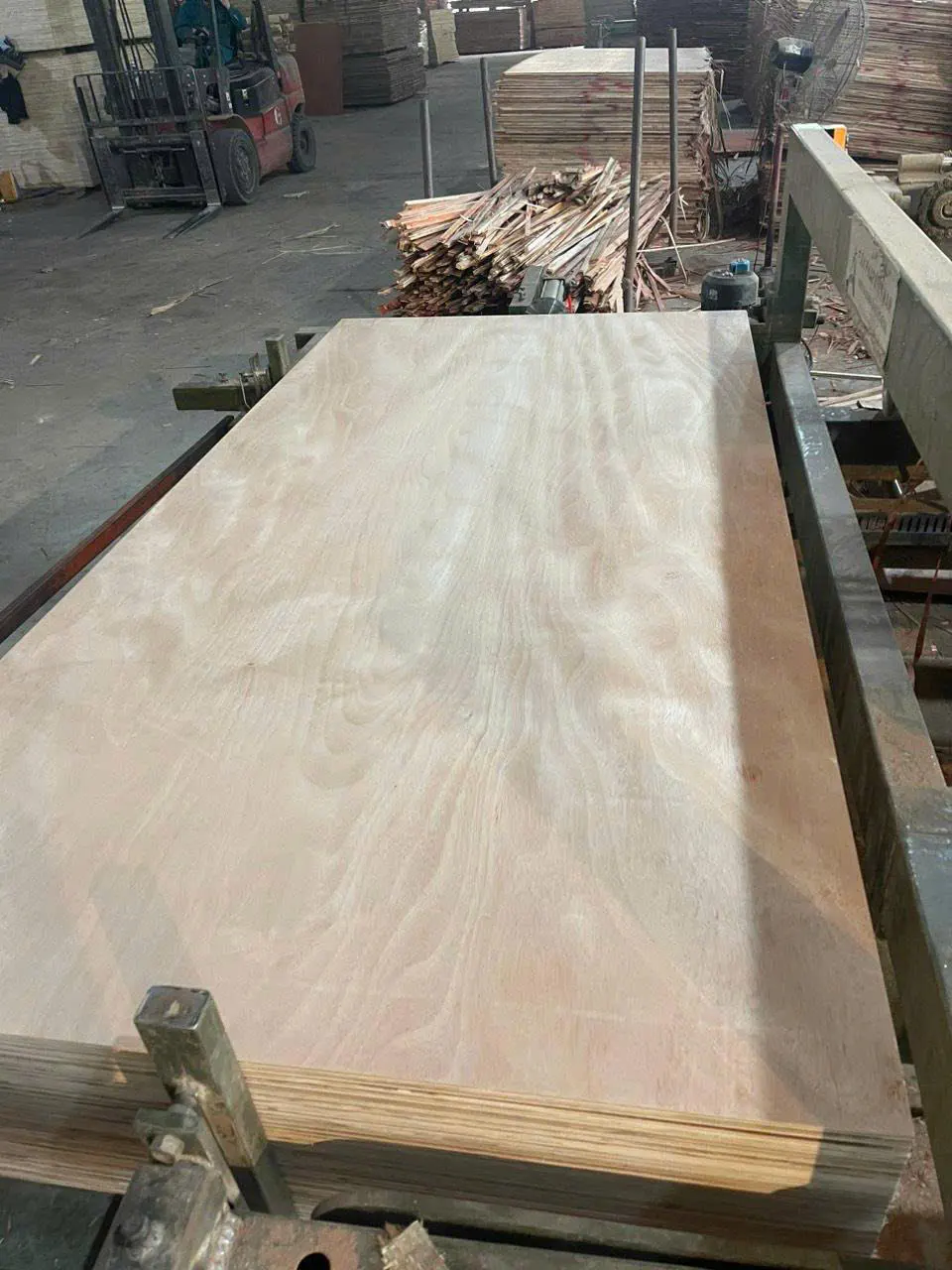
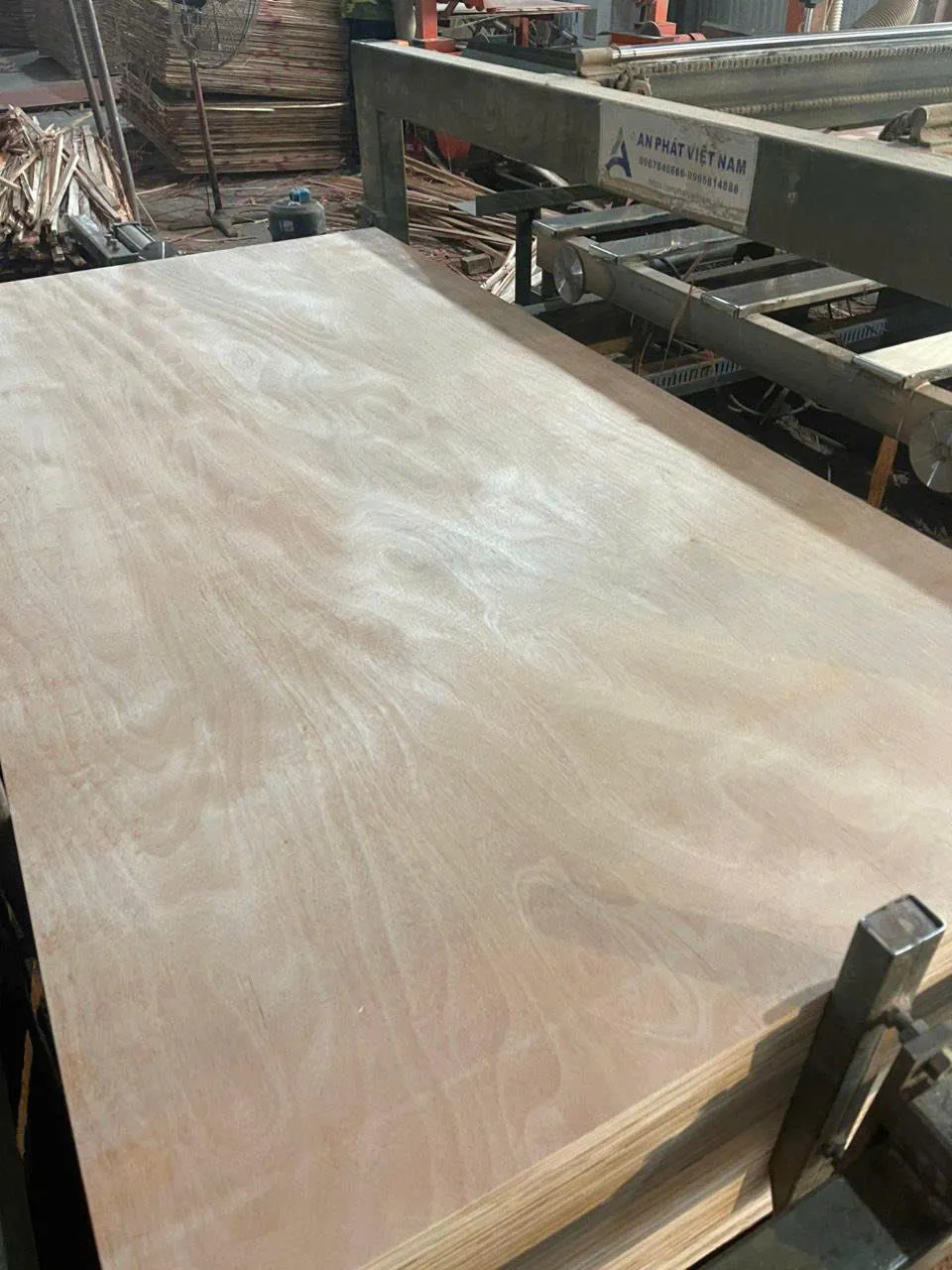
Okoume (Aucoumea klaineana) is a tropical hardwood from West and Central Africa. Its veneer produces a distinctive warm pinkish-brown color with a ribbon-like grain pattern and natural sheen. The face grade is A/B — an important nuance: a grade A okoume face is visually cleaner than a grade D birch face, even though birch commands the higher price. The price premium for birch reflects overall panel properties and market positioning, not surface cleanliness alone.
Okoume’s relatively low density makes it easy to cut, machine, and sand. Furniture factories that process high daily volumes of sheet goods value that workability advantage — faster throughput with lower blade wear.
🔧 Core Construction: Where Density Lives
Vietnamese plywood is named by face veneer. Both birch and okoume panels leave the factory on one of three core species: acacia, eucalyptus, or styrax. The core choice is the single largest driver of panel weight, freight efficiency, and — at the furniture-grade tier — structural performance.
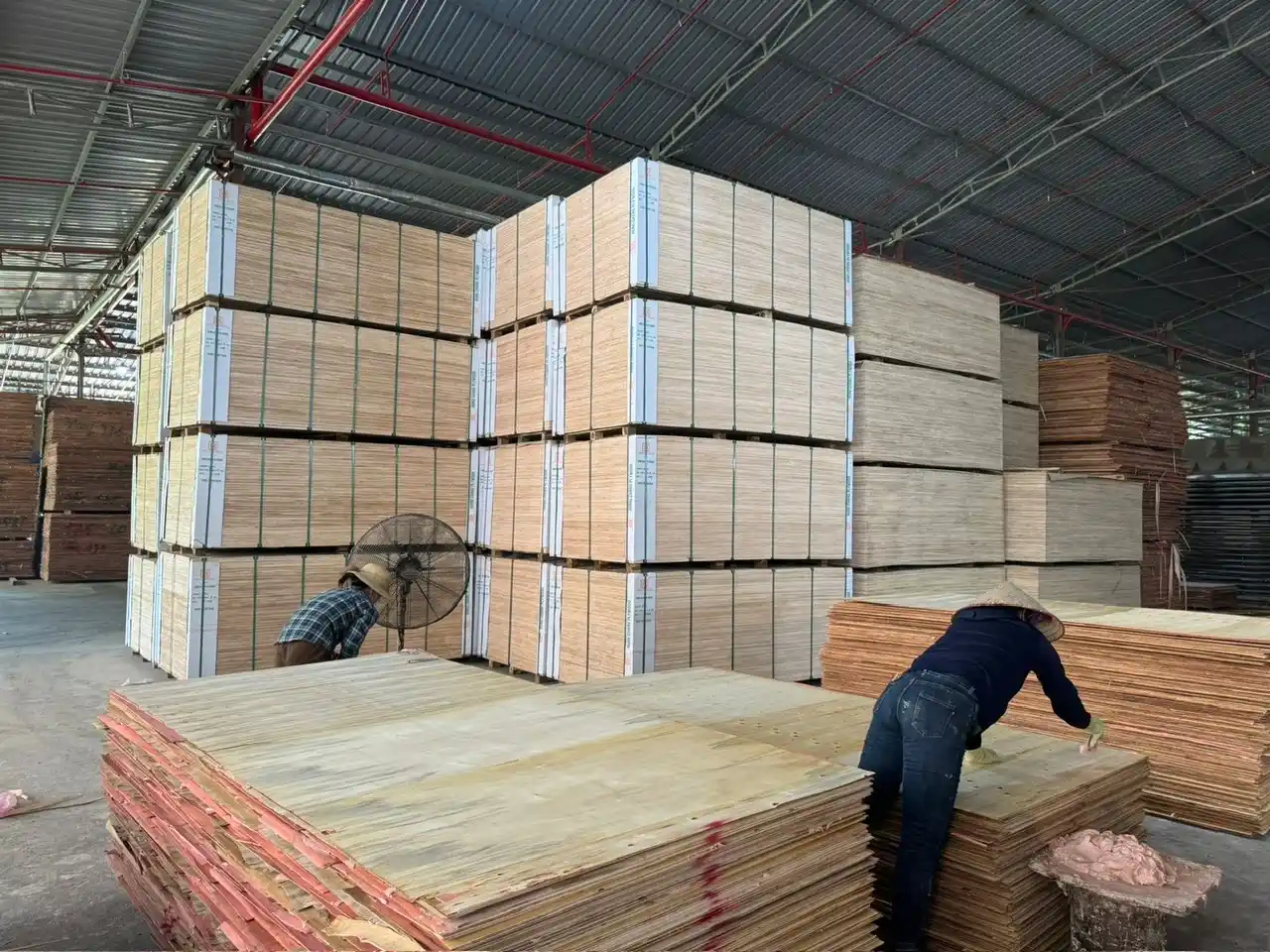
Styrax core (480–500 kg/m³): The standard choice for furniture-grade birch and okoume. Styrax is the lightest commercial core in Northern Vietnam. It grows in Phu Tho Province, the same region where HCPLY’s production facilities operate, which keeps supply consistent and pricing stable. Lighter weight means more pallets per container (18 pallets per 40HC on standard 1220×2440mm sheets), which directly lowers freight cost per CBM.
Eucalyptus core (650–750 kg/m³): Higher density, stronger screw-holding under sustained load, preferred for structural and marine applications. A 40HC container with eucalyptus-core panels reaches the 28.5 MT payload ceiling at just 15 pallets. That is 3 fewer pallets versus styrax in the same freight spend — a difference worth calculating into landed cost before choosing specifications.
Acacia core (~580 kg/m³): Common in commercial and packing-grade panels. At the furniture-grade tier, styrax is preferred for its lighter weight and cleaner grain structure.
⚠️ Note: Birch core from Vietnam does not exist. Styrax is the correct substitute — white, lightweight, and structurally comparable. Any supplier offering “full birch core” from a Vietnamese factory is either importing the core (rare, significantly more expensive) or mislabeling styrax.
For precise container load calculations by core species and thickness, see our 40HC container packing guide.
💰 Price Comparison: What You Pay and Why
Birch plywood is the highest-priced face veneer in the Vietnamese production range. The premium reflects specialty veneer sourcing, higher grading rejection rates during production, and the buyer segments that specify it. European and Korean manufacturers with strict quality standards drive sustained demand that keeps the price floor elevated.
Okoume plywood sits in the mid-range — priced above bintangor (the entry-level face) and typically below gurjan. That positioning makes okoume the volume leader in the Indian market, where buyers want an attractive face veneer at a competitive landed cost.
The price gap between birch and okoume varies with veneer availability, but birch consistently runs 30–45% higher per CBM than equivalent-spec okoume at FOB Hai Phong. For buyers sourcing at container-load scale, that gap compounds quickly across multiple shipments in a trading cycle.
A critical sourcing note: The correct comparison is not birch vs okoume in isolation — it is the full specification stack. A furniture-grade birch panel (styrax core, full-stitched, E0 emission, calibrated sanding, grade D face) and a commercial okoume panel (acacia core, loose-laid, E2 emission, unsanded, grade B face) occupy completely different market segments and cannot be price-compared directly. Request matching specifications from both panels to get a valid landed-cost comparison.
Get a Free Quote — our sales team prepares matched-spec quotes for both products on request.
🏭 Applications: Which Product Goes Where
📌 Birch Plywood Applications
Birch’s pale, uniform face and tight grain structure make it the correct specification for:
- European-style cabinetry and millwork — the face accepts CNC routing cleanly with minimal fiber tearout on cut edges
- High-end furniture with visible panel faces — birch grain reads as premium in Scandinavian and minimalist design markets
- Luxury interior fitouts — wardrobe interiors, display cabinetry, and shelving where the panel face is exposed to end users
- Projects requiring precise stain or lacquer finishes — the pale, tight grain minimizes color variation across a finished piece or batch. For factory-finished options, see birch UV coated plywood
Okoume Plywood Applications
Okoume’s lighter weight, warm tone, and workability advantage suit it for:
- High-volume furniture production — weight reduction speeds handling on the factory floor and lowers freight cost per finished piece
- Marine interiors — okoume is the traditional boatbuilding veneer; its low density and strength-to-weight ratio make it standard in marine-grade panels when bonded with WBP phenolic glue
- Wall paneling and decorative cladding — the natural warm tone works well without heavy finishing treatment
- Export-grade furniture for price-sensitive markets — India, Southeast Asia, and the Middle East where face quality must be high but cost control is equally non-negotiable
Both products are available with FSC and CARB P2 certification from HCPLY’s furniture-grade production facility. For buyers targeting the US or EU markets with chain-of-custody documentation requirements, our export certifications guide covers the full paperwork stack.
⚙️ Glue, Emission, and Market Compliance
Glue type and emission standard are two separate specifications. Confusing them is the most common sourcing error our team encounters from first-time importers.
Glue type determines moisture resistance:
- Melamine (MR): 12-hour boiling test. Suitable for interior furniture, cabinets, and general applications not exposed to prolonged moisture.
- Phenolic (WBP): 72-hour boiling test. Required for marine service, exterior construction, and any application with direct water contact.
Emission standard determines formaldehyde off-gassing:
- E0 / CARB P2: Required for the US, EU, Japan, South Korea, and Australia. Mandatory for furniture exported to these markets.
- E1: EU general standard, acceptable for many European applications not subject to stricter local rules.
- E2: Common in lower-cost panels for Southeast Asian and African markets where tighter emission limits are not enforced at import.
Both birch and okoume panels from HCPLY are available with E0 emission and either glue specification. The combination you select depends on end-market requirements and the application — not the face veneer. Our quality control process includes emission testing on every production batch with documentation available for each shipment.
📦 Container Loading: Weight vs Volume
Container efficiency is a real cost factor that importers sometimes underestimate when comparing specifications.
Okoume on styrax core — the standard furniture export configuration — loads at 18 pallets per 40HC, yielding approximately 53 CBM at a weight comfortably within the 28.5 MT payload ceiling. That is the most CBM-efficient standard configuration in the Vietnamese plywood range.
Birch on styrax core loads the same 18 pallets at similar CBM. The birch veneer adds marginal weight per sheet versus okoume veneer, but the difference is small enough that both products share the same pallet count on styrax core. The weight gap between birch and okoume becomes meaningful only when ordering multiple containers across a trading cycle.
If a buyer specifies eucalyptus core for either product — typically for marine or structural applications requiring higher density — the container drops to 15 pallets before hitting the 28.5 MT ceiling. Three fewer pallets in the same freight spend increases landed cost per sheet by approximately 15–20%, depending on current freight rates.
For buyers shipping mixed-spec containers with both products, our team recalculates the blended pallet weight before confirming allocation. See the full methodology in our container packing calculation guide and the CBM per thickness reference table.
Request a Container Packing Calculation — provided free with every FOB quotation.
🌍 Market Fit: Which Regions Specify Which
The export records from HCPLY’s 20+ country shipping history show clear regional patterns:
Birch plywood is specified consistently in:
- Europe (Germany, Poland, France, Spain) — cabinetry and millwork manufacturers with EN-standard quality requirements
- South Korea — premium furniture and interior fitout projects where pale face color is a design requirement
- Australia and North America — high-end residential cabinetry where pale face color and CARB P2 compliance are both required
Okoume plywood dominates volume in:
- India — the largest single-country buyer of Vietnamese okoume; furniture factories value the balance of face quality and competitive landed cost
- Middle East (UAE, Saudi Arabia) — construction-linked furniture manufacturing with high shipment volume
- Southeast Asia (Philippines, Malaysia) — general furniture production and light construction panel applications
- Marine sector globally — boatbuilders and marine fitout contractors, specification driven by WBP glue and EN 314-2 bond quality compliance
Neither product is exclusively tied to its primary market. European buyers source okoume for specific lightweight or marine applications; Indian premium furniture manufacturers specify birch for luxury-tier production. The regional patterns reflect typical buyer profiles, not fixed rules.
For firsthand accounts from importers across these markets, see our Vietnam plywood reviews.
✅ How to Choose: Decision Framework
Specify birch plywood when:
- Your buyers are in Europe, Korea, or premium segments globally
- The panel face will be visible and the color must be pale and uniform
- Precise staining, CNC routing, or lacquering is required
- You are producing luxury cabinetry, millwork, or display furniture
Specify okoume plywood when:
- Price competitiveness is a primary factor in your target market
- Volume is high and workability on the production floor matters
- The face veneer needs to be attractive but not necessarily European pale tones
- Marine-grade service with WBP phenolic glue is required
- You are targeting India, the Middle East, or Southeast Asia at scale
When to run both: Many importers who serve multiple market segments stock both SKUs in rotation. HCPLY produces both from the same furniture-grade facility, which means a single purchase order can cover two product lines with consistent quality documentation and a single QC contact point.
Our sales team has helped buyers from 20+ countries structure dual-product import programs. Contact HCPLY to discuss your product mix and receive matched specifications for both.
📋 Buyer’s Specification Checklist
Before requesting a quote on either product, confirm these 8 parameters with your supplier:
- Face veneer species and grade — birch (D/E/F) or okoume (A/B)
- Core species — styrax, eucalyptus, or acacia (each produces different weight per CBM)
- Core construction — full-stitched, finger-jointed, or loose-laid
- Glue type — melamine (MR) or phenolic (WBP)
- Emission standard — E0/CARB P2, E1, or E2 (confirm your end-market requirement first)
- Sanding — calibrated on both faces, one face, or unsanded
- Thickness tolerance — ±0.3mm is HCPLY standard; verify what your supplier commits to in writing
- Certifications required — FSC, CARB P2, CE, EUDR (documentation lead time varies by certification)
Missing any of these from an initial inquiry typically produces quotes that cannot be compared accurately across suppliers. Providing full specifications upfront generates faster and more reliable FOB pricing — and eliminates the most common post-order disputes over product quality.
Related reading:
- For a three-way comparison, see poplar vs birch vs okoume face veneers.
- European buyers should also see okoume plywood for European furniture factories.
- For birch grading, read birch plywood grade D/E/F explained.
Disclosure: This article is published by HCPLY, a Vietnam-based plywood manufacturer and export operator. While we aim to provide objective industry guidance, readers should consider our perspective as a market participant when evaluating recommendations.
🔗 Related Articles
- Okoume Plywood Vietnam — Product Specifications
- Birch Plywood Vietnam — Product Specifications
- Plywood Container Packing Calculation for 40HC
- Plywood Face Veneer Types — Complete Buyer Guide
- Vietnam Plywood Reviews from Global Importers
✅ Conclusion
Birch and okoume plywood from Vietnam serve different buyer profiles — and understanding the difference before placing a purchase order saves money, time, and market credibility. As of 2026, birch remains the premium face veneer choice for European cabinetry, Korean furniture production, and any project where a pale, tight-grained surface matters. Okoume is the volume leader for price-competitive markets — India, the Middle East, and Southeast Asia — where workability, lighter weight, and marine applications drive specification decisions.
The right choice depends on your end-market, not on which product is “better” in isolation. Both are produced at HCPLY’s furniture-grade facility with identical quality control processes, export documentation, and certification options. Many importers stock both SKUs and source them under a single purchase order.
Contact HCPLY Now — Get a Free Quote Birch and okoume plywood with factory documentation. FOB Hai Phong. MOQ 1 × 40HC.