


Grade D is the best birch plywood grade you can buy from Vietnam — not the worst. This confuses almost every first-time buyer, because in most grading systems A sits at the top and D is near the bottom. For Vietnamese birch plywood, the alphabet starts at D. Understanding why, and what D/E/F actually means at the veneer surface, prevents costly specification errors before a container ships.
📋 Why Vietnam Uses D/E/F, Not A/B/C
Vietnam does not grow birch trees commercially. All birch face veneer arrives as imported material — predominantly from Russia, China, and Eastern Europe (HCPLY sourcing data, 2026). The grading conventions in those supply chains follow Russian GOST export standards, where the top grades are labeled B and BB, not A.
When Vietnamese manufacturers receive and process this veneer, the practical available range — after natural selection through import and production — lands in a D-to-F window. Grade A birch veneer (single-piece, entirely clear face, no defects) is rare and expensive even at the source. Grade B (minor pin knots only, no patches) commands a 30–40% premium over Grade D. Vietnamese factories work with what is commercially viable to import at scale.
The result: Grade D is the top of the Vietnamese birch range. It is not a downgrade. It is the premium tier within the production reality of Vietnamese manufacturing.
💡 Key Insight: When a European buyer specifies “birch plywood Grade B” and receives a Vietnamese quote for “Grade D,” they are NOT receiving an inferior product category. Grade D from a well-managed Vietnamese factory with full-stitched styrax core meets most furniture-grade requirements for EU cabinetry and interior joinery.
📦 What Each Grade Actually Looks Like
📌 Grade D — Best Available from Vietnam
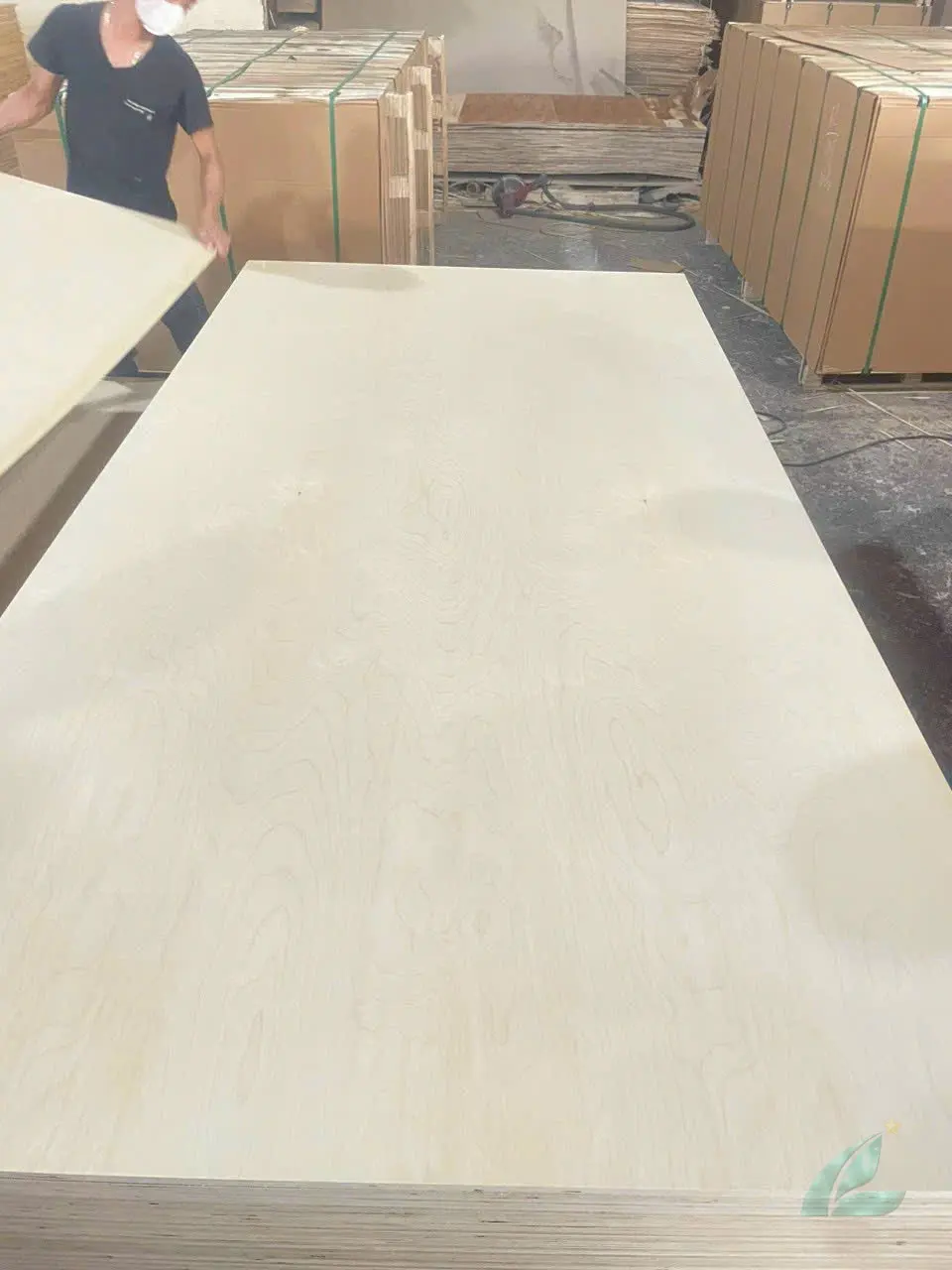
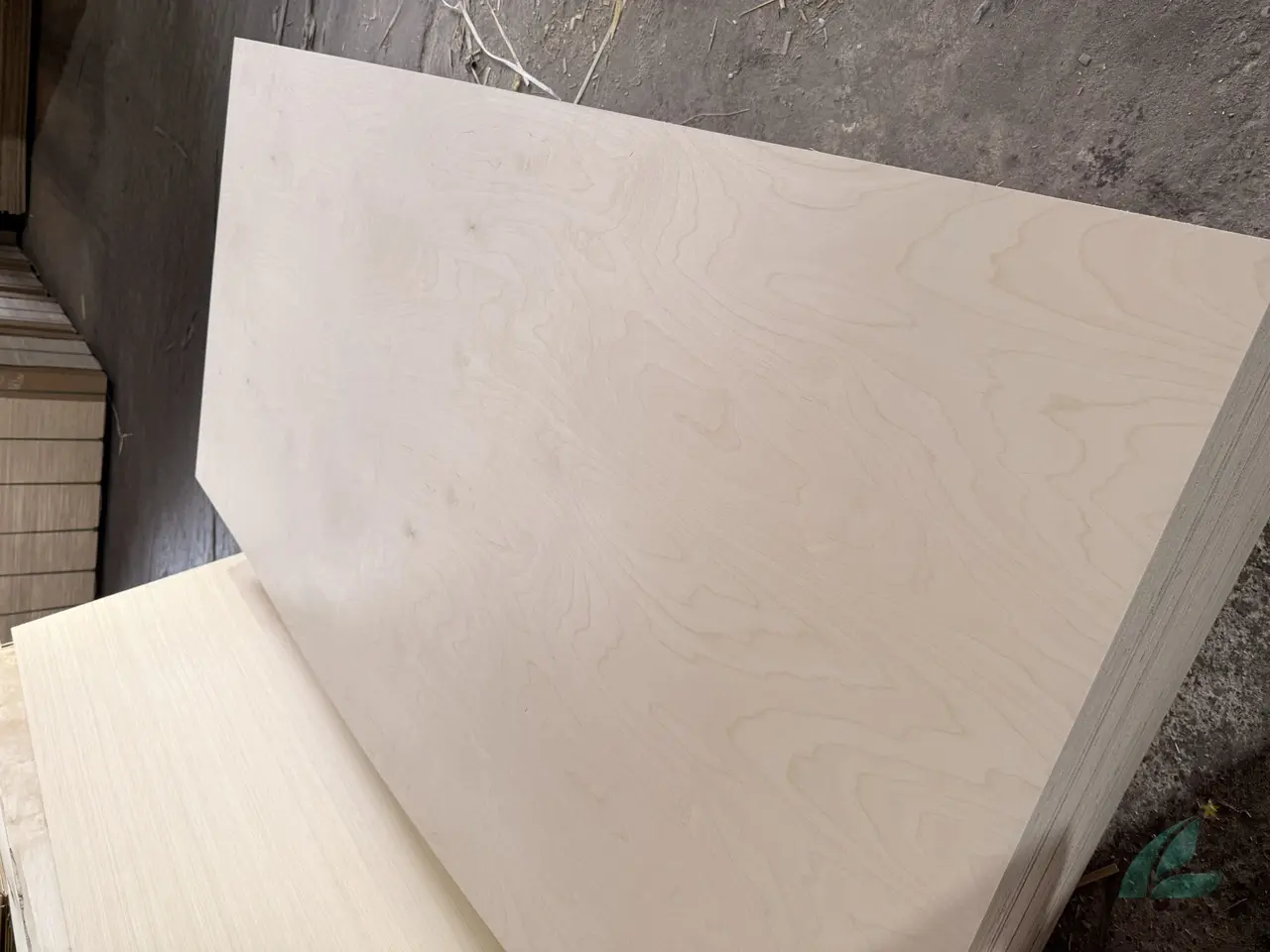
The Grade D face veneer is as clean as the Vietnamese supply chain permits.
Surface characteristics:
- Light cream to honey color, relatively uniform
- Small oval or round patches where minor knots or voids have been filled
- Maximum patch count: typically 4–8 per standard 1220×2440mm sheet (varies by supplier)
- Tight pin knots may be present but are scarce
- No open knots, no splits, no delamination at face
- Light sanding marks visible — surface is calibrated to ±0.3mm
Where Grade D is specified:
- Kitchen cabinet doors and box panels with natural finish or light stain
- Furniture fronts with transparent lacquer
- Interior joinery where birch grain appearance matters
- Korean and Japanese market furniture orders with E0 requirements
⚠️ Important: Grade D still has patches. If you are expecting a completely clear, patch-free face, you are looking for Baltic B-grade material from Finnish or Russian mills — a different supply source entirely.
⚙️ Grade E — Mid-Grade, Versatile
Grade E allows more visual variation than Grade D while still maintaining structural integrity and glue bond quality.
Surface qualities:
- More patches per sheet — often 10–20 on a standard panel
- Patches may be oval or more irregular in shape
- Color variation is more pronounced: mix of light and darker sections possible
- Sound tight knots (knots that are closed and stable) are permitted in higher frequency
- Occasional hairline cracks or splits ≤0.5mm width may be present
Where Grade E is specified:
- Painted furniture where surface will be fully opaque — saves cost vs Grade D
- Cabinet interiors, shelving, and hidden structural panels
- Substrate for HPL (high-pressure laminate) bonding
- Lower-tier furniture markets where price matters more than appearance
The cost difference between Grade D and Grade E typically ranges from 5–12% per CBM (HCPLY production data, 2026), making Grade E attractive when natural birch appearance is not a requirement.
🔍 Grade F — Lower Grade, Substrate Use
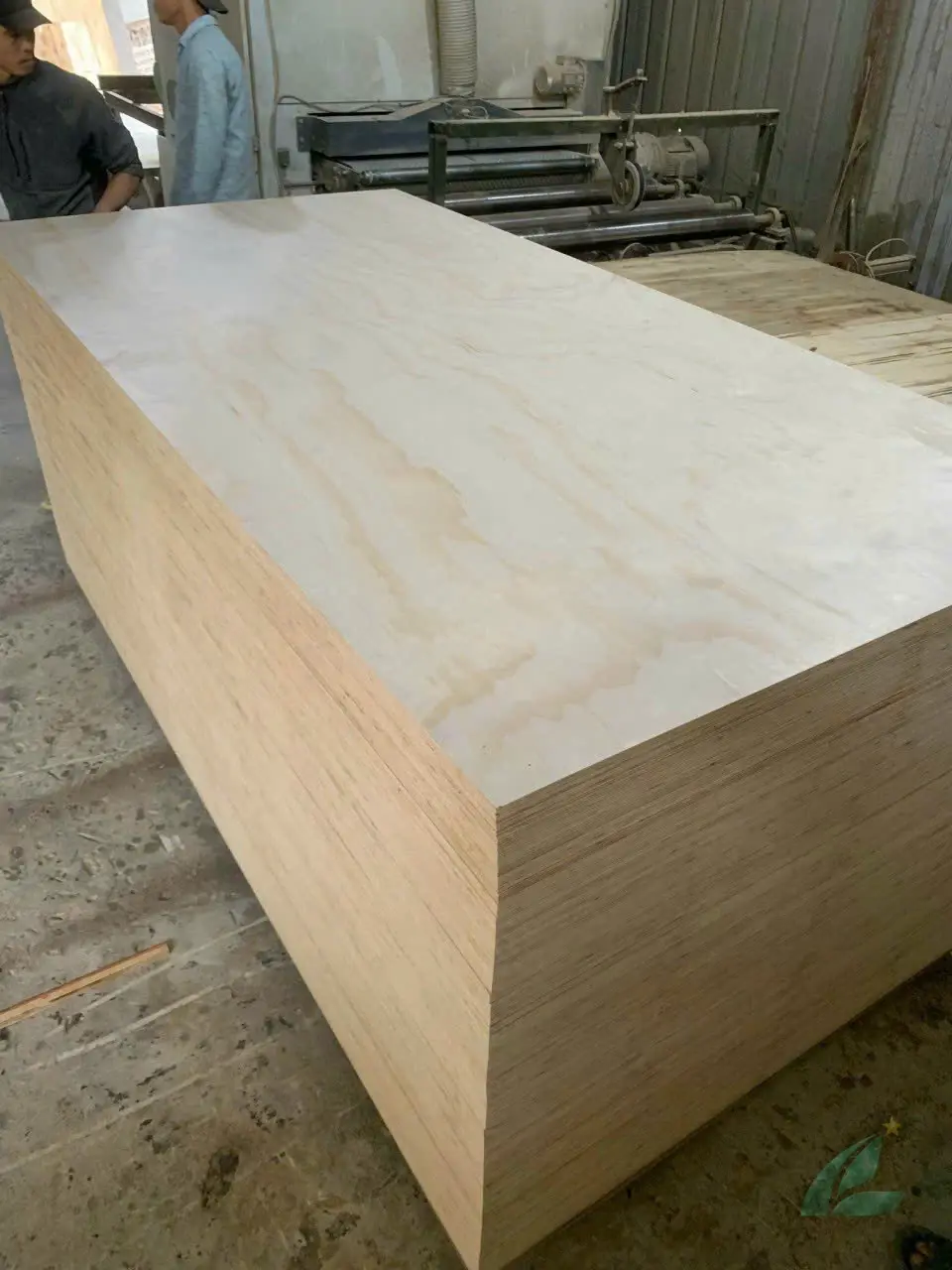
Grade F represents the lower end of birch face veneer quality from Vietnam.
Surface traits:
- High patch count — 20+ per sheet possible
- Open defects may be present (small, stabilized, but not filled)
- Significant color variation across the face
- Splits and cracks exceeding 0.5mm width are acceptable
- Surface is not sanded or only lightly calibrated
Where Grade F is specified:
- Industrial packaging where birch face is applied for aesthetics at minimum cost
- Lamination substrate where a melamine paper or PVC film covers the face entirely
- Export markets with minimal finish requirements
- Packing crates requiring birch-faced panels by specification
Grade F birch plywood from Vietnam is rarely exported to Europe or Korea — those markets demand Grade D or E minimum. Grade F is most common in Middle East and Southeast Asia price-driven orders.
📊 Grade Comparison Table
| Feature | Grade D | Grade E | Grade F |
|---|---|---|---|
| Best use | Furniture, cabinets | Painted or laminated panels | Industrial packaging |
| Patches per sheet | 4–8 | 10–20 | 20+ |
| Open knots | None | None | May occur |
| Color consistency | High | Medium | Low |
| Surface | Lightly sanded | Lightly sanded | Unsanded or minimal |
| EU market export | Yes | Yes | Rarely |
| Price vs Grade D | Base | –5 to –12% | –15 to –25% |
Data based on HCPLY factory production standards, 2026.
🔧 How Vietnamese D/E/F Maps to Baltic B/BB/CP/C
Birch plywood grading in Vietnam follows a different logic than the Baltic system most European and US buyers know. Buyers who have purchased Baltic birch from Finnish or Russian suppliers will be familiar with the B/BB/CP/C grading system defined by Russian GOST standards. Here is the practical mapping for birch plywood grading Vietnam factories use:
| Vietnamese Grade | Approximate Baltic Equivalent | Notes |
|---|---|---|
| D | BB to CP | Close to BB — patches present, no open defects |
| E | CP to C | More patches, some open knots allowed |
| F | C | Open knots, unsanded, structural only |
⚠️ Note: This mapping is approximate. Baltic B-grade (single-piece clear veneer) has no Vietnamese equivalent — it does not exist in Vietnamese birch production. If your specification requires Baltic B face, Vietnam is not the source for that grade.
This grade gap explains why some European buyers specify Grade D from Vietnam at 30–40% lower landed cost than Baltic B, accepting the minor patch presence while meeting all emission, glue, and dimensional specifications for their furniture production. (European Plywood Association specifications reference, 2024.)
Explore birch plywood from HCPLY — specifications, grades, and FOB pricing
📐 Grade Does Not Affect Structural Performance
A critical point buyers sometimes miss: face grade affects appearance only. The structural properties of birch plywood — bending strength, screw-holding, delamination resistance — are determined by core construction and glue quality, not face veneer grade.
Grade D and Grade F birch plywood with the same core specification (styrax, full-stitched, Melamine MR glue, E0 emission) will perform identically under load testing. The face is cosmetic. The core is structural.
This means:
- Specifying Grade D for painted cabinets is over-specifying — Grade E saves cost
- Specifying Grade E for transparent-finish furniture fronts is under-specifying — Grade D is necessary
- Structural shelving, box sides, internal carcass members → Grade E or F sufficient
For more detail on how core construction affects performance, read the complete guide to plywood core types — acacia vs eucalyptus vs styrax.
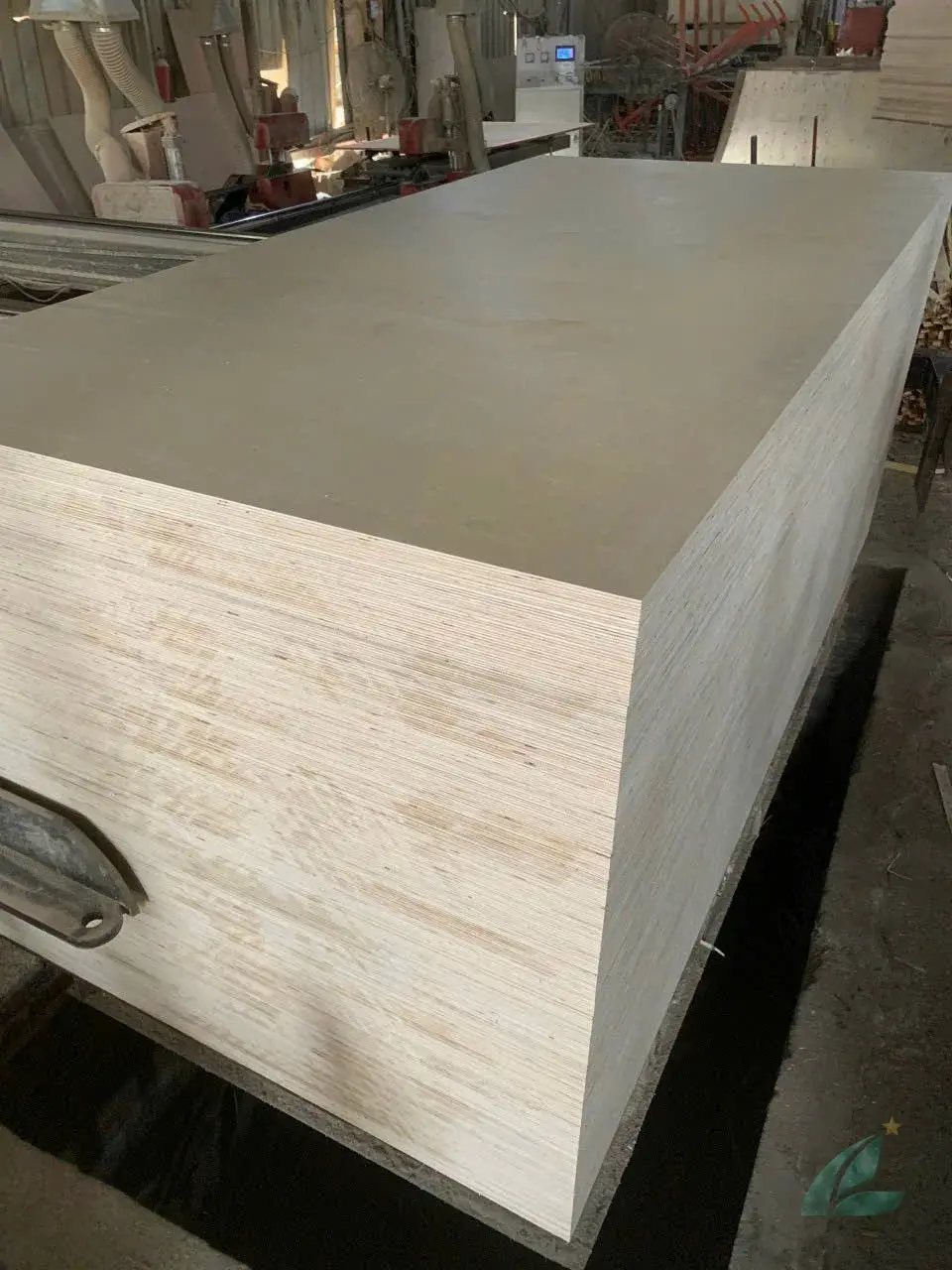
🏭 How HCPLY Grades Birch Panels at Factory Level
“Our QC team checks every birch panel at three stages: after pressing, after sanding, and again before pallet stacking. Panels that don’t meet the ordered grade are pulled and re-graded — nothing ships out of specification. Grade D orders are particularly strict because European and Korean buyers will spot any non-conforming panels immediately on receipt.” — Lucy, International Sales Manager, HCPLY
The grading process at the HCPLY production facility includes:
- Incoming veneer inspection — birch face veneer is checked on arrival for consistency with the grade specification. Veneer that does not meet Grade D criteria is downgraded before production begins.
- Post-pressing visual check — each pressed panel is inspected for delamination, bubbling, or surface defects introduced during hot pressing.
- Post-sanding calibration check — thickness calibration verified at ±0.3mm. Surface smoothness measured for Grade D panels.
- Final loading inspection — random sample check from each pallet before container loading. Photos sent to buyer.
This three-stage QC process is why HCPLY’s birch plywood grade consistency rate is 97%+ across 200+ containers shipped since 2020 (HCPLY production records, 2026).
✅ Practical Specification Guide for Buyers
When to order Grade D:
- Furniture with visible surfaces receiving transparent or stained finish
- Kitchen cabinet doors and drawer fronts
- Interior joinery in luxury or mid-range residential projects
- Korea, Japan, EU orders with strict appearance standards
When Grade E is sufficient:
- All-painted furniture where grain is hidden
- Cabinet carcass and interior panels
- Shelving in retail fixtures
- Substrate for melamine paper or PVC laminate bonding
When Grade F works:
- Industrial crating with birch face specification
- Packaging applications where full face coverage by film or paper occurs
- Markets with no visible finish requirement
Get a Free Quote for Grade D or E birch plywood — samples available
🔗 Further Reading
Understanding birch grade is one piece of the full specification picture. For a complete view of how birch plywood is made in Vietnam and what to check before ordering:
- How Vietnam makes birch plywood with imported face + styrax core — full production process
- Plywood face veneer types — complete buyer guide — compare all 10+ face species
- Plywood face grade explained — A/B system vs D/E/F — cross-species grading comparison
- Plywood glue types and emission standards — MR vs WBP, E0/E1/E2 — emission compliance for EU/US/Korea
📋 Conclusion
Grade D is the premium tier of Vietnamese birch plywood — not the bottom. The D/E/F system reflects the practical reality of imported birch veneer in Vietnam’s supply chain, where Baltic A/B grades are either unavailable or prohibitively expensive at export scale.
For most furniture production, Grade D from a certified Vietnamese factory with full-stitched styrax core and E0 emission standard delivers the appearance and performance required at 30–40% lower landed cost than Baltic birch. Grade E works wherever painted or laminated surfaces eliminate the visual requirement. Grade F serves purely industrial applications.
Specify the grade your application actually needs — not the highest grade by default. The right grade is the one that matches your finish specification, not the one that looks best on paper.
Request Grade D birch plywood samples from HCPLY — FOB Hai Phong, 7–10 day lead time