

Cabinet manufacturers importing from Vietnam face one consistent challenge: specifying birch plywood correctly so the order matches the expected quality. Get the grade, core, emission standard, or sanding specification wrong — and you receive material that fails CNC tolerances, shows glue bleed through the face veneer, or triggers a CARB P2 customs hold at the US port.
This guide covers every specification parameter for kitchen cabinet birch plywood sourced from Northern Vietnam, with factory-level detail that most supplier quotation sheets leave out.
📋 Why Birch Plywood Dominates Cabinet Manufacturing
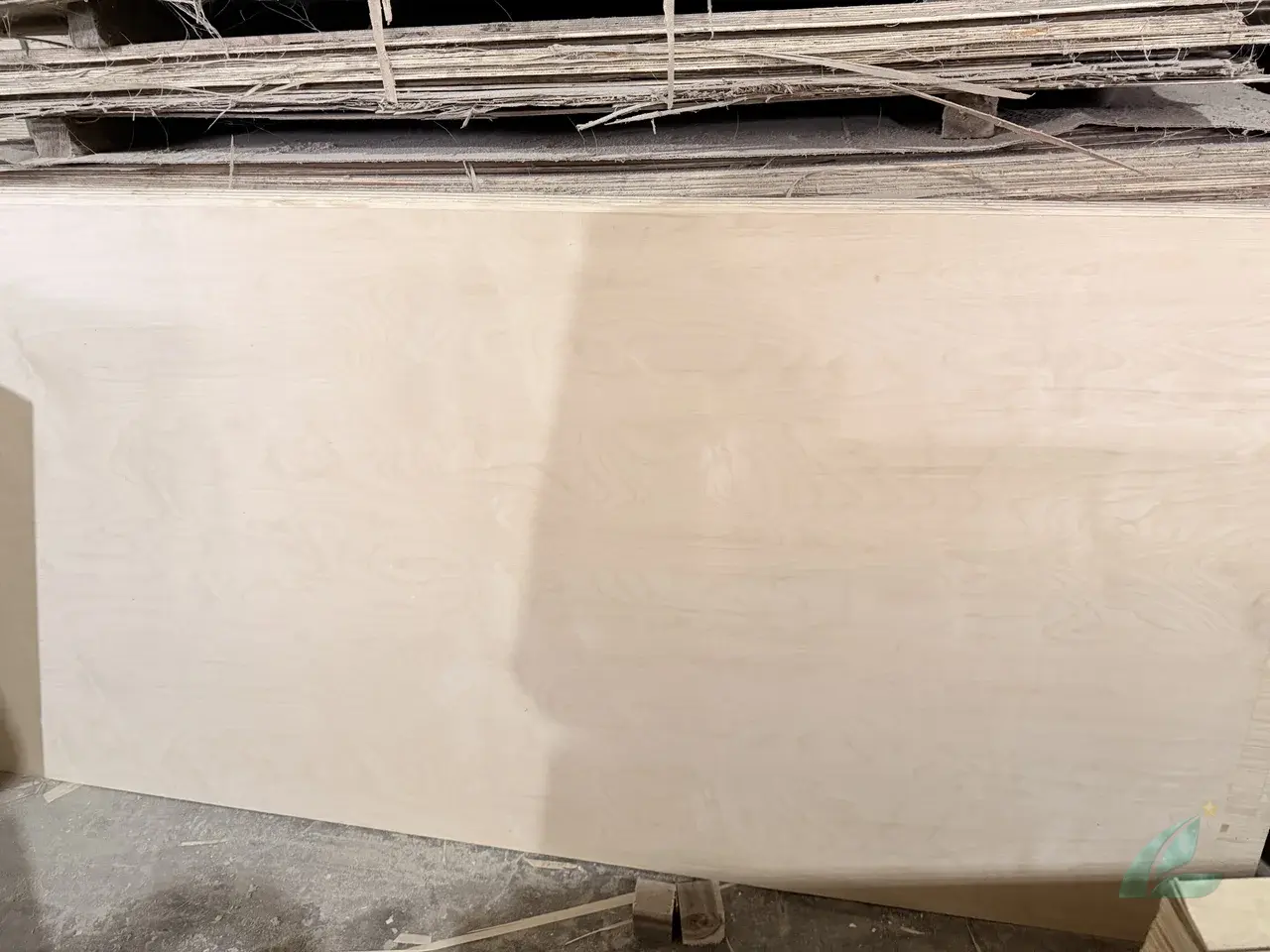
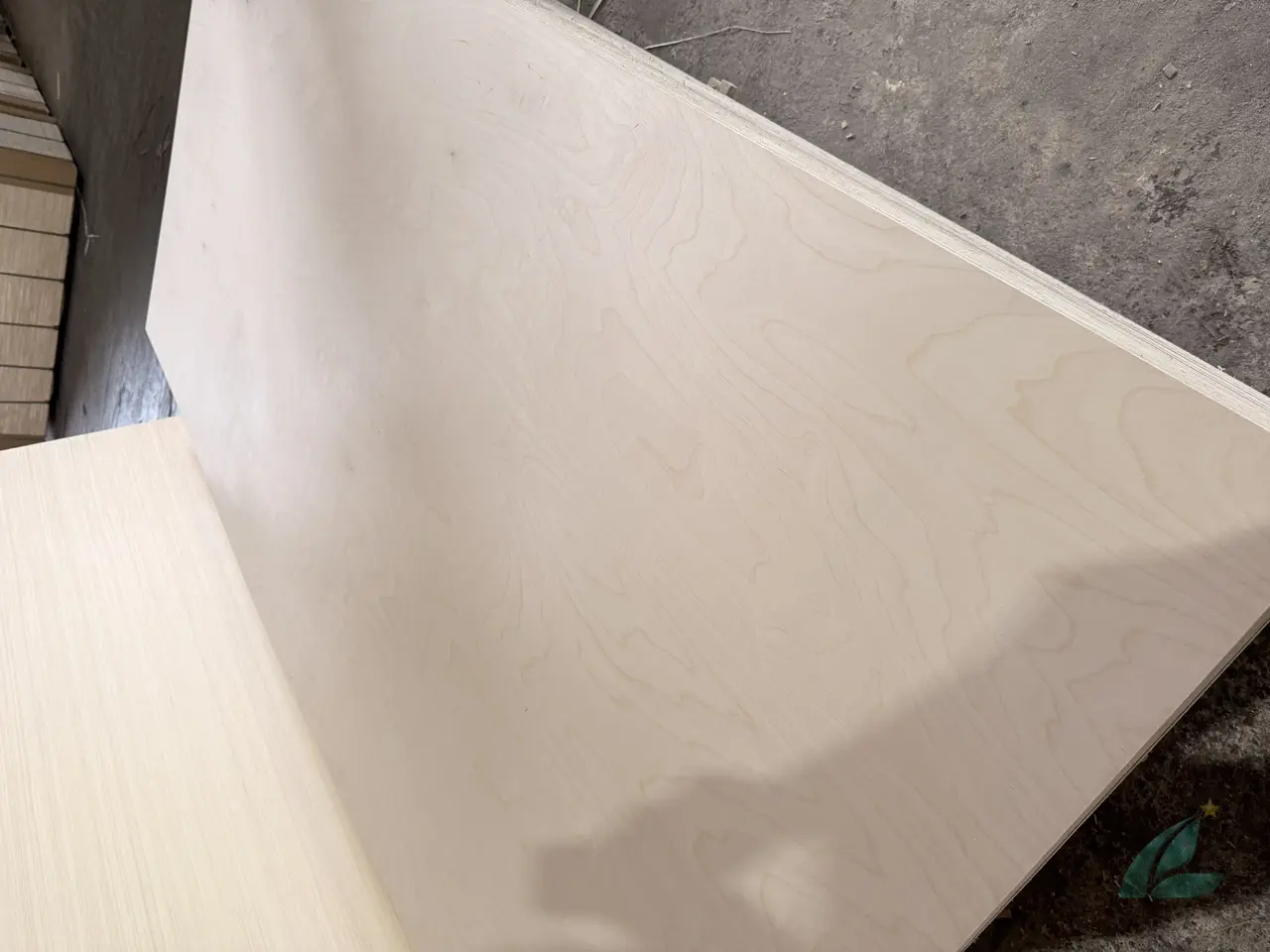
Birch face veneer has one property that makes it the default for painted or lacquered kitchen cabinets: surface consistency. The grain is tight, the pores are small, and the color is pale cream — providing an ideal substrate for lacquer, paint, or melamine overlay.
Key Insight: Vietnamese birch plywood accounts for a significant share of Vietnam’s plywood exports to the US and EU markets, driven by demand from cabinet manufacturers seeking a cost-effective Baltic birch alternative (Vietnam Wood Association, 2025).
Compared to okoume or bintangor face veneers, birch delivers:
- Smaller grain pore size — fewer telegraphing defects through paint
- Higher face veneer hardness — resists denting during assembly and shipping
- Consistent pale color — uniform appearance under lacquer across a production batch
- Stable sanding response — calibrated to ±0.3mm without burning through the face
For furniture-grade applications requiring a visible or paint-finished surface, birch is the specification most European and US kitchen cabinet factories default to when sourcing from Vietnam.
Explore HCPLY’s birch plywood product range
📦 Birch Grade Explained — D/E/F, Not A/B/C
This is the most common source of specification errors. Birch plywood from Vietnam uses a different grading system than other face veneer species.
| Grade | Face Quality | Typical Use |
|---|---|---|
| D | Clean face, minor natural color variation, tight knots ≤3mm, no open defects | Kitchen cabinets, premium furniture, visible surfaces |
| E | More color variation, small patches allowed, minor streaks | Interior furniture, cabinet backs |
| F | Significant variation, larger patches, some discoloration | Industrial, packing, structural backing |
⚠️ Important: Do NOT specify “A/B” or “BB/CC” for Vietnamese birch — those grading systems apply to Baltic/Finnish birch, not Vietnamese production. Specifying A-grade birch from Vietnam will result in confusion or grade substitution. The correct specification is D grade for kitchen cabinet face panels.
“D grade is the cleanest birch face Vietnamese mills can produce — it corresponds to what Baltic birch producers call B/BB, but with Vietnam’s naturally tighter grain it often presents as visually cleaner,” explains Lucy, International Sales Manager at HCPLY, who has handled birch plywood exports to over 30 countries since 2019.
⚙️ Core Specification — Styrax vs Eucalyptus
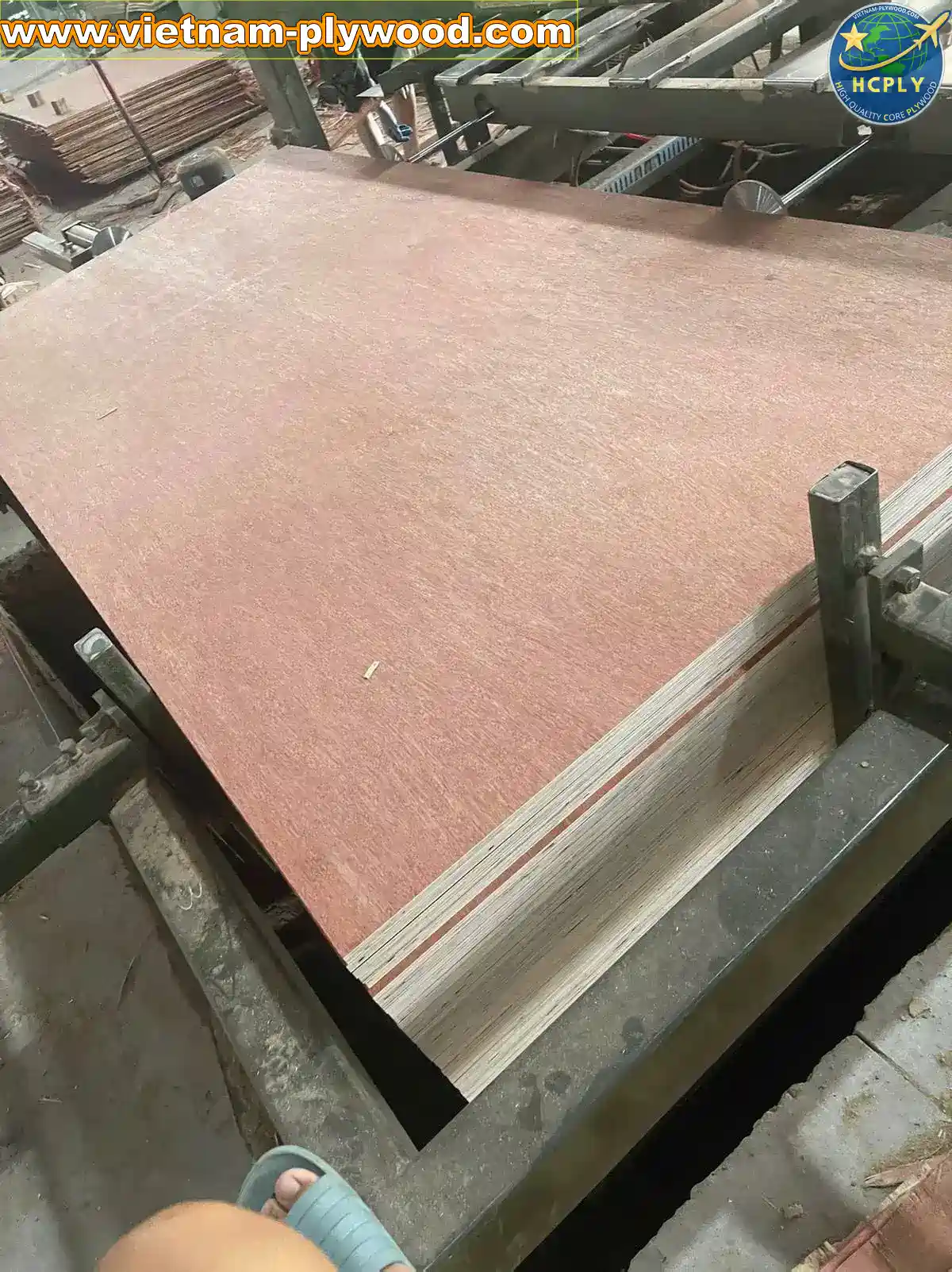
Vietnamese birch plywood does not use birch core. That distinction is important — in Baltic plywood, the core is also birch, giving a void-free, uniform cross-section. In Vietnamese production, the face is birch veneer over a domestic plantation hardwood core.
The two core options for cabinet-grade birch:
📌 Styrax Core (Standard for Cabinet Grade)
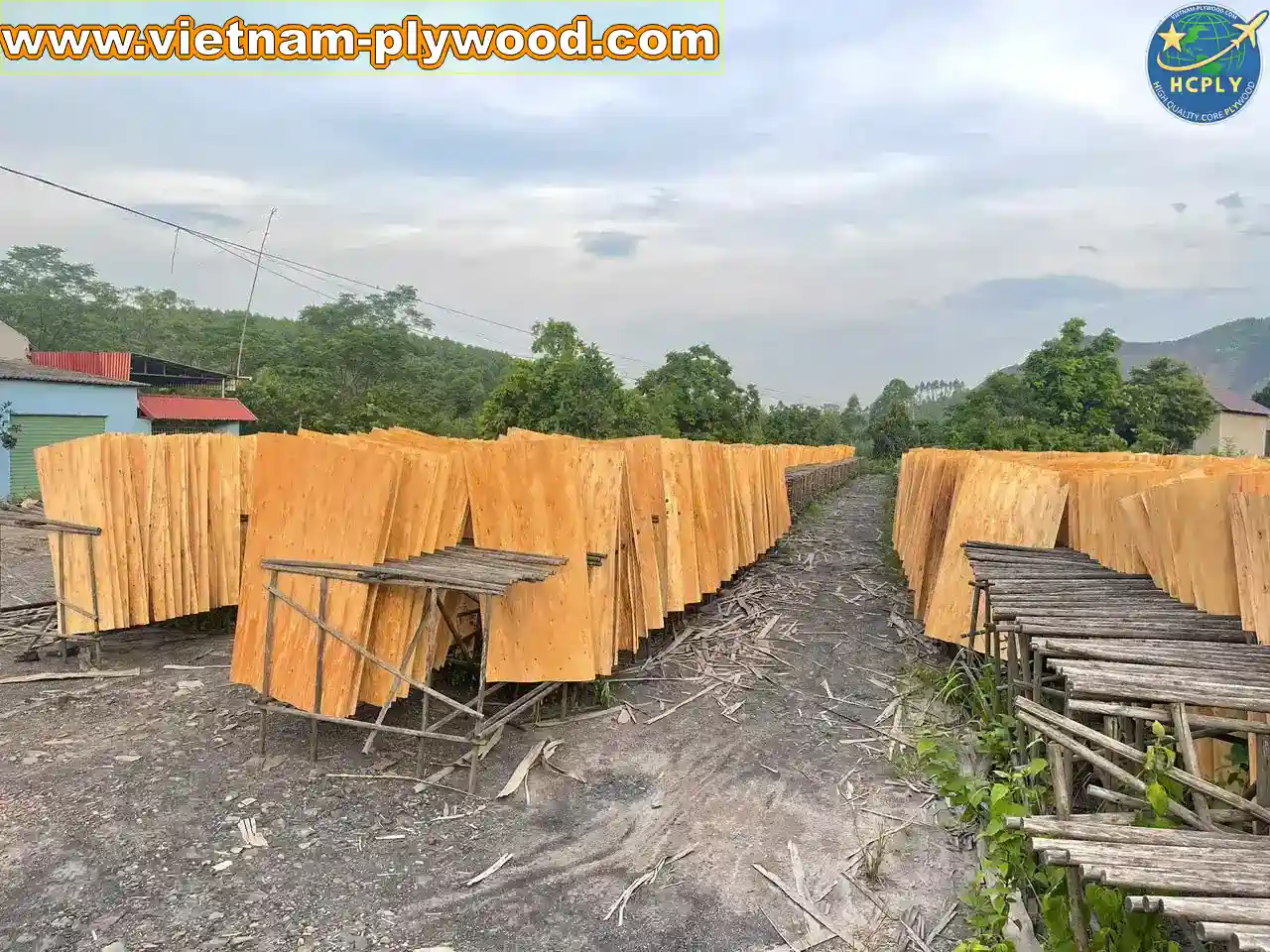
Styrax (bồ đề) grows exclusively in Northern Vietnam. With a density of 480–500 kg/m³, it is the lightest available core species and the closest substitute for Baltic birch core.
For kitchen cabinets, styrax core delivers:
- Light panel weight — 18mm styrax-core birch plywood weighs approximately 8.6–9.0 kg/m² (HCPLY production data, 2026)
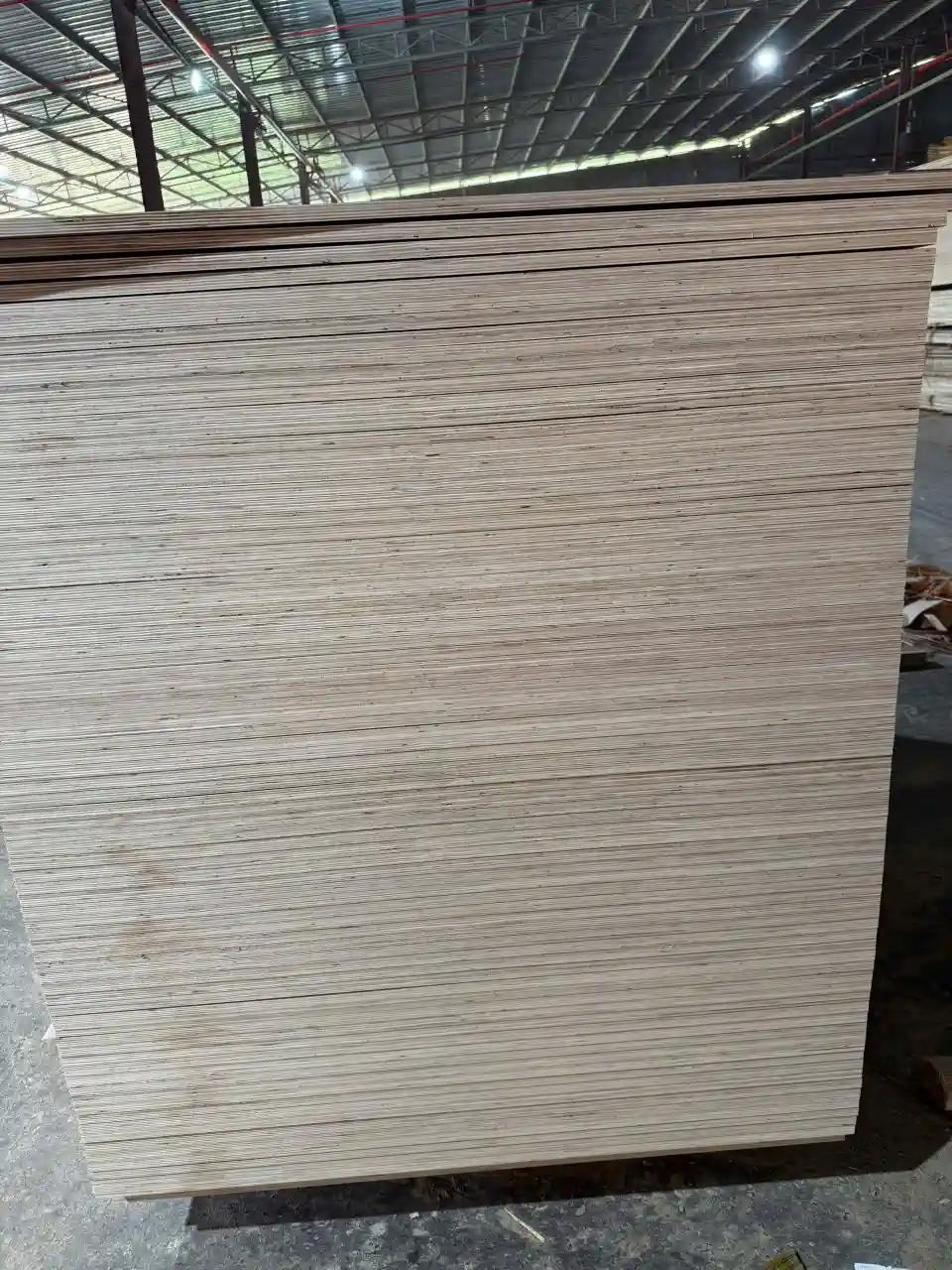
- Full stitched construction — veneer strips sewn together horizontally and vertically, no gaps, no overlaps
- Flat pressing results — low resin content in styrax reduces bowing after pressing
- 18 pallets per 40HC — best CBM efficiency of all Vietnamese core species
📌 Eucalyptus Core (Premium Structural Option)
Eucalyptus core (650–750 kg/m³) is used when buyers need higher internal bond strength or hardness — for example, heavy-duty kitchen cabinets requiring excellent screw-holding at hinge points.
Eucalyptus birch plywood is heavier (approximately 11.7–13.5 kg/m² at 18mm), which limits container loading to 15 pallets per 40HC. Most kitchen cabinet applications don’t require eucalyptus — specify it only when screw-holding performance tests show a clear need.
Read the full core species comparison guide
🔧 Glue & Emission Standards — MR + E0 Explained
The glue type and emission standard are two separate specifications — a common source of errors in buyer purchase orders.
| Parameter | Cabinet-Grade Standard | What It Means |
|---|---|---|
| Glue type | Melamine (MR) | Passes 12-hour boiling test — sufficient for interior furniture and cabinets |
| Emission standard | E0 (≤0.5 mg/L) | Equivalent to CARB Phase 2 — mandatory for US market, accepted by EU |
| Alternative | Phenolic (WBP) + E0 | Used when buyer needs WBP for humid-environment cabinets |
⚠️ Note: E0 is an emission class, not a glue type. A purchase order specifying “E0 glue” is technically incorrect. The correct specification is: Glue: Melamine (MR). Emission: E0.
For the US market, CARB Phase 2 is the legal compliance requirement. HCPLY provides CARB P2 certificates from accredited third-party testing laboratories. Request the test certificate number and lab accreditation when ordering — customs compliance officers check these on arrival (California Air Resources Board, 2025).
For Europe, E1 is the minimum for indoor furniture, but E0 is increasingly specified by buyers to future-proof orders against tightening EU formaldehyde regulations.
Full glue and emission guide for plywood buyers
📐 Thickness, Ply Count & Tolerance
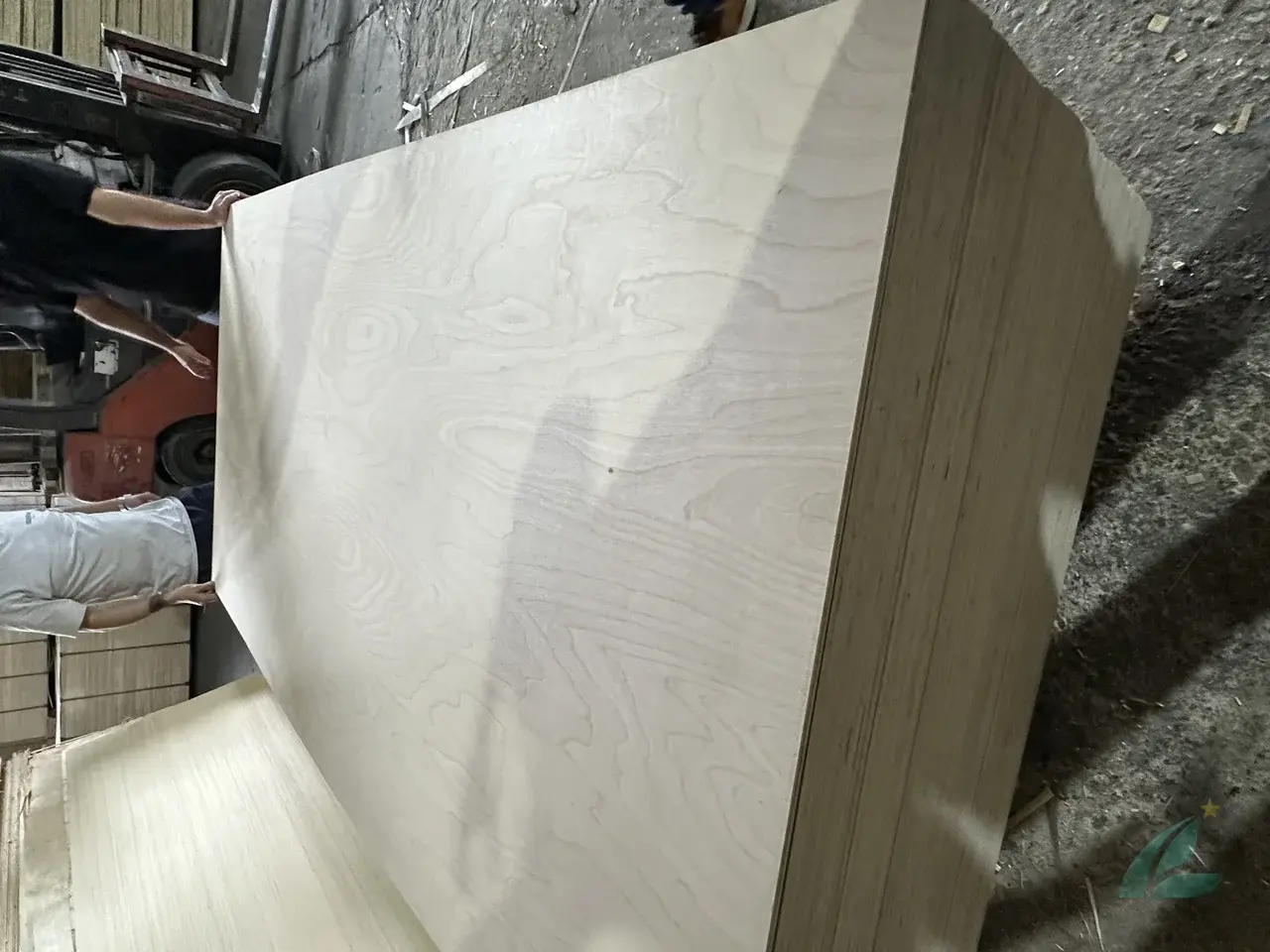
Kitchen cabinet production has specific thickness requirements. Vietnamese birch plywood is available across the full range with calibrated tolerances critical for CNC-machined cabinet systems.
Standard Cabinet Thicknesses from HCPLY
| Application | Thickness | Ply Count | Tolerance |
|---|---|---|---|
| Cabinet carcass (sides, shelves) | 18mm | 11–13-ply (varies by core veneer thickness) | ±0.3mm |
| Internal partitions, drawer base | 12mm | 9-ply | ±0.3mm |
| Cabinet back panels | 9mm | 7-ply | ±0.3mm |
| Door substrate (pre-lamination) | 12mm or 15mm | 9-ply or 11-ply | ±0.3mm |
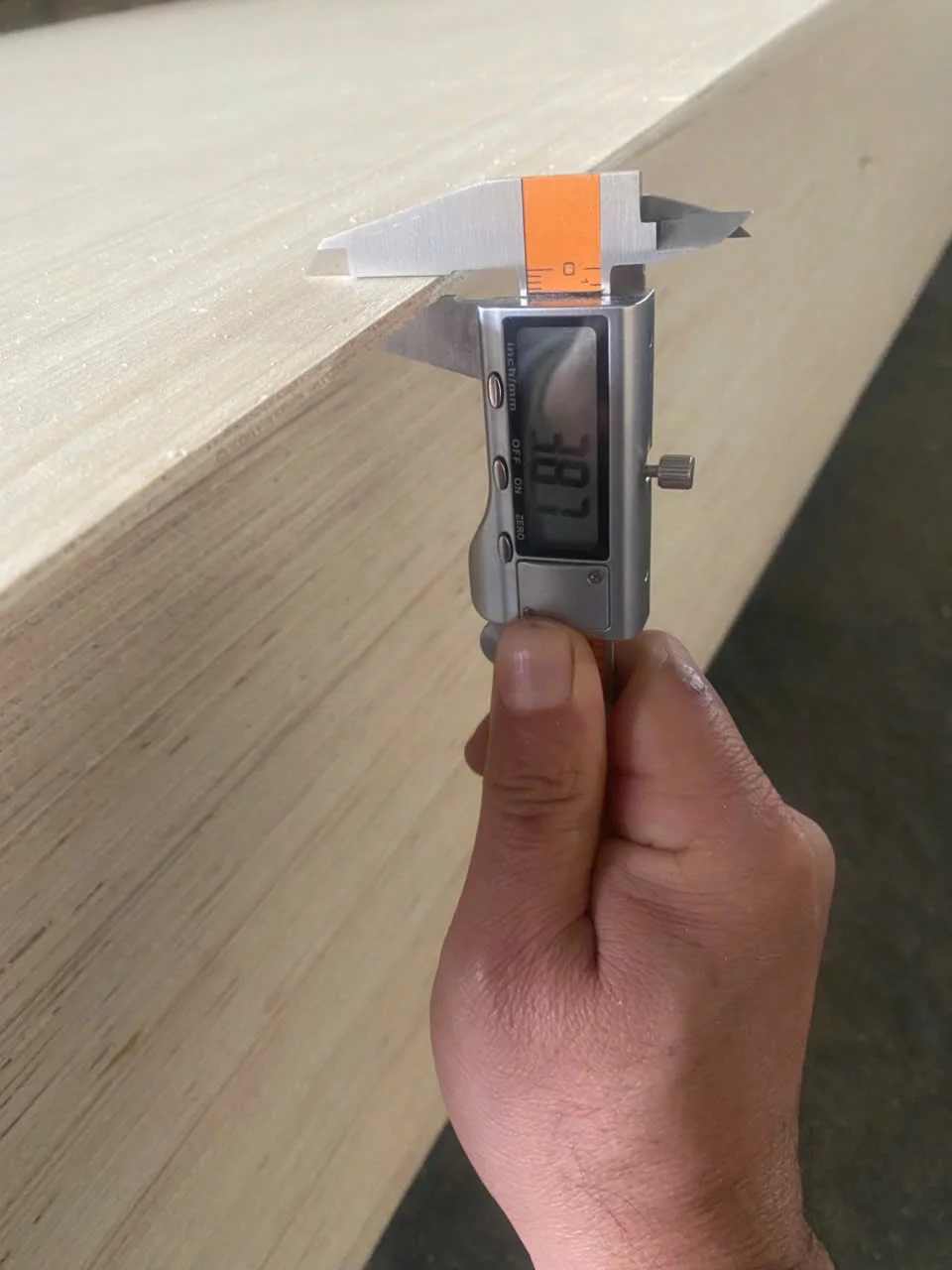
The ±0.3mm thickness tolerance is the factory calibration target at HCPLY’s premium furniture facility (HCPLY production data, 2026). This matches the tolerance requirements for most European CNC cabinet systems (DIN 68369, which specifies ≤0.5mm for sanded plywood surfaces).
Sheet sizes: Standard 1220×2440mm (4×8ft) and 1250×2500mm (metric). Custom sizes available for full-container orders.
Sanding
Premium cabinet-grade birch is sanded on both faces. This is not optional for CNC cabinet production — an unsanded face will skip on suction tables and cause edge-banding failures.
HCPLY’s premium furniture facility uses wide-belt sanders calibrated to achieve Ra ≤1.6μm surface roughness — the threshold below which most cabinet lacquer systems achieve uniform coverage (HCPLY internal QC standard).
📊 Comparing Vietnam Birch vs Baltic Birch for Cabinets
Cabinet manufacturers switching from Baltic to Vietnamese birch face practical questions about performance equivalence. This comparison is based on HCPLY production specifications and standard industry test data.
| Parameter | Baltic Birch | Vietnam Birch (HCPLY) |
|---|---|---|
| Face grade | B/BB | D (equivalent performance) |
| Core species | Birch | Styrax (480–500 kg/m³) |
| Core voids | Void-free by spec | Full stitched = void-free |
| Face veneer thickness | ~0.6–1.5mm | 0.2–0.4mm (thinner) |
| Emission | E1 standard | E0/CARB P2 available |
| Sanding | Both faces | Both faces (premium grade) |
| Price position | Premium | 20–35% lower FOB |
| Lead time | 8–12 weeks (Europe) | 15–20 days from Hai Phong |
| Certifications | PEFC | FSC, CARB P2, CE, EUDR |
The face veneer thickness difference is the most significant structural distinction. Baltic birch uses thicker face veneers (≥0.6mm) that are more forgiving for sanding and refinishing. Vietnamese birch faces at 0.2–0.4mm are thinner and require more careful handling during sanding operations. This is standard knowledge for cabinet factories that have sourced from both origins.
💡 Tip: For painted cabinet finishes (lacquer, spray paint), the thinner Vietnamese birch face performs comparably to Baltic — the paint system builds sufficient film thickness to equalize any minor telegraphing. For stained or natural finishes, Baltic birch’s thicker face provides better visual results.
✅ Full Specification Template for Ordering
Use this specification template when placing a purchase order for kitchen cabinet birch plywood from Vietnam:
Face: Birch D grade, double-sided sanded
Core: Styrax (full stitched construction)
Glue: Melamine (MR)
Emission: E0 (CARB P2 test certificate required)
Thickness: 18mm (tolerance ±0.3mm)
Size: 1220×2440mm
Certifications: FSC, CARB P2
MOQ: 1 × 40HC
For EU buyers, add: CE marking required and EUDR compliance documentation.
For buyers needing moisture-resistant cabinets (bathroom vanities, laundry rooms): specify Glue: Phenolic (WBP) instead of Melamine — the emission standard remains E0.
Get a Free Quote for Cabinet-Grade Birch Plywood
🏭 Factory Segment — Why Facility Selection Matters
Not all Vietnamese birch plywood comes from the same type of facility. This is the single most important point for buyers who have received inconsistent quality across orders.
Vietnam has two distinct factory segments for plywood:
Premium furniture facilities (HCPLY’s Facility 1):
- Core: styrax, eucalyptus Grade A only
- Construction: full stitched (all layers)
- Glue: Melamine MR, E0
- Sanding: wide-belt calibrated, both faces
- Certifications: FSC, CARB P2, CE, ISO 9001, EUDR
- Market: EU, US, Japan, South Korea
Commercial/packing facilities:
- Core: acacia (loose-laid construction)
- Glue: Melamine MR, E2 or E1
- Sanding: minimal or none
- Certifications: basic or none
- Market: Southeast Asia, Africa
A purchase order for “18mm D-grade birch plywood, E0” can be filled by either facility. The price difference is 15–25%. The quality difference is the gap between furniture that holds together for 10 years and furniture that delaminates in 18 months.
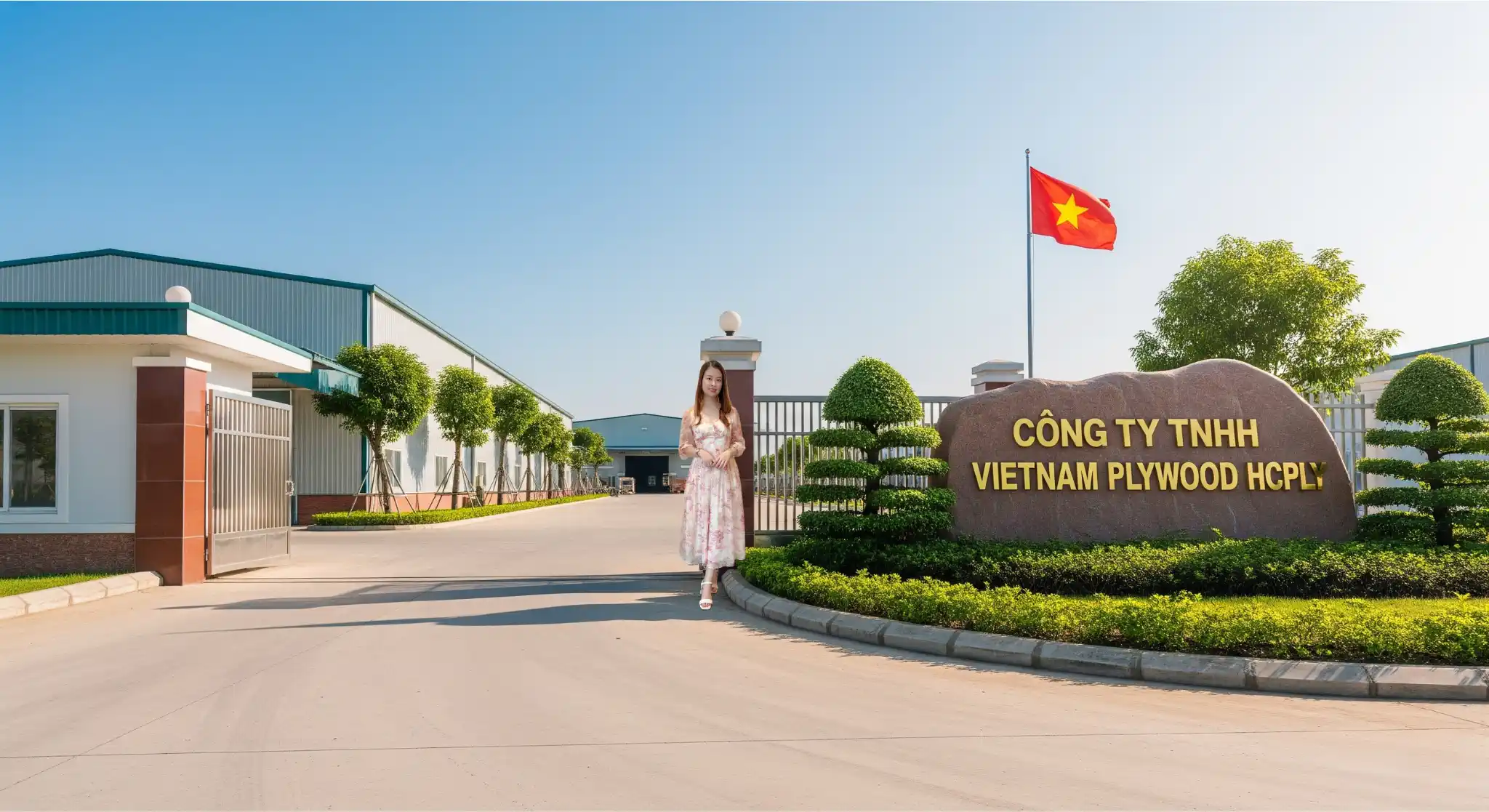
HCPLY manages 3 specialized production facilities in Northern Vietnam, with cabinet-grade birch produced exclusively at the premium furniture facility. All production follows documented HCPLY specifications, ships with factory certification documentation, and includes on-site QC oversight at every production stage.
Learn about HCPLY’s production facilities
🔗 Container Loading for Birch Cabinet Plywood
Understanding container economics helps cabinet manufacturers calculate landed cost per sheet accurately.
For 18mm birch plywood with styrax core (density 500 kg/m³):
- Sheets per pallet: ROUNDDOWN(1000 ÷ 18) = 55 sheets
- Pallets per 40HC: 18 (standard for styrax core, 1220×2440mm)
- Total sheets per container: 990 sheets
- Total CBM: approximately 53 CBM
- Total weight: approximately 26.5 MT (within 28.5 MT payload limit)
For 12mm birch (cabinet partitions and drawer bases):
- Sheets per pallet: ROUNDDOWN(1000 ÷ 12) = 83 sheets
- Total sheets per 40HC (styrax, 18 pallets): 1,494 sheets
Many buyers order mixed thicknesses in one container — 18mm and 12mm together. HCPLY recalculates weight for mixed loads and provides the full packing list before loading confirmation.
Full container packing calculation guide with formula tables
❓ Common Specification Mistakes (and How to Avoid Them)
Based on inquiry patterns from buyers in Europe and the US, these are the most frequent specification errors for cabinet birch plywood:
Mistake 1: Specifying “A grade” or “BB/BB” Baltic birch terminology. Vietnamese birch uses D/E/F. Specify D grade for cabinets.
Mistake 2: Writing “E0 glue” on the PO E0 is an emission standard, not a glue type. Write: Glue: MR (Melamine), Emission: E0.
Mistake 3: Not specifying full stitched core Without this, commercial facilities may supply edge-jointed or loose-laid core — which can result in surface telegraphing and lower screw-holding strength at hinge points.
Mistake 4: Comparing prices without specifying sanding Unsanded birch is 8–12% cheaper. If your production line uses CNC, specify double-sided sanded explicitly or the cost saving becomes a production line problem.
Mistake 5: Forgetting CARB P2 certification for US orders The certificate must be from an accredited third-party lab. In-house test reports are not accepted by US Customs and Border Protection for TSCA/CARB compliance verification (US EPA, 2024).
📌 Conclusion
Kitchen cabinet manufacturers sourcing birch plywood from Vietnam can achieve Baltic birch-equivalent performance for most painted-finish cabinet applications — at 20–35% lower FOB cost with 15–20 day production lead times. The key is specifying correctly: D grade face, styrax core, full stitched construction, MR glue, E0 emission, double-sided sanded, ±0.3mm tolerance.
HCPLY produces cabinet-grade birch plywood from a dedicated premium furniture facility in Phu Tho, Northern Vietnam, with FSC, CARB P2, CE, and EUDR certifications available. As of Q1 2026, HCPLY ships cabinet-grade birch to furniture manufacturers in Germany, Poland, South Korea, and the US.
For a broader overview of cabinet plywood grades and bathroom applications beyond birch, see the Cabinet Plywood Grade & Spec Selection Guide.
Get a Free Quote for Cabinet-Grade Birch Plywood — No Commitment, Factory-Direct Pricing
Contact Lucy directly: WhatsApp Lucy | [email protected]