

Choosing the wrong face veneer costs real money. An importer who specified okoume for a South Asian packing-furniture run paid a 12% premium for a surface finish the end-market would not recognise. An importer who chose bintangor for a European kitchen cabinet project failed a formaldehyde audit because the cheaper E2 grade they ordered did not meet EU market requirements. Bintangor vs okoume plywood is not a question with one universal answer — but it does have clear answers once you know your market, application, and specification.
This comparison is written from the factory floor to help you determine the best use case for each species. HCPLY ships both face veneers from Northern Vietnam and handles both daily for buyers across India, Europe, the Middle East, and Southeast Asia. Every spec in this article comes from production data, not catalogue copy.
📊 TL;DR: Quick Comparison Table
Key Insight: Bintangor and okoume are both affordable commercial face veneers — but they serve different markets and price tiers. Bintangor is the standard for cost-driven South Asian and Middle Eastern furniture. Okoume is the standard for light-panel European furniture and moisture-sensitive applications.
| Feature | Bintangor | Okoume |
|---|---|---|
| Origin | Southeast Asia (Malaysia, Indonesia) | Central Africa (Gabon, Congo) |
| Color | Warm reddish-brown, orange-brown | Light pink to pale reddish-brown |
| Grain | Interlocked, moderate variation | Straight, uniform, very smooth |
| Face grade | A/B (plain, red, bleached) | A/B |
| Face thickness (VN) | 0.2–0.4 mm | 0.2–0.4 mm |
| Price tier | Least expensive | Slightly higher than bintangor |
| Typical core (VN) | Acacia, styrax | Styrax, eucalyptus |
| Glue options | MR (melamine), WBP (phenolic) | MR (melamine), WBP (phenolic) |
| Emission standards | E0, E1, E2 | E0, E1, E2 |
| Thickness range | 2–40 mm | 3–30 mm |
| Primary markets | India, Middle East, Africa, SE Asia | Europe, North America, Japan |
| Key applications | Furniture, cabinets, packaging, doors | Furniture, marine joinery, lightweight panels |
| Sanding | Yes (furniture grade) / No (commercial) | Yes (furniture grade) |
🌳 What Is Bintangor Plywood?
Bintangor plywood is a commercial face veneer panel made from Calophyllum species — tropical hardwoods native to Southeast Asia, primarily Malaysia and Indonesia. The name covers several related species within the Calophyllum genus, all sharing similar visual and mechanical properties.
Bintangor is the most widely used commercial face veneer in Vietnam plywood production. Its broad availability, competitive cost, and range of surface grades make it the default choice for budget-to-mid furniture, packaging, and general commercial panelling. Bintangor face veneer is sourced regionally, which keeps supply consistent and pricing stable compared to veneers imported from Africa.
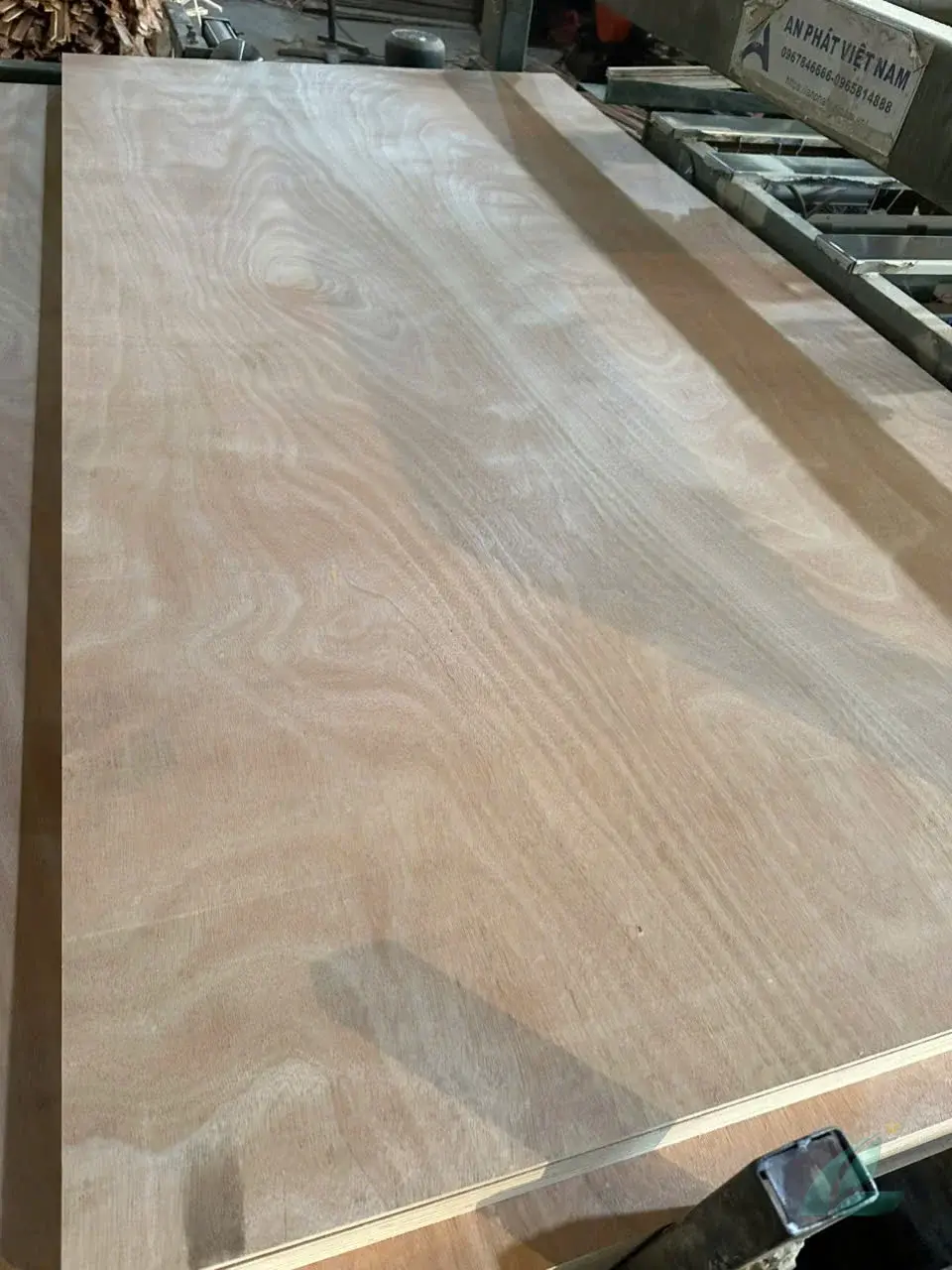
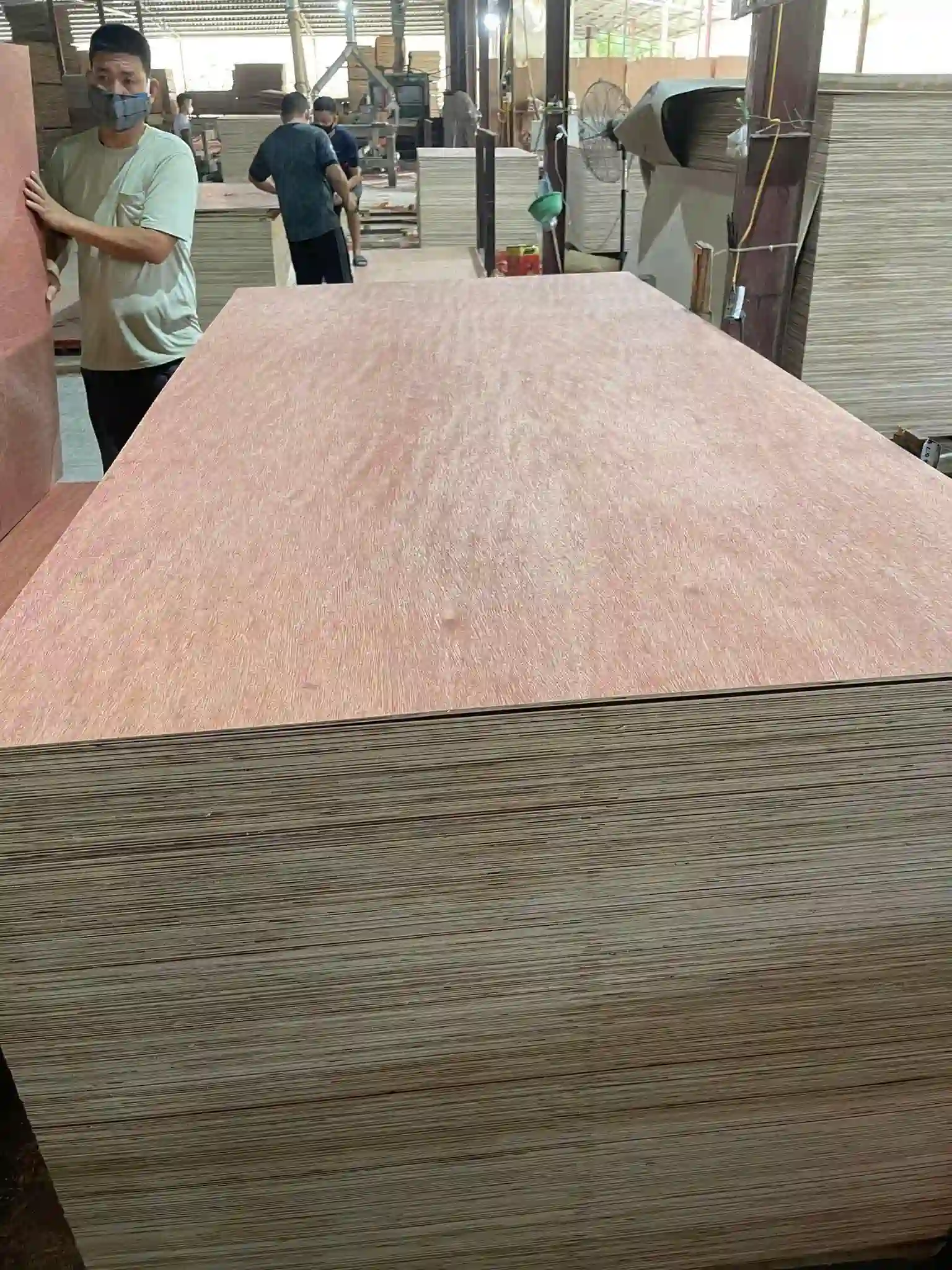
The surface comes in three variants: plain (natural warm-brown), red (deeper reddish tone), and bleached (lighter, more neutral base for painting or lamination). All three take paint, stain, and lacquer well.
Typical specification from HCPLY:
- Face: Bintangor, grade A/B, 0.2–0.4 mm
- Core: Acacia (~580 kg/m³) or styrax (480–500 kg/m³)
- Glue: Melamine (MR) | Emission: E1 or E2
- Thickness: 2–40 mm | Size: 1220×2440 mm or 1250×2500 mm
🌿 What Is Okoume Plywood?
Okoume plywood uses face veneer from Aucoumea klaineana — a tropical hardwood native to Central Africa, primarily Gabon. Gabon produces the vast majority of commercial okoume veneer exported globally. The species is valued for its low density, straight grain, and pale pink surface that requires minimal finishing.
Okoume is lighter than most tropical hardwoods. This property makes okoume plywood a default specification for European furniture factories that need lightweight cabinet panels, RV interiors, and caravan fitouts where weight reduction has direct cost implications. The smooth, consistent surface also makes okoume an efficient substrate for high-gloss lacquer and PVC edge-banding.
In the marine sector, okoume with WBP (phenolic) glue is used for interior joinery and lightweight hull lining. Formal BS 1088-certified marine grade okoume is a separate, more regulated product primarily from Gabon-based certified mills.
Typical specification from HCPLY:
- Face: Okoume, grade A/B, 0.2–0.4 mm
- Core: Styrax (480–500 kg/m³) or eucalyptus (650–750 kg/m³)
- Glue: Melamine (MR) or WBP (phenolic) | Emission: E0, E1
- Thickness: 3–30 mm | Size: 1220×2440 mm or 1250×2500 mm
📐 Bintangor vs Okoume Plywood: Side-by-Side Specs
This table covers the specification-level differences buyers need for quotation and sourcing decisions.
| Specification | Bintangor Plywood | Okoume Plywood |
|---|---|---|
| Veneer species | Calophyllum spp. (SE Asia) | Aucoumea klaineana (Central Africa) |
| Face surface | Moderate pore, accepts stain well | Fine pore, very smooth, minimal prep |
| Natural color | Reddish-brown to orange-brown | Pink to pale reddish-brown |
| Glue: moisture resistance | MR (12h boiling) or WBP (72h) | MR (12h boiling) or WBP (72h) |
| Emission standards available | E0 / E1 / E2 | E0 / E1 / E2 |
| Sanding (furniture grade) | Yes | Yes |
| Core options (Vietnam) | Acacia, styrax | Styrax, eucalyptus |
| Thickness range | 2–40 mm | 3–30 mm |
| Standard sizes | 1220×2440, 1250×2500 mm | 1220×2440, 1250×2500 mm |
| Custom cutting | Yes | Yes |
| MOQ | 1 × 40HC | 1 × 40HC |
| Certifications available | FSC, CARB P2, CE, ISO 9001 | FSC, CARB P2, CE, ISO 9001 |
| Export markets | India, Middle East, Africa, SE Asia | Europe, Japan, North America |
Both face veneers are export-grade when produced at HCPLY’s dedicated production facilities. The core species and glue system determine final panel performance — the face veneer choice primarily affects aesthetics, market positioning, and cost.
Get a Free Quote for Bintangor or Okoume Plywood Factory-direct pricing with no VAT overhead. Mixed specs in one container available.
🎨 Appearance and Color
Bintangor and okoume look different enough that end-market buyers in some regions specifically request one over the other based on visual preference alone.
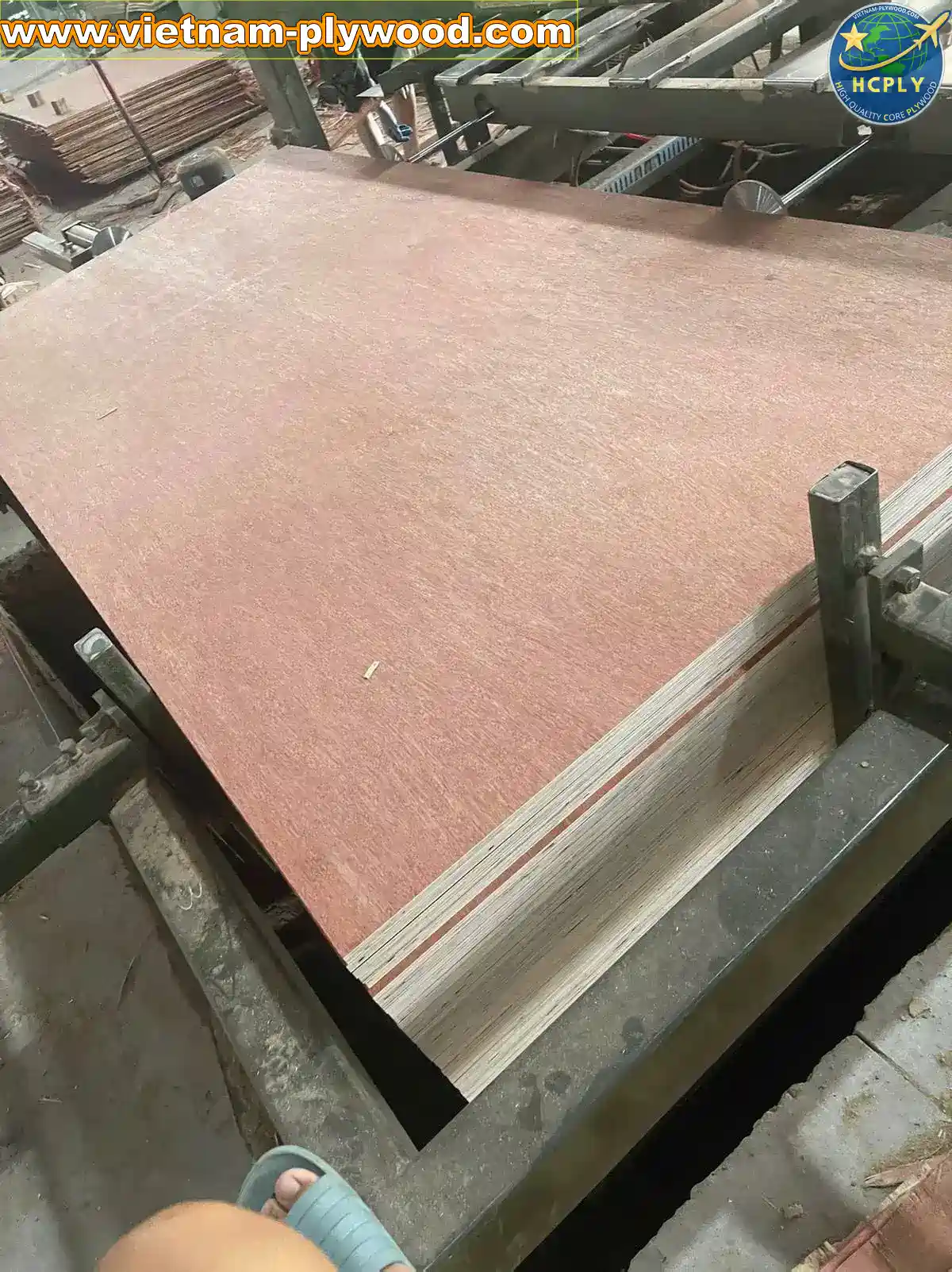
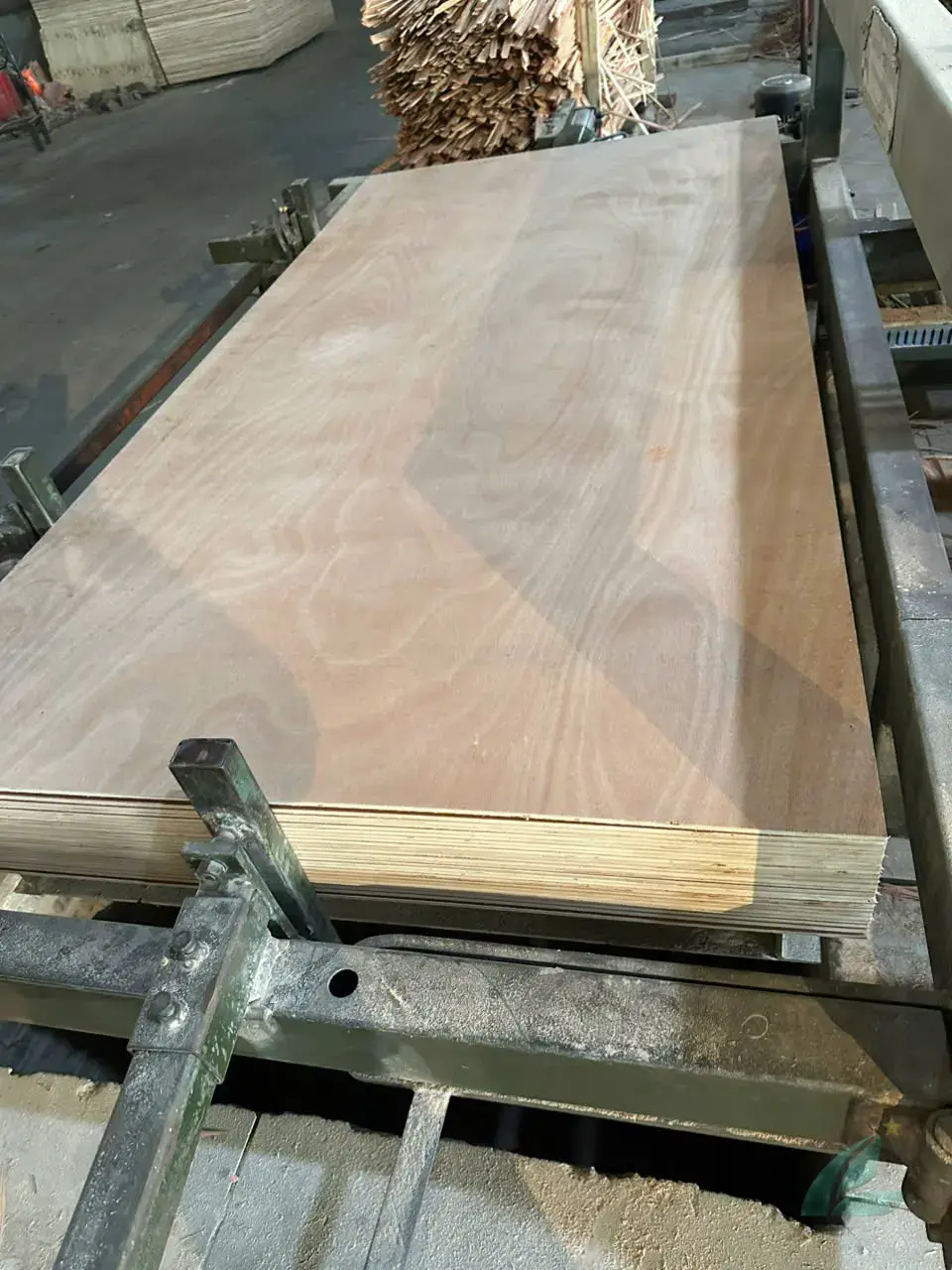
Bintangor delivers a warm, reddish-brown surface with interlocked grain that can show some ribbon striping. The colour ranges from orange-brown in plain grade to a deeper red in red-grade variants. The bleached variant lightens the base significantly, creating a more neutral tone. Grain variation is moderate — visible but not distracting for painted or light-stained finishes. The surface takes stain and lacquer well with minimal grain telegraphing.
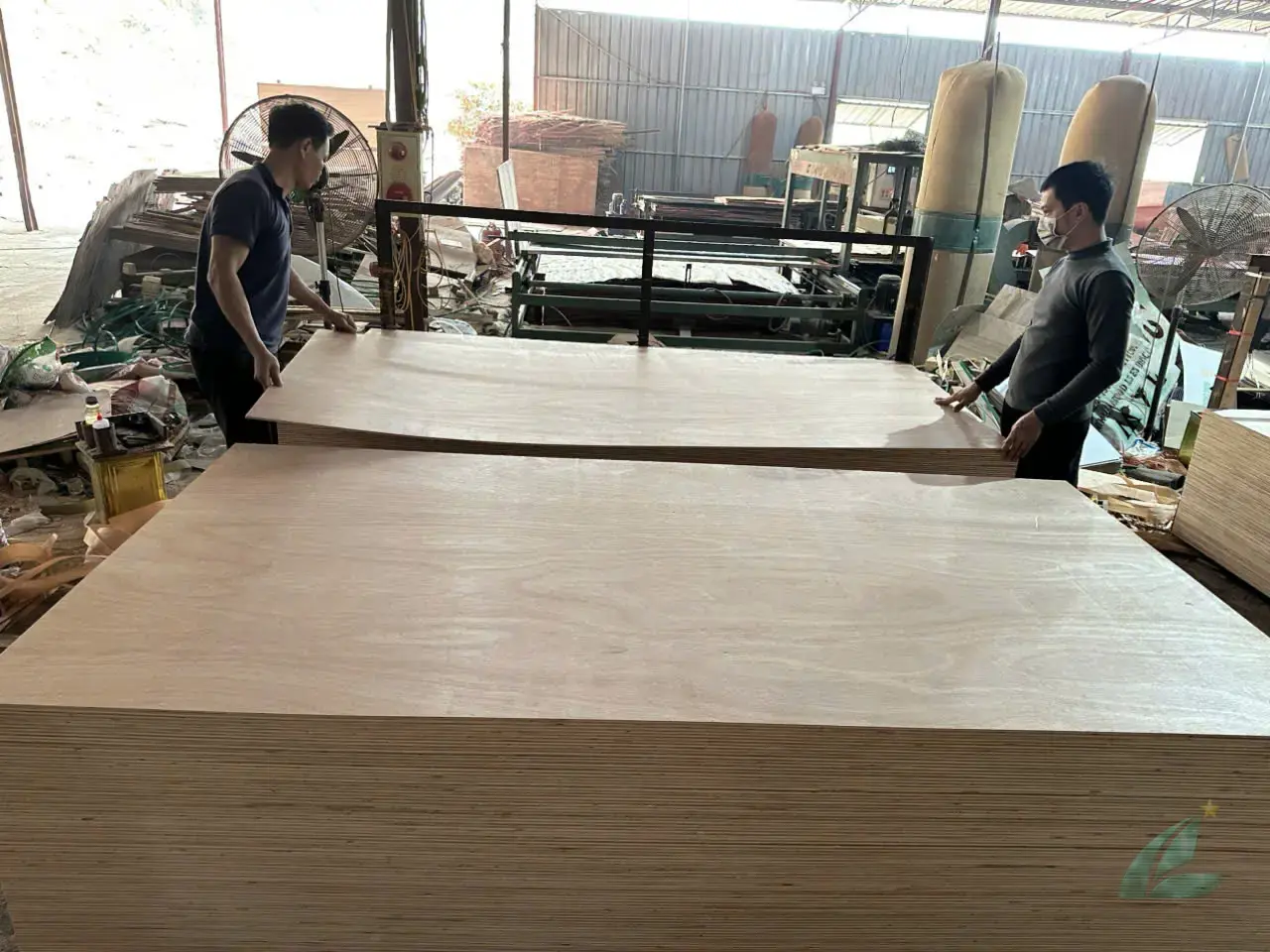
Okoume has a distinctly lighter appearance: pale pink to light reddish-brown with a very fine, straight grain and minimal pore structure. The surface feels smooth before sanding and becomes close to glass-smooth after one sanding pass. This makes okoume particularly well-suited to high-gloss finishes and PVC film application, where surface irregularities would show through.
For markets that laminate, veneer over, or paint the panel — bintangor performs well at a lower cost. For markets that lacquer directly and require a consistently pale, smooth substrate — okoume is the more reliable specification.
⚖️ Weight, Density, and Freight Impact
Panel weight depends on core species, not face veneer. However, okoume face veneer does have a marginally lower density than bintangor, contributing a small difference in total panel weight.
The more significant weight variable is core selection:
| Core | Density | Pallets per 40HC | CBM per 40HC |
|---|---|---|---|
| Styrax | 480–500 kg/m³ | 18 pallets | ~53 CBM |
| Acacia | ~580 kg/m³ | 16 pallets | ~47.5 CBM |
| Eucalyptus | 650–750 kg/m³ | 15 pallets | ~44.5 CBM |
Bintangor is typically paired with acacia core (16 pallets/40HC) for commercial-grade orders and styrax core for furniture-grade orders. Okoume is typically paired with styrax (18 pallets/40HC) for lightweight furniture or eucalyptus for premium structural panels.
A buyer ordering 18mm okoume + styrax core will fit more cubic metres per container than a buyer ordering 18mm bintangor + acacia core. Over a full container, this difference in packing efficiency can offset part of the okoume face premium. Calculate total landed cost, not just FOB face price.
⚠️ Important: Do not compare quoted CBM prices between bintangor+acacia and okoume+styrax orders without recalculating container packing. Different cores load differently. Our team provides a loading plan with every quotation.
💰 Price Difference Explained
Bintangor is the less expensive face veneer because the raw material is sourced regionally from Southeast Asian plantations. Supply is consistent and lead times for veneer procurement are short.
Okoume veneer is imported from Central Africa. The extended supply chain — from Gabon forests through veneer peeling and export to Vietnam — adds sourcing cost. The price premium for okoume face over bintangor face typically falls in the range of USD 5–12 per CBM for equivalent core, glue, and thickness specifications. This range varies with global okoume veneer availability and exchange rates.
For most commercial furniture applications, the cost difference between the two face veneers is secondary to specification correctness. Ordering bintangor E2 when the market requires E0 will cost more to remediate than the face veneer premium would have cost in the first place.
The practical price hierarchy for face veneers from Vietnam:
Bintangor < Okoume ≈ EV (Engineered Veneer) < Pine < Poplar < Eucalyptus < Gurjan < Birch
🏭 Market and Application Fit
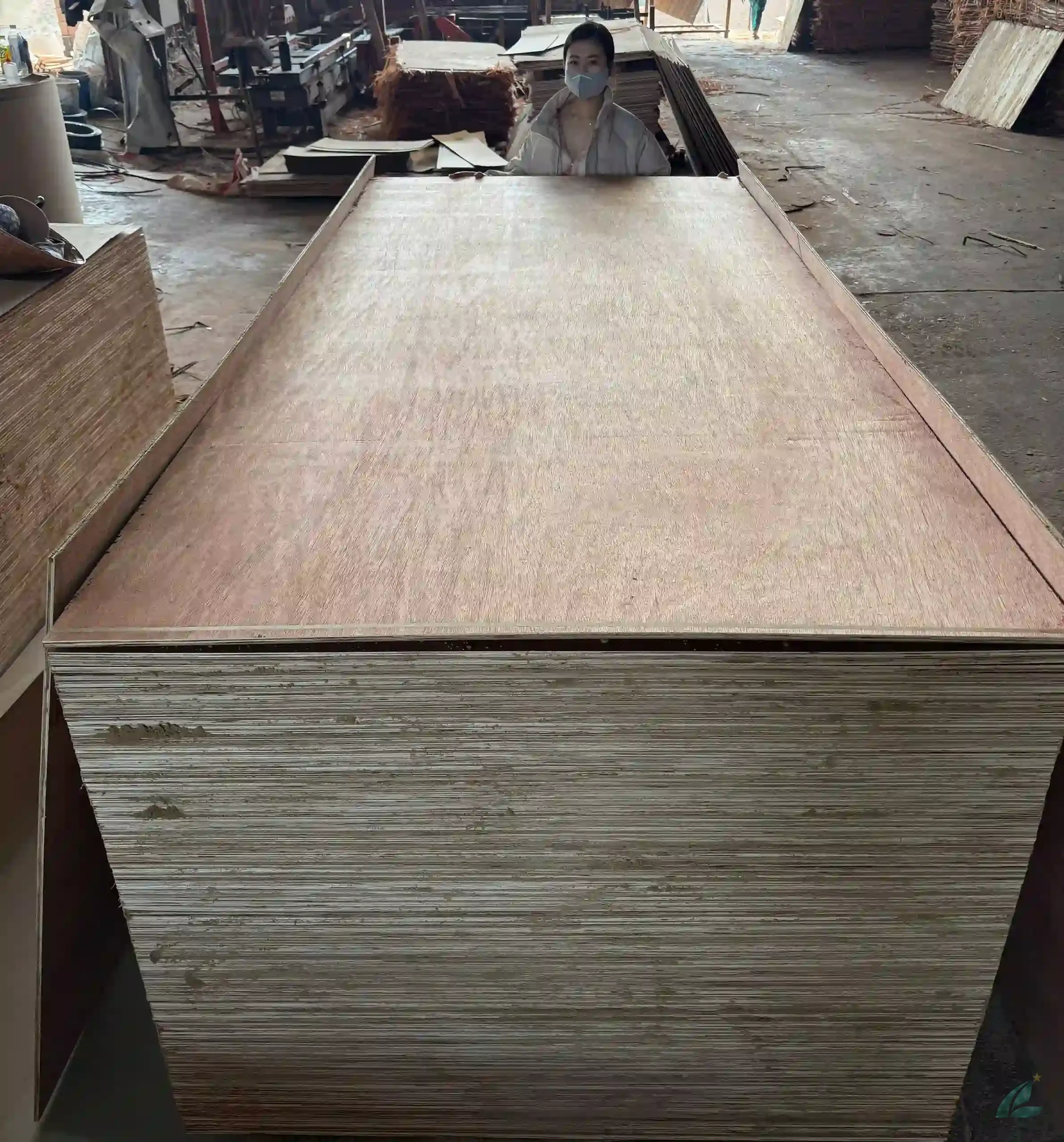
The choice between bintangor and okoume often comes down to destination market before it comes down to technical specification. Each face veneer has developed strong associations with specific regional buying standards.
📌 Bintangor: South Asia, Middle East, Africa
India is the largest single market for bintangor plywood from Vietnam. Indian furniture manufacturers and plywood distributors are deeply familiar with bintangor as a face material — it is the default commercial face in that market. Middle Eastern buyers (UAE, Saudi Arabia, Jordan) use bintangor for furniture carcassing, packaging, and door skin production. African buyers (Kenya, Nigeria, Tanzania) use bintangor for general commercial and packaging plywood.
These markets are price-sensitive and volume-driven. Bintangor with acacia core, MR glue, and E1 or E2 emission is the typical specification. Furniture grade bintangor with E0 is available for export to premium segments within these markets.
Okoume: Europe, Japan, North America
European furniture factories — particularly in Germany, Poland, France, and Spain — specify okoume as a standard interior furniture substrate. The pale, smooth surface suits European aesthetic preferences for light-tone furniture and lacquer finishes. European buyers also require E0 or E1 emission compliance, which is standard on HCPLY’s okoume production.
Japanese and South Korean buyers who import lightweight plywood for interior fitout and RV construction also specify okoume. The weight reduction compared to eucalyptus-core panels has direct operating cost implications in these applications.
Okoume for Marine Joinery
Okoume with WBP (phenolic) glue is used for interior marine joinery — cabinetry, flooring substrates, and lining panels in recreational boats. The lightweight and smooth surface make it practical for fitted furniture in confined spaces. This is a distinct application from load-bearing structural marine use, which requires different certification.
HCPLY’s okoume with WBP glue meets the bonding durability requirements for moisture-resistant interior applications. For the full quality assurance process we apply to both face veneers, see our quality control process.
⚙️ Core Options and Glue Standards
Face veneer type does not determine glue performance — glue type does. Both bintangor and okoume are available with either melamine (MR) or phenolic (WBP) glue.
Glue selection guide:
| Application | Glue | Boiling resistance |
|---|---|---|
| Interior furniture, cabinets | Melamine (MR) | 12 hours |
| Exterior, marine, construction | Phenolic (WBP) | 72 hours |
Emission standard selection guide:
| Market | Required standard |
|---|---|
| USA, Japan, Europe (premium) | E0 / CARB P2 |
| Europe (standard) | E1 |
| Southeast Asia, Middle East, Africa (budget) | E2 |
⚠️ Note: Glue type (MR/WBP) and emission standard (E0/E1/E2) are separate specifications. “MR glue with E0 emission” is a valid combination. “E0 glue” is not a recognised term — E0 is an emission ceiling, not a glue type. Confirm both specs explicitly when ordering.
Vietnam core species for both face veneers:
- Acacia core (~580 kg/m³): cost-effective, darker colour, 16 pallets per 40HC
- Styrax core (480–500 kg/m³): lightest option, white-toned core, 18 pallets per 40HC — preferred for furniture-grade okoume
- Eucalyptus core (650–750 kg/m³): heaviest, strongest, 15 pallets per 40HC — for structural applications
Both bintangor and okoume plywood from HCPLY are available with FSC, CARB P2, CE, and ISO 9001 documentation. View factory production photos in our gallery.
Request Samples of Bintangor and Okoume Plywood We ship free samples with technical data sheets. Lead time: 7–10 business days.
✅ Who Should Choose Bintangor?
Order bintangor plywood if your situation matches any of the following:
Budget and volume-driven production. Bintangor is the most cost-effective commercial face veneer from Vietnam. For furniture factories producing mid-market or budget-grade pieces, the lower face cost compounds across large volumes.
South Asian or Middle Eastern market destination. Indian, UAE, and African furniture buyers are familiar with bintangor and expect it at the price point. Switching to okoume may create confusion or push the FOB price above market expectation.
Painting or heavy lamination finish. When the surface will be fully painted, overlaid with PVC film, or covered with laminate, the face veneer aesthetics matter less. Bintangor provides a stable, knot-free substrate at minimum cost.
Packaging and door skin production. For packaging plywood (crates, pallets, shipping panels) and door skins, bintangor grade C/D with MR glue and E2 emission is the standard specification. Okoume would be over-specified and overpriced for these applications.
Thickness range below 3 mm. Bintangor is available down to 2 mm panel thickness. If your order includes very thin panels, bintangor provides more range.
See full product details on our Bintangor Plywood Vietnam page.
✅ Who Should Choose Okoume?
Order okoume plywood if your situation matches any of the following:
European or Japanese market destination. European furniture importers expect okoume as a standard commercial face. If your buyer specifies okoume or the end-market requires it, there is no substitute.
CARB P2 / E0 compliance HCPLY produces okoume with E0 emission as standard for European buyers. While bintangor E0 is also available, okoume with E0 is a more common spec request and a production default.
Weight-sensitive applications. RV interiors, caravan furniture, and marine joinery all benefit from lighter panels. Okoume with styrax core is the lightest standard plywood combination from Vietnam. This translates directly into lower freight cost per container and easier handling at destination.
High-gloss or lacquer finish. Okoume’s fine, consistent grain and pale surface require less preparation before lacquering. This reduces finishing time and labour cost for furniture factories producing lacquered cabinet doors and shelving.
Marine interior joinery. Okoume with WBP glue provides the moisture resistance needed for boat interior applications at a workable weight.
See full product details on our Okoume Plywood Vietnam page.
❓ FAQ
Is bintangor or okoume plywood better for furniture? For budget furniture in South Asia, Middle East, and Africa, bintangor is the practical choice — lower cost, available in E1/E2, wide grade range. For European furniture factories requiring a light, smooth surface with E0/E1 compliance, okoume is preferred. Both work for interior furniture; the right choice depends on your target market and budget.
Which is cheaper — bintangor or okoume plywood from Vietnam? Bintangor is the less expensive face veneer. Okoume veneer is imported from Central Africa (Gabon), adding sourcing cost. As a rough guide, okoume face commands a USD 5–12 per CBM premium over bintangor face for the same core and thickness. Exact pricing depends on grade, glue, thickness, and order volume.
Can I mix bintangor and okoume in one 40HC container from Vietnam? Yes. HCPLY ships mixed specs in a single 40HC container. Container weight and CBM limits apply based on core species — styrax core allows the most volume at 18 pallets per 40HC. Request a mixed loading plan with your quotation.
What core species do bintangor and okoume plywood use from Vietnam? Vietnam produces three core species: acacia (~580 kg/m³), eucalyptus (650–750 kg/m³), and styrax (480–500 kg/m³). Bintangor face is commonly paired with acacia or styrax core. Okoume face is typically paired with styrax or eucalyptus core. Core choice affects panel weight, container capacity, and final price.
Is okoume plywood suitable for marine applications? Okoume with WBP (phenolic) glue meets marine-grade bonding requirements in many markets. It is lightweight and finishes well. However, Vietnam-produced okoume plywood is not certified to BS 1088 marine grade. If you need formal BS 1088 certification, source from certified Gabon manufacturers. HCPLY’s okoume with WBP glue is suitable for interior marine joinery and general moisture-resistant furniture.
🔗 Related Articles
- Face Veneer Types — Complete Guide to Vietnam Plywood Options
- Plywood Container Packing Calculation for 40HC
- Vietnam Plywood Reviews from Global Importers
- Quality Control Process at HCPLY
✅ Conclusion
Bintangor and okoume plywood are both commercially produced face veneers from Vietnam as of 2026 — but they are not interchangeable. Bintangor is the cost benchmark: the most affordable commercial face veneer available, suited to high-volume South Asian and Middle Eastern furniture production and packaging. Okoume is the precision specification: lighter, smoother, and better suited to European E0 furniture markets, marine joinery, and applications where surface quality and weight reduction justify a modest price premium.
The practical question is not which veneer is “better” — it is which veneer fits your market, your buyer’s expectations, and your container economics. Both are available from HCPLY with a full range of core species, glue systems, emission standards, and certifications.
We handle both face veneers daily. If you have a specification to match or a market requirement to discuss, our team will give you a direct answer with factory pricing.
Contact HCPLY Now — Get a Free Quote Bintangor and okoume plywood with factory documentation. FOB Hai Phong. MOQ 1 × 40HC.