

India accounts for roughly 27% of all global bintangor veneer plywood imports (Volza trade data, 2024). That number is not coincidence. Bintangor’s reddish-brown face, consistent grain, and commercial price point have made it the default furniture-grade panel for Indian interior manufacturers, furniture factories, and packaging operations for over two decades.
Yet most Indian buyers placing their first or second order from Vietnam run into the same set of problems: grade confusion, core mismatches, BIS documentation gaps, and container weight surprises. This guide addresses each one directly—so you arrive at your first shipment with zero surprises.
📋 What Is Bintangor Plywood?
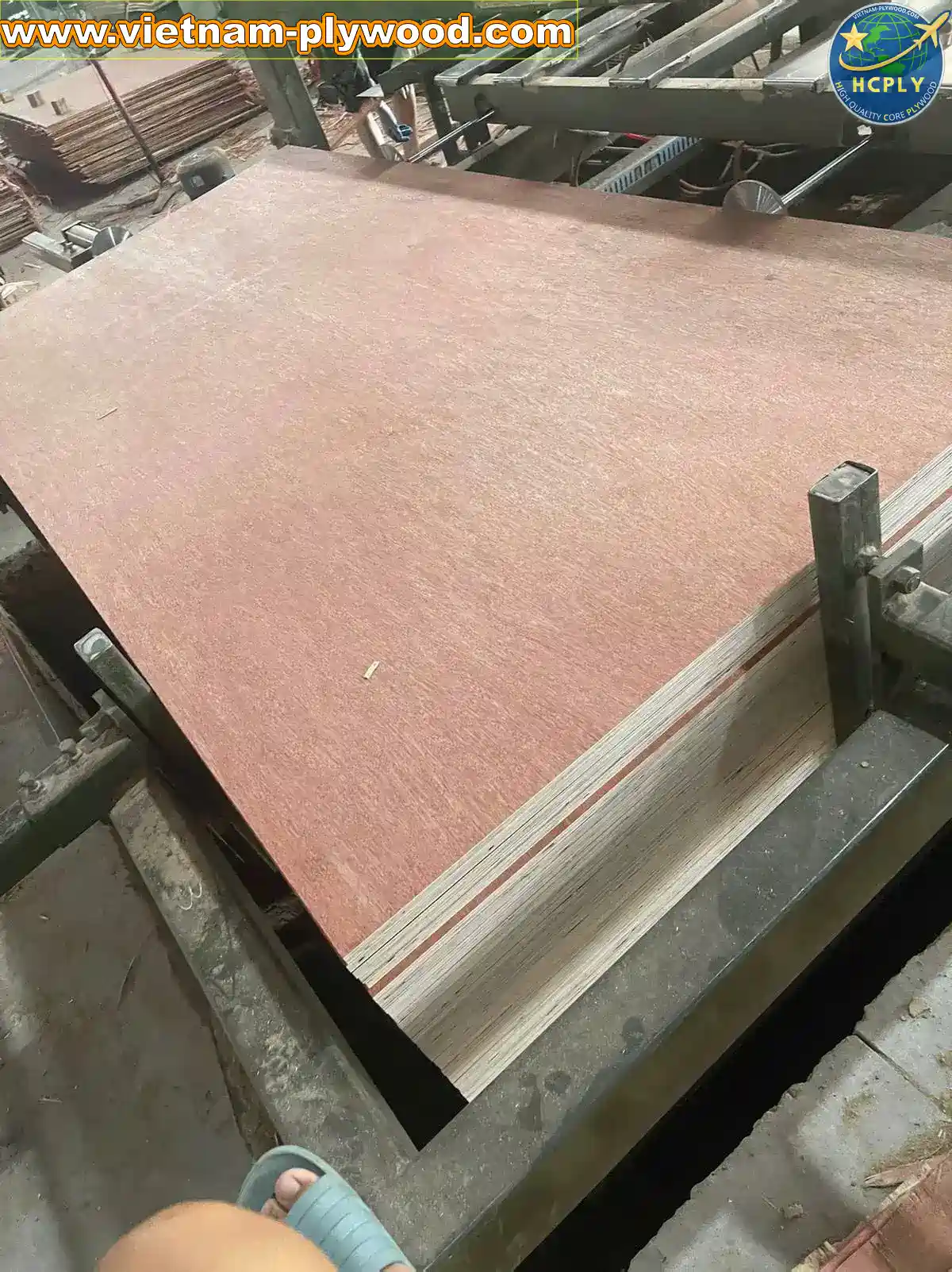
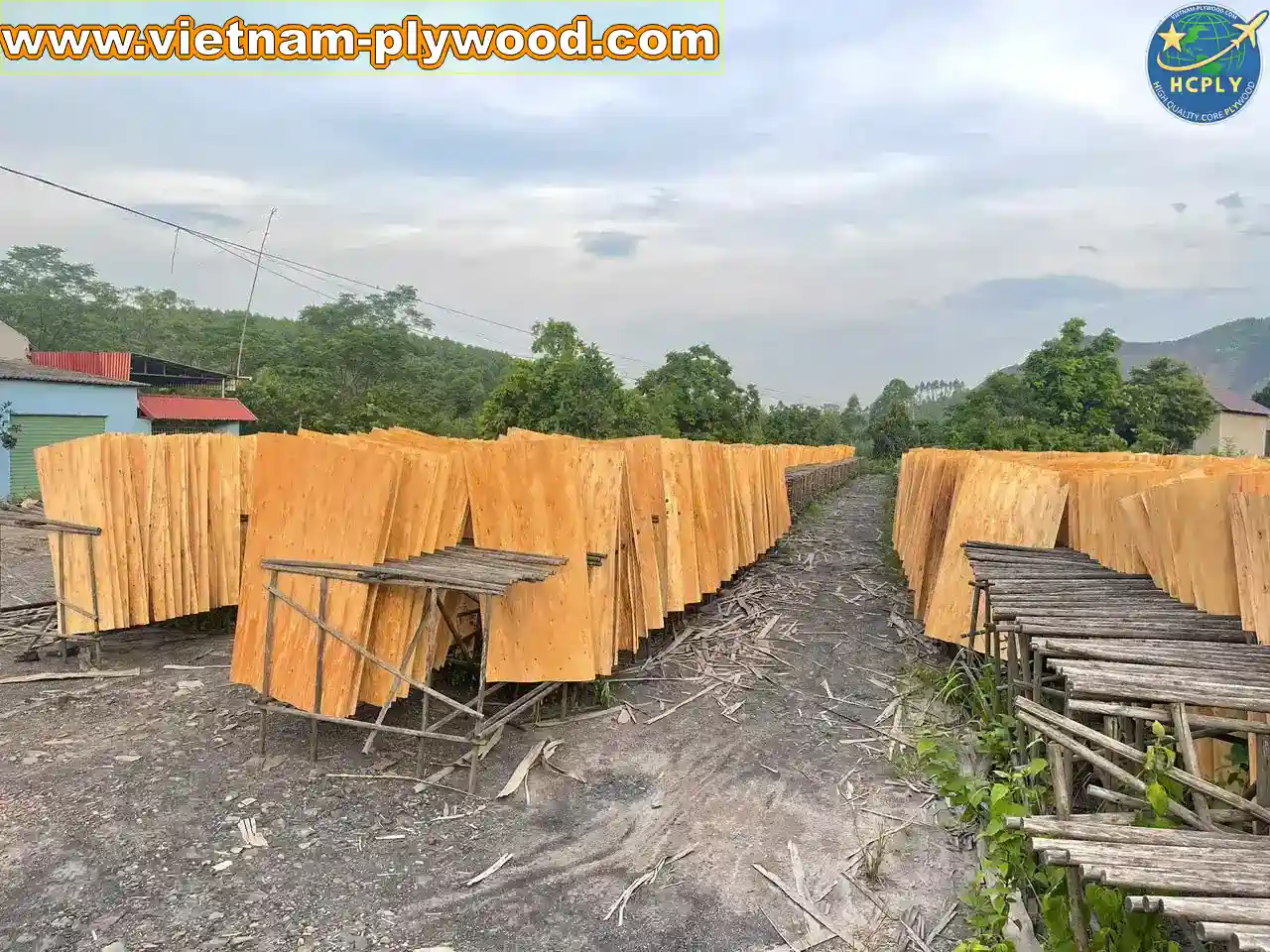
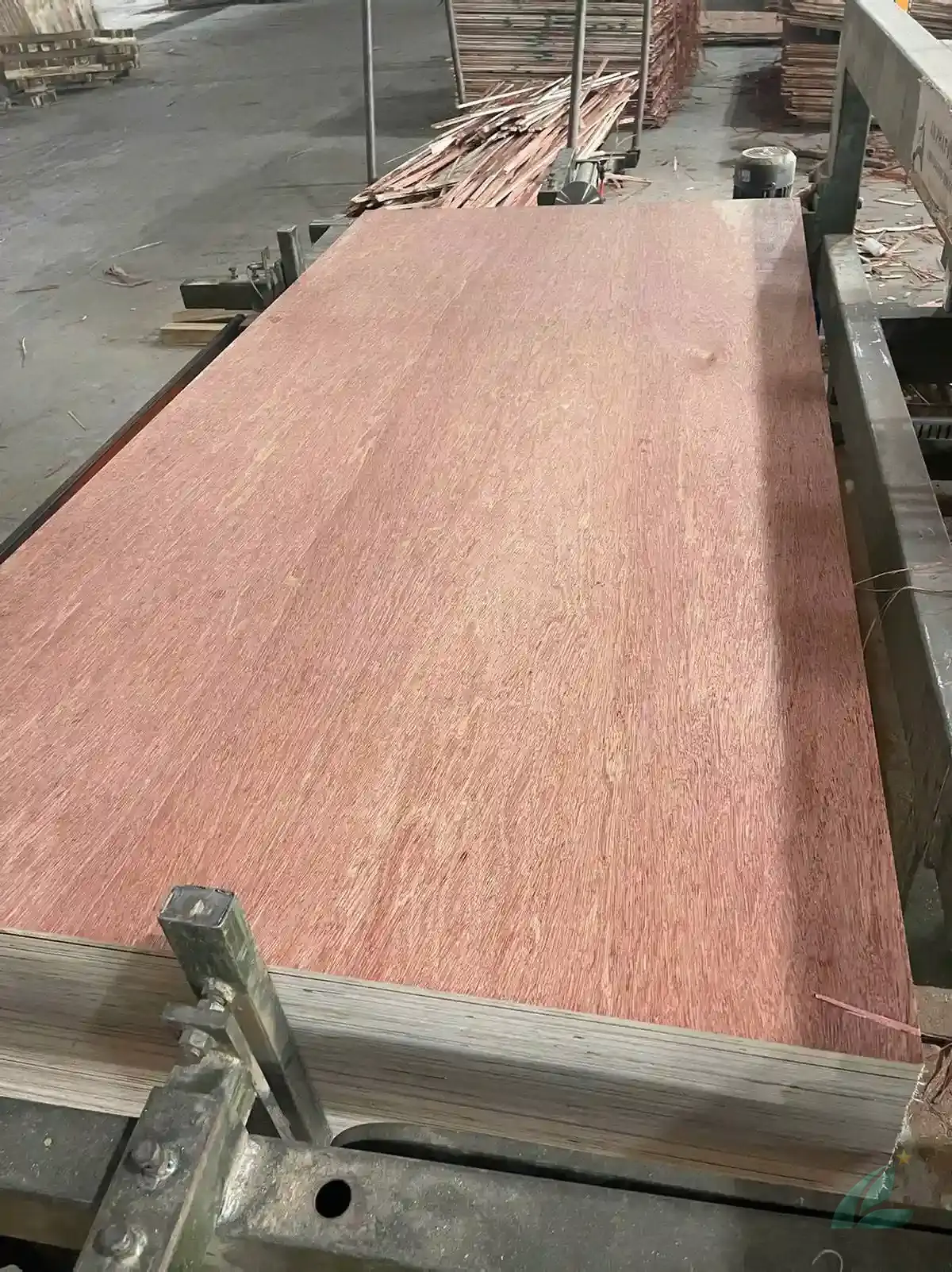
Bintangor is a face veneer species (Calophyllum spp.) harvested in Southeast Asia—primarily Malaysia, Indonesia, and increasingly sourced as plantation-grown veneer. The face carries a warm reddish-brown color with a straight, uniform grain that requires minimal staining or painting to achieve a finished furniture appearance.
In Vietnam, bintangor is classified as the most affordable commercial face veneer. It occupies the price tier below okoume and well below gurjan, making it the go-to choice for cost-sensitive applications where face quality matters but premium hardwood appearance does not.
💡 Key distinction: Bintangor is a face veneer only. The structural properties of the panel—strength, weight, moisture resistance—are determined by the core species (acacia, eucalyptus, or styrax) and the glue type (MR or WBP), not the face.
The face veneer thickness in Vietnamese bintangor plywood is typically 0.2–0.4mm, applied on both faces for an A/B graded panel (HCPLY production data, 2026).
📦 Why the Indian Market Prefers Bintangor
Indian furniture manufacturers and importers have consistently chosen bintangor over competing face species for three practical reasons.
Color match. The warm reddish tone aligns with Indian aesthetic preferences in kitchen cabinets, wardrobe panels, and commercial interiors. Buyers in Gujarat, Rajasthan, and Maharashtra report lower rejection rates from end customers compared to lighter-face species like okoume or pine.
Price tier. Bintangor sits 15–25% below gurjan and 10–18% below okoume in typical FOB pricing from Vietnam (HCPLY export data, 2025–2026). For Indian importers buying 2–5 containers per month, this price gap compounds significantly across annual volume.
Versatility. A single bintangor specification covers furniture panels, cabinet backs, decorative shelving, and commercial interior work. This reduces the number of SKUs an importer needs to maintain, simplifying procurement, QC, and stock management.
“Bintangor from Vietnam is the workhorse grade for the Indian market—it does 80% of the applications at 70% of the cost of gurjan. Buyers who understand grade selection can get furniture-ready panels at commercial-grade pricing.” — David, Export Project Leader, HCPLY
🔧 Grades & Specifications for Indian Buyers
Understanding grade nomenclature prevents the most common ordering mistake: receiving panels that are either over-specified (paying for quality you cannot use) or under-specified (face defects rejected by your client).
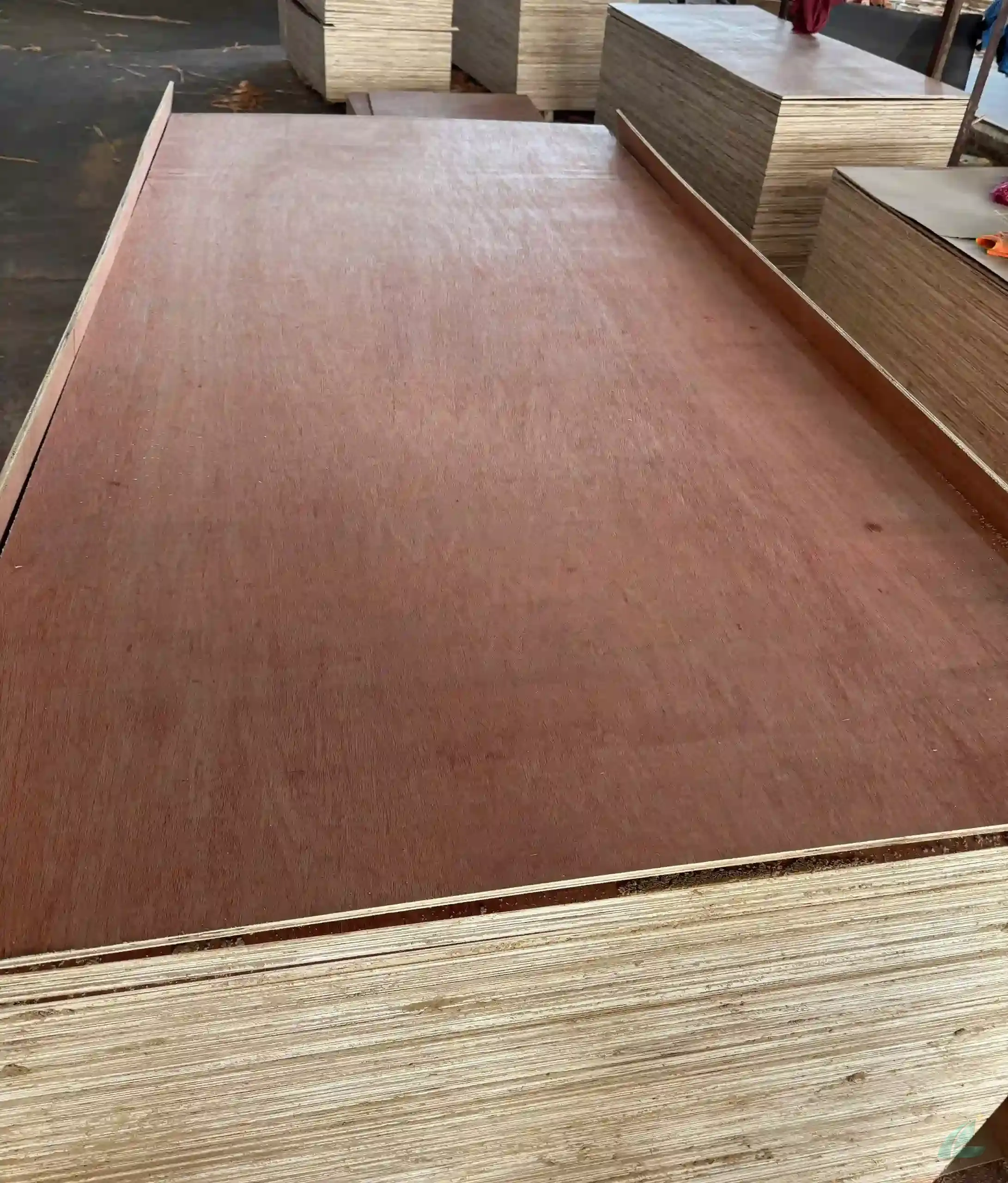
📌 Face Grades
| Grade | Face Description | Indian Application |
|---|---|---|
| A/B | Clean face, tight knots, uniform color | Visible furniture panels, cabinet doors |
| B/C | Minor knots, slight color variation | Cabinet sides, shelving backs |
| C/D | Open knots allowed, color variation | Packaging sides, framing, utility panels |
For Indian furniture factories, A/B face grade on both sides is the standard for finished panels sold to end customers. B/C is acceptable for secondary faces or interior structural panels.
📌 Core Options for India
The core species determines density, weight per sheet, container CBM capacity, and landed cost per panel.
| Core | Density | Stack (1220×2440) | Sht/Pallet | Pallets | Sheets per 40HC (18mm) | Notes |
|---|---|---|---|---|---|---|
| Acacia | ~580 kg/m³ | 1000mm | 55 | 16 | ~880 sheets | Budget-optimized, most common for India |
| Styrax | 480–500 kg/m³ | 1000mm | 55 | 18 | ~990 sheets | Lighter weight, better for furniture mass |
| Eucalyptus | 650–750 kg/m³ | 970mm | 53 | 15 | ~795 sheets | Heaviest, strongest, highest landed cost |
For Indian commercial buyers, acacia core bintangor is the default—it delivers the best price-to-performance ratio for furniture and interior applications. Styrax core makes sense when the buyer’s end client specifies low-weight panels for modular furniture or when container weight limits are a concern.
⚠️ Important: Density is a function of core material, not face veneer. A bintangor face panel on eucalyptus core weighs 25–30% more than the same panel on styrax core. Always specify core when requesting a quotation to get accurate container economics.
📌 Glue Type for Indian Conditions
India’s monsoon climate and humidity levels make glue selection critical.
- Melamine (MR) glue — passes the 12-hour boiling test. Suitable for interior furniture, cabinets, and dry commercial spaces. This is the standard specification for 90%+ of bintangor plywood ordered for India.
- Phenolic (WBP) glue — passes the 72-hour boiling test. Required for exterior exposure, roofing substrate, or construction applications. Price premium of approximately 8–12% over MR grade.
For most Indian buyers, MR glue with E1 or E2 emission standard covers all furniture and interior fitout requirements. Buyers supplying to clients who demand IS 710 marine-grade compliance should specify WBP.
📊 BIS Compliance — What Indian Buyers Need to Know
The Bureau of Indian Standards (BIS) certification requirement applies to plywood sold within India under IS 303 (general purpose plywood) and IS 710 (marine/boiling waterproof plywood). Vietnamese bintangor plywood can comply with both standards when manufactured to the correct specification.
Key BIS parameters for IS 303:
| Parameter | IS 303 Requirement |
|---|---|
| Glue bond (dry) | ≥1.0 N/mm² |
| Glue bond (wet, 72h soak) | ≥0.7 N/mm² |
| Moisture content | 5–15% |
| Tolerance (thickness) | ±0.8mm (≤6mm), ±1.0mm (>6mm) |
HCPLY produces bintangor plywood panels within ±0.3mm thickness tolerance—tighter than BIS requirements (HCPLY production data, 2026). Test reports confirming glue bond strength, moisture content, and surface finish quality are available for each production batch on request.
⚠️ Note: BIS certification on the product itself requires an Indian BIS license from the factory. Buyers importing under their own brand or as raw material for manufacturing do not need factory BIS certification—they need conforming test reports and technical documentation. Confirm with your customs broker what documentation is required for your specific HS code and import category.
Get BIS-ready documentation for your bintangor order
🏭 Container Economics for India Routes
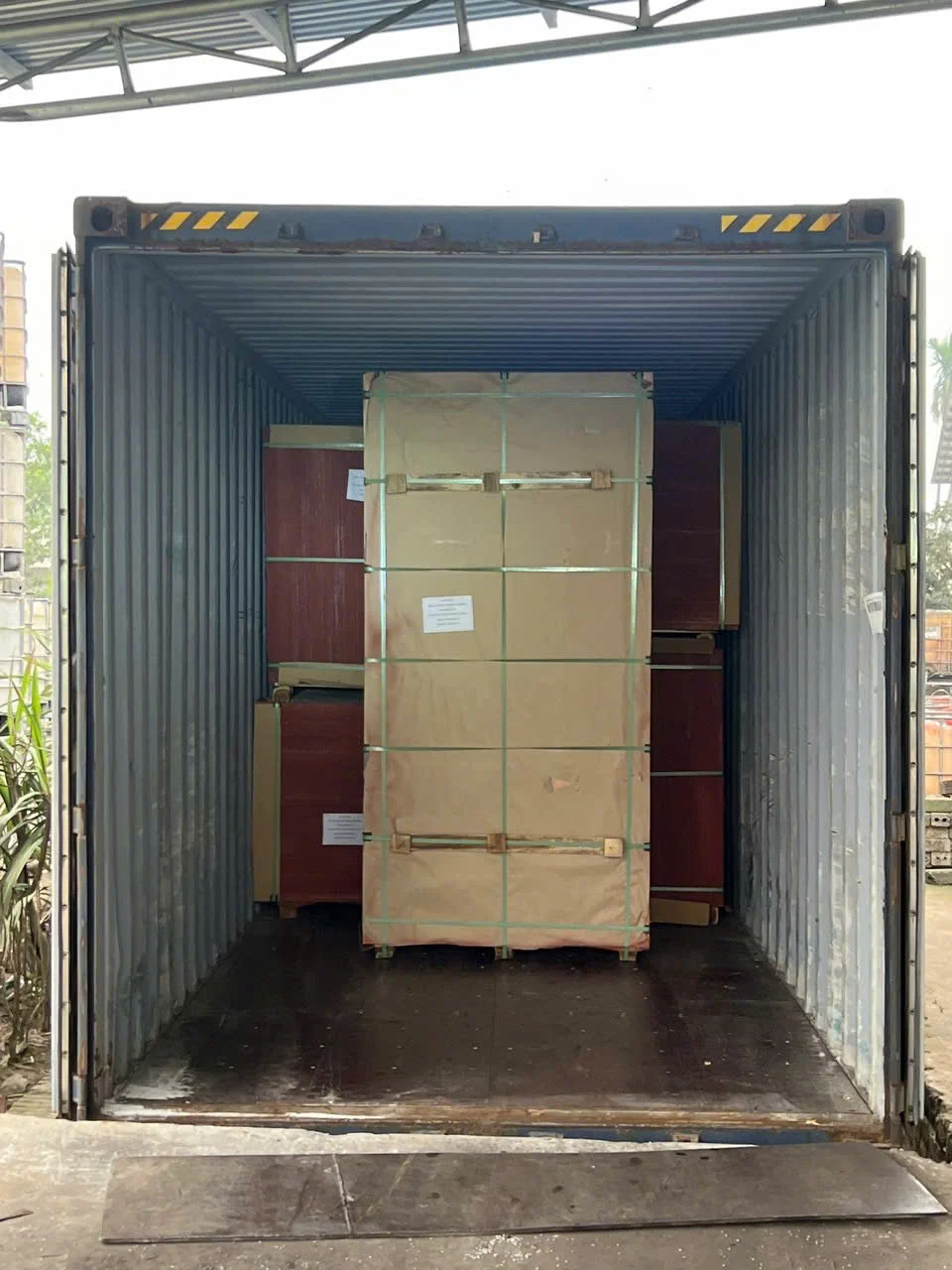
The route from Hai Phong port (Vietnam) to Indian ports—Nhava Sheva (Mumbai), Chennai, Kolkata, or Mundra—is one of the most-optimized trade lanes for plywood in Asia. Transit time averages 12–18 days depending on the destination port and shipping line.
For a standard 40HC container of 18mm bintangor plywood on acacia core:
| Parameter | Value |
|---|---|
| Pallets per 40HC | 16 |
| Sheets per pallet (18mm) | ~55 sheets |
| Total sheets | ~880 sheets |
| CBM per 40HC | ~47.5 CBM |
| Weight per 40HC | ~27.5 MT |
| Volume per sheet | 0.054 CBM |
At 9mm thickness, the CBM per container increases to approximately 53 CBM because more sheets fit within the same pallet height (HCPLY production data, 2026). Thinner gauges give Indian buyers better per-sheet pricing on freight allocation.
Indian buyers importing larger volumes frequently mix 9mm and 12mm specifications in a single container to balance CBM utilization with stock requirements. HCPLY supports mixed-specification containers with per-item weight and CBM breakdowns for customs documentation.
For detailed container loading formulas, see Plywood Container Packing Calculation for 40HC.
📐 Thickness Selection by Indian Application
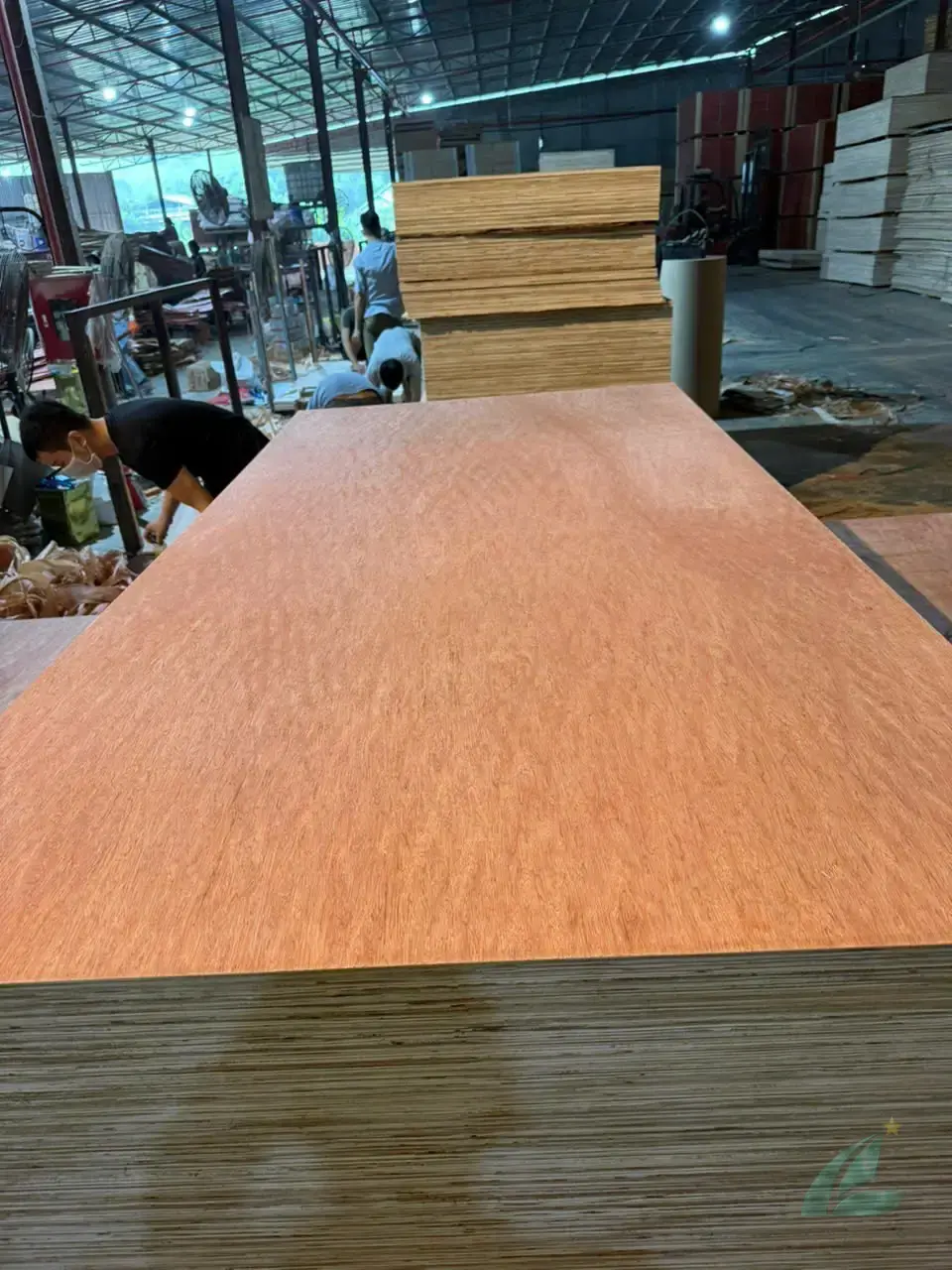
Thickness selection follows application requirements. Indian furniture manufacturers typically work with a defined set of gauges driven by machinery calibration and downstream product standards.
| Thickness | Primary Use in India |
|---|---|
| 4mm | Cabinet backs, drawer bottoms, decorative panel inserts |
| 6mm | Shelf backs, decorative overlays, furniture panel facing |
| 9mm | Cabinet carcase sides (budget), drawer dividers, internal shelving |
| 12mm | Cabinet carcases, wardrobe sides, light furniture frames |
| 15mm | Wardrobe carcases, medium furniture frames |
| 18mm | Main furniture panels, work surfaces, heavy shelving |
| 25mm | Heavy-duty shelving, commercial counters, workshop benching |
The 12mm and 18mm gauges account for the largest share of HCPLY’s India-bound bintangor shipments (HCPLY shipping records, 2026). Buyers stocking for resale typically order a split between these two thicknesses to cover the broadest range of furniture manufacturing requirements.
🔗 Comparing Bintangor vs Gurjan for India
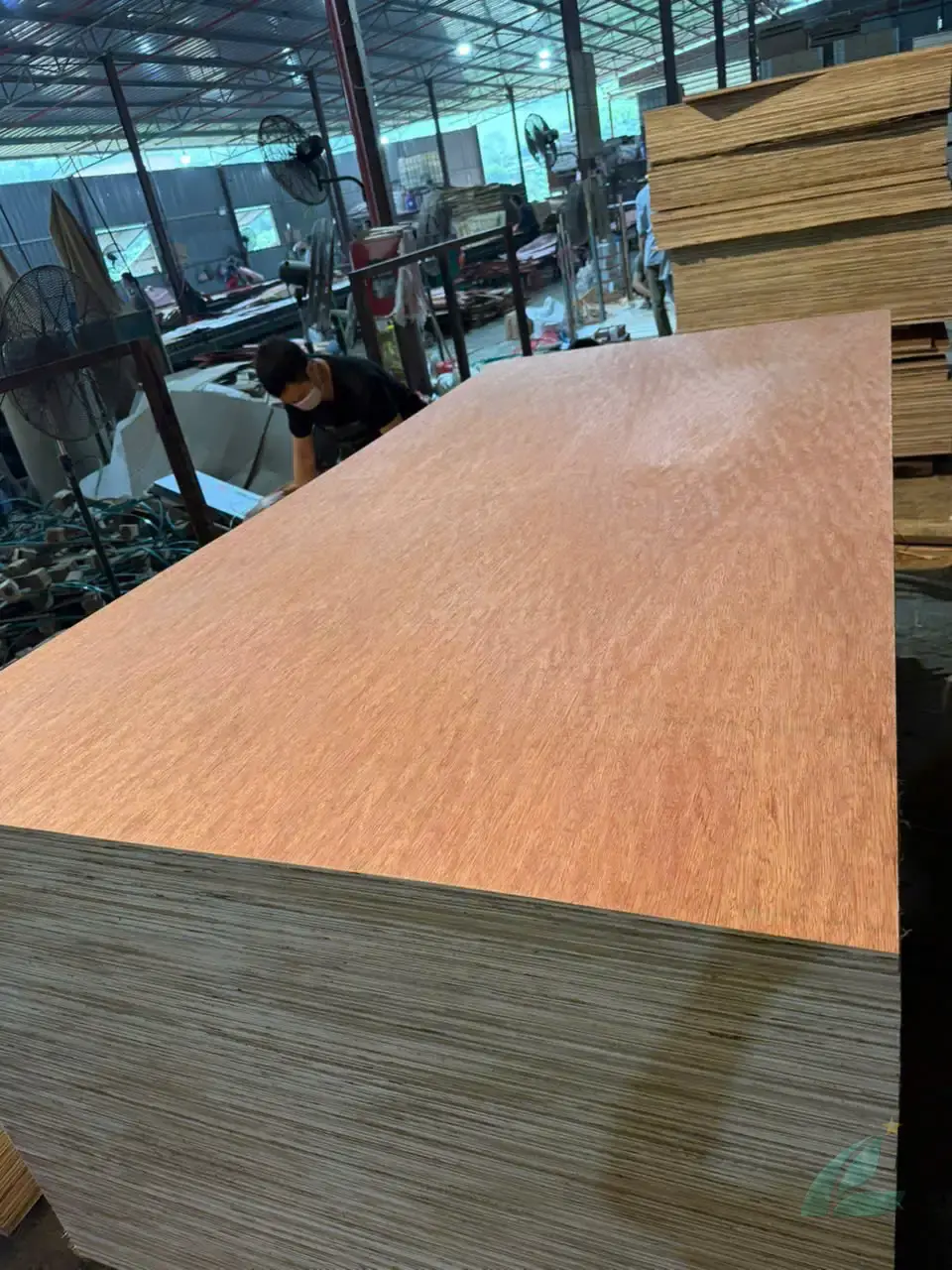
Indian buyers consistently face the same sourcing question: when should you choose bintangor over gurjan?
Gurjan plywood carries a denser, darker hardwood face with higher MOR (modulus of rupture) values and is the preferred choice for premium Indian furniture, marine applications, and IS 710-rated plywood. It typically sells at a 15–25% premium over bintangor.
Bintangor is the right choice when:
- The end product will be painted, laminated, or covered with veneer (face quality secondary)
- Cost per panel is a primary constraint for the buyer’s market segment
- The application is commercial interior, packaging, or general furniture where gurjan-level strength is not required
For a detailed side-by-side comparison, see Gurjan Plywood vs Bintangor Plywood — Which Is Better for India.
Compare bintangor and gurjan specifications with HCPLY
📦 Ordering Process — Step by Step
For buyers new to sourcing from Vietnam, the ordering process with HCPLY follows a clear sequence:
-
Specification sheet — Define face grade (A/B or B/C), core species, glue type, thickness(es), size, and emission standard (E1/E2). The Plywood Quotation Guide covers every parameter you need before requesting a price.
-
FOB quotation — HCPLY provides a per-CBM FOB Hai Phong price within 24 hours for defined specifications. Mixed-thickness containers are quoted with per-item breakdowns.
-
Sample order — For first-time buyers, HCPLY ships physical samples (full sheets or cut samples) by courier to confirm grade, color, and surface quality before committing to a full container.
-
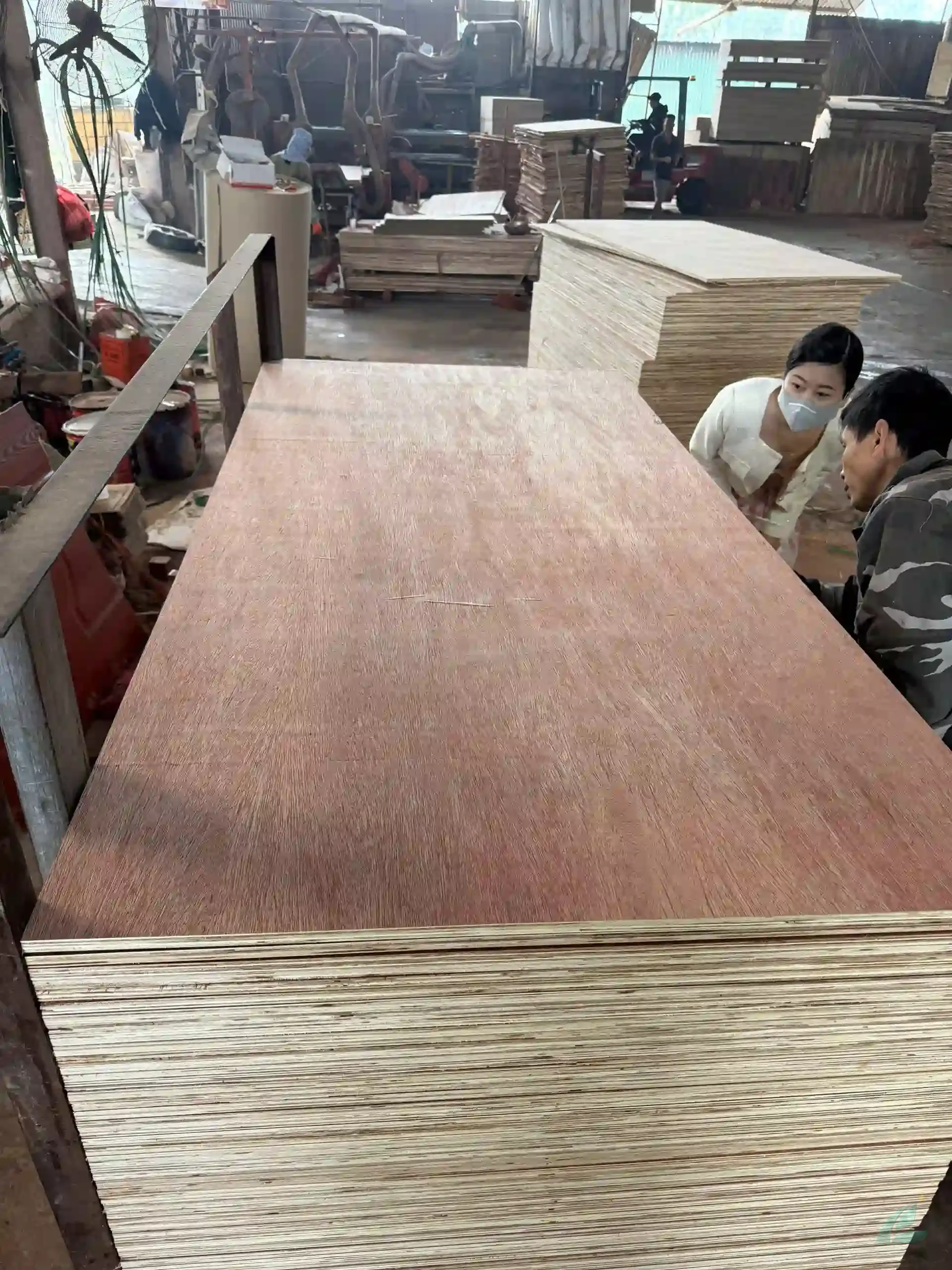
Production + QC — Lead time is 15–20 days from deposit payment. HCPLY’s on-site QC team documents thickness measurements, moisture content, and face grade during production.
-
Export documentation — Standard export documents: Commercial Invoice, Packing List, Bill of Lading, Certificate of Origin (Form D for ASEAN preference), Phytosanitary Certificate, Fumigation Certificate.
-
Shipping — FOB Hai Phong. Freight to India (buyer arranges or HCPLY quotes CIF). Transit time to Nhava Sheva or Chennai: approximately 12–15 days.
For full details on the Vietnam import process, see How to Buy Plywood from Vietnam — Complete Guide and the Vietnam Plywood Export to India Buyer Guide.
✅ Conclusion: Sourcing Bintangor from Vietnam for India
Bintangor plywood from Vietnam offers Indian buyers a direct path to cost-effective, consistent commercial-grade panels. The key decisions—core species, glue type, face grade, and thickness—are straightforward once you understand what each parameter controls.
India’s 27% share of global bintangor imports (Volza, 2024) reflects a mature, well-established trade route with competitive freight rates, predictable transit times, and a growing base of Vietnam-sourced suppliers who understand Indian market requirements.
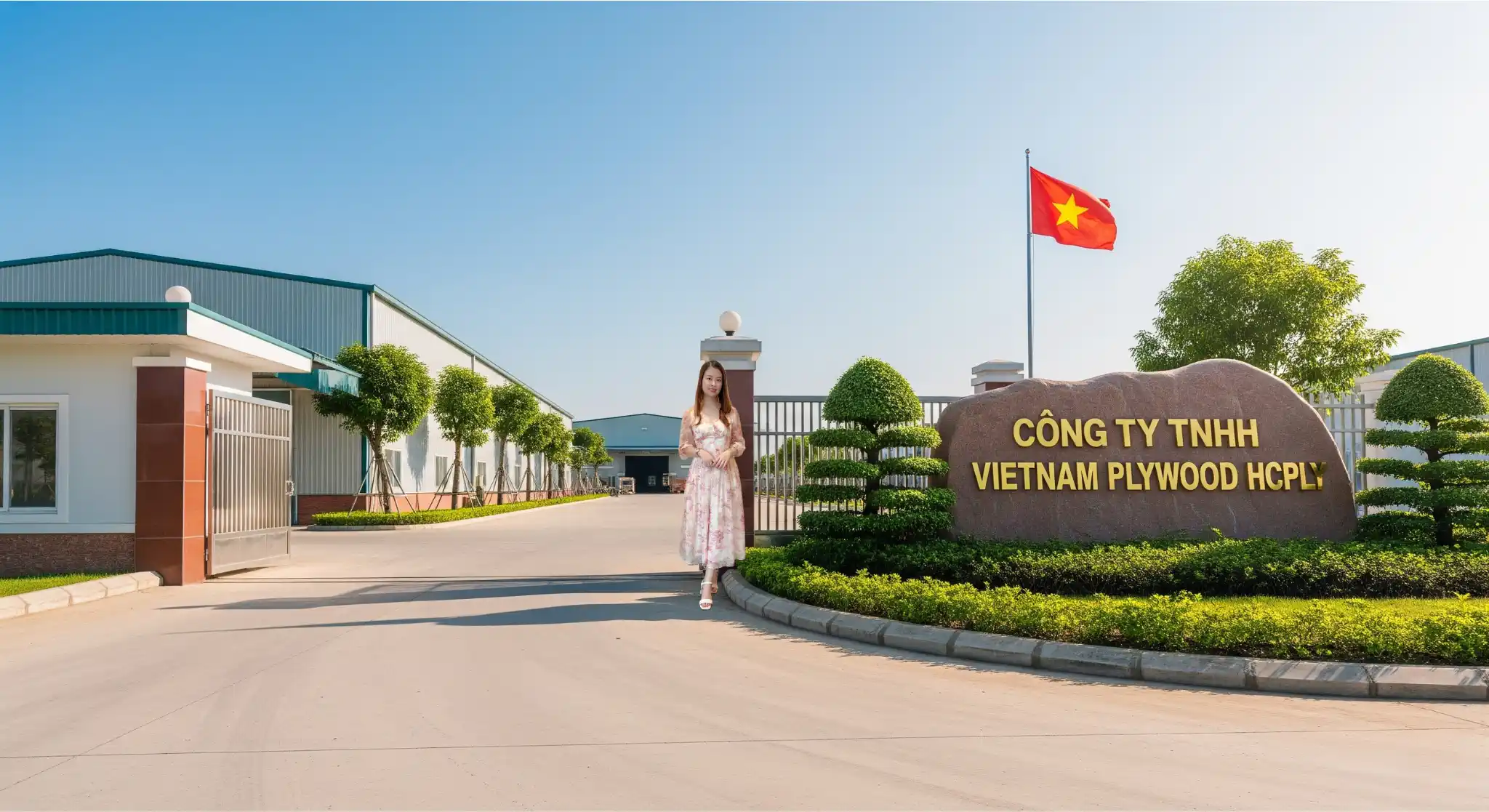
HCPLY manages 3 specialized production facilities in Northern Vietnam, supplying factory-direct to India with no VAT overhead and full export documentation for every shipment. Our on-site QC team documents each production batch so you receive what you ordered.
Request a free bintangor plywood quote for India — 24-hour response
📋 Appendix: Quick Reference Spec Sheet for Indian Buyers
| Parameter | Standard for India |
|---|---|
| Face | Bintangor A/B (furniture) or B/C (commercial) |
| Core | Acacia (budget) or Styrax (lightweight) |
| Glue | Melamine (MR) — passes 12h boiling test |
| Emission | E1 (standard interior) or E2 (utility/packaging) |
| Thickness | 4, 6, 9, 12, 15, 18mm (most ordered) |
| Size | 1220×2440mm (standard) or 1220×2135mm |
| Certification | CO Form D, Phytosanitary, Fumigation |
| MOQ | 1 × 40HC |
| Lead time | 15–20 days from deposit |
| Port | FOB Hai Phong |