



Canadian buyers importing plywood from Vietnam pay 0% import duty under the CPTPP trade agreement — and most do not know it. That single fact changes the landed cost calculation significantly compared to sourcing from non-CPTPP countries, where Most-Favoured-Nation (MFN) tariffs on plywood typically range from 3.5–6%.
Finding the best Vietnam plywood exporter for Canada, however, involves more than trade tariff arithmetic. Canada’s import framework — CBSA customs rules, CFIA phytosanitary requirements, ISPM-15 wood packaging compliance, and specific documentation requirements — means that choosing a supplier who cannot handle these correctly delays your shipment at the port.
This guide covers the complete process: the trade advantage, the compliance checklist, how to evaluate suppliers, and what Canadian buyers specifically need on their purchase orders.
📋 Why Canada Imports Plywood from Vietnam
Canadian domestic production covers softwood plywood (primarily spruce-pine-fir) and oriented strand board. For hardwood face plywood — furniture-grade panels with birch, okoume, bintangor, or eucalyptus face veneers — Canada is structurally dependent on imports. Vietnam is among the three largest hardwood plywood exporters globally, and under the CPTPP, it holds a structural tariff advantage over non-treaty suppliers.
Three factors make Vietnam a strong supply choice for Canadian importers:
Tariff advantage. The CPTPP, in force for Vietnam since January 14, 2019, gives Vietnamese plywood 0% import duty in Canada (Government of Canada, CPTPP Partner: Vietnam, 2023). Non-CPTPP suppliers pay Canada’s MFN tariff rate. For a typical 40HC container of furniture-grade panels, this tariff difference represents USD 1,200–2,800 in savings at the border — before freight.
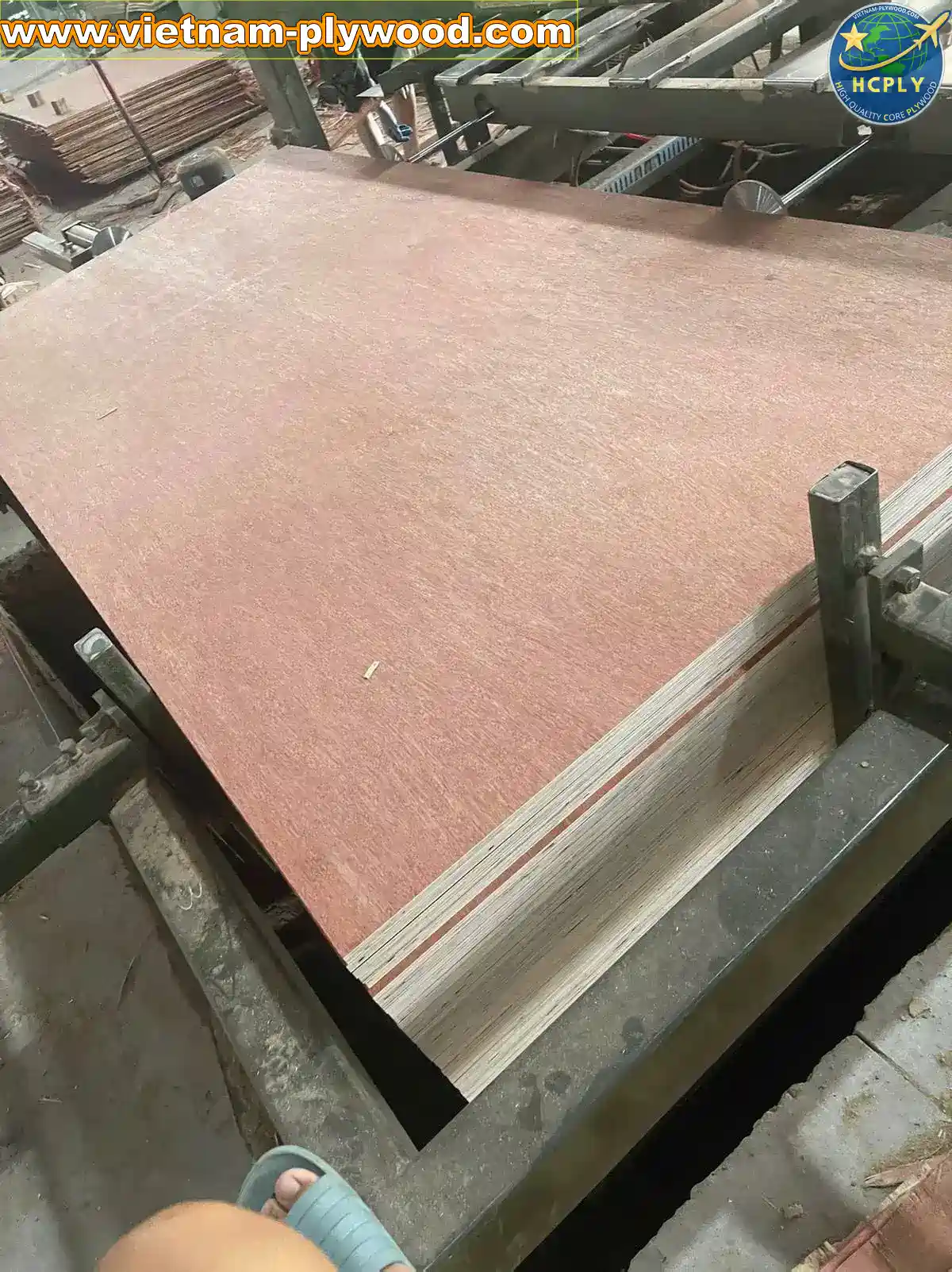
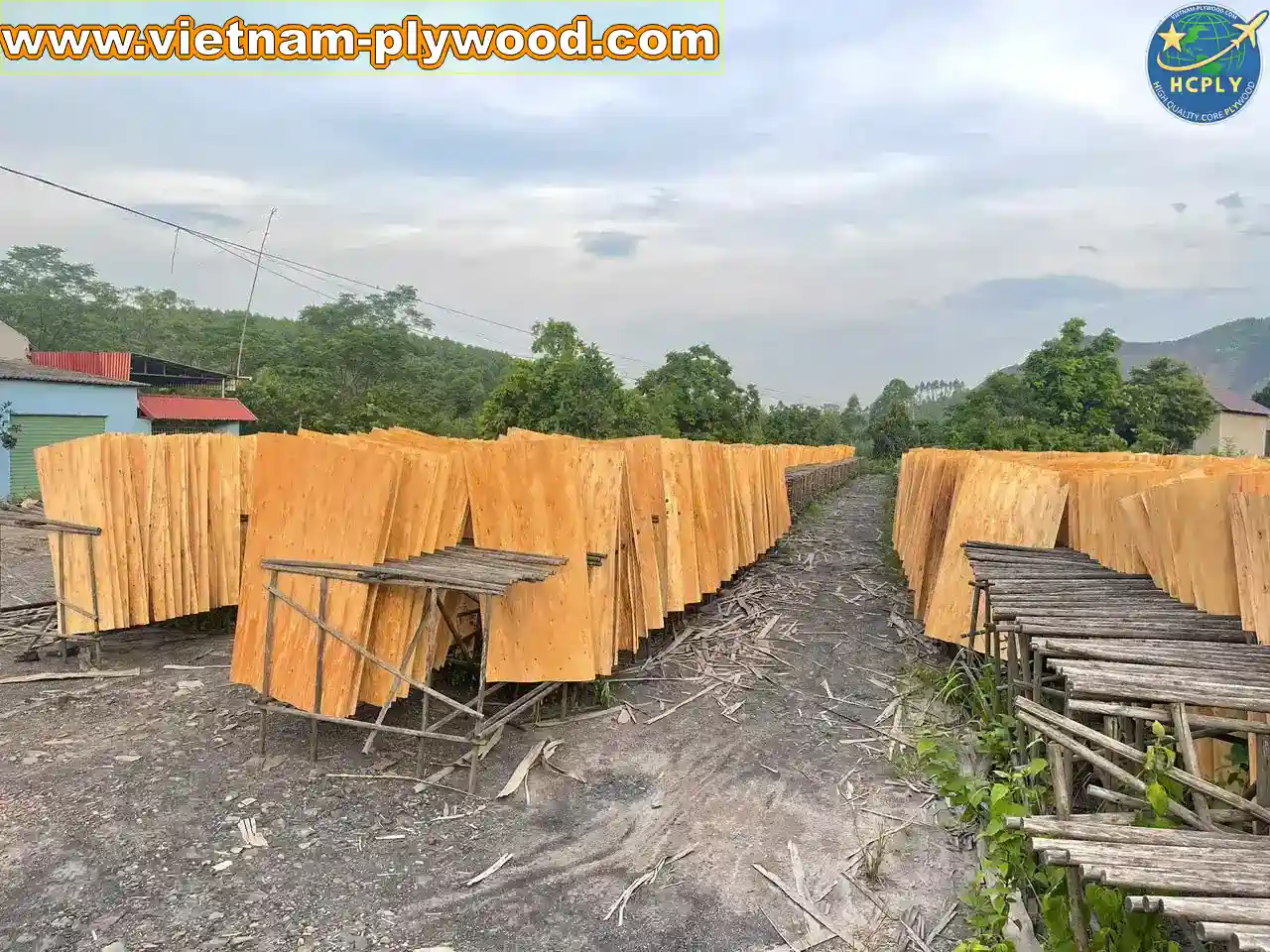
Product range. Northern Vietnam factories produce the full spectrum of hardwood face plywood: birch-face (D/E/F grade), okoume, bintangor, EV (engineered veneer), eucalyptus, gurjan, and film-faced construction panels. Canadian buyers can consolidate multiple SKUs from a single sourcing contact rather than managing four or five separate suppliers.
No anti-dumping exposure. The Canadian International Trade Tribunal (CITT) has not imposed anti-dumping or countervailing duties on Vietnamese plywood as of 2026. This contrasts with the US situation, where Chinese-origin hardwood plywood faces significant AD/CVD duties that pushed US buyers toward Vietnamese supply (CBSA SIMA database, 2025).
🔧 Canada Import Compliance: What Your Supplier Must Know
Canada’s import requirements for plywood are less complex than those for Europe (no EUDR) or the US (no CARB P2 mandate at the federal level), but they are specific. An exporter unfamiliar with Canadian requirements will create documentation gaps that trigger CBSA examination holds.
📌 1. CPTPP Certificate of Origin
For Vietnamese plywood to enter Canada at 0% duty, the shipment must be accompanied by a valid CPTPP Certificate of Origin. This document is issued by the Vietnamese exporter and certifies that the goods meet the CPTPP rules of origin (primarily that sufficient transformation occurred in Vietnam).
Ask your supplier directly: “Do you have experience issuing CPTPP Certificates of Origin for Canadian shipments?” Suppliers who have only shipped to the US or EU may default to non-CPTPP documentation, costing you the duty exemption.
📌 2. ISPM-15 Wood Packaging Compliance
Canada’s Food Inspection Agency (CFIA) requires that all wood packaging material (WPM) used in international shipments — including pallets, crating, and dunnage — comply with International Standard ISPM-15 (CFIA, D-98-08, 2023). Non-compliant pallets are subject to treatment or destruction at the port of entry, which delays your entire container.
ISPM-15 compliant pallets are either:
- Heat-treated (HT) to 56°C for 30 continuous minutes, or
- Methyl bromide fumigated (MB) — increasingly restricted under environmental regulations
The compliance mark (IPPC logo + country code + producer number + treatment type) must appear on both sides of each pallet. Vietnamese exporters working with Canadian buyers routinely use HT-certified pallets — confirm this before production begins.
⚠️ Important: ISPM-15 applies to the wood packaging (pallets, crates), not to the plywood panels themselves. Plywood is a processed wood composite exempt from the plant pest requirements that apply to raw timber.
📌 3. CFIA Phytosanitary Certificate
While plywood panels are processed composites and generally exempt from phytosanitary requirements, some raw wood products and mixed shipments may require a phytosanitary certificate from Vietnam’s Plant Protection Department. Clarify with your customs broker whether your specific HS code requires this. Most furniture-grade plywood (HS 4412.31 — plywood with at least one outer ply of tropical wood) does not, but film-faced panels with pine cores may trigger different requirements.
📌 4. Formaldehyde Emission Standards
Canada does not impose CARB P2 as a federal mandate the way California does in the US. However, Canadian provinces — particularly British Columbia and Ontario — increasingly align procurement standards with US health and safety benchmarks. Major Canadian retail and commercial buyers now specify E0 or CARB P2 as a condition of purchase (Health Canada guidance, indoor air quality).
For furniture-grade plywood destined for indoor use in Canada, specify E0 (≤0.5 mg/L formaldehyde) as standard. This gives you full coverage across all provincial requirements and avoids future procurement disputes.
📌 5. FSC Chain-of-Custody
FSC certification is not legally mandated for plywood imported into Canada, but it is commercially significant. Major Canadian home improvement retailers (RONA, Home Depot Canada, Lowe’s Canada) and commercial contractors increasingly specify FSC-certified material in project specifications and corporate sustainability commitments.
A Vietnam plywood exporter for Canada targeting retail or commercial channels should hold active, verifiable FSC chain-of-custody certification. Verify certificate status at info.fsc.org — do not rely solely on a PDF copy.
📦 Product Specifications for the Canadian Market
Canada’s plywood demand breaks into three segments, each with distinct specification requirements:
| Market Segment | Face Veneer | Core | Glue | Emission | Key Cert |
|---|---|---|---|---|---|
| Furniture / cabinet | Birch D/E, Okoume, EV | Styrax | Melamine MR | E0 | FSC |
| Construction formwork | Film-faced phenolic | Eucalyptus, Acacia | Phenolic WBP | N/A | FSC |
| Industrial packaging | Bintangor, Packing grade | Acacia, Styrax | Melamine MR | E1/E2 | None |
Core species note: Vietnamese plywood uses three core species — acacia (~580 kg/m³), eucalyptus (650–750 kg/m³), and styrax (480–500 kg/m³). Styrax core is the preferred choice for furniture-grade panels shipped long distances: its lower density (~500 kg/m³) reduces container weight, allowing more sheets per 40HC and lower freight cost per sheet. HCPLY production data, 2026 confirms that styrax-core furniture panels fit approximately 18 pallets per 40HC (versus 16 for acacia-core), yielding 12–13% more volume per container.
💡 Tip: For Canadian buyers sourcing furniture-grade panels, specifying styrax core + E0 emission + full stitched construction gives you the combination that performs best in the humidity cycles of Canadian interior environments — reducing warping and delamination risk in heated-in-winter, humid-in-summer conditions.
Recommended Thickness Ranges for Canada
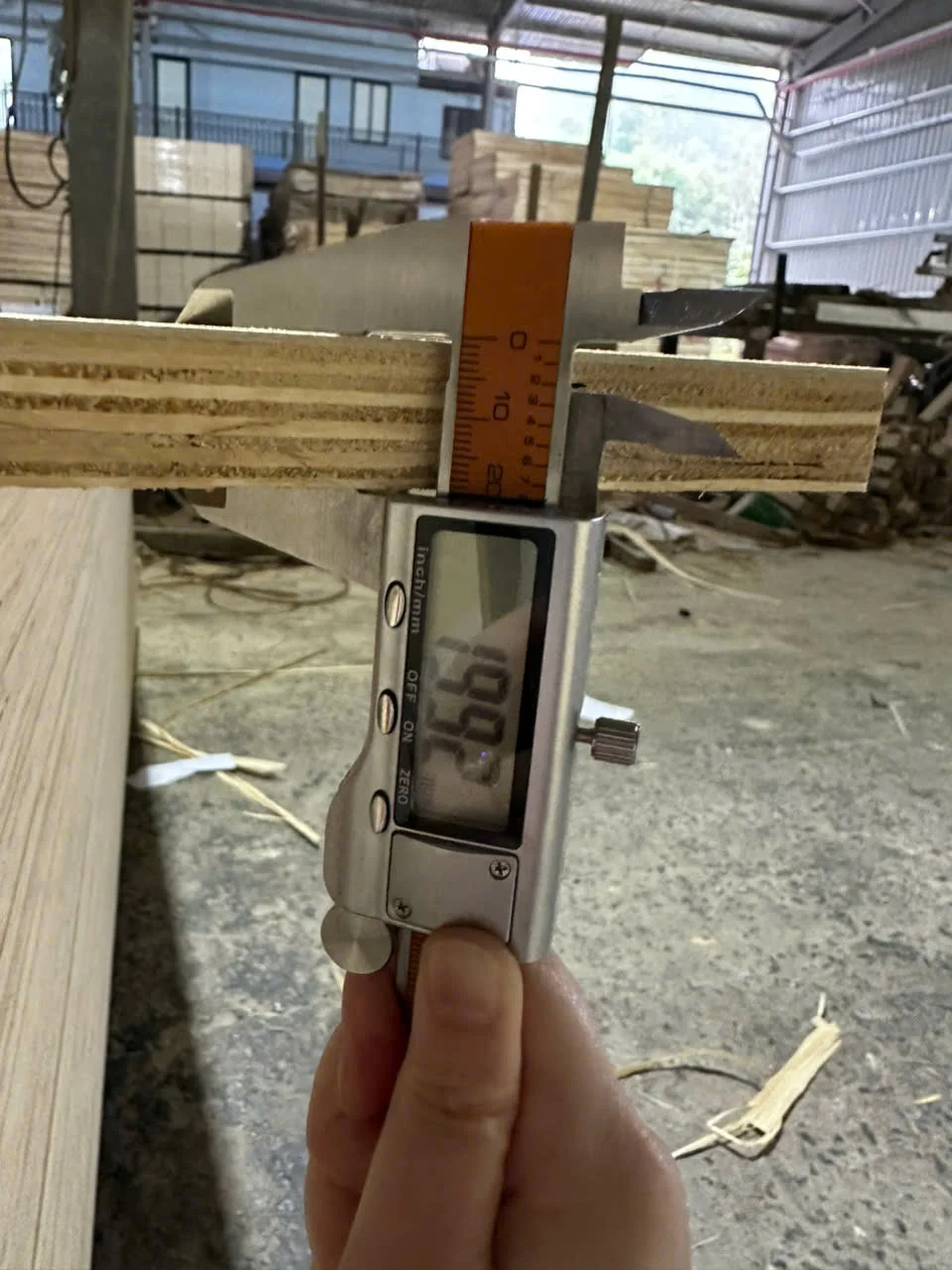
- Furniture / cabinet panels: 12mm, 15mm, 18mm (most common for kitchen and commercial furniture)
- Structural / flooring substrate: 18mm, 21mm, 25mm
- Construction formwork: 12mm, 15mm, 18mm (film-faced)
- Packing grade: 5mm, 9mm, 12mm (crates, export packaging)
Standard sheet size 1220×2440mm (4×8ft) matches Canadian construction dimensions. Metric size 1250×2500mm is available for buyers who prefer it.
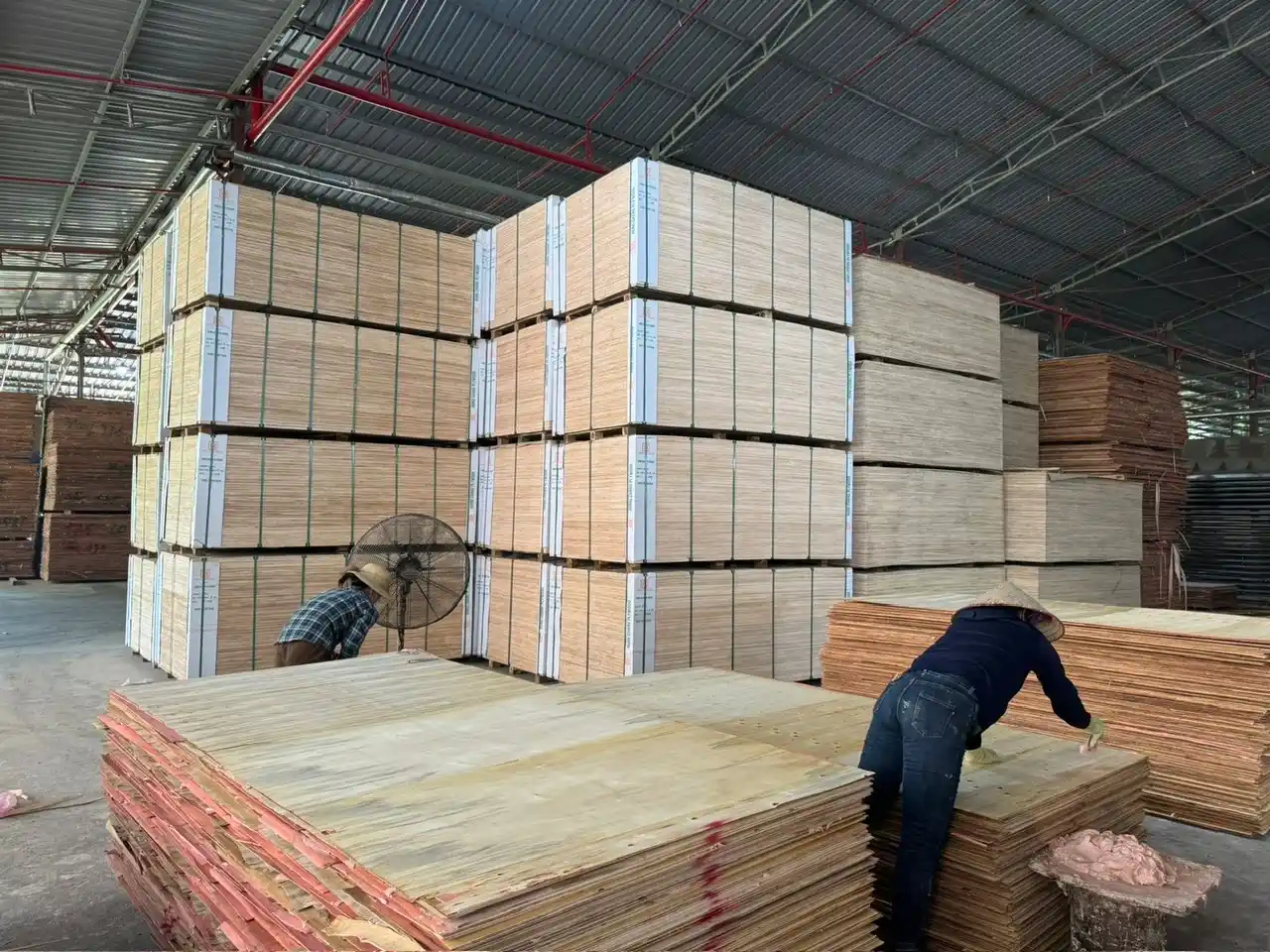
View our complete product range →
🏭 How to Evaluate a Vietnam Plywood Exporter for Canada
The majority of Vietnamese plywood exporters found through online searches are trading companies — domestic purchasers who buy from factories with VAT included, then export. This adds a cost layer that factory-direct operators do not have. For Canadian buyers, identifying the supplier model is as important as checking certificates.
Use this four-step process before placing an order:
Step 1: Confirm CPTPP Documentation Capability
Ask directly: “Have you shipped to Canada before? Can you issue a CPTPP Certificate of Origin?” This single question separates exporters with genuine Canadian market experience from those who will learn on your container. An experienced exporter will reference the specific certificate format and declare the HS code used on previous shipments.
Step 2: Verify ISPM-15 Pallet Compliance
Request a photo of their pallet stamp or their WPM treatment certificate. HT-certified pallets should show the IPPC mark with HT designation. This is non-negotiable — non-compliant pallets at Vancouver or Montreal create port examination holds that cost USD 500–2,500 per container in delays and rework fees.
Step 3: Check Certificates Online
Verify FSC certification at info.fsc.org using the supplier’s certificate code. If they claim CARB P2, verify with the CARB-approved third-party certifier database at carb.ca.gov. Certificates can be active on a supplier’s website while suspended in the official database — the gap is common.
Step 4: Understand the Supplier Model
Vietnam has four categories of plywood exporters. The supplier type directly affects price, reliability, and certification depth:
- Trading companies (~80% of search results): Buy from factories with domestic VAT, pass markup to buyers. Certificate quality varies; some show factory certificates they cannot legally use.
- Manufacturer-exporters: Own one factory, strong quality control within that segment, limited product range.
- Brokers: Very lean operations, lowest price, limited QC influence.
- Multi-facility export operators: One sales contact, multiple specialized factories, factory-direct pricing without domestic VAT, full QC control across product segments. This is the HCPLY model.
For a detailed breakdown of Vietnamese supplier types and how to audit each category, read Vietnam plywood supplier types — buyer’s due diligence guide.
📊 Vietnam Plywood for Canadian Buyers: Key Specifications
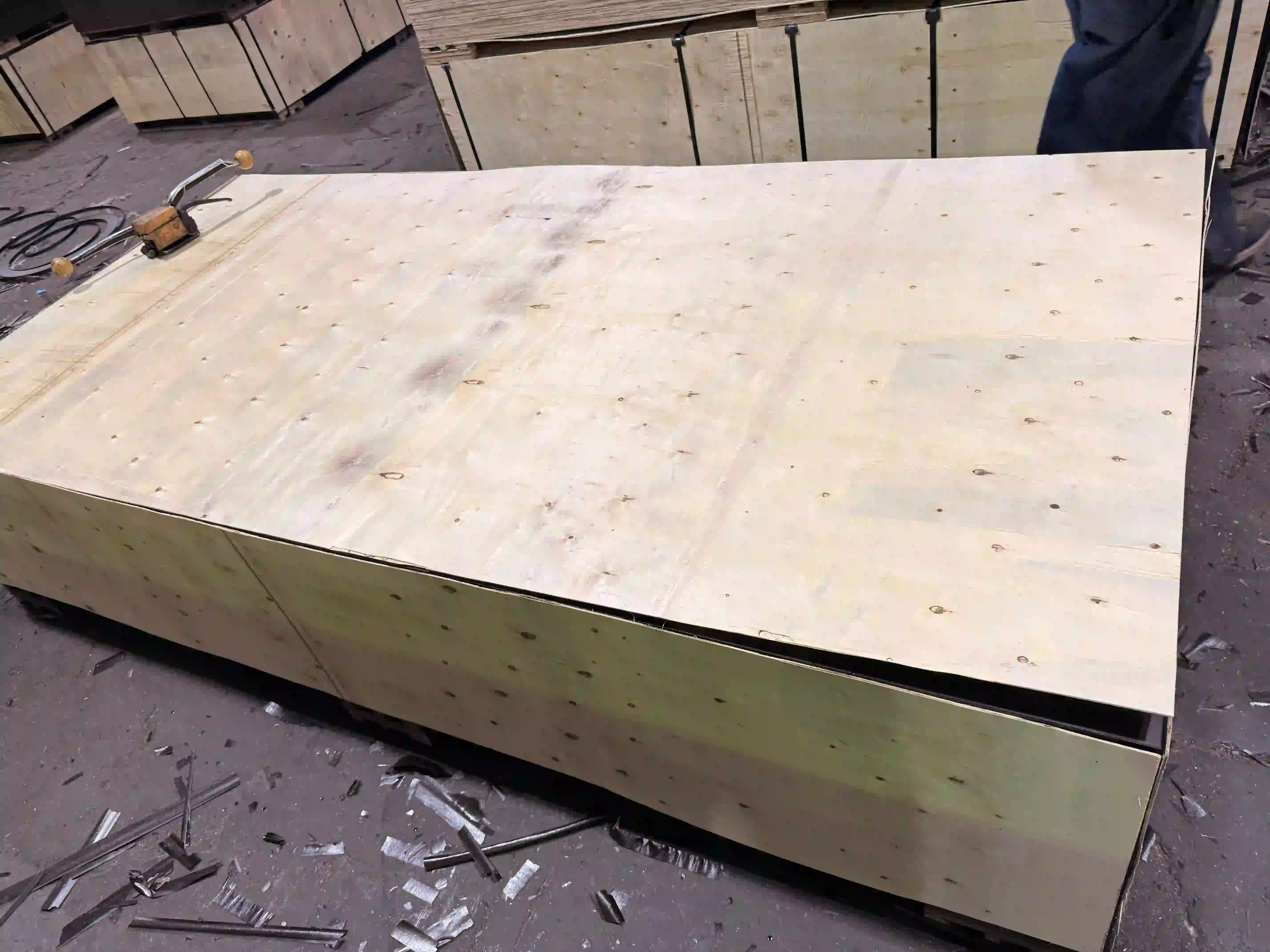
HCPLY manages 3 specialized production facilities in Northern Vietnam, each purpose-built for a distinct market segment:
- Premium furniture facility — styrax/eucalyptus core, full stitched construction, E0 emission, sanded surface. Face options: birch D/E, okoume, EV, pine, eucalyptus. Certifications: FSC, CARB P2, CE, ISO 9001, EUDR.
- Commercial / packing facility — acacia core, E1/E2, competitive pricing. Face options: bintangor, okoume, packing grade.
- Premium film-faced facility — AICA film (135+ gsm), phenolic WBP glue, 15–20 reuses. Certifications: FSC, CE.
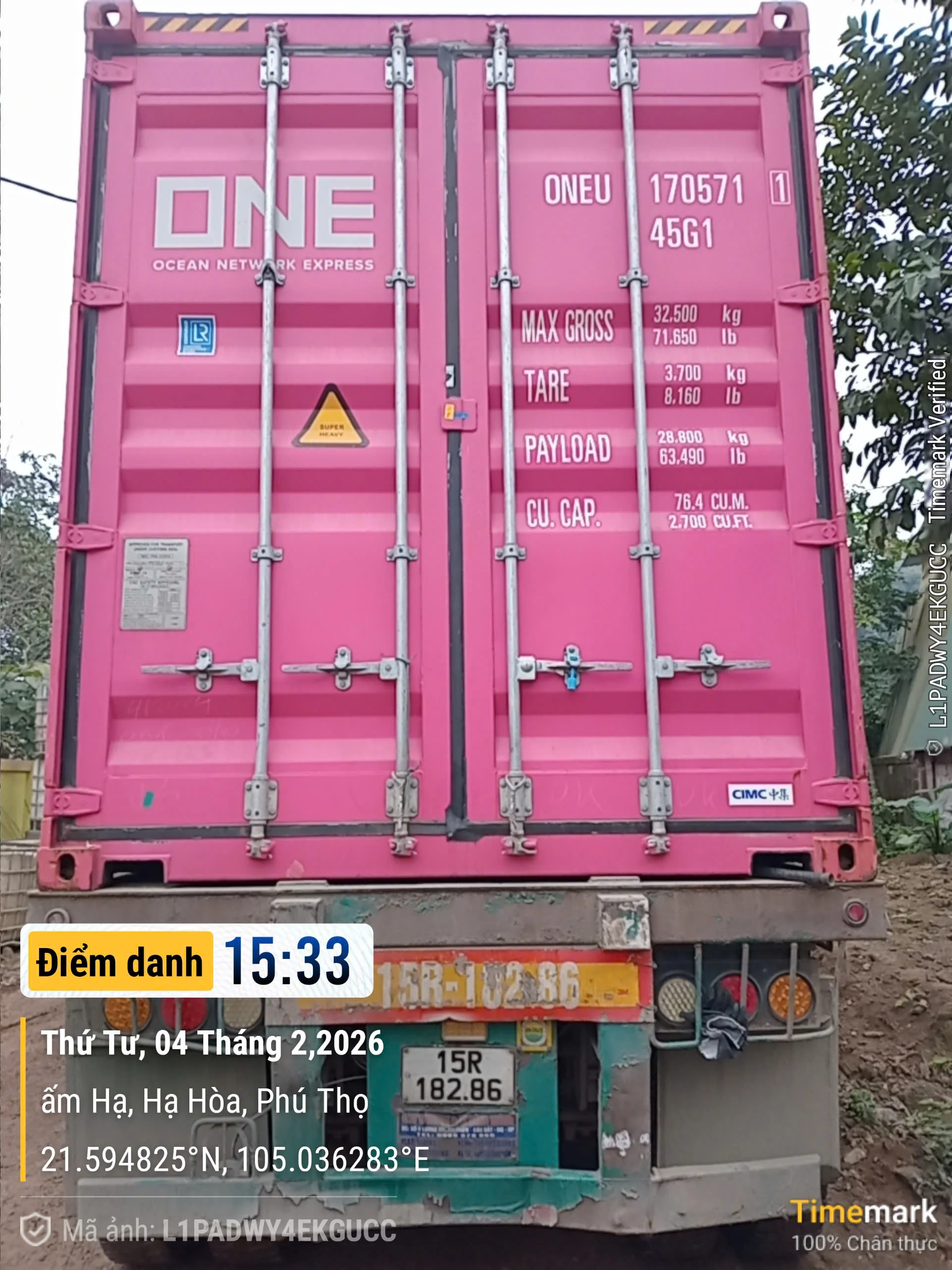
Export capacity: 50-100 containers/month | Lead time: 15–20 days production | MOQ: 1 × 40HC | Port: FOB Hai Phong
Full export documentation on every Canadian shipment includes: CPTPP Certificate of Origin, FSC co-C certificate, Phytosanitary Certificate, Fumigation Certificate, Commercial Invoice, Packing List, Bill of Lading. ISPM-15 compliant HT pallets are standard.
“Canadian buyers often come to us after a bad experience with a trading company that couldn’t produce a real CPTPP certificate. Getting the 0% duty is straightforward when your exporter actually understands the form — it’s the ones who have never done it who cost you money at customs.” — Lucy, International Sales Manager, HCPLY
Contact HCPLY for a factory-direct Canada quote →
🚢 Logistics: Shipping Vietnam to Canada
Shipping from Northern Vietnam to Canada follows consistent transit lanes. Understanding the timeline prevents order planning errors that leave buyers out of stock.
From Hai Phong to Vancouver: 18–22 days sea transit | To Montreal / Toronto (via Halifax or NY transshipment): 22–28 days
Production lead time at the factory runs 15–20 days for standard specifications, longer for custom sizes or low-frequency face veneers. Total time from confirmed purchase order to Canadian port: approximately 33–42 days.
For buyers calculating inventory cycles, a practical rule is: 8–10 weeks from PO to warehouse (production + shipping + customs clearance + inland freight).
⚠️ Note: Container freight rates fluctuate significantly. The cost of inefficient packing — underloading a 40HC by 20–30% — can add USD 3–6 per sheet in unnecessary freight cost. For guidance on maximizing container volume by core species and thickness, see the plywood container packing calculation guide for 40HC.
Customs clearance through CBSA normally takes 1–5 business days for compliant shipments with complete documentation. Incomplete or inconsistent documentation triggers examination holds lasting 5–15 days.
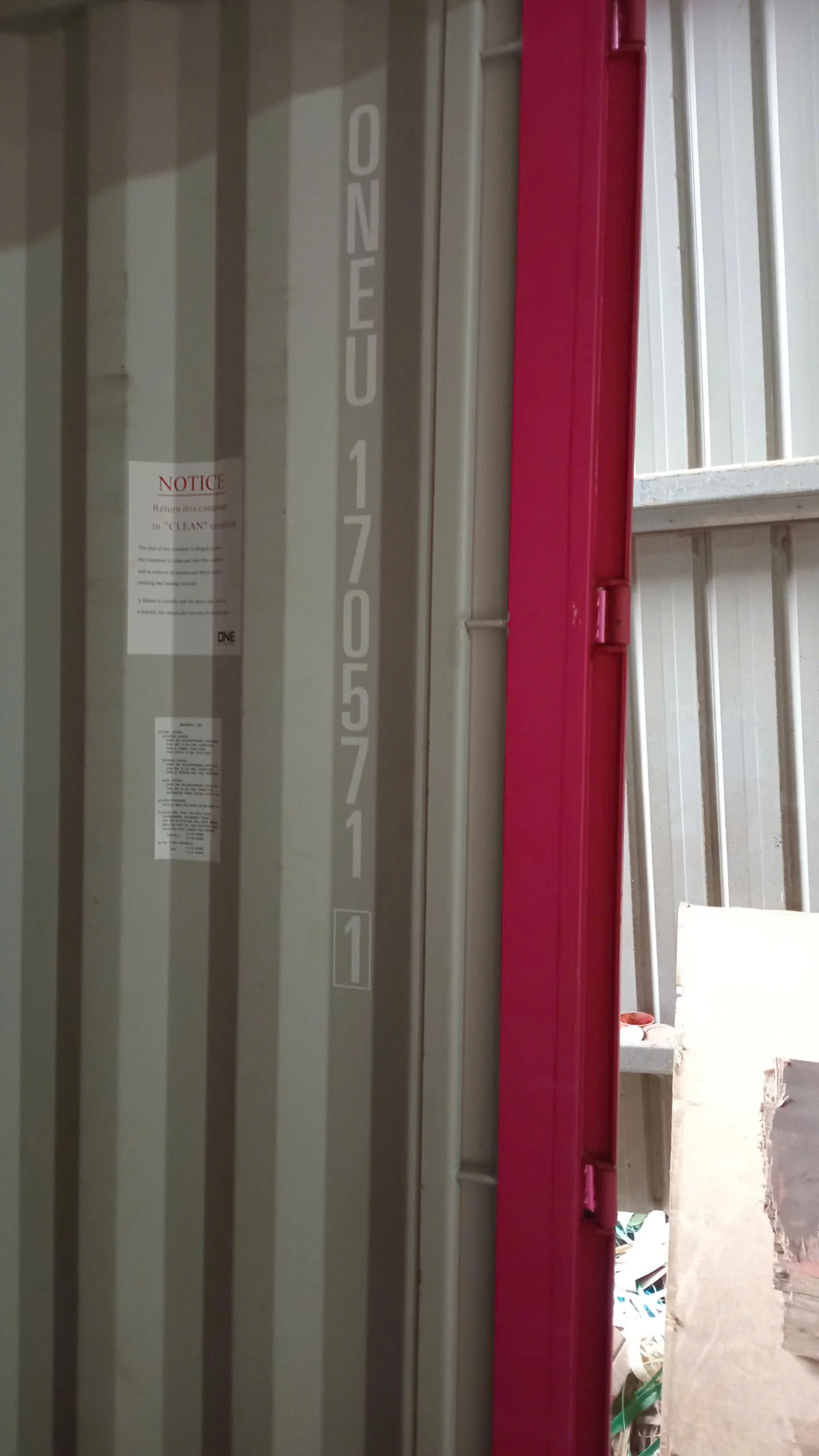
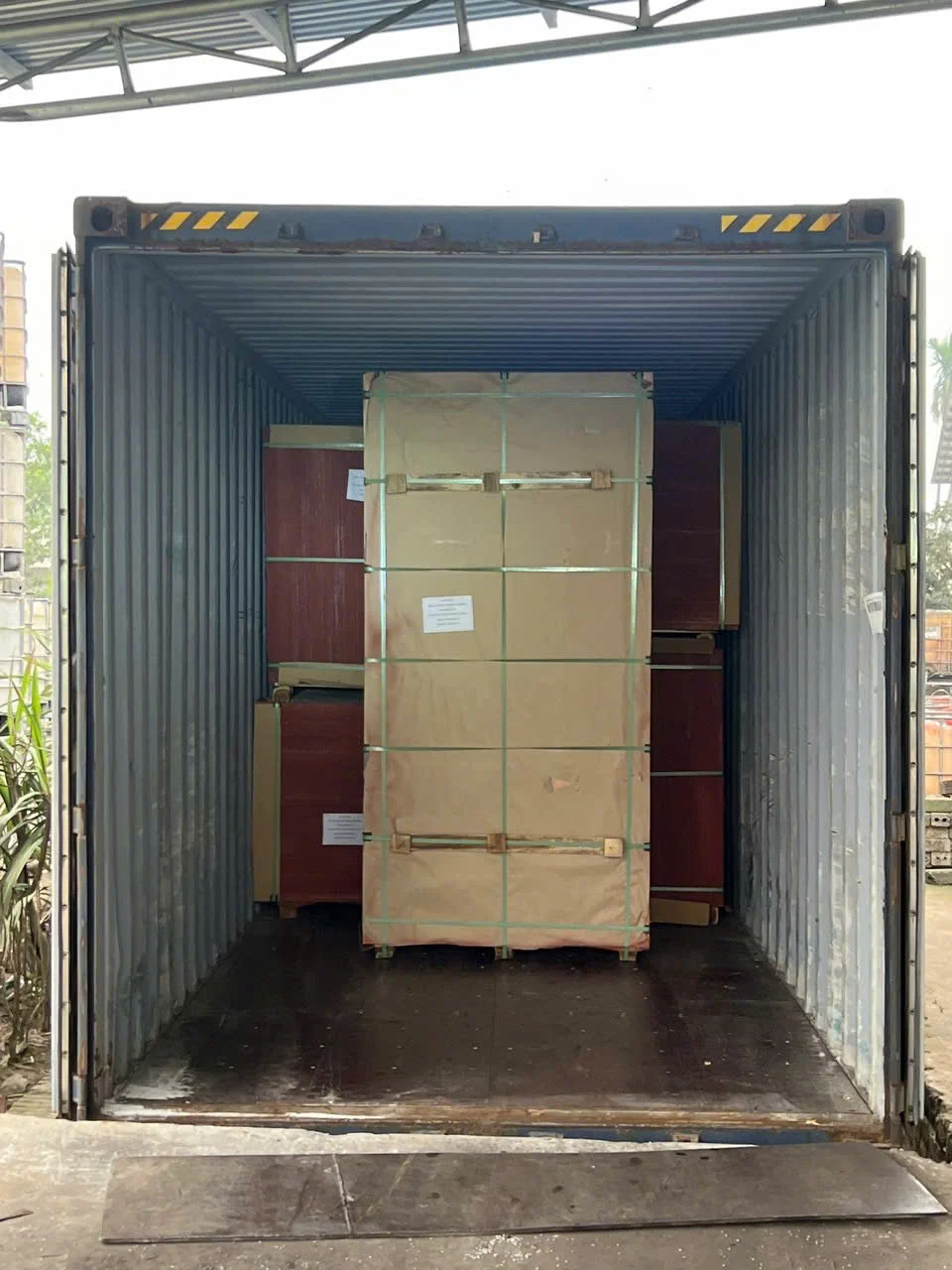
For a full breakdown of what certifications and documents are required for each export shipment, see the plywood certifications and export documentation guide.
Related reading:
- Canadian buyers should review our FSC certified plywood guide for certification requirements.
- For supplier vetting, see how to find reliable Vietnam plywood suppliers.
- Compare sourcing options in Vietnam vs China plywood for export.
Disclosure: This article is published by HCPLY, a Vietnam-based plywood manufacturer and export operator. While we aim to provide objective industry guidance, readers should consider our perspective as a market participant when evaluating recommendations.
🔗 Related Guides for Canadian Importers
These resources cover adjacent topics Canadian buyers ask most frequently before placing their first Vietnam order:
- Plywood Quotation Guide — Everything You Need Before Requesting a Price — how to specify correctly so the quote reflects your actual requirement
- Vietnam Plywood Supplier Types — Buyer Due Diligence Guide — how to audit the four types of Vietnamese exporters
- Plywood Container Packing Calculation — 40HC Guide — maximize CBM per container by core and thickness
- How to Import Plywood from Vietnam — full import workflow from specification to delivery
- Complete Guide to Buying Plywood from Vietnam — step-by-step procurement guide
✅ Conclusion: Choosing the Best Vietnam Plywood Exporter for Canada
The best Vietnam plywood exporter for Canada combines three capabilities: CPTPP origin documentation expertise, ISPM-15-compliant wood packaging, and factory-direct pricing without the VAT cost layer of domestic trading companies. These three criteria alone filter out the majority of suppliers who appear credible online but cannot perform at the compliance level Canada requires.
Vietnamese plywood enters Canada at 0% import duty under the CPTPP — an advantage that has been in force since January 2019 and shows no sign of changing. Combined with Vietnam’s expanding FSC and E0 certification footprint, strong factory capacity, and no anti-dumping exposure, this positions Vietnam as the most cost-effective hardwood plywood source for Canadian buyers in 2026.
HCPLY ships to 20+ countries including direct experience with Canadian import procedures. Our team issues CPTPP Certificates of Origin, uses ISPM-15 HT-certified pallets as standard, and provides complete documentation packages on every container — no exceptions.
Request a factory-direct quote for your Canadian plywood order →