

Termites destroy plywood from the inside out. Mold compromises appearance, triggers health concerns, and voids import approval in several markets. For B2B buyers importing plywood from Vietnam, understanding how — and whether — anti-termite and anti-mold treatments are applied during manufacturing determines whether your panels survive transit, storage, and end-use conditions.
This guide covers the specific treatment methods used by Vietnamese factories, the standards that govern them, which markets require documentation, and how to order treated panels correctly from HCPLY.
🔍 Why Biological Threats Matter for Imported Plywood
Plywood consists of wood veneer layers bonded with adhesive. Wood is cellulose — and cellulose is food for termites. The same humid tropical conditions that make Vietnam an ideal forestry and manufacturing base also create high biological risk during transit and at destination.
Two threats dominate:
Termites (subterranean and dry-wood species) feed on cellulose from the inside, often leaving only a paper-thin outer veneer intact. In South Asia, Southeast Asia, and tropical Africa, termite pressure is severe year-round. A container of untreated plywood stored in an Indian port warehouse for 30 days can show first damage signs before it reaches the end-buyer.
Mold and fungal growth requires two inputs: moisture and organic material. Plywood provides both. During ocean freight, container humidity can spike above 80% — a threshold where mold colonies establish on untreated surfaces within days. Mold causes visible discoloration, structural softening at adhesive lines, and in severe cases generates volatile organic compounds that fail air-quality requirements in furniture applications.
⚠️ Important: Fumigation (phytosanitary treatment with methyl bromide or heat) kills live pests already present and is required for all wood exports under ISPM 15. It is a separate requirement from anti-termite chemical treatment, which provides ongoing protection after fumigation expires. Buyers often conflate these two processes.
🏭 Anti-Termite Treatment Methods Used in Vietnamese Factories
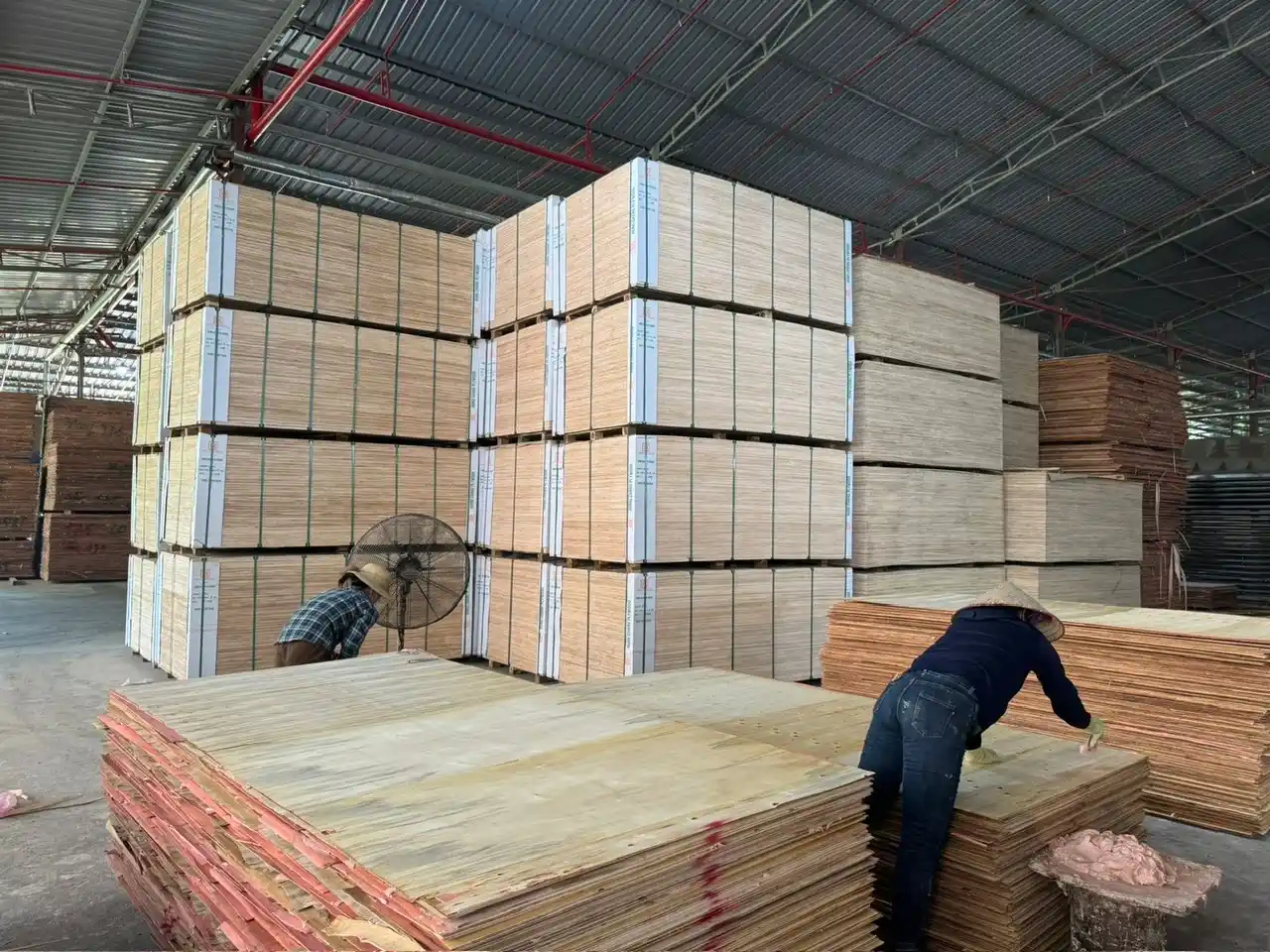
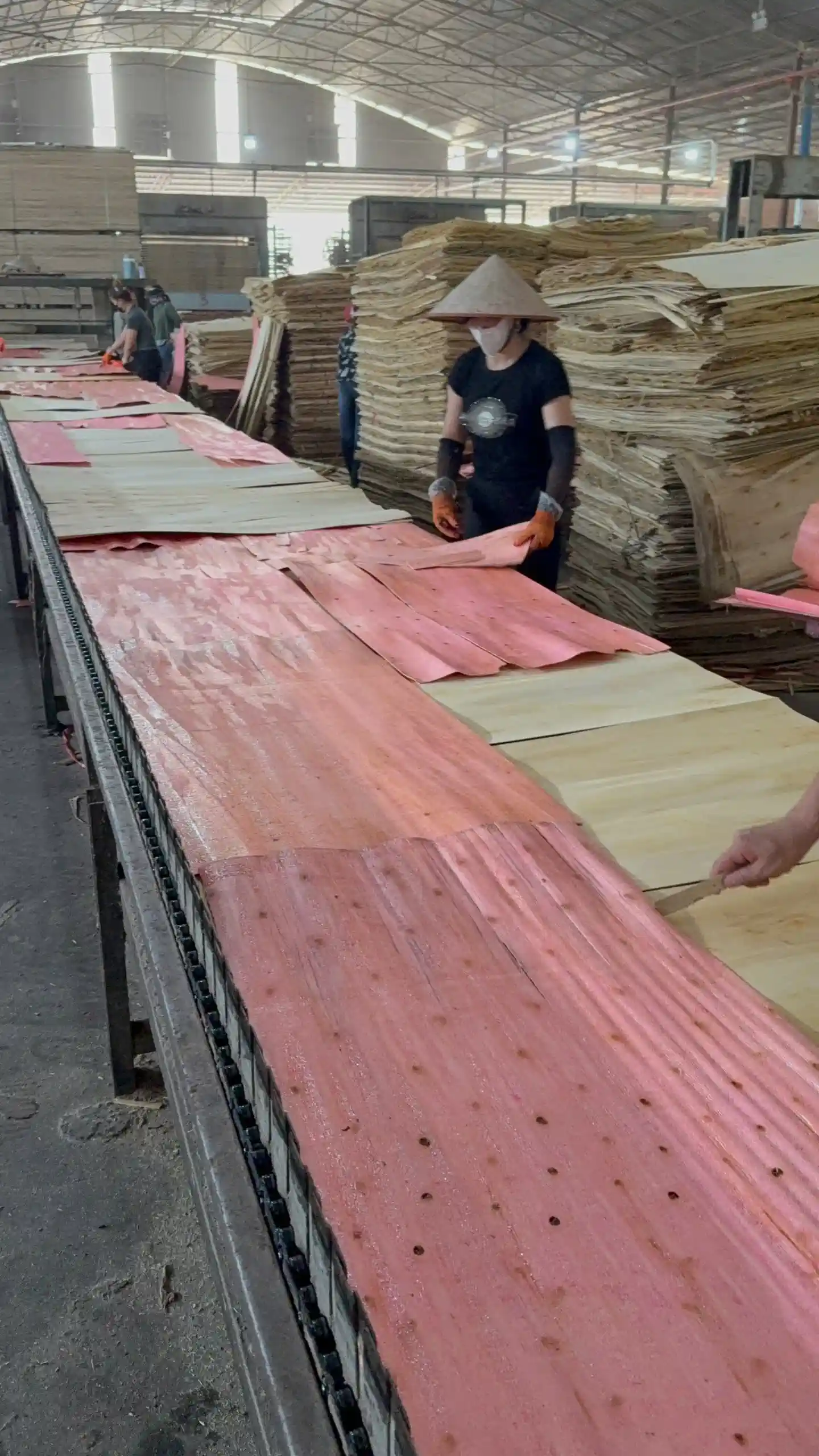
Modern Vietnamese plywood manufacturers apply termite protection at the veneer stage — before pressing — locking the treatment inside the panel, not just surface-applied.
📌 Borate Impregnation (Primary Method)
Boron-based compounds (disodium octaborate tetrahydrate, trade name: TimBor, Boracol) are the most widely used anti-termite preservatives in export plywood. They work by poisoning the digestive system of termites and wood-boring beetles on contact.
Application process:
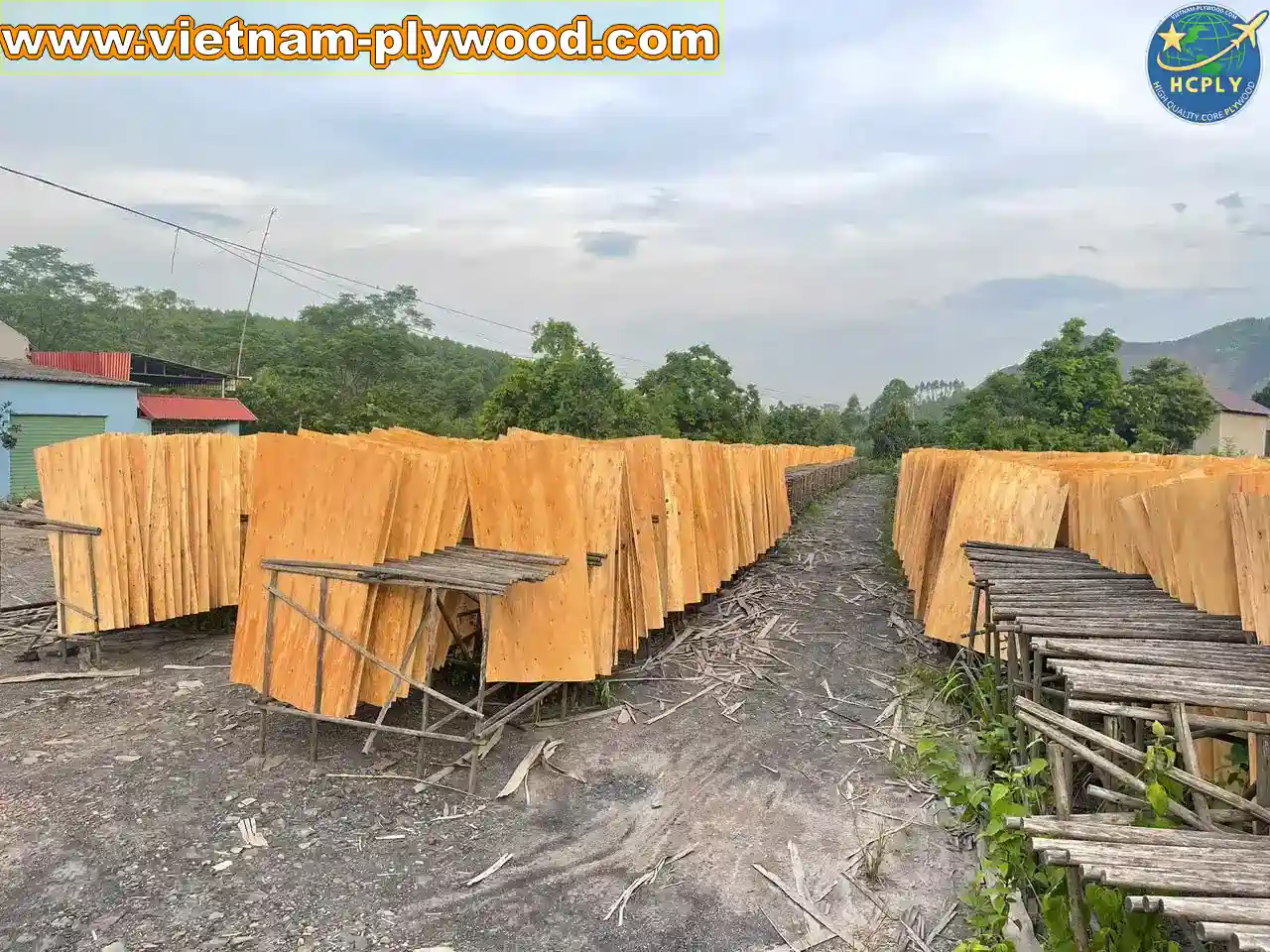
- Green veneers are dipped or pressure-treated in borate solution (concentration: 2–5% m/m active ingredient)
- Veneers are dried to target moisture content of 6–10% after treatment
- Treated veneers enter the standard pressing line — borate chemistry is stable at hot-press temperatures (130–160°C for melamine glue)
Borate has two advantages for export plywood: it is effective against both termites and mold (dual function), and it is classified as low-toxicity for humans, which simplifies MSDS and import documentation in sensitive markets including Japan and Korea (HCPLY production data, 2026).
📌 Permethrin-Based Treatment
Permethrin is a synthetic pyrethroid insecticide used in higher-pressure environments — panels destined for Middle East construction sites or tropical African warehouses where subterranean termite pressure is extreme.
Unlike borate, permethrin is effective specifically against insects (not mold). For high-humidity destinations, it is combined with a fungicidal treatment rather than used alone.
💡 Tip: When requesting treatment documentation, ask specifically whether the treatment is borate-only, permethrin-only, or a dual-chemistry application. The MSDS will confirm active ingredients and application rates.
📌 Kiln Drying to ≤12% Moisture
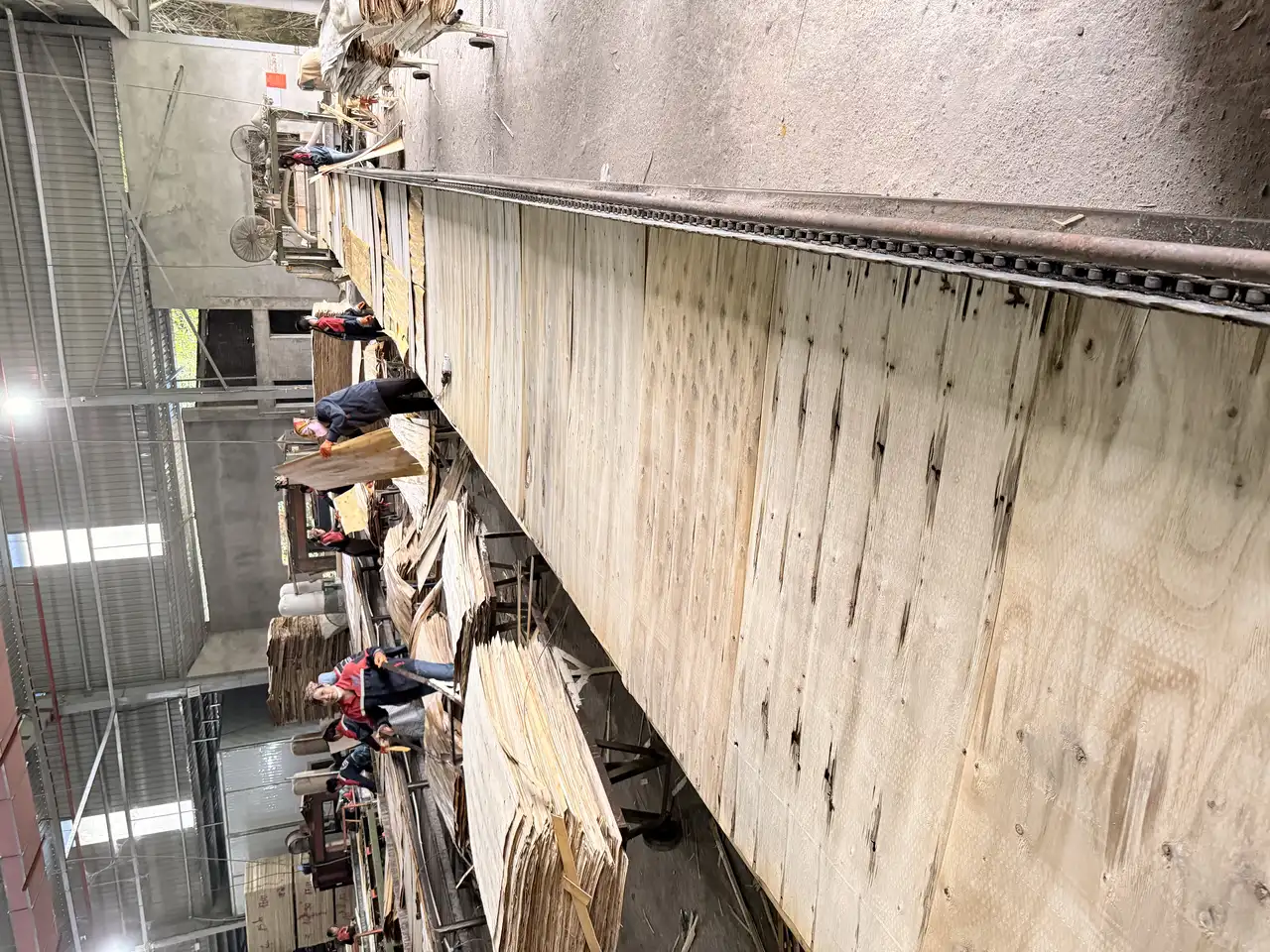
Every plywood factory with export certification kiln-dries veneers before pressing. Target moisture content is 6–10% at the glue-up stage. Low moisture content makes wood structurally inhospitable to termites and eliminates the humidity baseline that fungal spores require to germinate.
Kiln drying is not a substitute for chemical treatment in high-risk markets, but it is the first line of defense and a prerequisite for effective chemical treatment penetration. For a deeper look at moisture content standards and testing methods, see our dedicated guide. HCPLY’s factory QC inspection process includes moisture meter checks at incoming veneer, post-press, and pre-loading stages.
🛡️ Anti-Mold Protection Techniques
Mold control in plywood manufacturing operates at three levels: process control (moisture), chemical treatment (fungicides), and barrier protection (surface films).
Fungicidal Surface Coatings
After pressing, panels are coated with diluted fungicide solution — typically zinc borate or quaternary ammonium compounds — using roller or spray application. This surface layer inhibits mold spore germination during storage and ocean transit.
Surface coatings are sacrificial: they do not provide long-term in-service protection. For end-use mold resistance, the buyer’s installation method (ventilation, sealing, vapor barriers) matters more than factory coating.
Moisture Barrier Films
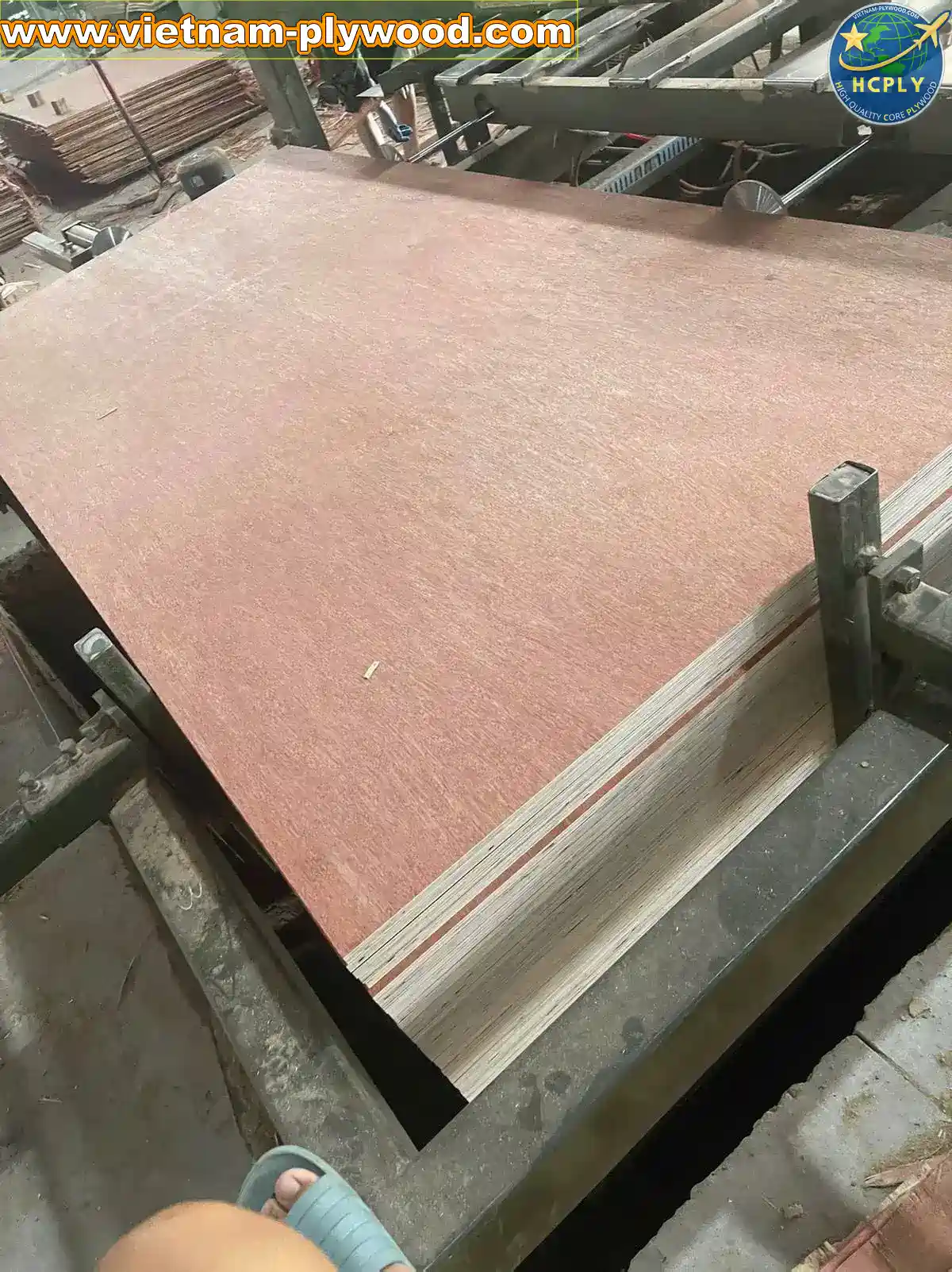
Film-faced plywood provides inherent mold resistance through its phenolic or melamine film layer. The film seals the panel surface, eliminating the moisture absorption pathway that fungi need. This is why film-faced panels — even when used in concrete formwork exposed to water for weeks — show minimal mold incidence compared to bare veneer plywood.
For non-film-faced commercial panels, edge sealing with waterproof coating after cutting is the most practical mold-prevention step the buyer can take on-site. Our guide to marine-grade plywood and waterproof applications covers this in more detail.
Container Shipping Protocol
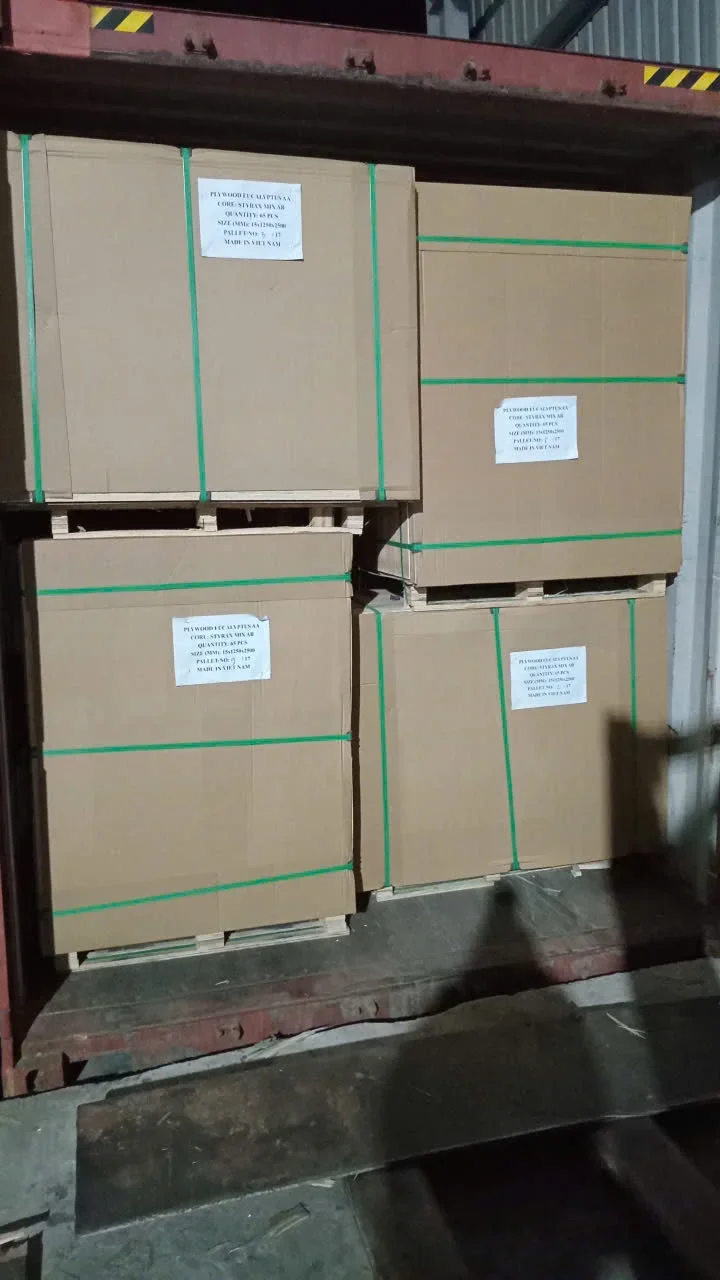
During ocean transit, container humidity is managed with desiccant bags. A standard 40HC container of plywood carries 3–5 kg of silica gel desiccant bags, placed at regular intervals between pallet stacks. Proper pallet spacing also allows air circulation that prevents dead-air humidity pockets.
HCPLY’s pre-shipment inspection process includes moisture content checks immediately before container loading. Panels exceeding 14% moisture content are rejected from shipment regardless of visual appearance.
📋 International Standards That Apply
Two standards directly govern treated plywood for export:
IS 401 (Bureau of Indian Standards) covers preservation of timber from decay and insect attack. Plywood exported to India under BIS certification must meet IS 401 treatment specifications, which prescribe minimum retention levels of preservative by timber species category. India is Vietnam’s largest single plywood export market, making IS 401 familiarity essential for any Vietnamese exporter (Bureau of Indian Standards, 2023).
EN 335 (European Standard) defines use classes (UC1–UC5) for wood products based on biological hazard exposure. Plywood used in interior dry conditions (UC1) requires minimal treatment; plywood for exterior exposed applications (UC3–UC4) requires significantly higher treatment levels. European buyers must specify the intended use class in their purchase order to confirm the correct treatment level is applied (EN 335:2013, European Committee for Standardization).
ISPM 15 (Phytosanitary) applies to all wood packaging materials (pallets, crates), not the plywood panels themselves. This distinction matters: ISPM 15 fumigation certificates cover the wooden packaging, while anti-termite treatment certificates cover the plywood product inside.
🌍 Markets Requiring Treated Plywood
Not all destination markets require documented anti-termite treatment. Knowing which do helps buyers request the right specifications.
| Market | Requirement | Standard |
|---|---|---|
| India | Mandatory for BIS-certified plywood | IS 401 |
| Australia / NZ | Mandatory quarantine compliance | AS 1604 / NZBC |
| EU (construction use) | Required for UC3+ applications | EN 335 |
| Middle East | Recommended, not universally mandated | Buyer specification |
| Korea / Japan | Not typically required; E0 emission focus | JAS / KS |
| US / Canada | Not typically required; CARB focus | CARB P2 |
Australia and New Zealand have the strictest quarantine enforcement: untreated solid wood products can be seized and destroyed at the port of entry. For buyers sourcing plywood for the Australian market, see our Asia-Pacific plywood markets guide covering Korea, Japan, and Australia. Vietnamese factories exporting to Australian buyers must provide treatment certificates from accredited testing laboratories, not just self-declarations. For buyers new to the process, our guide on how to import plywood from Vietnam covers the full documentation workflow.
For India, the requirement is tied to BIS certification. Buyers importing BIS-marked plywood from HCPLY receive panels that comply with IS 401 as part of the certification scope. The plywood certifications guide covers documentation requirements for each major export market in detail.
📦 How to Order Treated Plywood from Vietnam
Treatment is not automatic on all orders — it must be specified. This is an important operational point for buyers new to Vietnamese plywood sourcing.
Step 1: Specify treatment in your purchase order
Use explicit language: “Anti-termite treatment: borate impregnation per IS 401” or “Anti-mold: fungicidal coating + borate dual treatment.” Generic language like “treated plywood” leaves treatment type, chemistry, and retention level undefined.
Step 2: Request documentation package
Every treated order should include:
- Treatment certificate (factory-issued, signed)
- MSDS for chemicals used (required for import in Japan, Korea, EU)
- Third-party test report if IS 401 or EN 335 compliance is required
- Phytosanitary certificate (separate — covers ISPM 15 packaging compliance)
Step 3: Consider film-faced for moisture-critical applications
For applications where mold risk is primary — concrete formwork (construction plywood), outdoor temporary structures, tropical storage — film-faced plywood with phenolic WBP glue provides mechanical mold resistance without relying on surface coatings that wear off. The phenolic glue line also meets WBP waterproof standards that standard MR glue cannot match.
Step 4: Verify storage conditions on arrival
Treatment reduces biological risk; it does not eliminate it under extreme conditions. Proper plywood storage — off-ground on pallets, in covered dry conditions, with cross-sticker ventilation — maintains treatment effectiveness for the duration of the storage period.
Get a Free Quote for Treated Plywood →
📊 Treatment Comparison: Borate vs. Permethrin vs. Film-Faced
| Feature | Borate | Permethrin | Film-Faced (Phenolic) |
|---|---|---|---|
| Anti-termite | ✅ Yes | ✅ Yes | ⚠️ Edge protection only |
| Anti-mold | ✅ Yes | ❌ No | ✅ Yes (barrier) |
| IS 401 compliance | ✅ Yes | ✅ Yes | N/A |
| EN 335 UC3 | Depends on retention | ✅ Yes | ✅ Yes |
| Human safety class | Low toxicity | Moderate | Low |
| Ideal markets | India, Australia, EU | Middle East, tropical Africa | Construction worldwide |
| Added cost/CBM | Low | Moderate | Included in product |
“For buyers sourcing to India or Australia, borate dual-treatment ticks every compliance box at minimal cost premium — typically USD 2–5 per CBM over standard panels. For construction in the Middle East, permethrin plus phenolic film gives the strongest protection matrix.” — Lucy, International Sales Manager, HCPLY (2026)
Disclosure: This article is published by HCPLY, a Vietnam-based plywood manufacturer and export operator. While we aim to provide objective industry guidance, readers should consider our perspective as a market participant when evaluating recommendations.
🔗 Related Buying Decisions
Anti-termite and anti-mold treatment intersects with several other specification decisions:
- Glue type: Phenolic WBP glue already resists moisture delamination — the structural complement to surface mold protection. Understanding plywood raw materials helps buyers specify treatment chemistry correctly
- Certifications: Treatment certificates are one component of the full documentation package required for most regulated markets
- Fumigation vs. treatment: Phytosanitary fumigation (required) vs. anti-termite chemical treatment (ongoing protection) — these serve different purposes and both may be required
- Quality control: HCPLY’s on-site QC process includes treatment verification as part of pre-loading inspection
✅ Conclusion: Specify, Document, and Verify
Anti-termite and anti-mold treatments in Vietnam plywood are well-established processes, not premium extras. For markets like India and Australia, treated panels are a regulatory baseline. For all markets, treatment reduces claim risk, protects container value through transit, and signals supplier quality discipline.
The key actions for buyers are straightforward: specify the treatment chemistry and standard in your purchase order, request the correct documentation package, and verify storage conditions on arrival. HCPLY has processed hundreds of treated-panel shipments to India, the Middle East, Australia, and Europe as of 2026. The paperwork infrastructure is in place.
Contact HCPLY for treated plywood specifications and pricing →
Lucy — International Sales Manager, HCPLY [email protected] | WhatsApp