

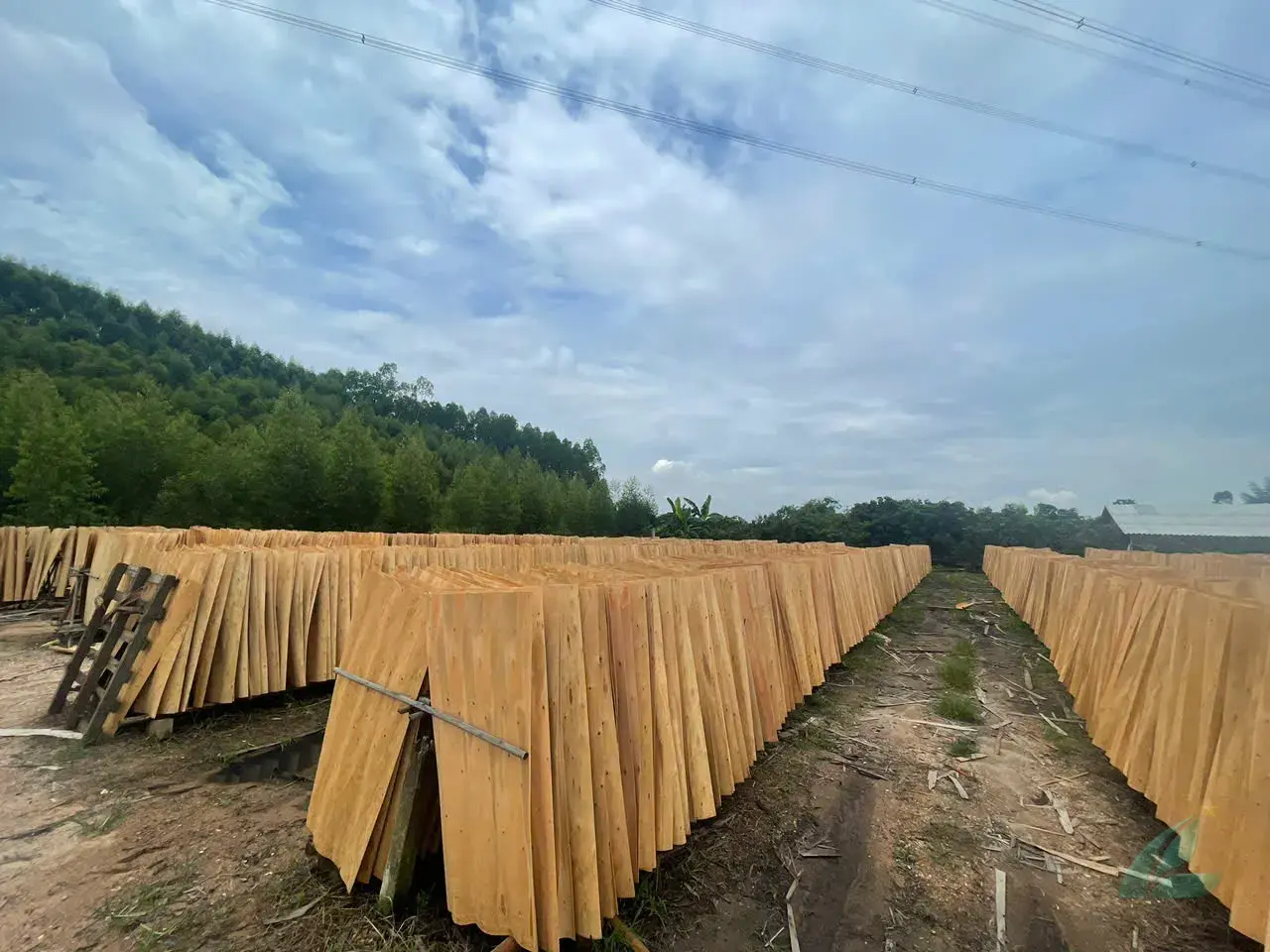
Acacia and eucalyptus are the two primary plywood raw materials and the most widely exported core species from Vietnamese plywood factories — but they serve fundamentally different market segments. Choosing the wrong core adds cost without adding value, or worse, produces panels that fail quality inspection at destination.
This comparison draws directly from HCPLY’s production data across our 3 specialized facilities in Northern Vietnam. The data covers density, container loading efficiency, cost positioning, and which applications each core actually serves.
📊 Quick Comparison: Acacia vs Eucalyptus Core
| Property | Acacia Core | Eucalyptus Core |
|---|---|---|
| Density | ~580 kg/m³ | 650–750 kg/m³ |
| Color | Dark brown | Light yellow |
| Price tier | Budget (lowest) | Premium (highest) |
| Pallets per 40HC | 16 pallets | 15 pallets |
| CBM per 40HC | ~47.5 CBM | ~44.5 CBM |
| Weight per 40HC | ~27.5 MT | ~28 MT |
| Primary applications | Commercial, packaging, budget furniture | Premium furniture, flooring, construction |
| Availability | Very high | High |
| Suitability for E0 | Yes (with melamine MR glue) | Yes (preferred for premium grades) |
💡 Key Insight: Eucalyptus core outperforms acacia on structural properties but costs more per CBM and ships fewer sheets per container. Acacia dominates where cost efficiency matters more than maximum panel strength.
🌿 Acacia Core Plywood — The Commercial Standard
Acacia (keo) is the most common core species in Vietnamese plywood production. It is the default choice for manufacturers producing commercial-grade, packaging-grade, and price-competitive furniture panels.
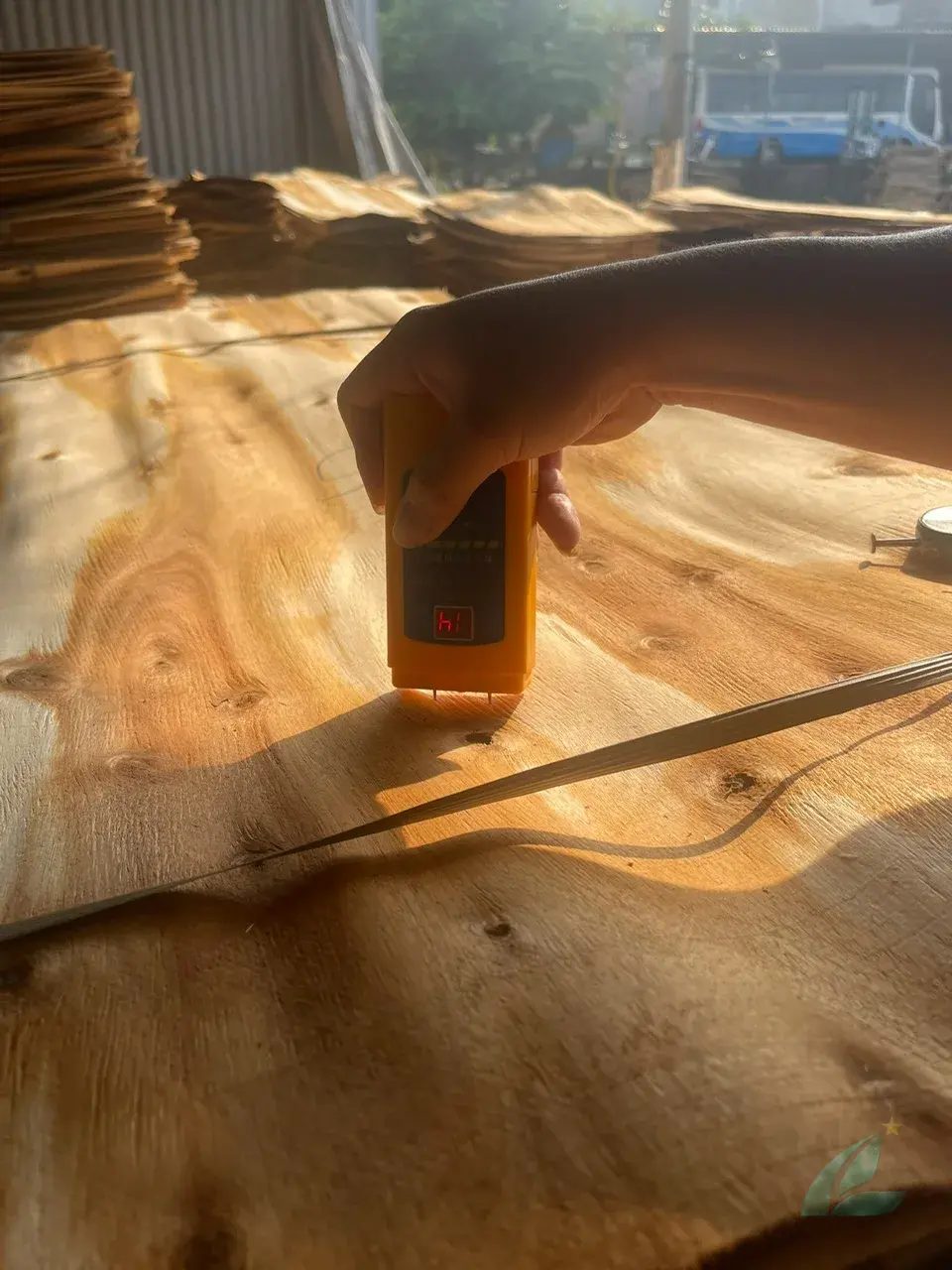
Density at ~580 kg/m³ places acacia in the mid-weight range — heavier than styrax (480–500 kg/m³), but meaningfully lighter than eucalyptus. This translates to one additional pallet per 40HC container compared to eucalyptus, which compounds across high-volume orders.
Acacia veneer is naturally dark brown in color. For products where the core is hidden under face veneers (as in all standard plywood production), color is irrelevant. However, for matt plywood or raw substrate where the core surface is visible, acacia’s dark tone may not suit every lamination workflow.
📌 What Acacia Core Is Actually Used For
In practice, acacia core runs through three main factory segments (HCPLY production data, 2026):
- Commercial plywood — bintangor, okoume, pine, or poplar face with acacia core, melamine glue, E1/E2 emission
- Packaging plywood — cheapest face (bintangor C/D, poplar), acacia core, unsanded, E2 emission for industrial packaging and crates
- Film-faced construction plywood (budget) — acacia core with Vietnamese or Chinese-sourced film, phenolic blend glue, 4–8 reuse cycles
Acacia’s price advantage is real and substantial. For buyers sourcing commercial or packing grade panels, acacia core is not a compromise — it is the correct specification.
Get pricing for acacia core plywood — standard and export-grade options available from our commercial facility.
🌲 Eucalyptus Core Plywood — The Structural Choice
Eucalyptus (bạch đàn) core is the densest and most expensive core species in Vietnamese plywood production. At 650–750 kg/m³, a eucalyptus core panel is noticeably heavier than its acacia equivalent at the same thickness.
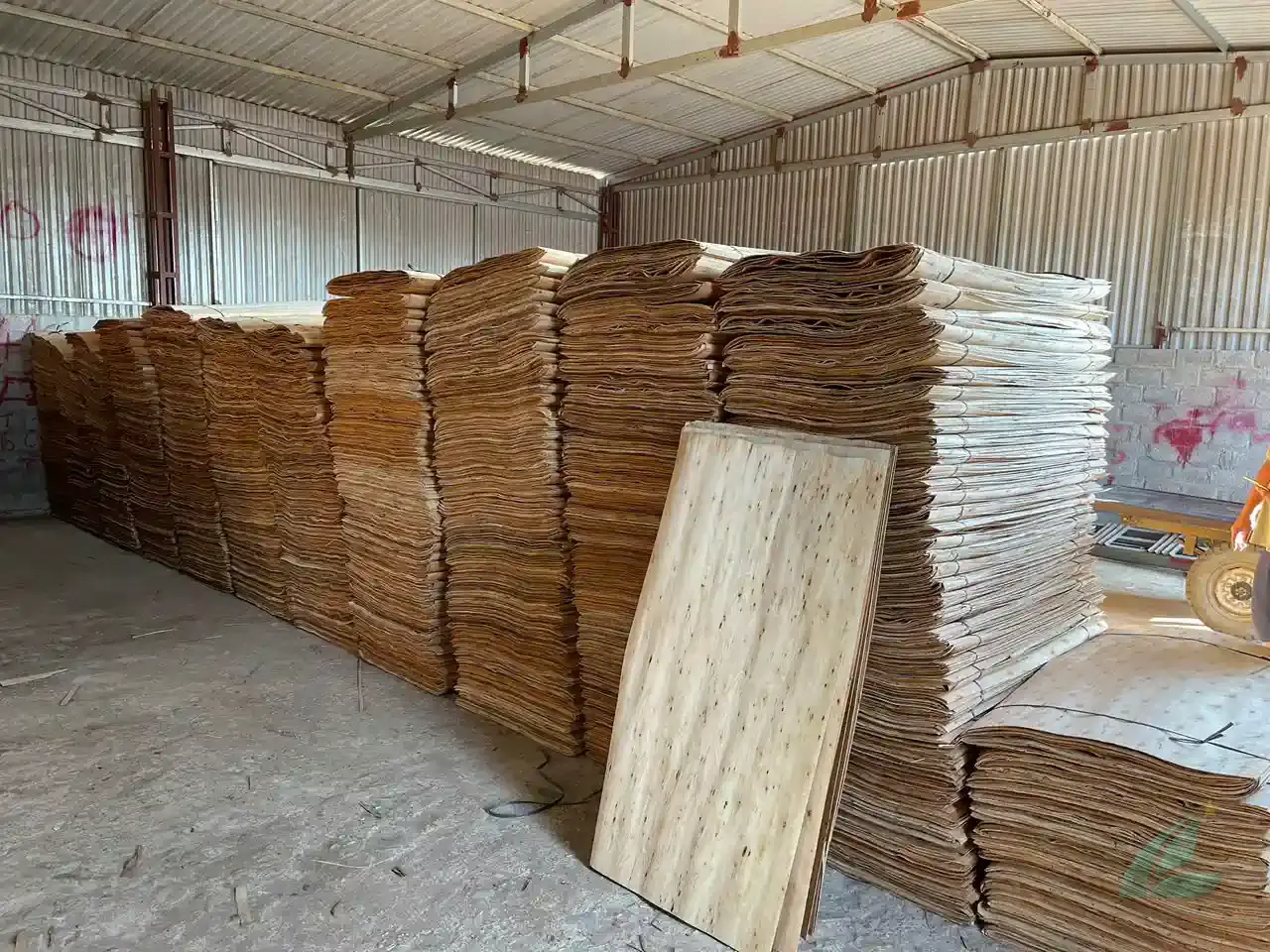
The higher density comes from eucalyptus plantation timber’s naturally tighter grain structure. This translates to better screw-holding performance, better resistance to panel flex under load, and greater dimensional stability in humid conditions. These properties matter for flooring applications, heavy-duty furniture frames, and construction applications requiring certified structural performance.
📌 What Eucalyptus Core Is Actually Used For
Eucalyptus core is specified in three premium segments (HCPLY production data, 2026):
- Premium furniture plywood — birch, okoume, or EV face with eucalyptus core, melamine MR glue, E0/E1 emission, full stitched construction for EU, Korean, and Japanese buyers
- Flooring substrate plywood — eucalyptus or acacia face, E0, sanded both sides, valued for dimensional stability under foot traffic loads
- Film-faced construction plywood (premium) — eucalyptus or acacia/eucalyptus mixed core, AICA film 135+ gsm, phenolic WBP glue, 15–20 reuse cycles for European and Korean formwork markets
⚠️ Important: Eucalyptus core’s higher payload weight means a 40HC container reaches close to the 28.5 MT payload limit at 15 pallets (~28 MT). This is a hard logistical constraint, not a performance concern. Mixed-spec containers with eucalyptus core panels must be weight-verified before finalizing the packing plan.
For detailed container weight calculations by thickness, see the plywood container packing calculation guide and the CBM per thickness complete table.
Request a quote for eucalyptus core plywood — full-stitched construction available for E0 and construction grades.
📦 Container Loading: Where the Cost Difference Compounds
The density gap between acacia and eucalyptus core becomes financially significant at container scale. Here is the factory-level packing data for 1220×2440mm panels (HCPLY production data, 2026):
| Core | Density | Pallets/40HC | CBM/40HC | Weight/40HC |
|---|---|---|---|---|
| Acacia | ~580 kg/CBM | 16 | ~47.5 CBM | ~27.5 MT |
| Eucalyptus | ~700 kg/CBM | 15 | ~44.5 CBM | ~28 MT |
The difference: acacia ships approximately 3 CBM more per container. At a typical FOB price of $280–$350/CBM, that is $840–$1,050 additional product value per container at no extra freight cost (HCPLY FOB data, 2026).
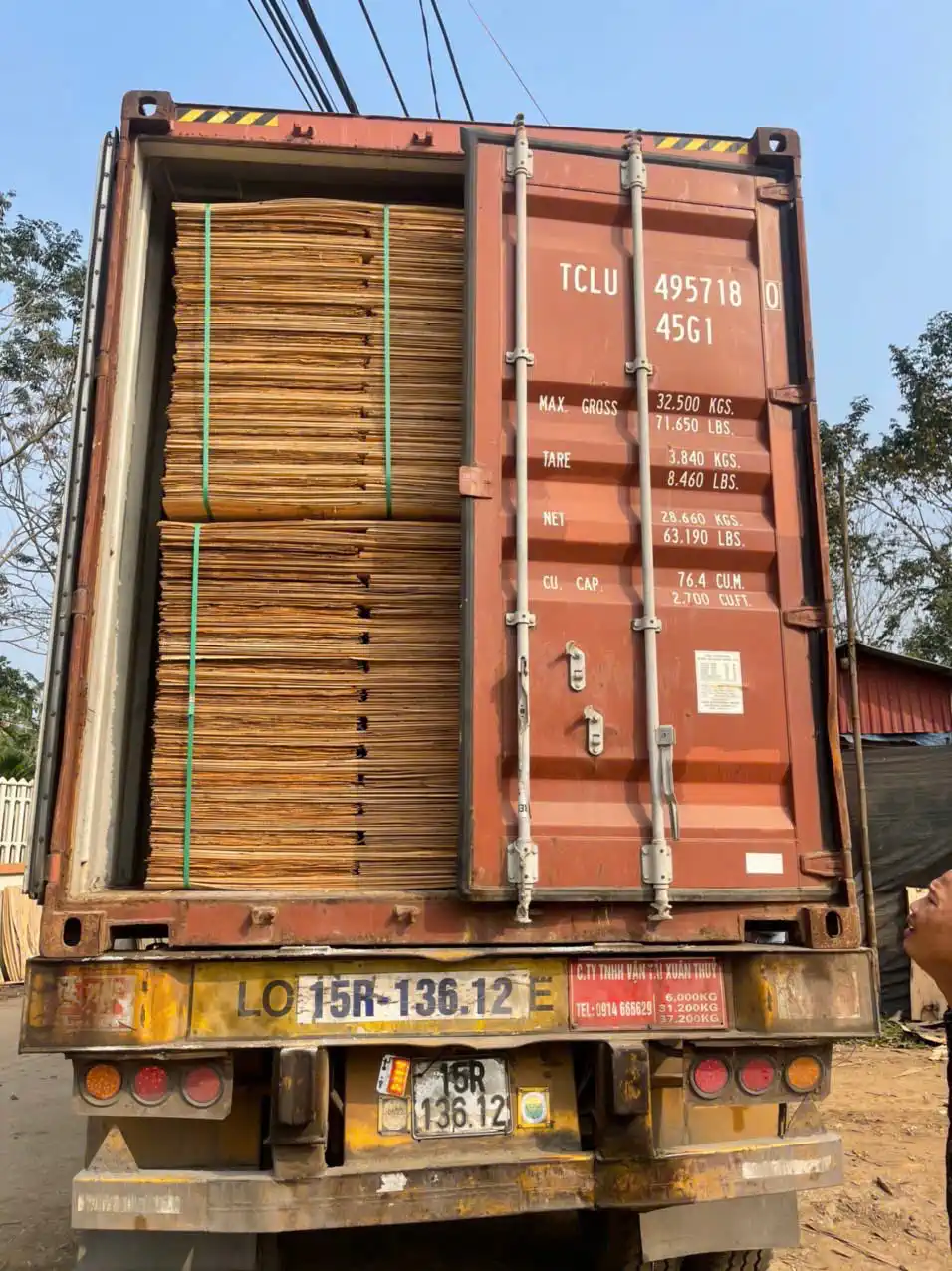
For buyers sourcing eucalyptus core plywood in high volumes, this efficiency gap is a fixed cost of the specification. It is not a negotiating point — it is physics. A 15-pallet eucalyptus container and a 16-pallet acacia container both optimize their respective payloads to the 28.5 MT limit.
“When buyers see the packing tables side by side, the core choice discussion shifts from ‘which is better’ to ‘which is right for this application.’ Acacia at 16 pallets is the right answer for commercial furniture. Eucalyptus at 15 pallets is the right answer for structural flooring.” — Lucy, International Sales Manager, HCPLY
For full per-thickness packing tables, use our plywood CBM and weight calculation guide.
⚙️ Technical Properties: Head-to-Head
📌 Structural Performance
Eucalyptus core’s higher density directly improves mechanical properties: better resistance to bending under distributed loads, higher screw-holding torque values, and reduced deflection in large-span panels. These properties are measurable in factory test environments.
Acacia core performs adequately for standard furniture applications where panel thickness (not core species) is the primary structural variable. A 18mm acacia core birch plywood panel meets typical furniture load requirements without issue.
For certified structural applications — flooring underlayment meeting EN 636 or structural plywood meeting AS/NZS 2269 — eucalyptus core is the specification of choice from Vietnamese factories (Vietnam Plywood and Timber Association, VIFORES data, 2024).
📌 Color and Appearance
Acacia core is dark brown. Eucalyptus core is light yellow, closer in appearance to birch or light hardwood cores. For products where the core edge is visible (open-edge furniture, raw substrate panels), eucalyptus presents better aesthetically.
This difference has no structural meaning for standard face-veneered plywood where the core is entirely covered. If the dark color of acacia core is a concern for your application, see our guide to acacia core dark color workaround solutions. However, for film-faced plywood and anti-slip plywood where the panel edge is visible on construction sites, eucalyptus core’s lighter color is sometimes specified by contractors as a quality indicator.
📌 Glue and Emission Compatibility
Both core species accept all standard glue and emission systems used in Vietnamese plywood production:
- Melamine MR glue → E0, E1, E2 emission
- Phenolic WBP glue → construction and marine applications
Eucalyptus core’s denser structure can require slightly adjusted hot-press parameters compared to acacia (higher moisture content at veneer stage, tighter timing). This is a factory process variable — not a buyer concern — but it explains why some factories specialize in one core species and do not readily switch between them.
For a detailed breakdown of glue and emission standards, see the complete plywood core types guide covering acacia, eucalyptus, and styrax.
🔧 Application Decision Framework
The right core choice follows from application, not preference. Here is how to decide:
Choose acacia core when:
- Application is commercial furniture, shop fitting, interior panels
- Buyer market is price-sensitive (Southeast Asia, Africa, Middle East commercial segment)
- Emission requirement is E1 or E2
- Budget optimization per CBM is a priority
- Product is packaging grade (crates, pallets, industrial packing)
Choose eucalyptus core when:
- Application is premium furniture, cabinet carcase, or flooring substrate
- Buyer market requires E0 or CARB P2 with full-stitched core construction
- Product is film-faced plywood for formwork with 15+ reuse cycle target
- Structural certification is required (EN 636, AS/NZS standards)
- Thickness is ≥18mm and panel rigidity under load is a specification requirement — our eucalyptus core high-reuse formwork plywood guide covers this in depth
Consider styrax core when:
- Application is premium furniture for EU or Korean markets
- Lightweight shipment is a priority (styrax at 480–500 kg/m³ ships 18 pallets per 40HC)
- Product is birch face plywood requiring a light-colored substrate core — see styrax core density vs birch core comparison for a detailed analysis
📋 Ordering and Specification Guide
When placing an inquiry with a Vietnamese plywood factory, core specification affects price, lead time, and logistics. Here is what to include in your RFQ:
- Core species — acacia, eucalyptus, or styrax. Do not leave this undefined.
- Core construction — full stitched, stitched outer + edge-trimmed inner, or loose-laid. This affects structural quality significantly.
- Glue type — melamine MR or phenolic WBP
- Emission class — E0, E1, or E2
- Thickness and size — standard 1220×2440mm or metric 1250×2500mm
- Quantity — expressed in CBM or number of 40HC containers
For a full walkthrough of the quotation process, the plywood quotation guide covers everything to confirm before a price is issued.
Request a Free Quote for Acacia or Eucalyptus Core Plywood — specify your core, thickness, and destination market. HCPLY will return pricing within 24 hours. No commitment required.
✅ Conclusion: Acacia or Eucalyptus — The Answer Is in the Application
Acacia and eucalyptus core plywood from Vietnam are not competing products in the same market segment. They serve different buyers, different price points, and different performance requirements.
Acacia at ~580 kg/m³ is the correct specification for commercial furniture, packaging, and cost-driven applications. It ships one more pallet per container than eucalyptus and delivers fully adequate structural performance for standard interior applications.
Eucalyptus at 650–750 kg/m³ is the correct specification for premium furniture, certified flooring, and high-cycle formwork. The higher density produces measurably better structural panels, justifies E0 and full-stitched construction premiums, and meets the expectations of European, Korean, and Japanese buyers.
Disclosure: This article is published by HCPLY, a Vietnam-based plywood manufacturer and export operator. While we aim to provide objective industry guidance, readers should consider our perspective as a market participant when evaluating recommendations.
Contact HCPLY Now to specify your core, confirm packing tables for your destination port, and receive a factory-direct quotation.