

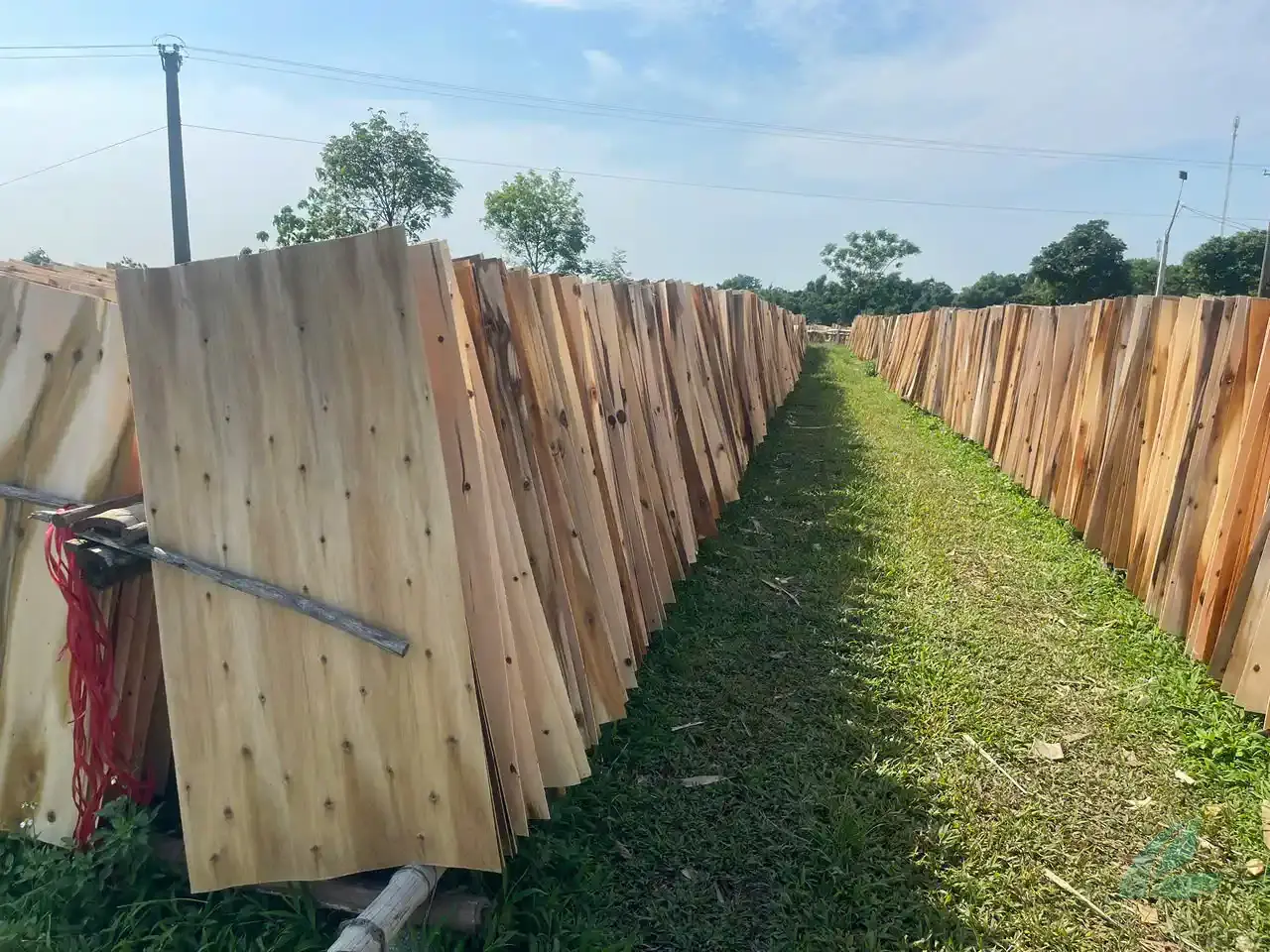
Acacia core plywood from Vietnam handles load-bearing duties across multiple construction and industrial applications — but not all of them. Understanding where acacia core delivers reliable structural performance, and where denser eucalyptus core is the correct specification, prevents costly material substitutions after delivery.
This guide covers the mechanical context of acacia core plywood Vietnam load bearing applications: acacia core density, glue selection, core construction grades, container packing data, and a clear application matrix so buyers can match core type to structural requirement on the first order. Acacia plywood structural applications span film-faced formwork, industrial crating, and scaffolding — each with specific glue and construction grade requirements.
📋 What Is Acacia Core Plywood?
Acacia core plywood is plywood manufactured with inner layers (core veneer) cut from Acacia mangium or Acacia auriculiformis plantation timber — the two dominant acacia species harvested in Northern Vietnam’s Phu Tho, Yen Bai, and Tuyen Quang provinces.
The face veneer is a separate species applied over the acacia core. A buyer ordering “bintangor plywood with acacia core” receives bintangor face veneer bonded over acacia inner layers. The core species determines structural properties; the face species determines surface appearance.
Key structural properties from HCPLY production data (2026):
| Property | Acacia Core (Vietnam) |
|---|---|
| Core density | ~580 kg/m³ |
| Effective packing density | 580 kg/CBM |
| Standard thicknesses | 9, 12, 15, 18, 21mm |
| Sheet sizes | 1220×2440mm, 1250×2500mm |
| Glue options | Melamine (MR) or Phenolic (WBP) |
| Emission options | E1, E2 (MR); inherently low (WBP) |
| Core construction grades | Loose-laid, edge-jointed, stitched |
💡 Key Insight: Density is determined by the core species, not the face veneer. Specifying “bintangor plywood” without specifying core species leaves density — and therefore structural performance — undefined.
📐 Acacia Core Density and Structural Context
At ~580 kg/m³, acacia sits between the two other Vietnamese plantation core species. Styrax (bồ đề) runs 480–500 kg/m³ and is used primarily in lightweight furniture-grade panels. Eucalyptus (bạch đàn) runs 650–750 kg/m³ and is the specification for premium flooring, high-reuse formwork, and structural construction panels.
“The core species is the single biggest variable in plywood performance. Two panels can look identical on the surface — same face veneer, same thickness — but behave completely differently under load because one uses eucalyptus core at 650 kg/m³ and the other uses styrax at 500 kg/m³.” — David, Export Project Leader, HCPLY
Acacia core occupies the mid-weight structural tier. It is heavier and stiffer than styrax, providing better panel rigidity for applications that apply compressive or distributed loads. It is lighter and more affordable than eucalyptus, making it the standard for load-bearing applications where the cost-to-strength trade-off favours budget formwork or industrial packing over premium construction panels.
“For buyers sourcing film-faced plywood for standard shuttering or packing plywood for heavy machinery crates, acacia core delivers the structural performance required at a price point that keeps the landed cost competitive,” says Lucy, International Sales Manager at HCPLY.
The practical implication of acacia core density in structural context: when a construction buyer specifies formwork plywood without declaring core type, Vietnamese factories default to acacia core for budget grades and eucalyptus for premium grades. Acacia plywood structural applications in the budget segment are widely established — the density-to-cost ratio is the main reason. These are not interchangeable — reuse cycles, panel flatness after cycling, and compressive strength differ significantly between the two.
🏭 Load-Bearing Applications: Where Acacia Core Works
📌 Film-Faced Formwork Plywood (Budget Grade)
Acacia core is the standard for budget-grade film-faced formwork plywood used across South and Southeast Asia, the Middle East, and Africa. The formwork spec is phenolic WBP glue over acacia core, delivering 4–8 reuse cycles under standard concrete-pouring conditions.
This grade targets markets where contractors replace formwork panels after each project cycle rather than maintaining a reusable panel stock. Lower landed cost per CBM offsets the reduced reuse count compared to eucalyptus-core formwork targeting 15–20 cycles (FAO Timber Bulletin, 2023).
For HCPLY’s commercial formwork grade, acacia core runs with phenolic WBP glue and standard AICA-grade film at 135gsm minimum. This combination passes BS 1088 equivalent boiling tests and delivers consistent surface quality across the first 4–6 pours.
📌 Industrial Packing Crates and Heavy-Machinery Crating
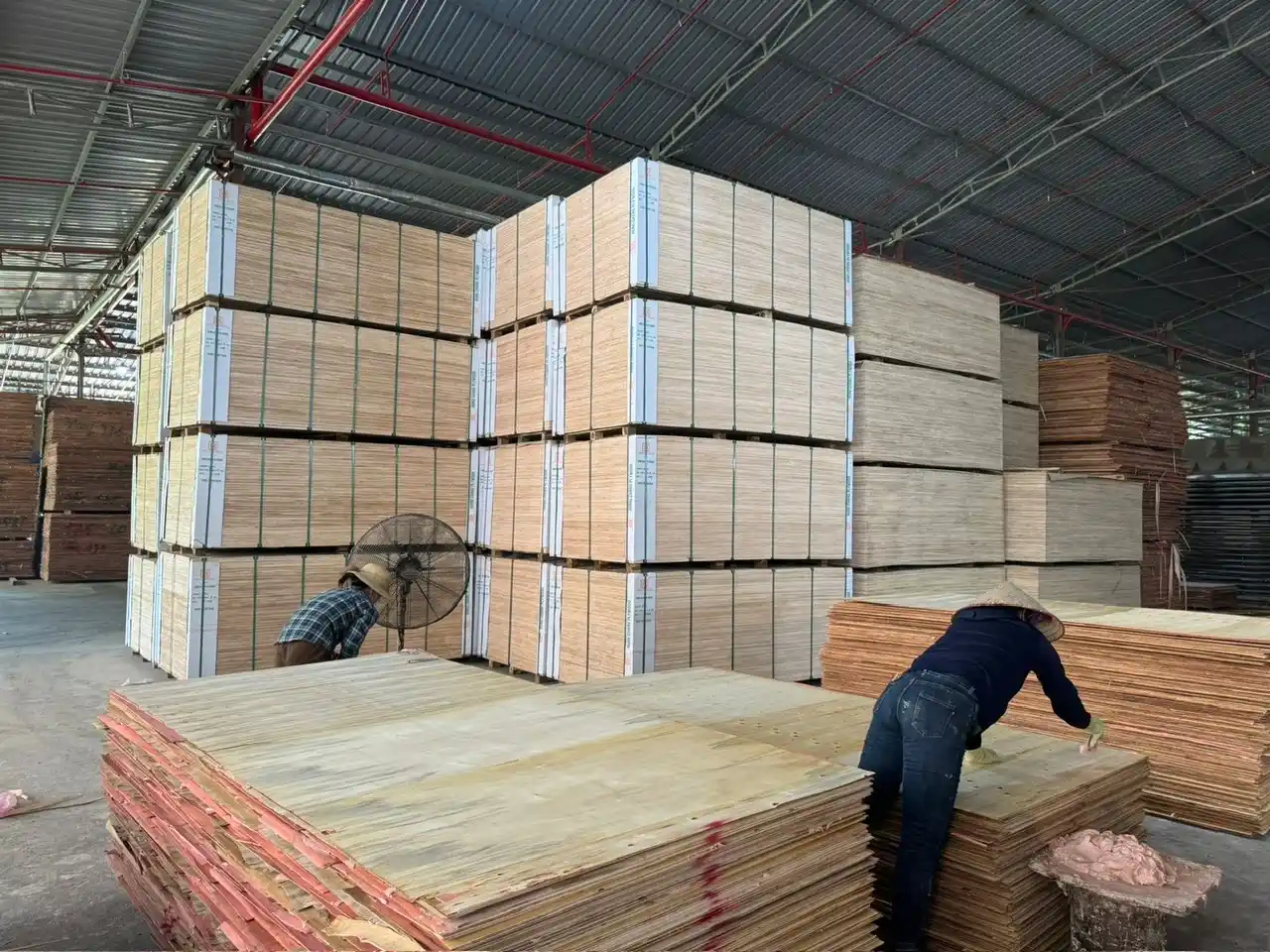
Industrial packing plywood is the largest single application for acacia core in Vietnam’s export plywood segment (HCPLY production data, 2026). Crates, skids, and packing boxes for heavy machinery, automotive parts, and industrial equipment require structural plywood that can carry distributed loads without panel collapse under forklift tines or stacking pressure.
Acacia core at 12–18mm thickness with melamine MR glue covers ISPM-15 fumigated packing requirements. The 580 kg/m³ density provides adequate stiffness for single-level crating. Double-wall crate construction specifies 12mm acacia core panels on all six faces, a configuration routinely executed in HCPLY’s commercial facility.
Explore industrial packaging plywood applications and ISPM-15 requirements
📌 Pallet Decking and Skid Boards
Pallet decking requires plywood that resists repeated point loading from pallet jack tines and forklift forks. Acacia core at 9–12mm handles standard Euro-pallet load ratings without compression failure at the tine contact zones.
This application uses the most basic acacia core construction: loose-laid or edge-jointed inner layers, E2 emission, unsanded, melamine MR glue. It is the cheapest structural plywood specification available from Vietnam’s commercial and packing-grade facilities.
📌 Anti-Slip Plywood for Scaffolding and Vehicle Floors
Anti-slip plywood specifies acacia or eucalyptus core depending on the load rating. For a full guide on anti-slip plywood flooring applications in Vietnam, see our dedicated article. Scaffold boards handling foot traffic and light tool loads commonly use acacia core with AICA anti-slip film (220gsm) and phenolic WBP glue. Vehicle floor panels — truck beds, trailer decks — that carry dynamic wheel loads typically upgrade to eucalyptus core for higher deflection resistance.
At HCPLY, the standard anti-slip plywood range starts with acacia core at 12mm and 15mm for general scaffold and walkway use, stepping up to eucalyptus core at 18mm and 21mm for heavy transport deck applications.
📊 Container Loading Data for Acacia Core Plywood
Understanding the container packing economics of acacia core is essential for total landed cost calculation. For step-by-step pallet height limits and loading configurations, see our container loading reference. Acacia loads at 16 pallets per 40HC container — two fewer than styrax, one more than eucalyptus — directly affecting CBM efficiency and freight cost per sheet.
Case study — correct core saves freight costs: A furniture buyer in Poland originally specified acacia core for eucalyptus-faced panels. After learning the panels were for indoor furniture, HCPLY recommended switching to styrax core — lighter weight (500 vs 580 kg/m³), smoother surface for furniture finishing, and 54 CBM per 40HC instead of 46-47 CBM with acacia. The buyer switched and now orders 3-5 containers per month. Always specify your end application before locking in the core species.
| Core | Pallets/40HC | CBM/40HC | Weight/40HC | Notes |
|---|---|---|---|---|
| Styrax | 18 | ~53 CBM | ~26.5 MT | Lightest, most CBM |
| Acacia | 16 | ~47.5 CBM | ~27.5 MT | Mid-weight |
| Eucalyptus | 15 | ~44.5 CBM | ~28 MT | Heaviest, approaches 28.5MT limit |
Data source: HCPLY production data, 2026. Based on 1220×2440mm sheet size, 28.5 MT maximum payload ceiling.
The acacia core packing table uses 580 kg/CBM effective density — a value derived from acacia core density (~580 kg/m³) adjusted for pallet void space. A 40HC container loaded with 18mm acacia core (1220×2440mm) fits approximately 55 sheets per pallet, 16 pallets = 880 sheets total, approximately 47.5 CBM.
Full 40HC container packing calculation tables by core species and thickness
⚠️ Important: Do not apply styrax or eucalyptus packing tables to acacia core orders. Each core species has its own closed calculation system. Mixing packing data between core types produces incorrect weight and CBM estimates.
🔧 Glue Specification for Load-Bearing Applications
Glue type and emission standard are two separate specifications. Both must be declared when ordering acacia core plywood for structural applications.
Glue type (water resistance):
| Glue | Trade Name | Boiling Test | Structural Use |
|---|---|---|---|
| Melamine | MR | 12 hours | Interior packing, commercial crating |
| Phenolic | WBP | 72 hours | Formwork, scaffolding, anti-slip, marine |
Emission standard (formaldehyde):
| Standard | Level | Markets |
|---|---|---|
| E0 / CARB P2 | ≤0.5 mg/L | US, EU, Japan, Korea — not typical for packing grade |
| E1 | ≤1.5 mg/L | European commercial, most Asian furniture markets |
| E2 | ≤5.0 mg/L | Industrial/packing — NOT for interior use |
For acacia core load-bearing applications:
- Film-faced formwork → Phenolic WBP + E2 (emission irrelevant for construction)
- Industrial crating → Melamine MR + E2 or E1
- Scaffold plywood → Phenolic WBP (moisture resistance critical)
- Pallet decking → Melamine MR + E2
Melamine vs phenolic glue — full boiling test comparison
⚙️ Core Construction Grade and Load Performance
Acacia core plywood is manufactured in three construction grades, each with different structural implications:
Loose-laid (xếp chồng): Inner veneer strips placed side by side without joining. Gaps between strips are normal. This is the standard for packing and budget commercial grades. Adequate for distributed load applications (crating, pallet decking) where the glue lines carry the structural load. Not suitable for applications requiring flat, gap-free panels.
Edge-jointed (mài mí): Inner veneer strips are edge-trimmed for tight fitting. Fewer gaps than loose-laid. Used for mid-grade commercial plywood where panel flatness matters for processing (lamination substrates, cabinet backing).
Full-stitched (khâu full): All inner veneer strips are sewn together with continuous thread. Zero gaps, no overlap. This is the premium construction, standard for furniture-grade panels but rarely specified for load-bearing acacia applications because the cost premium erases the price advantage of using acacia core.
For most load-bearing acacia applications — formwork, crating, pallet decking — loose-laid or edge-jointed construction is the correct and cost-effective specification.
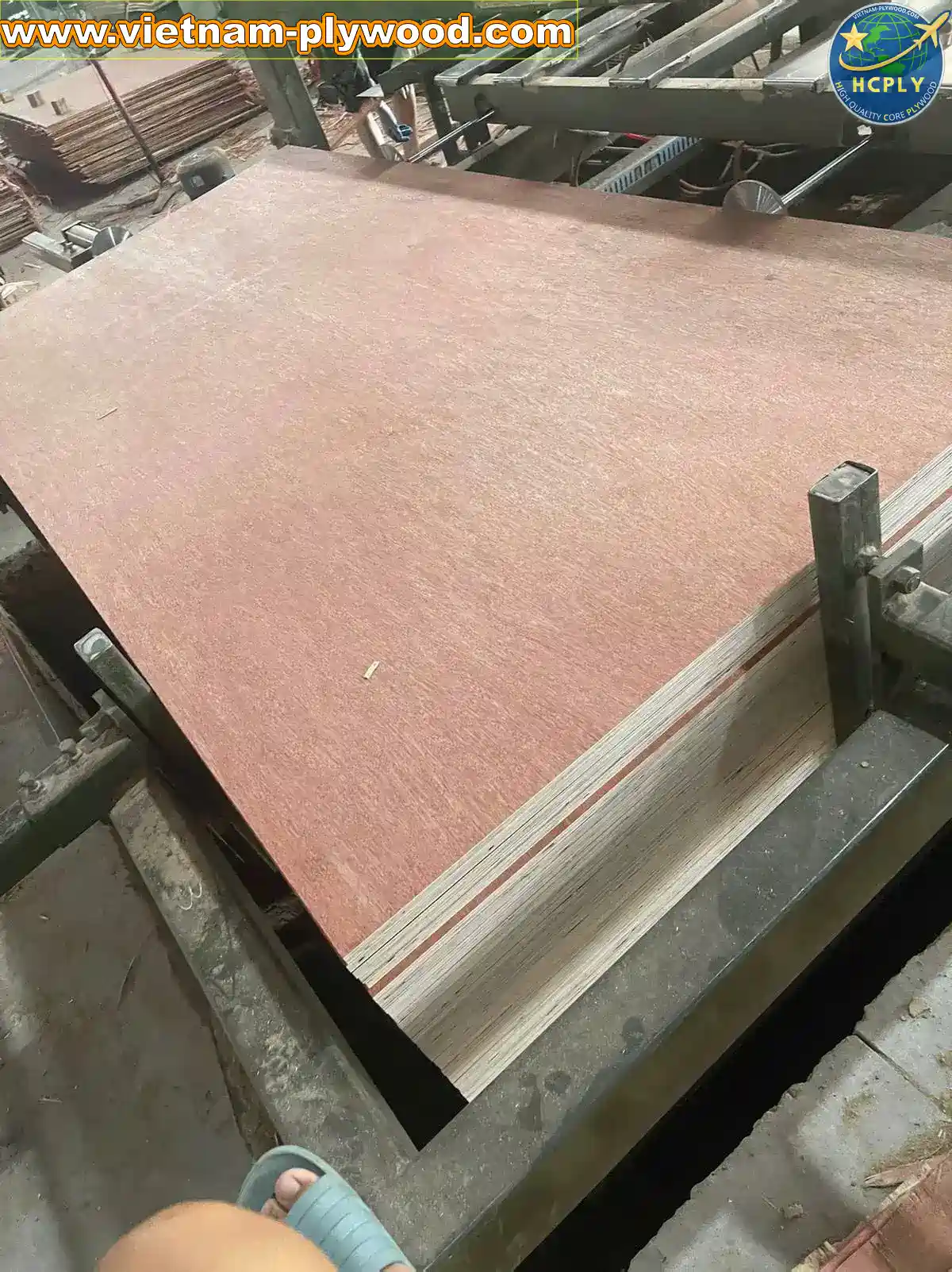
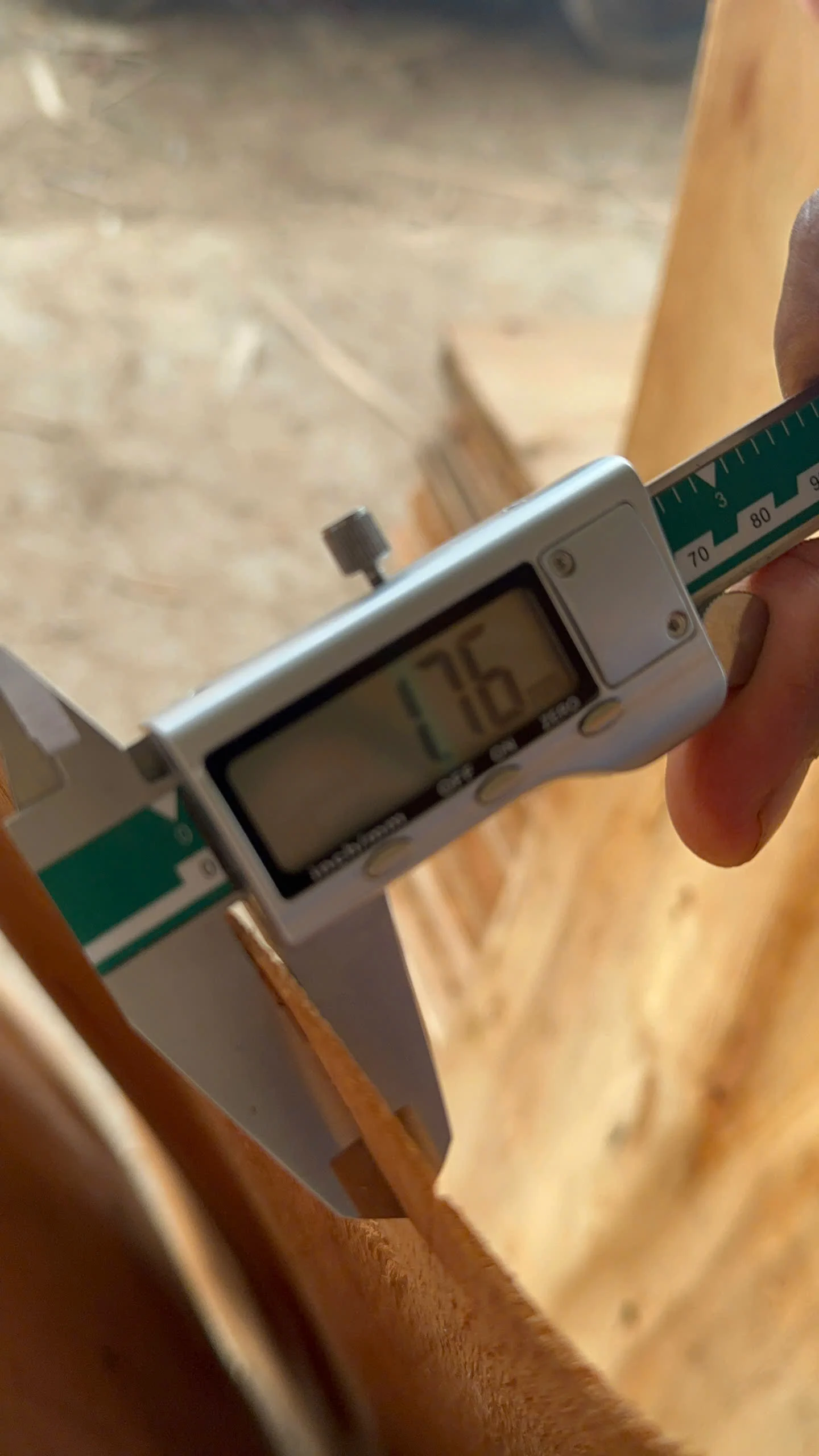 QC inspection of core veneer layers at HCPLY — verifying consistent acacia core density and veneer gap tolerances before pressing (HCPLY production data, 2026)
Compare all four core construction grades
📦 Acacia vs. Eucalyptus: Which Core for Structural Plywood?
The choice between acacia and eucalyptus core for structural applications comes down to three factors: required reuse count, panel deflection tolerance, and budget.
| Criterion | Acacia Core | Eucalyptus Core |
|---|---|---|
| Core density | ~580 kg/m³ | 650–750 kg/m³ |
| Film-faced formwork reuse | 4–8 cycles | 15–20 cycles |
| Pallets per 40HC | 16 | 15 |
| Container weight | ~27.5 MT | ~28 MT |
| Applications | Budget formwork, packing, scaffolding | Premium formwork, flooring, heavy transport decks |
| Price tier | Lower | Higher |
For buyers sourcing formwork plywood for a single construction project where panels are disposed after completion, acacia core delivers the required structural performance at lower cost. For buyers operating a reusable panel programme across multiple projects, eucalyptus core pays back the cost premium through extended panel life.
“The right core choice is determined by your use case economics, not by a single density figure. An acacia-core panel at $X per CBM for single-cycle formwork often outperforms a eucalyptus panel at $X+20 per CBM when you account for total project cost,” notes David, Export Project Leader at HCPLY.
Compare acacia vs. eucalyptus core in full technical detail
For raw acacia core veneer sheets (B2B supply to other plywood factories), see the core veneer Vietnam product page.
✅ Application Matrix: Acacia Core Plywood Fit-for-Purpose Guide
| Application | Acacia Core? | Notes |
|---|---|---|
| Film-faced formwork (4–8 reuse) | Yes | WBP glue, AICA film 135gsm+ |
| Premium formwork (15–20 reuse) | No | Specify eucalyptus core |
| Industrial packing crates | Yes | MR glue, E1/E2, loose-laid or edge-jointed |
| Heavy-machinery skids | Yes | MR glue, 15–18mm |
| Pallet decking | Yes | MR glue, 9–12mm, E2 |
| Scaffolding / walkway boards | Yes (light duty) | WBP glue, 15–18mm |
| Heavy transport decks | Conditional | Specify eucalyptus for high dynamic loads |
| Flooring underlayment | Not recommended | Eucalyptus core preferred for density and flatness |
| Premium furniture substrate | No | Styrax or eucalyptus core for E0 grade |
🔗 Sourcing Acacia Core Plywood from Vietnam
HCPLY’s commercial and packing production facility in Northern Vietnam manufactures acacia core plywood for load-bearing industrial applications: film-faced formwork, packing crates, pallet decking, and anti-slip scaffolding panels.
Factory specifications available:
- Thickness: 9–21mm in standard increments
- Sheet sizes: 1220×2440mm and 1250×2500mm
- Glue: Melamine MR or Phenolic WBP
- Emission: E1 or E2
- Core construction: loose-laid, edge-jointed, or stitched on request
- Certifications: FSC, fumigation, phytosanitary, CO, B/L
MOQ is one 40HC container. Mixed specifications (different thicknesses within one container) are available with weight recalculation. Learn more about how to check plywood quality before shipping to ensure your load-bearing panels meet specification.
Disclosure: This article is published by HCPLY, a Vietnam-based plywood manufacturer and export operator. While we aim to provide objective industry guidance, readers should consider our perspective as a market participant when evaluating recommendations.
Get a free acacia core plywood quote — factory-direct pricing
No commitment required. Pricing provided within 24 hours with full CBM and weight breakdown for your container quantity.
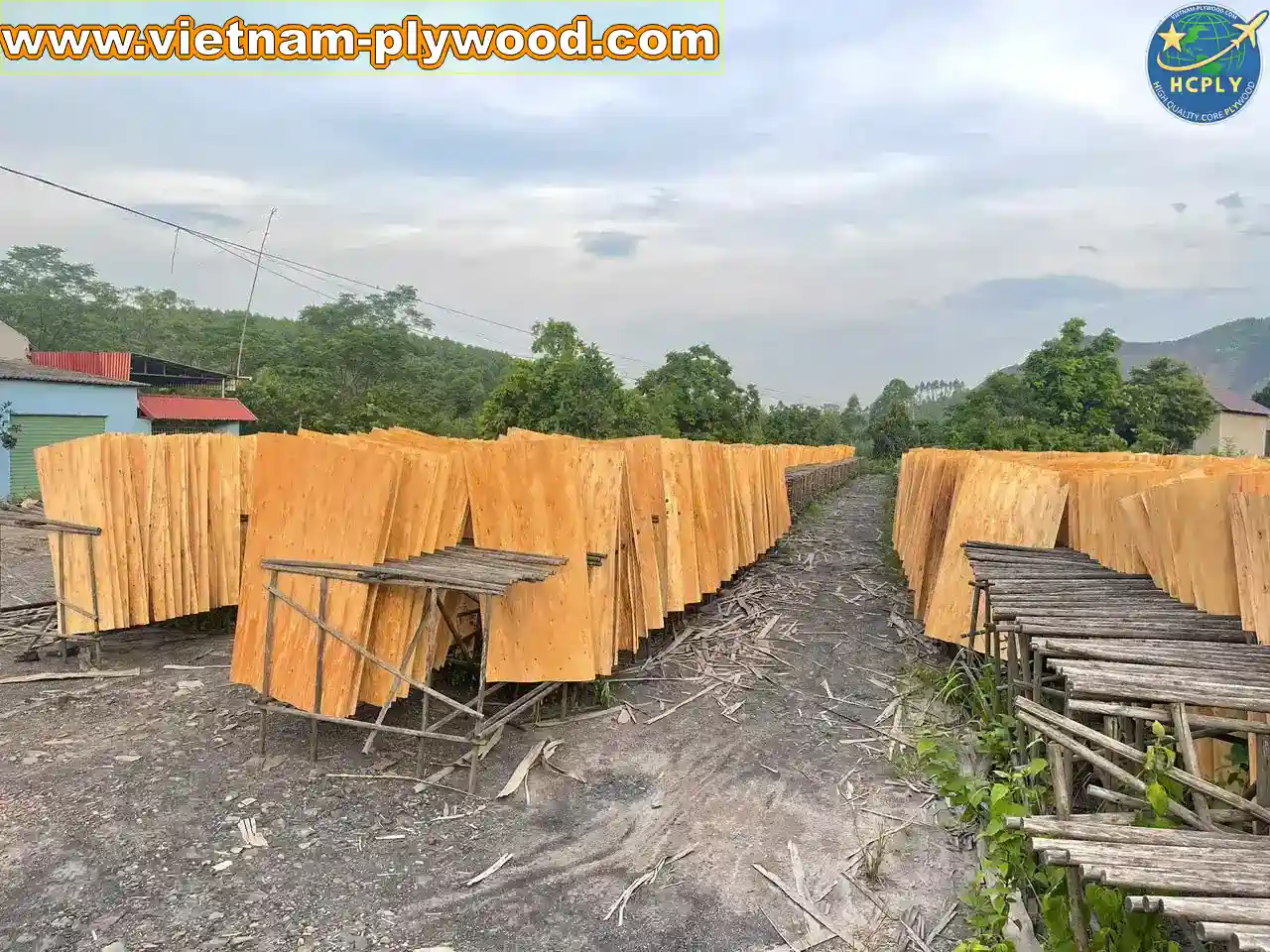
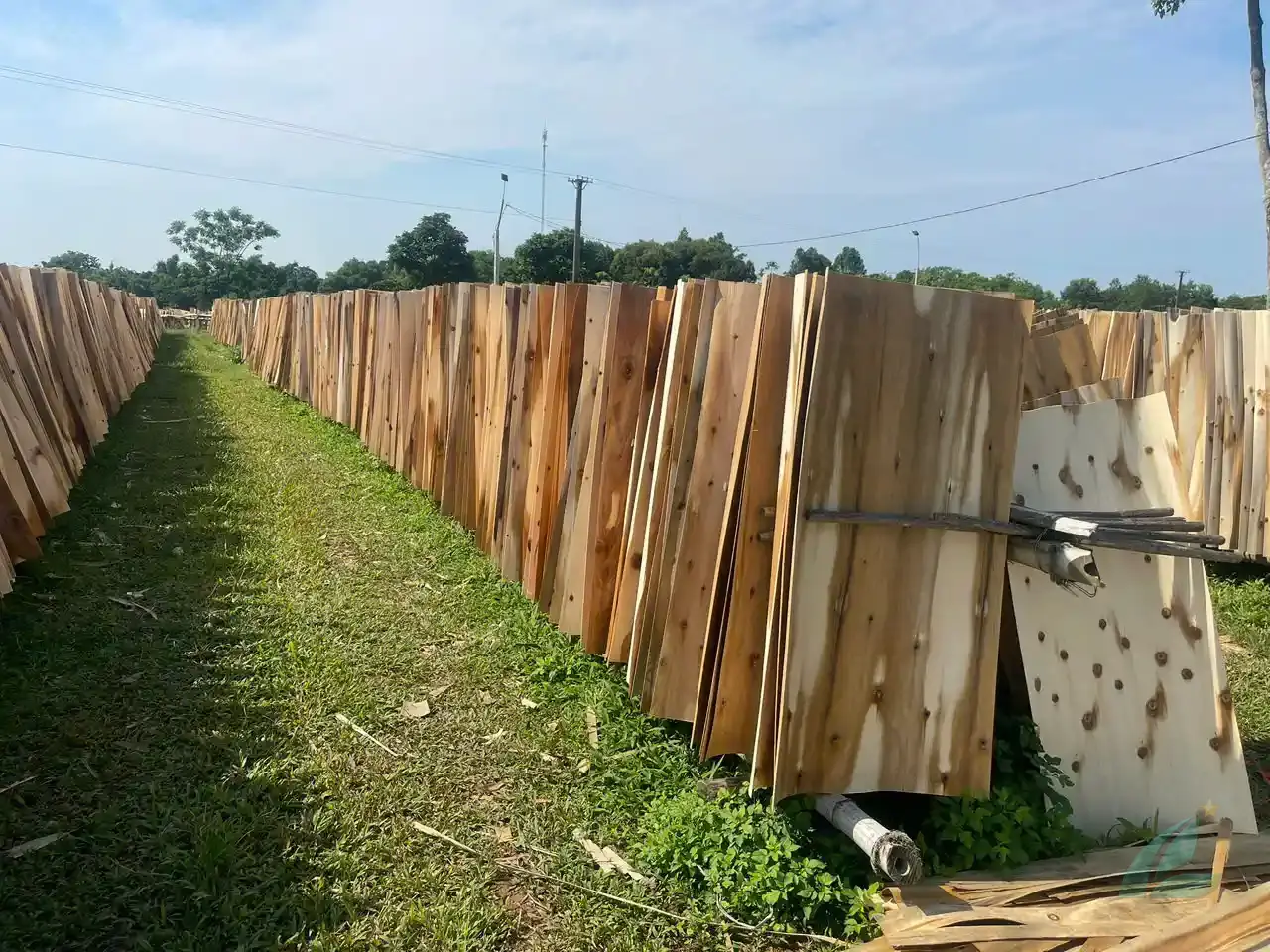 Acacia core veneer sheets at HCPLY’s commercial plywood facility, Northern Vietnam — standard grade for load-bearing industrial applications (HCPLY production data, 2026)
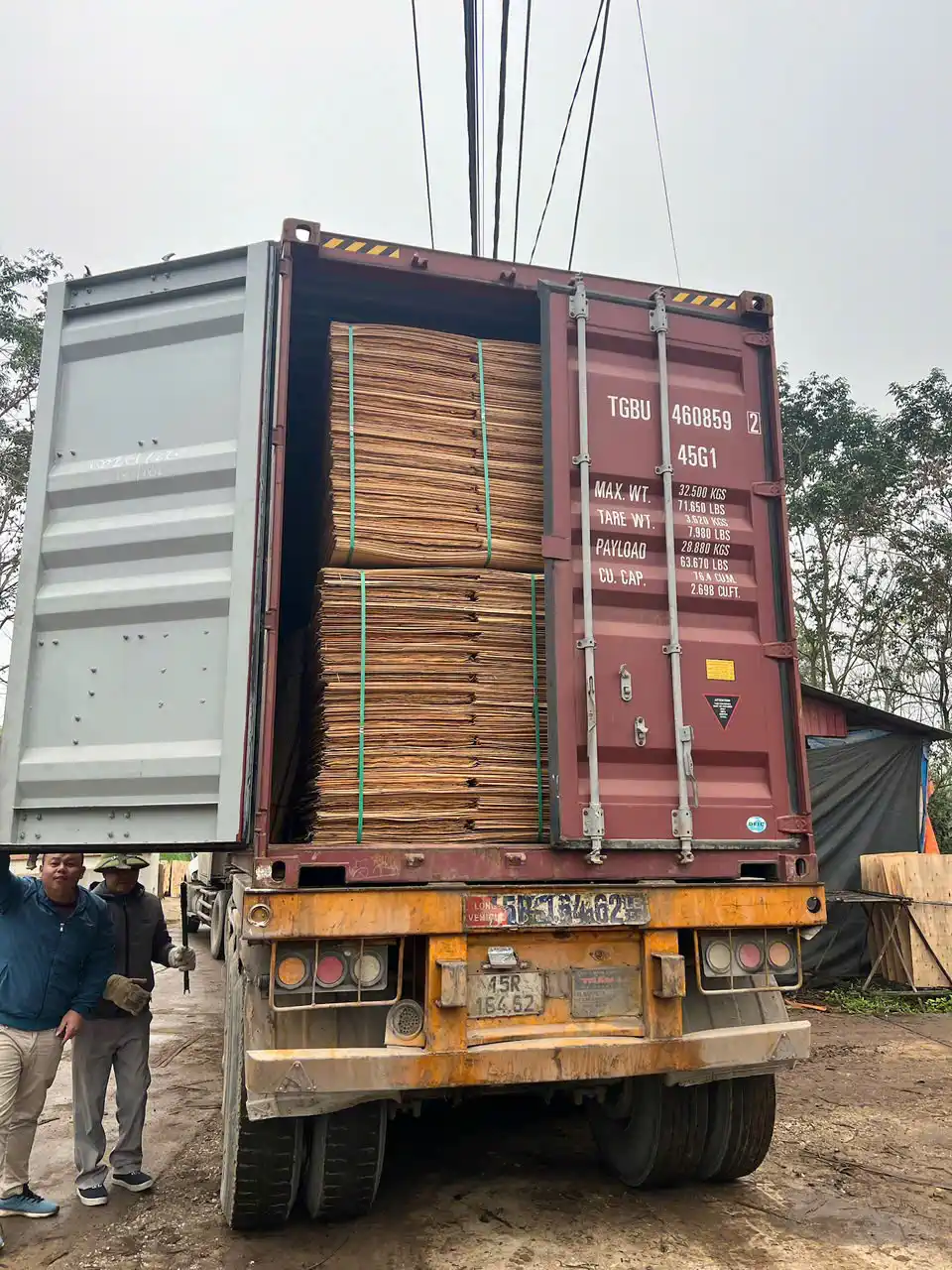 16 pallets of acacia core plywood loading into a 40HC container at Hai Phong port — 47.5 CBM, 27.5 MT total
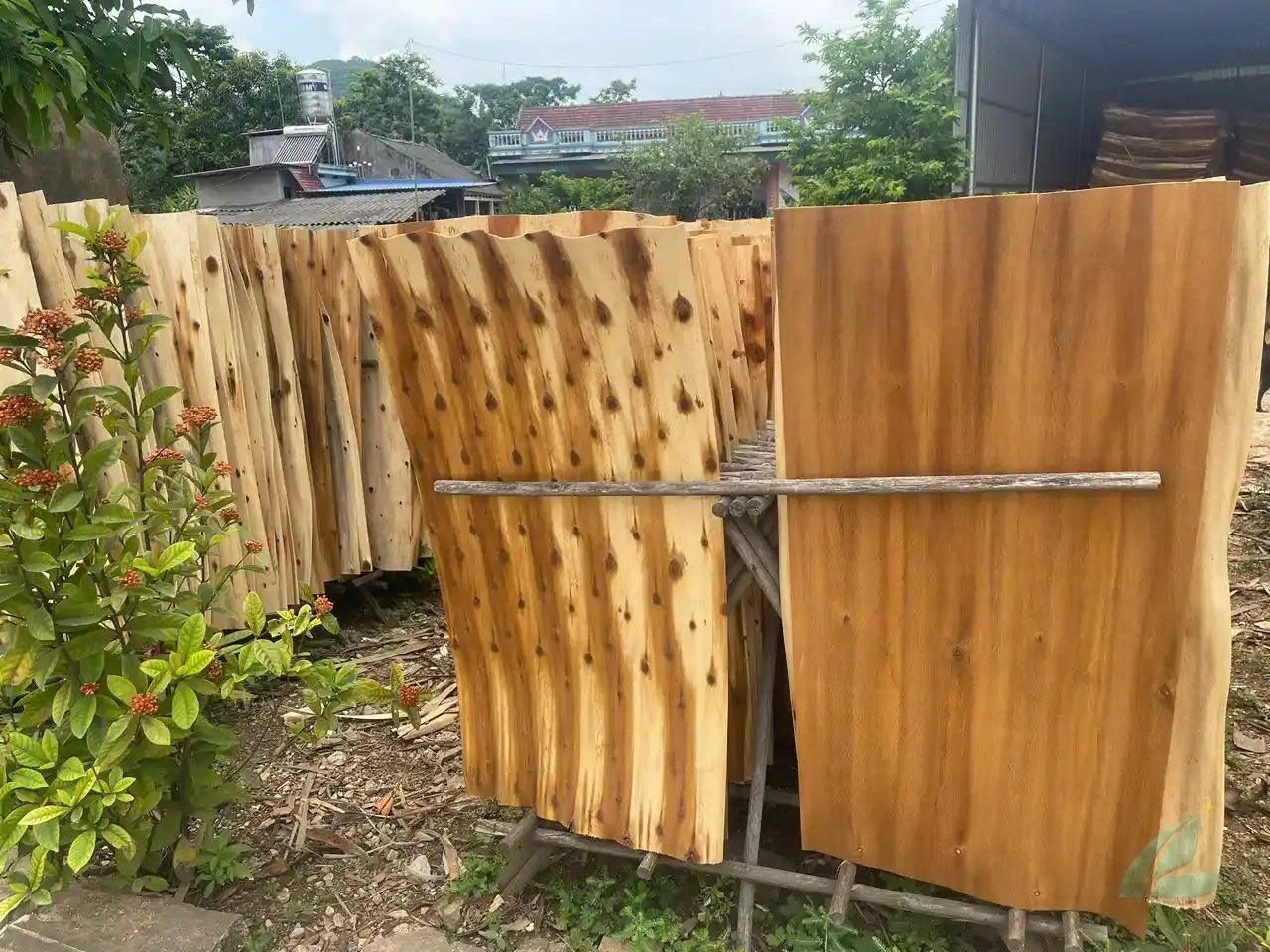 Grade-A acacia core veneer — consistent density, suitable for structural film-faced formwork and commercial crating applications