

Acacia core plywood is the most cost-efficient core option from Vietnam — and for 80% of commercial applications, its dark color is a complete non-issue. But pair thin, light-colored face veneer with acacia core and you may get what the industry calls “core show-through” — a faint shadowing of the substrate through the face.
This article explains exactly when the problem occurs, when it does not, and five practical workarounds that Vietnamese factories apply to deliver light-face plywood on an acacia core budget.
📋 Why Acacia Core Is Naturally Dark
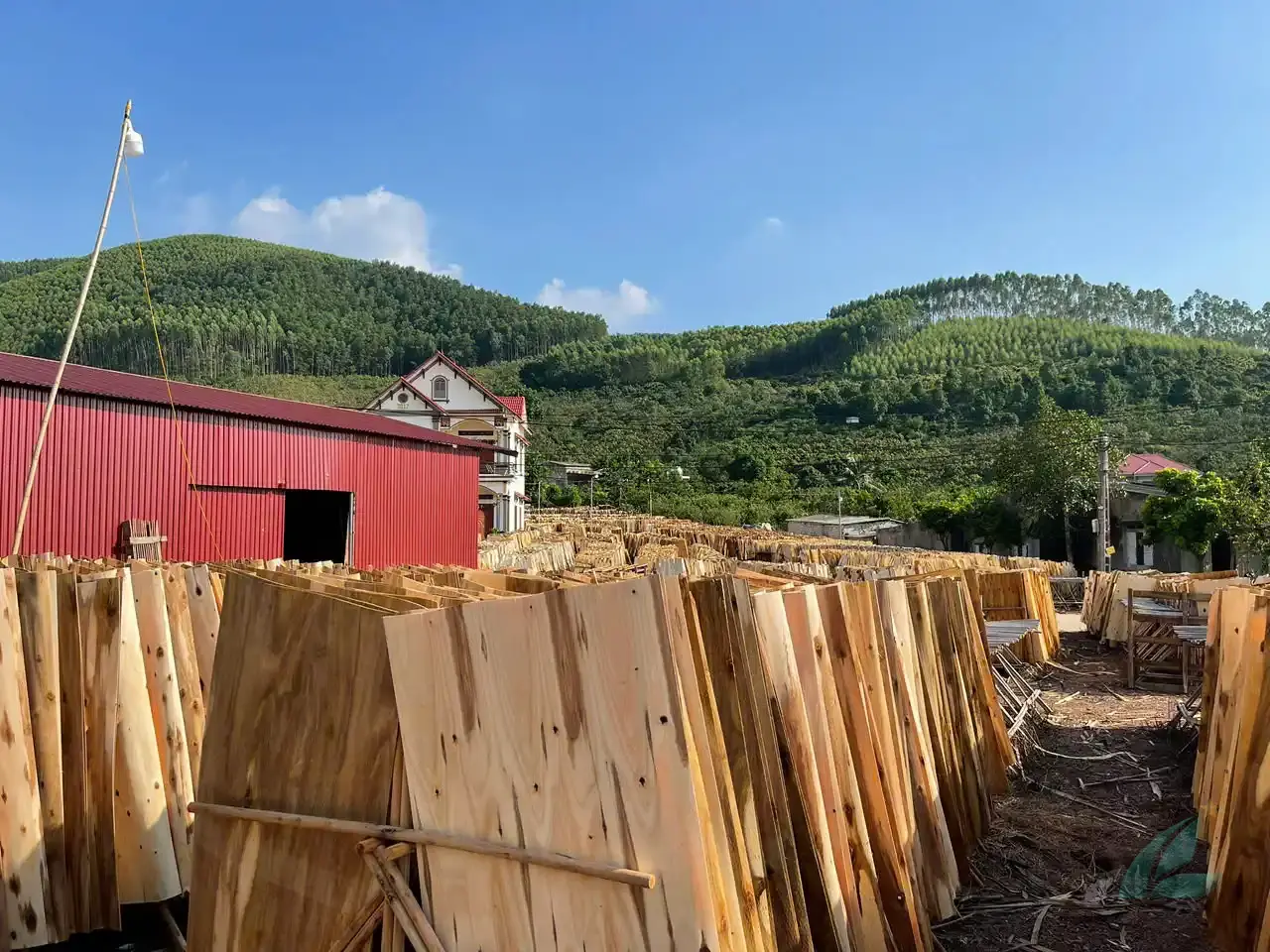
Acacia core (keo lá tràm) is the most abundant plantation species in Northern Vietnam. At approximately 580 kg/m³, it sits between lightweight styrax (480–500 kg/m³) and heavy eucalyptus (650–750 kg/m³) on the density scale (HCPLY production data, 2026).
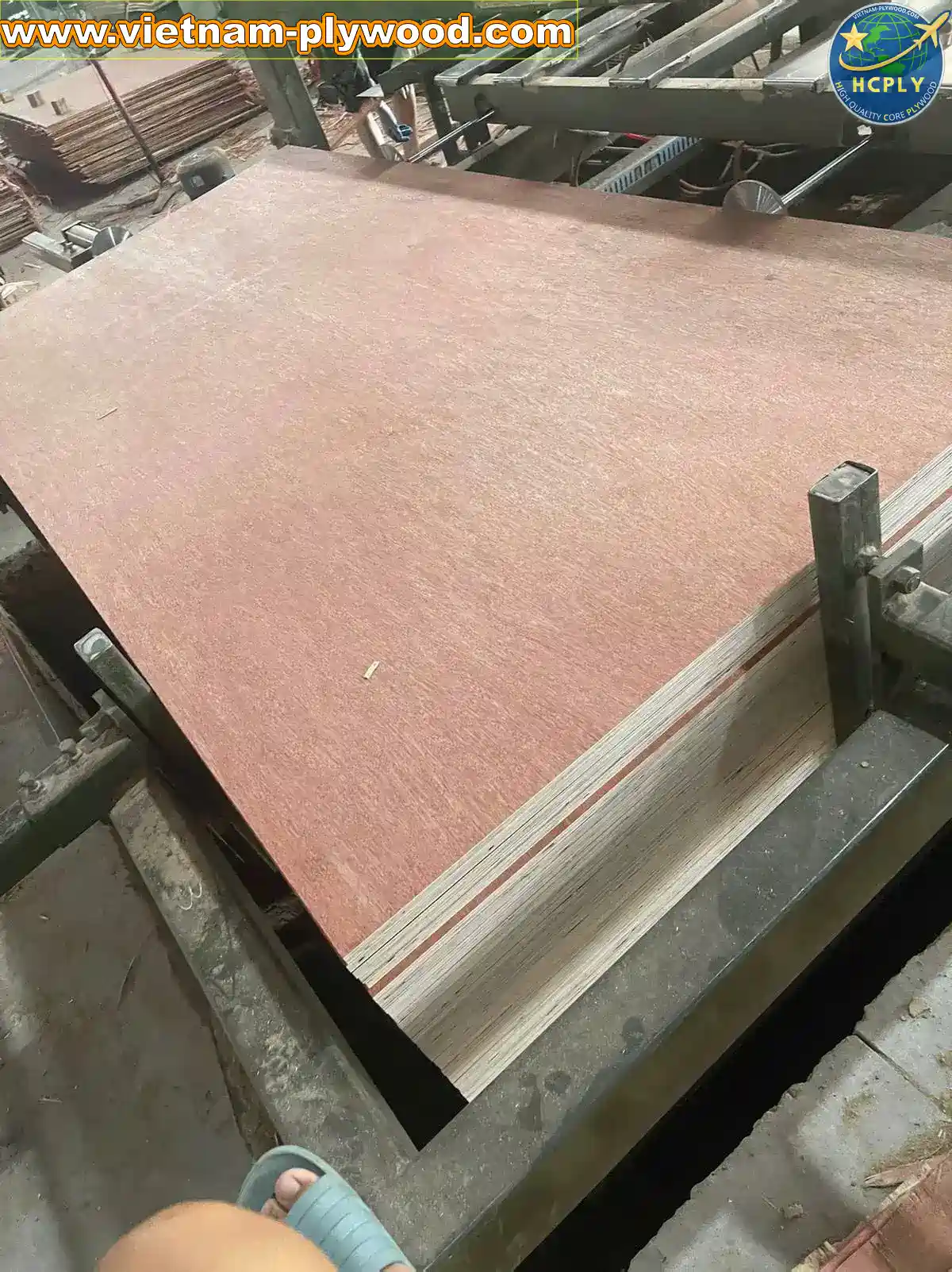
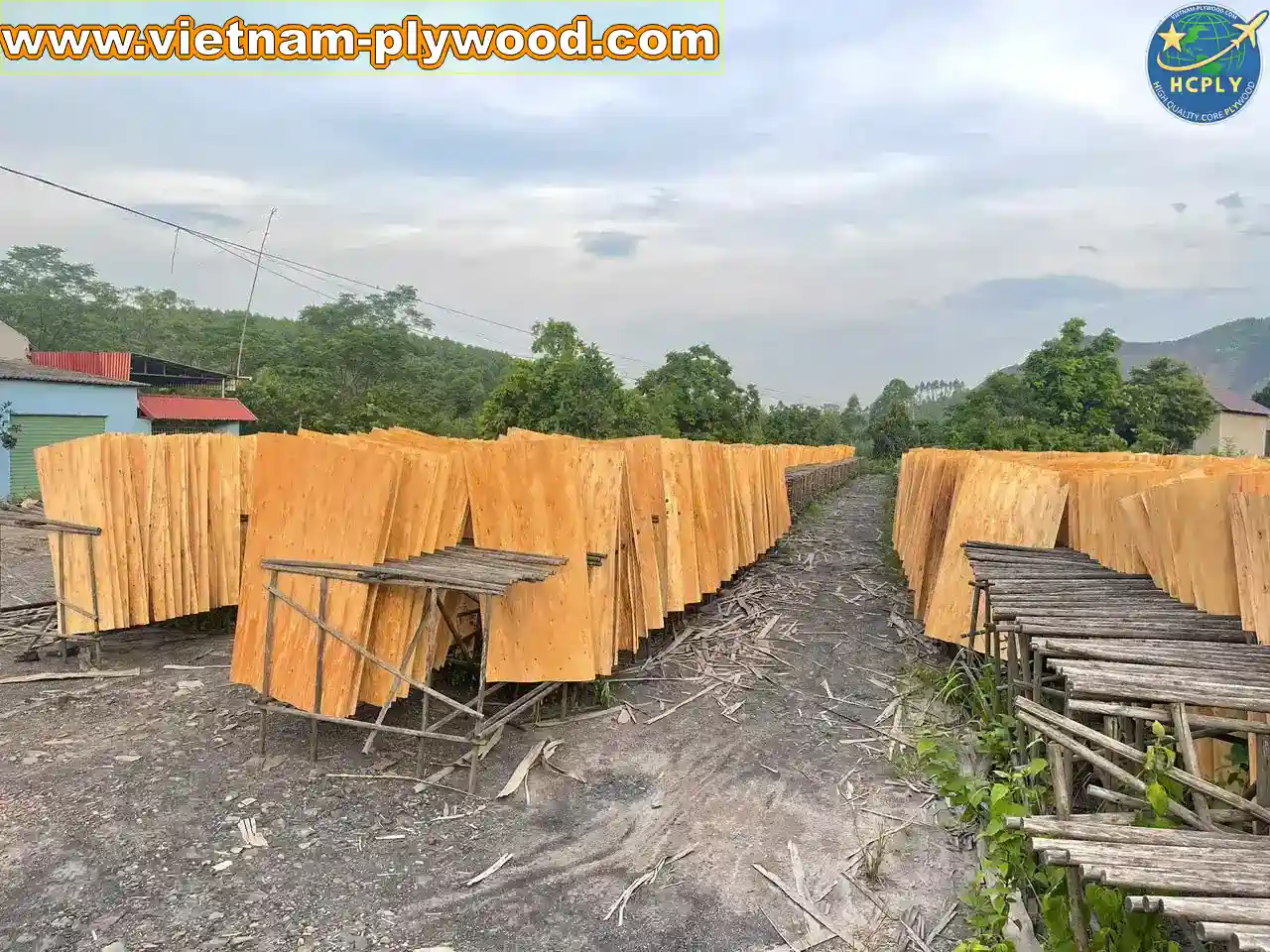
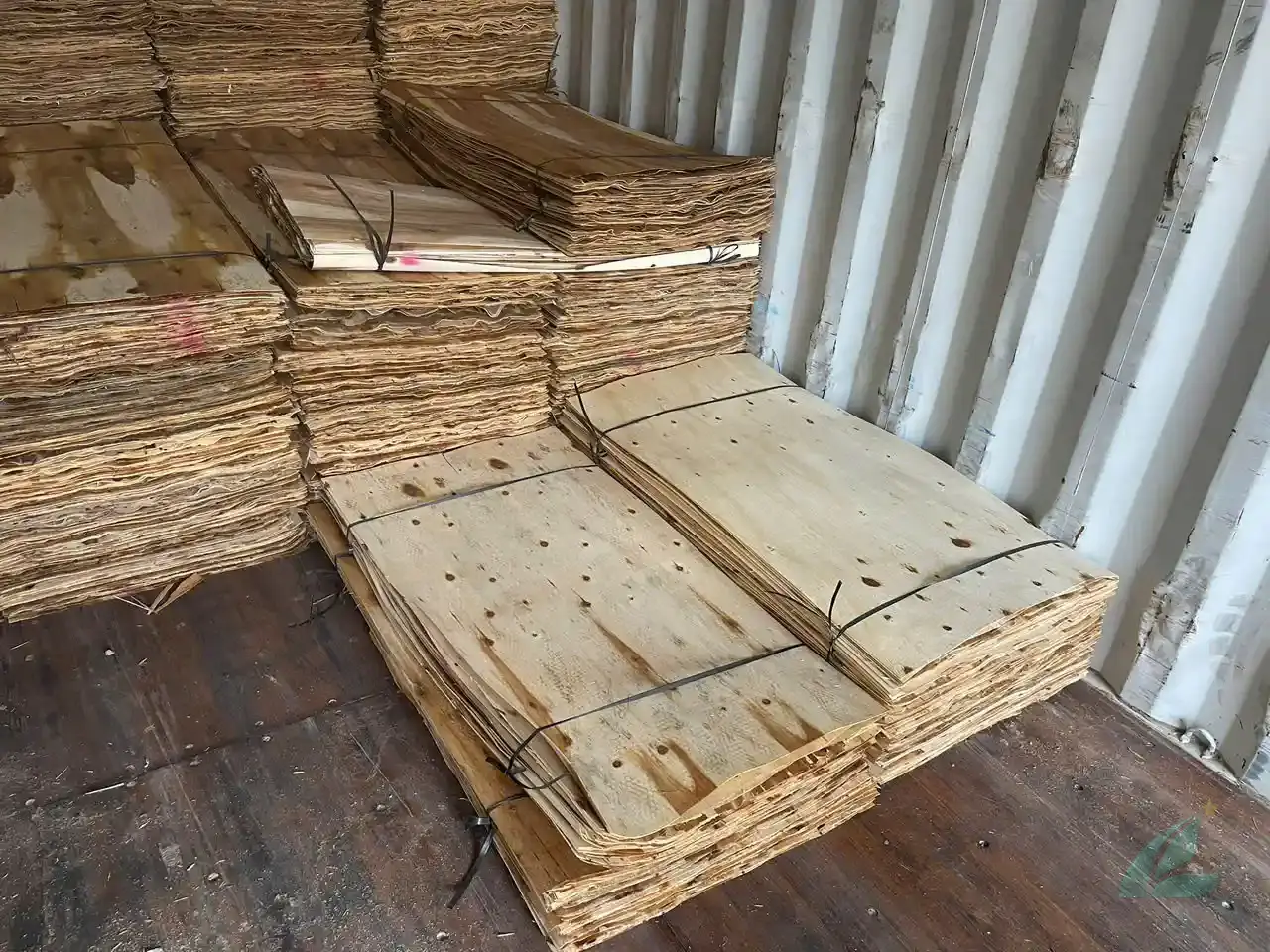
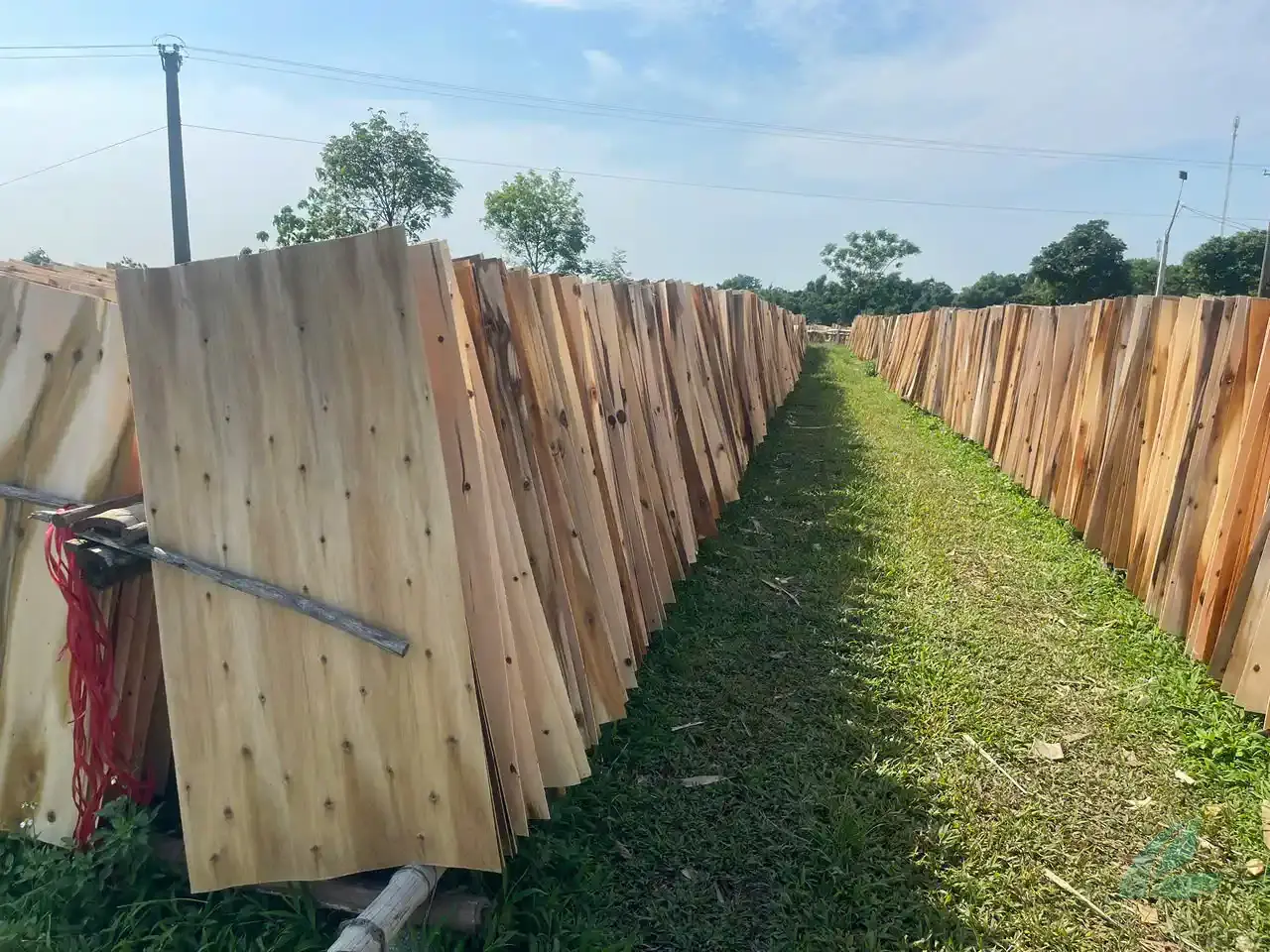
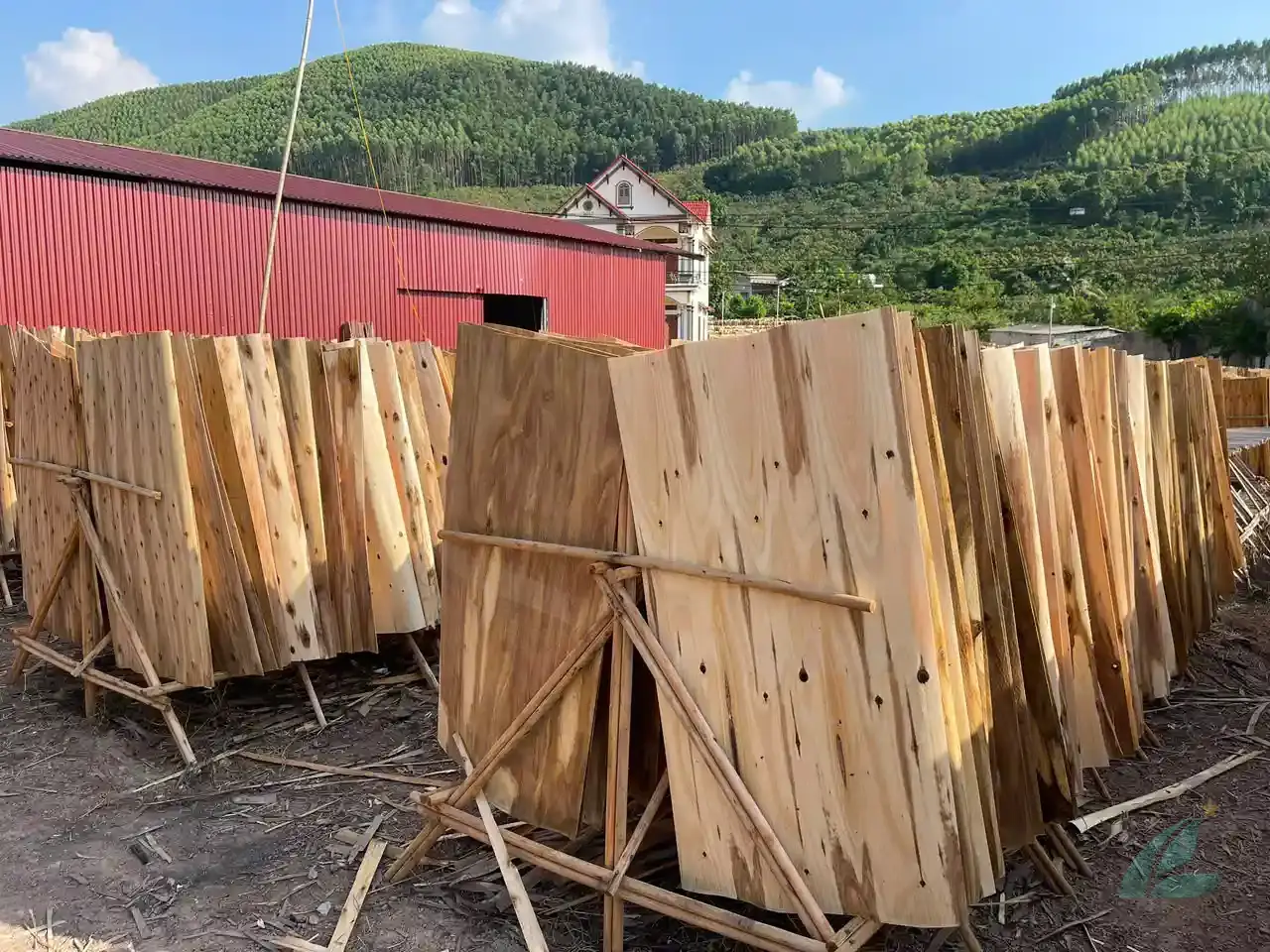
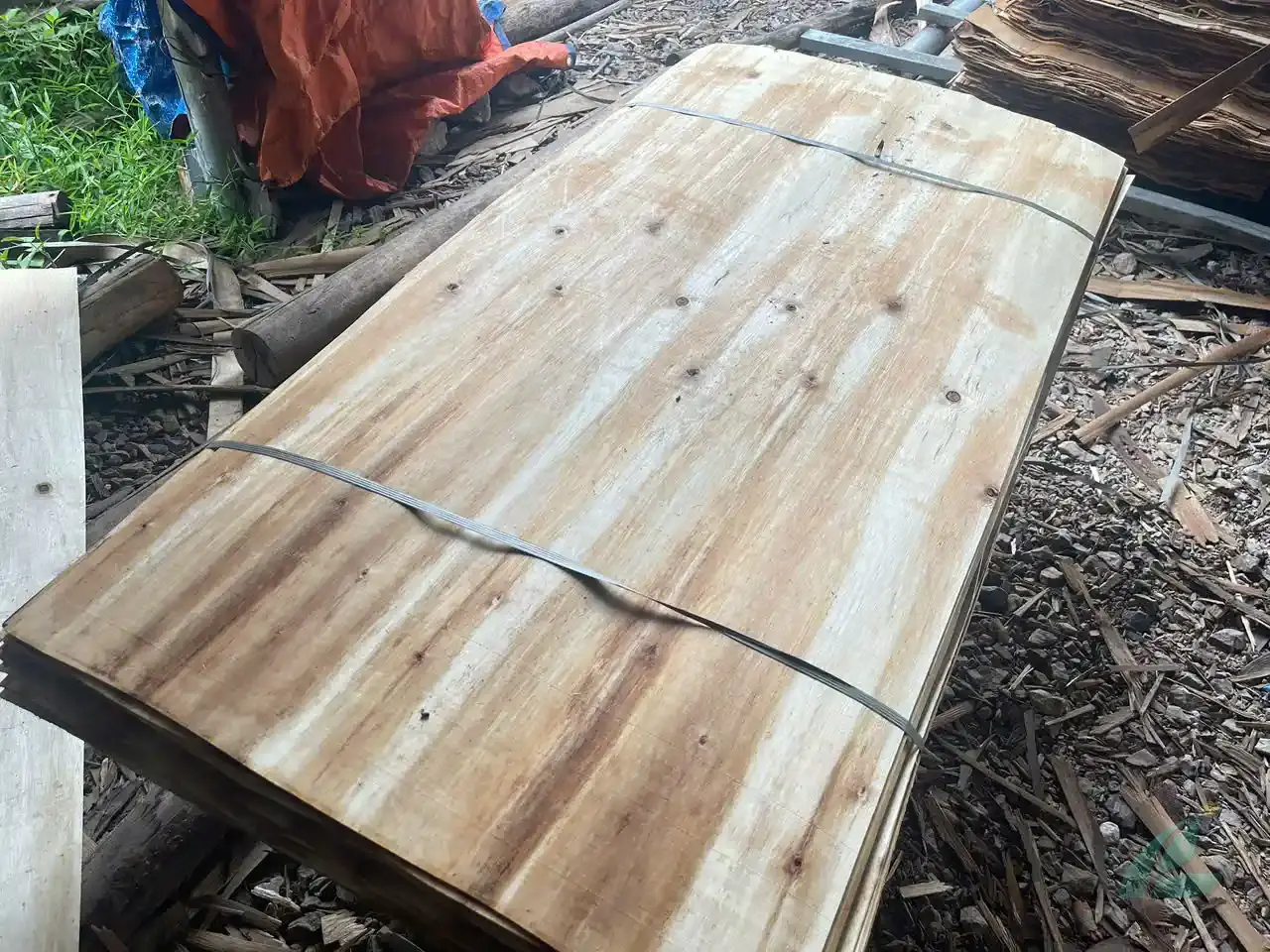
The characteristic dark color comes from high extractive content in the wood — tannins, phenolic compounds, and coloring agents concentrated in heartwood sections. Rotary-peeled acacia core sheets typically show a mixed grain pattern of medium brown and dark reddish-brown bands. Younger plantation acacia tends slightly lighter; older-growth logs can be quite dark.
This chemical composition is actually part of what makes acacia a solid structural performer. The same extractives that cause color also contribute to natural resistance to moisture and biological degradation — advantages for commercial and packing grade applications.
💡 Tip: Density determines color range. Acacia at ~580 kg/m³ is lighter in density than eucalyptus but darker in visual color. Do not confuse these two properties.
The practical implication: when acacia core is covered by a face species with sufficient veneer thickness and natural opacity, the core color never reaches the surface. Problems arise specifically when face veneer is thin AND the face species is pale.
🔍 When Acacia Core Dark Color Actually Shows Through
Core show-through is not a universal problem — it requires a specific combination of face veneer thickness and face species color.
The threshold: face veneer ≤ 0.3mm
Standard Vietnamese face veneer runs 0.2–0.4mm (industry practice, Vietnam plywood factories, 2026). At 0.2–0.3mm, the veneer sheet is thin enough for dark substrates to cast a color shadow through the face, particularly under certain lighting conditions and after finishing.
Face species most affected:
| Face Species | Natural Color | Risk with Acacia Core |
|---|---|---|
| Okoume | Light pink | High — very pale, thin veneer common |
| EV (Engineered Veneer) | Off-white to cream | High — reconstituted, uniformly thin |
| Poplar | Pale yellow-white | High — lightest face species available |
| Pine | Light tan | Moderate — depends on veneer thickness |
| Bintangor | Medium reddish-brown | Low — similar tone to acacia |
| Birch | Light yellow-white | Moderate to High — thin veneers common |
| Gurjan | Dark brown | Very Low — darker than acacia |
The effect is most visible after sanding when final surface preparation exposes the thinnest veneer sections, and again after applying clear finishes that increase color depth. Furniture manufacturers in Europe and South Korea — markets that demand pristine, light-toned surfaces — flag this most frequently.
“When buyers specify okoume face on acacia core for premium cabinet orders destined for Germany or Poland, we proactively advise switching to styrax core,” said Lucy, International Sales Manager at HCPLY. “The color delta between acacia core and okoume face is simply too wide at 0.2mm veneer thickness.”
✅ When Acacia Core Color Does NOT Matter
For the majority of commercial plywood applications, acacia’s dark core is irrelevant. These are cases where color show-through is not a concern:
Dark or opaque face species — Bintangor, gurjan, and film-faced plywood carry face materials that either match acacia’s tonal range or cover it entirely. No color migration issue.
Unsanded, industrial-grade applications — Packing plywood, crate boards, and pallet decks are never inspected for core show-through. Cost efficiency and structural integrity are the only criteria.
Film-faced and anti-slip plywood — The phenolic film overlay (minimum 135 gsm at HCPLY) completely blocks any substrate color. Acacia core under film-faced is standard practice — 16 pallets per 40HC container at competitive pricing.
Applications with heavy finishing — Panels destined for painting, HPL lamination, or decorative film application cover the face entirely. Core color irrelevant.
⚠️ Important: If your application involves clear-coating, staining, or natural finish over a pale species (okoume, EV, poplar), you need to specify face and core together as a system — not treat them as independent variables.
🔧 5 Factory-Tested Workarounds for Acacia Core with Light Faces
When buyers require acacia core economics but light face results, Vietnamese factories apply the following approaches:
📌 Workaround 1: Specify Thicker Face Veneer (0.4–0.5mm)
The most direct solution. Increasing face veneer from 0.2mm to 0.4mm significantly reduces color transmission through the face layer. At 0.4mm, most light species adequately block acacia core color under standard finishing.
Cost implication: thicker face veneer increases raw material cost by approximately 5–8% per panel, but avoids downstream quality complaints. For EV and okoume faces particularly, requesting 0.4mm minimum is the practical baseline when acacia core is specified.
Verify thickness by asking the factory to confirm face veneer calibration in production specs — not just nominal specification. Factories running loose tolerances may deliver thinner than specified veneer.
📌 Workaround 2: Use a Crossband (Barrier Layer) Construction
Premium-grade plywood constructions often include a crossband layer — an intermediate veneer sheet between core and face that differs from both. Specifying a crossband in light-toned wood (birch, eucalyptus, or even poplar) 1.5–2.0mm thick between the dark acacia core and light face provides a color buffer.
This construction adds one ply and increases cost, but delivers a surface quality comparable to styrax-core panels. High-end furniture plywood ordered for Japan and Korea commonly specifies this hybrid construction (Columbia Forest Products Core Guide; Hood Distribution Plywood Technical Reference, 2024).
The trade-off: slightly higher per-panel cost (crossband veneer + additional pressing step), but the result is a surface that passes the most demanding inspection standards.
📌 Workaround 3: Switch to Styrax Core for Light-Face Orders
The cleanest solution when color neutrality is non-negotiable: specify styrax core instead of acacia. Styrax (bồ đề) is pale white-yellow at 480–500 kg/m³ — naturally compatible with okoume, EV, poplar, and birch faces without any color show-through risk.
Styrax is HCPLY’s standard core for premium furniture-grade production (Facility 1 — styrax/eucalyptus, E0, full stitched). The cost premium over acacia core is real but predictable, and the quality outcome is consistent.
For buyers sourcing both commercial-grade (acacia core) and premium-grade (styrax core) products simultaneously, HCPLY can supply both specifications within the same container order — mixed specs in one 40HC is standard practice.
See how acacia and styrax core compare on container loading efficiency
📌 Workaround 4: Apply Barrier Sealer Before Final Gluing
At factory level, some producers apply a light barrier sealer or sizing coat to the back of the face veneer before lay-up. This seals the veneer fibers and reduces capillary absorption of color compounds from the acacia core glue line during hot pressing.
This technique is more common in higher-specification production lines and requires consistent factory protocol to execute correctly. The effectiveness depends on the sealant type, hot press temperature, and dwell time.
When evaluating a factory for light-face, acacia-core production: ask specifically whether they apply face veneer back-coating as part of their standard process. This is a meaningful QC differentiator between production lines.
📌 Workaround 5: Accept Acacia Core, Choose Compatible Face Species
For buyers with firm cost constraints who cannot upgrade to styrax, the practical workaround is selecting a face species with natural color compatibility with acacia. Bintangor (medium reddish-brown), gurjan (dark hardwood), and eucalyptus face all pair tonally with acacia core — no color mismatch issue.
This means accepting a product color in the medium-to-dark range, which is commercially appropriate for Indian market commercial plywood, Southeast Asian general trade, and Middle East construction applications. The economic advantage is maintained without quality compromise.
For these applications, acacia core commercial plywood from Vietnam is an optimized choice — not a fallback.
📊 Core Selection Decision Table
| Application | Recommended Core | Reason |
|---|---|---|
| White-face, EV, okoume, poplar furniture | Styrax | Pale core, no show-through |
| Birch-face premium furniture (E0) | Styrax | Light tone + structural match |
| Gurjan, bintangor commercial plywood | Acacia | Dark face masks core color |
| Film-faced formwork | Acacia / Eucalyptus | Film covers core entirely |
| Anti-slip plywood | Acacia | Film overlay, strength primary |
| Packing, crate, pallet plywood | Acacia | Cost-critical, color irrelevant |
| Flooring underlayment | Eucalyptus | High density, dimensional stability |
| Premium flooring face | Eucalyptus | Strongest core, tight tolerance |
For mixed orders, HCPLY structures production across 3 dedicated facilities — acacia-core commercial and styrax-core premium can be combined in a single shipment with separate documentation per specification. This is particularly useful for distributors supplying multiple market segments from one container.
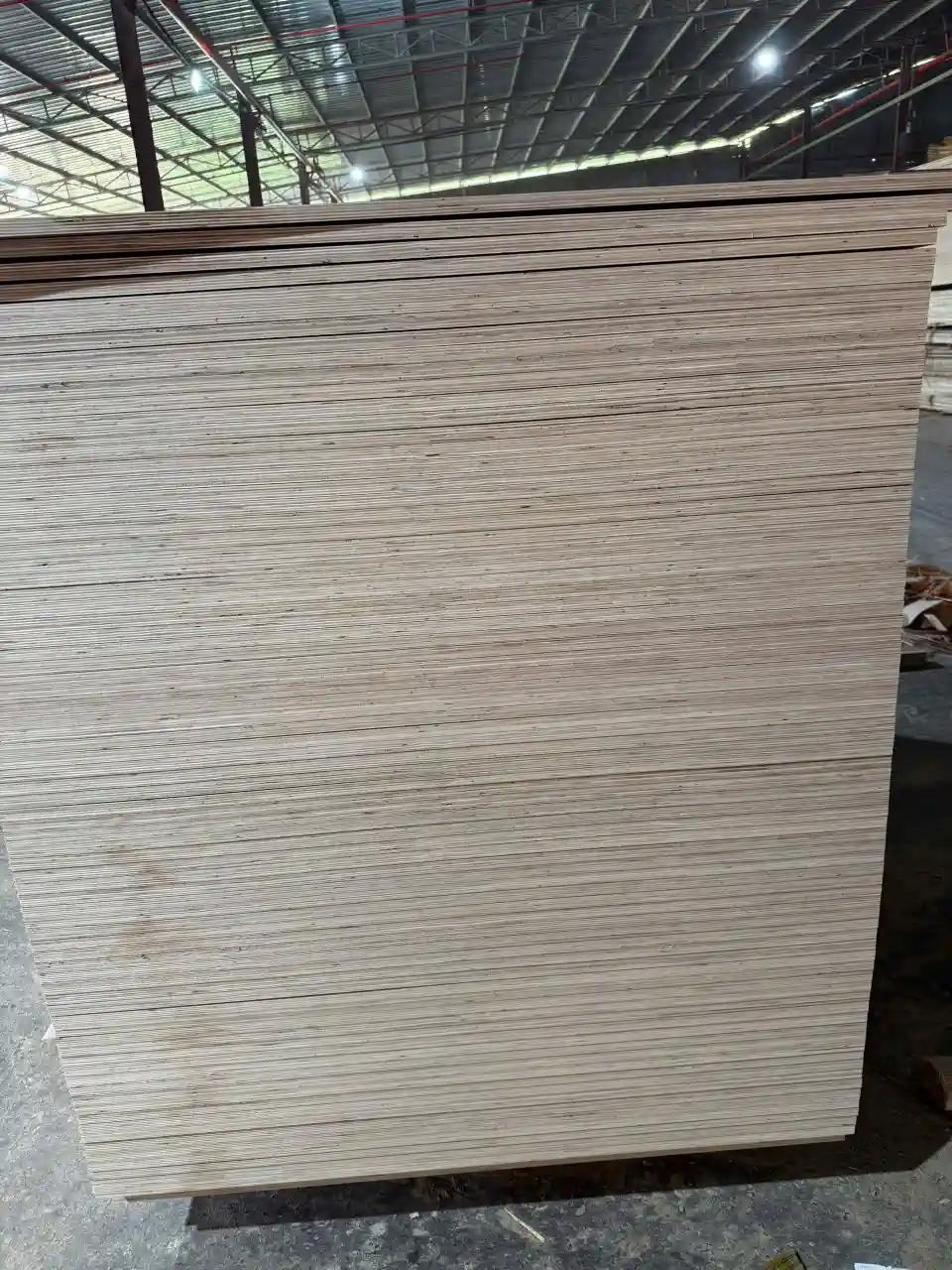
🏭 How HCPLY Manages Core Color for Export Orders
At HCPLY, the standard approach is specification-at-intake: when an order specifies a light face species (okoume, EV, poplar, birch), the production team assigns the order to Facility 1 (styrax/eucalyptus core, full stitched, E0) automatically — no buyer intervention required.
When buyers explicitly request acacia core with a light face for cost reasons, HCPLY applies Workarounds 1 and 2 (thicker face veneer + crossband construction), documents the specification in the production order, and provides a pre-shipment photo record for buyer review before container loading.
“We do not let a core-face mismatch reach the container without buyer approval of the specification,” Lucy confirmed. “Color show-through complaints are preventable at the order stage — not at the receiving dock.”
This is the operational difference between a factory with embedded QC and one without: systematic specification control versus post-production inspection.
See how HCPLY’s 3-stage QC process works from press to loading
Get a factory-direct quote with specification guidance → /contact/
📌 Conclusion
Acacia core’s dark color is a property, not a defect. For commercial, packing, film-faced, and dark-face plywood applications, it is the most cost-efficient choice Vietnam offers. The problem of color show-through arises only in a specific scenario: thin, light-colored face veneer (okoume, EV, poplar, birch) combined with acacia core and clear or natural finishing.
Five practical workarounds exist — from specifying thicker face veneer to switching to styrax core. The cleanest solution for premium furniture production is styrax; for mixed shipments, HCPLY can supply both core specifications in one container.
Specify correctly at the order stage, and acacia core delivers exactly what it promises: reliable, cost-effective structural performance with consistent 580 kg/m³ density and full export certification.
Request samples and specification guidance from HCPLY — factory-direct, no intermediary