

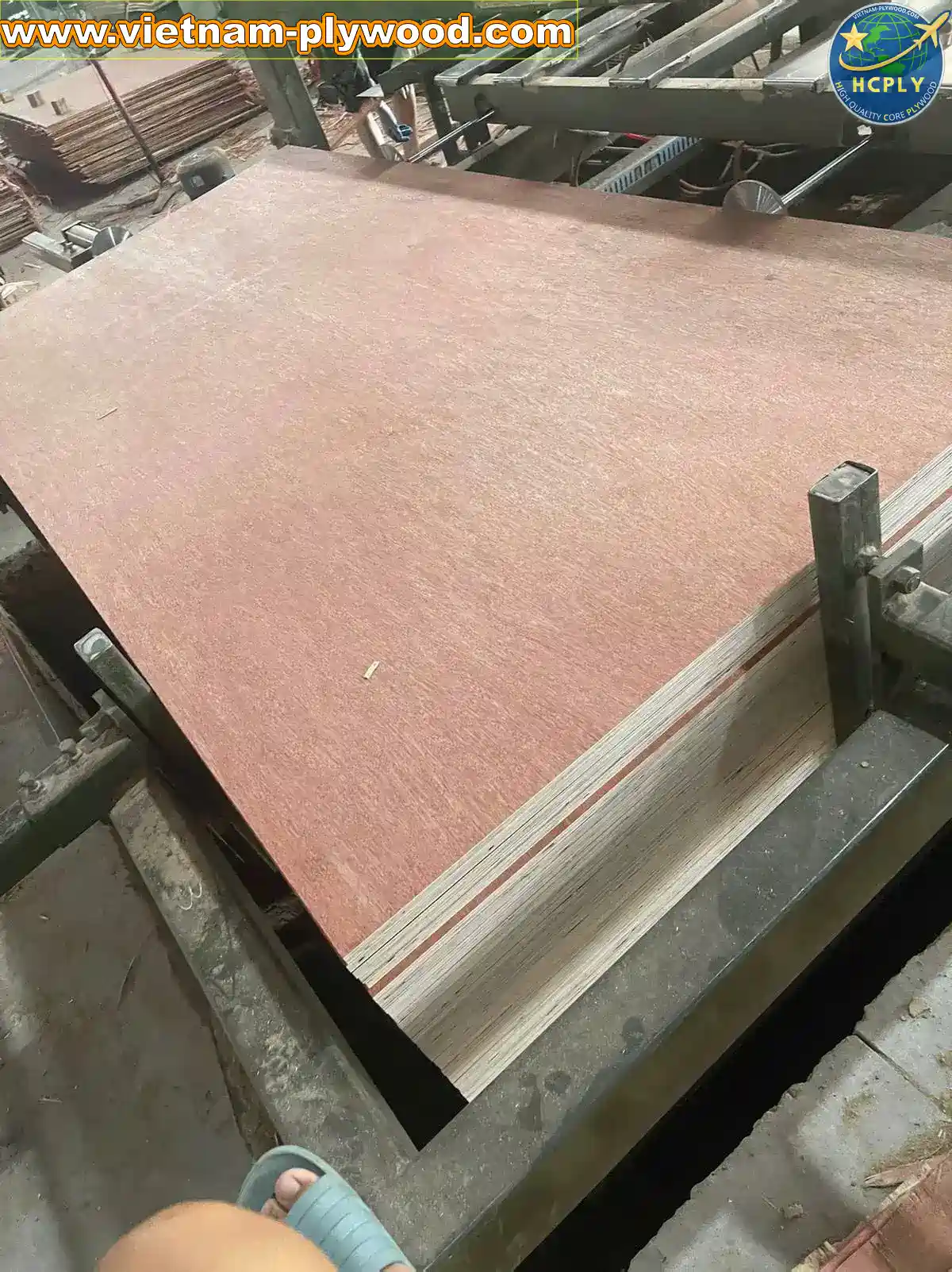
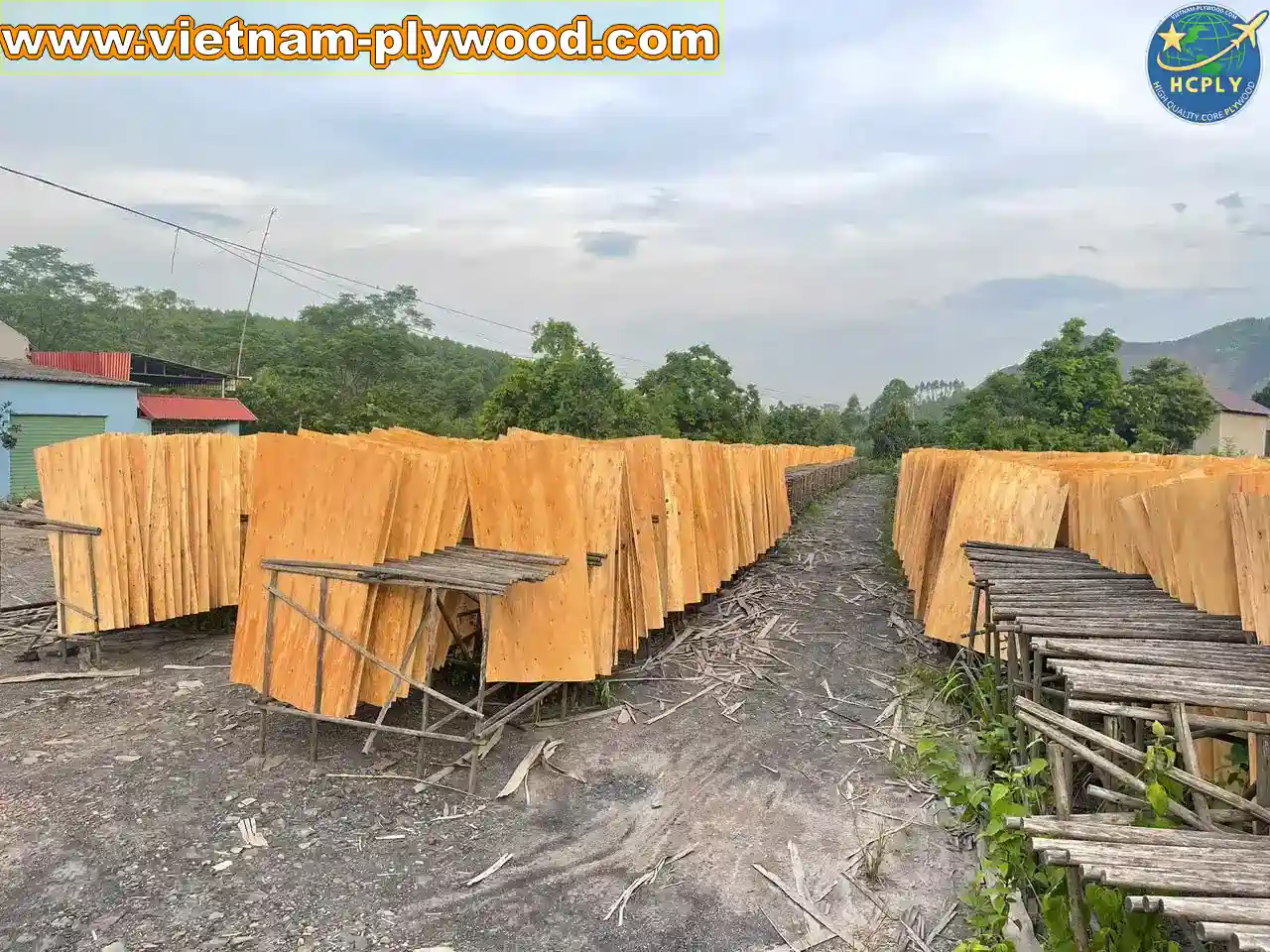

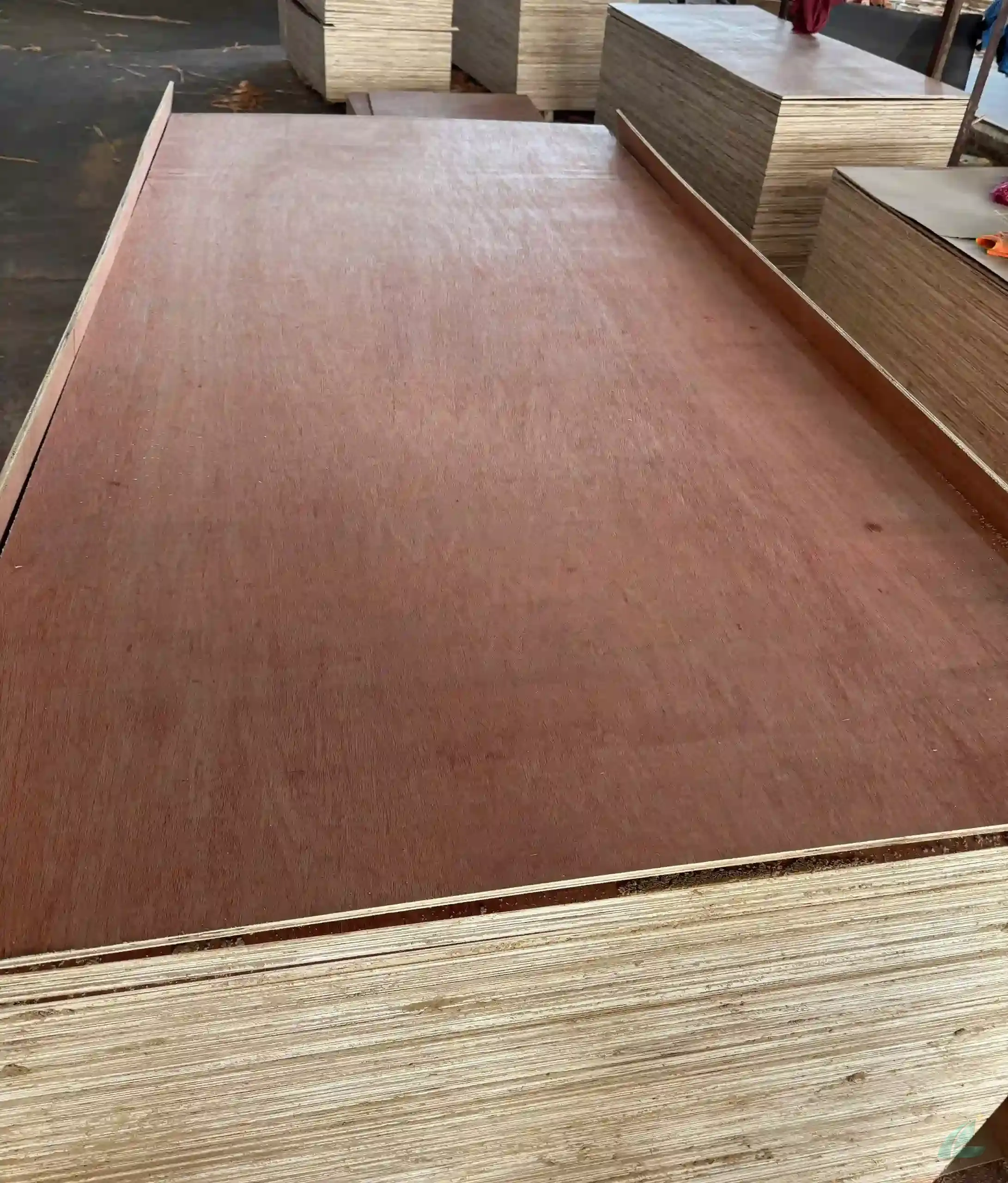
The face veneer on export furniture plywood from Vietnam is almost always 0.3mm thick. Not 0.2mm. Not 0.4mm. Exactly 0.3mm — and there are precise technical reasons behind that number.
Buyers who understand this specification negotiate faster, avoid quality disputes, and receive panels that integrate directly into their furniture production lines. Those who overlook it often receive plywood that either sands through during finishing or costs 8–12% more than necessary for the application.
This article explains the technical logic behind 0.3mm face veneer, which species suit which markets, how glue and emission interact with thickness, and what to include in your purchase order to get consistent panels from Vietnam factories.
📐 What Is 0.3mm Face Veneer Thickness?
Face veneer thickness refers to the rotary-peeled or sliced wood layer bonded to the outer surfaces of a plywood panel. It is the visible layer that determines color, grain pattern, and surface quality.
The production range for face veneer in Vietnam is 0.16–1.0mm, with 0.2–0.4mm being the dominant commercial range (HCPLY production data, 2026). The ANSI/HPVA HP-1 2020 standard (Decorative Hardwoods Association, USA) defines face veneer thickness minimums for hardwood plywood — with 0.2–0.6mm covering the range acceptable for graded furniture panels. Within that band, 0.3mm has become the de-facto standard for furniture-grade export plywood from Northern Vietnam factories.
The thickness matters for three reasons:
-
Sanding allowance. Furniture factories sand both faces during cabinet or board processing. A standard furniture sanding pass removes 0.10–0.15mm per face. At 0.3mm starting thickness, you retain 0.15–0.20mm of clean veneer after sanding — sufficient for lacquer adhesion and surface consistency. At 0.2mm, sanding risk is high; at 0.4mm, you pay for material that will be removed.
-
Core coverage. Thinner veneers at 0.2mm can telegraph core joint lines (visible seams where veneer strips meet) through to the surface under certain lighting conditions. At 0.3mm, core joints are fully masked even on rotary-cut veneer.
-
Cost efficiency. Face veneer cost scales with thickness. Upgrading from 0.3mm to 0.4mm adds roughly 3–5 USD/CBM to FOB price without a measurable quality benefit for standard interior furniture (HCPLY pricing data, 2026).
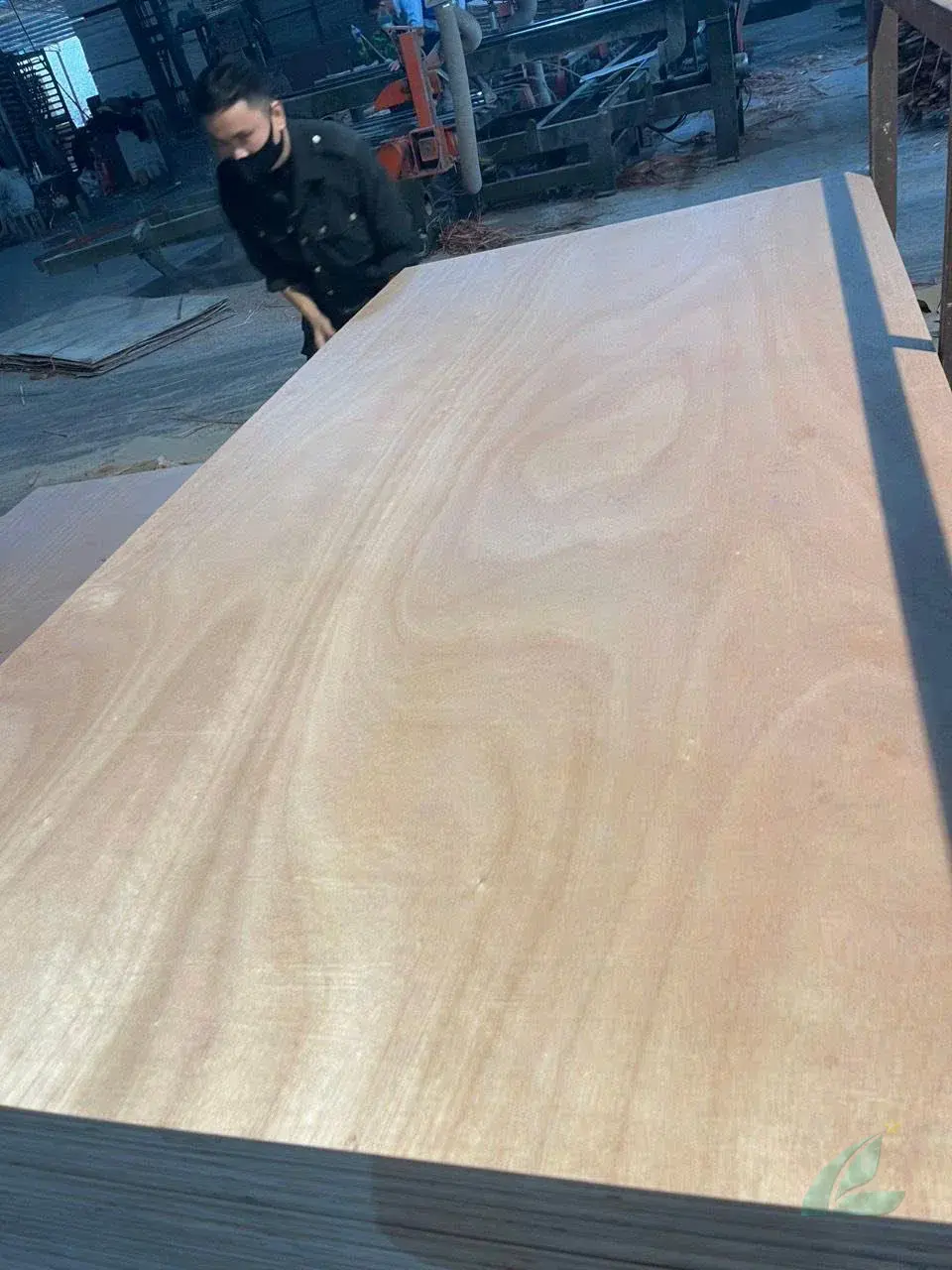
For detailed thickness data across the full production range, see the complete guide to plywood face veneer thickness.
🌿 Species Options for 0.3mm Face Veneer
Vietnam factories produce 0.3mm face plywood across 8+ face species. Each serves a different market and application segment.
📌 Okoume — European Furniture Standard
Okoume face veneer at 0.3mm is the benchmark for European flat-pack furniture importers. The light-pink, straight-grained surface accepts lacquer uniformly and presents no visible color variation between sheets within a production batch.
Typical spec: Okoume face (0.3mm) + styrax core + melamine (MR) glue + E1 or E0 emission. Sanded both faces to ±0.3mm tolerance. Size: 1250×2500mm for metric EU markets.
📌 Birch — Premium Furniture, Cabinets, and US Market
Birch face veneer is imported (Vietnam has no domestic birch supply), peeled to 0.3mm, and bonded to a styrax core. The cream-to-pale-yellow surface with fine, consistent grain is the specification for kitchen cabinets exported to the US and high-end furniture factories in Germany and Poland.
Birch face plywood from Vietnam is graded D/E/F — not A/B/C, which is a common point of confusion for first-time buyers (HCPLY export data, 2026). Grade D is the cleanest available from Vietnam-processed birch, with minor pin knots acceptable but no open defects.
For more on how Vietnam produces birch face plywood, see birch face veneer plywood from Vietnam.
📌 Bintangor — India, Southeast Asia, and Commercial Markets
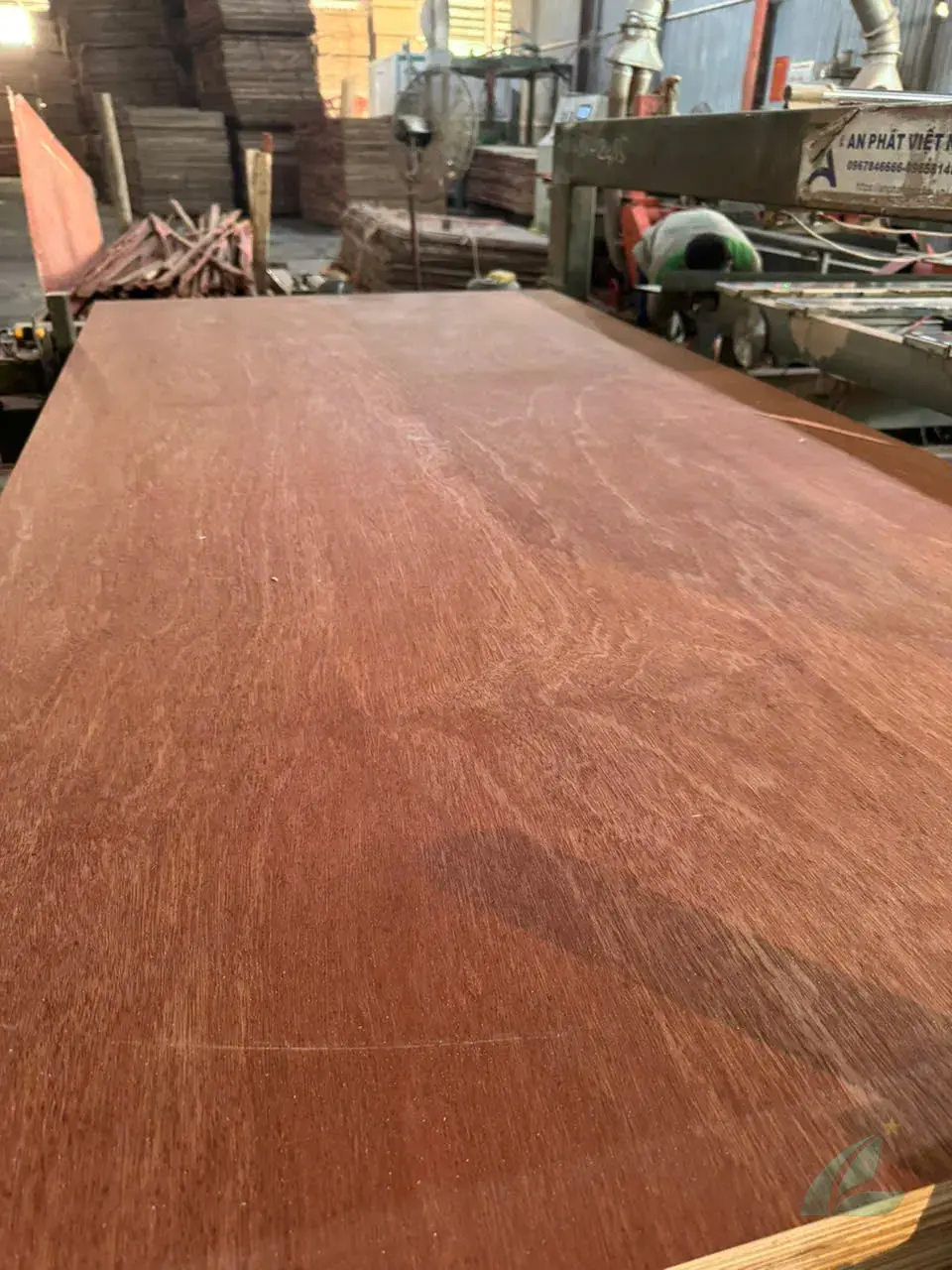
Bintangor at 0.3mm is the workhorse face veneer for India-bound furniture and commercial interior plywood. The reddish-brown surface is Grade A for visible furniture and Grade B for hidden structural panels.
Cost advantage over okoume: approximately 15–20% lower FOB price per CBM at equivalent thickness (HCPLY production data, 2026). This makes bintangor the preferred specification for large-volume Indian importers balancing appearance with price.
📌 EV (Engineered Veneer) — Cabinet Work and Modern Interiors
EV (Engineered Veneer) is reconstituted wood fiber, peeled and reconstituted to achieve perfectly uniform grain with no knots, color variation, or natural defects. At 0.3mm, it produces the most visually consistent furniture plywood available from Vietnam factories.
EV at 0.3mm is specified for flat-panel cabinet doors, drawer fronts, and built-in wardrobe panels where grain uniformity across an entire room installation matters. It pairs with styrax or eucalyptus core and E0 emission for high-end furniture export.
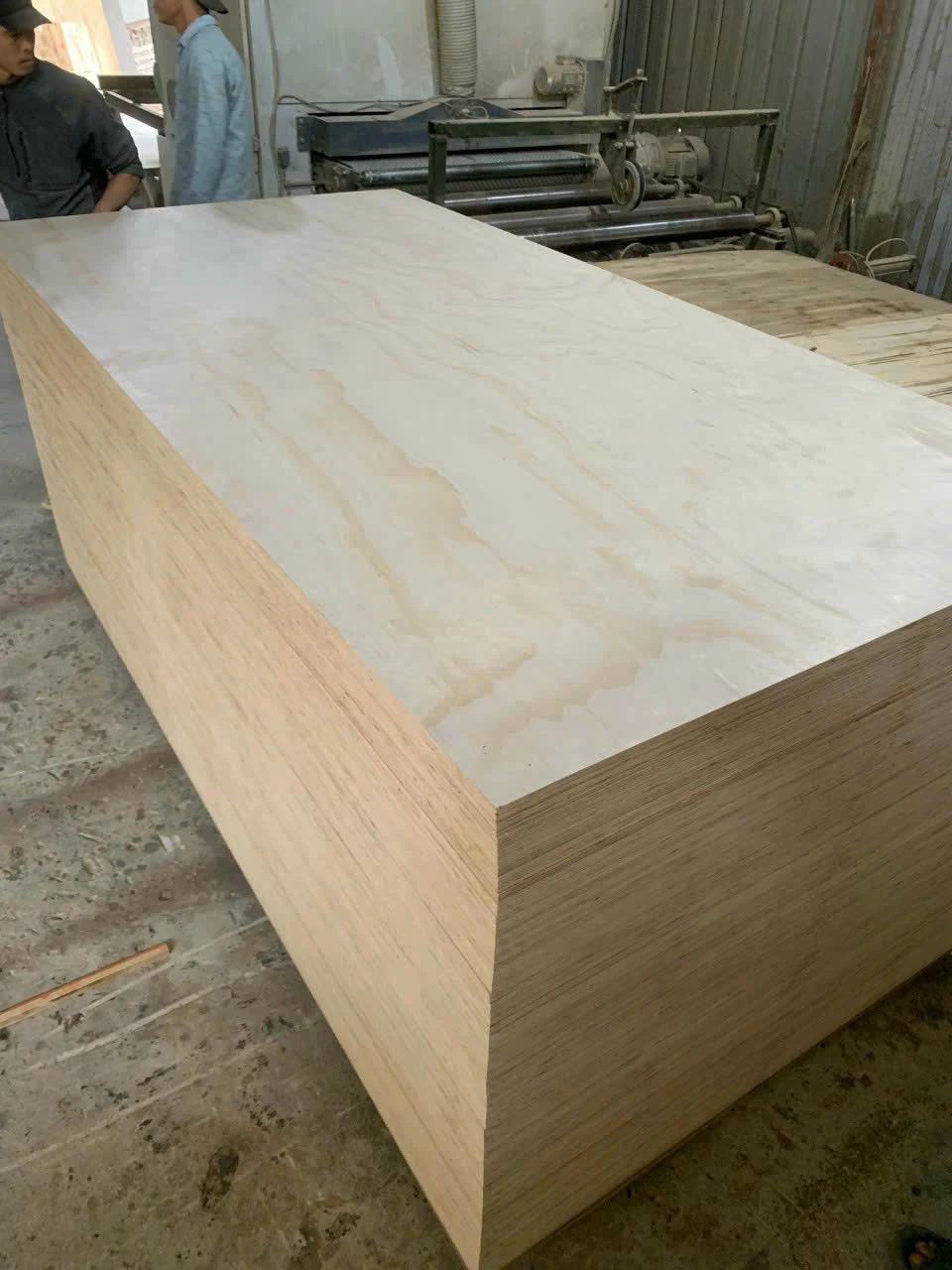
For a complete comparison of all face veneer species, see plywood face veneer types — complete buyer guide.
🔧 Core Species Pairing: What Goes Underneath the 0.3mm Face
The core species beneath the face veneer determines panel weight, strength, and edge appearance — all of which matter for furniture.
| Core | Density | Weight per 18mm 4×8 Sheet | Edge Color | Best For |
|---|---|---|---|---|
| Styrax | 480–500 kg/m³ | ~26 kg | White/pale | Premium furniture, lightweight cabinets |
| Acacia | ~580 kg/m³ | ~30 kg | Dark brown | Budget commercial, packing |
| Eucalyptus | 650–750 kg/m³ | ~36 kg | Light yellow | Heavy-duty furniture, structural |
Styrax is the standard pairing for 0.3mm furniture face veneer. Three reasons: it is the lightest core (furniture factories handle hundreds of panels per day — weight matters), it is pale-colored so dark edge lines do not appear at mitred joints, and it holds face bonding uniformly with melamine glue.
“Styrax core is what makes Vietnamese furniture plywood competitive against European birch-core panels on weight and price. We specify full stitched construction for furniture clients — no gaps, no overlaps, consistent panel flatness across the full sheet.” — Lucy, International Sales Manager, HCPLY
Eucalyptus core at 0.3mm face is specified for applications requiring higher panel rigidity — commercial shelving, structural cabinet carcasses, or furniture exported to markets with weight-bearing specification requirements (Australia, Japan).
For detailed core species comparison, see plywood core types — acacia vs eucalyptus vs styrax.
💧 Glue and Emission: Specifying Correctly for Furniture
This is the single most common specification error in furniture plywood orders from Vietnam: confusing glue type with emission standard. They are separate specifications and must be ordered separately.
Glue type (water resistance):
- Melamine (MR): Passes 12-hour boiling test. Standard for indoor furniture. All furniture-grade 0.3mm plywood uses MR glue.
- Phenolic (WBP): Passes 72-hour boiling test. Used for construction and marine. Not typically used for furniture face veneer panels.
Emission standard (formaldehyde):
- E0 / CARB P2: ≤0.5 mg/L. Required for US, Japanese, and Korean furniture imports. European high-end furniture specifications. (California Air Resources Board ATCM for Composite Wood Products, 2024)
- E1: ≤1.5 mg/L. Acceptable for standard EU furniture markets and most Asian markets. (EN 717-1, European Standard)
- E2: ≤5.0 mg/L. Budget grade, not suitable for interior furniture in regulated markets.
For furniture with 0.3mm face veneer exported to the US or Japan, the correct spec is: Glue: Melamine (MR). Emission: E0 (CARB P2). Not “E0 glue” — E0 is an emission class, not a glue type. This distinction prevents costly specification errors on purchase orders.
⚠️ Important: European buyers importing furniture plywood from 2025 onward must confirm EUDR compliance (EU Deforestation Regulation). HCPLY holds EUDR-compliant documentation for all face veneer species supplied to EU customers.
For the full explanation of glue vs emission specifications, see plywood glue types and emission standards guide.
✅ Sanding: Why It Is Non-Negotiable for 0.3mm Furniture Face
All furniture-grade plywood with 0.3mm face veneer leaves the factory sanded. This is not optional — it is a production requirement.
The sanding sequence for furniture-grade panels at HCPLY facilities:
- Calibration sanding: Wide-belt sander set to target thickness (±0.3mm tolerance)
- Finish sanding: Fine-grit pass for surface smoothness
- QC check: Moisture content (target 8–12%), edge inspection, surface flatness
After sanding, the face veneer retains approximately 0.15–0.20mm of material — enough for lacquer or paint adhesion without sanding through.
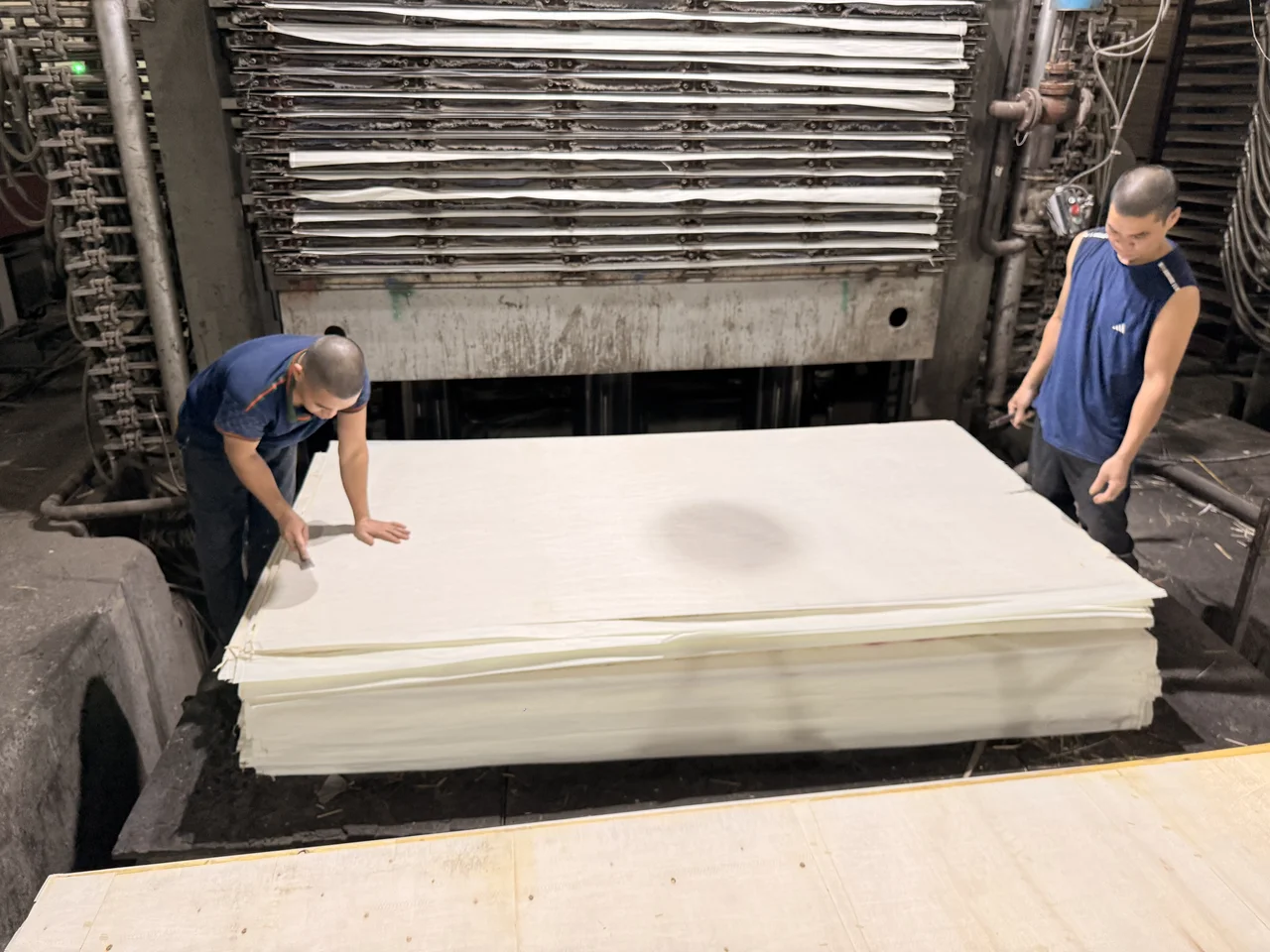
The QC team measures panel thickness at multiple points after each sanding pass. A consistent caliper reading across the full 1220×2440mm sheet confirms the sanding line is calibrated within tolerance. Any sheet outside ±0.3mm is removed from the batch before packing.
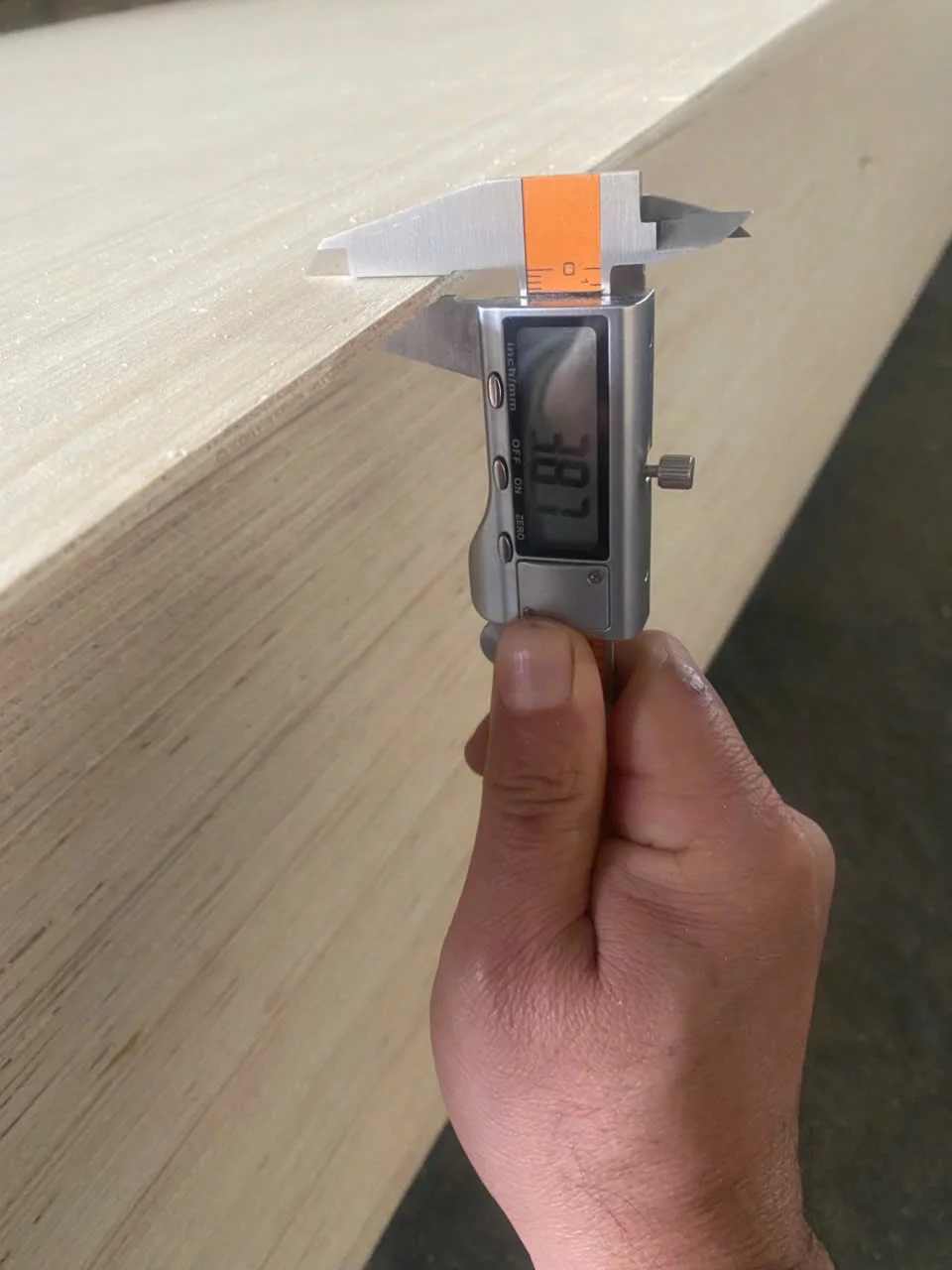
Why does sanding matter for thickness spec? Because factories can only sand to what is there. If a buyer orders 0.2mm face veneer and expects a sanded panel, there is insufficient material to calibrate without risk of burning through. This is why 0.3mm is the minimum specified thickness for sanded furniture-grade panels from Vietnam factories.
For full sanding decision criteria, see sanded vs unsanded plywood — when to choose.
Get a Free Quote for 0.3mm Furniture Plywood from HCPLY
📋 How to Write the Purchase Order Specification
A purchase order for 0.3mm veneer face furniture plywood from Vietnam should include:
Face veneer: [Species] — 0.3mm — Grade [A/B or D/E for birch]
Core: [Styrax / Eucalyptus / Acacia] — full stitched
Glue: Melamine (MR)
Emission: E0 (CARB P2) / E1 [choose market requirement]
Thickness: [9/12/15/18mm] ±0.3mm
Size: 1220×2440mm or 1250×2500mm
Sanding: Both faces, calibrated
Certification: FSC / CARB P2 / CE [as required by market]
💡 Tip: Specify “full stitched core construction” for premium furniture applications. This eliminates internal gaps and overlaps that cause surface dimpling after lacquering. Budget grade “loose-laid” core is only acceptable for packing and commercial plywood — not furniture face panels.
The MOQ from HCPLY is 1 × 40HC container. Mixed species in one container is available — buyers can combine okoume face 12mm and birch face 18mm panels in a single shipment if total CBM fits the container capacity for the core type selected.
📊 Market Applications by Face Species at 0.3mm
| Market | Preferred 0.3mm Face | Core | Emission | Why |
|---|---|---|---|---|
| Europe (furniture) | Okoume, EV | Styrax | E0/E1 | Clean grain, uniform, FSC required |
| US (cabinets) | Birch D/E | Styrax | E0 (CARB P2) | White grain, cabinet grade, CARB required |
| India (furniture) | Bintangor A/B, Gurjan | Acacia/Eucalyptus | E1/E2 | Cost-sensitive, preferred local aesthetics |
| Korea/Japan | Birch, Okoume, EV | Styrax/Eucalyptus | E0 | Strict quality requirements |
| Middle East | Bintangor, EV | Acacia/Styrax | E1 | Commercial furniture, construction fit-out |
| Australia | Okoume, Pine | Eucalyptus | E0/E1 | AS/NZS structural + furniture |
This table reflects HCPLY export order data from 50+ countries as of 2026. Market preferences shift with regulations — for up-to-date import compliance requirements, see the plywood certifications and export documentation guide.
✅ Conclusion: Specifying 0.3mm Face Veneer Correctly Saves Money
The 0.3mm face veneer is the furniture industry’s answer to a precise engineering question: what is the minimum thickness that survives factory sanding, covers core joints visually, and does not add unnecessary material cost?
The answer has been 0.3mm across Vietnam’s export furniture plywood industry for the past decade — for okoume, birch, EV, bintangor, and every other face species used in furniture production.
Getting the full specification right — species, core, glue, emission, sanding — determines whether a container of plywood integrates directly into a furniture production line or sits in a dispute resolution queue. HCPLY supplies factory-direct 0.3mm furniture plywood to buyers in 50+ countries, with full on-site QC documentation available for every batch.
Contact HCPLY Now for 0.3mm Face Veneer Furniture Plywood Specifications — free sample sheets available on request. No commitment required.
For related specification guides, see plywood face veneer types — complete buyer guide and furniture plywood specification guide for importers.