

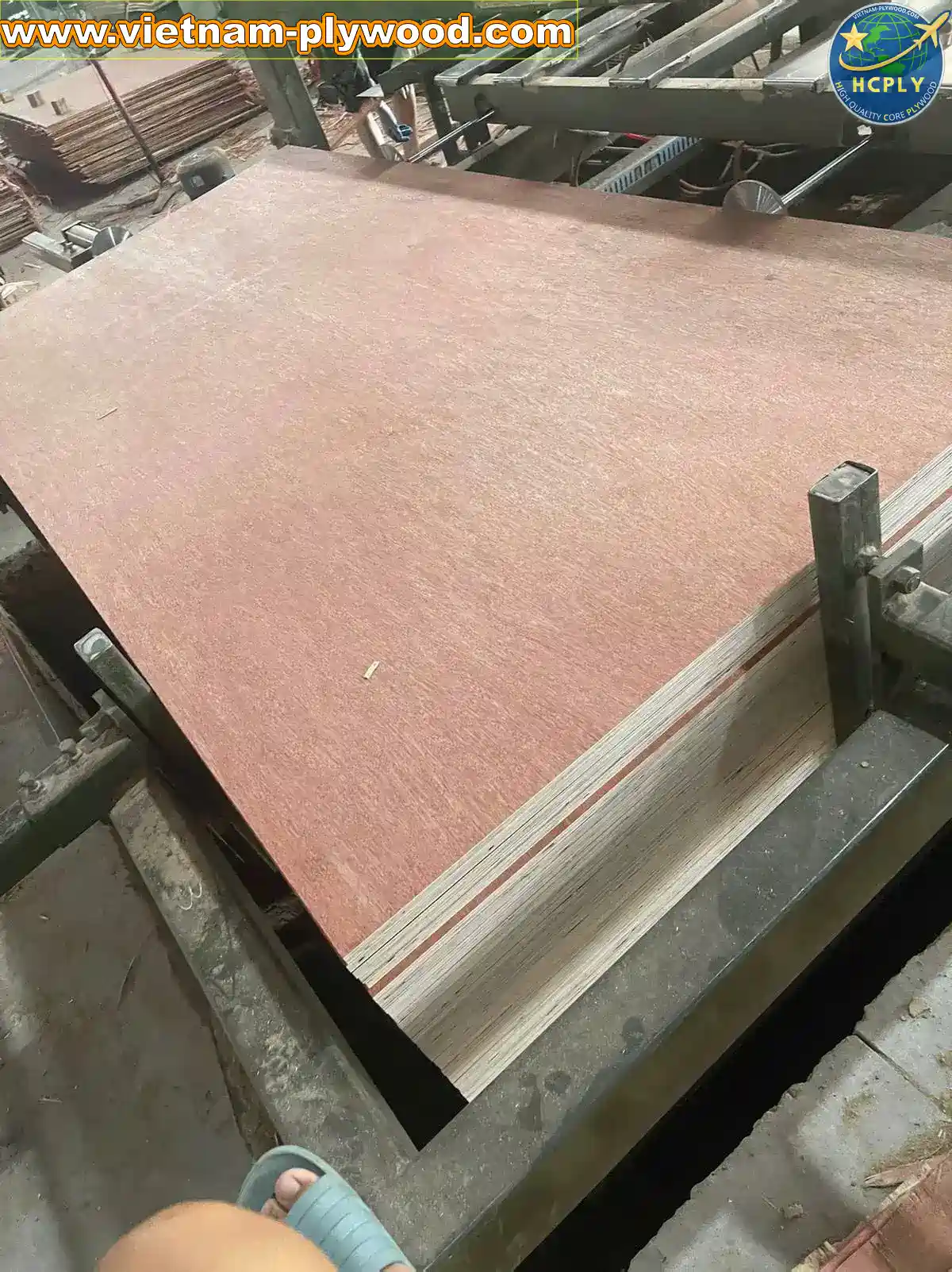
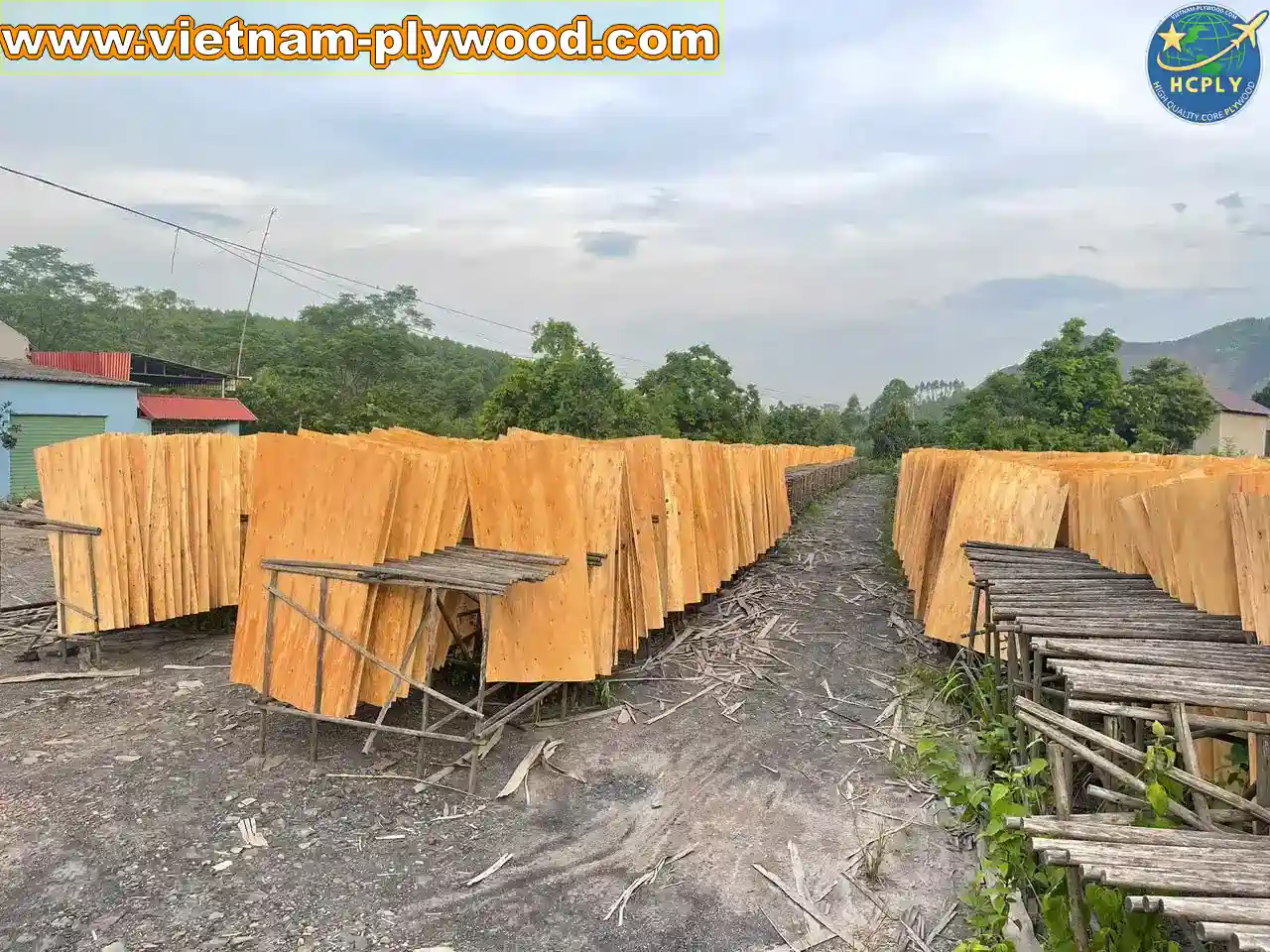

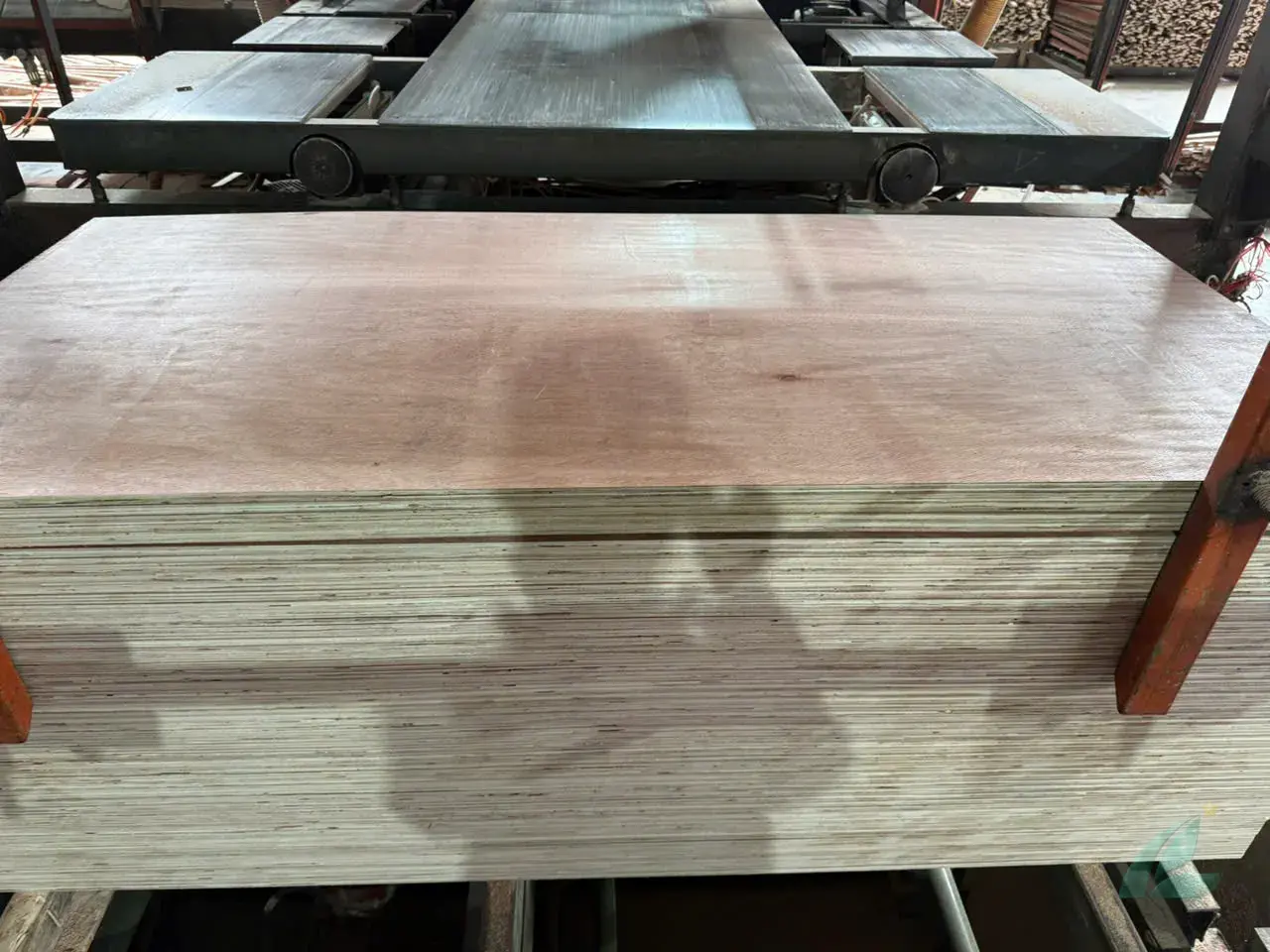
The thinnest standard face veneer in Vietnamese plywood production is 0.2mm. That number appears quietly on spec sheets, but it carries major implications: it tells you the product segment, the price range, and exactly what the panel is designed to do.
For buyers sourcing packing grade or cost-sensitive commercial plywood from Vietnam, 0.2mm face veneer is not a compromise — it is the right specification for the job. The problems start when buyers apply a furniture-grade mindset to packing-grade panels, or when suppliers use vague language that blurs those distinctions.
This guide explains what 0.2mm face veneer means technically, which applications it suits, which it does not, and how to specify correctly when ordering from a Vietnam factory.
📋 What Does 0.2mm Face Veneer Actually Mean?
Face veneer thickness is the measurement of the outermost wood layer bonded to a plywood core. In Vietnam, factory production runs face veneers across a range of 0.2–1.0mm, with the most common range being 0.2–0.4mm for exported panels (HCPLY production data, 2026).
At 0.2mm, the face layer is approximately the weight of two sheets of heavy cardstock. It is thin enough that it cannot be sanded after bonding — any sanding wheel would cut through it. This single fact determines the entire use-case profile for 0.2mm face plywood.
Key technical distinction: Face veneer thickness is completely independent of:
- Core species (acacia, eucalyptus, styrax)
- Panel thickness (3mm–40mm)
- Glue type (Melamine MR or Phenolic WBP)
- Emission standard (E0, E1, E2)
A 0.2mm bintangor face can sit on a 3mm panel or an 18mm panel. The face thickness determines surface quality; the core and glue determine structural performance.
💡 Tip: When receiving a quotation from any Vietnam supplier, always ask for face veneer thickness explicitly. Suppliers sometimes list only “bintangor face” without specifying 0.2mm vs 0.3mm. That gap is worth 8–15% in price and the difference between a surface that is paintable vs one that can be lightly sanded.
📦 Applications Where 0.2mm Face Is Correct
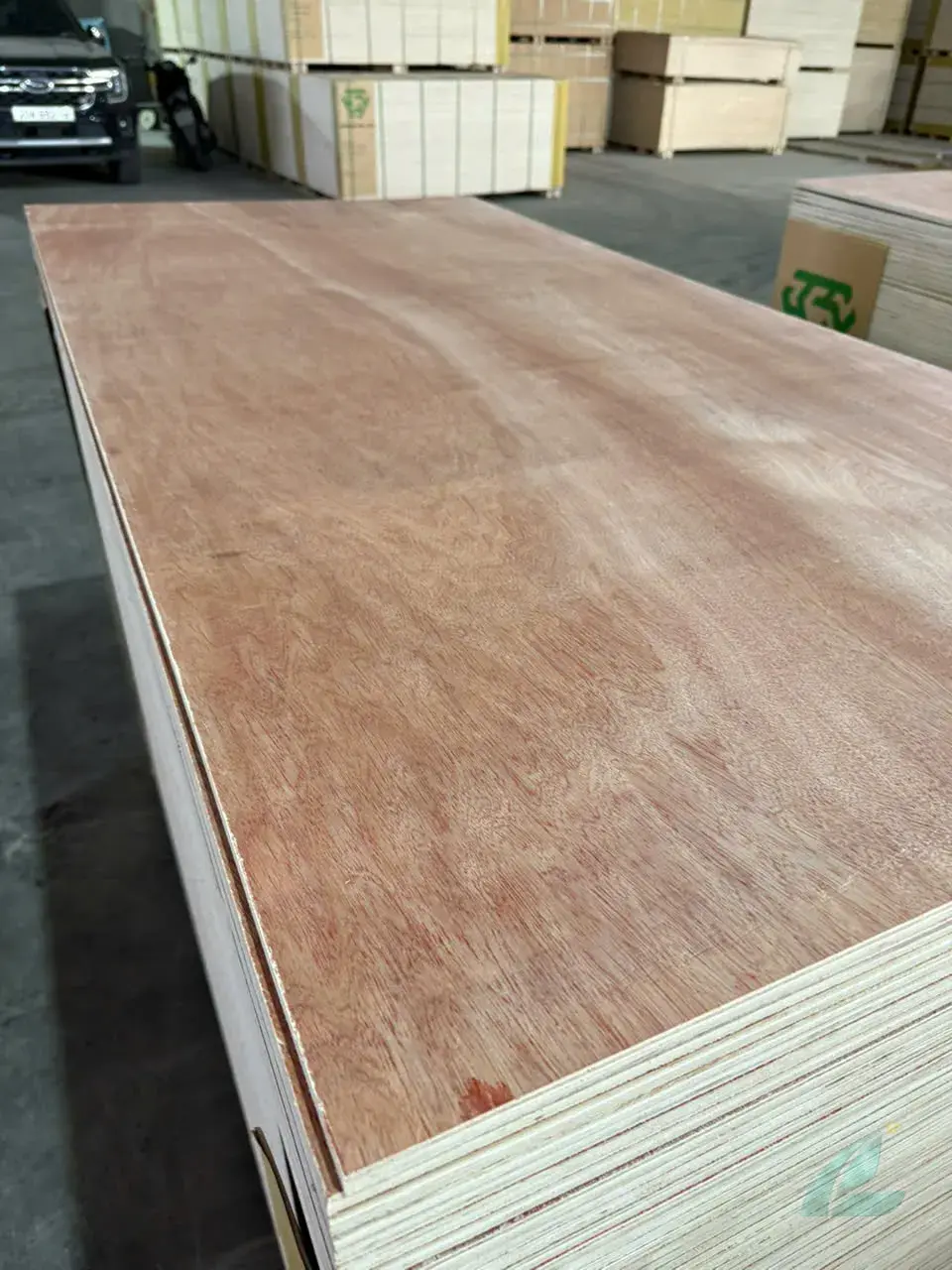
0.2mm face veneer is the industry standard for two product categories from Vietnamese factories.
📌 Packing Grade Plywood
Packing plywood — used for export crates, pallets, wooden boxes, and internal dunnage — has zero requirement for surface aesthetics. The face veneer exists only to close the surface against the core, add minimal impact resistance, and prevent edge splitting during handling.
For this application, 0.2mm bintangor (C/D grade) or 0.2mm mixed tropical face is the correct specification. Using a thicker, costlier face veneer on packing plywood wastes material for zero functional gain. Vietnam is the world’s third-largest plywood exporter, with packing and commercial grade panels representing a significant share of annual exports (Vietnam Timber and Forest Products Association, VIFORES, 2025). The technical reference data confirms: packing plywood uses bintangor C/D face with acacia core, unsanded, E2 or E1 emission standard (HCPLY technical reference, 2026).
Typical packing grade specification:
| Parameter | Value |
|---|---|
| Face | Bintangor C/D or Poplar — 0.2mm |
| Core | Acacia (~580 kg/m³) |
| Glue | Melamine (MR) |
| Emission | E2 (standard) or E1 (on request) |
| Sanding | None |
| Thickness | 4–18mm |
| Sheet size | 1220×2440mm |
📌 Budget Commercial Plywood
“Commercial plywood” is a broad category. In Vietnam factory language, it covers panels used for interior fitout, shopfitting, utility shelving, door cores, and light-duty furniture components where surface appearance is secondary to cost.
At 0.2mm face thickness, commercial panels can be painted, covered with HPL laminate, or wrapped with PVC film. They cannot be stained to showcase grain, and they cannot tolerate abrasive finishing. This makes them suited for:
- Display unit backs and partitions
- Shelving that will be painted or laminated
- Door skins for hollow-core or solid-core flush doors
- Utility drawer boxes in commercial kitchens
- Interior crate liners and packaging inserts
“When buyers specify commercial plywood without confirming face thickness, we send a sample showing both 0.2mm and 0.3mm before confirming the order. The price difference is real, and the right choice depends entirely on the surface treatment they plan.” — Lucy, International Sales Manager, HCPLY
🔧 Face Veneer Species at 0.2mm Thickness
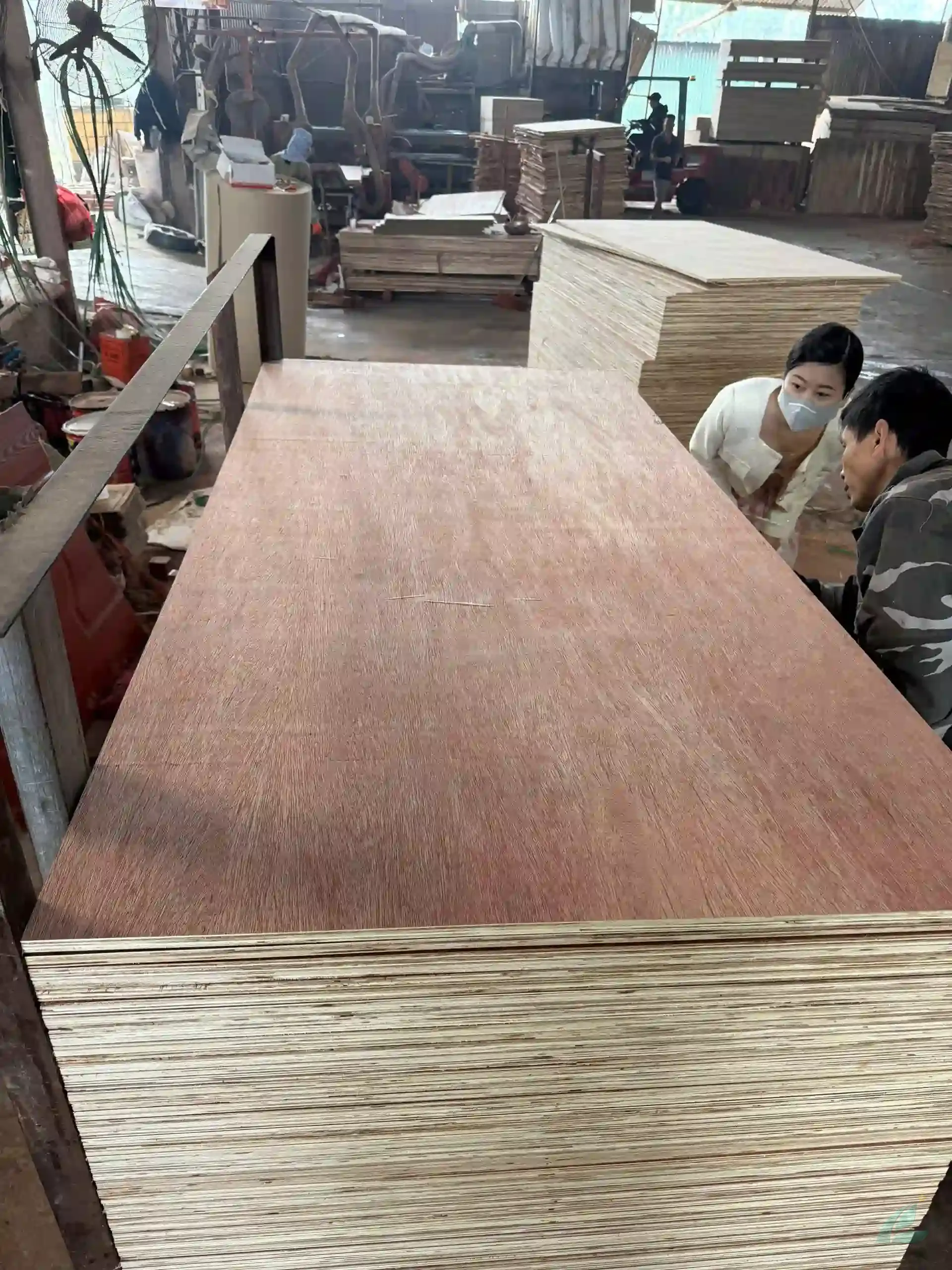
Not all face species are produced at 0.2mm thickness. Species choice and face thickness are correlated by application segment in Vietnamese manufacturing.
Species typically available at 0.2mm:
| Species | Appearance | Use Case |
|---|---|---|
| Bintangor (C/D) | Reddish-brown, grain visible, minor defects allowed | Packing, budget commercial |
| Poplar | Pale white/cream, light grain | Packing, white-faced commercial |
| Eucalyptus | Light yellow-green, may show knots | Budget commercial, utility |
| Mixed tropical | Variable — supplier discretion | Packing only |
Species NOT typically available at 0.2mm:
| Species | Reason |
|---|---|
| Birch (D/E/F grade) | Imported, premium — factories use 0.3–0.6mm minimum |
| Okoume | Export premium — 0.3–0.4mm standard |
| Gurjan | Indian market spec — 0.3–0.4mm minimum |
| EV (Engineered Veneer) | Precision substrate — 0.3mm standard |
The reason premium species start at 0.3mm is both practical and commercial: they are imported (birch) or higher-cost plantation material, and factories allocate them to applications where the face quality justifies the price. At 0.2mm, birch face would show through-grain irregularities and would not survive any downstream surface processing by the buyer’s workshop. International hardwood veneer grading standards note that commercially graded decorative veneers typically start at 0.3mm to allow for backing and finishing operations (Hardwood Plywood & Veneer Association, HPVA, 2023).
For a full breakdown of all face veneer species from Vietnam, see our guide to plywood face veneer types and selection.
📊 0.2mm vs 0.3mm vs 0.4mm Face: Side-by-Side
Understanding the commercial distinction between face thicknesses helps buyers specify correctly and avoid over-paying or under-specifying.
| Feature | 0.2mm | 0.3mm | 0.4mm |
|---|---|---|---|
| Sanding possible | No | Light only | Yes — full calibration |
| Stain/grain show | Low | Moderate | High |
| Paint bond | Good | Good | Good |
| HPL laminate bond | Good | Good | Good |
| Relative price | Base | +5–10% | +12–20% |
| Typical segment | Packing / utility | Commercial / light furniture | Furniture / cabinet |
| Defect tolerance | C/D — minor repairs allowed | B/C or A/B | A/B, tight |
⚠️ Important: These price differentials are for the face only. Core species (acacia vs eucalyptus vs styrax) has a much larger impact on total panel cost than face thickness. A 0.2mm bintangor face on eucalyptus core will cost more than a 0.3mm bintangor face on acacia core.
For more on how core species drives cost and weight, see plywood core types: acacia vs eucalyptus vs styrax.
🏭 Which Factory Segment Produces 0.2mm Face Panels?
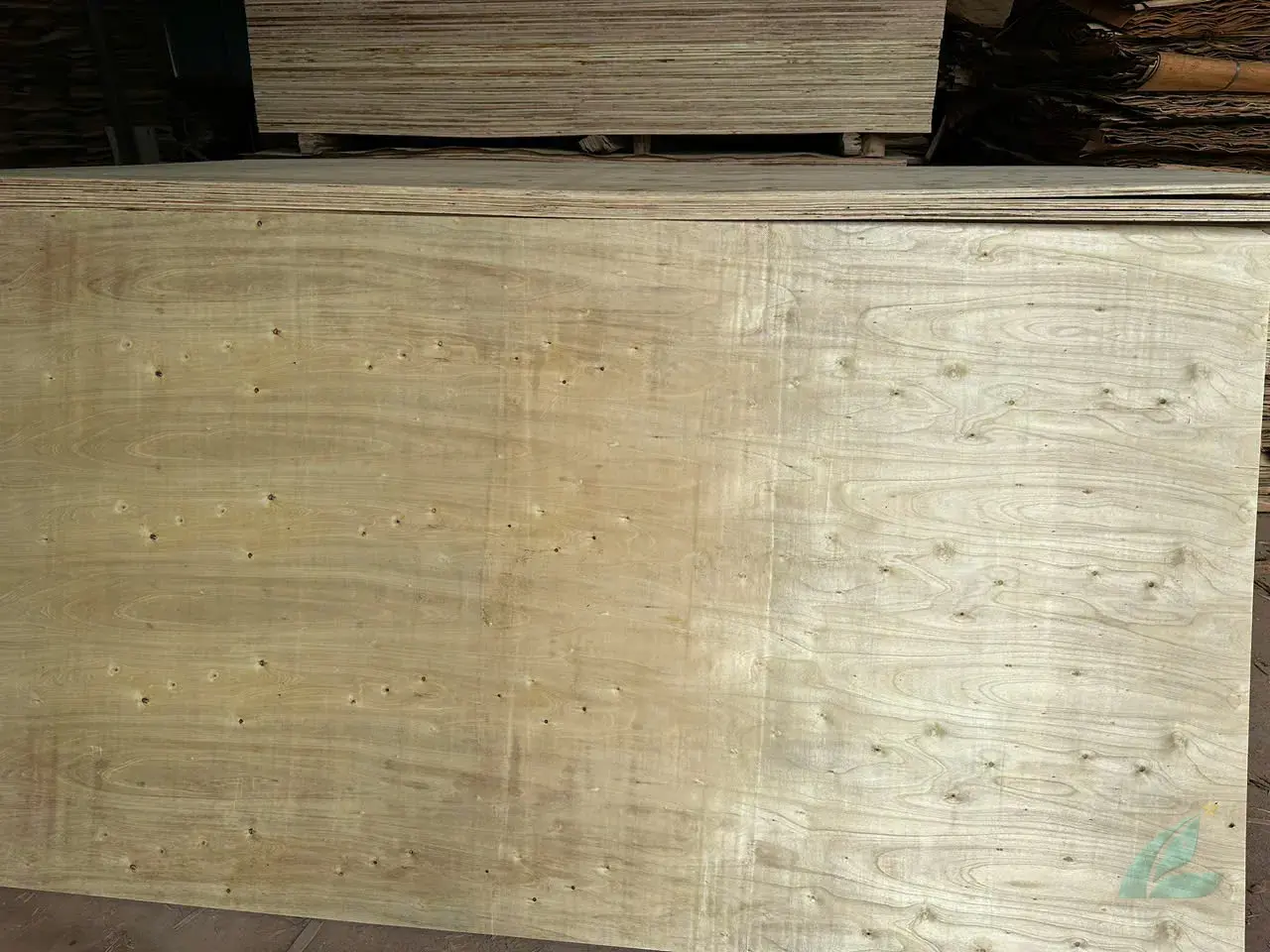
Vietnam’s plywood industry is segmented by factory type — and this matters for buyers because 0.2mm face panels come exclusively from commercial/packing-grade production lines, not furniture-grade facilities.
Factory Segment B (Commercial/Packing) produces 0.2mm face panels:
- Core: Acacia primary, loose-laid or edge-jointed construction
- Face: Bintangor, poplar — unsanded
- Certifications: Limited — basic export docs (CO, Phyto, Fumigation). FSC available on request at HCPLY
- Markets: Southeast Asia, South Asia, Middle East (budget segment), Africa
Factory Segment A (Furniture/Premium) does NOT produce 0.2mm face panels:
- These lines use 0.3–0.6mm face veneer for birch, okoume, EV, gurjan
- Full stitched core construction
- E0/CARB P2 certified
- Not cost-competitive for packing or utility commercial applications
HCPLY manages both segments through dedicated production facilities. Packing and budget commercial orders route to Facility 2 (commercial/packing-specialized), while premium furniture orders route to Facility 1 (HCPLY production documentation, 2026). This segmentation ensures cost-appropriate pricing — buyers are not subsidizing furniture-grade QC infrastructure when they order packing plywood.
For context on factory segmentation, see Vietnam plywood factory types and industry segmentation.
📐 Thickness Options for 0.2mm Face Panels
Panel thickness is independent of face thickness. The 0.2mm face is bonded to whatever core stack delivers the target panel thickness. For packing and commercial use, the most common panel thicknesses are:
| Panel Thickness | Typical Use |
|---|---|
| 4mm | Light-duty packing inserts, thin dividers |
| 6mm | Crate linings, backing panels |
| 9mm | Utility shelving backs, pallet topsheets |
| 12mm | Crate sides, door skins, shopfit panels |
| 15mm | Structural packing, heavier crates |
| 18mm | Pallets, heavy load crating |
Sheet size standard: 1220×2440mm (4×8ft). Custom cutting available from HCPLY. For the full sizing reference including metric (1250×2500mm) options, see plywood sizes and thickness specifications.
🔗 Ordering 0.2mm Face Plywood from Vietnam
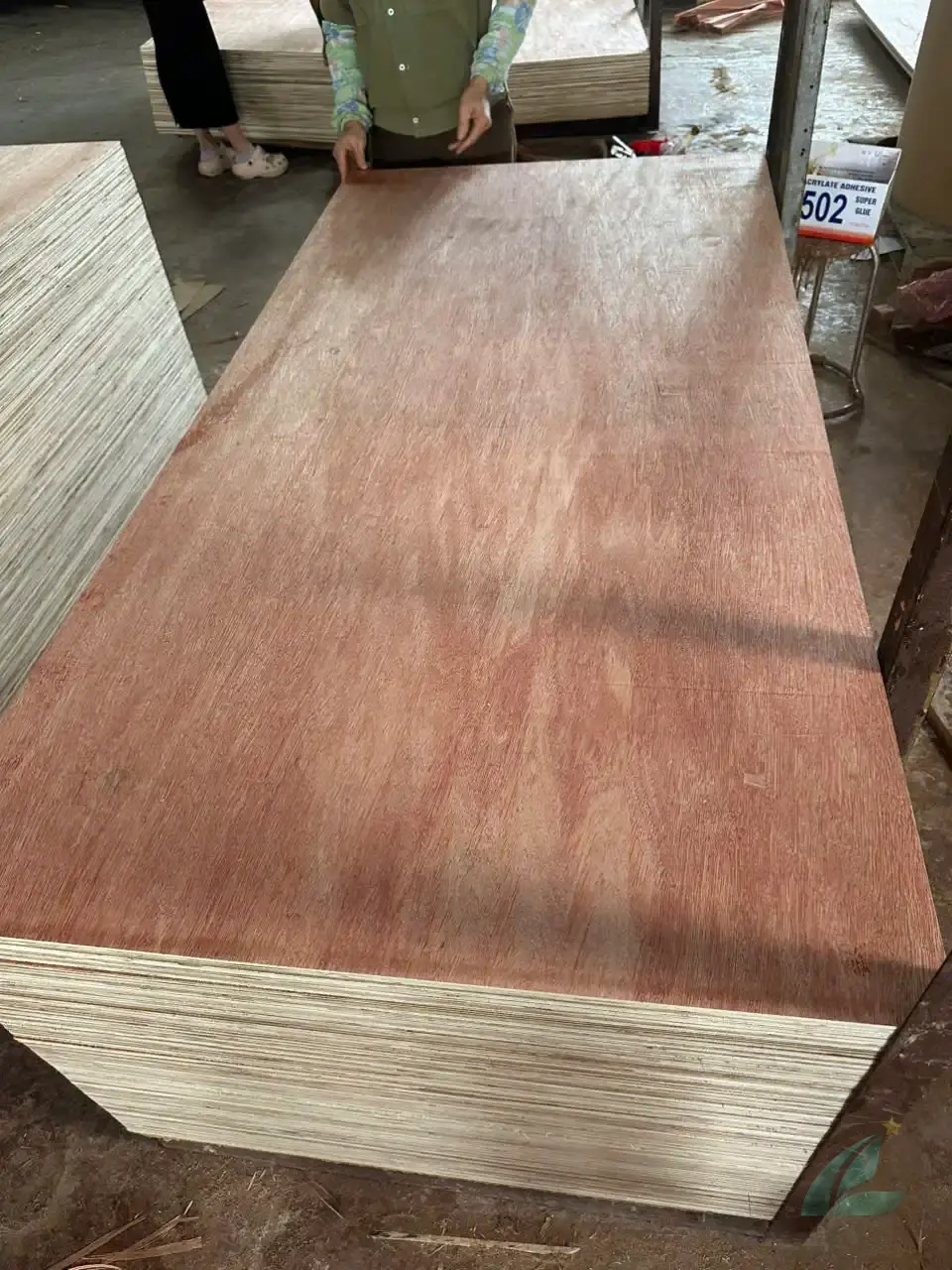
A correctly specified purchase order for 0.2mm face plywood should include all of these parameters:
Mandatory spec fields:
- Face species: Bintangor C/D (most common) or Poplar
- Face thickness: 0.2mm (state explicitly)
- Core species: Acacia (standard for packing) or Eucalyptus (stronger, heavier)
- Panel thickness: e.g., 12mm, 15mm, 18mm
- Sheet size: 1220×2440mm or 1250×2500mm
- Glue type: Melamine (MR) for most applications; Phenolic (WBP) only if moisture exposure expected
- Emission standard: E2 (packing) or E1 (commercial/light interior)
- Sanding: None (mandatory — 0.2mm cannot be sanded)
- Certification: FSC if required; standard export docs included (CO, Phyto, B/L)
- MOQ: 1 × 40HC container
Container loading note: With acacia core packing plywood, expect 16 pallets per 40HC (approximately 47.5 CBM, approximately 27.5 MT). Mixed thickness orders recalculate automatically (HCPLY production data, 2026). For container packing calculations, use the plywood container packing guide.
Ready to get a price? Get a Free Quote for Packing or Commercial Plywood
✅ Common Mistakes Buyers Make with Face Veneer Thickness
Three specification errors appear repeatedly when importers source commercial and packing plywood from Vietnam:
Mistake 1: Assuming “bintangor face” means standard thickness. Bintangor comes in A/B grade (0.3–0.4mm, sanded finish, furniture use) and C/D grade (0.2mm, unsanded, packing/commercial use). The grade drives the thickness. Always state both the species and the grade when ordering.
Mistake 2: Requesting sanding on 0.2mm face. Some buyers add “lightly sanded” to a packing grade order expecting a cleaner surface. The factory will attempt it; the face veneer may sand through. Either specify 0.3mm minimum for any sanding, or accept unsanded and plan downstream surface treatment at your end.
Mistake 3: Comparing 0.2mm commercial prices against furniture panel prices. A bintangor C/D, 0.2mm face, acacia core, E2, unsanded panel should not be price-compared against a bintangor A/B, 0.3mm face, styrax core, E0, sanded panel. They are different products. If a supplier quotes both at the same price, investigate which specification they are actually producing.
📦 Packing Plywood Product Range from HCPLY
HCPLY’s commercial facility produces a full range of 0.2mm face packing and commercial panels:
- Packing Plywood Vietnam — bintangor C/D or poplar face, acacia/styrax core, MR glue, 4–18mm. Standard export grade, FOB Hai Phong.
- Bintangor Plywood Vietnam — available in both A/B grade (furniture) and C/D grade (commercial/packing). Multiple core options, E1/E2, MR glue.
Both products ship with full export documentation: Certificate of Origin, Phytosanitary Certificate, Fumigation Certificate, and Bill of Lading. FSC certification available on request.
Contact HCPLY for samples and pricing. Contact HCPLY Now
🔍 Summary: Is 0.2mm Face Right for Your Order?
| Application | 0.2mm Face Suitable? | Notes |
|---|---|---|
| Export crates and pallets | Yes | Optimal spec — no sanding needed |
| Industrial packaging (inner liners) | Yes | Cost-efficient |
| Painted utility shelving | Yes | Paint bond is reliable |
| HPL/PVC-laminated panels | Yes | Good adhesion substrate |
| Furniture with visible grain | No | Use 0.3–0.4mm minimum |
| Cabinet box construction | No | Use 0.3–0.4mm, E0, sanded |
| Door skins (paint grade) | Yes | 0.2mm adequate for painted doors |
| Sanded/stained finish | No | Face will not survive abrasive finishing |
0.2mm face veneer is the correct, cost-optimized specification for packing and utility commercial plywood. The buyers who get the most value from Vietnamese sourcing are those who match the specification to the application — not those who order furniture-grade panels for packing use, or packing-grade panels hoping furniture quality arrives.
For a complete picture of all face veneer options and how to match them to your requirements, read the complete plywood face veneer types guide.